Who are some famous women in science?
Many women have made groundbreaking contributions to science, often overcoming significant obstacles. Discover some of their remarkable stories.
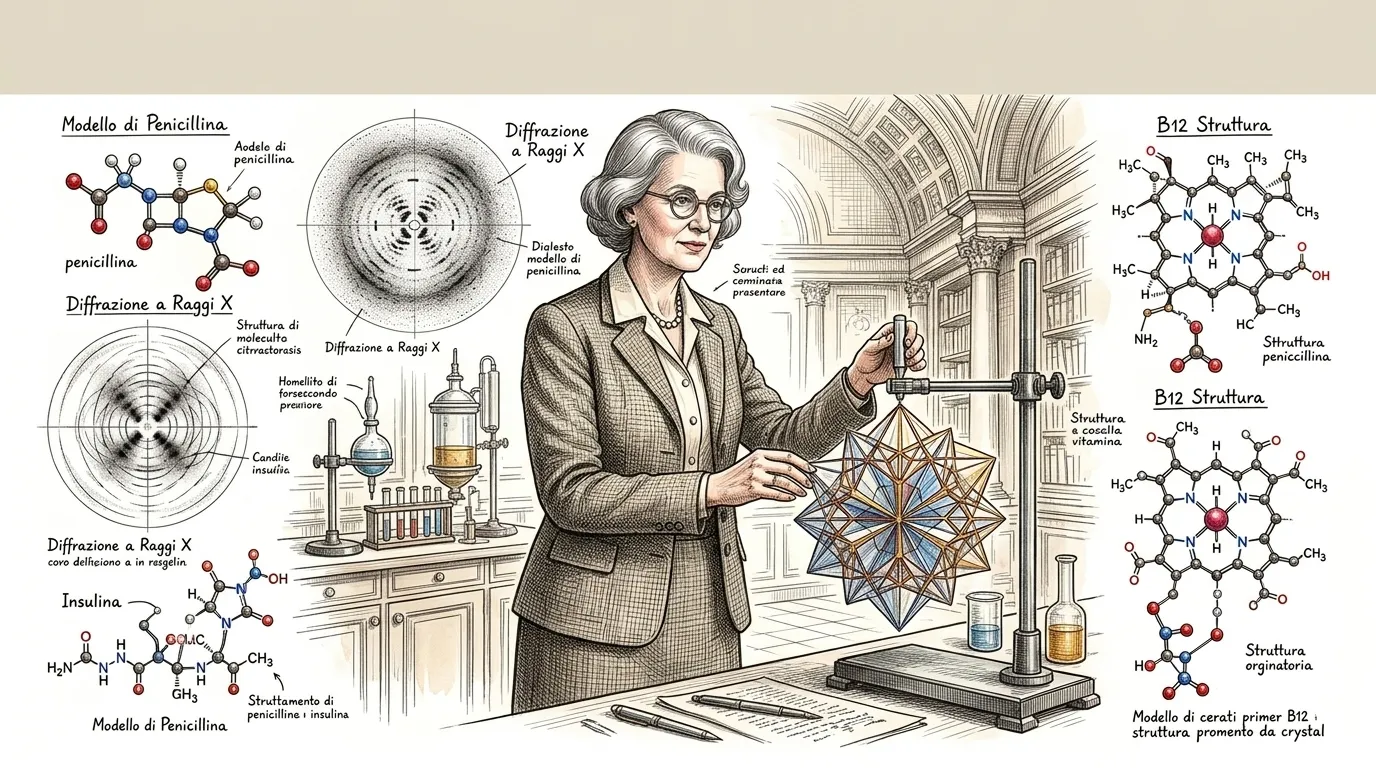
When we think of famous scientists, names like Albert Einstein or Isaac Newton often come to mind first. However, throughout history, countless women have also made profound and lasting contributions to various scientific fields, often with less recognition than their male counterparts. This article highlights several such influential women, including pioneers like Marie Curie, Rosalind Franklin, and Mae Jemison, whose work fundamentally shaped our understanding of the world.
- Women have only recently started contributing to science.
- Most significant scientific breakthroughs were made by men.
- Women in science primarily focus on biology or medicine.
- Recognition for women in science is now equal to that of men.
Women have only recently started contributing to science
This belief is a common misconception. Women have been involved in scientific inquiry for centuries, though their contributions were often overlooked, attributed to men, or constrained by societal norms. For instance, Hypatia of Alexandria, living in the 4th and 5th centuries CE, was a prominent mathematician, astronomer, and philosopher. Her work on geometry and astronomy was highly influential, demonstrating that women were engaged in complex scientific thought long before modern times. Another early figure is Caroline Herschel, an astronomer who discovered several comets and significantly contributed to her brother William Herschel's astronomical observations. Her meticulous work earned her recognition, including becoming the first woman to receive a salary as a scientist in England. These examples show that women's involvement in science is not a recent phenomenon but a long-standing, though often obscured, historical reality. You can explore more about these early pioneers and their challenges in various historical accounts.
Nothing in life is to be feared, it is only to be understood. Now is the time to understand more, so that we may fear less.
Most significant scientific breakthroughs were made by men
While many widely celebrated breakthroughs are indeed associated with men, numerous foundational discoveries were made by women. Consider Rosalind Franklin, whose X-ray diffraction images were crucial to understanding the structure of DNA. Her precise work, detailed in books like Rosalind Franklin, was instrumental in one of the 20th century's most important biological discoveries. In physics, Inge Lehmann discovered the Earth's inner core, a fundamental insight into our planet's structure, which you can learn more about in books about her. Another pivotal figure is Barbara McClintock, who discovered transposable elements, or 'jumping genes,' revolutionizing our understanding of genetics. These are not minor contributions but rather cornerstone discoveries that reshaped entire fields. Their stories highlight that significant scientific breakthroughs are not exclusive to any gender. Further reading on these topics can be found in the Wonder Science library.
Women in science primarily focus on biology or medicine
While many women have excelled in biology and medicine, their contributions span every scientific discipline. For example, Annie Jump Cannon developed a system for classifying stars that is still used today, a monumental achievement in astronomy. Her dedication to cataloging celestial bodies is detailed in books like Annie Jump Cannon. In engineering and space exploration, Valentina Tereshkova became the first woman in space, breaking barriers in a field often seen as male-dominated. Mae Jemison, featured in Mae Jemison, became the first African American woman to travel to space, combining her medical expertise with her passion for space exploration. Even in computer science, Ada Lovelace is recognized as the world's first computer programmer, demonstrating early brilliance in a field that would later become dominated by men. These diverse examples challenge the notion that women's scientific interests are limited to specific fields, showcasing their impact across the entire spectrum of scientific endeavor. You can discover more groundbreaking work by women scientists through various articles.
Recognition for women in science is now equal to that of men
While progress has been made, true equality in recognition for women in science is still an ongoing process. Historically, women have faced systemic biases, often receiving less credit, fewer awards, and lower pay compared to their male colleagues for similar work. Even today, disparities persist in leadership roles, funding, and public recognition. For instance, Alice Ball, whose story is told in Alice Augusta Ball and Alice Ball, developed a highly effective treatment for leprosy in the early 20th century, but her work was initially credited to a male colleague after her untimely death. It took decades for her contributions to be properly recognized. Similarly, many women who contributed significantly to major projects found their names omitted from official reports or accolades. While increased awareness and initiatives are working to correct these imbalances, achieving full equity in recognition remains a goal for the scientific community. The stories of women like Gertrude Elion and Gerty Cori, Nobel laureates who overcame significant hurdles, serve as both inspiration and a reminder of the historical struggles for recognition.
Frequently Asked Questions
What challenges did women in science face historically?
Historically, women in science faced significant barriers including limited access to education, exclusion from scientific institutions and societies, societal expectations regarding gender roles, and often had their work overlooked or attributed to male colleagues. They also struggled for recognition and funding.
Are there still barriers for women pursuing scientific careers today?
While many historical barriers have been reduced, women in science today can still face challenges such as unconscious bias, gender pay gaps, underrepresentation in leadership positions, and difficulties balancing career and family responsibilities in demanding scientific fields. Efforts are ongoing to address these systemic issues.
How can we encourage more girls and women to pursue science?
Encouraging more girls and women in science involves promoting STEM education from an early age, providing visible role models, fostering inclusive environments, challenging gender stereotypes, and offering mentorship and support networks. Highlighting the diverse contributions of women in science is also crucial.