What are some key inventions in transportation?
From the wheel to autonomous vehicles, key inventions in transportation have continually reshaped human history and daily life.

Humanity's journey through time is marked by a relentless pursuit of faster, safer, and more efficient ways to move people and goods. This article explores some of the most significant inventions that have driven this progress, from ancient innovations to modern marvels. We begin with the wheel, a simple yet profoundly transformative invention that laid the groundwork for countless others.
- The Wheel (circa 3500 BCE)
- The Sailing Ship (circa 3000 BCE)
- The Stirrup (circa 4th century CE)
- The Printing Press (1440 CE) — indirectly, by enabling widespread knowledge sharing
- The Steam Engine (1712 CE)
- The Bicycle (1817 CE)
- The Railway (early 19th century)
- The Internal Combustion Engine (1876 CE)
- The Automobile (1886 CE)
- The Airplane (1903 CE)
- The Rocket Engine (early 20th century)
- The Container Ship (1956 CE)
- The Internet (1960s) — indirectly, by revolutionizing logistics and ride-sharing
- The Global Positioning System (GPS) (1978 CE)
- The Autonomous Vehicle System (early 21st century)
The history of transportation is a testament to human ingenuity and the constant desire to overcome distance and connect the world.
The Wheel: A Foundation for Movement
The invention of the wheel, around 3500 BCE in Mesopotamia, stands as one of humanity's most pivotal achievements. Before its advent, moving heavy objects required immense human or animal effort, often by dragging or rolling logs beneath them. The wheel, initially used for pottery, quickly found its application in transportation, leading to the development of carts and chariots. This simple circular device, rotating around an axle, dramatically reduced friction and made it possible to transport larger loads over greater distances with less effort. Its impact was so profound that virtually every subsequent land-based transport invention, from the Bicycle to the Automobile and the Railway, relies on this fundamental principle.
From Steam to Internal Combustion: Powering the Revolution
While the wheel provided the means, new power sources provided the momentum. The steam engine, pioneered by James Watt in the late 18th century, revolutionized industry and, subsequently, transportation. It powered the first locomotives, ushering in the era of the Railway, and also found its way into steamboats. However, it was the internal combustion engine, developed in the late 19th century by inventors like Karl Benz and Nikolaus Otto, that truly democratized personal travel. This engine, which converts fuel into mechanical energy directly within the engine, made possible the Automobile and later the Motorcycle. Its efficiency and compact size allowed for individual vehicles, giving rise to modern road networks and personal mobility on an unprecedented scale.
The Automobile: Reshaping Landscapes and Lifestyles
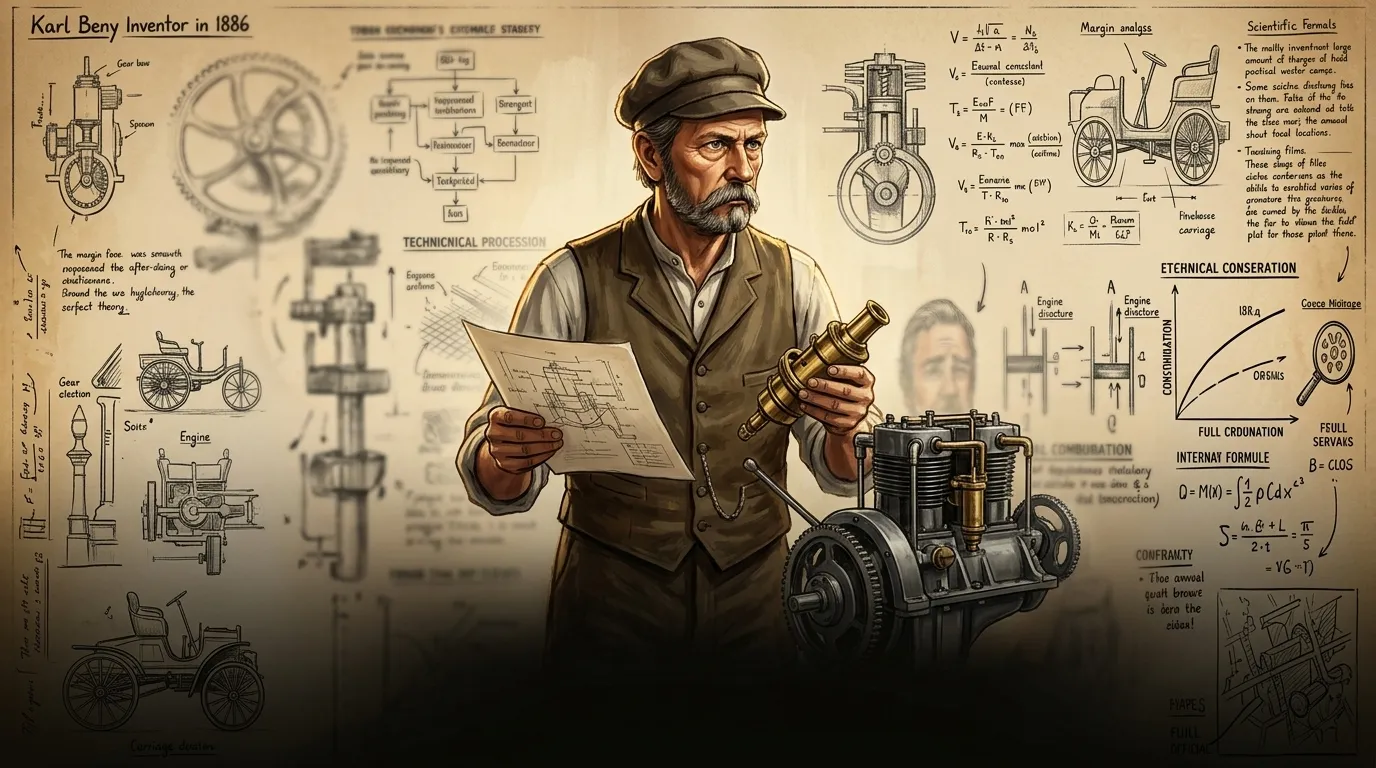
The invention of the Automobile in 1886 by Karl Benz marked a turning point in transportation history. Initially a luxury item, the car became accessible to the masses through innovations like Henry Ford's Assembly Line Car Manufacturing in the early 20th century. This method drastically reduced production costs and time, making cars affordable for the average family. The proliferation of automobiles led to the construction of vast road networks, the rise of suburbs, and fundamentally altered how people lived, worked, and socialized. It created new industries, from fuel production to roadside services, and continues to evolve with the advent of the Electric Car and the promising future of the Autonomous Vehicle System.
Connectivity and Control: The Modern Era of Transport
Beyond individual vehicles, modern transportation relies heavily on systems that connect and control movement on a global scale. The Container Ship, introduced in 1956, revolutionized global trade by standardizing cargo units, making intermodal transport seamless and highly efficient. On a more personal level, the development of the GPS (Global Positioning System) provides precise location and navigation data, transforming everything from personal travel to commercial logistics. This satellite-based technology, explored in books like How Satellites Were Built to Connect Us and Satellite Navigation, enables real-time tracking and route optimization, significantly improving the efficiency and safety of all forms of transport. The rise of digital platforms, such as Ride-Sharing Platform services, further leverages this connectivity to optimize resource use and provide on-demand mobility.
The Enduring Impact of Transportation Inventions
From the earliest wheeled carts to today's self-driving cars, each major invention in transportation has not just moved people and goods, but has also driven societal change. They have fostered economic growth, enabled cultural exchange, and expanded human horizons. The continuous innovation in this field, from the efficiency of the Maglev Train to the ingenuity behind the Tunnel Boring Machine, reminds us that the quest for better ways to move is a fundamental aspect of human progress. These inventions aren't just technical marvels; they are engines of history, shaping the world we inhabit and opening up new possibilities for the future. You can explore more about these fascinating developments in the Wonder Inventions library at WonderBooks.
Frequently Asked Questions
What is considered the single most important transportation invention?
While many inventions are crucial, the wheel is often cited as the single most important. Its fundamental principle underpins almost all land-based transportation, from simple carts to complex vehicles, by vastly reducing friction and enabling efficient movement.
How have transportation inventions impacted global trade?
Transportation inventions have revolutionized global trade by making it faster, cheaper, and more reliable. Innovations like the sailing ship, steamships, railways, and especially the container ship, have allowed for the mass movement of goods across continents and oceans, connecting markets and driving economic globalization.
Are there any transportation inventions that unexpectedly changed society?
Yes, several. The bicycle, for example, not only provided personal mobility but also played a significant role in women's liberation by offering independence. Similarly, the traffic light, while seemingly minor, became essential for managing the growing complexity of urban transportation and preventing chaos on roads.