Assembly Line Car Manufacturing
Assembly Line Car Manufacturing — an illustrated inventions story, set in Global. 10 illustrated pages, free to read on Wonder Inventions.
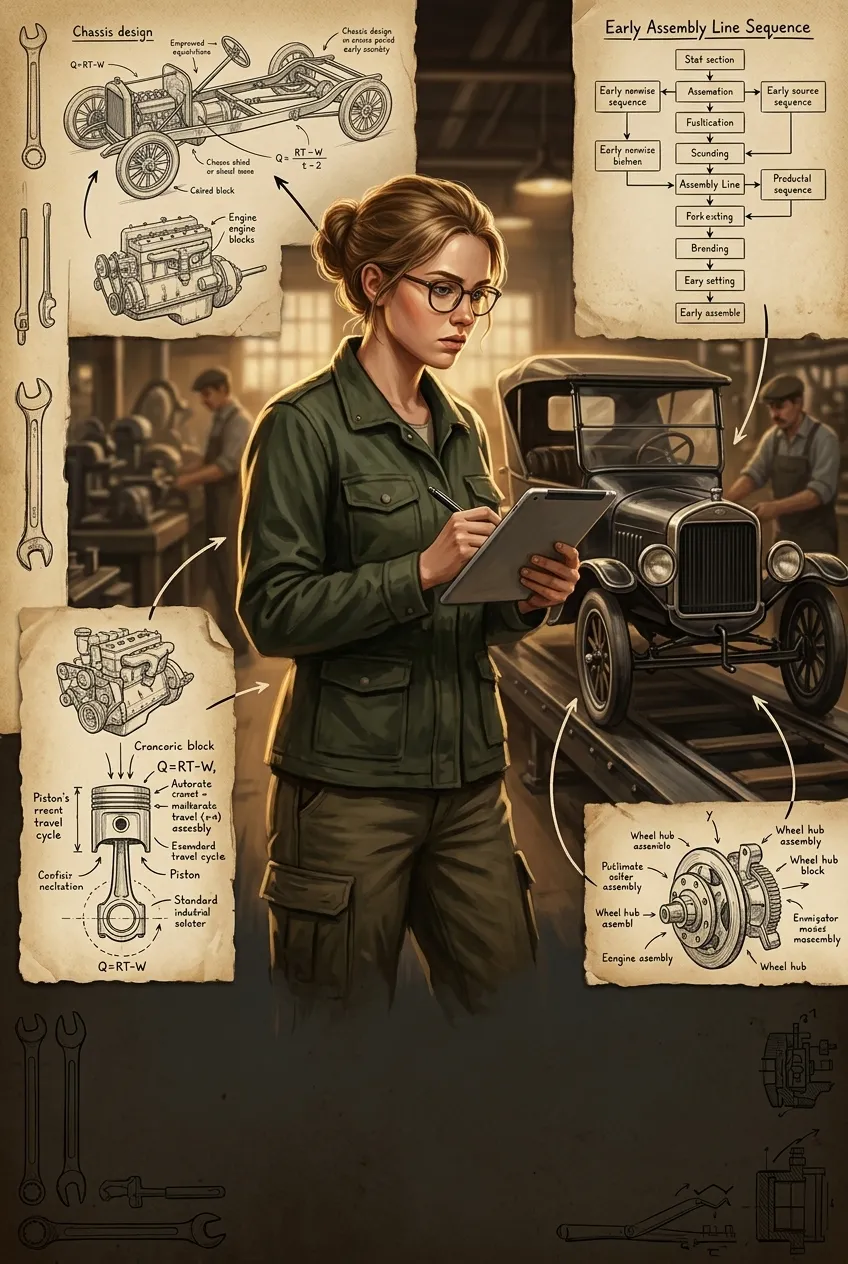
Page 1
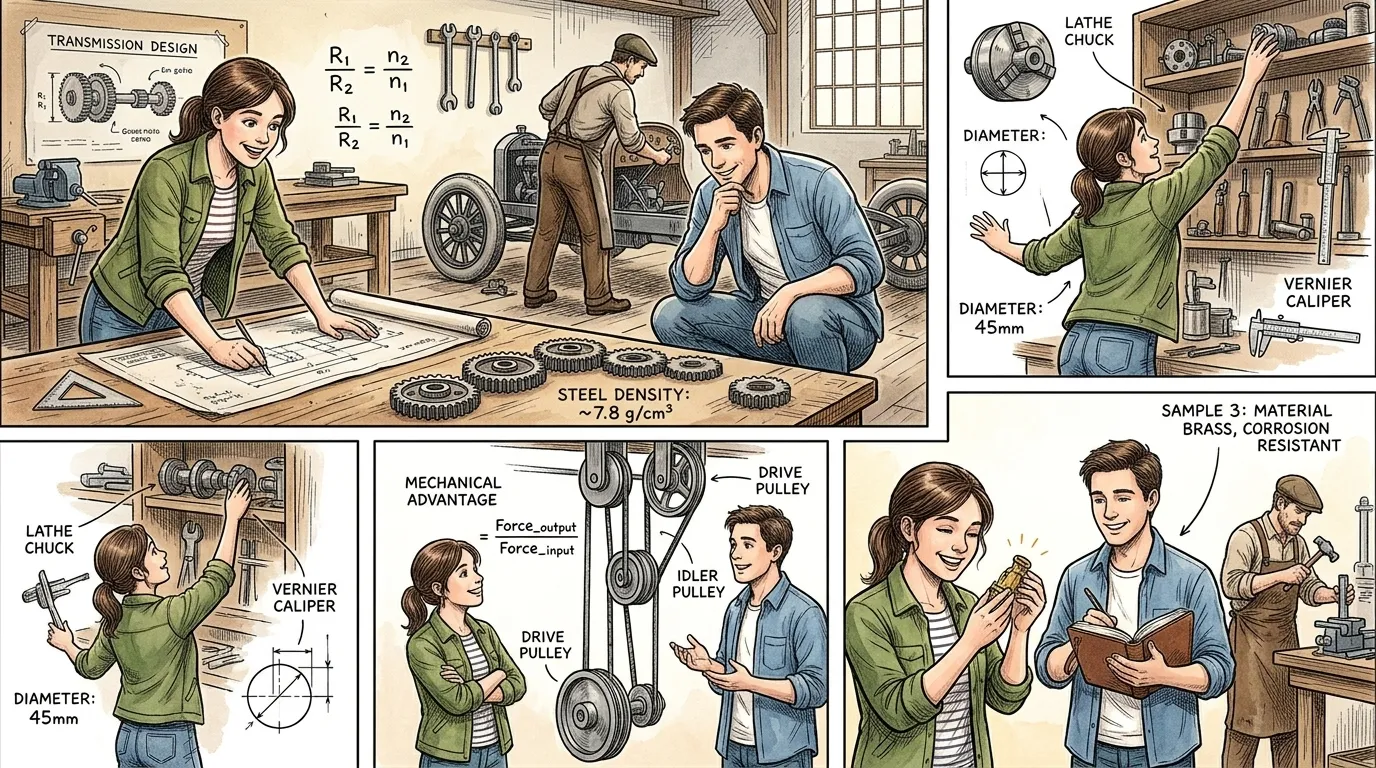
Anya and Ben stood amidst a recreated early 20th-century workshop, where a single automobile chassis sat unfinished. 'Look at this, Ben,' Anya observed, tracing a dusty blueprint. 'Each car was built by hand, a meticulous craft from start to finish.' Ben nodded thoughtfully, observing a lone mechanic meticulously shaping a metal fender.
"'It's incredible to see the artistry involved in these early vehicles,' Ben remarked, 'but imagine the time it must have taken for just one car.'"
Page 2
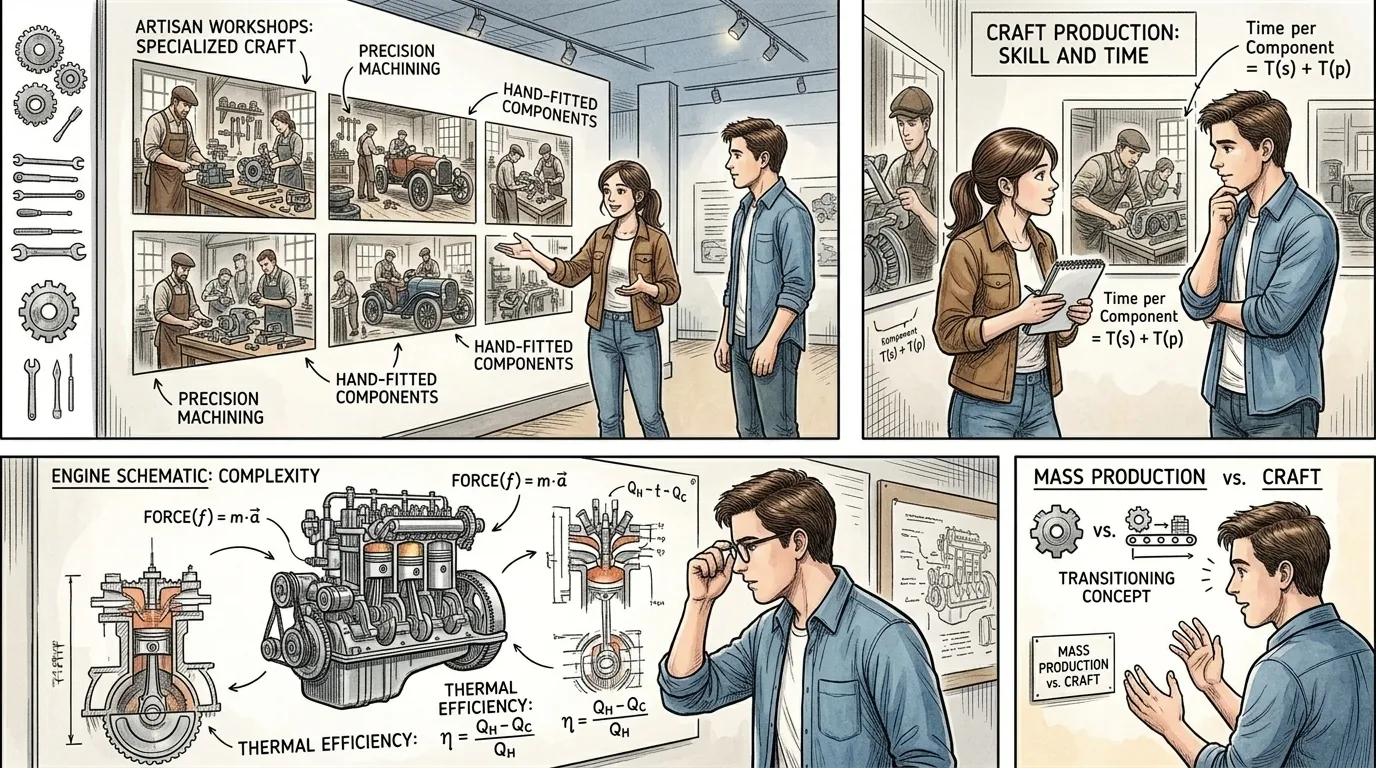
Anya gestured towards a display showing photographs of different workshops, each depicting small teams of skilled artisans constructing various parts. 'Before the assembly line, every component, every joint, every engine part was individually fitted and adjusted,' she explained. Ben examined a complex engine diagram, shaking his head slightly at the intricate detail.
"'It was a craft that demanded immense skill and time,' Ben added. 'But this artisanal approach meant cars were luxuries, incredibly expensive and out of reach for most people.'"
Page 3
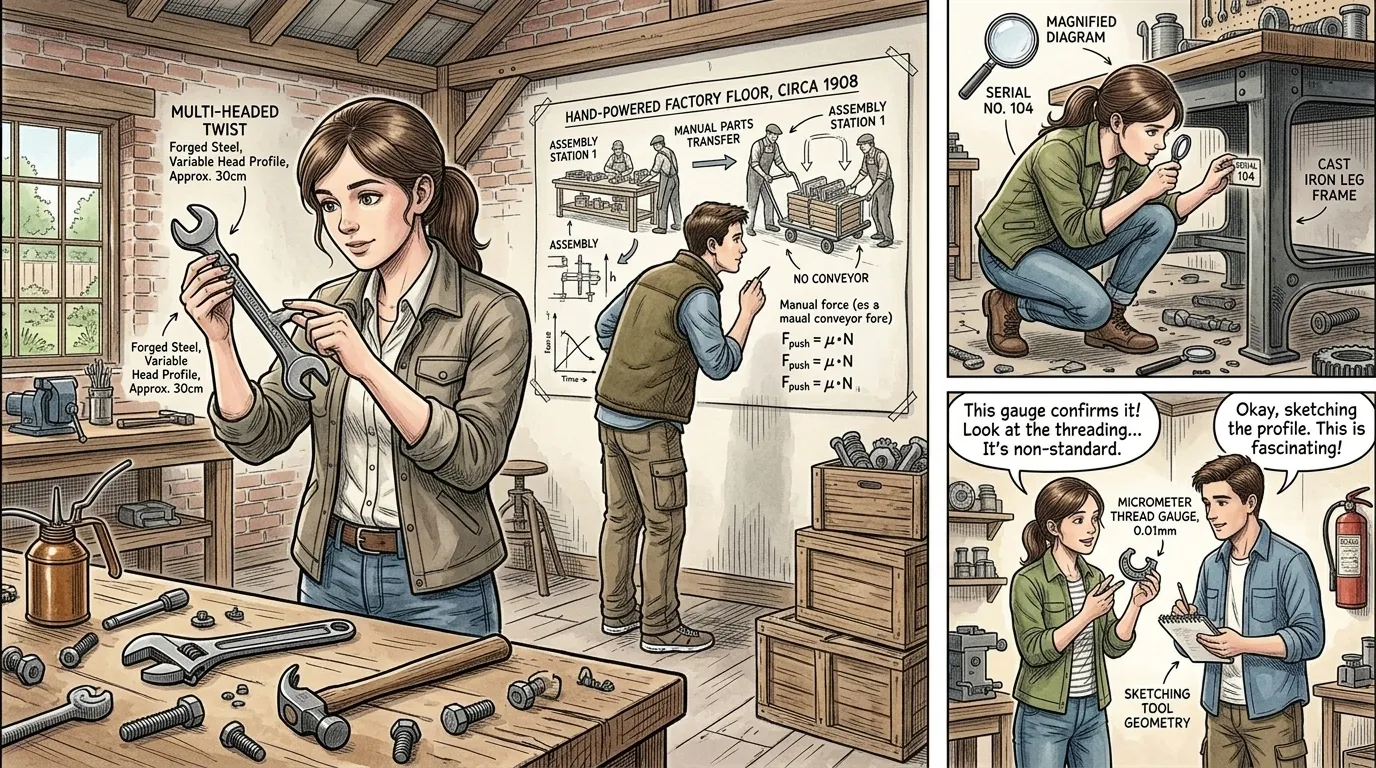
Walking through a section dedicated to early manufacturing trials, Anya spotted an old, heavy workbench. On it lay a collection of tools, including a peculiar, multi-headed wrench designed for quick fastening. 'This is interesting,' she mused, picking up the wrench. 'Someone was already thinking about speed and versatility, even then.'
"'Absolutely,' Ben replied, looking at an adjacent diagram of a factory floor where parts were moved by carts, not belts. 'The challenge wasn't just making cars, but making them faster and cheaper. As the demand grew, the old ways simply couldn't keep up.'"
Page 4
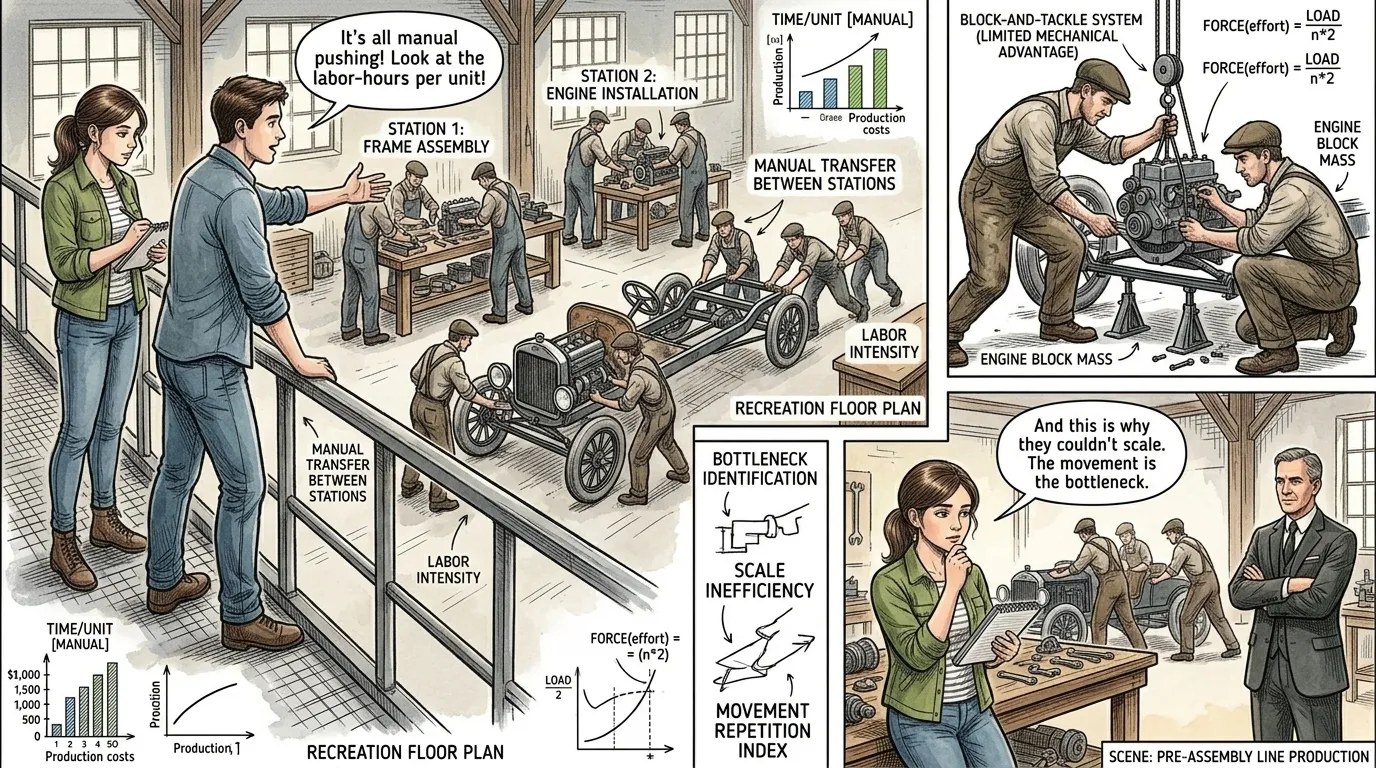
Ben pointed to a recreated scene of workers diligently assembling a car, but without any conveyor belts. Each team completed a larger section of the vehicle before it was physically moved to the next station. 'Before the moving line, they experimented with fixed assembly stations,' he explained. Anya observed the workers, noting the intricate coordination required.
"'So, each worker or team specialized in one large task, but the car itself still had to be manually pushed or pulled along the floor between stations?' Anya clarified, her eyes tracking the imagined movement. 'It was an improvement, but still far from truly fluid.'"
Page 5
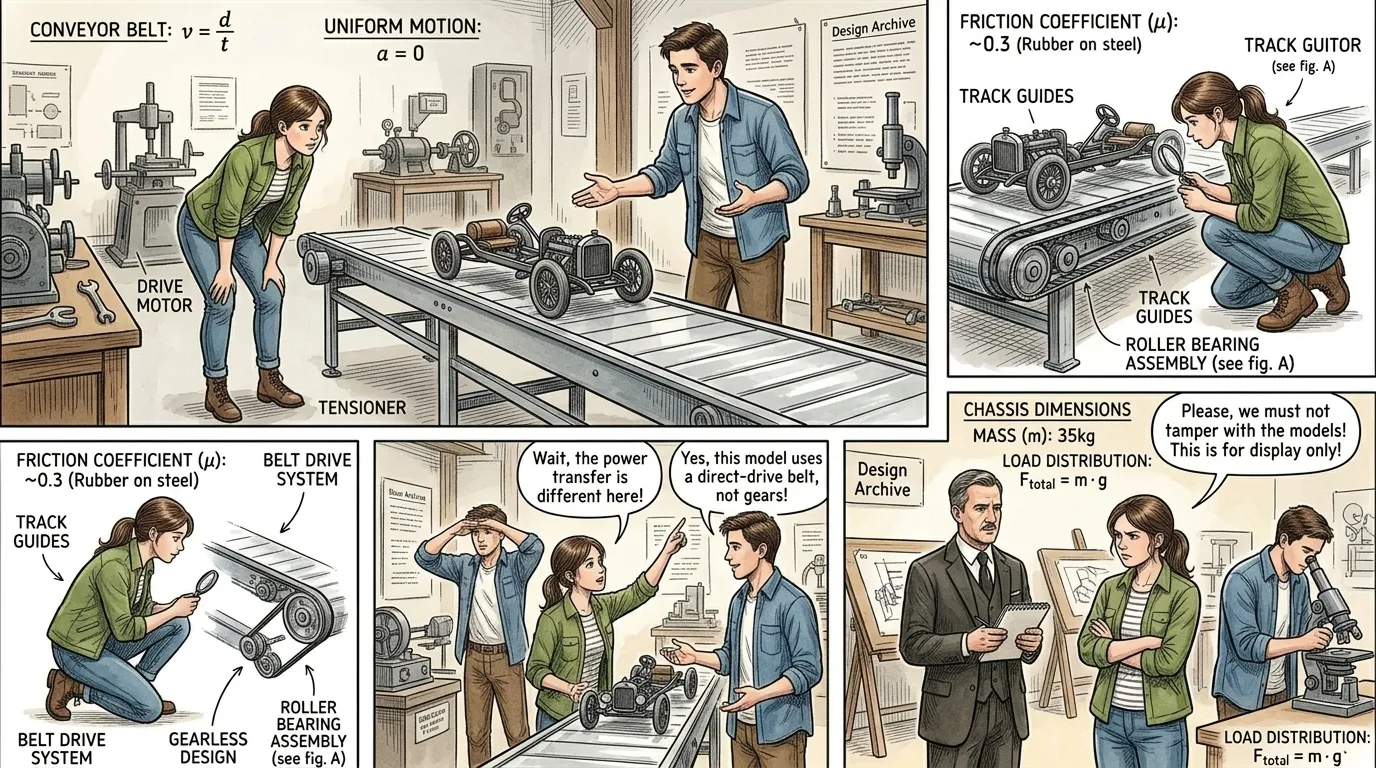
They moved to a large interactive exhibit demonstrating the pivotal breakthrough. A long, empty conveyor belt stretched across the display, ready to receive its first car frame. 'Henry Ford wasn't the first to use assembly line principles, but his genius was in making the work move, not the worker,' Ben emphasized. Anya watched a small demonstration model of a chassis slowly rolling onto the belt.
"'That's the fundamental shift, isn't it?' Anya mused. 'Instead of workers walking to the car, the car comes to them, at a continuous, steady pace. It changed everything for the better.'"
Page 6

A series of lights illuminated along the conveyor, showing different stations. At each station, specific parts like axles, engines, or body panels were arranged in bins, ready for quick attachment. 'The belt moves at a carefully calculated speed,' Ben explained. 'Workers specialize in one or two simple, repetitive tasks.' Anya watched as animated figures in the exhibit performed their single action, then waited for the next chassis.
"'So, it's about breaking down complex jobs into many small, manageable steps,' Anya summarized. 'Each person becomes incredibly efficient at their specific part, eliminating wasted movement and thought.'"
Page 7
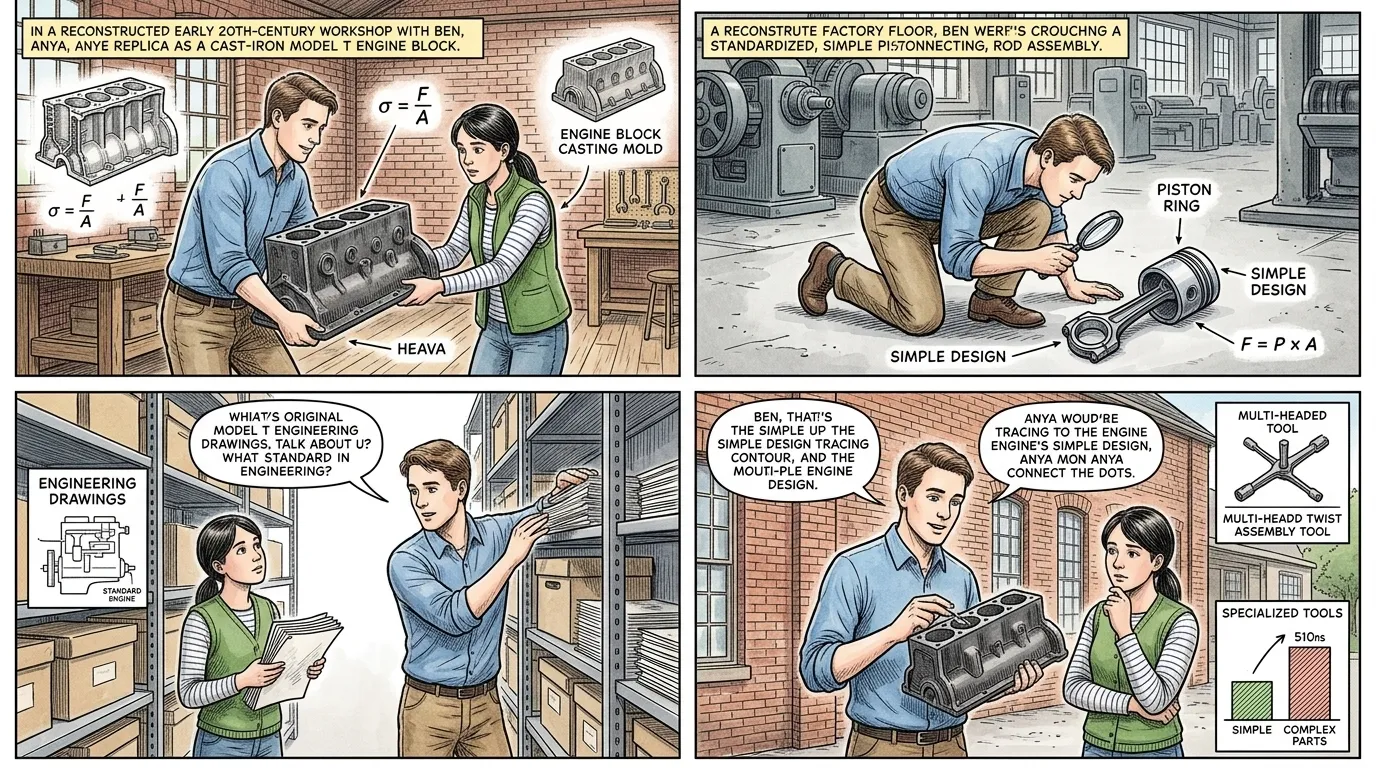
The exhibit continued, detailing how every part on the Ford Model T was standardized, manufactured to exact specifications, making them interchangeable. Ben picked up a replica of a Model T engine block, noting its robust, simple design. 'This standardization was crucial,' he pointed out. 'If every part fits perfectly, assembly is much faster.'
"'And that simple multi-head wrench we saw earlier?' Anya remembered. 'That's exactly the kind of tool needed here – simple, fast, and for a specific, repetitive action. It all connects: standardized parts, specialized labor, and streamlined tools, all moving on the line.'"
Page 8
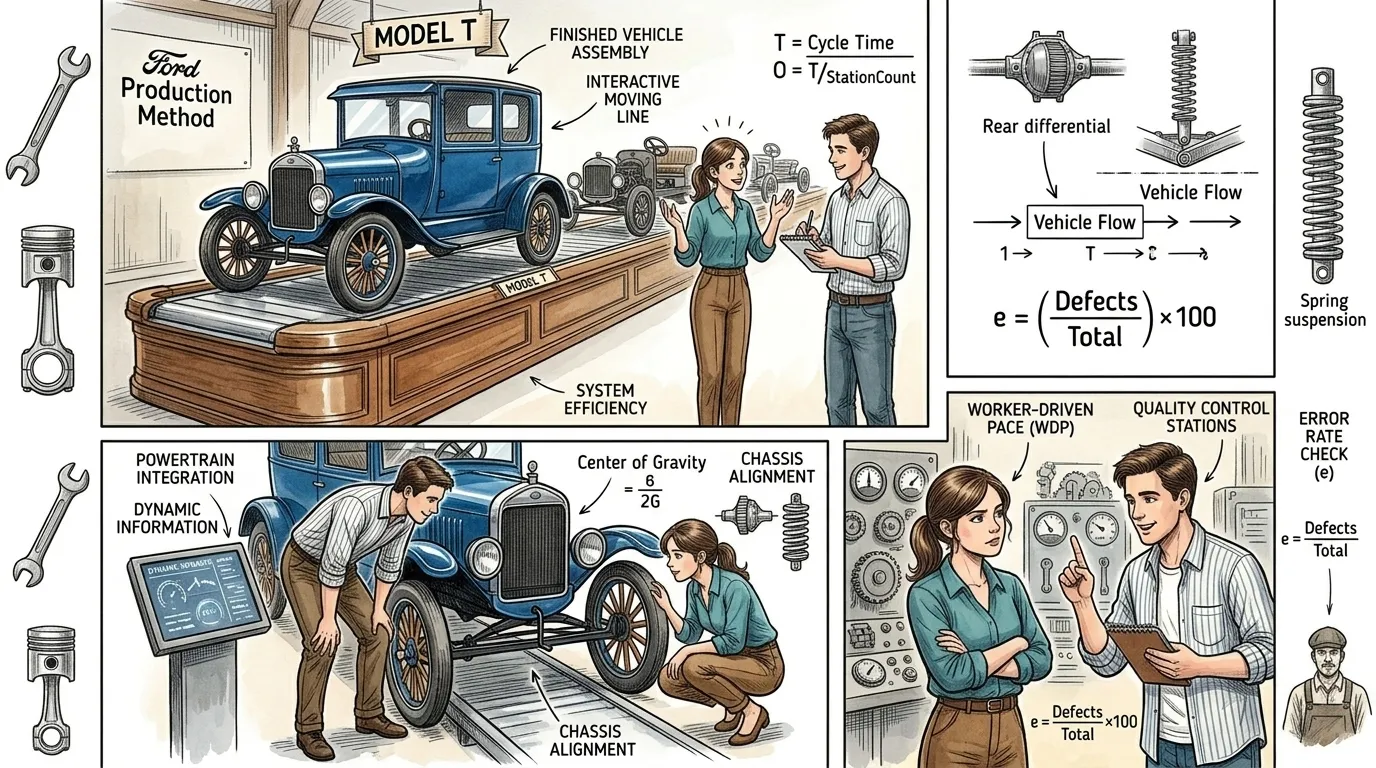
As they stood at the end of the interactive line, a fully assembled Model T rolled off the belt, gleaming. 'It's astonishing what can be achieved when processes are optimized,' Anya reflected, impressed by the speed. Ben smiled, watching the car. 'Indeed. It's a testament to coordinated effort.'
"'It reminds me of something Henry Ford himself supposedly said,' Ben mused, tapping his notepad. ''If everyone is moving forward together, then success takes care of itself.' He understood the power of collective, synchronized action on a deep level.'"
Page 9
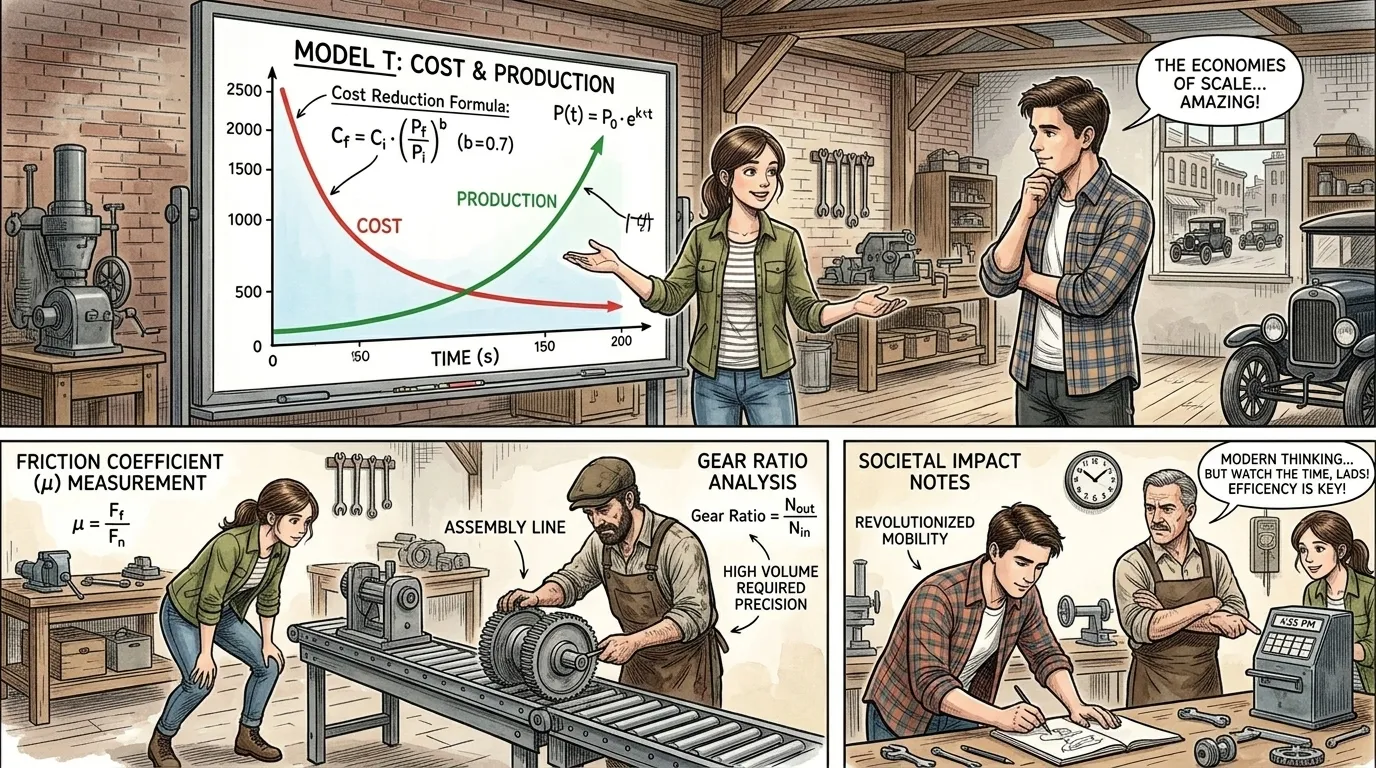
The Model T, once a luxury, became accessible. Its price dropped dramatically, making car ownership possible for millions. Anya pointed to historical graphs illustrating the steep decline in cost and the exponential rise in production. 'This wasn't just about making cars,' she observed. 'It was about democratizing transportation.' Ben saw the profound societal shifts.
"'Exactly,' Ben affirmed. 'The assembly line didn't just build cars; it built the modern middle class, reshaped urban landscapes, and fueled entirely new industries like gas stations and motels. It was a true revolution.'"
Page 10
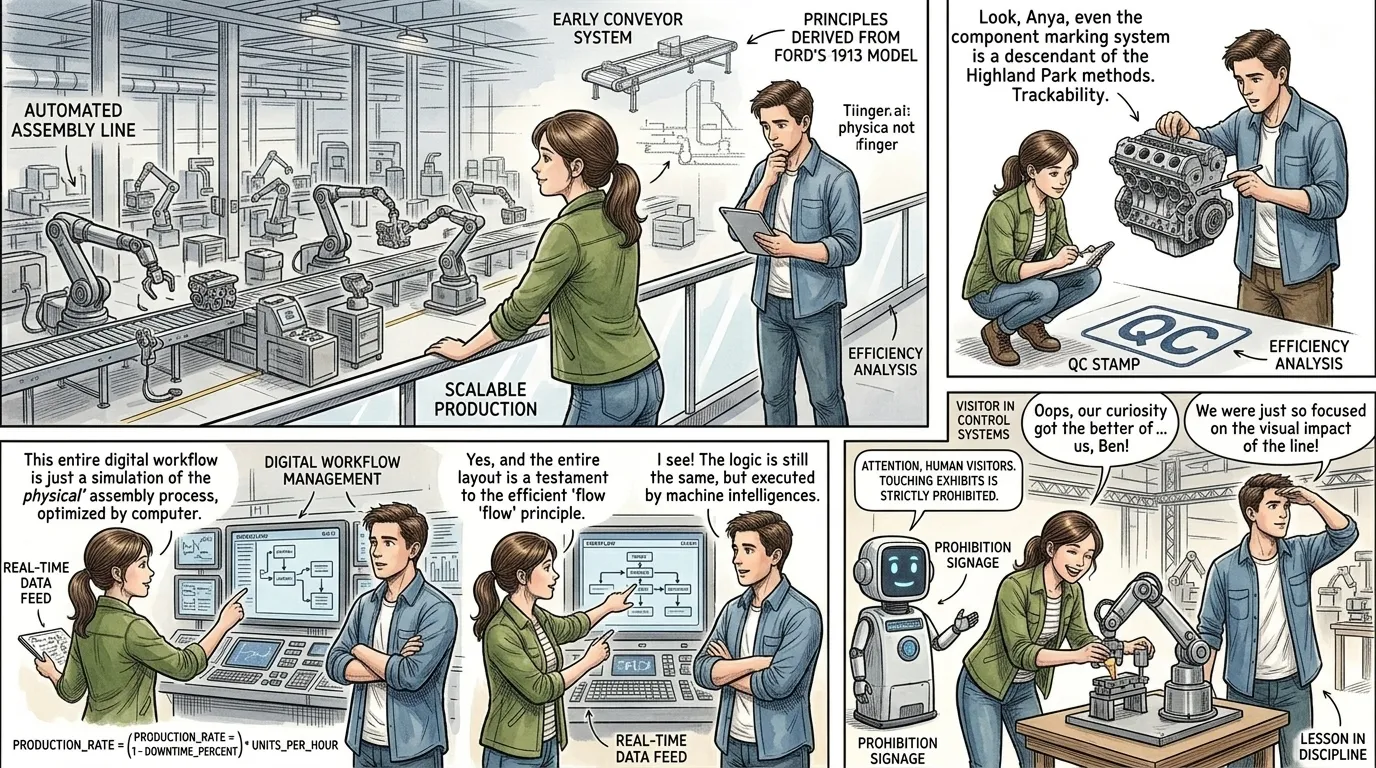
The impact of the assembly line reverberated across industries, from appliances to electronics, shaping the very fabric of global manufacturing. Modern factories, though highly automated, still owe their fundamental principles to Ford's innovation. 'The moving assembly line remains a cornerstone of industrial efficiency,' Anya concluded, looking out at a vast, simulated modern factory floor. Ben added the final, sweeping thought.
"'From a single craftsman to a worldwide network of production,' Ben reflected, 'the assembly line proved that breaking down complex tasks into simple, continuous steps could transform society on an unprecedented scale. Its influence is truly global.'"
About this story
- Location: Global
- Audience: general readers
Questions and answers
Read Wonder Inventions on your phone
Wonder Inventions is available on Android. Get Wonder Inventions on Google Play.