Should Books Made With AI Be Labelled?
Amazon asks publishers, not readers. Audible shows a mark. The EU wrote it into law. What a label on books made with AI would tell you, and what it would not.
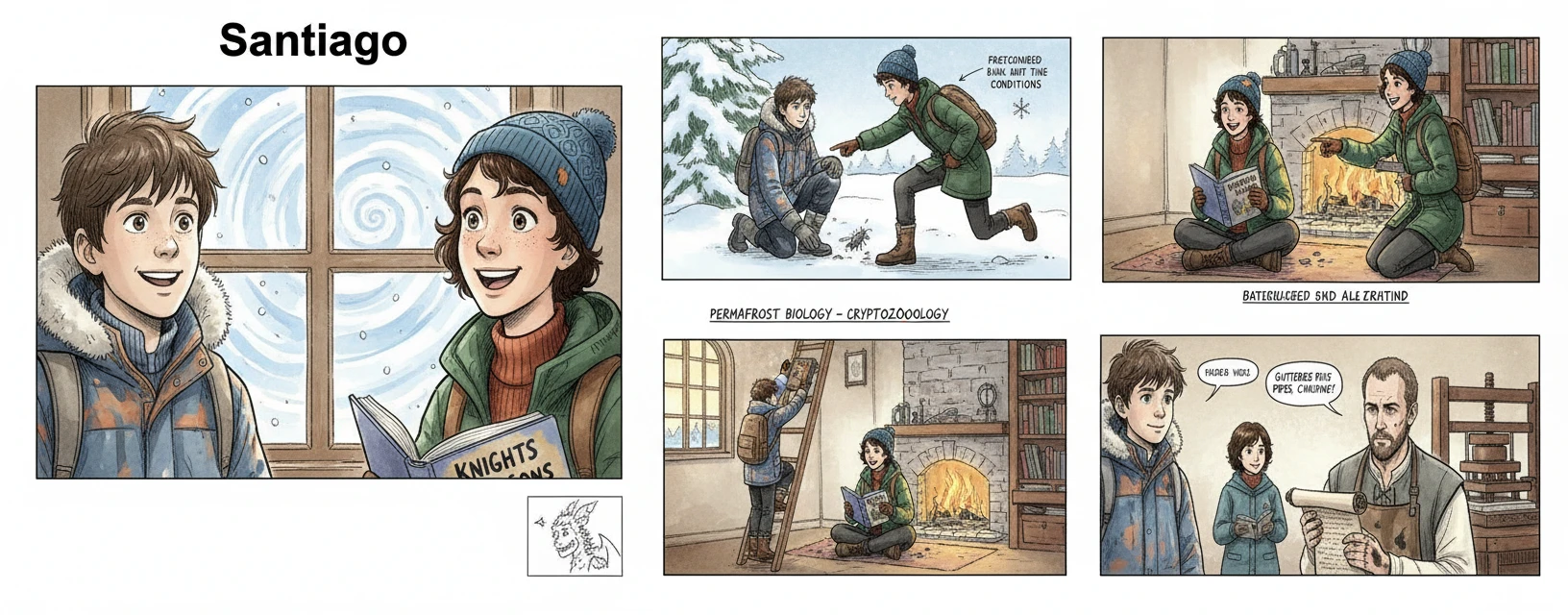
Yes, and most of the labels that exist today are pointed at the wrong person. A reader deciding whether to trust a book wants to know who answers for it, whether the facts were checked, and whether the pictures were made for it. A label that says only that a machine was involved answers none of those, and the industry's current rules mostly tell the platform rather than the reader.
Three rules, three different ideas of who needs to know.
Since September 2023 Amazon's Kindle Direct Publishing has required publishers to disclose AI-generated content when they upload a book. The disclosure goes to Amazon. It is not shown on the product page, so a reader browsing the store sees nothing. Audible took the opposite view for narration: its Virtual Voice titles carry a visible mark, so a listener knows before buying that the voice is synthetic. And the European Union's AI Act, adopted in 2024, includes transparency obligations for certain AI-generated content, a legal floor rather than a shelf label. Three rules in two years, and no two of them agree on who the label is for.
The confusion is not carelessness. Nobody has settled what the label is supposed to protect. If it is the reader's right to know how a thing was made, it belongs on the cover. If it is the platform's need to filter floods of junk, it belongs in the upload form. If it is the law's interest in people not being deceived by synthetic media, it belongs on content that pretends to be something it is not, which a book about the Roman Empire does not.
What readers say, and what they buy.
Surveys since 2023 have repeatedly found that majorities of readers want to be told when a book was written with AI. Audiobooks with digital narration have grown regardless, with the label on. Those two facts are not in conflict. People want to know and then decide for themselves, which is the normal relationship between a buyer and a label. Photography went through the same cycle: in the 1990s digital images were widely dismissed by photographers as not the real thing, and today nearly every published photograph is one.
- A label on the platform protects the platform.
- A label on the cover protects the reader's right to choose.
- A label in law protects against deception, and most books are not deceptions.
- None of the three tells you whether the book is any good.
What a label cannot tell you.
The thing a reader actually needs to know about an AI-made book is the same thing they need to know about any book: is it correct, is it for me, and who stands behind it. A fluent wrong date reads exactly like a right one, in a machine draft or a careless human one. A picture that drifts from one page to the next is a sign that nobody checked continuity, whoever painted page one. A label cannot carry that information. A publisher's process can, and a publisher who states that process plainly is giving the reader more than any badge would.
One publisher states the method and leads with the books.
WonderBooks says, wherever it is relevant, that its books are written, illustrated and narrated with AI and directed by one founder, and it does not make that the headline. What it leads with is what the books are: twelve subject libraries, 2,341 illustrated books, 29,179 painted pages, thirteen languages, narrated in fifteen, with a line that goes back to a hand-made first version in 2016. The reasoning is that readers judge a library by its books, and that leading with the tool invites them to judge the tool instead.
What it offers in place of a badge is the process. History and science are written against a factual brief produced in a separate research step and checked against a pinned library of facts. Known subjects are chosen on purpose, so a reader can check them. Pictures are composed under written rules and rejected when they break continuity. And an error reported by a reader is fixed and acknowledged with a link to the corrected page, because the founder's view is that readers are part of improving the library rather than an audience to be managed.
The information must be correct, fiction or non-fiction alike.
The label that would actually help.
If the industry wants a label that serves readers, it should say three things rather than one: who answers for this book, how its facts were checked, and how to report a mistake. A publisher that can fill in all three is one a reader can trust whatever made the first draft. A publisher that cannot is not rescued by the word human on the cover. The method is worth stating. It was never the thing that mattered most.
Frequently Asked Questions
Does Amazon show readers which books are AI-generated?
No. Since 2023 publishers must tell Amazon at upload whether a book contains AI-generated content, but the product page does not display it. The rule exists to let Amazon filter and limit floods of machine-made titles, not to inform buyers.
Is it legal to sell AI-written books without a label?
In most markets, yes, provided the book does not deceive buyers about something else, such as a real author's name. The European Union's AI Act adds transparency obligations for certain AI-generated content, and platform rules vary; there is no general requirement for a cover label.
What should a publisher disclose about AI?
Plainly that it was used, and more usefully how: who directs and answers for the work, how facts are checked, how continuity and quality are enforced, and how a reader reports an error. That tells a reader far more than a badge.