Why Philosophy Feels Hard to Read (And How a Story Fixes It)
Philosophy often seems dense and intimidating. Discover why ancient texts can be tough to tackle and how a story approach can make them accessible.
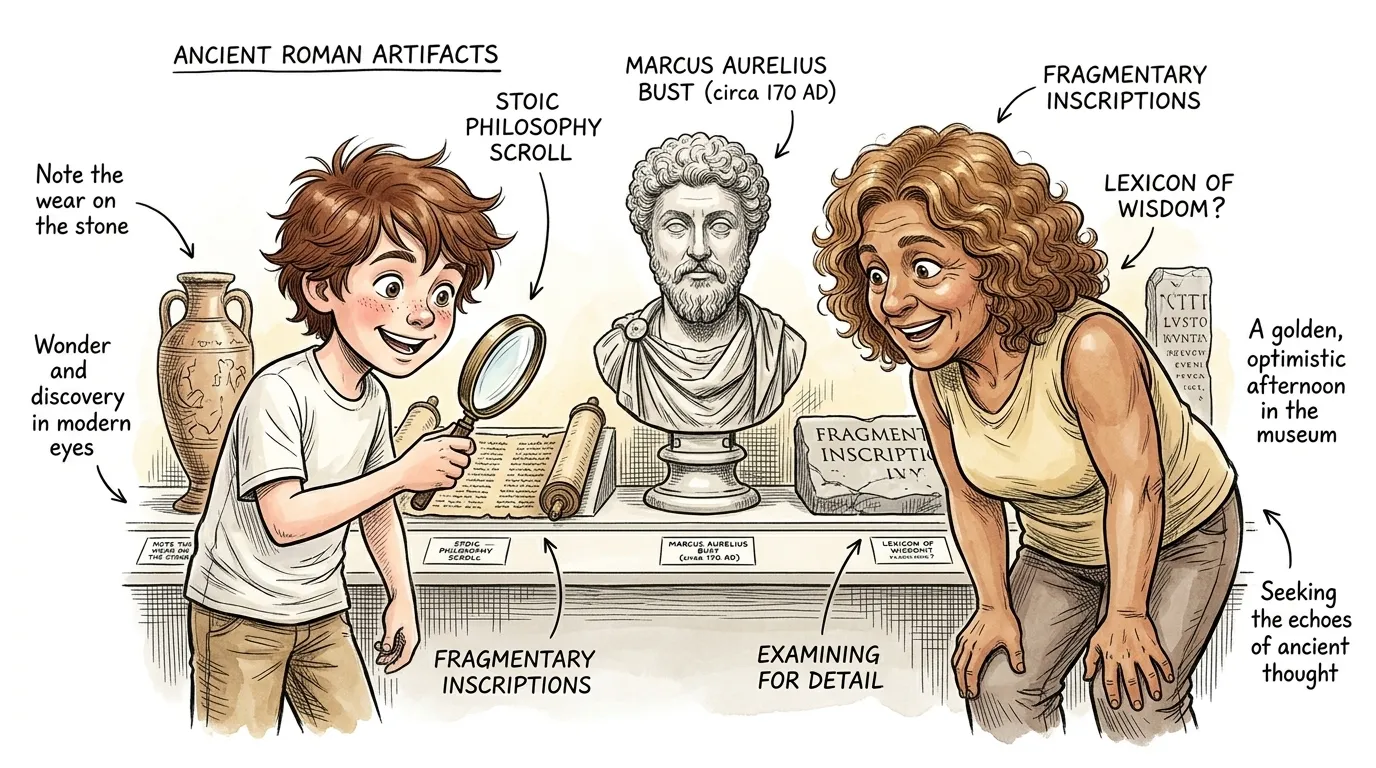
For many, the word 'philosophy' conjures images of thick, dusty books filled with long, complex sentences and abstract ideas. It's often seen as a subject reserved for academics or those with a special knack for wrestling with difficult concepts. But why does something meant to help us understand life and ourselves feel so often like an impenetrable wall of text?
Not Always Written for You
One of the biggest reasons ancient philosophical texts can be challenging is that they weren't always written with a general audience in mind. Many of these works were never intended as polished books for widespread publication. Instead, they were often personal reflections, lecture notes, or arguments crafted for specific debates within a small circle of thinkers. This means they often assume a level of background knowledge or familiarity with certain ways of thinking that modern readers simply don't have.
The Private Thoughts of an Emperor
Consider Marcus Aurelius, the Roman Emperor whose writings are now famous as 'Meditations'. These were not essays he planned to publish. They were private journal entries, notes to himself on how to live a good life, how to face adversity, and how to maintain his composure amidst the immense pressures of ruling an empire. He wasn't trying to teach others in a structured way; he was reminding himself. Reading these raw, unedited thoughts can be incredibly insightful, but the lack of structure and direct address can also make them feel disjointed or difficult to follow for a first-time reader. You can find out more about his life and ideas in a dedicated story like Marcus Aurelius.
Philosophy in Action, Not Just Words
Another example is Diogenes the Cynic. Unlike Marcus Aurelius, Diogenes didn't leave behind a collection of written works. His philosophy was primarily expressed through his actions, his public stunts, and his sharp, often provocative, sayings. He lived his philosophy, challenging societal norms and demonstrating his beliefs through a radical simplicity and directness. Trying to understand Diogenes solely through translated fragments of what others wrote about him can feel like trying to piece together a puzzle with half the pieces missing. A narrative approach, however, can bring his vivid character and impactful actions to life, illustrating his ideas in a way that mere prose struggles to capture. Explore his fascinating story through a dedicated narrative, like Diogenes.
The Language Barrier, Even in Translation
Beyond the original intent, there's also the challenge of language itself. Most of us read these ancient texts in translation, often from Greek or Latin. The nuances of ancient languages, the specific philosophical terms, and the rhetorical styles of the time don't always translate smoothly into modern English. What might have been a clear and concise argument in its original context can become dense and convoluted when rendered word-for-word into another language, often retaining an academic tone that adds another layer of difficulty. This is where a fresh approach can make all the difference.
Stories as Bridges to Understanding
So, how can we overcome these barriers and make profound philosophical ideas accessible to everyone? One powerful solution lies in the art of storytelling. When a philosopher's life and ideas are transformed into an illustrated, narrated story, many of these challenges simply melt away. Images provide context and emotional resonance, while clear, simple language replaces academic jargon. Audio narration brings the story to life, making it an engaging experience rather than a demanding read. This approach doesn't dilute the ideas; it simply presents them in a format that our brains are naturally wired to understand and remember.
Imagine learning about Stoicism not through a dense treatise, but through a vivid account of Marcus Aurelius facing a crisis, illustrated to show his internal struggle and narrated in your own language. Or understanding Cynicism by seeing Diogenes interact with Alexander the Great, rather than just reading a dry summary of their encounter. This method removes the layers of translation and academic prose, delivering the core wisdom directly. It's a way to engage with profound concepts without feeling like you need a philosophy degree to begin. This is the philosophy behind the Wonder Philosophy library, which offers illustrated stories of great thinkers, making their wisdom accessible to all. You can explore a wide range of topics and thinkers, and even find more articles like this one at our articles hub.
Frequently Asked Questions
Why are ancient philosophical texts often hard to read?
They were frequently written as personal notes, lecture materials, or specific arguments, not polished books for a general audience. They also often assume prior knowledge and can lose clarity in translation.
How can stories help make philosophy easier to understand?
Stories use engaging narratives, illustrations, and clear language to convey complex ideas. This makes the concepts more relatable and memorable than traditional academic texts.
Do illustrated stories simplify the philosophy too much?
The goal is accessibility, not oversimplification. Illustrated stories aim to convey the core ideas and context in an engaging format, serving as an excellent entry point that can inspire deeper exploration of the original texts.