Edward Said
Edward Said — an illustrated philosophy story. 10 illustrated pages, free to read on Wonder Philosophy.
Page 1
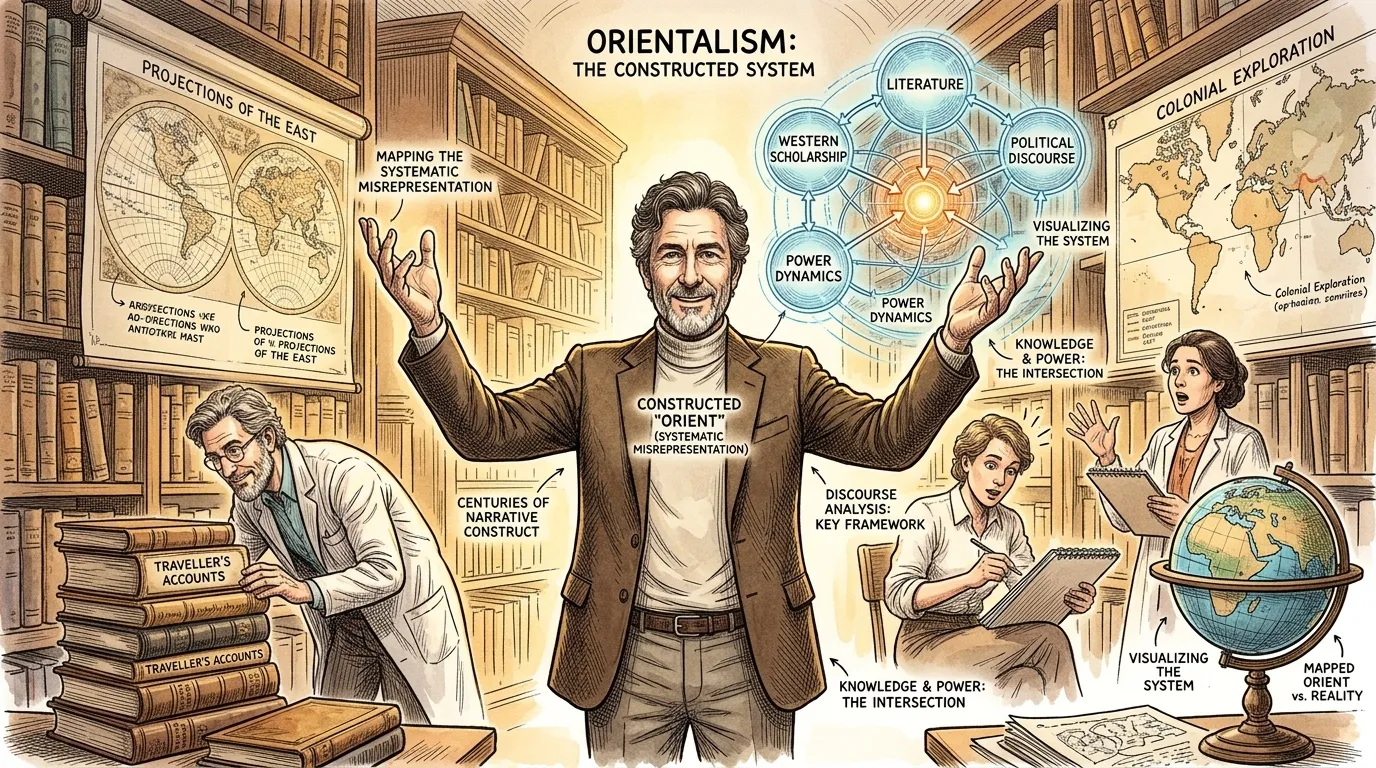
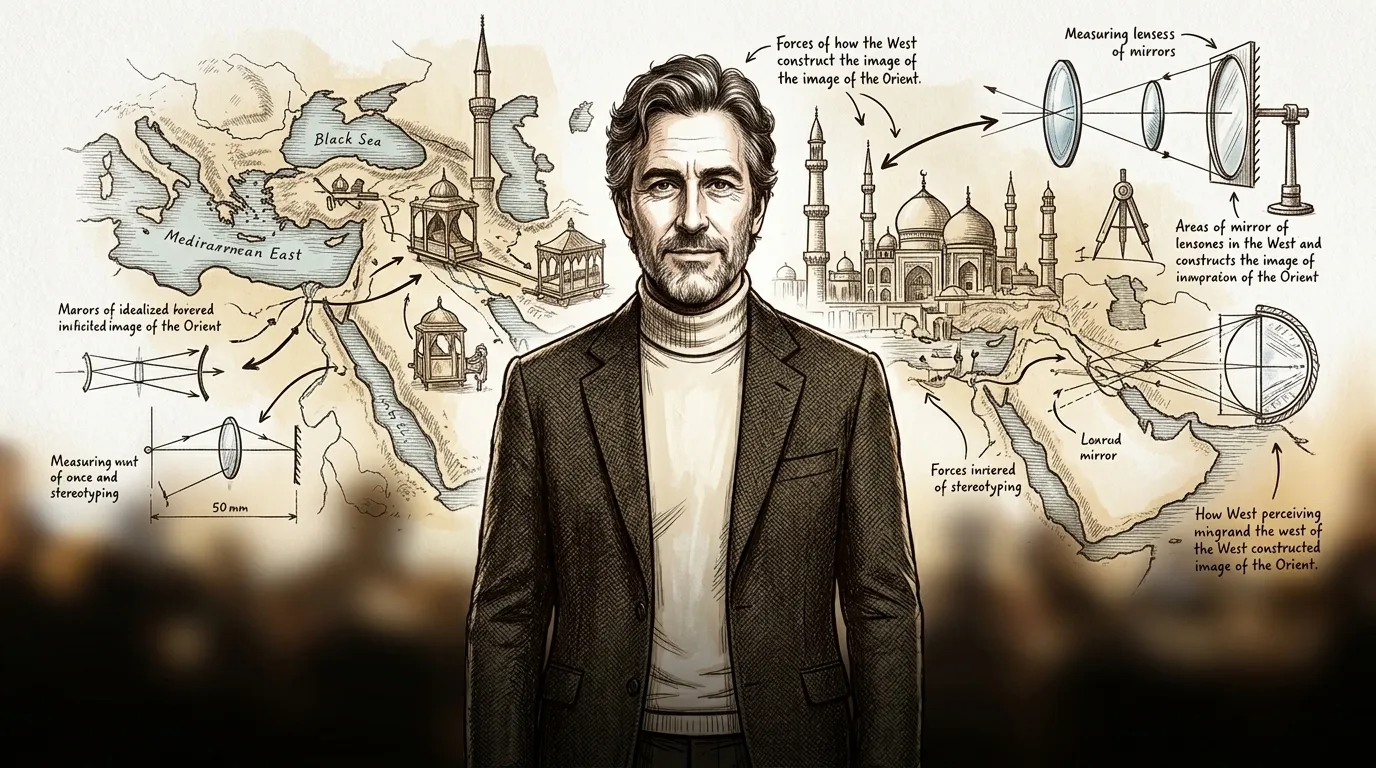
Edward Said's seminal work, "Orientalism," unveiled a profound truth: the West's understanding of the East was not merely a set of observations, but a complex, enduring system of knowledge and power that actively shaped and often distorted its subject. Said argued that for centuries, Western scholarship, literature, and political discourse constructed an 'Orient' that served European self-definition and justified colonial expansion. This wasn't just about individual prejudice, but a deep-seated, institutionalized way of seeing—a lens through which the East was perpetually cast as exotic, irrational, and inferior, contrasting with a rational, superior West.
Philosophy Note: Edward Said (1935-2003) – Literary Critic, Postcolonial Theorist. Key Work: Orientalism (1978). Core Idea: The 'Orient' is a European construct, not an accurate representation, used to exert power.
Page 2
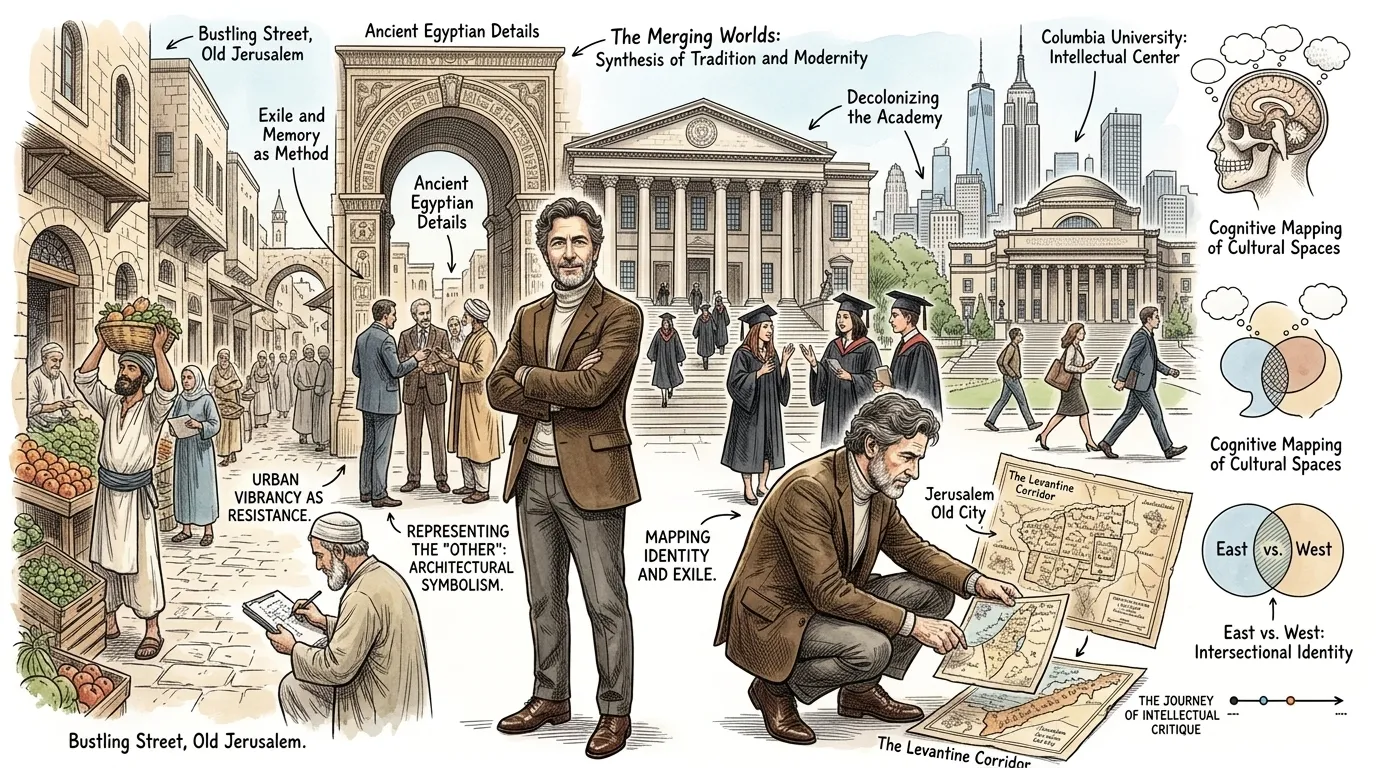
Born in Jerusalem, Palestine, in 1935, Edward Said's personal history as a Palestinian-American exile profoundly shaped his intellectual perspective. His early education in Egypt and later in the United States, culminating in a Ph.D. from Harvard, exposed him to both Eastern and Western intellectual traditions. Said became a distinguished professor of English and comparative literature at Columbia University, but his academic pursuits were never detached from the political realities of his time. He was acutely aware of how narratives of identity, history, and culture were wielded in struggles for power and self-determination.
Philosophy Note: Born: Jerusalem, Mandatory Palestine, 1935. Education: Princeton University, Harvard University. Academic Position: Professor of English and Comparative Literature, Columbia University. Personal Context: Palestinian-American identity, experience of exile.
Page 3
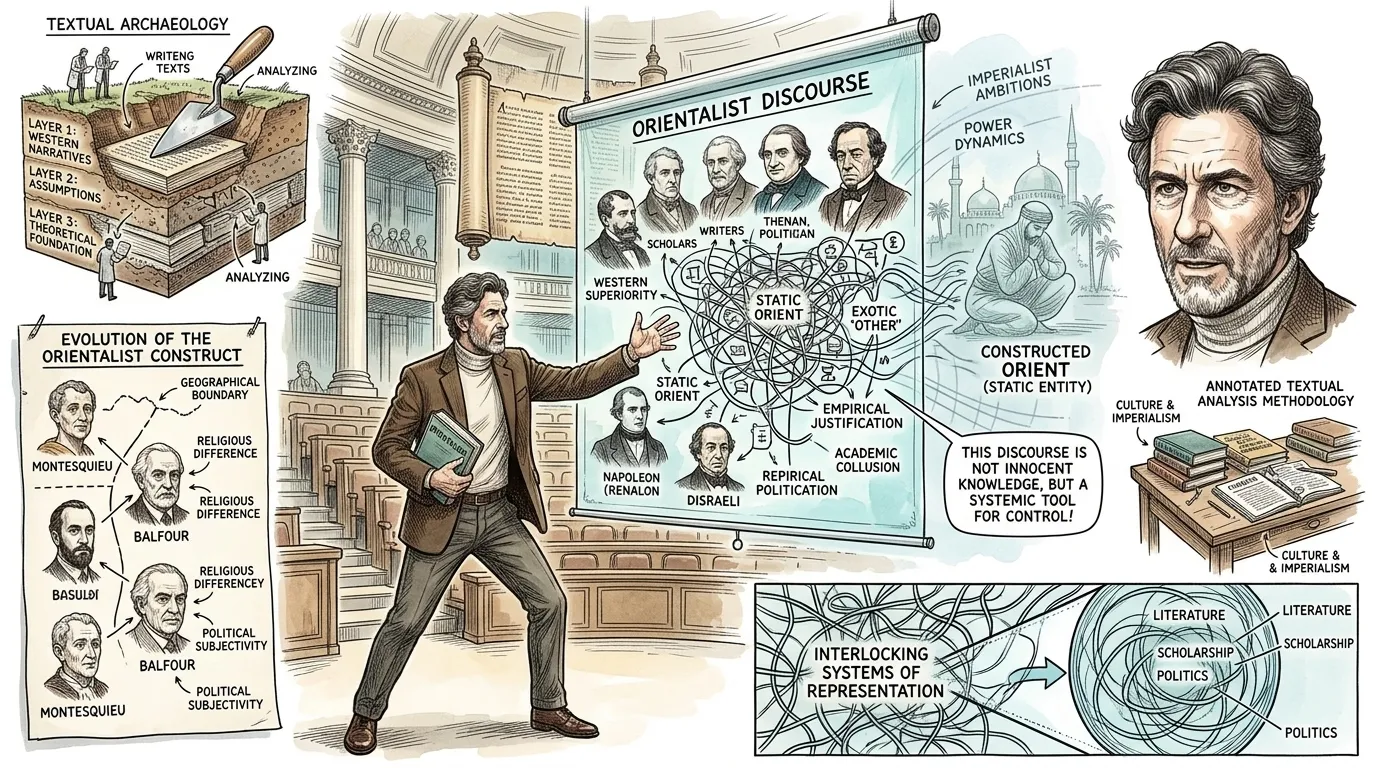
Said's groundbreaking book, 'Orientalism,' published in 1978, emerged from his dissatisfaction with conventional academic approaches to the Middle East. He argued that the study of the 'Orient' in the West was not objective, but deeply entangled with imperialist ambitions. Drawing upon the work of Michel Foucault, particularly concepts of discourse and power/knowledge, Said demonstrated how generations of scholars, writers, and politicians had created a specific 'Orientalist' discourse. This discourse, rather than reflecting an actual 'Orient,' constructed it as a static, exotic, and ultimately subservient entity, ripe for study, control, and colonial intervention.
Philosophy Note: Publication: Orientalism (1978). Key Influence: Michel Foucault (Discourse, Power/Knowledge). Core Argument: Orientalism is a style of thought and a system of representation that constructs the 'Orient' to serve Western power.
Page 4
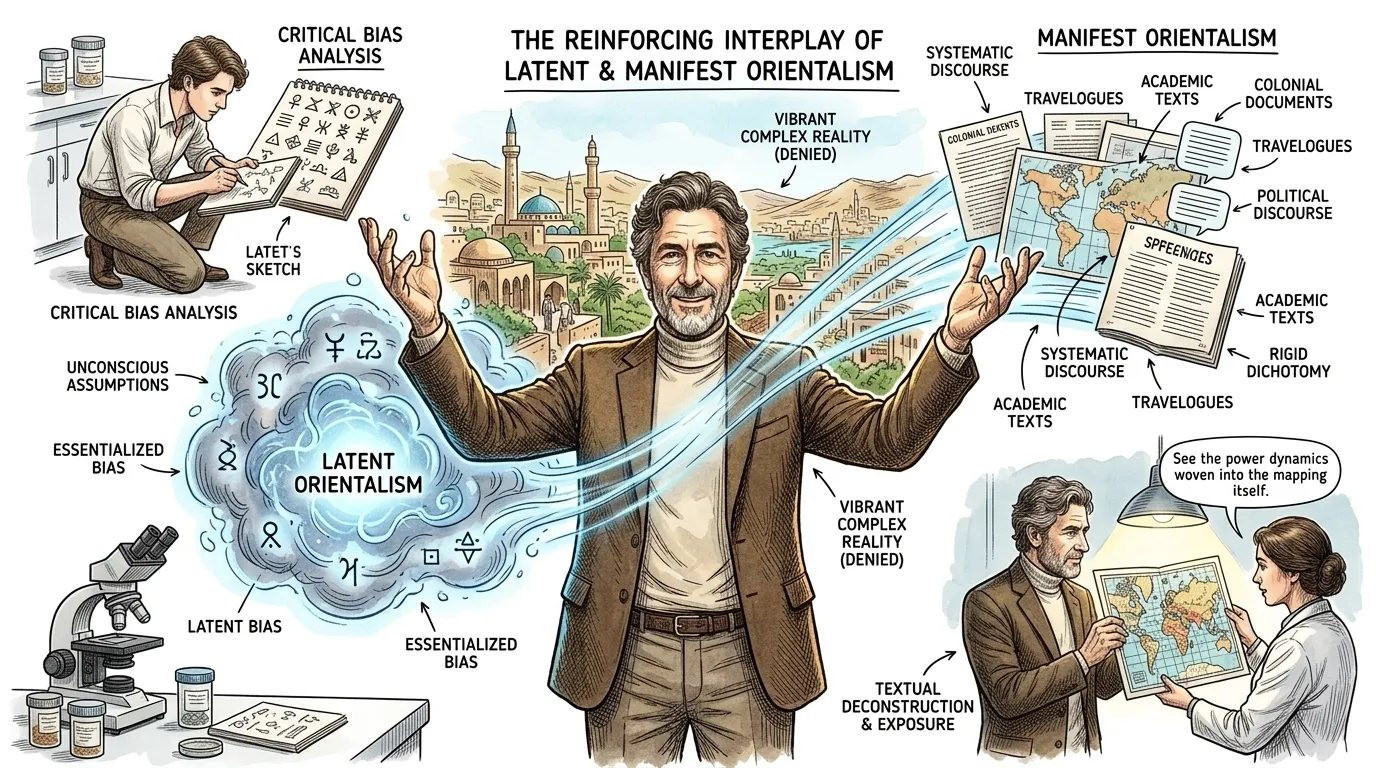
Said meticulously dissected Orientalism into two interconnected components: 'latent Orientalism' and 'manifest Orientalism.' Latent Orientalism refers to the unconscious, unchanging, and essentialized assumptions about the 'Orient'—its people are inherently sensual, despotic, irrational, or exotic. This deep-seated ideology provides the bedrock. Manifest Orientalism, on the other hand, comprises the explicit statements, policies, studies, and actions that flow from these underlying assumptions. It includes academic texts, travelogues, political speeches, and colonial administrative decisions. The persistent interplay between these two forms reinforces a rigid dichotomy, denying the Orient its complex, evolving reality and agency.
Philosophy Note: Latent Orientalism: The unconscious, essentialized, unchanging biases about the East (e.g., inherent exoticism, irrationality). Manifest Orientalism: The explicit expressions of these biases in texts, policies, and actions (e.g., academic studies, political rhetoric, colonial administration).
Page 5
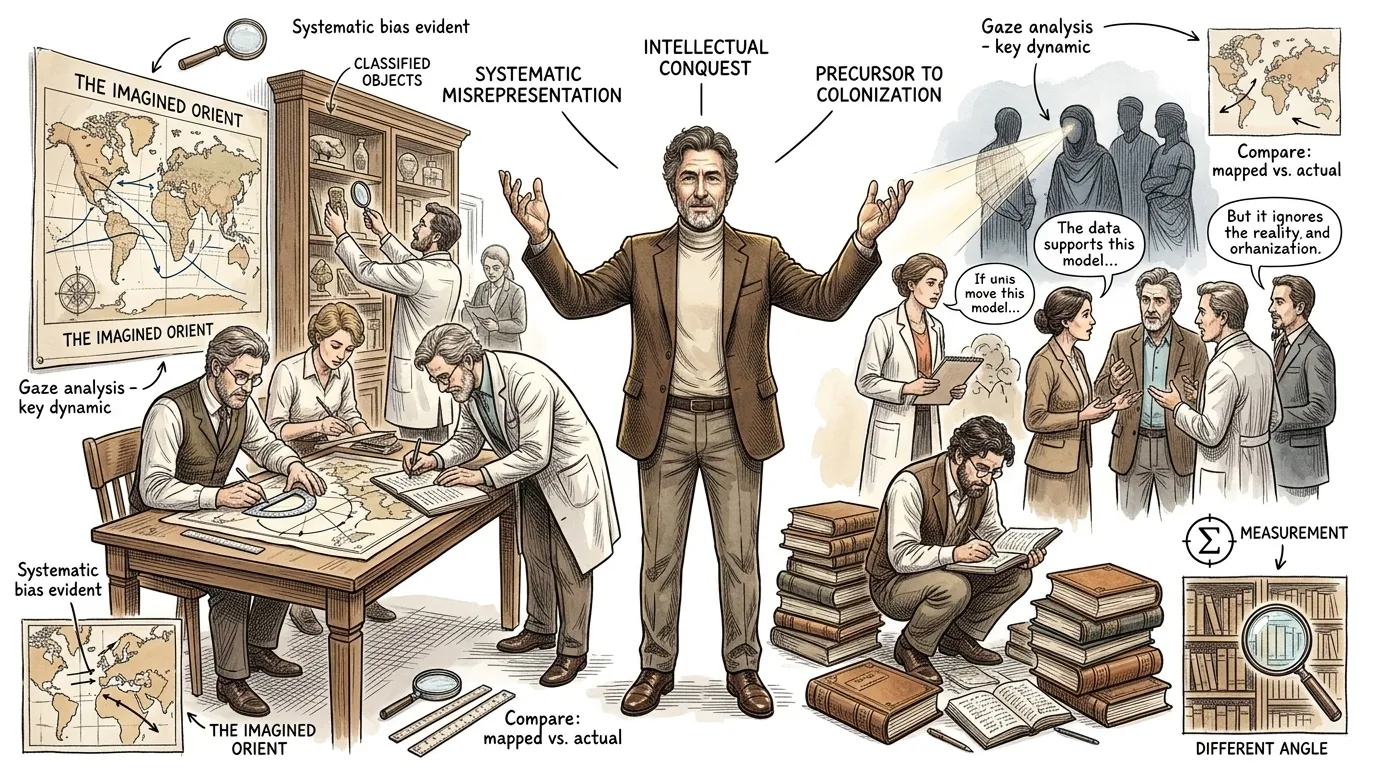
For Said, Orientalism was never a neutral academic pursuit; it was always about power. The West's creation of knowledge about the Orient was simultaneously an act of control. By defining the Orient, classifying its peoples, languages, and cultures, Western powers established a dominant position. This created the 'Other'—a simplified, often dehumanized version of non-Western peoples against which the West could define its own identity and superiority. This intellectual conquest preceded and enabled physical colonization, laying the groundwork for political domination and economic exploitation. The gaze itself became an instrument of subjugation.
Philosophy Note: Knowledge/Power Nexus: The production of knowledge about the Orient served to reinforce Western political and cultural dominance. 'The Other': A concept where one group defines itself by contrasting against a simplified, often inferior, external group.
Page 6
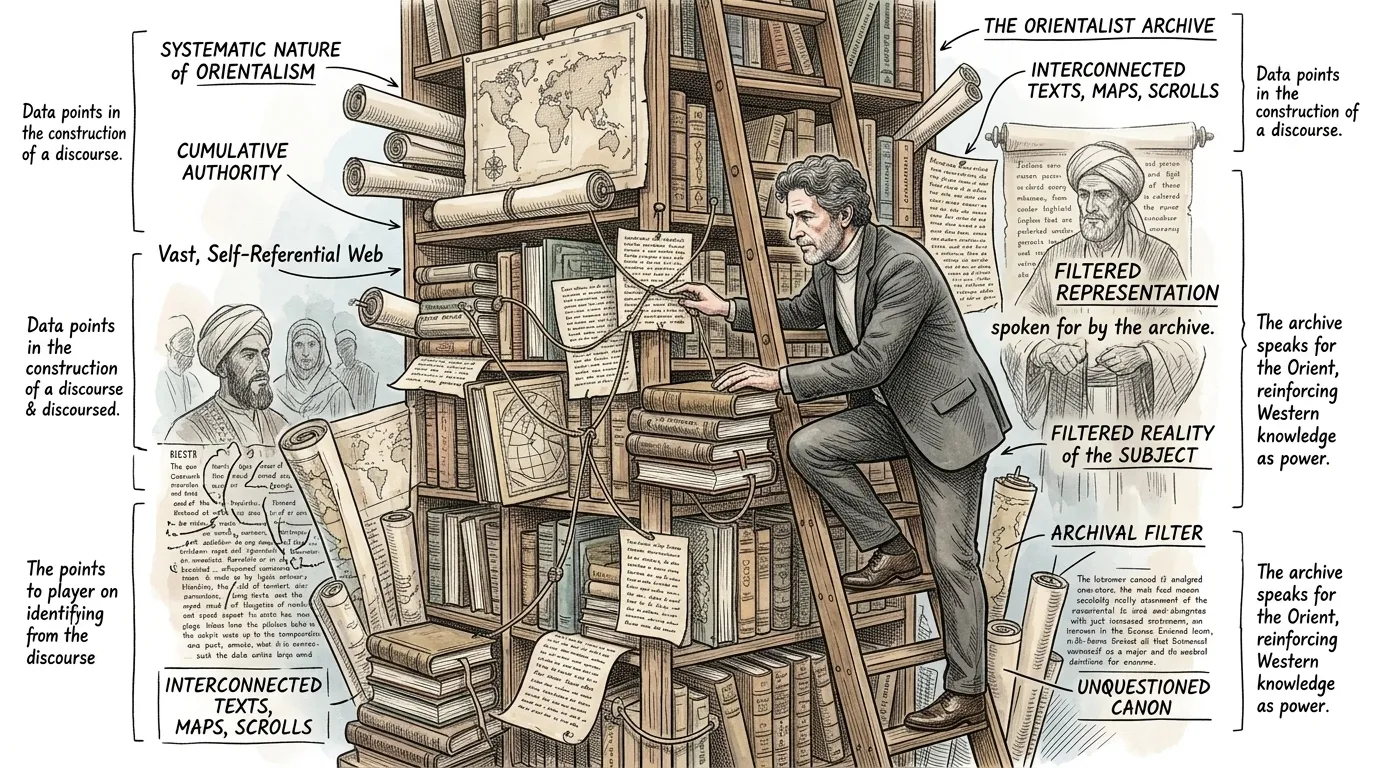
Said showed how the vast 'Orientalist archive'—a collection of texts ranging from ancient travelogues and religious commentaries to modern ethnographies and political analyses—formed a self-referential system. Each new text, even if critical of previous ones, often drew from and perpetuated the fundamental assumptions of latent Orientalism. This cumulative body of work established an authority over the Orient, making it a subject that could be spoken for, rather than a place that could speak for itself. The 'textual attitude' to the Orient meant that reality was often filtered through preconceived notions, reinforcing the West's imagined version of the East over its lived experience.
Philosophy Note: Orientalist Archive: A vast, cumulative body of Western texts and scholarship about the East. Textual Attitude: The tendency to understand the 'Orient' primarily through existing texts and preconceived notions, rather than direct engagement with its reality.
Page 7
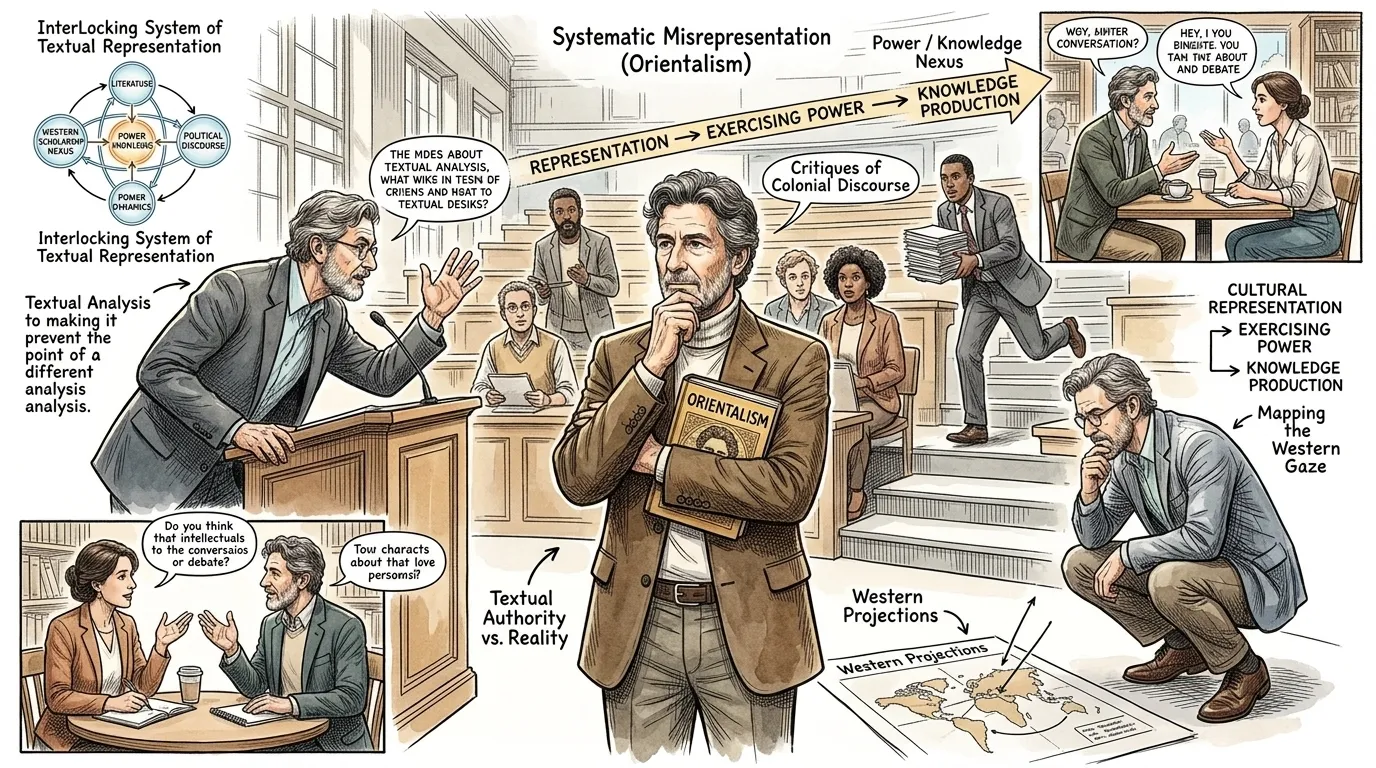
Said's 'Orientalism' sparked intense debate, reshaping various academic fields. Critics, however, raised important questions. Some argued that Said's work was itself essentialist, painting the 'West' as a monolithic entity and failing to acknowledge the diversity within Western scholarship or genuinely sympathetic European engagements with the East. Others suggested he oversimplified the complexities of power dynamics, particularly overlooking internal power structures within the 'Orient' itself. Despite these criticisms, Said's profound contribution was in forcing a critical self-reflection within scholarship and drawing undeniable connections between knowledge production, cultural representation, and political power.
Philosophy Note: Common Critiques: Essentializing the 'West,' overgeneralizing Western scholarship, overlooking internal 'Oriental' power structures. Enduring Impact: Forced critical self-reflection on representation, knowledge, and power in postcolonial studies.
Page 8
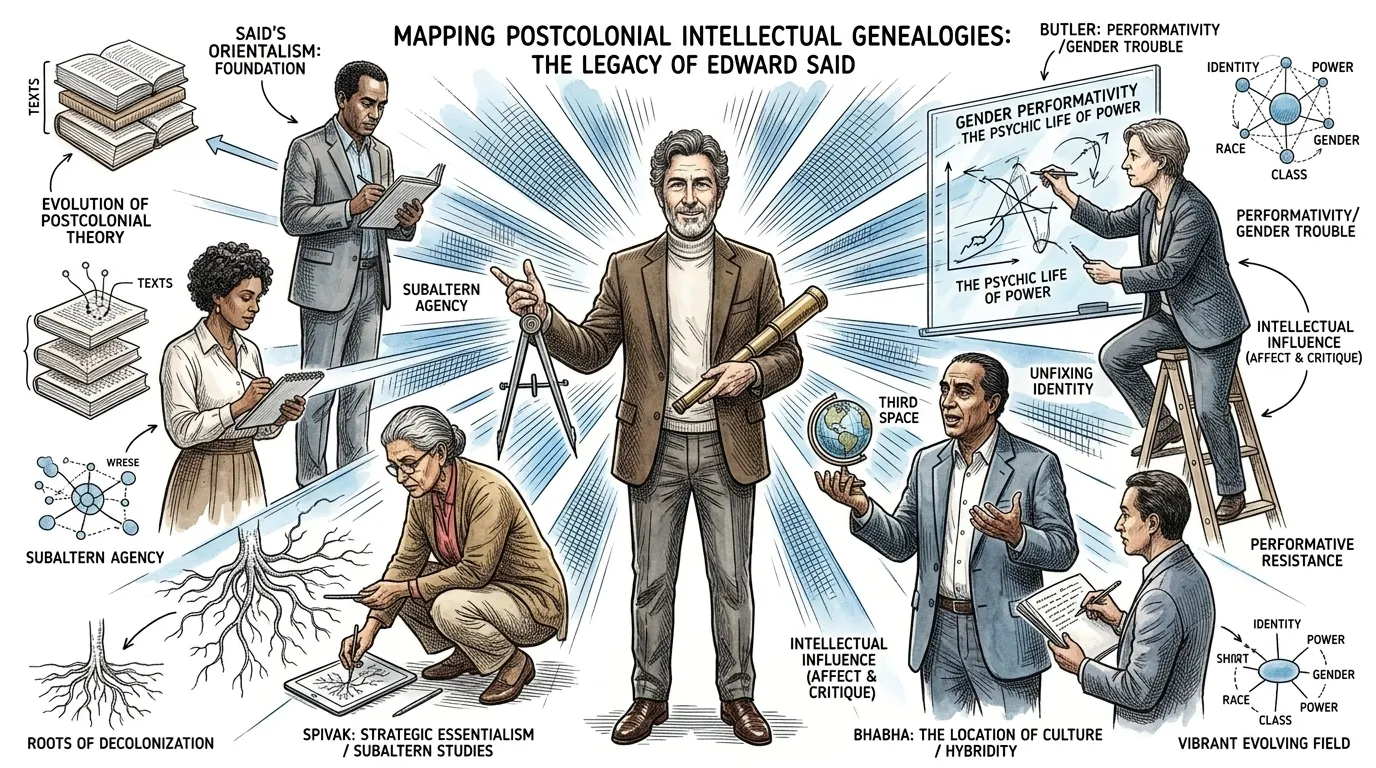
The legacy of Edward Said extends far beyond the specific critiques of 'Orientalism.' His work opened pathways for new fields like postcolonial studies, influencing thinkers such as Gayatri Spivak, Homi Bhabha, and Judith Butler, who explored concepts of subalternity, hybridity, and performativity. While some scholars built directly upon his framework, others diverged, exploring identity and power in more nuanced, fragmented ways. Said's emphasis on discourse, representation, and the inherent politics of knowledge production became foundational, inspiring critical inquiry into how dominant narratives shape our understanding of identity, culture, and global relations, whether concerning race, gender, or class.
Philosophy Note: Influenced: Postcolonial Studies, Critical Race Theory, Gender Studies. Key Successors: Gayatri Spivak (subalternity), Homi Bhabha (hybridity), Judith Butler (performativity). Lasting Legacy: Critical analysis of discourse, representation, and power in shaping identity and global relations.
Page 9
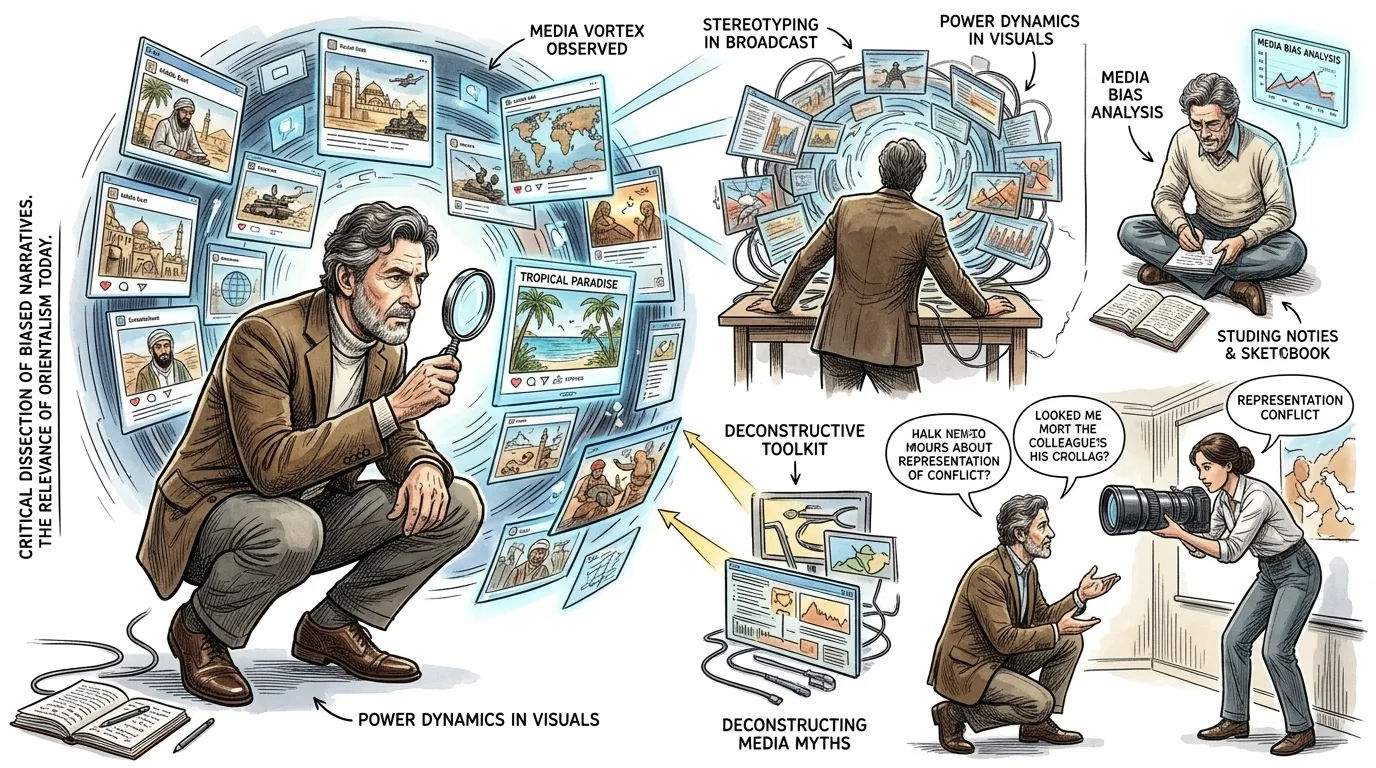
Today, Edward Said's ideas resonate more powerfully than ever. In the 21st century, the phenomenon of Orientalism continues to manifest in new forms. From media portrayals of the Middle East and Islam, often reduced to stereotypes of violence or exoticism, to political rhetoric surrounding global conflicts, the framework Said identified remains eerily persistent. The internet and social media amplify these representations, making the deconstruction of biased narratives a continuous, urgent task. Understanding Orientalism allows us to critically examine how cultural representations inform foreign policy, influence public opinion, and perpetuate cycles of misunderstanding and conflict in our interconnected world.
Philosophy Note: Contemporary Manifestations: Media portrayals of the Middle East, political discourse on global conflicts, cultural stereotyping in popular culture. Relevance: Critical analysis of how representations influence foreign policy, public opinion, and international relations.
Page 10
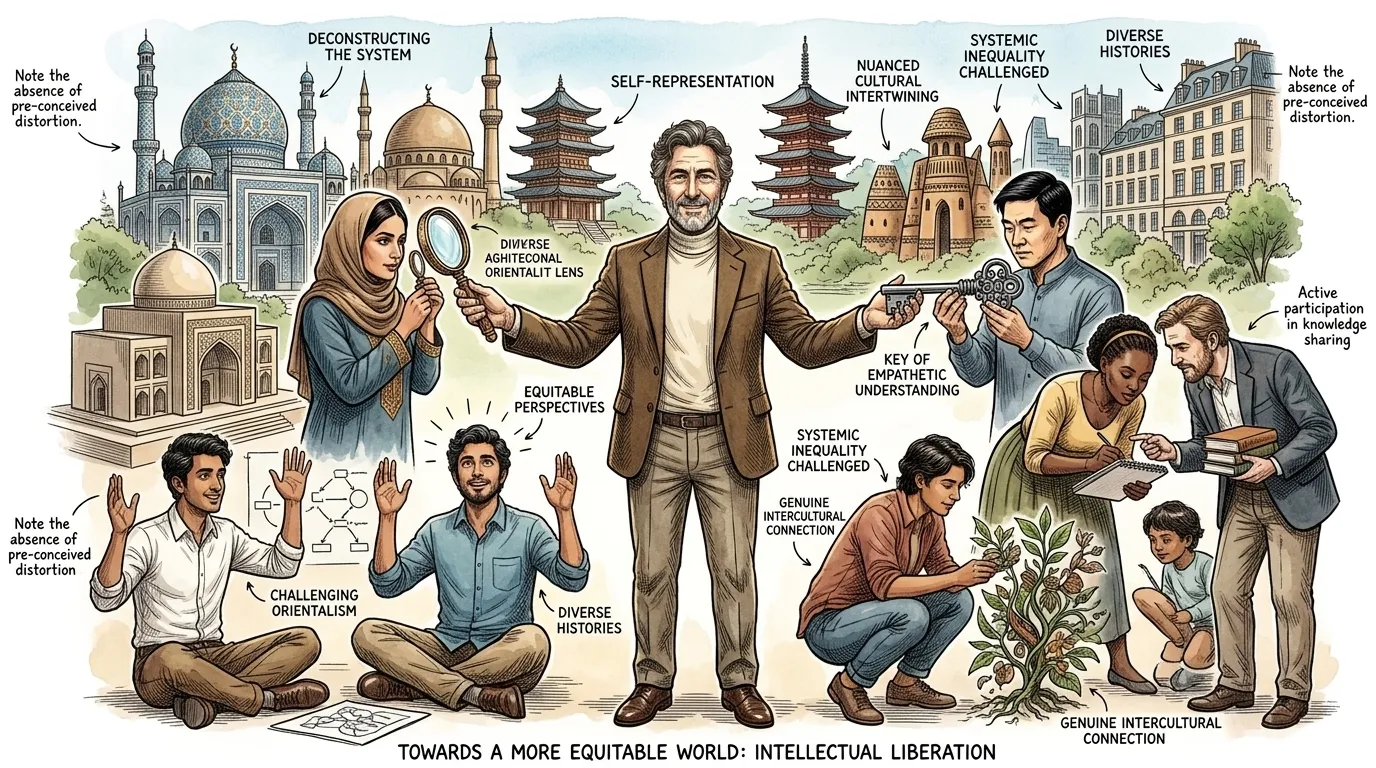
Edward Said's profound legacy lies in equipping us with the tools to deconstruct and challenge dominant narratives. His work urges us to recognize that knowledge is never innocent, and representation is always entangled with power. By understanding Orientalism, we become more aware of the subtle ways biases are embedded in culture, education, and politics. This critical consciousness is vital for fostering genuine intercultural understanding, challenging systemic inequalities, and ultimately striving for a more equitable and nuanced world where diverse voices are heard and respected on their own terms, rather than through a predefined, 'Orientalist' lens.
Philosophy Note: Legacy: Tools for deconstructing dominant narratives, recognizing knowledge as power. Future Impact: Fostering intercultural understanding, challenging systemic inequalities, promoting equitable representation, decolonizing knowledge.
About this story
- Audience: general readers
Questions and answers
Read Wonder Philosophy on your phone
Wonder Philosophy is available on Android and iPhone and iPad. Get Wonder Philosophy on Google Play · Get Wonder Philosophy on the App Store.