Frantz Fanon
Frantz Fanon — an illustrated philosophy story. 10 illustrated pages, free to read on Wonder Philosophy.
Page 1
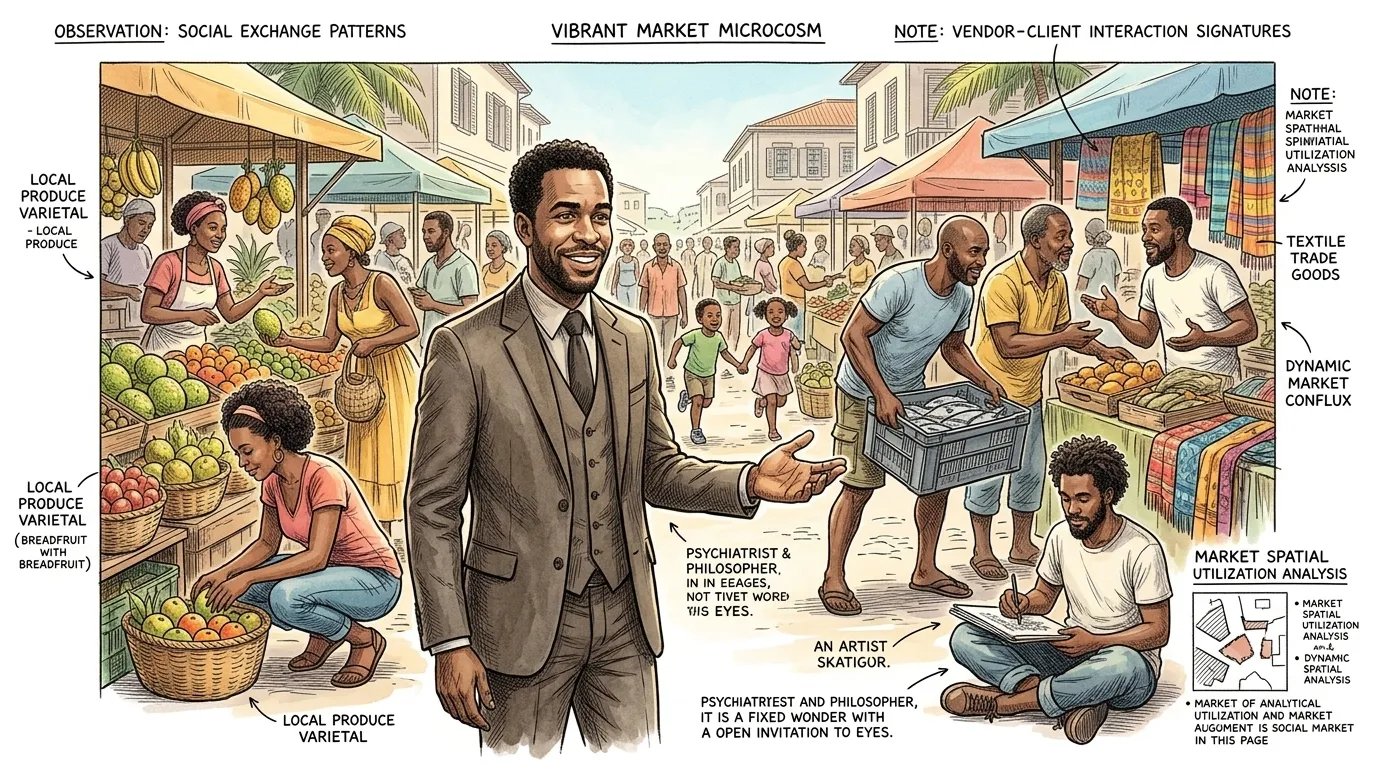
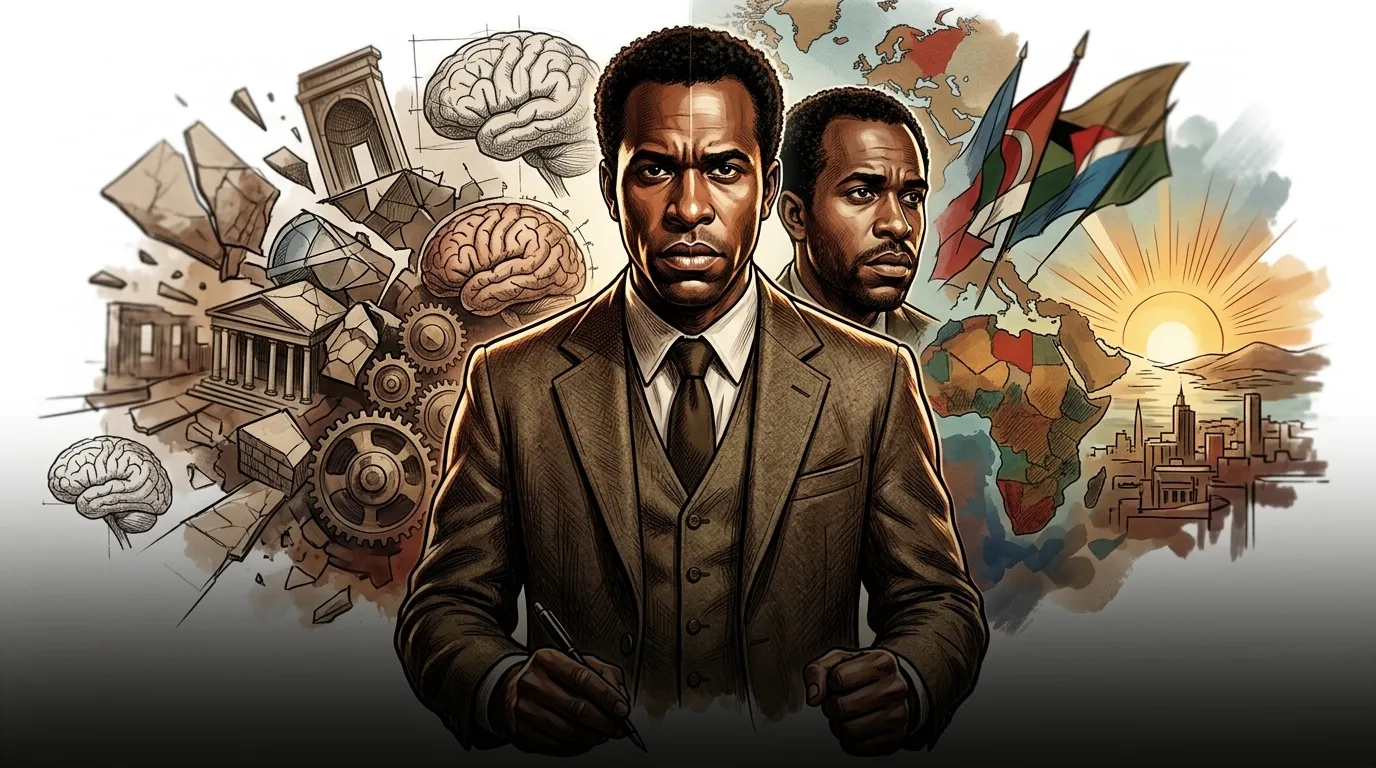
The profound psychological damage inflicted by colonialism became Frantz Fanon's central subject. He observed how systemic oppression distorted identity, creating a deep alienation within the colonized individual. This was not merely a political or economic struggle, but a profound crisis of self, often unseen by those in power. Fanon's work illuminates how external control forces an internalization of inferiority, leading to a constant battle for self-recognition and authentic existence.
""We must look beyond the visible chains," Frantz Fanon declared, gesturing towards the bustling market square of Fort-de-France. "The colonizer doesn't just seize land; he seizes the mind, forcing a new identity upon the colonized. The deeper wound is often psychological, invisible yet pervasive.""
Philosophy Note: Frantz Fanon (1925-1961), a Martinican psychiatrist and philosopher, analyzed the complex interplay of colonialism, racism, and mental health. His work bridged existentialism and critical theory.
Page 2
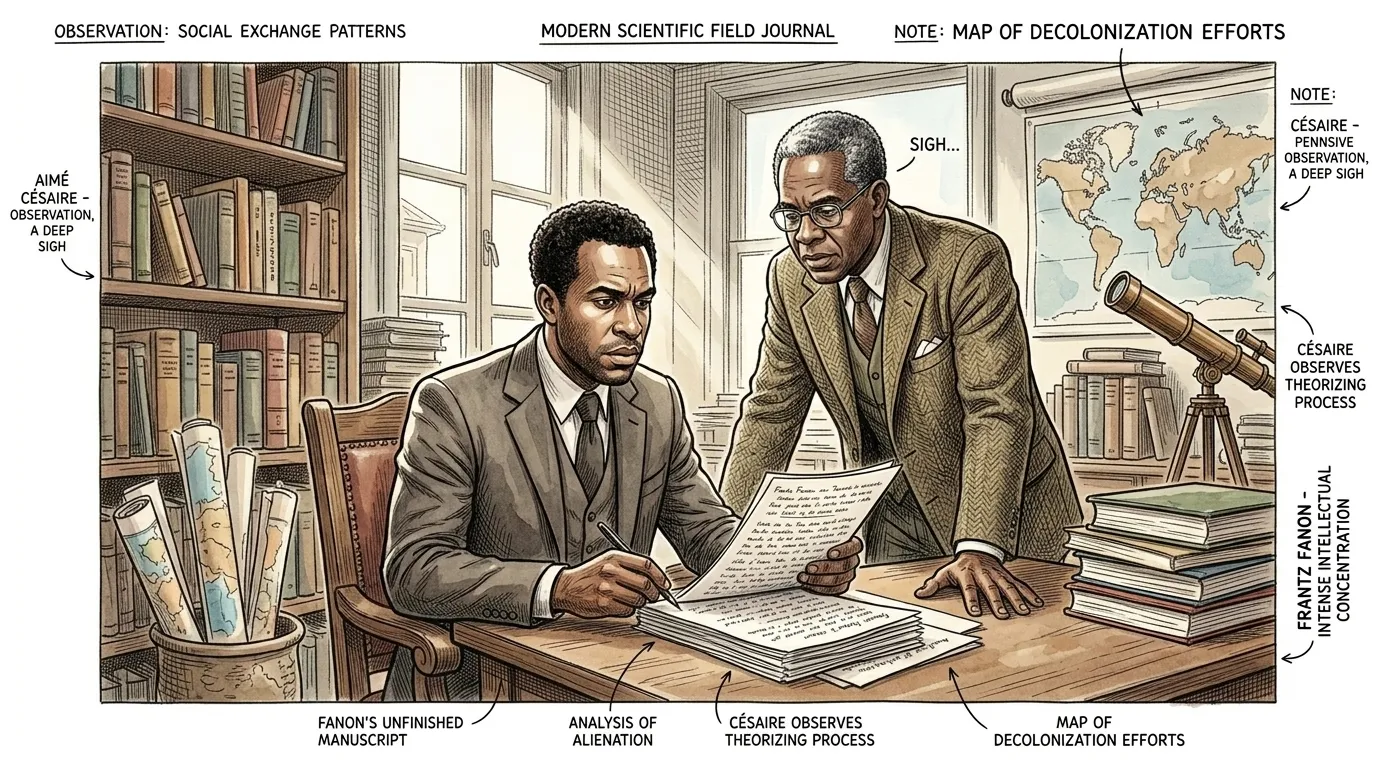
Fanon meticulously detailed the profound alienation experienced by the colonized, particularly the intellectual class. This internal schism arose from living in a society that simultaneously demanded mimicry of the oppressor while denying genuine acceptance. The struggle to reconcile an imposed identity with an authentic self became a foundational problem that Fanon sought to diagnose and understand.
"Aimé Césaire, observing Fanon's notes, said with a sigh, 'My dear Frantz, you speak of a profound spiritual disorientation. How can one truly be free when the very image of one's desired self is dictated by the oppressor?' Fanon replied, his gaze intense, 'It is the curse of the 'black mask, white skin.' The colonized intellectual often internalizes the colonizer's values, desperately seeking recognition while simultaneously feeling repulsed by their own heritage.'"
Philosophy Note: Fanon's seminal work, 'Black Skin, White Masks' (1952), explored the psychological effects of colonialism on the human psyche, especially the internal conflict of the colonized subject.
Page 3
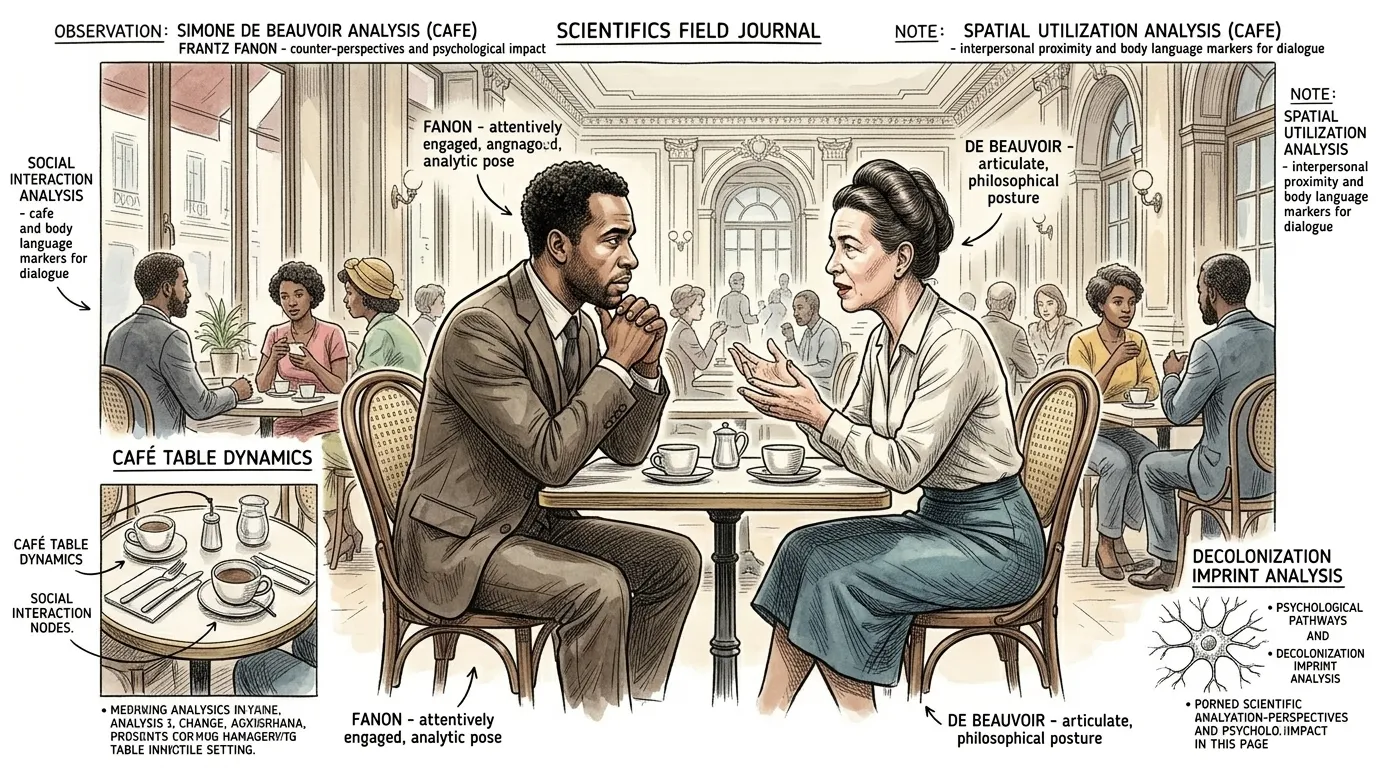
The desire for recognition from the colonizer often traps the colonized in a perpetual cycle of self-denial and mimicry. Fanon argued that genuine liberation could not occur until the colonized individual shed the 'white mask' and embraced an authentic identity, free from the oppressor's gaze. This difficult process often involved a profound psychological rupture, a necessary step towards self-affirmation.
"Simone de Beauvoir, leaning forward, thoughtfully remarked, 'As my colleague, Jean-Paul Sartre, once observed, 'Man is condemned to be free.' But what does that freedom mean when one's very existence is defined by another's imposition? This internal struggle is paramount.' Fanon nodded, 'Precisely. The colonized individual must move beyond seeking validation from the colonizer. The true act of liberation is self-definition, recognizing one's own humanity first and foremost, regardless of external judgment.'"
Philosophy Note: Jean-Paul Sartre, a leading existentialist, wrote the powerful preface to Fanon's 'The Wretched of the Earth,' acknowledging the crucial importance of Fanon's analysis.
Page 4
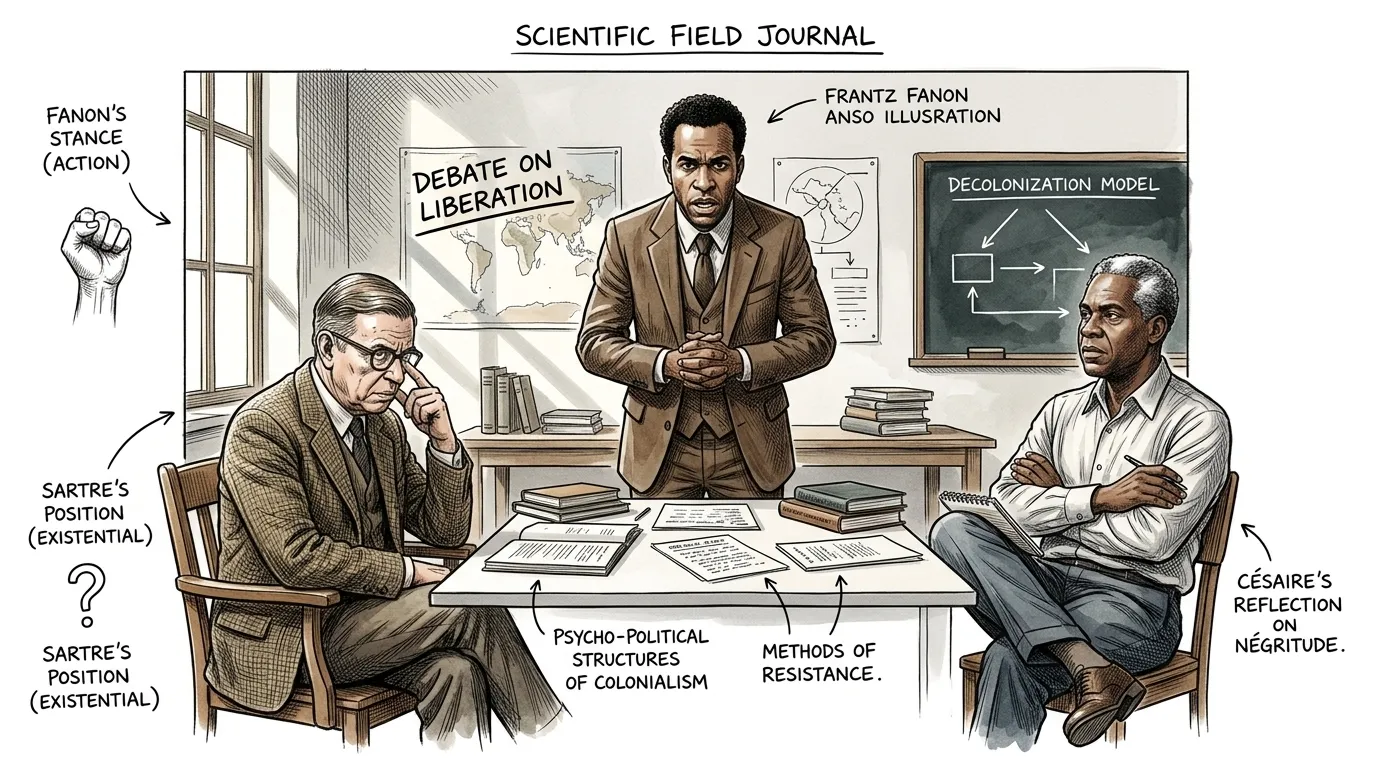
Fanon's most controversial argument concerned the role of violence in decolonization. He contended that for the colonized, violence was not merely a political tool but a profoundly cathartic act of self-liberation. It was the only way to shed the internalized inferiority and reclaim agency, to assert one's humanity against a dehumanizing system. This perspective challenged conventional pacifist views of liberation.
"Fanon, his voice now resolute, asserted, 'The violence of the colonized is a cleansing force. It frees the native from his inferiority complex and from his despair and inaction. It restores his self-respect.' Sartre, adjusting his glasses, responded, 'But at what cost? Is there no path to freedom without this profound rupture?' Césaire, his eyes hardened by experience, added, 'Sometimes, Frantz, the very act of standing up, even through force, reshapes the soul faster than any reasoned argument could.'"
Philosophy Note: In 'The Wretched of the Earth' (1961), Fanon argued that violent resistance was a necessary and psychologically transformative act for the colonized to reclaim their dignity and agency.
Page 5
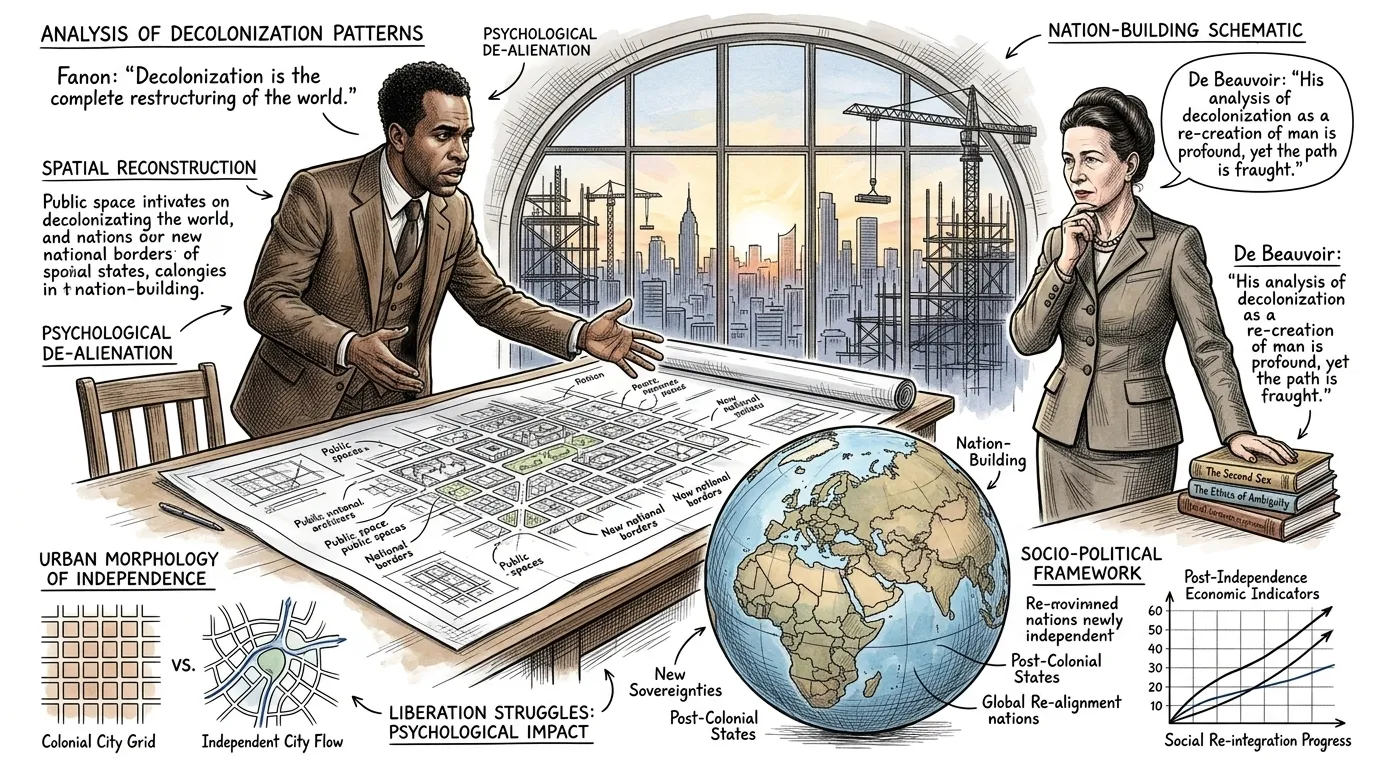
Beyond the act of liberation, Fanon critically examined the complexities of nation-building in the post-colonial era. He warned against the pitfalls of adopting the colonizer's structures and values, foreseeing the rise of a new national bourgeoisie that would perpetuate exploitation. True liberation, he argued, required a radical rethinking of societal structures, not just a change of leadership.
"Fanon explained, 'Achieving independence is merely the first step. The greater challenge lies in building a truly liberated nation, one that does not simply mimic the former colonial powers. The pitfalls are immense, the temptations of neo-colonialism ever-present.' De Beauvoir remarked, 'So the struggle continues internally, even after the external oppressor is gone. The true work, then, begins with the spirit of the people, not just their borders.'"
Philosophy Note: Fanon's final and most influential work, 'The Wretched of the Earth,' provided a radical analysis of decolonization and the challenges faced by newly independent nations.
Page 6
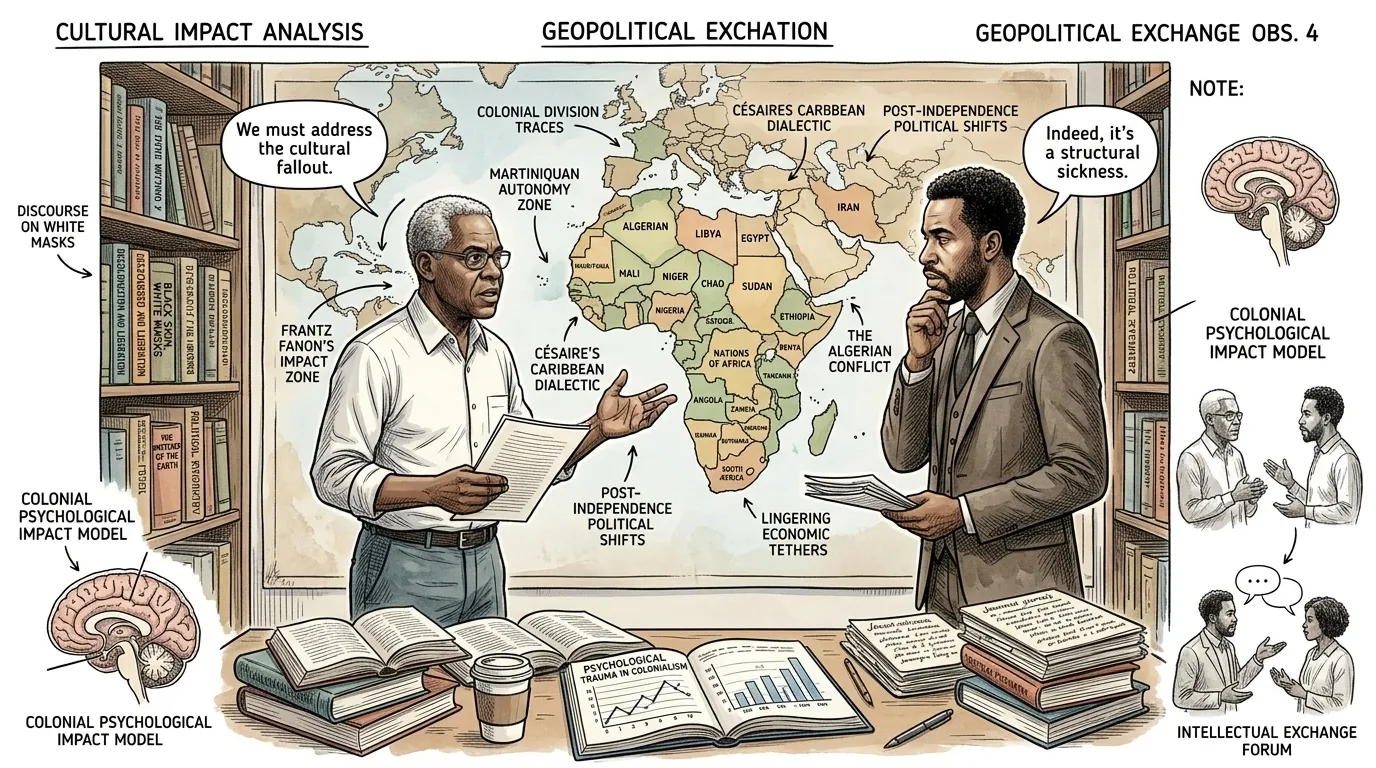
Fanon cautioned that national liberation movements, if not rooted in a truly popular and emancipatory consciousness, could easily devolve into new forms of oppression. The 'national consciousness,' he argued, could become an empty shell, merely replacing foreign domination with local elites who served their own interests rather than those of the people. This was a critical warning against superficial independence.
"Aimé Césaire, gesturing to a distant map, noted, 'So many nations gain their freedom, only to find new chains, albeit self-imposed. The dream of a liberated people often falters when the new leaders merely step into the shoes of the old oppressors.' Fanon agreed somberly, 'Indeed. True liberation demands more than a change of flags. It requires a profound transformation of social and economic structures, a constant vigilance against the 'pitfalls of national consciousness' where local elites mimic the exploiters.'"
Philosophy Note: Fanon's critique of the national bourgeoisie and the dangers of uncritical 'national consciousness' remains a powerful insight into post-colonial governance and development.
Page 7
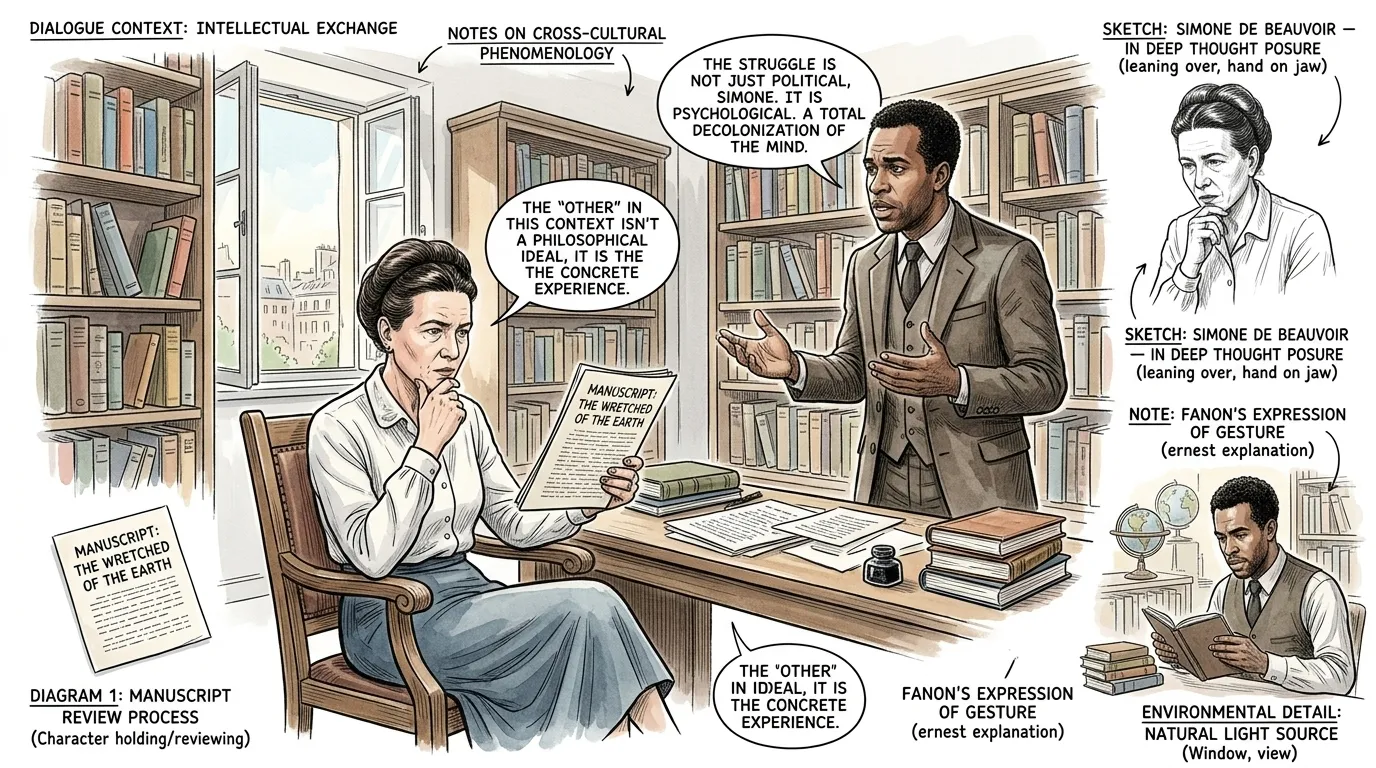
While profoundly influential, Fanon's work has also faced critique, particularly regarding his nuanced stance on violence and its interpretation. Critics sometimes argued that his analysis could be misconstrued to endorse indiscriminate violence, or that his theories, while powerful, might not universally apply to all colonial contexts. However, most scholars recognize the depth of his psychological insights into oppression.
"Simone de Beauvoir, considering a passage from Fanon's latest manuscript, mused, 'Your insights are undeniable, Frantz, yet some may interpret your advocacy for transformative violence as a blanket endorsement. How do we ensure the nuanced understanding of this 'cleansing force'?' Fanon replied, 'It is not a call for chaos, Simone, but an observation of a psychological necessity. It is the recovery of self, not merely destruction. The challenge lies in guiding that energy towards true humanistic construction, not just mimicry.'"
Philosophy Note: Fanon's work, while transformative, has prompted continuous academic debate, particularly concerning the interpretation and application of his arguments on violence.
Page 8
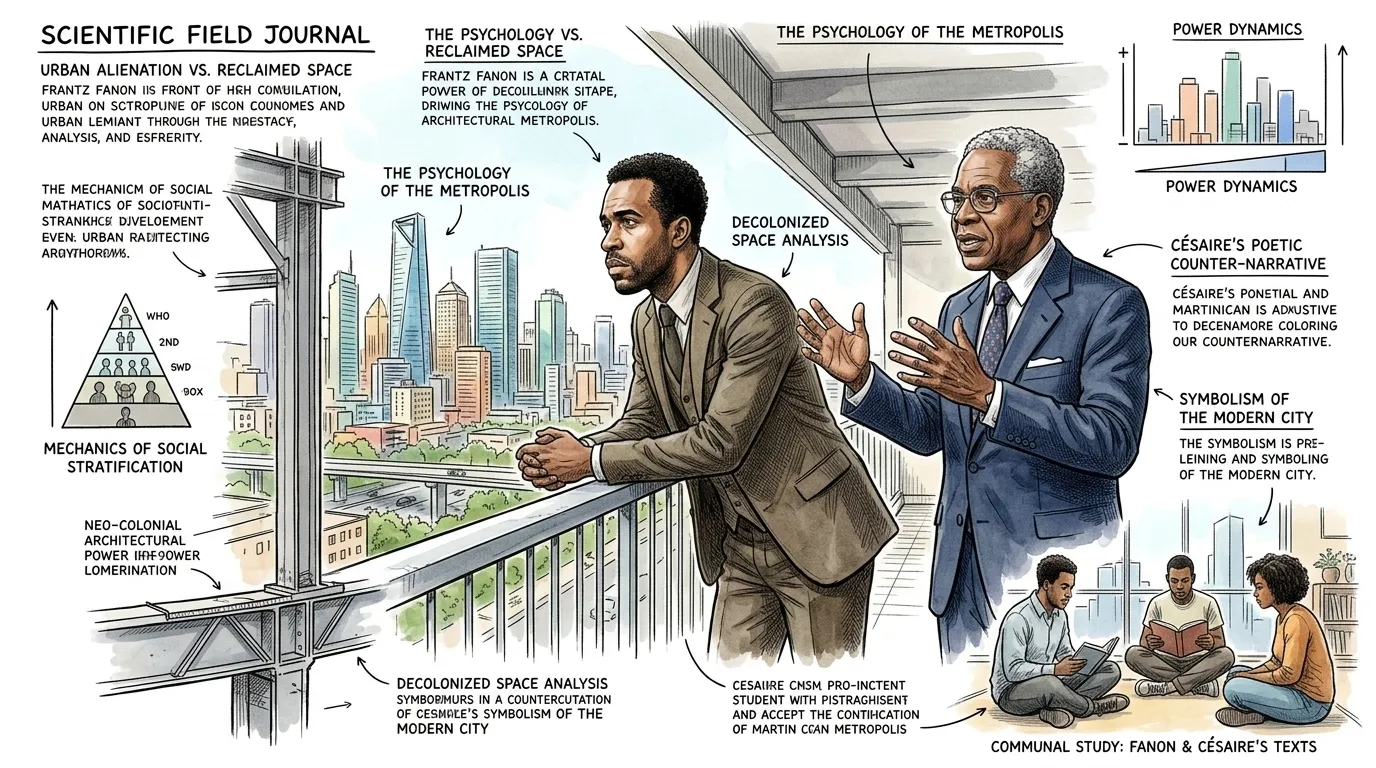
Today, Frantz Fanon's work resonates profoundly in discussions of identity politics, systemic racism, and the enduring legacies of colonialism. His analysis of psychological alienation and the struggle for recognition provides a critical lens through which to understand contemporary social movements and challenges. The 'setup' of psychological damage from page two finds its 'payoff' in offering frameworks for understanding these present-day struggles.
"Aimé Césaire, looking towards a vibrant, modern city skyline (symbolic of contemporary society), remarked, 'Even decades later, Frantz's insights illuminate the world around us. The echoes of colonialism manifest in new forms of racial discrimination and power imbalances. How do we continue to apply his thinking?' Fanon, looking contemplative, replied, 'The fundamental human struggle for dignity, for authenticity, against systems that deny it—that is timeless. His work offers a language for those unseen wounds, a pathway to understand what is truly at stake in identity and resistance.'"
Philosophy Note: Fanon's analysis informs contemporary critical race theory, post-colonial studies, and psychological approaches to trauma and oppression within marginalized communities.
Page 9

Fanon's legacy is not just historical; it is a living challenge to continually decolonize the mind and society. His call for a 'new humanity,' free from the psychological imprints of oppression, remains an aspirational goal. His writings compel us to confront uncomfortable truths about power, identity, and the enduring work required for genuine liberation.
"Jean-Paul Sartre, reflecting in a quiet moment, concluded, 'Fanon's most significant contribution, perhaps, is forcing us to confront the deepest structures of dehumanization, not just political but existential. His insights resonate still, pushing us to ask: 'Are we truly free, or merely operating under new masters, internal or external?'' Simone de Beauvoir added, 'The struggle for self-definition is eternal. Fanon gave a voice to those who lost theirs, and a roadmap, however challenging, for reclaiming it.'"
Philosophy Note: Fanon's ideas continue to be essential in fields ranging from psychology and sociology to literary criticism and political science, fostering critical thinking on global power dynamics.
Page 10
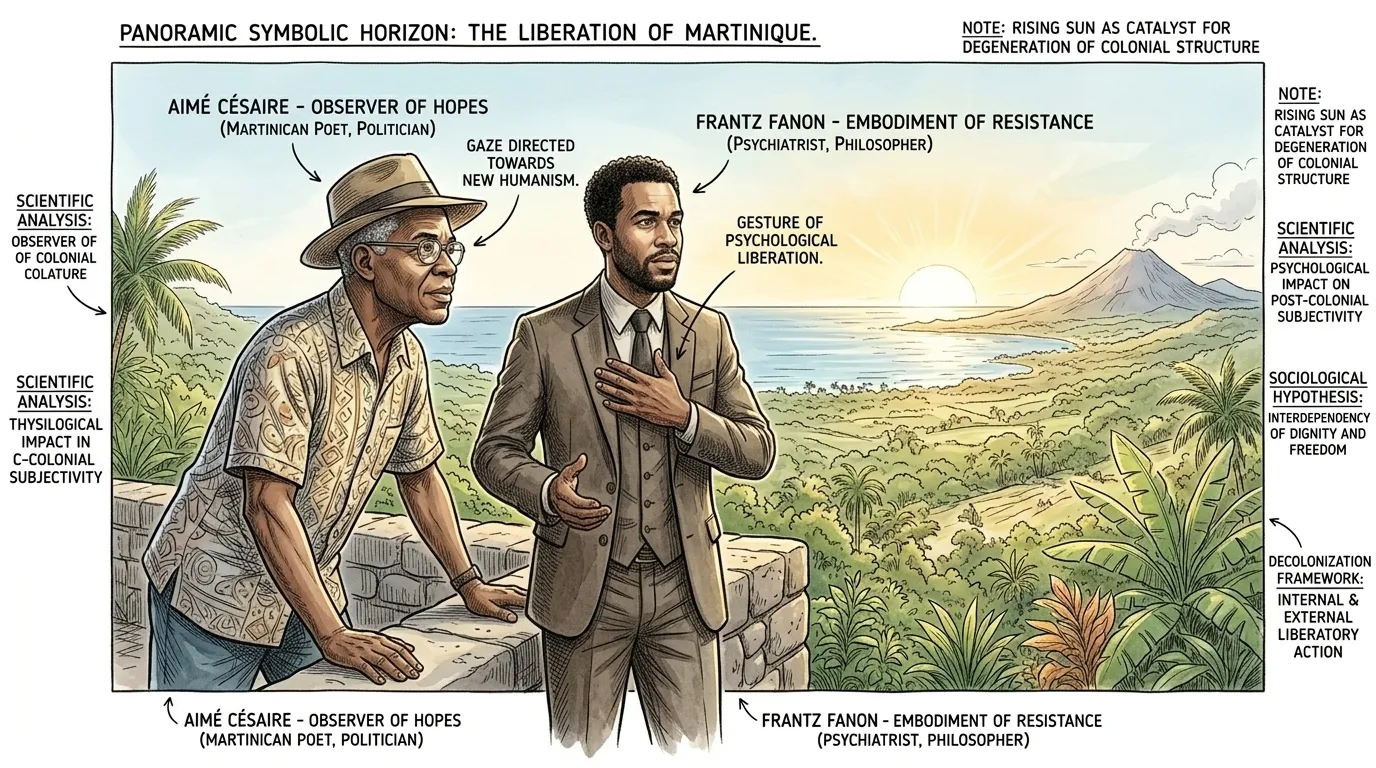
Frantz Fanon's philosophical journey was a relentless pursuit of human freedom and dignity, particularly for those marginalized by oppressive systems. His unflinching analysis of the psychic wounds of colonialism, the necessity of agency, and the complex path to genuine liberation cemented his place as an indispensable voice in modern thought. His work challenges us to strive for a 'new humanism' where self-definition and collective solidarity triumph over imposed identities and systemic injustice.
""He offered a harrowing but ultimately hopeful path," Aimé Césaire observed, looking towards a symbolic horizon. "His work reminds us that true freedom is not merely granted, but won through persistent struggle—both external and internal." Frantz Fanon's legacy, then, remains a powerful call to consciousness, urging humanity towards a more authentic and just existence, forever questioning the masks we wear."
Philosophy Note: Frantz Fanon's vision of a 'new humanism' challenges humanity to break free from inherited oppressions and construct societies founded on authentic self-determination and equality.
About this story
- Audience: general readers
Questions and answers
Read Wonder Philosophy on your phone
Wonder Philosophy is available on Android and iPhone and iPad. Get Wonder Philosophy on Google Play · Get Wonder Philosophy on the App Store.