Gorgias
Gorgias — an illustrated philosophy story. 10 illustrated pages, free to read on Wonder Philosophy.

Page 1

Why does rhetoric, the art of persuasive speaking, still matter today? In a world saturated with information, from social media to political debates, the ability to effectively communicate and influence others is more critical than ever. Gorgias, an ancient Greek sophist, understood this power, shaping the way we think about language and its impact.
Philosophy Note: Rhetoric: The art of effective or persuasive speaking or writing.
Page 2
![Born in Leontini, Sicily, around 485 BC, Gorgias [485-380 BC] was one of the most influential sophists of his time. Sophists were itinerant teachers who…](https://thewonderbooks.com/images/stories/gorgias/illustrations/gorgias_page_02_v1775186201487.webp "Born in Leontini, Sicily, around 485 BC, Gorgias [485-380 BC] was one of the most influential sophists of his time. Sophists were itinerant teachers who…")
Born in Leontini, Sicily, around 485 BC, Gorgias [485-380 BC] was one of the most influential sophists of his time. Sophists were itinerant teachers who traveled from city to city, offering instruction in rhetoric, philosophy, and other subjects. Gorgias gained fame for his eloquent speeches and his ability to argue both sides of any issue.
Philosophy Note: Sophists: Ancient Greek teachers who specialized in rhetoric and argumentation.
Page 3
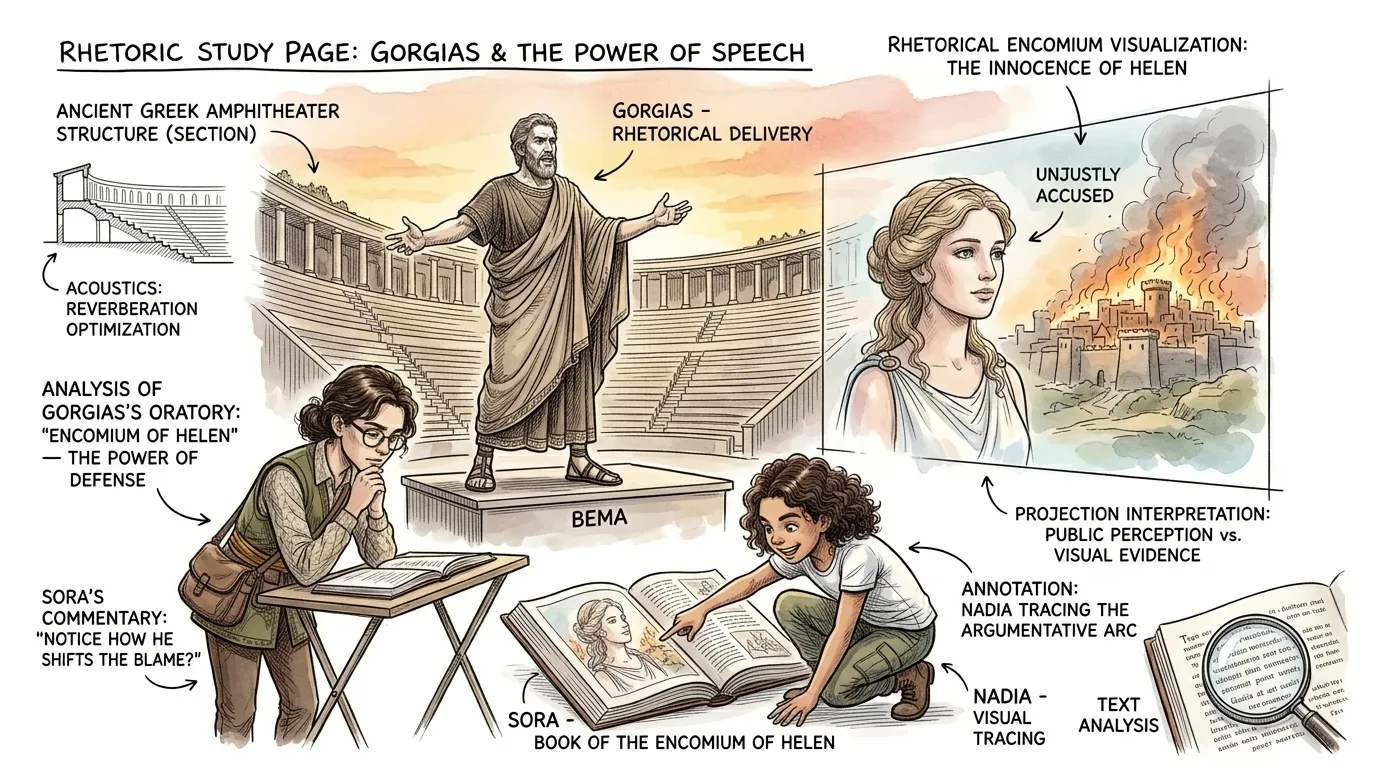
One of Gorgias's most famous works is the "Encomium of Helen," a defense of Helen of Troy. In this speech, Gorgias argues that Helen should not be blamed for the Trojan War, as she may have been compelled by fate, the gods, or persuasion. The speech showcases Gorgias's skill in using rhetoric to exonerate someone from blame, even in the face of overwhelming public opinion.
Philosophy Note: Encomium: A speech or piece of writing that praises someone or something highly.
Page 4
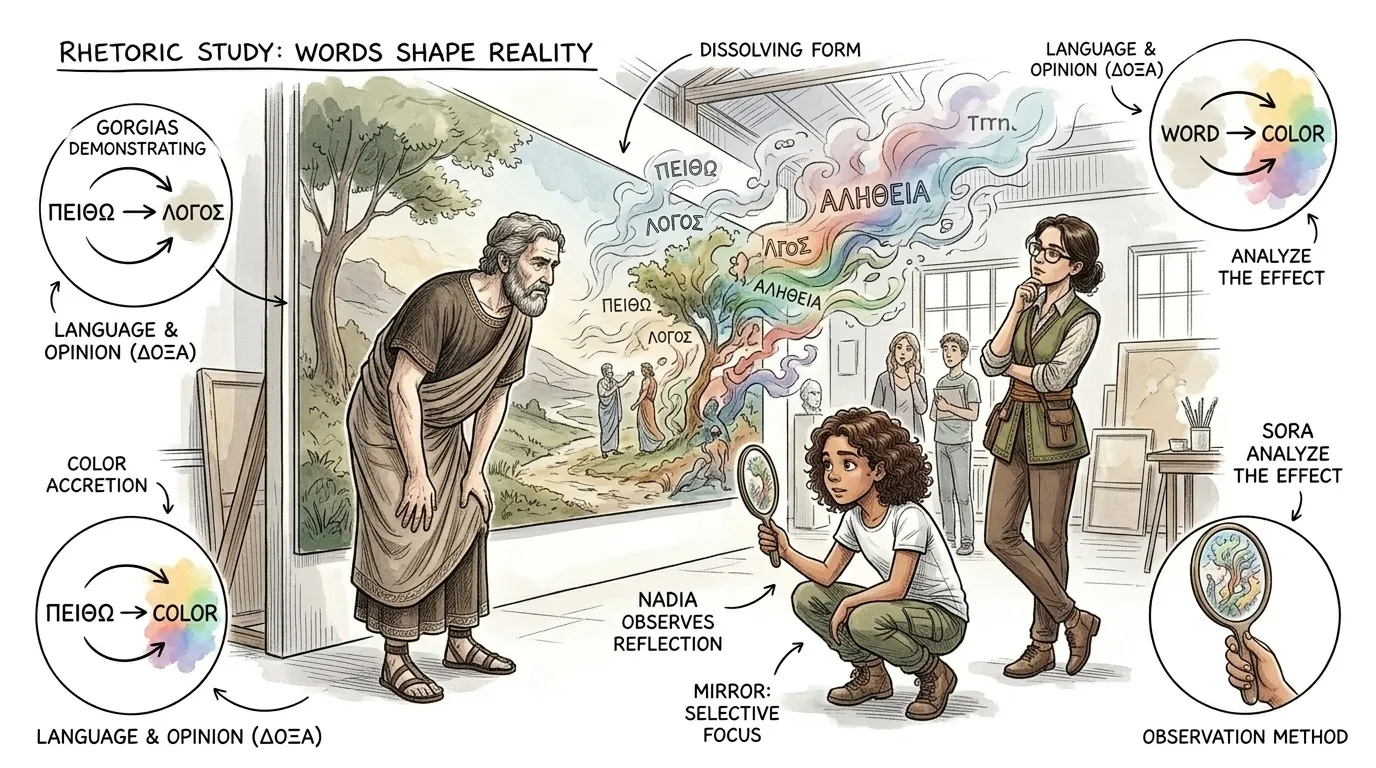
Gorgias believed that language is a powerful tool that can be used to shape reality. He argued that words are not simply representations of things, but rather have the ability to create, persuade, and deceive. This view challenged the traditional belief that language should be used to accurately reflect the world.
Philosophy Note: Gorgias's philosophy highlights the persuasive power of language and its potential to shape reality.
Page 5
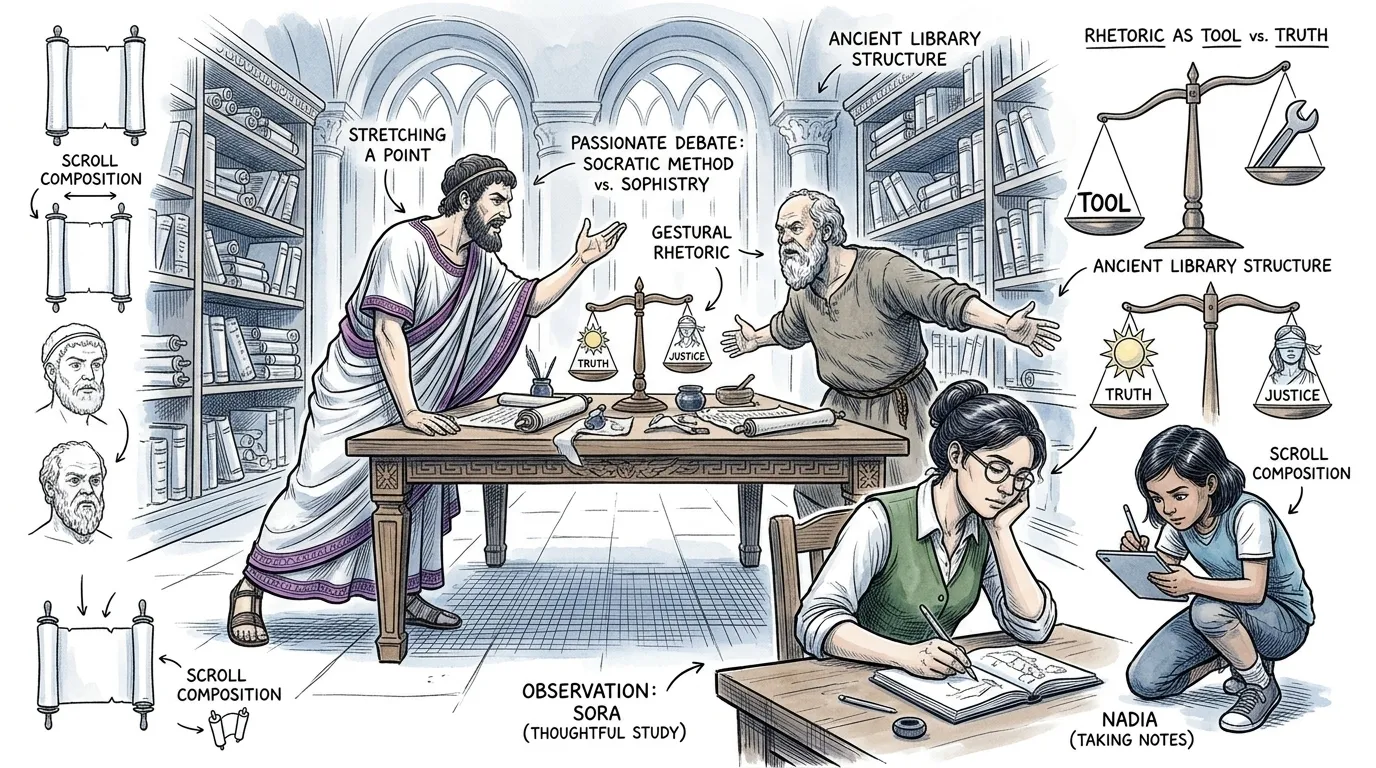
Plato's dialogue "Gorgias" features a debate between Socrates and Gorgias about the nature of rhetoric and its moral implications. Socrates argues that rhetoric is only useful if it is used to promote justice and truth, while Gorgias contends that rhetoric is simply a tool that can be used for any purpose, regardless of morality.
Philosophy Note: Plato's 'Gorgias' explores the ethical dimensions of rhetoric and its potential for misuse.
Page 6
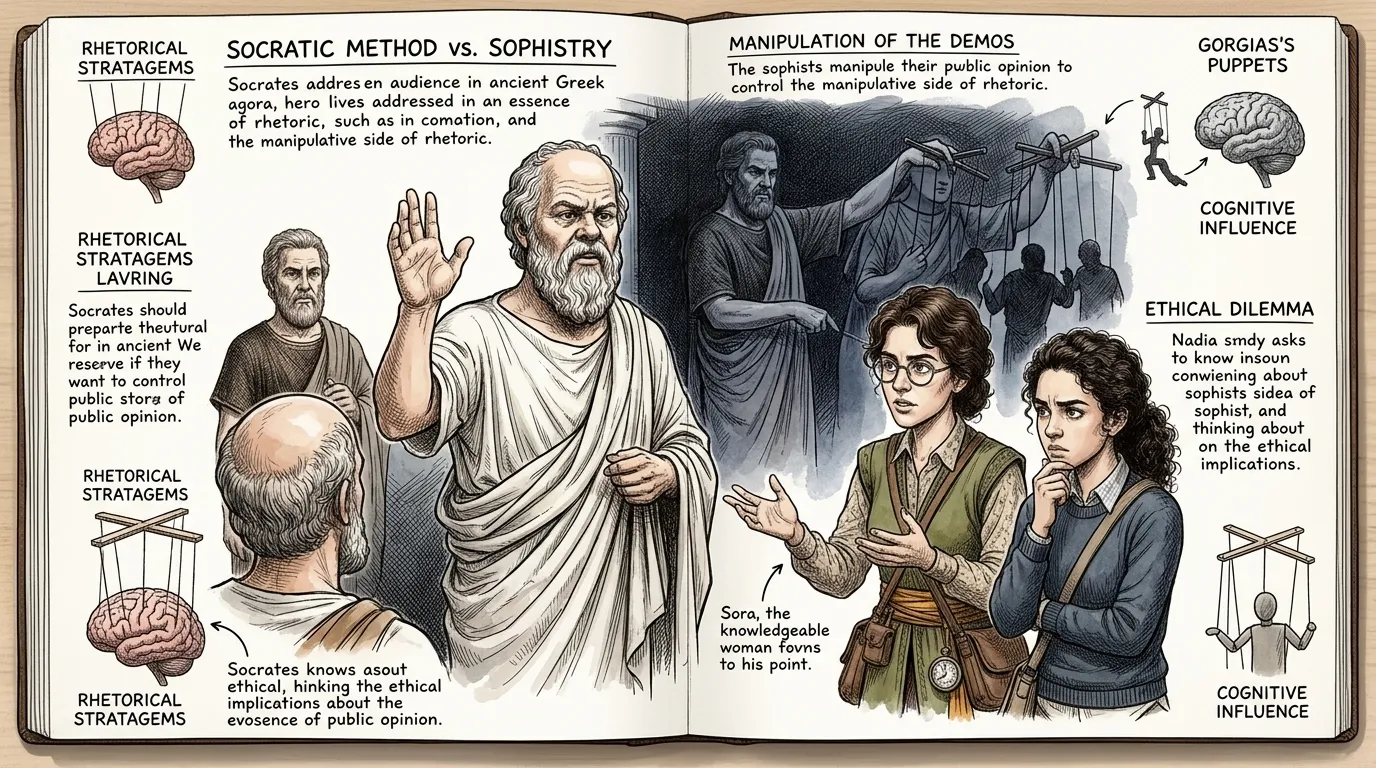
Socrates criticized Gorgias and other sophists for prioritizing persuasion over truth. He believed that rhetoric, when used without a commitment to justice, could be dangerous and manipulative. This critique raised important questions about the ethical responsibilities of speakers and writers.
Philosophy Note: Socrates challenged the Sophists' view of rhetoric, advocating for its use in pursuit of truth and justice.
Page 7

Gorgias's ideas continue to resonate today in fields such as law, politics, and advertising. The ability to craft persuasive arguments, appeal to emotions, and influence public opinion remains a valuable skill. However, the ethical concerns raised by Socrates remain relevant as well.
"Sora says, "Remember what Nietzsche said, 'There are no facts, only interpretations.' Understanding Gorgias helps us see how interpretations are constructed and how they can influence our understanding of the world.""
Philosophy Note: Nietzsche's quote highlights the subjective nature of truth and the importance of critical thinking.
Page 8

The study of Gorgias reminds us that rhetoric is a powerful tool that can be used for both good and evil. It is essential to be aware of the persuasive techniques used by others and to develop our own ability to communicate effectively and ethically. The key is to use rhetoric responsibly, with a commitment to truth and justice.
"Nadia asks, "So, learning about Gorgias isn't just about winning arguments, it's about using language wisely?""
Philosophy Note: Ethical rhetoric emphasizes the importance of using persuasive language responsibly and truthfully.
Page 9
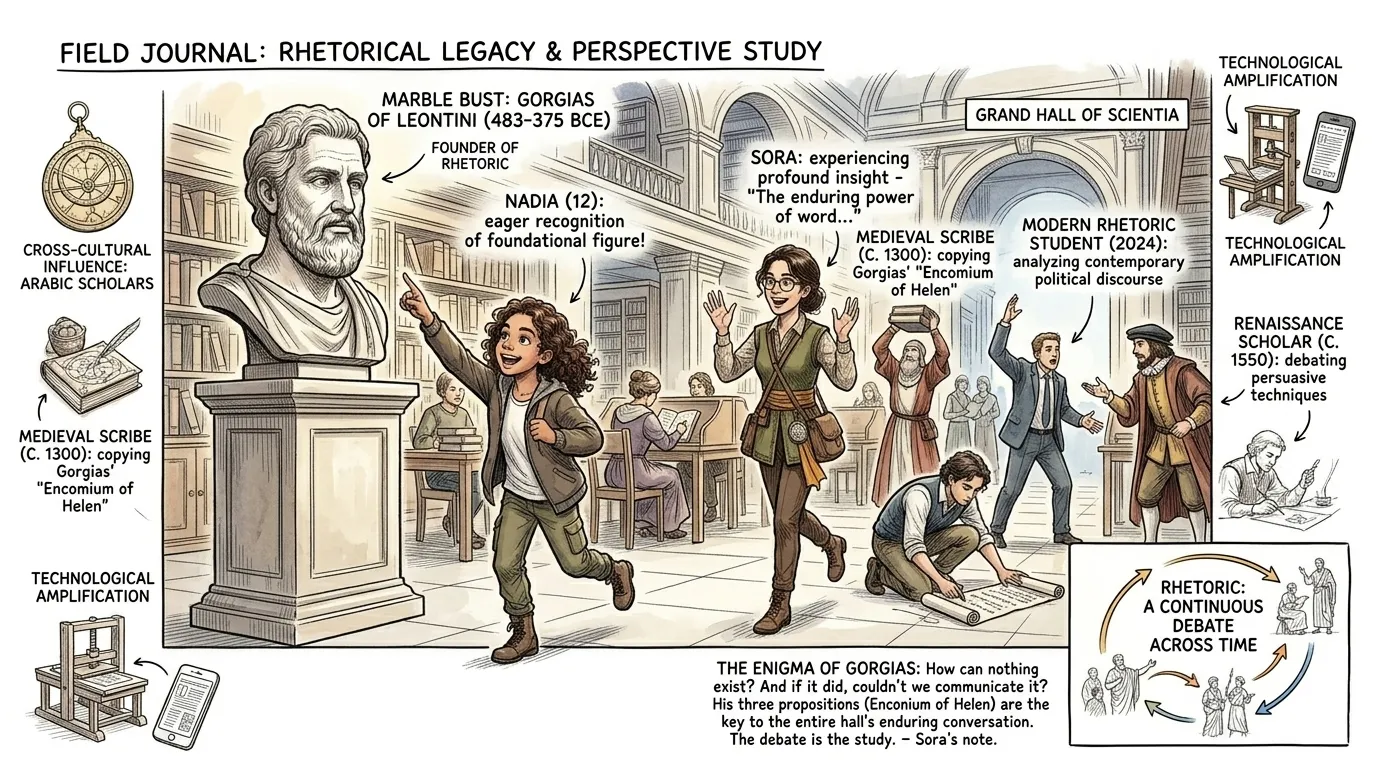
Gorgias's influence on the development of rhetoric and philosophy is undeniable. His ideas continue to be studied and debated, challenging us to think critically about the power of language and its impact on society. By understanding Gorgias, we can become more informed and responsible communicators.
Philosophy Note: Gorgias's legacy encourages us to critically examine the persuasive power of language and its impact on society.
Page 10

The debate over the ethical use of rhetoric, sparked by Gorgias and Socrates, continues to this day. As we navigate an increasingly complex and interconnected world, the ability to communicate effectively and ethically is more crucial than ever. Gorgias provides a foundational understanding of this enduring challenge.
Philosophy Note: The ethical considerations surrounding rhetoric remain a critical issue in our interconnected world.
About this story
- Audience: kids (ages 6–12)
Questions and answers
Read Wonder Philosophy on your phone
Wonder Philosophy is available on Android and iPhone and iPad. Get Wonder Philosophy on Google Play · Get Wonder Philosophy on the App Store.