Hilary Putnam
Hilary Putnam — an illustrated philosophy story. 10 illustrated pages, free to read on Wonder Philosophy.
Page 1
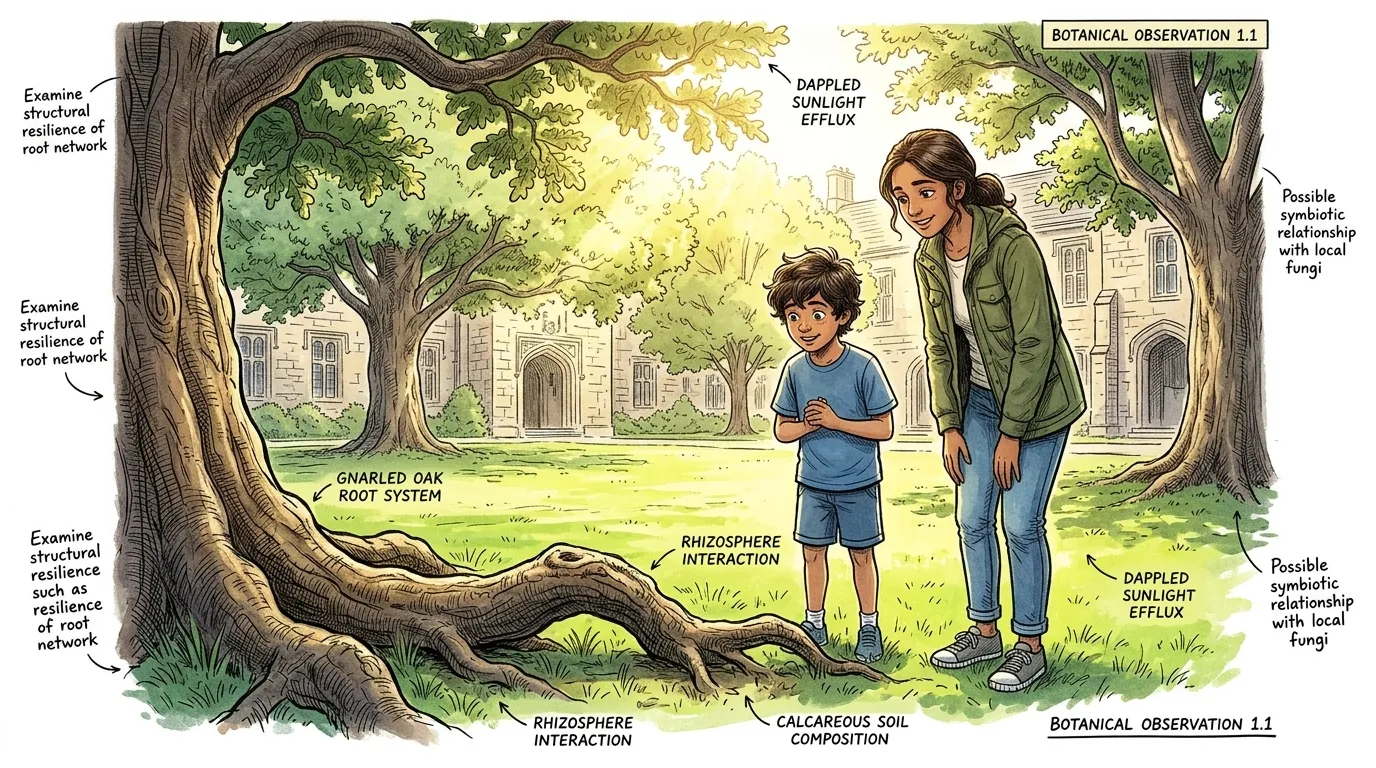
In the vibrant heart of the bustling city, a young boy named Idris wandered with Ishani, his older companion, through an old university courtyard. Bright sunlight streamed through the ancient oak trees as Idris pointed to a strange, gnarled tree root. 'Ishani,' he asked, 'Does a tree root always know it's a root?'
"''Ishani,' he asked, 'Does a tree root always know it's a root?' Ishani smiled warmly, 'That's a very clever question, Idris! Sometimes, things aren't quite what they seem, and our understanding depends on more than just looking.'"
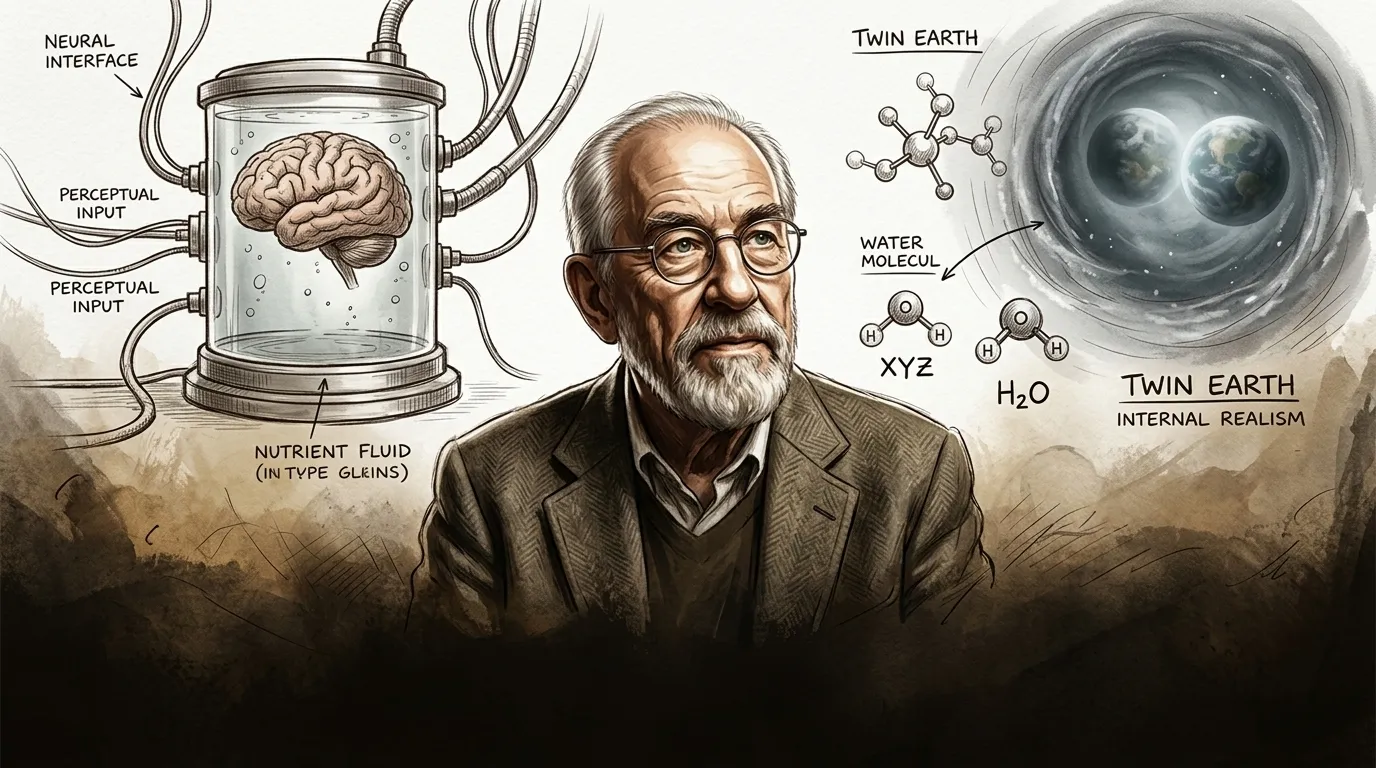
Philosophy Note: Hilary Putnam (1926-2016) was a prominent American philosopher whose work significantly impacted analytic philosophy. He is often recognized for his contributions to the philosophy of mind, language, and science. This introduction gently hints at his complex ideas regarding how our concepts and understanding relate to external reality.
Page 2
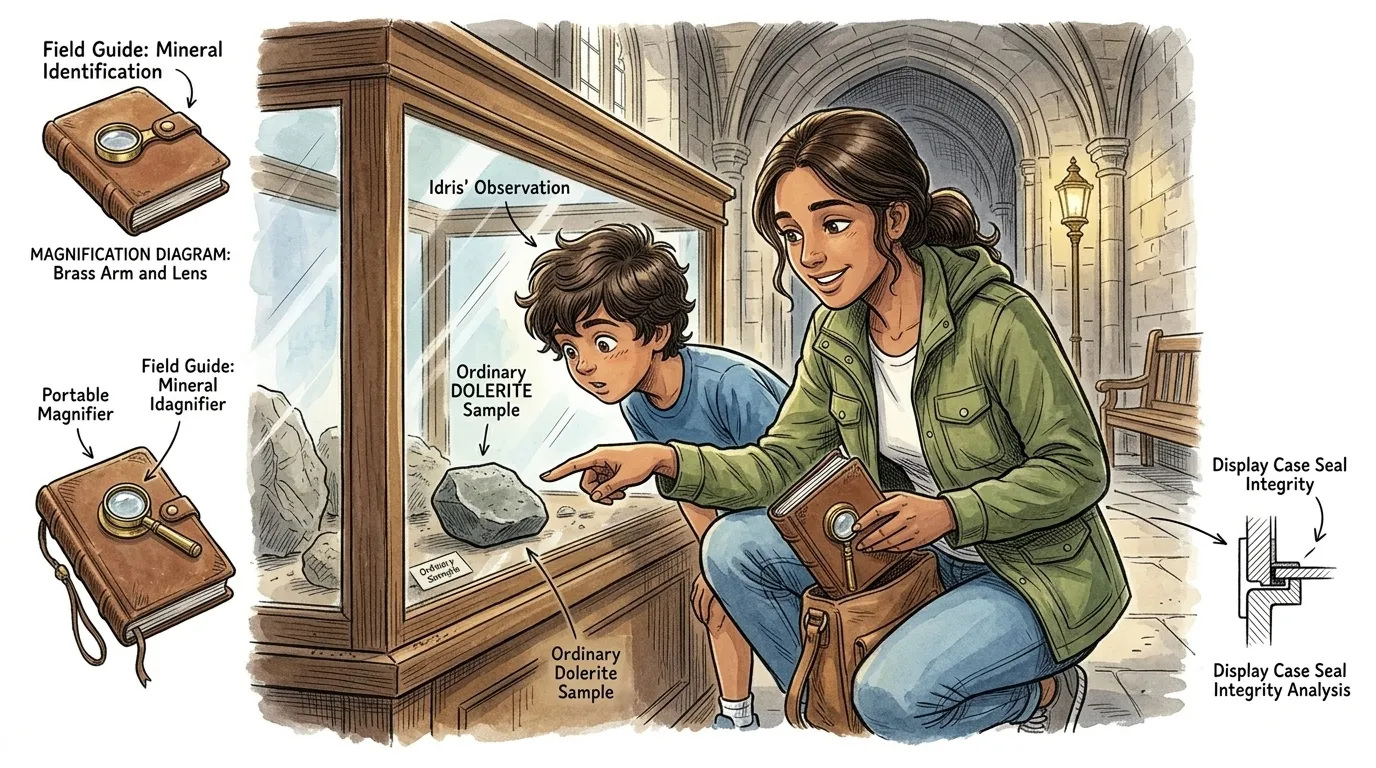
As they continued their walk, Ishani led Idris to a small, dusty display case inside an old university building. There, amidst other geological specimens, lay a particular stone. 'This,' Ishani explained, 'is a piece of rare 'Glimmerstone.' It looks just like common river pebbles, but it has a unique microscopic crystal inside that makes it special.'
"'This,' Ishani explained, 'is a piece of rare 'Glimmerstone.' It looks just like common river pebbles, but it has a unique microscopic crystal inside that makes it special.' Idris peered closely. 'How do you know it's special if it looks the same?' Ishani reached into her bag. 'We have to use a special tool and knowledge to truly know, like this old geology field guide with its magnifying glass attachment.'"
Philosophy Note: Putnam challenged the idea that the meaning of words or concepts exists purely 'in the head.' His 'Twin Earth' thought experiment vividly demonstrated that the meaning of a term like 'water' isn't just a mental state but depends on its actual chemical composition in the external world. The 'Glimmerstone' introduces this distinction between superficial appearance and underlying reality.
Page 3
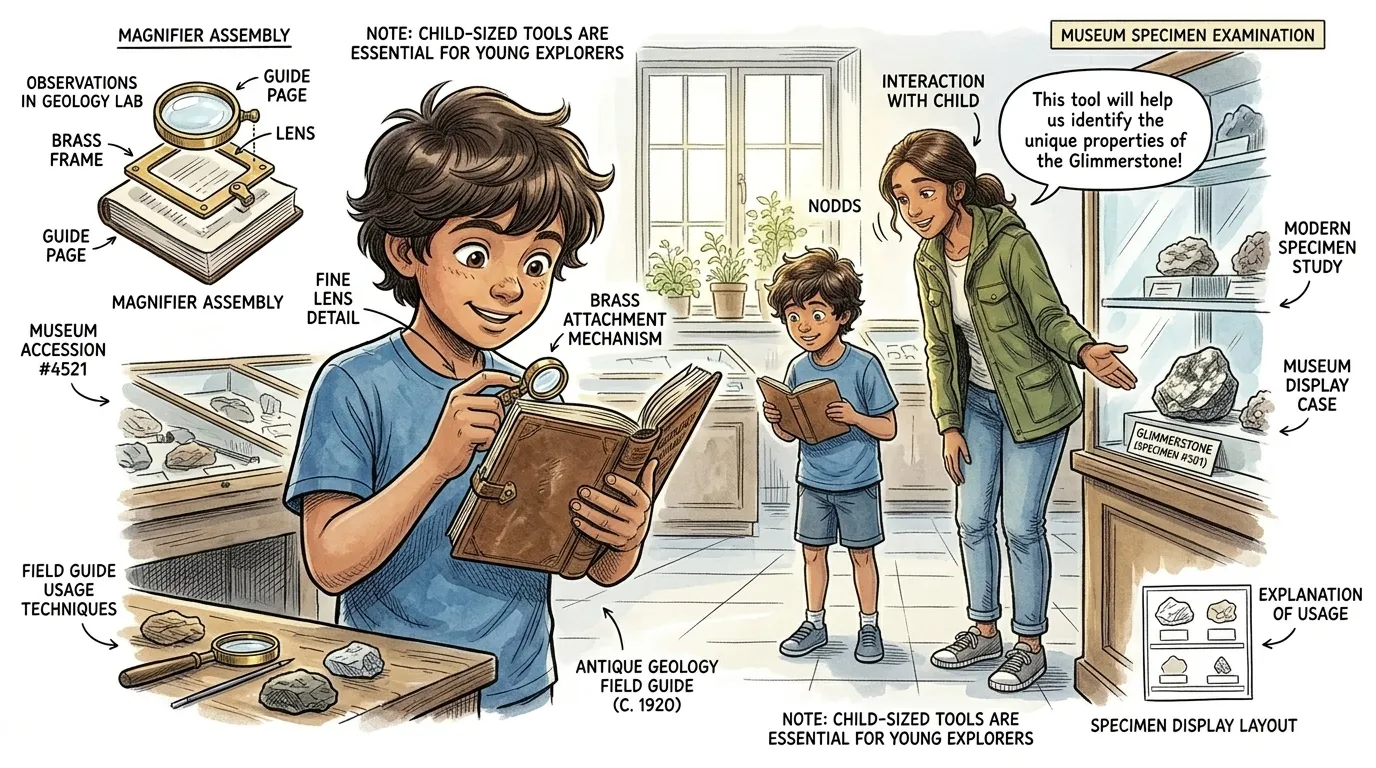
Idris carefully took the field guide, marveling at the tiny magnifying glass. 'So, just seeing isn't enough?' he wondered. Ishani nodded. 'Exactly! What we think about something, what we call it, isn't just a picture in our mind. It's connected to what it actually is out there in the world.' She pointed at the stone. 'Without this guide, we might always think it's just a common pebble.'
"'So, just seeing isn't enough?' he wondered. Ishani nodded. 'Exactly! What we think about something, what we call it, isn't just a picture in our mind. It's connected to what it actually is out there in the world.' She pointed at the stone. 'Without this guide, we might always think it's just a common pebble.'"
Philosophy Note: Putnam famously challenged philosophical skepticism, particularly the 'brain in a vat' scenario, arguing that if we were merely brains in a vat, our words wouldn't refer to the external world in the way we assume. He posited that meaning and reference are inherently external, tied to our causal interactions with the environment. The field guide represents this crucial external reference point.
Page 4
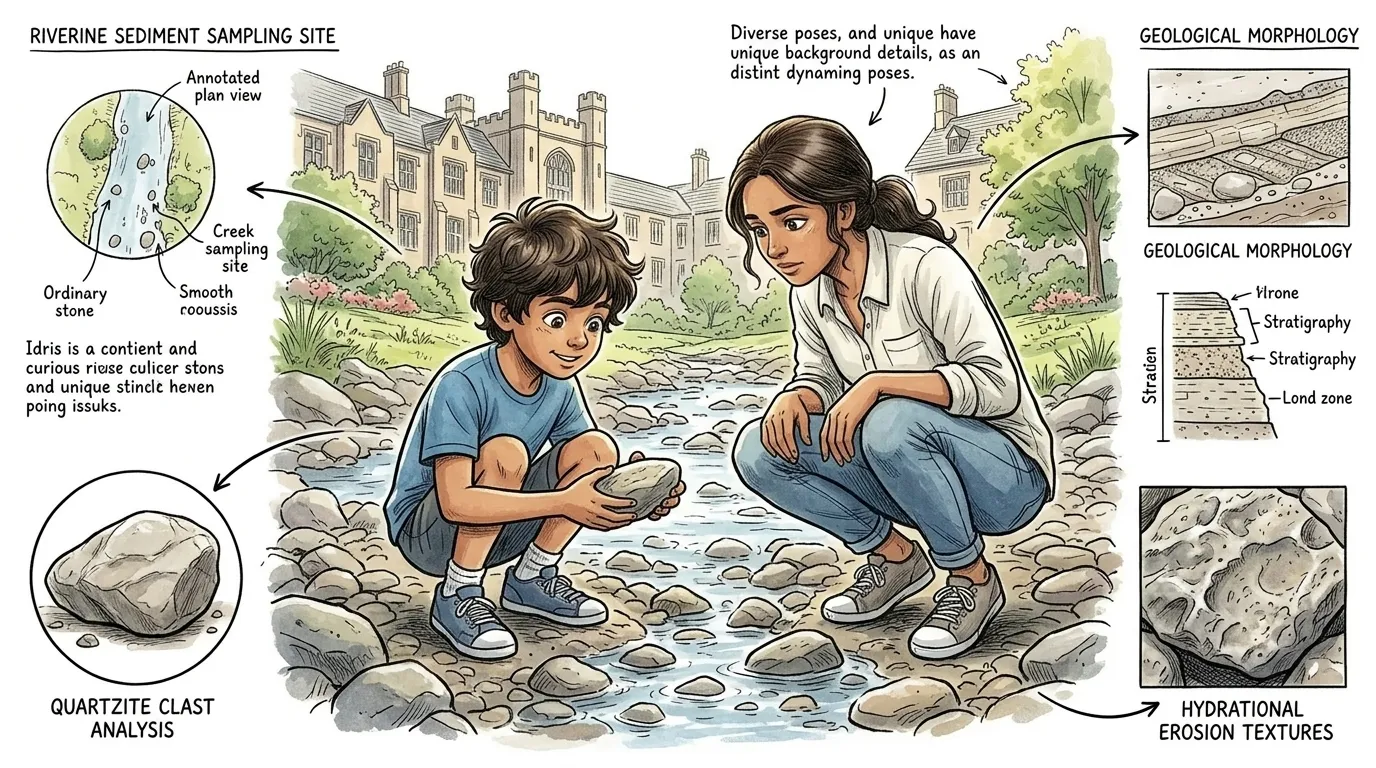
Later, Idris and Ishani ventured into a rocky creek bed behind the university gardens, filled with countless ordinary stones. Idris picked up a smooth, grey rock. 'Is this Glimmerstone?' he asked, turning it over and over. Without the magnifying glass and the guide, it was impossible to tell if it held the special crystal inside.
"'Is this Glimmerstone?' he asked, turning it over and over. Ishani crouched beside him, her face serious. 'It's very hard to know, isn't it? Our ideas about 'Glimmerstone' don't just come from what we see at first glance; they come from its true nature, which we sometimes need tools to discover.'"
Philosophy Note: Putnam's 'externalism' implies that the meaning of natural kind terms (like 'water,' 'gold,' or 'Glimmerstone' in our story) is not solely determined by the speaker's internal psychological state but also by the actual properties of the substance in the world. Two individuals might have identical internal experiences, yet refer to different things if the external realities differ (e.g., H2O vs. XYZ on Twin Earth).
Page 5
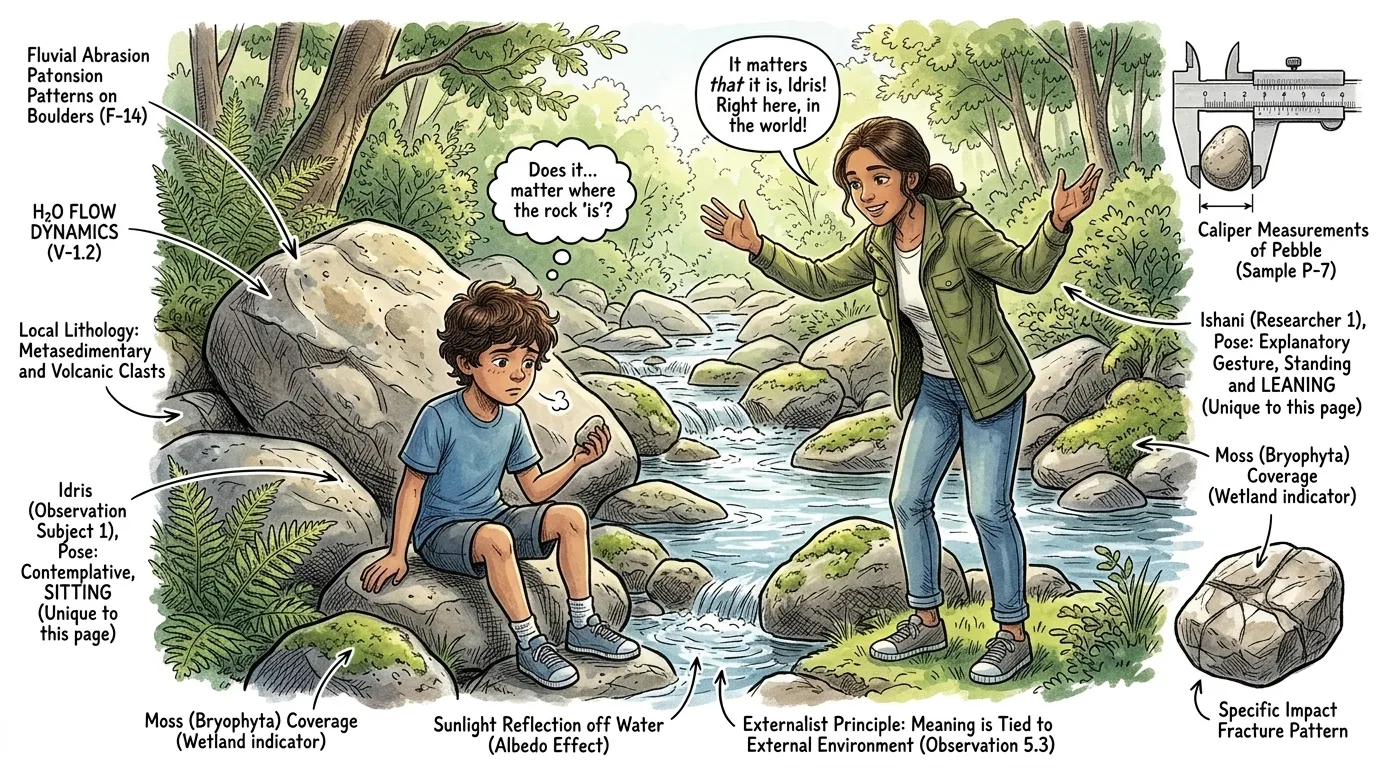
Idris sighed. 'So, my brain can't just decide what a Glimmerstone is?' he asked. Ishani shook her head. 'Not entirely, no. Our minds try to understand, but the world itself teaches us the real definitions. We interact with the world, and that interaction shapes what our words truly mean.' She gestured around the creek.
"'So, my brain can't just decide what a Glimmerstone is?' he asked. Ishani shook her head. 'Not entirely, no. Our minds try to understand, but the world itself teaches us the real definitions. We interact with the world, and that interaction shapes what our words truly mean.' She gestured around the creek, then added, 'Our thoughts aren't floating free; they're tied to what's real around us.'"
Philosophy Note: Putnam's work emphasizes that epistemology (the study of knowledge) and semantics (the study of meaning) cannot be divorced from our engagement with the world. He moved away from purely 'internalist' views, arguing that our concepts acquire their content through our causal and social interactions with objective reality. This 'externalist' perspective highlights the world's role in shaping our understanding.
Page 6
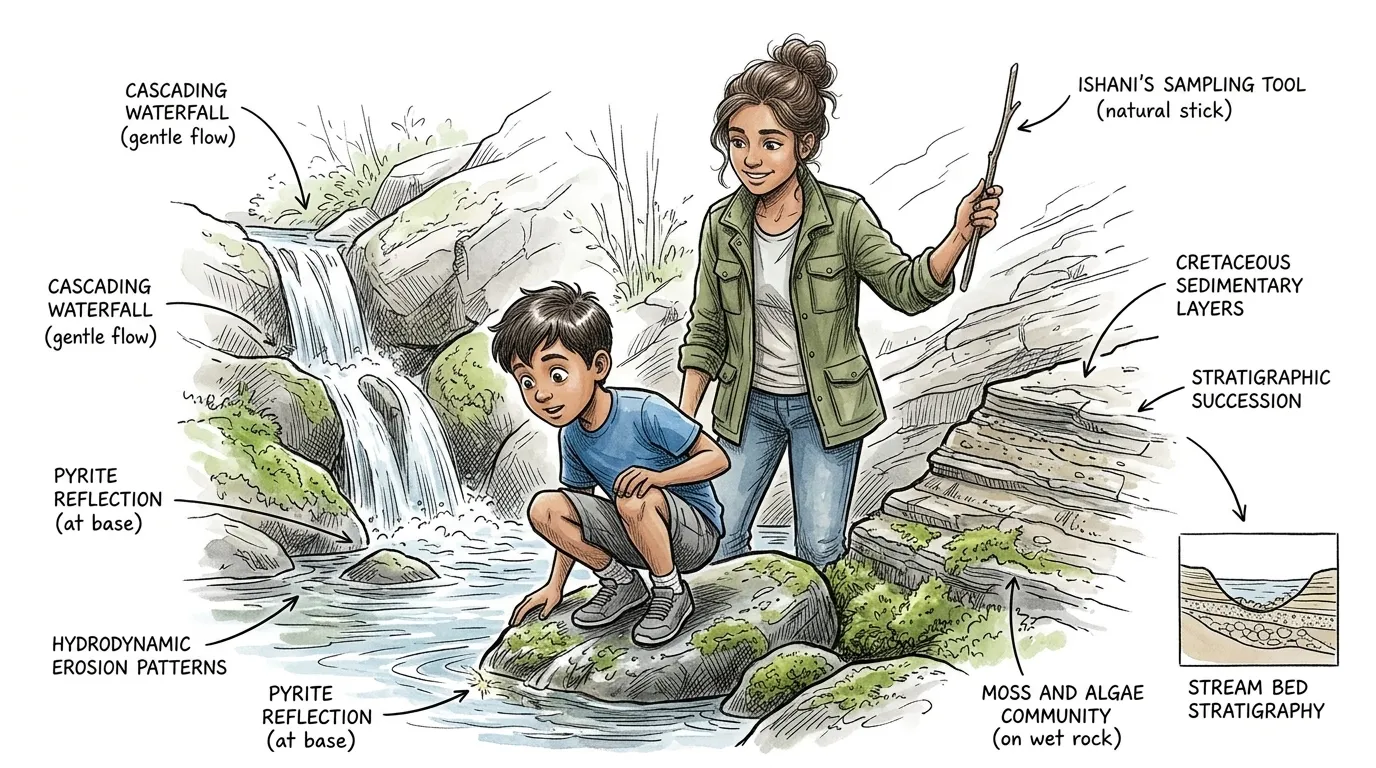
Suddenly, a glimmer caught Idris's eye near a small waterfall. It looked slightly different, but was it enough? Ishani recalled a famous saying. 'Remember what the great writer Marcel Proust once said: 'The real voyage of discovery consists not in seeking new landscapes, but in having new eyes.' It's not just about what we see, but how deeply we understand what we're looking at.'
"'Remember what the great writer Marcel Proust once said: 'The real voyage of discovery consists not in seeking new landscapes, but in having new eyes.' It's not just about what we see, but how deeply we understand what we're looking at.' She picked up a nearby stick. 'Our words get their true meaning from the actual object, not just our first thoughts about it.'"
Philosophy Note: This page introduces the 'new eyes' quote to emphasize the shift in perspective required to truly understand. For Putnam, truth isn't purely subjective; it has an objective component rooted in the world. He critiqued the idea of 'internal realism' if it meant that reality was entirely dependent on our conceptual scheme, advocating for a pragmatic realism that acknowledged both the constructive role of the mind and the independent constraint of the world.
Page 7
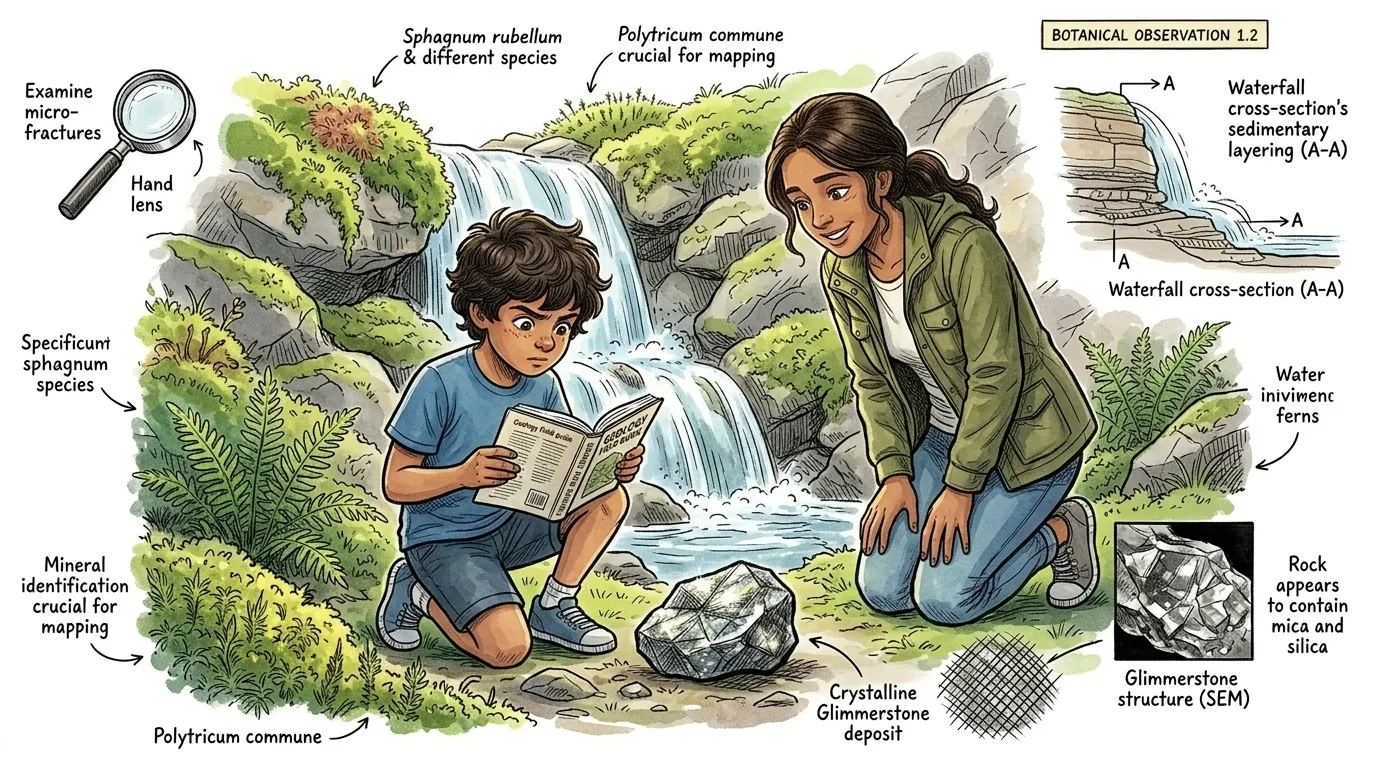
Idris hurried towards the glimmering rock by the waterfall, holding the field guide tightly. He knelt down, opening the book to the 'Glimmerstone' page. 'Look, Ishani!' he exclaimed. 'The description says it has tiny, almost invisible, diamond-shaped flecks, but only on one side!' He tried to find them on the rock.
"'Look, Ishani!' he exclaimed. 'The description says it has tiny, almost invisible, diamond-shaped flecks, but only on one side!' He tried to find them on the rock, a determined look on his face. Ishani knelt beside him. 'That's it, Idris! That specific detail, something real and external, is what gives the word 'Glimmerstone' its true meaning for all of us.'"
Philosophy Note: Putnam argued against the radical relativism that might suggest every individual creates their own reality. He championed a form of 'internal realism' that still maintains a connection to an objective, shared world, even while acknowledging that our descriptions of it are theory-laden. Our communal scientific and linguistic practices provide the frameworks through which we connect to and understand this external reality.
Page 8
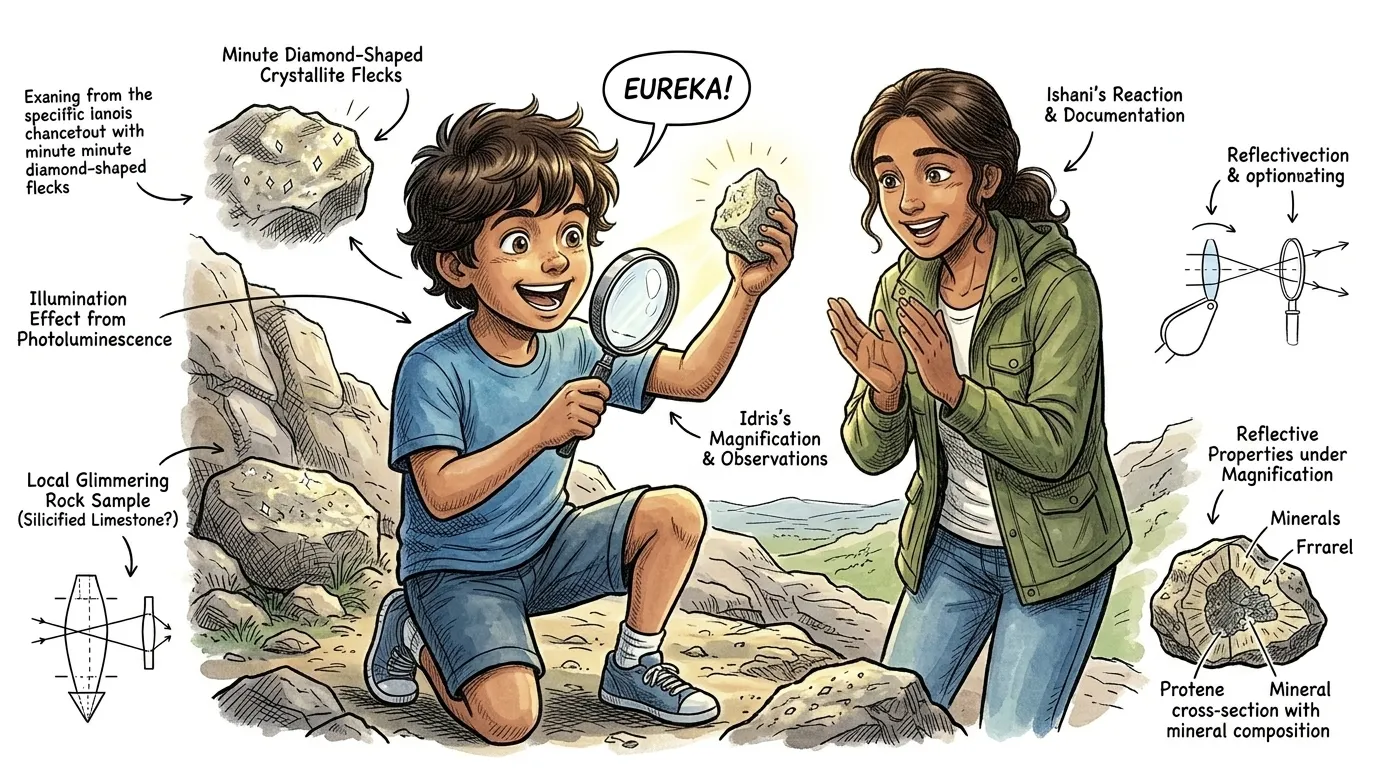
Idris held the magnifying glass from the guide over the rock. Slowly, carefully, he turned it. And there! On one tiny facet, almost invisible to the naked eye, were minute diamond-shaped flecks. 'It IS Glimmerstone!' he cheered, holding the rock up. 'The guide helped me truly see it!'
"'It IS Glimmerstone!' he cheered, holding the rock up for Ishani to see, the magnifying glass still over the flecks. 'The guide helped me truly see it!' Ishani clapped softly. 'That's the power of connecting our thoughts with the real world, Idris. Our understanding becomes clearer when we let the world show us its true nature, through tools and shared knowledge.'"
Philosophy Note: This scene illustrates the 'payoff' of the Chekhov's Gun. It directly ties into Putnam's ideas of how empirical evidence and external criteria are essential for verifying our concepts. The truth of 'Glimmerstone' is not just in Idris's mind but in the rock's actual properties, accessible through observation and the shared knowledge in the field guide. This highlights the crucial role of external constraints on our linguistic and cognitive processes.
Page 9
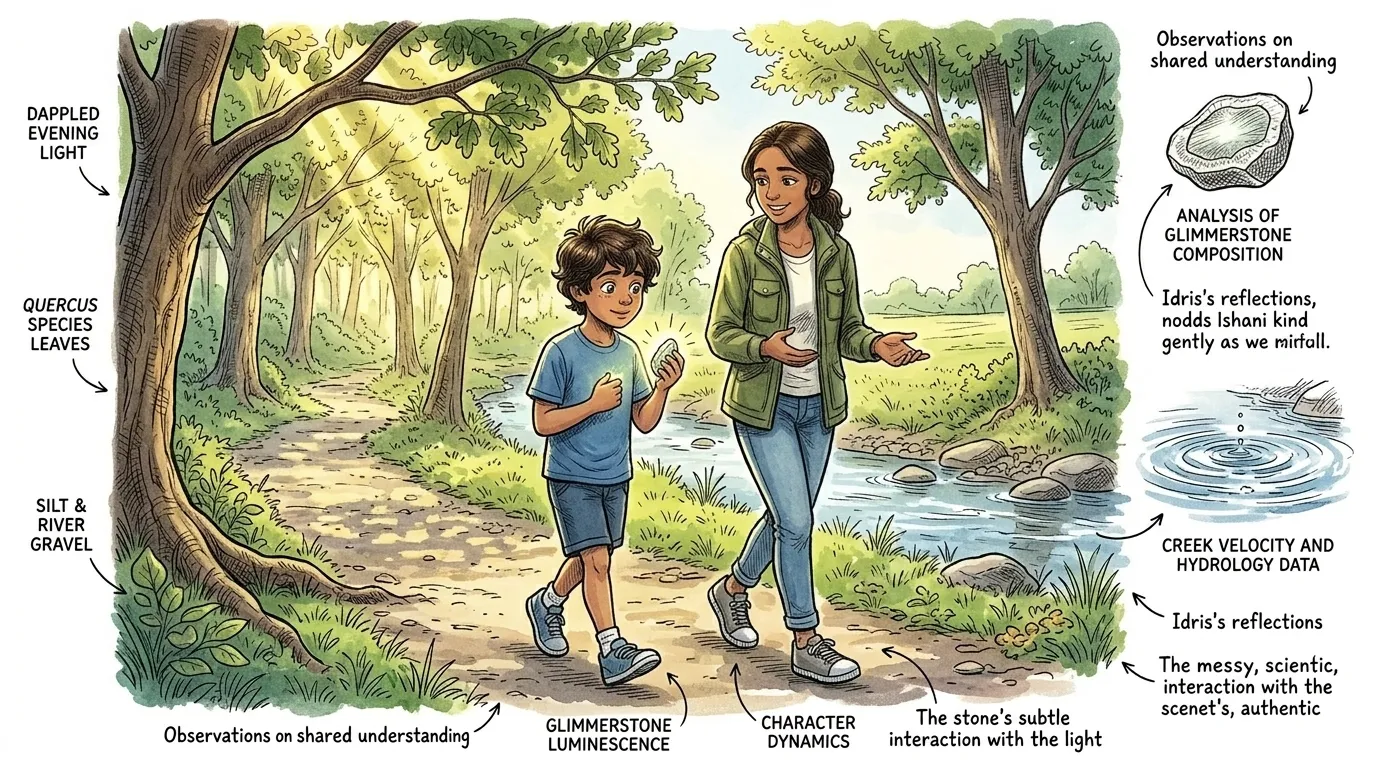
As they walked home, Idris still held his Glimmerstone, now truly understood. 'So, for all our words,' he mused, 'like 'tree' or 'cloud' or 'friend,' their real meaning comes from the actual trees, clouds, and friends out there?' Ishani nodded. 'Precisely! Our language and thoughts are deeply anchored to the world we share.'
"'So, for all our words,' he mused, 'like 'tree' or 'cloud' or 'friend,' their real meaning comes from the actual trees, clouds, and friends out there?' Ishani nodded. 'Precisely! Our language and thoughts are deeply anchored to the world we share, not just our private ideas. That's a huge part of how we understand things, like how Hilary Putnam helped us understand our minds are connected to the world.'"
Philosophy Note: Putnam's later work further developed his 'internal realism,' arguing for a position where mind and world are not entirely separate. He maintained that our conceptual schemes shape our understanding of reality, but reality itself still exerts a constraint on what we can say or know. His philosophy provided a robust critique of both naive realism and radical relativism, offering a nuanced view of truth, meaning, and our relationship to the objective world.
Page 10
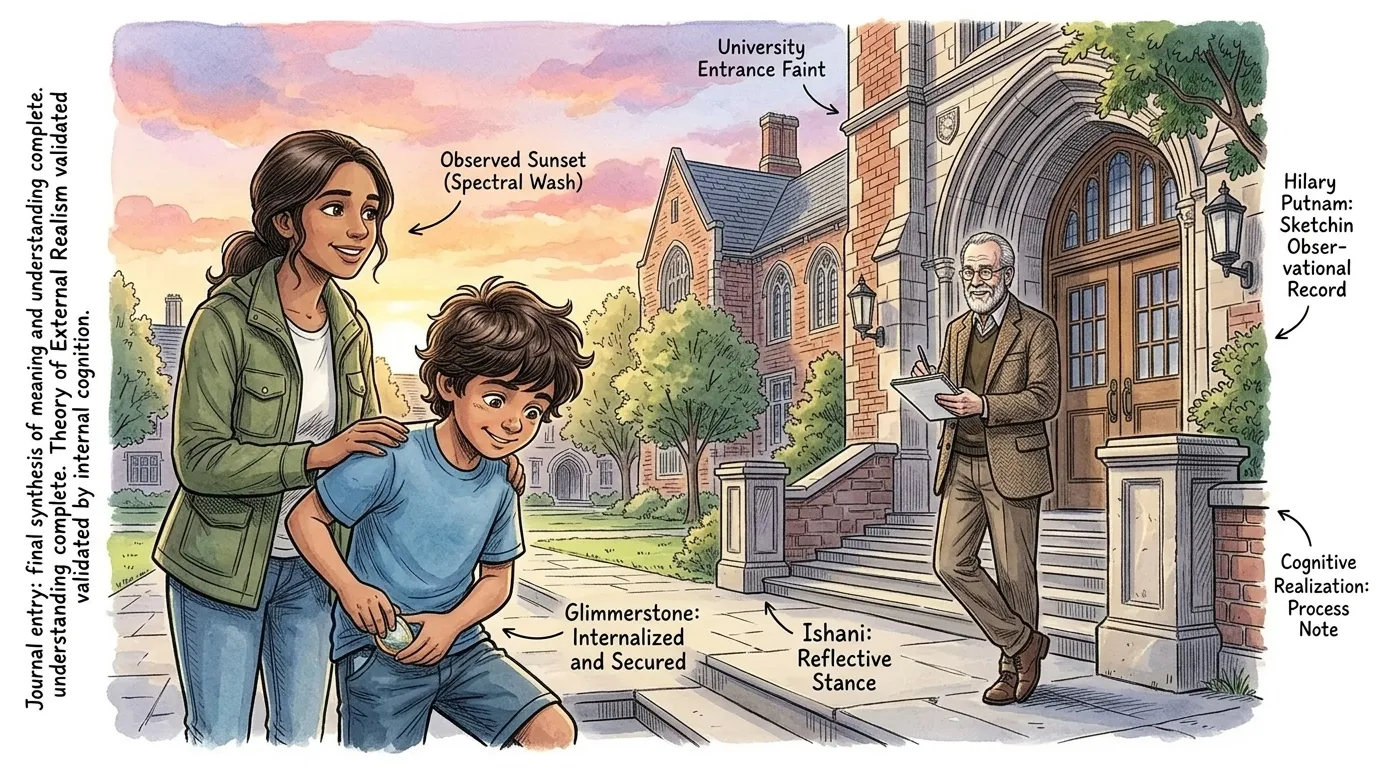
The sun dipped below the horizon, painting the sky in soft oranges and purples as they reached the university entrance. Idris gently placed his Glimmerstone in his pocket, a tangible reminder of what he had learned. Ishani smiled, knowing that understanding how our minds truly connect with the world is a profound journey, one that thinkers like Hilary Putnam dedicated their lives to exploring.
"Ishani smiled, 'It's a powerful idea, isn't it? That our understanding grows when we connect what's in our minds with what's truly out there.' Idris nodded, his eyes bright. 'And that makes everything we learn feel so much more real!'"
Philosophy Note: Hilary Putnam's legacy is vast, spanning over half a century of philosophical inquiry. He continuously challenged established dogmas, advocating for a pragmatic and common-sense approach to philosophy that emphasized the interconnectedness of language, thought, and empirical reality. His work remains a crucial touchstone in discussions about realism, truth, and the nature of mental content, ensuring his enduring relevance in modern critical philosophy and beyond.
About this story
- Audience: general readers
Questions and answers
Read Wonder Philosophy on your phone
Wonder Philosophy is available on Android and iPhone and iPad. Get Wonder Philosophy on Google Play · Get Wonder Philosophy on the App Store.