Jean-Paul Sartre
Jean-Paul Sartre — an illustrated philosophy story. 10 illustrated pages, free to read on Wonder Philosophy.

Page 1

Jean-Paul Sartre, a towering figure of 20th-century thought, confronted humanity with a radical idea: that we are absolutely free. This freedom isn't just a gift; it is a profound and often terrifying responsibility.
"Sartre challenged us to consider: 'What if there is no pre-ordained purpose, no divine plan, no inherent human nature to guide us? What if our very existence precedes any definition?'"
Philosophy Note: Jean-Paul Sartre (1905–1980) was a key figure in Existentialism, a philosophical movement emphasizing individual existence, freedom, and responsibility. His concept of 'existence precedes essence' is foundational.
Page 2
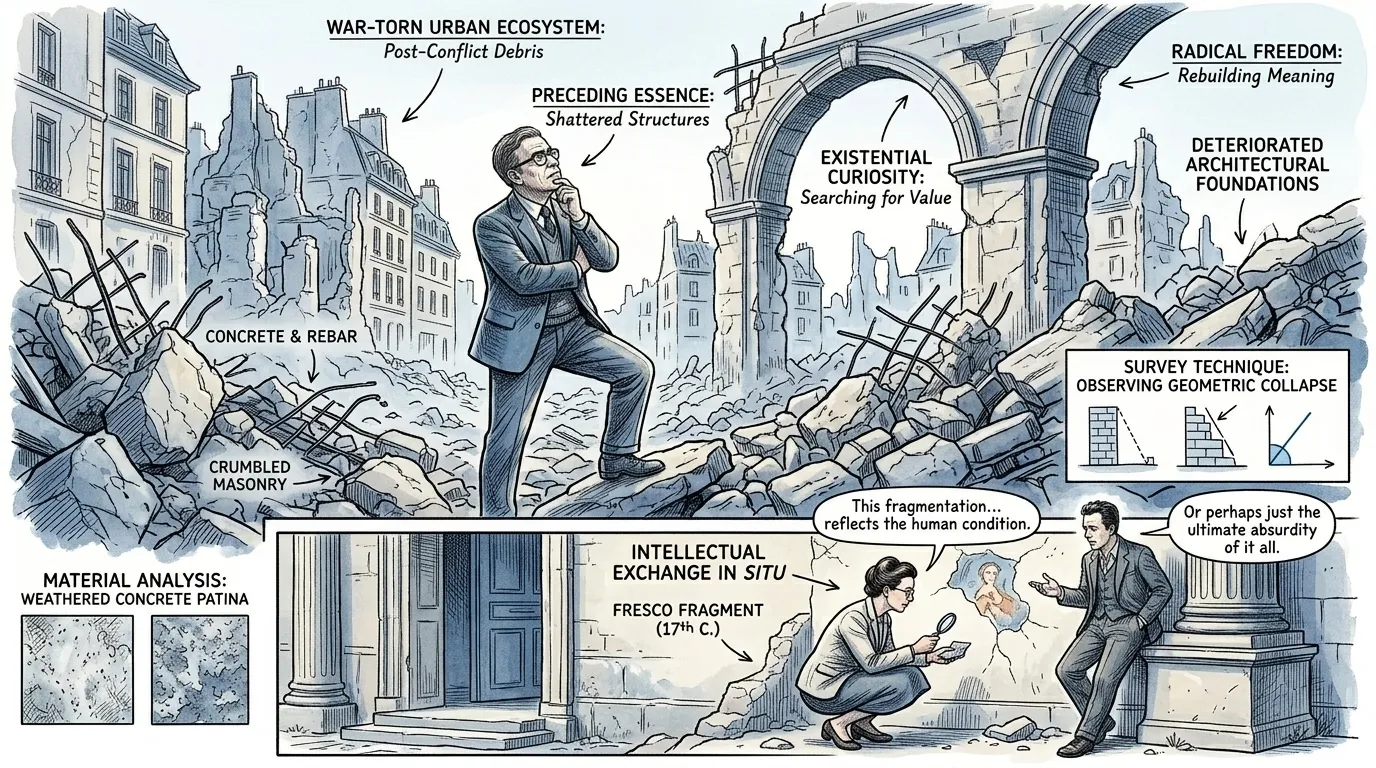
Emerging from the ruins of two World Wars, Europe grappled with shattered certainties and a profound sense of disillusionment. Traditional institutions and beliefs seemed to offer little comfort or direction.
"Amidst this intellectual vacuum, Sartre articulated a desperate question: 'In a world stripped of inherent meaning, where do we find purpose? How do we build values when the foundations have crumbled?'"
Philosophy Note: Existentialism gained significant traction in post-WWII France, reflecting the era's intellectual and moral crises. Sartre became a leading voice, offering a philosophical framework for navigating a seemingly meaningless world.
Page 3
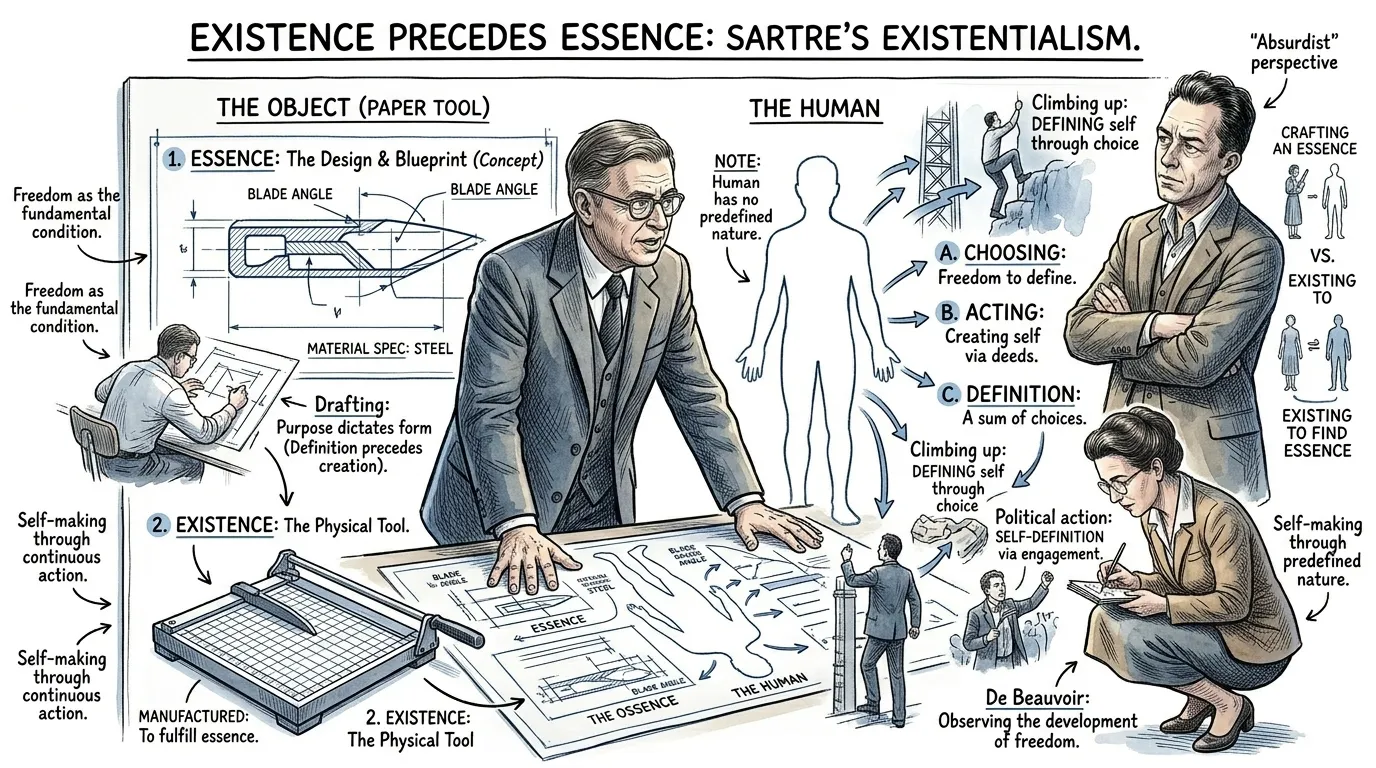
At the heart of Sartre's philosophy lies the provocative statement: 'existence precedes essence.' Unlike a paper knife, which is designed with a specific purpose (its essence) before it is made (it exists), humans are different.
"He famously declared, 'Man simply is. He is what he wills himself to be.' This means we are born into the world as nothing more than an existing consciousness; we then define ourselves through our choices and actions."
Philosophy Note: The concept of 'existence precedes essence' is the cornerstone of Sartrean existentialism. It asserts that there is no pre-defined human nature or destiny, and individuals are free to create their own meaning through their choices.
Page 4
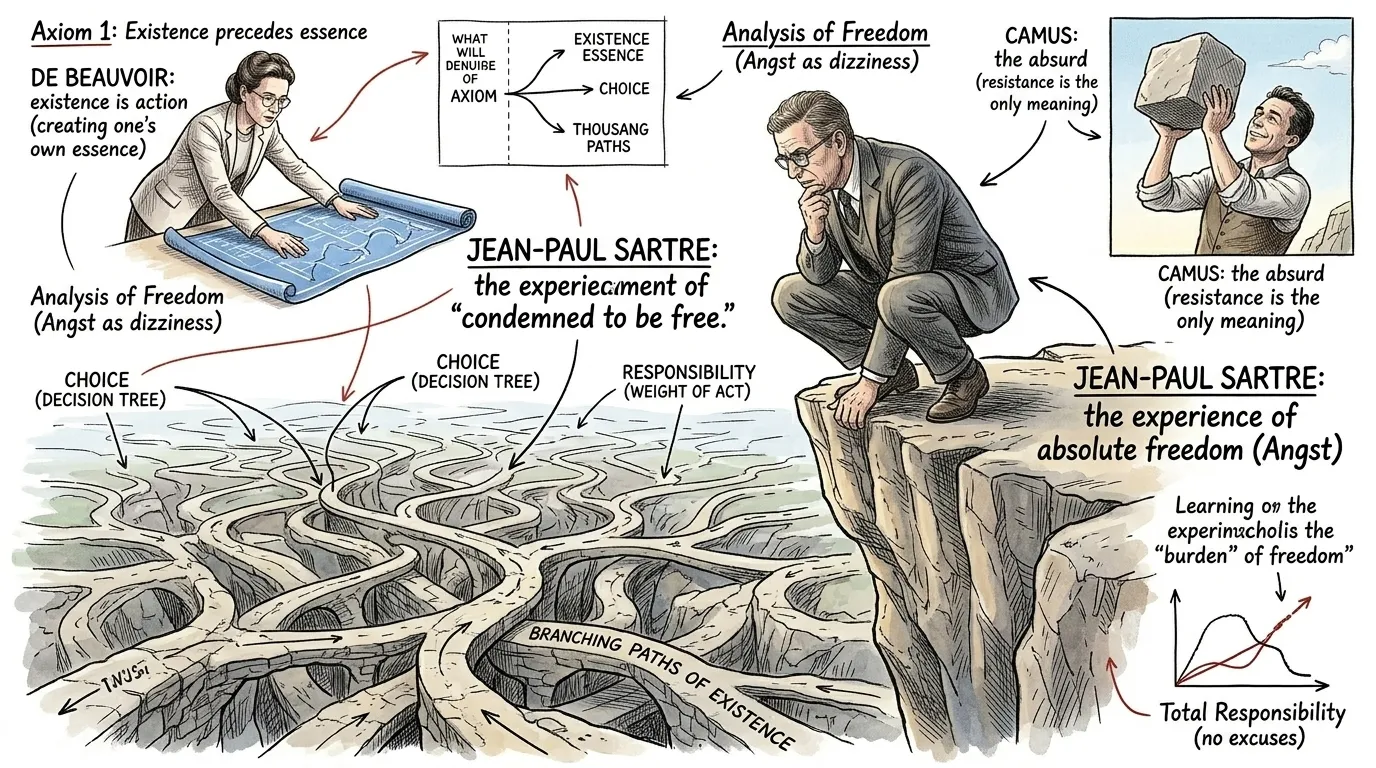
If there is no God, and no inherent human essence, then we are utterly free. This freedom is absolute, a radical state where every decision, every inaction, is ours alone, without external justification.
"Sartre argued this freedom is not a comfort, but a burden: 'We are condemned to be free; because once thrown into the world, he is responsible for everything he does.' There is no escaping this profound accountability."
Philosophy Note: Sartre's 'condemned to be free' highlights the profound, often terrifying, nature of absolute individual responsibility in a world without pre-given values or a divine arbiter.
Page 5
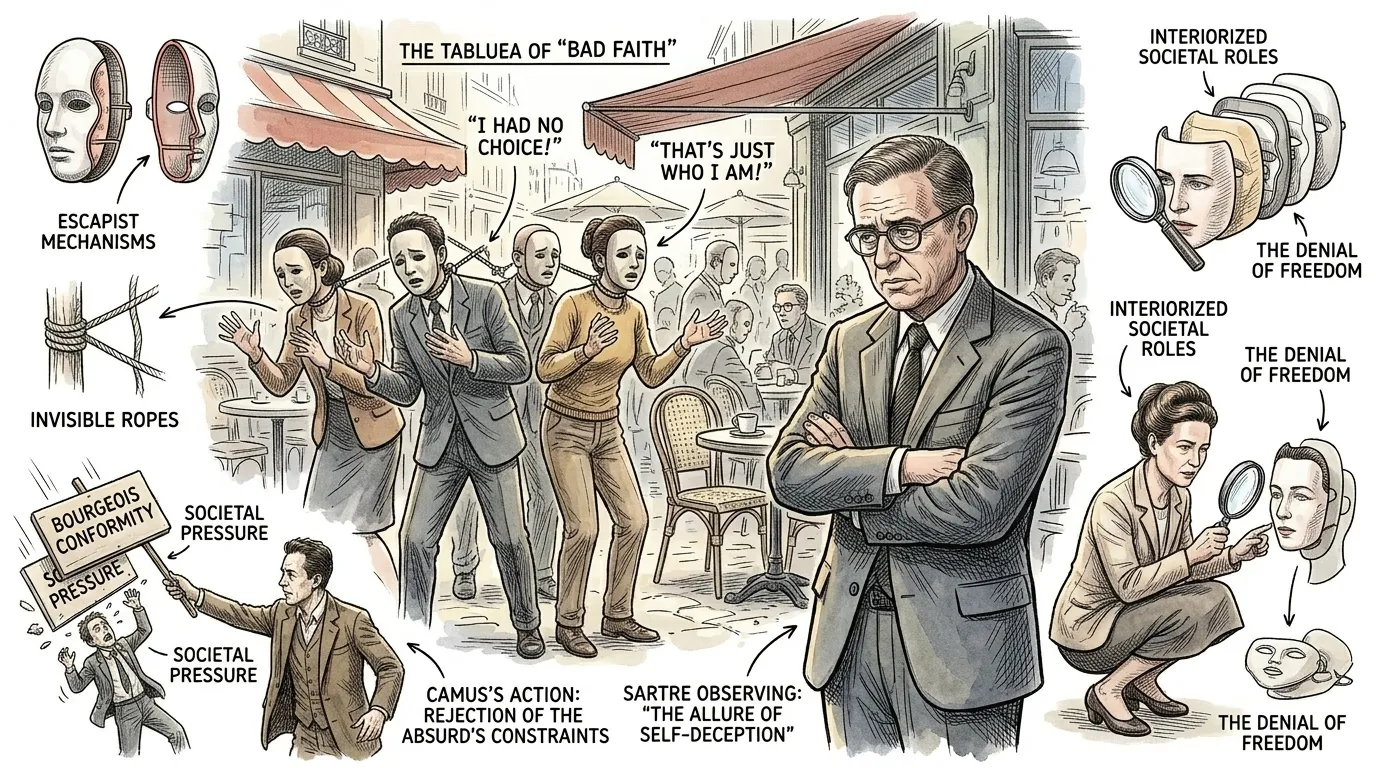
Faced with such overwhelming freedom and responsibility, humans often seek refuge in self-deception, a state Sartre called 'bad faith.' This is when we deny our freedom and pretend we are constrained by circumstances, roles, or our past.
"He observed, 'Man is not the sum of what he has, but the totality of what he does not yet have, of what he might have.' Yet, many try to escape this by claiming 'I had no choice' or 'That's just who I am.'"
Philosophy Note: Bad faith (mauvaise foi) is Sartre's concept for self-deception, particularly the act of denying one's radical freedom and responsibility by adopting deterministic excuses or social roles.
Page 6

The antidote to bad faith is authenticity: living in full awareness of our radical freedom and the responsibility that comes with it. It means actively making choices and owning them, shaping our 'essence' through our actions.
"Sartre urged us to recognize: 'To be authentic is to accept the anguish of existence, to refuse evasion, and to commit oneself fully to the project of becoming.' It is an ongoing, never-finished process."
Philosophy Note: Authenticity, for Sartre, means confronting the reality of one's freedom and responsibility, making conscious choices, and living in accordance with one's self-created values, rather than retreating into bad faith.
Page 7
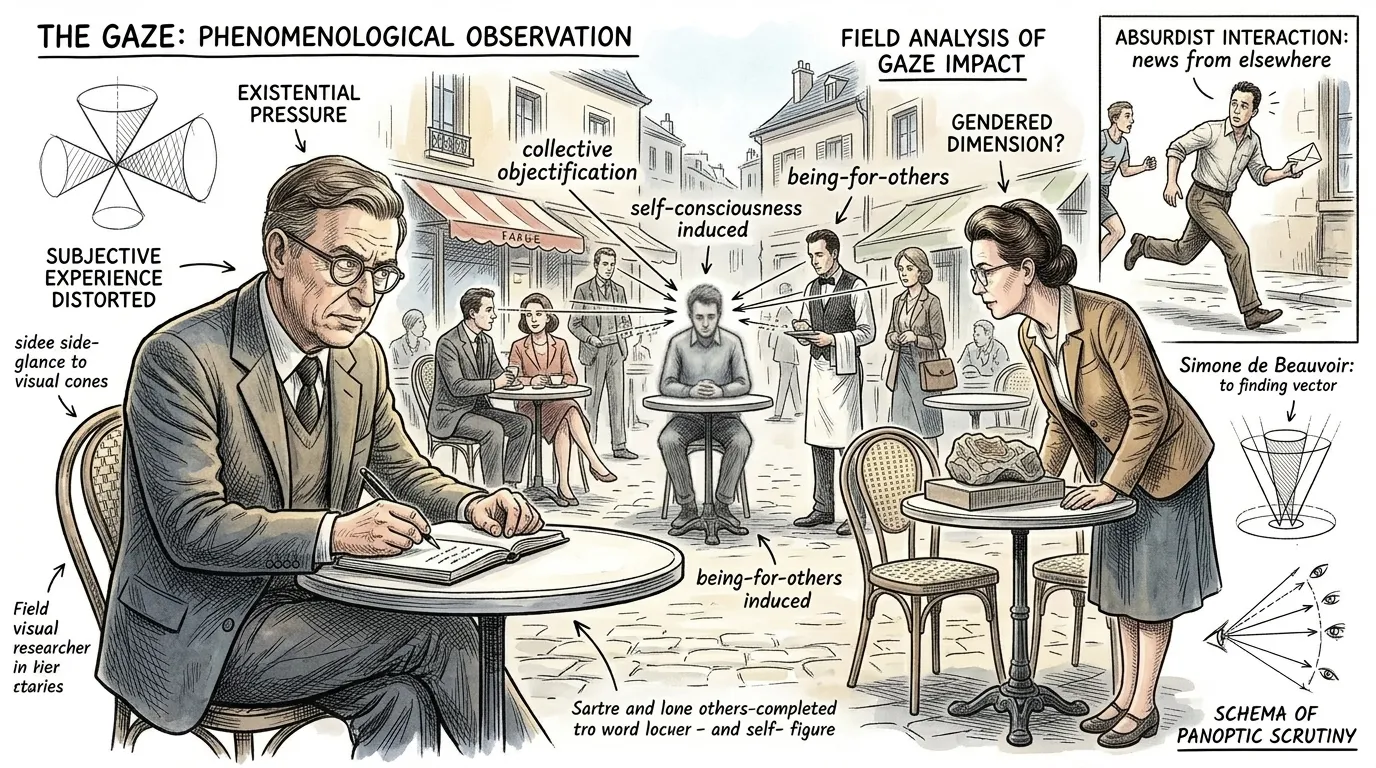
Sartre also explored how our freedom interacts with the freedom of others. The presence of 'the Other' fundamentally alters our perception of ourselves, as we become objects in their gaze.
"This often creates tension. As Sartre famously put it in his play 'No Exit,' 'Hell is other people.' This doesn't mean others are inherently evil, but that their very existence challenges our subjective freedom, forcing us to constantly define ourselves in relation to their judgments and expectations."
Philosophy Note: Sartre's concept of 'the Other' (l'Autre) highlights the challenge of intersubjectivity: how the presence and gaze of other individuals affect our self-perception and freedom, leading to potential conflict and objectification.
Page 8
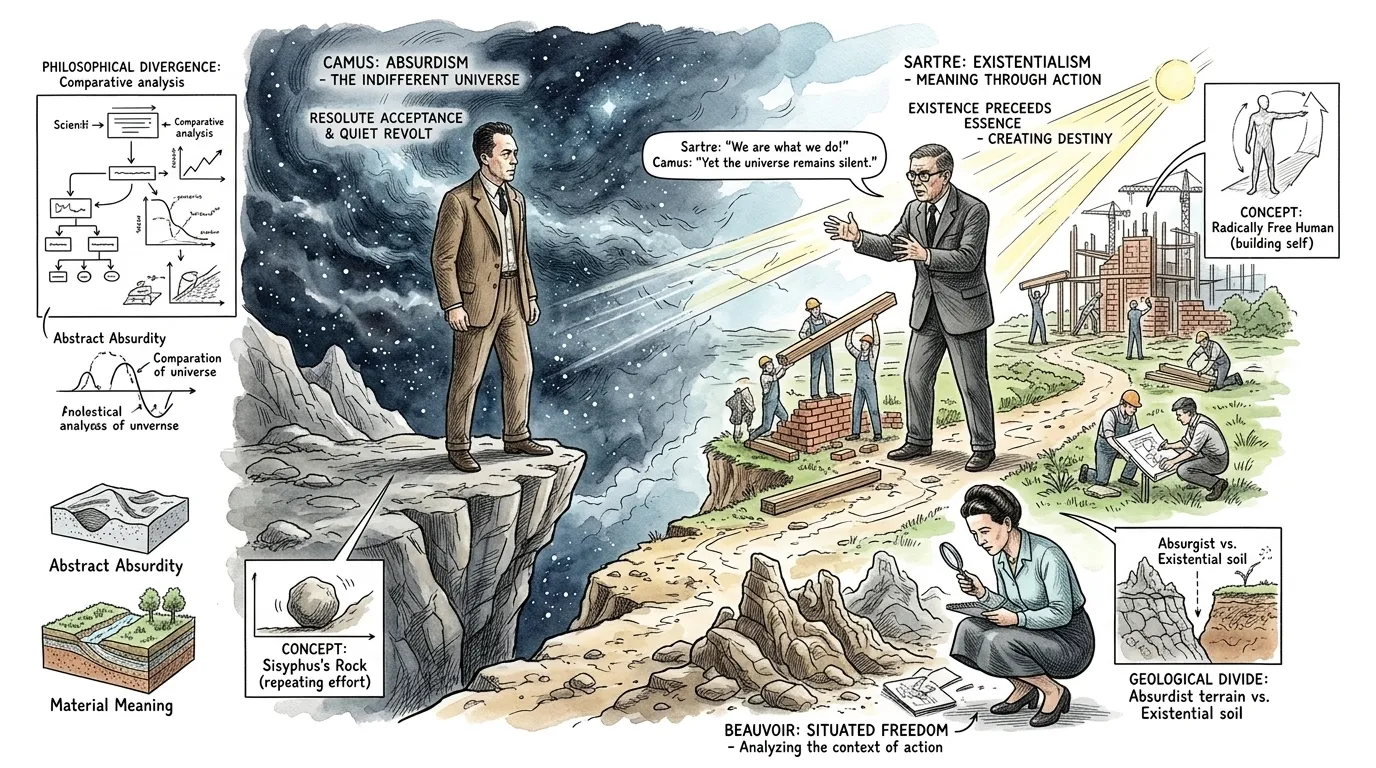
While often grouped, Sartre's existentialism offered a distinct path from the absurdism of his contemporary, Albert Camus. Both acknowledged a world without inherent meaning, but their responses diverged sharply.
"Camus declared, 'There is no love of life without despair of life.' He suggested we embrace the absurd, living in revolt against meaninglessness. Sartre, however, reiterated his core principle: 'Because existence precedes essence, we are condemned to invent man.' We don't just endure meaninglessness; we create meaning through our choices. This foundational knowledge allows us to understand Sartre's ultimate resolution to the problem of a meaningless world."
Philosophy Note: The distinction between Sartre's existentialism and Camus's absurdism lies in their proposed responses to a meaningless world. Sartre emphasized creating meaning through freedom, while Camus focused on revolt against the absurd.
Page 9
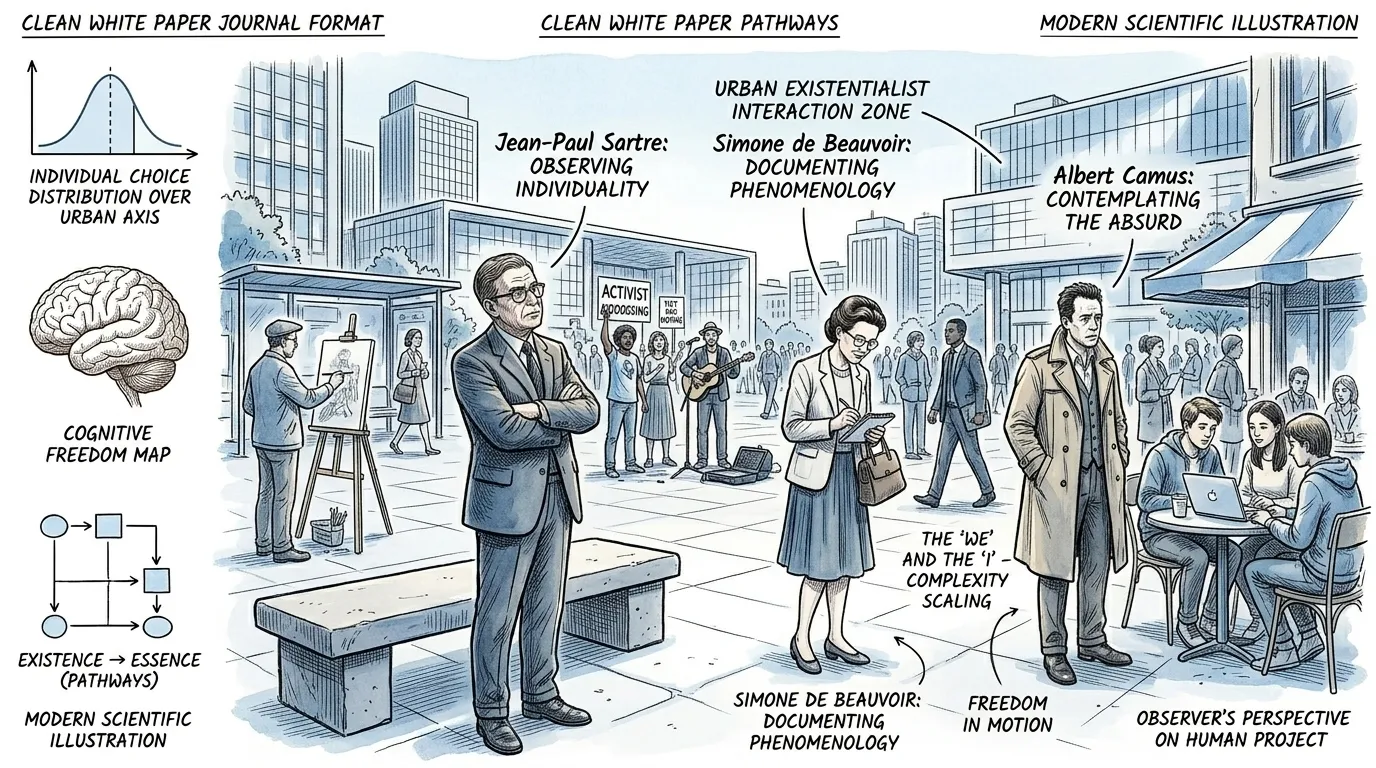
Sartre's ideas continue to resonate powerfully in today's world, particularly in discussions about identity, self-definition, and the search for purpose in an increasingly secular and individualized society. His philosophy remains a potent framework for understanding the anxieties and possibilities of modern life.
"His enduring challenge remains pertinent: 'What kind of being do you choose to be? What values will you embody, knowing you are entirely responsible for their creation and consequences?'"
Philosophy Note: Sartre's influence is evident in contemporary discussions on identity politics, individual responsibility, and the ongoing human struggle to define meaning and purpose without relying on external authorities.
Page 10

Sartre was not just a philosopher; he was a committed public intellectual, deeply engaged with the political struggles of his time. His work pushed individuals to confront their freedom, to acknowledge the weight of their choices, and to shape not only themselves but the world around them.
"His philosophy serves as a powerful, if demanding, call to action: 'Man is condemned at every instant to invent man.' It reminds us that our essence is never fixed; it is perpetually created through our engagement with the world."
Philosophy Note: Sartre's legacy extends beyond academic philosophy; he embodied the role of the engaged intellectual, advocating for political and social justice, challenging individuals to take responsibility for their own lives and the collective human project.
About this story
- Audience: general readers
Questions and answers
Read Wonder Philosophy on your phone
Wonder Philosophy is available on Android and iPhone and iPad. Get Wonder Philosophy on Google Play · Get Wonder Philosophy on the App Store.