Karl Jaspers
Karl Jaspers — an illustrated philosophy story. 10 illustrated pages, free to read on Wonder Philosophy.

Page 1
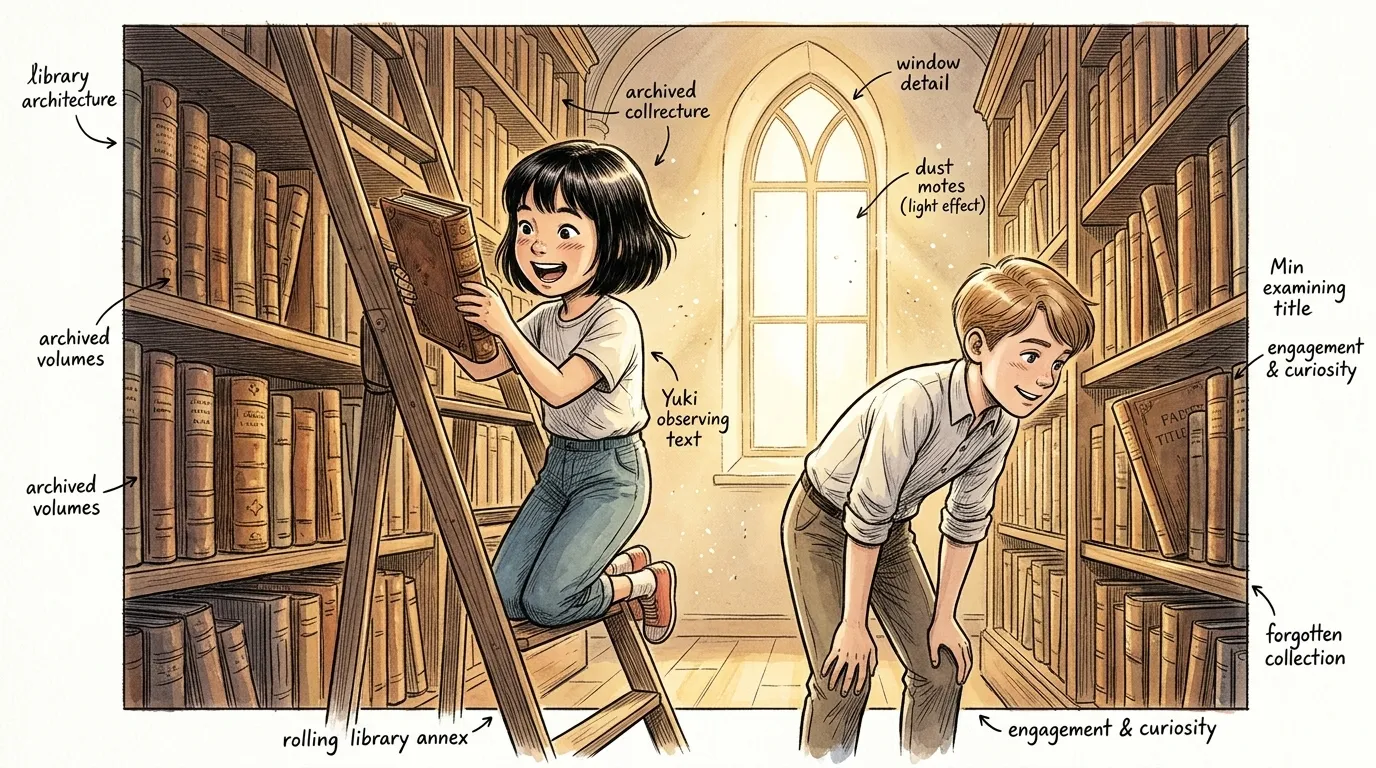
Yuki and Min explored the forgotten annex of the old town library, dust motes dancing in the faint light filtering through tall, arched windows. They tiptoed past towering shelves filled with ancient, leather-bound books, their spines a testament to centuries of thought.
"'Look at all these old ideas, Min!' Yuki exclaimed, her voice a hushed whisper, 'It feels like a secret world waiting to be discovered. I wonder what truths are hidden here?' Min nodded, thoughtfully running a finger over a faded title. 'Sometimes, Yuki, the biggest truths aren't just hidden; they're too vast to see all at once.'"
Philosophy Note: Karl Jaspers (1883-1969) was a German psychiatrist and philosopher. A key figure in Existentialism, he sought to understand human existence beyond scientific or systematic approaches, emphasizing individual freedom and the search for meaning.
Page 2
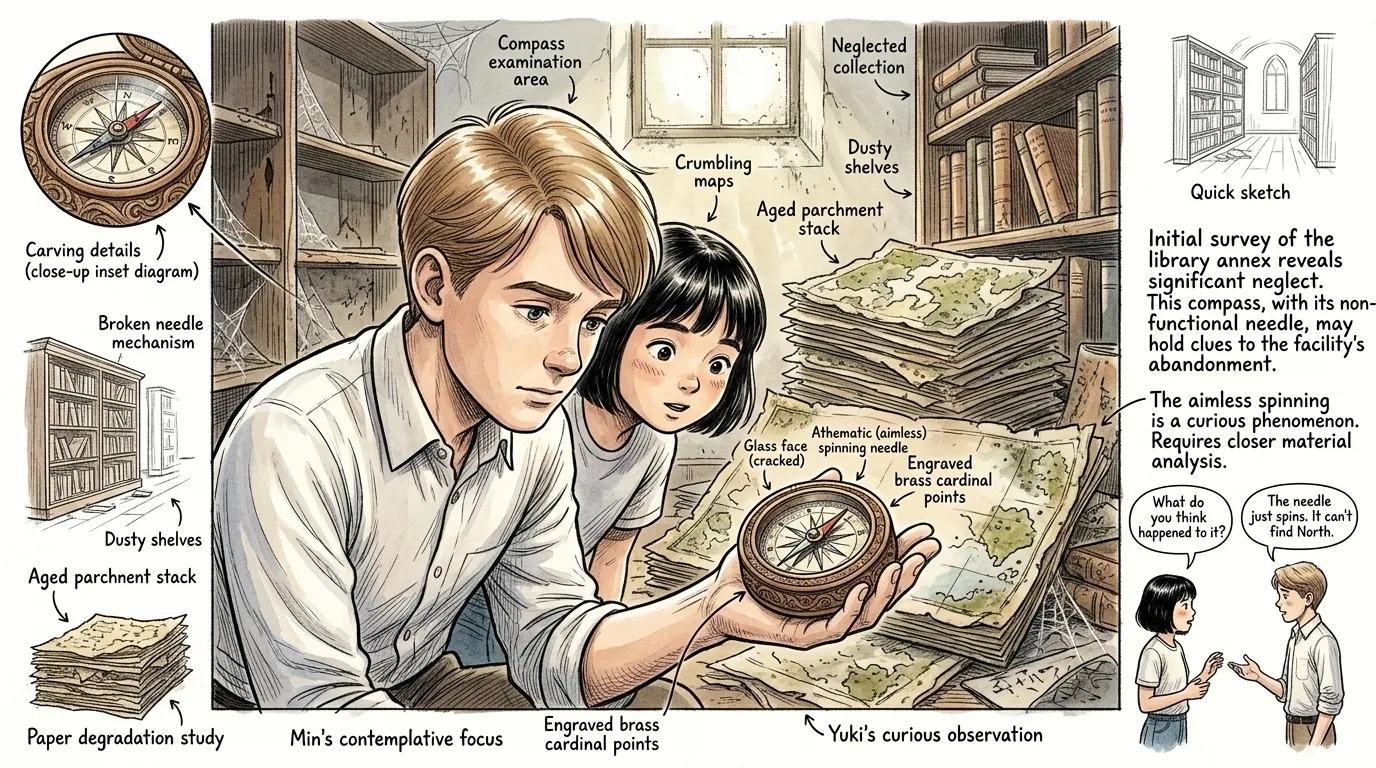
Behind a leaning stack of crumbling maps, Yuki spotted a peculiar object half-buried under brittle parchment. It was an old, intricately carved wooden compass, but its needle was broken, forever spinning aimlessly.
"'This compass is broken!' Yuki said, picking it up carefully. 'How could anyone navigate with this?' Min gently took it, examining the delicate craftsmanship. 'It can't guide us to a place, that's true, but perhaps it's meant to remind us that not every problem has a straightforward solution. Some challenges, called 'limit situations' by thinkers like Karl Jaspers, push us to confront the very edge of what we understand.'"
Philosophy Note: Jaspers introduced the concept of 'Grenzsituationen' (limit-situations) – unavoidable experiences like death, suffering, guilt, and struggle. These moments cannot be overcome or altered, but they reveal the limits of our empirical existence and force us to choose how to respond, opening a path to 'Existenz' (authentic being).
Page 3
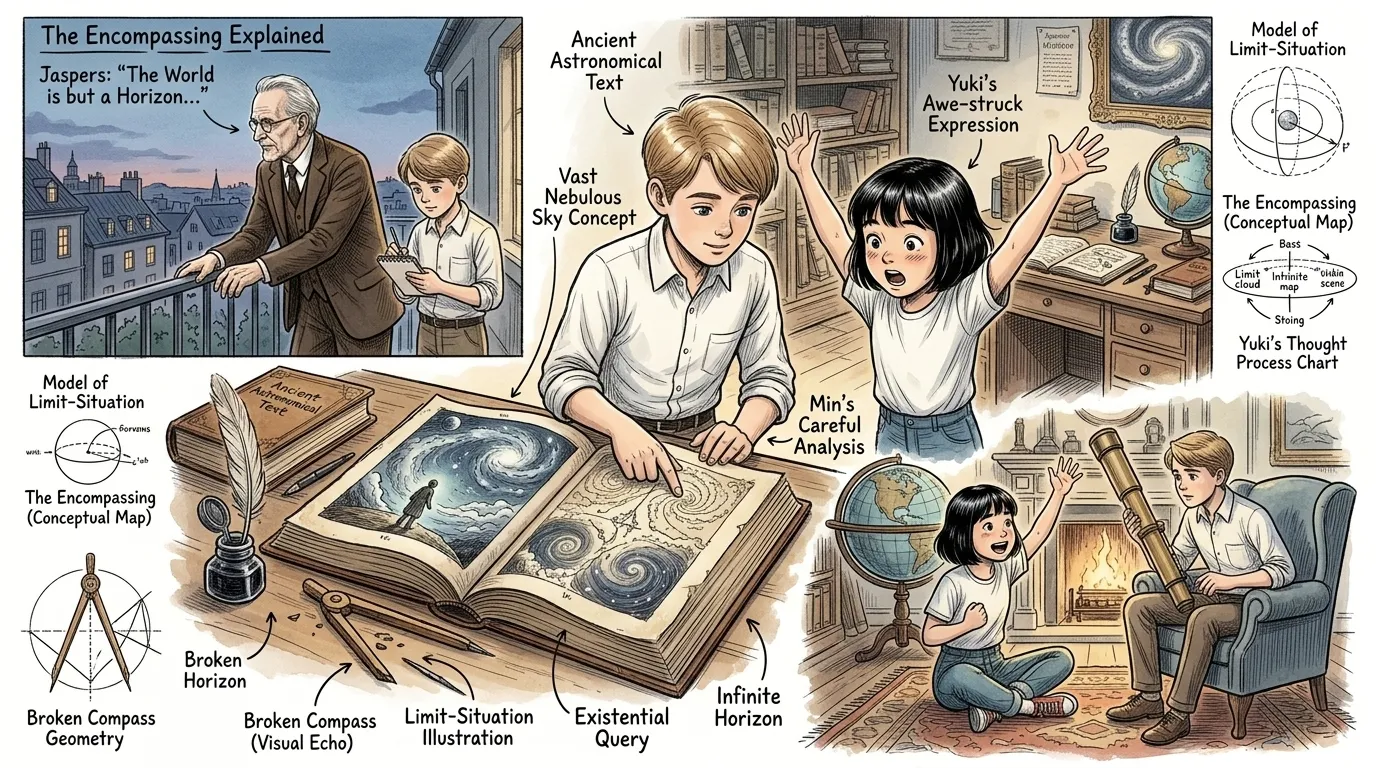
Min pointed to a faded illustration in one of the open books nearby, depicting a vast, nebulous sky stretching beyond a small figure gazing upwards. 'Jaspers believed these 'limit situations' are not just dead ends. They're like windows, showing us a glimpse of something he called 'the Encompassing' – a greater reality that surrounds and permeates everything, but can never be fully grasped or defined by our senses alone.'
"'So, it's like a mystery that makes us feel small?' Yuki asked, her eyes widening as she looked at the illustration. 'But also, somehow, connected?' Min nodded. 'Exactly. It's the ultimate reality that we only ever experience indirectly, through symbols or moments of deep reflection, like how this broken compass might make us think about guidance in a different way.'"
Philosophy Note: The 'Encompassing' (Das Umgreifende) is Jaspers' term for the ultimate, indefinable reality that lies beyond all specific objects and concepts. It is not an object that can be known directly but is experienced indirectly through 'ciphers' (symbols, myths, works of art) and in moments of profound experience, especially in limit-situations.
Page 4
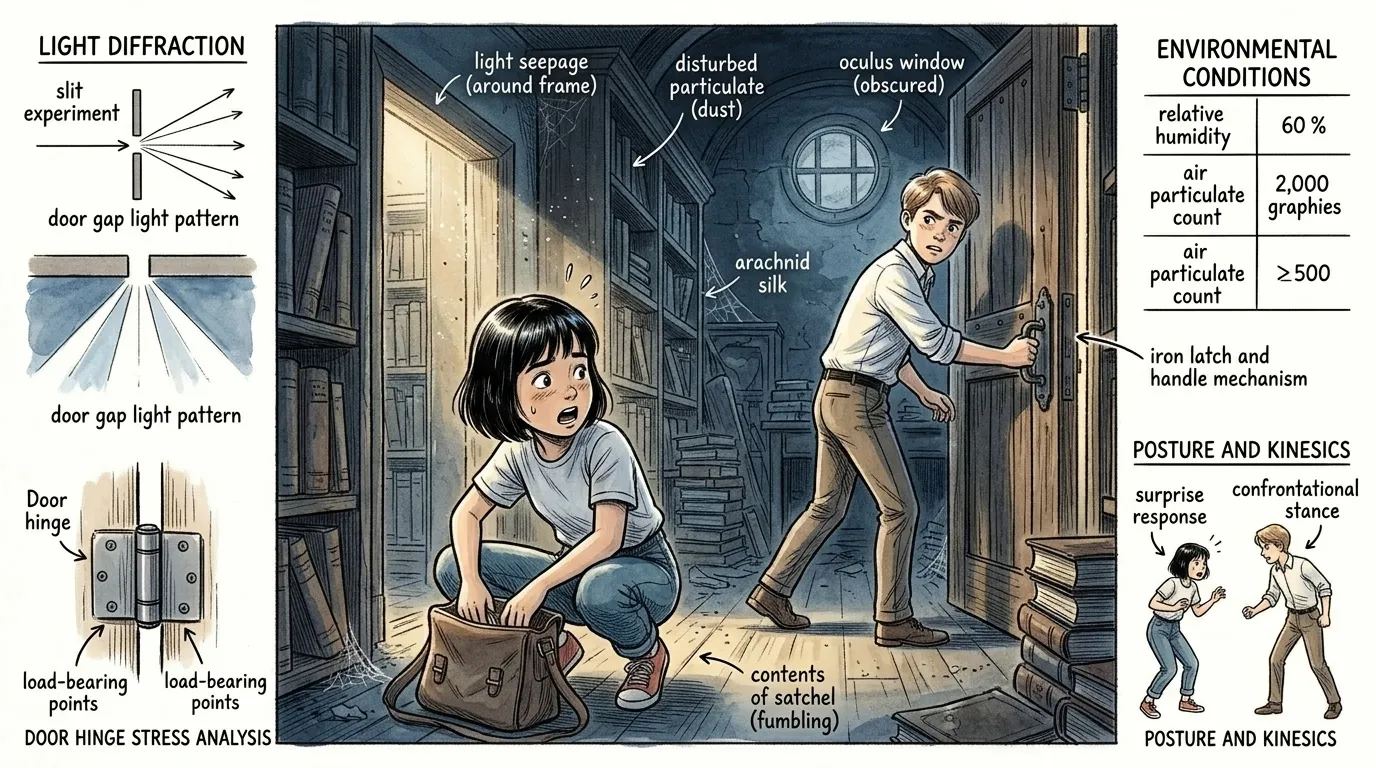
They continued deeper into the neglected wing, the air growing cooler. Suddenly, a heavy oak door creaked shut behind them, plunging them into near darkness and blocking their path back.
"'Oh no!' Yuki gasped, fumbling for her small satchel, 'We're trapped! This is definitely a 'limit situation', Min!' Min tried the door, then turned, a flicker of worry in his eyes. 'It is, and it feels daunting. But this is exactly what Jaspers meant. These are the moments when we're forced to choose who we truly are, beyond our everyday concerns, and seek what he called 'Existenz' – our authentic self. We can't just wish the door open; we have to face it.'"
Philosophy Note: For Jaspers, 'Existenz' refers to the unique, irreducible, and authentic core of an individual's being. It is not an objective state but a dynamic process of self-realization, achieved through freedom, decision, and grappling with the challenges presented by limit-situations and the mystery of the Encompassing.
Page 5
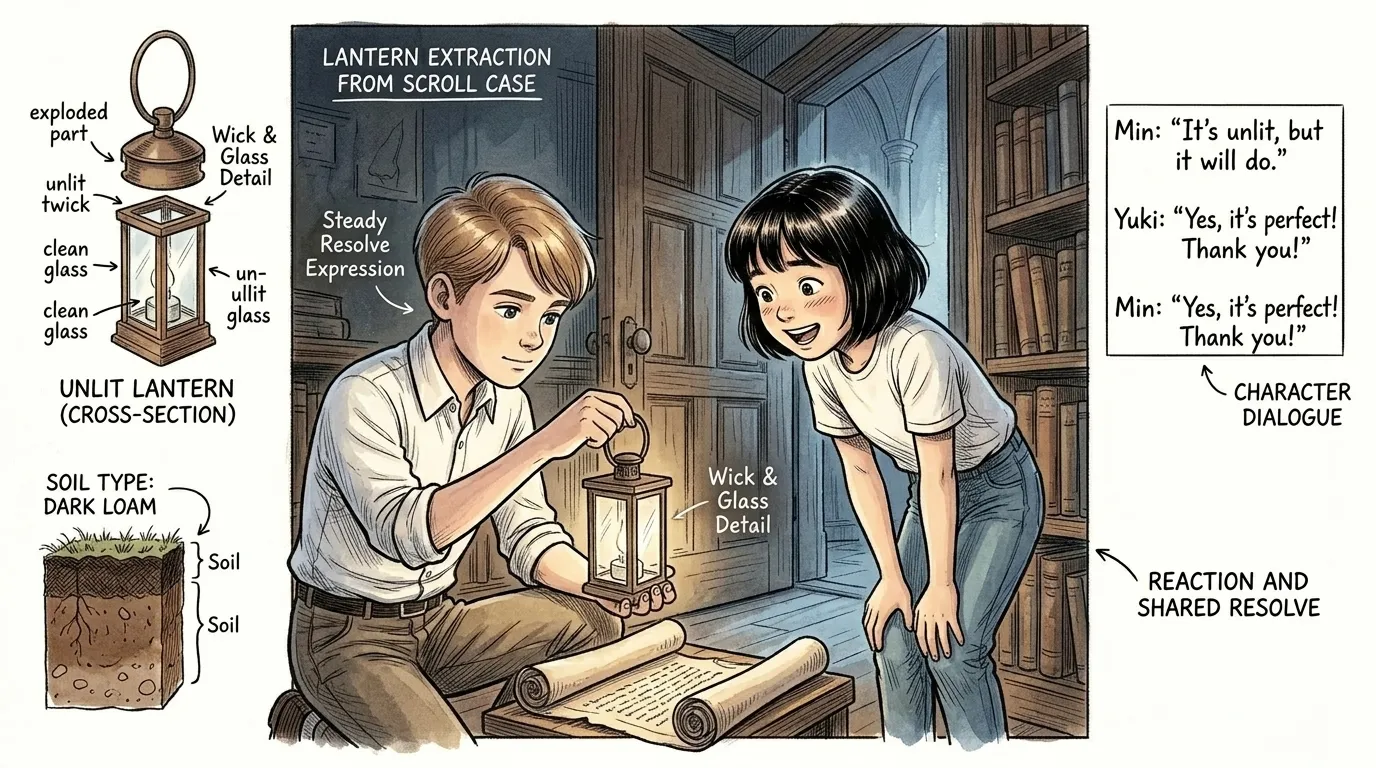
With the door firmly shut, panic began to rise in Yuki. Min, however, pulled out a small, unlit lantern from his scroll case, its glass still clean, its wick ready.
"'We need to communicate, not just with words, but with shared understanding,' Min said, 'Remember, Jaspers believed that true communication – deep, empathetic connection with another person – is essential for finding our own Existenz. If we talk through this together, truly listen, we might see a way forward that neither of us could alone.' Yuki looked at the lantern, then at Min's calm face. 'You mean we need to light a path together, both inside and out?'"
Philosophy Note: Jaspers emphasized the critical role of 'philosophical communication' in achieving Existenz. This is not mere exchange of information but a profound mutual understanding and recognition of the other's freedom, enabling individuals to confront the Encompassing and realize their own authentic being.
Page 6
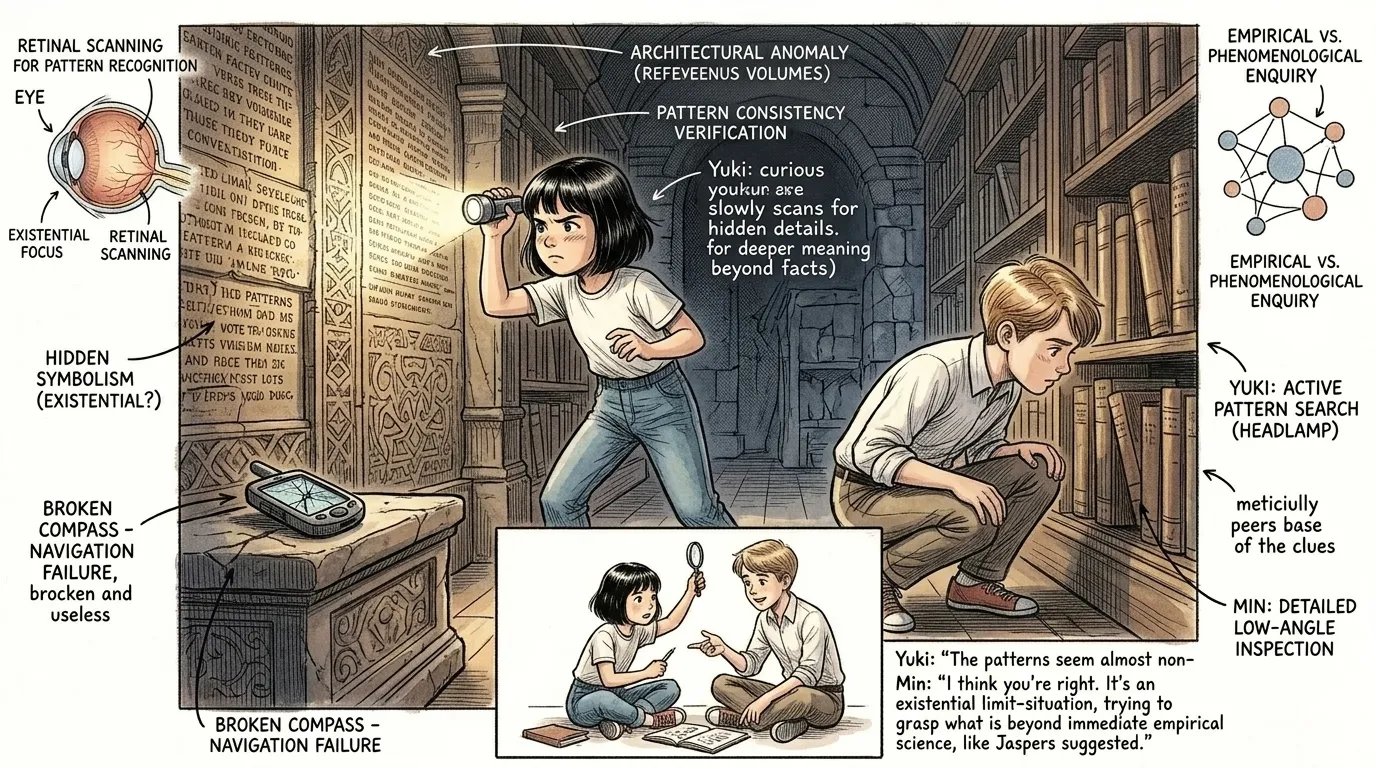
Together, they scanned the dark walls. The broken compass lay on a nearby ledge, seeming useless, but Yuki remembered Min's words about it being a 'different kind of guide.'
"'We can't rely on the broken compass for direction,' Yuki mused, 'but maybe it's not about which way is north, but what it means to be lost. Remember how Min said Jaspers saw philosophy as an 'appeal to freedom?' This is our chance to choose how we react, not just react to being stuck.' Min nodded, 'And the Encompassing isn't a map; it's the vastness that reminds us there are always deeper layers to what we perceive. There must be another way, a hidden passage perhaps, or a clue in these old walls.'"
Philosophy Note: Jaspers viewed philosophy not as a rigid system of knowledge or a set of doctrines, but as a continuous activity – an 'appeal to freedom' that prompts individuals to reflect, question, and ultimately realize their own Existenz in relation to the Encompassing. It's a journey, not a destination.
Page 7
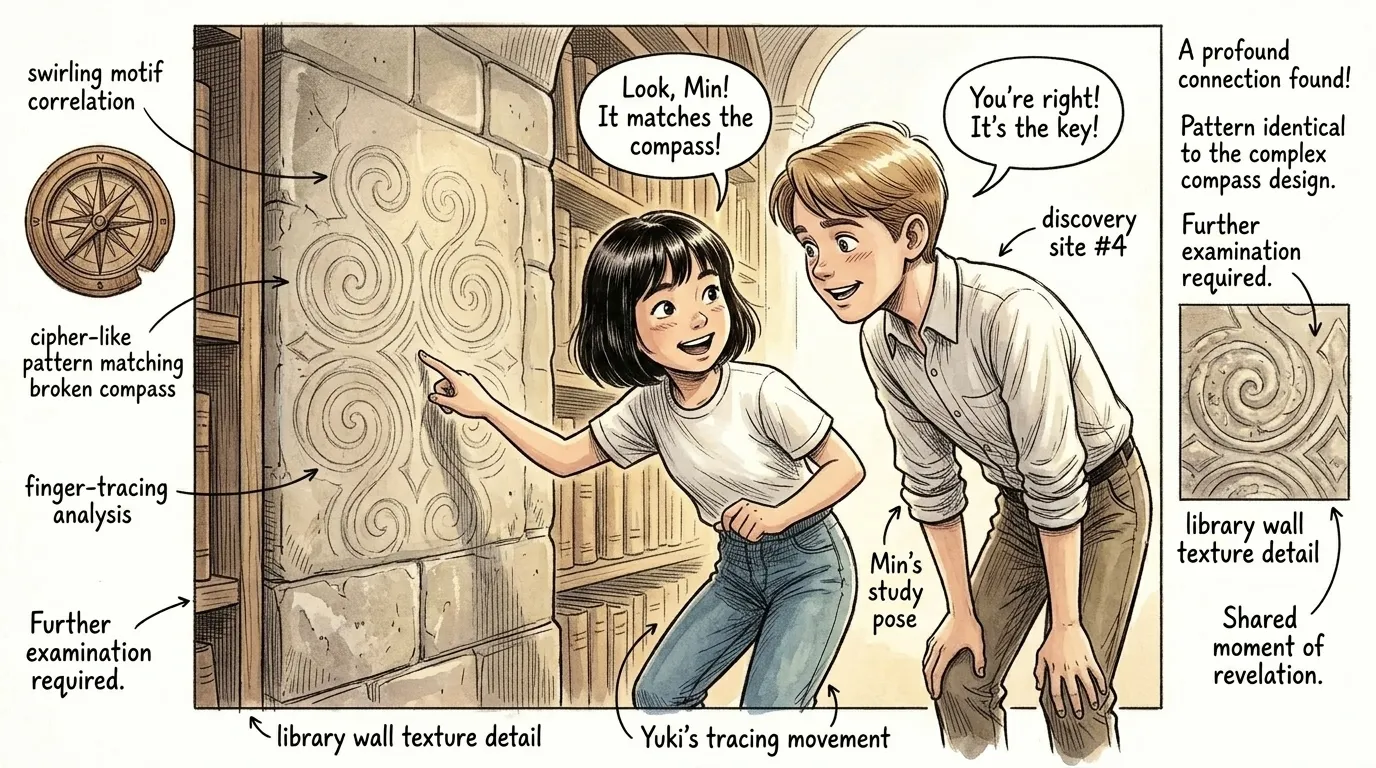
Yuki noticed faint carvings on the wall where she had pointed, almost imperceptible. She traced a finger along a swirling, symbolic pattern that mirrored the design on the broken compass.
"'It's here!' Yuki exclaimed, her voice filled with sudden excitement. 'This pattern... it's like the compass! It doesn't point a direction, but it's a sign! A cipher, like Jaspers said, showing us something beyond the obvious!' Min leaned closer, his eyes lighting up. 'You're right! And it reminds me of something the Roman philosopher Seneca once said: 'It is not because things are difficult that we do not dare; it is because we do not dare that they are difficult.' We can dare to push this wall, to find the hidden path, even if it's difficult.'"
Philosophy Note: Seneca (c. 4 BC – AD 65) was a Roman Stoic philosopher, statesman, and dramatist. His writings emphasize practical ethics, self-control, and the importance of virtue in overcoming life's challenges. His quote here encourages courage and proactive engagement with difficulties rather than allowing fear to paralyze action.
Page 8
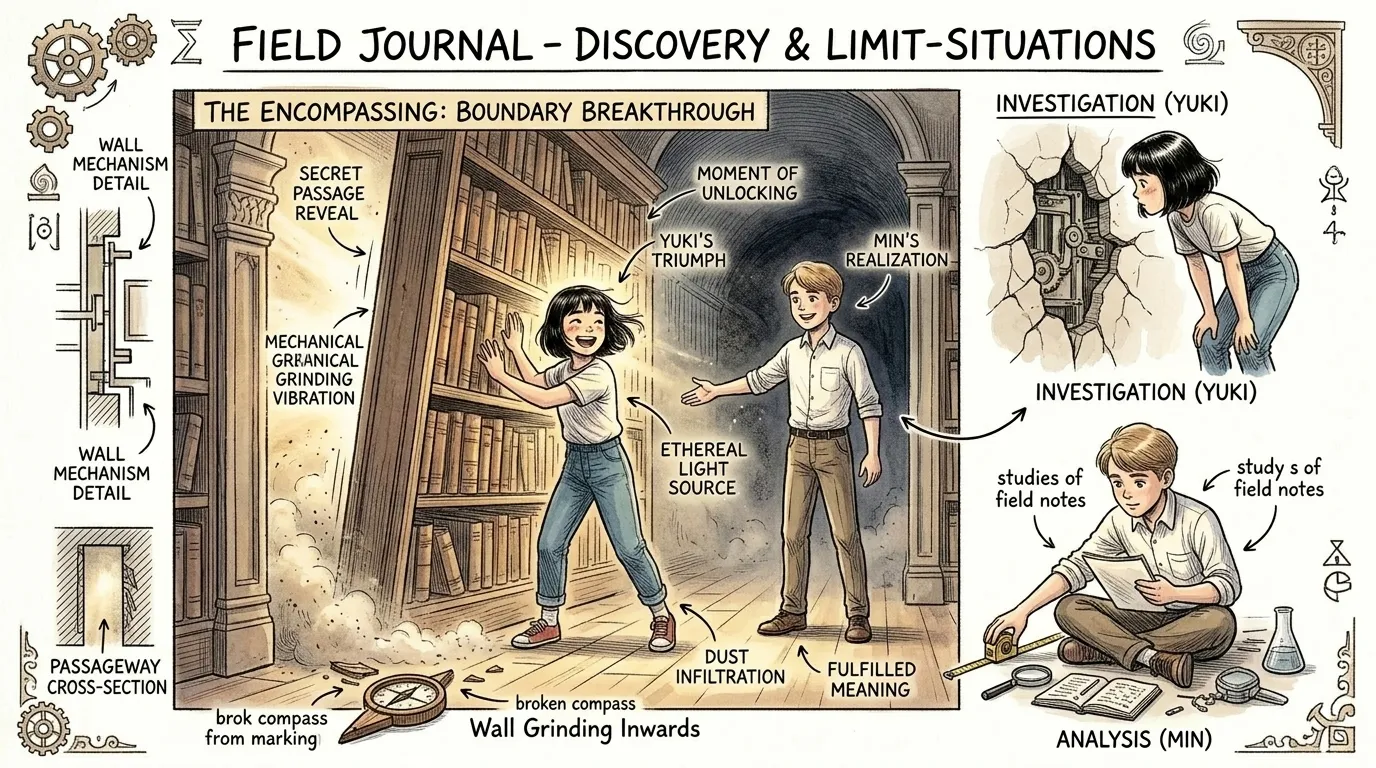
Following the faint lines of the carving, they discovered a hidden latch. With a combined effort, they pushed, and a section of the wall slowly ground inwards, revealing a narrow, dust-filled passage.
"'We did it!' Yuki exclaimed, beaming. 'That broken compass, and Min remembering Jaspers' idea of ciphers and the Encompassing, helped us see beyond the obvious. It helped us realize that even when we feel stuck, there's always a deeper meaning, a different way to understand the challenge.' Min smiled, gesturing towards the passage. 'Exactly. This isn't just an escape; it's a realization of our own 'Existenz' – our ability to choose, to interpret, and to create our own path, even when external guides fail.'"
Philosophy Note: The discovery of the hidden passage, guided by the symbolic carving and their philosophical discussion, acts as the 'payoff' for the 'Chekhov's Gun' setup (the broken compass and the knowledge of 'ciphers' and the 'Encompassing'). It illustrates how abstract philosophical concepts can guide practical action and lead to self-realization.
Page 9
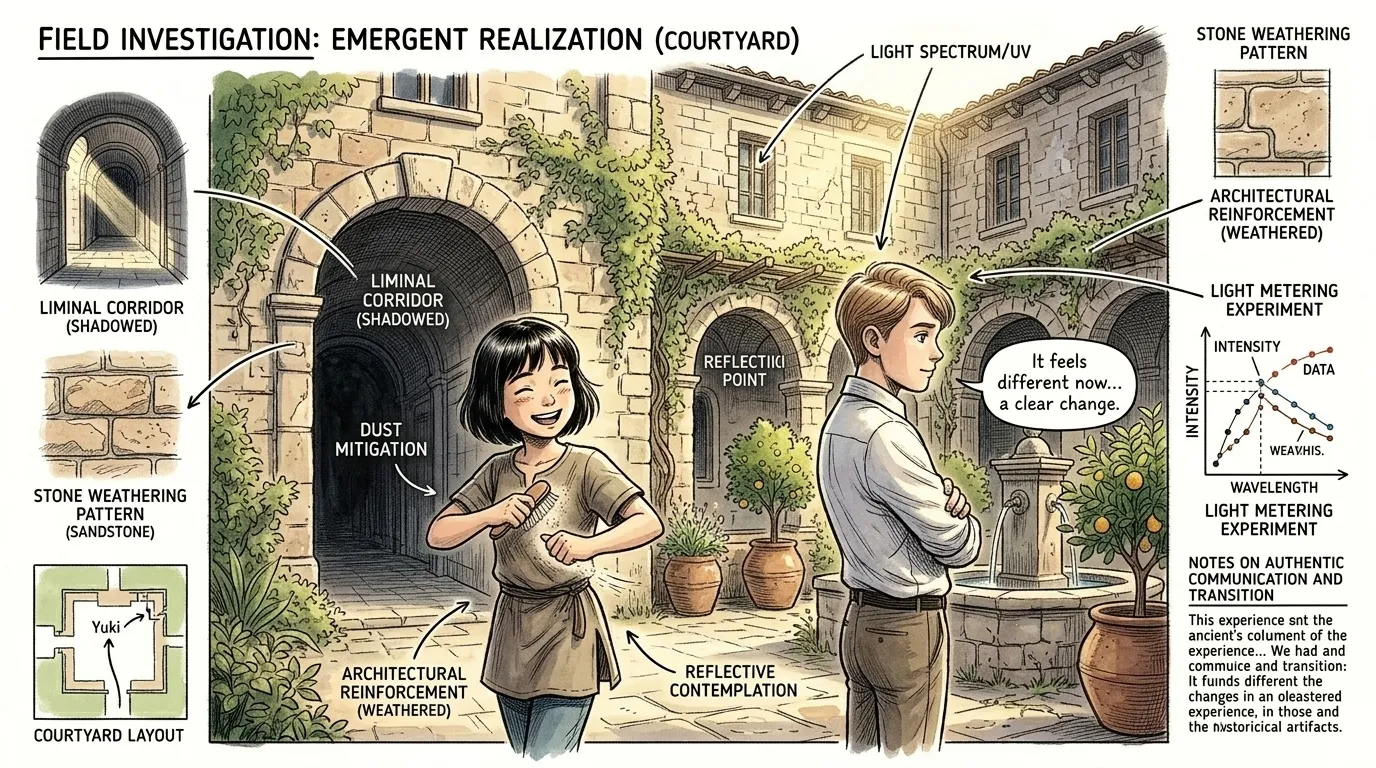
The passage led them through winding corridors, eventually emerging into a sunlit courtyard at the back of the library. They blinked in the bright light, feeling a profound sense of accomplishment.
"'This journey wasn't just about finding our way out,' Yuki said, brushing dust from her tunic, 'it was about learning to face the unknown, and understanding that some of life's biggest questions don't have simple answers, but they push us to grow.' Min looked back at the library's ancient stone walls. 'That's the enduring usefulness of thinkers like Karl Jaspers. His ideas about 'limit situations' and 'the Encompassing' help us today to navigate a complex world. They remind us that challenges aren't just obstacles; they are invitations to find our authentic selves and connect with a deeper reality.'"
Philosophy Note: Jaspers' philosophy remains highly relevant in modern critical thought, particularly for understanding identity, society, and navigating existential crises. His emphasis on individual freedom, responsible choice in the face of limit-situations, and the ongoing search for meaning resonates strongly in a world grappling with moral ambiguity and rapidly changing values.
Page 10
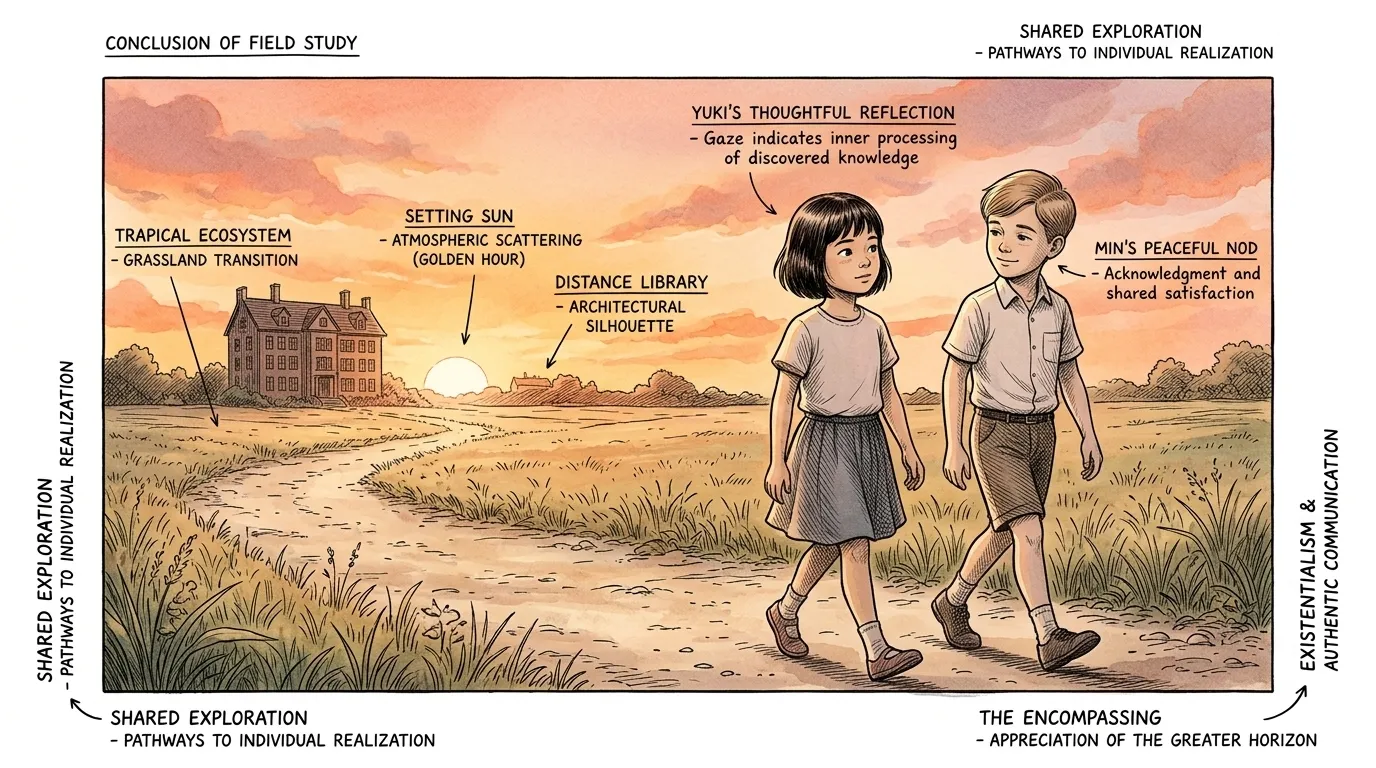
As they walked home, the old library, now a place of both mystery and profound discovery, stood silhouetted against the setting sun.
"'So, Jaspers' philosophy isn't just about reading books,' Yuki reflected, 'it's about how we live, how we face those really tough moments, and how we talk to each other to find meaning.' Min nodded, a peaceful smile on his face. 'Exactly. It's an ongoing dialogue with ourselves, with others, and with the vast, mysterious 'Encompassing' that always invites us to wonder and explore. Our journey today was a little piece of that grand philosophical adventure.'"
Philosophy Note: Jaspers' work continues to influence existential psychology, theology, and philosophy, encouraging a non-dogmatic, open-ended approach to human existence. His focus on individual responsibility and intersubjective communication offers powerful tools for navigating the complexities of modern life.
About this story
- Audience: general readers
Questions and answers
Read Wonder Philosophy on your phone
Wonder Philosophy is available on Android and iPhone and iPad. Get Wonder Philosophy on Google Play · Get Wonder Philosophy on the App Store.