Han Feizi
Han Feizi — an illustrated philosophy story. 10 illustrated pages, free to read on Wonder Philosophy.

Page 1

Han Feizi's philosophy, known as Legalism, offers a stark view of human nature and governance. His ideas, developed in ancient China, continue to provoke debate about law, order, and the role of the state. But what makes his ideas still relevant today?
Philosophy Note: Legalism: A Chinese philosophy emphasizing strict laws and centralized authority.
Page 2
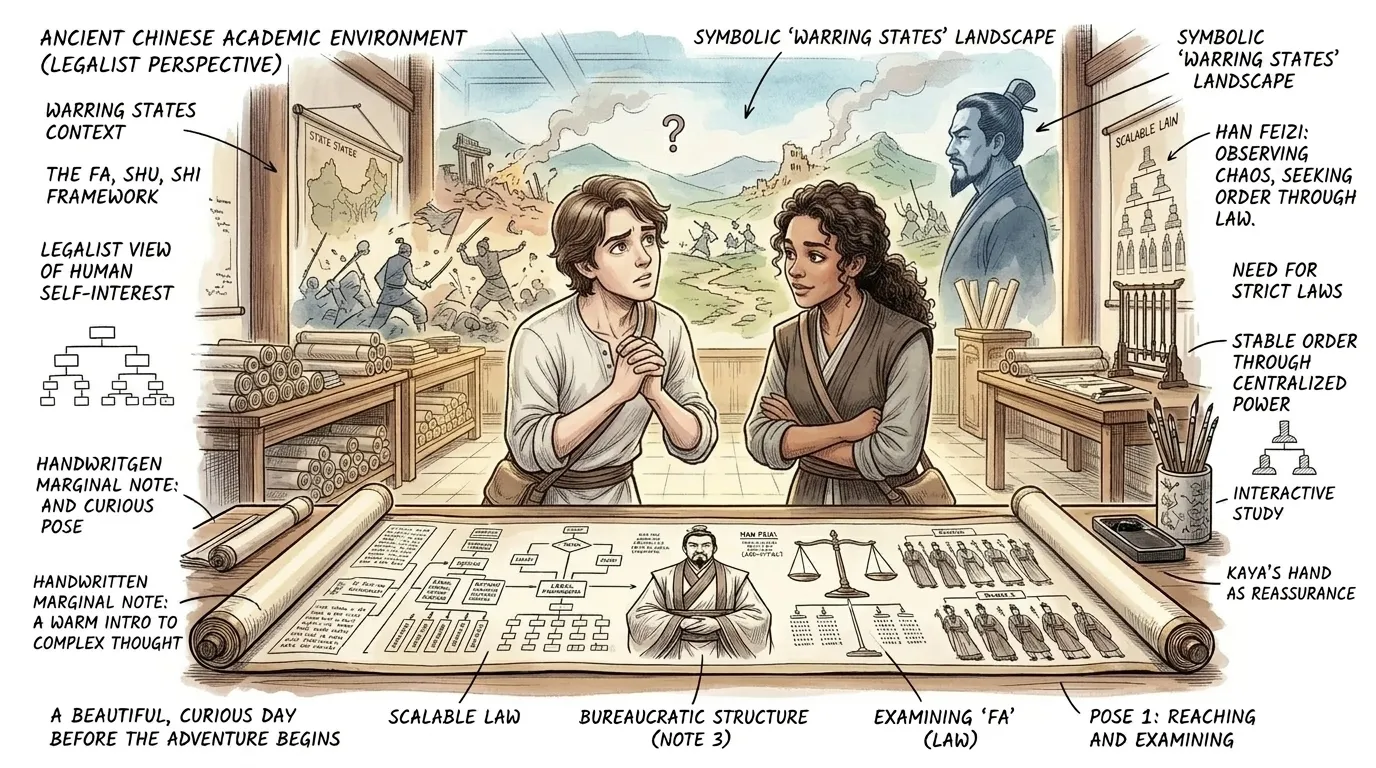
Han Feizi lived during the Warring States period, a time of intense conflict and social upheaval in China. Traditional values were crumbling, and rulers struggled to maintain control. Han Feizi, witnessing this chaos, sought a new way to establish order.
"Sami, a thoughtful 10-year-old asks Tala, a woman in her early 50s: "Why did he think people were so bad?""
Philosophy Note: Warring States Period (475-221 BCE): A time of intense warfare and political fragmentation in ancient China.
Page 3
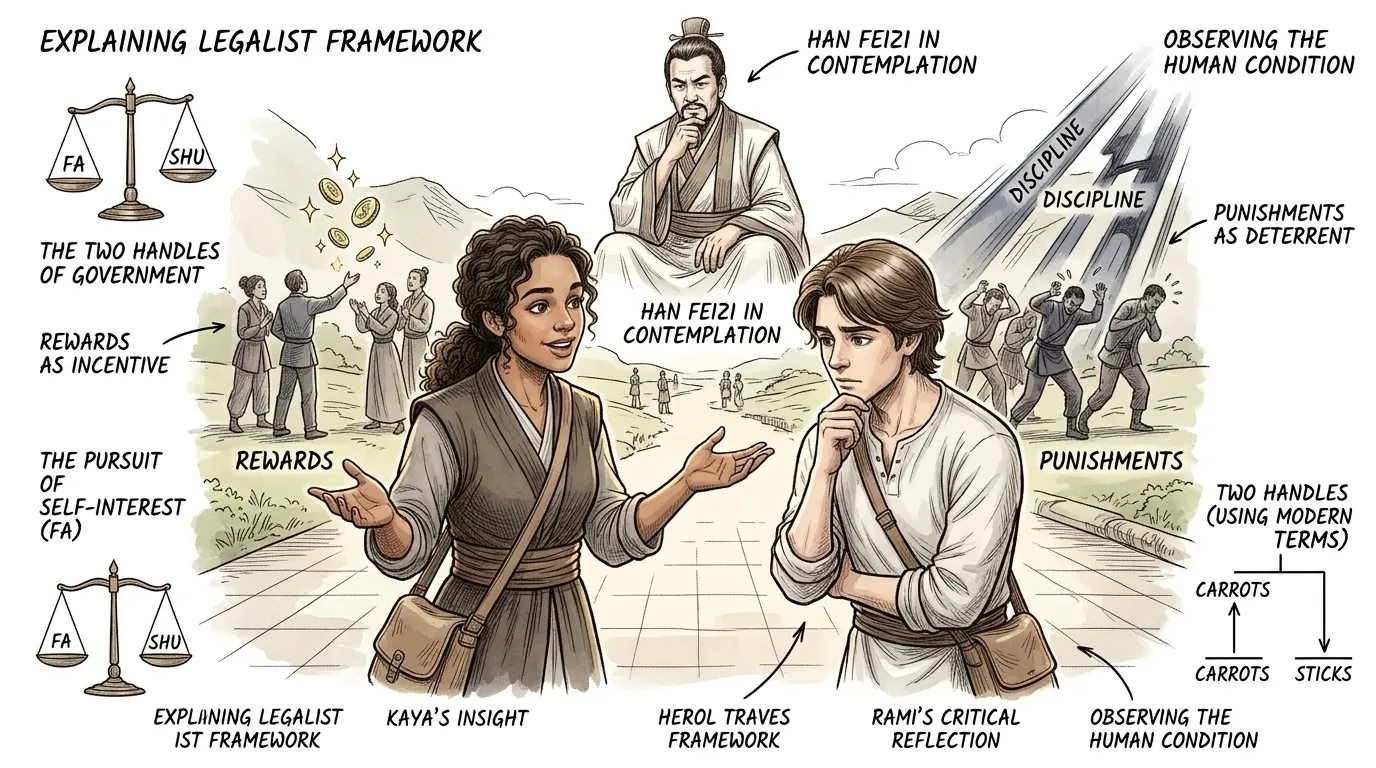
Han Feizi believed that people are inherently selfish and driven by self-interest. He argued that virtue and morality are unreliable guides for governance. People are more likely to respond to incentives and punishments.
"Tala responds, "Han Feizi believed that people are naturally inclined to pursue their own advantage, Sami. He thought relying on moral goodness alone was naive.""
Philosophy Note: Han Feizi: (c. 280-233 BCE): A Chinese philosopher and key figure in the development of Legalism.
Page 4
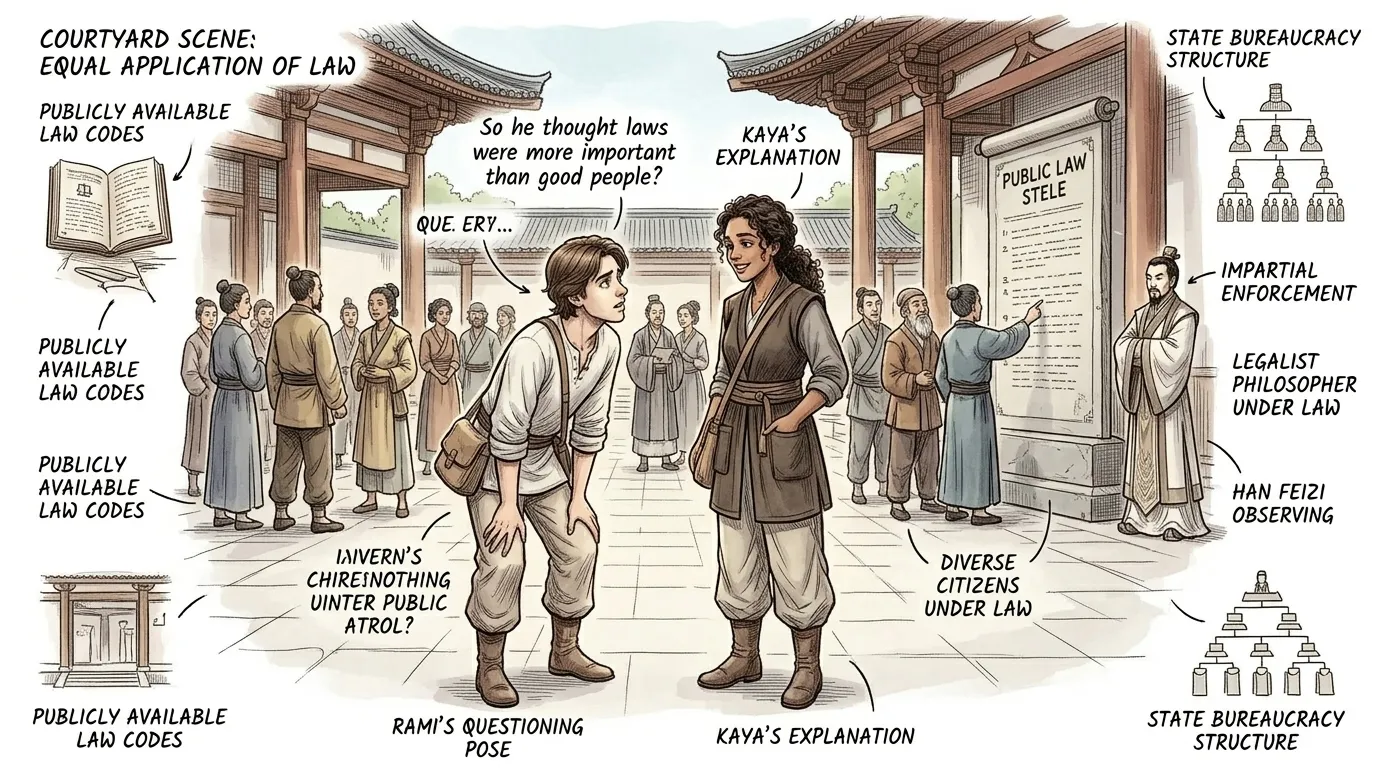
According to Han Feizi, the only way to maintain order is through a system of clear and strictly enforced laws. These laws should be public and impartial, applying equally to everyone, regardless of their social status.
"Sami replies, "So he thought laws were more important than good people?""
Philosophy Note: Rule of Law: The principle that all people are subject to and accountable to the law, which is fairly applied and enforced.
Page 5

Han Feizi emphasized the importance of rewards and punishments as tools for controlling behavior. He believed that people are motivated by the desire for gain and the fear of pain. Therefore, the state should use these incentives to encourage compliance with the law.
"Tala elaborates, "Exactly. He believed that clear rewards for obedience and harsh punishments for disobedience were the most effective way to govern.""
Philosophy Note: Incentives: Rewards and punishments used to influence behavior.
Page 6
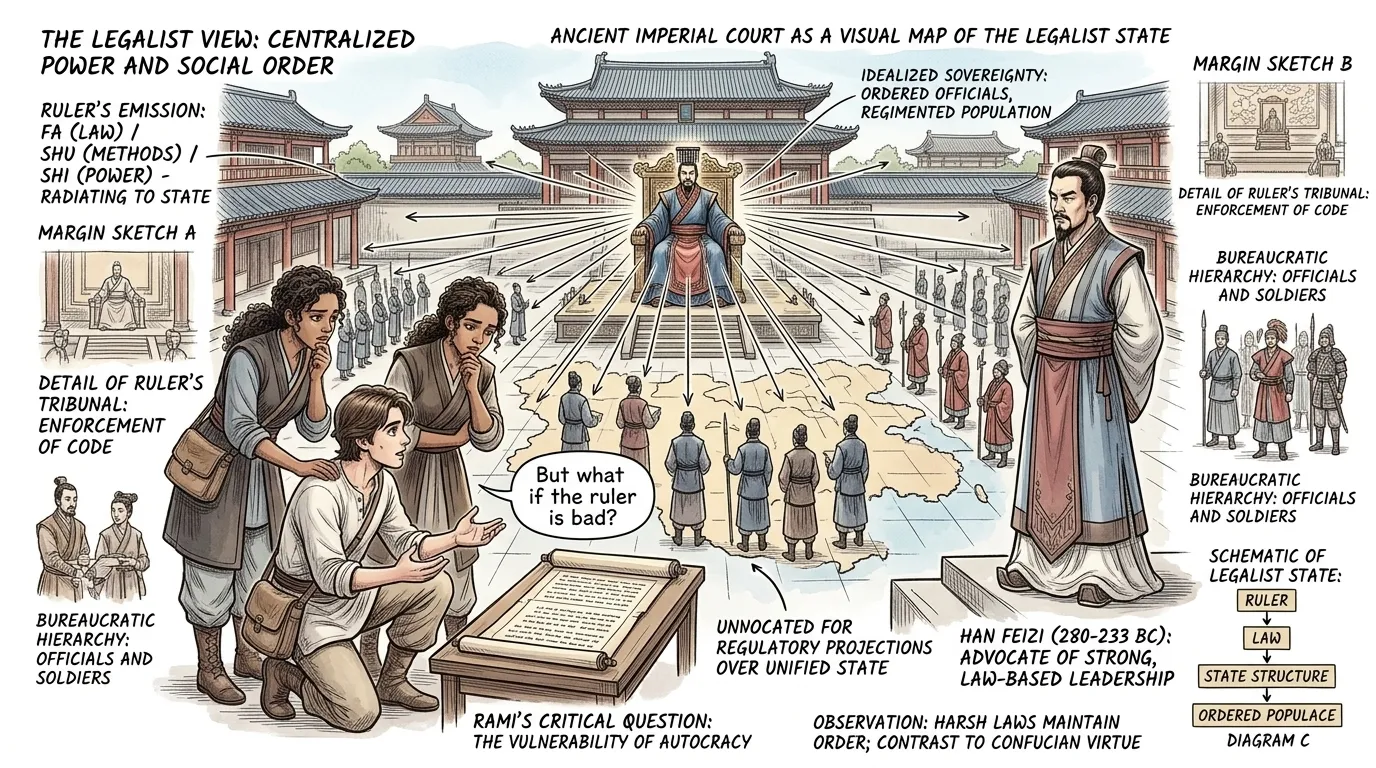
Han Feizi believed that the ruler should be strong and decisive, maintaining absolute authority. The ruler should use laws and regulations to control the bureaucracy and prevent corruption. He advocated for a centralized state with power concentrated in the hands of the ruler.
"Sami asks, "But what if the ruler is bad?""
Philosophy Note: Centralized State: A political system where power is concentrated in the hands of the central government.
Page 7
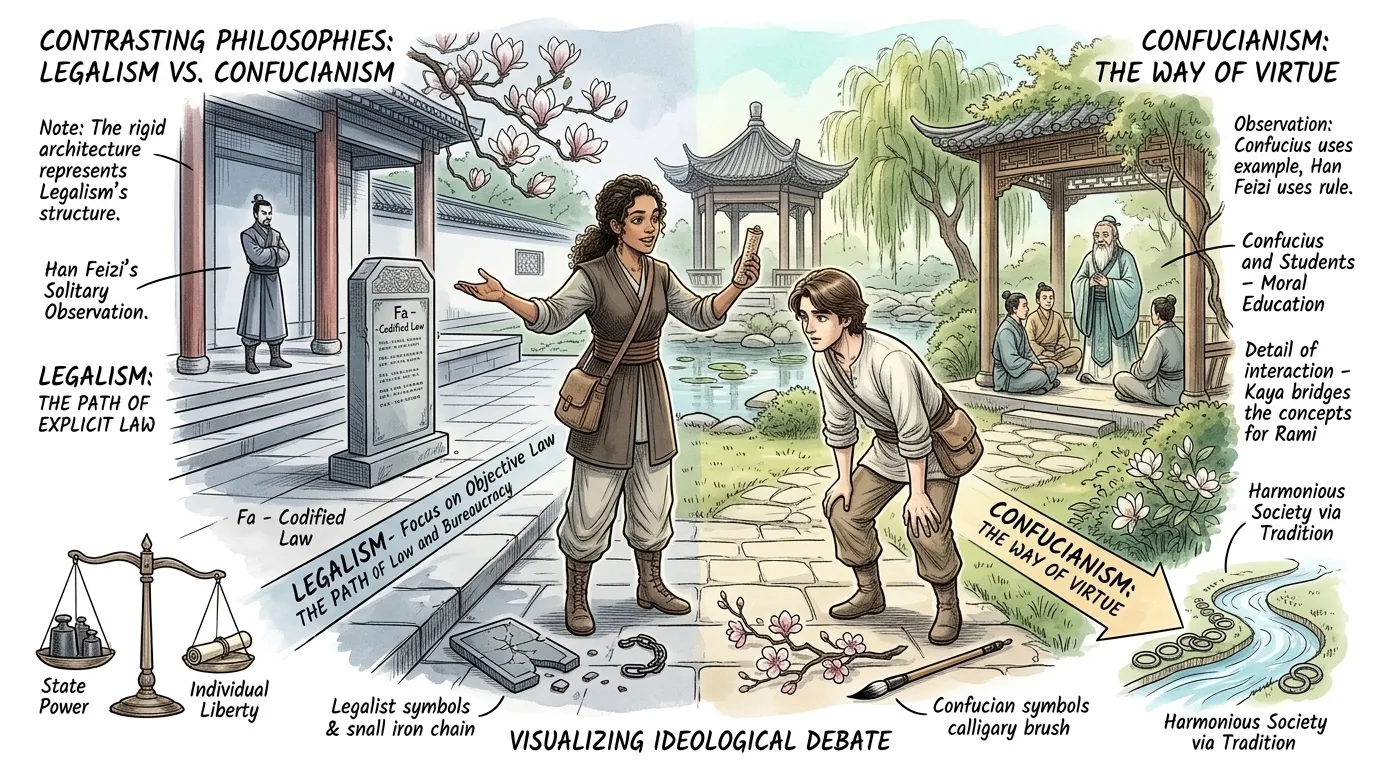
Han Feizi's Legalism has faced criticism for its harshness and its potential for tyranny. Critics argue that it ignores the importance of morality and compassion. Confucianism, with its emphasis on virtue and benevolence, offers a contrasting approach.
"Tala explains, "That's a valid point, Sami. Many philosophers, like Confucius, believed in the power of moral example and education. They thought a good ruler could inspire virtue in the people.""
Philosophy Note: Confucianism: A Chinese philosophy emphasizing ethics, social harmony, and the importance of moral leadership.
Page 8

Despite its controversial nature, Legalism had a profound impact on Chinese history. The Qin dynasty, which unified China in 221 BCE, adopted Legalist principles. Han Feizi's ideas continue to influence political thought and practice today.
"Sami reflects, "So, even though it's tough, his ideas helped create a strong government?""
Philosophy Note: Qin Dynasty (221-206 BCE): The dynasty that unified China under Legalist principles.
Page 9

Han Feizi's ideas about the importance of clear rules and consistent enforcement are still relevant in modern legal systems. He said, 'A ruler who relies on force alone will fall.' This shows us that the best way to rule is by having rules everyone can follow, but a ruler cannot become a tyrant.
"Sami asks, "So, laws can keep us free, but they can also take our freedom away, right?""
Philosophy Note: Modern Relevance: Han Feizi's influence on legal and political systems today.
Page 10
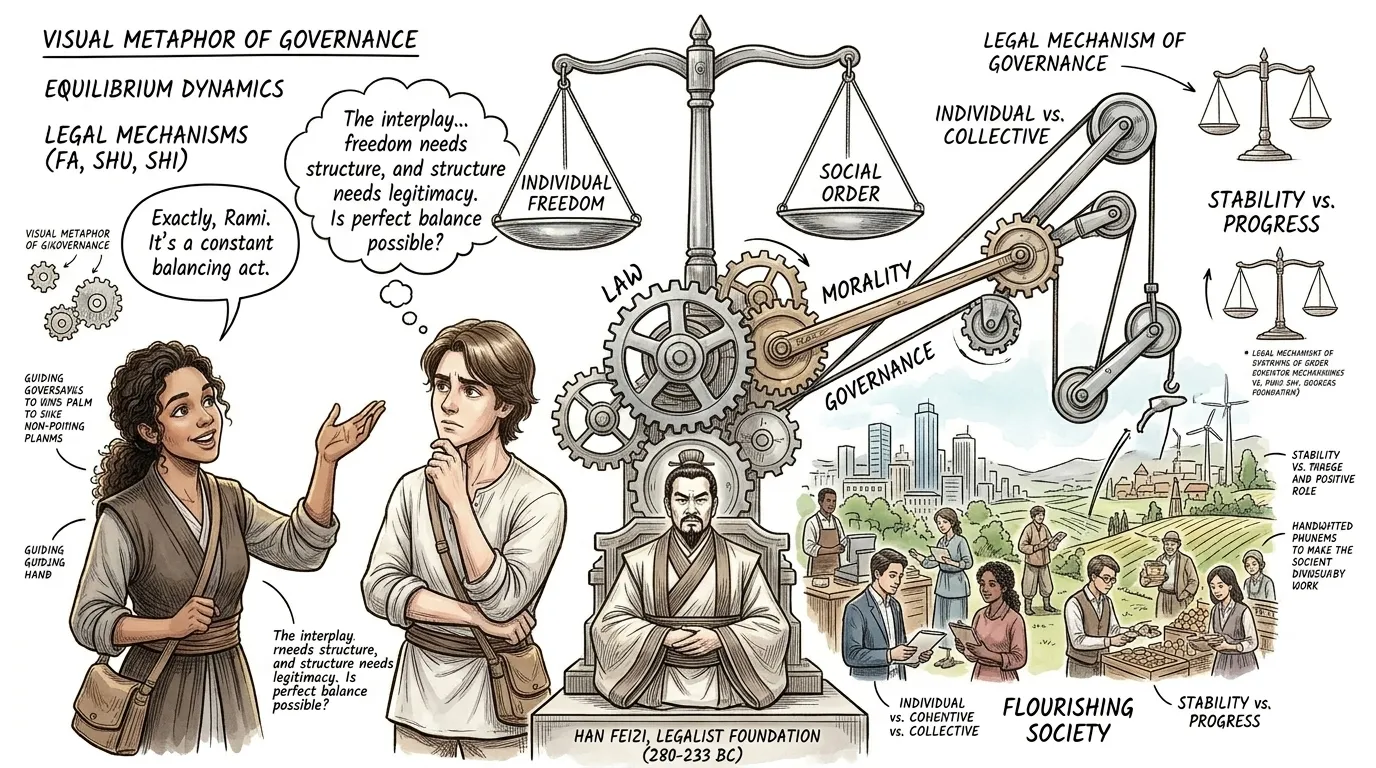
Han Feizi's philosophy reminds us of the ongoing tension between individual freedom and social order. Finding the right balance between law and morality remains a challenge for societies around the world.
"Tala replies, "Exactly, Sami. It's a constant balancing act. How do we create a society that is both just and orderly? That's the question Han Feizi's ideas force us to confront.""
Philosophy Note: Social Order: The organization of society based on established norms and laws.
About this story
- Audience: general readers
Questions and answers
Read Wonder Philosophy on your phone
Wonder Philosophy is available on Android and iPhone and iPad. Get Wonder Philosophy on Google Play · Get Wonder Philosophy on the App Store.