Friedrich Nietzsche
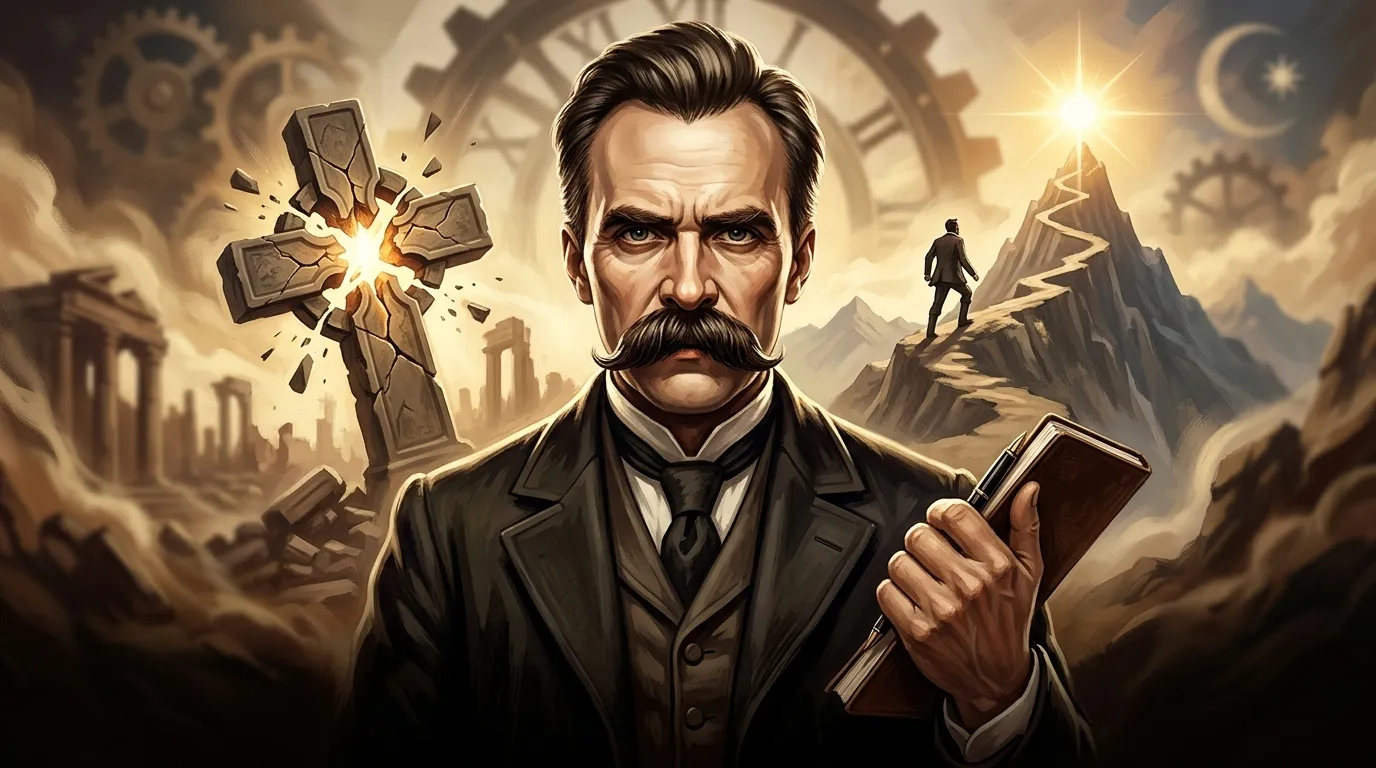
Friedrich Nietzsche — an illustrated philosophy story. 10 illustrated pages, free to read on Wonder Philosophy.
Page 1
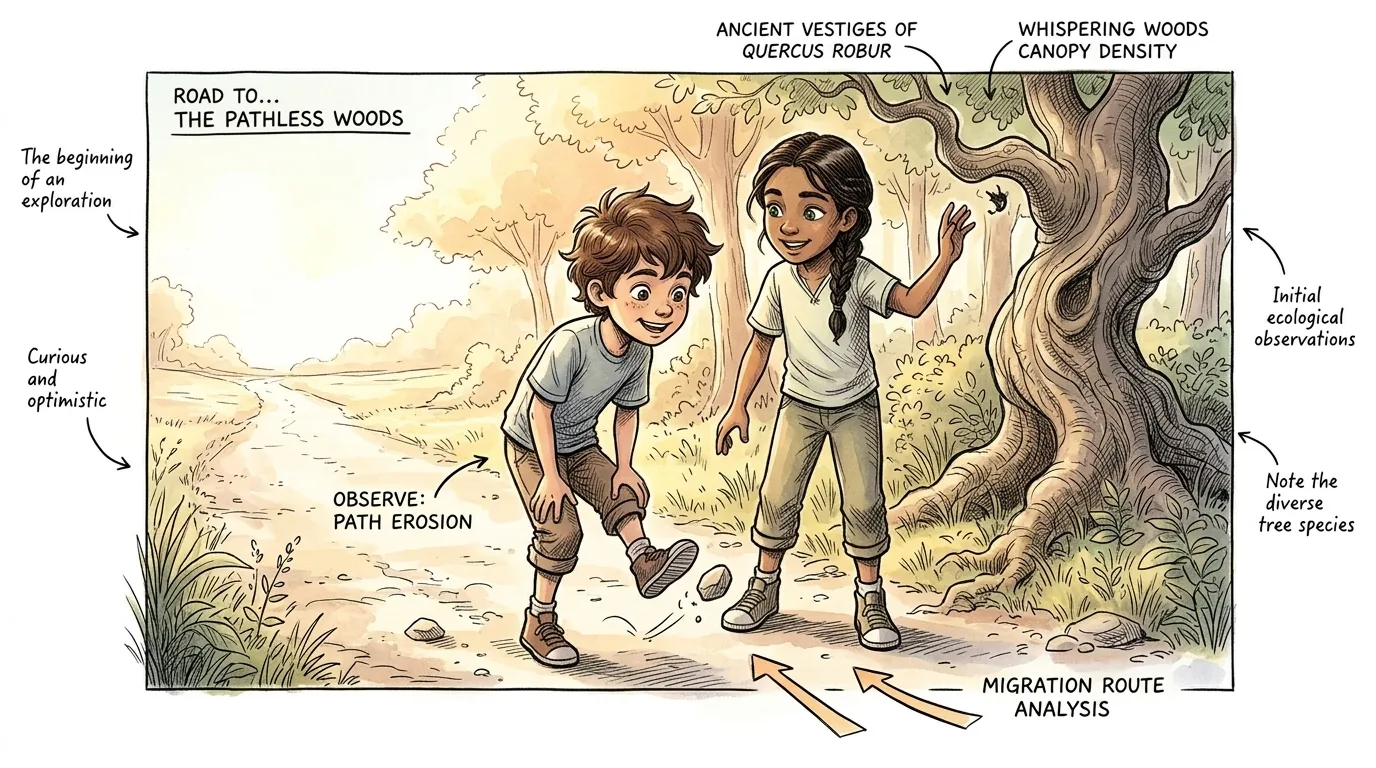
Koa and Hugo stood at the edge of the Whispering Woods, a place known for its winding paths and ancient stories. A dusty, well-trodden road stretched before them, looking long and uninviting. Koa sighed, already feeling tired just looking at it.
"'This path feels... heavy, doesn't it?' Koa asked, kicking at a loose stone. 'Everyone always says it's the only way to reach the Sunstone Meadow, but it just looks so old and worn out. I wonder if there's another way, a better way, that no one has tried.'"
Philosophy Note: Friedrich Nietzsche (1844-1900) was a German philosopher whose work critically examined traditional values and morality. He encouraged individuals to question accepted truths and forge their own paths, a theme often associated with existentialism and modern critical philosophy.
Page 2
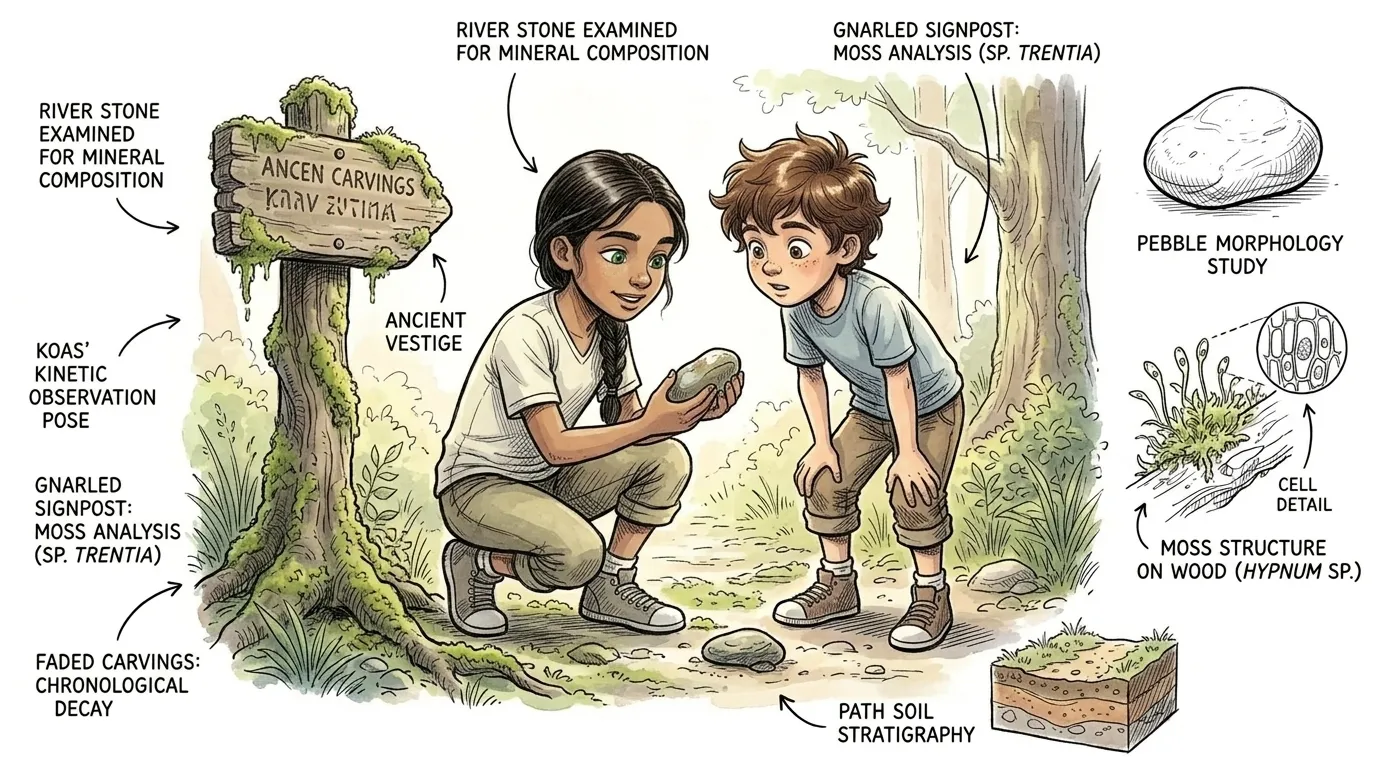
Hugo nodded thoughtfully, picking up a smooth river stone and turning it in her hand. She gestured towards a gnarled, moss-covered signpost barely visible beside the path, its faded carvings almost completely erased by time. It pointed down the very same old road Koa was reluctant to take.
"'Many people follow paths simply because they were told it's the path, Koa,' Hugo explained gently. 'It's like this old sign. Once, it guided everyone, but now... it's barely legible. We need to decide if it still points to the best way forward for us. This reminds me of someone named Friedrich Nietzsche, who thought a lot about challenging old ideas.'"
Philosophy Note: Nietzsche coined the phrase 'transvaluation of all values' to describe his project of re-evaluating the foundational ethical and cultural beliefs that had long been taken for granted in Western society.
Page 3
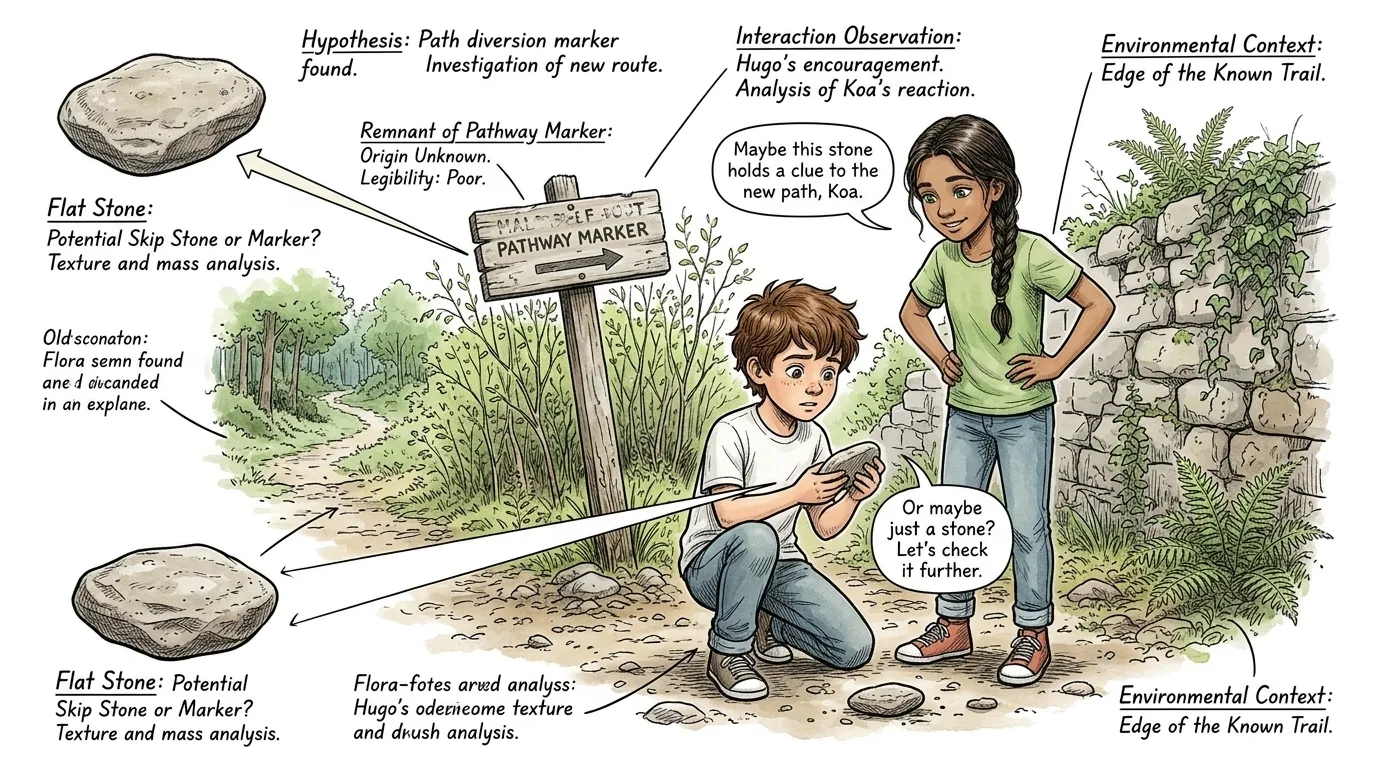
Koa looked from the old sign to Hugo, a new idea sparking in his eyes. He picked up a smooth, flat stone and turned it over and over. The thought of questioning something so established felt both exciting and a little daunting.
"'But if everyone questions everything, won't it just be chaos?' Koa wondered aloud. 'How do you know what's right then?' Hugo smiled, 'Nietzsche believed that by questioning, we don't just break things down, we build ourselves up. We learn to create our own values, based on strength and honesty, instead of just inheriting them blindly. It's about finding your own will to overcome challenges, not just following someone else's rules.'"
Philosophy Note: Nietzsche's concept of the 'will to power' is often misinterpreted as a desire for dominance. Instead, it refers to a fundamental drive in all living things to grow, overcome, and actualize their potential, often by creating their own values.
Page 4
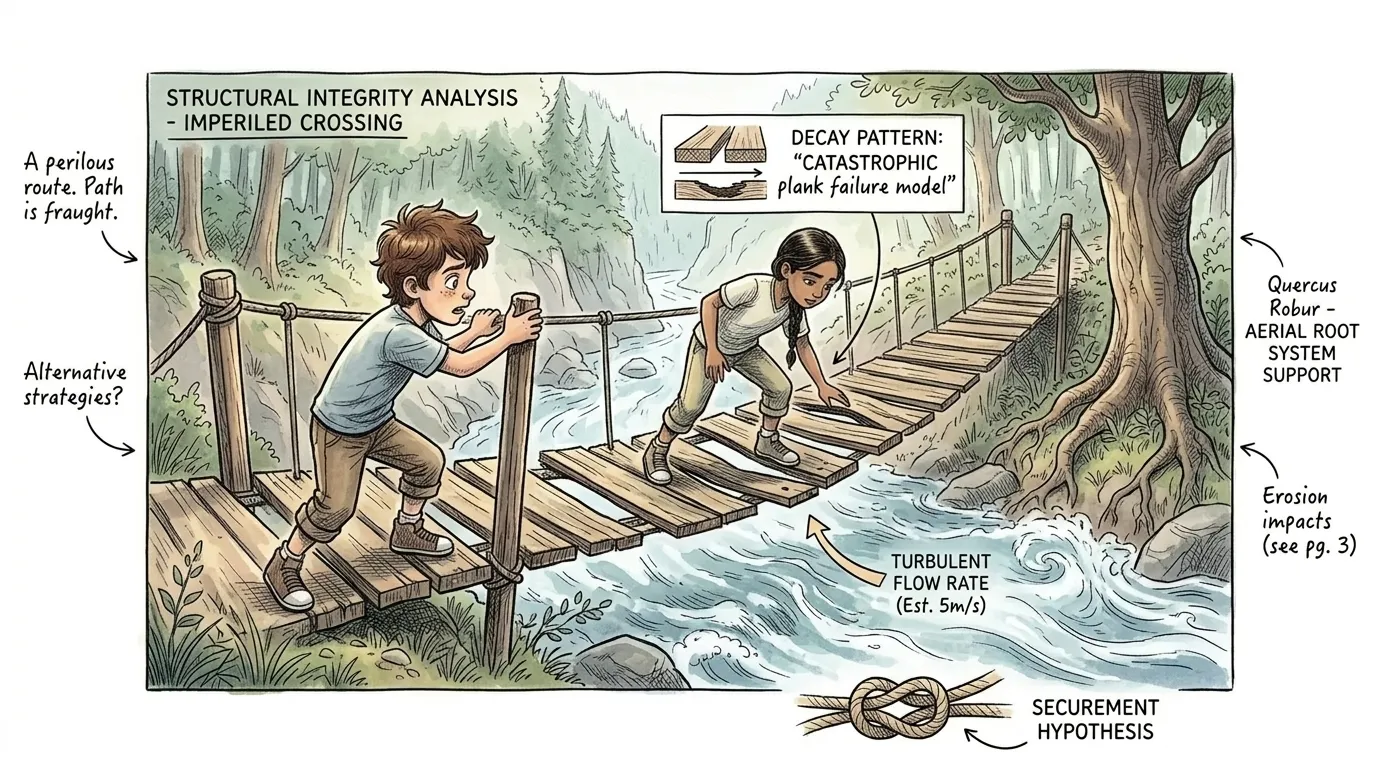
Further down the path, the old road led to a rickety wooden bridge, its planks warped and gaps appearing between them. The signpost had indicated this was the only way, but it looked incredibly unstable. Koa hesitated, seeing the rushing river below.
"'This bridge looks like it's barely holding on!' Koa exclaimed, pointing. 'The old map on the sign says to cross here, but it doesn't look safe at all. What if there's a different way to get across the river, even if no one's ever looked for it?'"
Philosophy Note: Nietzsche explored the idea of 'master morality' and 'slave morality.' Master morality values strength, nobility, and self-assertion, while slave morality, often born from resentment, values kindness, humility, and pity.
Page 5
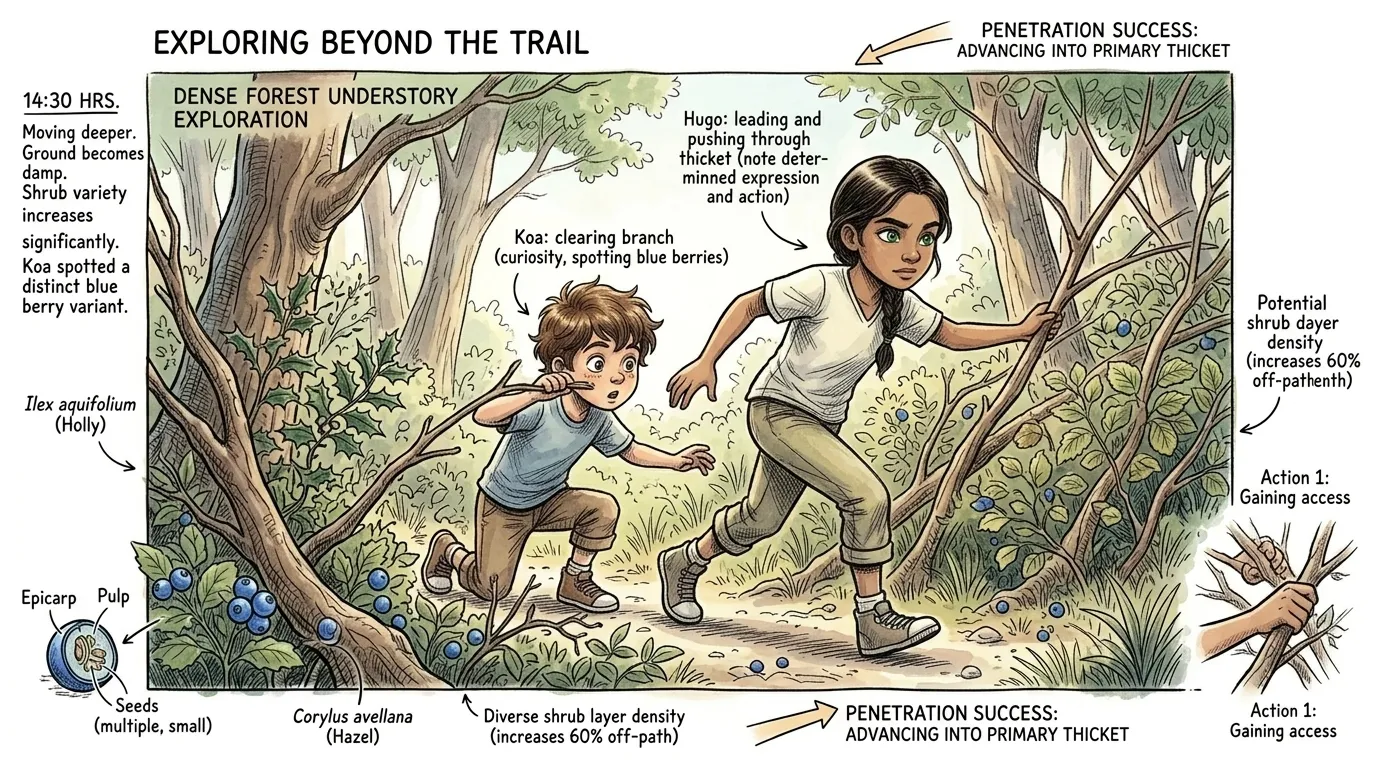
Instead of stepping onto the unsafe bridge, Hugo led Koa off the main path, into a denser part of the woods. It wasn't easy, pushing through thick bushes and climbing over roots, but they moved forward. Koa felt a new surge of determination.
"'It's harder to go off the well-worn path, but look at what we're seeing!' Koa said, clearing a branch from his face. 'No one else would have seen these bright blue berries or heard that strange bird. And we don't have to worry about the bridge collapsing! We're creating our own way, just like Nietzsche suggested people should do with their beliefs.'"
Philosophy Note: Nietzsche often used metaphors of journeying and overcoming to describe the process of individual self-creation and the re-evaluation of inherited morality. This journey requires courage and a willingness to face discomfort.
Page 6
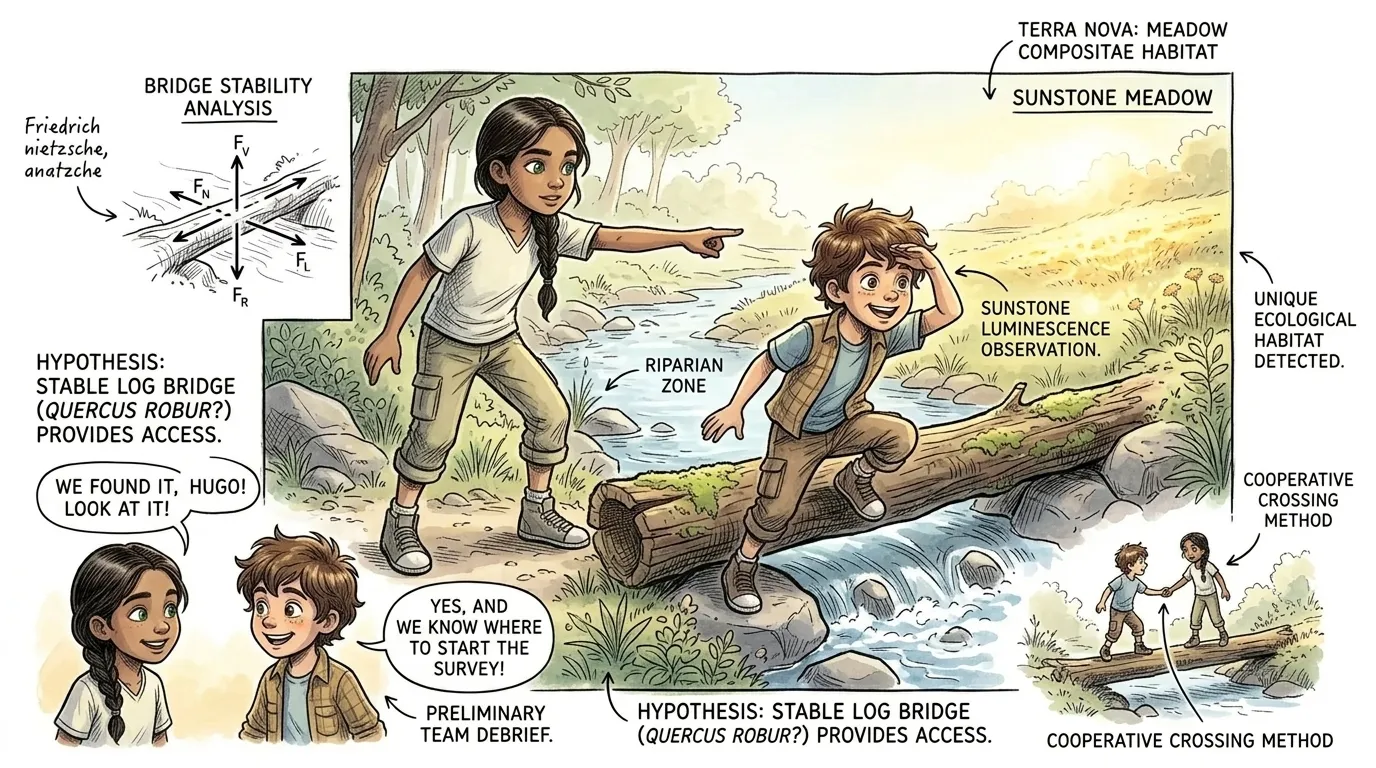
After some effort, they reached a small clearing with a perfect view of Sunstone Meadow across the river, much closer than they would have been on the old path. A narrow, sturdy log served as a natural bridge, unnoticed by those who stuck to the main route.
"'See, Koa?' Hugo pointed across the river. 'This log bridge is perfectly safe, and we're already closer to the meadow than we would have been! Sometimes, stepping away from the 'master path' and deciding for yourself leads to a better, more authentic way. It's about having the courage to trust your own judgment.'"
Philosophy Note: Nietzsche emphasized individual autonomy and self-overcoming. His philosophy suggests that true fulfillment comes from asserting one's own values and creating meaning in a world without inherent objective values.
Page 7
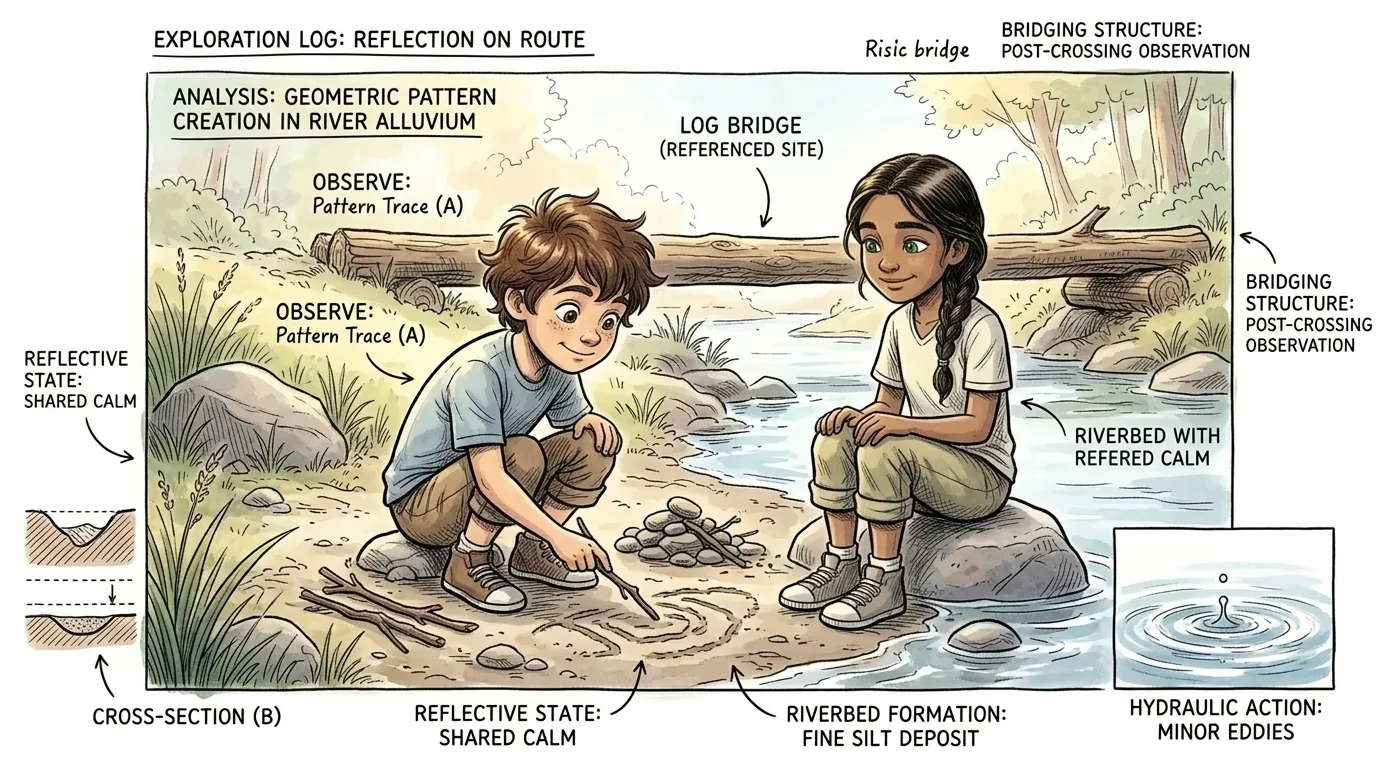
Koa and Hugo sat by the river's edge, resting before crossing the log. The sun warmed their faces, and Koa felt a profound sense of accomplishment, not just from reaching this point, but from the way they'd done it.
"'This journey felt... different,' Koa mused, tracing patterns in the dirt with a stick. 'Harder in some ways, but also more rewarding. I feel stronger for having found our own way. It makes me think of what Ralph Waldo Emerson once said: 'To be yourself in a world that is constantly trying to make you something else is the greatest accomplishment.' He was right – trusting ourselves really made all the difference.'"
Philosophy Note: Ralph Waldo Emerson (1803-1882) was an American essayist, lecturer, and poet who led the transcendentalist movement. His work emphasized individualism, self-reliance, and the inherent goodness of people and nature.
Page 8
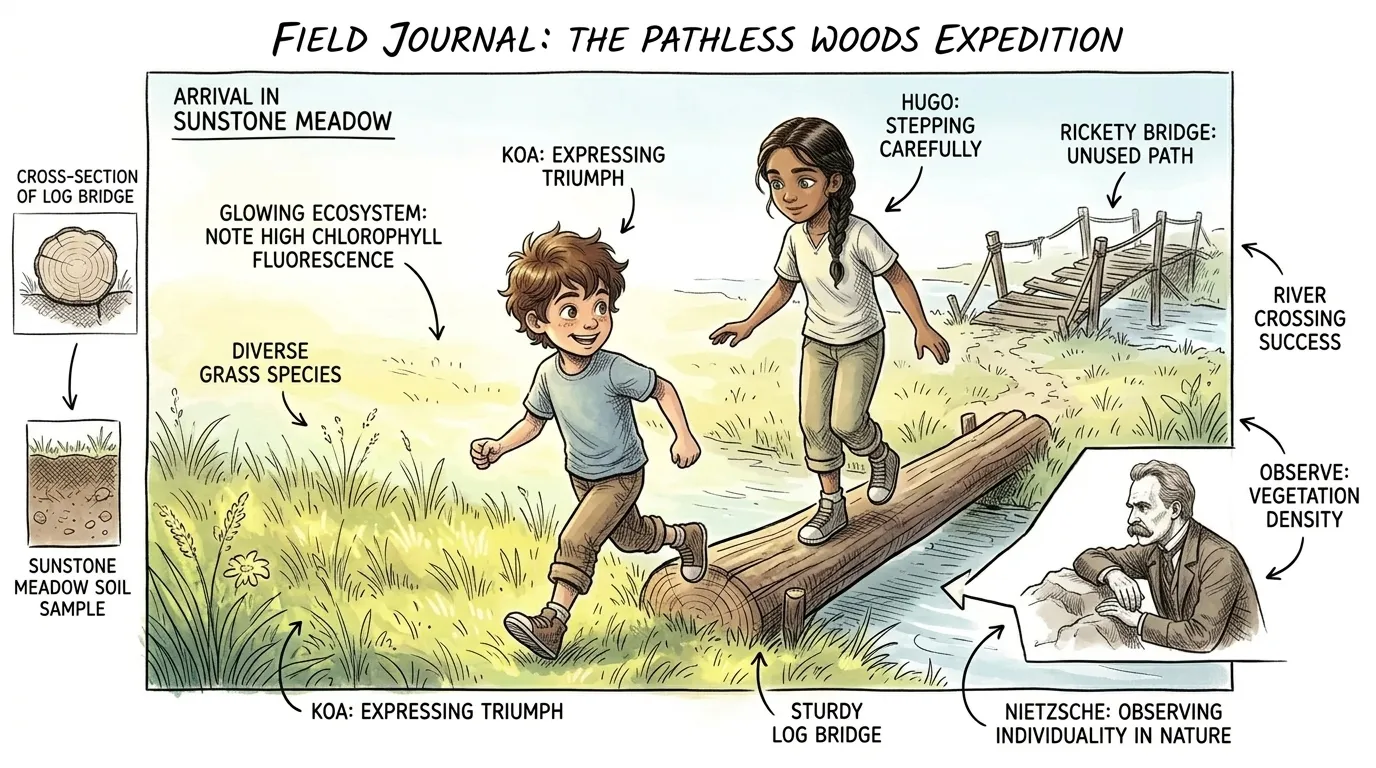
With renewed energy, they carefully crossed the sturdy log bridge, its surface surprisingly firm beneath their feet. Koa looked back at the distant, unused old bridge, a symbol of the path they had chosen to reject. The meadow glowed, just ahead.
"'We didn't just find another way, Hugo,' Koa said, stepping onto the soft grass of the meadow. 'We made a new way, by looking beyond what was simply given to us. This log might have always been here, but we wouldn't have seen it if we hadn't decided to question the old signpost and trust our own observations instead. That's what Nietzsche wanted us to do!'"
Philosophy Note: The idea of 'creating' rather than 'finding' meaning is central to existentialist thought, heavily influenced by Nietzsche's emphasis on individual freedom and responsibility in a world without inherent values.
Page 9
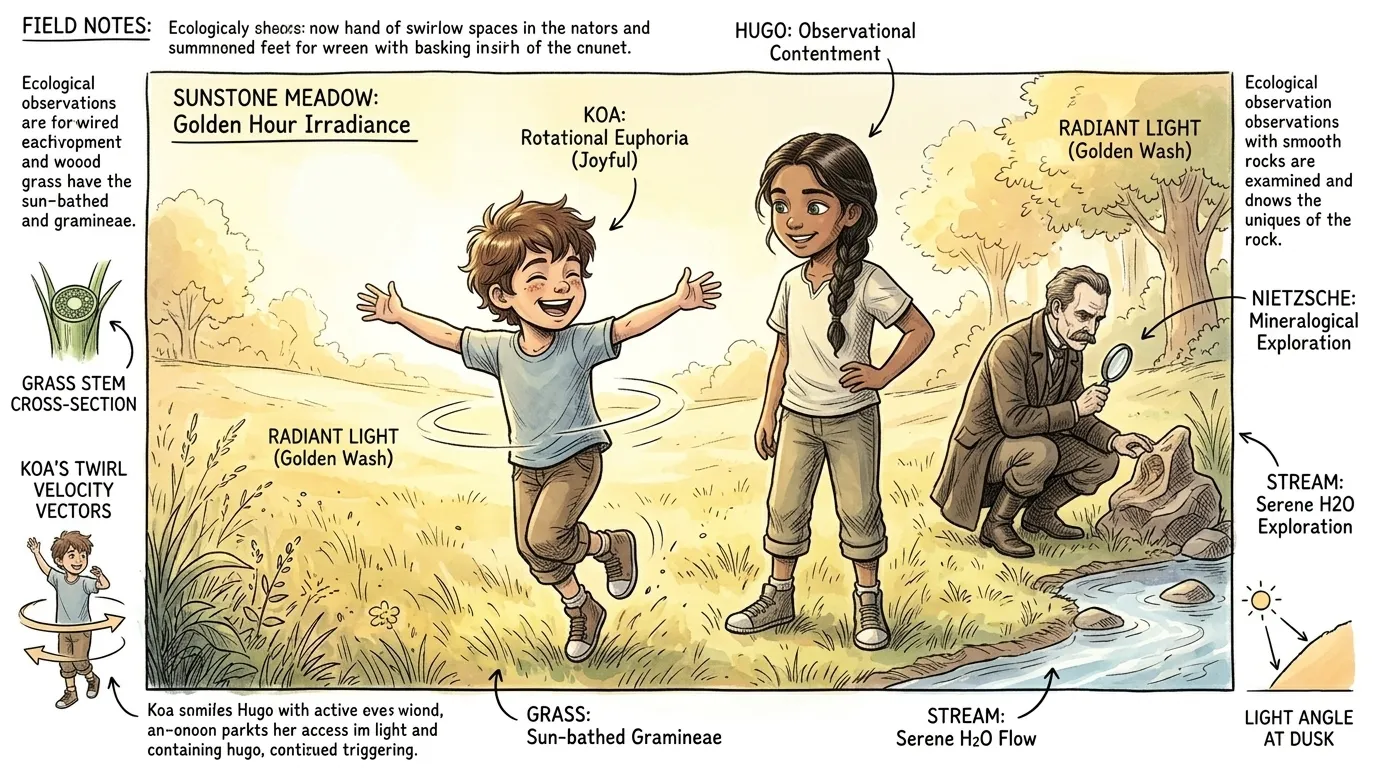
The Sunstone Meadow lived up to its name, bathed in a golden light that seemed to emanate from the very earth. Koa twirled around, feeling the soft grass beneath his feet and the warm sun on his face. They had truly arrived, on their own terms.
"'This feels like our meadow, doesn't it?' Koa laughed, throwing his arms wide. 'We chose our path, and it brought us here, to a place where we feel so alive. It's not about being stubborn, but about thoughtfully choosing what's right for you. It makes every step feel more meaningful.'"
Philosophy Note: Nietzsche's concept of 'amor fati'—love of fate—encourages embracing one's life, including its suffering and challenges, as a path to self-overcoming and self-creation, affirming one's unique existence.
Page 10
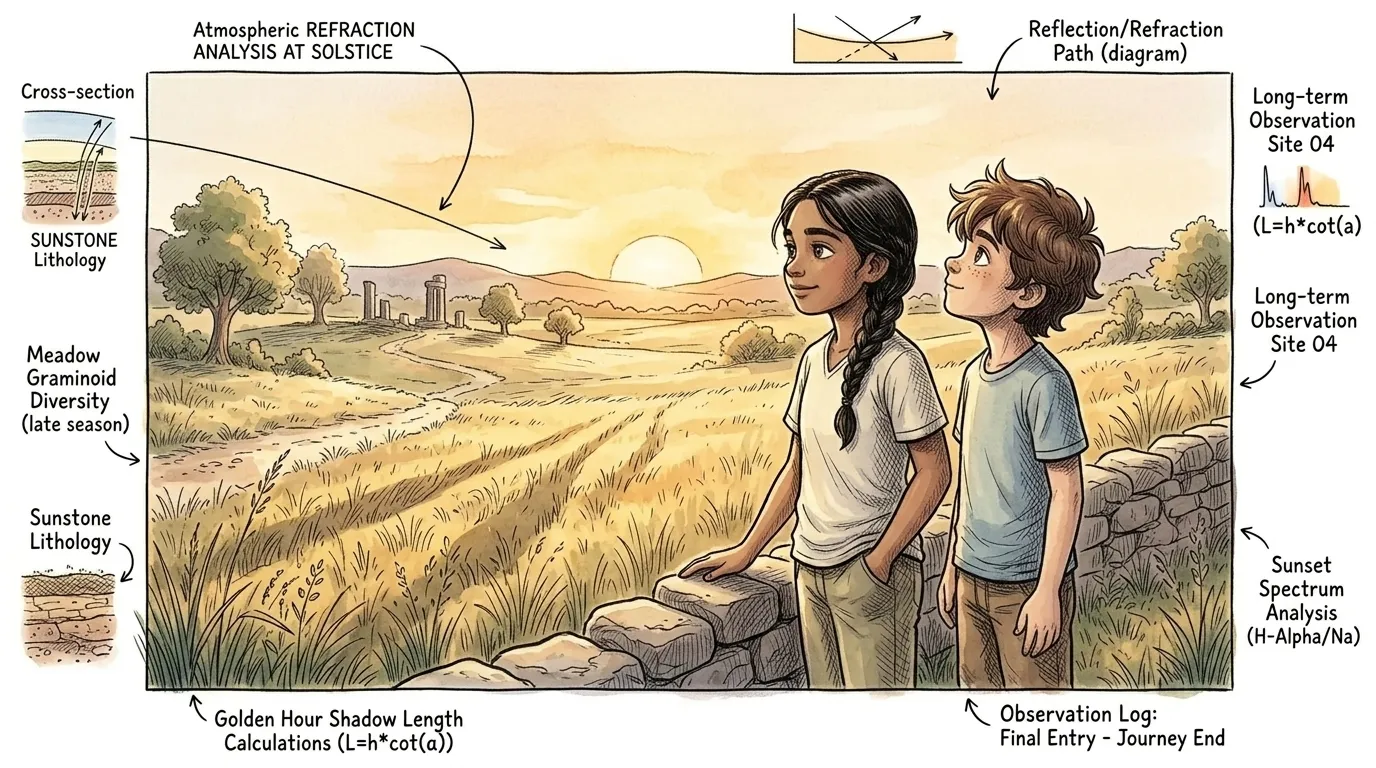
As the day began to turn to evening, casting long, golden shadows across the meadow, Koa and Hugo prepared to head home, their hearts full. The lessons of their journey, and the wisdom of Friedrich Nietzsche, would stay with them.
"'Life has many paths and many old signs, Koa,' Hugo concluded softly, looking towards the setting sun. 'Nietzsche teaches us that the real strength comes not from following blindly, but from looking carefully, questioning thoughtfully, and then having the courage to forge your own path, guided by your own deeply considered values. It's a way of living that makes every decision truly yours.'"
Philosophy Note: Nietzsche's philosophy continues to influence modern thought on existentialism, individualism, and critical theory, urging continuous self-reflection and the creation of personal meaning in an often chaotic world.
About this story
- Audience: general readers
Questions and answers
Read Wonder Philosophy on your phone
Wonder Philosophy is available on Android and iPhone and iPad. Get Wonder Philosophy on Google Play · Get Wonder Philosophy on the App Store.