Gabriel Marcel
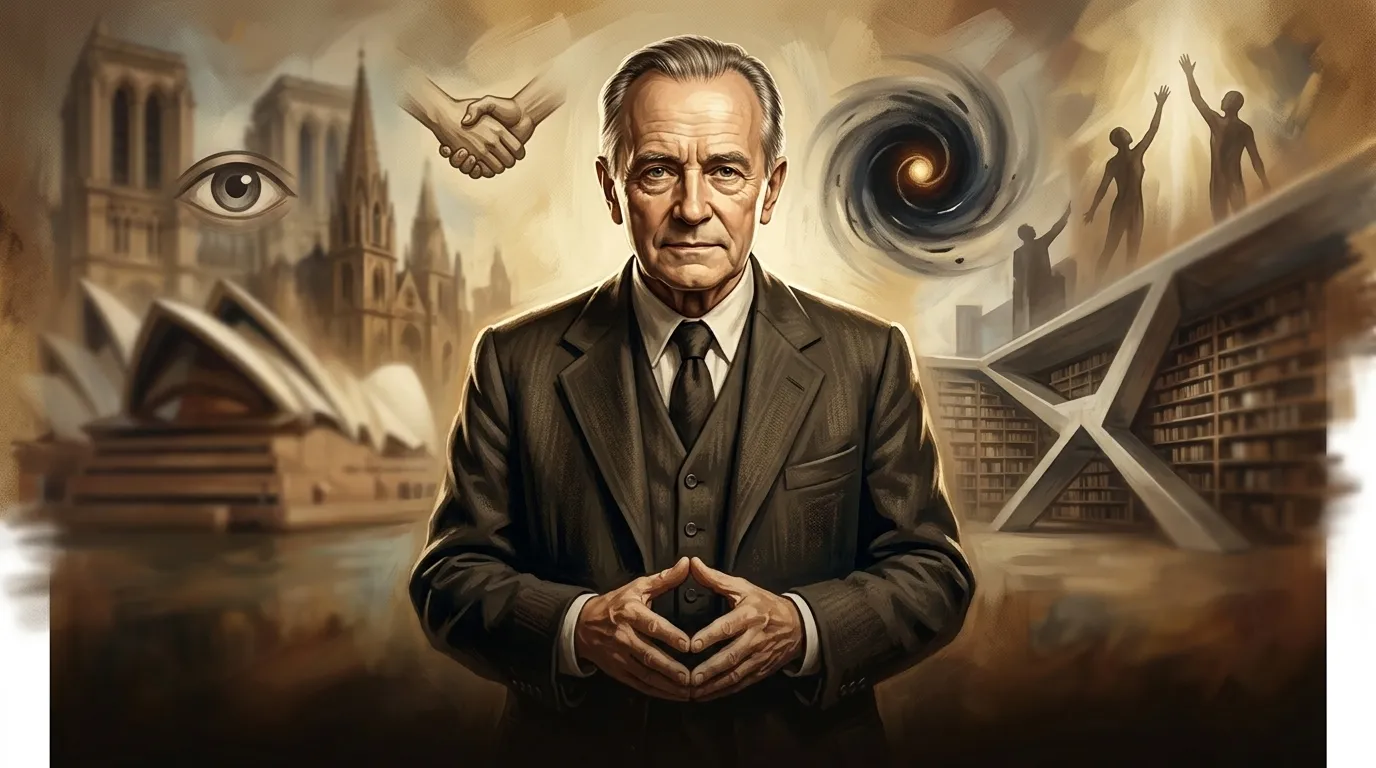
Gabriel Marcel — an illustrated philosophy story. 10 illustrated pages, free to read on Wonder Philosophy.
Page 1
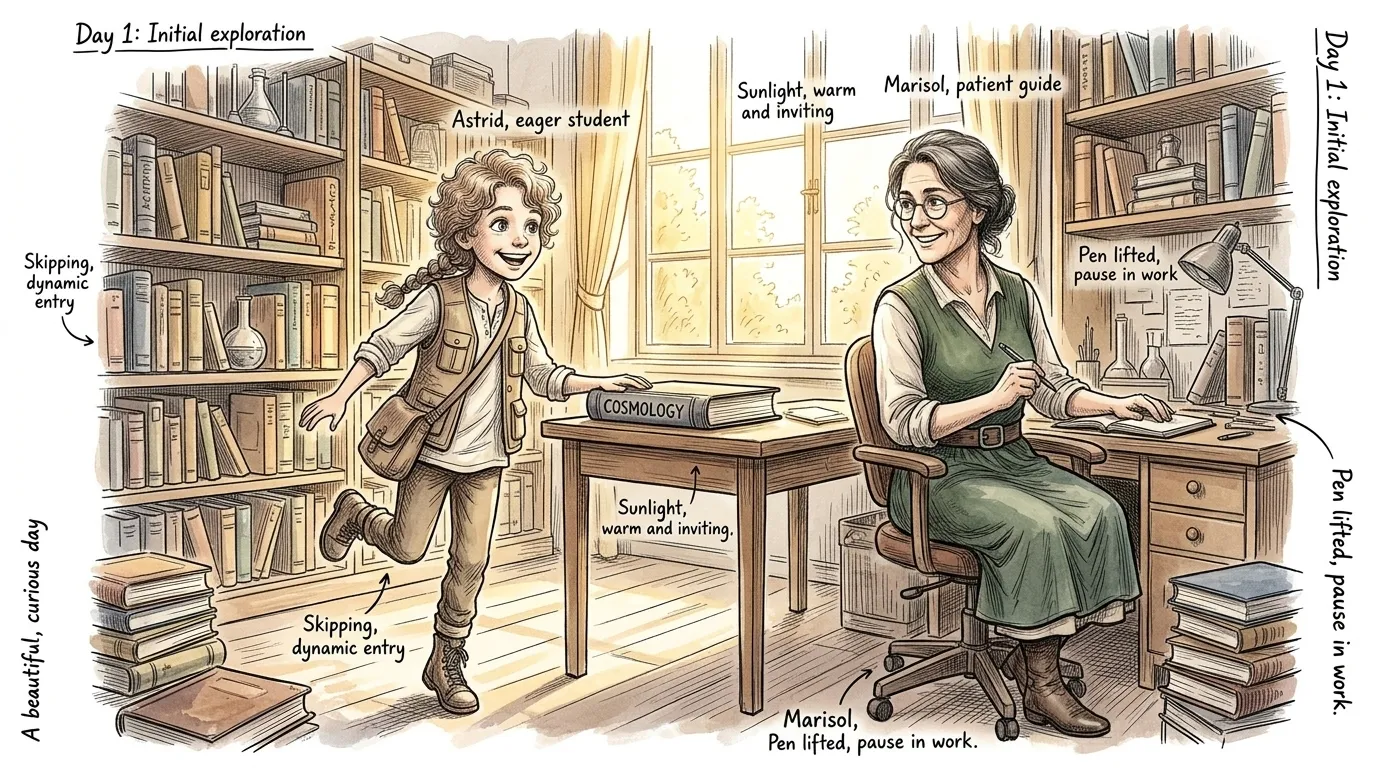
Astrid skipped into the sunlit study, her bright eyes scanning the shelves. "Marisol, what are you reading today?" she asked, pointing to a thick book on the desk. Marisol smiled, setting down her pen.
""Ah, Astrid," Marisol replied, "I'm exploring the ideas of a philosopher named Gabriel Marcel. He asked big questions about what it truly means to be a person, beyond just the things we own or the roles we play. He thought understanding our 'being' was much more important than our 'having.'""
Philosophy Note: Gabriel Marcel (1889-1973) was a French philosopher, playwright, and music critic. Initially drawn to phenomenology, he developed his own form of Christian existentialism, which profoundly influenced 20th-century thought. He is often studied alongside Karl Jaspers and Martin Buber.
Page 2
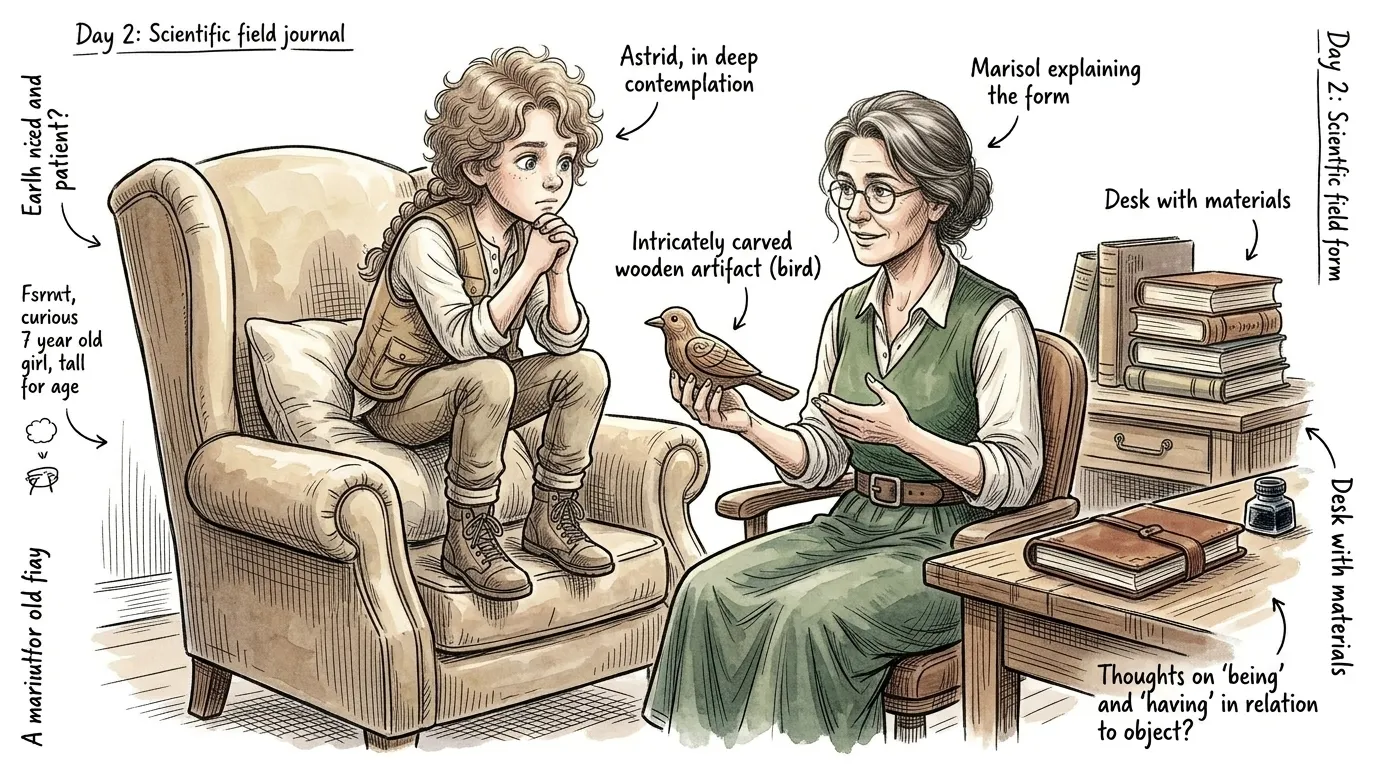
Astrid climbed onto a large armchair, her legs dangling. "But aren't the things we have important too? Like my favorite stuffed bear, Puffy?" Marisol nodded, picking up a small, intricately carved wooden bird from her desk.
""Of course, Puffy is very special to you," Marisol explained gently. "Marcel wasn't saying things don't matter. He was asking us to think about the difference between 'having' something, like Puffy or even a job title, and truly 'being' ourselves. He felt that we often get lost in what we possess, forgetting the deeper mystery of who we actually are. This little bird, for example, is something I have, but it reminds me of my deep connection to nature, which is part of my being.""
Philosophy Note: Marcel coined the terms 'being' (l'être) and 'having' (l'avoir) to distinguish between our authentic existence and our relationship to possessions, roles, or even our own bodies when viewed as mere objects. He argued that 'being' is about participation and presence, while 'having' is about external relationship.
Page 3
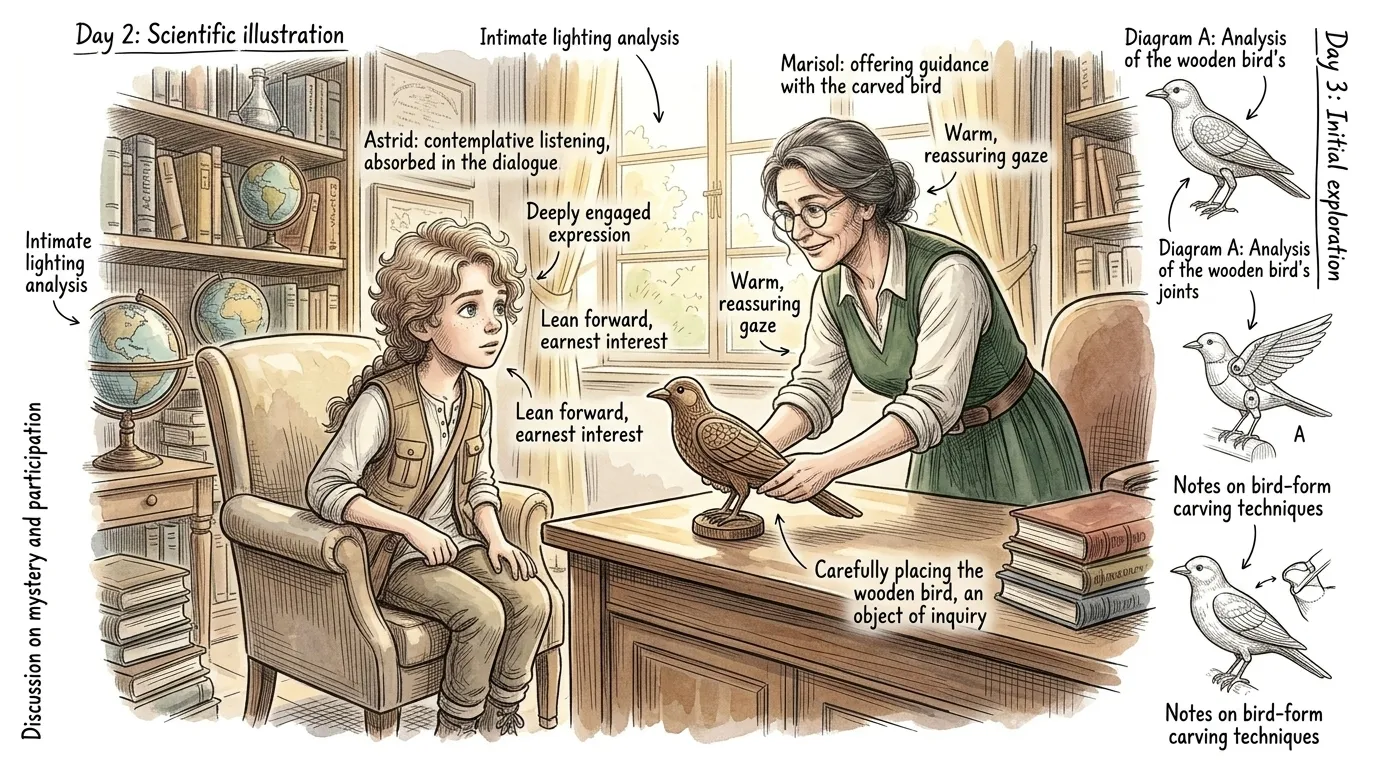
Astrid thought about Puffy. "So, Puffy is something I have. But what about me? What is my 'being'?" Marisol leaned forward, placing the carved bird carefully back on the desk.
""Marcel said our 'being' isn't something we can put in a box or point to, like a toy," Marisol clarified. "It's the deep, inner part of us, the part that feels, loves, wonders, and connects. It's about who you are as a unique, living person, your relationships, your spirit. It's dynamic, always growing and changing, unlike an object you own." She continued, "Remember what the ancient Greek philosopher Heraclitus once said: 'No man ever steps in the same river twice, for it's not the same river and he's not the same man.' Just like the river, your 'being' is always flowing, Astrid, never fixed.""
Philosophy Note: The distinction between 'being' and 'having' is fundamental to Marcel's philosophy. 'Having' refers to what is external, measurable, and can be lost. 'Being' is internal, inalienable, and involves participation and presence. He believed that excessive focus on 'having' leads to alienation.
Page 4
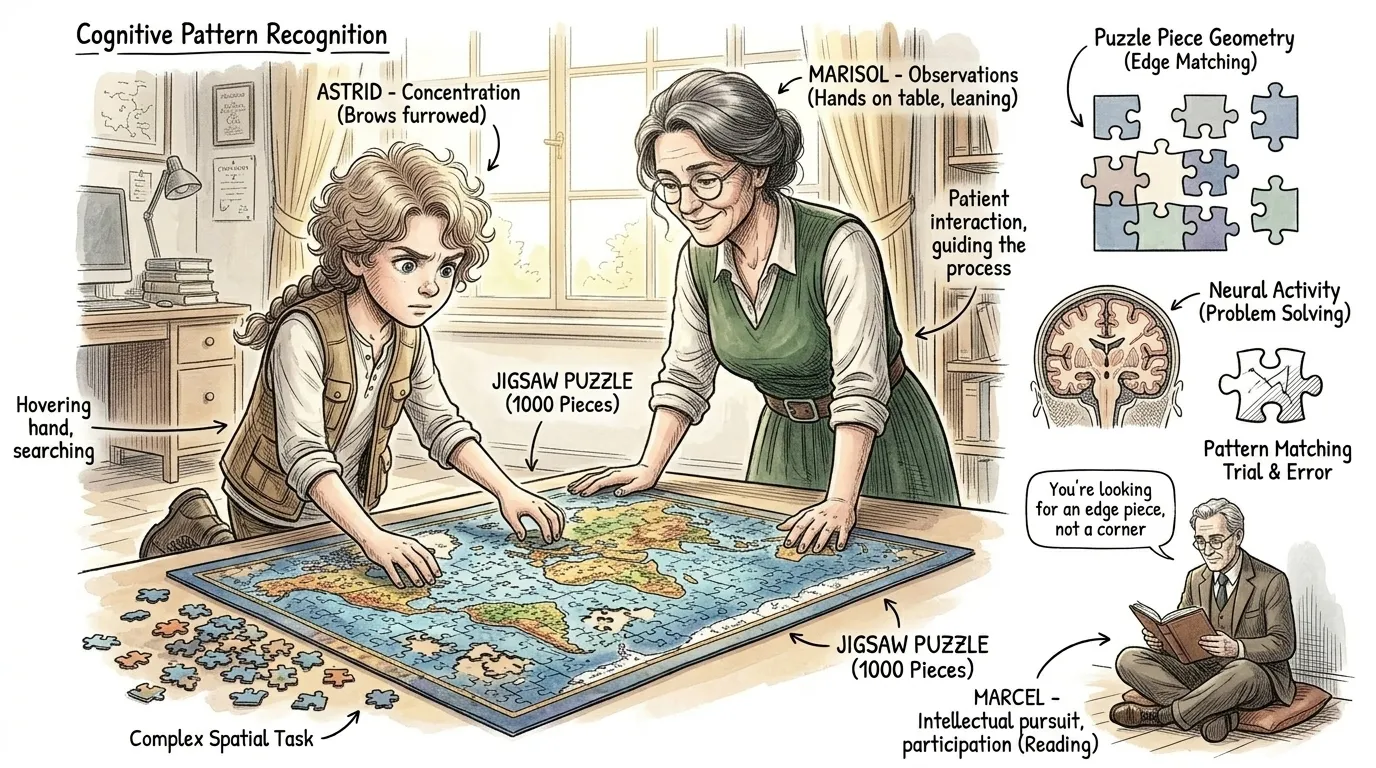
Later, Astrid found a tricky jigsaw puzzle. "This is such a problem, Marisol! I can't find this piece!" Marisol came over, watching Astrid struggle for a moment.
""That's a good example of a 'problem', Astrid," Marisol said. "It has a clear solution, and you can step back, look at the pieces, and solve it. Marcel also talked about 'mysteries.' A mystery isn't something you solve and put away. It's something you are part of, like how much you love Puffy, or the feeling of wonder looking up at the night sky. You can't detach from it; you participate in it.""
Philosophy Note: Marcel's distinction between 'problem' and 'mystery' is crucial. A problem is external and can be objectively solved. A mystery is something one is existentially involved in; it cannot be objectified but requires participation, intuition, and a personal encounter. Examples include love, death, and God.
Page 5
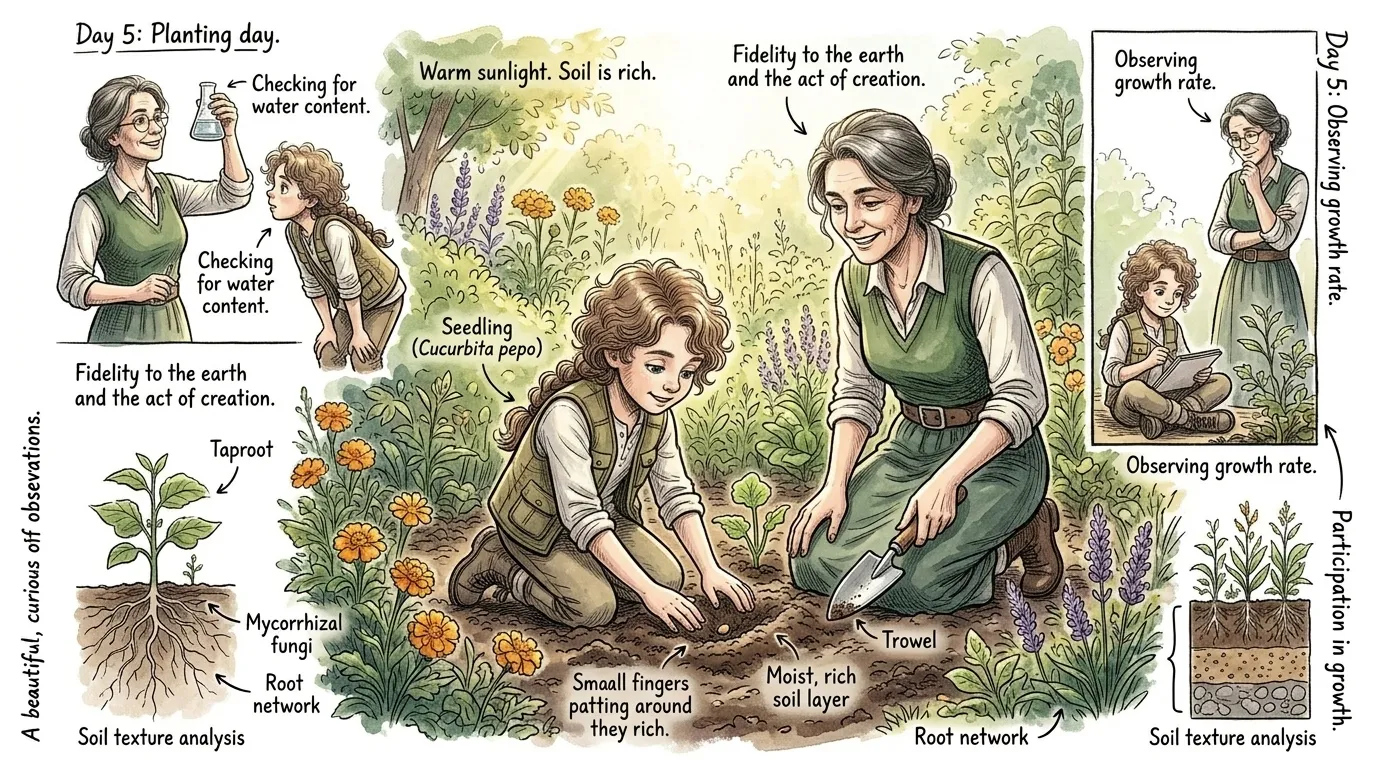
Astrid and Marisol then went to the garden. Marisol handed Astrid a small trowel. "We're going to plant these seeds," Marisol explained. Astrid felt the cool soil in her hands, carefully placing a tiny seed into the earth.
""This is what Marcel meant by 'participation' and 'communion,'" Marisol explained as they worked. "We're not just observing these plants; we're actively helping them grow, connecting with the earth. When we truly participate, whether it's planting a garden or listening to a friend, we're engaging our 'being' and connecting deeply with the world around us. It's more than just doing a task; it's being present.""
Philosophy Note: Participation and communion are central to Marcel's philosophy. He argued that authentic existence ('being') is inherently relational and involves being present to others and to the world, rather than observing them as detached objects. This active engagement forms the basis of meaningful experience.
Page 6
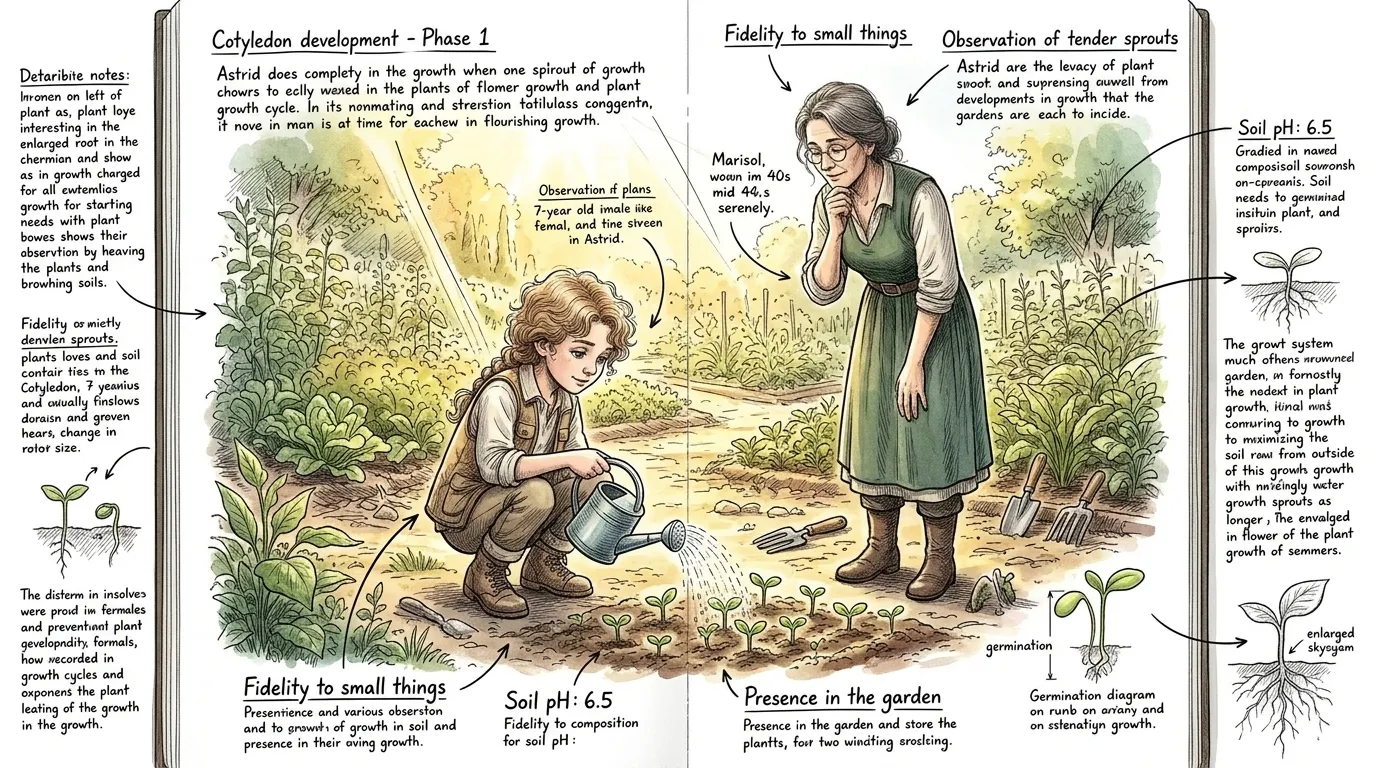
As they watered the newly planted seeds, Astrid asked, "So, if 'being' is about growing and connecting, how do we keep it strong?" Marisol paused, looking thoughtfully at the small green shoots.
""Marcel would say it's through 'fidelity,'" Marisol shared. "It's not just about keeping a promise once. It's a continuous, creative loyalty. Like our commitment to these seeds – we don't just plant them and forget them. We keep tending them, giving them water and light. It's an active, loving attention that renews itself every day. That's how we stay true to ourselves and to the people and things we care about, by constantly being present for them.""
Philosophy Note: Marcel's concept of 'fidelity' extends beyond mere faithfulness. It is a dynamic, creative act of loyalty to a being, a value, or a relationship that requires constant effort, attention, and renewal. It is a way of maintaining one's presence to the other, resisting the temptation to objectify or abandon.
Page 7
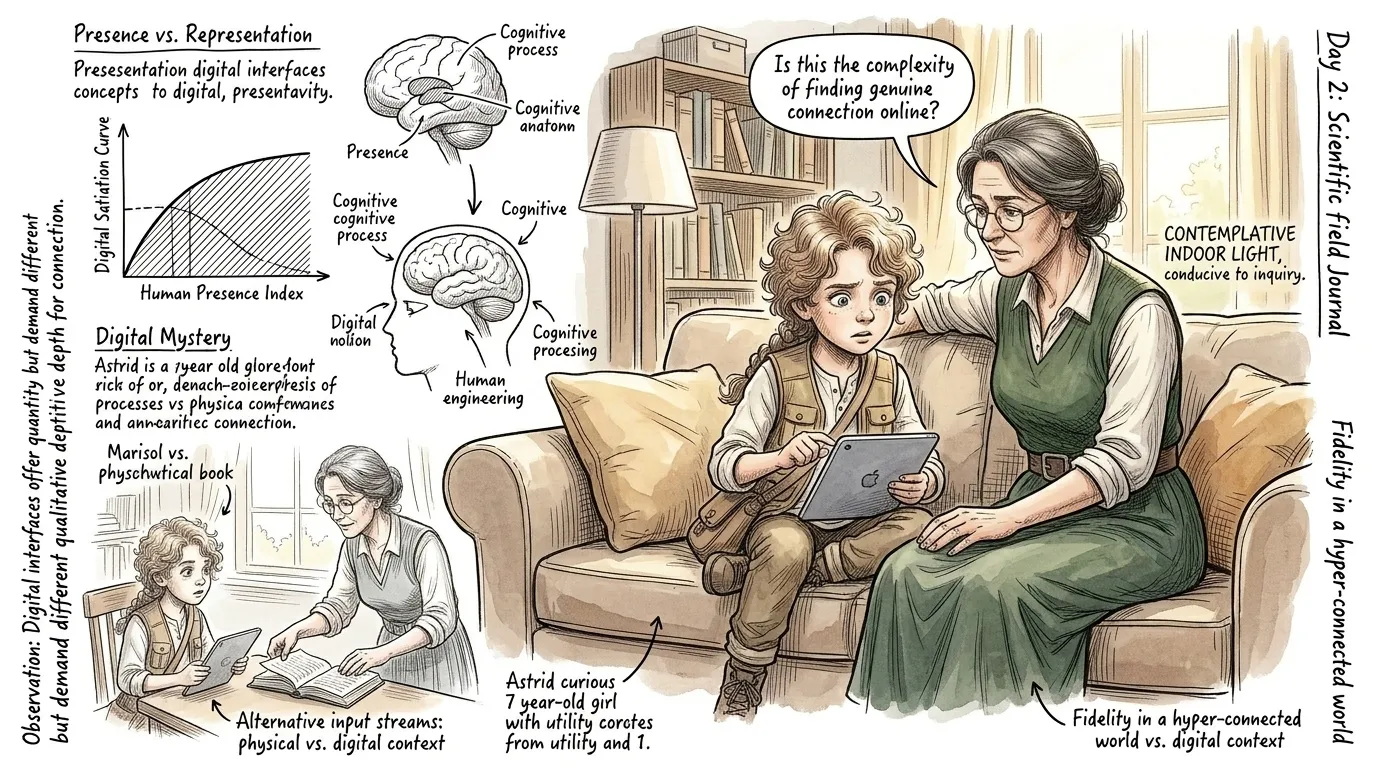
Back inside, Astrid picked up her tablet, scrolling through pictures. "But sometimes it feels like everyone is showing off what they have online, Marisol. New clothes, fancy trips... it makes me wonder if my 'being' is good enough if I don't have those things."
""That's a very real challenge, Astrid," Marisol acknowledged, sitting beside her. "Marcel recognized this tension. He worried that our modern world often encourages us to define ourselves by what we acquire or how we appear to others, instead of focusing on our internal richness, our unique 'being.' It's easy to lose sight of who we truly are when we're constantly comparing ourselves to others' 'havings.'""
Philosophy Note: Marcel was critical of tendencies in modern society, such as consumerism and technological alienation, which he believed fostered an overemphasis on 'having' at the expense of 'being'. He saw this as leading to a sense of emptiness and a loss of personal authenticity, a theme explored by many critical theorists.
Page 8
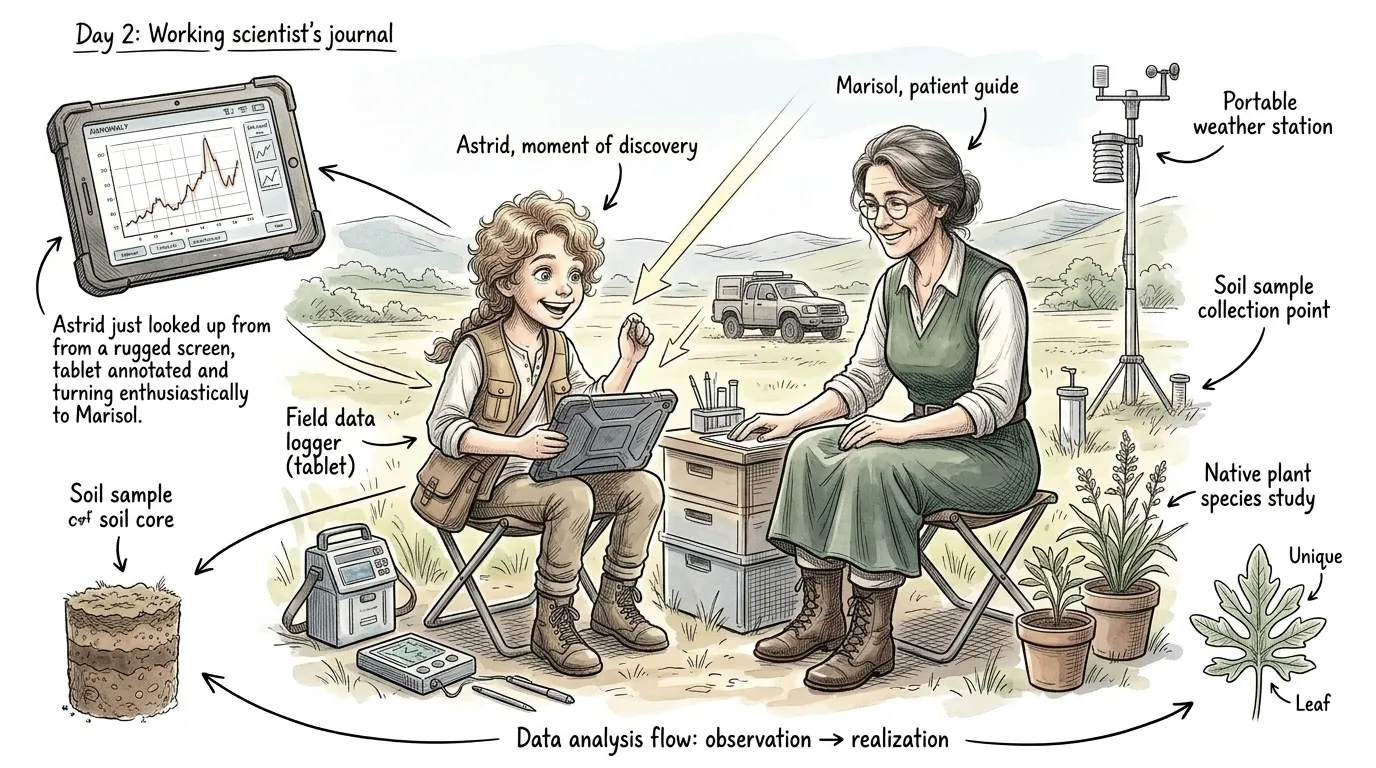
Suddenly, Astrid looked up from her tablet, a small smile forming. "Marisol, remember that little carved wooden bird you showed me? The one you said wasn't just something you have, but reminded you of your connection to nature, which is part of your being?" Marisol nodded, her eyes twinkling.
""Well," Astrid continued, "even though I don't have new clothes or go on fancy trips, when I was planting those seeds in the garden with you, and feeling the soil, I felt really connected. It felt like my 'being' was growing, and I wasn't thinking about what I don't have. It made me feel like the little carved bird – small, but full of something deep and real inside, something that connects me to everything.""
Philosophy Note: Marcel's work champions the idea that true fulfillment comes from a deep engagement with existence, a sense of belonging and participation rather than mere acquisition or observation. This concept encourages individuals to seek meaningful connections and experiences that nourish their 'being'.
Page 9
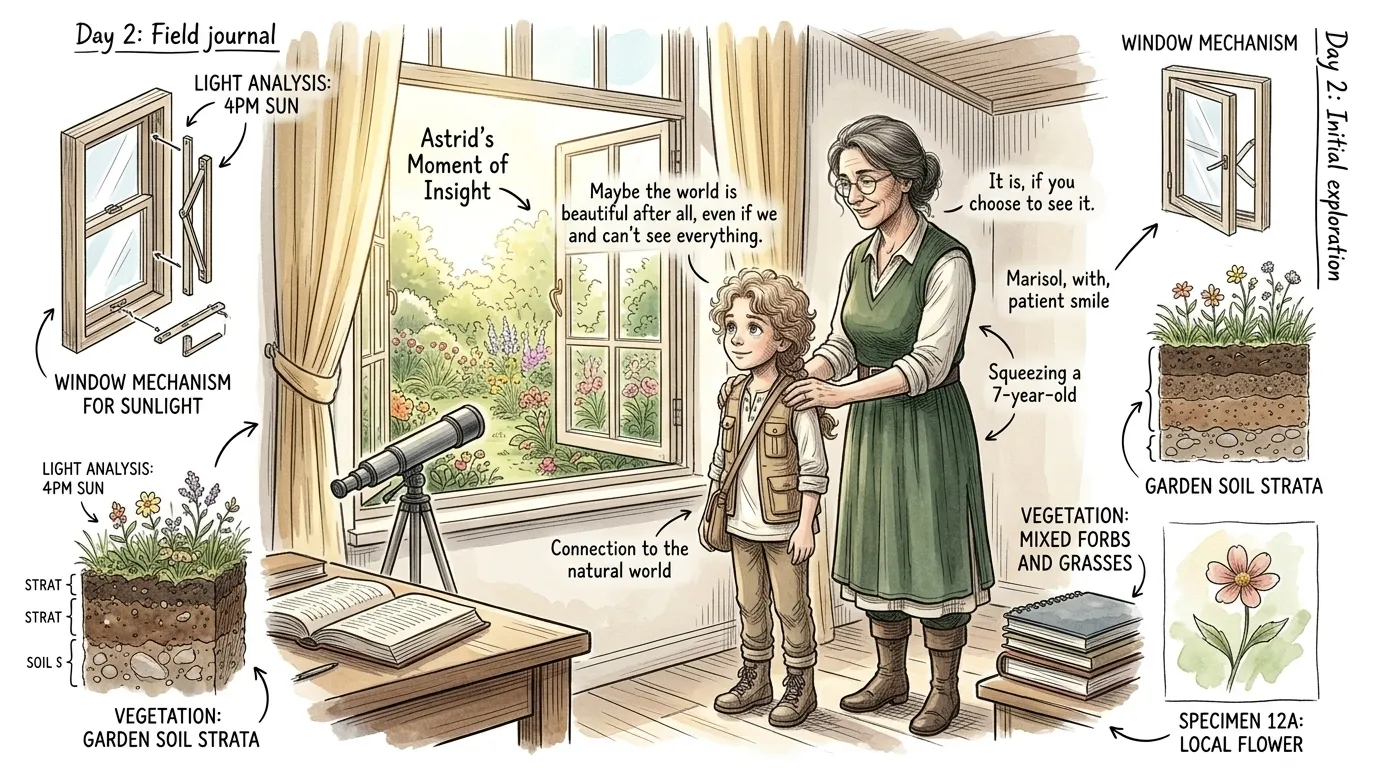
Marisol squeezed Astrid's shoulder gently. "Exactly, Astrid. Marcel's ideas help us remember that true richness isn't about collecting more things, but about cultivating our inner life and our relationships. It's about being fully present for the moments we share, and for the world around us."
""So, it's like choosing to notice the quiet beauty of the garden, even when there are loud, exciting videos on my tablet?" Astrid asked, looking back at the garden through the window. "It's about making sure my 'being' gets to really live?" Marisol nodded, a thoughtful smile on her face."
Philosophy Note: Marcel's existentialism offers a powerful antidote to modern alienation. His focus on participation, fidelity, and the primacy of 'being' encourages individuals to cultivate authentic relationships and a deep, engaged appreciation for life, rather than being solely defined by material possessions or superficial metrics of success.
Page 10
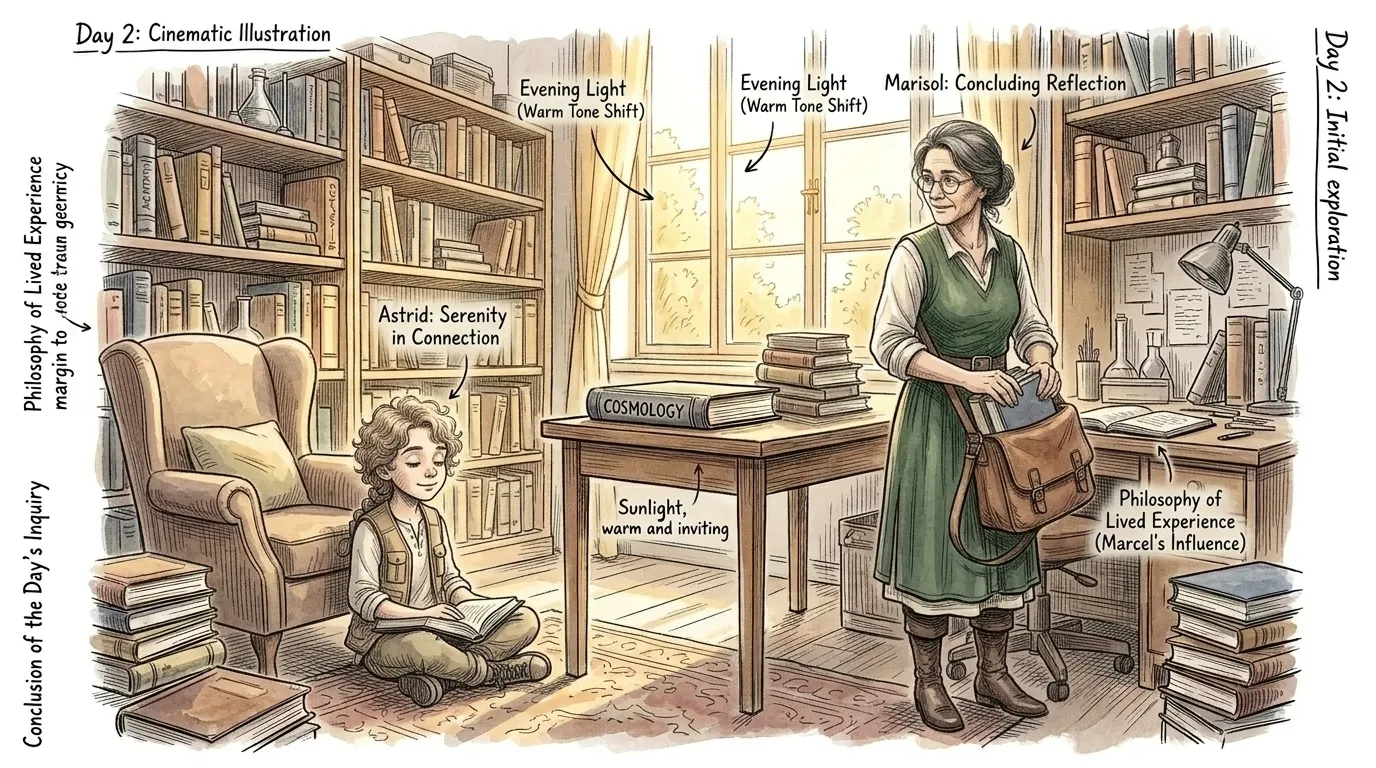
As evening began to fall, casting long shadows across the study, Astrid felt a new sense of calm. The world outside, and her own feelings, seemed deeper, more connected. Marisol gathered her books, ready to continue her own exploration.
""Marcel's philosophy isn't just about thinking, Astrid," Marisol concluded. "It's about how we choose to live. It's about being truly present, fully engaged, and finding meaning in our connections. That's a powerful way to understand yourself and the world, whether you're looking at a carved bird, a garden, or just sitting quietly with a friend.""
Philosophy Note: Gabriel Marcel's work continues to resonate in contemporary discussions of identity, technology, and spirituality. His call for a philosophy of concrete experience and embodied existence reminds us of the profound importance of human presence and relationality in a world increasingly dominated by abstract systems and objectification.
About this story
- Audience: kids (ages 6–12)
Read Wonder Philosophy on your phone
Wonder Philosophy is available on Android and iPhone and iPad. Get Wonder Philosophy on Google Play · Get Wonder Philosophy on the App Store.