Epicurus
Epicurus — an illustrated philosophy story. 10 illustrated pages, free to read on Wonder Philosophy.
Page 1
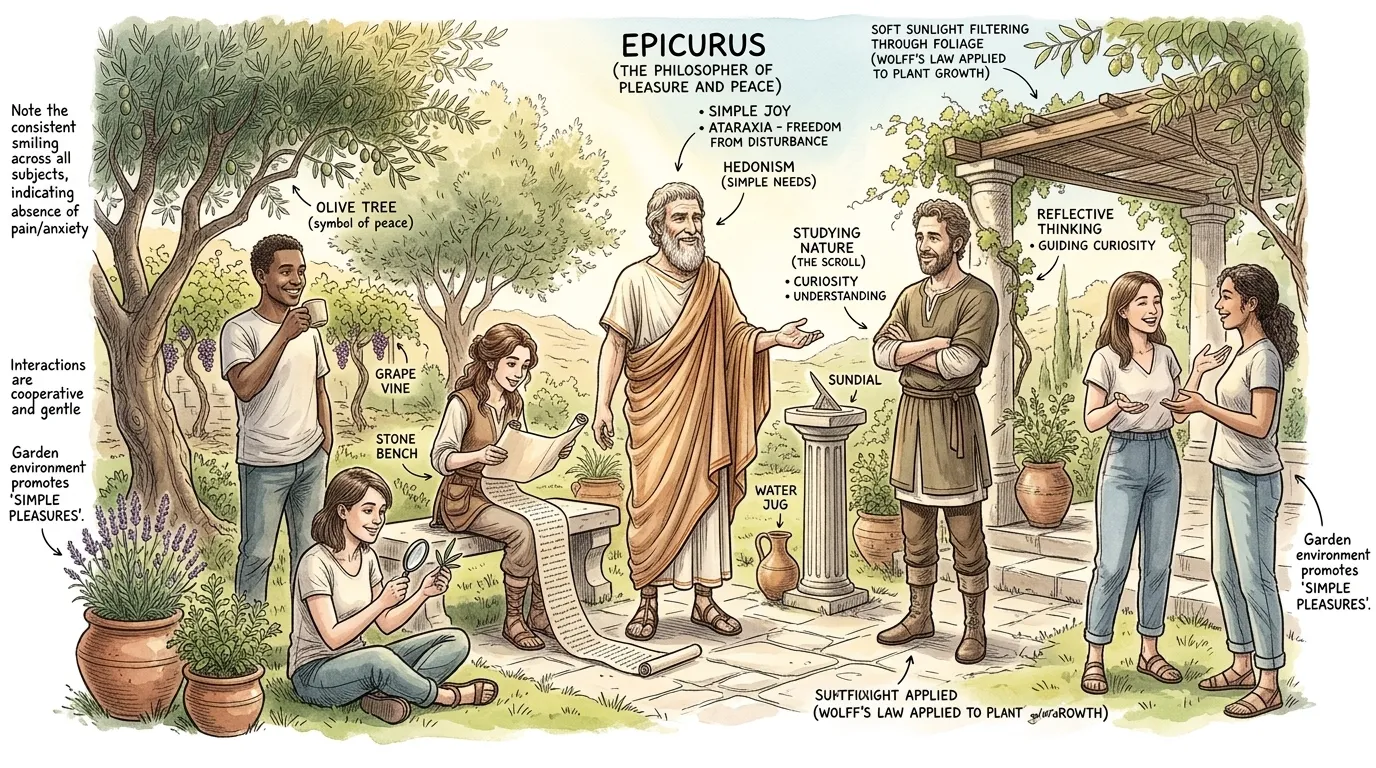
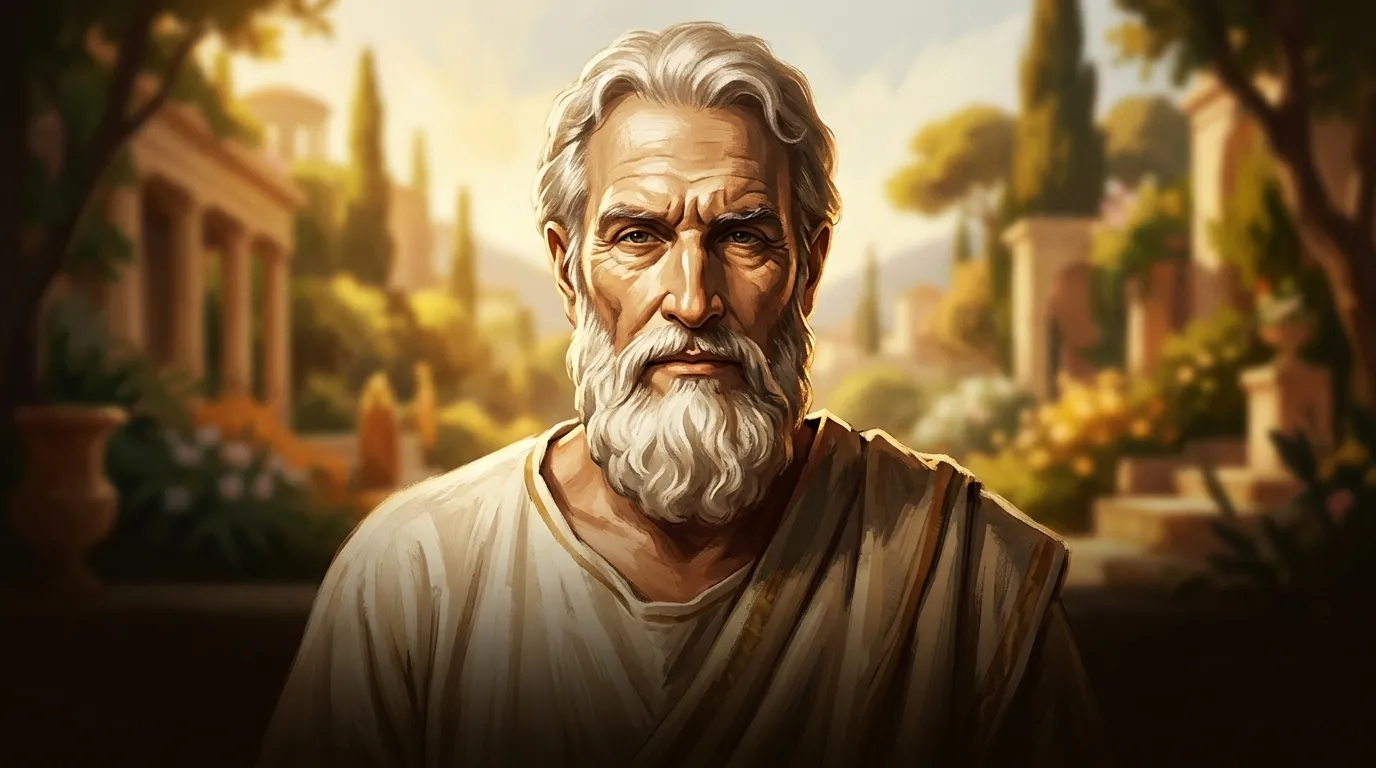
Epicurus, an ancient Greek philosopher, offered a surprisingly modern idea: that pleasure is the greatest good. But not just any pleasure – a life free from pain and full of simple joys. Today, as we navigate endless choices and pressures, Epicurus's philosophy can guide us toward a more fulfilling and balanced existence.
Philosophy Note: Epicurus (341-270 BCE) founded a school of philosophy that challenged conventional views on happiness and the good life.
Page 2
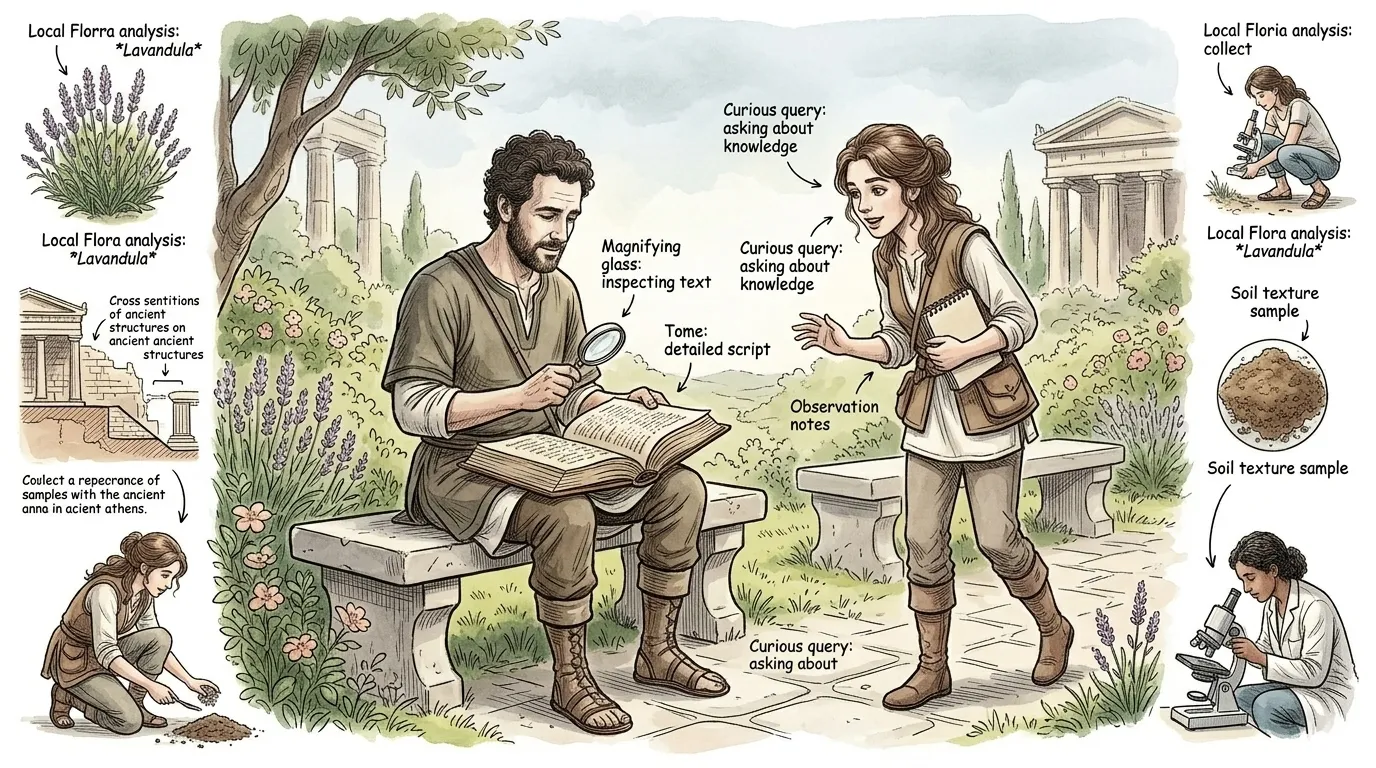
To understand Epicurus, we need to picture his world. After Alexander the Great's conquests, the old city-states were crumbling. People felt lost, and traditional values seemed uncertain. In this chaotic time, Epicurus established 'The Garden' in Athens – a community dedicated to living according to his principles.
"Katya, a young woman with a thoughtful expression, approaches Idris, who is sitting on a bench reading a book."
Philosophy Note: The Hellenistic Period (323-31 BCE) was a time of cultural and political upheaval, influencing Epicurus's focus on individual well-being.
Page 3
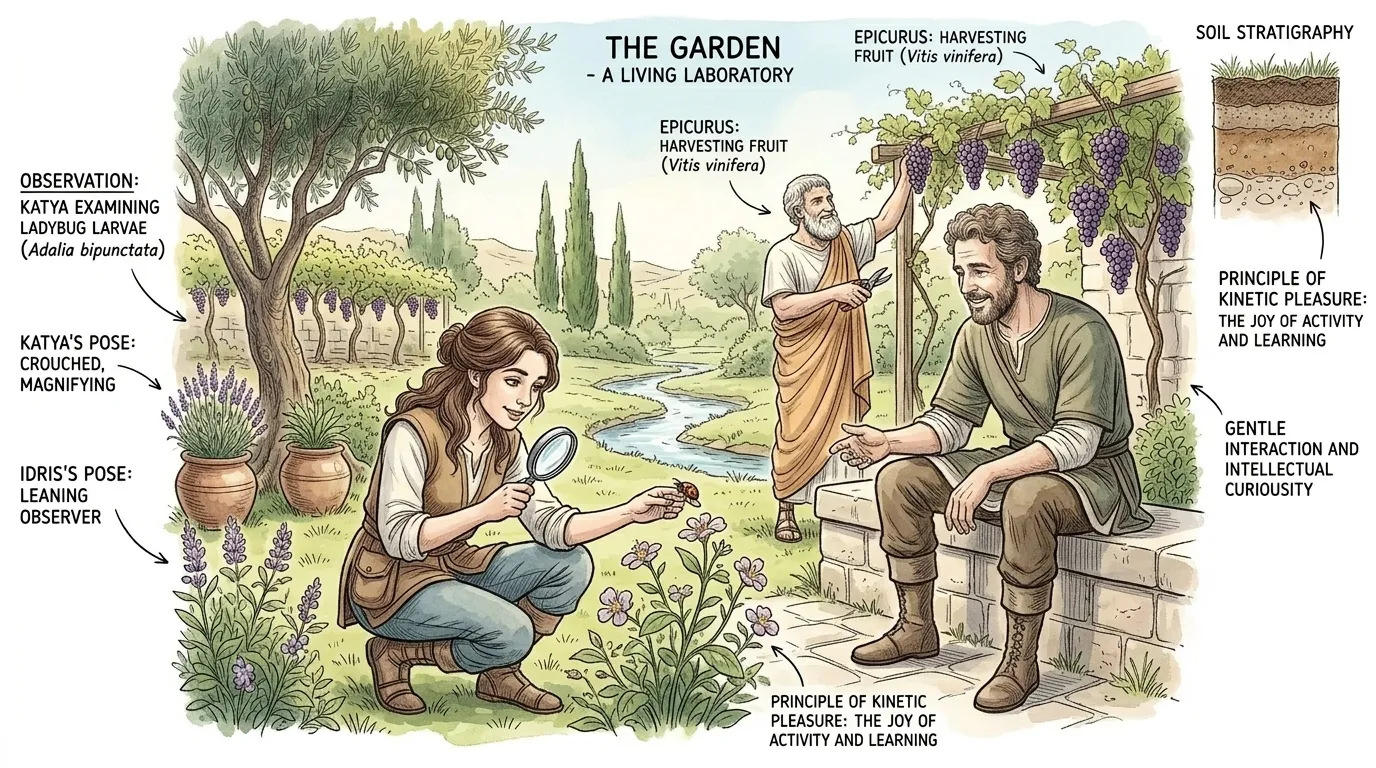
"Idris, I've heard of Epicurus," Katya begins, "but isn't it just about seeking pleasure? Doesn't that lead to excess and selfishness?" Idris smiles gently. "That's a common misunderstanding. Epicurus wasn't advocating for wild parties and endless indulgence. He actually valued tranquility and the absence of pain above all else."
""So, what did he really mean by 'pleasure'?""
Philosophy Note: Epicurus distinguished between different types of pleasure, prioritizing mental tranquility (ataraxia) and freedom from bodily pain (aponia).
Page 4
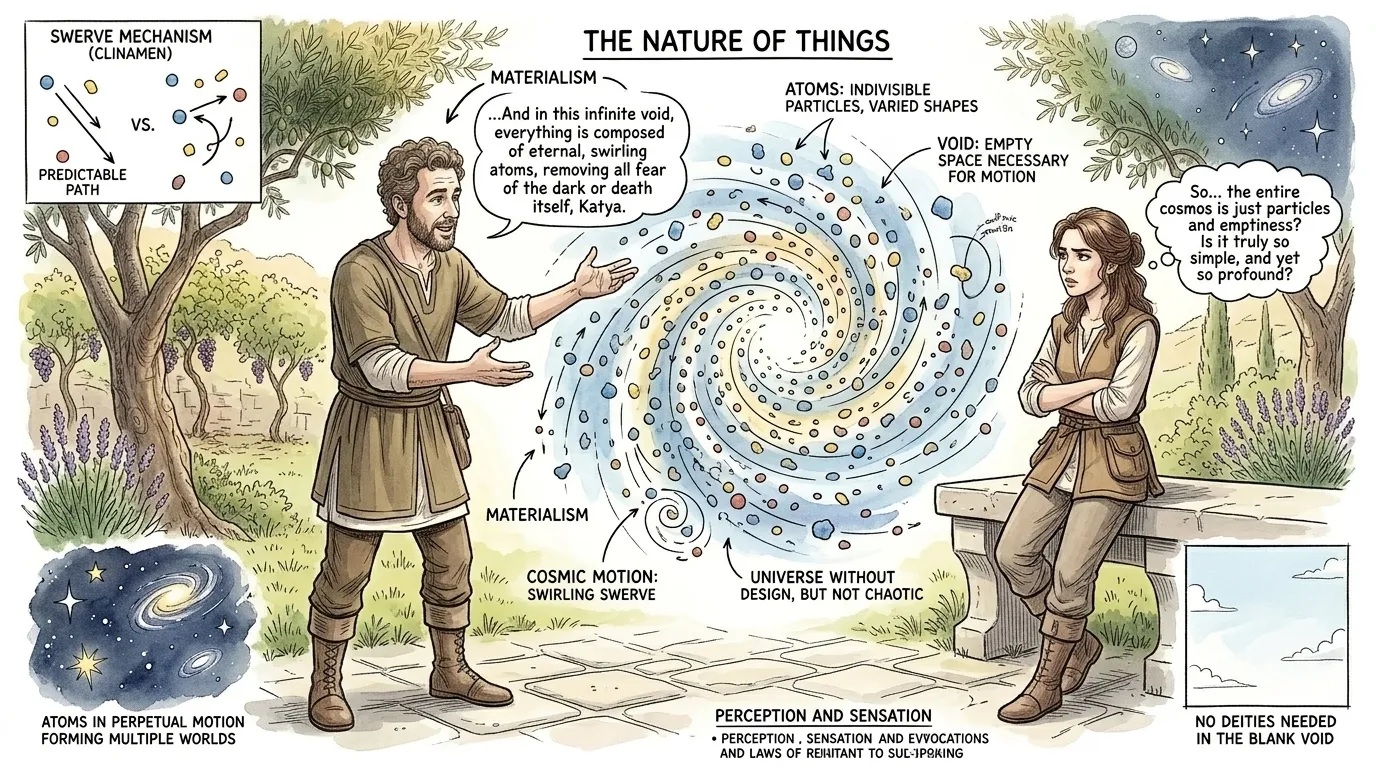
Epicurus believed the universe was made of atoms and void, constantly in motion. This might sound purely scientific, but it had a crucial impact on his ethics. He argued that death was simply the scattering of atoms, not something to be feared. "If death is nothing to us, it is absurd that the terror of death should afflict us," Idris explains.
"Katya raises an eyebrow. "How does that connect to pleasure?""
Philosophy Note: Epicurus adopted a materialistic view of the universe, influenced by Democritus's atomic theory, to dispel fears of the afterlife.
Page 5
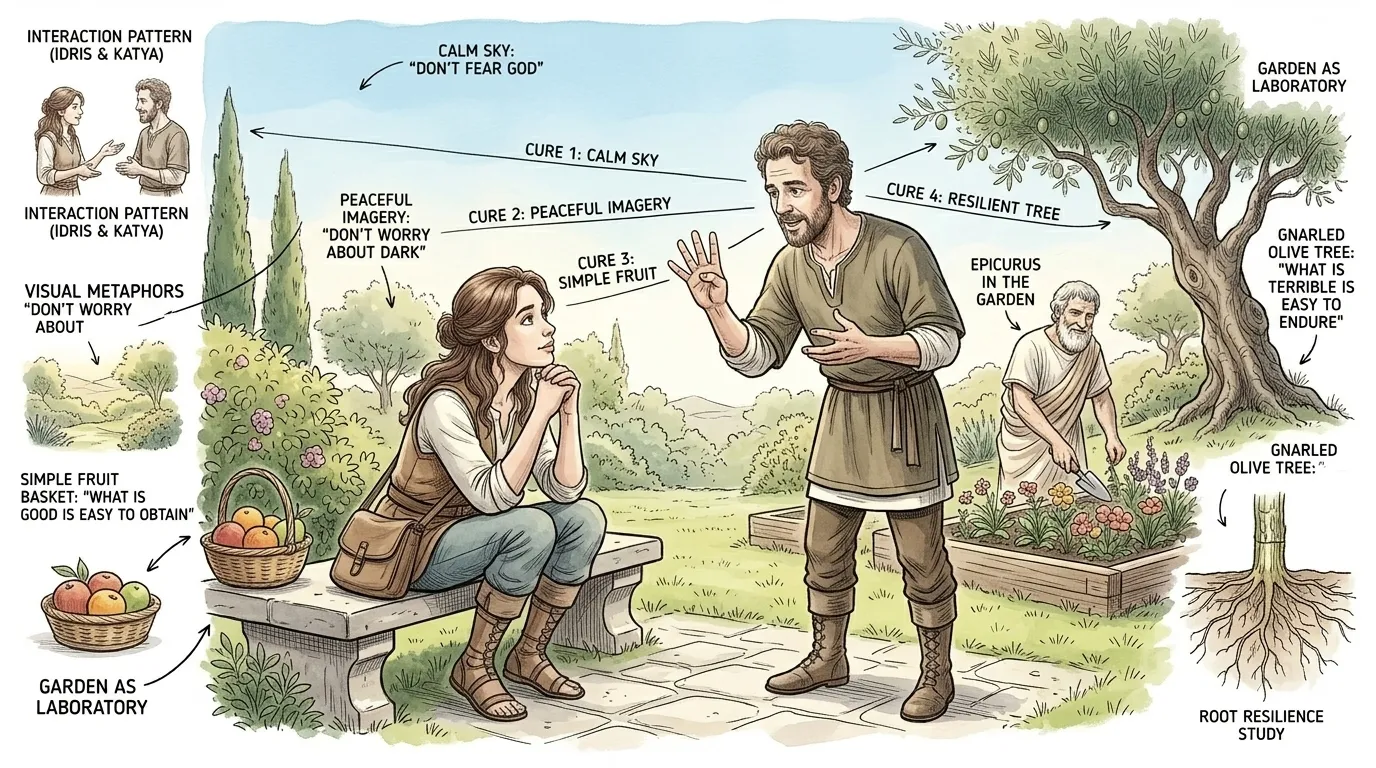
"Epicurus offered what he called the 'Four-Part Cure' or 'Tetrapharmakos'," Idris says. "First, don't fear God. Second, don't worry about death. Third, what is good is easy to obtain. And fourth, what is terrible is easy to endure. These four principles aimed to eliminate the major sources of human anxiety."
"Katya nods thoughtfully. "So, it's about managing our fears and expectations?""
Philosophy Note: The Tetrapharmakos encapsulates Epicurus's practical approach to achieving happiness through rational thought and emotional control.
Page 6
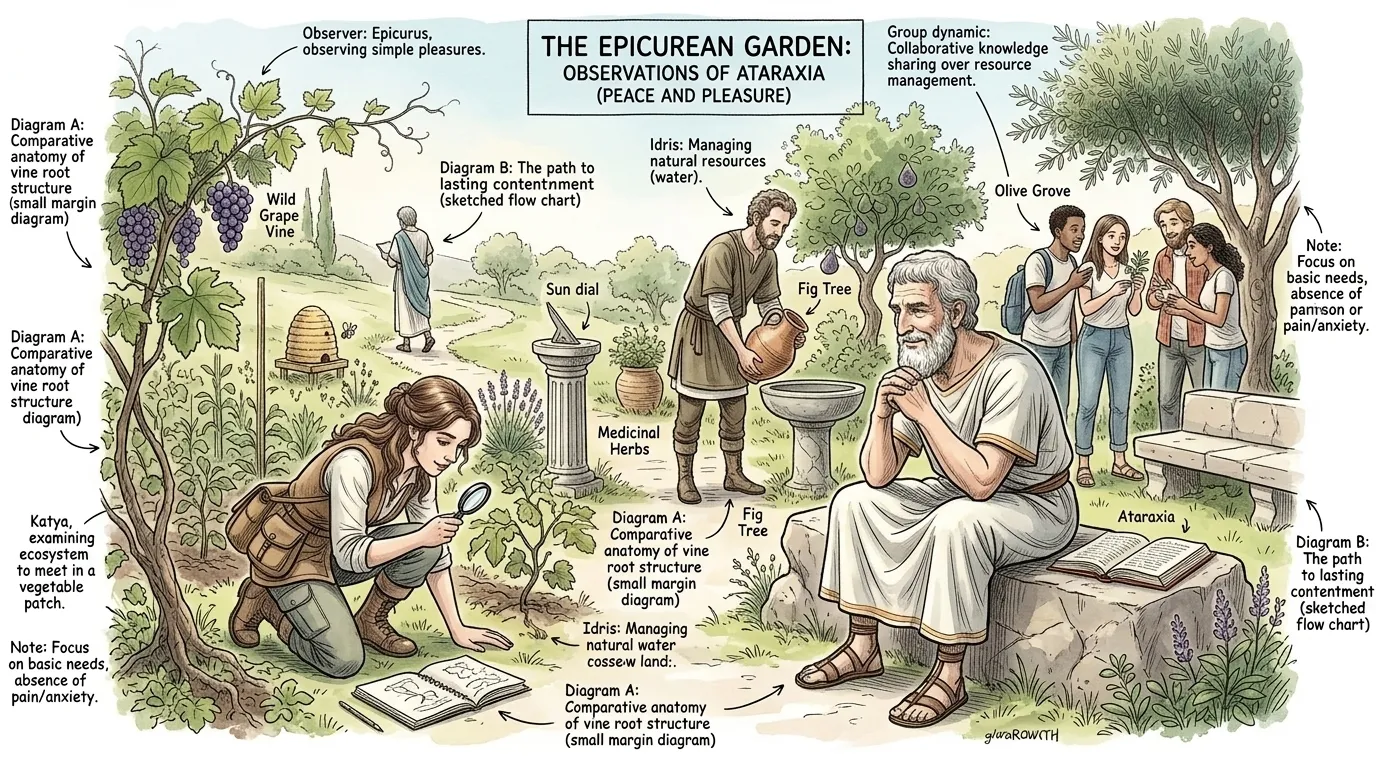
Epicurus advocated for simple pleasures: friendship, good conversation, a walk in nature, a humble meal. He saw these as the foundation of a happy life. He believed that true pleasure comes not from extravagance, but from satisfying basic needs and cultivating inner peace. The goal was not constant excitement, but lasting contentment.
Philosophy Note: Epicureanism contrasts with hedonism by emphasizing the quality and sustainability of pleasures, rather than their intensity or quantity.
Page 7
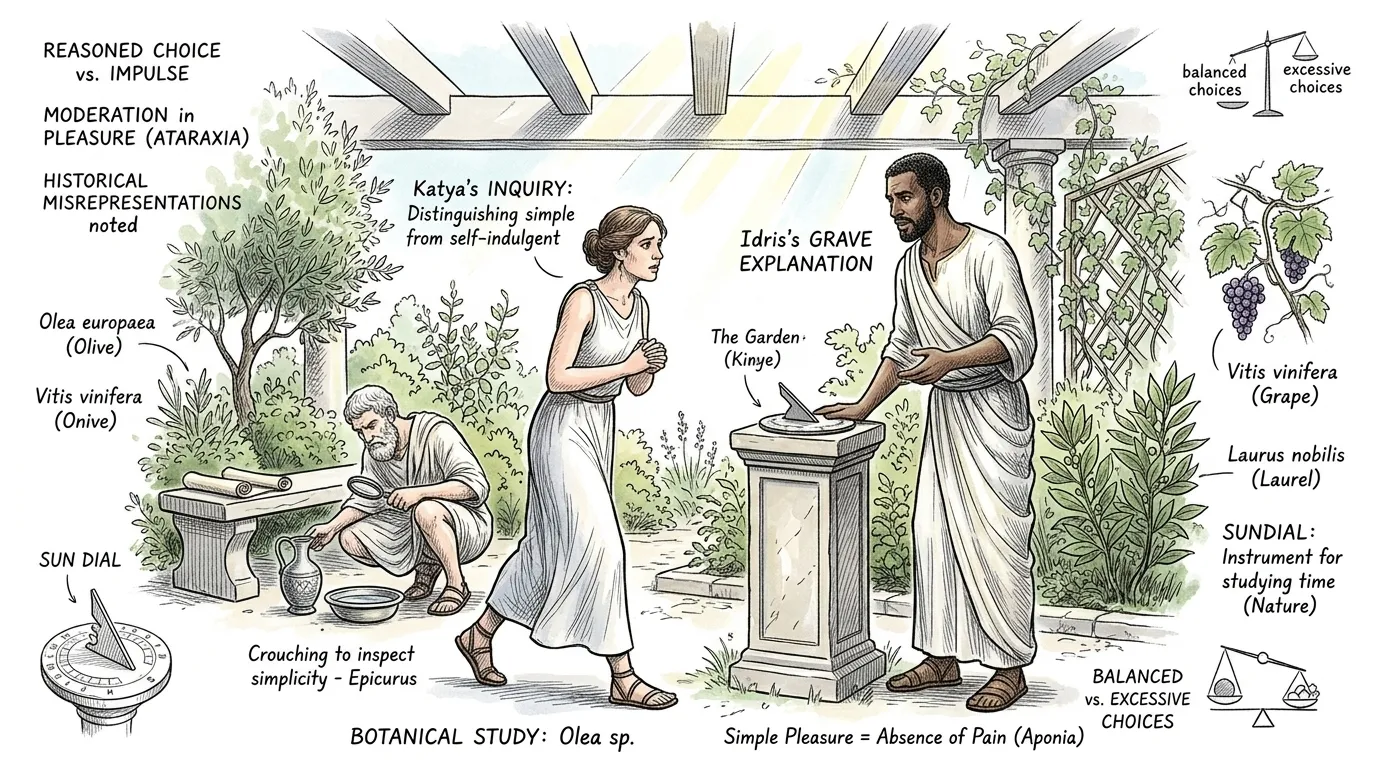
Katya considers this. "But didn't people accuse Epicureans of being lazy and self-indulgent?" Idris nods. "Indeed. Critics often misrepresented his views. They focused on the word 'pleasure' without understanding the depth of his philosophy. Epicurus wasn't advocating for a life of pure sensation, but a life of reasoned choice and moderation."
Philosophy Note: Epicureanism faced criticism and misrepresentation throughout history, often being conflated with crude hedonism.
Page 8
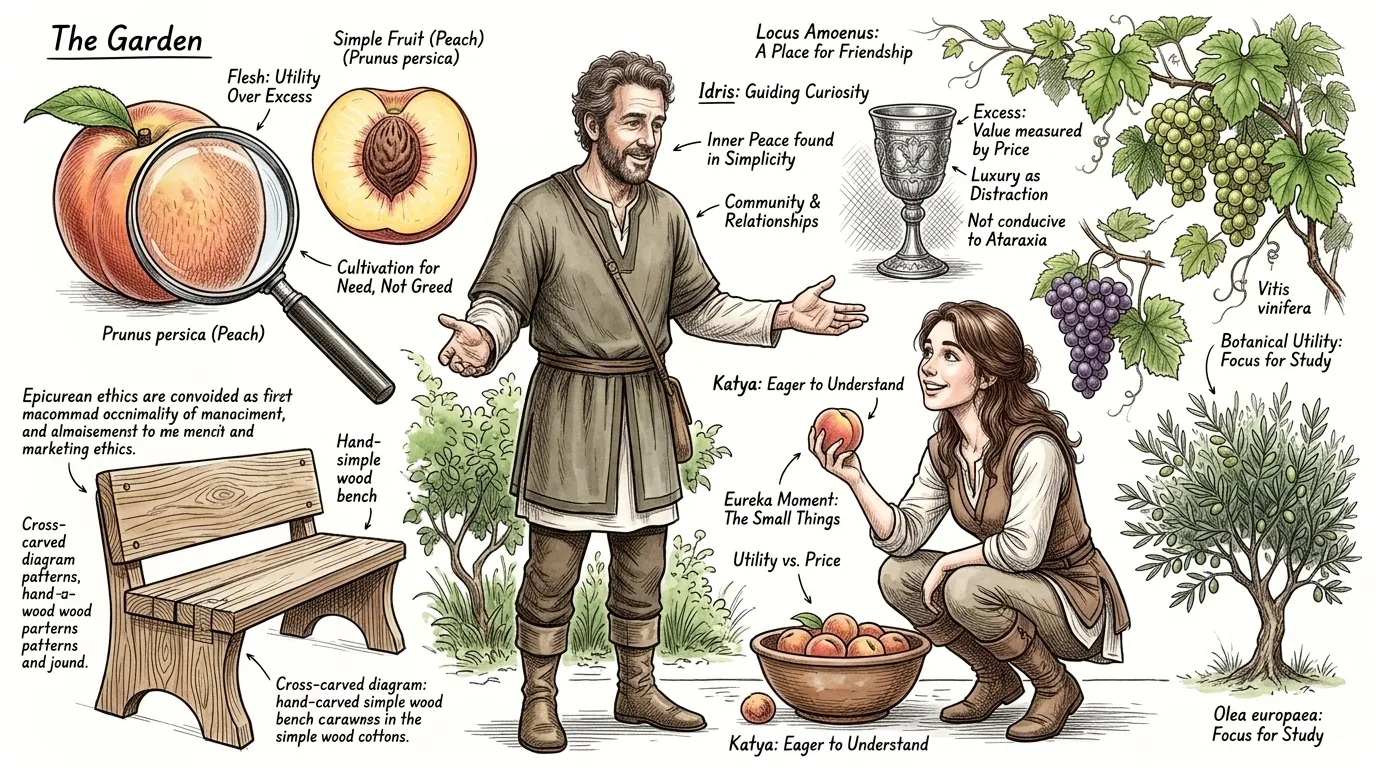
"Epicurus teaches us to value what truly matters: our well-being, our relationships, and our peace of mind," Idris says. "As Seneca, a Stoic philosopher, said, 'He is a great man who uses earthenware dishes as if they were silver; but he is equally great who uses silver as if they were earthenware.' Epicurus, like Seneca, understood that happiness doesn't depend on external possessions or status."
"Katya smiles. "So, finding contentment in the simple things?""
Philosophy Note: Epicurean principles remain relevant today, offering guidance on managing stress, prioritizing well-being, and finding contentment in a materialistic society.
Page 9

In today's fast-paced world, filled with social media pressures and constant striving, Epicureanism offers a refreshing perspective. It encourages us to disconnect from the noise, reflect on our true needs, and cultivate genuine connections. By focusing on simple pleasures and inner peace, we can build a more resilient and fulfilling life.
Philosophy Note: Modern interpretations of Epicureanism emphasize mindfulness, self-care, and the importance of cultivating meaningful relationships.
Page 10
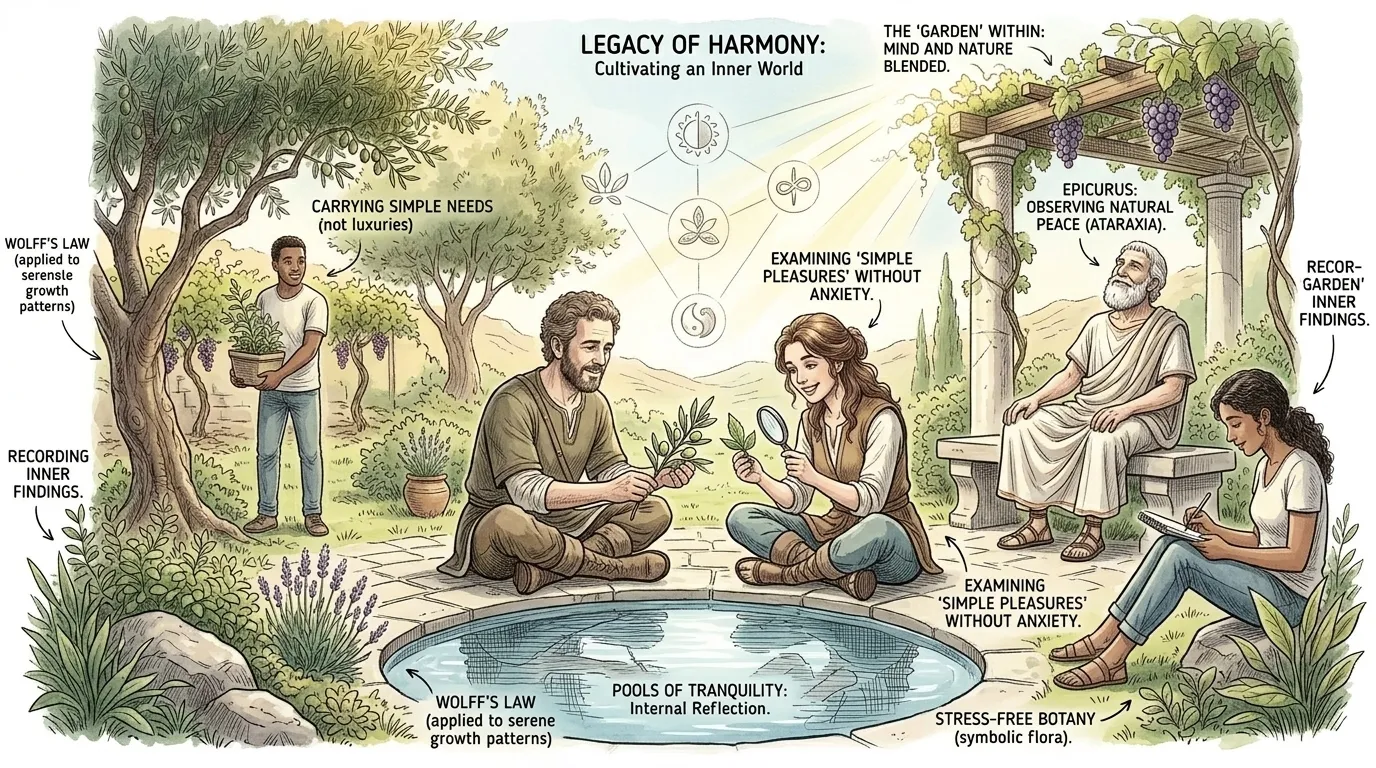
Epicurus's Garden wasn't just a physical place; it was a way of life. By cultivating our own 'gardens' – our inner worlds – we can find tranquility and joy, regardless of external circumstances. The path to happiness, according to Epicurus, lies not in seeking fleeting thrills, but in cultivating lasting peace.
Philosophy Note: Epicurus's legacy continues to inspire individuals seeking a more meaningful and balanced life in a complex world.
About this story
- Audience: general readers
Questions and answers
Read Wonder Philosophy on your phone
Wonder Philosophy is available on Android and iPhone and iPad. Get Wonder Philosophy on Google Play · Get Wonder Philosophy on the App Store.