Felix Guattari
Felix Guattari — an illustrated philosophy story. 10 illustrated pages, free to read on Wonder Philosophy.
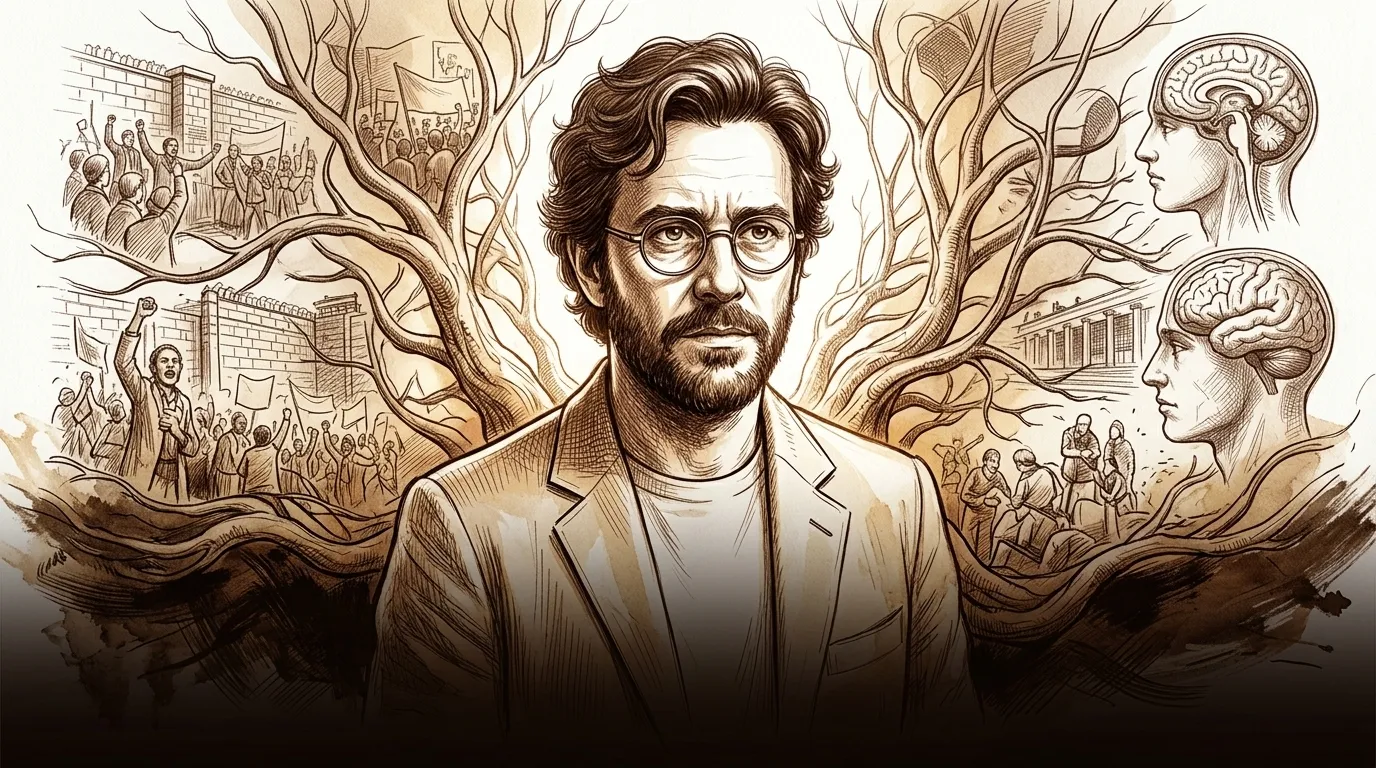
Page 1
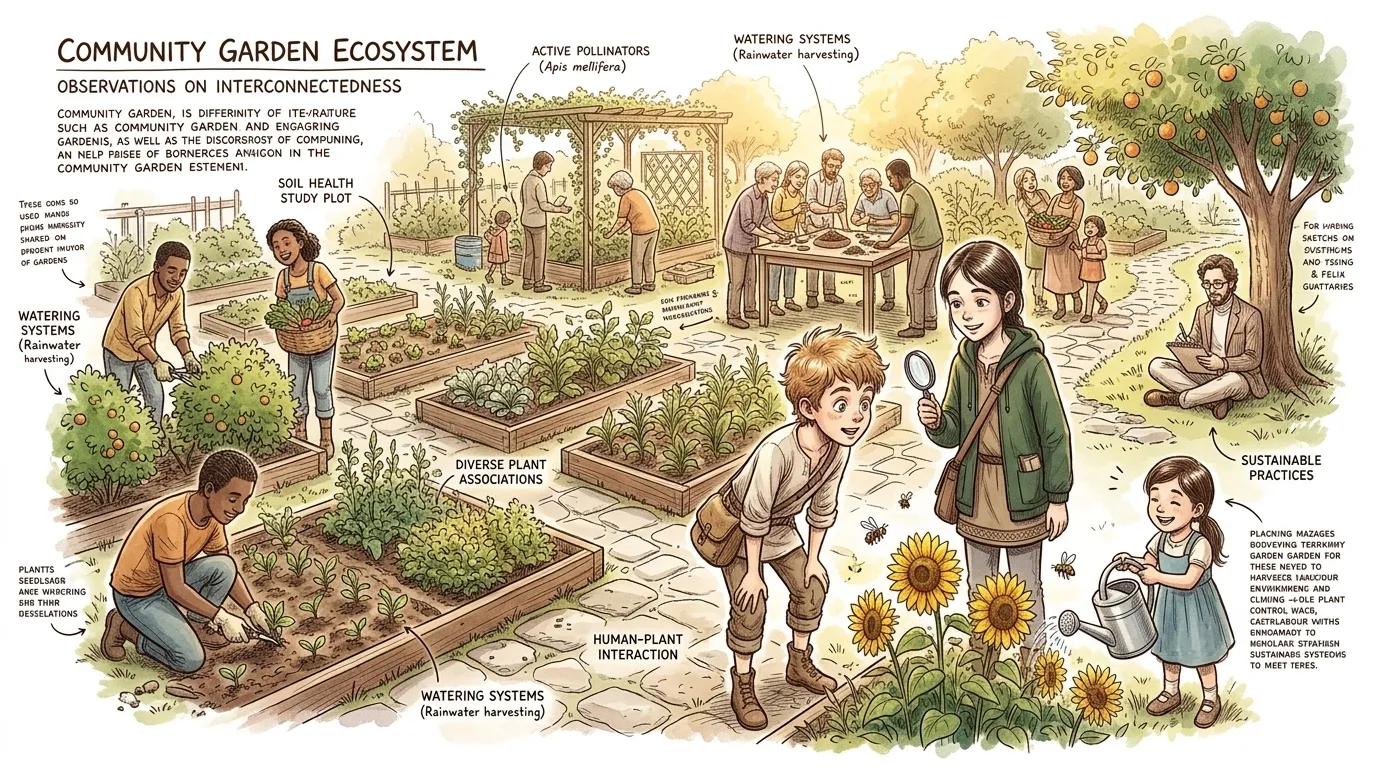
Ivan gazed at the bustling community garden, a maze of pathways, buzzing bees, and people working. His companion, Yousef, pointed to a young girl carefully watering a patch of sunflowers.
"'Look, Ivan,' Yousef said, 'how all these different things connect here: the plants, the people, even the tools and the sunlight. It's never just one thing happening alone.' Ivan nodded slowly, beginning to see the garden in a new, more complex way."
Philosophy Note: Felix Guattari (1930-1992) was a French philosopher who challenged traditional ways of understanding individuals and society, emphasizing deep interconnections.
Page 2
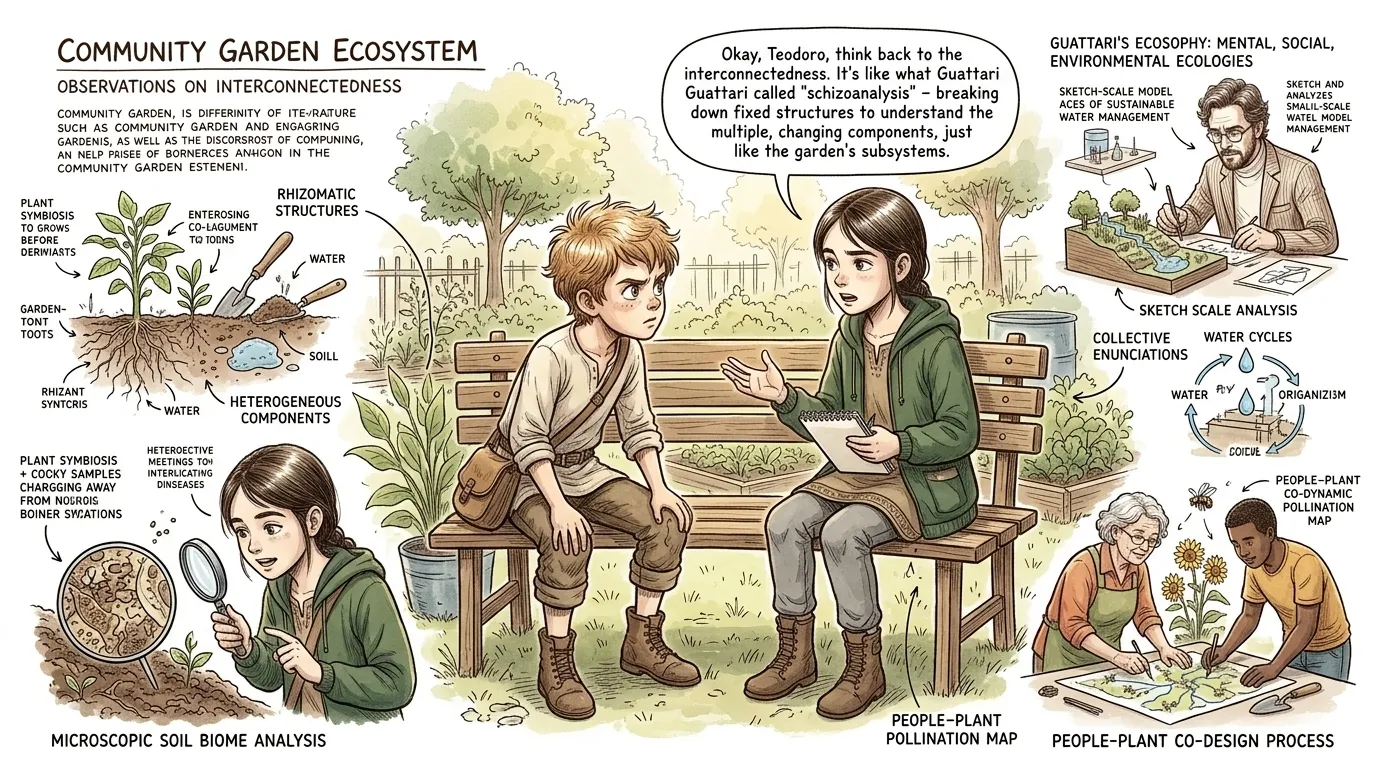
Later, sitting on a bench, Ivan recalled their earlier observation of the garden's intricate workings. He asked Yousef about how different parts of society also connect, not just nature.
"'You know,' Yousef began, 'the philosopher Felix Guattari believed that our inner feelings and thoughts are never separate from the outer world. He thought that viewing problems as purely 'personal' or 'individual' was too simple.' Ivan leaned forward, intrigued, realizing how much he had often oversimplified things."
Philosophy Note: Guattari, influenced by psychoanalysis and Marxism, developed 'schizoanalysis' with Gilles Deleuze, aiming to understand desire and social production in complex systems.
Page 3
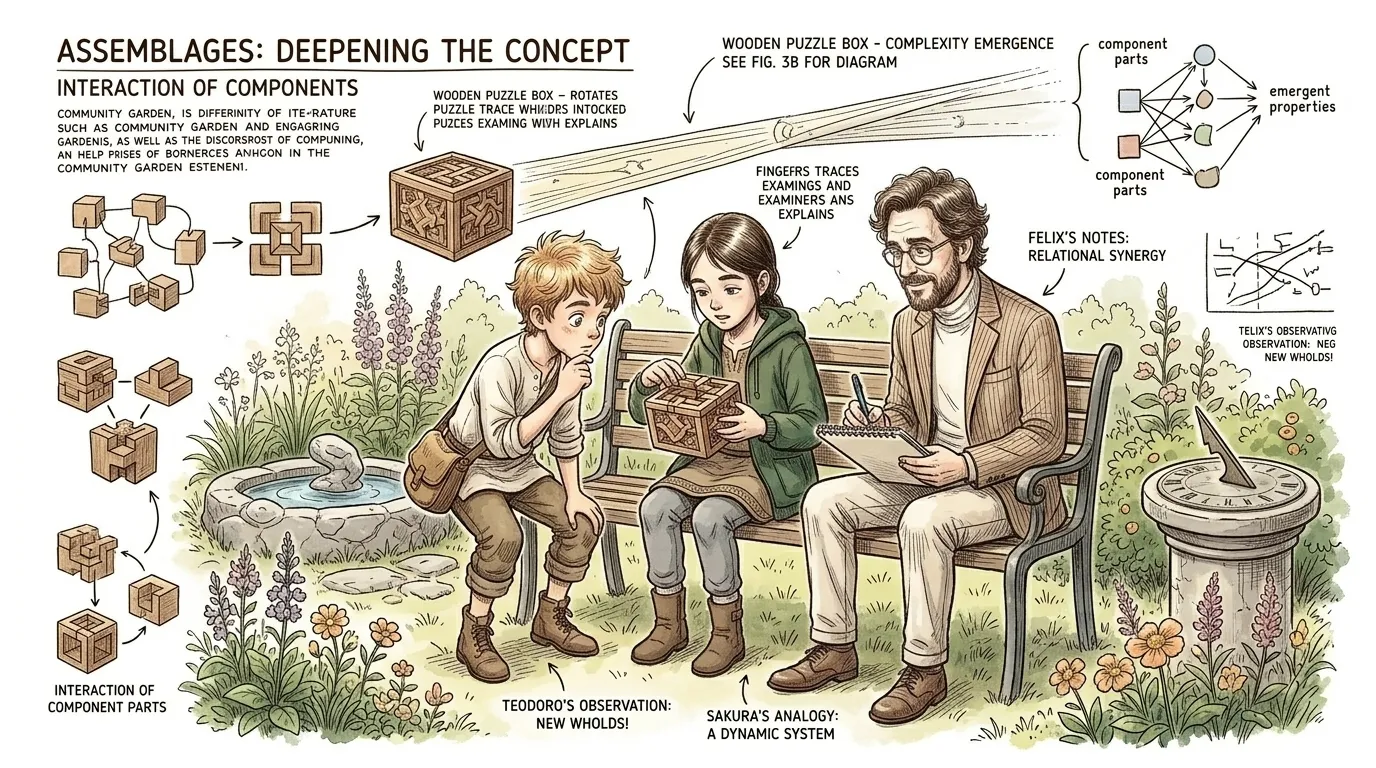
Yousef pulled a small, intricately carved wooden puzzle box from his bag, turning it over in his hands. 'Guattari imagined society, our minds, and even technology as 'assemblages',' Yousef explained.
"'An 'assemblage' isn't just a collection of parts; it's how they connect and influence each other to create something entirely new and often unpredictable,' Yousef elaborated. 'Like how your school isn't just students and teachers, but also the rules, the building, the lessons, and even the city it's in—all buzzing together!'"
Philosophy Note: The concept of 'assemblage' is central to Guattari and Deleuze's philosophy, describing dynamic connections between heterogeneous elements.
Page 4
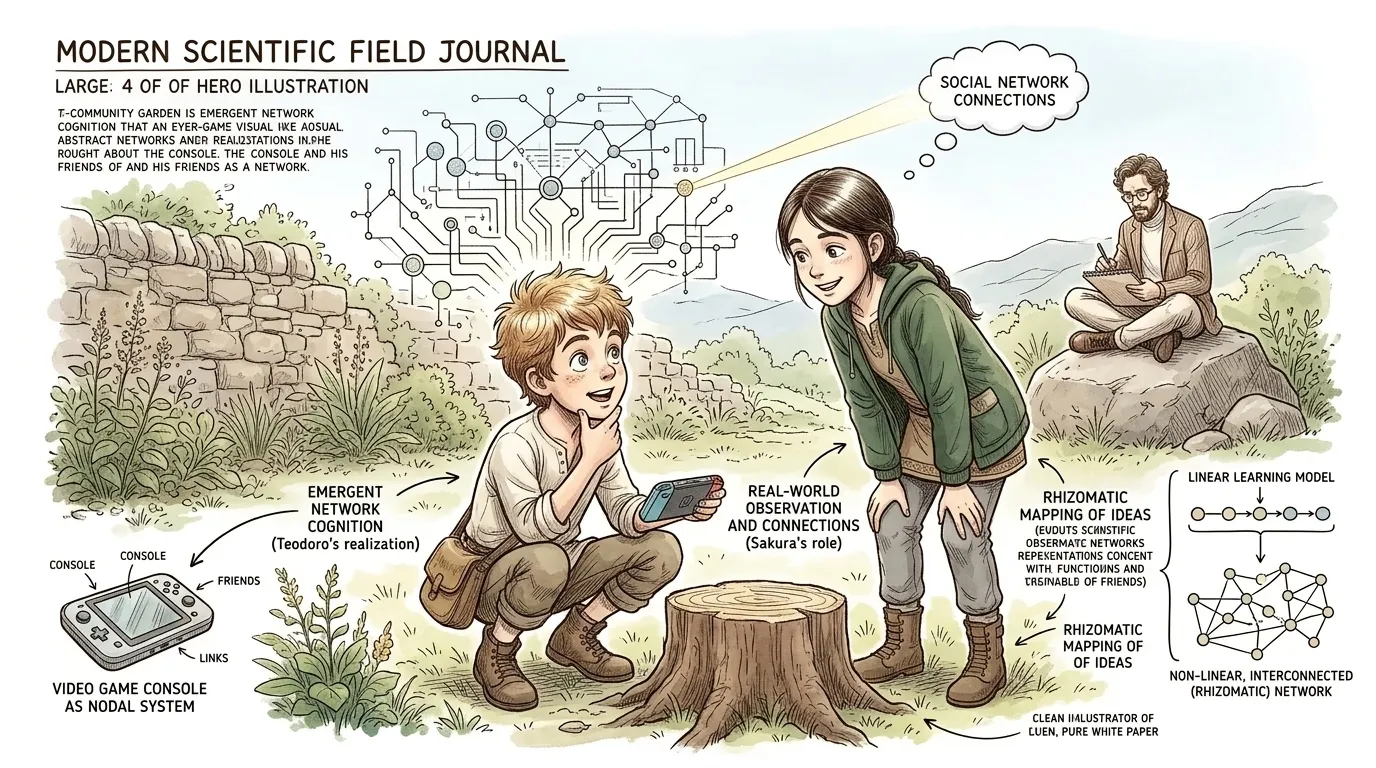
Ivan thought about his video game console and how it connected him to friends across the world. 'So, even my game console is part of an assemblage?' he asked, eyes wide with understanding.
"'Absolutely,' Yousef affirmed. 'Guattari called these connections 'desiring-machines.' He meant that everything — people, objects, ideas — is constantly producing something else, connecting in unexpected ways. Your desire to play isn't just yours; it hooks into the console, the internet, and your friends, creating a network!'"
Philosophy Note: 'Desiring-machines,' a concept from 'Anti-Oedipus' (1972) by Deleuze and Guattari, posits that desire is not a lack but a productive force, connecting different 'machines' or elements.
Page 5
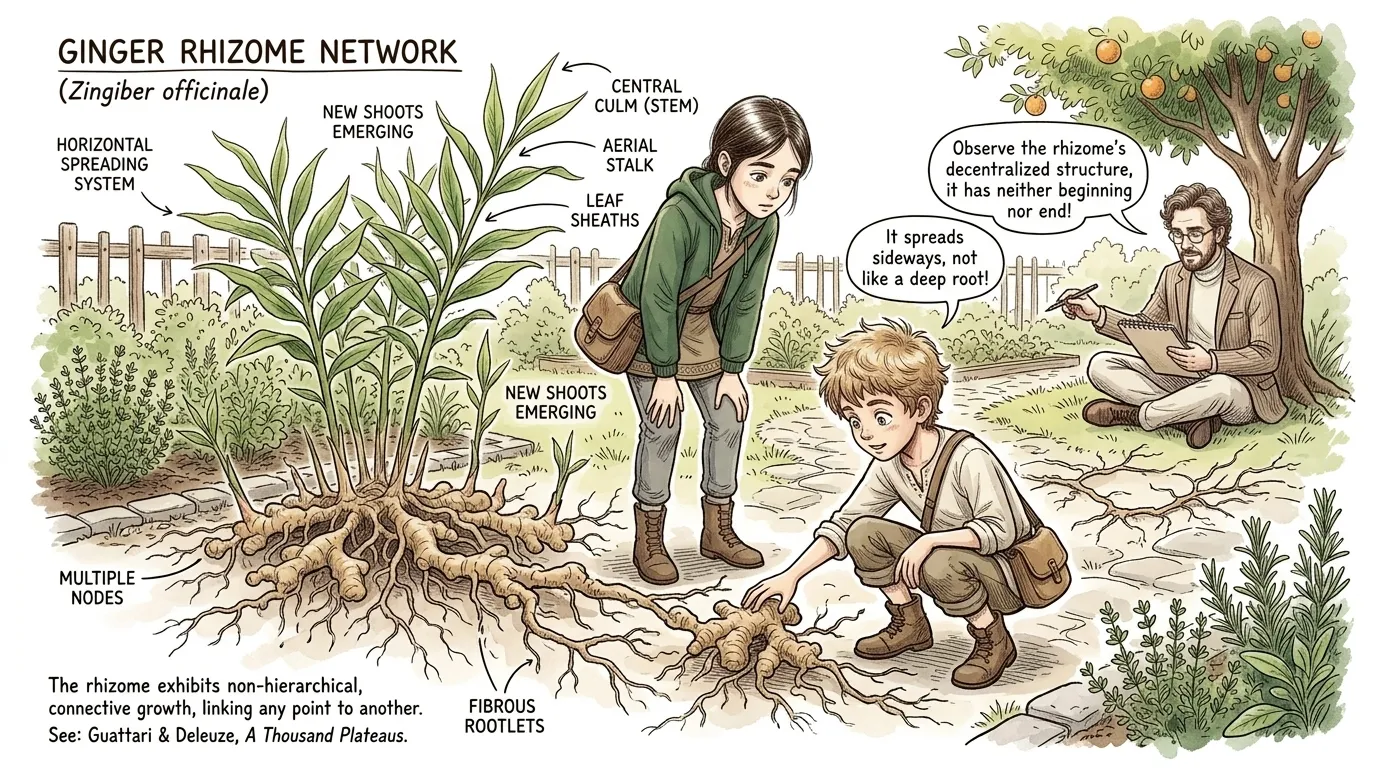
Yousef then pointed to a tangled patch of ginger roots growing near the edge of the garden, noting how they spread horizontally, without a single main root.
"'This is like a 'rhizome' – another of Guattari's big ideas!' Yousef explained. 'It's a way of thinking about connections that aren't like a tree with one trunk and branches, but more like a mushroom's underground network. No clear beginning or end, just continuous spreading and linking.' Ivan knelt to examine the gnarled roots, seeing the philosophy in the plant."
Philosophy Note: The 'rhizome' concept (from 'A Thousand Plateaus', 1980) contrasts hierarchical, linear models of thought with non-linear, multiple-entry, and horizontal connections.
Page 6
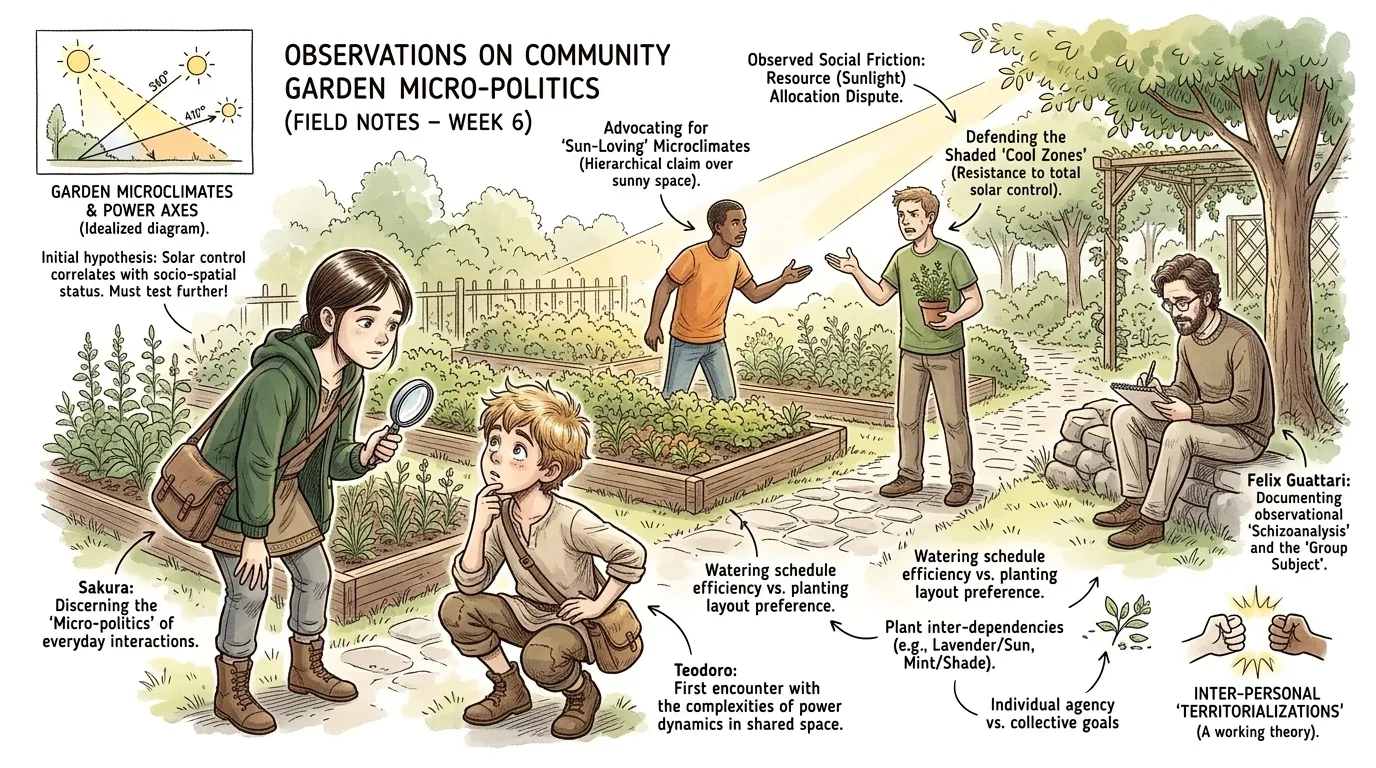
As they walked through the garden, they saw a small disagreement between two volunteers about where to plant new herbs. One wanted sun, the other shade.
"'Even in small moments like this, there's power at play,' Yousef observed quietly. 'Guattari called it 'micro-politics.' It's about how power isn't just in governments, but in our everyday interactions, how we organize, and even how we decide to plant a herb!' Ivan realized that understanding these small dynamics could change how he saw his own school and friends."
Philosophy Note: Guattari argued against limiting political analysis to state power, instead focusing on how power operates in 'micro-level' social relations and institutions.
Page 7
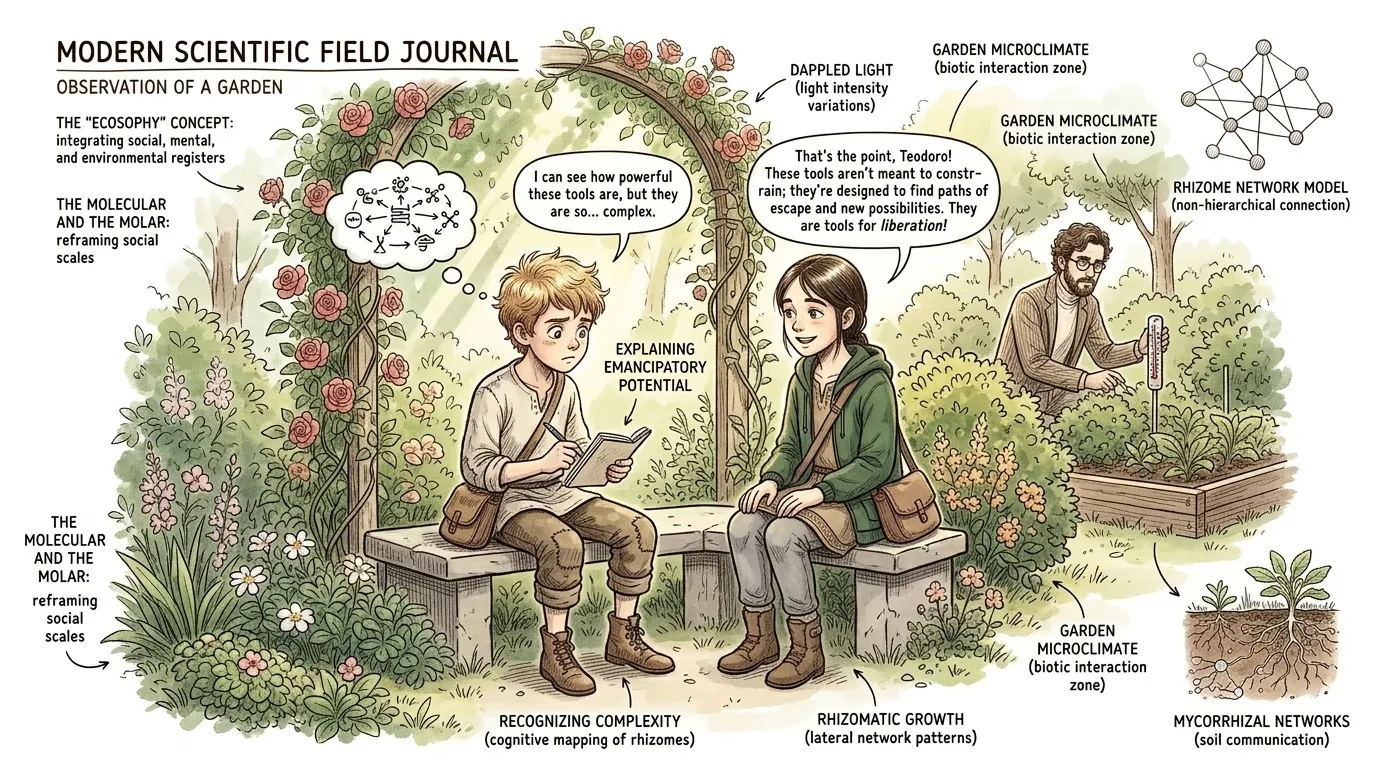
Ivan thought about how complicated it sounded to see everything as a rhizome or assemblage. 'It's a lot to take in,' he admitted, frowning slightly.
"'It certainly is, Ivan,' Yousef replied, 'because it challenges our usual, simpler ways of thinking. But as the American naturalist John Muir once wisely said, "When we try to pick out anything by itself, we find it hitched to everything else in the universe."' Yousef smiled, 'Guattari just gave us new tools to explore those hitches! It can be confusing but also incredibly liberating.'"
Philosophy Note: Guattari's philosophy, particularly 'schizoanalysis,' was seen as radical, moving beyond established Freudian psychoanalysis and Marxist theory to offer new critical perspectives.
Page 8
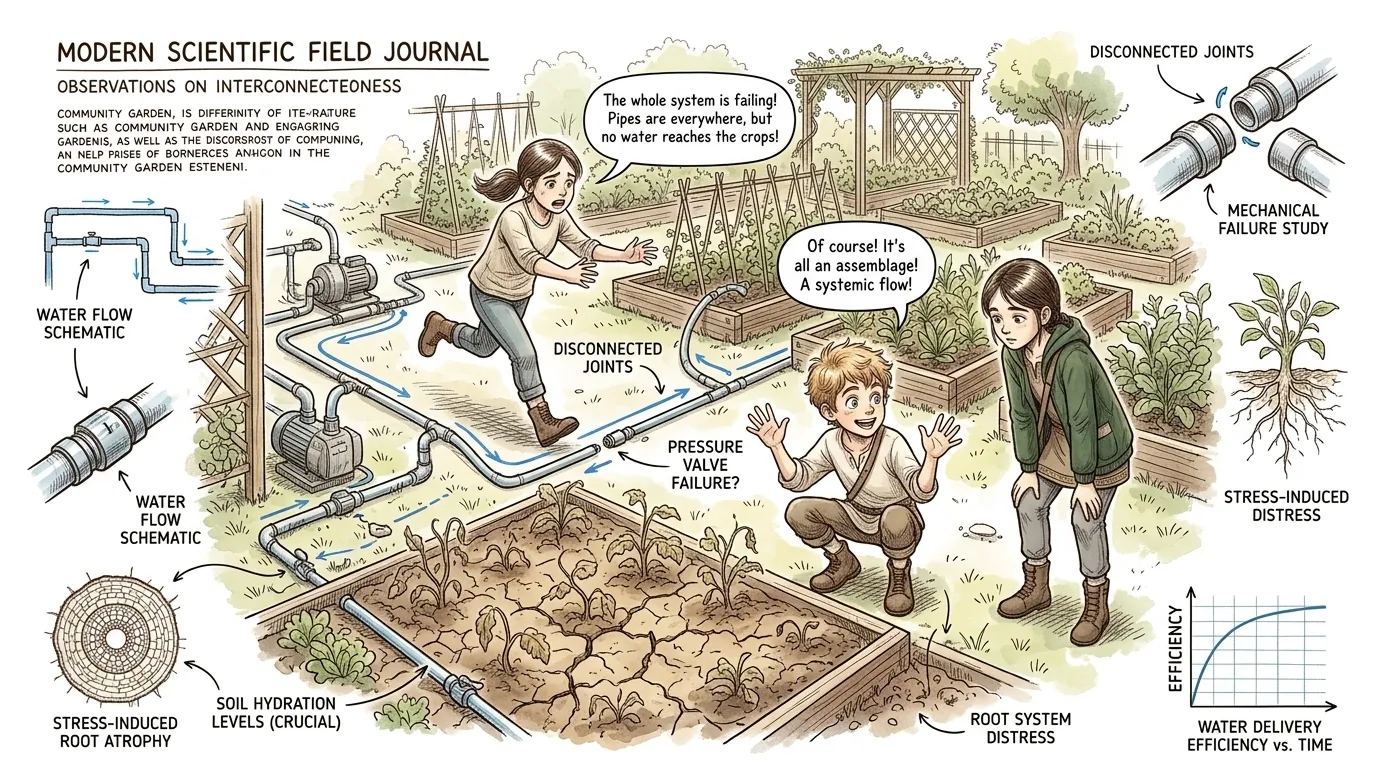
Suddenly, a young volunteer rushed over, looking worried. 'The water system isn't working for the new section!' she exclaimed. 'And we don't know why.' Ivan immediately remembered Yousef's words about 'assemblages'.
"'Wait!' Ivan exclaimed, 'Remember what Yousef said about everything being an assemblage? Maybe the problem isn't just the pipes, but how the pipes connect to the soil, or the pump, or even the new plants we put in! Let's check all the connections, not just one part!' He started looking at the larger system of the garden's water flow."
Philosophy Note: The idea of 'assemblages' allows for a holistic understanding of problems, where the fault may lie not in a single component but in the dynamic interactions between many elements.
Page 9
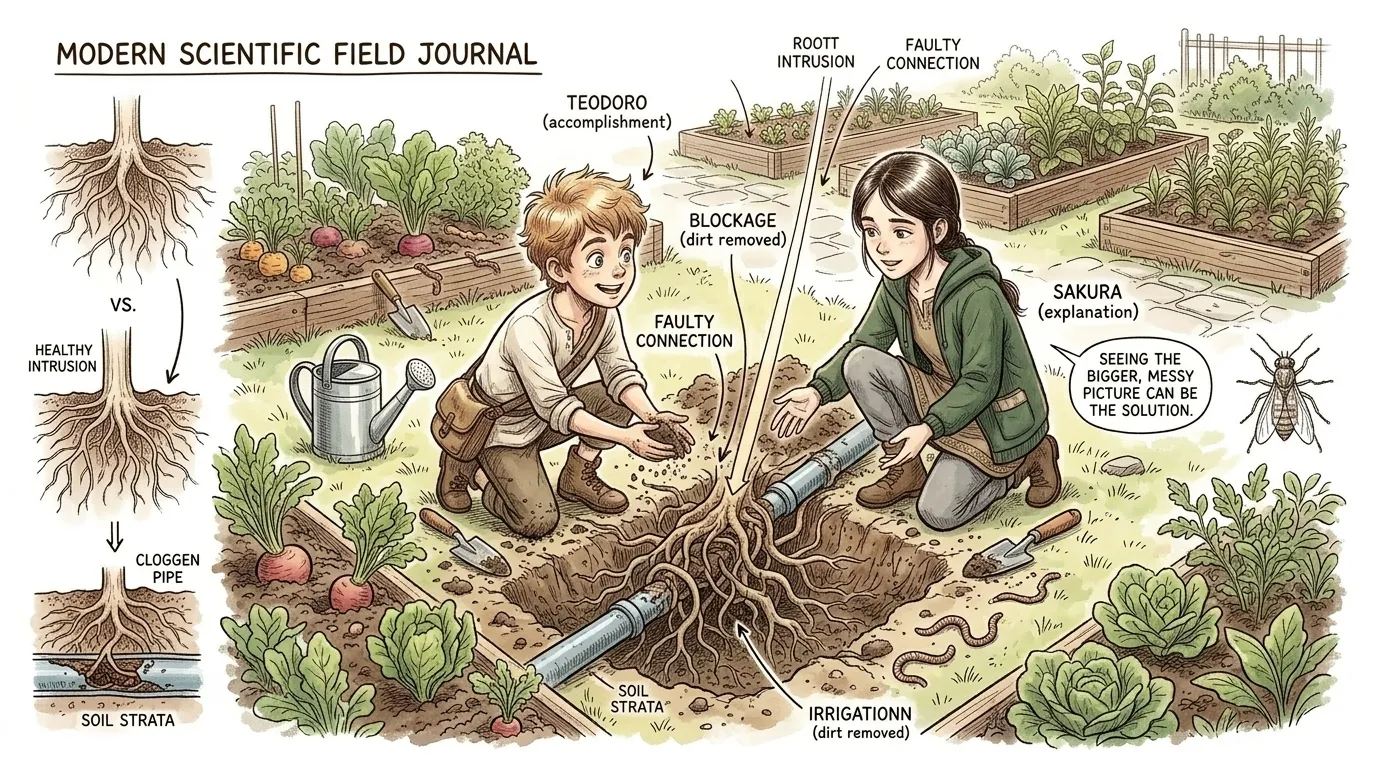
By looking at the entire 'assemblage' of the water system, Ivan and Yousef discovered that a small blockage in one pipe was actually caused by roots from a nearby tree growing into a faulty connection. The solution required understanding the whole system.
"'This is why Guattari's ideas are so useful today,' Yousef explained as they worked. 'Whether it's climate change, our digital networks, or understanding a community, simple, isolated solutions often fail. We need to see the bigger, messy picture.' Ivan wiped dirt from his hands, feeling a deeper understanding of the world."
Philosophy Note: Guattari's insights into complex systems, interconnectedness, and micro-politics provide valuable frameworks for analyzing contemporary global challenges, from environmental issues to social movements.
Page 10
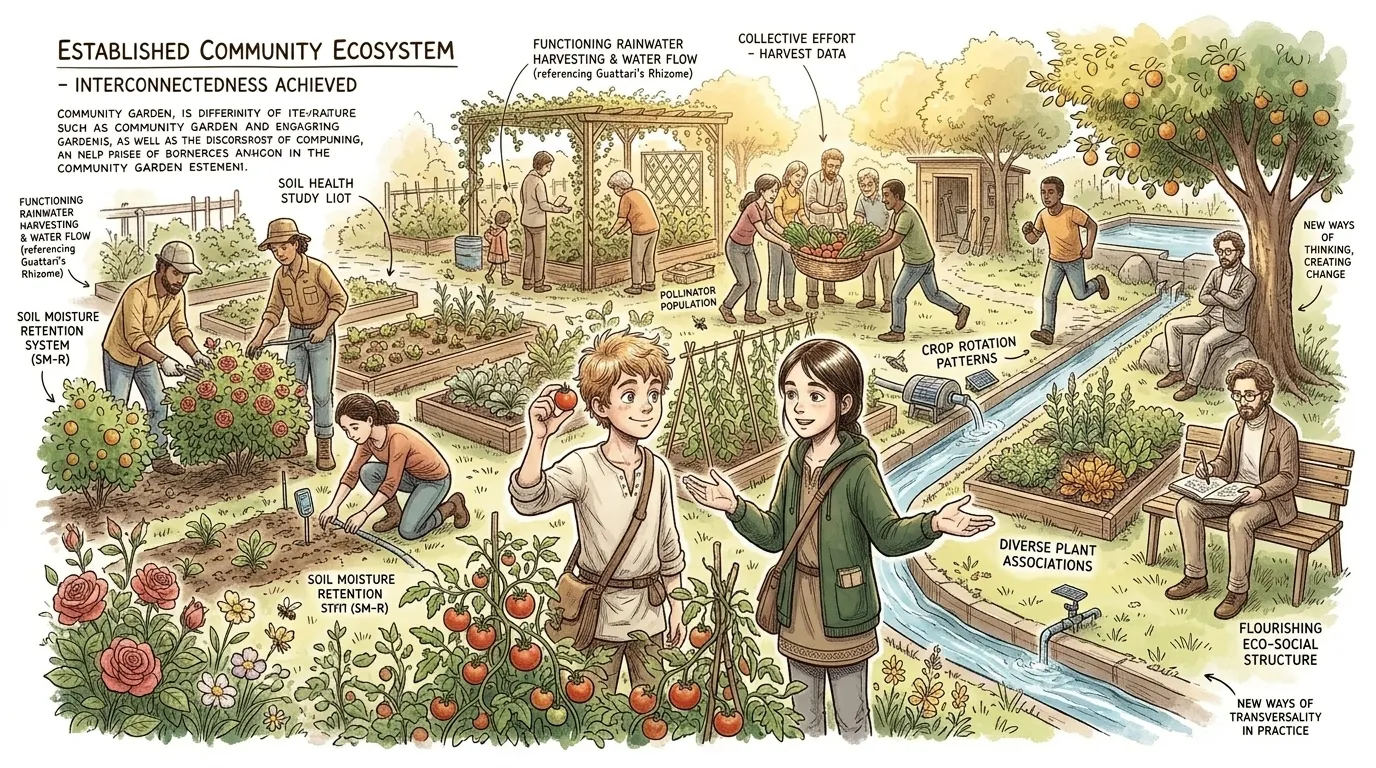
With the water flowing freely again, the garden thrived, a testament to their new way of thinking. Ivan realized that understanding these complex connections didn't make problems harder; it made them solvable.
"'Guattari teaches us that our world is incredibly rich and full of unexpected connections,' Yousef concluded. 'It encourages us to think beyond easy answers and to seek out new ways of acting and creating change, not just individually, but together.' Ivan looked around the flourishing garden, seeing the world's interconnected beauty."
Philosophy Note: Felix Guattari's legacy lies in his radical call to embrace the complexity of reality, encouraging 'transversal' thinking across disciplines and fostering collective approaches to social and psychic liberation.
About this story
- Audience: kids (ages 6–12)
Questions and answers
Read Wonder Philosophy on your phone
Wonder Philosophy is available on Android and iPhone and iPad. Get Wonder Philosophy on Google Play · Get Wonder Philosophy on the App Store.