Epictetus

Epictetus — an illustrated philosophy story. 10 illustrated pages, free to read on Wonder Philosophy.
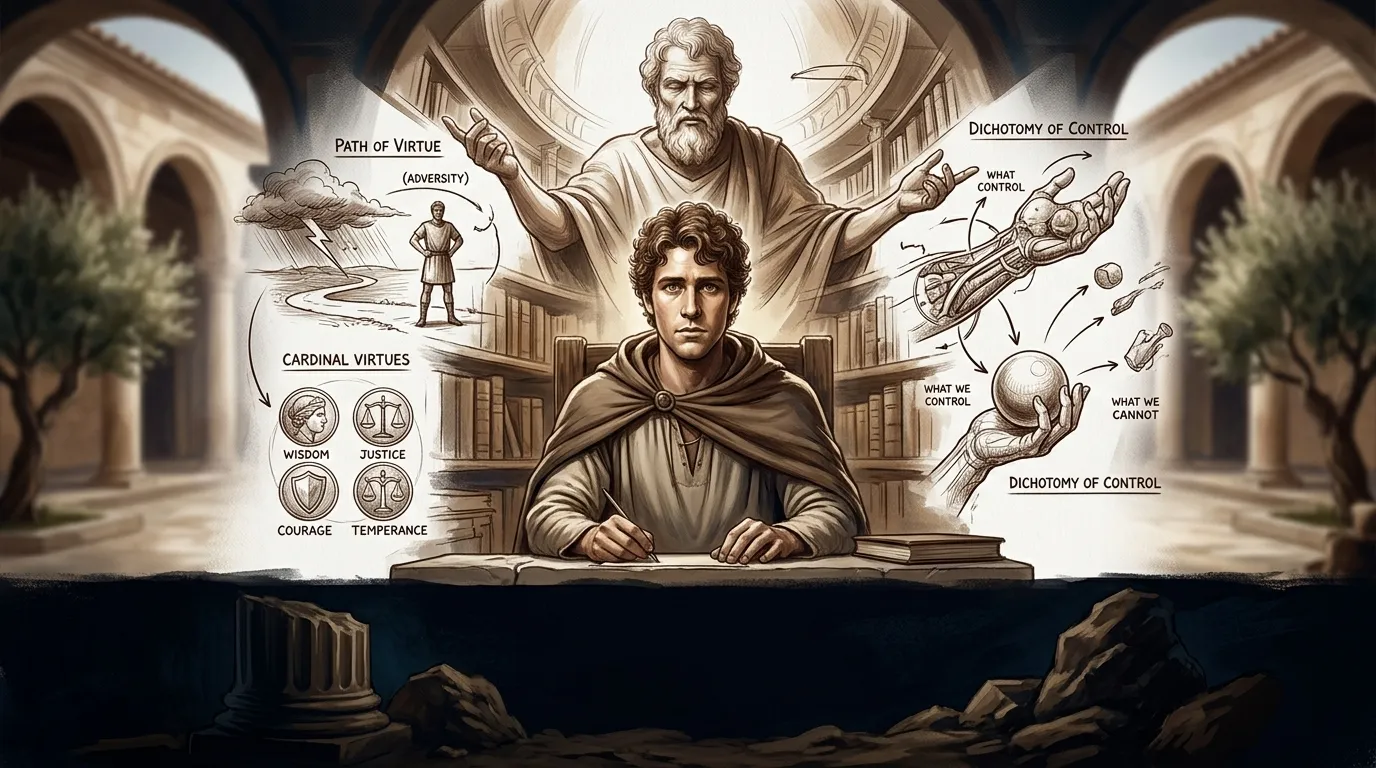
Epictetus — book cover — Wonder Philosophy
Epictetus — an illustrated philosophy story. 10 illustrated pages, free to read on Wonder Philosophy.

Page 1
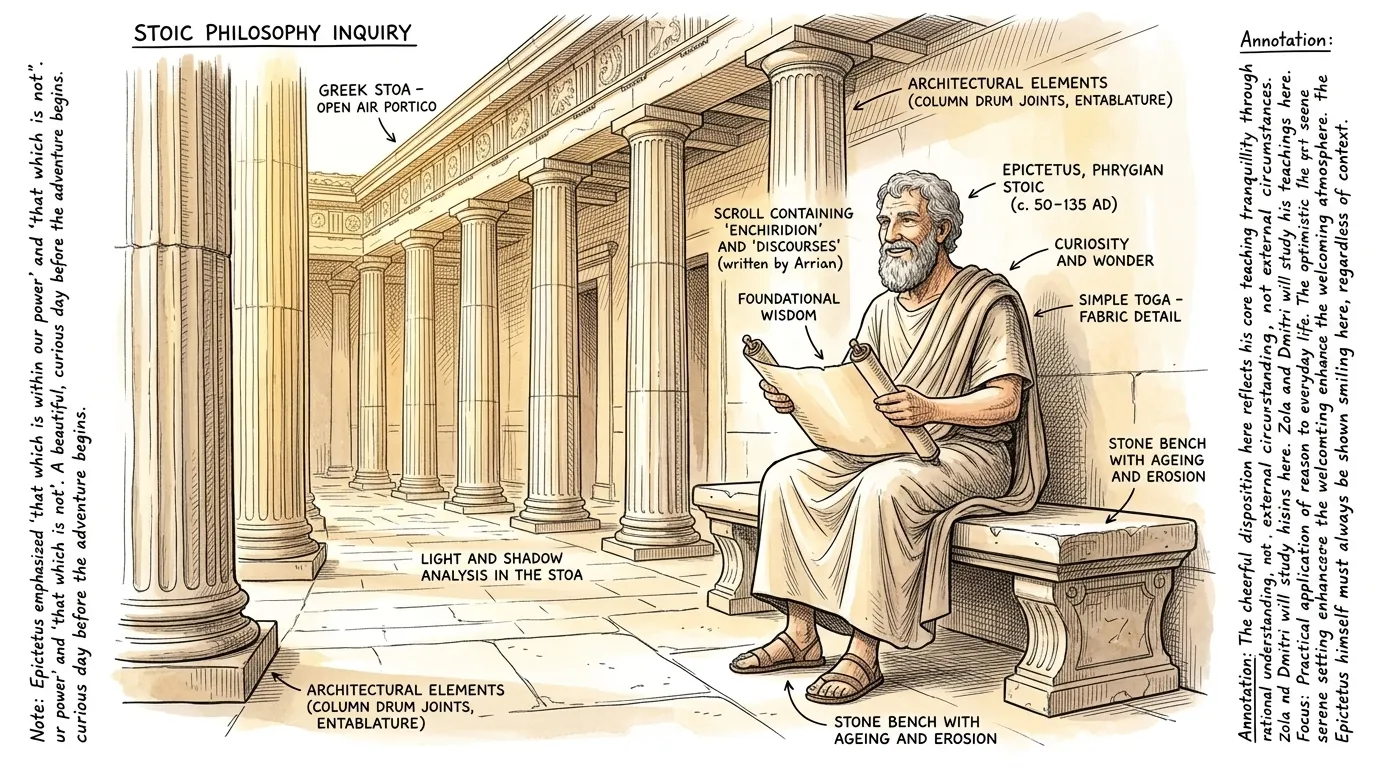
Epictetus, born a slave, became one of history's most influential Stoic philosophers. His teachings offer a practical path to inner peace, emphasizing what we…
Epictetus, born a slave, became one of history's most influential Stoic philosophers. His teachings offer a practical path to inner peace, emphasizing what we can control and accepting what we cannot. This philosophy remains profoundly relevant in our chaotic modern world, where we constantly grapple with external pressures and internal anxieties. Philosophy Note: Stoicism: A Hellenistic philosophy founded in Athens by Zeno of Citium in the early 3rd century BC.

Epictetus, born a slave, became one of history's most influential Stoic philosophers. His teachings offer a practical path to inner peace, emphasizing what we can control and accepting what we cannot. This philosophy remains profoundly relevant in our chaotic modern world, where we constantly grapple with external pressures and internal anxieties.

Philosophy Note: Stoicism: A Hellenistic philosophy founded in Athens by Zeno of Citium in the early 3rd century BC.

Page 2
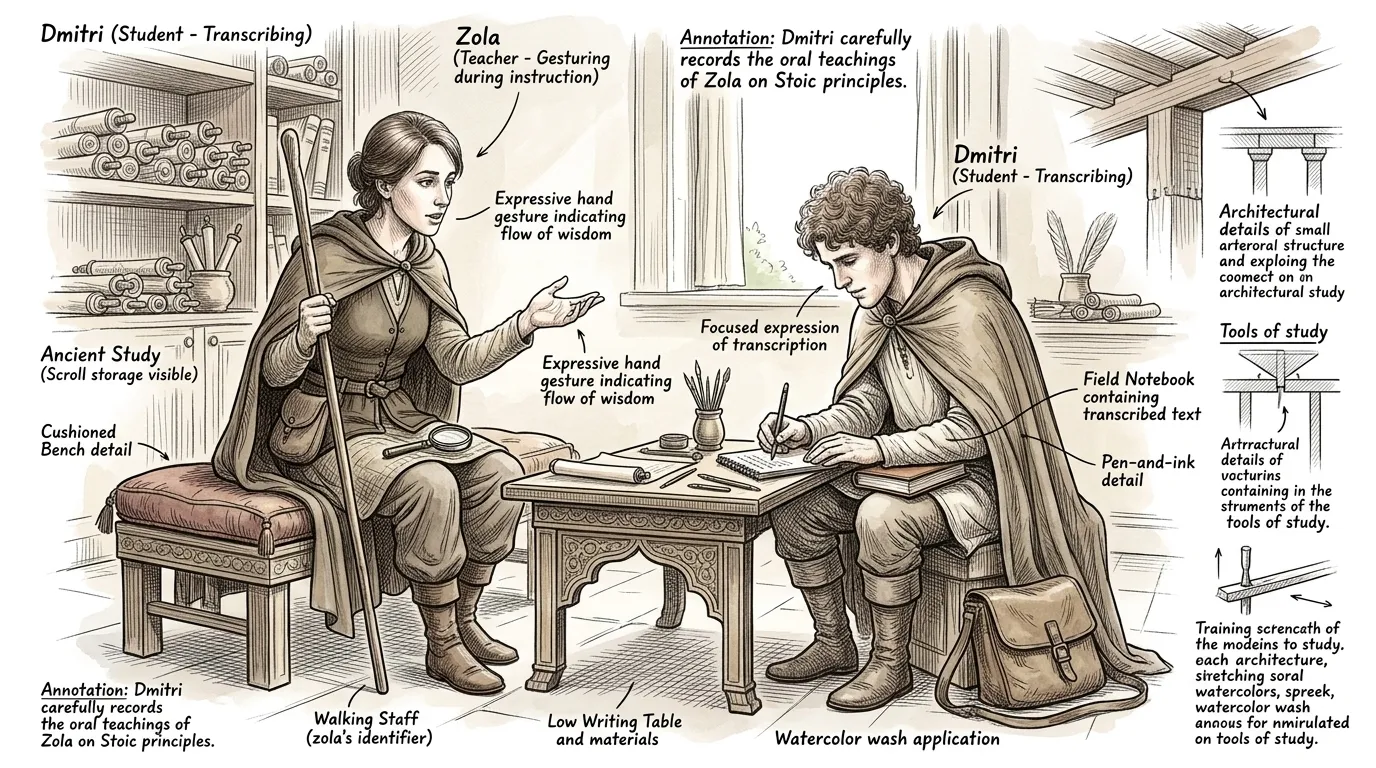
Epictetus didn't write his teachings himself. His student, Arrian, meticulously transcribed his lectures and conversations, compiling them into two significant…
Epictetus didn't write his teachings himself. His student, Arrian, meticulously transcribed his lectures and conversations, compiling them into two significant works: the Discourses and the Enchiridion (Handbook). The Enchiridion, a concise summary of Stoic principles, serves as a practical guide for daily life. It focuses on distinguishing between what lies within our power (thoughts, judgments, desires) and what does not (external events, other people's actions).

Epictetus didn't write his teachings himself. His student, Arrian, meticulously transcribed his lectures and conversations, compiling them into two significant works: the Discourses and the Enchiridion (Handbook). The Enchiridion, a concise summary of Stoic principles, serves as a practical guide for daily life. It focuses on distinguishing between what lies within our power (thoughts, judgments, desires) and what does not (external events, other people's actions).

Philosophy Note: Arrian of Nicomedia (c. 86 – c. 160 AD): A Greek historian, public servant, military commander and philosopher of the Roman period.

Page 3

Zola, a modern Stoic teacher, explains to her student, Dmitri, the core of Epictetus' philosophy. It's not about controlling the world, but about controlling…
Zola, a modern Stoic teacher, explains to her student, Dmitri, the core of Epictetus' philosophy. It's not about controlling the world, but about controlling your reactions to it. It's a subtle but crucial difference. We can't stop bad things from happening, but we can choose how we respond to them. Philosophy Note: Dichotomy of Control: A key Stoic concept distinguishing between what we can and cannot control.

Zola, a modern Stoic teacher, explains to her student, Dmitri, the core of Epictetus' philosophy. It's not about controlling the world, but about controlling your reactions to it. It's a subtle but crucial difference. We can't stop bad things from happening, but we can choose how we respond to them.

Philosophy Note: Dichotomy of Control: A key Stoic concept distinguishing between what we can and cannot control.

Page 4

Zola uses a garden analogy to explain Epictetus' teachings. 'Imagine your mind is a garden,' she says to Dmitri. 'You can't control the weather, the insects, or…
Zola uses a garden analogy to explain Epictetus' teachings. 'Imagine your mind is a garden,' she says to Dmitri. 'You can't control the weather, the insects, or the weeds that might appear. But you can control what you plant, how you water it, and how diligently you tend to it. Your thoughts and judgments are like the seeds you sow.' Philosophy Note: Negative Visualization: A Stoic practice of imagining potential setbacks to cultivate resilience and gratitude.

Zola uses a garden analogy to explain Epictetus' teachings. 'Imagine your mind is a garden,' she says to Dmitri. 'You can't control the weather, the insects, or the weeds that might appear. But you can control what you plant, how you water it, and how diligently you tend to it. Your thoughts and judgments are like the seeds you sow.'

Philosophy Note: Negative Visualization: A Stoic practice of imagining potential setbacks to cultivate resilience and gratitude.

Page 5
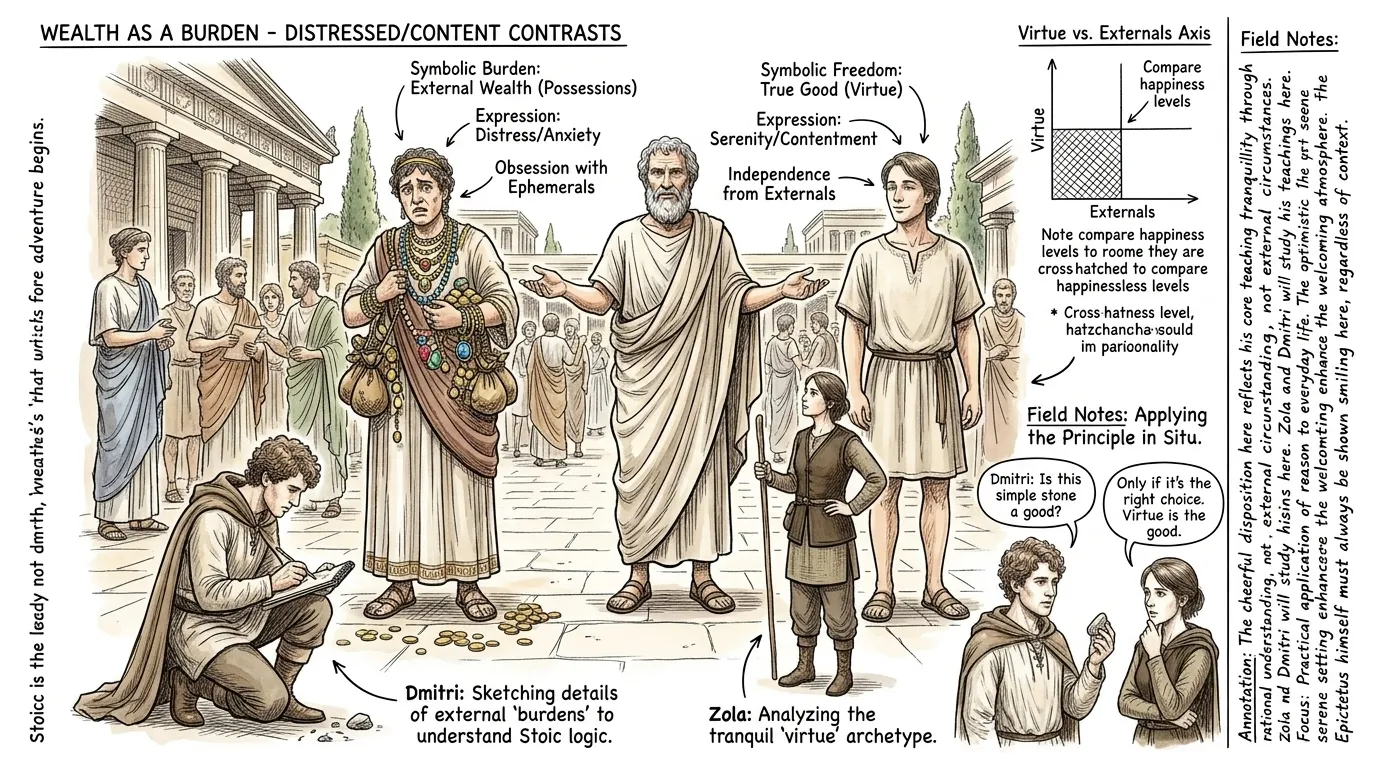
Epictetus argued that the only true good is virtue – wisdom, justice, courage, and temperance. External things like wealth, health, and reputation are…
Epictetus argued that the only true good is virtue – wisdom, justice, courage, and temperance. External things like wealth, health, and reputation are indifferent; they are neither inherently good nor bad. What matters is how we use them. A person can be wealthy and miserable, or poor and content. Philosophy Note: Virtue Ethics: A moral philosophy that emphasizes character and moral habits as the driving force for ethical behavior.

Epictetus argued that the only true good is virtue – wisdom, justice, courage, and temperance. External things like wealth, health, and reputation are indifferent; they are neither inherently good nor bad. What matters is how we use them. A person can be wealthy and miserable, or poor and content.

Philosophy Note: Virtue Ethics: A moral philosophy that emphasizes character and moral habits as the driving force for ethical behavior.

Page 6

A core concept in Epictetus' philosophy is amor fati – love of fate. This isn't passive resignation, but an active embrace of everything that happens, both good…
A core concept in Epictetus' philosophy is amor fati – love of fate. This isn't passive resignation, but an active embrace of everything that happens, both good and bad. It's recognizing that everything is part of the natural order and that even suffering can be an opportunity for growth. Philosophy Note: Amor Fati: A Latin phrase meaning "love of fate" or "love of one's fate." It is a concept used by Stoic philosophers.

A core concept in Epictetus' philosophy is amor fati – love of fate. This isn't passive resignation, but an active embrace of everything that happens, both good and bad. It's recognizing that everything is part of the natural order and that even suffering can be an opportunity for growth.

Philosophy Note: Amor Fati: A Latin phrase meaning "love of fate" or "love of one's fate." It is a concept used by Stoic philosophers.

Page 7
Stoicism is sometimes criticized for promoting passivity or indifference. Critics argue that if we accept everything that happens, we might not be motivated to…
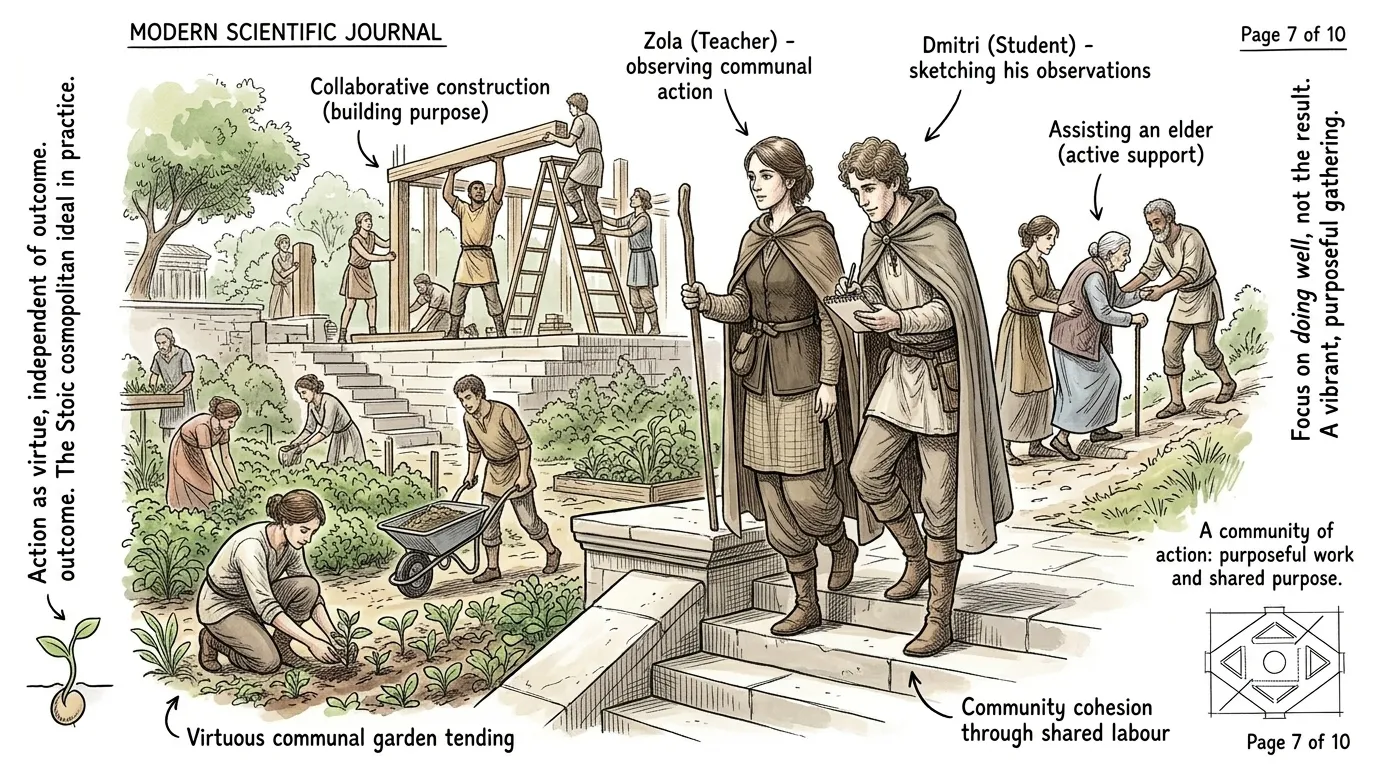
Stoicism is sometimes criticized for promoting passivity or indifference. Critics argue that if we accept everything that happens, we might not be motivated to fight injustice or improve the world. However, Stoics like Epictetus would argue that taking action to improve the world is a virtuous act, but our happiness shouldn't depend on the outcome.

Stoicism is sometimes criticized for promoting passivity or indifference. Critics argue that if we accept everything that happens, we might not be motivated to fight injustice or improve the world. However, Stoics like Epictetus would argue that taking action to improve the world is a virtuous act, but our happiness shouldn't depend on the outcome.

Philosophy Note: Stoic Indifference: The state of not being affected by external circumstances, focusing instead on internal virtue.

Page 8

Epictetus' teachings are more relevant than ever in today's fast-paced, anxiety-ridden world. His emphasis on inner resilience, acceptance, and focusing on what…
Epictetus' teachings are more relevant than ever in today's fast-paced, anxiety-ridden world. His emphasis on inner resilience, acceptance, and focusing on what we can control provides a powerful antidote to the constant pressure to achieve, acquire, and compare ourselves to others. He teaches us to find peace not in external success, but in internal virtue.

Epictetus' teachings are more relevant than ever in today's fast-paced, anxiety-ridden world. His emphasis on inner resilience, acceptance, and focusing on what we can control provides a powerful antidote to the constant pressure to achieve, acquire, and compare ourselves to others. He teaches us to find peace not in external success, but in internal virtue.

Philosophy Note: Mindfulness: Paying attention to the present moment without judgment, a practice with parallels to Stoic principles.

Page 9

The enduring influence of Epictetus can be seen in various fields, from cognitive behavioral therapy to leadership training.
The enduring influence of Epictetus can be seen in various fields, from cognitive behavioral therapy to leadership training. His ideas resonate with anyone seeking a more meaningful and resilient life. By focusing on our internal world and accepting the external, we can find freedom and peace, regardless of circumstances. Dmitri, after reflecting on Zola's teachings, realizes the profound impact of Epictetus' wisdom.

The enduring influence of Epictetus can be seen in various fields, from cognitive behavioral therapy to leadership training. His ideas resonate with anyone seeking a more meaningful and resilient life. By focusing on our internal world and accepting the external, we can find freedom and peace, regardless of circumstances. Dmitri, after reflecting on Zola's teachings, realizes the profound impact of Epictetus' wisdom.

Philosophy Note: Cognitive Behavioral Therapy (CBT): A therapeutic approach that draws inspiration from Stoic philosophy to help individuals manage negative thoughts and behaviors.

Page 10

As they walk, Saanvi thinks aloud, 'It's like Seneca said, 'Every new beginning comes from some other beginning's end.' So maybe we should just focus on being…
As they walk, Saanvi thinks aloud, 'It's like Seneca said, 'Every new beginning comes from some other beginning's end.' So maybe we should just focus on being kind and calm right now.' Sakura smiled. 'Seneca would be proud. As would Epictetus.' Philosophy Note: Seneca the Younger (c. 4 BC – AD 65): A Roman Stoic philosopher, statesman, dramatist, and in one work, satirist, of the Silver Age of Latin literature.

As they walk, Saanvi thinks aloud, 'It's like Seneca said, 'Every new beginning comes from some other beginning's end.' So maybe we should just focus on being kind and calm right now.' Sakura smiled. 'Seneca would be proud. As would Epictetus.'

Philosophy Note: Seneca the Younger (c. 4 BC – AD 65): A Roman Stoic philosopher, statesman, dramatist, and in one work, satirist, of the Silver Age of Latin literature.

About this story

  • Audience: general readers

More Wonder Philosophy stories

All Wonder Philosophy stories · Open the library