Diana of Versailles by Leochares (Paris, France — c. 325 BC)
Diana of Versailles by Leochares (Paris, France — c. 325 BC) — an illustrated arts story, set in France. 10 illustrated pages, free to read on Wonder Arts.
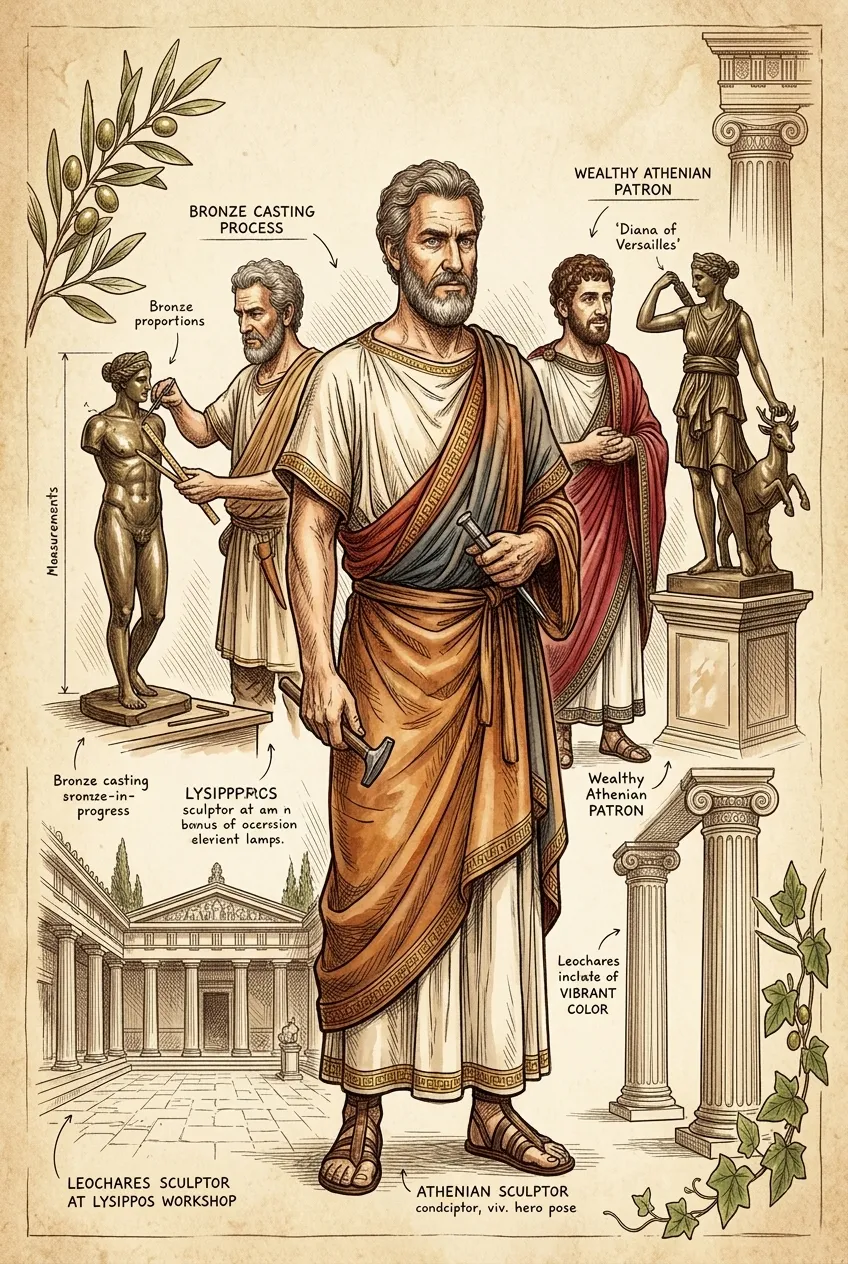
Page 1
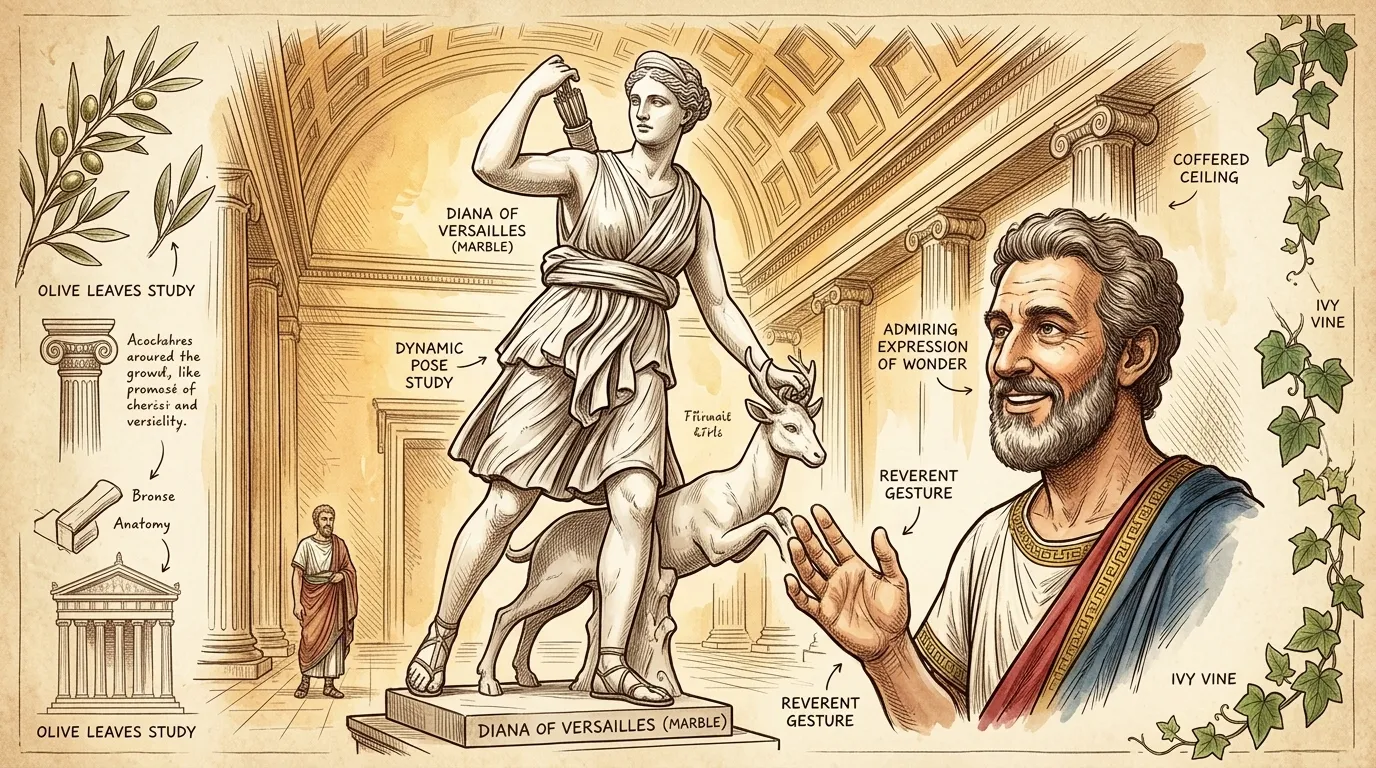
Leochares, the Athenian sculptor, stood before his masterpiece, 'Diana of Versailles.' Completed around 325 BC, this marble statue, standing at 6 feet 8 inches, now resides in the Louvre Museum, a testament to his skill. Its journey through time, from ancient Greece to the halls of France, is a story etched in stone.
"Leochares murmured, gazing upon Diana, "This is more than just marble; it's a huntress immortalized, a goddess revealed.""
Art Fact: Diana of Versailles, a Roman copy of a lost Greek bronze original, depicts the goddess Diana, the huntress. It is believed to be made by Leochares. Its value is inestimable due to its historical and artistic significance.
Page 2
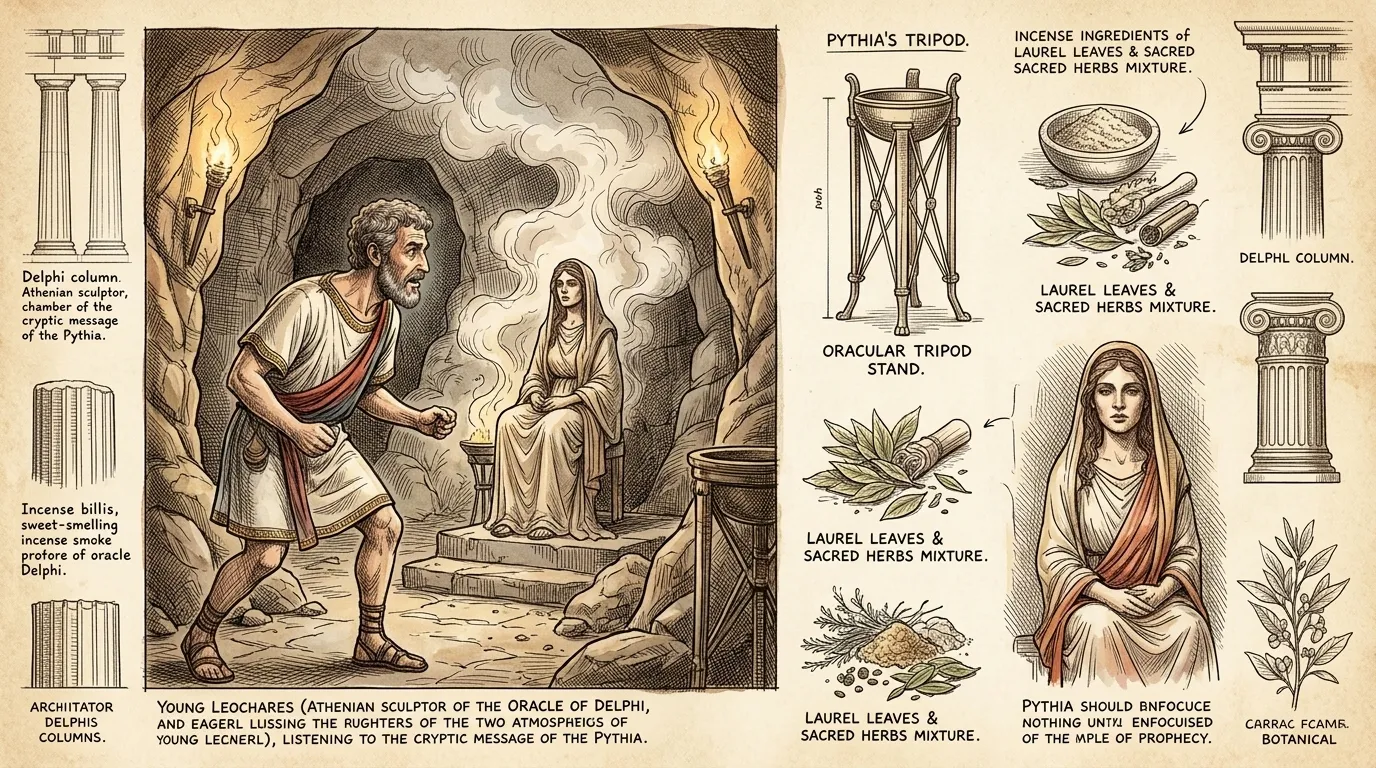
Young Leochares, seeking direction, visited the Oracle of Delphi. The air hung thick with incense as the Pythia, the oracle, delivered her cryptic message. Her words, though veiled, ignited a spark within him.
"The Pythia rasped, her eyes unfocused, "Seek the balance, young one. Find the beauty in motion, the strength in grace. Only then will your hands truly create.""
Art Fact: The Oracle of Delphi was consulted for centuries on matters both personal and political. Her pronouncements, often ambiguous, held immense power in the ancient world.
Page 3
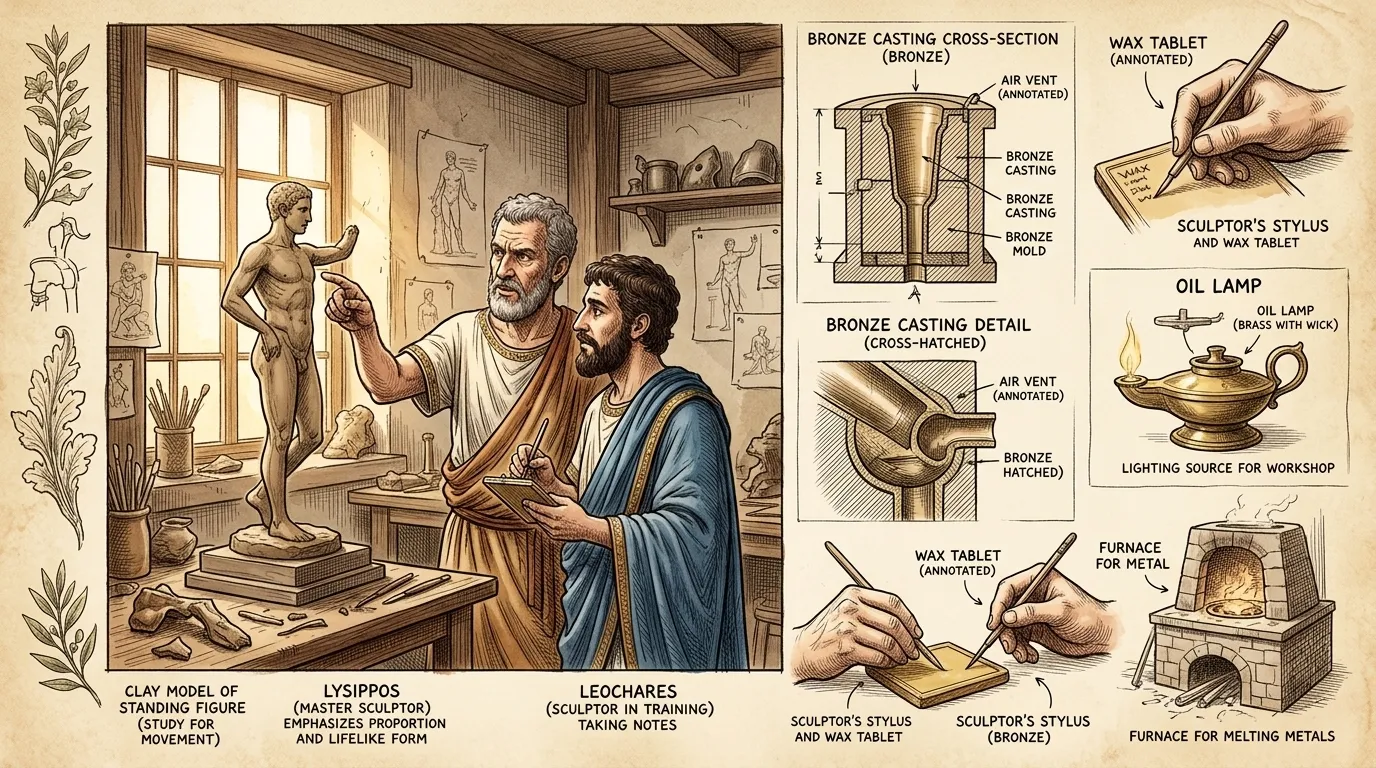
Leochares apprenticed under Lysippos, a master sculptor known for his innovative and lifelike bronze statues. Lysippos taught him to see the world anew. He taught him about 'kairos' the opportune moment.
"Lysippos, his brow furrowed in concentration, instructed the young sculptor, "Observe the human form, Leochares. Not just its appearance, but its essence, the feeling it evokes. 'A person should know themselves,' as Socrates said. Strive to capture the fleeting moment, the 'kairos,' for that is where true beauty lies.""
Art Fact: Lysippos was renowned for his naturalistic style and his emphasis on proportion, influencing generations of sculptors.
Page 4
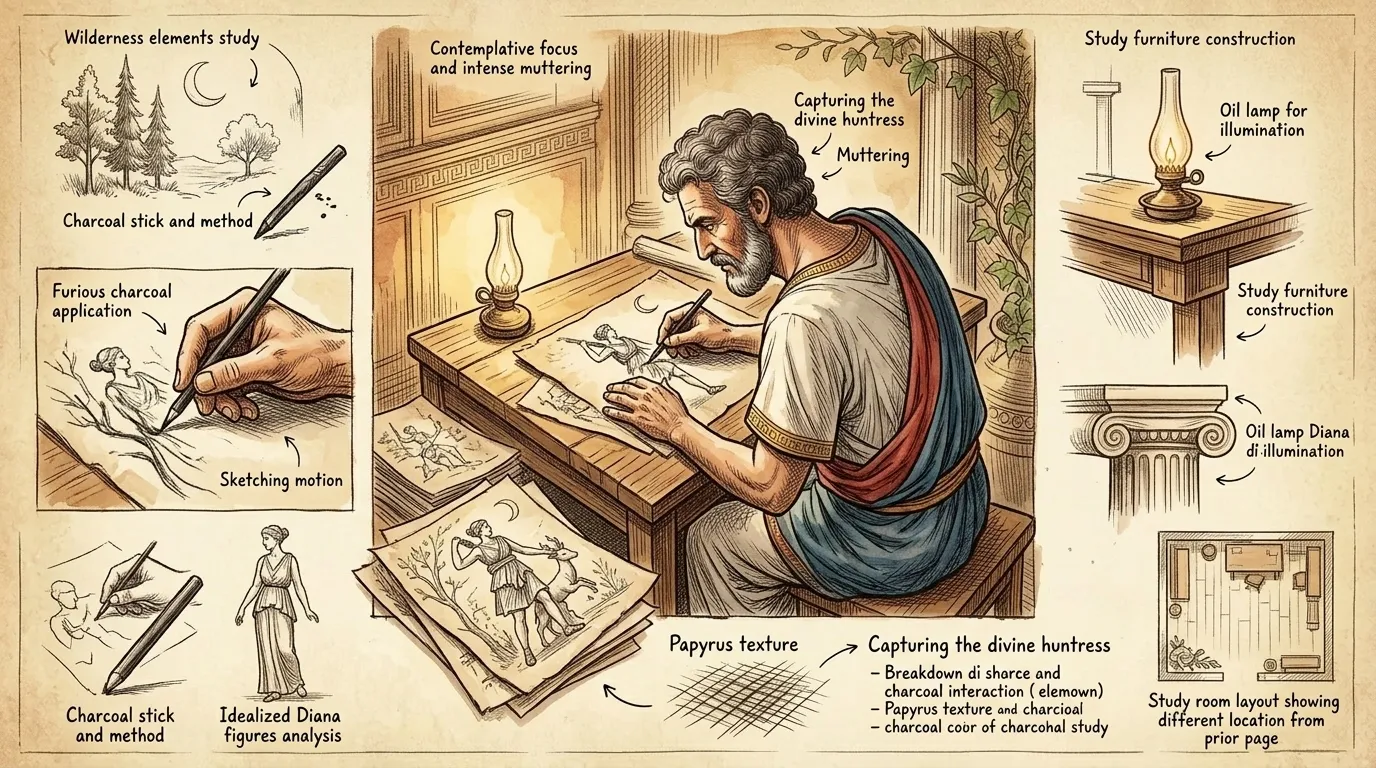
Inspired by the goddess Diana, Leochares sketched furiously. He captured her lithe form, her focused gaze, and her connection to the wild. He understood her as the protector of women and childbirth, as well as the hunt.
"Leochares muttered to himself, charcoal scratching on papyrus, "Diana... the embodiment of freedom, strength, and the untamed spirit. How to capture such essence in stone?""
Art Fact: Diana, known as Artemis in Greek mythology, was revered as the goddess of the hunt, wilderness, wild animals, the Moon, and chastity.
Page 5
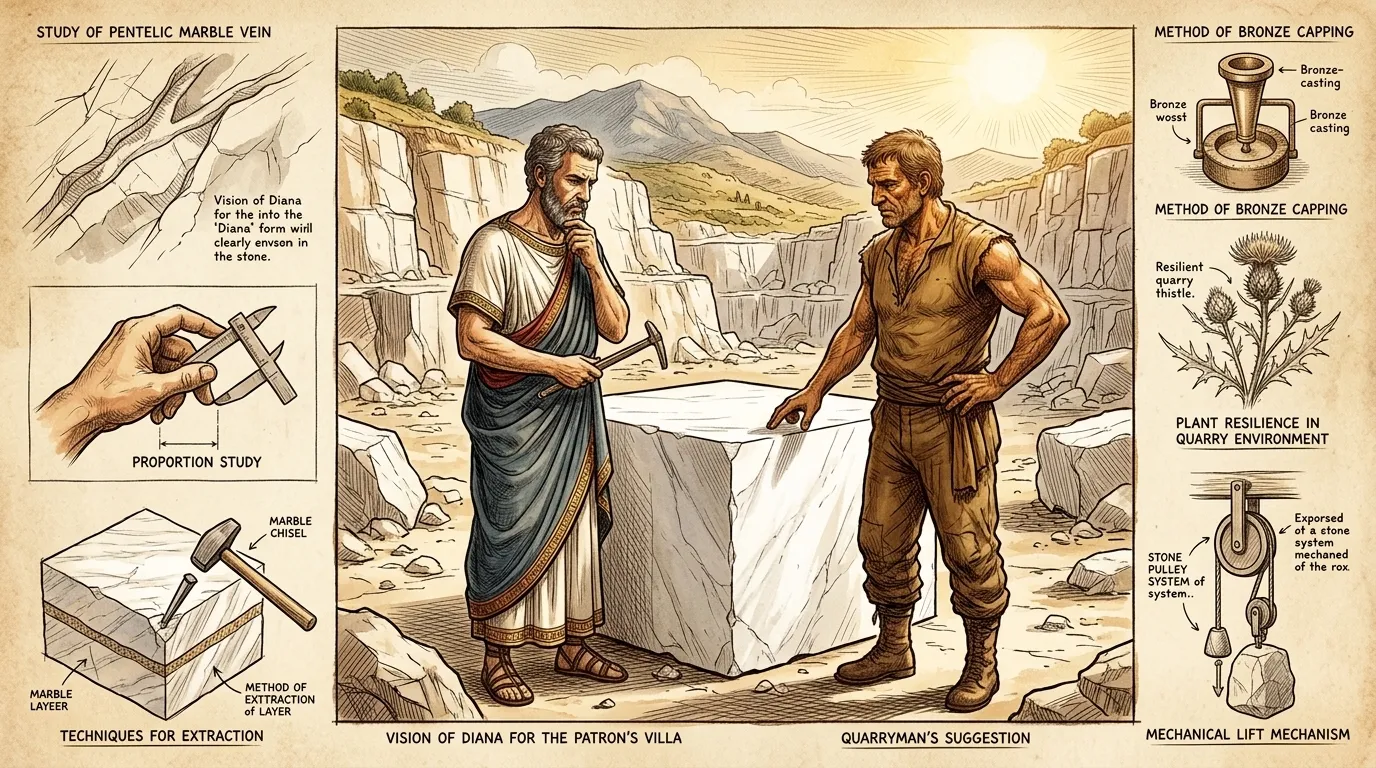
Leochares journeyed to Mount Pentelicus, the source of the purest white marble in Greece. He selected the perfect block, envisioning Diana emerging from the stone.
"The foreman of the quarry, a burly man with sun-baked skin, said, "That's a fine piece, sculptor. 'The journey of a thousand miles begins with one step,' as Lao Tzu said. Now, let's see if you can turn it into a goddess.""
Art Fact: Mount Pentelicus was the primary source of marble for the Parthenon and many other iconic structures in ancient Athens.
Page 6
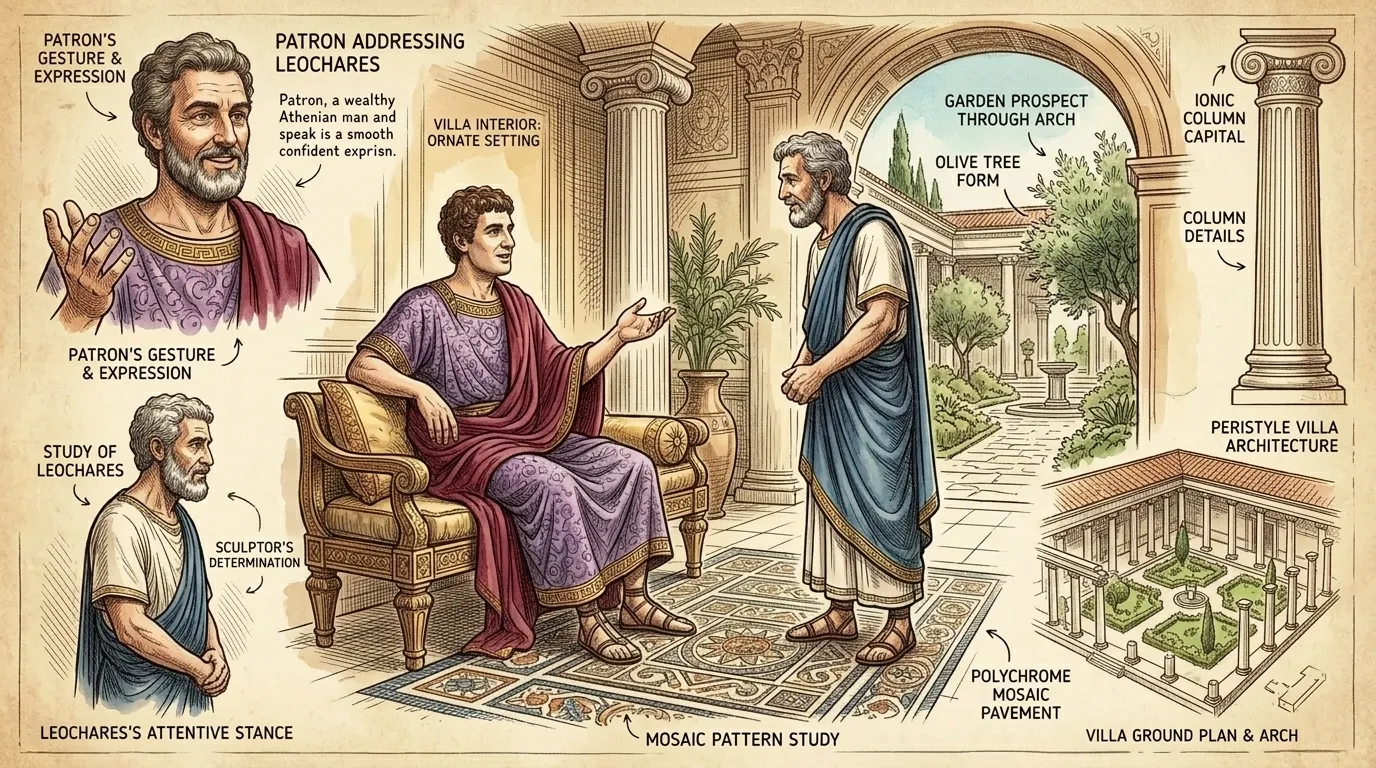
A wealthy Athenian patron, impressed by Leochares' talent, commissioned him to create a statue of Diana for his villa. This was a breakthrough.
"The Patron said, his voice smooth, "Leochares, your skill is undeniable. Create for me a Diana that embodies the strength and grace of our city. And remember what Plato said about beauty, 'it lies in the eyes of the beholder.'""
Art Fact: Patronage played a crucial role in the development of ancient Greek art, allowing artists to create ambitious and elaborate works.
Page 7
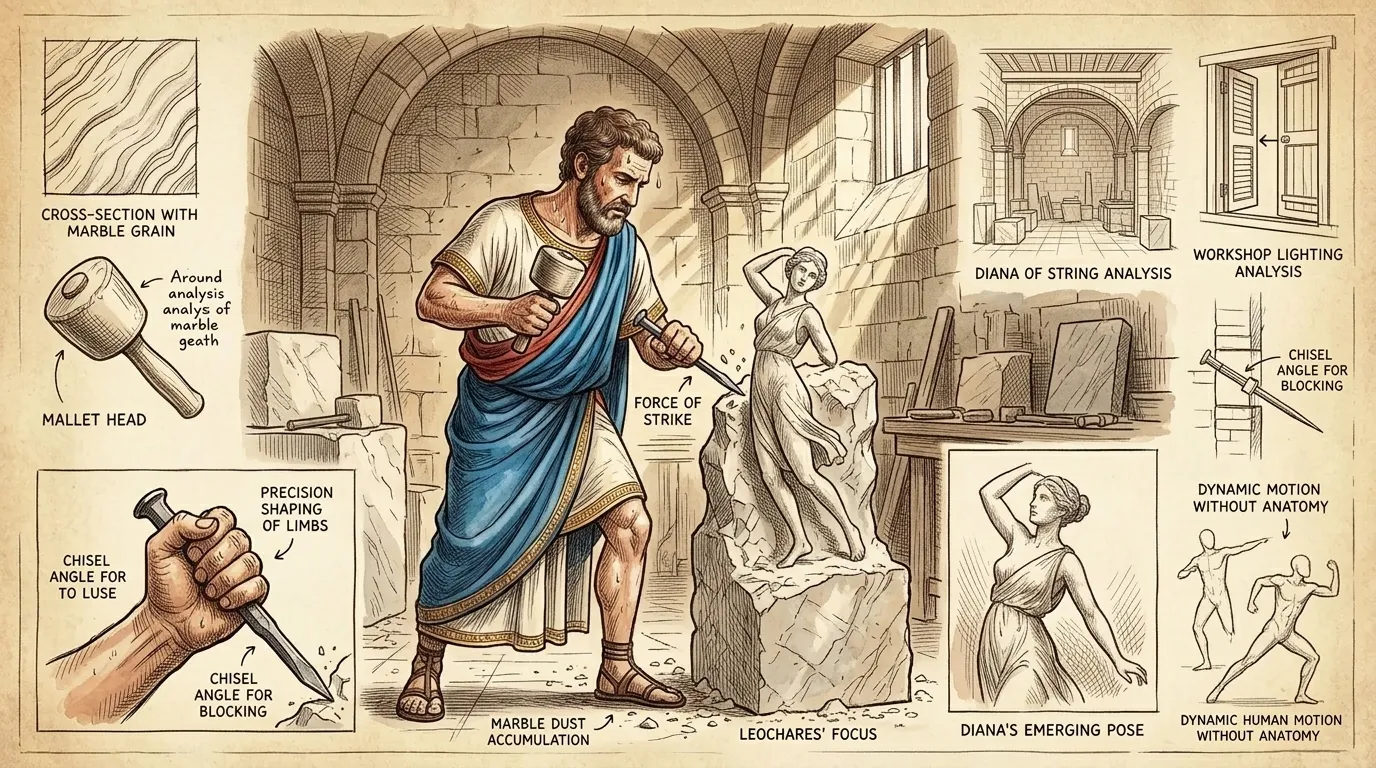
Days turned into weeks as Leochares chipped away at the marble. Each strike of the chisel brought Diana closer to life. He strove to capture the moment, the kairos.
"Leochares, sweat dripping from his brow, said between focused breaths, "The marble resists, but the goddess yields. Soon, her form will emerge.""
Art Fact: Sculpting marble was a laborious and demanding process, requiring immense skill and patience.
Page 8
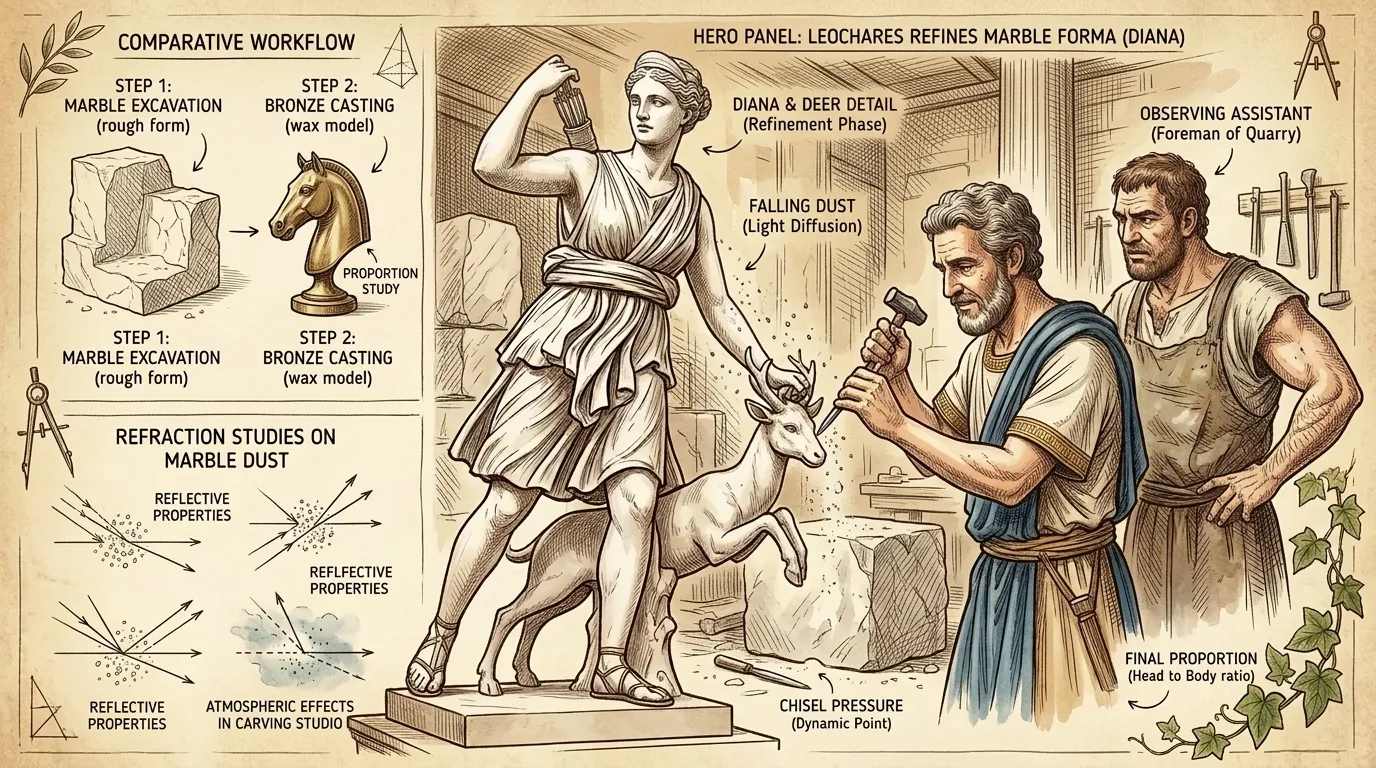
Though the original was bronze, this Roman copy recreates the statue in Marble. She reaches to remove an arrow from her quiver. The deer is small and close to her, looking up.
"The foreman commented, "Careful now. Each touch of the chisel must honor her grace. It's a noble thing to be working on,""
Art Fact: Sculpting marble was a laborious and demanding process, requiring immense skill and patience.
Page 9
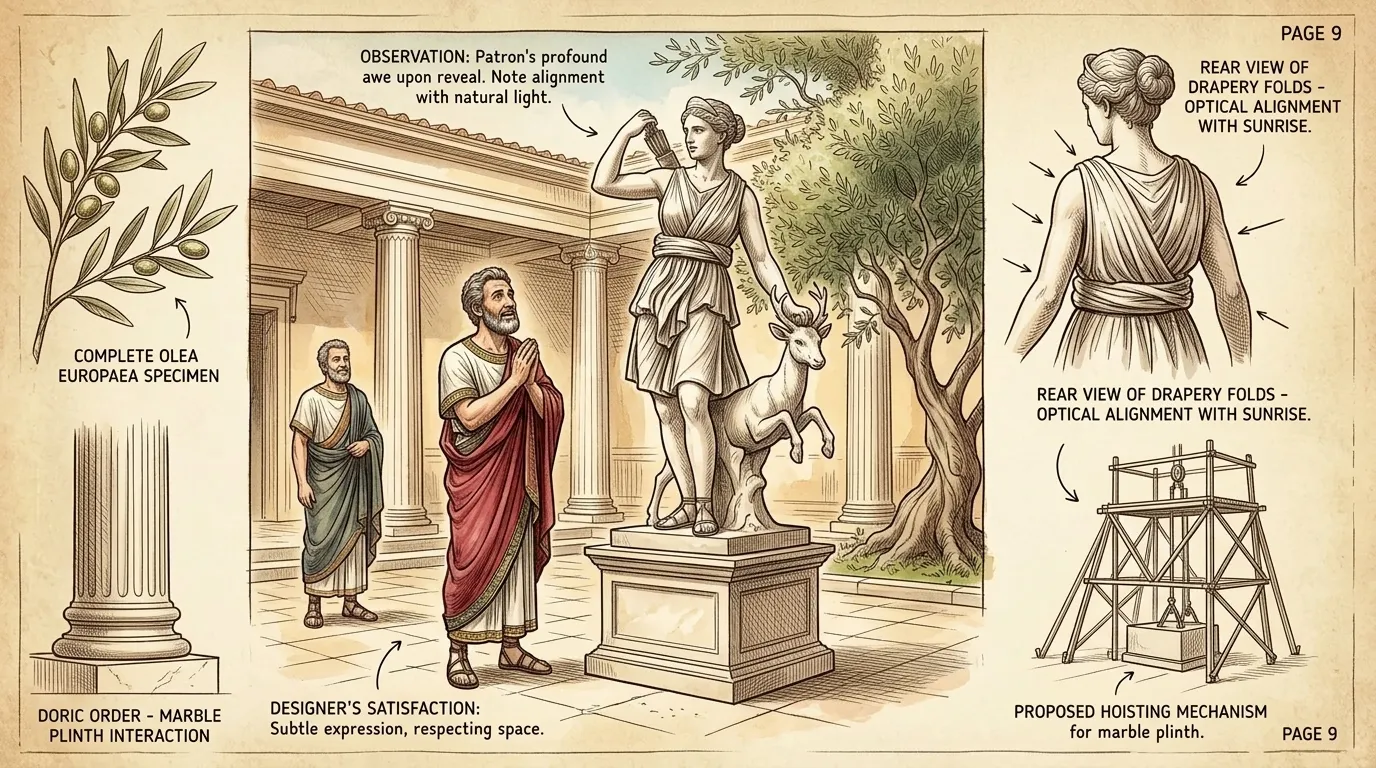
Finally, after months of tireless work, 'Diana of Versailles' was complete. The patron was awestruck.
"The Patron, gazing upon the finished statue, breathed, "Magnificent! You have captured not just her beauty, but her essence. As Aristotle said, 'The aim of art is to represent not the outward appearance of things, but their inward significance.'""
Art Fact: The statue was placed in the villa of the Patron, where it was admired for generations.
Page 10
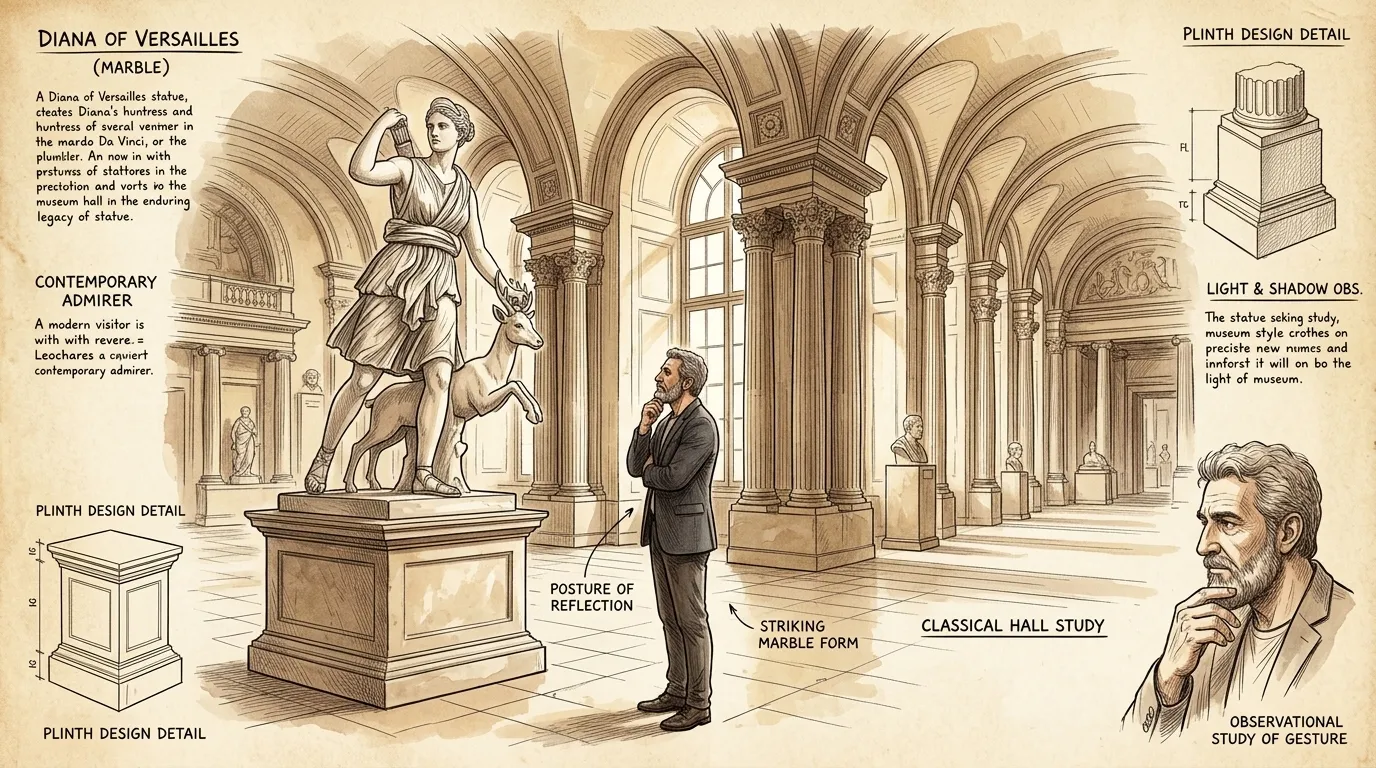
Centuries passed, and 'Diana of Versailles' found its home in the Louvre Museum. Her story, whispered through the ages, continues to inspire. Leochares' vision, immortalized in marble, survives forever.
"A modern visitor murmured, "She is timeless. The spirit of the huntress, forever young.""
Art Fact: 'Diana of Versailles' remains one of the most iconic sculptures from the ancient world, a testament to Leochares' genius and the enduring power of classical art.
About this story
- Location: France
- Audience: general readers
Questions and answers
Questions and answers about Diana of Versailles by Leochares (Paris, France — c. 325 BC)
Read Wonder Arts on your phone
Wonder Arts is available on Android. Get Wonder Arts on Google Play.
More Wonder Arts stories
- Discobolus by Myron (Rome, Italy — c. 460 BC)
- Doge’s Palace (Venice, Italy — 1340)
- Don Giovanni by Wolfgang Amadeus Mozart (Prague — 1787)
- Don Quixote by Miguel de Cervantes (Madrid, Spain — 1605)
- Dutch Golden Age by various masters (Netherlands — c. 1620)
- Ecstasy of Saint Teresa by Gian Lorenzo Bernini (Rome, Italy — 1652)