Don Giovanni by Wolfgang Amadeus Mozart (Prague — 1787)
Don Giovanni by Wolfgang Amadeus Mozart (Prague — 1787) — an illustrated arts story. 10 illustrated pages, free to read on Wonder Arts.
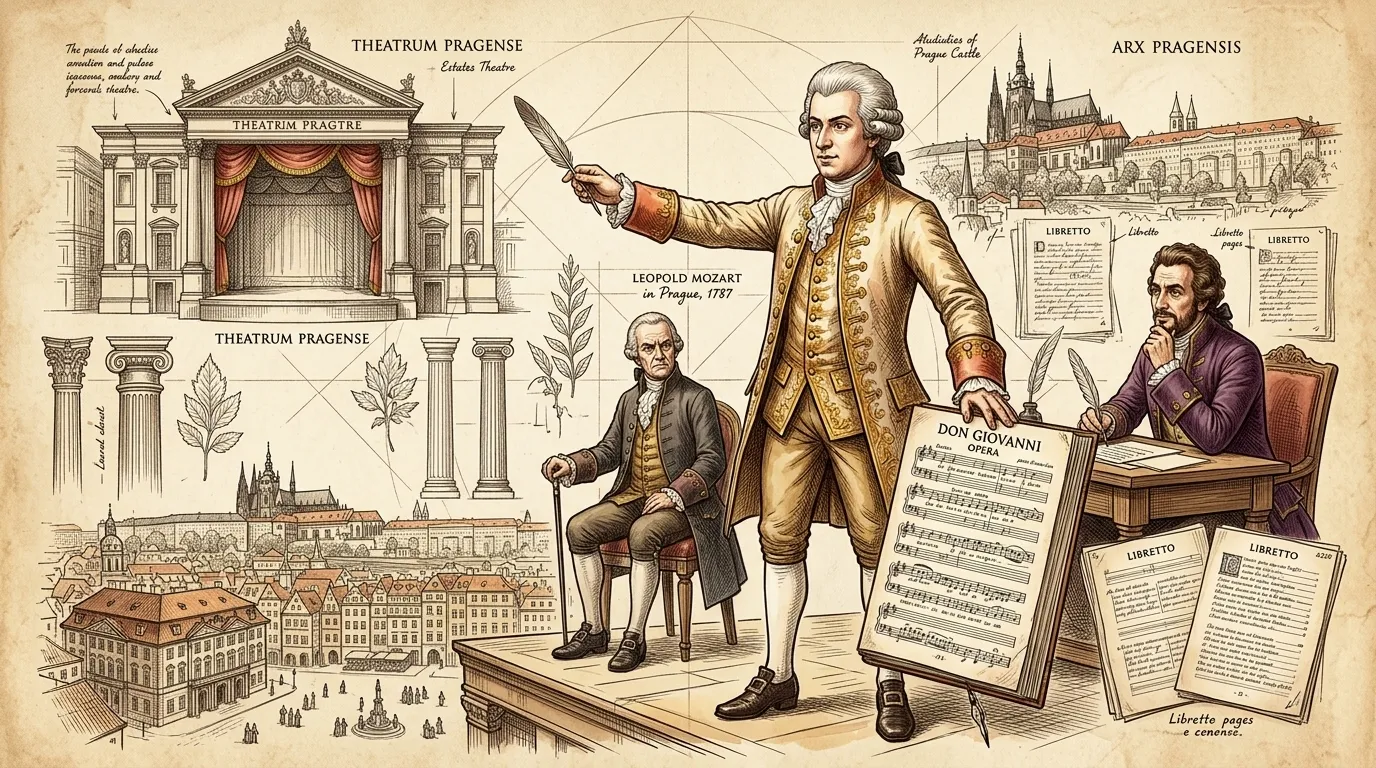
Page 1
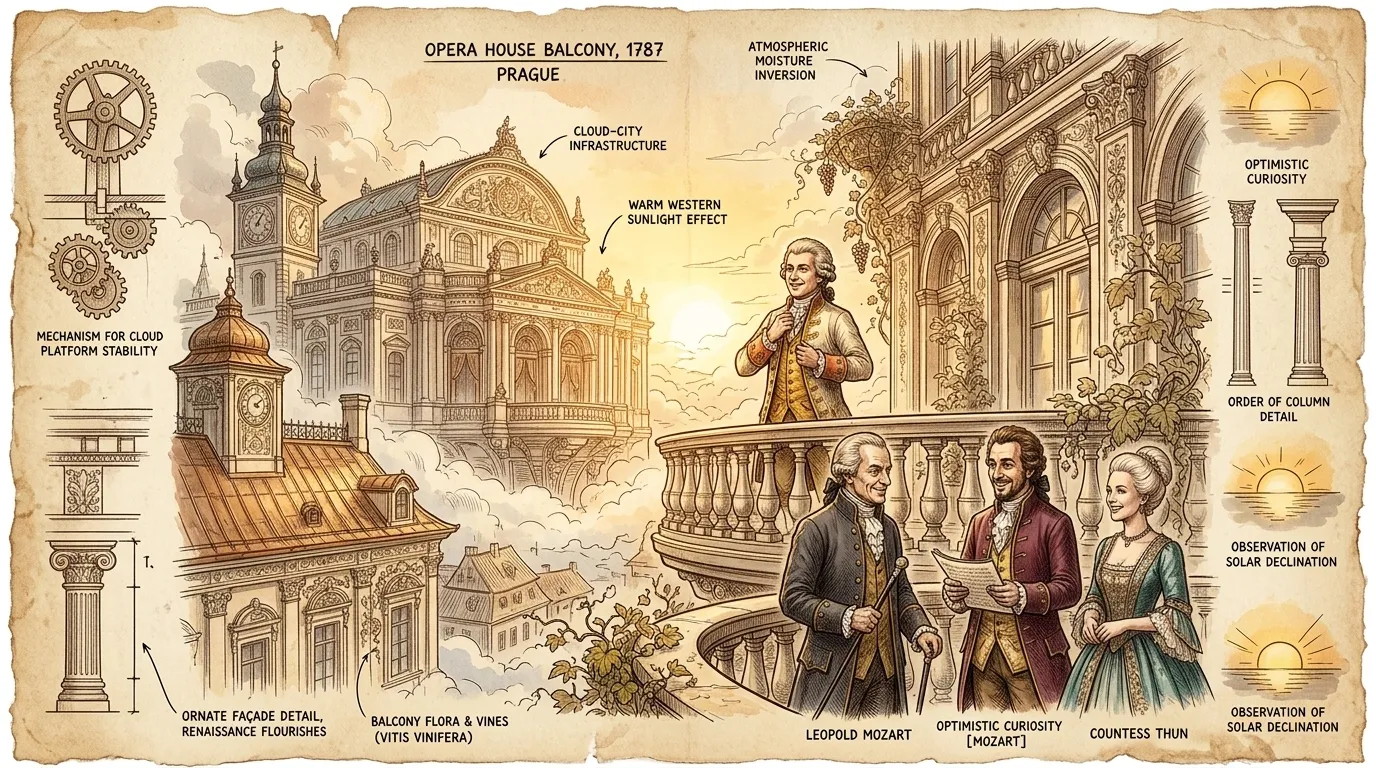
Wolfgang Amadeus Mozart, at 31, gazes upon the first performance of his opera, Don Giovanni, in the cloud-city of Prague, 1787. The ethereal opera house shimmers, a beacon in the sky. He feels the weight of expectation, the culmination of months of frenzied work.
""Tonight, Prague, we shall witness something truly extraordinary," Mozart murmurs, adjusting his cravat. "An opera that dances between heaven and hell.""
Art Fact: Don Giovanni, K. 527, premiered in Prague on October 29, 1787. Mozart considered it a 'dramma giocoso,' a blend of opera seria and opera buffa. The opera is valued at over 30 million today and is performed globally.
Page 2
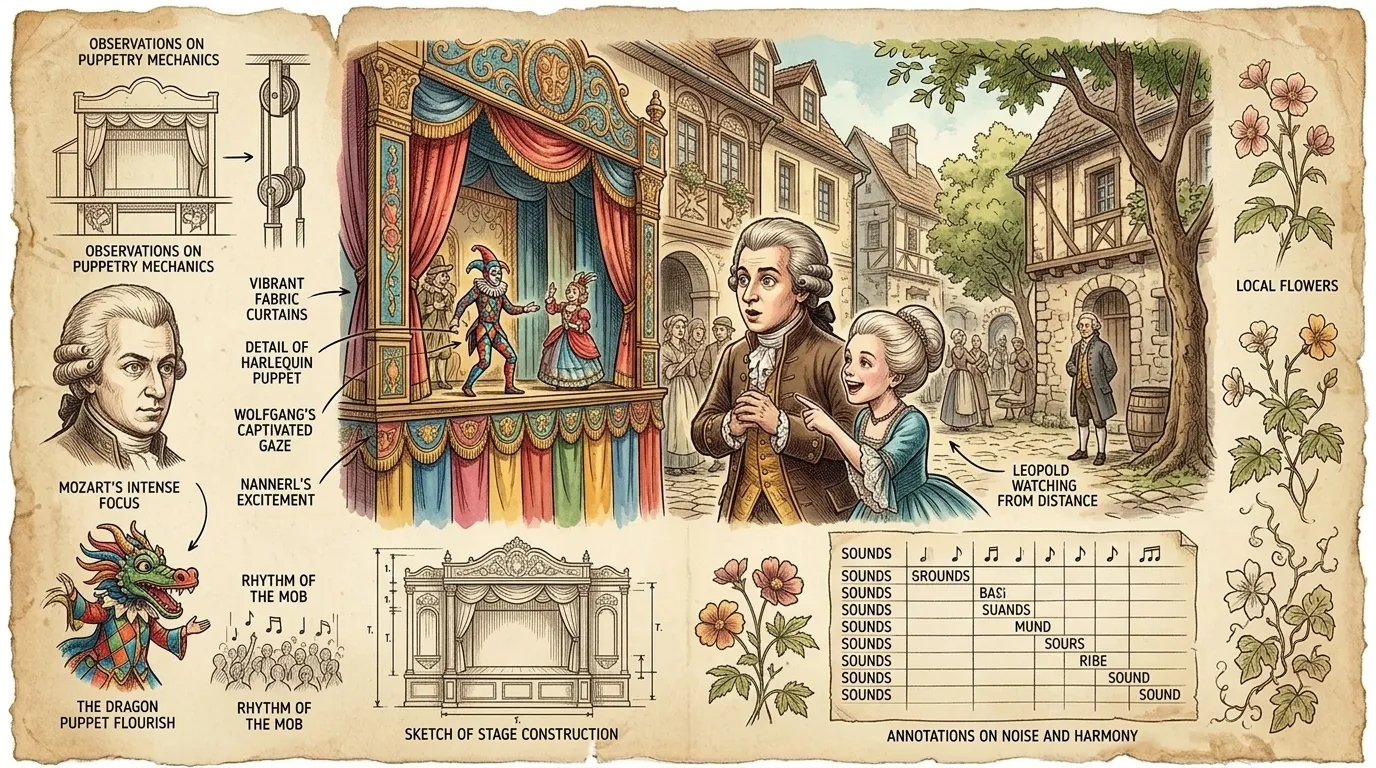
Young Mozart, a child prodigy in Salzburg, stumbles upon a traveling puppet show. The tale of Don Juan, a legendary womanizer, unfolds before his wide eyes. The seeds of inspiration are sown, mingling with the melodies already swirling in his mind.
""Look, Wolfgang!" his sister Nannerl exclaims, pointing to the stage. "That rogue, Don Juan, is at it again!""
Art Fact: The story of Don Juan has been interpreted by numerous artists, including Molière, Tirso de Molina, and Lord Byron. Mozart's opera is considered one of the most definitive interpretations.
Page 3
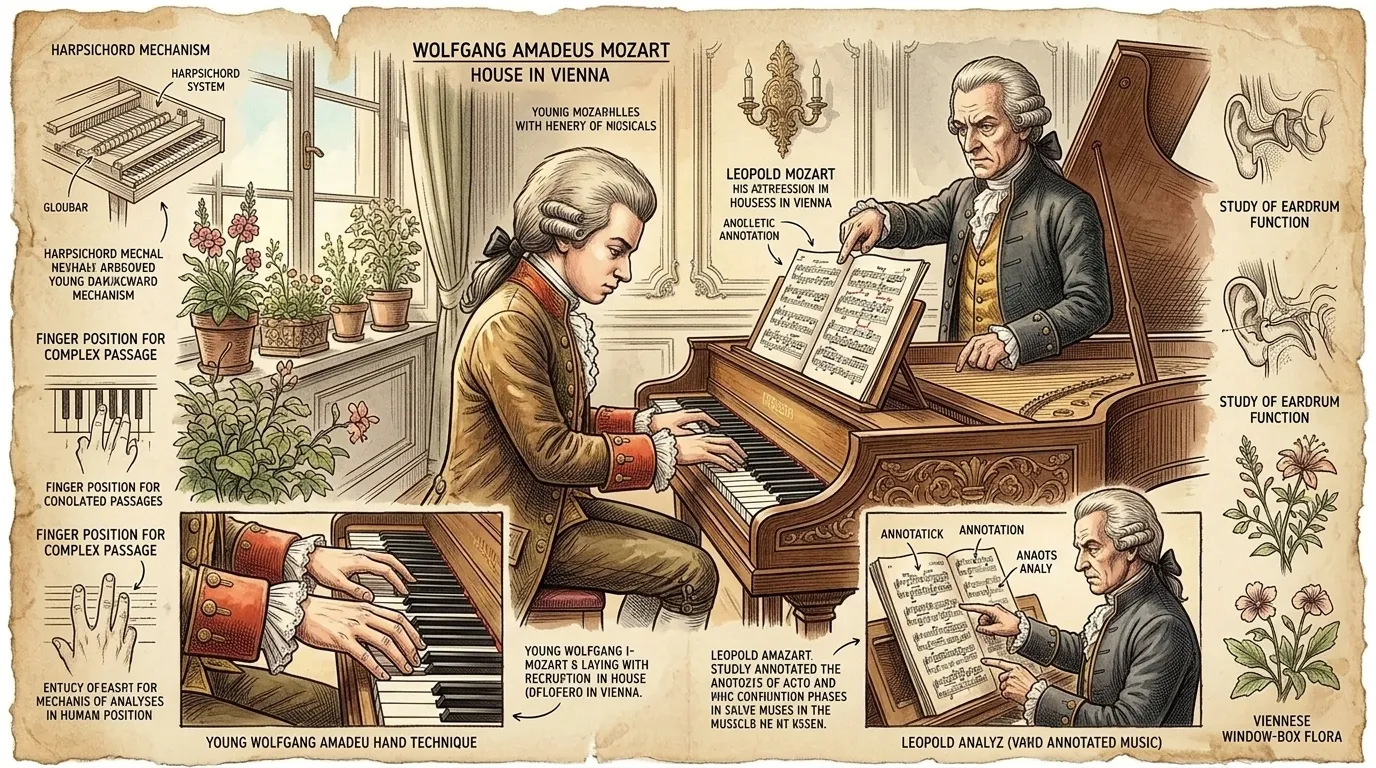
Mozart's father, Leopold, a stern taskmaster, pushes him relentlessly. Practice, theory, composition—the young genius chafes under the pressure. Yet, Leopold's discipline lays the groundwork for Mozart's extraordinary technique.
""Wolfgang, again!" Leopold booms, his voice echoing through the practice room. "That allegro must be crisper, more precise!""
Art Fact: Leopold Mozart was a composer and violinist himself. He recognized his son's genius early and dedicated his life to nurturing it.
Page 4
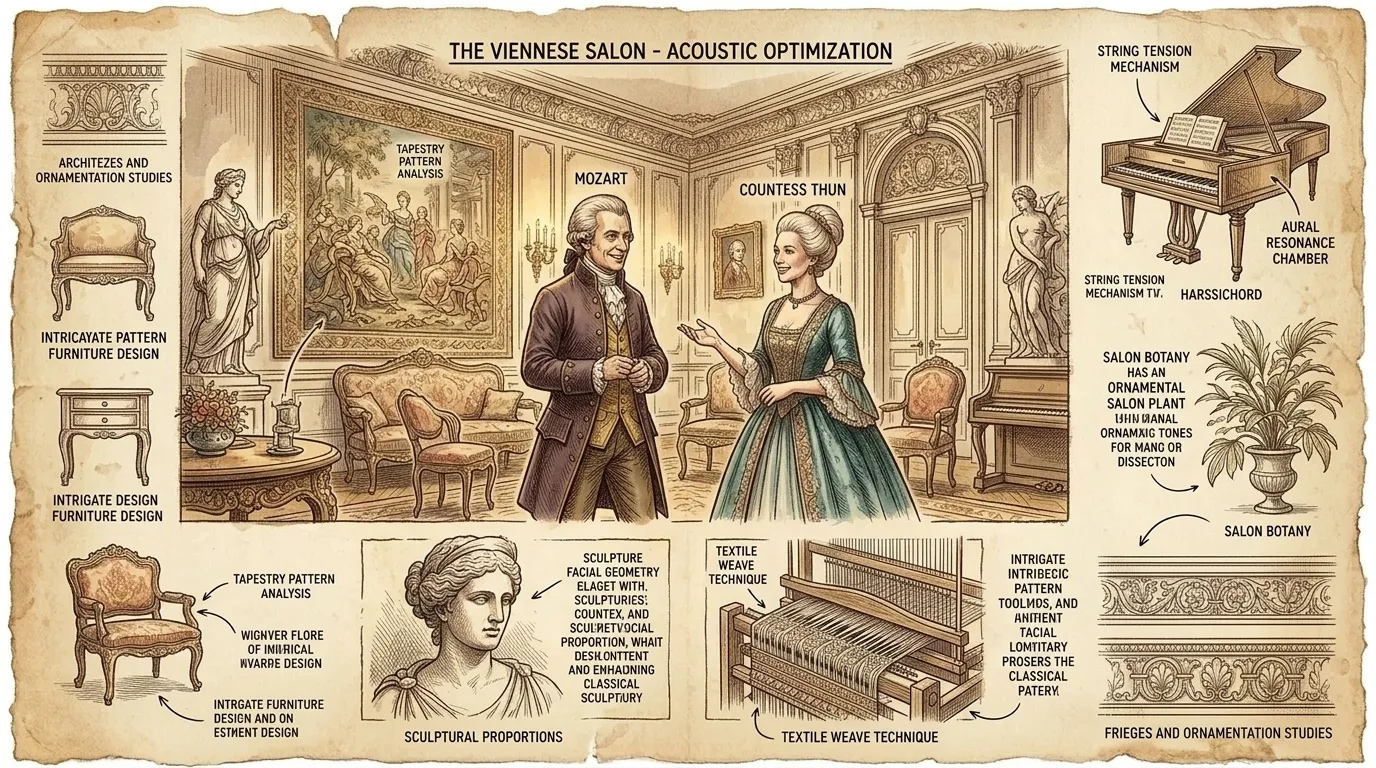
In Vienna, Mozart secures the patronage of Countess Thun. She commissions operas, offers support, and introduces him to the city's elite. Her influence provides the financial stability he desperately needs.
""Herr Mozart," the Countess says, her voice smooth as silk, "your talent is undeniable. I shall see to it that Vienna recognizes your genius.""
Art Fact: Countess Thun was a prominent figure in Viennese society and a passionate supporter of the arts. Her patronage was crucial to Mozart's early success.
Page 5
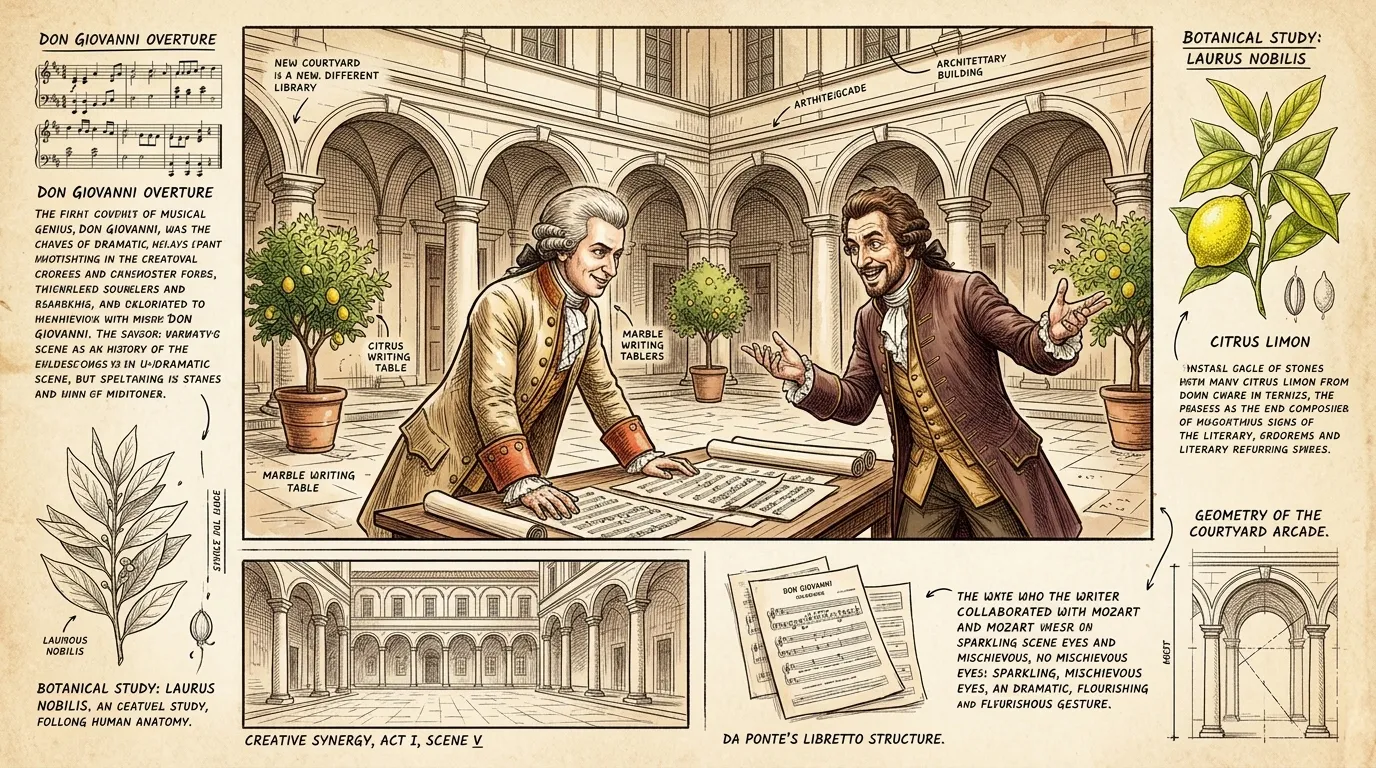
Lorenzo Da Ponte, a charismatic and scandalous librettist, becomes Mozart's collaborator. Da Ponte's words spark Mozart's imagination, shaping the complex characters and dramatic plot of Don Giovanni.
""Wolfgang, my dear friend!" Da Ponte exclaims, his eyes twinkling. "I have crafted a tale of seduction, betrayal, and divine retribution. It will be magnificent!""
Art Fact: Lorenzo Da Ponte also wrote the libretti for Mozart's The Marriage of Figaro and Così fan tutte. His scandalous life often mirrored the characters he created.
Page 6

The death of the Commendatore, Don Giovanni's victim, haunts Mozart's opera. The ghostly statue, a symbol of divine justice, terrifies the libertine. Mozart channels his own anxieties into this chilling figure.
""The Commendatore..." Mozart whispers, a shiver running down his spine. "He represents the inescapable consequences of our actions.""
Art Fact: The Commendatore's entrance in the final act is one of the most dramatic and terrifying moments in opera. It represents the ultimate reckoning for Don Giovanni's sins.
Page 7
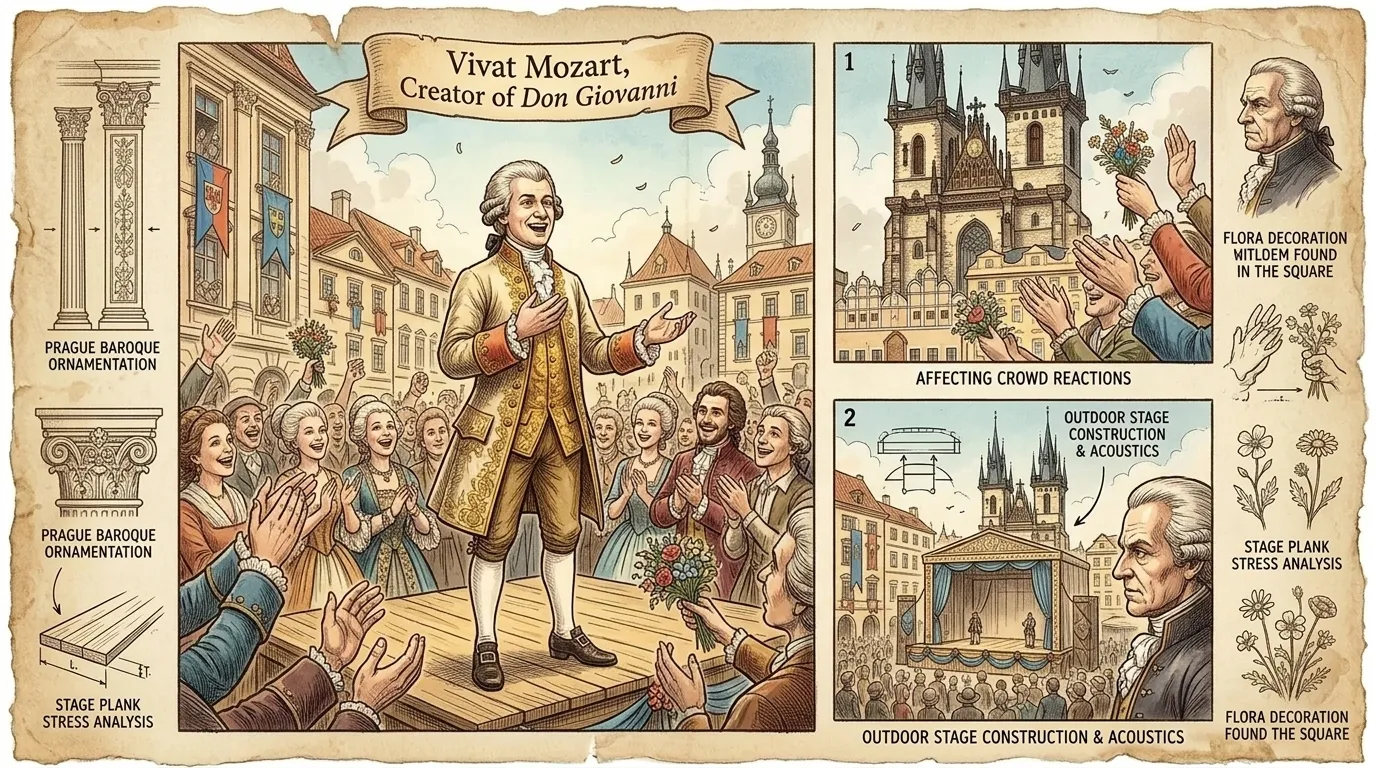
Prague embraces Mozart and his opera with open arms. The city's audiences, weary of predictable dramas, crave innovation and passion. Their enthusiasm fuels Mozart's creativity.
""Prague understands me," Mozart exclaims, his face beaming. "They appreciate the depth and complexity of my music.""
Art Fact: Prague was the first city to truly appreciate Mozart's genius. The Marriage of Figaro was a smash hit there before it found success in Vienna.
Page 8
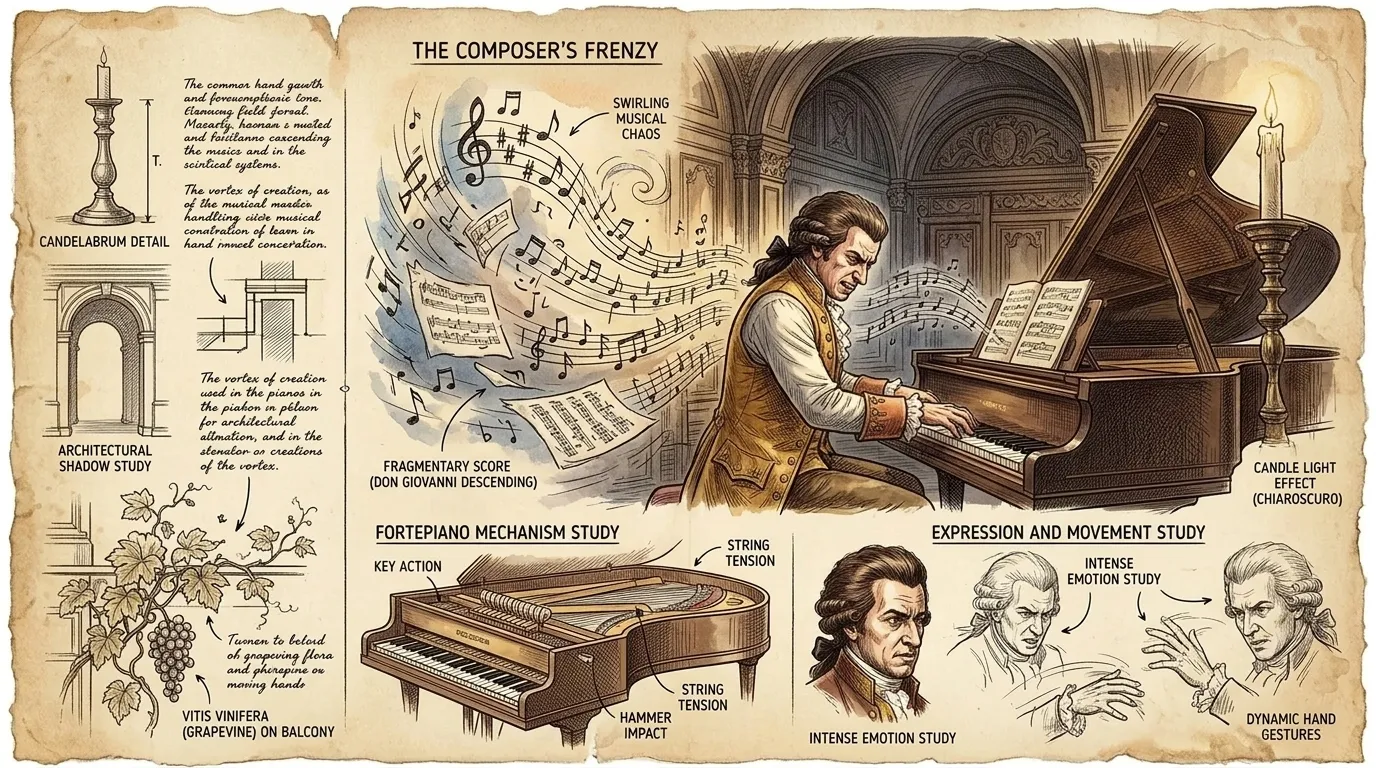
Mozart composes the final scene of Don Giovanni, the descent into hell. The music is wild, chaotic, and terrifying. He pushes himself to the brink, channeling the darkest corners of human experience.
""This music...it consumes me!" Mozart cries out, his hands flying across the keys. "It is the sound of damnation!""
Art Fact: The descent into hell is considered one of the most powerful and innovative scenes in opera. It represents the ultimate consequence of Don Giovanni's immoral life.
Page 9
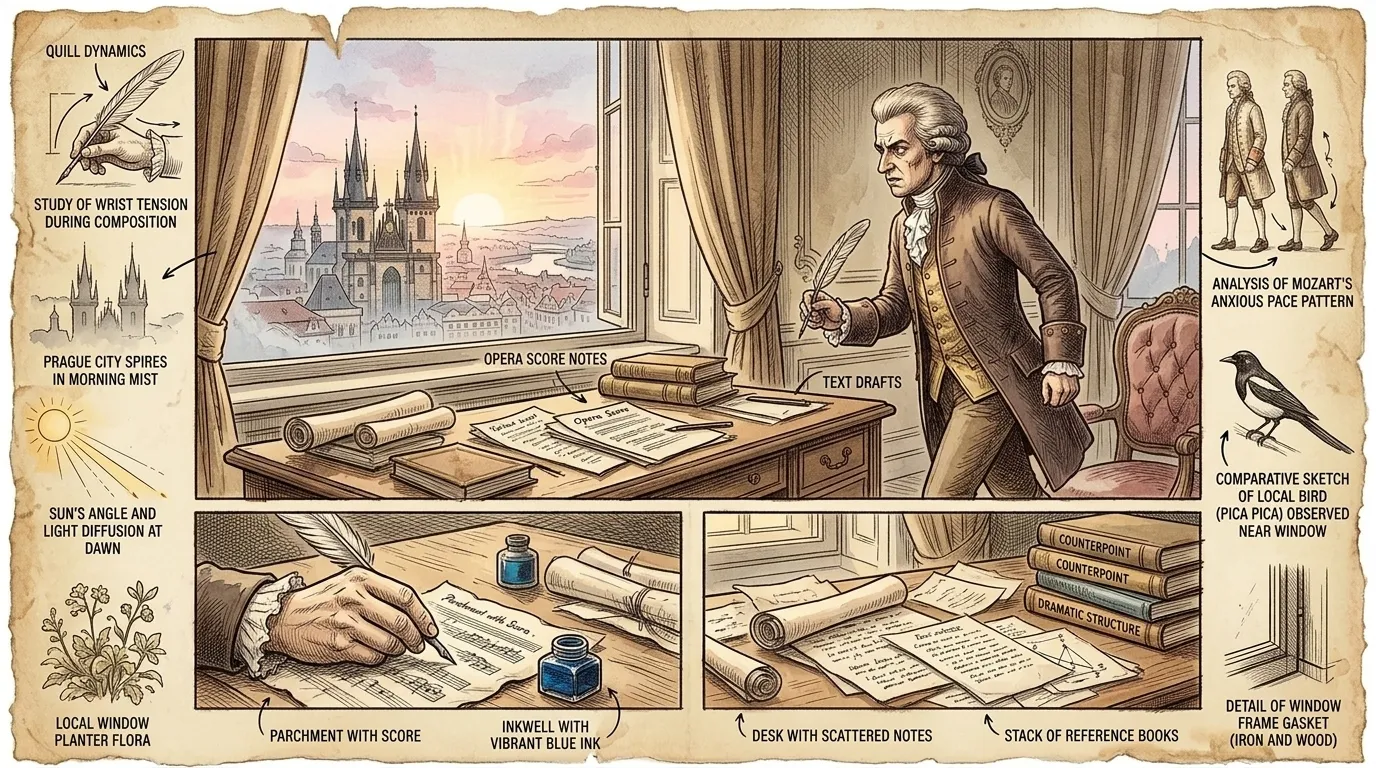
On the eve of the premiere, Mozart is plagued by anxiety. Will Prague embrace his new opera? Will the audience understand his vision? He remembers the words of Seneca: "Every new beginning comes from some other beginning's end."
""Will they understand?" Mozart asks himself, pacing the floor. "Seneca said, 'Every new beginning comes from some other beginning's end.' But what if this is just...an end?""
Art Fact: Mozart often suffered from bouts of anxiety and self-doubt, despite his immense talent. He was driven by a constant need to create and innovate.
Page 10
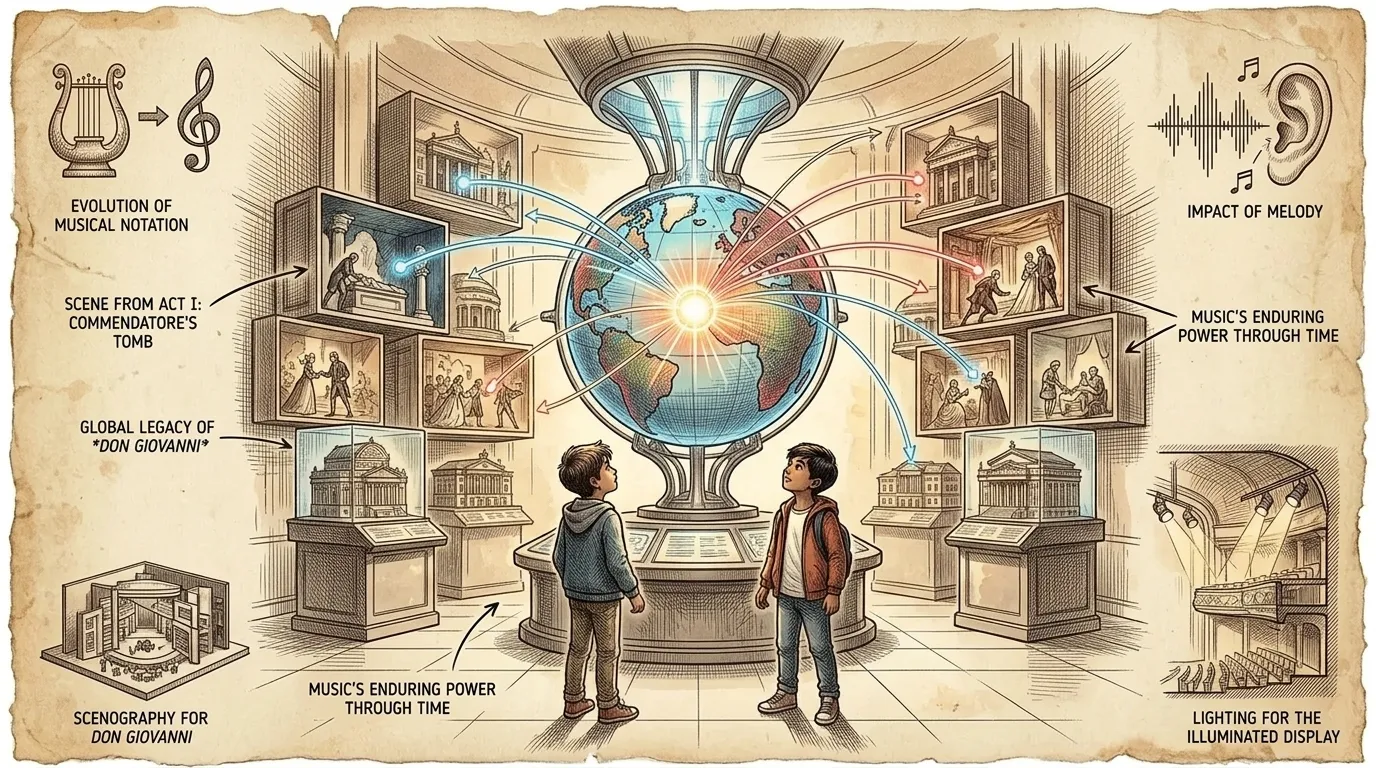
Today, Don Giovanni continues to captivate audiences worldwide. Mozart's genius transcends time and space, his music echoing through the ages. His exploration of morality, seduction, and divine justice remains eternally relevant.
"Centuries later, Tao and Vivaan reflect on the lasting legacy of Don Giovanni."
Art Fact: Don Giovanni is performed in opera houses around the world every year. It remains one of Mozart's most popular and enduring works.
About this story
- Audience: general readers
Questions and answers
Questions and answers about Don Giovanni by Wolfgang Amadeus Mozart (Prague — 1787)
Read Wonder Arts on your phone
Wonder Arts is available on Android. Get Wonder Arts on Google Play.
More Wonder Arts stories
- Don Quixote by Miguel de Cervantes (Madrid, Spain — 1605)
- Dutch Golden Age by various masters (Netherlands — c. 1620)
- Ecstasy of Saint Teresa by Gian Lorenzo Bernini (Rome, Italy — 1652)
- Eiffel Tower (Paris, France — 1889)
- Eine kleine Nachtmusik by Wolfgang Amadeus Mozart (Vienna, Austria — 1787)
- Empire State Building (New York City, USA — 1931)