Dutch Golden Age by various masters (Netherlands — c. 1620)
Dutch Golden Age by various masters (Netherlands — c. 1620) — an illustrated arts story. 10 illustrated pages, free to read on Wonder Arts.

Page 1
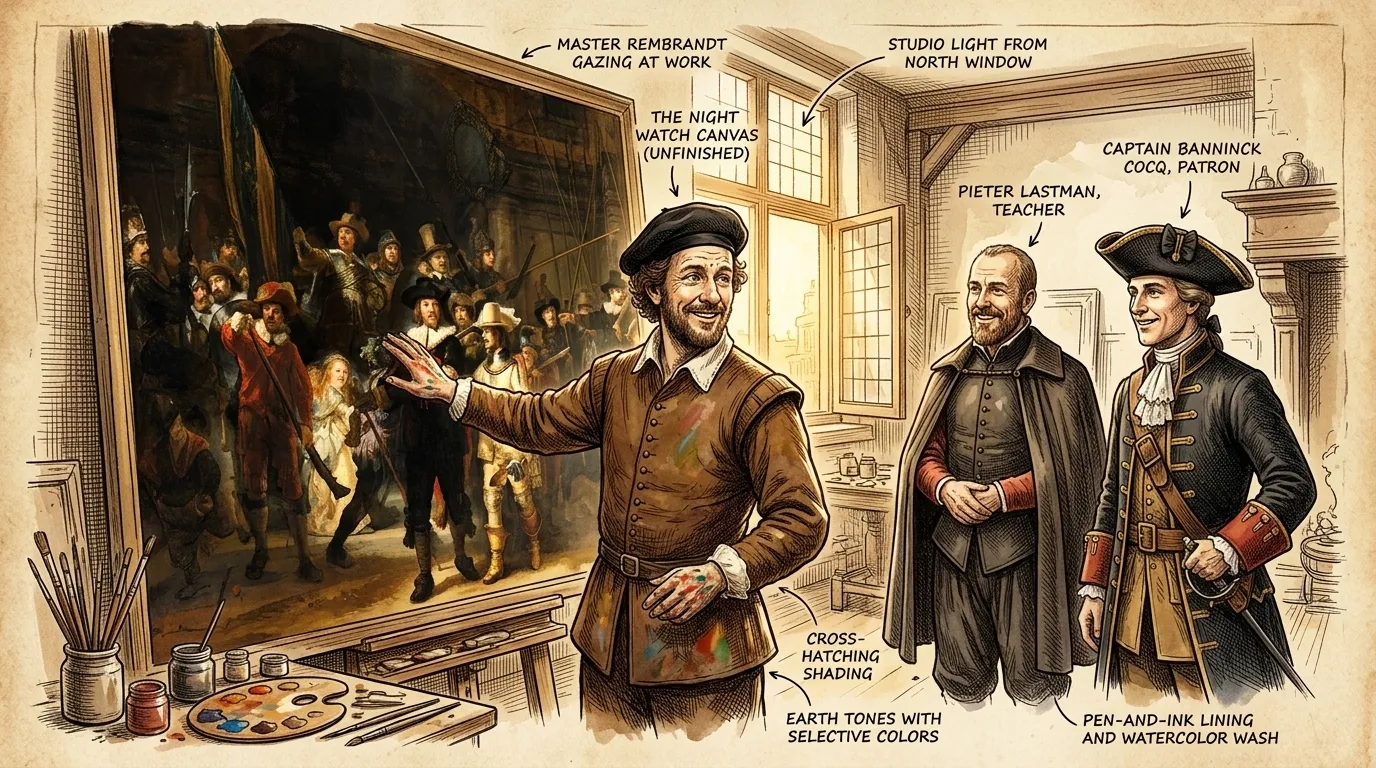
Rembrandt van Rijn stands bathed in the soft light of his Amsterdam studio, gazing upon his masterpiece, 'The Night Watch.' Completed in 1642, this monumental painting—measuring approximately 12 x 17 feet—captures the militia company of Captain Frans Banninck Cocq and Lieutenant Willem van Ruytenburch. Its dramatic composition and masterful use of light and shadow, or chiaroscuro, revolutionized group portraiture. One extraordinary fact: the painting was originally much larger, but it was trimmed on all sides in 1715 to fit its new location, losing several figures in the process.
""This is more than just a portrait, gentlemen," Rembrandt murmurs, running a paint-stained hand along the canvas. "It is a story, a drama unfolding before your very eyes.""
Art Fact: Rembrandt's 'The Night Watch' is currently housed in the Rijksmuseum in Amsterdam, Netherlands. Its official inventory number is SK-C-5.
Page 2
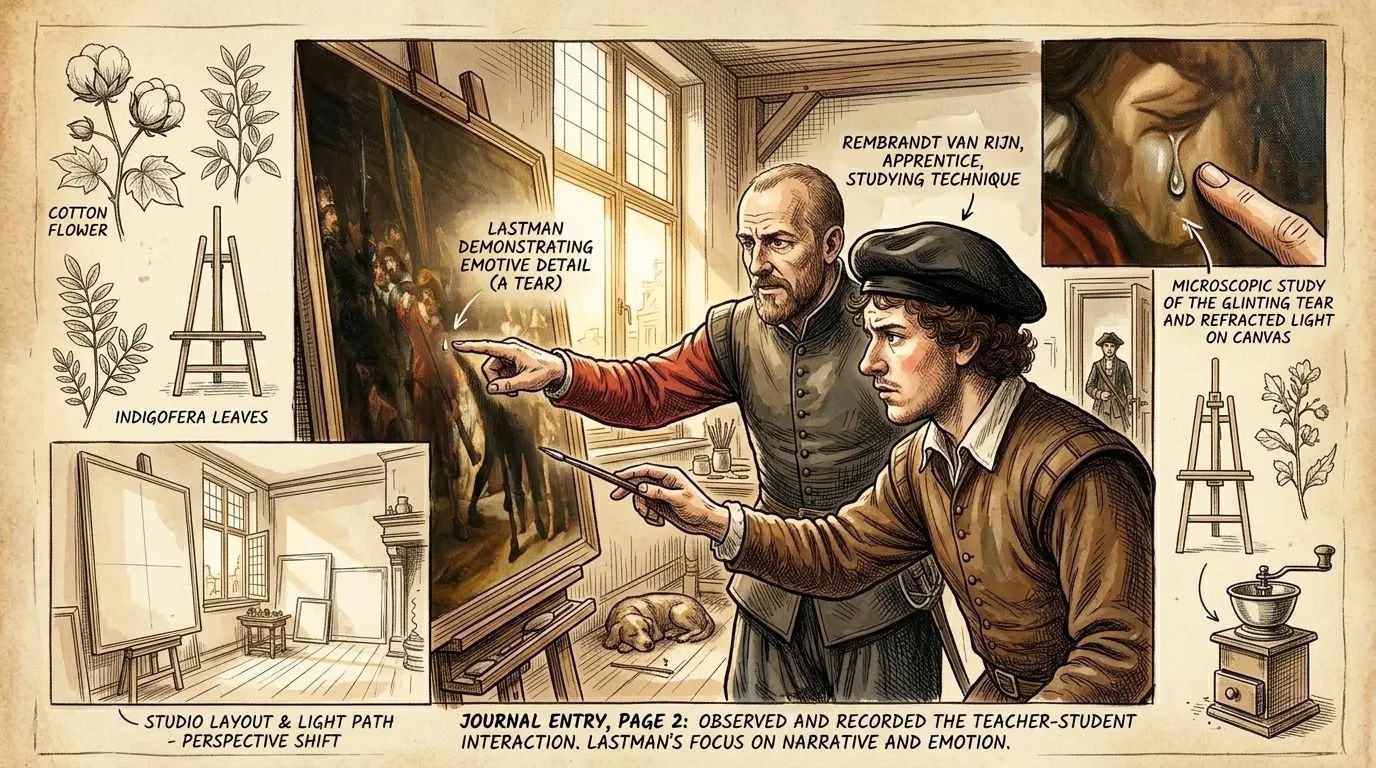
A young Rembrandt apprentices under Pieter Lastman in Amsterdam. Lastman, a master of historical painting, emphasizes dramatic storytelling and rich detail. Rembrandt carefully studies Lastman's techniques, learning to convey emotion through gesture and expression. He observes how Lastman uses light to create depth and focus. This would influence his own style immensely.
"Pieter Lastman points to a figure in his latest painting. "Observe, Rembrandt," he says, his voice echoing in the studio, "the way the light catches the tears on her face. It is in the details that the truth resides. Remember, my boy observation is key.""
Art Fact: Pieter Lastman was a significant influence on Rembrandt's early development, teaching him the fundamentals of composition and storytelling.
Page 3
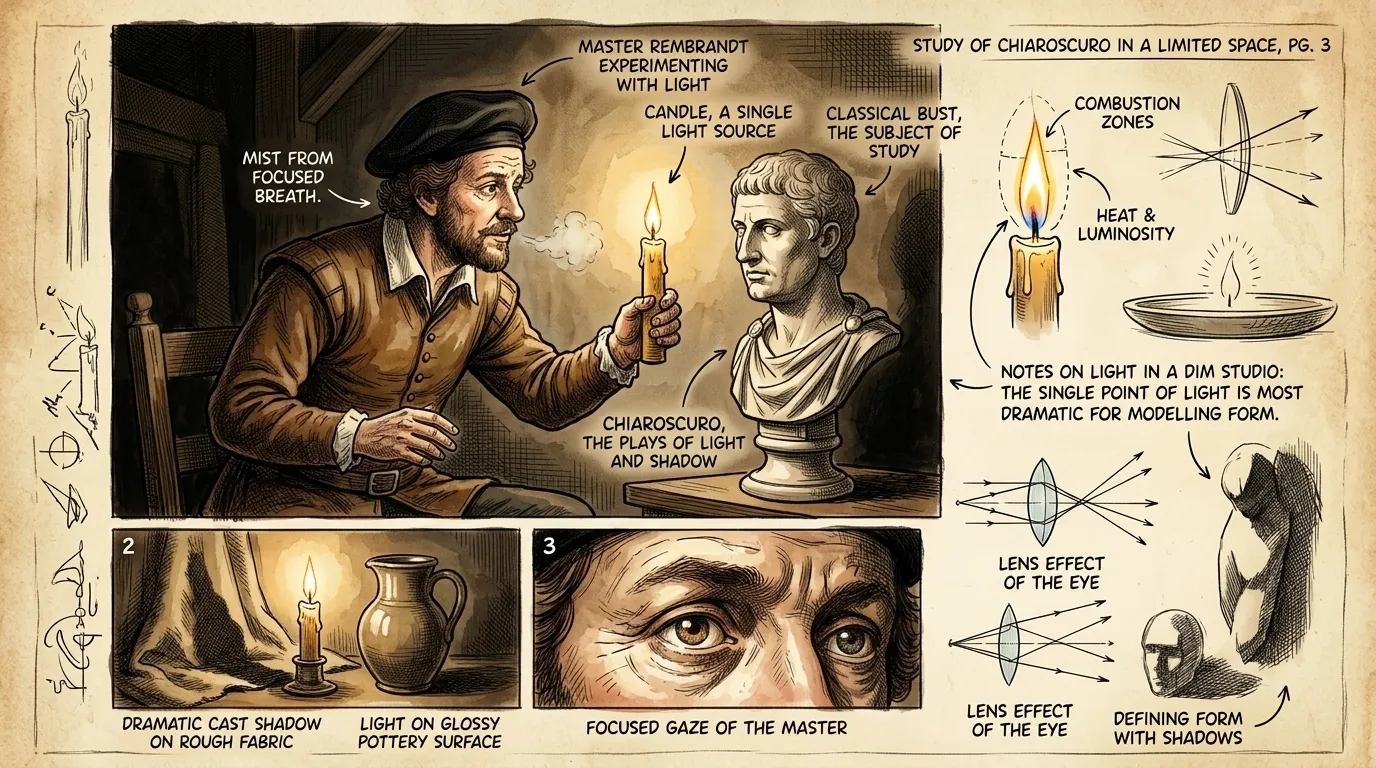
Rembrandt experiments with dramatic lighting effects in his early works. He studies Caravaggio's tenebrism, fascinated by the stark contrast between light and shadow. In a dimly lit room, he uses a single candle to illuminate a model, observing how the light sculpts the face and creates depth. This exploration of light becomes a hallmark of his style.
""Light," Rembrandt mutters to himself, his breath fogging slightly in the cold air. "It is the soul of the painting, the very essence of life itself. As Leonardo da Vinci said, 'Painting embraces all the ten functions of the eye; that is to say, darkness, light, body and colour, form and situation, distance and nearness, motion and rest.'""
Art Fact: Rembrandt's mastery of chiaroscuro, the use of strong contrasts between light and dark, is a defining characteristic of his work.
Page 4
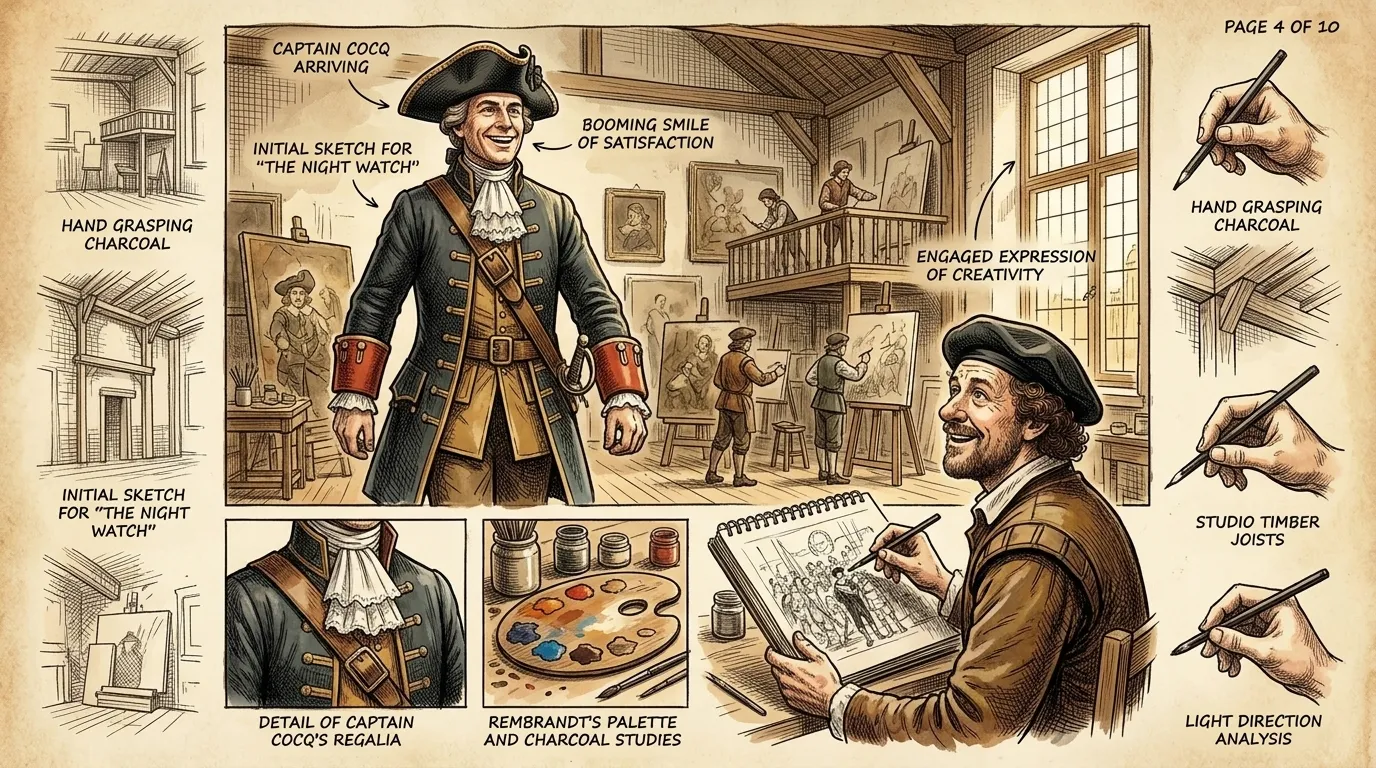
Rembrandt receives a prestigious commission from Captain Frans Banninck Cocq to paint his militia company. This is a major opportunity for the young artist, a chance to prove his talent and gain recognition. He begins sketching the members of the company, carefully planning the composition of the painting.
"Captain Banninck Cocq strides into Rembrandt's studio, his voice booming with confidence. "Rembrandt, I have heard of your talent! I wish for you to immortalize my company, a painting that shall be remembered throughout the ages.""
Art Fact: The commission for 'The Night Watch' was a significant turning point in Rembrandt's career, providing him with financial stability and widespread recognition.
Page 5
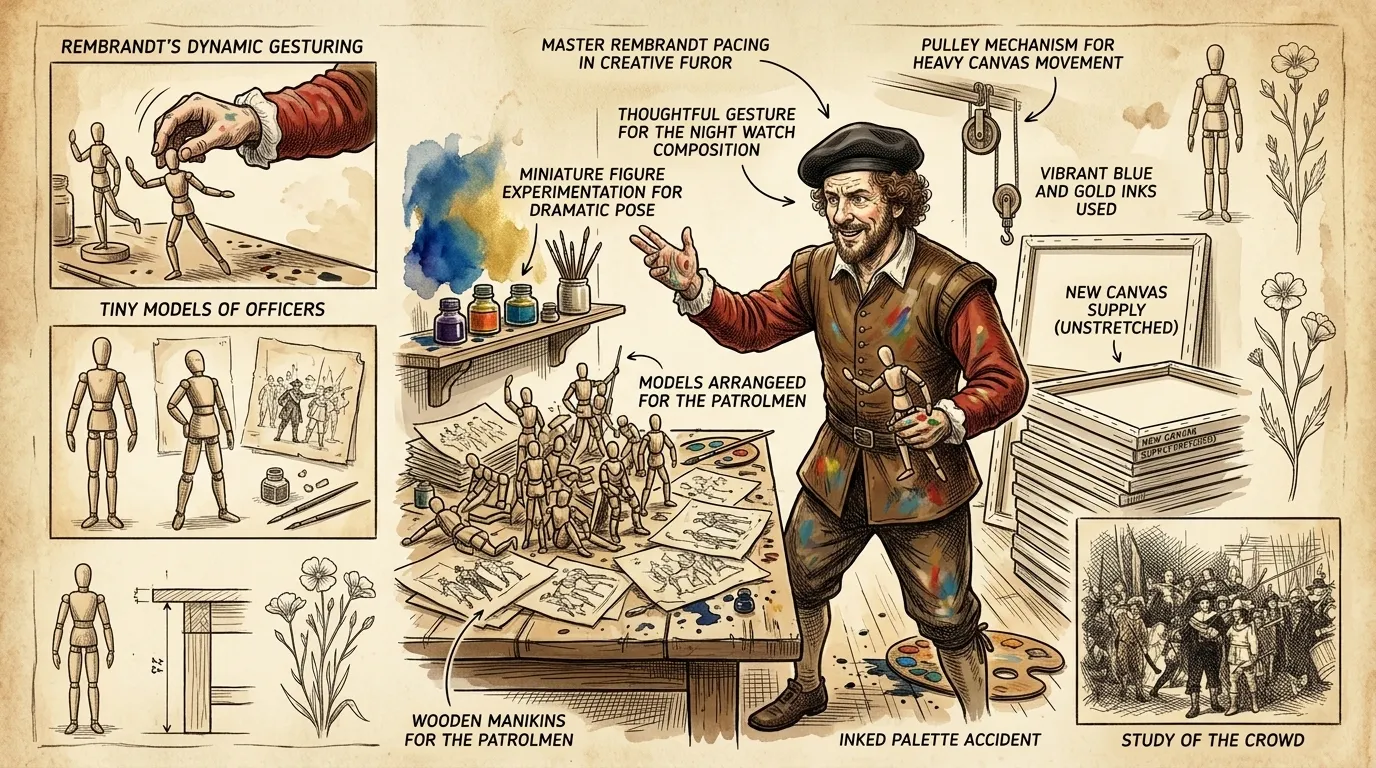
Rembrandt struggles to find the right composition for 'The Night Watch.' He wants to avoid the static, formal arrangement of traditional group portraits. He experiments with dynamic poses, gestures, and interactions between the figures, seeking to create a sense of movement and drama.
"Rembrandt paces back and forth in his studio, muttering to himself. "How to capture the energy, the spirit of these men? A simple line-up will not do. As Michelangelo said, 'I saw the angel in the marble and carved until I set him free.' I must see the story within these faces.""
Art Fact: Rembrandt's innovative approach to group portraiture challenged the conventions of his time, paving the way for a more dynamic and expressive style.
Page 6
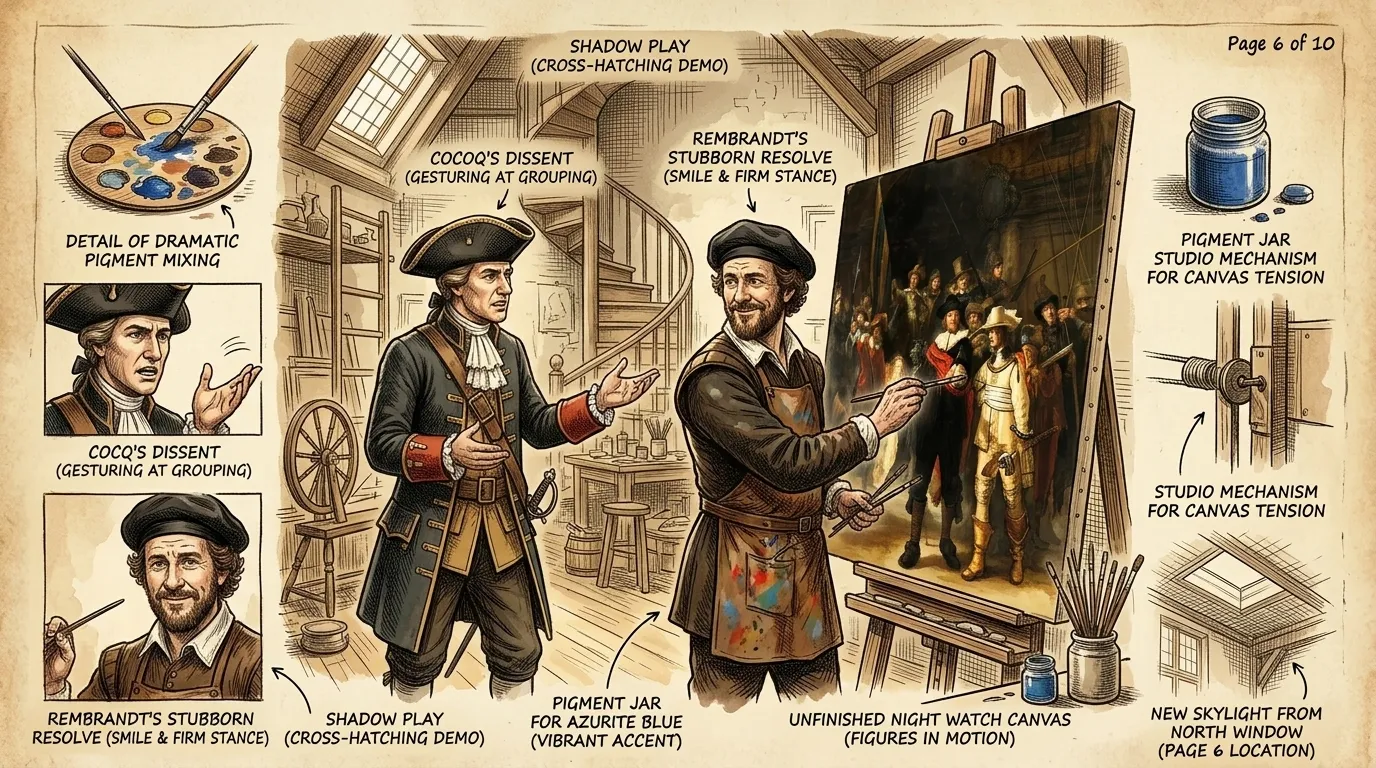
As Rembrandt works on "The Night Watch," disagreements arise with some members of the militia company. They believe the painting is too unconventional, too dramatic. They want a more traditional, flattering portrait. Rembrandt, however, refuses to compromise his artistic vision.
"A militia member says to Rembrandt, his voice tight with disapproval, "This is not what we agreed upon, Master Rembrandt! Where is the order, the dignity?" Rembrandt retorts, his tone firm, "Dignity is fleeting; truth is eternal.""
Art Fact: The controversial reception of "The Night Watch" reflects the tension between Rembrandt's innovative style and the traditional expectations of his patrons.
Page 7
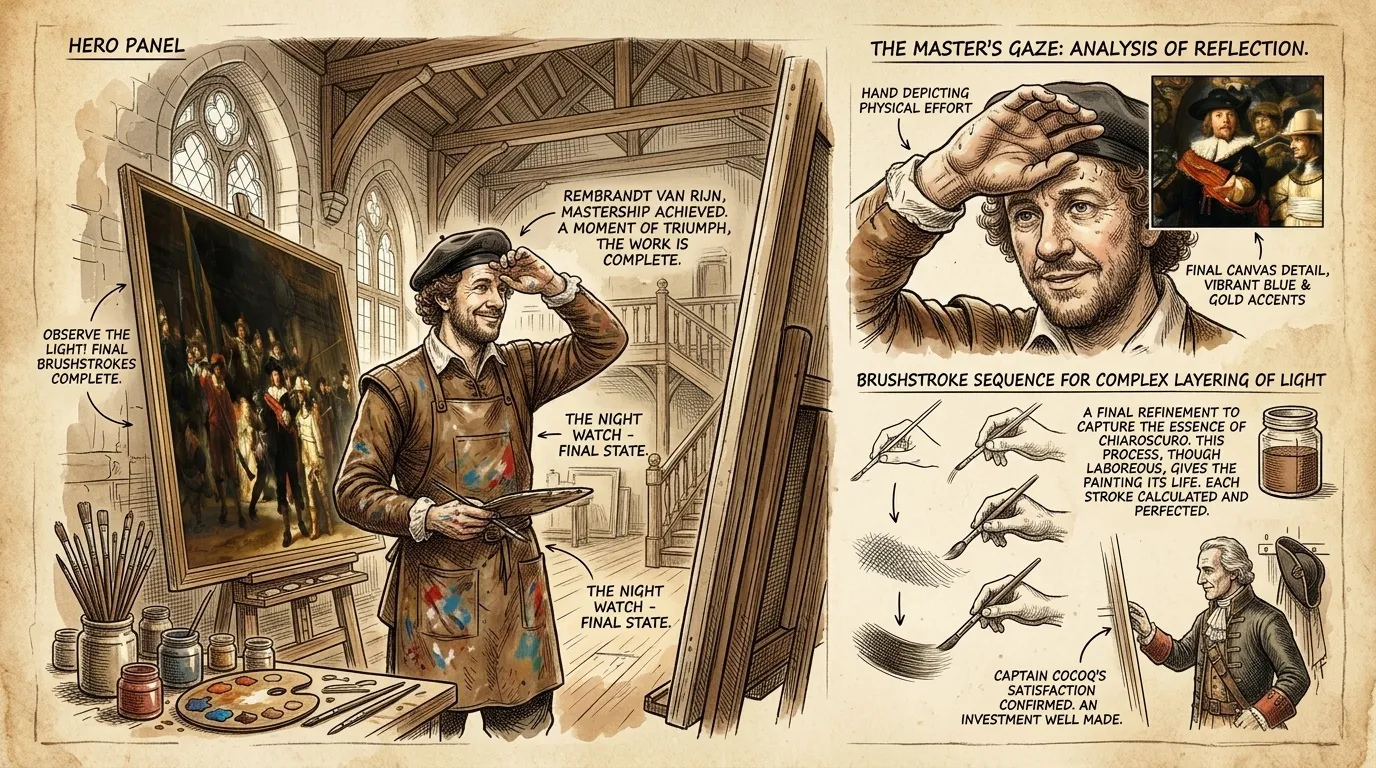
Rembrandt completes "The Night Watch," pouring all his energy and skill into the final details. He perfects the lighting, adds subtle nuances of expression to the faces, and ensures that every element of the painting contributes to the overall drama. He knows that this painting will define his legacy.
"Rembrandt whispers to himself, stepping back from the canvas, wiping sweat off his brow. "Just a touch more light here...a shadow there...and it is complete. It is finished.""
Art Fact: Rembrandt's dedication to his craft and his uncompromising artistic vision are evident in every brushstroke of "The Night Watch."
Page 8
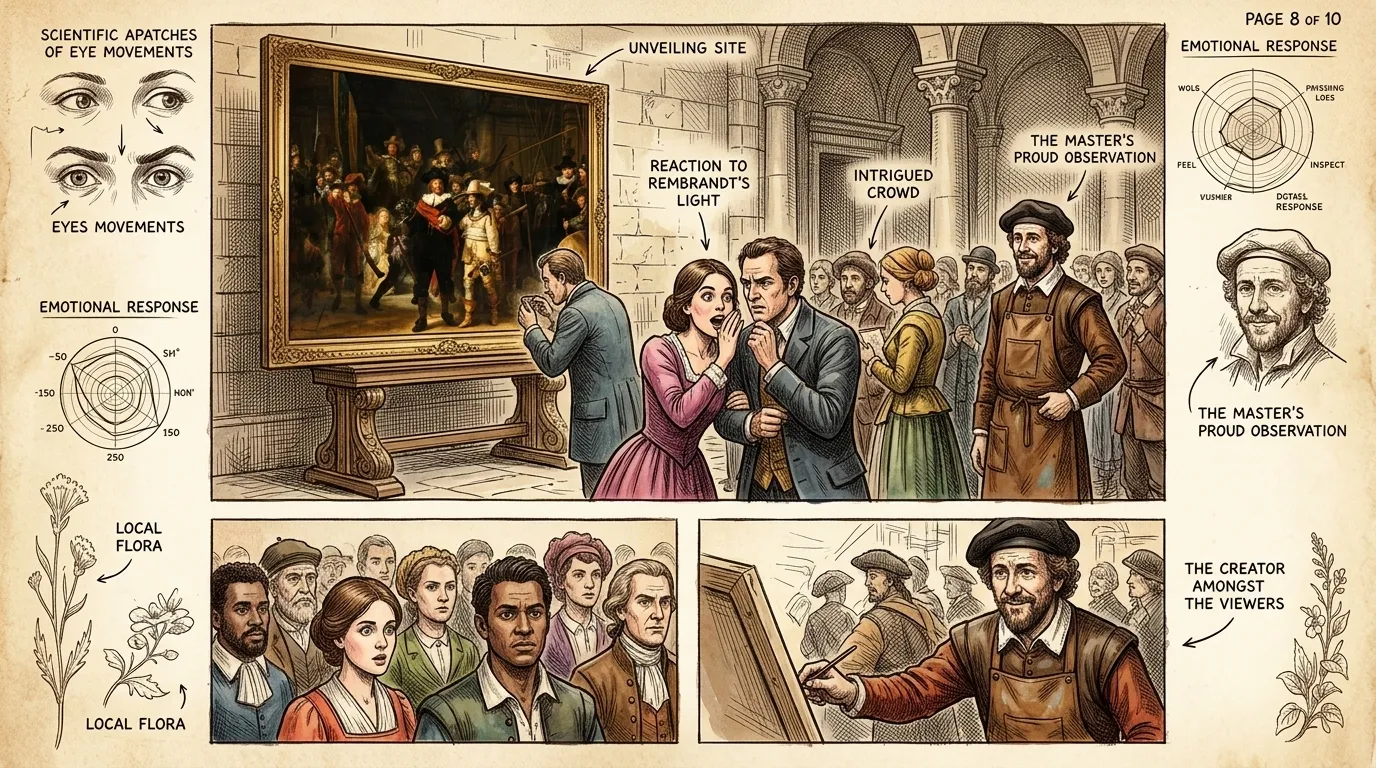
The Night Watch is unveiled to the public, and reactions are mixed. Some admire Rembrandt's innovative composition and dramatic use of light and shadow. Others criticize its unconventional style and its departure from traditional portraiture. But Rembrandt knows he has created something truly extraordinary.
"A woman in the crowd whispers to her companion, her voice filled with awe. "Have you ever seen anything like it? The figures seem to leap from the canvas!" The man responds, his brow furrowed. "It is certainly...different. But is it art?""
Art Fact: The initial reception of "The Night Watch" was divided, with some praising its innovation and others criticizing its unconventional style.
Page 9
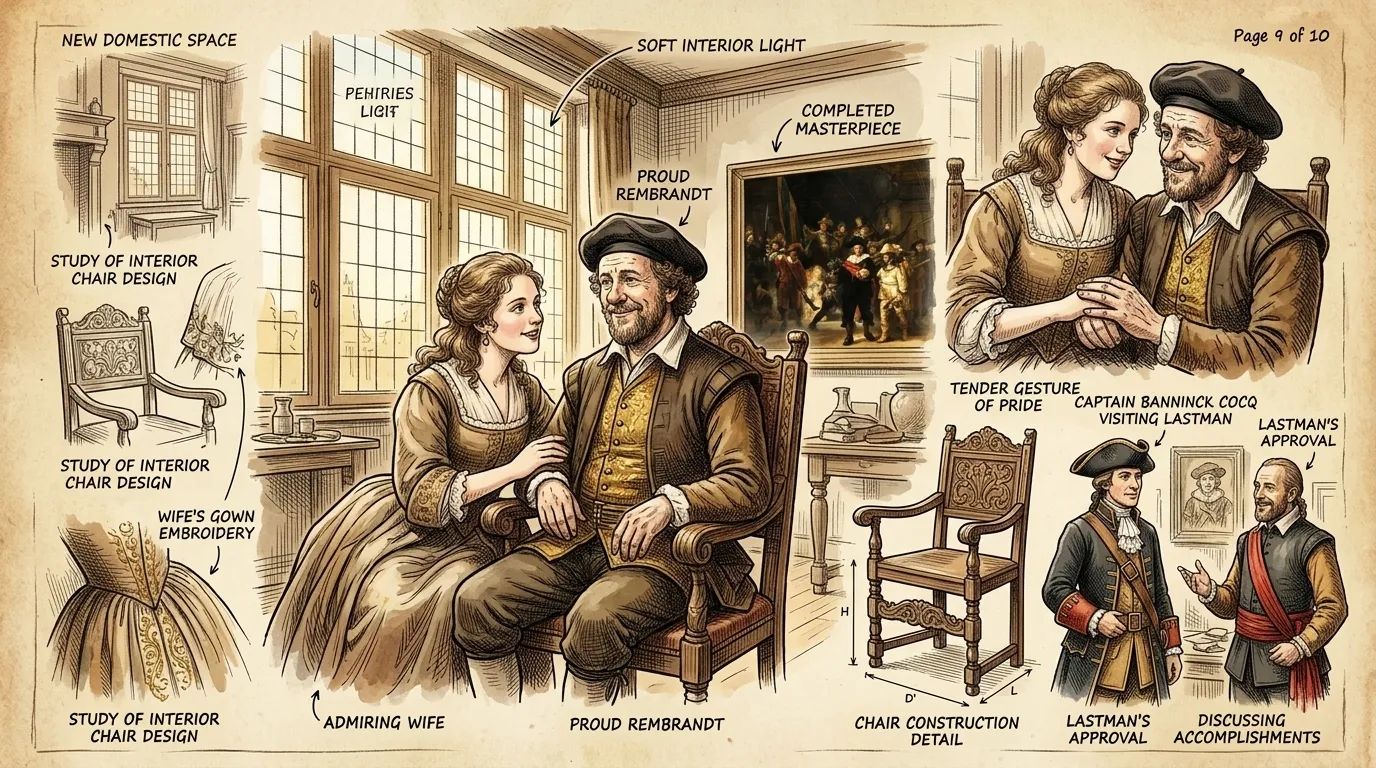
Despite the initial controversy, "The Night Watch" endures as one of the greatest masterpieces of the Dutch Golden Age. Its dramatic composition, masterful use of light and shadow, and its vivid portrayal of human character continue to captivate and inspire viewers centuries later. Rembrandt's legacy is secured.
"Rembrandt's wife leans close to him and says, with shining eyes "You have created a work for the ages, husband. They will be studying it for generations!""
Art Fact: Rembrandt's "The Night Watch" is a testament to his artistic genius and his ability to capture the essence of human experience.
Page 10
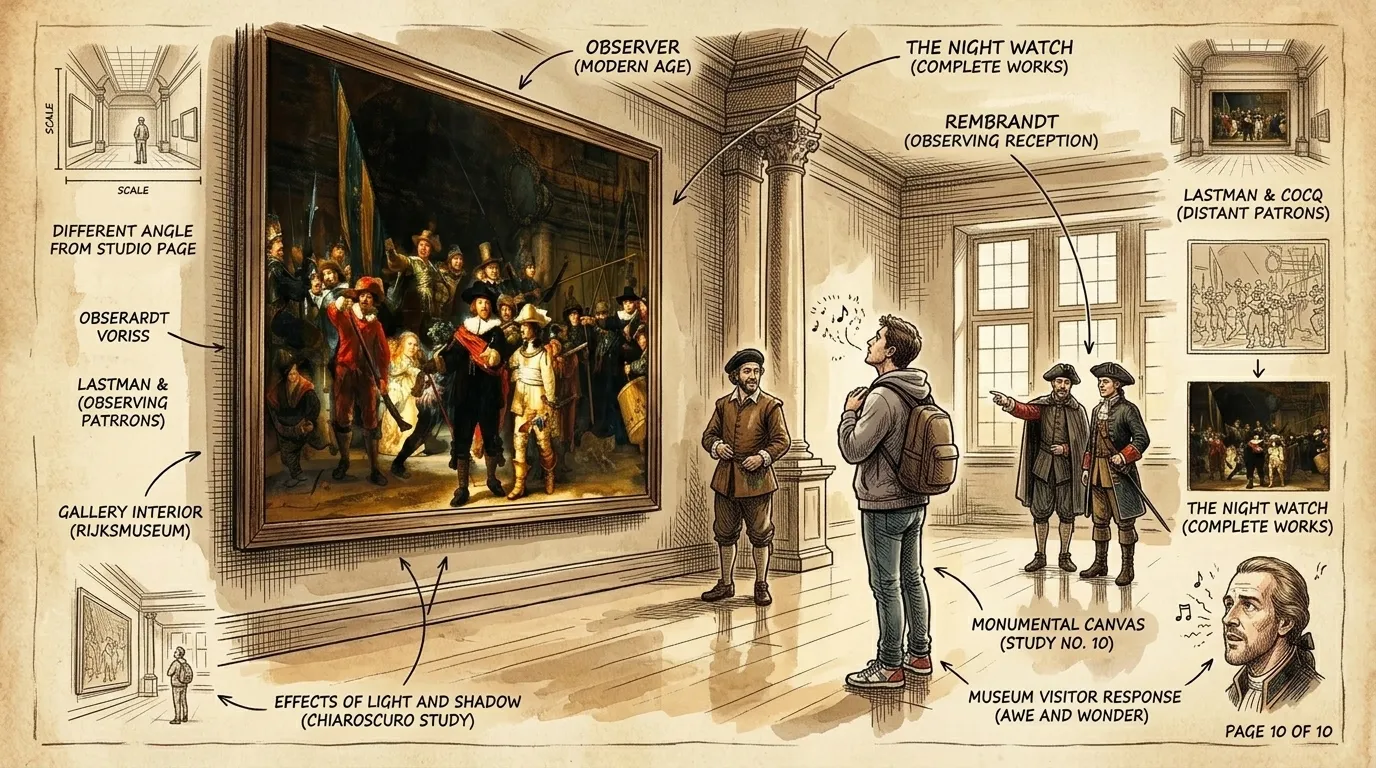
Centuries after its creation, "The Night Watch" remains a symbol of Dutch art and a testament to Rembrandt's genius. It hangs in the Rijksmuseum in Amsterdam, drawing visitors from all over the world. The painting's powerful imagery and its timeless message of courage and camaraderie continue to resonate with audiences today. Rembrandt's night watch is an eternal flame for the ages, a painting that represents freedom and humanity. He lives on.
"A modern visitor stands before "The Night Watch" in the Rijksmuseum, whispering, "It's breathtaking. You can feel the energy, the life in every brushstroke.""
Art Fact: Rembrandt's "The Night Watch" continues to inspire and captivate audiences, solidifying his place as one of the greatest artists of all time.
About this story
- Audience: general readers
Questions and answers
Questions and answers about Dutch Golden Age by various masters (Netherlands — c. 1620)
Read Wonder Arts on your phone
Wonder Arts is available on Android. Get Wonder Arts on Google Play.
More Wonder Arts stories
- Ecstasy of Saint Teresa by Gian Lorenzo Bernini (Rome, Italy — 1652)
- Eiffel Tower (Paris, France — 1889)
- Eine kleine Nachtmusik by Wolfgang Amadeus Mozart (Vienna, Austria — 1787)
- Empire State Building (New York City, USA — 1931)
- Epic of Gilgamesh by Sumerian authors (Mesopotamia — c. 2100 BC)
- Equestrian Statue of Colleoni by Andrea del Verrocchio (Venice, Italy — 1496)