The Gleaners by Jean-François Millet (Paris, France — 1857)
The Gleaners by Jean-François Millet (Paris, France — 1857) — an illustrated arts story, set in France. 10 illustrated pages, free to read on Wonder Arts.
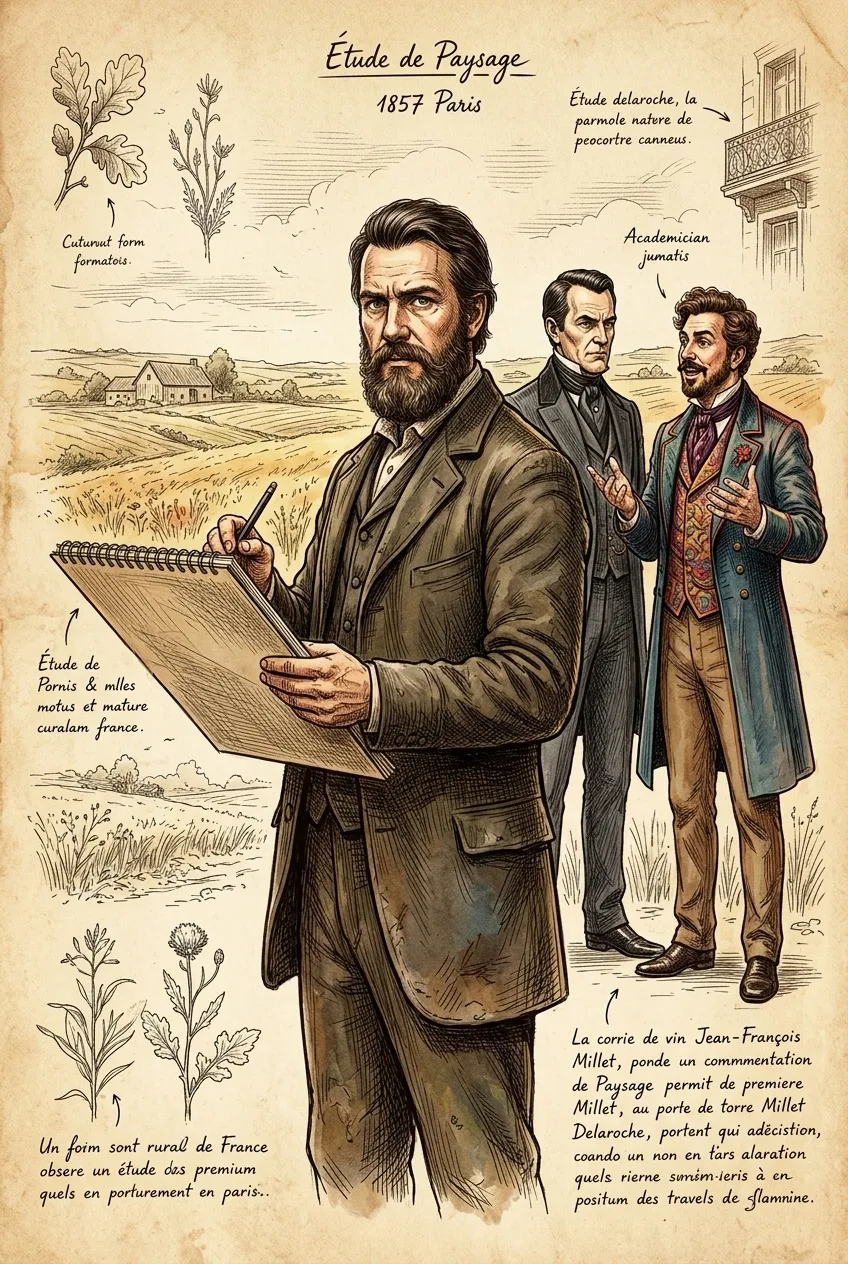
Page 1
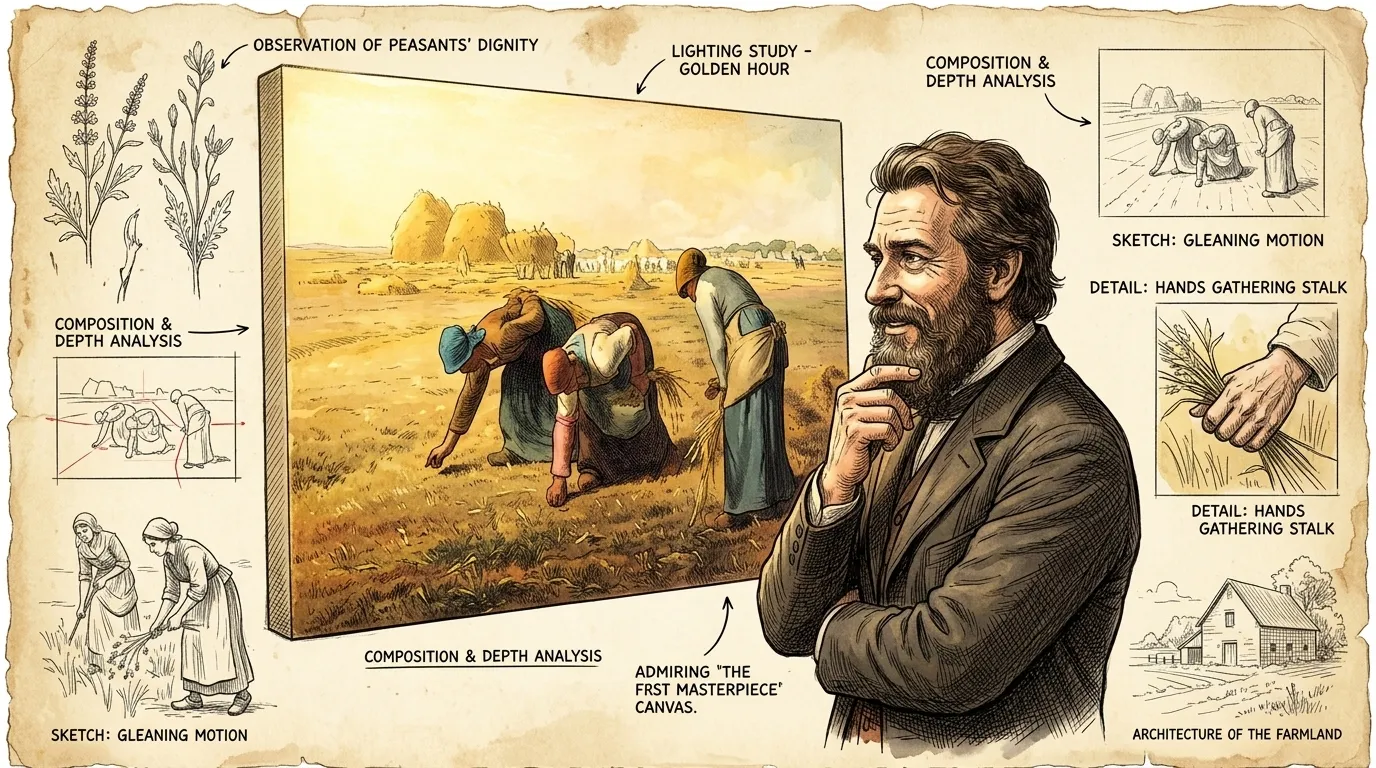
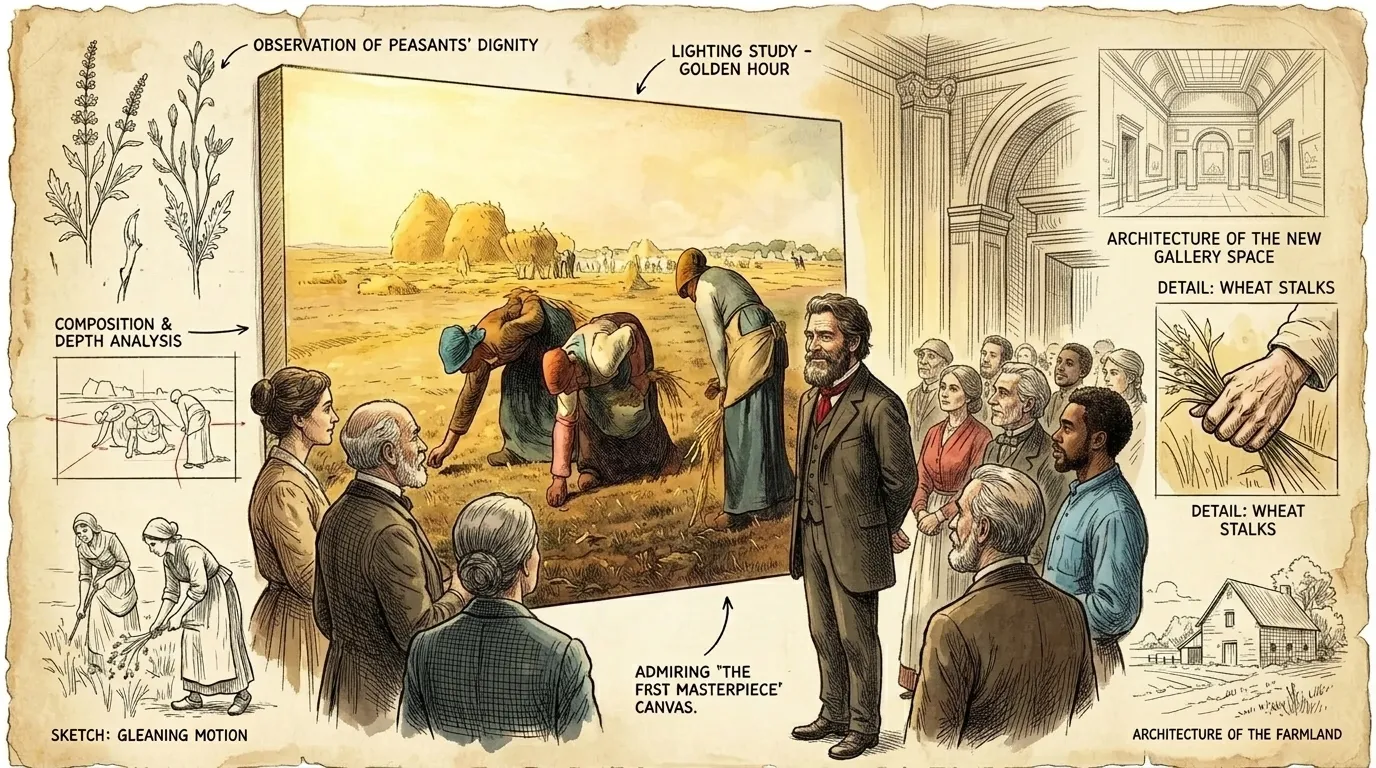
Jean-François Millet stands before his masterpiece, 'The Gleaners,' completed in 1857. The painting, now residing at the Musée d'Orsay in Paris, measures 83.5 cm 111 cm. Its depiction of rural poverty sparked controversy, challenging the romanticized view of peasant life.
""This canvas, a mirror to the soul of France," Millet murmurs, his gaze fixed on the figures before him. "May it speak to the dignity in labor, the beauty in simplicity.""
Art Fact: Jean-François Millet (1814-1875) was a founder of the Realist movement. 'The Gleaners' caused controversy for its unflinching depiction of poverty.
Page 2
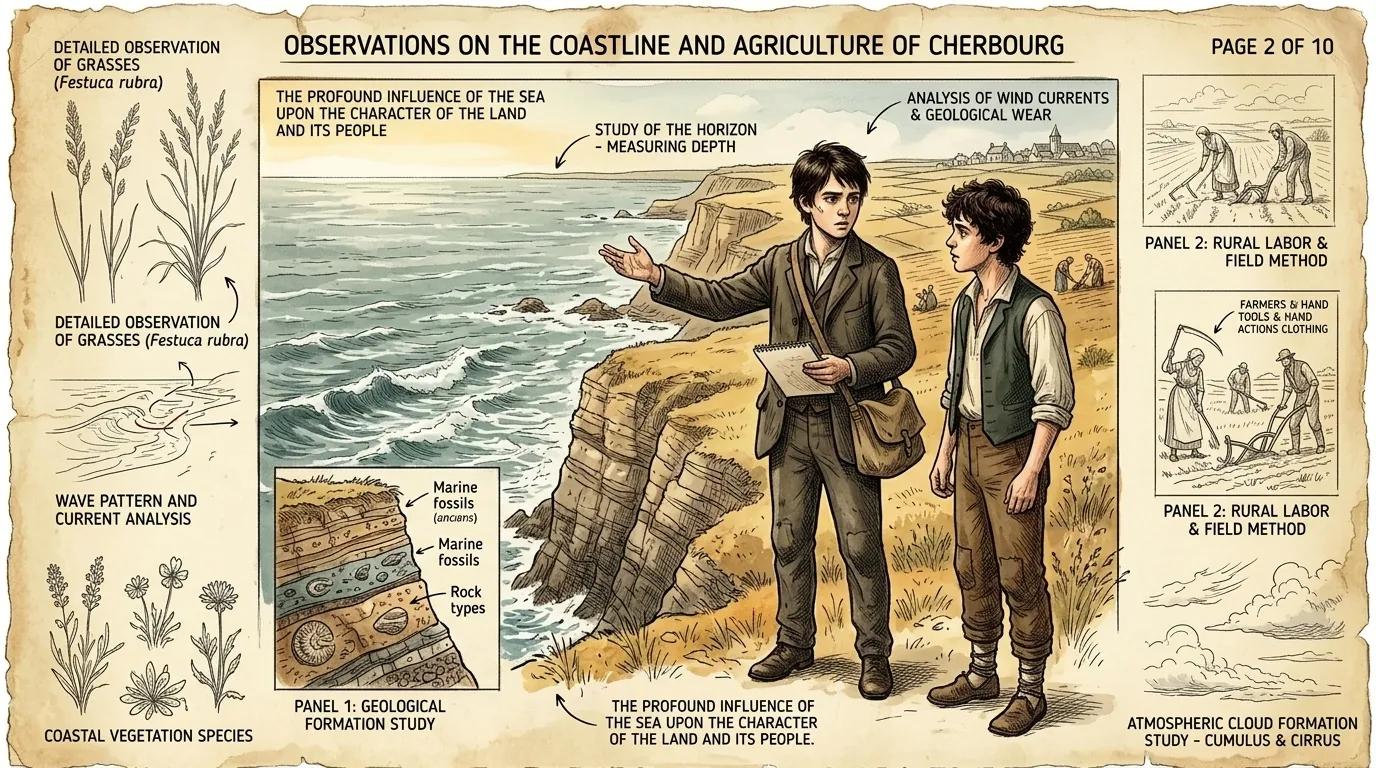
Young Millet, working on his family farm near Cherbourg, gazes out at the rugged coastline. The endless horizon and the lives of the local farmers deeply impacted him. He often sketched the farmers and their families, capturing their lives in detail.
""Elio, observe how the sea shapes the land, just as hardship shapes these people," his father said, gesturing towards the fields. "'The sea is everything. It covers seven tenths of the terrestrial globe. Its breath is pure and healthy. It is an immense desert, where man is never lonely, for he feels life stirring on all sides. The Sea is only the embodiment of a supernatural and wonderful existence. It is nothing but love and emotion; it is the 'Living Infinite.'', as Jules Verne said.""
Art Fact: Millet's early life in rural Normandy profoundly shaped his artistic vision.
Page 3
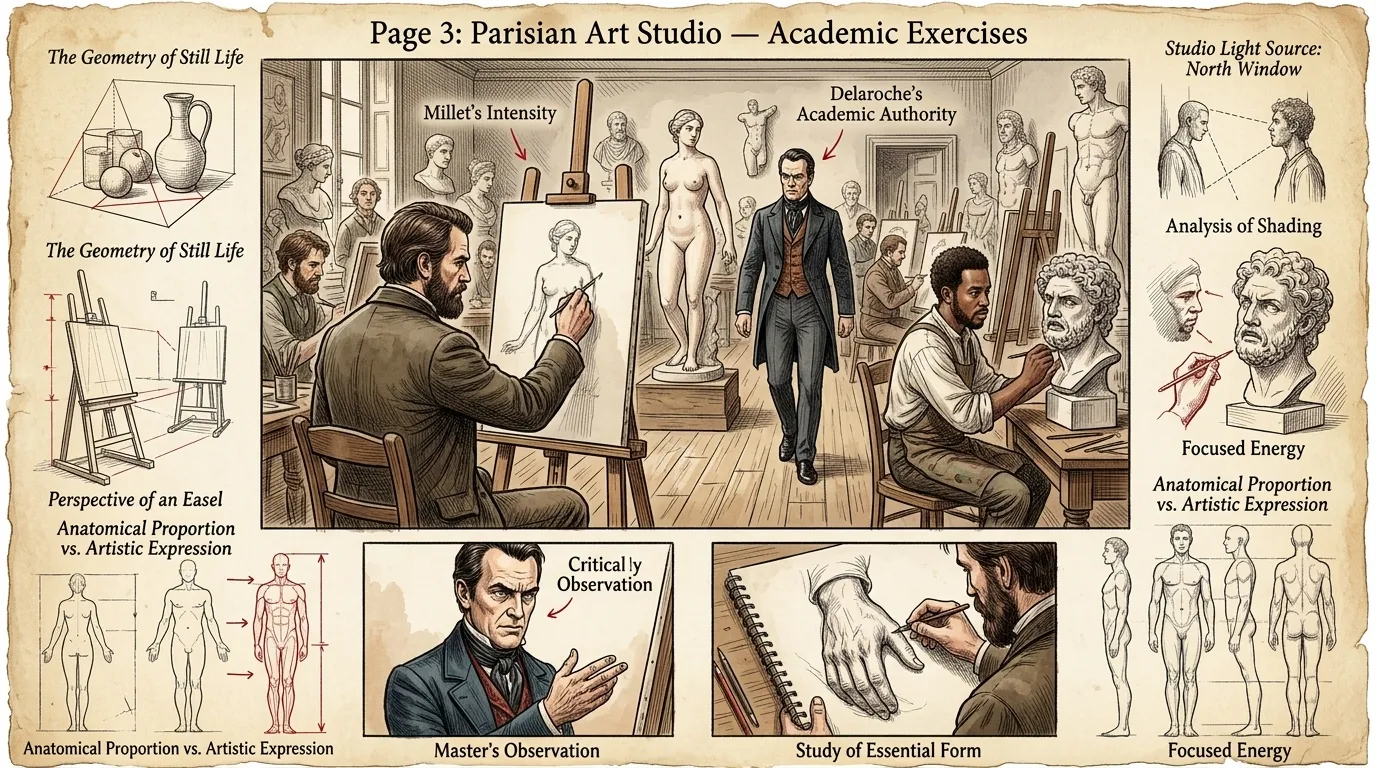
In Paris, Millet entered the studio of Paul Delaroche, a renowned history painter. The rigid academic training clashed with Millet's inherent artistic inclinations, but Delaroche taught him discipline. It was here he met other artists like Obinna.
""Draw what you see, Millet, not what you think you should see!" Delaroche booms, pacing behind him. "The truth lies in the details.""
Art Fact: Paul Delaroche's academic training, though restrictive, provided Millet with foundational skills.
Page 4
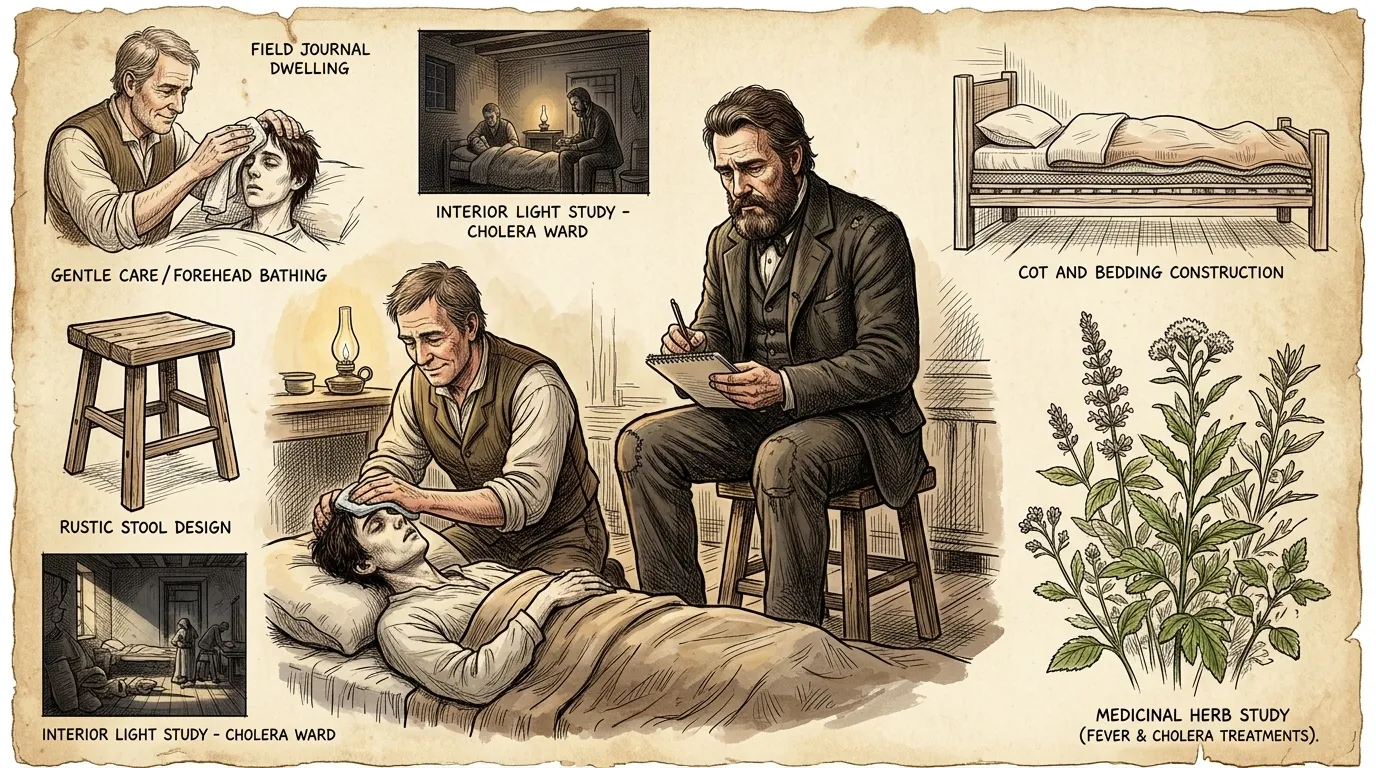
The deadly cholera epidemic swept through Paris, forcing Millet to return to Cherbourg. Witnessing the suffering and death firsthand deepened his connection to the land and its people. He sketched the farmers helping one another.
""Sami, it is as Charles Dickens said, 'There is a passion for sudden transformations which has its root in the heart of man.'" Millet said as he witnessed the death and sickness."
Art Fact: The cholera epidemic forced Millet to confront the harsh realities of rural life.
Page 5
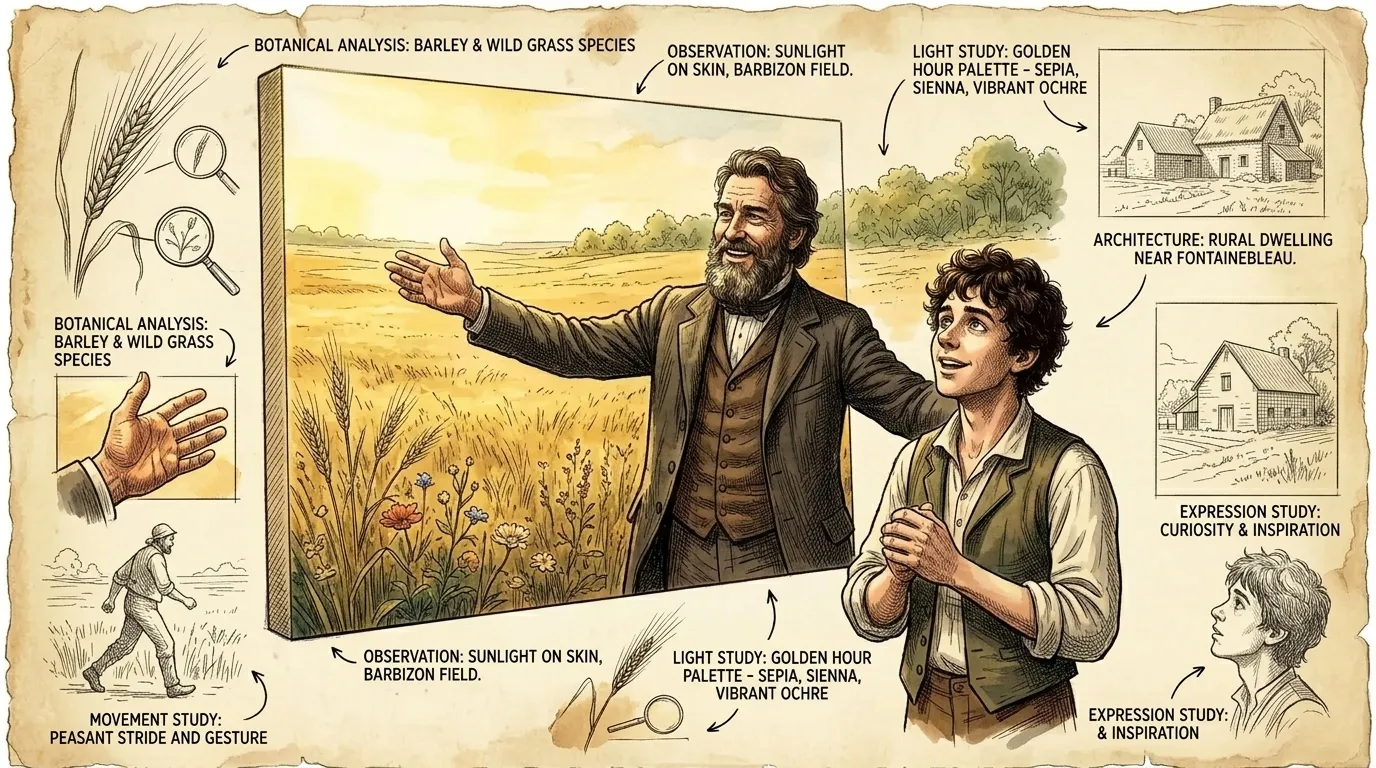
Millet settles in Barbizon, a village near the Forest of Fontainebleau. Here, surrounded by nature, he discovers his true artistic voice. The lives of the peasants become his primary subject.
""This is it, Elio! This is where we capture the soul of France!" Millet exclaims, gesturing towards the fields. "These people, their struggles, their connection to the land – it's all here!""
Art Fact: The village of Barbizon provided Millet with the inspiration and setting for his most famous works.
Page 6
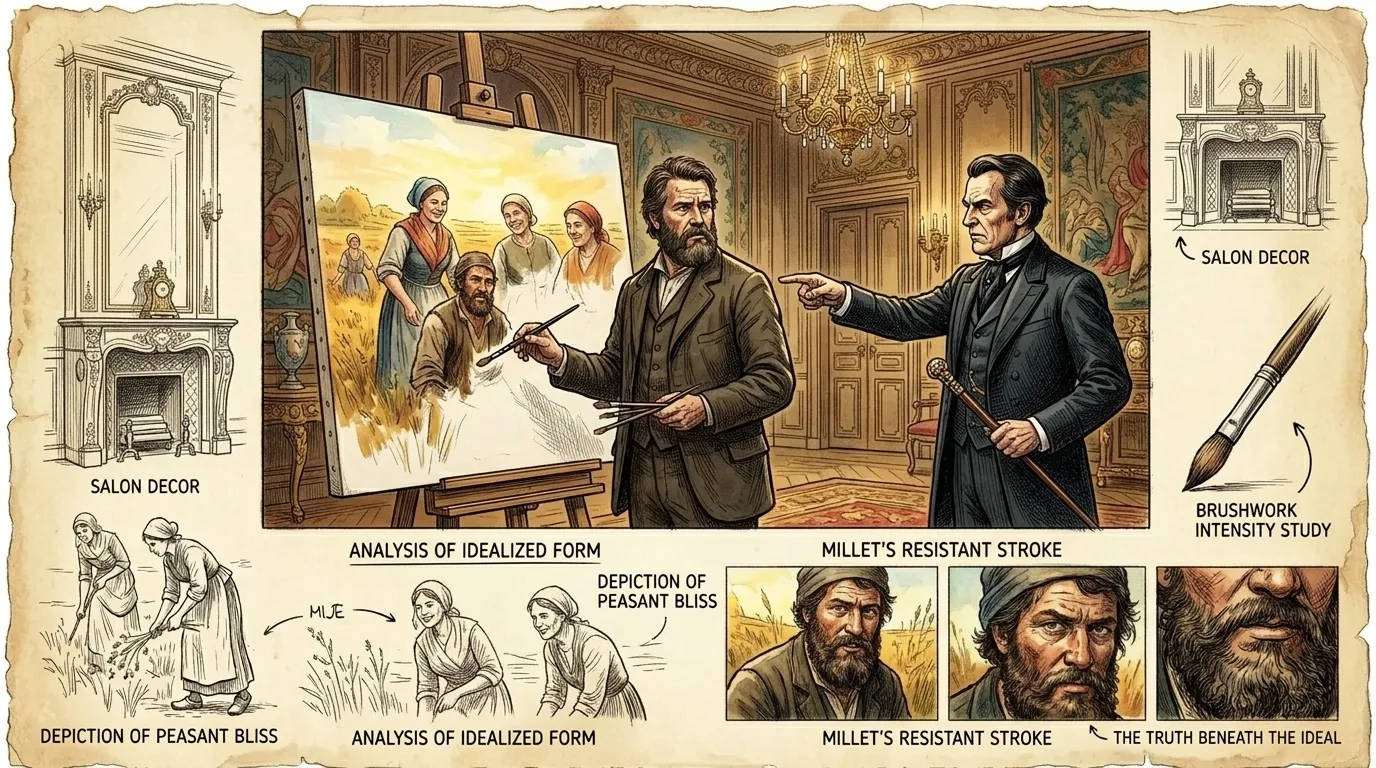
Millet receives a commission, but the patron demands idealized images of peasant life. Millet struggles to reconcile his vision with the patron's expectations. He tries to create the artwork as requested, but he keeps making it realistic.
""Remember, Millet, these peasants must be beautiful, idyllic!" the patron booms, his eyes gleaming. "No misery, no hardship – only pastoral bliss!""
Art Fact: Millet's artistic integrity clashed with the expectations of his patrons.
Page 7
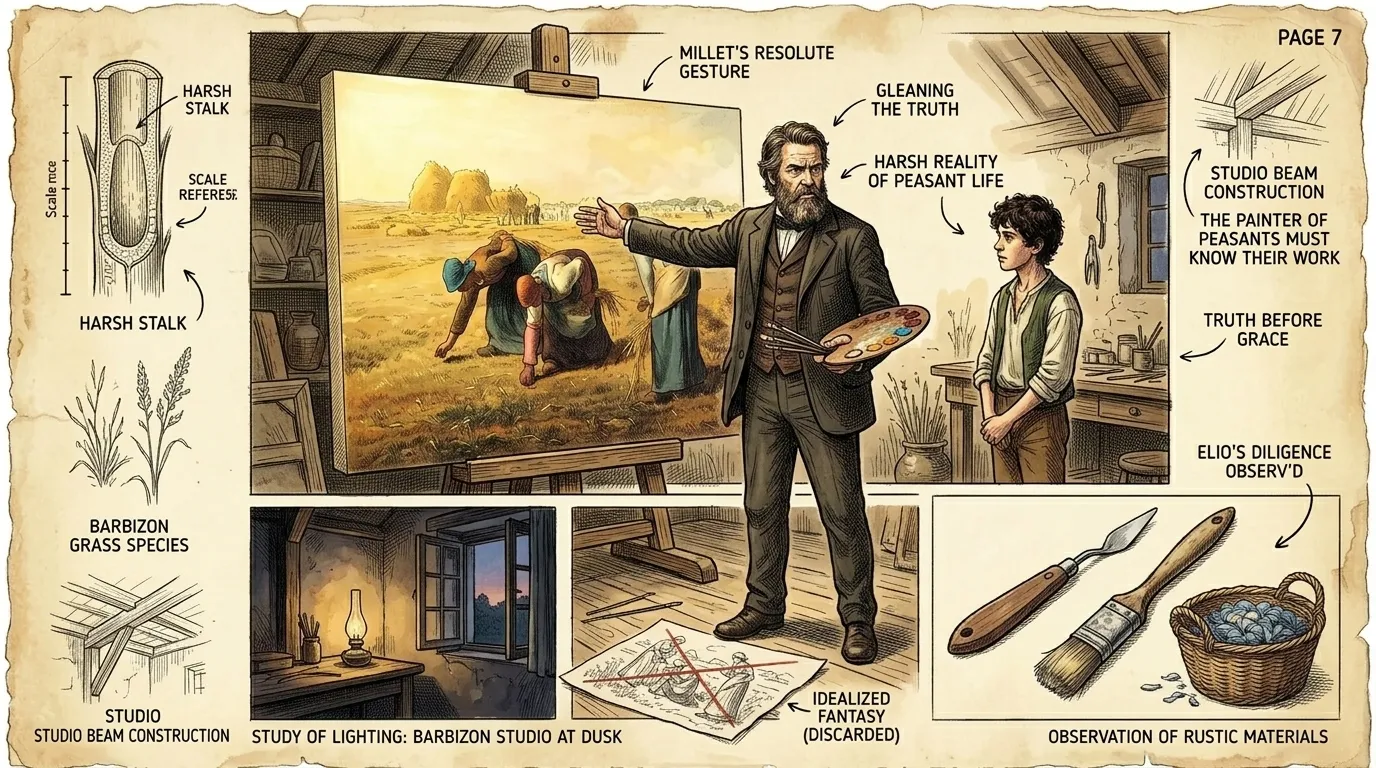
Millet decides to abandon the idealized vision and embrace the harsh realities of peasant life. This decision marks a turning point in his artistic career. He will not be swayed by the demands of art critics and patrons.
""No, Elio. I must paint the truth, as I see it," Millet declares, his voice firm. "These women are not goddesses or angels. They are workers, struggling to survive. I cannot idealize their poverty!""
Art Fact: Millet's decision to embrace realism defined his artistic legacy.
Page 8
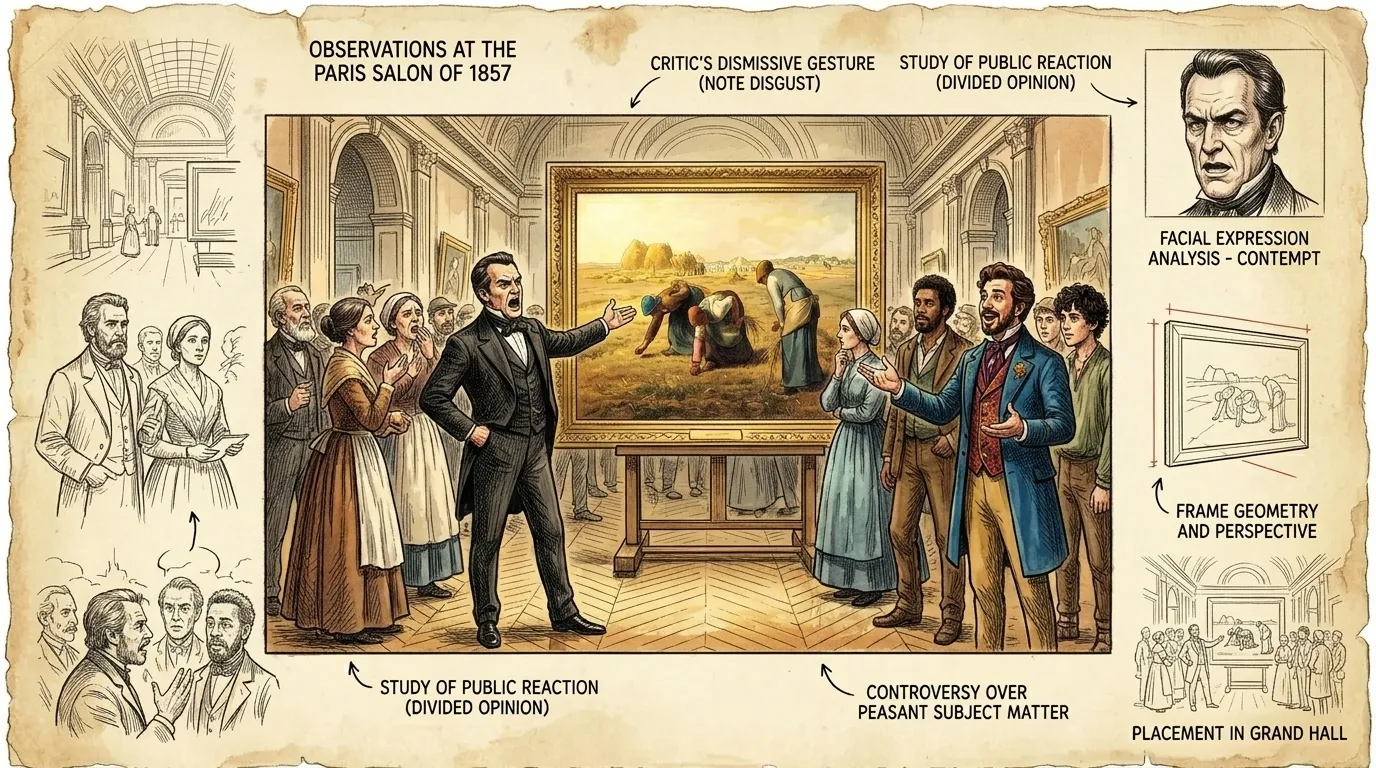
'The Gleaners' is rejected by the Paris Salon. Critics dismiss the painting as vulgar and degrading. However, some see the painting as a bold and honest portrayal of peasant life. The artwork creates heated discussion.
""Vulgar! Degrading!" a critic exclaims, gesturing dismissively at 'The Gleaners.' "This is not art! This is an insult to good taste!""
Art Fact: 'The Gleaners' sparked controversy for its unflinching depiction of poverty.
Page 9
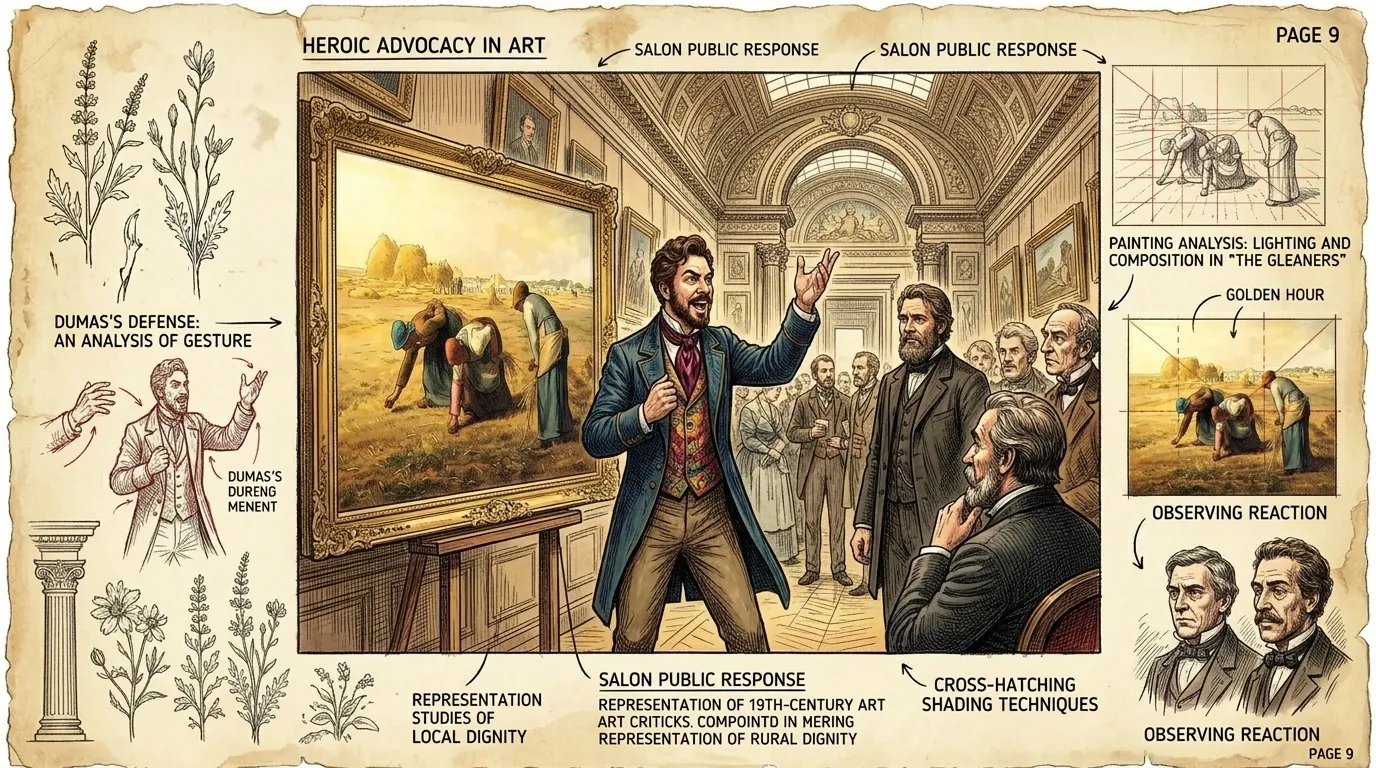
Alexandre Dumas, a writer, defends Millet's work, praising its honesty and social commentary. Other writers and art critics begin to appreciate the painting's importance.
""This is not vulgarity. This is truth!" Dumas exclaims, gesturing passionately. "Millet has captured the soul of the French peasant with unflinching honesty. This painting is a masterpiece!""
Art Fact: Alexandre Dumas's support helped to change public opinion about 'The Gleaners.'
Page 10
About this story
- Location: France
- Audience: general readers
Read Wonder Arts on your phone
Wonder Arts is available on Android. Get Wonder Arts on Google Play.
More Wonder Arts stories
- The Great Wall of China (Northern China — 7th Century BC–1644 AD)
- The Gulf Stream by Winslow Homer (USA — 1899)
- The Hay Wain by John Constable (London, UK — 1821)
- The Horse Fair by Rosa Bonheur (Paris, France — 1853)
- The Iliad by Homer (Ancient Greece — c. 8th Century BC)
- The Isle of the Dead by Arnold Böcklin (Switzerland — 1883)