The Hay Wain by John Constable (London, UK — 1821)
The Hay Wain by John Constable (London, UK — 1821) — an illustrated arts story, set in United Kingdom. 10 illustrated pages, free to read on Wonder Arts.
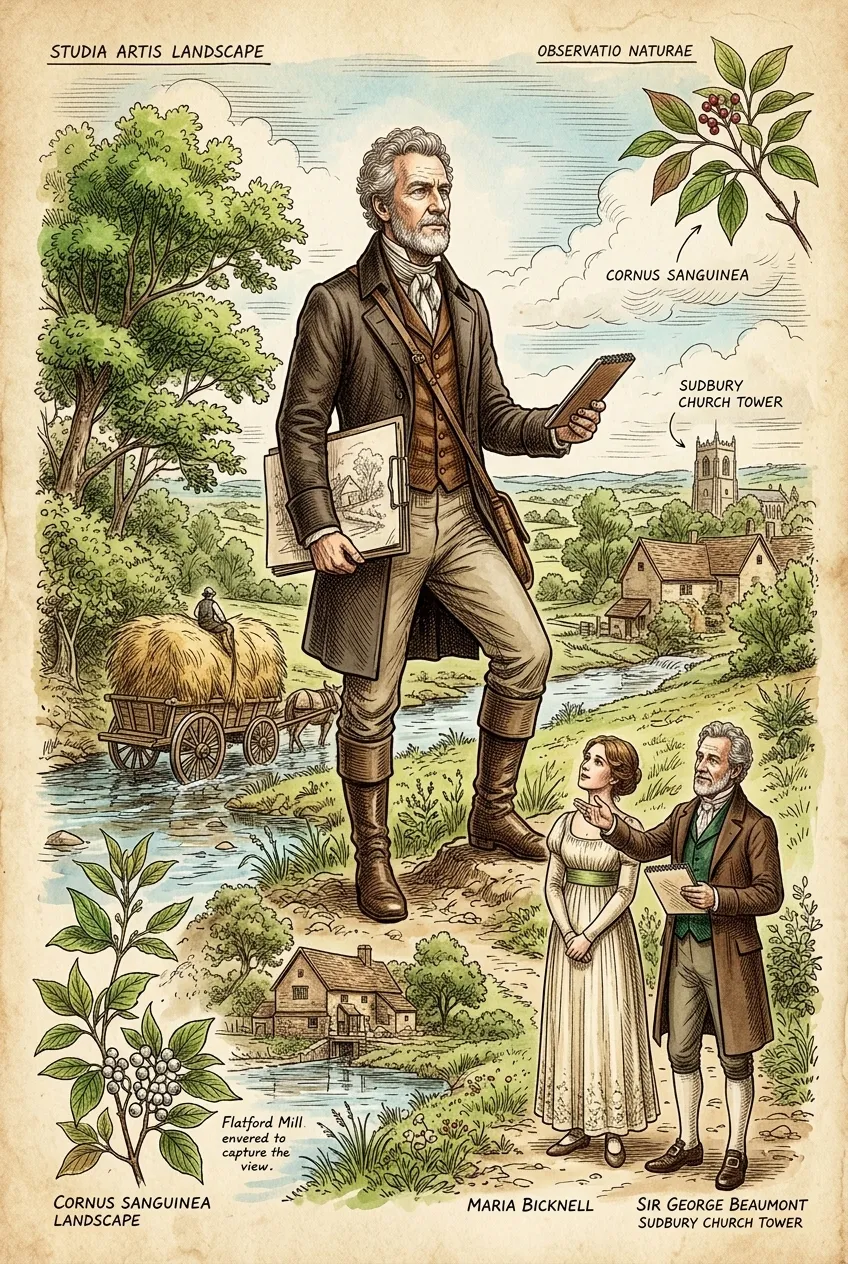
Page 1
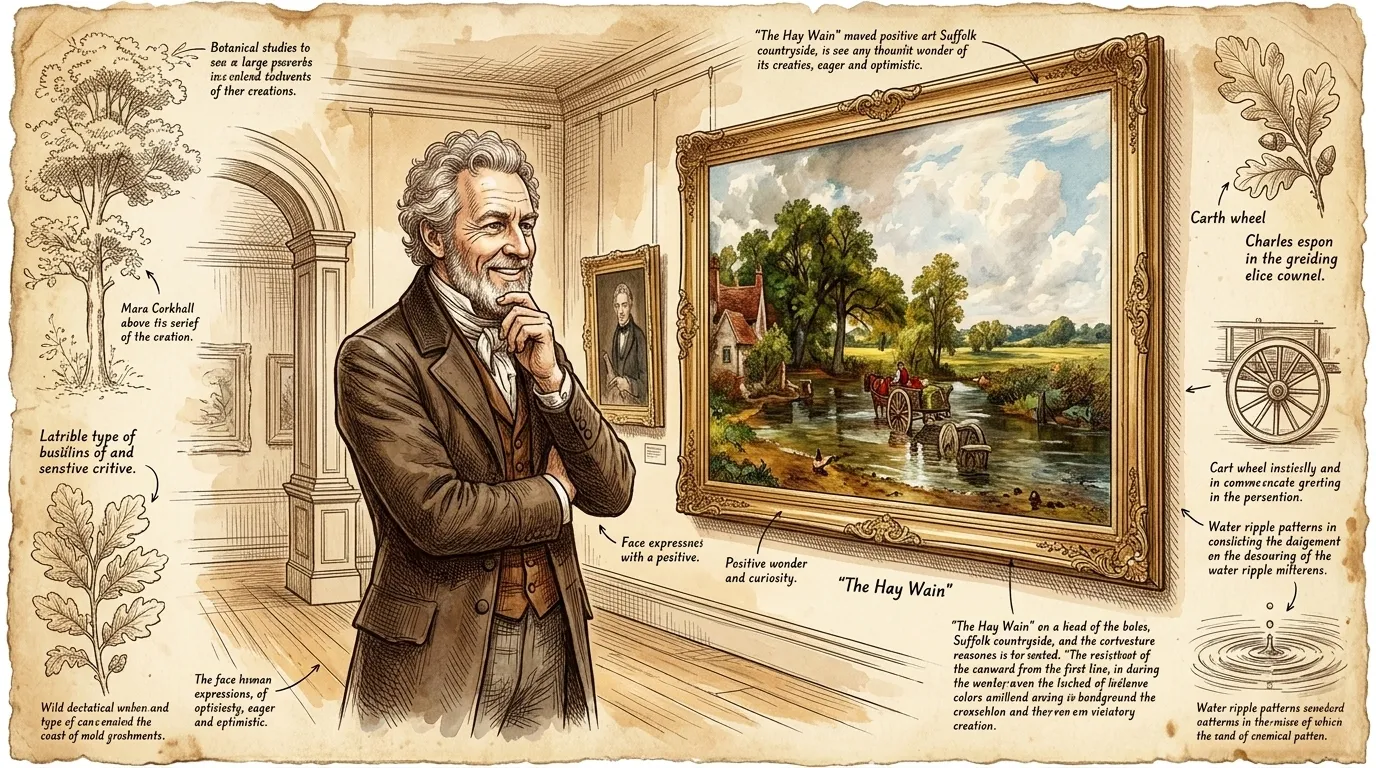
John Constable, the master of landscape, stood before 'The Hay Wain.' Completed in 1821, this painting, measuring 130.2 cm 185.4 cm, captured the very soul of the Suffolk countryside. Its value is inestimable, residing at the National Gallery in London, a testament to its enduring legacy. What many don't know is that Constable almost didn't exhibit it, doubting its worth.
"Constable murmured to himself, 'Will they see what I see? The truth of the land, the beauty in the everyday?'"
Art Fact: The Hay Wain is celebrated for its depiction of the rural English landscape, specifically the River Stour in Suffolk.
Page 2
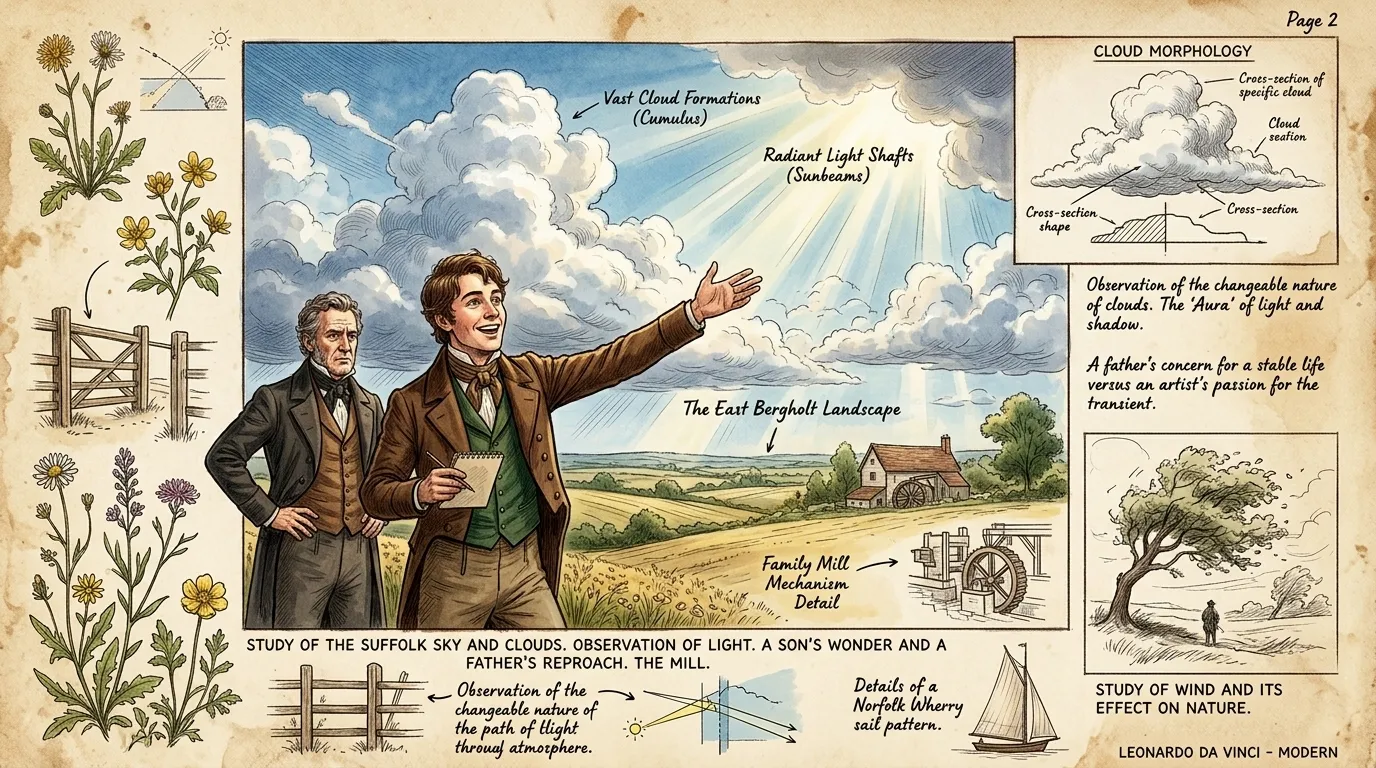
Young Constable, barely a teenager, often escaped the confines of his father's mill. He would wander the fields of East Bergholt, Suffolk, his senses alive with the sights and sounds of the countryside. It was here, amidst the whispering trees and flowing river, that his artistic soul began to awaken. His father, Golding Constable, hoped John would join the family business, but the call of the canvas was too strong.
"Young John exclaimed, 'Father, look! The clouds, the light – it's all so magnificent! I must capture it!' His father replied with a sigh, 'John, the mill awaits. Dreams don't grind corn.'"
Art Fact: Constable's deep connection to the Suffolk landscape shaped his artistic vision.
Page 3
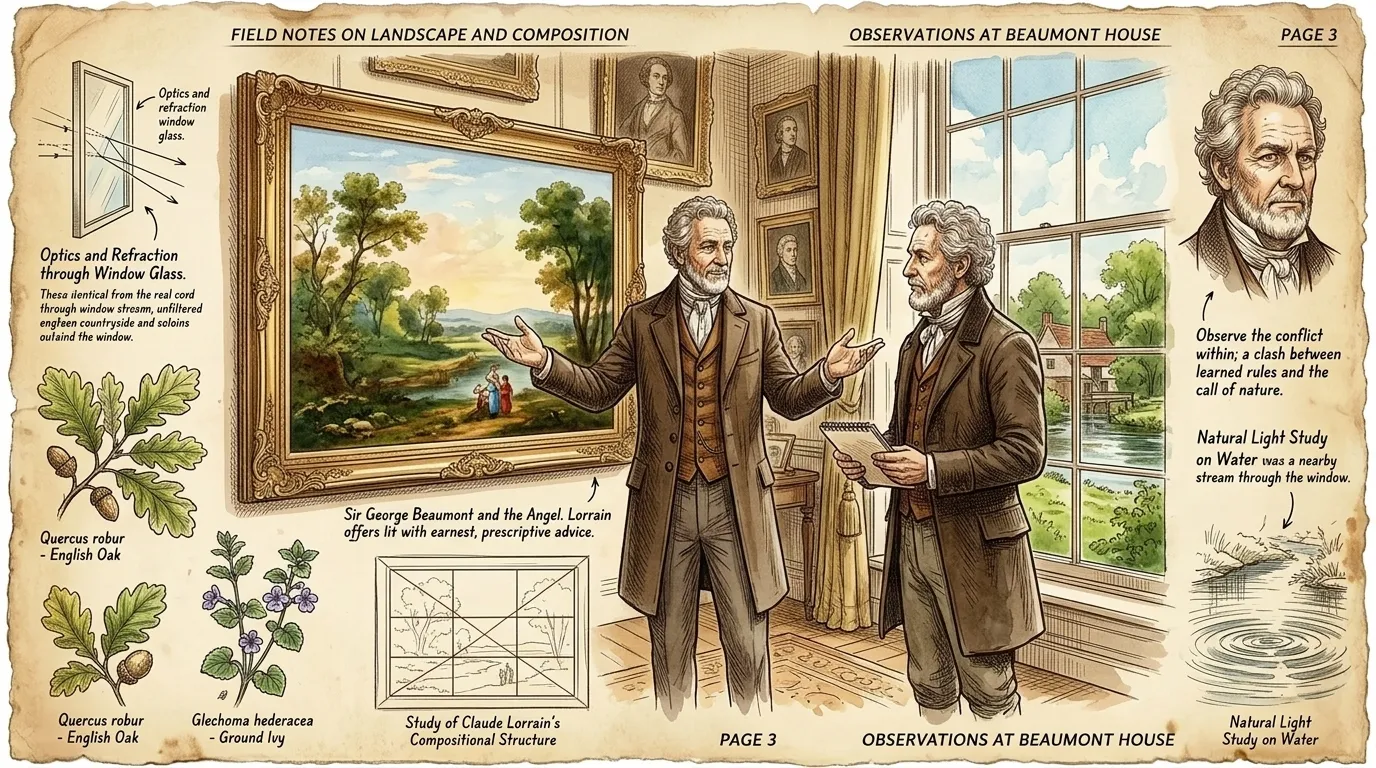
Constable sought guidance from Sir George Beaumont, a landscape painter. Beaumont, while offering advice, subtly steered Constable towards the established styles of Claude Lorrain. However, Constable felt a growing dissonance. He yearned to paint what he saw, not what he was told to see. This internal conflict fueled his determination to forge his own path.
"Beaumont advised, 'Constable, you must learn from the masters. Observe Claude, imitate his compositions. That is the path to success.' Constable hesitated, 'But Sir, I see something different. I see the truth of nature, unfiltered.'"
Art Fact: Sir George Beaumont was a influential art patron and amateur painter.
Page 4
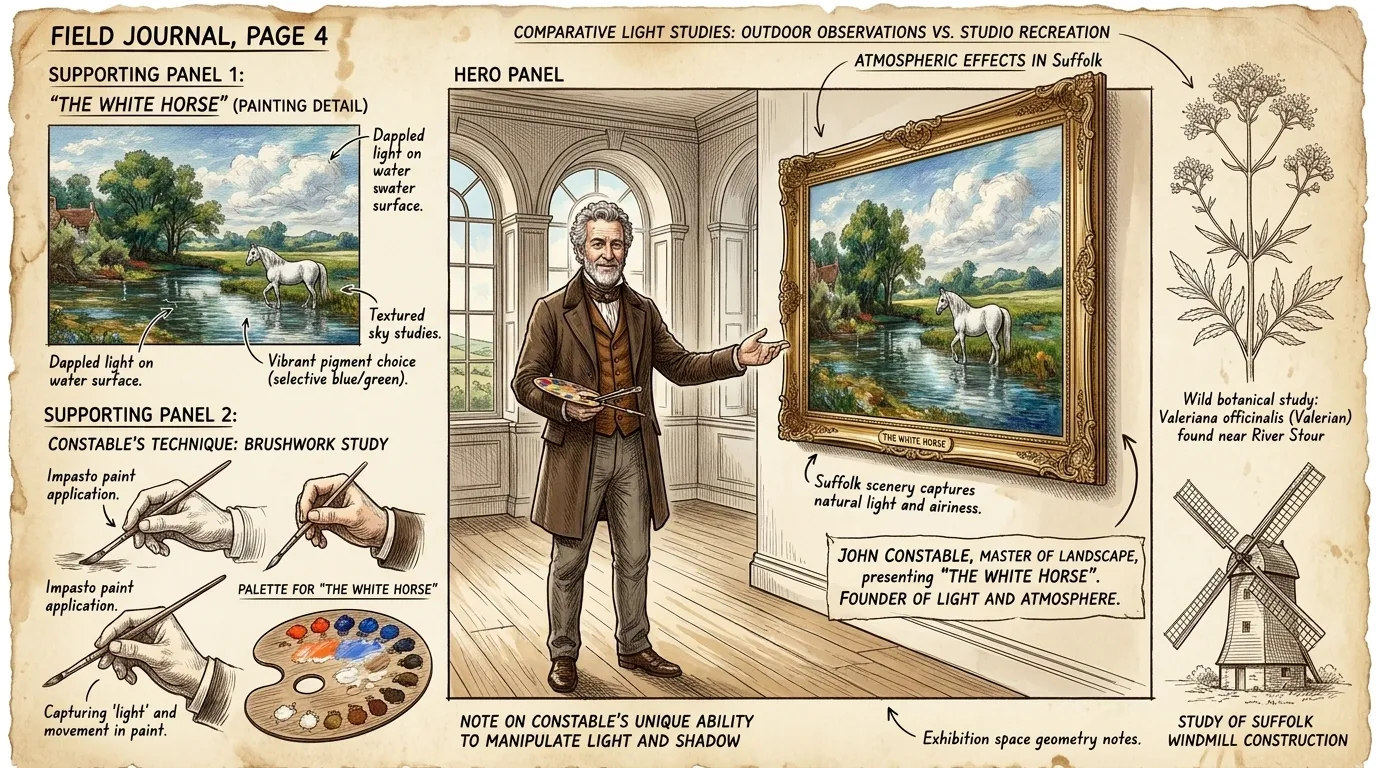
In 1819, Constable exhibited 'The White Horse,' a scene from his native Suffolk. The painting, though not an immediate sensation, garnered critical attention. It showcased Constable's unique ability to capture the fleeting effects of light and atmosphere. The public began to recognize his distinct voice, separate from the traditional landscape painters. This recognition fueled his confidence.
"A critic remarked, 'Constable's 'White Horse' possesses a certain freshness, a truth to nature that is often lacking in the more idealized landscapes.' Another added, 'But does it possess the classical grandeur of a true masterpiece?'"
Art Fact: 'The White Horse' marked a turning point in Constable's career, establishing him as a serious landscape painter.
Page 5
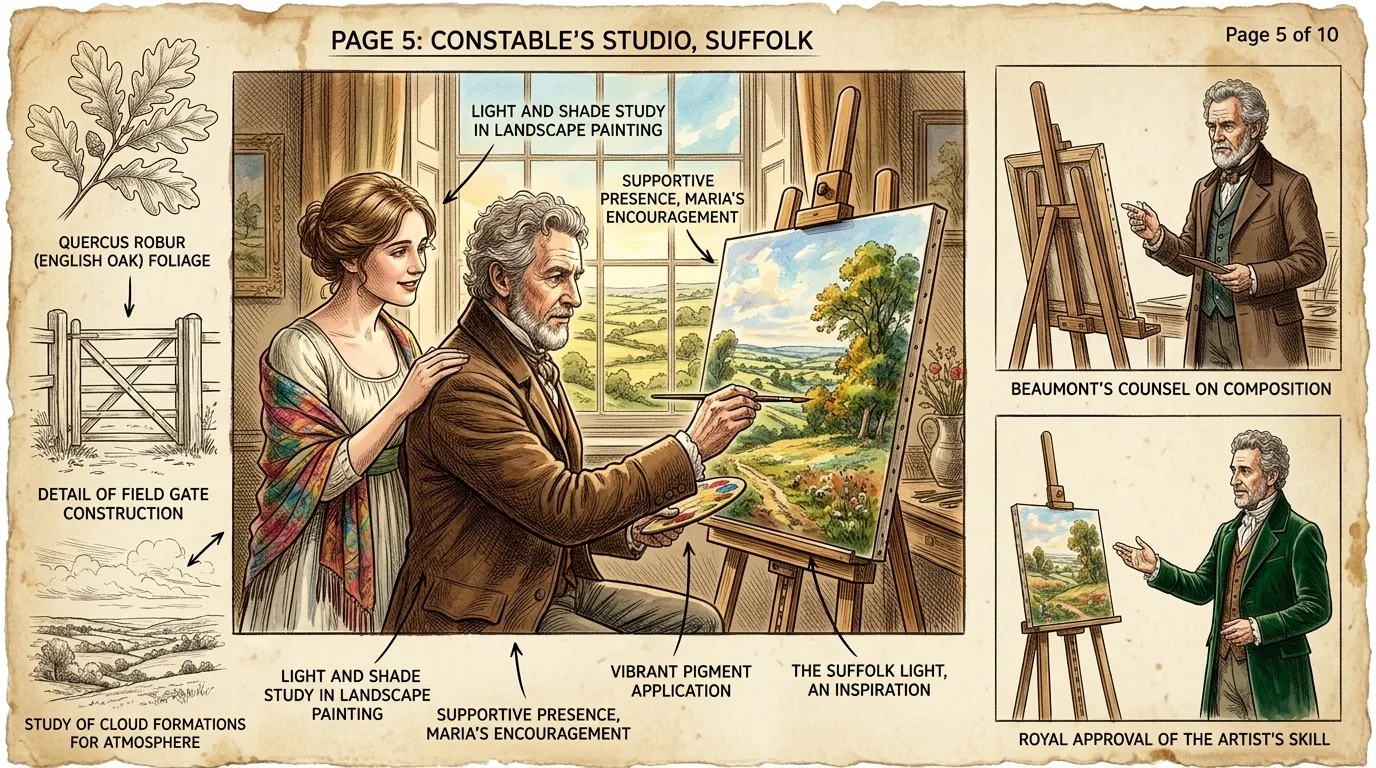
Constable's love for Maria Bicknell was a constant source of inspiration. Their courtship was long and fraught with obstacles due to her grandfather's disapproval. Maria's unwavering belief in Constable's talent sustained him through periods of doubt and hardship. She became his muse, the embodiment of the beauty he sought to capture in his paintings.
"Maria wrote to John, 'Your art is a reflection of your soul, John. Never doubt its power to move and inspire.' He responded, 'Your love, Maria, is my greatest inspiration, the light that guides my brush.'"
Art Fact: Maria Bicknell's support was crucial to Constable's artistic development.
Page 6
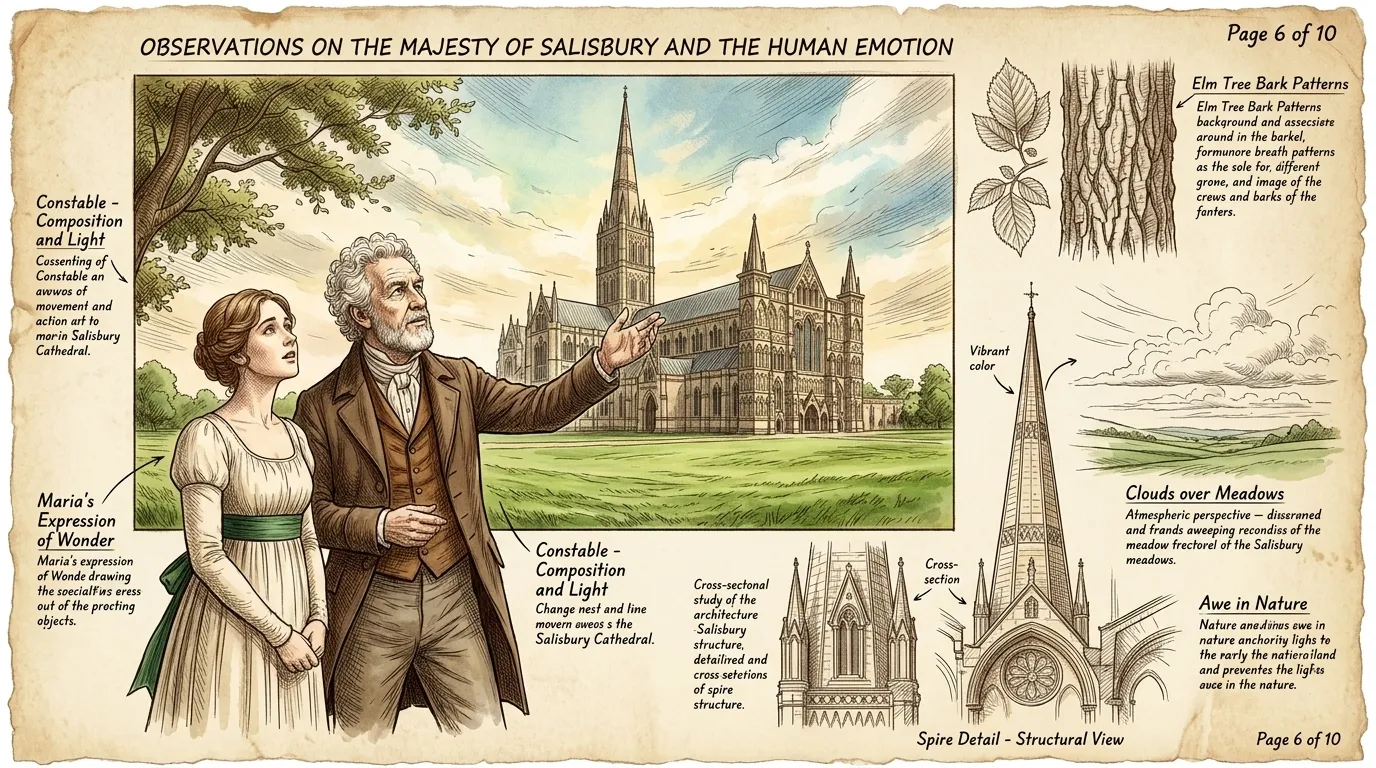
Constable's visit to Salisbury Cathedral profoundly impacted his artistic vision. The grandeur of the cathedral, set against the backdrop of the Wiltshire landscape, offered a new perspective on the relationship between architecture and nature. He began to explore the sublime, the awe-inspiring power of the natural world. 'Salisbury Cathedral from the Meadows' became a testament to this inspiration.
"Constable exclaimed, 'The cathedral, Maria, it rises from the meadows like a vision! It is both a man-made marvel and an integral part of the landscape.' Maria replied, 'It is as if nature itself is in worship.'"
Art Fact: The architecture of Salisbury Cathedral was a significant influence on Constable's art.
Page 7
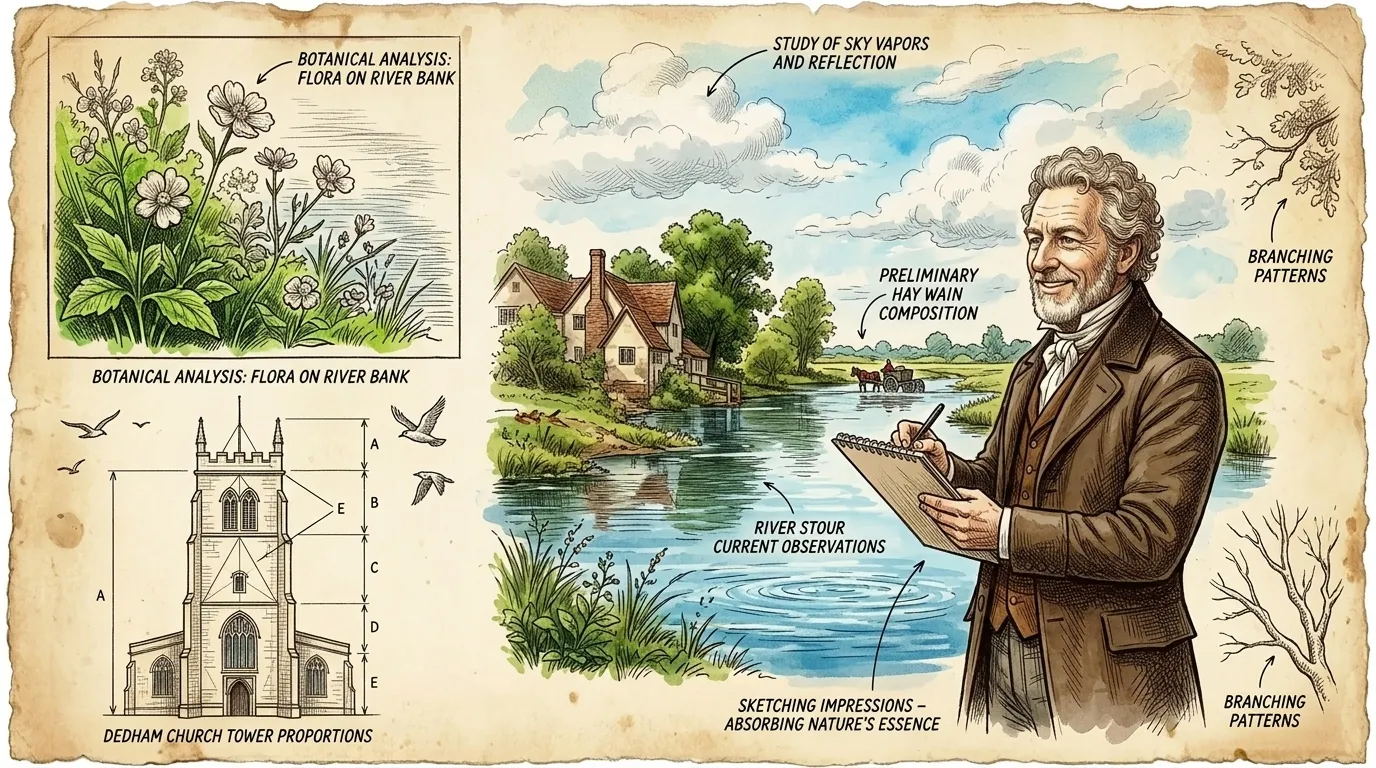
Constable's heart always remained with the Stour Valley and Dedham village. These scenes inspired him to capture this beauty in what would later be known as 'The Hay Wain'. The painting became a love letter to his land and his life.
"Constable remarked to a passing farmer, 'This, my friend, is where my heart and soul belong. It is a subject that gives me joy and I hope to share it with the world.'"
Art Fact: The area was a familiar scene to Constable's childhood.
Page 8
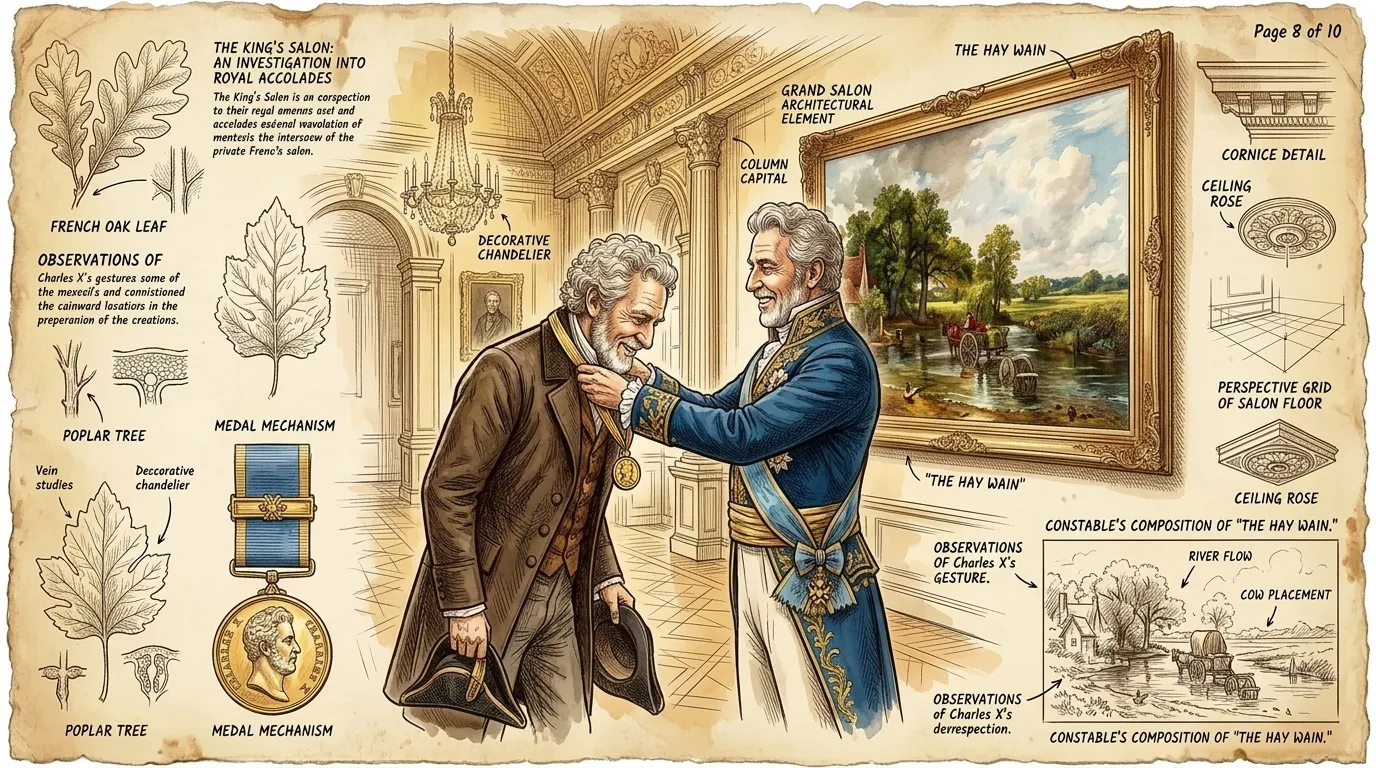
After initially doubting its worth, Constable displayed 'The Hay Wain' at the Royal Academy. The painting, though initially met with mixed reviews in England, found great success in France. Charles X awarded Constable a gold medal, and the painting influenced the Barbizon school of landscape painters. 'As Charles Dickens said, 'Procrastination is the thief of time,' Constable chuckled. 'I am glad I didn't procrastinate in displaying this work.'
"An English critic remarked, 'The painting has its merits but lacks the grandeur expected of a masterpiece.' However, in France, the response was overwhelmingly positive. 'Magnifique!' exclaimed a French artist, 'Constable has captured the very essence of the English countryside!'"
Art Fact: The painting's initial reception was not positive.
Page 9
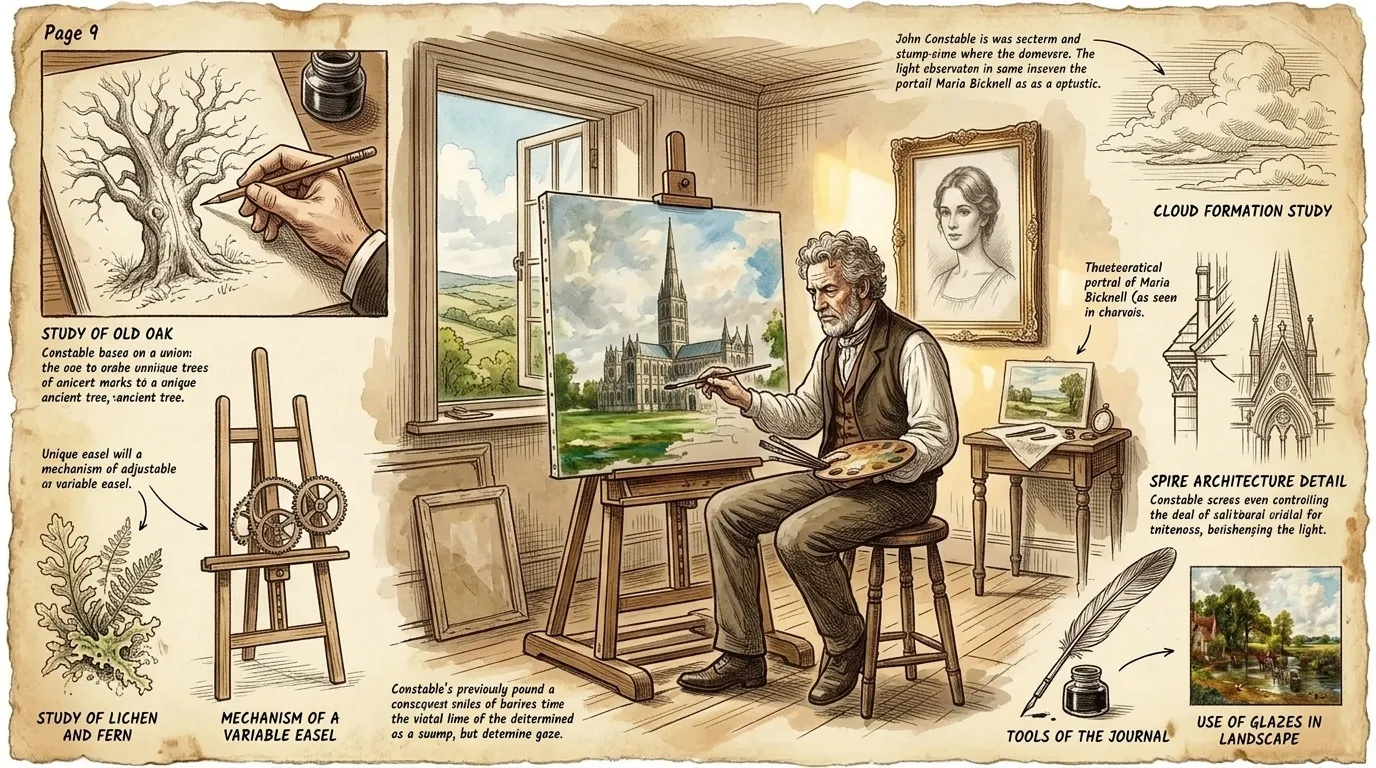
The death of Maria in 1828 cast a long shadow over Constable's life. Grief-stricken, he poured his emotions into his art. His later works, while retaining his characteristic truth to nature, took on a more somber tone. He continued to paint, driven by a desire to honor Maria's memory and to share his vision with the world. He sought solace in his art.
"Constable murmured, 'Maria, your spirit lives on in every stroke of my brush. I will continue to paint for you, for us.'"
Art Fact: The loss of Maria profoundly affected Constable's art and life.
Page 10
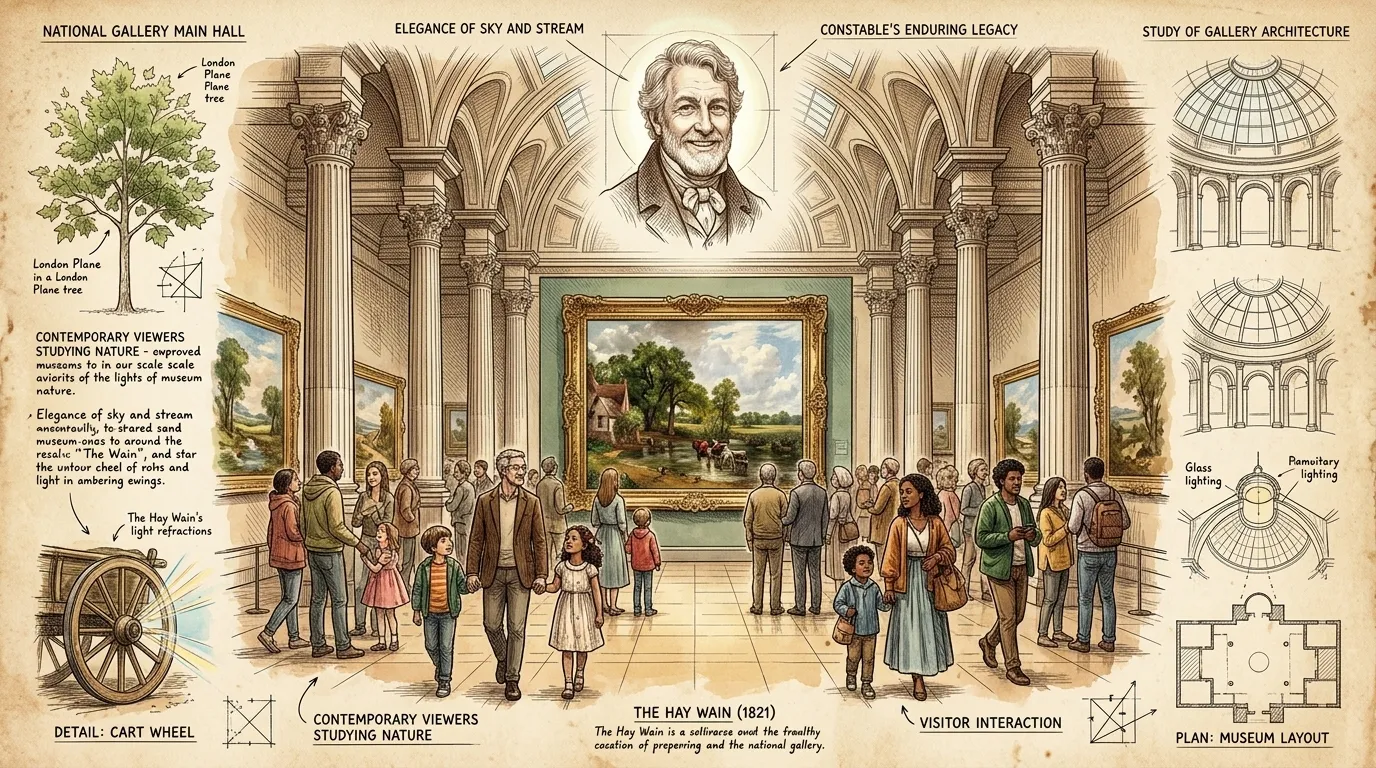
Constable's legacy extends far beyond 'The Hay Wain'. His dedication to portraying the truth of nature, his innovative techniques, and his emotional depth have inspired generations of artists. His paintings continue to captivate audiences at the National Gallery in London and museums worldwide. Why does Constable's work survive forever? Because he taught the world to see the beauty in the ordinary, the poetry in the everyday. His legacy is in those that can now see the beauty in nature.
"The whispers in the museum 'This is a man who painted not what was expected, but what he saw. A true visionary and master of his craft,'. This vision is now available for all to enjoy."
Art Fact: Constable's influence on landscape painting is immeasurable.
About this story
- Location: United Kingdom
- Audience: general readers
Read Wonder Arts on your phone
Wonder Arts is available on Android. Get Wonder Arts on Google Play.
More Wonder Arts stories
- The Horse Fair by Rosa Bonheur (Paris, France — 1853)
- The Iliad by Homer (Ancient Greece — c. 8th Century BC)
- The Isle of the Dead by Arnold Böcklin (Switzerland — 1883)
- The Just Judges Panel by Jan van Eyck (Ghent, Belgium — 1432)
- The Kiss by Auguste Rodin (Paris, France — 1882)
- The Kiss by Gustav Klimt (Vienna, Austria — 1908)