The Stonebreakers by Gustave Courbet (Dresden, Germany — 1849)
The Stonebreakers by Gustave Courbet (Dresden, Germany — 1849) — an illustrated arts story, set in Germany. 10 illustrated pages, free to read on Wonder Arts.
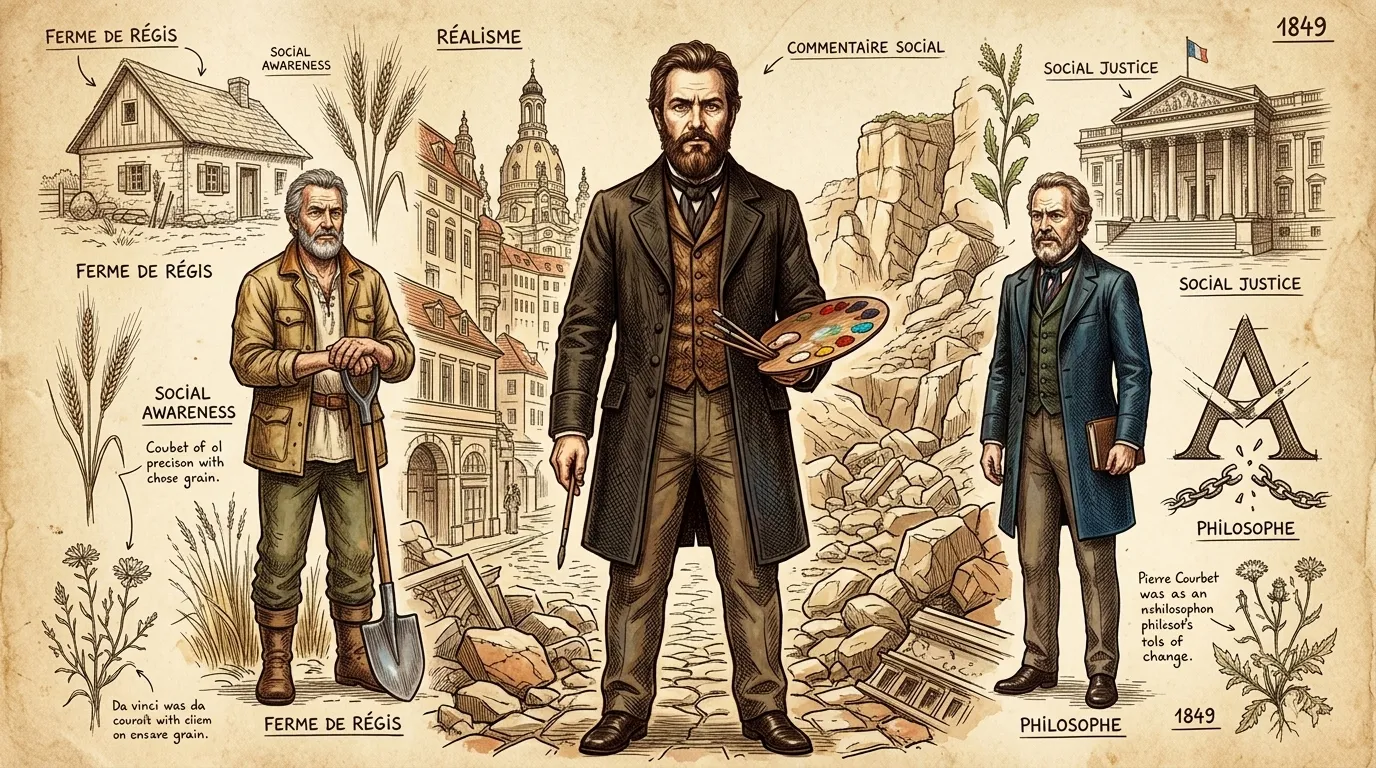
Page 1
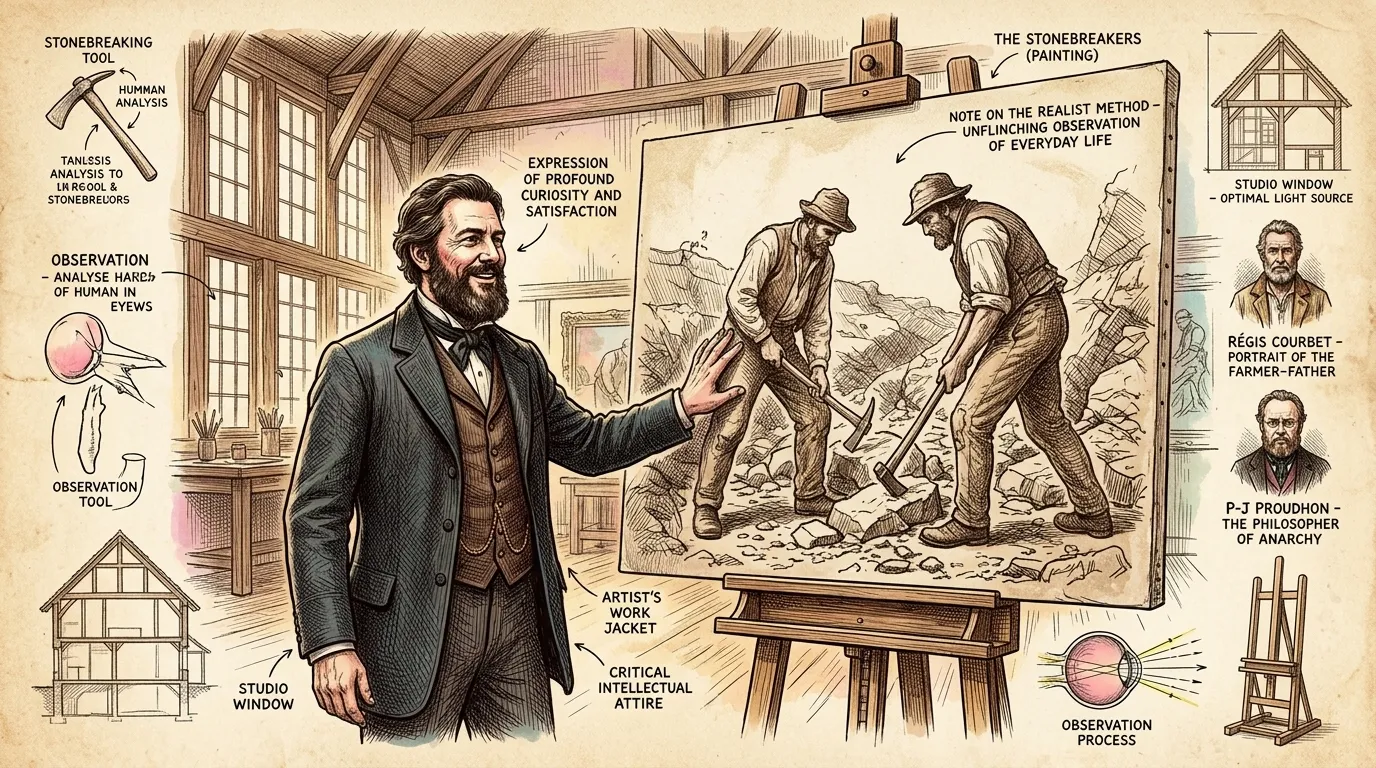
Gustave Courbet, the champion of Realism, stands proudly before his controversial masterpiece, The Stonebreakers. Painted in 1849, the artwork, measuring 165 x 257 cm, was tragically destroyed during World War II, leaving only photographs as a testament to its stark depiction of poverty. Its groundbreaking social commentary ignited both admiration and outrage in equal measure. The painting's unflinching portrayal of labor set a new precedent.
""This painting," Courbet declared to a visiting critic, "is not about glorifying work, but about showing the brutal reality of it.""
Art Fact: The Stonebreakers, 1849. Formerly Gemäldegalerie Alte Meister, Dresden. Destroyed in World War II.
Page 2
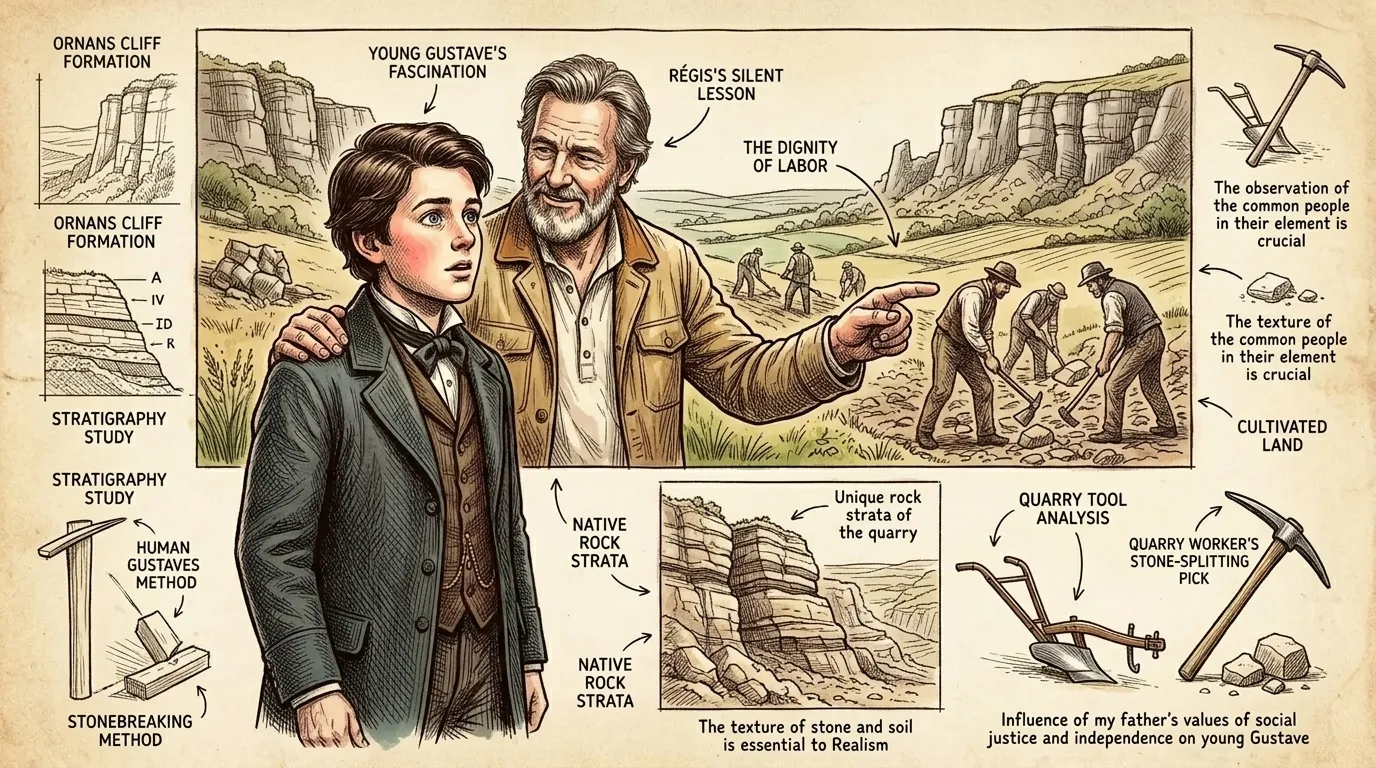
Courbet's early life in Ornans, a small town in eastern France, instilled in him a deep understanding of the lives of working people. As a boy, he witnessed the backbreaking labor of farmers and quarry workers. This experience fostered a desire to depict the reality of their existence in his art. His father instilled in him a strong sense of independence, which would later define his artistic path.
"His father, Régis Courbet, often told him, "Gustave, never forget where you come from. These people are the backbone of our nation.""
Art Fact: Courbet's father, Régis Courbet, was a prosperous farmer who instilled in his son a strong sense of social awareness.
Page 3
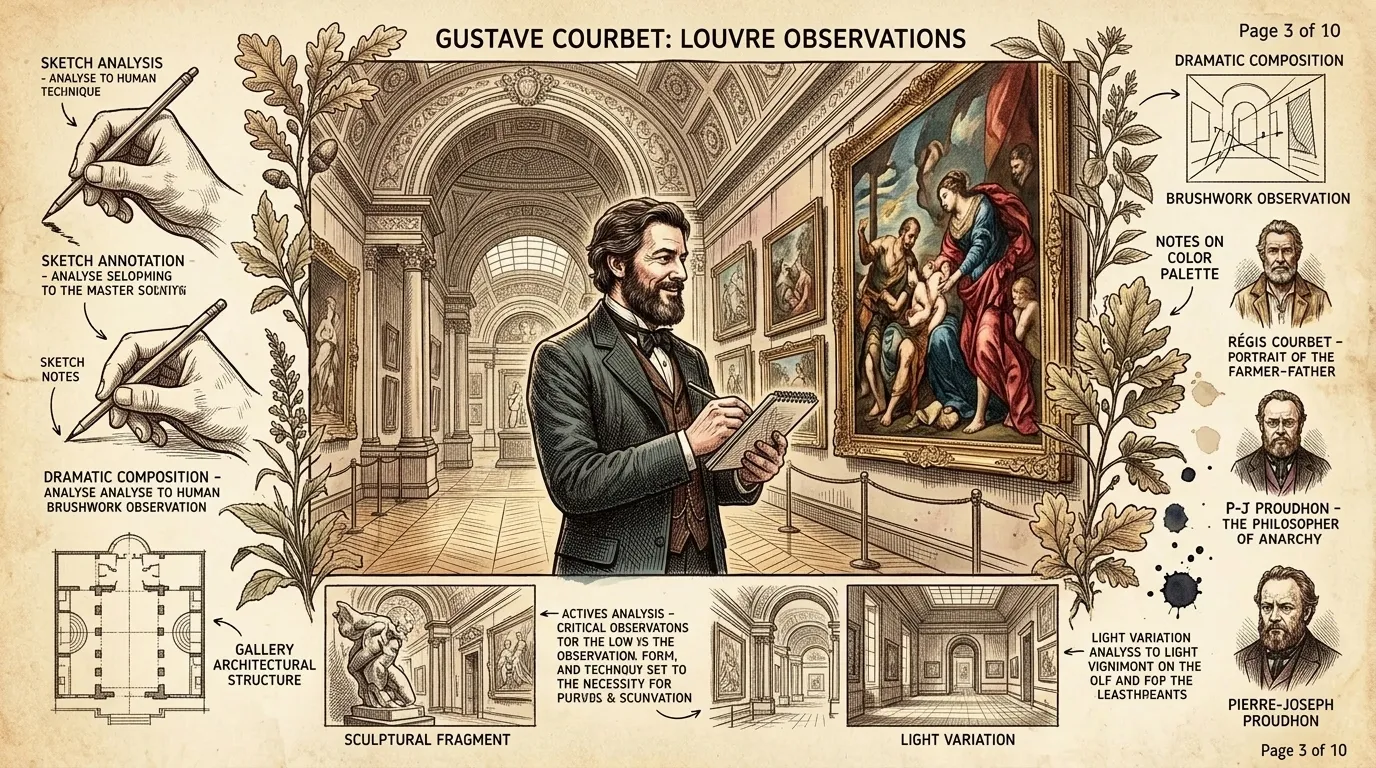
Courbet's formal art education in Paris exposed him to the works of the Old Masters. While he admired their technical skill, he felt their idealized depictions of life were detached from reality. He sought to create a new kind of art that reflected the world as he saw it, without embellishment or romanticism. He carefully studied their brushwork, composition, and use of light, adapting what he learned to his unique vision.
"During a visit to the Louvre, Courbet remarked to his fellow student, "These paintings are beautiful, but where is the truth? Where is the grit and sweat of real life?""
Art Fact: Courbet studied at the Académie Suisse in Paris, where he copied works by the Old Masters.
Page 4
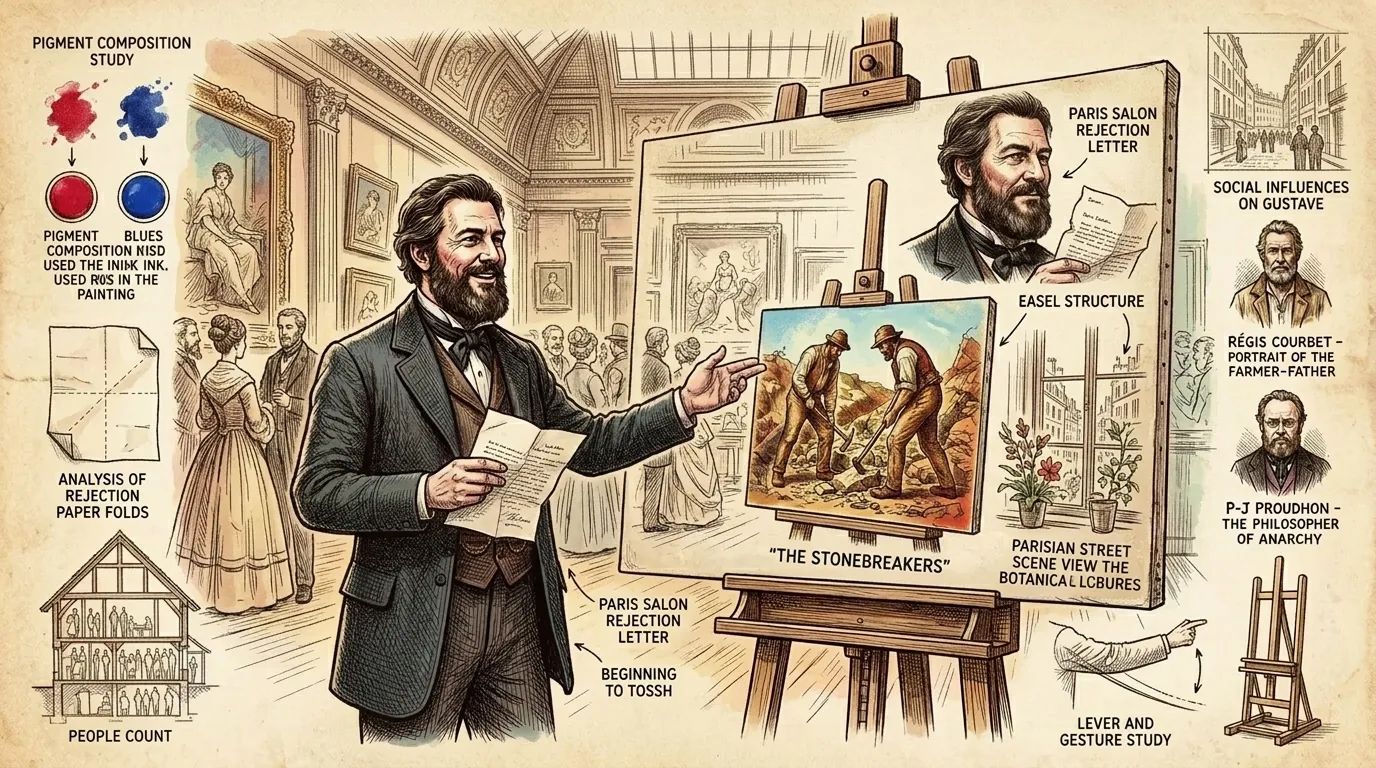
Courbet's early submissions to the Paris Salon, the official art exhibition of the French Academy, were often rejected. The art establishment found his realistic depictions of ordinary people too vulgar and unrefined. This rejection fueled his determination to challenge the established norms and create art on his own terms. He saw this as proof that his work was disrupting the status quo.
"After one particularly harsh rejection, Courbet confided in a friend, "They call my art ugly, but it is the ugliness of truth! I will not compromise my vision.""
Art Fact: Courbet faced repeated rejection from the Paris Salon, which championed academic art.
Page 5
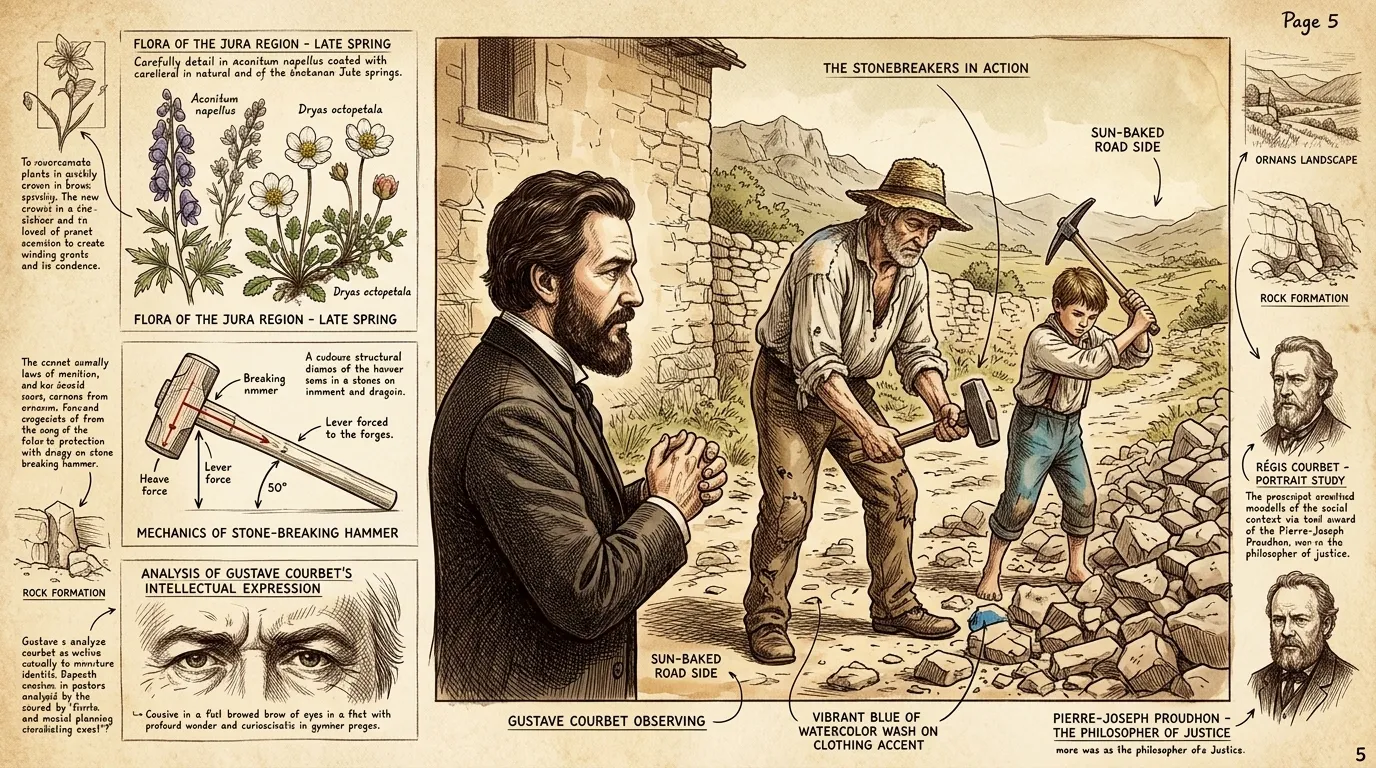
The inspiration for The Stonebreakers came from a chance encounter near Ornans. Courbet witnessed two men, one old and one young, toiling in the sun, breaking stones for a road. He was struck by the harshness of their labor and the dignity with which they carried it out. This scene became the basis for his groundbreaking painting. He felt compelled to capture their plight on canvas.
""Look at them," Courbet exclaimed to a companion. "Their faces are etched with hardship, but they work with pride. This is the reality that must be shown.""
Art Fact: The figures in The Stonebreakers were based on real people Courbet observed near his hometown.
Page 6

Courbet insisted on painting The Stonebreakers outdoors, directly from life. He believed this was the only way to capture the true colors and textures of the scene. He set up his easel near the quarry and worked tirelessly to depict the laborers with accuracy and authenticity. This dedication to plein air painting was revolutionary for its time.
"Courbet declared, "One cannot paint what one does not see. I must be there, in the midst of it all, to truly understand and convey the essence of their labor.""
Art Fact: Courbet was a pioneer of plein air painting, working directly from nature.
Page 7
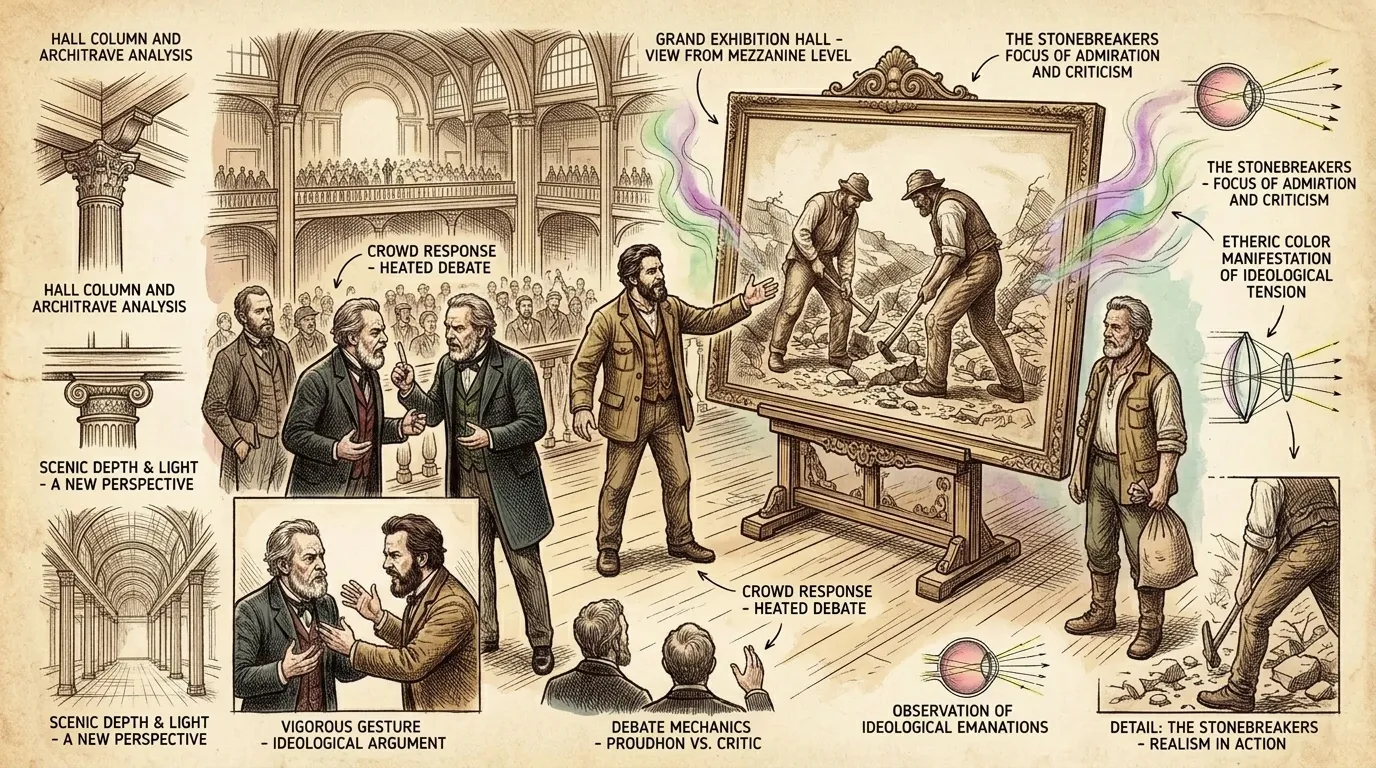
When The Stonebreakers was exhibited, it was met with harsh criticism. Many critics found the subject matter too low and vulgar. They accused Courbet of glorifying poverty and undermining social order. Others praised his honesty and courage in depicting the realities of working-class life. The painting became a symbol of the growing divide between traditional and modern art.
"One critic wrote, "This is not art, but propaganda! Why must we be subjected to such ugliness?" Another responded, "Courbet has shown us the truth, however uncomfortable it may be.""
Art Fact: The Stonebreakers sparked heated debate about the role of art in society.
Page 8
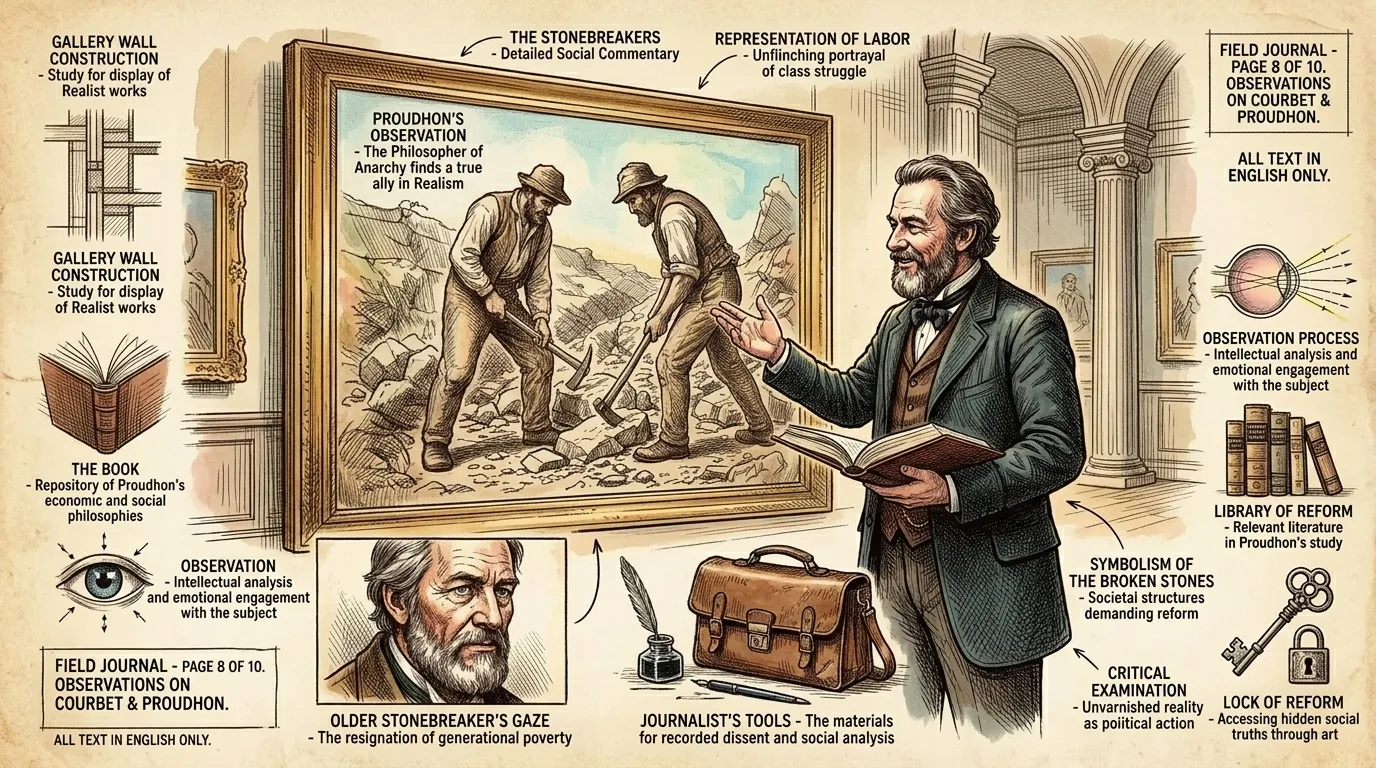
The Stonebreakers was more than just a painting; it was a social statement. Courbet sought to elevate the working class to the level of artistic subject matter, challenging the traditional hierarchy of art. He believed that art should reflect the realities of everyday life, not just idealized visions of beauty or heroism. His work paved the way for future generations of Realist artists.
"As the French philosopher Pierre-Joseph Proudhon said, "To be governed is to be watched, inspected, spied upon, directed, law-driven, numbered, regulated, enrolled, indoctrinated, preached at, controlled, checked, estimated, valued, censured, commanded, by creatures who have neither the right nor the wisdom nor the virtue to do so,' a powerful statement that Courbet believed represented the social and political climate of the time and it's impact on the stonebreakers."
Art Fact: The Stonebreakers is considered a key work of Realism, influencing generations of artists.
Page 9
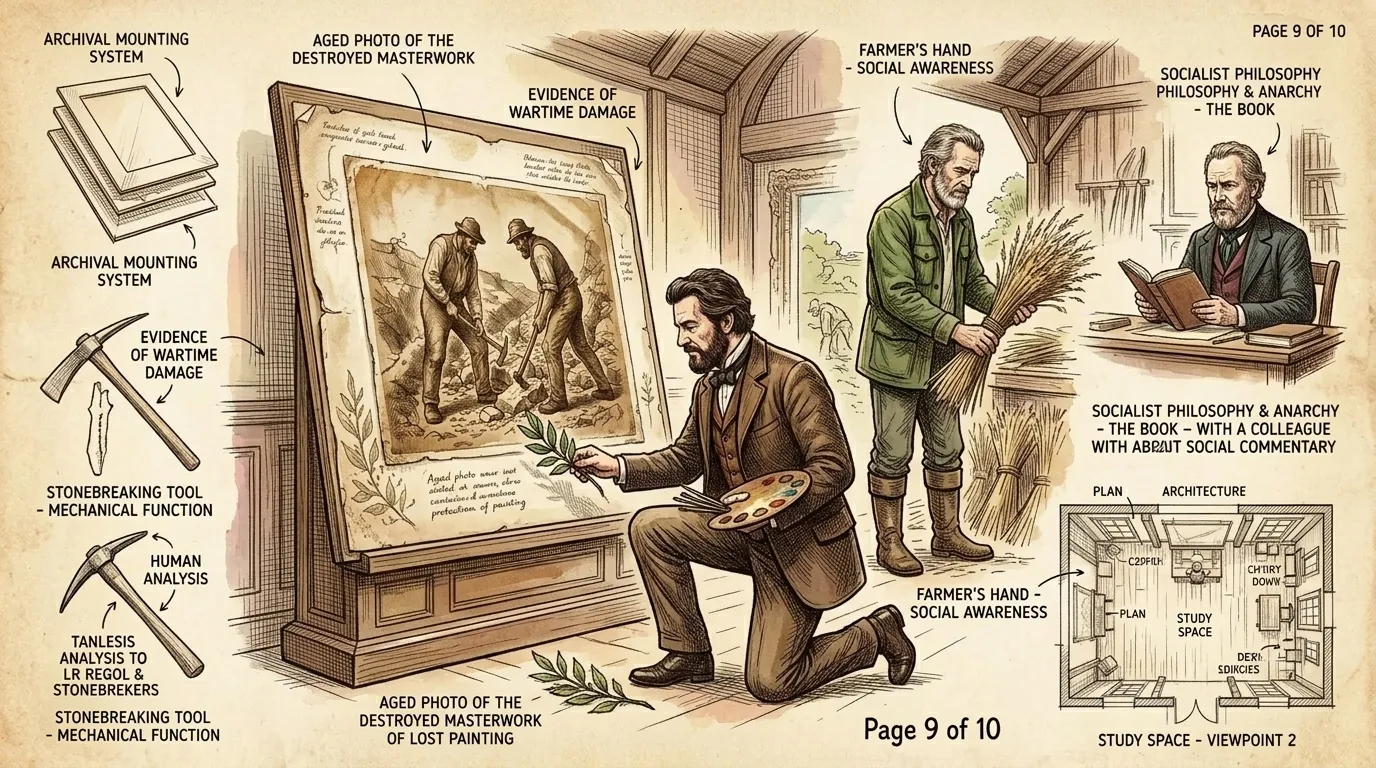
Tragically, The Stonebreakers was destroyed during World War II, when the transport vehicle moving the painting to a safe location was bombed. Only black-and-white photographs remain as evidence of its existence. Despite its physical loss, the painting continues to inspire artists and social activists with its powerful message of social justice. Its legacy lives on in art history textbooks and online reproductions.
"An art historian laments, "It is a great loss to the world. A masterpiece erased by the ravages of war. We can only imagine its true power in color.""
Art Fact: The destruction of The Stonebreakers during World War II is a profound loss to art history.
Page 10
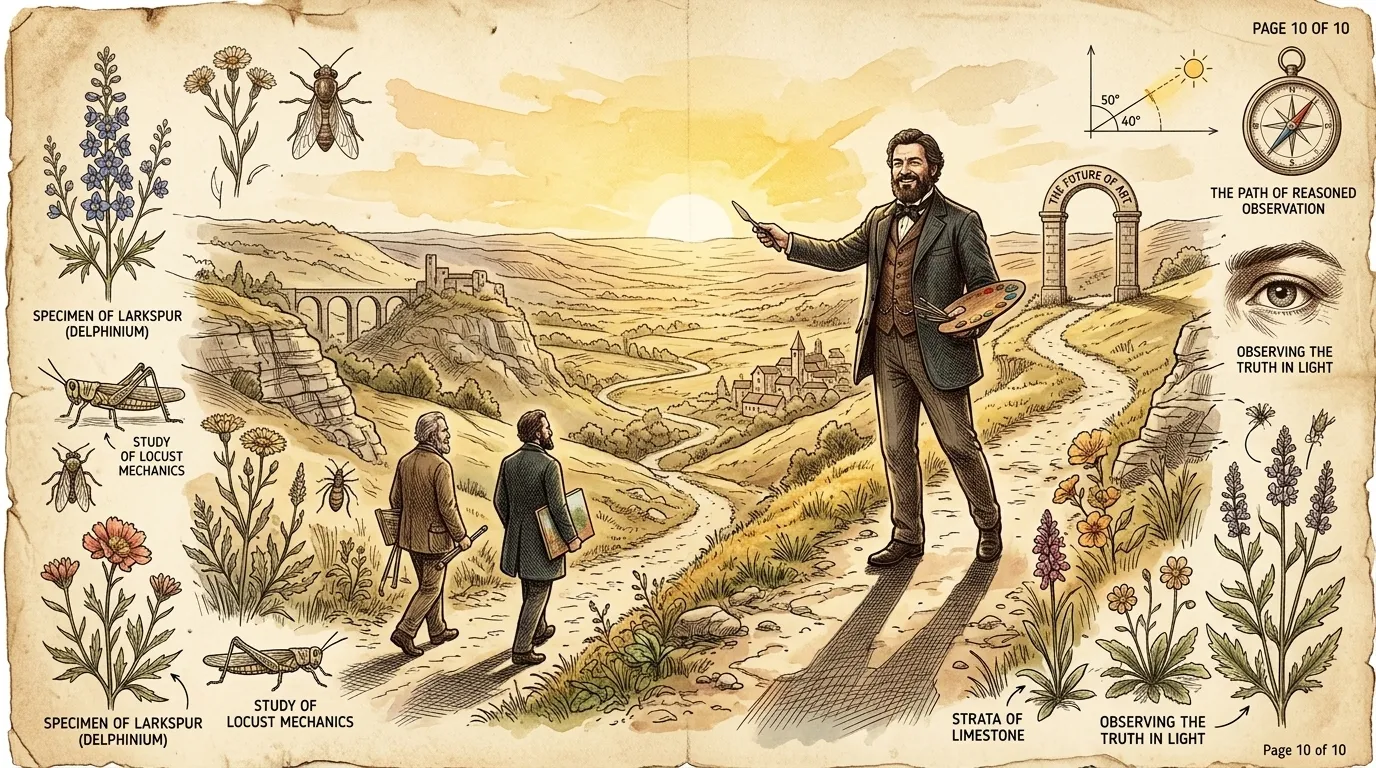
Though The Stonebreakers is gone, Courbet's legacy endures. His commitment to portraying the realities of working-class life transformed the course of art history. He challenged the established norms and paved the way for future generations of artists who sought to reflect the world as they saw it. Courbet's work reminds us of the importance of social justice and the power of art to speak truth to power.
"The essence of it all, according to Courbet himself, rests in the simple yet powerful quote from the 19th-century French writer Victor Hugo, "Even the darkest night will end and the sun will rise.""
Art Fact: Courbet's commitment to realism and social commentary continues to inspire artists and activists today.
About this story
- Location: Germany
- Audience: general readers
Questions and answers
Questions and answers about The Stonebreakers by Gustave Courbet (Dresden, Germany — 1849)
Read Wonder Arts on your phone
Wonder Arts is available on Android. Get Wonder Arts on Google Play.
More Wonder Arts stories
- The Swing Bridge by Thomas Cole (USA — 1837)
- A Burial at Ornans by Gustave Courbet (France — 1849)
- A Cavalier by Frans Hals (Australia — 1624)
- A Sunday on La Grande Jatte by Georges Seurat (Paris, France — 1884)
- Abbey in the Oakwood by Caspar David Friedrich (Germany — 1810)
- Abstract Expressionism by Jackson Pollock (New York, USA — 1940s)