The Swing by Jean-Honoré Fragonard (London, UK — 1767)
The Swing by Jean-Honoré Fragonard (London, UK — 1767) — an illustrated arts story, set in United Kingdom. 10 illustrated pages, free to read on Wonder Arts.
Page 1
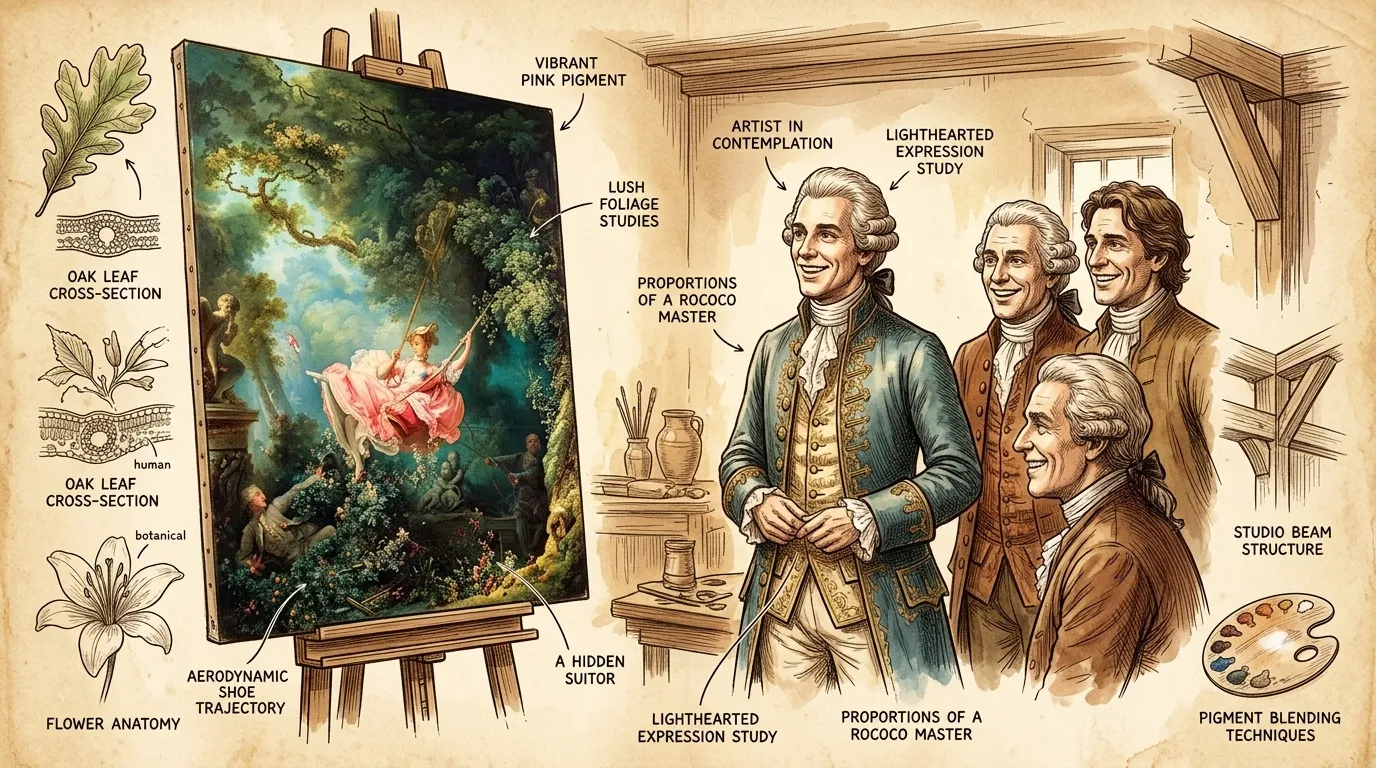
Jean-Honoré Fragonard stands before his masterpiece, 'The Swing,' completed in 1767. Its dimensions are 81 x 64.2 cm, a captivating scene of flirtation and hidden desires. But did you know, this playful scene was commissioned by a Baron who wanted his mistress immortalized?
""At last," Fragonard murmurs, his eyes reflecting the vibrant colors of the painting, "a moment captured, a story told.""
Art Fact: The Swing, Jean-Honoré Fragonard, 1767. Oil on canvas. Wallace Collection, London.
Page 2
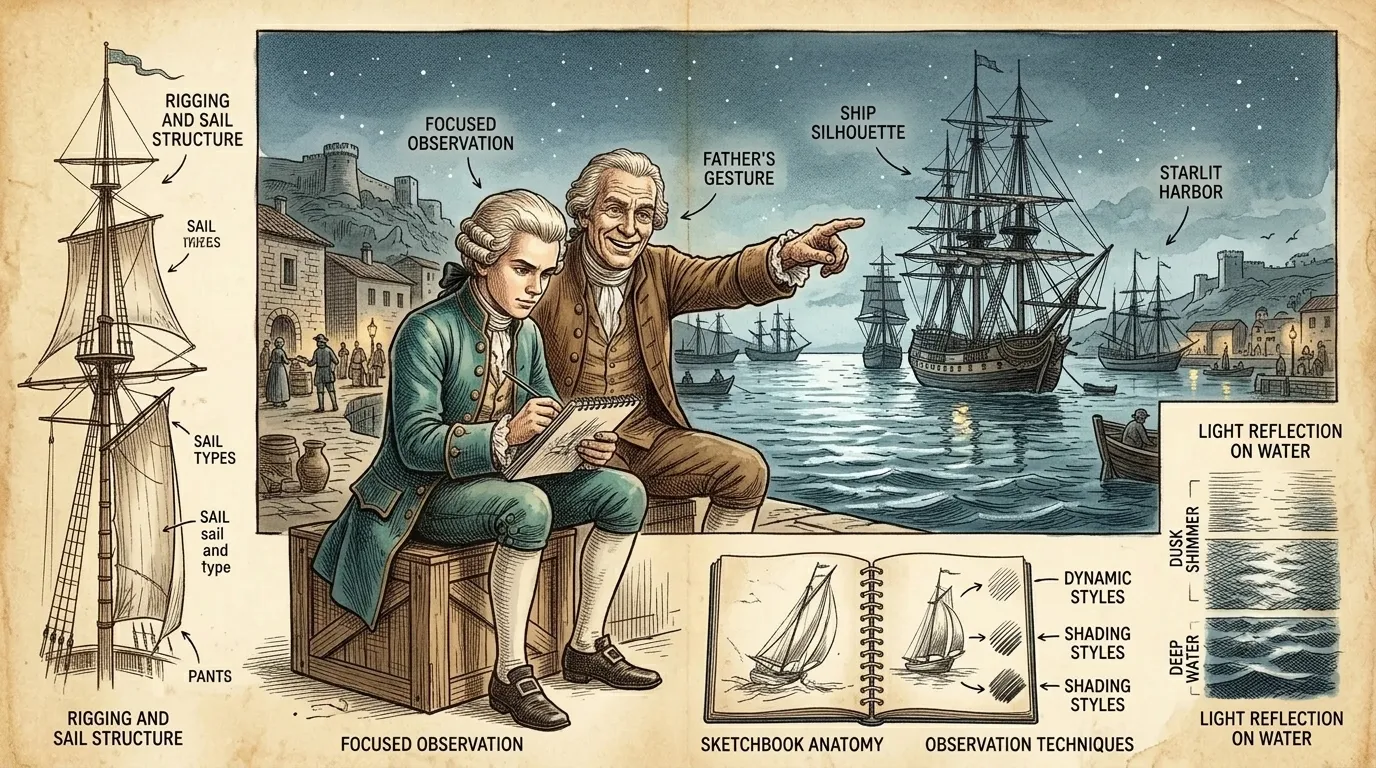
Young Jean-Honoré, barely a teenager, sketched furiously by the harbor. The air buzzed with the cries of gulls and the salty tang of the sea. The ships, silhouetted against the starlit rivers, seemed to whisper tales of distant lands.
""Look at the way the light dances on the water, Jean-Honoré!" his father exclaimed, gesturing towards the shimmering river. "Remember this, capture it.""
Art Fact: Fragonard's early exposure to the dynamic light of the harbor significantly influenced his later mastery of light and shadow.
Page 3
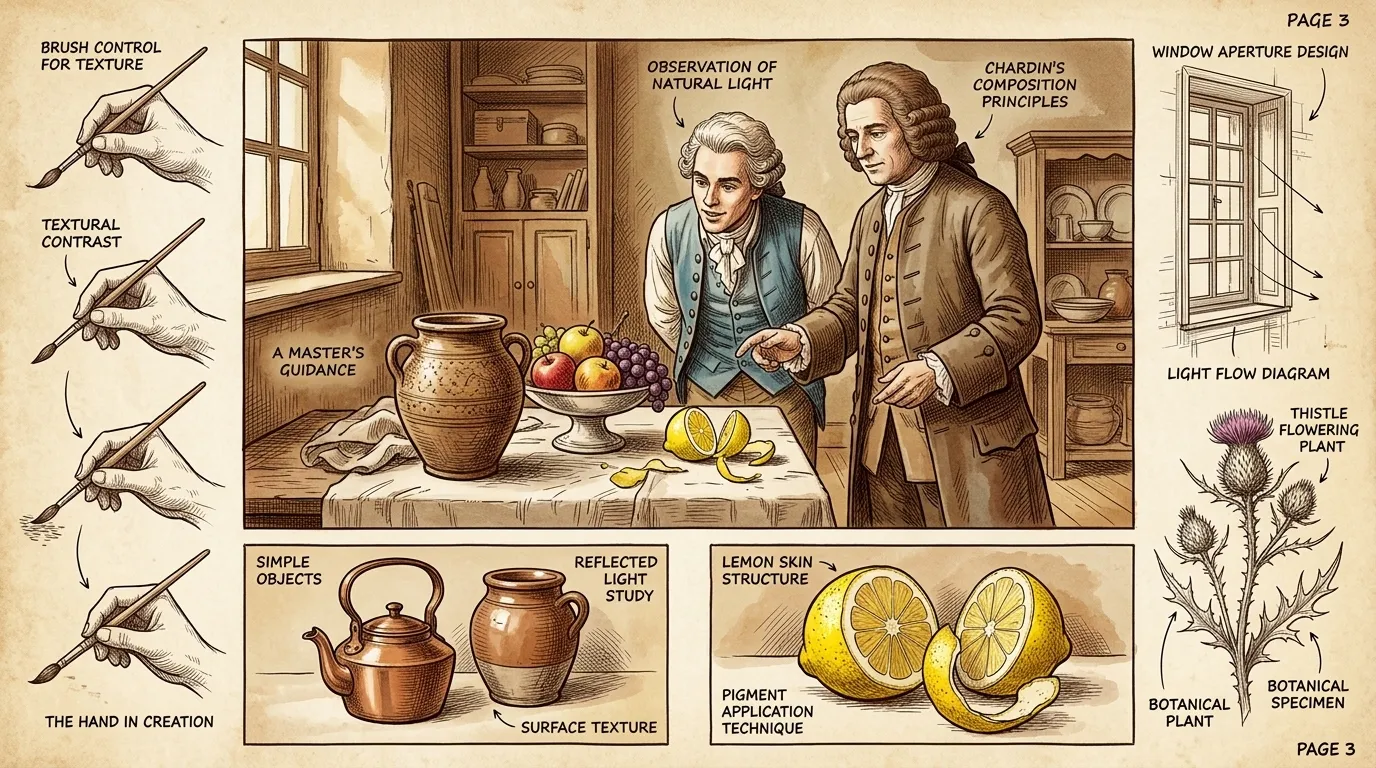
In the studio of Jean-Baptiste-Siméon Chardin, young Fragonard learned the art of subtle observation. The master's still lifes, bathed in gentle light, taught him the beauty of simplicity. Chardin emphasized light, form, and how to represent textures.
""Observe, Fragonard," Chardin instructed, his voice calm and steady. "As Leonardo da Vinci once said, 'Painting embraces all the ten functions of the eye; that is to say, darkness, light, body and color, shape and location, distance and nearness, motion and rest.'""
Art Fact: Chardin's influence is evident in Fragonard's early works, particularly in his use of light and texture.
Page 4
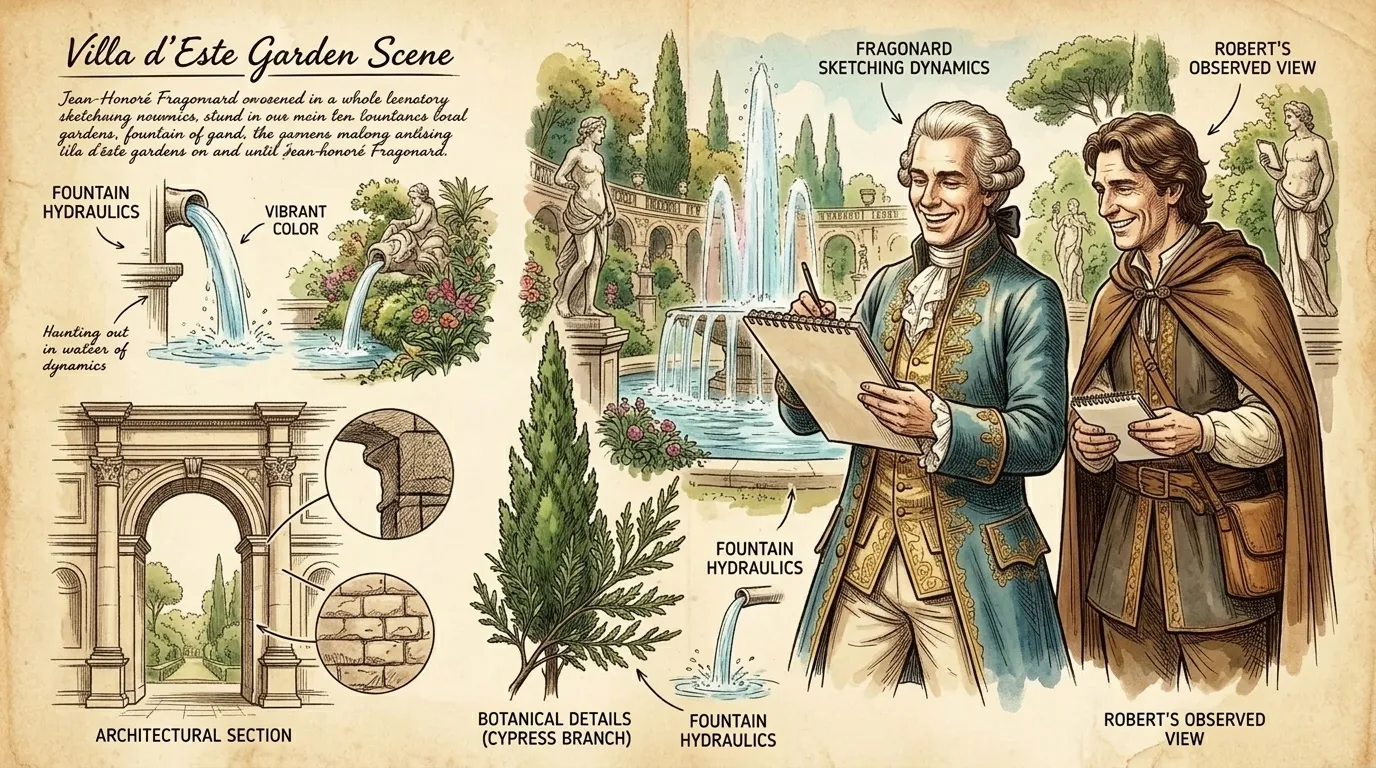
Rome! The city exploded with color and grandeur. In the Villa d'Este gardens, Fragonard sketched tirelessly, captivated by the play of light on the fountains and statues. The spirit of the Renaissance was in the very air.
""The architecture, the art, the light!" Fragonard exclaimed to his friend, Hubert Robert. "It's overwhelming!""
Art Fact: Fragonard's time in Italy was crucial to his development, exposing him to the masters of the Renaissance and Baroque periods.
Page 5
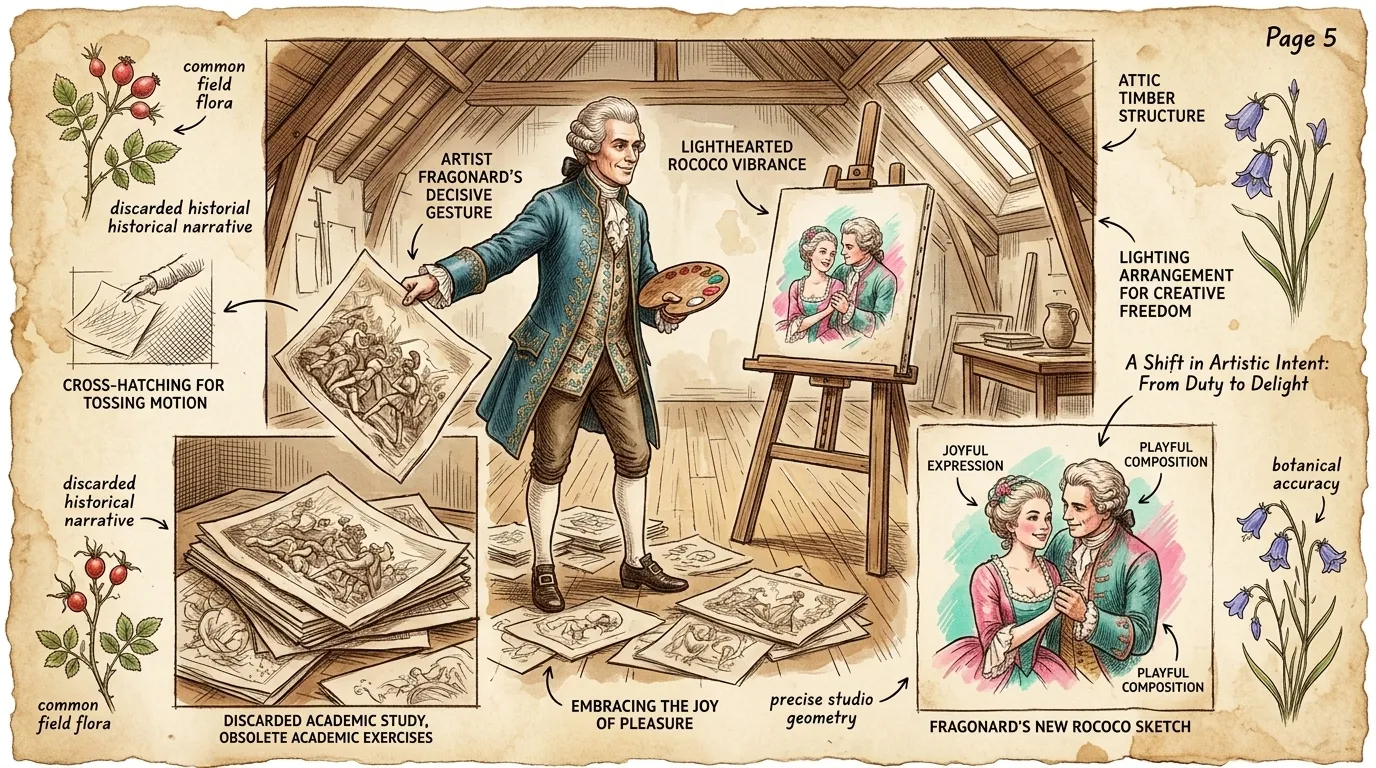
Back in Paris, Fragonard found himself drawn to the Rococo style. Its lightheartedness, its focus on pleasure and beauty, resonated with his own artistic sensibilities. He abandoned his earlier academic style for something more playful, more sensual.
""Why paint somber history when one can capture the fleeting joy of a lover's glance?" Fragonard mused, tossing aside a sketch of a Roman battle scene."
Art Fact: Fragonard's embrace of the Rococo style marked a turning point in his career, establishing him as a leading painter of the French court.
Page 6
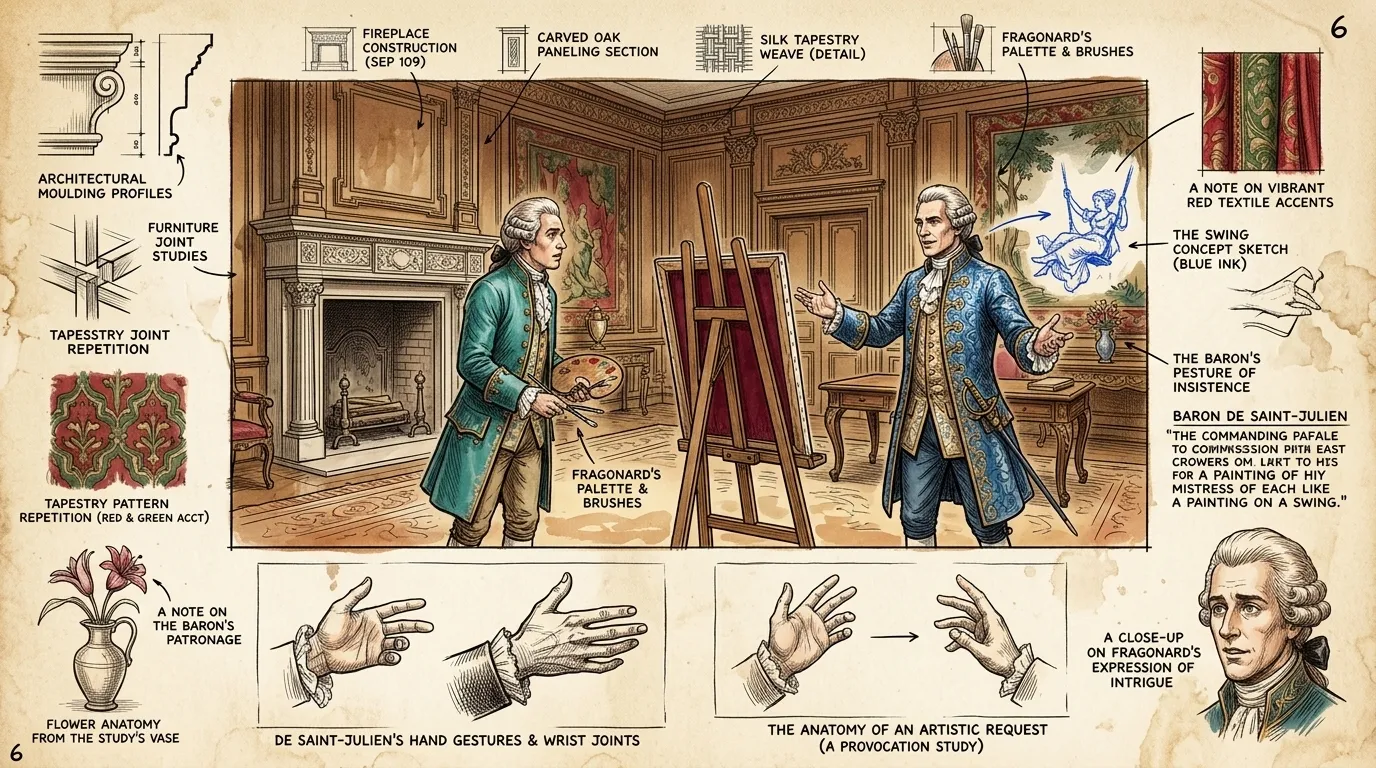
A commission arrived from Baron de Saint-Julien: a portrait of his mistress on a swing, capturing a clandestine moment of pleasure. Fragonard hesitated. Such a subject was...unconventional. The Baron wanted something titillating and playful.
""Monsieur Fragonard," the Baron stated, his voice laced with impatience, "I desire a painting that captures the...delicate balance of pleasure and secrecy.""
Art Fact: The commission for 'The Swing' was a pivotal moment, pushing Fragonard into new artistic territory.
Page 7
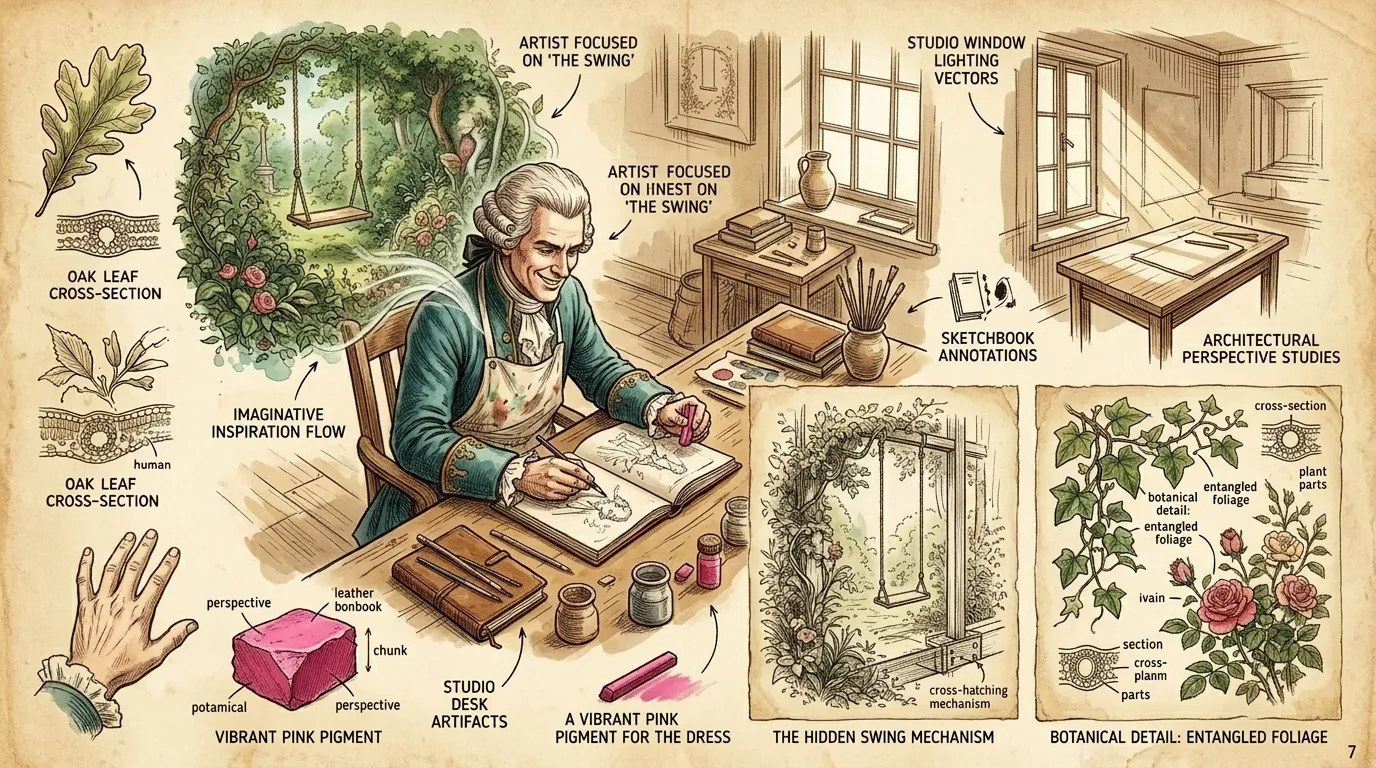
He imagined the scene: a lush, overgrown garden, a hidden swing, stolen glances, and whispered secrets. The garden became a metaphor for the hidden desires that simmered beneath the surface of aristocratic life. He decided to show the mistress in vibrant pink.
""A garden," Fragonard murmured to himself, sketching furiously, "a place of both innocence and temptation.""
Art Fact: The garden setting became a crucial element in Fragonard's vision for 'The Swing,' representing the hidden desires and playful nature of the aristocracy.
Page 8
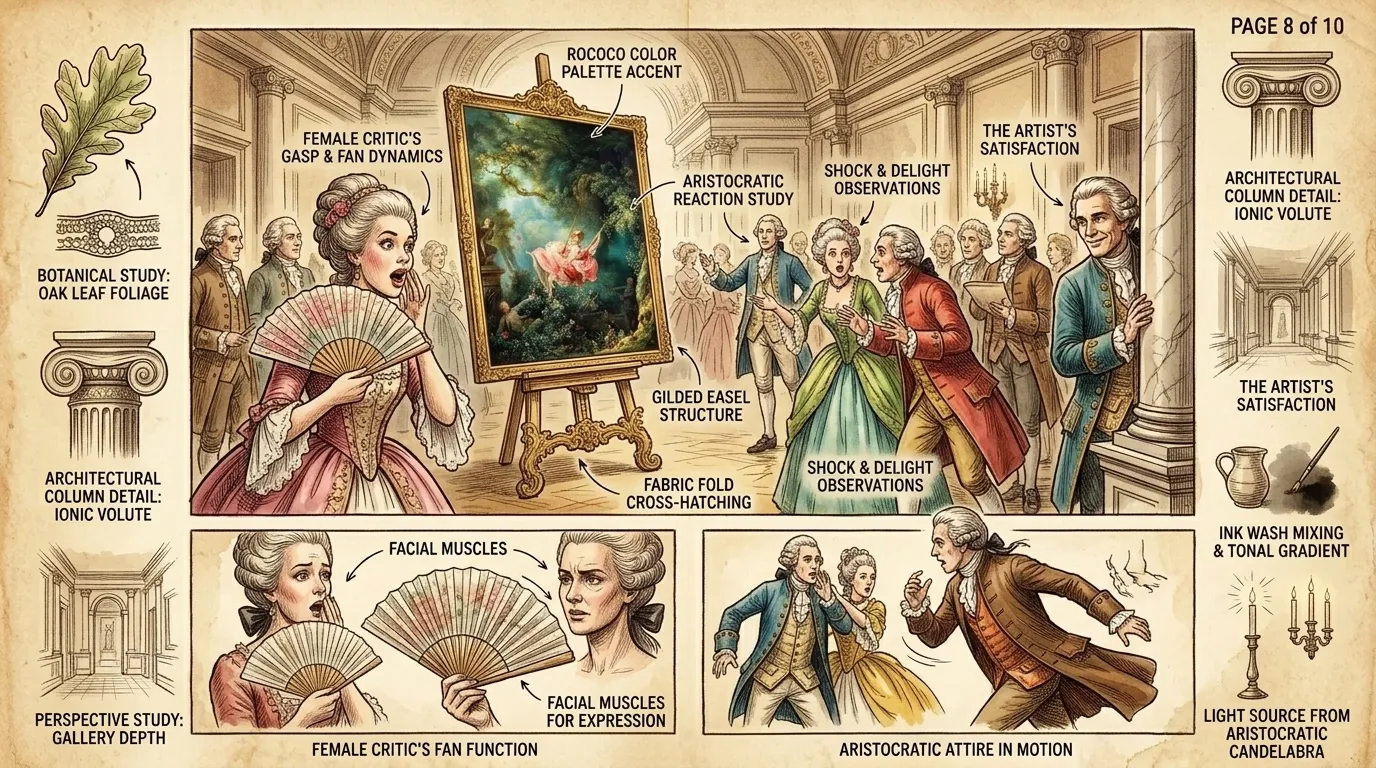
The painting was unveiled to gasps and whispers. Some were scandalized by its suggestive nature, while others were delighted by its playful charm. The Baron was pleased, and soon, everyone wanted to see the 'Swing'. "As Oscar Wilde put it, 'The only way to get rid of temptation is to yield to it,' Fragonard overheard a critic say."
""Such audacity!" one critic exclaimed, fanning herself dramatically. "But...it's undeniably captivating!""
Art Fact: The painting sparked immediate controversy, solidifying Fragonard's reputation as a bold and innovative artist.
Page 9
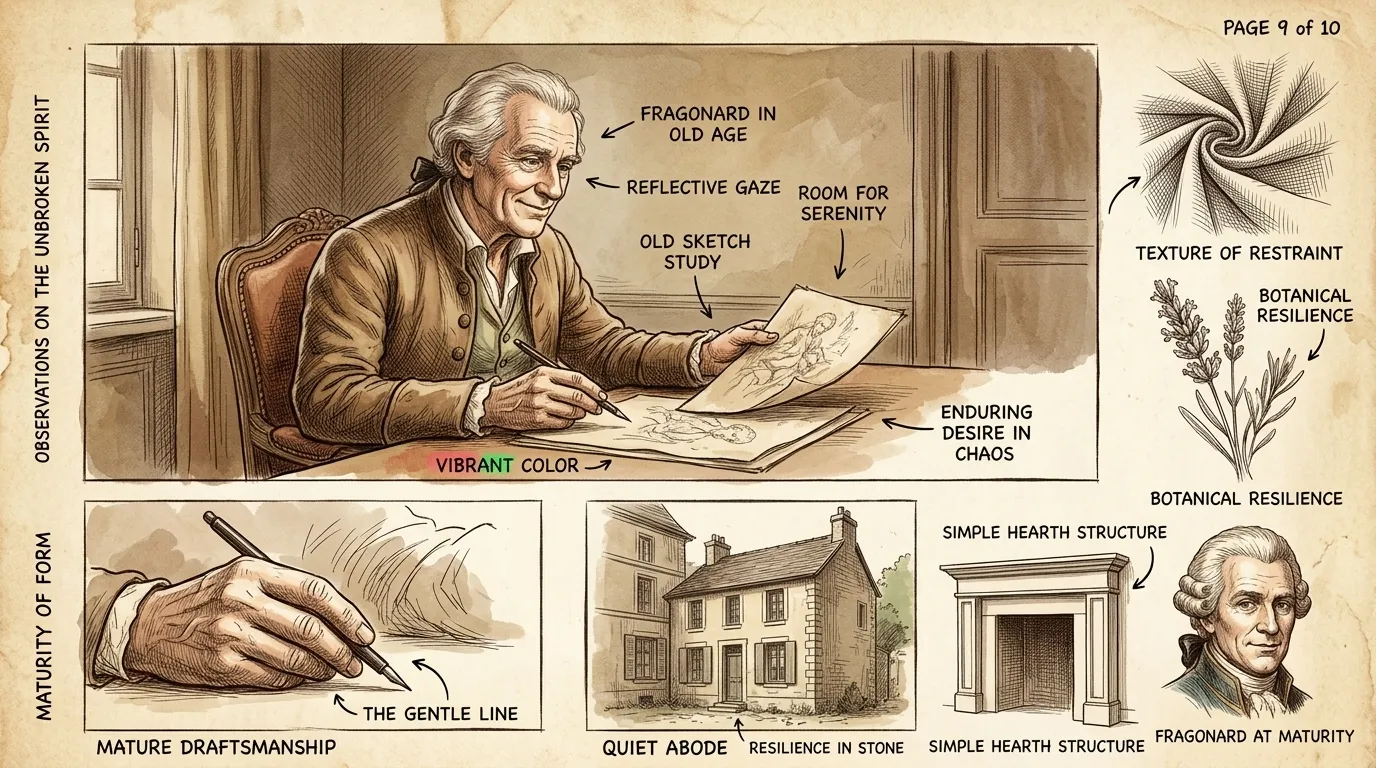
Years passed. Revolutions raged. Tastes changed. Yet, 'The Swing' endured, its playful sensuality continuing to captivate audiences. The colors remained vibrant, the message timeless.
""Even amidst chaos," Fragonard reflected, now an older man, "beauty persists, and the human heart still seeks pleasure.""
Art Fact: The French Revolution caused Fragonard to leave Paris. During his time in exile, he did not paint much. His later works reflected the solemnity of his age.
Page 10
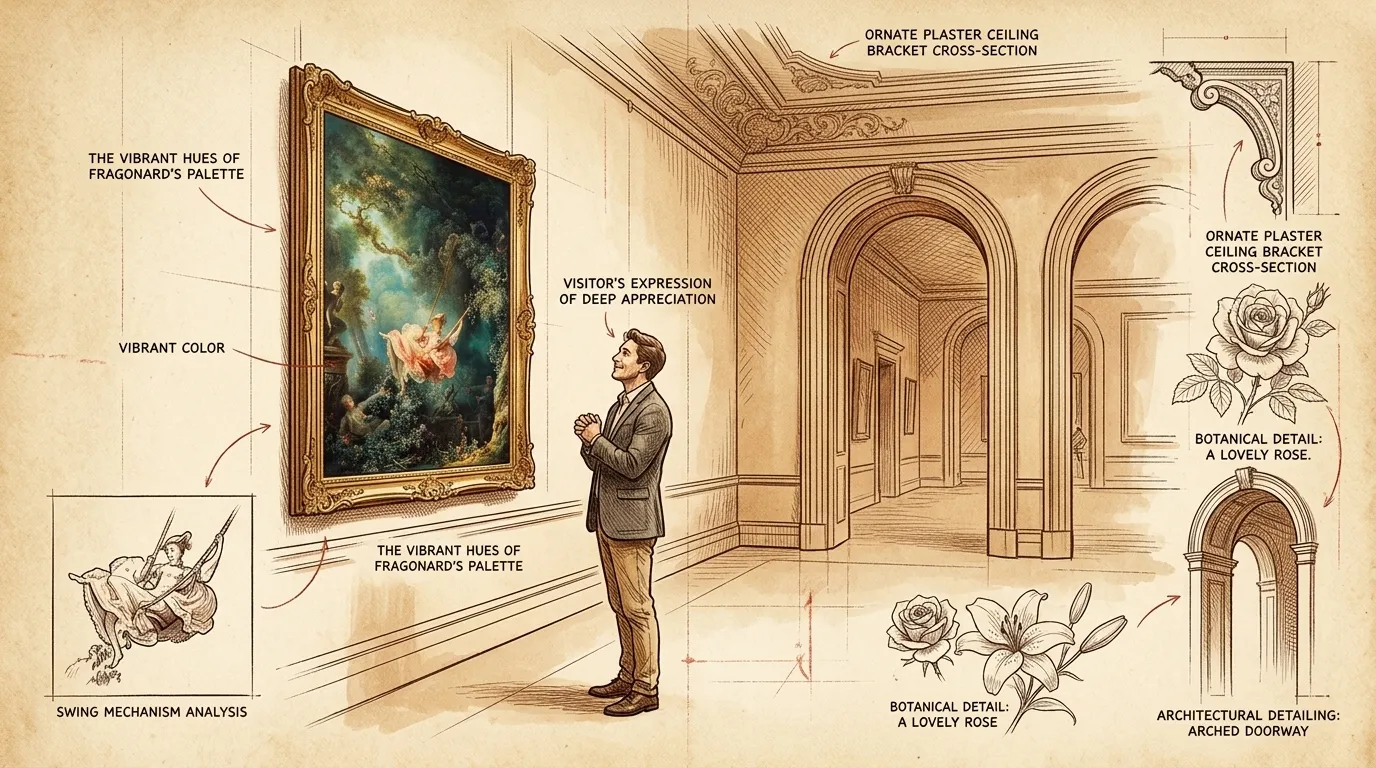
Today, 'The Swing' hangs in the Wallace Collection in London, a testament to Fragonard's enduring genius. It reminds us that even in the most turbulent times, the pursuit of beauty and pleasure remains a vital part of the human experience. The artist's vision survives because it speaks to the timeless desires of the human heart.
""Fragonard captured a moment, a feeling, an era," a modern visitor whispers, gazing at the painting. "His art survives because it speaks to something deep within us.""
Art Fact: Fragonard's legacy rests on his ability to capture the ephemeral beauty and playful sensuality of the Rococo era.
About this story
- Location: United Kingdom
- Audience: general readers
Questions and answers
Questions and answers about The Swing by Jean-Honoré Fragonard (London, UK — 1767)
Read Wonder Arts on your phone
Wonder Arts is available on Android. Get Wonder Arts on Google Play.
More Wonder Arts stories
- The Taj Mahal (Agra, India — 1653)
- A Burial at Ornans by Gustave Courbet (France — 1849)
- A Cavalier by Frans Hals (Australia — 1624)
- A Sunday on La Grande Jatte by Georges Seurat (Paris, France — 1884)
- Abbey in the Oakwood by Caspar David Friedrich (Germany — 1810)
- Abstract Expressionism by Jackson Pollock (New York, USA — 1940s)