The Thinker by Auguste Rodin (Paris, France — 1880)
The Thinker by Auguste Rodin (Paris, France — 1880) — an illustrated arts story, set in France. 10 illustrated pages, free to read on Wonder Arts.
Page 1
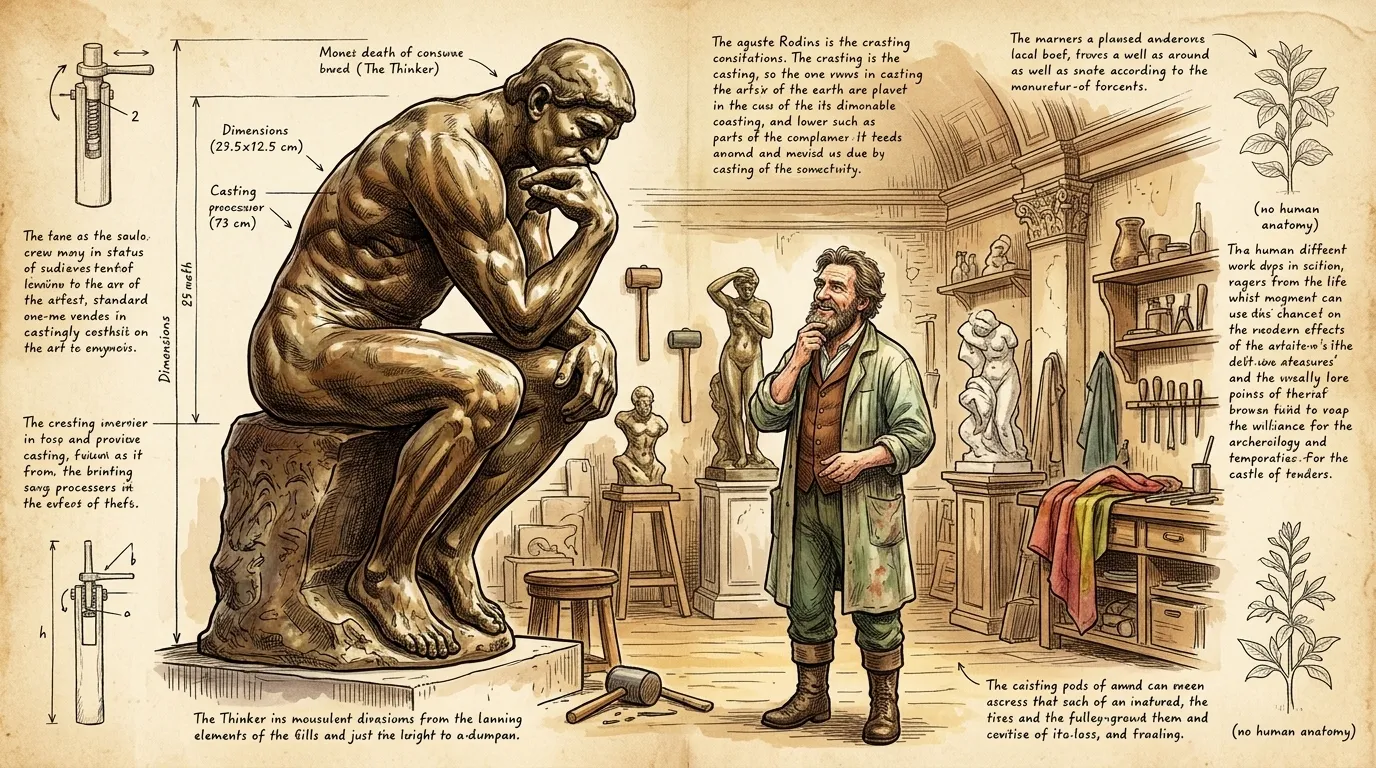
Auguste Rodin, a man carved from the very earth he sculpted, stands before his creation: The Thinker. Completed around 1880, this bronze giant, measuring approximately 71.5 cm in height, resides today in the Musée Rodin in Paris. A symbol of contemplation, its creation was fraught with revisions and reinterpretations. Rodin once said, 'The artist is a receptacle for emotions that come from all over the place: from the sky, from the earth, from a scrap of paper, from a passing shape, from a spider's web.'
"Rodin mutters, 'From the depths of the Inferno, he rises, a modern Adam... or perhaps, simply, Man himself, contemplating the fire.'"
Art Fact: Rodin initially conceived The Thinker as part of The Gates of Hell, a massive sculptural doorway commissioned for a planned museum of decorative arts that was never built. He later exhibited it as an independent work.
Page 2
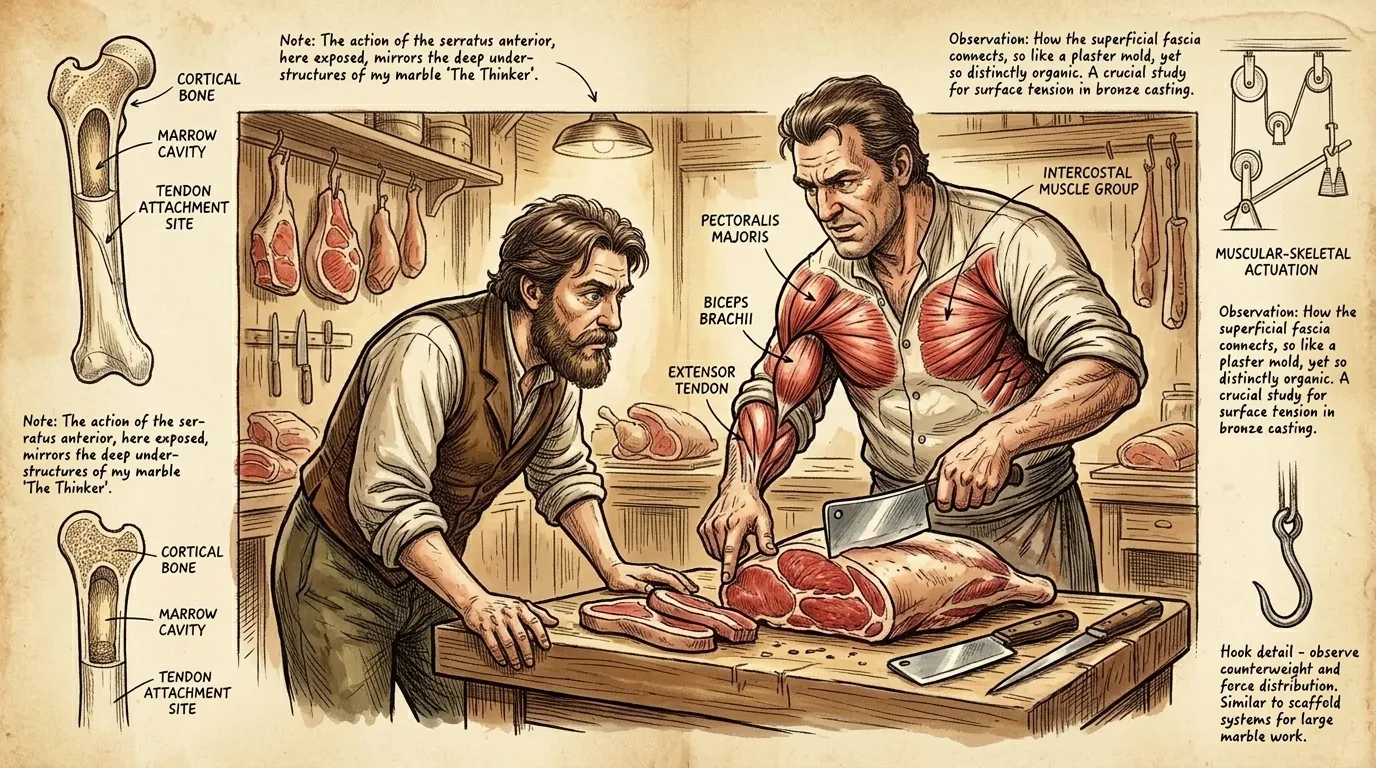
Young Rodin found himself apprenticed to a butcher, a stark contrast to the artistic dreams he harbored. Yet, the precise anatomical knowledge he gained would later inform his sculptures. He observed how muscles moved, how flesh hung on bone, and how life and death played out in the curves of the body. Later, he would recall that, 'Nothing is a waste of time if you use the experience wisely.'
"Rodin's master, a gruff but observant man, says, 'Look close, Auguste. Every cut tells a story. Every muscle has a purpose. Art is not just beauty; it's understanding.'"
Art Fact: Rodin's early struggles for formal recognition led him to various trades, including decorative arts and stonework, before finding lasting success as a sculptor.
Page 3
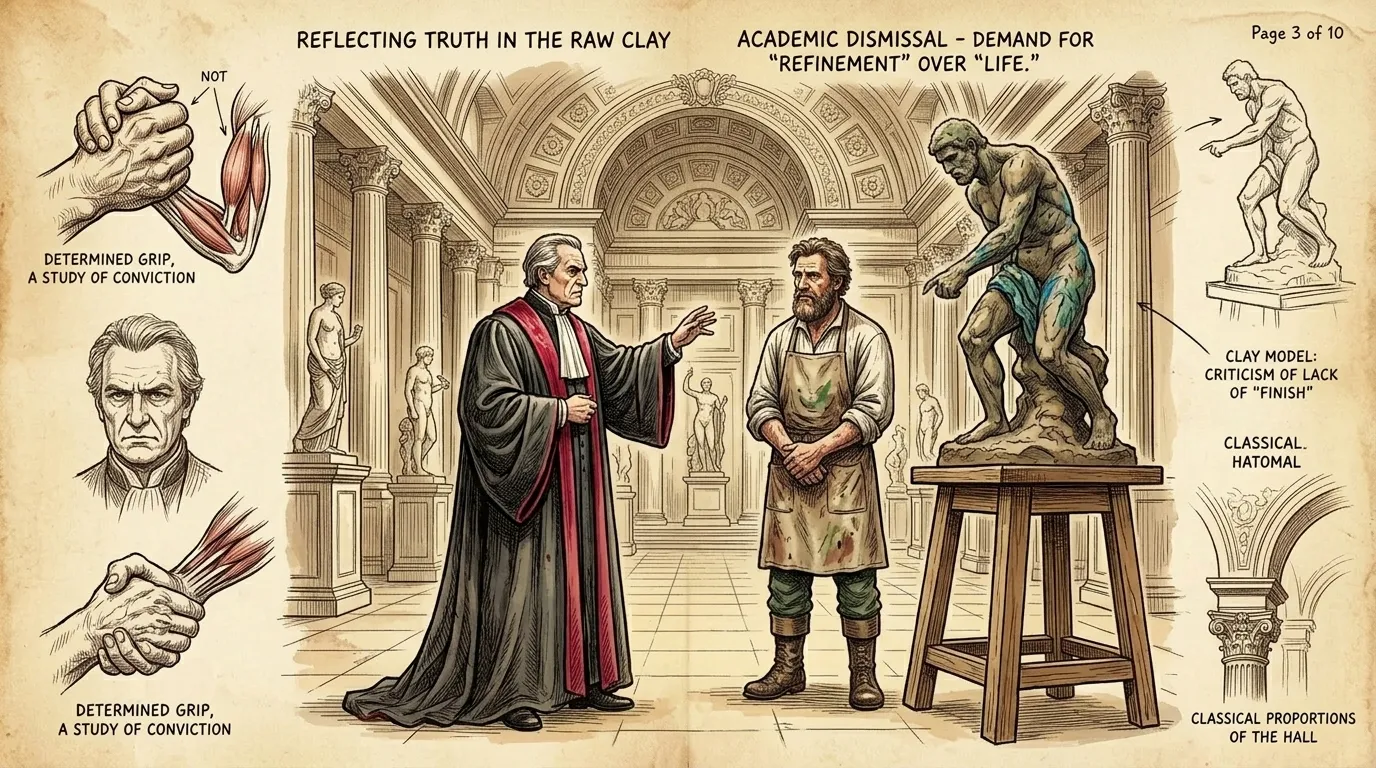
Three times, Rodin applied to the École des Beaux-Arts, and three times he was denied. This rejection, while devastating, fueled his determination to forge his own path. He learned that academic approval was not the sole measure of artistic merit. 'There is no such thing as talent,' he would later claim. 'There is only long, patient labor.'
"A stern academician tells Rodin, 'Your work lacks refinement, Monsieur Rodin. It is too... raw. Too... real.' Rodin, crestfallen, replies, 'But is not truth the highest form of beauty?'"
Art Fact: Despite his lack of formal training, Rodin gained practical experience working in the studios of established sculptors, honing his craft through observation and practice.
Page 4
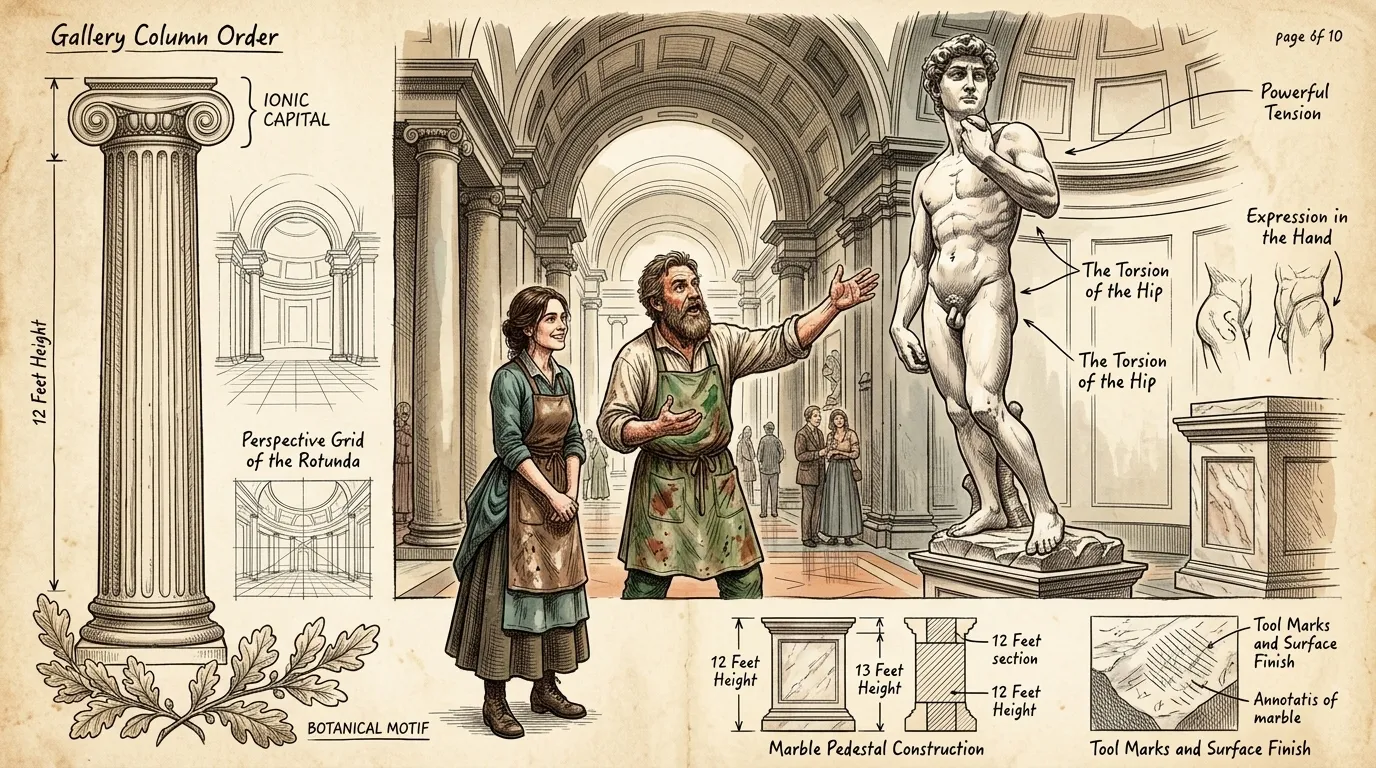
Rodin's travels to Italy, and Florence in particular, proved transformative. Encountering the work of Michelangelo was a revelation. He saw the power of the human form to convey profound emotion. He realized that art was not just about imitation, but about capturing the essence of life. As Leonardo da Vinci once wrote, 'Painting embraces all the ten functions of the eye; that is to say, darkness, light, body and colour, substance and form, distance and nearness, motion and rest.'
"Standing before Michelangelo's David, Rodin exclaims to a fellow artist, 'Look at the power! The tension! It's not just a body; it's a universe of feeling!'"
Art Fact: The influence of Michelangelo is evident in Rodin's focus on musculature and dynamic poses, particularly in his male figures.
Page 5
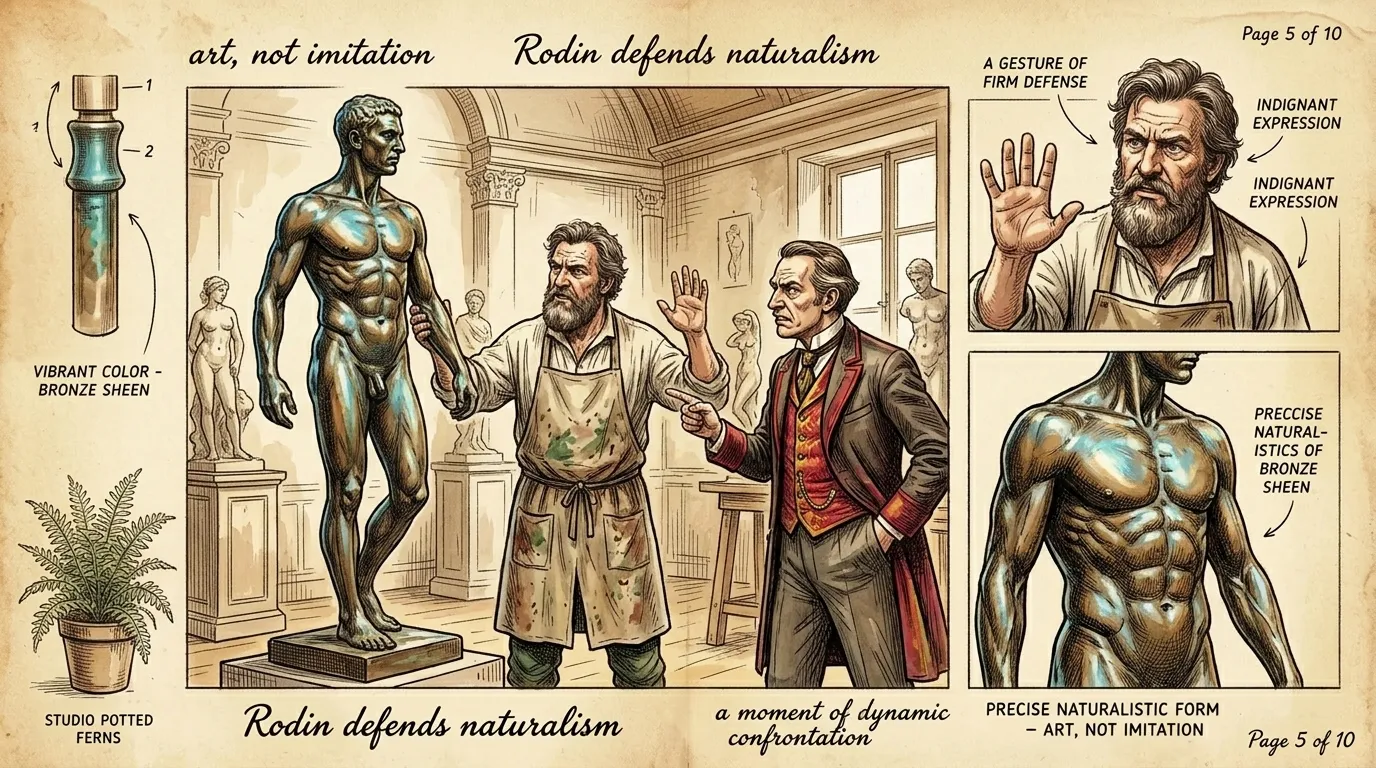
Rodin's sculpture The Age of Bronze created a sensation, but not of the good kind. He was accused of life-casting – using a living model to create the sculpture directly. The accusation, though false, forced Rodin to defend his artistic integrity and pushed him to further refine his technique. It highlighted the importance of originality in art. As Oscar Wilde observed, 'To define is to limit.'
"A critic confronts Rodin, 'It's too perfect, Monsieur Rodin! It must be a cast! No human hand could create such detail!' Rodin retorts, 'It is the result of years of study, of countless hours observing the human form. It is art, not imitation!'"
Art Fact: The controversy surrounding The Age of Bronze forced Rodin to be more meticulous in documenting his sculpting process and to emphasize the artistic intervention in his work.
Page 6
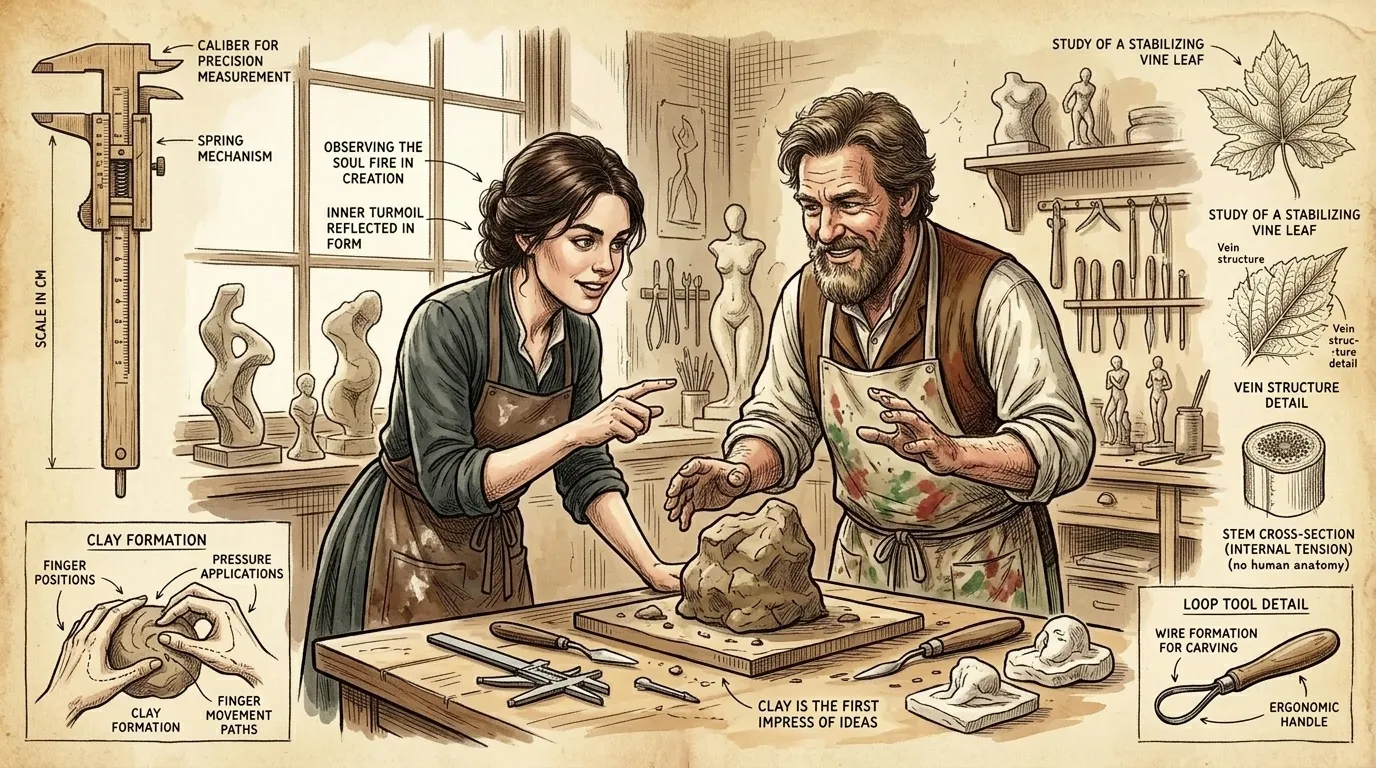
The arrival of Camille Claudel in Rodin's studio marked a turning point. She became his muse, his student, and his collaborator. Their passionate but ultimately tragic relationship fueled their artistic endeavors. Though she was often overshadowed, her contributions were undeniable. Helen Keller once said, 'Although the world is full of suffering, it is also full of overcoming it.'
"Camille Claudel asks Rodin, 'What if we portrayed inner turmoil?' Rodin responds, 'Yes, sculpt the fire of the soul!'"
Art Fact: Camille Claudel's influence on Rodin's work is debated, but many scholars believe she contributed significantly to his exploration of emotion and psychological intensity.
Page 7
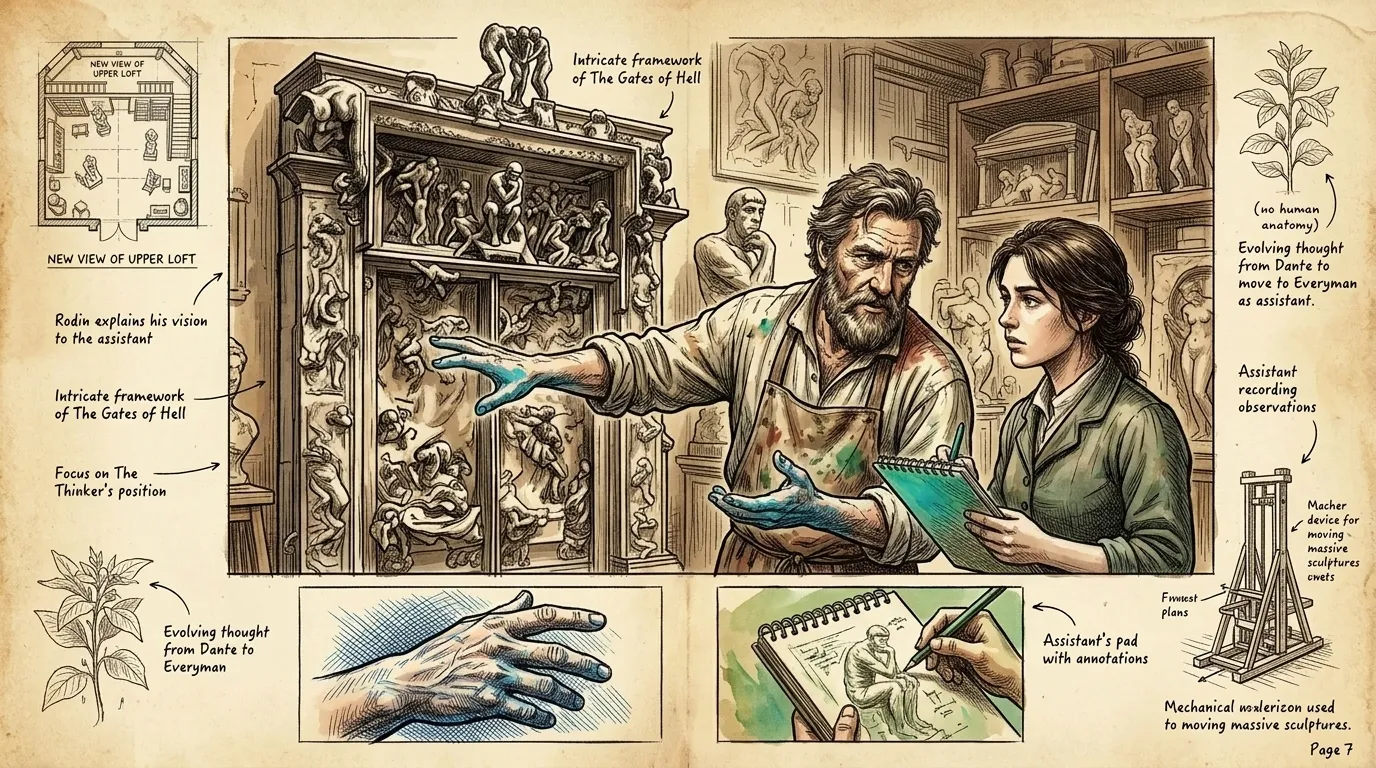
The commission for The Gates of Hell, though never fully realized as intended, became the crucible in which The Thinker was forged. Initially conceived as Dante, pondering the inferno, The Thinker evolved into a universal symbol of human intellect and introspection. As Albert Einstein said, 'The important thing is not to stop questioning.'
"Rodin states to his studio assistant, 'He is no longer just Dante. He is everyman, contemplating the nature of existence.'"
Art Fact: The Gates of Hell provided Rodin with a rich source of inspiration for individual sculptures, including The Kiss, Ugolin, and The Thinker.
Page 8
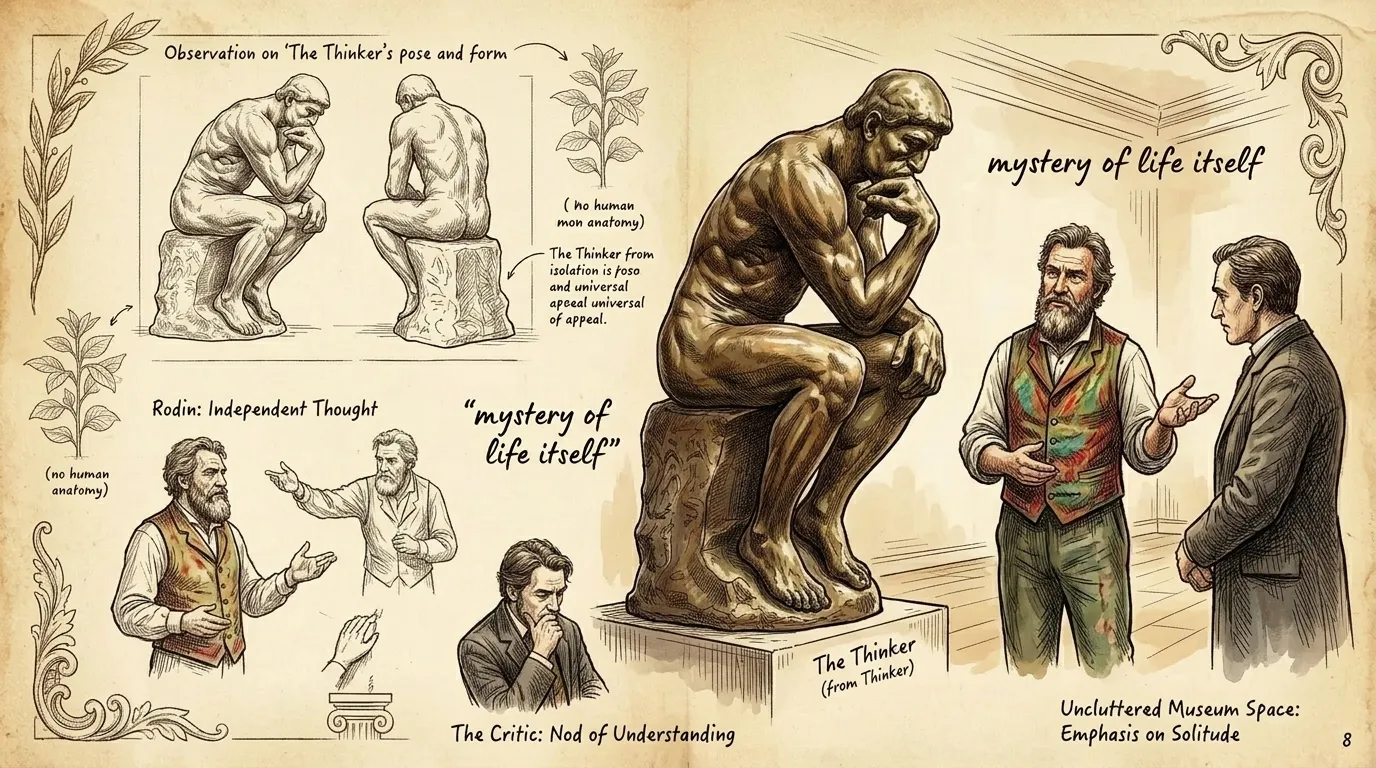
After isolating The Thinker from The Gates of Hell Rodin explored the themes of isolation and the human condition. The transition allowed Rodin to develop a new vision for the work. Maya Angelou once said, 'You may encounter many defeats, but you must not be defeated.'
"Rodin remarks to a critic, 'The Thinker is no longer tied to the Inferno. Now, he stands alone, facing the mystery of life itself!'"
Art Fact: The decision to exhibit The Thinker as an independent work allowed it to gain greater recognition and solidify its iconic status.
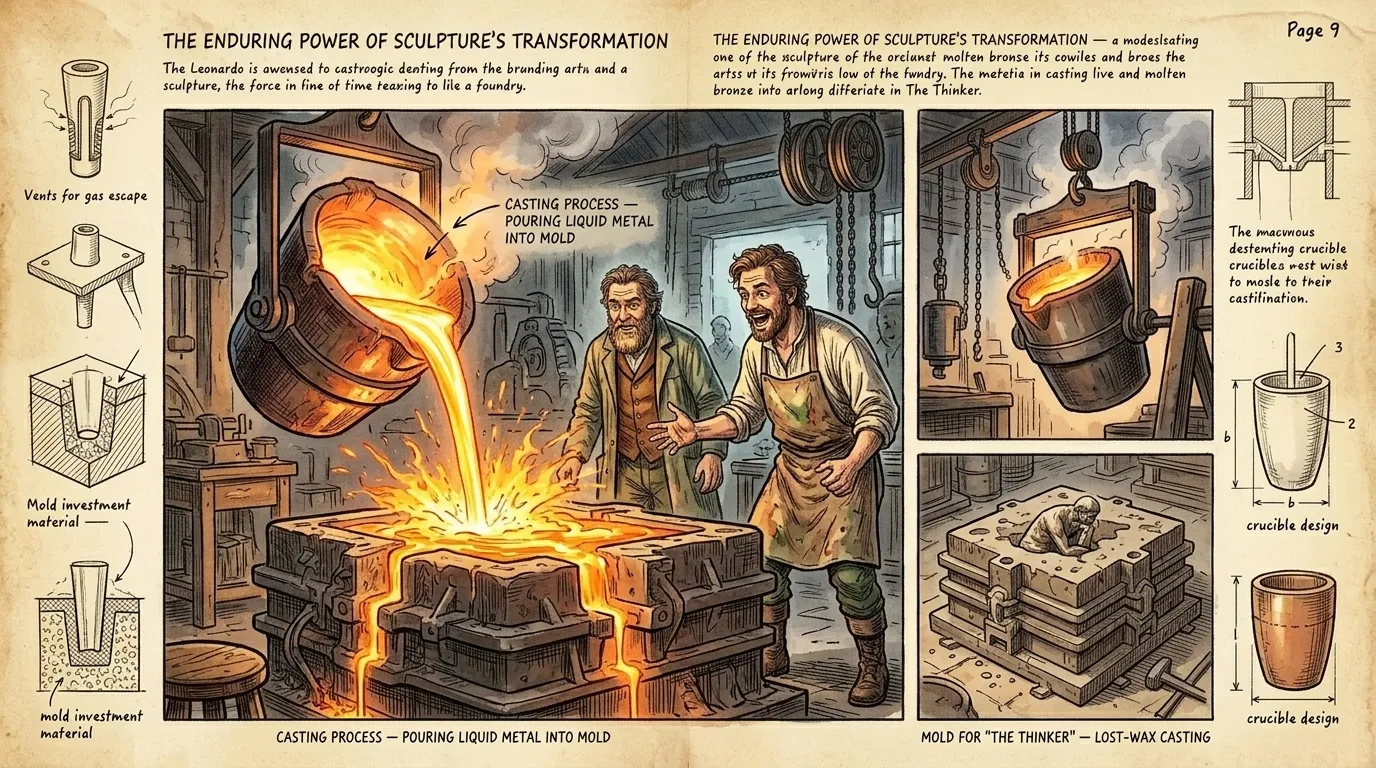
Page 9
The final casting of The Thinker in bronze transformed it from a studio model into a monument of enduring power. The bronze lends a sense of permanence and universality, reflecting the timeless nature of human thought. This casting allowed The Thinker to find its place on the world stage. As Rumi said, 'You are not a drop in the ocean. You are the entire ocean in a drop.'
"Rodin watches as the bronze is poured into the mold. The studio assistant shouts, 'It's flowing, Monsieur Rodin! The Thinker will live forever!'"
Art Fact: Multiple casts of The Thinker exist around the world, making it one of the most recognizable sculptures in art history.
Page 10
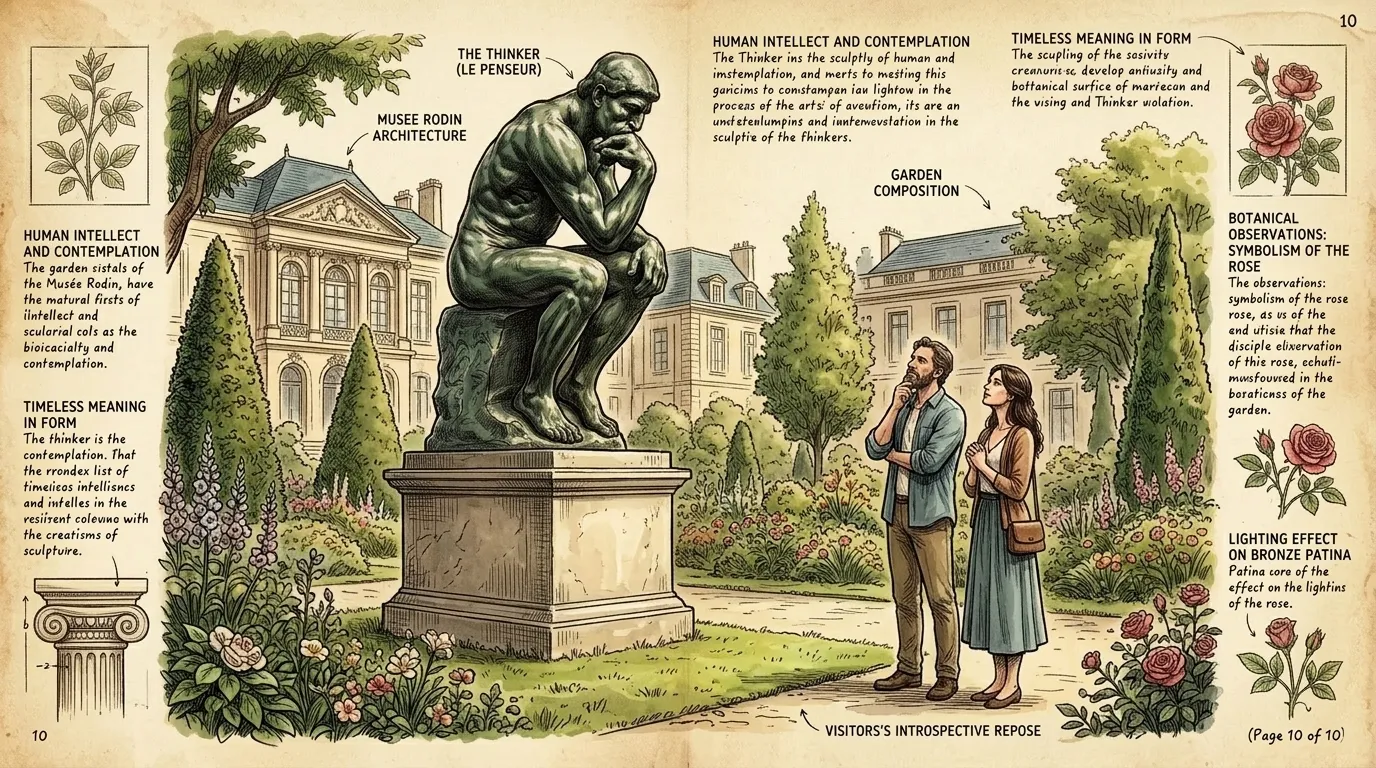
The Thinker stands in the gardens of the Musée Rodin, a testament to the power of human intellect. Countless visitors have contemplated its meaning, finding solace, inspiration, and reflection in its form. It is a reminder that the act of thinking, of questioning, is a fundamental part of what makes us human. Rodin's creation survives because it speaks to something deep within us all. As Victor Hugo said, 'No army can stop an idea whose time has come.'
"A visitor whispers, 'He is thinking of me.' Another whispers back, 'No, he is thinking of us all.'"
Art Fact: The Musée Rodin in Paris houses the largest collection of Rodin's work, ensuring the preservation and study of his legacy for generations to come.
About this story
- Location: France
- Audience: general readers
Questions and answers
Questions and answers about The Thinker by Auguste Rodin (Paris, France — 1880)
Read Wonder Arts on your phone
Wonder Arts is available on Android and iPhone and iPad. Get Wonder Arts on Google Play · Get Wonder Arts on the App Store.
More Wonder Arts stories
- The Third of May 1808 by Francisco Goya (Madrid, Spain — 1814)
- The Tower of London (UK — 1078)
- The Turkish Bath by Jean-Auguste-Dominique Ingres (France — 1862)
- The Veiled Christ by Giuseppe Sanmartino (Naples, Italy — 1753)
- Tonalism by George Inness (USA — c. 1880)
- Topkapi Palace (Istanbul, Turkey — 1478)