The Third of May 1808 by Francisco Goya (Madrid, Spain — 1814)
The Third of May 1808 by Francisco Goya (Madrid, Spain — 1814) — an illustrated arts story, set in Spain. 10 illustrated pages, free to read on Wonder Arts.
Page 1
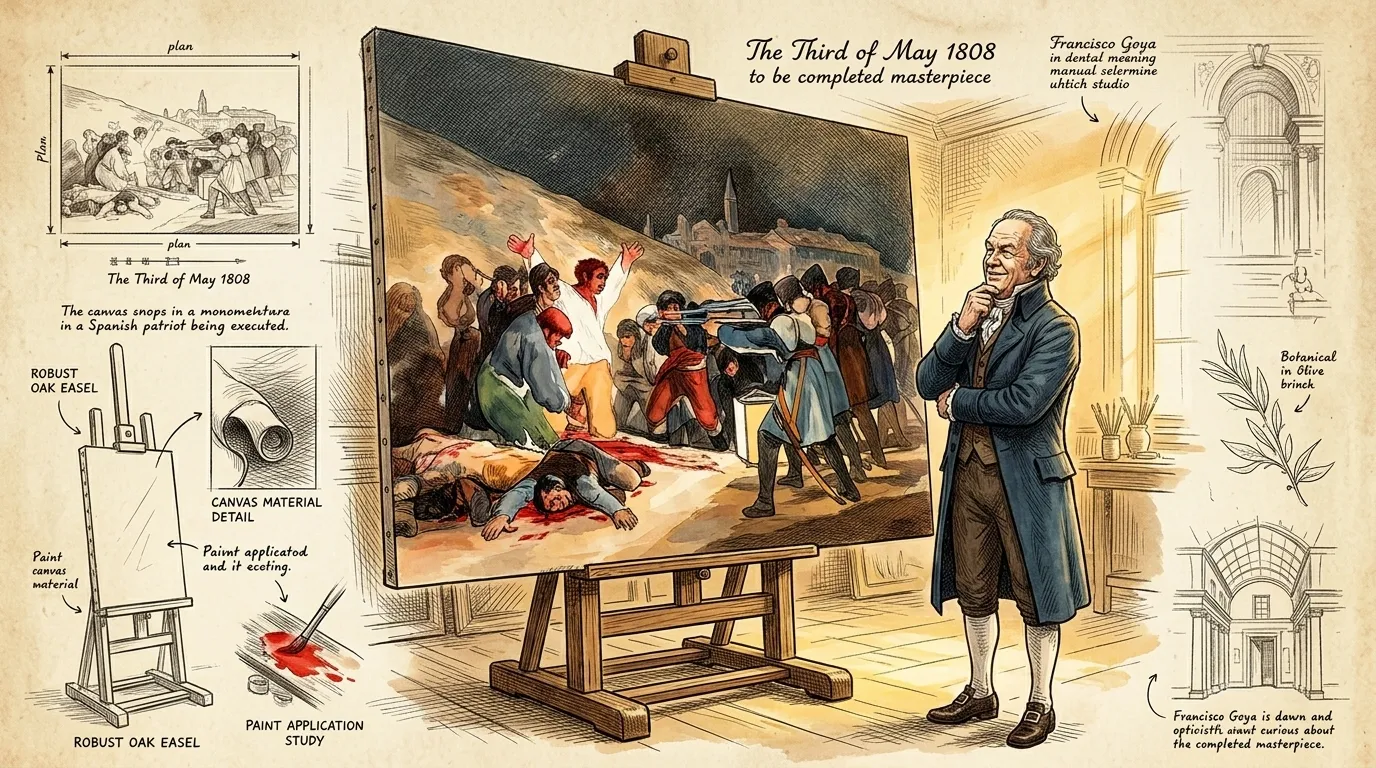
Francisco Goya stands before his monumental canvas, 'The Third of May 1808,' completed in 1814. The painting, a chilling depiction of the executions during the Peninsular War, measures 268 cm 347 cm. Its stark realism and emotional intensity marked a profound departure from traditional war art. The painting, now at the Museo del Prado in Madrid, almost faced destruction, as it was feared it would be used as propaganda after the restoration of the monarchy.
""This is not a celebration of heroism," Goya murmurs to himself, his face etched with weariness. "It is a testament to human cruelty, a plea against endless violence.""
Art Fact: The painting was commissioned by the provisional government of Spain to commemorate Spanish resistance to Napoleon's armies during the occupation. Goya sought to capture the raw horror of the event, rather than glorify war.
Page 2
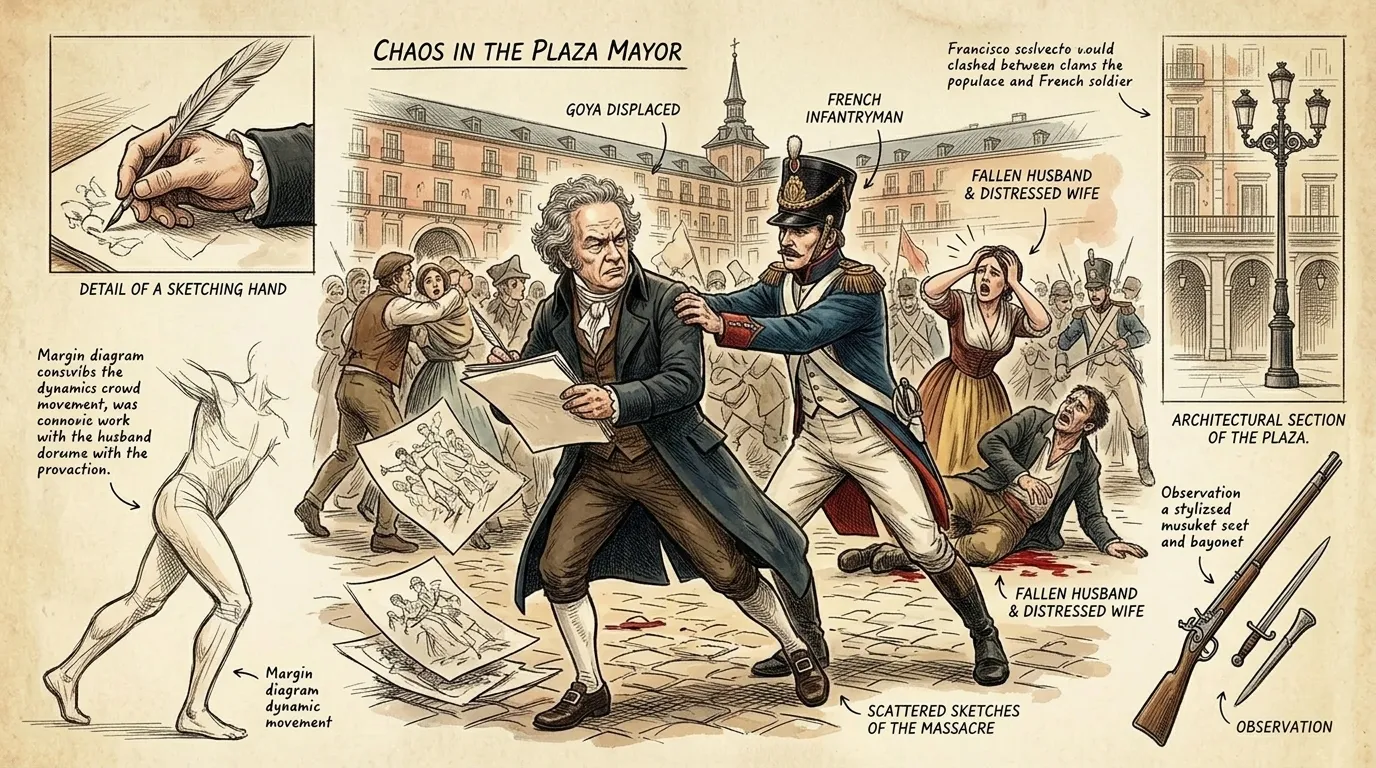
Madrid, May 2, 1808. A young Goya, sketching in the Plaza Mayor, witnesses the brutal clashes between the Spanish populace and Napoleon's soldiers. The chaos, the desperation, and the senseless violence sear themselves into his memory, becoming the seeds of his future masterpiece. A soldier shoves him roughly, causing his sketches to scatter across the cobblestones. A woman screams, watching her husband fall.
""Injustice anywhere is a threat to justice everywhere," Goya mutters, recalling words from his distant future, "Martin Luther King Jr. will articulate it perfectly.""
Art Fact: The Dos de Mayo Uprising was a rebellion by the people of Madrid against the occupation of the city by French troops. It sparked further revolts throughout Spain and marked the beginning of the Peninsular War.
Page 3
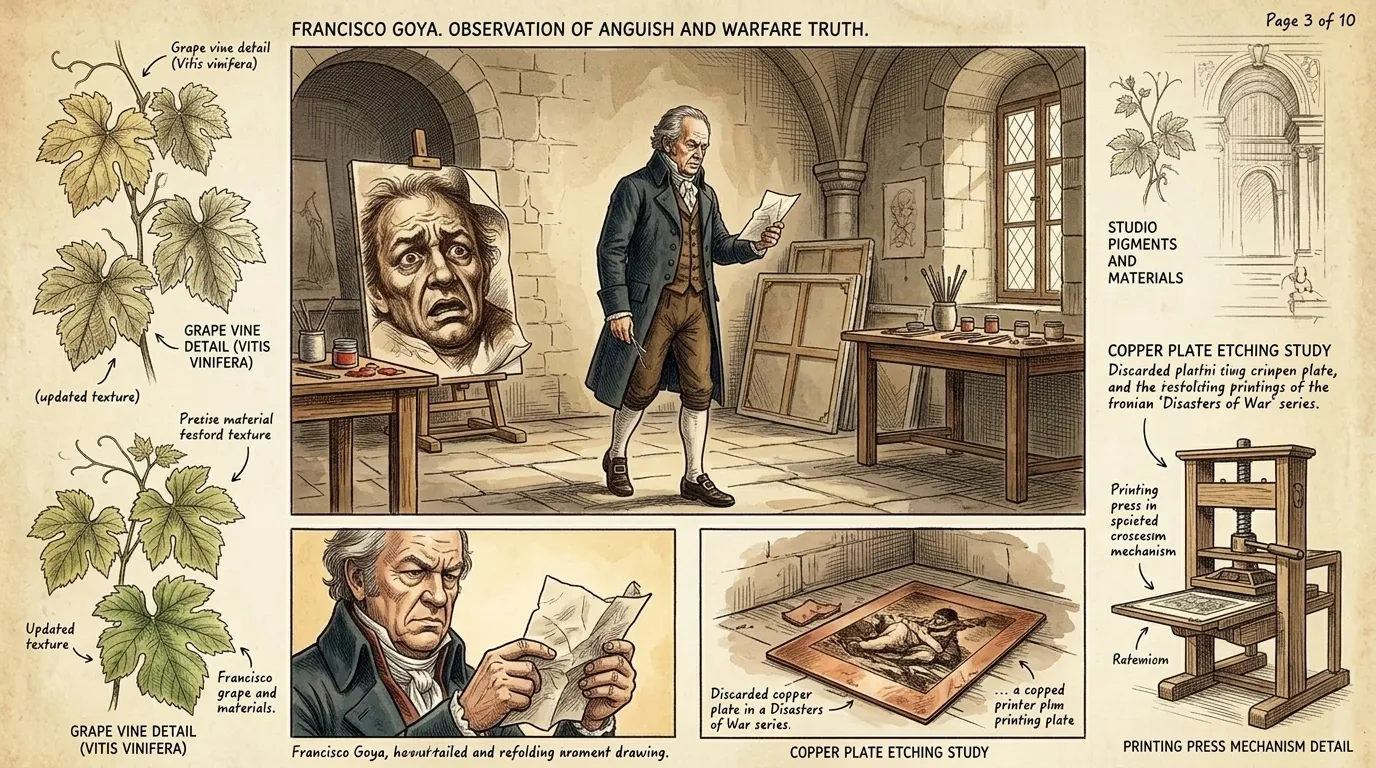
Years later, amidst the devastation of the Peninsular War, Goya revisits the scenes of the uprising in his mind. He studies the faces of the condemned, the terror in their eyes, the cold indifference of the firing squad. These images fuel his artistic vision, driving him to capture the truth of war, stripped of its romanticism. He stares intently at a crumpled drawing of a frightened man.
"Goya, pacing his studio, says to himself, "I must paint what I see, not what they want me to see. I will not glorify war, but expose its barbarity.""
Art Fact: Goya's series of etchings, 'The Disasters of War,' further explored the brutality and suffering inflicted during the Peninsular War, influencing his later paintings.
Page 4
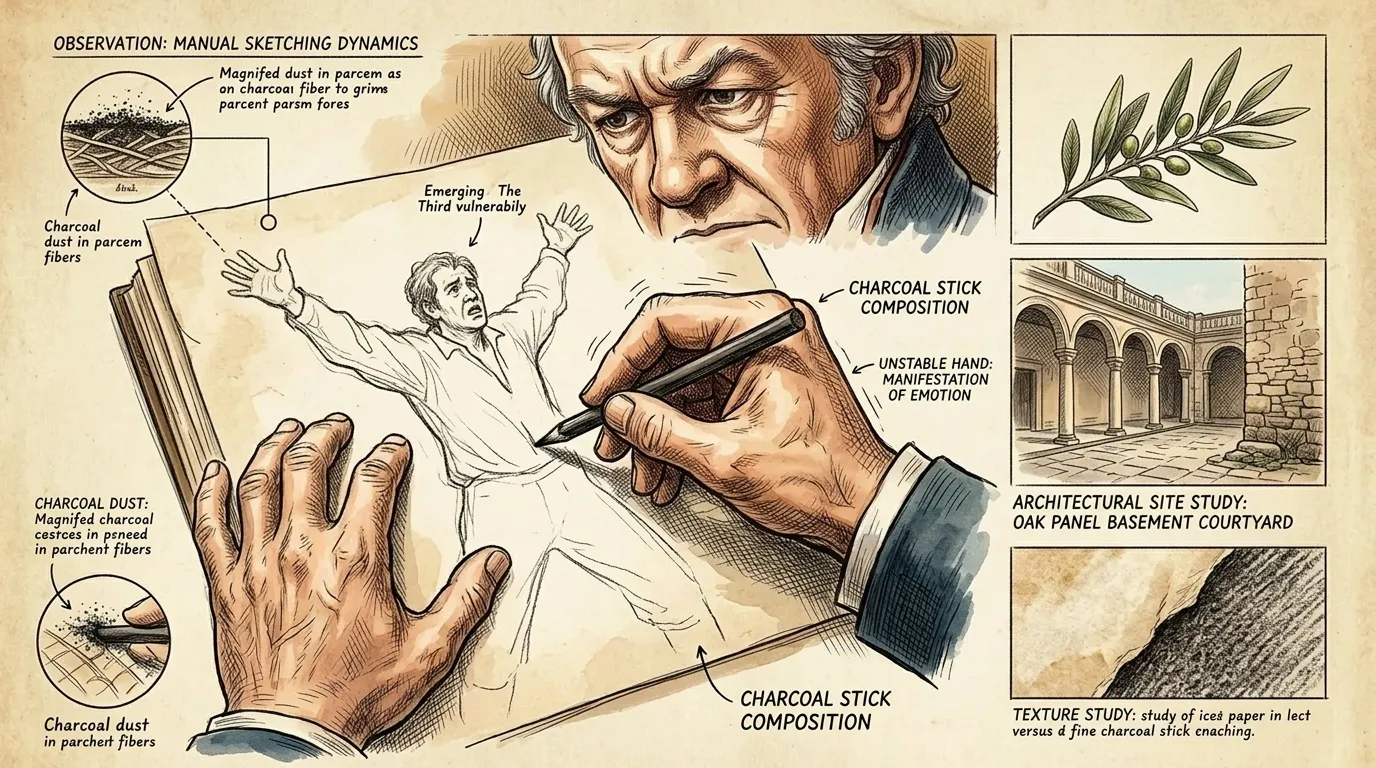
Goya begins sketching the central figure of the painting - the man in white, arms outstretched, facing his executioners. He studies the nuances of fear, the vulnerability of the human form, the stark contrast between innocence and brutal force. The charcoal scratches on the paper, mirroring the sharp, painful reality he seeks to portray. He pauses, his hand trembling slightly.
""Paint the truth, even if it hurts. Especially if it hurts," Goya whispers, channeling words that the painter Francis Bacon might have said in a different context."
Art Fact: The central figure of the painting, with his arms outstretched, has been interpreted as a Christ-like figure, symbolizing the sacrifice of the Spanish people.
Page 5
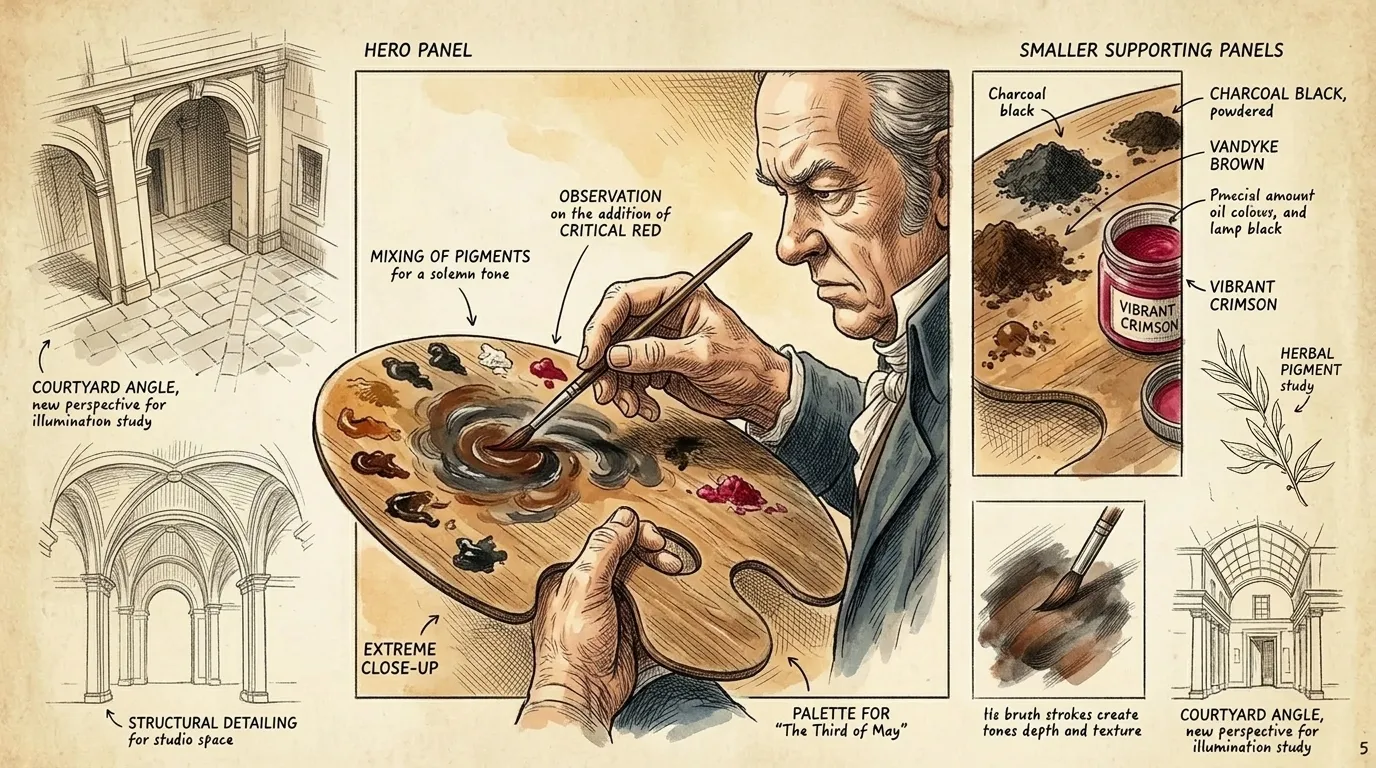
Goya mixes his colors, choosing somber tones of brown, grey, and black to convey the despair and darkness of the scene. He adds touches of red to represent the blood spilled, and stark white to highlight the innocence of the victims. The palette becomes a mirror of the emotional landscape he seeks to create. He dabs a small amount of crimson on his brush, then hesitates.
""Color is the language of the soul," Goya murmurs, echoing Kandinsky's future sentiment, "and I must use it to scream against this injustice.""
Art Fact: Goya's use of color in 'The Third of May 1808' is deliberately limited, enhancing the painting's stark realism and emotional impact.
Page 6
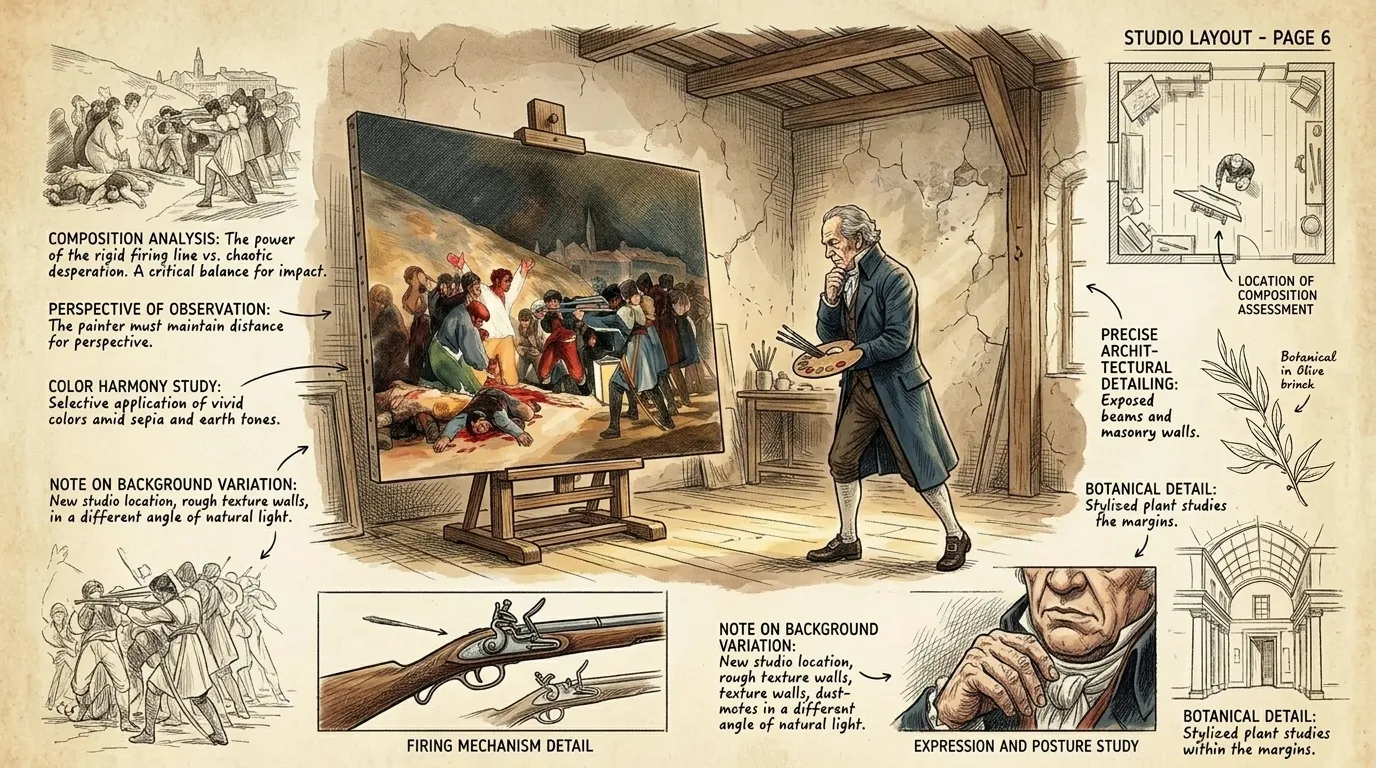
Goya arranges the figures on the canvas, creating a stark contrast between the orderly line of the firing squad and the chaotic group of condemned. The composition reinforces the power imbalance, highlighting the dehumanization of the victims. He steps back, scrutinizing the layout with a critical eye.
""The beauty of a painting lies in its composition," Goya declares, "but the power of this one must lie in its truth.""
Art Fact: Goya's composition emphasizes the emotional power of the scene, drawing the viewer's eye to the central figure and the faces of both the executioners and the victims.
Page 7
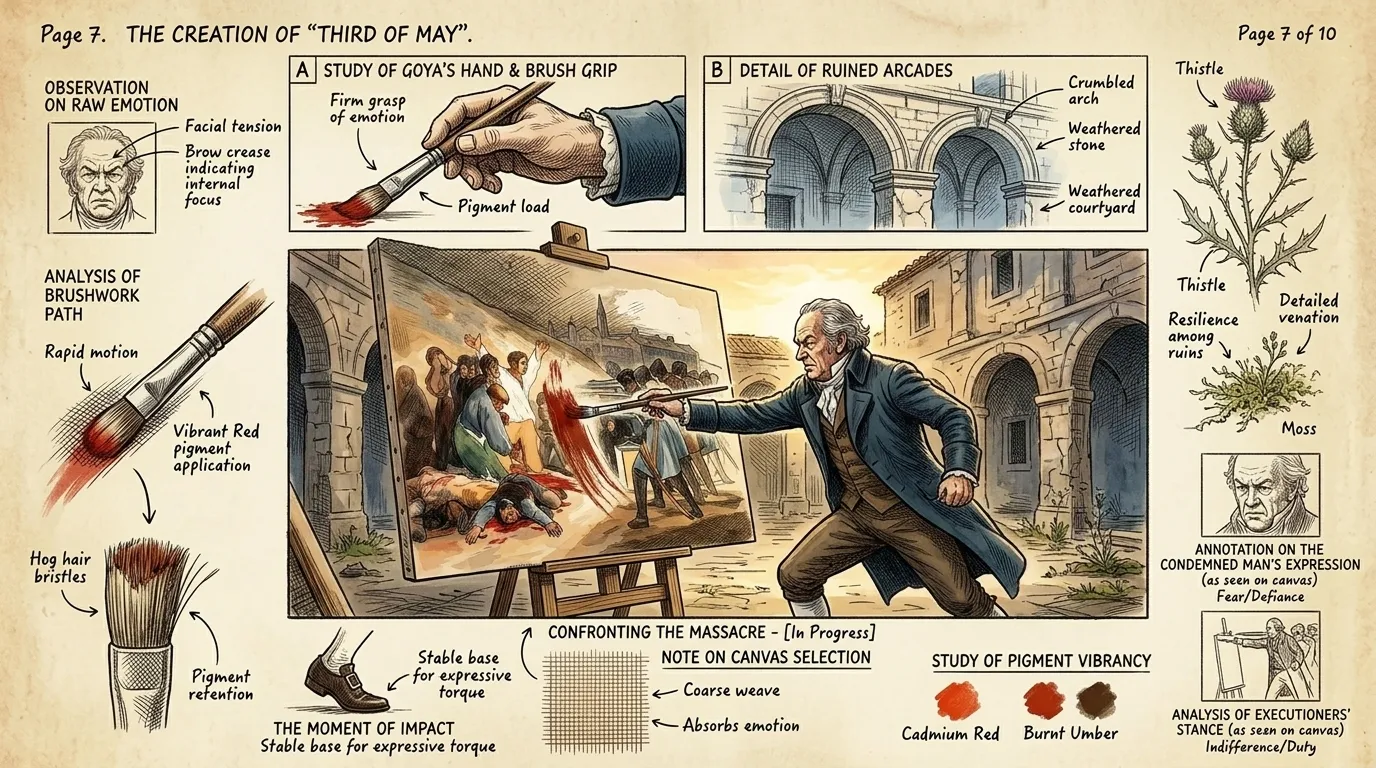
With rapid, expressive brushstrokes, Goya captures the raw emotion of the execution. He depicts the fear in the eyes of the condemned, the cold indifference of the executioners, the horror of the moment. The painting becomes a visceral experience, a testament to the brutality of war. He attacks the canvas with a fury, his body shaking with emotion.
""The brush is my weapon," Goya exclaims, "and with it, I will fight against injustice and oppression.""
Art Fact: Goya's expressive brushstrokes convey the raw emotion and violence of the scene, creating a powerful and unforgettable image.
Page 8
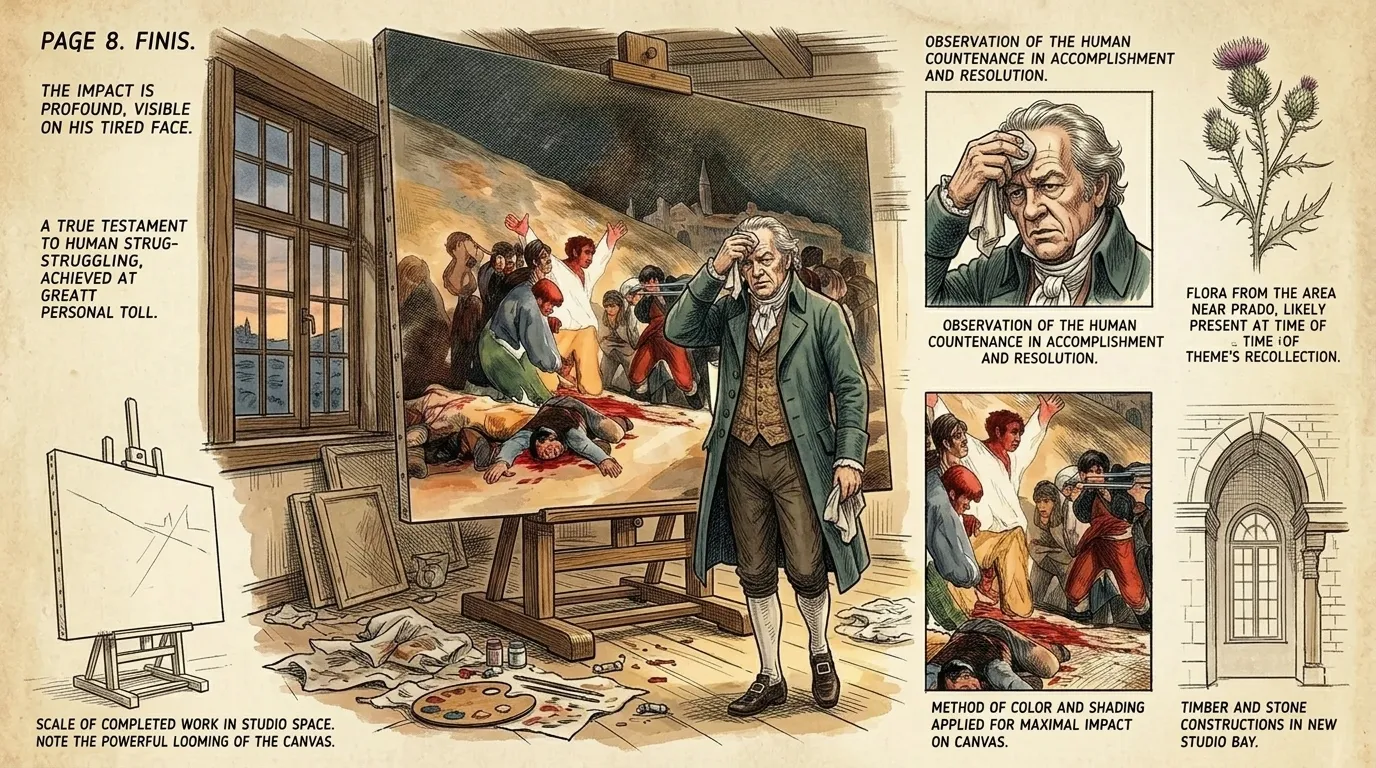
Goya steps back from the completed canvas, his eyes filled with tears. He has captured the essence of human suffering, the senselessness of violence, the enduring power of the human spirit. The painting is a cry for humanity, a plea against the horrors of war. He wipes his brow, exhausted but resolute.
""This painting is not just about Spain," Goya states, breathing heavily, "It's about all of us. 'The world is a dangerous place to live; not because of the people who are evil, but because of the people who don't do anything about it,' Albert Einstein will wisely say later.""
Art Fact: The painting's powerful message transcends its historical context, serving as a universal condemnation of violence and a testament to the resilience of the human spirit.
Page 9
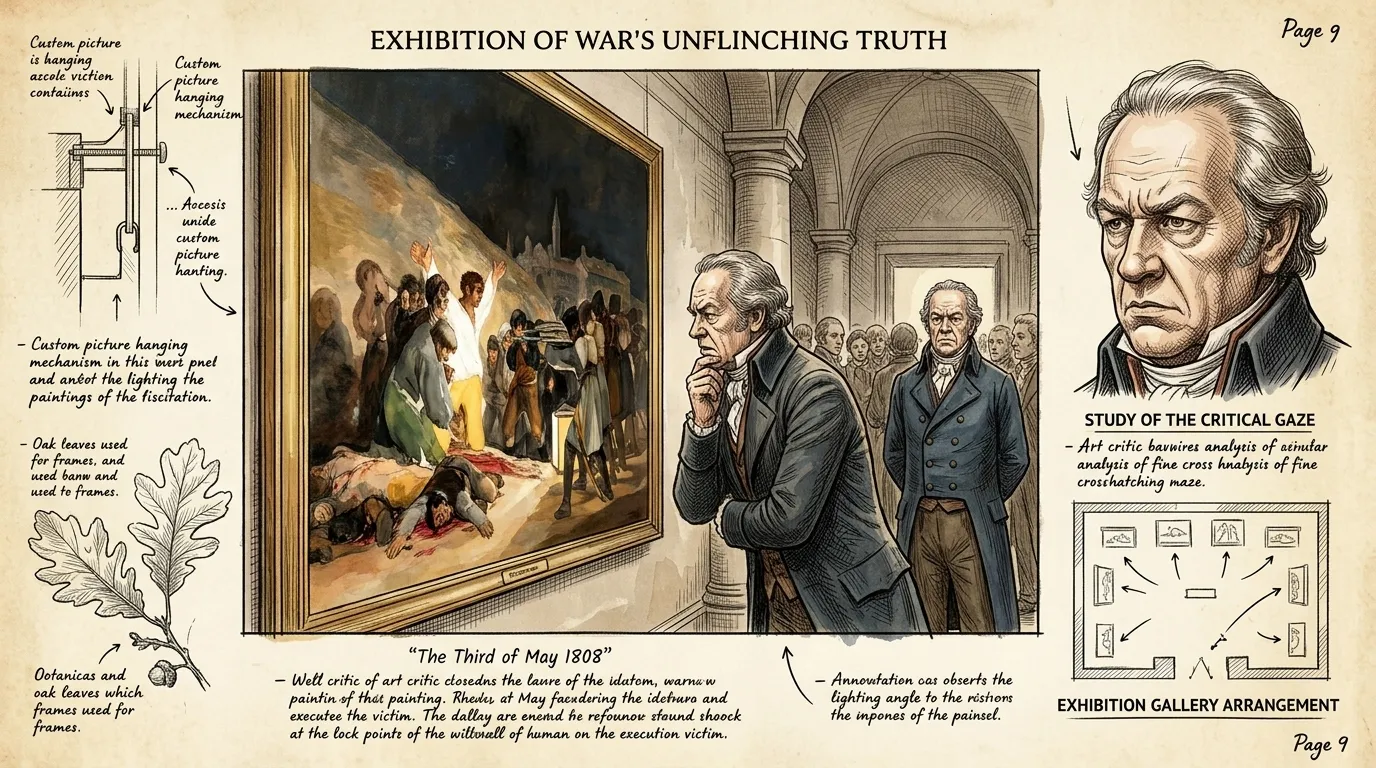
News of Goya's painting spreads, causing both admiration and controversy. Some celebrate its unflinching portrayal of war's brutality, while others criticize its lack of patriotic heroism. Regardless, 'The Third of May 1808' establishes Goya as a master of protest art, a voice for the voiceless, a champion of humanity. The painting is first shown in a limited exhibition.
"A critic, viewing the painting, says, "Goya has not painted a victory, but a massacre. He has shown us the true face of war, and it is horrifying.""
Art Fact: The painting's initial reception was mixed, with some critics praising its realism and emotional power, while others criticized its lack of traditional heroism.
Page 10
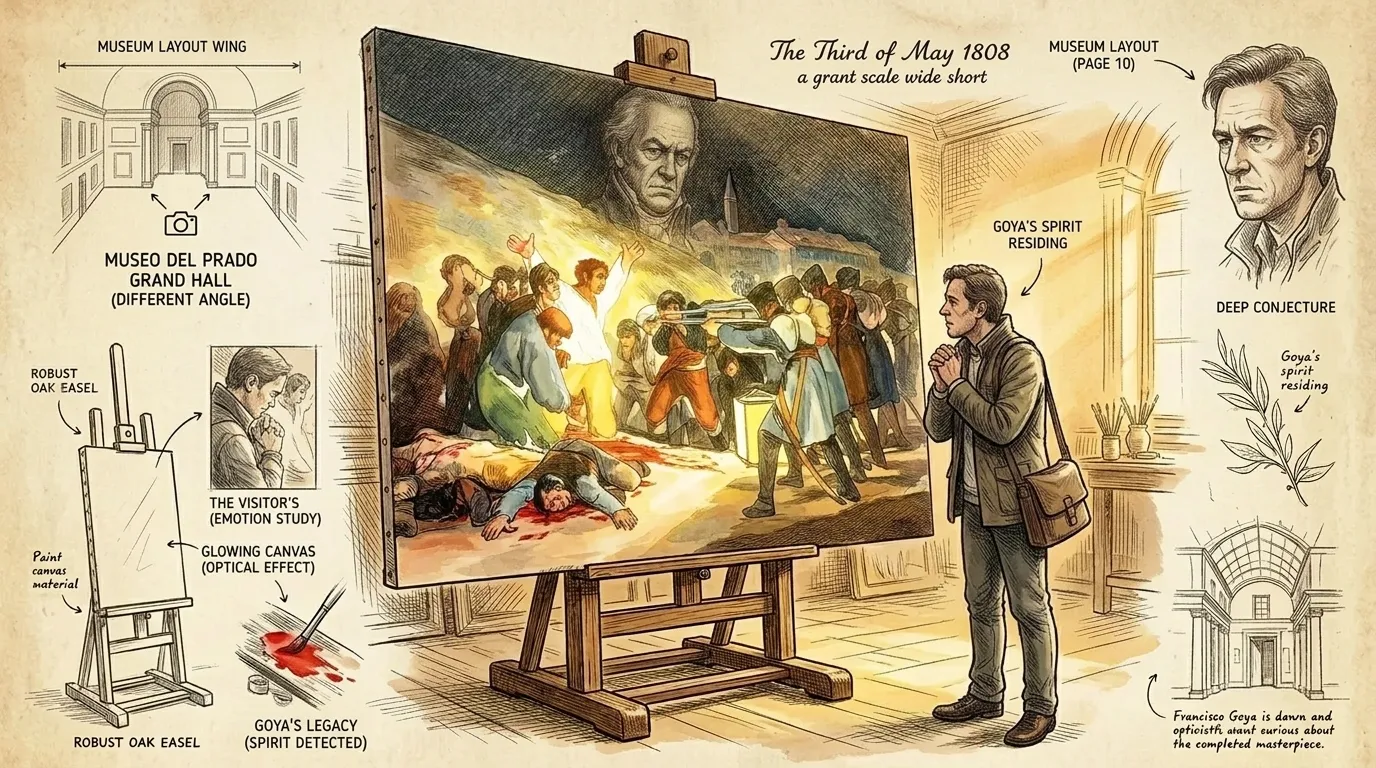
Centuries later, 'The Third of May 1808' hangs in the Museo del Prado, a timeless testament to the horrors of war and the enduring power of art. Its message resonates with viewers from all walks of life, reminding them of the importance of empathy, justice, and peace. Goya's spirit lingers in the museum, watching over his masterpiece, his voice echoing through time. The painting continues to inspire artists, activists, and dreamers around the world.
"A modern visitor, standing before the painting, whispers, "Goya's message is as relevant today as it was then. We must never forget the human cost of conflict.""
Art Fact: Goya's 'The Third of May 1808' remains one of the most powerful and enduring anti-war paintings ever created, inspiring generations of artists and activists.
About this story
- Location: Spain
- Audience: general readers
Questions and answers
Questions and answers about The Third of May 1808 by Francisco Goya (Madrid, Spain — 1814)
Read Wonder Arts on your phone
Wonder Arts is available on Android and iPhone and iPad. Get Wonder Arts on Google Play · Get Wonder Arts on the App Store.