The Taj Mahal (Agra, India — 1653)
The Taj Mahal (Agra, India — 1653) — an illustrated arts story, set in India. 10 illustrated pages, free to read on Wonder Arts.
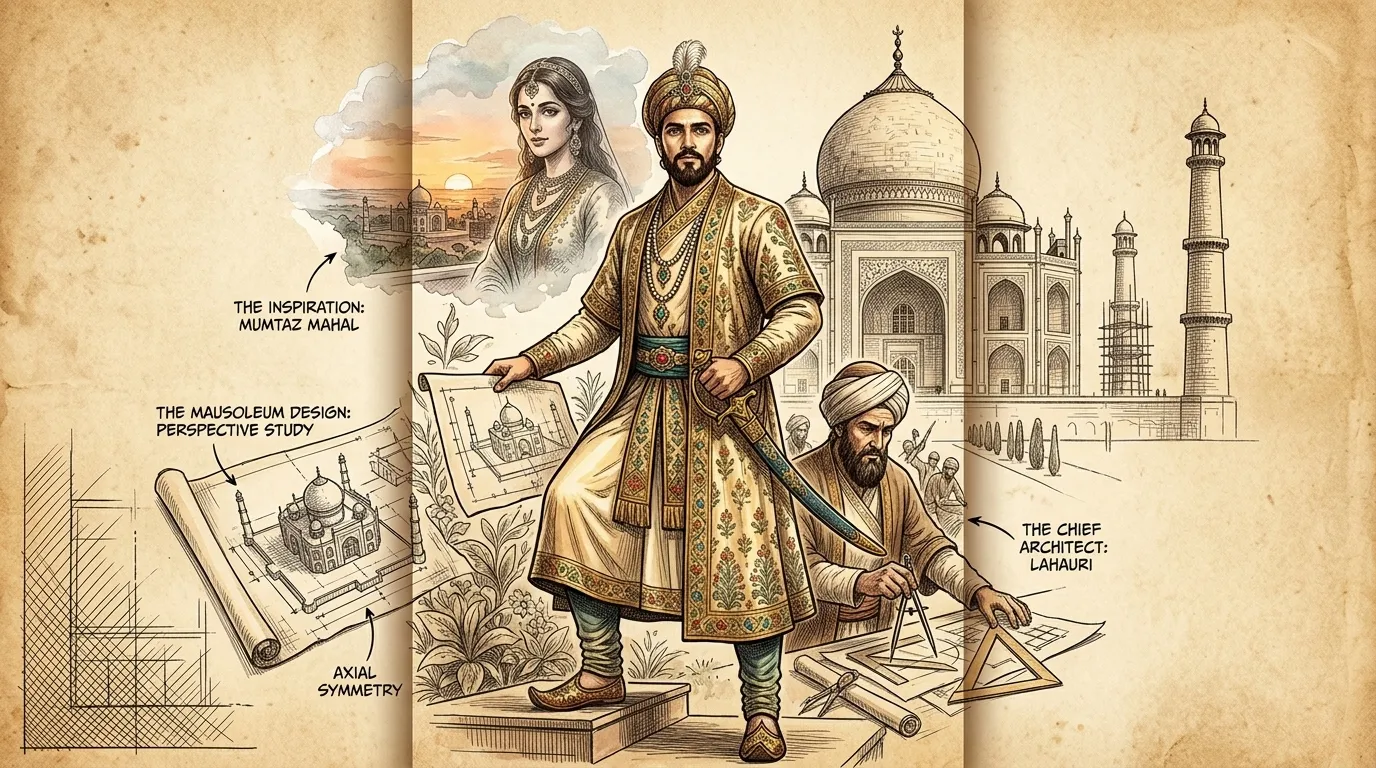
Page 1
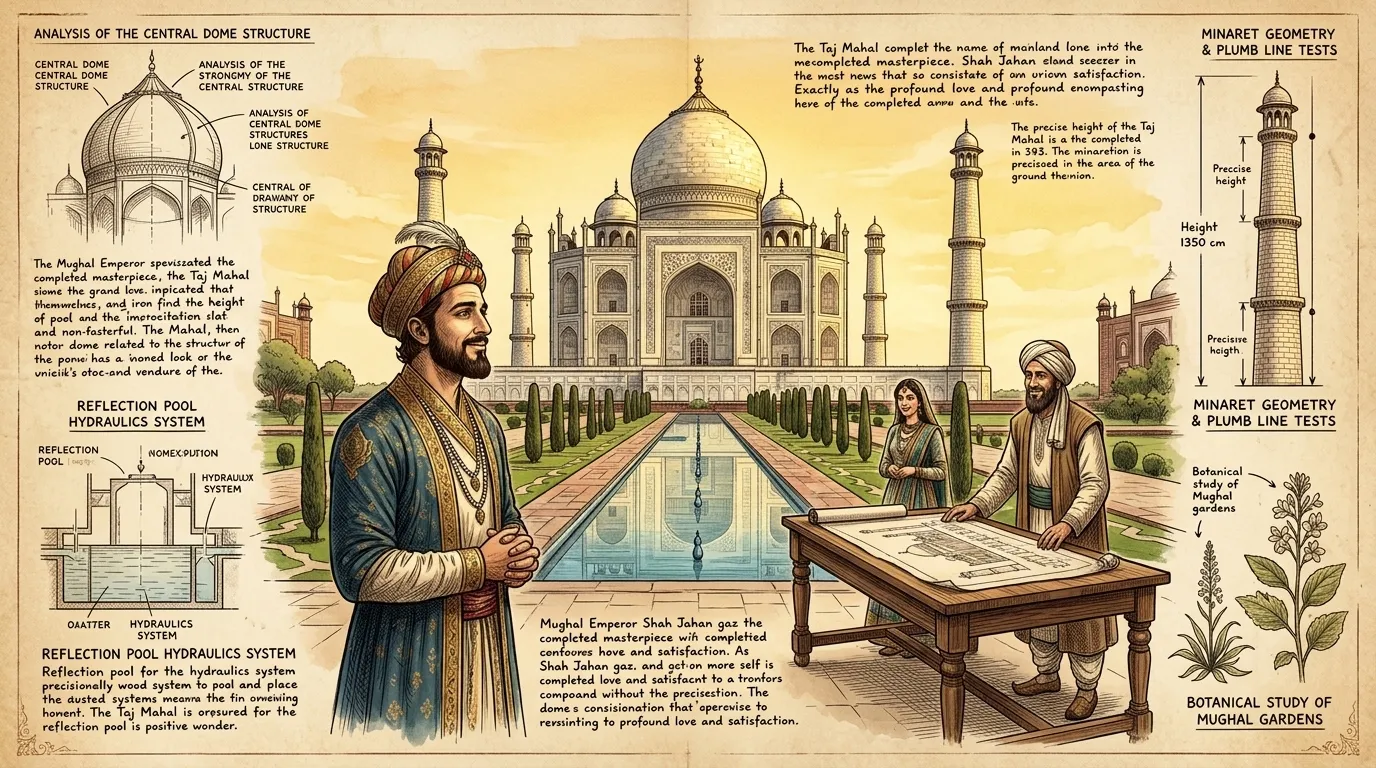
Emperor Shah Jahan stands before his masterpiece, the Taj Mahal, completed in 1653. This mausoleum, built in memory of his beloved wife Mumtaz Mahal, stands as a testament to eternal love. Crafted from white marble sourced from Makrana, Rajasthan, the Taj Mahal measures 171 meters (561 feet) in height. Its estimated cost at the time was 32 million Rupees, equivalent to approximately 827 million USD today. A persistent legend claims Shah Jahan planned to build a black marble replica for himself across the Yamuna River, a project never realized.
""My queen," Shah Jahan whispers, his voice echoing in the vast courtyard, "your beauty will forever grace the world, immortalized in marble.""
Art Fact: The Taj Mahal is considered one of the finest examples of Mughal architecture, a style that combines elements of Persian, Islamic, and Indian architectural traditions.
Page 2
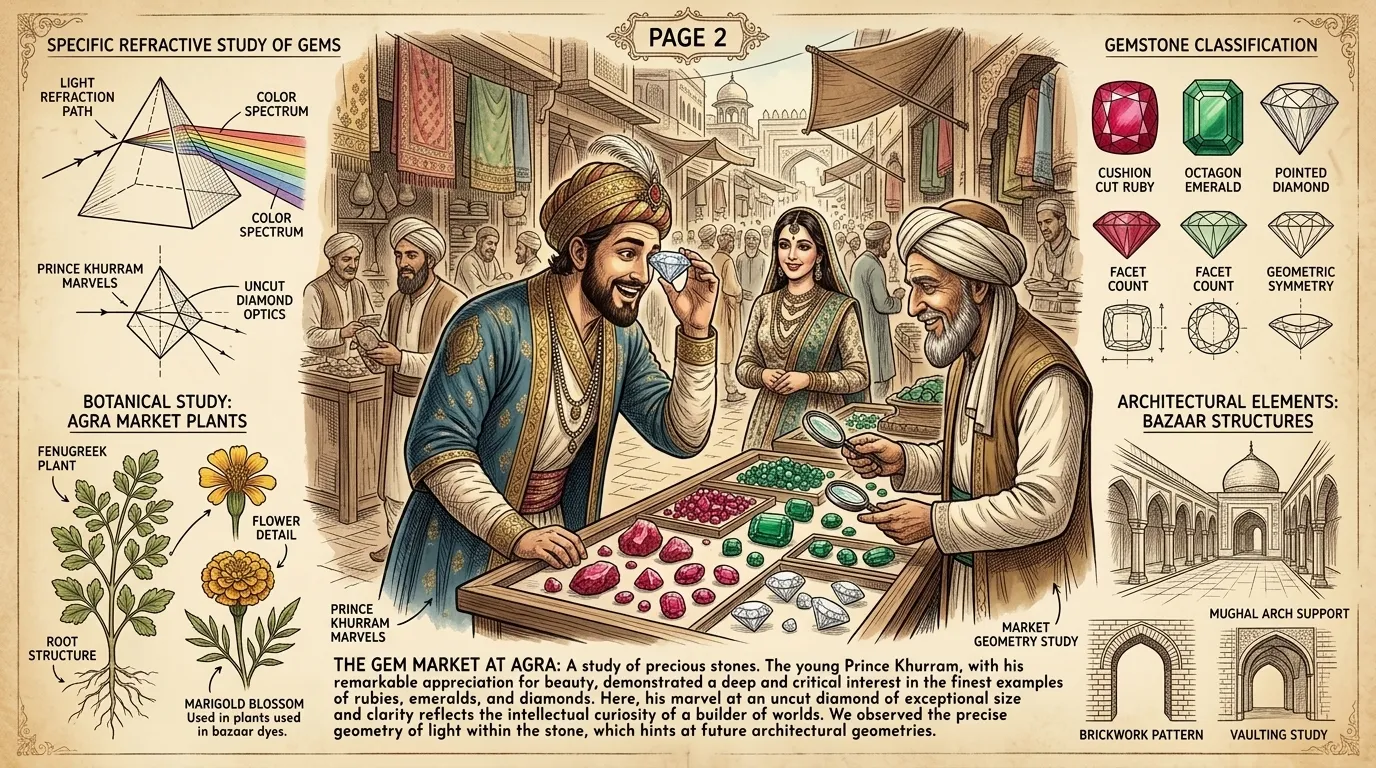
A young Shah Jahan, then Prince Khurram, wanders through the bustling gemstone market of Agra. He marvels at the vibrant colors of the rubies, emeralds, and diamonds. He overhears a craftsman discussing the importance of using the finest materials for lasting beauty, a lesson that would resonate deeply years later. He recalls the words of the philosopher Seneca: 'Every new beginning comes from some other beginning's end.'
""Look, Khurram," his companion says, pointing to a magnificent uncut diamond. "Such stones are fit for emperors!" Khurram replies: "Only the most exquisite will do, Inayat Khan, only the most exquisite.""
Art Fact: Agra, during the Mughal era, was a major center for trade and craftsmanship, attracting artisans and merchants from across the globe.
Page 3
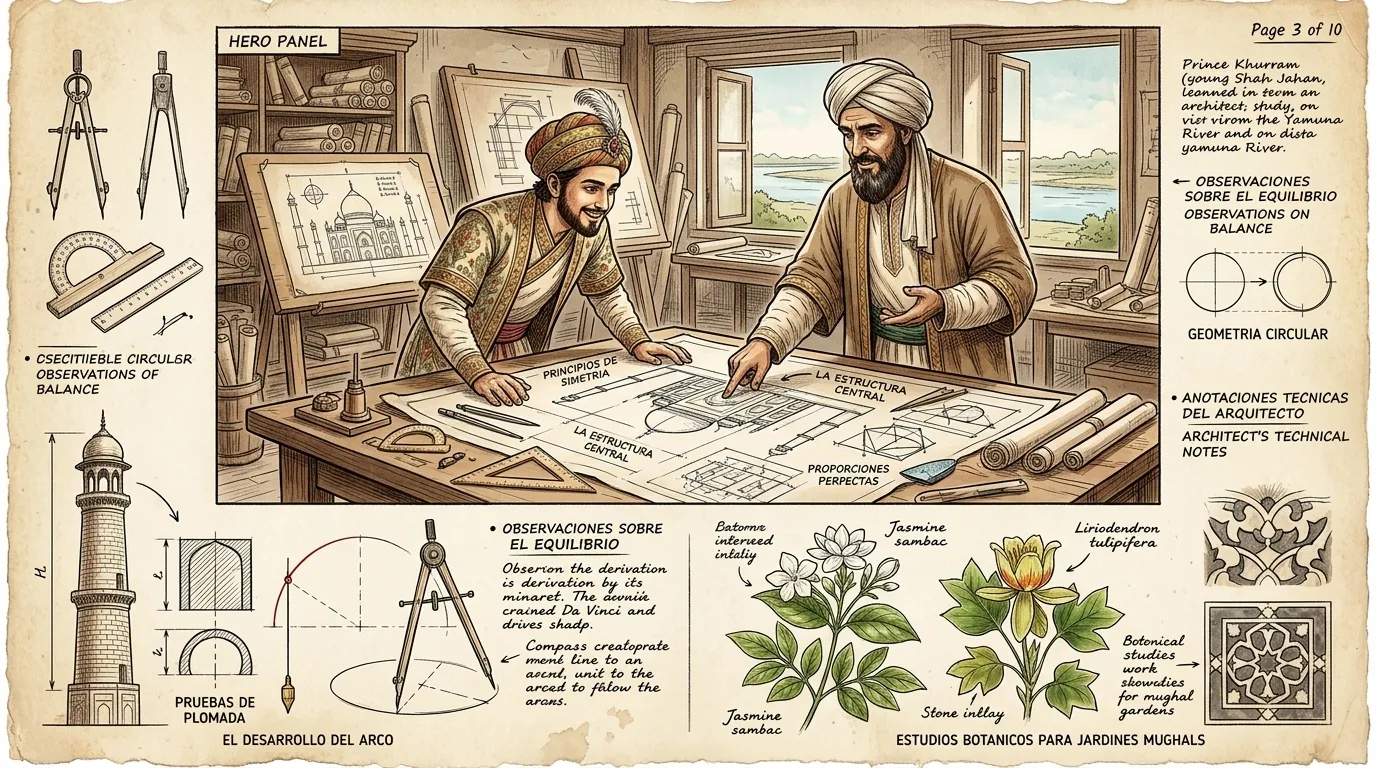
Prince Khurram seeks out Ustad Ahmad Lahauri, the renowned Persian architect. He listens intently as Lahauri explains the principles of symmetry and perfect proportions, essential elements in Islamic architecture. Khurram realizes the importance of blending beauty with mathematical precision. "Remember," Lahauri says, his voice firm, "architecture is frozen music."
""Master Lahauri," Khurram asks, "how can one ensure a building stands for eternity?" Lahauri smiles. "By building with love and precision, young prince. As Leonardo da Vinci said, 'Details make perfection, and perfection is not a detail.'""
Art Fact: Ustad Ahmad Lahauri is believed to be the principal architect of the Taj Mahal, though historical records are not definitive.
Page 4
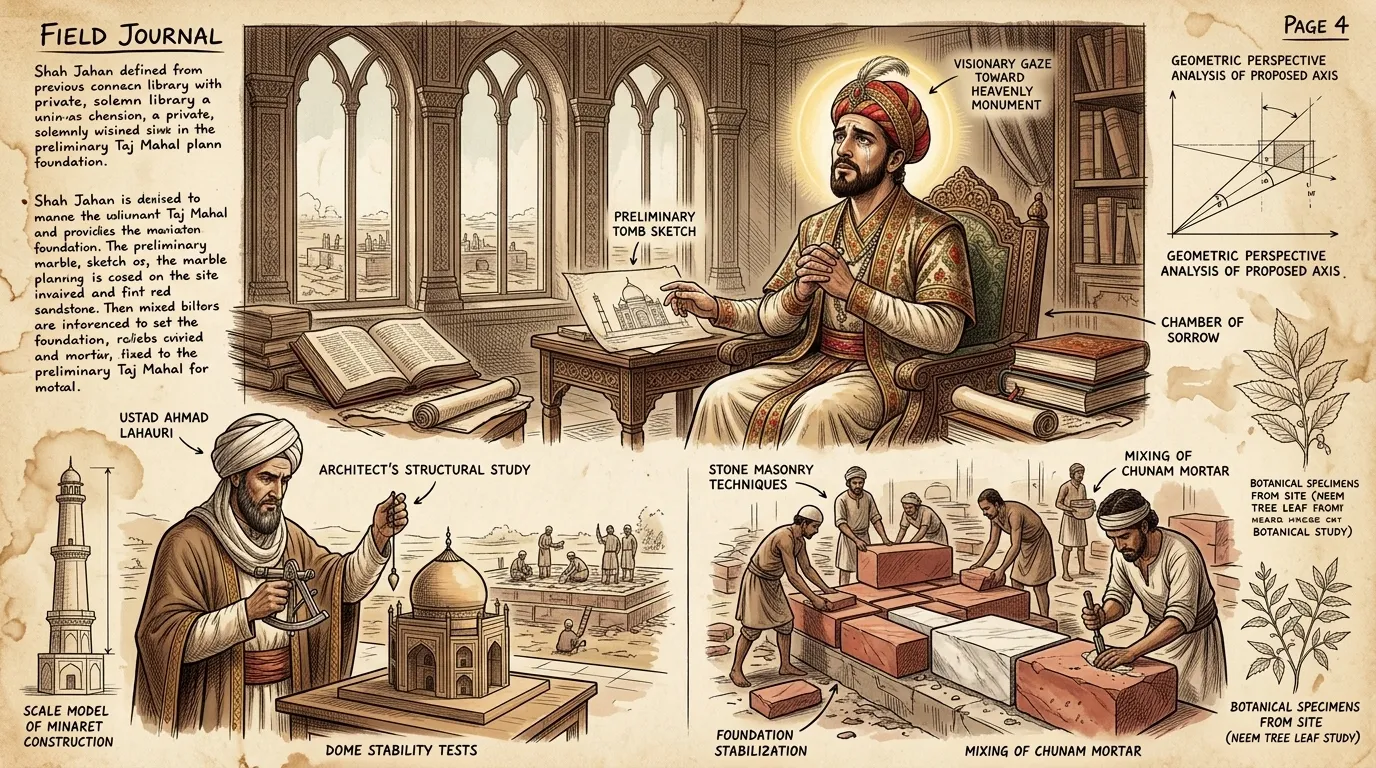
Grief strikes Shah Jahan as his beloved wife, Mumtaz Mahal, passes away during childbirth. The emperor is consumed by sorrow. In his despair, he vows to create a monument so magnificent that it will immortalize her memory. The emotional weight of his grief begins to form into an artistic vision.
"A tearful Shah Jahan cries out, "Mumtaz, my beloved! Your memory will forever be etched in stone!" His advisor whispers, "Great Emperor, your love is a beacon. As William Shakespeare wrote, 'There's a divinity that shapes our ends, Rough-hew them how we will.' Let her memory guide you.""
Art Fact: Mumtaz Mahal died in 1631 in Burhanpur, during the birth of their 14th child, Gauhara Begum.
Page 5
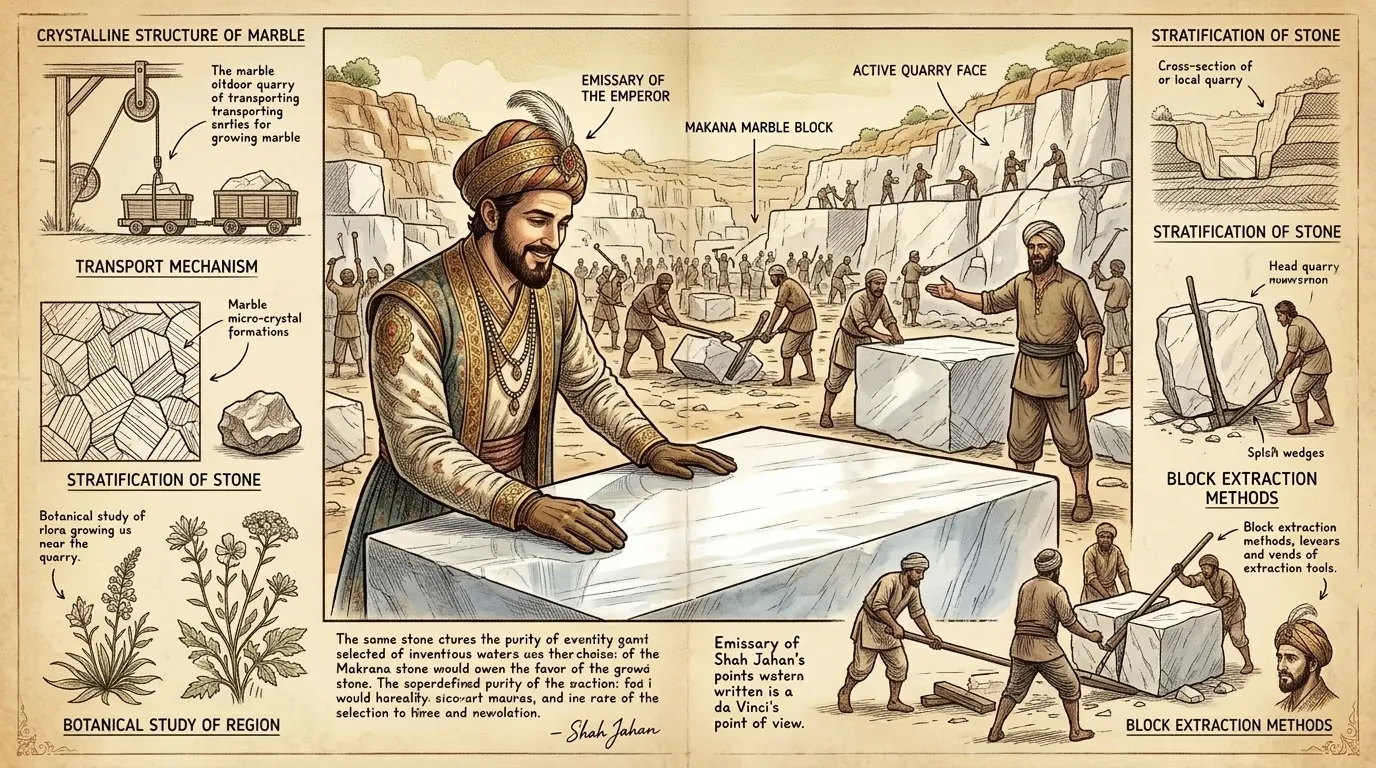
Shah Jahan's emissaries travel to Makrana, Rajasthan, to secure the finest white marble. The quarries are bustling with activity, as workers extract massive blocks of stone. The emperor insists on perfection, knowing that only the purest marble can embody Mumtaz's ethereal beauty. He demands, 'Only the purest stone, or none at all!'
"The head quarryman bows before the emissary. "Your Excellency, we offer you the finest marble in the land. But even the finest material has its imperfections." The emissary replies gravely, "As Aristotle said, 'The ultimate value of life depends upon awareness and the power of contemplation rather than upon mere survival.' The Emperor seeks more than mere material; he seeks immortality.""
Art Fact: The white marble used in the Taj Mahal was transported from Makrana, Rajasthan, over 200 miles away.
Page 6
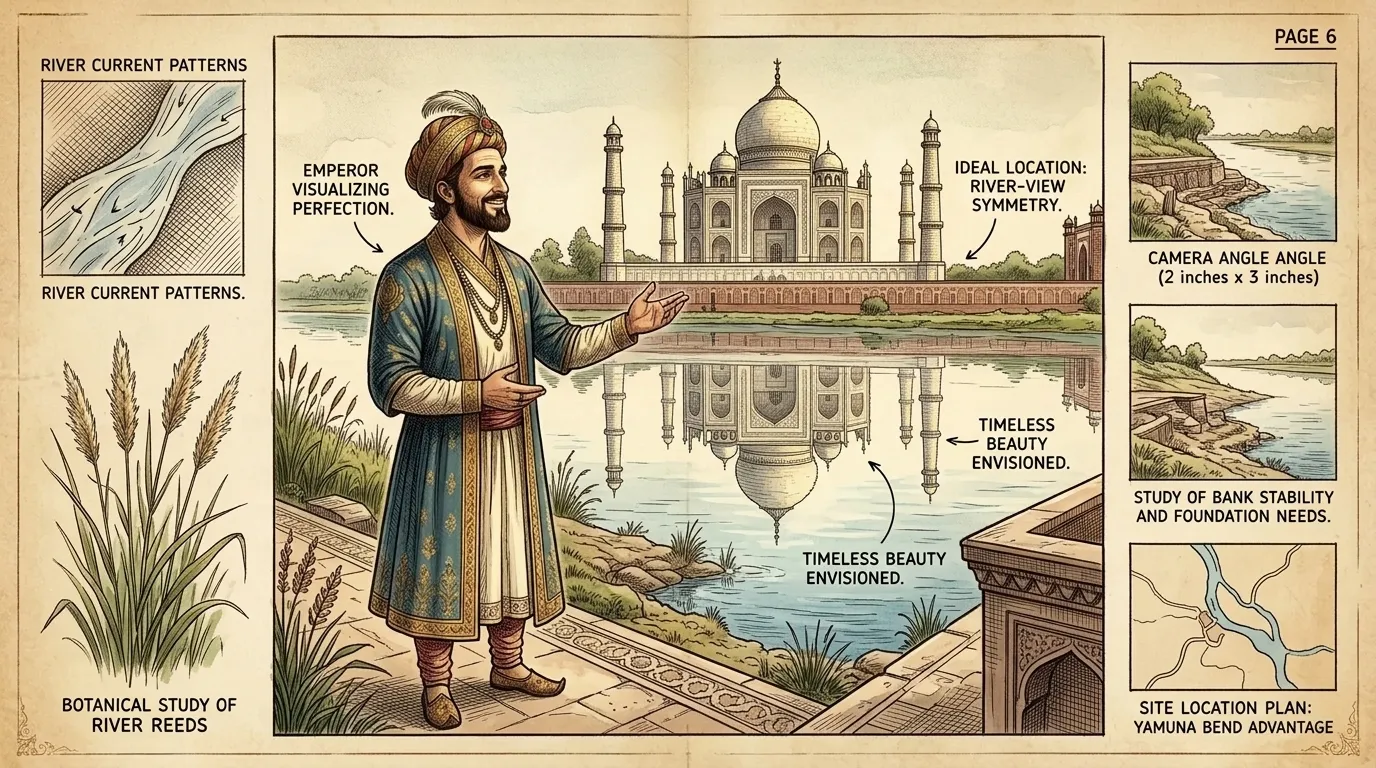
Shah Jahan gazes across the Yamuna River, envisioning the Taj Mahal's reflection shimmering in the water. He understands the importance of location and setting in creating a timeless masterpiece. The river will serve as a mirror, amplifying the monument's beauty and grace. He muses that, as Pablo Picasso said, 'Art washes away from the soul the dust of everyday life.'
"The emperor says to his aide, "The Taj Mahal must be positioned perfectly, so that its reflection graces the Yamuna. Water is life, Inayat Khan, and life is beauty.""
Art Fact: The Taj Mahal is strategically located on the bank of the Yamuna River, providing stunning reflections and enhancing its visual impact.
Page 7
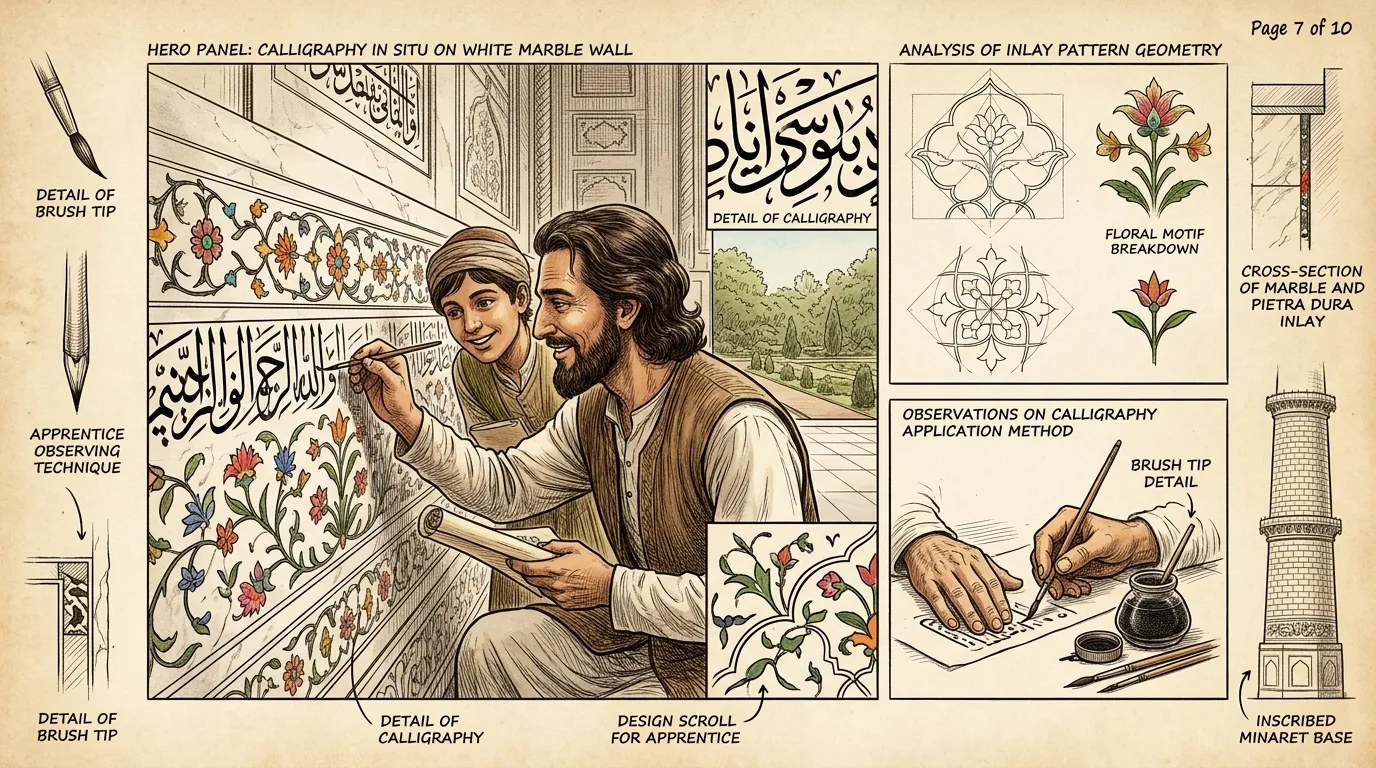
Skilled calligraphers and inlay artists meticulously adorn the Taj Mahal with verses from the Quran and intricate floral patterns. Each detail is executed with precision and care, enhancing the monument's spiritual and aesthetic value. 'Beauty in things exists in the mind which contemplates them,' said David Hume.
"The master calligrapher instructs his apprentices. "Each letter must be perfect, a testament to the divine word. As Michelangelo said, 'I saw the angel in the marble and carved until I set him free.' We must reveal the beauty hidden within these stones.""
Art Fact: Amanat Khan Shirazi, a master calligrapher, was responsible for the intricate calligraphy on the Taj Mahal.
Page 8
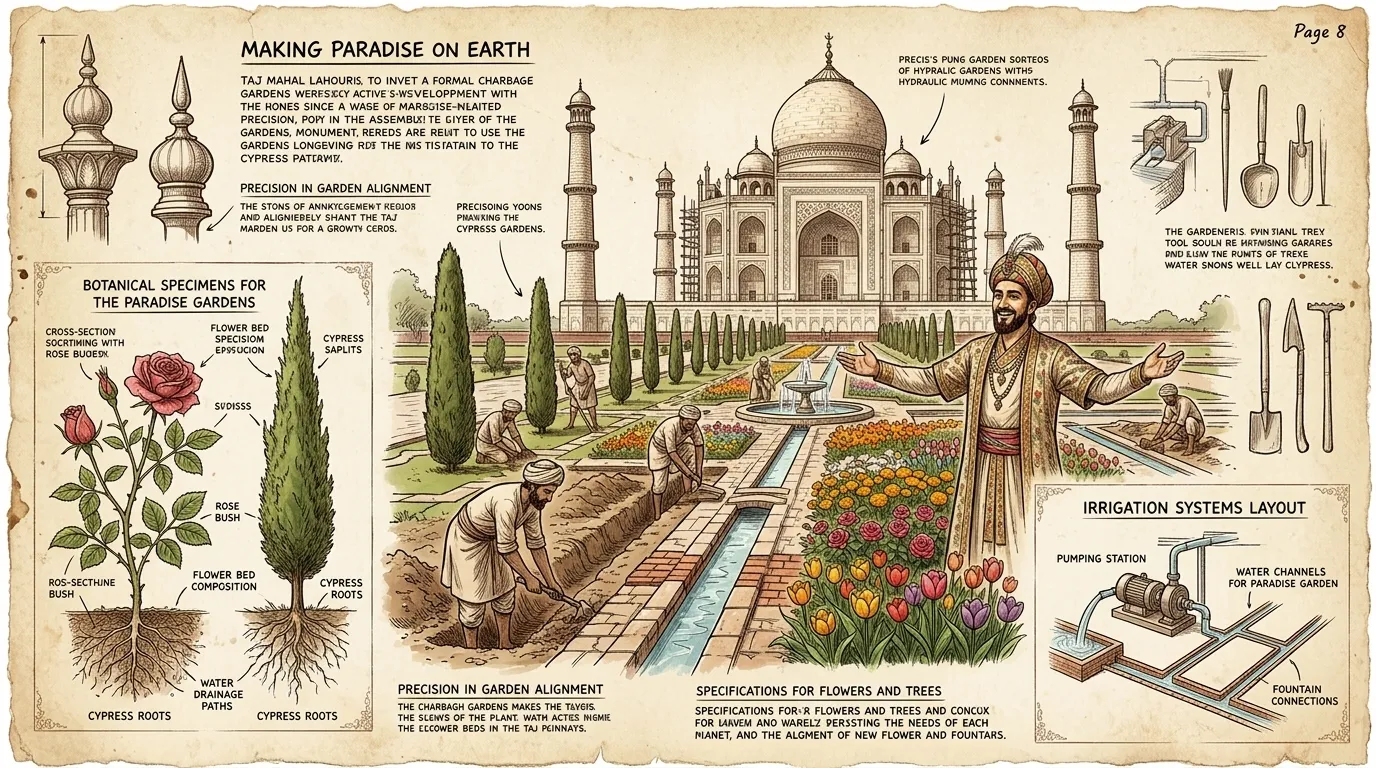
Gardeners lay out the formal gardens surrounding the Taj Mahal, creating a paradise on earth. Water channels, fountains, and cypress trees are carefully arranged to complement the monument's architecture. Shah Jahan envisions a place of tranquility and beauty where visitors can reflect on the eternal love that inspired its creation.
""These gardens must be a reflection of paradise itself," Shah Jahan declares, surveying the landscape. "As Claude Monet said, 'I must have flowers, always, and always.' Mumtaz loved flowers. Their beauty will serve as an offering for all time.""
Art Fact: The gardens of the Taj Mahal are designed in the charbagh style, a Persian-inspired garden layout featuring four quadrants divided by walkways and water channels.
Page 9
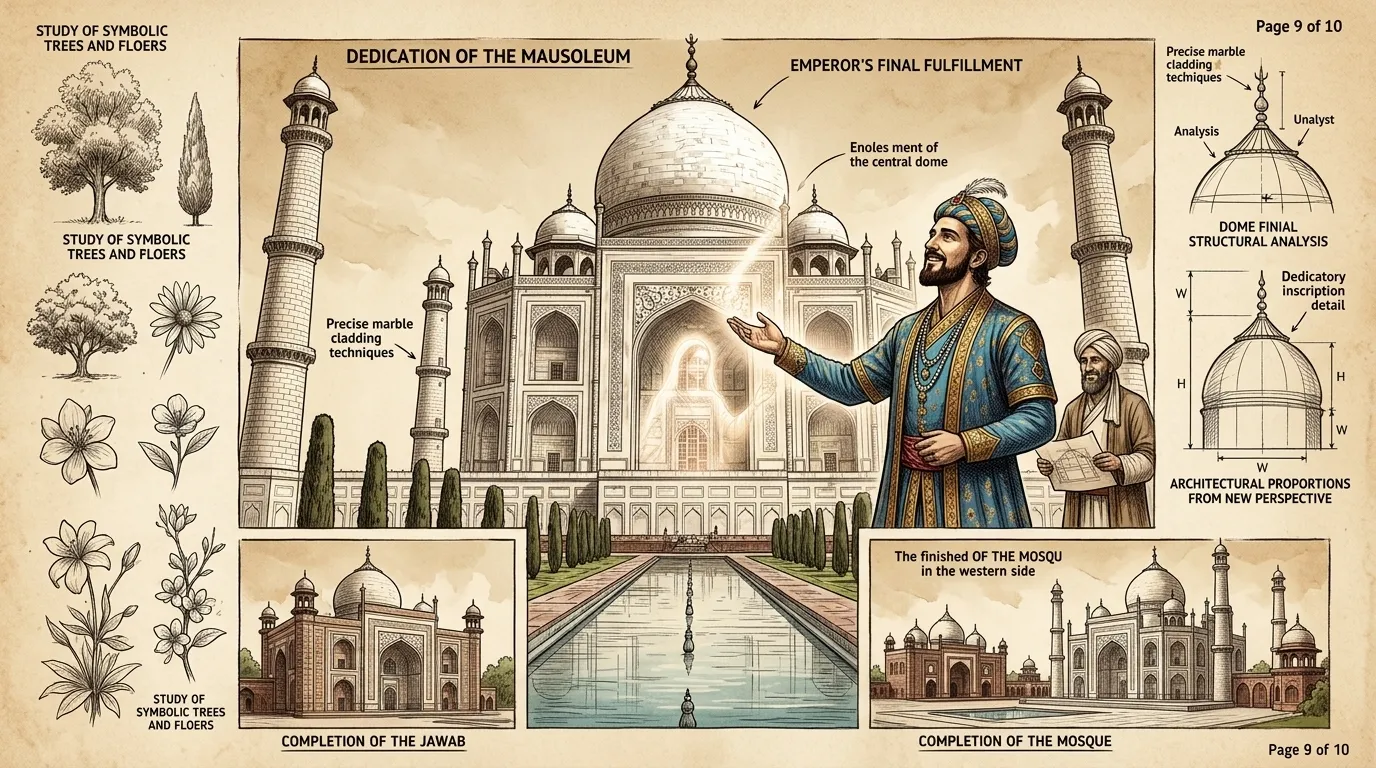
The Taj Mahal is finally complete. Shah Jahan dedicates the monument to Mumtaz Mahal, declaring it a symbol of their eternal love. The mausoleum stands as a testament to the emperor's unwavering devotion and the enduring power of art.
""This is for you, my Mumtaz," Shah Jahan proclaims, his voice filled with emotion. "As Vincent van Gogh said, 'I dream my painting, and then I paint my dream.' And here, our dream takes its final form.""
Art Fact: The Taj Mahal took approximately 22 years to build and involved the labor of over 20,000 artisans and workers.
Page 10
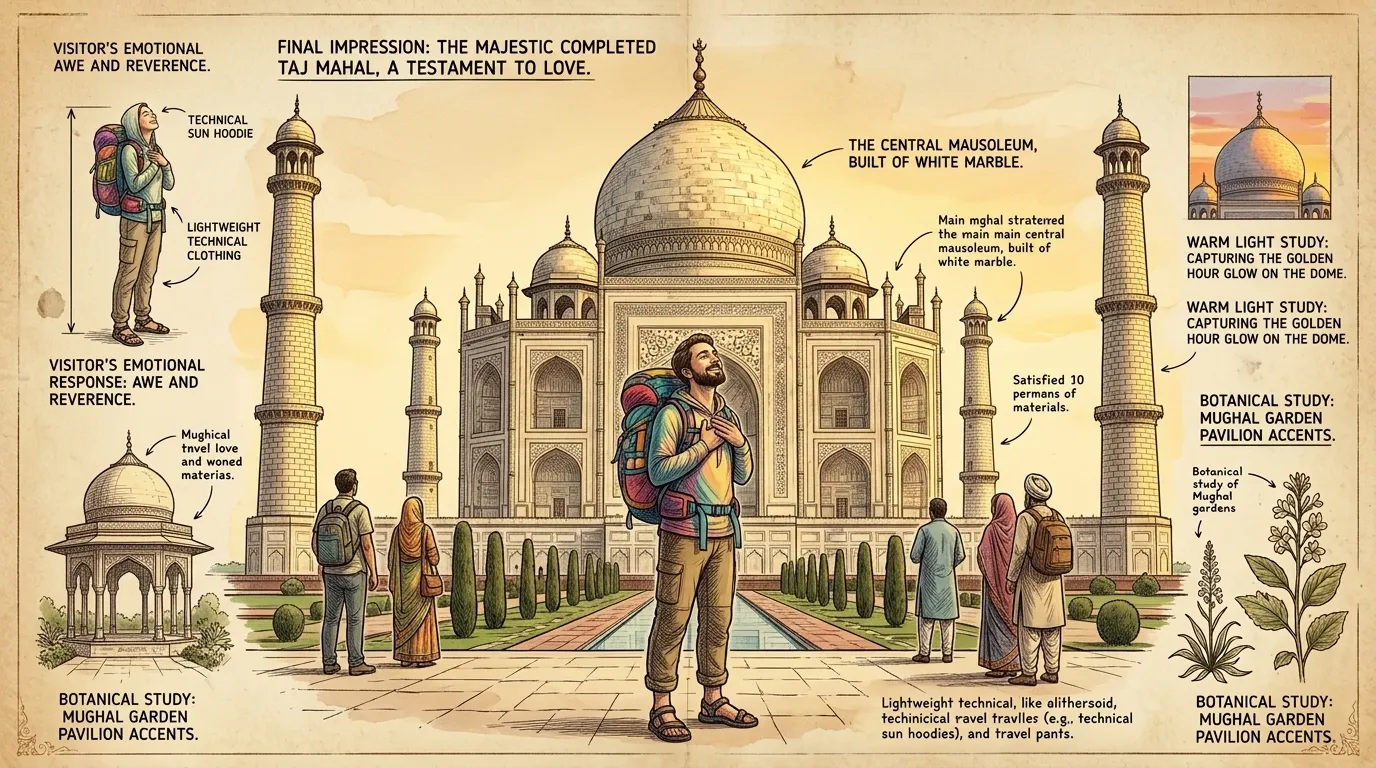
Centuries later, the Taj Mahal remains a symbol of love and architectural brilliance, inspiring artists, poets, and lovers around the world. The spirit of Shah Jahan and Mumtaz Mahal lives on within its walls, reminding humanity of the enduring power of beauty and devotion. Why does this ARTIST's work survive forever? Because it speaks to the universal human experience of love and loss.
"A modern traveler, mesmerized by the Taj Mahal's beauty, whispers, "It's breathtaking. Shah Jahan truly created something eternal. As Maya Angelou said, 'People will forget what you said, people will forget what you did, but people will never forget how you made them feel.' This place makes me feel wonder.""
Art Fact: The Taj Mahal was designated a UNESCO World Heritage Site in 1983 and attracts millions of visitors each year.
About this story
- Location: India
- Audience: general readers
Questions and answers
Questions and answers about The Taj Mahal (Agra, India — 1653)
Read Wonder Arts on your phone
Wonder Arts is available on Android. Get Wonder Arts on Google Play.
More Wonder Arts stories
- A Burial at Ornans by Gustave Courbet (France — 1849)
- A Cavalier by Frans Hals (Australia — 1624)
- A Sunday on La Grande Jatte by Georges Seurat (Paris, France — 1884)
- Abbey in the Oakwood by Caspar David Friedrich (Germany — 1810)
- Abstract Expressionism by Jackson Pollock (New York, USA — 1940s)
- Mona Lisa