The Swing Bridge by Thomas Cole (USA — 1837)
The Swing Bridge by Thomas Cole (USA — 1837) — an illustrated arts story, set in United States. 10 illustrated pages, free to read on Wonder Arts.

Page 1
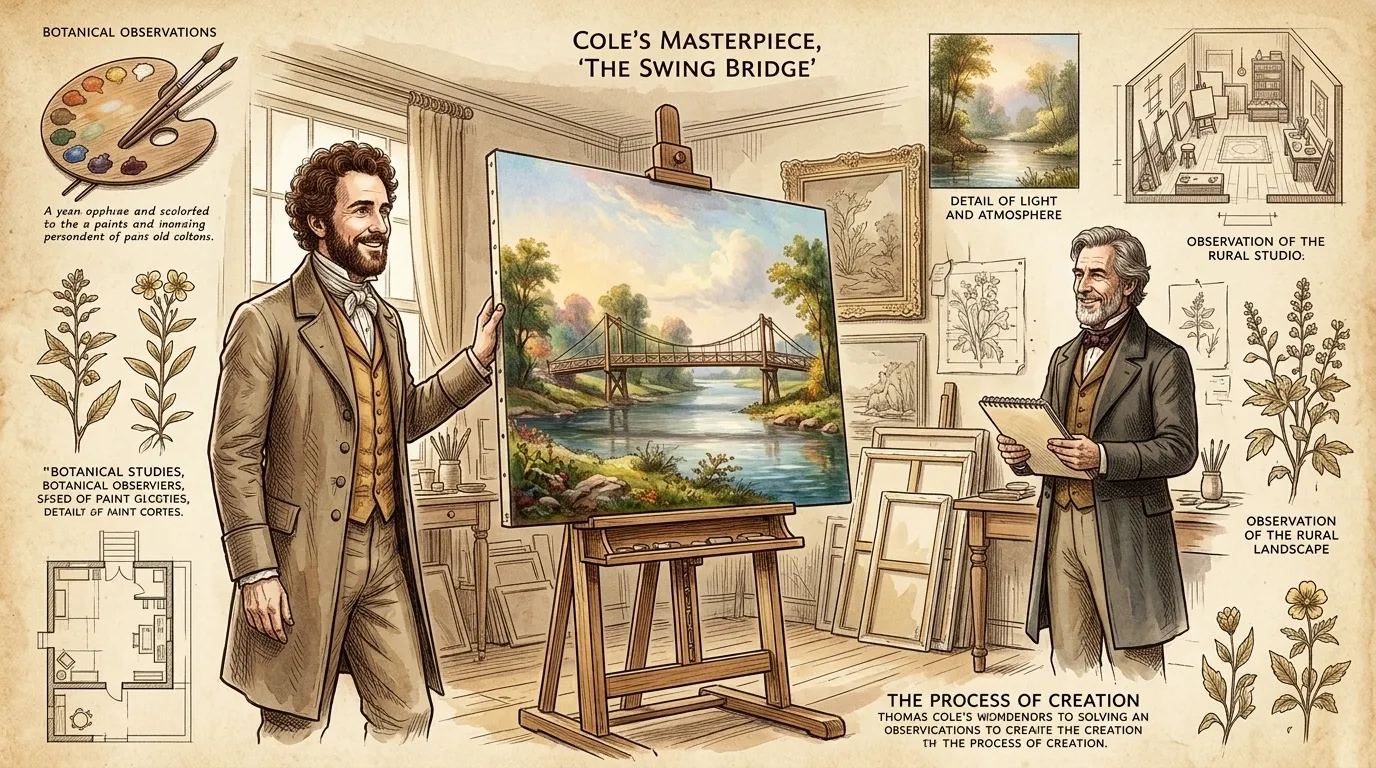
Here stands Thomas Cole, the visionary behind 'The Swing Bridge,' completed in 1837. Cole's dedication to capturing the American landscape in its romantic and sublime beauty is evident in this work, now residing at the Munson-Williams-Proctor Arts Institute. The painting, measuring 26 x 36 inches, showcases Cole's mastery of light and his ability to evoke a sense of tranquility and the ever-changing nature of time. As Cole once said, 'To walk with nature as a poet is the necessary condition of a perfect painter'.
Art Fact: Thomas Cole's 'The Swing Bridge' exemplifies his Romantic vision of the American landscape.
Page 2
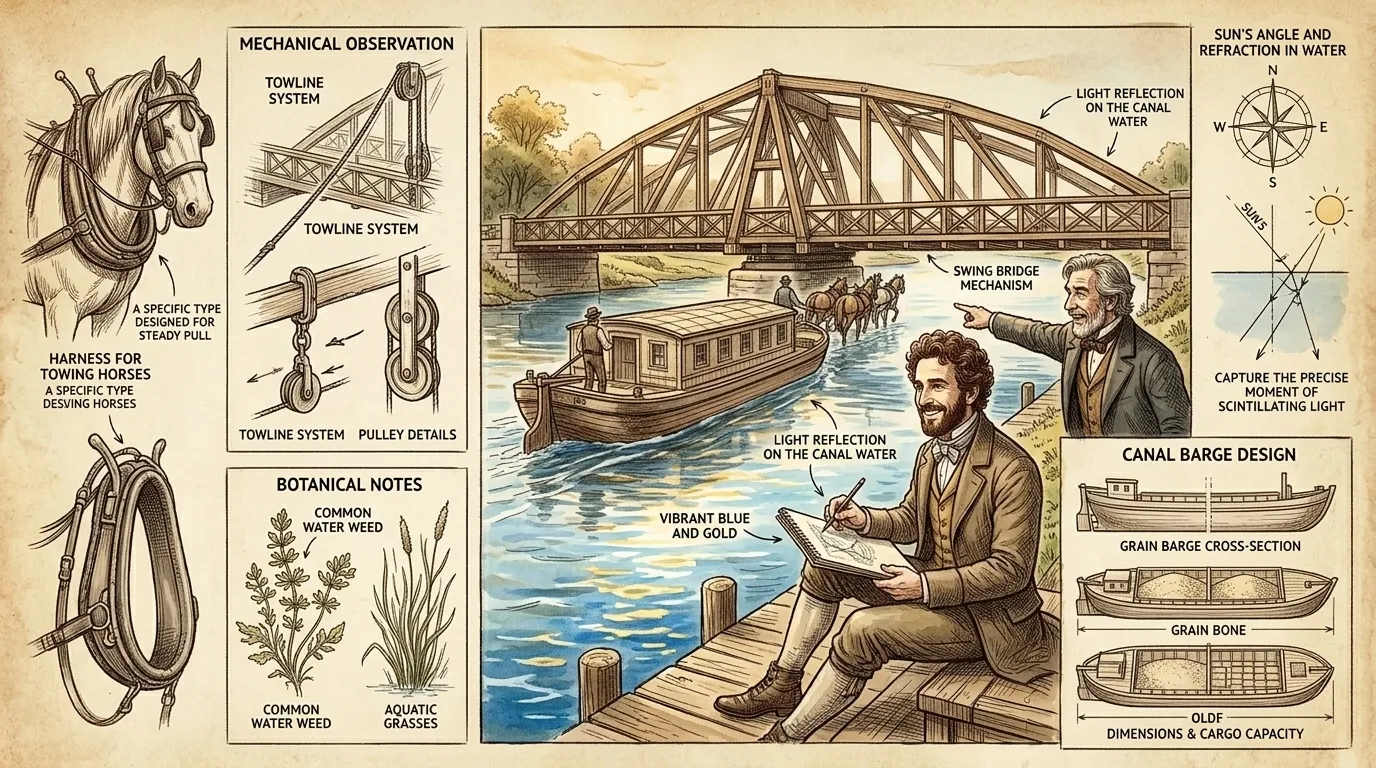
Young Thomas, still honing his craft, marveled at the bustling activity along the Erie Canal. Watching barges navigate the waterway, he observed the interplay of light on water and the dynamic relationship between human endeavor and the natural world. One day he sketched a boat being towed beneath the swing bridge and thought, 'The landscape is the business of the artist'.
"'Look, Thomas,' his companion said, 'the way the sun catches the water is just magical.'"
Art Fact: The Erie Canal provided Cole with early inspiration for capturing the dynamic relationship between humanity and nature.
Page 3
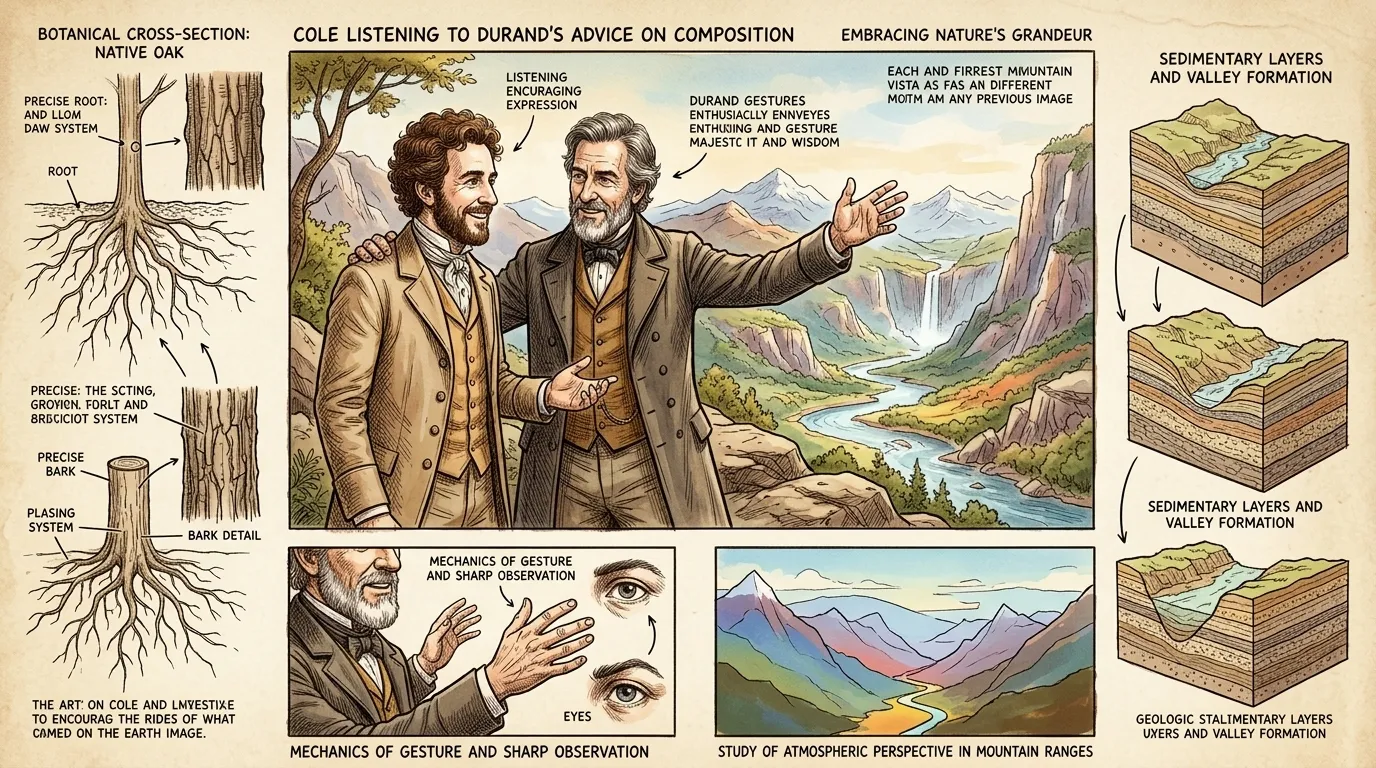
A chance encounter with Asher B. Durand, a celebrated engraver, proved pivotal for Cole. Durand, recognizing Cole's burgeoning talent, shared his knowledge of composition and encouraged him to embrace the sublime in nature. Asher encouraged Cole to explore the Hudson River School of painting. Cole was excited when Asher B. Durand exclaimed, 'In landscape painting, the artist is an explorer, charting the unknown territory of the human spirit!'
"Thomas, keep pursuing nature."
Art Fact: Asher B. Durand's mentorship provided Cole with invaluable guidance in composition and the exploration of the sublime.
Page 4
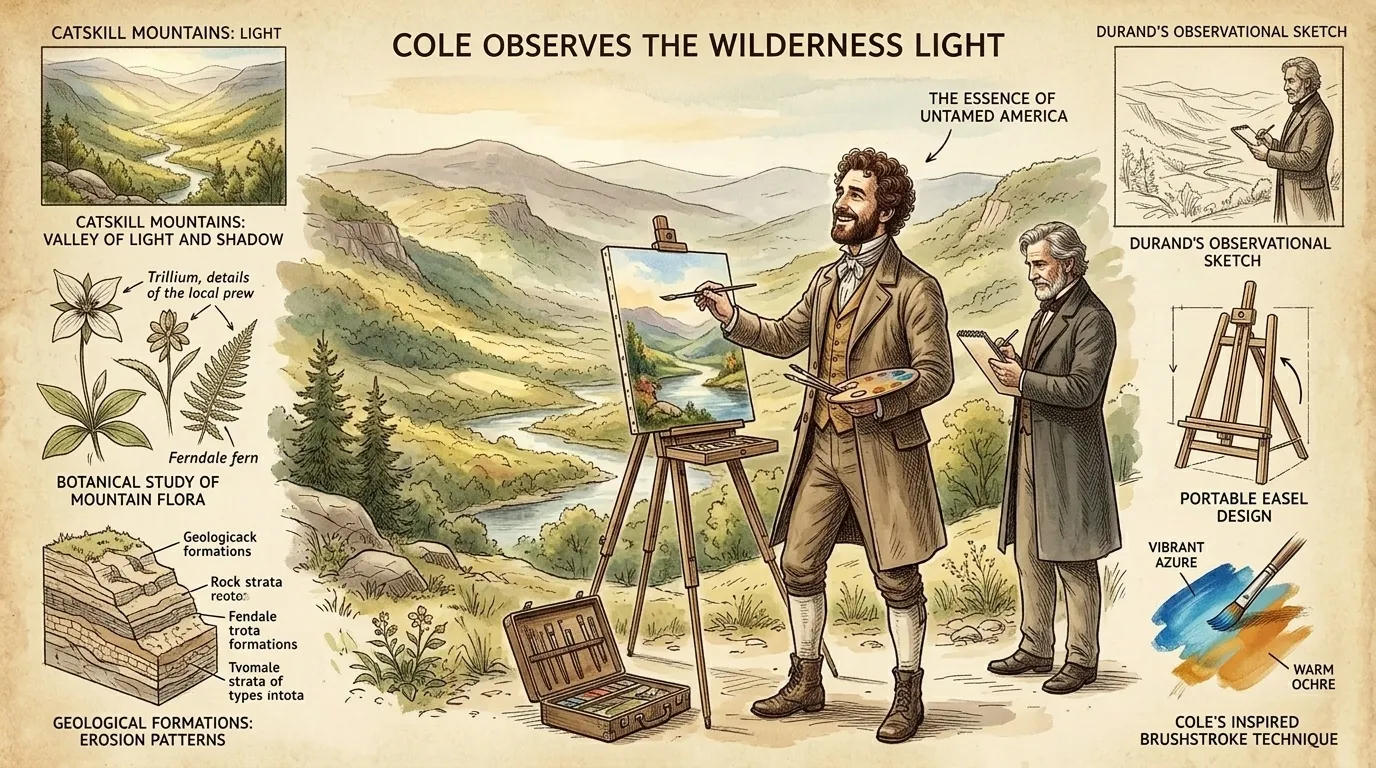
Drawn to the raw beauty of the Catskill Mountains, Cole ventured into the wilderness, seeking to capture the untamed spirit of the American landscape. The vastness of the mountains and the play of light through the valleys filled him with a sense of awe. As he painted, Cole pondered, as Leonardo da Vinci stated: 'Painting embraces all the ten functions of the eye; that is to say, darkness, light, body and colour, substance and form, motion and rest, distance and proximity.'
"The view is breathtaking. I must get it on canvas!"
Art Fact: The Catskill Mountains became a significant source of inspiration for Cole's landscapes, fostering his Romantic vision.
Page 5
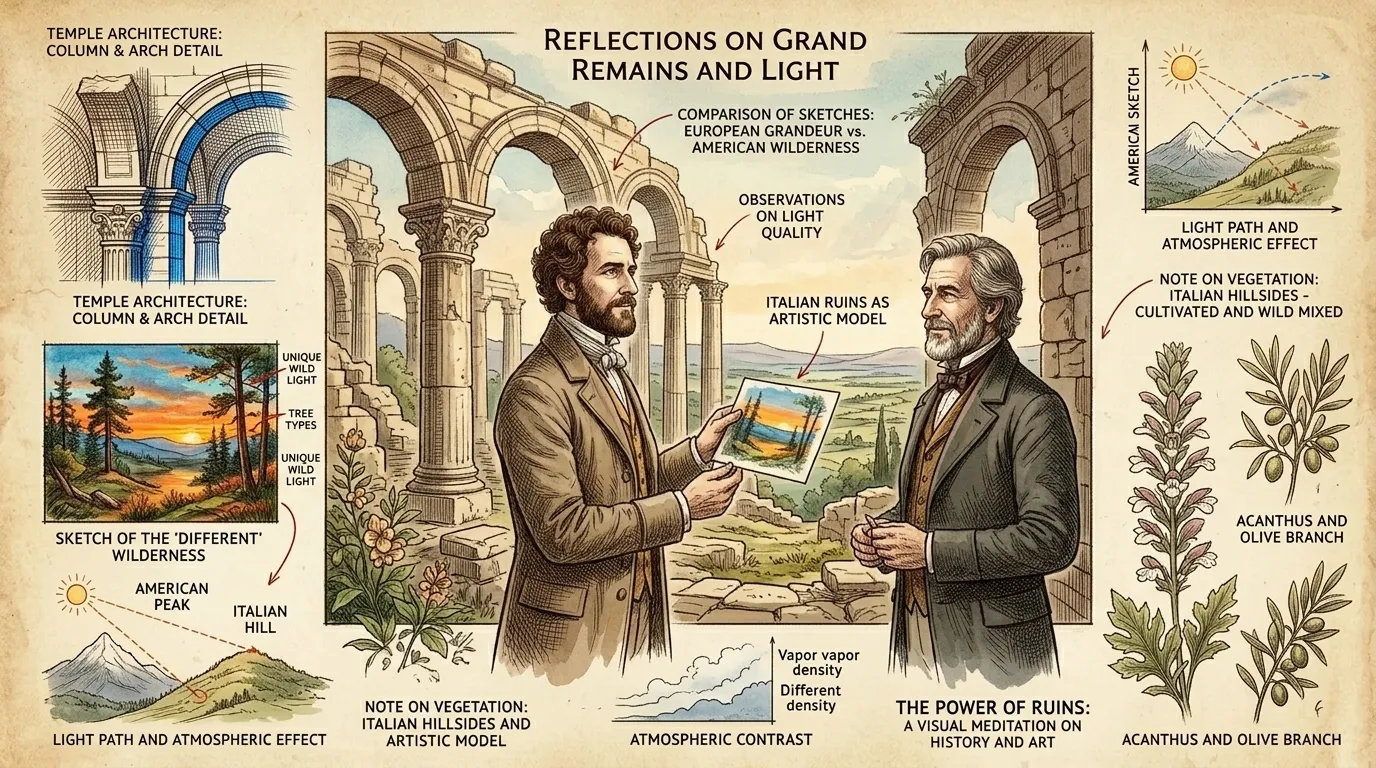
A journey to Europe exposed Cole to the Old Masters, whose works deepened his understanding of composition and the use of light. While impressed by the grandeur of European landscapes, he remained steadfast in his commitment to capturing the unique beauty of America. "Europe has its history, its ruins, but America," he wrote, "has its wilderness."
"'The light in Italy is amazing,' observed Cole's companion, 'but our American light has its own quality'."
Art Fact: Cole's European tour broadened his artistic perspective while reinforcing his dedication to American landscapes.
Page 6
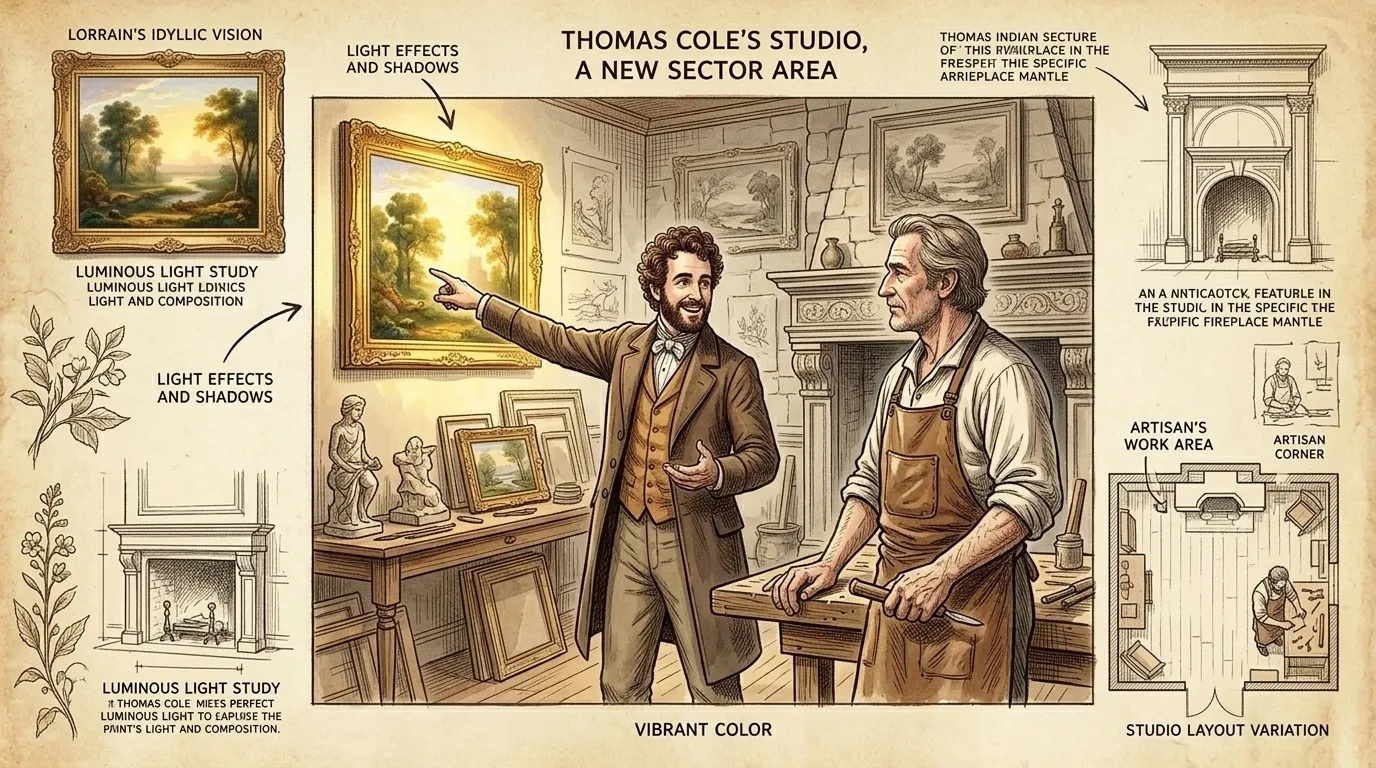
Cole studied the works of Claude Lorrain, particularly his use of light and idyllic compositions. Lorrain's influence is evident in 'The Swing Bridge,' where light plays a crucial role in creating a sense of tranquility and timelessness. Cole once reflected, paraphrasing Isaac Newton: 'If I have seen further it is by standing on the shoulders of giants'.
""Look at the light!," Cole pointed out in the studio to a local artisan. "Lorrain captured such idyllic views. If I can emulate him, it will be a victory"."
Art Fact: Claude Lorrain's use of light and idyllic compositions significantly influenced Cole's artistic style.
Page 7
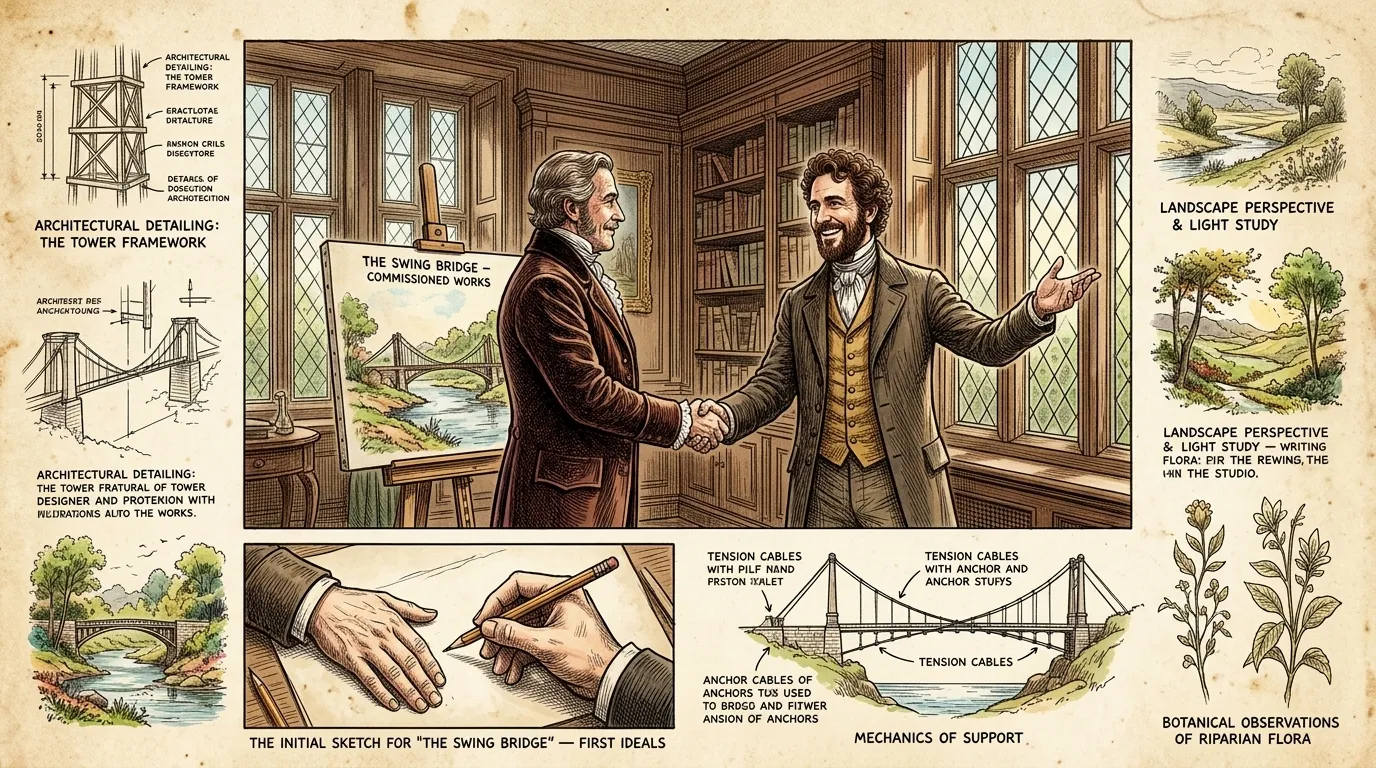
A wealthy patron, captivated by Cole's vision, commissioned 'The Swing Bridge,' providing him with the freedom to express his artistic ideals. The commission allowed Cole to fully realize his vision of capturing the sublime beauty of the American landscape. 'An artist,' Cole mused, quoting Shakespeare, 'must give to airy nothing, a local habitation and a name'.
"'I trust your vision completely, Mr. Cole,' the patron remarked, 'paint the landscape that stirs your soul!'"
Art Fact: The commission of 'The Swing Bridge' provided Cole with the resources and freedom to fully realize his artistic vision.
Page 8
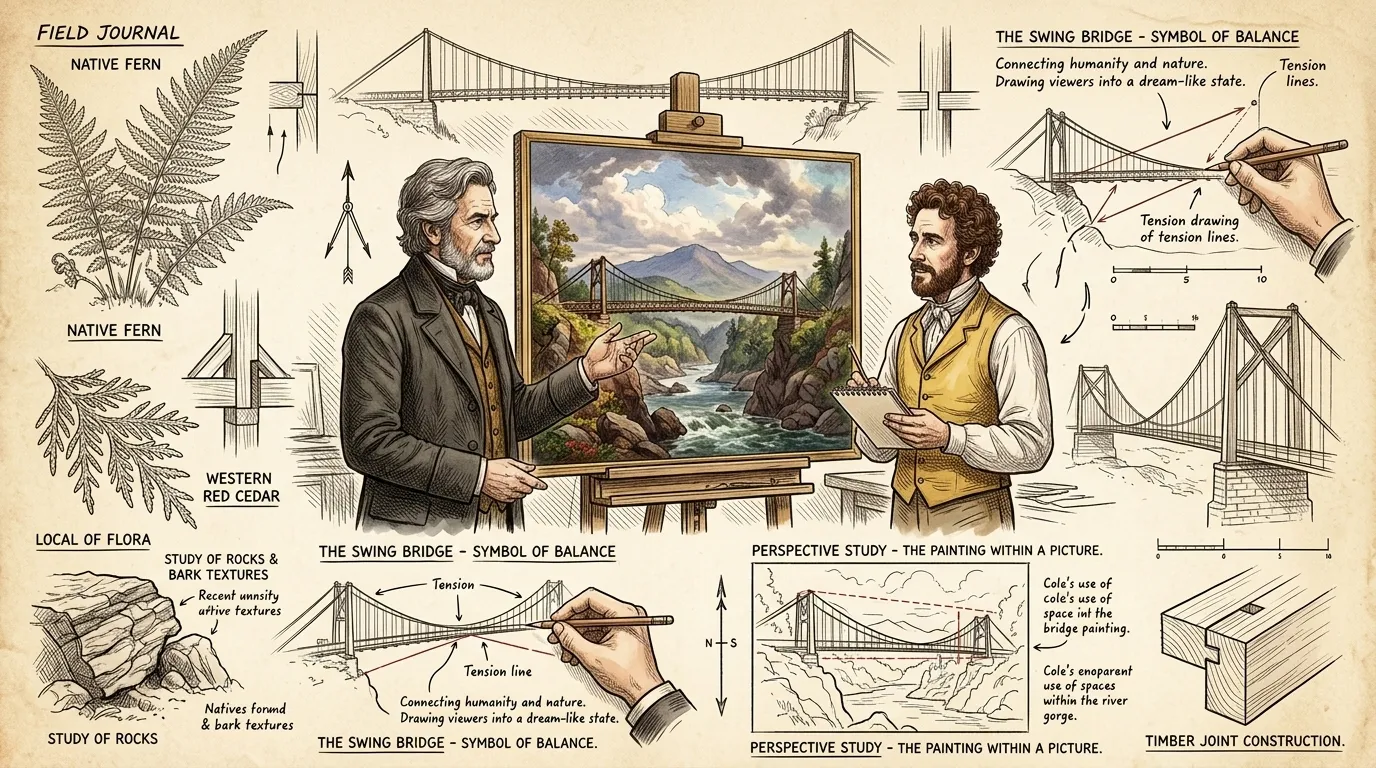
The swing bridge in the painting became a symbol of the connection between humanity and nature, representing the potential for harmony between civilization and the wilderness. Cole used the bridge to frame the wilder landscape. This framing device helps create a picture within a picture, drawing the viewer into a dream-like trance. 'Nature,' he said quoting William Wordsworth 'never did betray the heart that loved her.'
"'The bridge is more than just wood and rope,' a fellow artist said, 'it is a symbol of balance!'"
Art Fact: The swing bridge in Cole's painting symbolizes the potential for harmony between humanity and nature.
Page 9
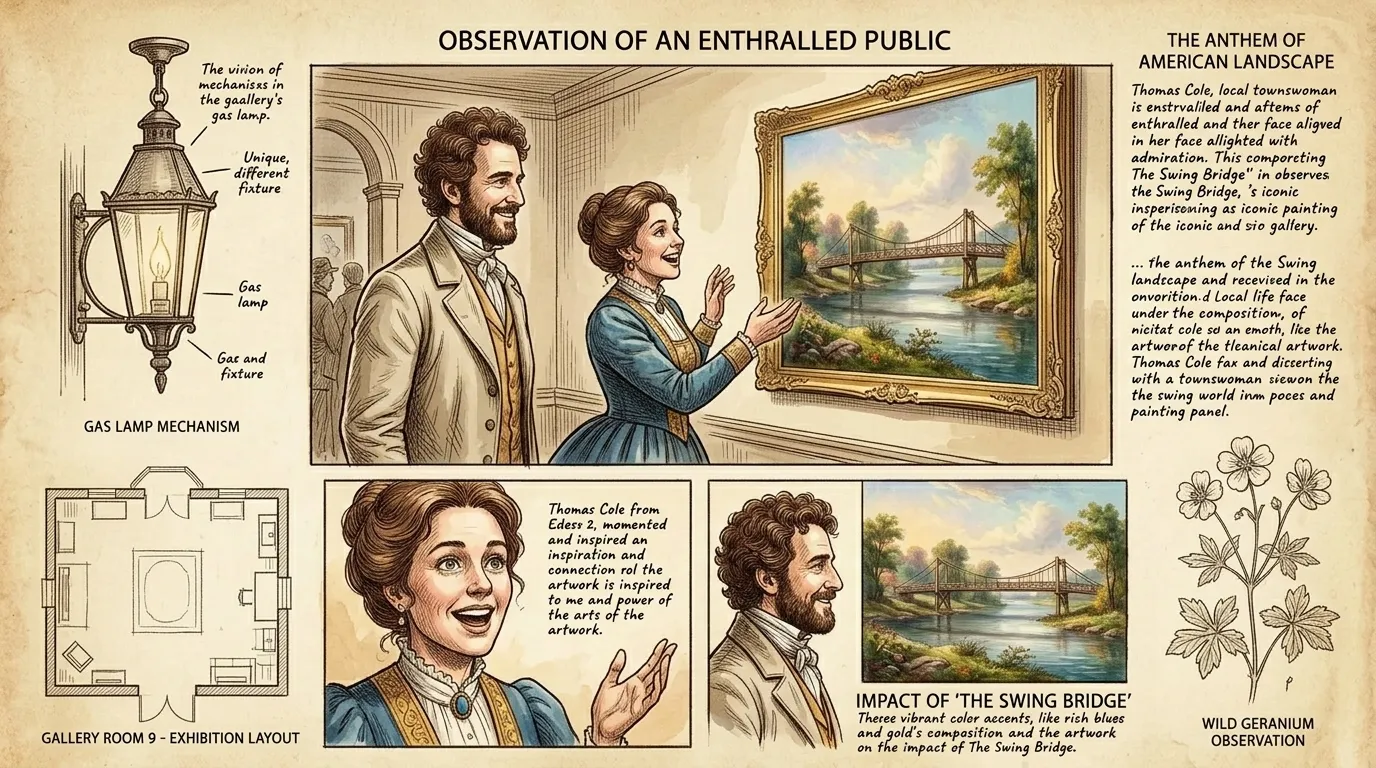
Cole's 'The Swing Bridge' became an iconic example of the Hudson River School, inspiring generations of artists to celebrate the American landscape. His vision continues to resonate, reminding us of the importance of preserving our natural heritage. Cole inspired many other artists who joined him on the Hudson and created the 'Hudson River School' movement. 'Every artist', Cole said, with reverence, 'dipped his brush into his own soul, and painted his own nature into his pictures'.
"'It's not just a painting, it's an anthem,' exclaimed a local townswoman."
Art Fact: 'The Swing Bridge' is an iconic example of the Hudson River School, inspiring generations of artists to celebrate the American landscape.
Page 10
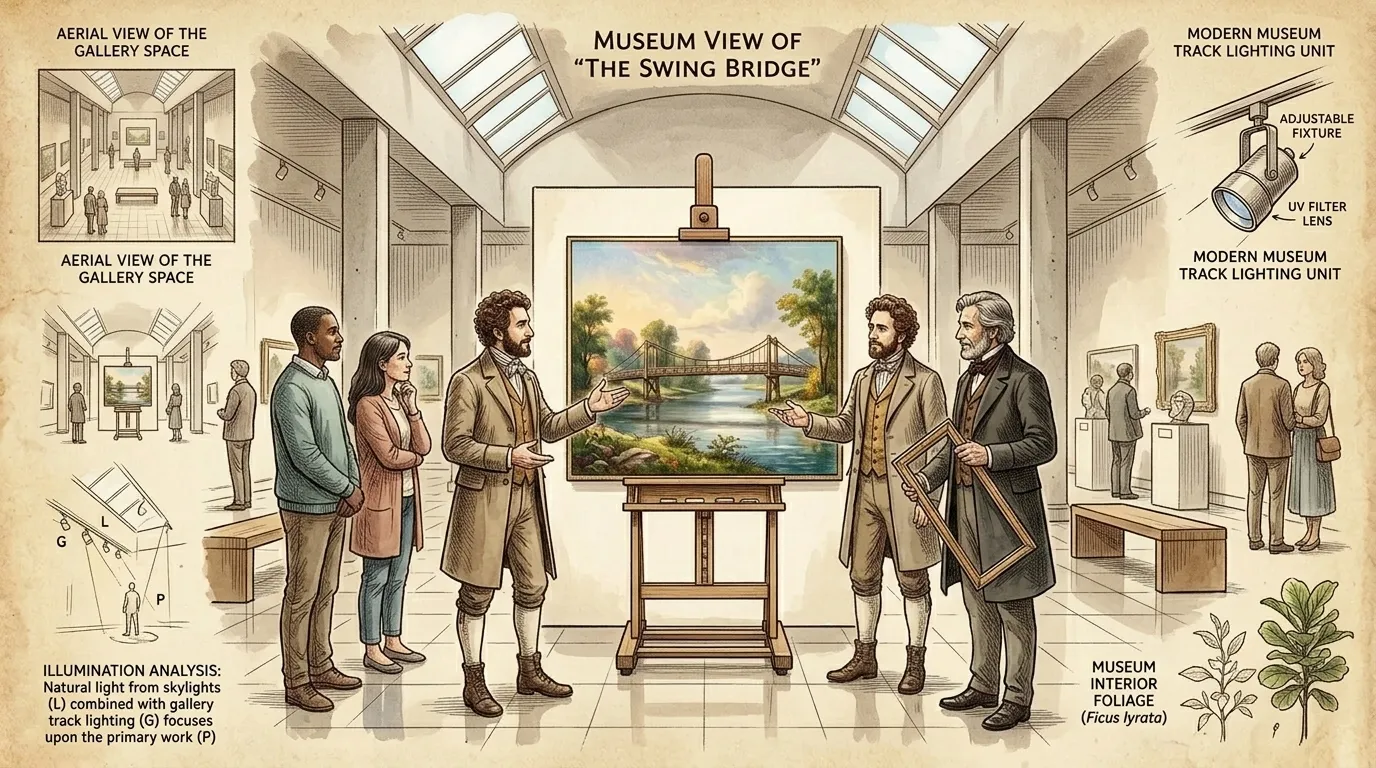
Today, 'The Swing Bridge' hangs in the Munson-Williams-Proctor Arts Institute, a testament to Cole's enduring legacy. It continues to inspire viewers to appreciate the beauty and fragility of the natural world. As people view the painting, the sense of nostalgia sweeps across their faces. The world is still, but nature continues to grow around the magnificent swing bridge. As Cole hoped, his vision has helped remind us that nature should be protected at all costs.
Art Fact: 'The Swing Bridge' remains a powerful reminder of the importance of preserving the beauty and fragility of the natural world.
About this story
- Location: United States
- Audience: general readers
Questions and answers
Questions and answers about The Swing Bridge by Thomas Cole (USA — 1837)
Read Wonder Arts on your phone
Wonder Arts is available on Android. Get Wonder Arts on Google Play.
More Wonder Arts stories
- A Burial at Ornans by Gustave Courbet (France — 1849)
- A Cavalier by Frans Hals (Australia — 1624)
- A Sunday on La Grande Jatte by Georges Seurat (Paris, France — 1884)
- Abbey in the Oakwood by Caspar David Friedrich (Germany — 1810)
- Abstract Expressionism by Jackson Pollock (New York, USA — 1940s)
- Al-Azhar Mosque (Cairo, Egypt — 972)