The Discovery of Tutankhamun's Tomb
The Discovery of Tutankhamun's Tomb — an illustrated history story. 10 illustrated pages, free to read on Wonder Egypt.
Page 1
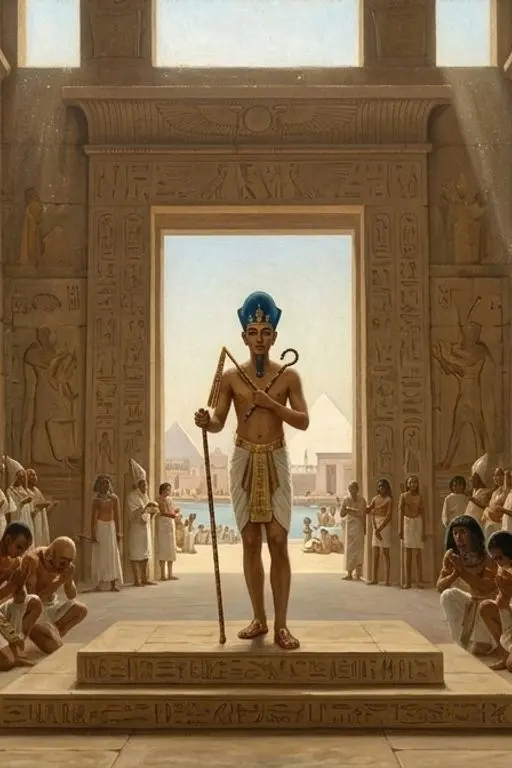
At a time when the very fabric of Egypt had been torn by a pharaoh's radical vision, a slight boy, still years from manhood, was thrust onto the golden throne. Tutankhamun, born Tutankhaten, inherited a kingdom in turmoil, a legacy of religious revolution initiated by his father, Akhenaten, that had alienated the ancient gods and destabilized the state. His reign, though brief, was a monumental act of restoration, guided by the seasoned hands of powerful figures who sought to return Egypt to its ancestral traditions. He was surrounded by those who would shape his destiny and, ultimately, the future of Egypt: his half-sister and wife, Ankhesenamun, who shared the weight of a shattered dynasty; the venerable Vizier Ay, a cunning statesman from his father's court, who became the true power behind the child king; and the formidable General Horemheb, commander of the armies, whose military strength would ensure stability. Overseeing the kingdom's immense wealth was Maya, the astute Overseer of the Treasury, tasked with rebuilding the temple economies. Though his name was largely erased from official records after his death at the tender age of nineteen, the unexpected discovery of his intact tomb millennia later would ensure that this boy king, who barely ruled, would become the most renowned pharaoh of them all, a testament to the enduring majesty of ancient Egypt.
Page 2
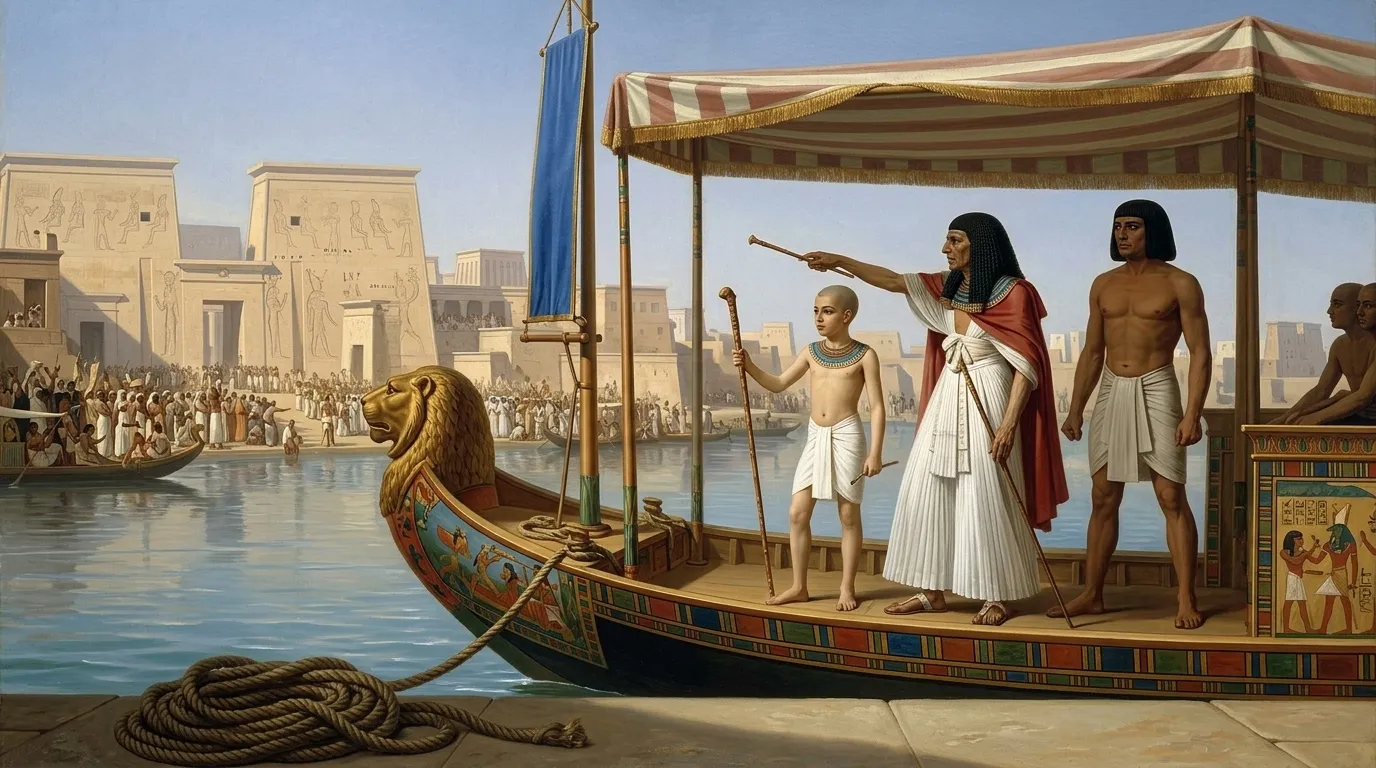
Nine years old, a mere child yet burdened with the weight of two lands, the young pharaoh, a slight boy of nine who leaned heavily on a polished ebony cane, stood on the deck of the royal barge as it cut through the serene waters of the Nile. The journey from Akhetaten, the city of his father, now shunned and silent, was a passage not just of distance but of an era's end. Before him, the sprawling temples and bustling quays of Thebes, the ancient capital, began to emerge from the morning mist. Beside him, the elder statesman, a dignified, clean-shaven man in a long white kilt and elaborate wig, gestured towards the shore, his voice a low, steady murmur of instruction. Behind them, the formidable commander, a broad-shouldered man with a stern face and short wig, stood with crossed arms, his gaze sweeping the riverbanks, ensuring the security of the fleet. This was the true beginning of the restoration, a physical return to the spiritual heart of Egypt, guided by those who saw in the boy's frail form the instrument of their ambitions.
"Thebes awaits, Lord of the Two Lands. May Amun smile upon your return."
Page 3
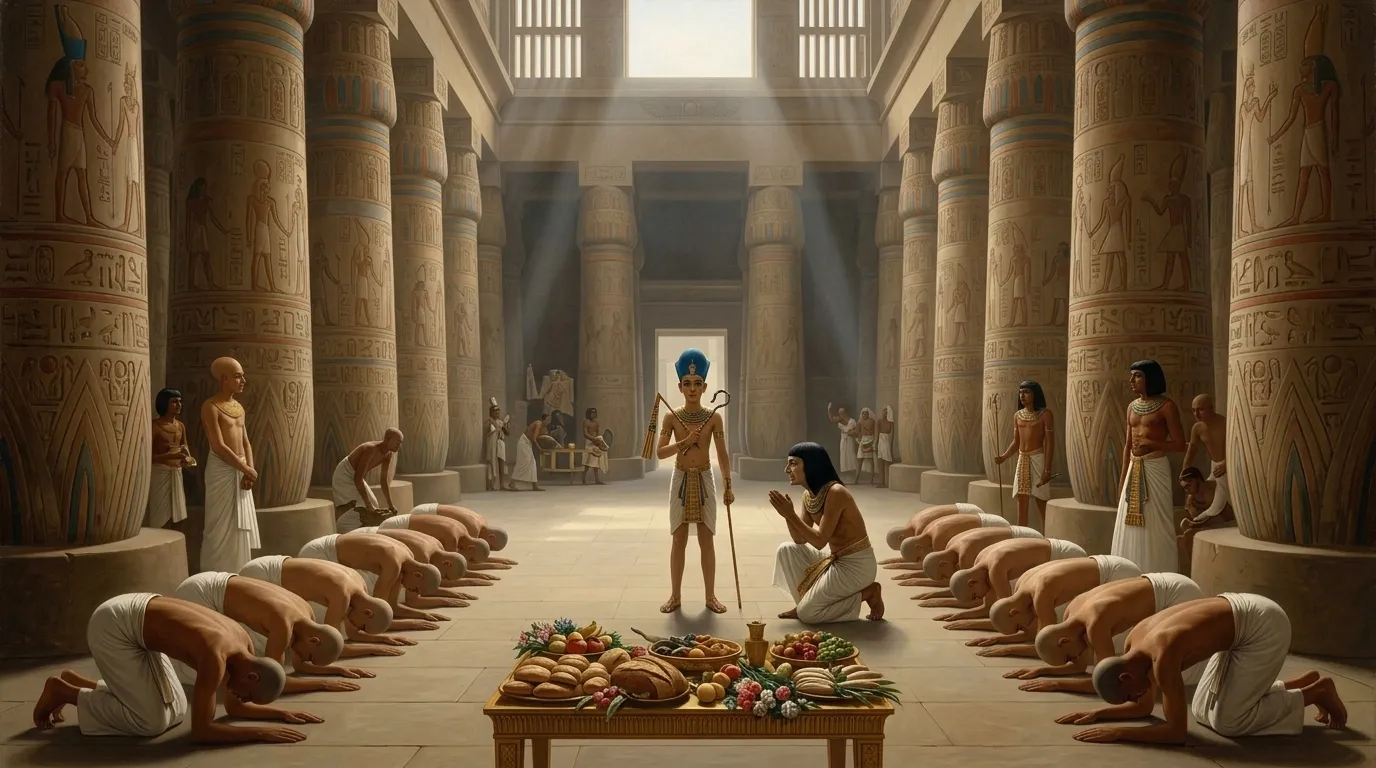
Within the colossal Great Hypostyle Hall of Karnak, a forest of papyrus-bundle columns stretching towards the distant ceiling, the air hung heavy with the scent of frankincense and the low drone of chanted prayers. The boy pharaoh, now aged ten, stood before the towering gold doors of the inner sanctuary, his slight frame almost lost amidst the immensity of the sacred space. Clad in the khepresh, the blue war crown, he clutched the heka crook and flail, symbols of his divine authority. The venerable vizier, a clean-shaven man whose long, pleated kilt bespoke his status, knelt slightly before him, whispering ancient ritual phrases, guiding the child through the intricate ceremony of offering to Amun. Behind them, a multitude of high priests, their heads shaven smooth, prostrated themselves on the cool stone floor, their voices rising in unison. This was the solemn public declaration: the Aten heresy was undone, and the traditional gods of Egypt, led by Amun-Re, were restored to their rightful glory.
"May Amun accept this offering, Lord of the Two Lands, and grant you long life and prosperity."
Page 4
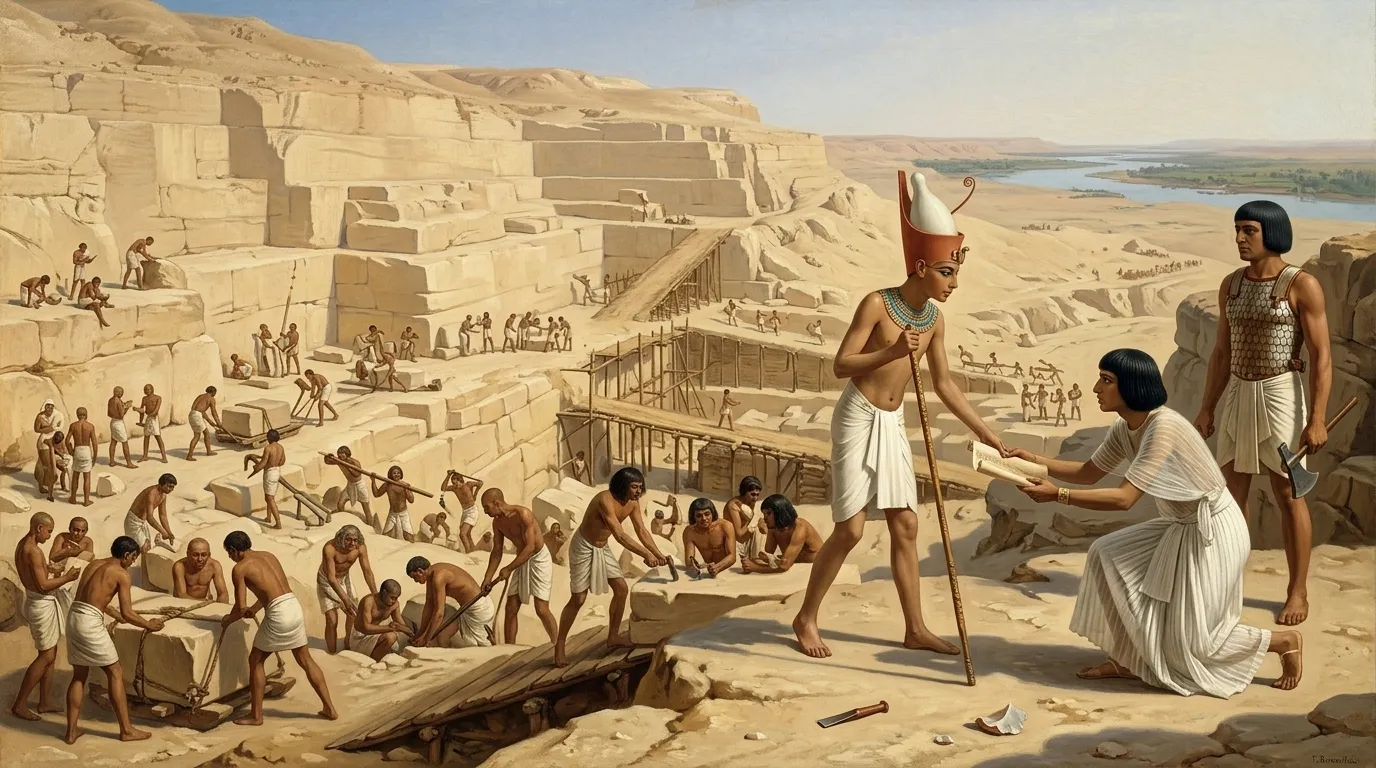
The searing sun beat down on the vast sandstone quarries of Gebel el-Silsila, where the sheer cliff faces bore witness to millennia of labor. Dust, fine as flour, coated everything, clinging to the sweat-soaked skin of the workers. Here, amidst the rhythmic chipping of chisels and the groaning of ropes, the pharaoh, now a determined boy of thirteen, observed the cutting of monumental blocks destined for the temples of Thebes. He stood on a precarious ledge, his slight form balanced, leaning on his ever-present walking stick, watching the sheer scale of the undertaking. Beside him, the Overseer of the Treasury, a meticulous, middle-aged man with intelligent eyes and a neat black wig, unrolled a papyrus scroll, detailing the allocation of copper tools and the feeding of the thousands of laborers. The general, a broad-shouldered man, supervised the guards, ensuring the flow of supplies and the security of the precious stone. Each colossal block, slowly freed from the earth, was a testament to Egypt's renewed commitment to its gods and its grandeur, a tangible undoing of the neglect imposed by the Amarna years.
"The tribute of Nubia has arrived, Lord. Enough copper for the season's work, and rations for the workers."
Page 5
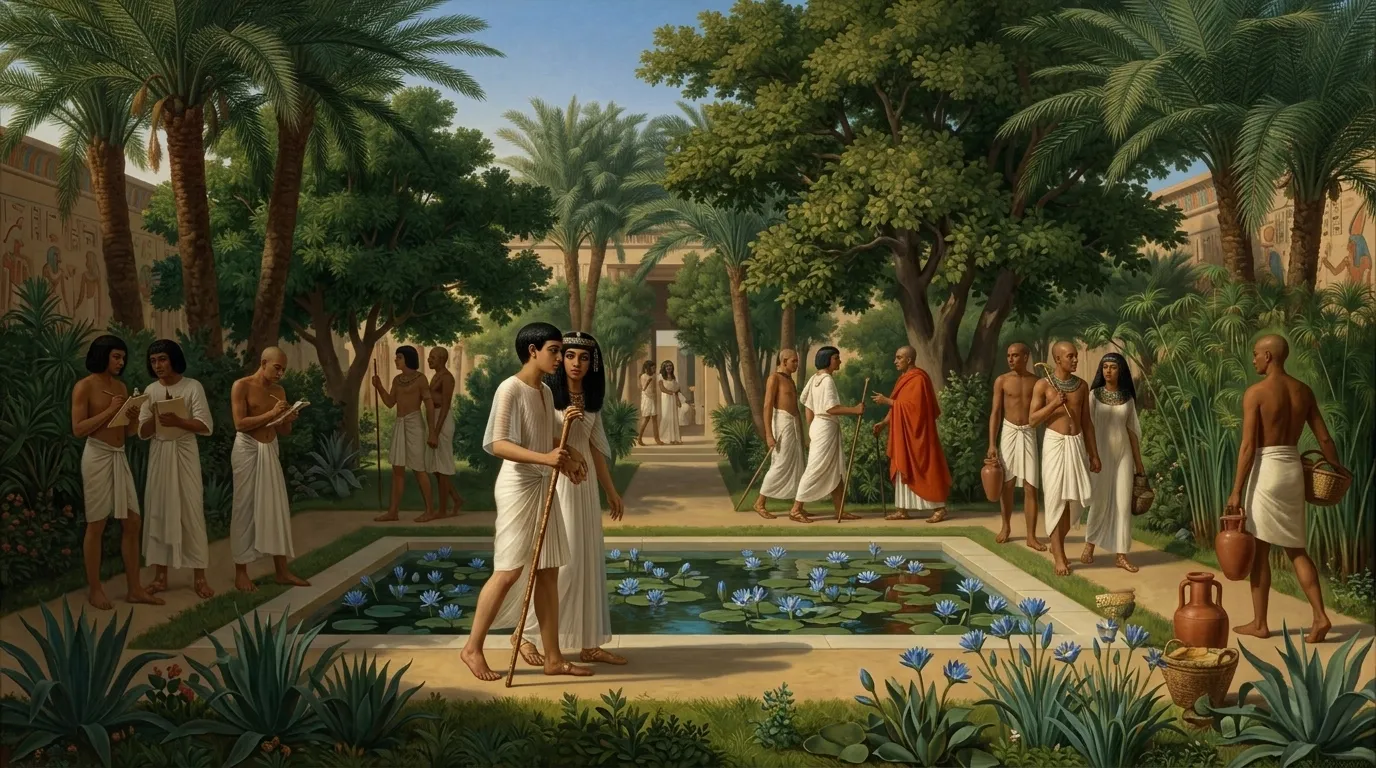
Within the serene, enclosed royal garden of the Malkata palace, fragrant with the scent of blooming lotuses and the soft murmur of fountains, the pharaoh, now a young man of fifteen, walked slowly along a shaded path, his walking stick tapping gently on the paved stones. His marriage to Ankhesenamun, his half-sister and daughter of the 'Heretic King,' was not merely a personal union but a profound political act, binding the fragmented lineage of Akhenaten to the newly restored order. The queen, a graceful woman in a delicate white linen gown and elaborate wig, moved with quiet dignity beside him, her hand occasionally brushing his arm in a gesture of shared understanding. They walked in respectful silence, the weight of their combined heritage palpable between them. Their union was meant to stabilize the dynasty, to offer a legitimate heir, yet even in the tranquility of the garden, a subtle current of anxiety hummed beneath the surface, a premonition of the challenges that still lay ahead for the royal couple and the fragile restoration they embodied.
"The High Priest speaks of the coming flood. May it bring abundance to the fields, and peace to our Two Lands."
Page 6
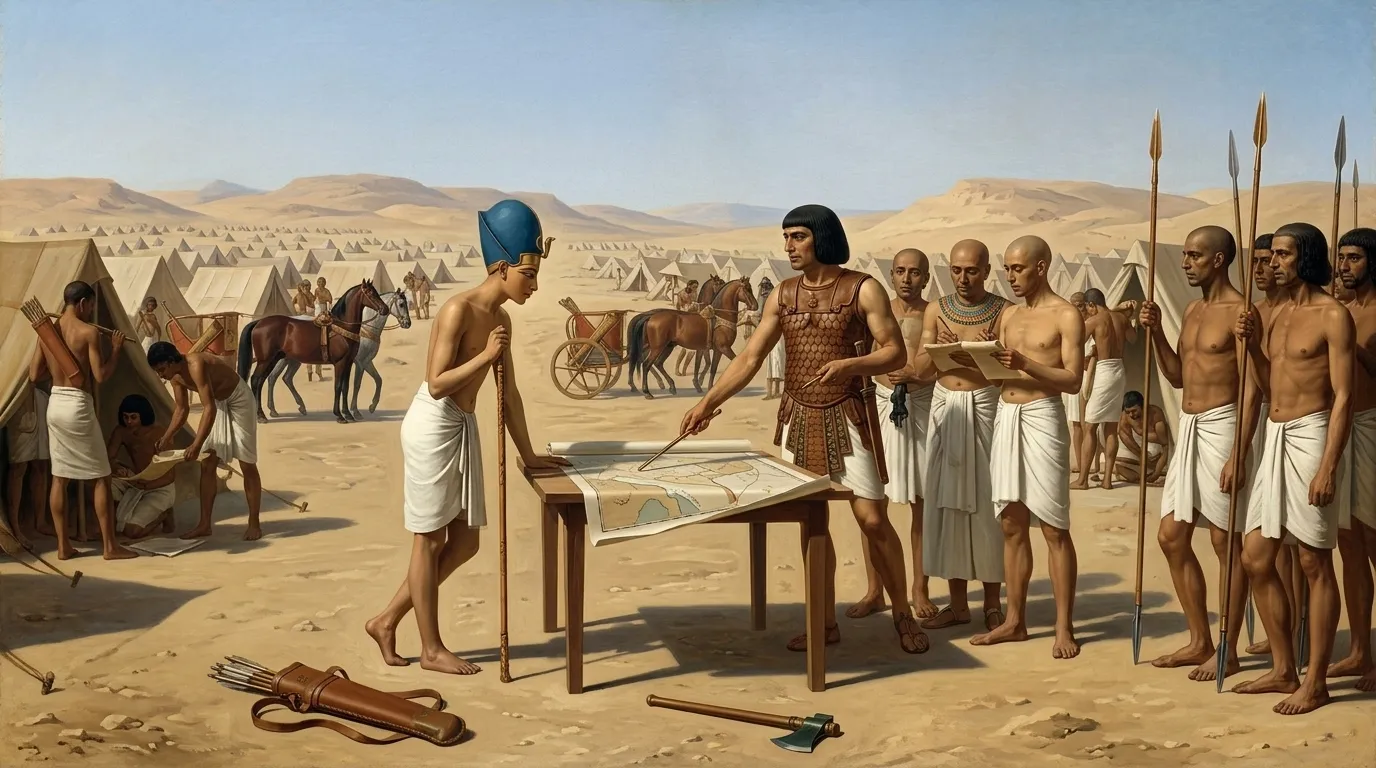
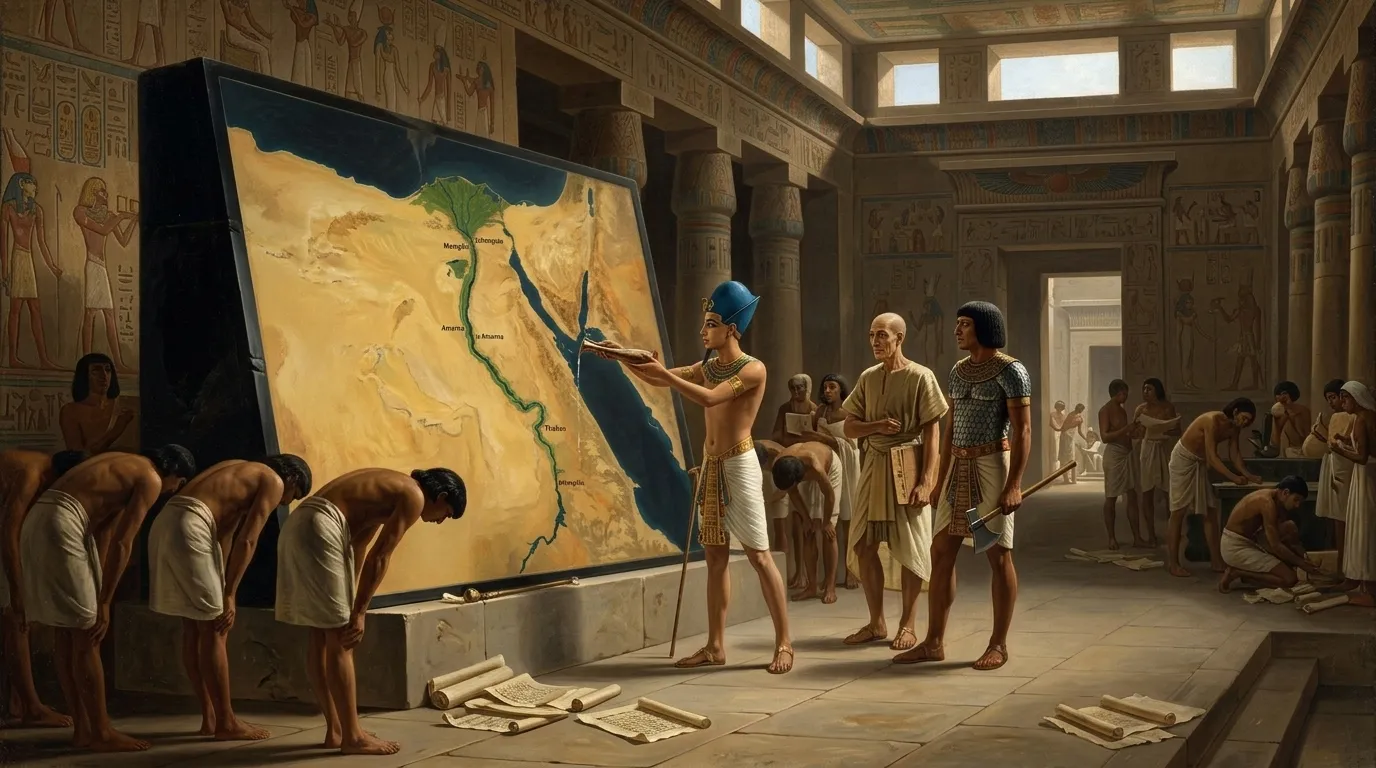
Beyond the southern frontier, in a sprawling desert encampment where the wind whipped sand across hundreds of small tents, the rhythmic clang of blacksmiths' hammers mingled with the shouts of soldiers. The pharaoh, a young man of sixteen, his face set with a blend of youthful authority and inherent frailty, stood before a large campaign map unrolled on a low, polished wood table. He wore the khepresh, the blue war crown, and his steady hand gripped his walking stick, though his gaze was fixed on the tactical lines drawn across the desert terrain. The formidable General Horemheb, a broad-shouldered man in a protective leather cuirass and short wig, gestured decisively with a bronze-tipped pointer, outlining the movements of chariots and infantry against the rebellious Nubian tribes. Soldiers, lean and dust-stained, stood at attention nearby, their spears upright. This display of military might, orchestrated by Horemheb, was crucial to reasserting Egyptian control over its valuable territories and projecting an image of strength after the instability of the Amarna period, ensuring the continued flow of gold and resources.
"The rebels have scattered, Lord. Our chariots drove them before us like chaff in the wind."
Page 7
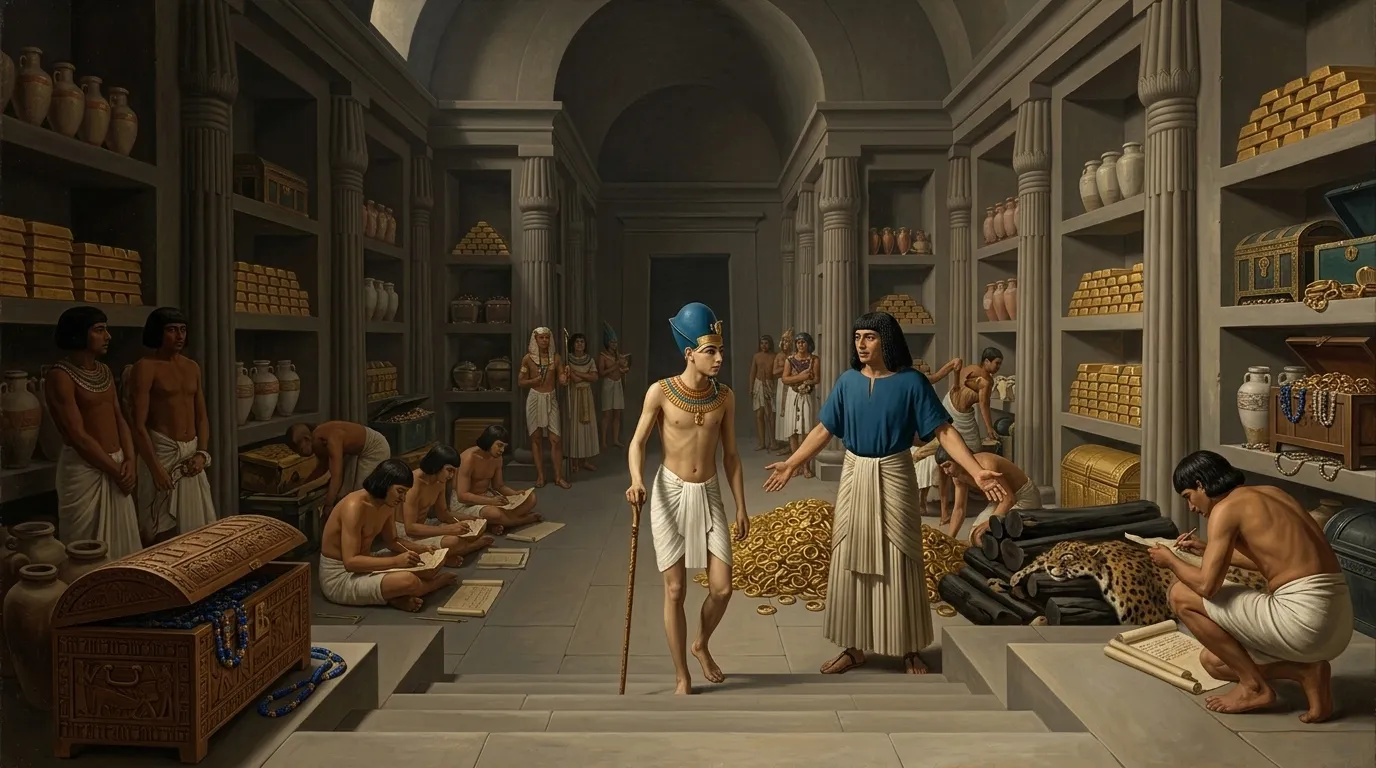
In the cavernous, cool depths of the Great Treasury in Memphis, where the scent of cedarwood mingled with the metallic tang of gold, countless chests and sealed jars lined the walls. Golden light from oil lamps mounted high on the stone columns glinted off the polished surfaces of stacked ingots and intricately crafted jewelry. The pharaoh, a serious young man of seventeen, stood observing the meticulous inventory. His slight frame, supported by his cane, cast a long shadow across a pile of shimmering gold rings. The astute Overseer of the Treasury, a middle-aged man with sharp, discerning eyes, wearing a long, pleated kilt and a neat black wig, gestured towards a newly arrived consignment of ebony and animal skins, meticulously detailing the offerings from Nubia and Syria. Scribes, bent over papyrus rolls, diligently recorded every incoming and outgoing item. This careful management of Egypt's immense wealth, much of it directed towards the revived temples, was crucial to the stability of the realm, ensuring the gods were appeased and the state's coffers were full, a testament to Maya’s diligent administration.
"The annual tribute from Kush, Lord, delivered in full, as decreed by your Majesty."
Page 8
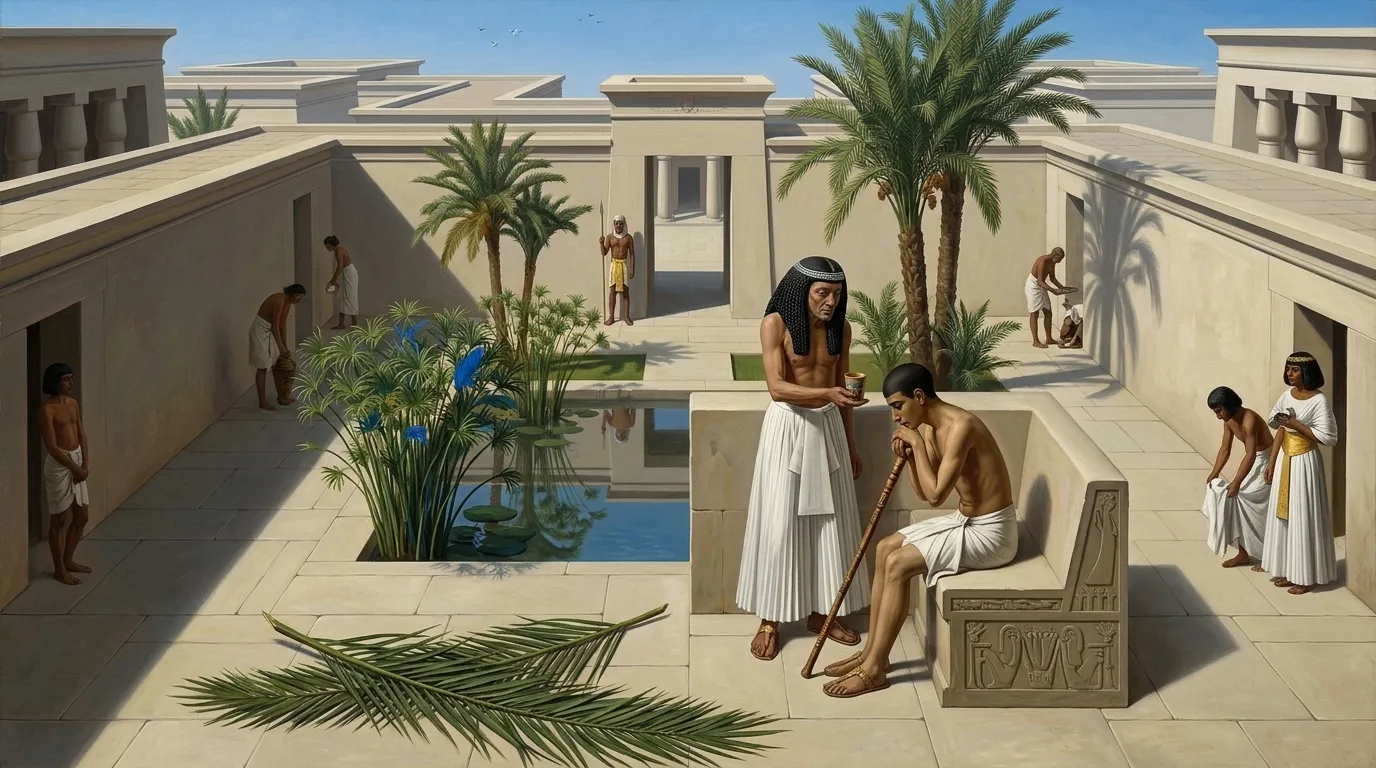
In a secluded courtyard within the royal palace at Memphis, filled with the gentle rustling of palm fronds and the distant chatter of servants, the pharaoh, now a frail young man of eighteen, sat heavily on a carved stone bench. His slight frame, often racked by pain, seemed diminished, and his grip on his familiar walking stick was more a necessity than a mere support. His face, once firm with youthful authority, now bore the signs of chronic illness and fatigue. The venerable vizier, a dignified, elderly man whose subtle influence had guided the kingdom for years, stood quietly by his side, his expression one of grave concern and careful observation. He offered a small cup of spiced wine, his touch gentle. The air was still, pregnant with unspoken truths. The reins of power, once tenuously held by the boy king, were now visibly slipping into the elder statesman's firm grasp, a transition that was both inevitable and carefully orchestrated, preparing for a future without the ailing monarch.
"Rest, Lord. The day's decrees are well in hand. Your strength must be preserved."
Page 9
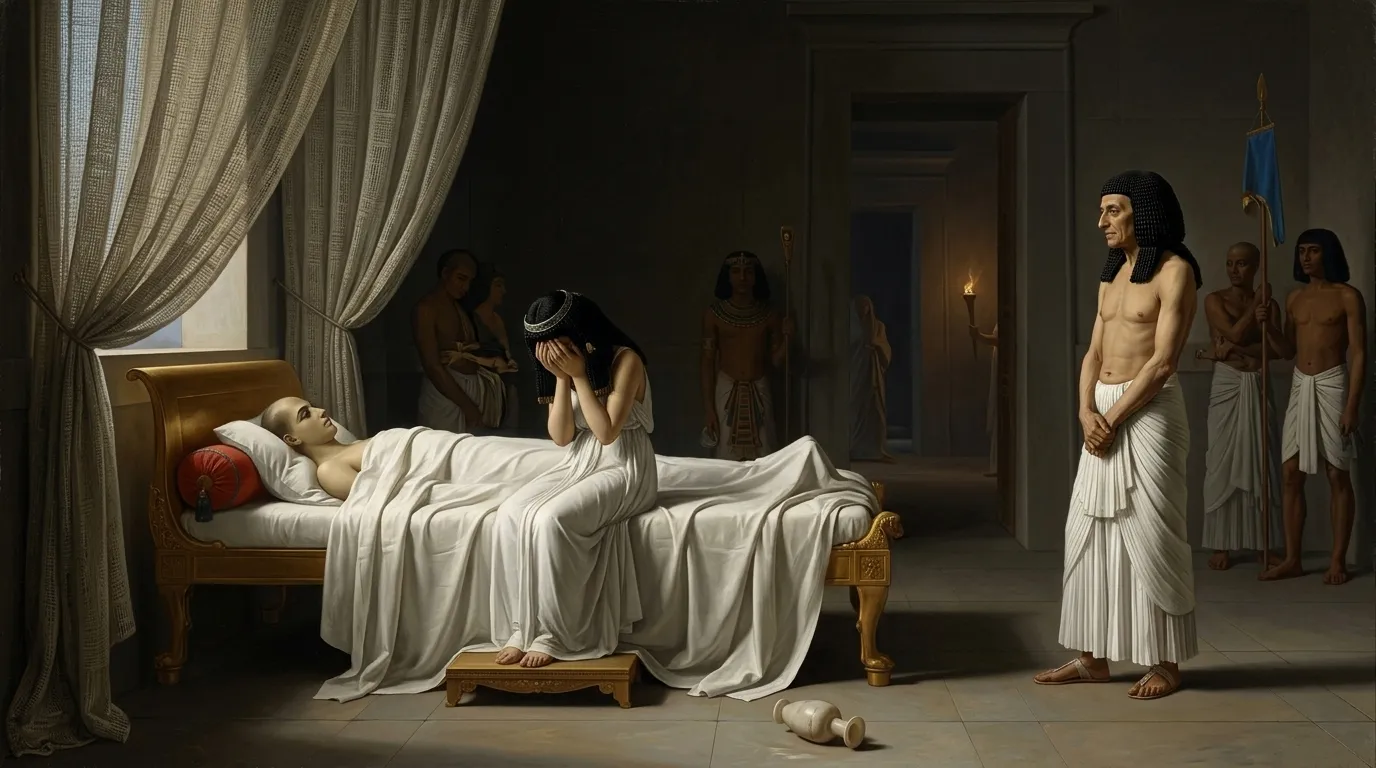
A profound silence, heavier than the thick linen curtains that muffled the chamber, descended upon the private royal bedchamber in the palace at Memphis. The air was cold, despite the warmth of the day. On the massive, gilded bed, the pharaoh lay still, a young man of nineteen whose reign had ended as abruptly as it began. His slight form was draped with a single linen cloth, his face serene in death. The queen, a graceful woman in a simple white linen sheath dress, sat on the edge of the bed, her body racked with silent sobs, her head bowed in profound grief. She clutched a small, intricately carved wooden figure, a relic from their shared past. The venerable vizier, an elderly man whose face was etched with a grim, calculating sorrow, stood at a respectful distance, his hands clasped behind his back, his gaze fixed not on the deceased king, but on the future, already strategizing the fragile succession. The suddenness of the boy king's passing had plunged the court into an immediate and dangerous void.
"The Golden One has passed into the West. May Osiris guide his journey."
Page 10
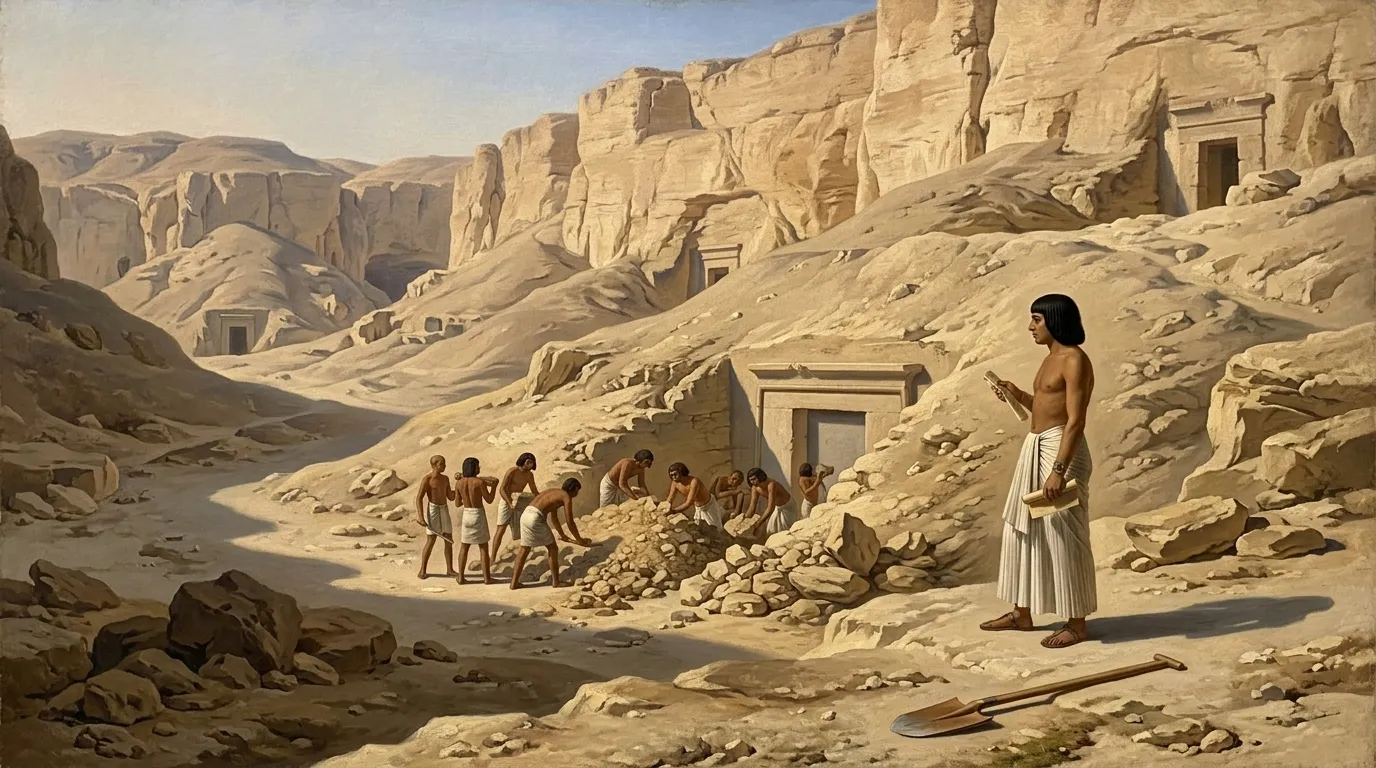
In the desolate, sun-baked Valley of the Kings, where the jagged cliffs cast long, violet shadows, a final, solemn ritual was underway. The entrance to a newly sealed tomb, cut deep into the rock face, was being meticulously covered with rubble and stone, obscuring its presence from the world above. The great Overseer of the Treasury, a meticulous middle-aged man in a long, pleated linen kilt and neat black wig, stood overseeing the final efforts, ensuring every trace of the burial was erased, a common practice to thwart tomb robbers. Workers, their bodies stained with dust and sweat, carefully placed the last stones, their movements precise and practiced. The memory of the boy pharaoh, whose body now lay entombed within, was already beginning its slow fade from official records, his name systematically removed from monuments by later rulers. Unbeknownst to them, this very act of careful concealment, combined with millennia of fortunate oversight, would preserve this tomb intact, destined to hold its secrets until a distant future, revealing not just a king, but a window into the splendor of his ancient world.
"The seal is true, the entrance concealed. May the boy-king rest undisturbed for eternity."
About this story
- Audience: general readers
Questions and answers
Questions and answers about The Discovery of Tutankhamun's Tomb
Read Wonder Egypt on your phone
Wonder Egypt is available on Android. Get Wonder Egypt on Google Play.