Amun, the Hidden One
Amun, the Hidden One — an illustrated history story. 10 illustrated pages, free to read on Wonder Egypt.
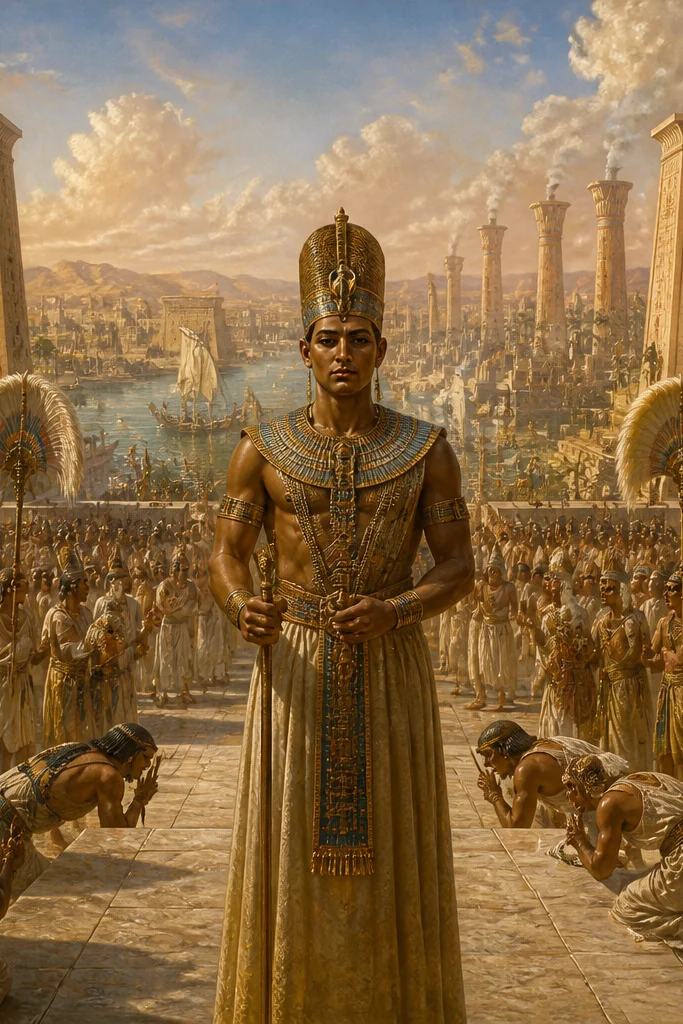
Page 1 — The Rise of Amun
In the vast tapestry of Egypt's history, the rise of Amun as a towering figure during a millennium of profound transformation is significant. Around 2000 BC, amid the sands of Thebes, Amun was a local deity whose influence was limited to his region. However, as the dynastic lines of Theban rulers ascended, so too did Amun's prominence within the pantheon. By 1000 BC, the once humble deity had ascended to become central to state religion. His exalted status, encapsulated by the moniker 'the Hidden One,' was mirrored by the immense influence wielded by his priests, who at times challenged even the pharaohs. The Temple of Karnak stood as a monumental testament to Amun's unparalleled power, with its colossal structures housing richly adorned altars and hosting grand ceremonies that cemented his dominance. Amun's journey from obscurity to reverence reflects the dynamism and complexity of Egyptian belief and politics.
The oracle-bearers whispered to the high priest, 'The god has spoken. The path is clear.'
Page 2 — The God’s Wives
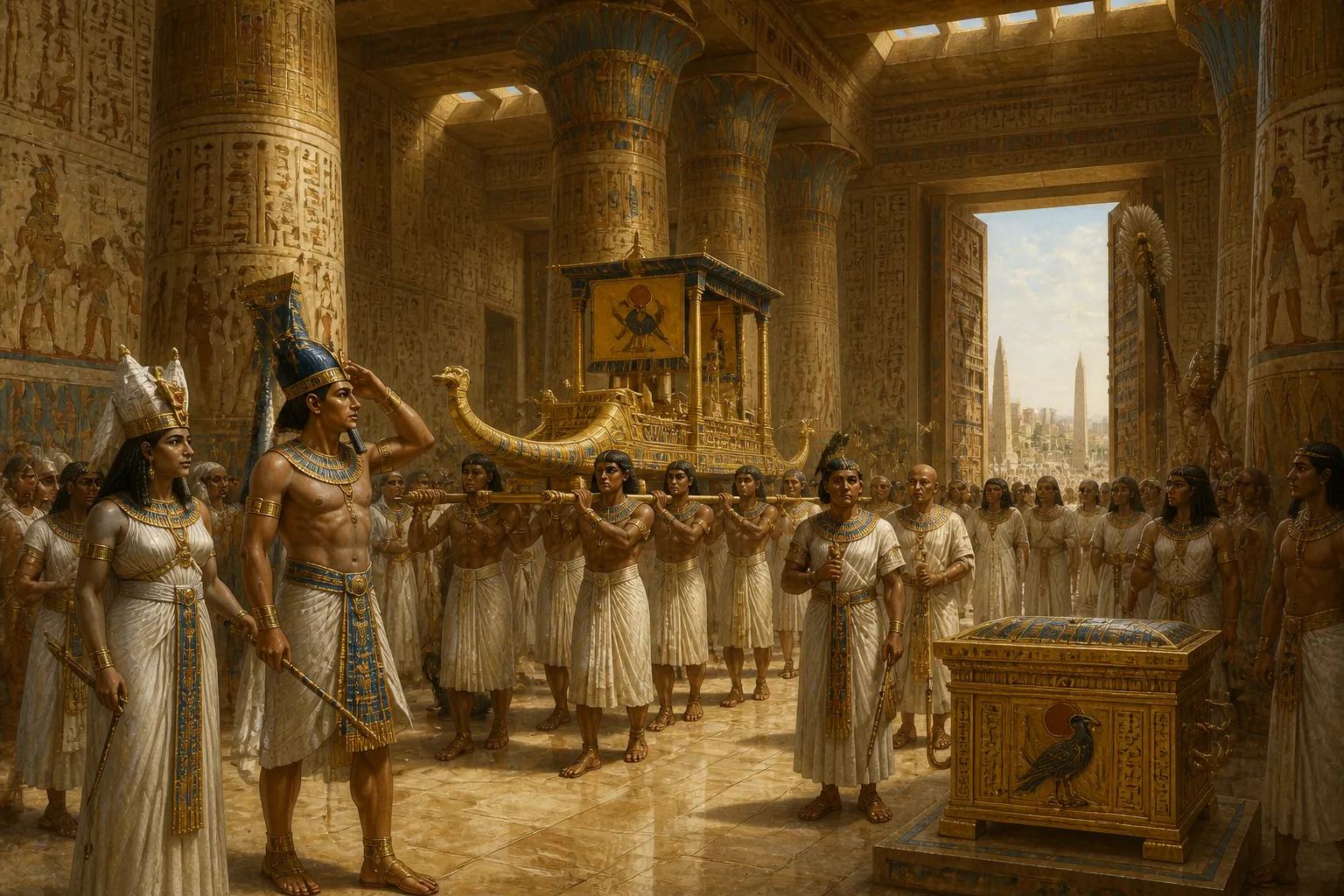
The institution of the God’s Wives of Amun was a powerful religious office, primarily held by royal women who played crucial roles within the temple. With their positions as spiritual leaders, these women, often members of the ruling families, wielded not only religious but significant political influence. The most notable among them was Ahmose-Nefertari, whose role as God’s Wife of Amun helped consolidate the power of her family line. Through dedicated ritual service, these women acted as intermediaries between Amun and the people, ensuring the god’s favor was bestowed upon the land. Their unique combination of spiritual authority and temporal power made them indispensable in the governance of the temple estates, which were among the wealthiest in Egypt.
Ahmose-Nefertari declared before the temple assembly, 'In Amun's name, may our lands prosper and our people thrive.'
Page 3 — The Oracular Procession
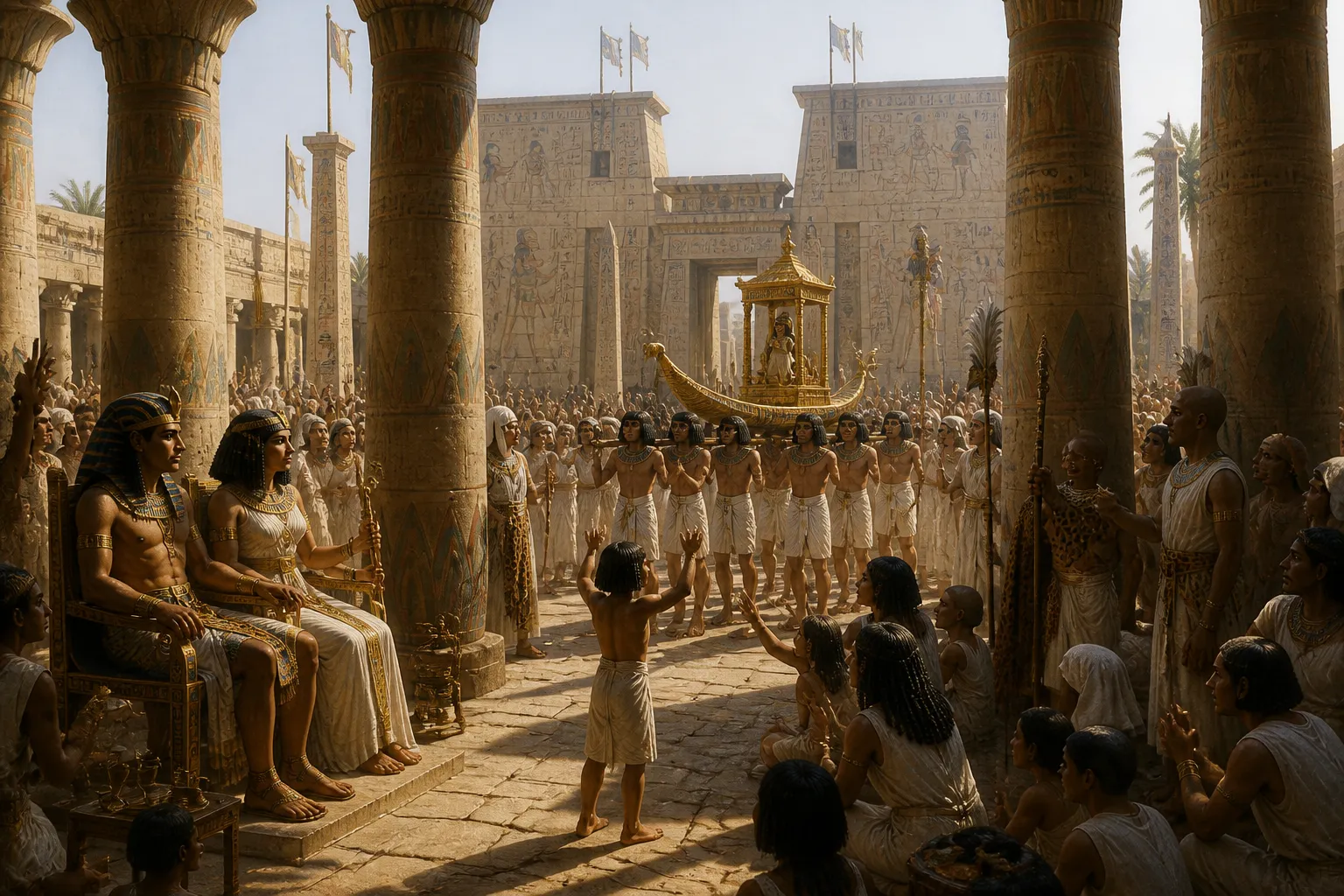
The oracular processions at the Karnak Temple complex were awe-inspiring spectacles, where Amun’s will was expressed through the movements of his sacred barque. This holy vessel, carried by devoted priests, was guided through the temple's vast courtyards and along the bustling streets of Thebes. Each step of the barque was carefully interpreted as divine answers to the questions posed by the expectant masses. These processions attracted vast crowds, all eager to witness the god's presence and seek his guidance for their personal and communal concerns. The significance of these processions lay in their ability to reinforce Amun's revered role in both personal and state affairs, highlighting the powerful influence wielded by his devoted priesthood.
A voice from the crowd shouted, 'Does Amun favor this year's harvest?' The barque moved forward, a sign of affirmation.
Page 4 — Consolidation of Theban Power
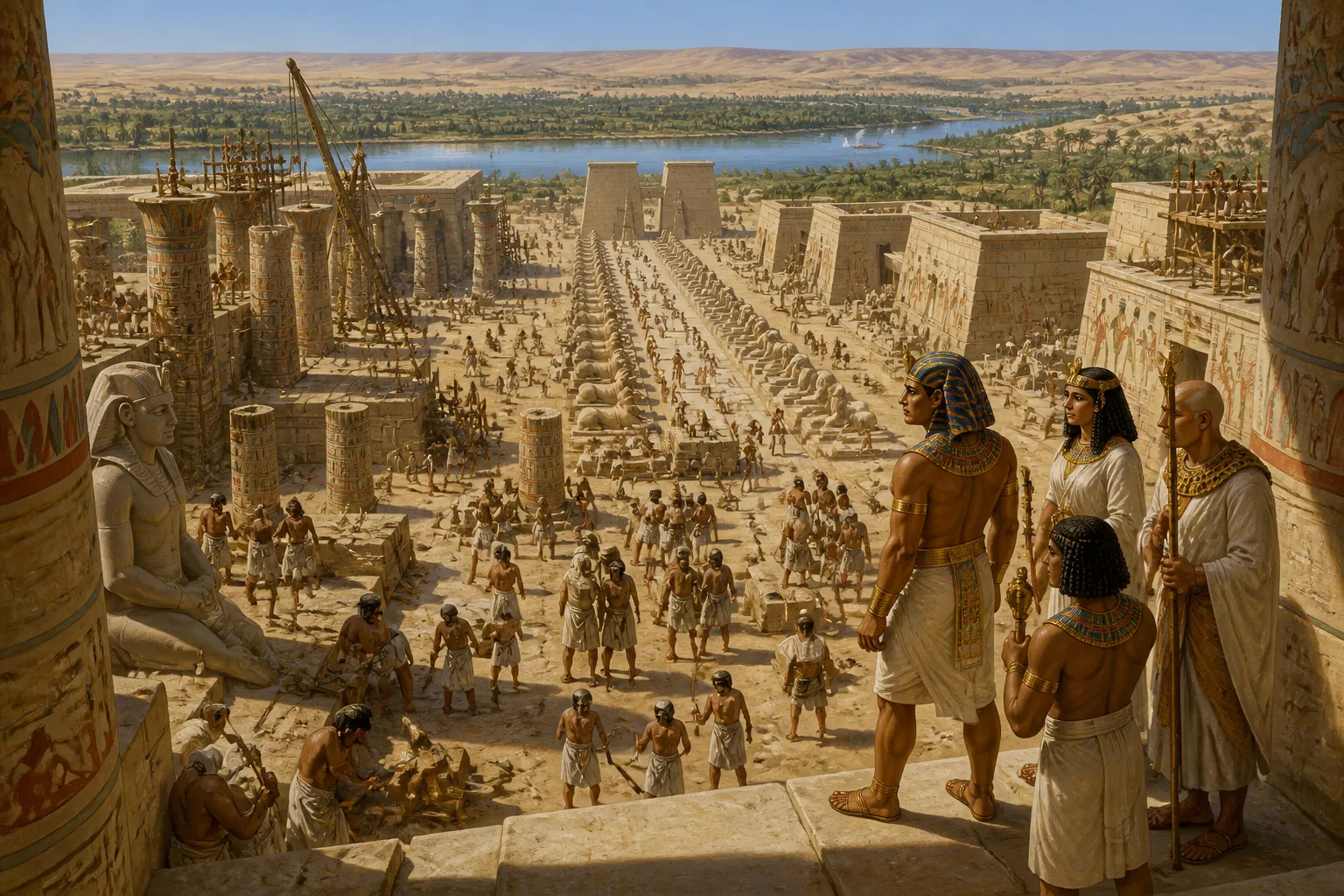
As the Middle Kingdom transitioned into the New Kingdom, the rulers of Thebes, with their fervent devotion to Amun, embarked on a campaign to consolidate their power through extensive building projects and military conquests. The monumental expansion of the Karnak Temple became a symbol of this burgeoning influence. Under visionary pharaohs like Thutmose III and Hatshepsut, the temple complex evolved into a sprawling testament to Amun’s preeminent status. These rulers attributed their military victories and the ensuing prosperity to Amun’s divine favor, thereby strengthening the symbiotic relationship between the god and the state. This era of expansion not only reinforced Thebes’ dominance over Egypt but also elevated Amun’s divine status throughout the land.
Thutmose III proclaimed, 'With Amun’s strength, Egypt shall know no bounds.'
Page 5 — The Priesthood’s Ascendancy
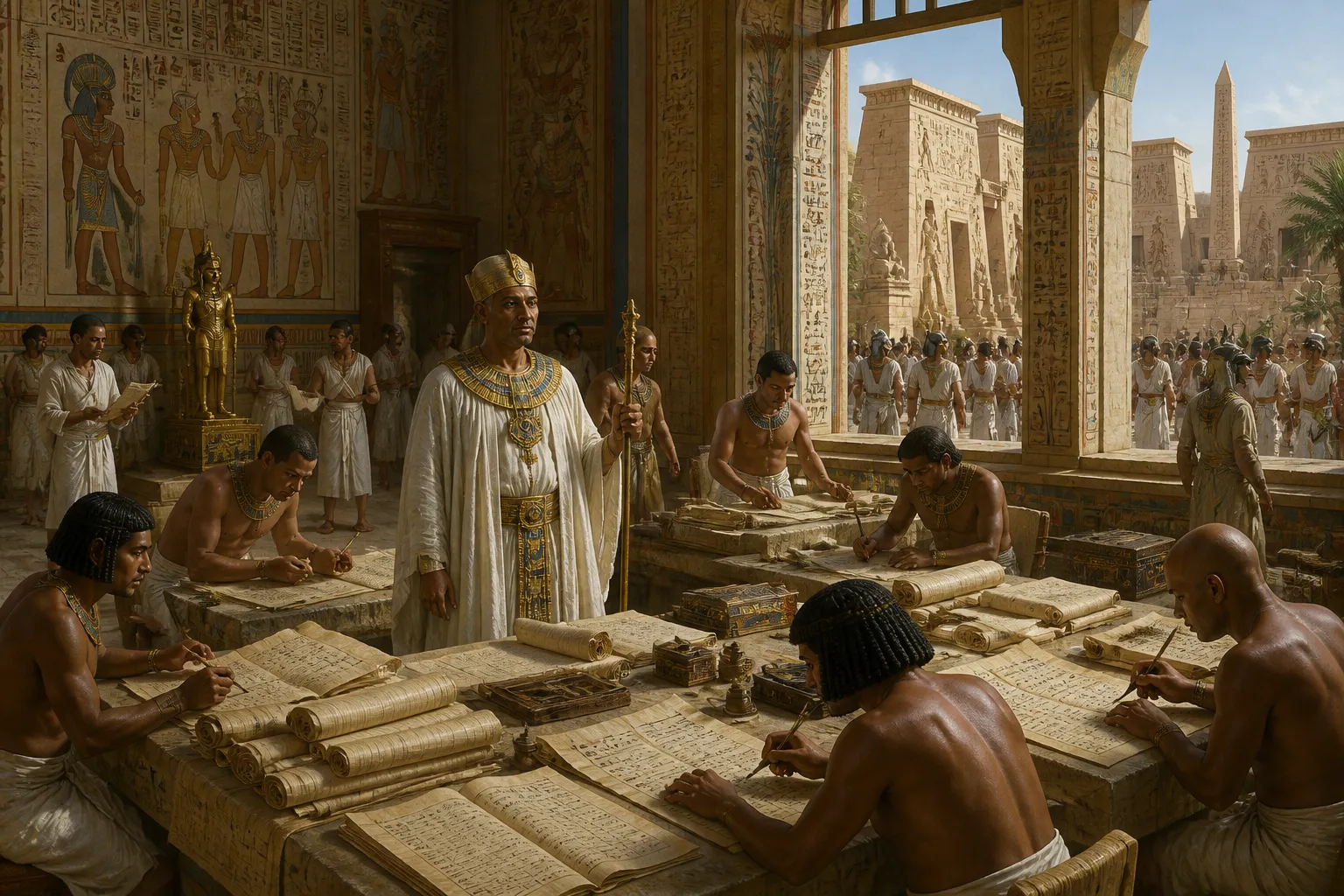
During the height of the New Kingdom, the priesthood of Amun wielded unprecedented power. The grand temple complex at Karnak stood as a testament to their wealth and influence, with soaring columns and intricate carvings that represented their devotion and authority. Richer than the pharaoh himself, the temple owned vast lands and resources, making the high priests key political figures. They were draped in the finest linen robes and adorned with jewelry that shone with the glow of gold and precious stones. Their influence often rivaled that of the kings, as they managed the temple’s immense wealth and administrative affairs. This accumulation of power reached its zenith under figures like High Priest Amenhotep, whose authority in Thebes was nearly absolute. The priests ensured their control by skillfully navigating the political landscape, aligning with powerful factions when necessary. Their gatherings were filled with discussions on matters of state, with decisions often swayed by the whispered counsel of these influential men.
High Priest Amenhotep confided, 'Our strength lies in Amun’s blessings and the loyalty of our people.'
Page 6 — The Temple’s Wealth
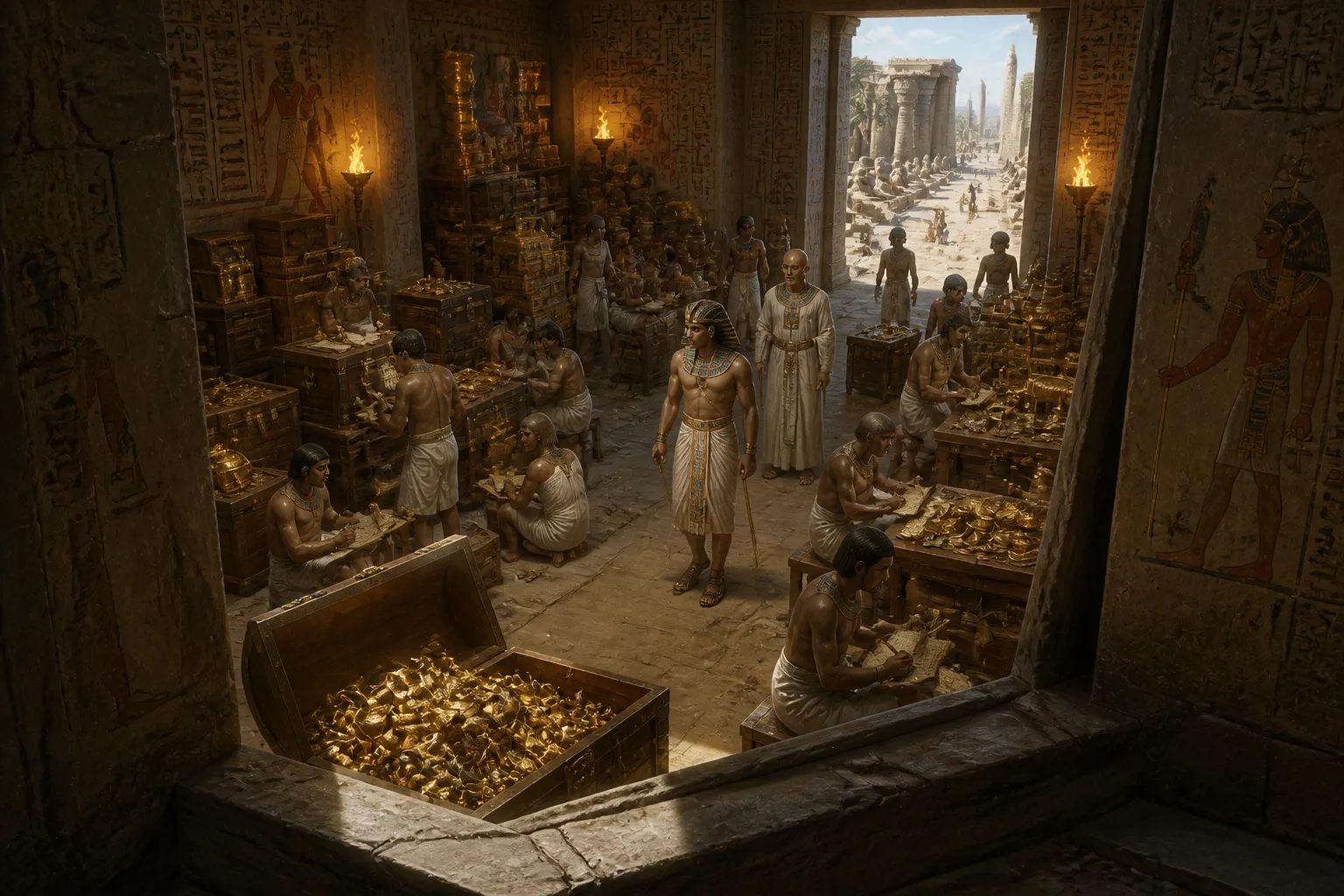
The Karnak Temple, as the epicenter of Amun's worship, accumulated vast wealth that was meticulously cataloged and stored within its treasury chambers. This wealth, amassed through land ownership, donations, and taxes, allowed the temple to control a fifth of Egypt’s arable land, a staggering testament to its influence. This immense wealth funded elaborate temple rituals, vibrant festivals, and the maintenance of large priestly orders, whose members could be seen in their pristine garments, busily preparing for the day's ceremonies. The temple’s economic power extended into trade and production, with workshops producing fine goods that were highly prized both within Egypt and beyond its borders. This wealth not only fueled religious activities but also contributed to the temple’s political leverage, allowing the priesthood to challenge royal authority when necessary, thus playing a pivotal role in the balance of power.
A scribe announced, 'The temple treasury overflows with the bounty of our lands.'
Page 7 — Rivalries and Alliances
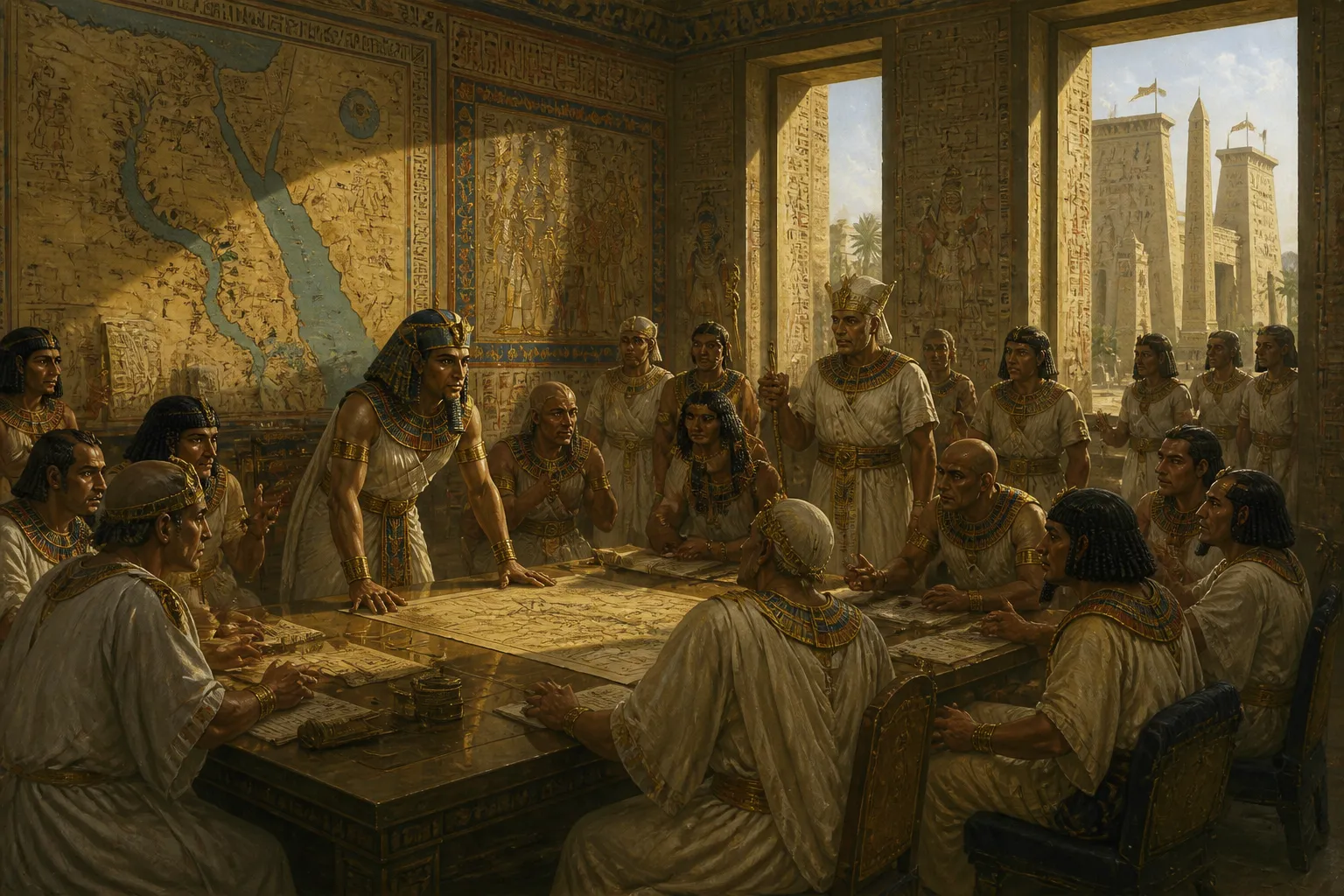
As the cult of Amun grew in prominence, so did the inevitable rivalries between the temple and the crown, each seeking to assert dominance over the other. Pharaohs like Akhenaten famously attempted to diminish Amun’s influence by promoting alternative deities, resulting in a tense period marked by religious and political upheaval. However, the priests of Amun, ever astute in their political maneuverings, adeptly navigated these challenges through strategic alliances, securing support from powerful nobility and military leaders who saw the benefit of aligning with the influential priesthood. The council chambers of Karnak became arenas of intense negotiation, where priests and nobles, in their elaborate attire, debated the future of Egypt with fervor. This interplay of power saw periods of tension and reconciliation as each side sought to maintain or regain dominance. Such dynamics underscored the delicate balance between religious and political authority in Egypt, a balance that shaped the course of its history.
A noble cautioned, 'Our future lies in balancing between the crown and the temple.'
Page 8 — The Oracles’ Decree
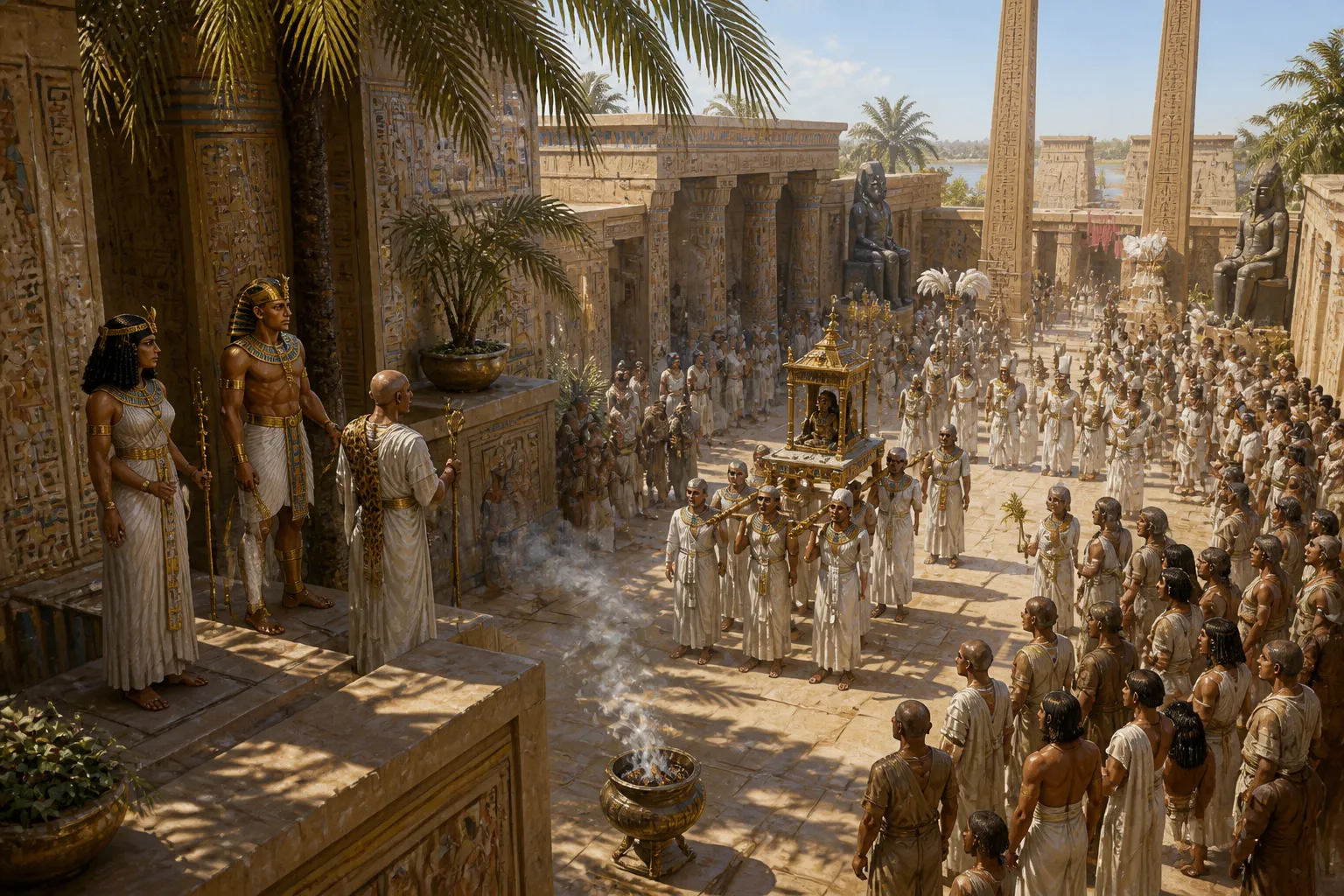
The oracles of Amun, conveyed through ceremonious processions, were pivotal in guiding major state decisions, their influence extending across the breadth of Egyptian society. During these ceremonies, priests, adorned in immaculate ceremonial robes with intricate patterns, would lead processions bearing the sacred barque, a symbol of divine communication, through the throngs of eager citizens. These divine messages, interpreted by priests, influenced critical decisions related to military campaigns, governmental appointments, and royal decrees. The oracles were perceived as Amun’s voice, and their pronouncements held sway over kings and commoners alike, reinforcing the divine right of pharaohs and the centrality of the priesthood in everyday life. Such influence made the priesthood indispensable in matters of state, reinforcing the belief that Amun’s will was integral to Egypt’s prosperity and stability, a belief that resonated through the ages.
A priest proclaimed, 'Amun’s oracle speaks of victory in the lands beyond the Nile.'
Page 9 — The Hidden One
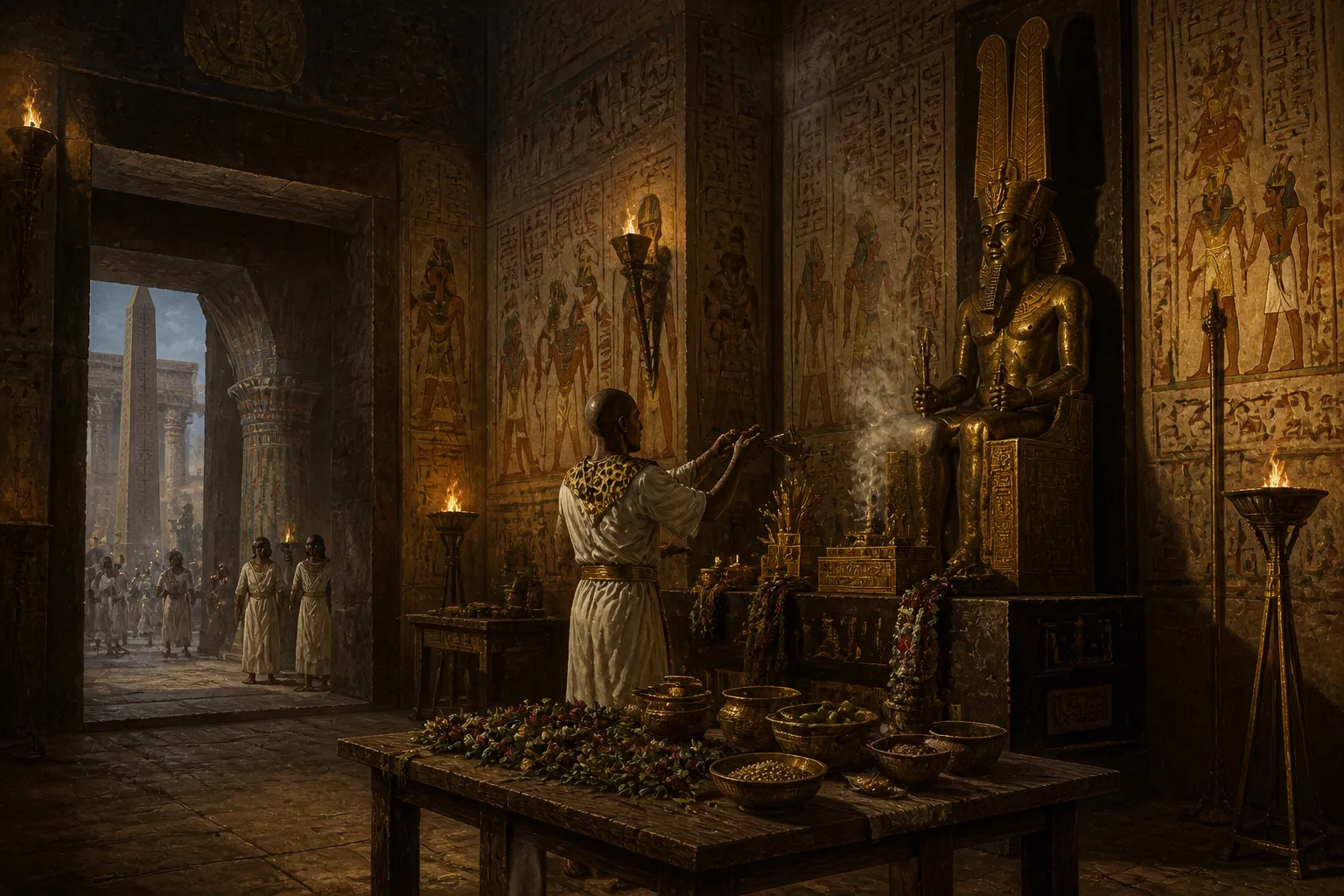
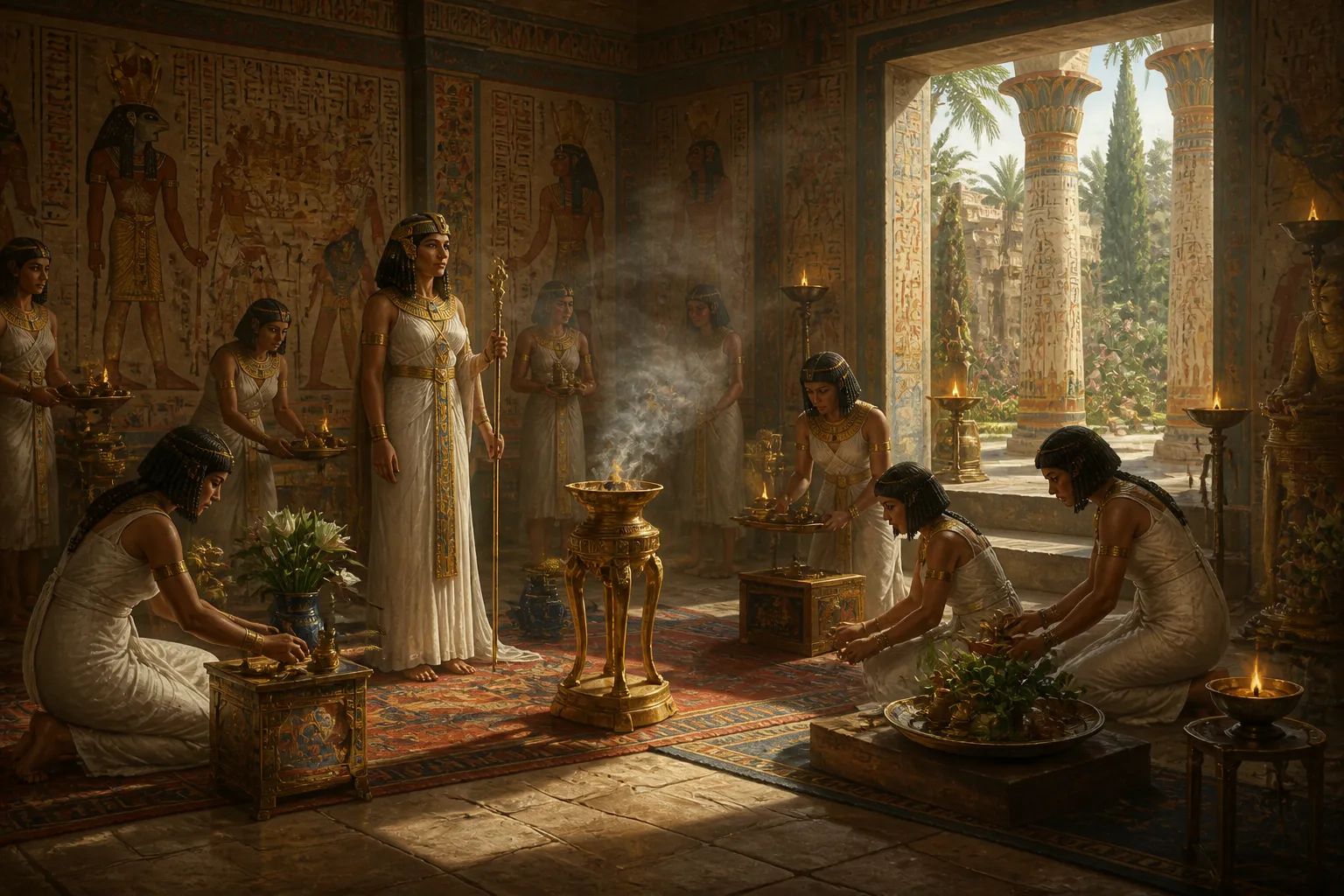
Amun, whose name means 'the Hidden One,' was revered for his mysterious and transcendent nature. The Karnak Temple's inner sanctuary, adorned with towering stone columns and echoing halls, served as the focal point of his worship. Priests dressed in immaculate white linen robes, symbolic of purity and devotion, conducted solemn ceremonies. They offered incense and performed intricate chants, their voices resonating through the stone chambers and filling the air with an aura of profound reverence. These rites were essential, symbolizing Amun's dual nature and his merger with Ra to embody the omnipotent Amun-Ra. The people of Thebes, and eventually all of Egypt, revered him not just as a distant deity, but as a personal protector who embodied both strength and divine mystery.
A devotee murmured, 'In Amun's concealment lies his true power.'
Page 10 — Legacy of Amun
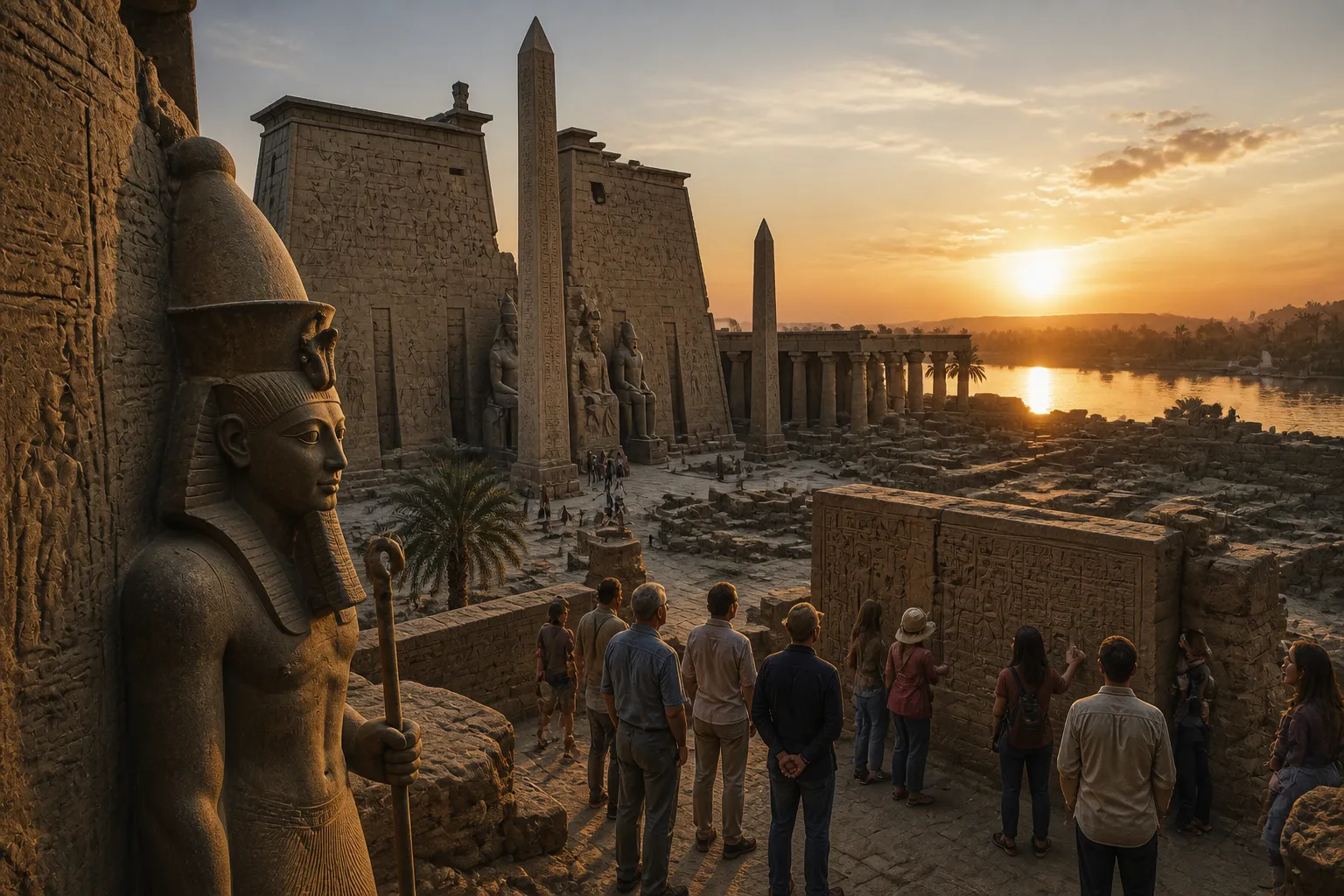
The legacy of Amun's worship endures through the monumental structures and intricate reliefs that have survived the ages. The Karnak Temple, with its towering pylons and expansive courtyards, continues to awe visitors with its majestic grandeur. It stands as a testament to Amun’s profound influence, symbolizing the integral interplay between religion and governance in ancient Egypt. Over centuries, as new powers emerged, the prominence of Amun's worship waned, yet remnants of his cult remain crucial for understanding the history and spirituality of this ancient civilization. The temple ruins now serve as a solemn reminder of Egypt's considerable spiritual and political achievements, echoing the once-vibrant devotion.
A historian noted, 'Amun’s presence is etched in the stones of Karnak.'
About this story
- Audience: general readers
Read Wonder Egypt on your phone
Wonder Egypt is available on Android. Get Wonder Egypt on Google Play.