Hatshepsut
Hatshepsut — an illustrated history story. 10 illustrated pages, free to read on Wonder Egypt.
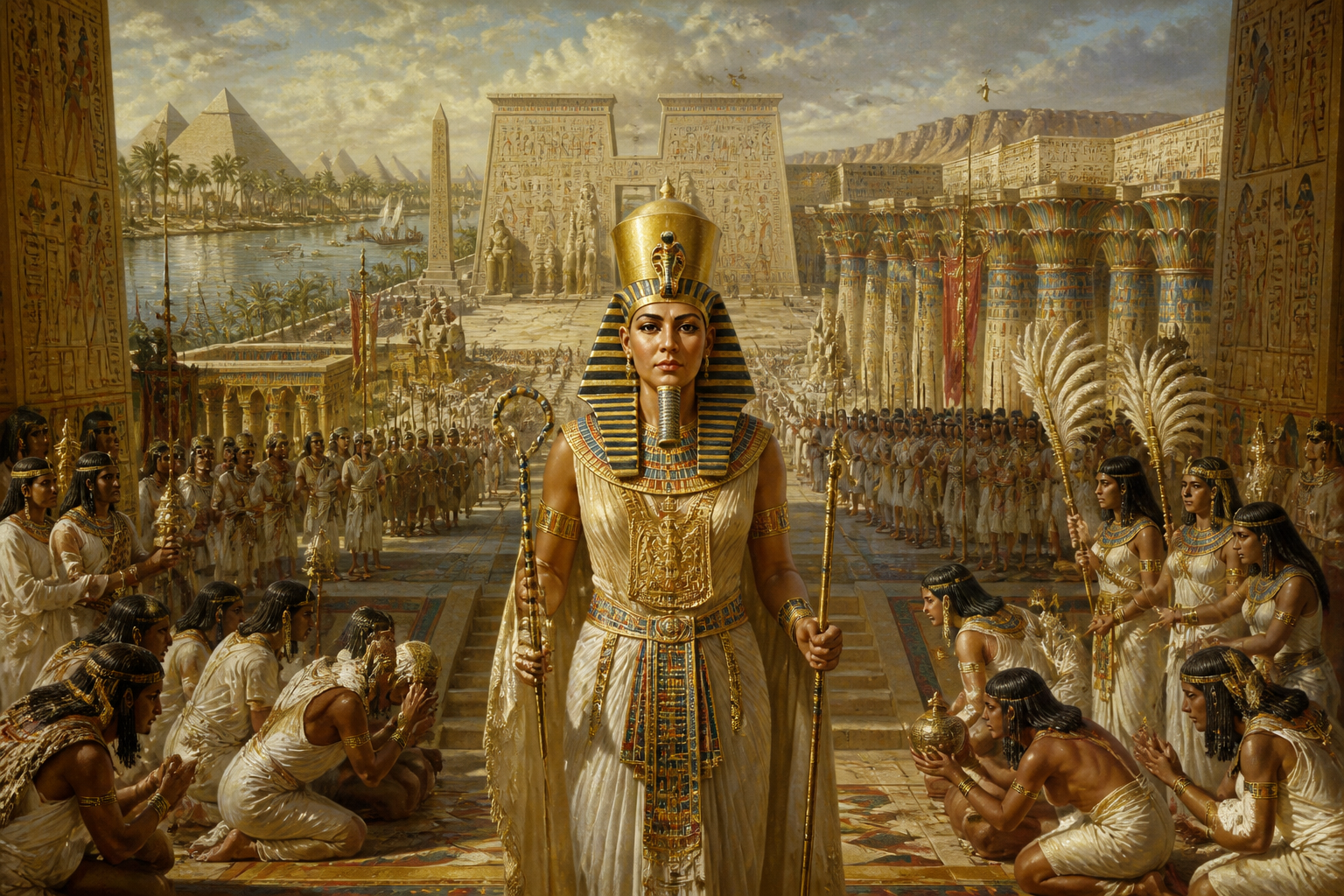
Page 1 — The Dawn of a Female Pharaoh
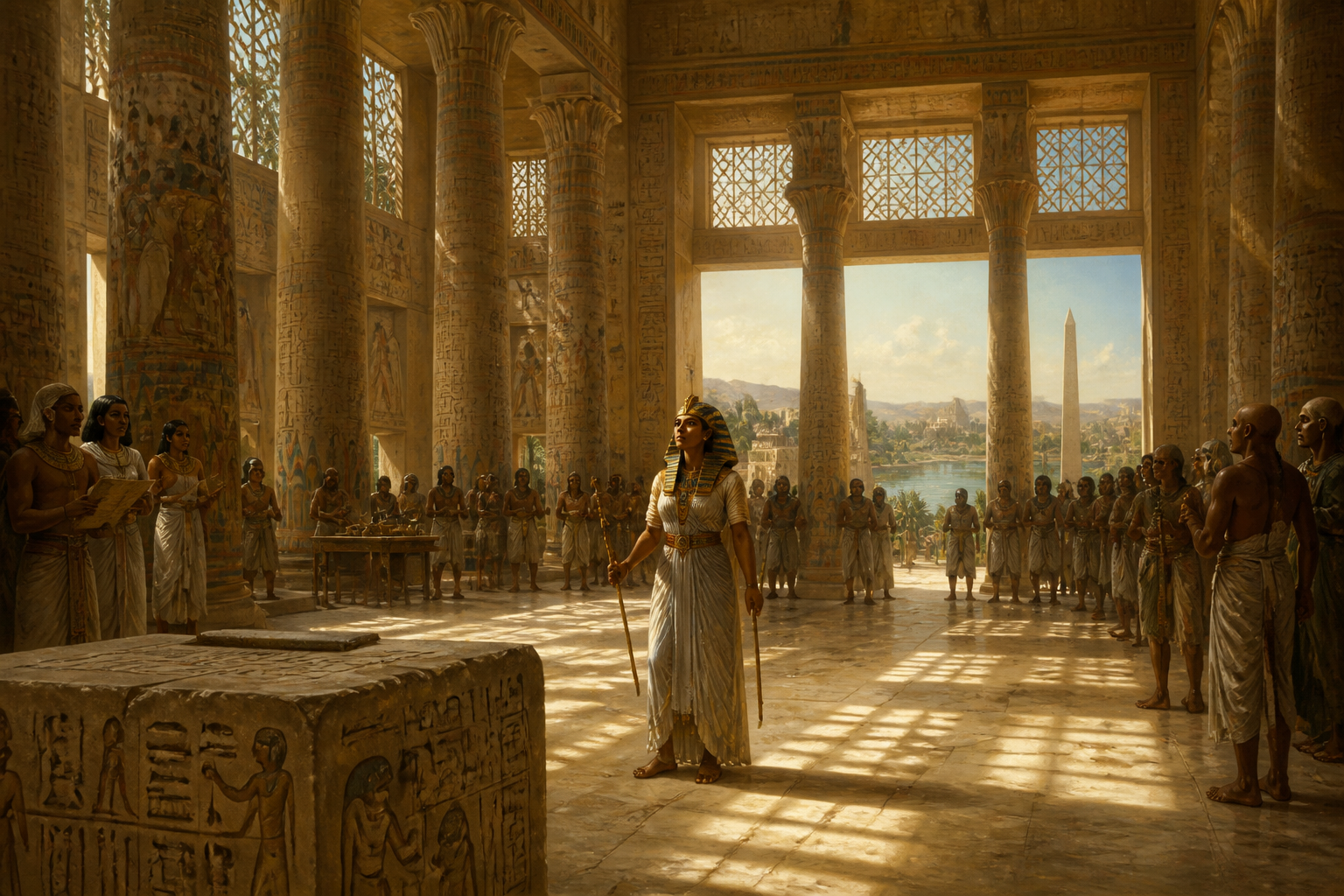
In the shadowed halls of ancient Egypt, a remarkable transformation began. Born a daughter of a pharaoh, Hatshepsut emerged not merely as a queen, but as a king in her own right. She ascended the throne of Egypt, not as a regent but as a sovereign ruler, commanding respect and authority. Her reign, lasting from 1473 to 1458 BC, marked a period of prosperity and peace. Hatshepsut was surrounded by key figures: Thutmose III, her stepson and heir to the throne; Senenmut, her trusted advisor and architect; Neferure, her daughter, who held significant ceremonial roles; Thutmose II, her husband and predecessor; and Ahmose, her mother, a figure of influence in her rise to power. These were the architects of her legacy, each playing a vital role in shaping her reign. Hatshepsut's achievements were monumental: a trading expedition to Punt expanded Egypt's wealth, and the majestic temple at Deir el-Bahari stood testament to her vision. Yet, her greatest challenge lay in the erasure of her name. Decades after her death, attempts were made to chisel her memory from the annals of history, a testament to the enduring power of her reign.
"The gods have ordained my reign," Hatshepsut proclaimed, her voice echoing through the colonnades. "Egypt shall prosper under my rule, as it has never prospered before."
Page 2 — The Regent's Rise
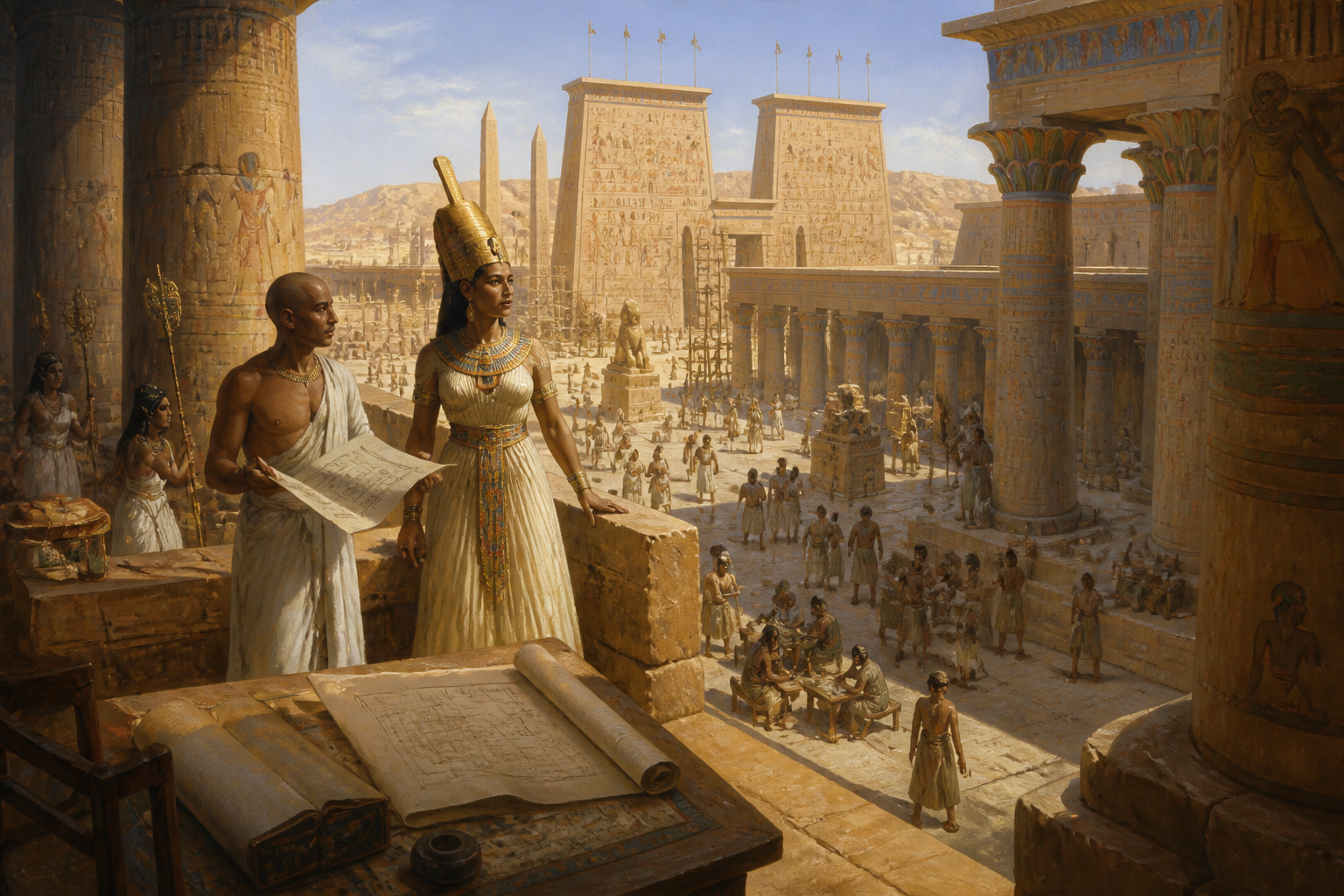
In the early years of her rule, Hatshepsut assumed the role of regent for the young Thutmose III. The court, initially hesitant, slowly adapted to the presence of a woman wielding the scepter of power. Hatshepsut, wise beyond her years and with an innate sense of leadership, began to cement her authority. The political landscape was turbulent, with many viewing her as merely a caretaker until Thutmose III came of age. Yet, Hatshepsut's strategic mind saw beyond the immediate. With Senenmut at her side, she maneuvered the intricacies of power, ensuring loyalty within the court and stability within the kingdom. Her presence was commanding, her royal regalia distinct from that of her predecessor. The khepresh crown adorned her head, signifying her role as the living Horus, a divine ruler. Each decision she made was a step towards consolidating her rule, each decree a building block for her legacy. Her partnership with Senenmut, a man of humble origins who rose to prominence by her side, became legendary. Together, they plotted the future of Egypt, a future that would see the kingdom flourish as a beacon of trade and culture.
"Senenmut, our path is clear," Hatshepsut declared, her gaze fixed upon the horizon. "Egypt shall be a land remembered for wisdom and wealth."
Page 3 — The Treasures of Punt
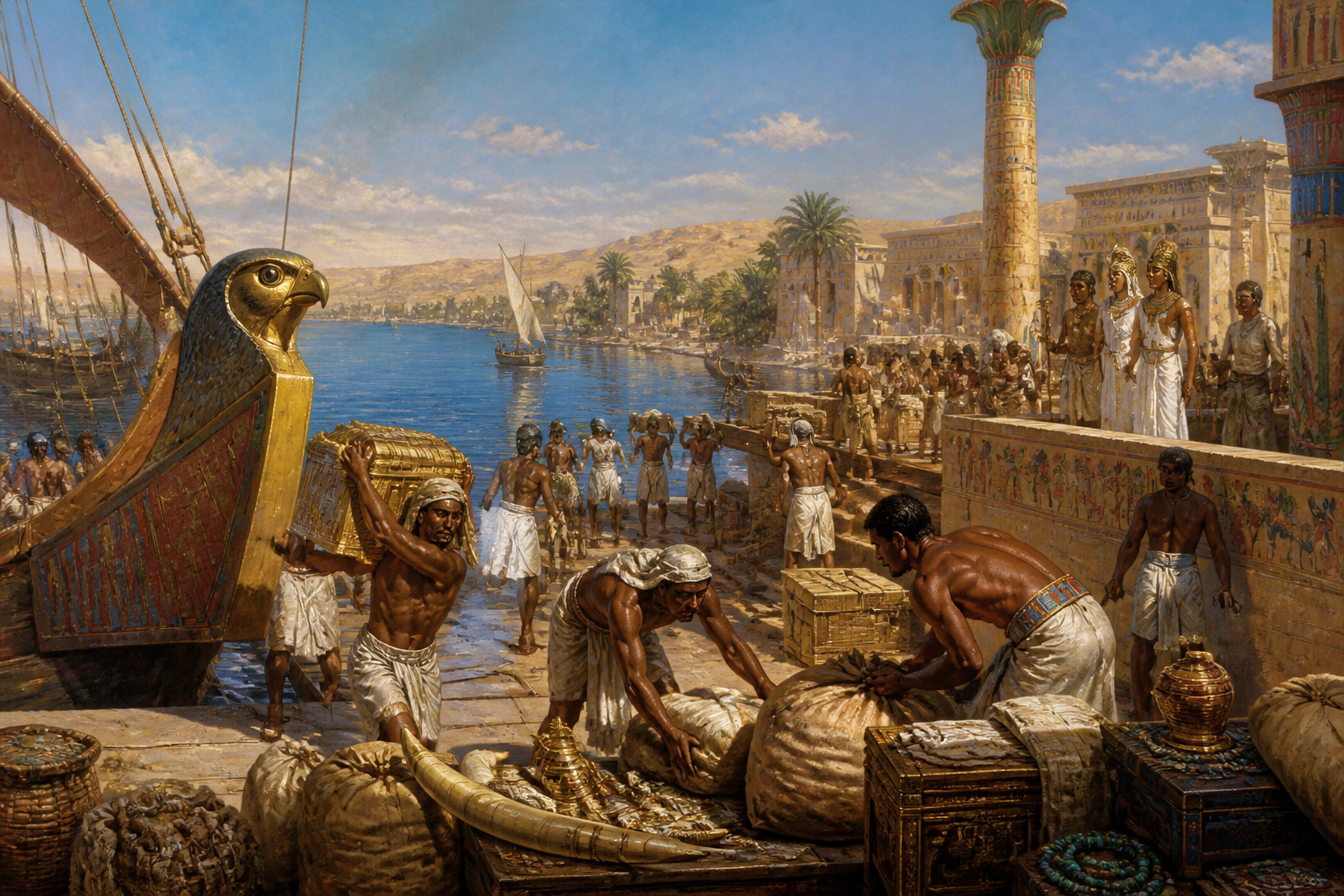
One of Hatshepsut's most celebrated achievements was the magnificent expedition to the land of Punt. Recognizing the value of trade, she dispatched a fleet of ships to this distant realm, seeking the riches that lay beyond the horizon. The journey was perilous, fraught with dangers of the unknown seas, yet it promised untold wealth. At the helm of this undertaking was Nehesy, the expedition leader, entrusted with this crucial mission. The fleet returned laden with treasures: gold, ivory, exotic animals, and myrrh trees, the latter a symbol of life and regeneration, planted within the temple gardens. This triumph not only enriched Egypt but also underscored Hatshepsut's vision of a peaceful, commerce-driven empire. The narrative of the expedition was immortalized on the walls of her temple, a vivid depiction of ships laden with bounty, greeted by the peoples of Punt. This endeavor reinforced her divine right to rule, illustrating her ability to expand Egypt's influence through diplomacy and trade rather than war.
"Let it be known," Hatshepsut commanded, "that our fleet has returned with the wealth of the world, a testament to Egypt's reach and power."
Page 4 — The Temple of Deir el-Bahari
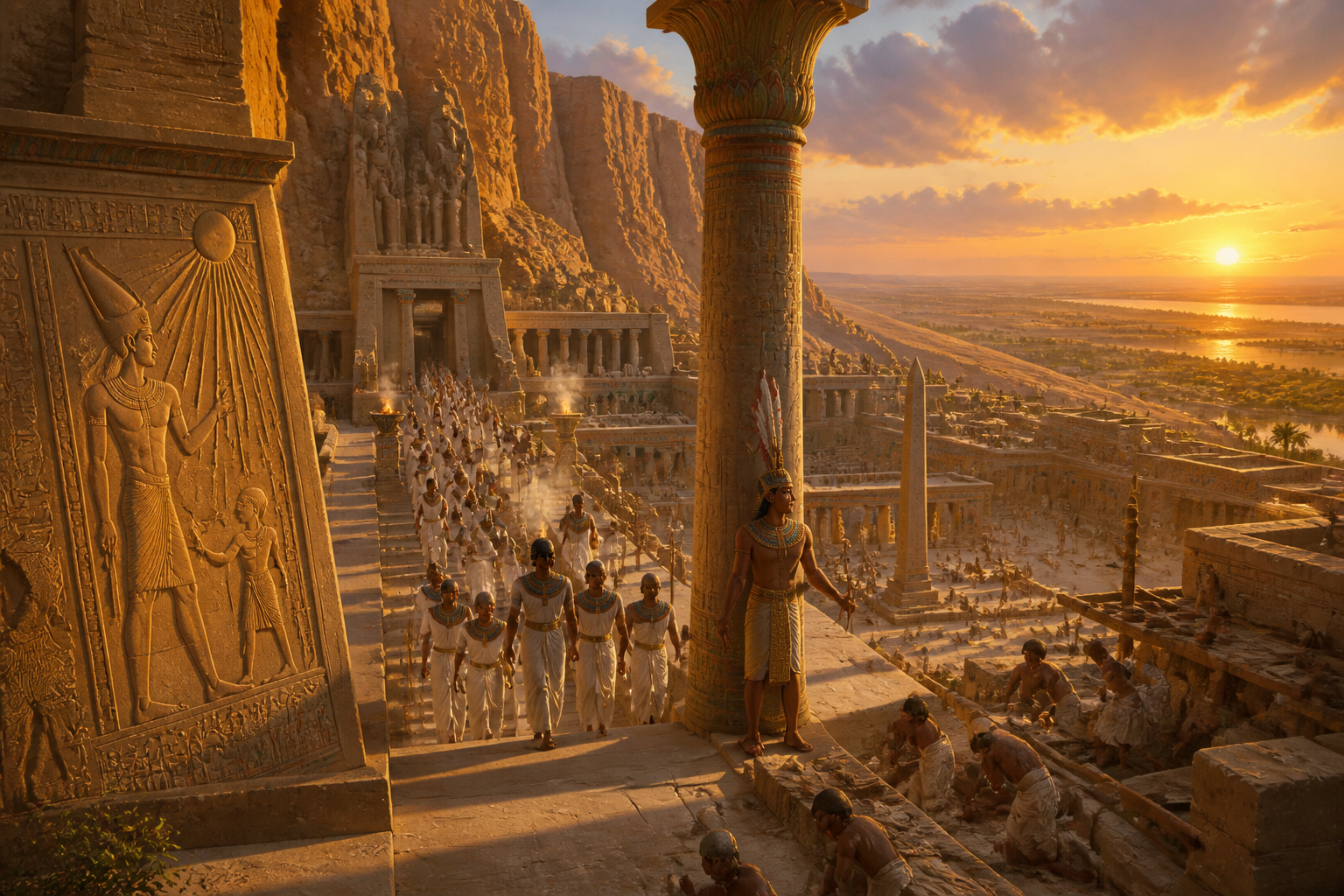
Set against the stark cliffs of the Theban hills, the temple of Deir el-Bahari stands as a testament to Hatshepsut's architectural ambition and religious devotion. Designed by her trusted advisor and architect, Senenmut, the structure is an awe-inspiring fusion of nature and human achievement. The temple, with its grand colonnades and terraces, was a place of worship to Amun-Ra and a celebration of Hatshepsut's divine birth and reign. Here, the pharaoh is depicted as the legitimate successor to the gods, her divine heritage carved into stone. The construction was a communal endeavor, with laborers from across the kingdom toiling in the desert heat, shaping sandstone blocks to fit the precise designs. Priests and artisans worked tirelessly, ensuring that every detail reflected the pharaoh's grandeur and the gods' favor. The temple was not only a place of veneration but also a statement of power and legitimacy, its walls bearing the stories of her reign.
"Senenmut," Hatshepsut spoke with reverence, "let this temple reflect the glory of Amun and the eternity of my rule."
Page 5 — The Hidden Heir
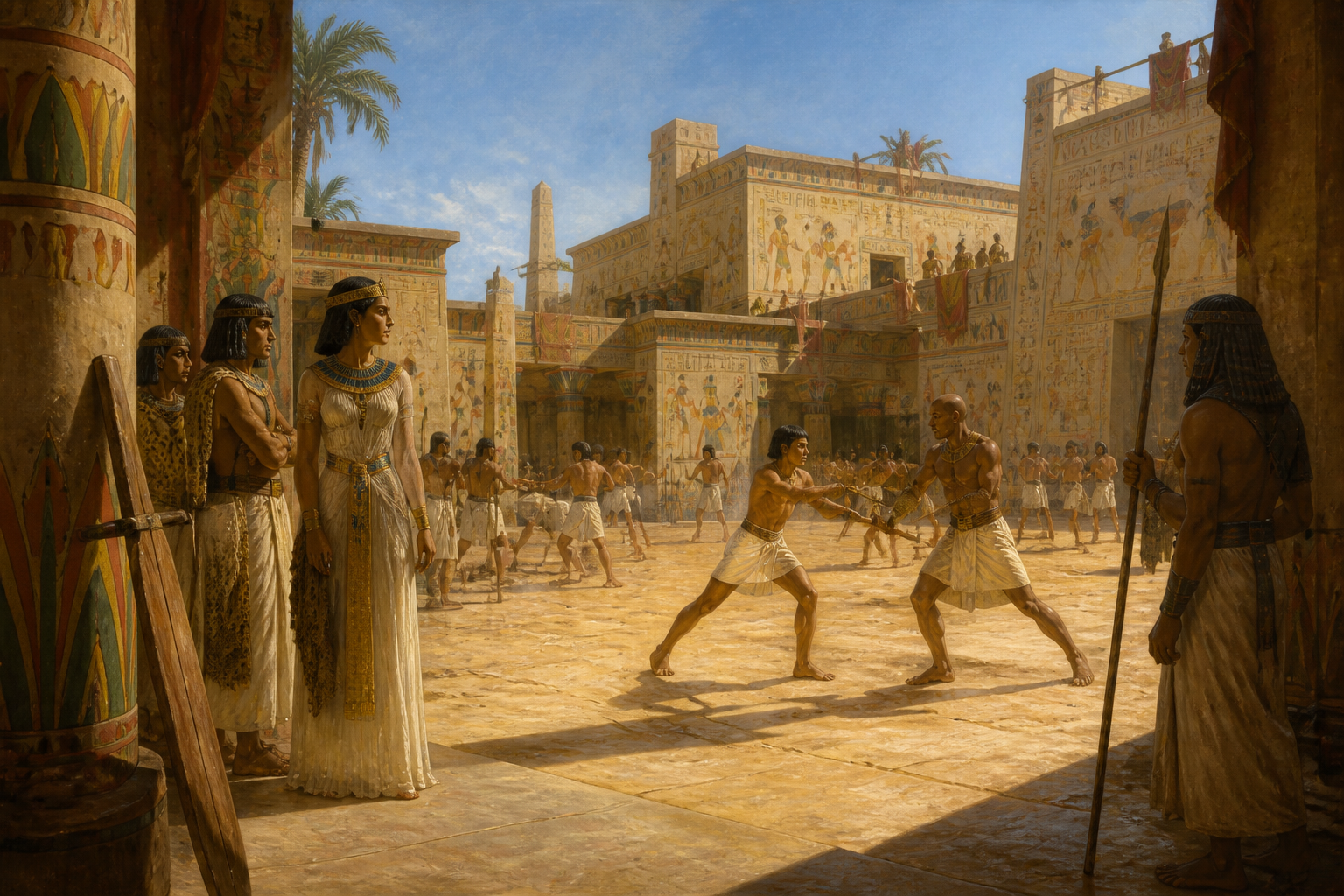
As Hatshepsut's reign flourished, the presence of Thutmose III lingered in the background, a shadow of what was to come. As a child, he had been crowned as co-regent, yet Hatshepsut's influence overshadowed his own. Educated within the palace, he learned the arts of war, governance, and diplomacy under the watchful eyes of his mother and the court. His future as a ruler was never in doubt, but the timing of his ascendancy was a question that loomed large. The court was divided, some seeing Thutmose as the rightful king, others fully supportive of Hatshepsut’s unprecedented rule. The tension was palpable, a silent tug of war between tradition and the present reality. Hatshepsut, wise and strategic, ensured Thutmose's loyalty was cultivated rather than contested, mentoring him in the ways of leadership. As the years passed, the young boy grew into a formidable warrior and a ruler in waiting, destined to carve his own place in Egypt’s history once Hatshepsut’s reign concluded.
"Patience, my son," Hatshepsut advised, her voice gentle yet firm. "Your time shall come, and when it does, remember what you have learned here."
Page 6 — A Mother's Influence
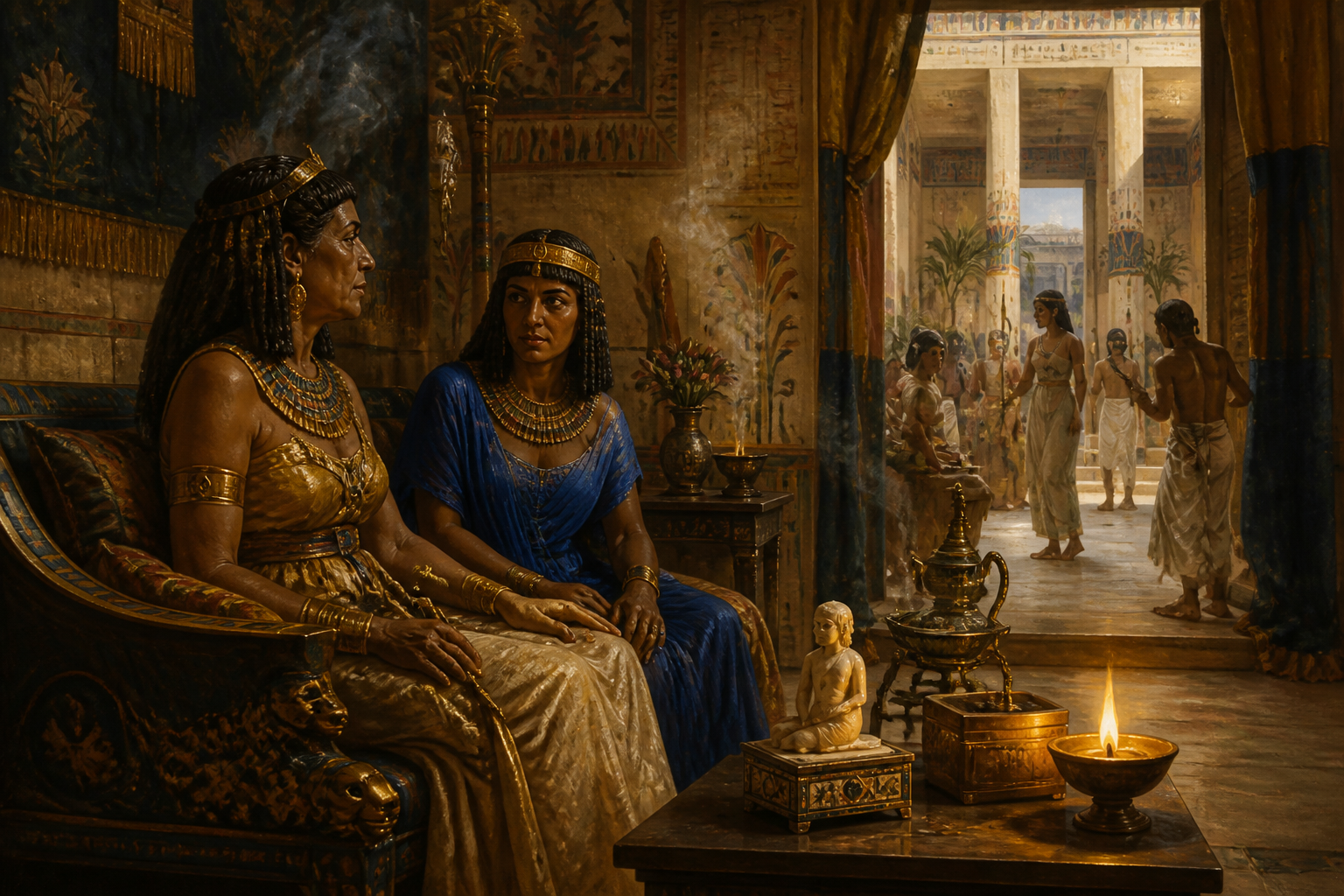
Behind the grandeur of Hatshepsut's reign stood Ahmose, her mother, whose influence was an unseen but powerful force. As a queen mother, Ahmose wielded significant authority within the court, her wisdom guiding her daughter's hand in governance. Her support was unwavering, a testament to the strength of familial bonds in the politics of the time. Ahmose was the daughter of a king, well-versed in the intricacies of Egyptian politics and ceremony. She tutored Hatshepsut in the skills of diplomacy and leadership, preparing her for the challenges of rulership. The bond between mother and daughter was palpable, a shared vision for Egypt that transcended the traditional roles of women in their society. Ahmose's presence at the court provided Hatshepsut with a trusted confidante, a source of counsel in times of uncertainty. Through Ahmose, Hatshepsut learned the art of balancing power, securing alliances, and maintaining the stability of her reign.
"Remember, Hatshepsut, your strength lies not only in power but in wisdom," Ahmose counseled, her eyes filled with the wisdom of past generations.
Page 7 — The Voice of the People
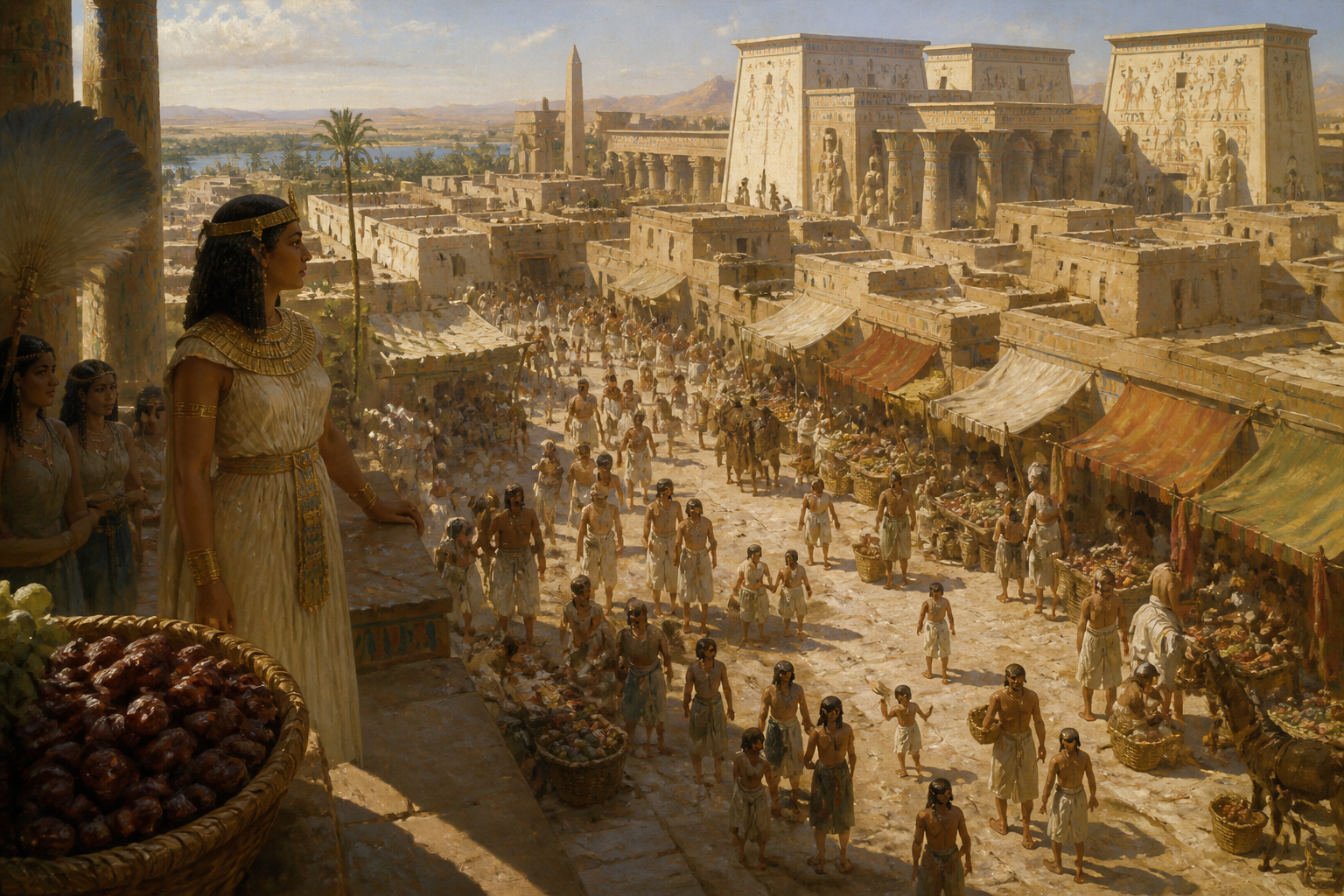
Amidst the splendor of Hatshepsut's court, the voices of the common people spoke volumes about her reign. In the bustling markets of Thebes, merchants and peasants alike felt the impact of Hatshepsut’s policies. The prosperity brought by trade with distant lands like Punt was evident in the abundance of goods and the variety of wares that filled the stalls. Artisans crafted jewelry of gold and lapis lazuli, symbols of Egypt's wealth. Farmers brought forth bountiful harvests, their fields irrigated by the Nile's life-giving waters, which were guided by the pharaoh's initiatives to improve agriculture. The populace, in turn, honored her as a ruler who brought stability and abundance. Yet, beneath the surface, whispers of dissent lingered, remnants of traditionalists who questioned a woman on the throne. Despite this undercurrent, Hatshepsut’s reign was marked by a unique harmony, one that fused traditional religious observance with innovative governance.
"Our Pharaoh brings us fortune beyond measure," a merchant declared in the market square, gesturing to his overflowing stall. "May her reign be eternal!"
Page 8 — The Strategies of Senenmut
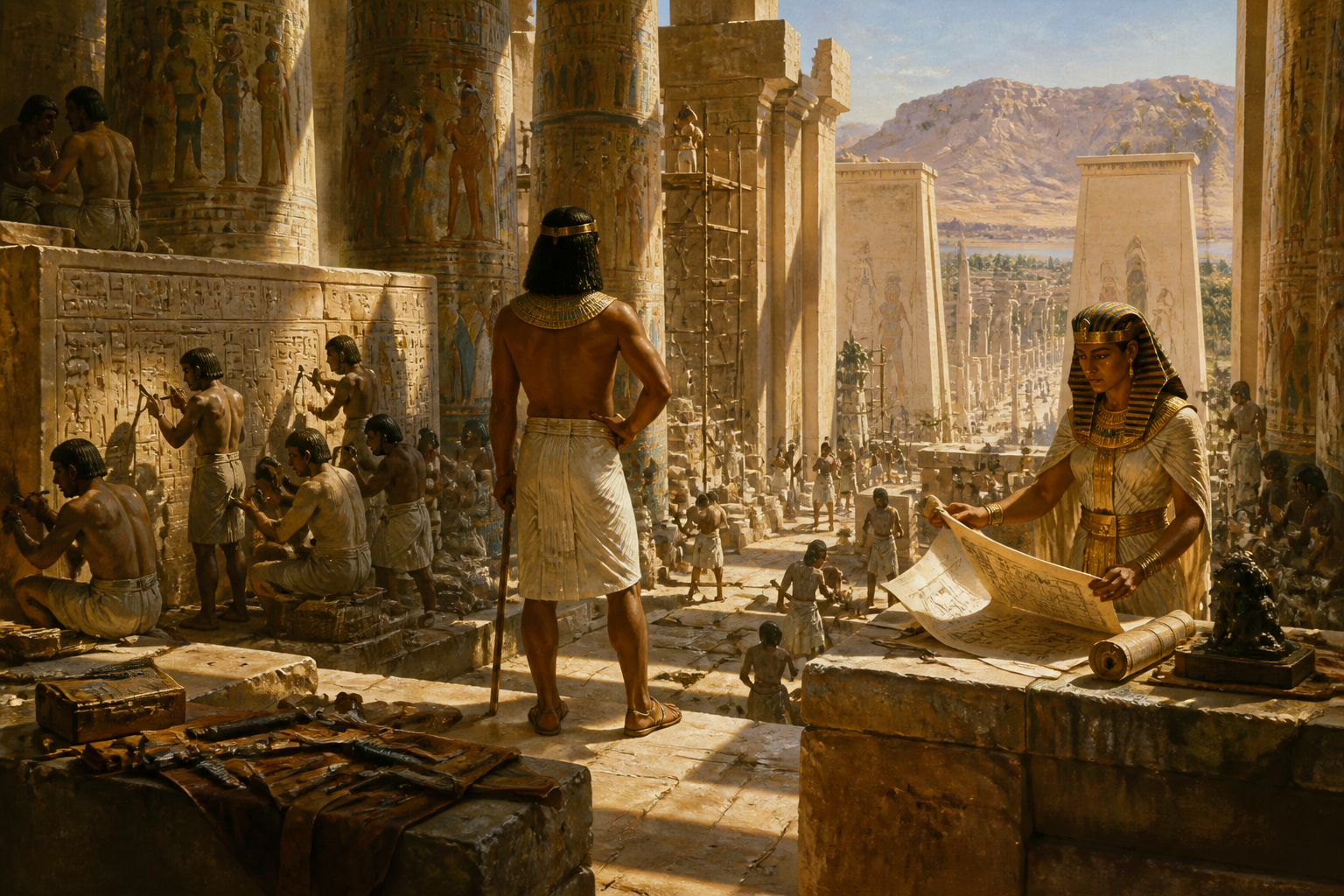
In the labyrinthine corridors of power, Senenmut stood as both architect and advisor, a figure of unyielding loyalty to Hatshepsut. His influence extended beyond the design of monumental structures to the very fabric of political maneuvering within the court. Senenmut, born of humble origins, rose to prominence through sheer intellect and dedication. As the chief architect, he was entrusted with the realization of Hatshepsut's grand vision for Egypt, including the construction of Deir el-Bahari. His role transcended brick and mortar; he was a confidant and strategist, instrumental in maintaining the delicate balance of power. Rumors of their personal relationship swirled, yet it was their professional alliance that truly shaped the era. Together, they navigated the complex interplay of loyalty and ambition, ensuring that Hatshepsut's rule was both stable and enduring. Senenmut's dedication was immortalized in countless inscriptions, a testament to his integral role in the pharaoh's legacy.
"Our work will stand for millennia, Senenmut," Hatshepsut assured, her voice resonating with conviction. "Let it speak of our time and our triumphs."
Page 9 — Erased from History
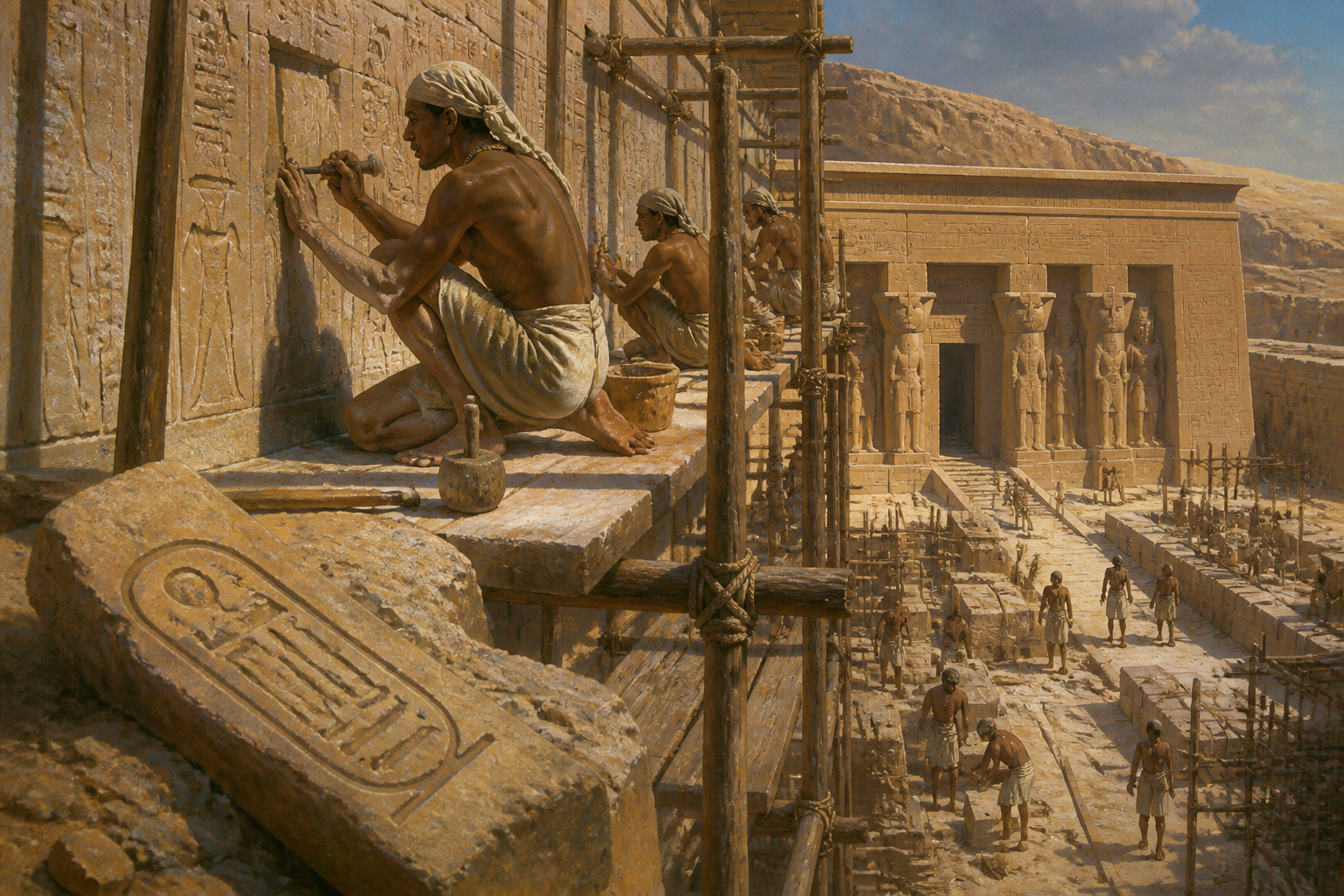
Decades after her reign, an unprecedented act of erasure attempted to remove Hatshepsut from the annals of history. Thutmose III, now reigning as pharaoh, ordered the systematic removal of her name and likeness from monuments and records. This was not an act of malice but a political maneuver to restore the traditional lineage and reinforce his own legitimacy. Craftsmen were tasked with chiseling away her cartouches and images, a monumental task that left scars upon the stone. However, the grandeur of her constructions and the indelible mark she left on Egypt's prosperity could not be fully erased. The attempts to wipe her from memory only underscored the power she wielded during her life. The legacy of Hatshepsut endured, whispered among the stones of her temples and the enduring prosperity of her reign, a testament to her vision and leadership.
"Erase her name, so the lineage stands pure," Thutmose III commanded, a firm resolve in his voice. "History must reflect the true line of kings."
Page 10 — A Legacy Restored
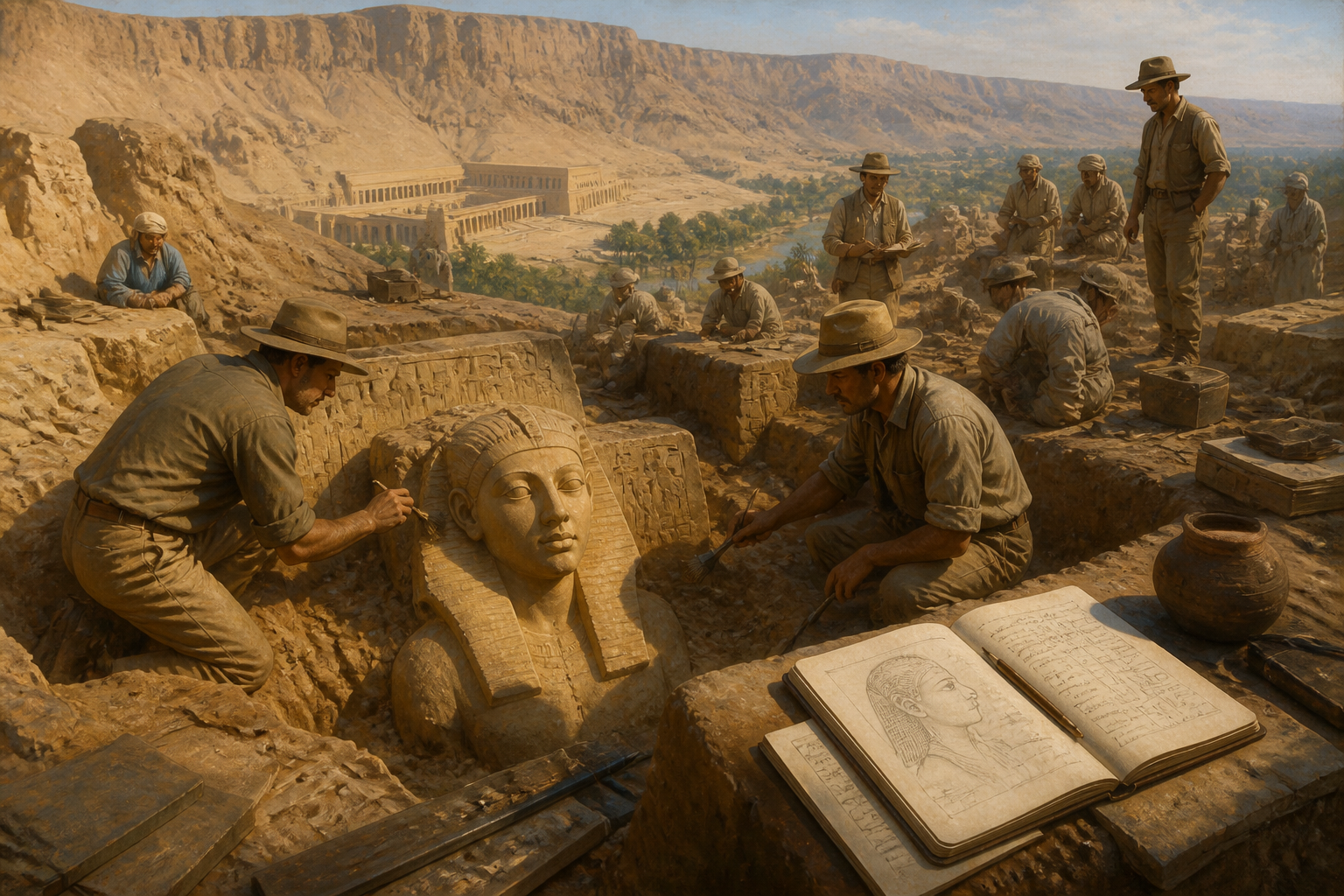
In the centuries that followed, the enigma of Hatshepsut's reign captured the imagination of scholars and historians. Archaeological discoveries in the 19th and 20th centuries pieced together the story of her unprecedented rule as a female pharaoh, restoring her place in history. Excavations uncovered the magnificence of her temple at Deir el-Bahari and the inscriptions that had escaped erasure. Her achievements in trade, architecture, and governance were reevaluated, painting a picture of a ruler whose vision extended far beyond the boundaries of her time. Hatshepsut's legacy is now celebrated as one of the most prosperous periods in ancient Egyptian history. Her story, once buried beneath the sands of time, now stands as a testament to the enduring power of her reign and the indelible impact of her leadership on the course of history. The attempt to erase her only served to enshrine her legacy more deeply, a timeless reminder of her achievements.
"In discovering her story," a modern archaeologist remarked, "we have resurrected the memory of a ruler whose impact remains undiminished by time."
About this story
- Audience: general readers
Read Wonder Egypt on your phone
Wonder Egypt is available on Android. Get Wonder Egypt on Google Play.