Karnak, the Temple That Was Never Finished
Karnak, the Temple That Was Never Finished — an illustrated history story. 10 illustrated pages, free to read on Wonder Egypt.
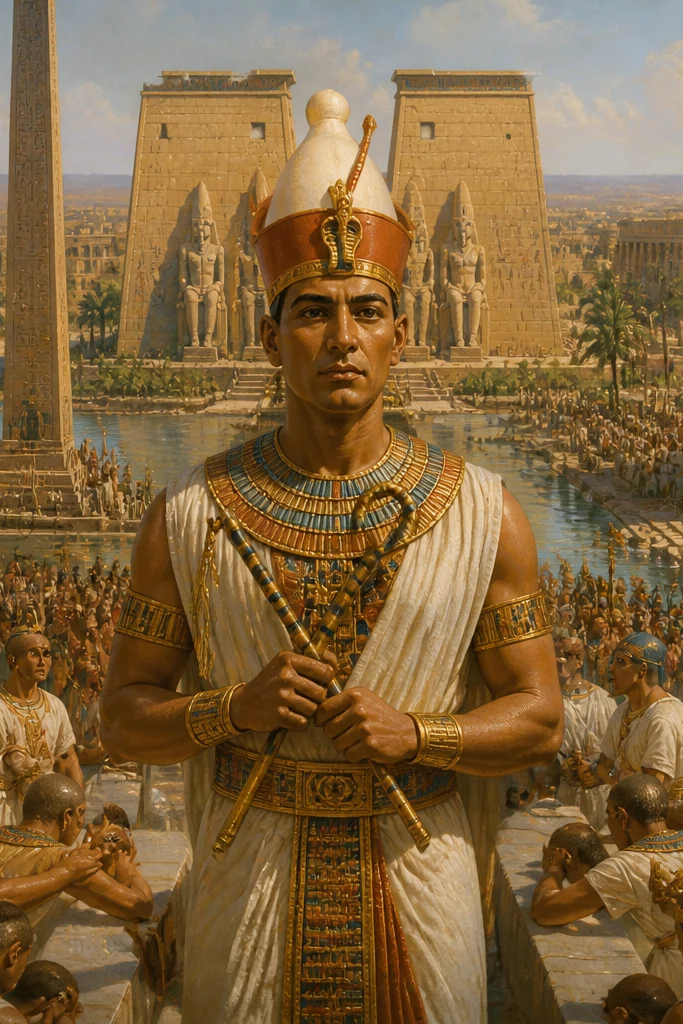
Page 1 — The Unfinished Pylon
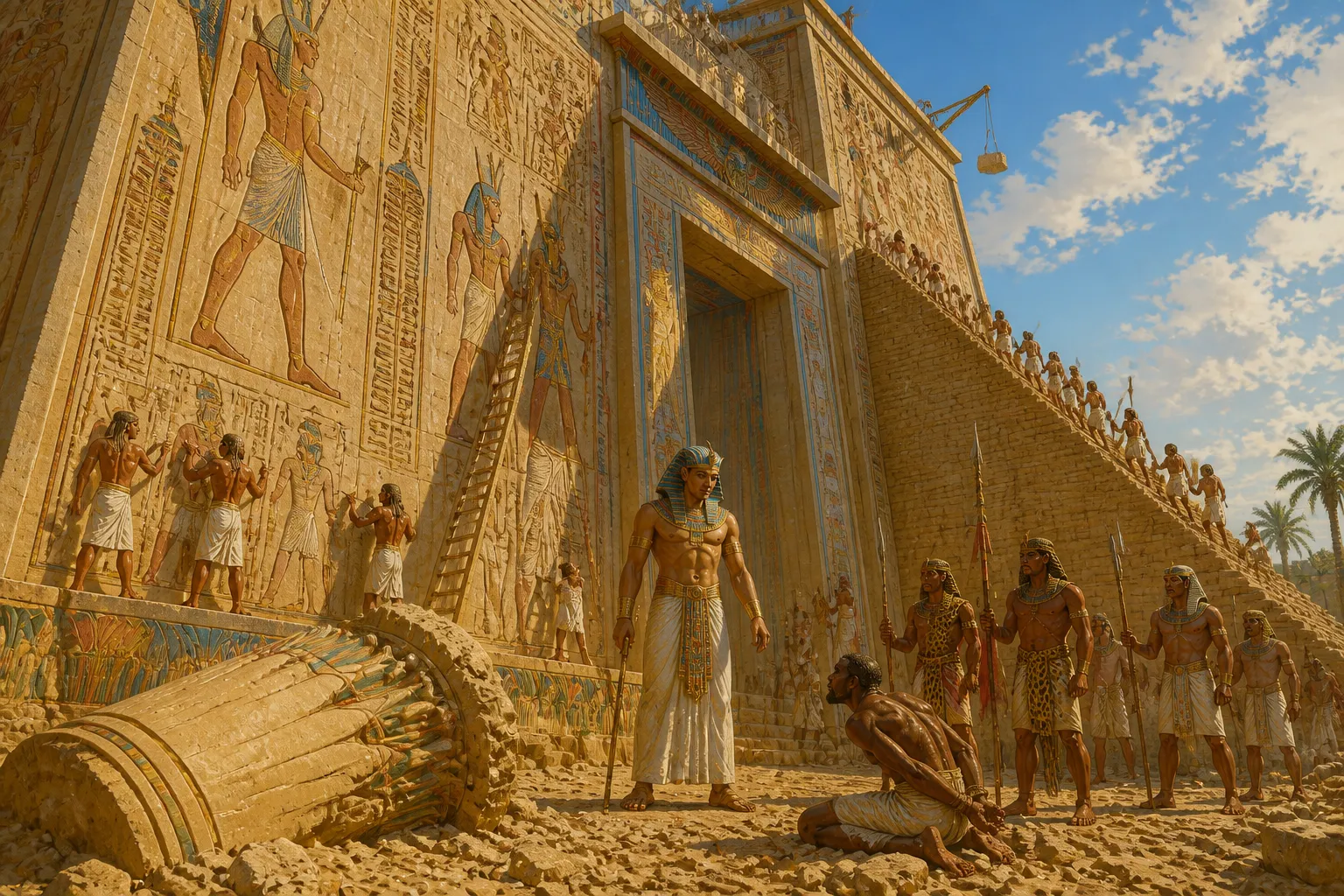
In the sunlit heart of Thebes stands the Karnak Temple Complex, where the colossal unfinished pylon looms as a testament to ambition and incompletion. This massive structure, crafted from golden-hued sandstone, still bears the marks of ancient tools that once carved intricate symbols of divine power into its surface. Visitors stand before the ancient construction ramp, an ingenious sloping monument of mud-brick, used by thousands of laborers over the centuries. The sound of the Nile whispers in the breeze, mingling with the faint echoes of chisels and hammers, while the shadows cast by towering columns dance across the ground like ghostly scribes, immortalizing the stories of a civilization that aspired to reach the heavens but never quite finished the climb.
"This is a testimony to our gods, but also to our own reaching and halting," mused a scribe of antiquity.
Page 2 — Hall of Hypostyle
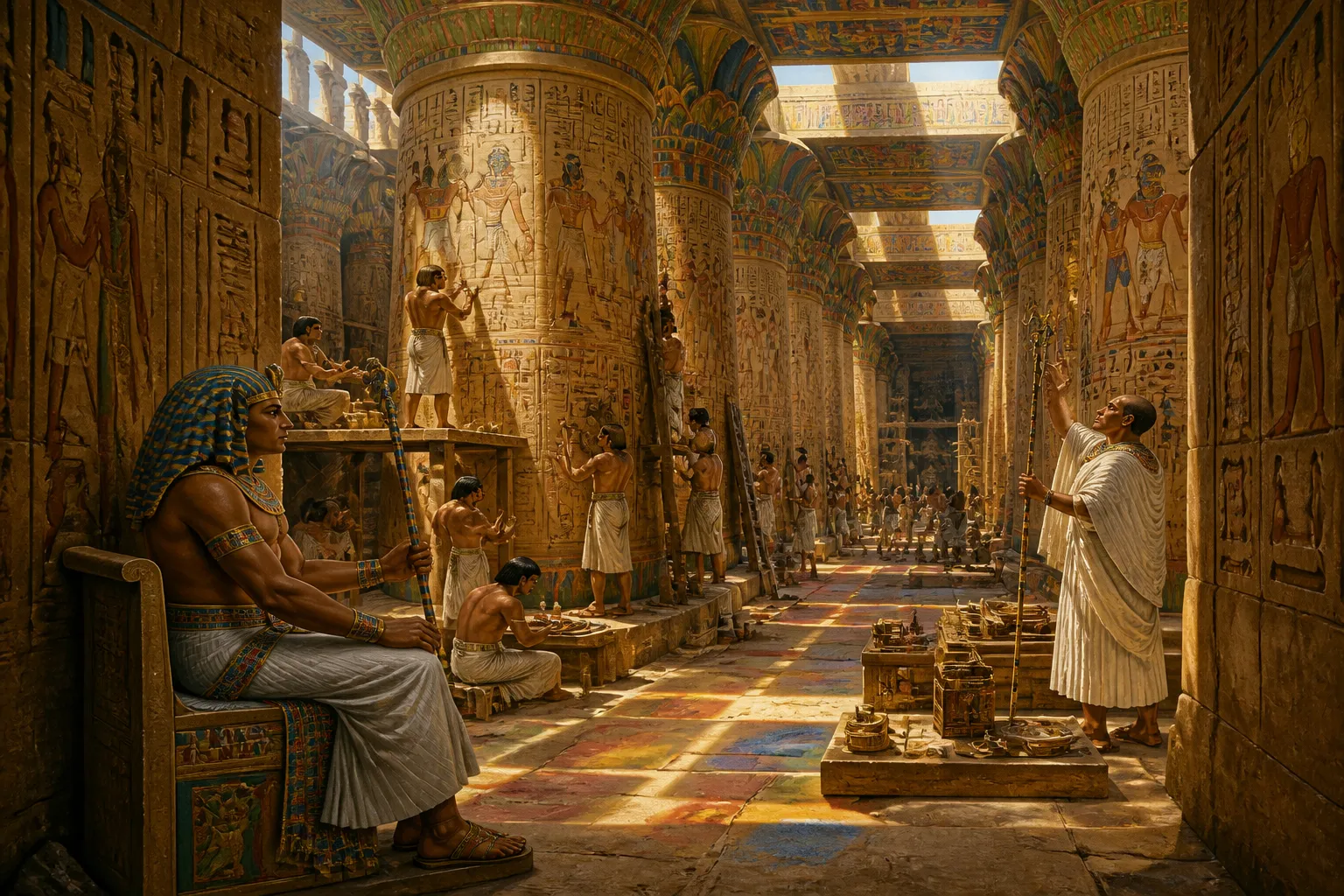
Upon entering the grand Hypostyle Hall, visitors find themselves dwarfed by a forest of 134 massive columns stretching upward to touch the sky. This architectural wonder, once vividly painted from base to ceiling in brilliant colors, served as the focal point for sacred rituals, echoing with the sonorous chants of priests and the measured footsteps of pilgrims. The columns themselves are adorned with intricate hieroglyphs, each telling tales of kingship, divine triumphs, and the eternal relationship between pharaohs and gods. As sunlight filters through the still intact sections of the ceiling, it casts a kaleidoscope of colors across the stone floor, creating a living tapestry. Craftsmen once stood here, diligently chiseling history and the aspirations of their pharaohs into the stone, their labor a silent symphony of devotion and artistry reaching towards eternity.
"Every stroke of the chisel honors Amun, god of Thebes," a high priest once recited.
Page 3 — The Obelisks of Hatshepsut
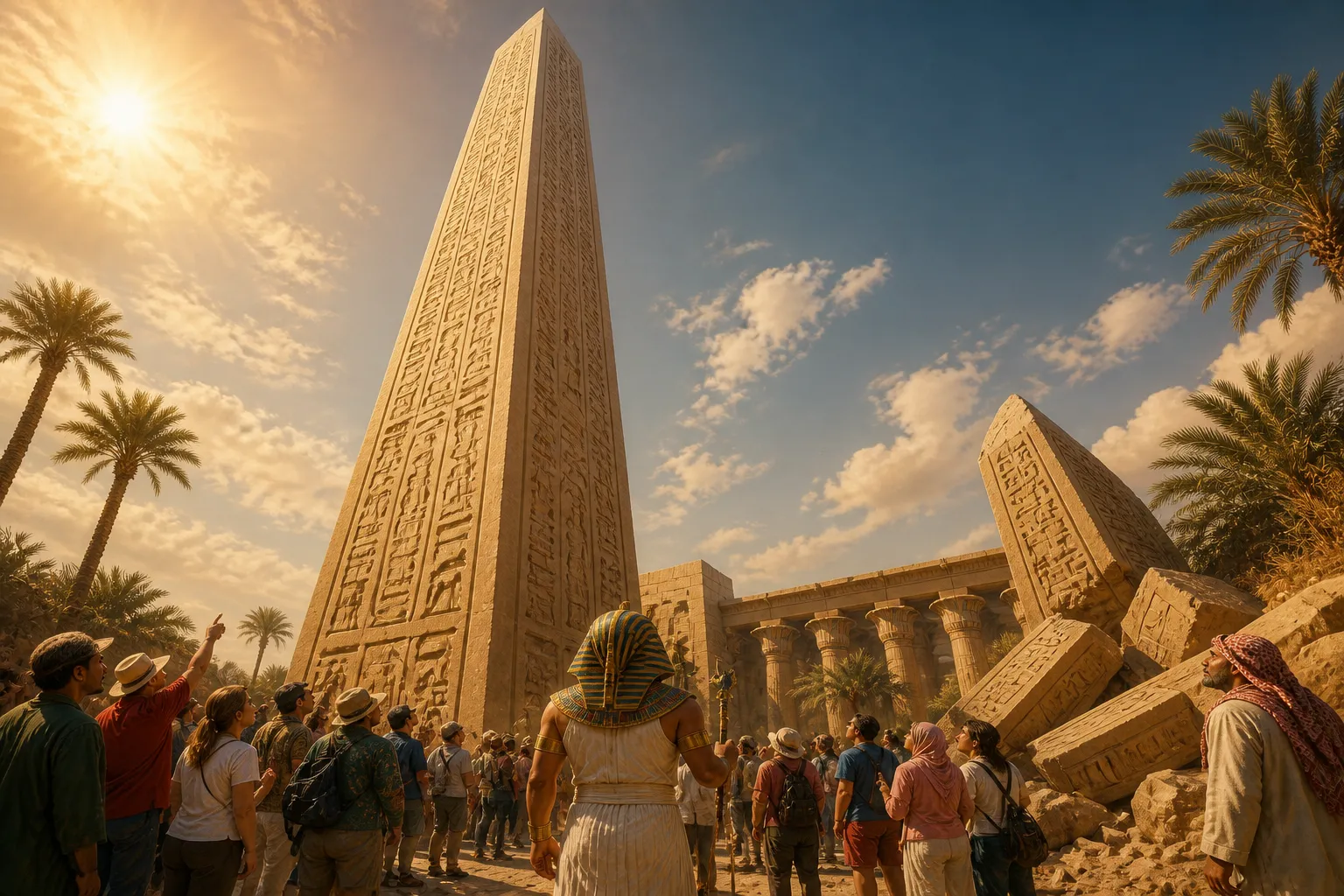
In the sunlit court of Karnak, the obelisk of Hatshepsut stands as a slender spire of stone aspiring toward the heavens. Inscribed with the accomplishments of the female pharaoh, this monumental needle defied conventions, celebrating Hatshepsut's unprecedented rule in a male-dominated era. Opposite the standing obelisk, the shattered remnants of another lie on the ground, each piece majestic in its own right, whispering tales of once-unified grandeur. These towering monoliths, quarried from Aswan, symbolize the duality of strength and vulnerability inherent in the legacy of rulers who dared to immortalize themselves in stone. Tourists gaze skyward, their modern wardrobes a stark contrast to the ancient stones, contemplating the hands that once labored to shape these enduring symbols of power.
"I claim this land in the name of Amun, eternal and mighty," Hatshepsut proclaimed.
Page 4 — Sacred Lake Reflection
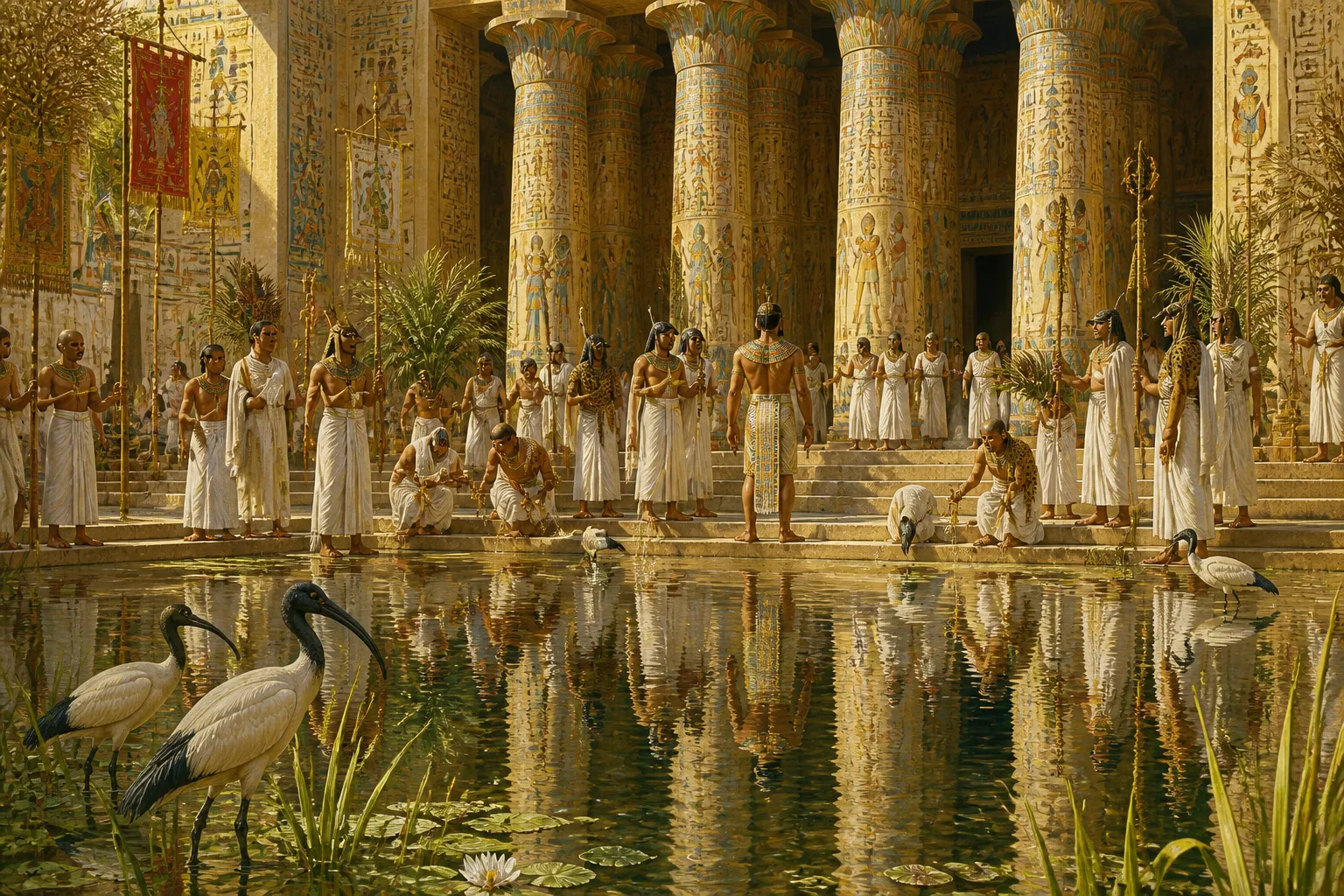
Beside the sacred lake of Karnak, the reflection of the temple's towering structures wavers on the water's mirror-like surface. Priests, clad in white linen garments, perform ritual ablutions, their movements reverently synchronized with the graceful ibis wading nearby. The lake, a metaphor for the primordial waters of creation, was a vital element in temple rituals, serving as a serene canvas reflecting the celestial heavens above. The tranquil sounds of the morning—from the melodic calls of birds to the gentle rustle of reeds—harmonize with the whispered prayers of observers, who stand in quiet awe. This waterside tableau reflects not only the sky but also the eternal hopes and dreams of those who once gathered here to honor the divine.
"In these waters, we honor the birth of the world," a senior priest chants.
Page 5 — The Storied Quarry
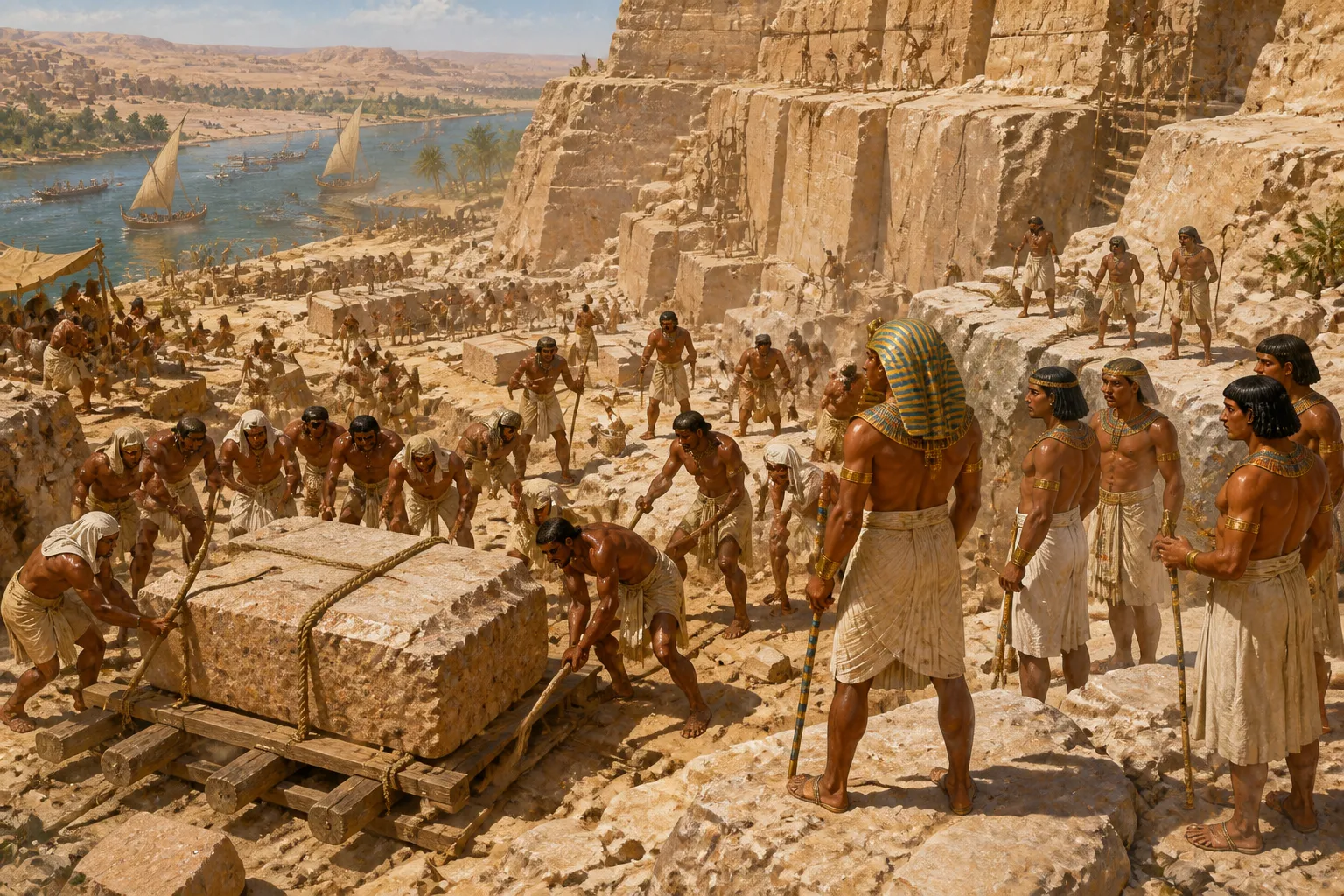
At the quarry in Aswan, the birthplace of colossal dreams, the air reverberates with the rhythmic clink of chisels—a symphony of creation. Here, under the watchful eye of vigilant overseers, workers labor tirelessly, prying massive stone blocks from the earth's embrace. These stones, destined for the grandeur of Karnak, are loaded onto boats, embarking on a sacred journey along the Nile. Dust dances in beams of sunlight, mingling with the sweat of laborers clad in simple kilts, their muscles straining as they carve the future into each block. Each chisel stroke rings with the promise of eternity, a testament to the enduring spirit of human ambition and the inexorable march of time.
"With each block, we build for the eternity of Karnak," an overseer instructs.
Page 6 — Amarna's Alteration
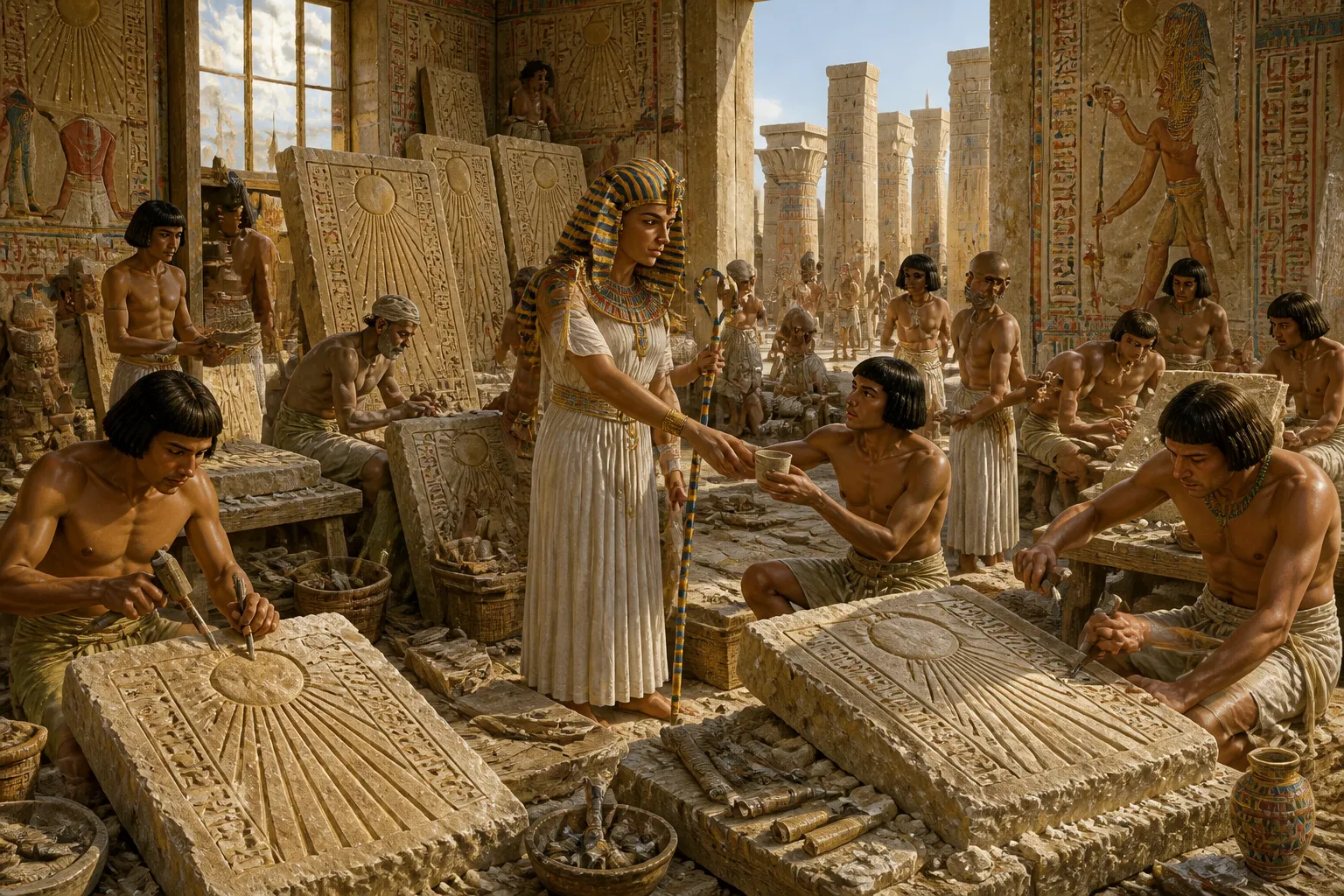
In the sunlit stone workshop, a transformation unfolds as artisans diligently etch new images onto the venerable walls of Karnak. Guided by Akhenaten's radical vision, they weave the sun disk of Aten into the ancient stone canvas. Dust motes dance in the luminous air, and the relentless chisel and hammer resound, reshaping history to reflect a transient era. Each tap of the chisel is both a tribute and a defiance, as the sun disk supplants the venerated faces of old gods, marking a fleeting yet potent chapter in Egypt's spiritual journey. The artisans, standing on the precipice of change yet tethered to tradition, work with reverence, aware that while beliefs may evolve, stone bears eternal witness.
"The sun's rays touch all with Aten's grace," an artist recites cautiously.
Page 7 — The Campaign Returns
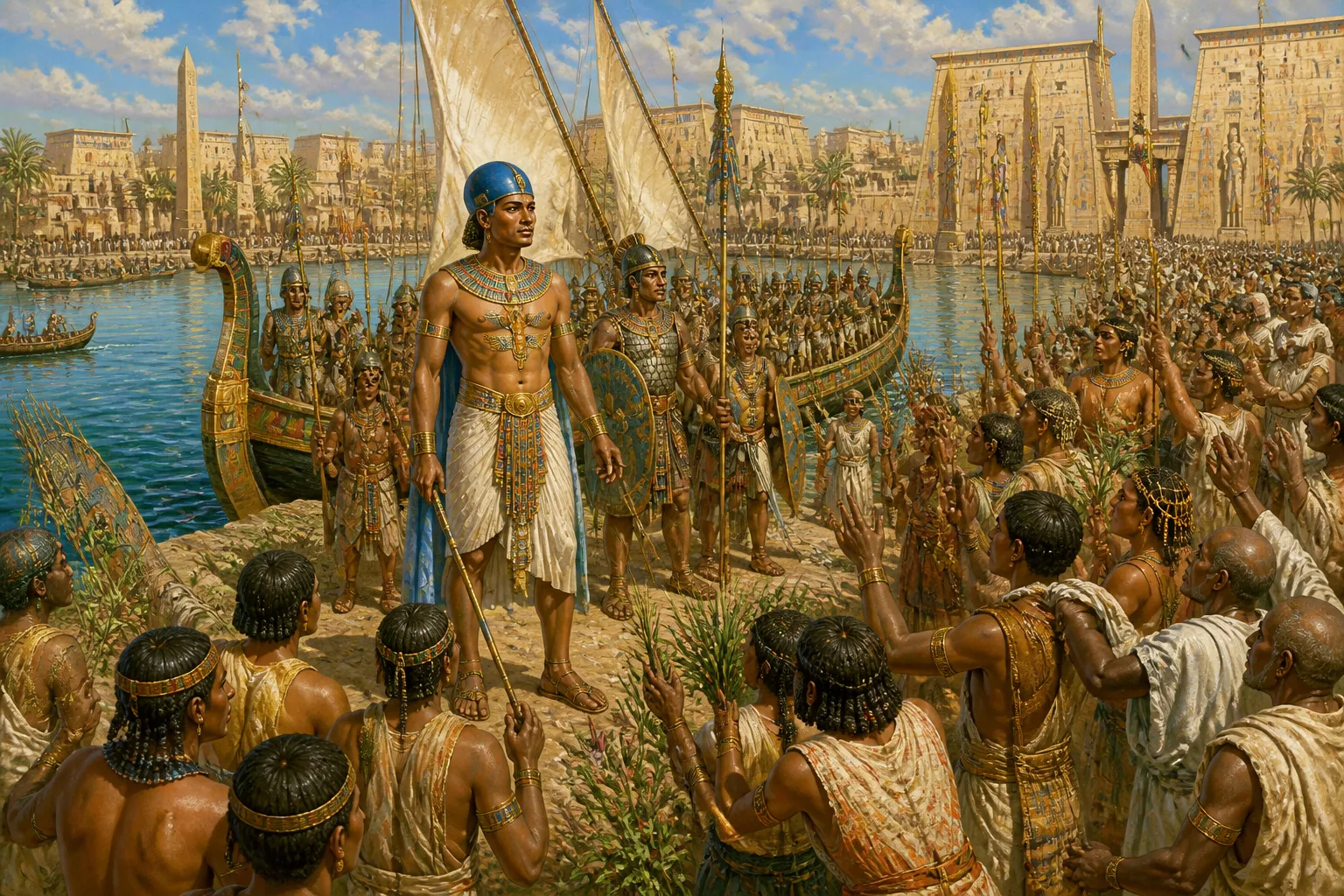
Upon the sun-drenched banks of the Nile, near the bustling city of Thebes, the triumphant return of military vessels heralds a victorious campaign. Warriors, their skin weathered by sun and battle, disembark to the jubilant cheers of a gathered crowd, the air thick with excitement and the scent of the river mingled with sweat. At the forefront, Pharaoh Thutmose III stands in regal splendor, his blue khepresh war crown glinting in the sunlight, surveying his domain with a gaze full of triumph. As the boats gently rock on the water and the city buzzes with life, the Nile serves as both lifeline and artery, its flowing waters mirroring the fortunes of an ever-expanding Egyptian empire.
"With each conquest, Egypt grows ever mightier," Thutmose declares, his voice a clarion call.
Page 8 — The Scribe's Chronicle
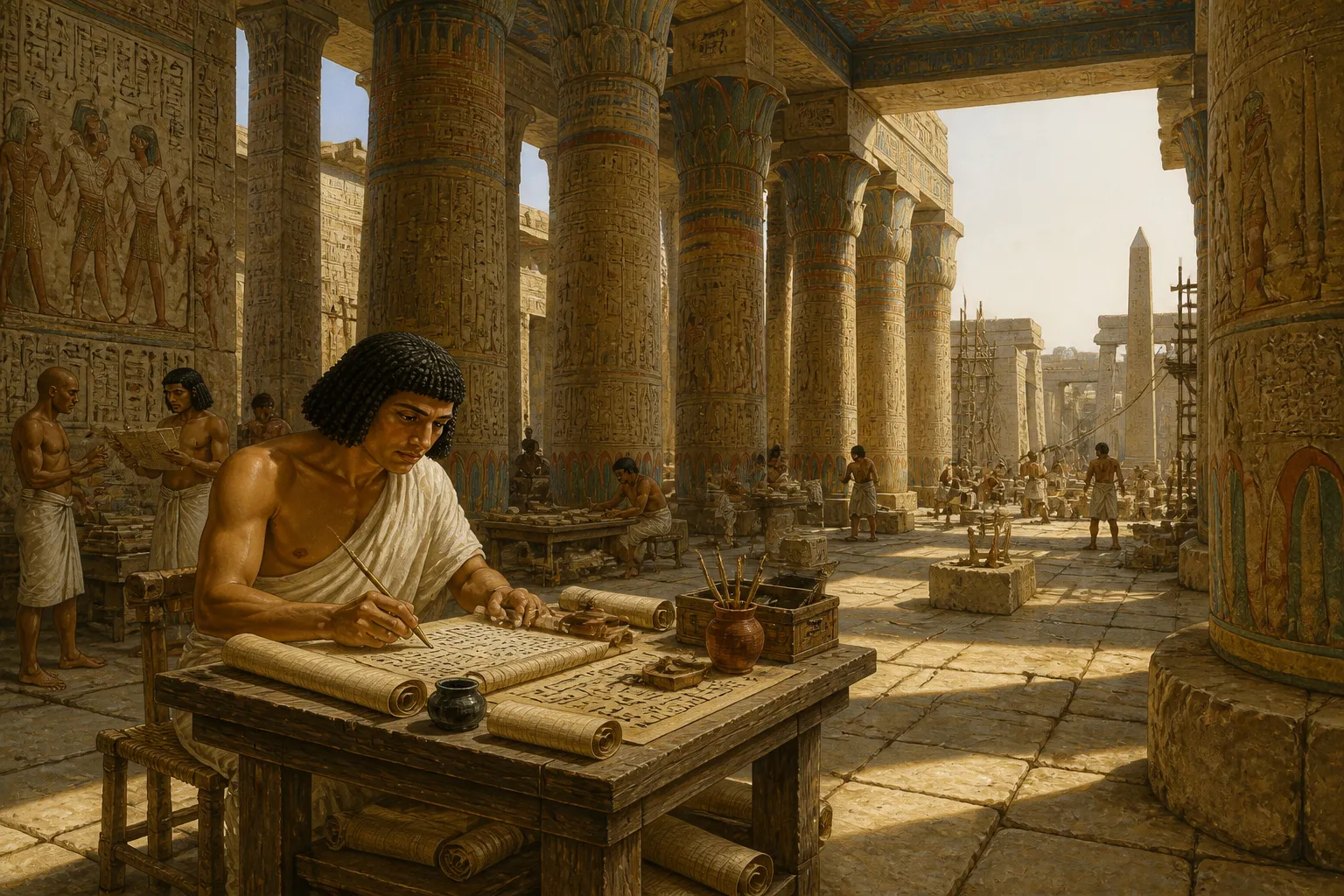
Within the cool, shadowed embrace of Karnak's sandstone colonnade, a scribe meticulously records the deeds and decrees of Pharaoh Seti I. Papyrus scrolls cascade across a wooden table, an intimate army of documentation lying in wait. Ink-stained fingers deftly trace the elegant loops of hieratic script, capturing the essence of a reign dedicated to order and restoration. Clad in a simple linen wrap, the scribe works with focused intensity, a light breeze stirring the papyrus scrolls. The distant sounds of craftsmen, echoing softly through the columns, underscore this quiet labor. Here, amidst the interplay of light and shadow, words immortalize actions, ensuring that the king's voice resonates through the annals of time.
"In papyrus and stone, we etch the pharaoh's eternal legacy," the scribe speaks softly.
Page 9 — Ramesses' Legacy
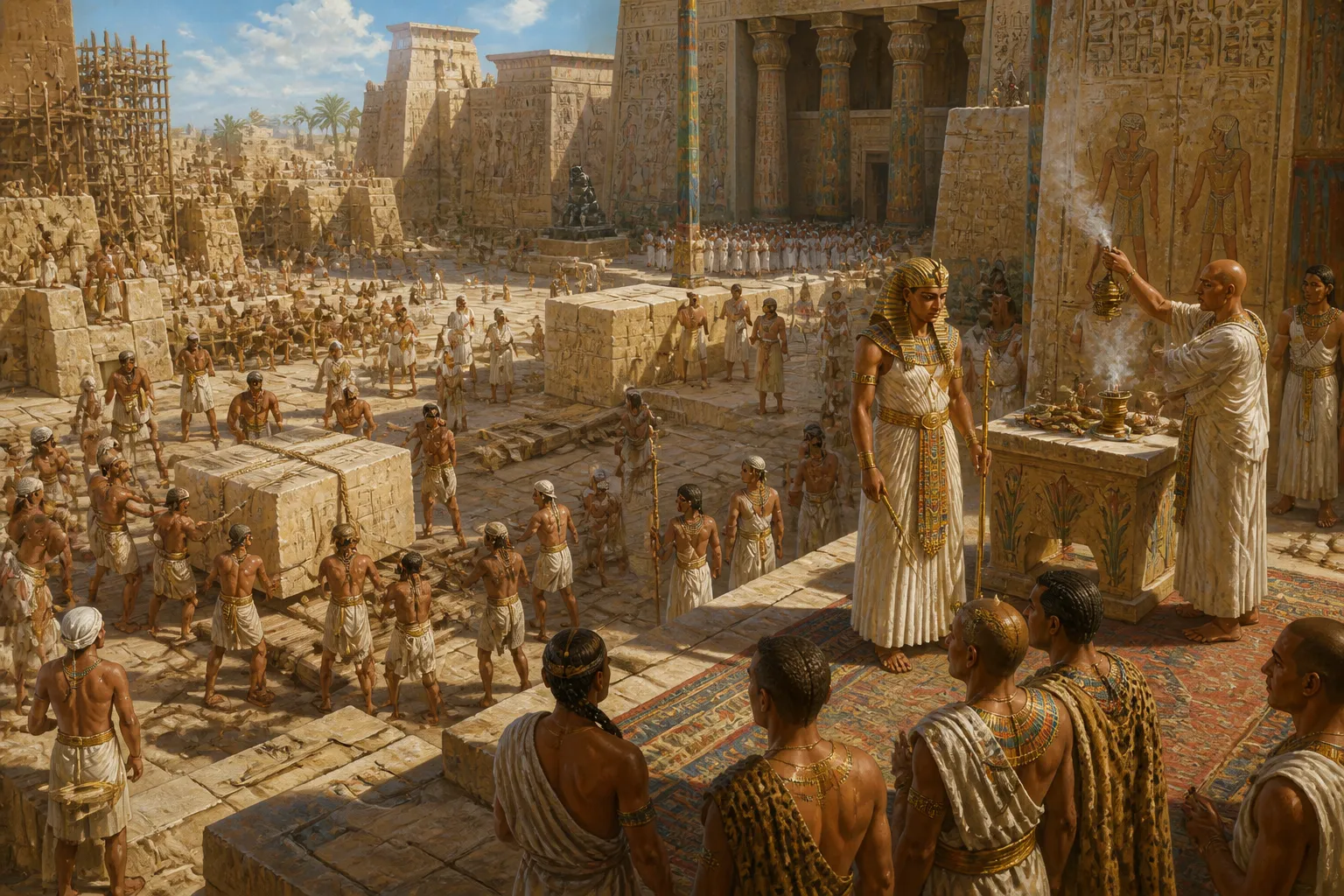
In the grand courtyard of Karnak, Pharaoh Ramesses II stands amidst a scene of energetic construction, the air alive with the vibrancy of ancient ambition. Workers, their muscles straining under the weight of enormous stone blocks, are attired in linen kilts, with sun-bronzed skin glistening under the unforgiving Egyptian sun. Overseeing the construction of a colossal statue, Ramesses dons his golden nemes headdress, the symbol of divine kingship. The courtyard echoes with the rhythmic clink of chisels and the melodic chanting of priests, creating a symphony of labor and reverence. Each chisel stroke carves his legacy deeper into stone, ensuring that the narrative of his reign and power endures through the ages.
"Let my name echo through the ages," Ramesses commands, his voice resolute.
Page 10 — The Museum's Echo
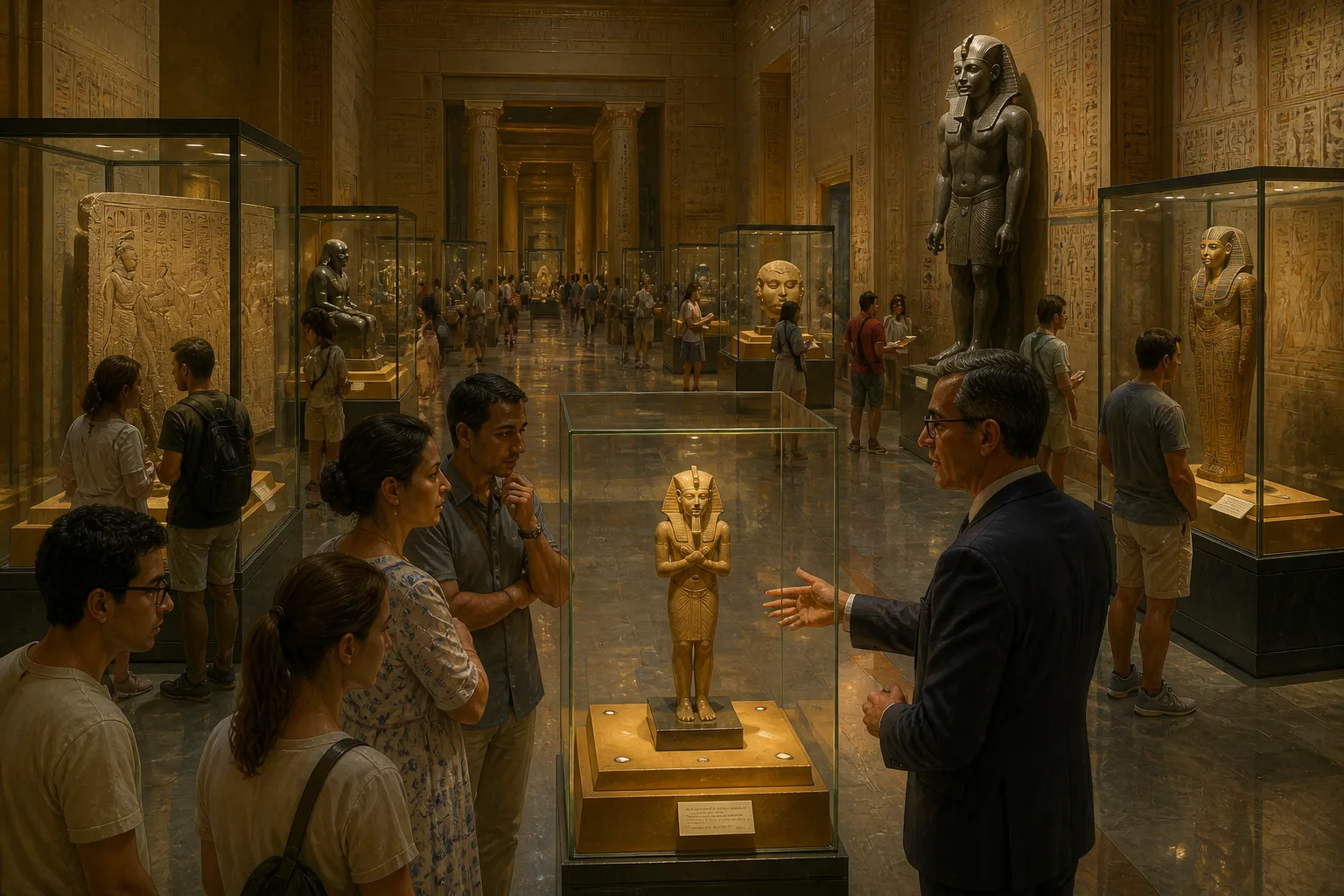
Today, within the serene and hushed halls of the Cairo Museum, the grandeur of Karnak is once more brought to life through fragments that tell an ancient tale. Visitors wander slowly, their eyes tracing the journey of each artifact from the quarry to the temple, now resting in these hallowed rooms. The air is cool and carries a hint of aged parchment, immersing the guests in an atmosphere of history. Each piece, bearing the marks of time and transformation, revives stories of the past, imploring the present to heed their silent messages. In the gentle, filtered light of the museum, Karnak's legacy is reborn, knitting together centuries of human ingenuity and reverence.
"Our past lies not in ruin, but in remembrance," a curator notes to a captivated audience.
About this story
- Audience: general readers
Read Wonder Egypt on your phone
Wonder Egypt is available on Android. Get Wonder Egypt on Google Play.