Piye's Conquest of Egypt
Piye's Conquest of Egypt — an illustrated history story. 10 illustrated pages, free to read on Wonder Egypt.
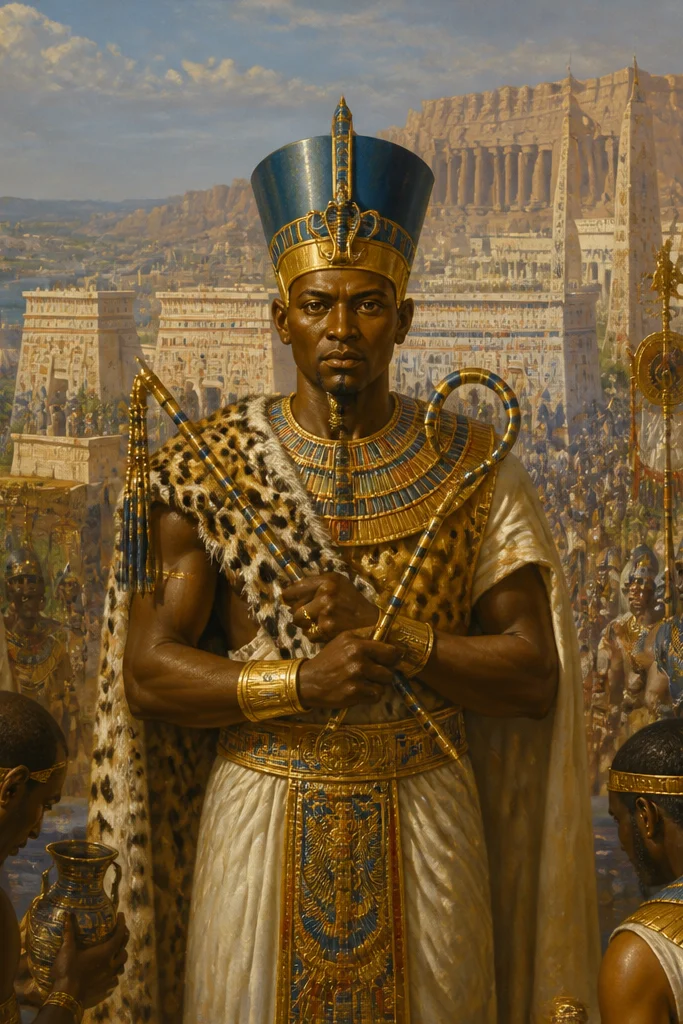
Page 1 — The Siege at Memphis
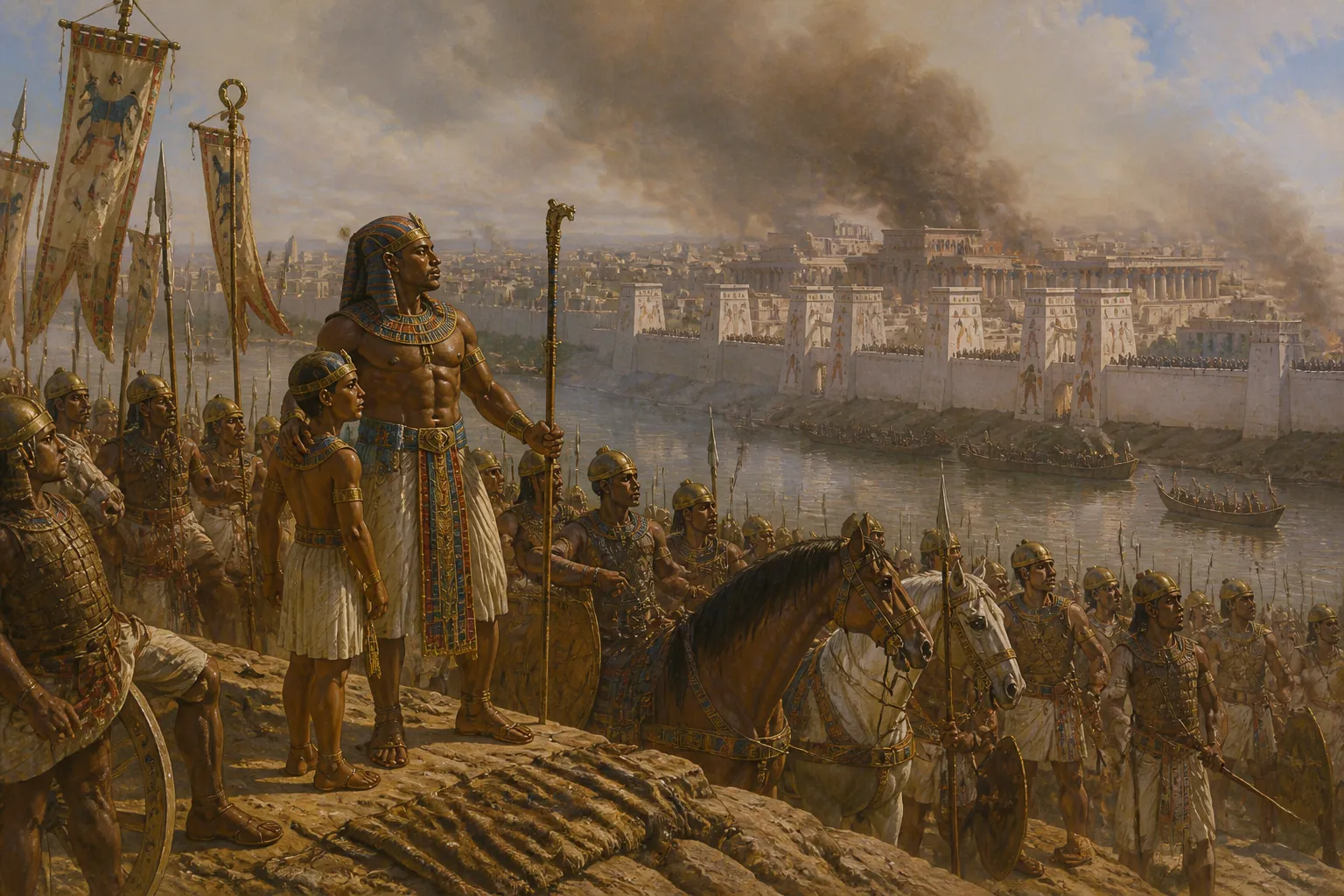
Piye stands amidst the grand sprawl of Memphis, the city of white walls, a testimony to centuries of Egyptian civilization. His adversary, Tefnakht, commands from within the besieged city, his pride battered but unyielding. As Piye surveys the Nile, its waters reflecting the dawn, they carry the promise of a united Egypt under Nubian rule. Piye commands the respect of thousands of soldiers, their spears sharp and glistening under the sun's rays. The scent of smoke from distant fires hangs in the air, mingling with the tension of anticipation. This is not mere conquest; it is a divine mandate, an endeavor to restore Maat, the cosmic order that once reigned supreme.
"Let no horse stand unfed, for they too serve the god Amun," Piye declares, his voice echoing across the riverbanks.
Page 2 — The Council at Napata
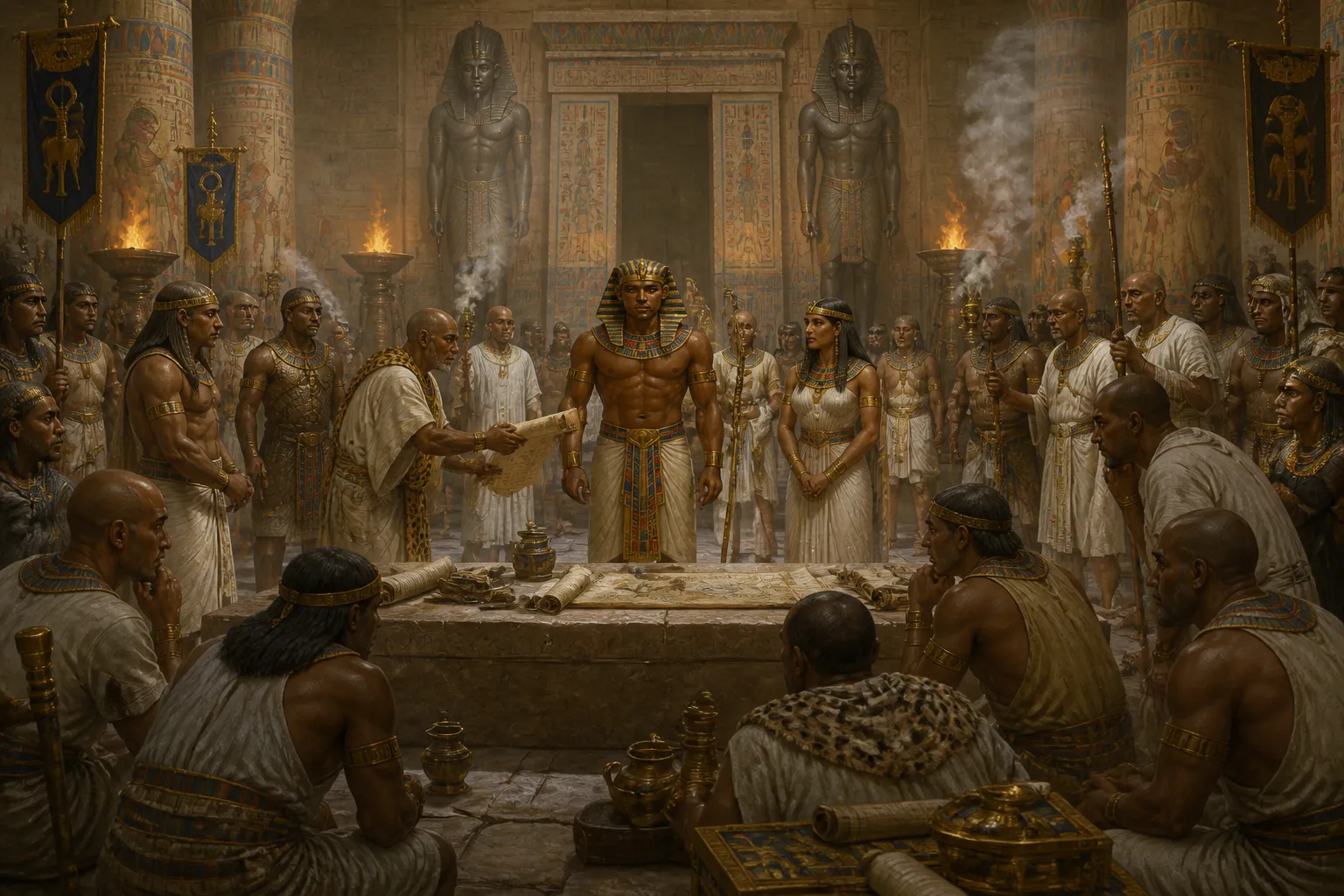
Before the march north, Piye gathers his council at Napata, beneath the shadow of Jebel Barkal, the holy mountain. The air is charged with the heady scent of incense and the rustle of papyrus scrolls. High Priest Herihor speaks of omens favoring their campaign, his voice authoritative and confident. Abar, Piye’s sister and wife, stands beside him, her presence a symbol of dynastic unity, exuding regal poise. General Tefnakht’s ambition to break free from Piye’s influence becomes a point of intense debate among the advisors. The granite walls echo the weighty decisions that will shape Egypt's future. The Nubian king’s resolve is as firm and unyielding as the stone beneath his feet.
"The gods favor our cause," declares Herihor, raising his arms in invocation. "We march not as conquerors, but as restorers of divine order."
Page 3 — The March Through the Desert
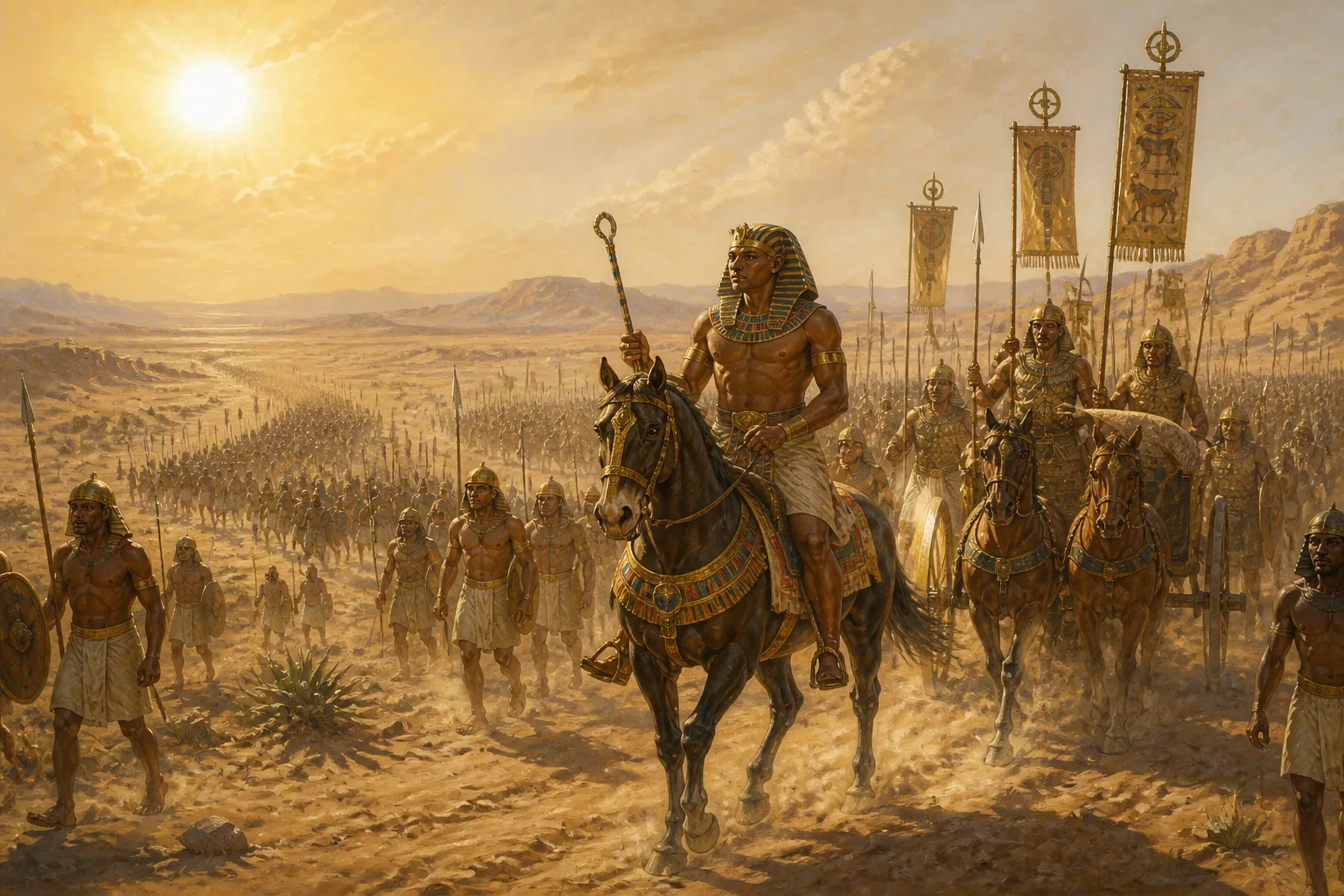
Piye’s army advances northward, their journey inexorably etched into the sands of the desert. The sun beats down relentlessly, a scorching orb in the sky, but the soldiers march with unyielding determination, their resolve as strong as the steel of their weapons. Among them, charioteers clad in leather and bronze maneuver skillfully, the wheels of their chariots cutting through the dust, leaving trails behind. The silence of the desert is occasionally broken by the sound of hooves and the rhythmic beat of drums, a reminder of their determined progress. Piye rides at the forefront, his steadfast presence a beacon of strength and hope for his followers. The horizon stretches endlessly, a testament to the arduous path yet to be conquered, but one that they are determined to traverse.
"This land shall remember our passage," Piye declares to his generals, his voice swallowed by the vastness of the desert.
Page 4 — The Temple at Karnak
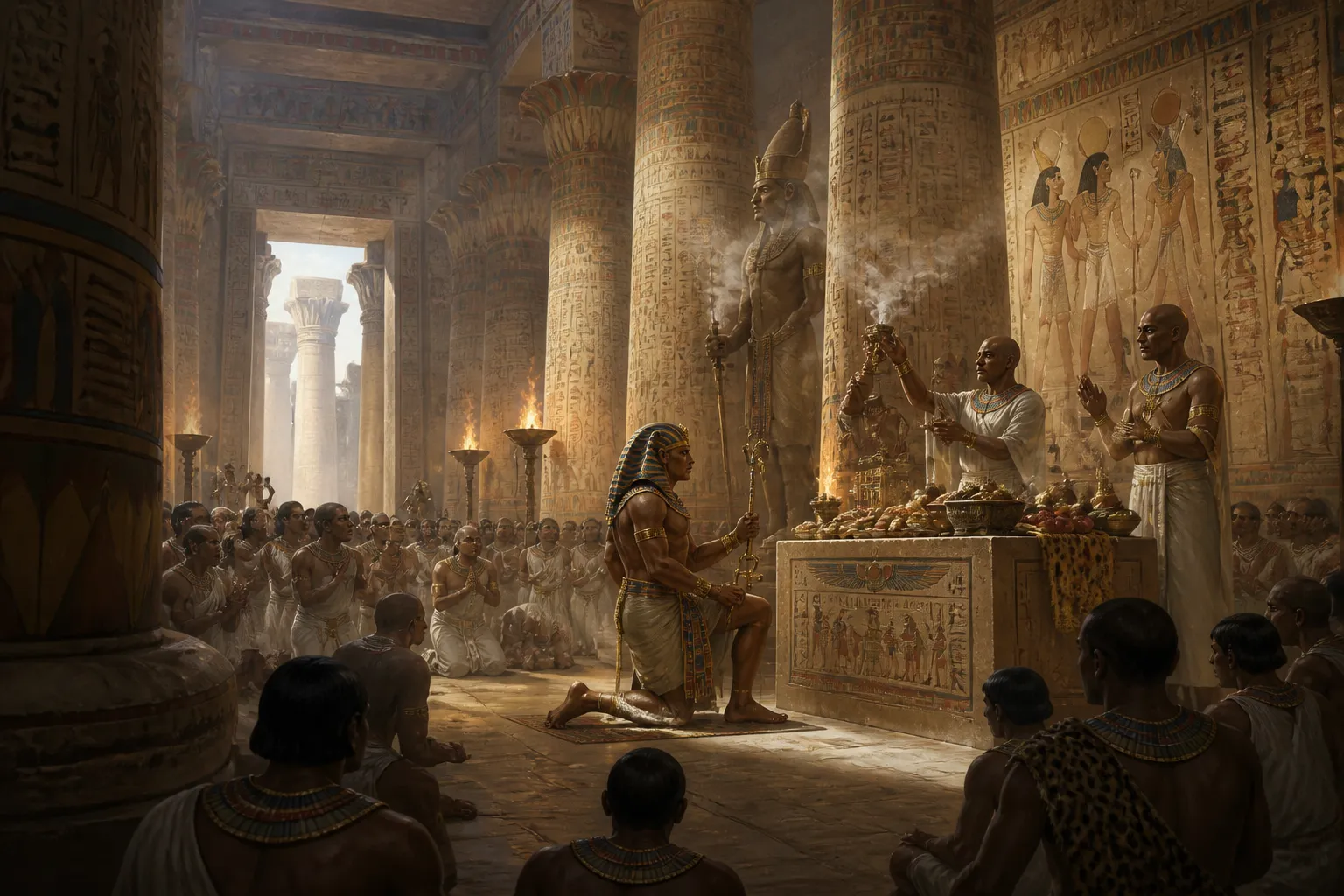
In the sanctuary of Karnak, Piye makes offerings to Amun, the temple’s towering pillars bearing silent witness to his devotion. The air is thick with the sweet scent of burning myrrh as priests chant hymns in the ancient tongue, their voices rising and falling like a sacred river. Piye kneels, reverently placing gifts upon the altar, the flickering torchlight casting sacred shadows that dance across the carved stone. The temple is alive with the whispers of devotees, their prayers a continuous hum, a hub of spiritual power and a testament to the glory of the gods who have watched over Egypt through millennia. Here, Piye renews his vow to restore balance to Egypt, a promise made under the watchful gaze of Amun, whose presence permeates the hallowed halls.
"Amun, guide our steps and grant us victory," Piye prays, his voice resonating through the hallowed halls.
Page 5 — The Stand at Hermopolis
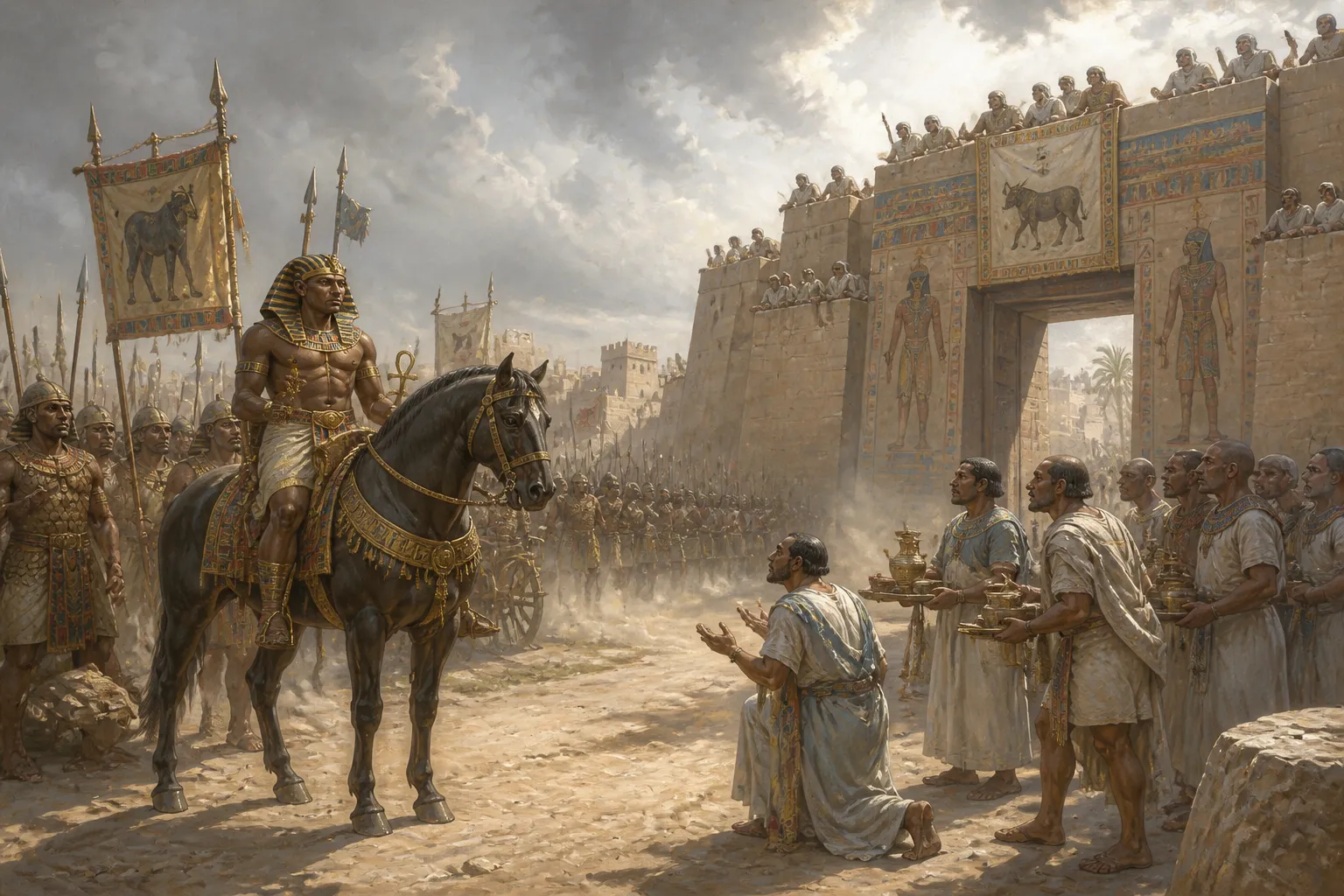
At Hermopolis, Namlot, ruler of the region, stands defiant against Piye’s forces, his resolve unshaken. The city, a steadfast beacon of resistance, prepares for the impending confrontation. Families gather behind the towering walls, anxious yet resolute, clad in simple linen garments, their faces etched with determination. Outside, Piye’s army encircles the city, their banners flickering in the wind, a vibrant sea of colors against the desert backdrop. Namlot’s envoys emerge cautiously from behind the gates, bearing gifts of appeasement, trinkets meant to placate. Yet, the standoff persists, an emblem of the fractured political landscape of the time. Piye surveys the scene, a silent testament to his patience and strategic acumen, waiting for the decisive moment to assert his will.
"We cannot yield," Namlot warns his advisors. "But we must not provoke the wrath of the gods Piye serves."
Page 6 — The Surrender of Peftjauawybast
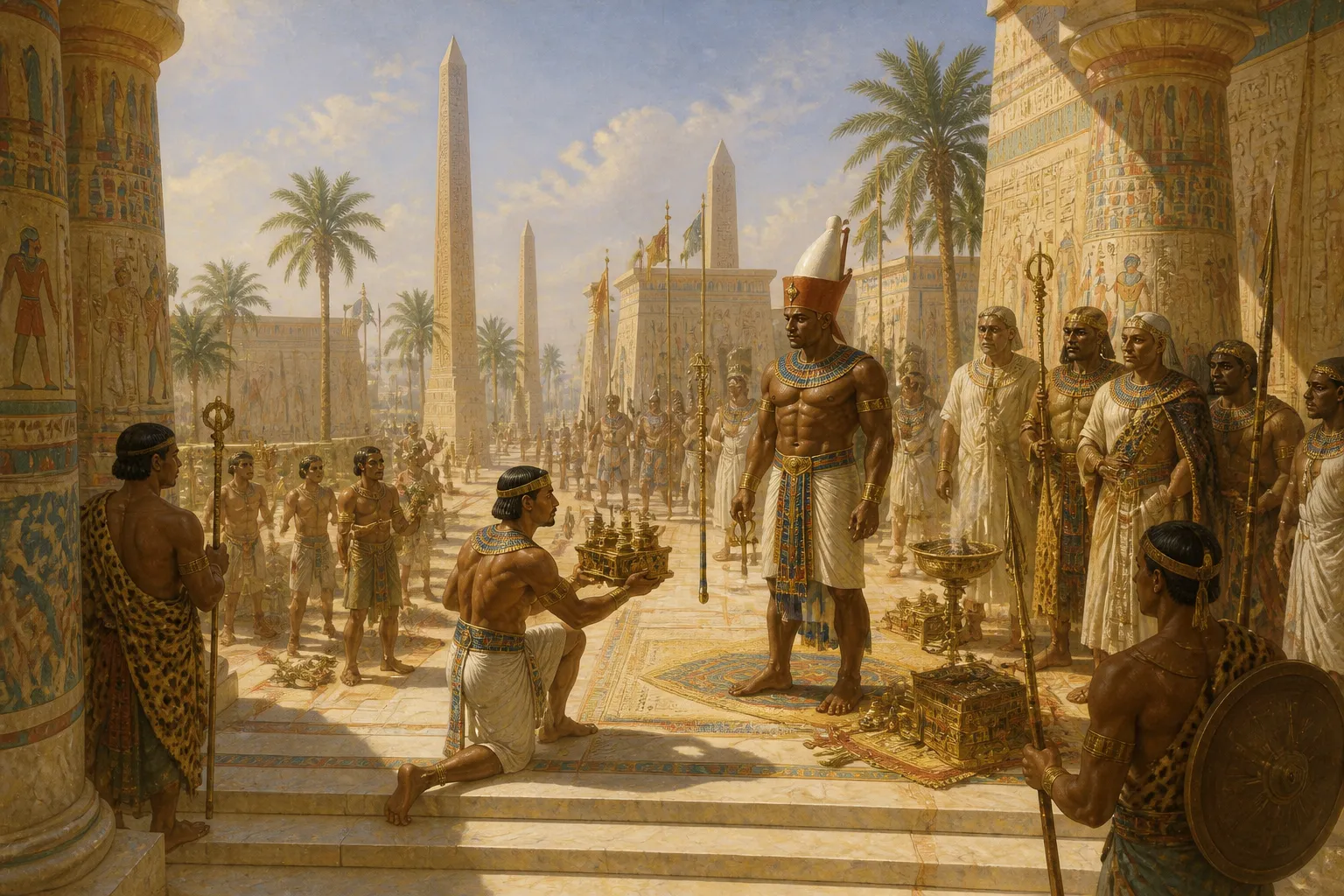
Piye’s triumph becomes inevitable as Peftjauawybast, ruler of Nimlot, agrees to surrender, acknowledging the greater power that Piye wields. In a sunlit courtyard lined with tall, swaying palm trees and proud obelisks, the ceremony unfolds with solemnity and grace. Peftjauawybast, draped in a meticulously pleated kilt, approaches with offerings of gold and fragrant incense, the riches of the land. The tension of past hostilities briefly lingers in the air, but the scent of cedar oil signifies a new allegiance, a bridge between former adversaries. Piye accepts the tribute, his expression one of solemn victory. This act transcends mere submission; it is the convergence of two worlds, Nubian and Egyptian, under a divine mandate to restore harmony and unity.
"We acknowledge your might and your gods," Peftjauawybast concedes, bowing before the Nubian king.
Page 7 — The Judgment at Thebes
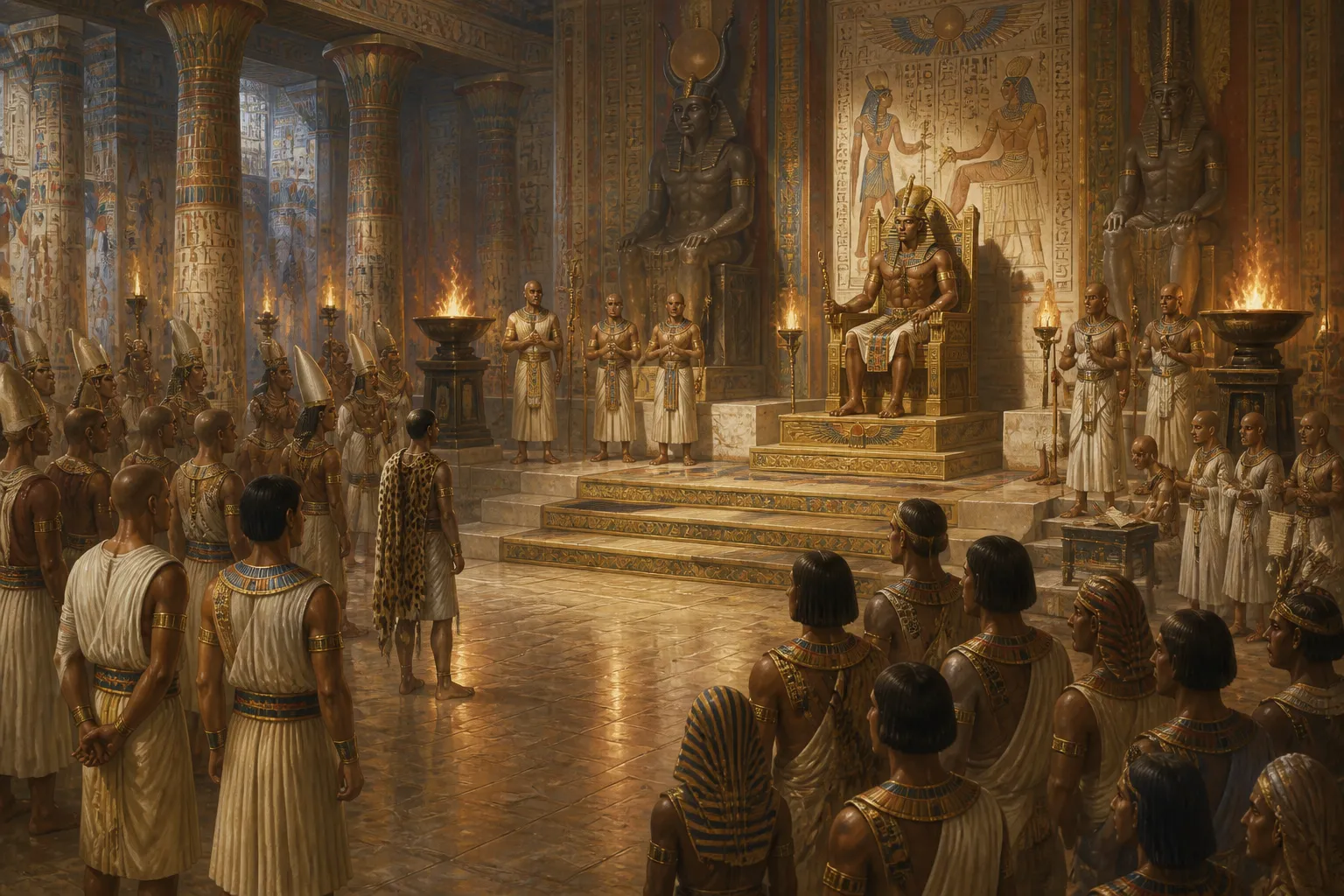
In the heart of Thebes, Piye presides over a council of leaders, their fates delicately balanced, resting in his capable hands. The grand hall is filled with the subdued murmur of deliberation, a tapestry of voices weaving the future of Egypt. Stone statues of gods, standing as silent adjudicators, watch over the proceedings, their impassive gazes a reminder of divine oversight. Piye, seated on a high dais, listens intently, his muscular form a living testament to Nubian strength and authority. Leaders from the Delta and Upper Egypt seek his favor, their ornate collars and intricate headdresses reflecting the flickering torchlight. The judgment day signifies not only the consolidation of power but the weaving of a new national tapestry, one that promises to endure through the ages.
"Justice shall prevail as the gods decree," Piye announces, his words echoing with authority through the solemn hall.
Page 8 — The Peace at Napata
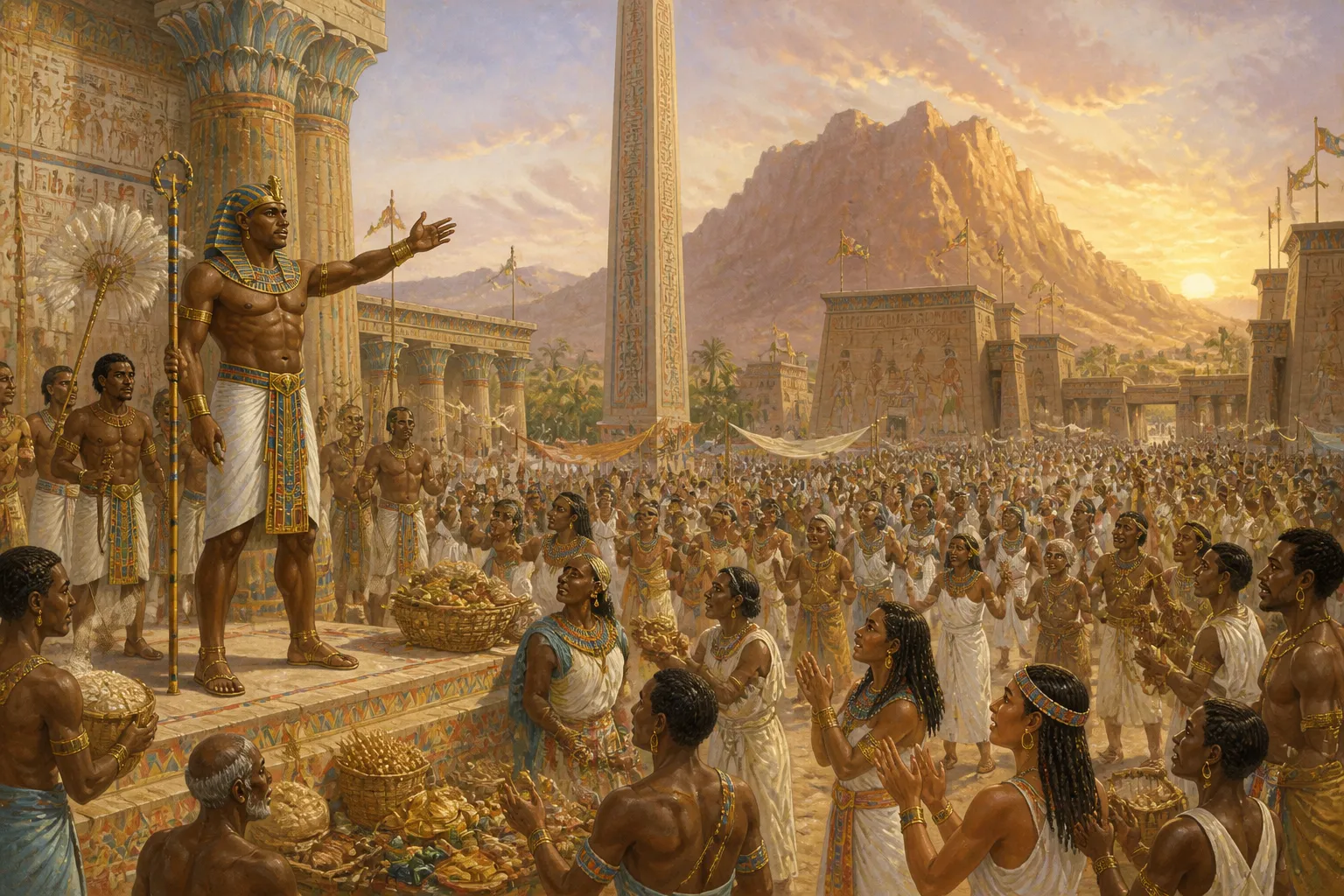
Returning to Napata, Piye is greeted with vibrant celebrations of his hard-won victories. The temple precincts are alive with the joyous sound of music and jubilant voices, a symphony of triumph. Markets overflow with grain and resplendent gold, symbols of prosperity under the new Nubian rule, the bounty of a unified kingdom. Piye stands before his people, the embodiment of their hopes, the center of their divine fulfillment. As the sun sets behind the majestic silhouette of Jebel Barkal, the horizon is painted in rich hues of triumph, a breathtaking tableau. His achievements, etched into the stone of history, assure the rebirth of a united land, one where Nubia and Egypt are forever linked under his benevolent guidance.
"Rejoice, for Amun has favored the faithful," Piye declares to the throng, his voice carrying over the jubilant crowd like a clarion call of victory.
Page 9 — The Legacy in Karnak
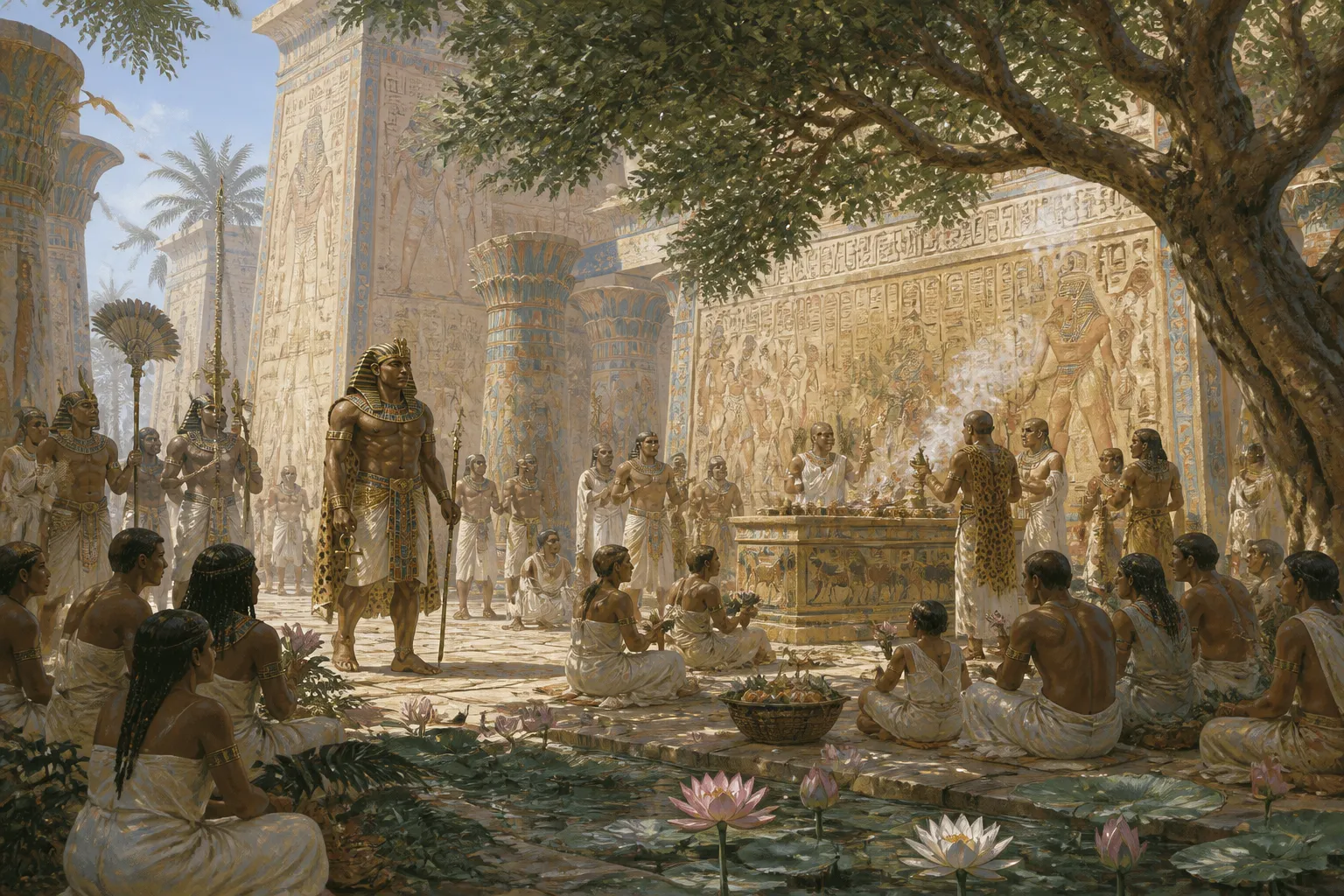
Years later, the legacy of Piye's reign remains etched in stone at Karnak, an enduring testament to his devotion to Amun and his unifying vision. The temple stands majestically, its walls adorned with intricate carvings depicting his conquests, sacrifices, and the rebirth of Egypt under his enlightened rule. Pilgrims arrive from near and far, dressed in humble linen garments, to pay homage and seek guidance from the past. The air is filled with the delicate fragrance of blooming lotus and the solemn chants of priests, a living echo of devotion to the divine. Piye’s legacy, enduring through the centuries, speaks of a king who was more than a conqueror—a restorer of Maat, a bridge between Nubia and Egypt, whose impact still resonates through time.
"May his name be eternal among the gods," a priest intones as offerings are laid upon the altar, echoing through the sacred space.
Page 10 — Echoes Through Time
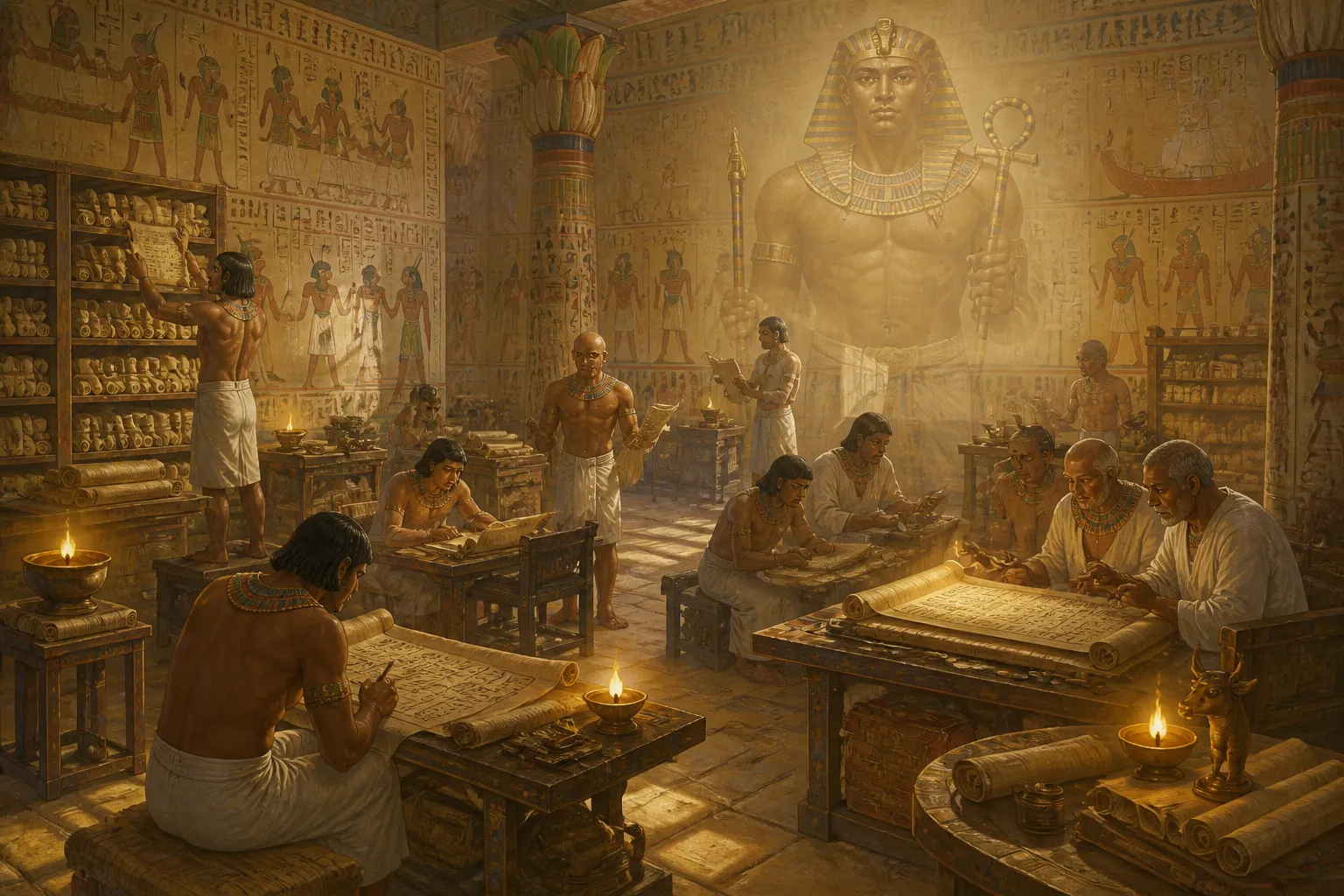
Centuries after Piye’s reign, echoes of his legacy reverberate through the annals of history, like ripples in a timeless pond. His conquests reshaped Egypt, leaving an indelible mark on its culture and governance, a testament to his visionary leadership. The synthesis of Nubian and Egyptian traditions continues to influence the region, weaving a rich tapestry of shared heritage. In the halls of power, his image serves as a silent reminder of a king who not only unified a land but also restored its divine balance, standing as a beacon of wisdom and strength. The sands of time may shift, but Piye’s impact endures, transcending the ages, an ever-present guide that inspires those who seek the deeper truths of history.
"His deeds resonate through the ages," a historian remarks, tracing the ancient scripts in a scroll-lit chamber, his fingers brushing reverently over the faded ink.
About this story
- Audience: general readers
Read Wonder Egypt on your phone
Wonder Egypt is available on Android. Get Wonder Egypt on Google Play.