Seti I
Seti I — an illustrated history story. 10 illustrated pages, free to read on Wonder Egypt.
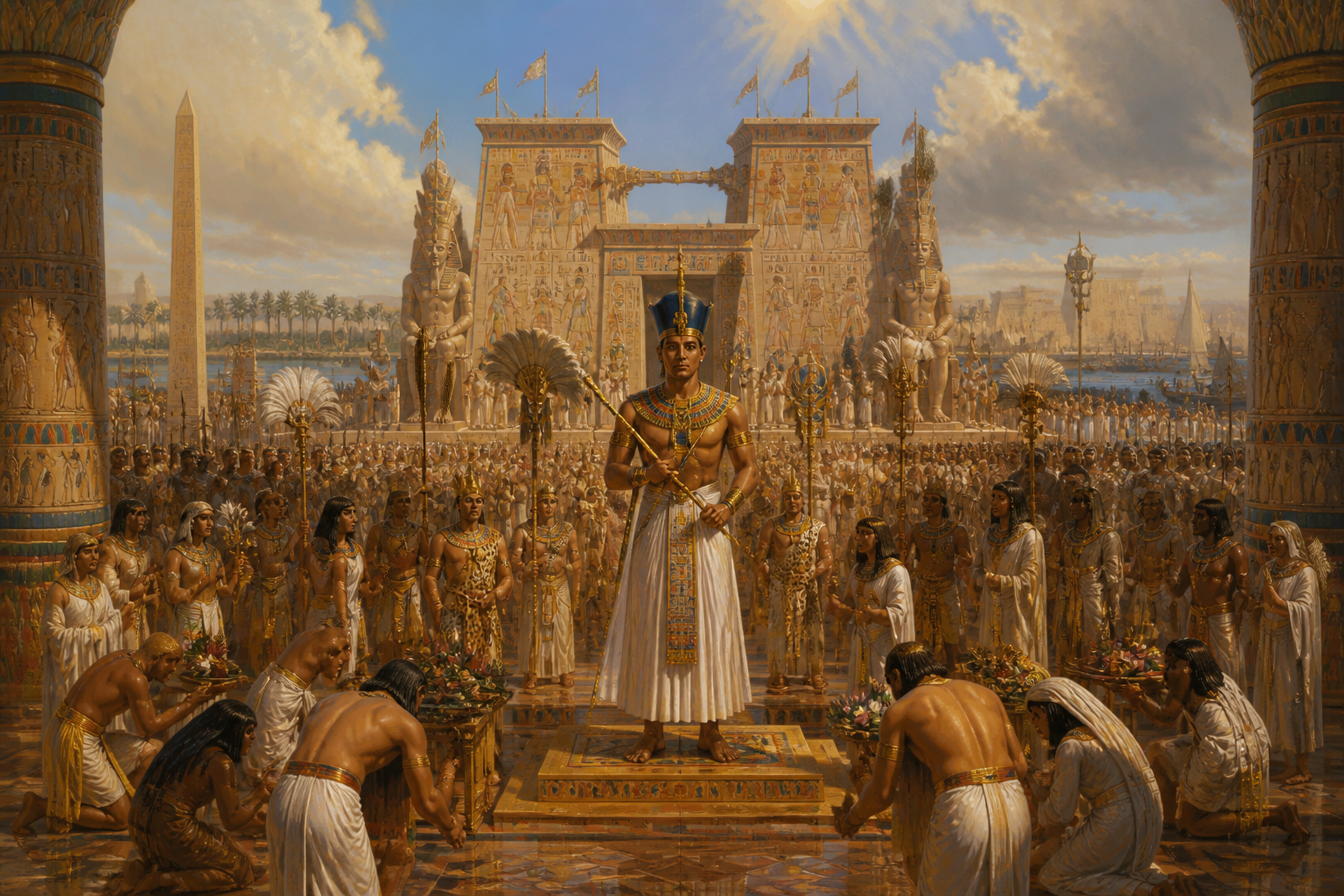
Page 1 — A New Dawn for Egypt
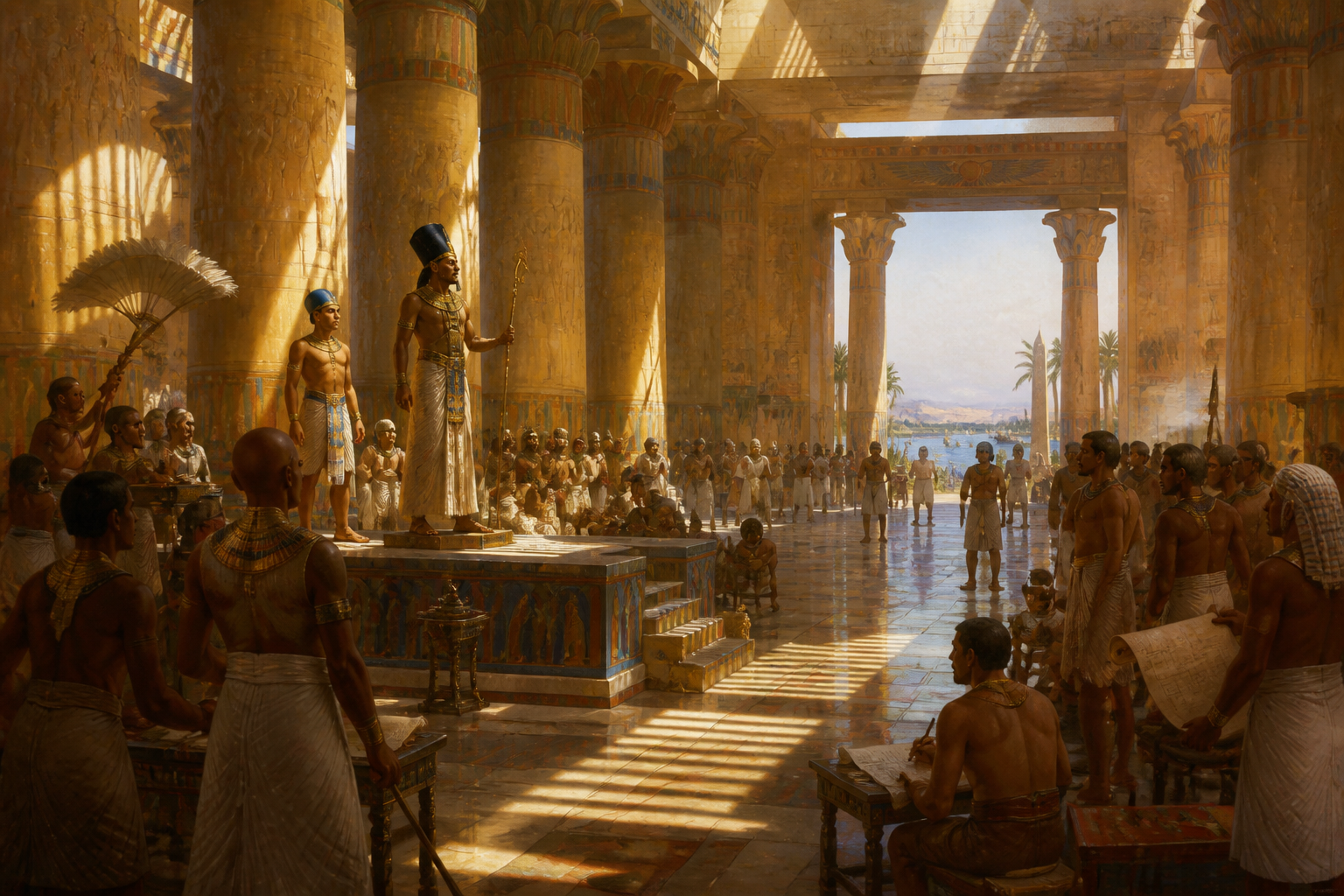
Seti I ascended to the throne during a time of reclamation, aiming to restore the lost magnificence of Egypt. His reign marked a renaissance of power, as he embarked on a campaign to regain the empire’s territories in the Levant and reassert Egypt's influence. Seti’s court was filled with notable figures, including his son and heir, Ramesses II, who stood by him as a keen learner. His father, Ramesses I, had laid the foundation for this resurgence, and now Seti was poised to expand and solidify it. His queen, Tuya, provided counsel and grace, while Nefertari, the wife of Ramesses II, graced the court with her beauty and wisdom. Seti focused not only on military triumphs but also on cultural achievements, leading to the construction of unparalleled architectural marvels such as the Great Hypostyle Hall at Karnak. Through these efforts, Seti I not only reclaimed lands but also redefined the grandeur of Egyptian art and culture, leaving a legacy of finely carved reliefs that would inspire generations.
"We shall reclaim what is ours," Seti I declared, his voice resolute as he addressed his court. "Egypt shall rise anew, and our legacy will be etched in stone for all eternity."
Page 2 — The Great Hypostyle Hall
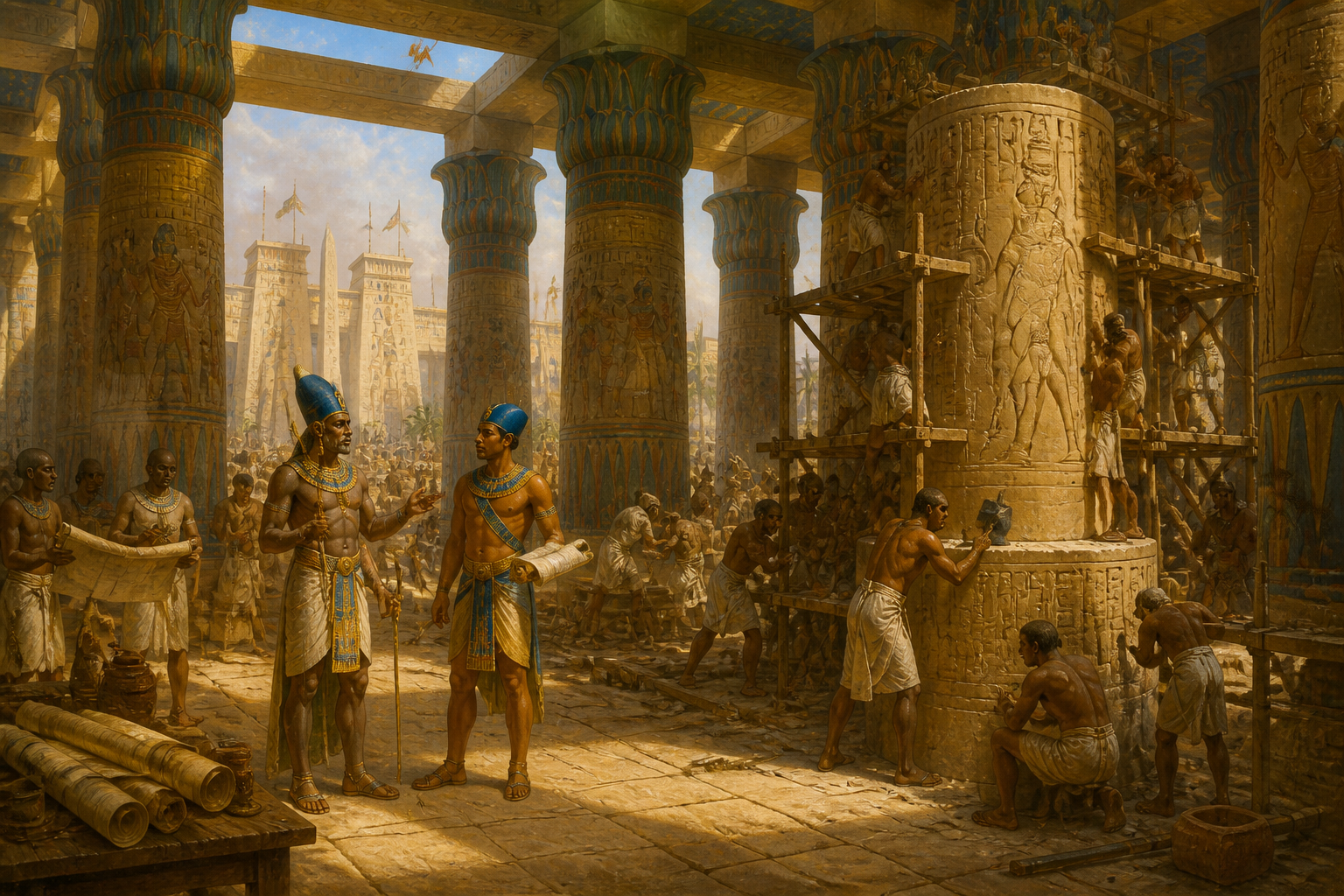
In the heart of Karnak, Seti I oversaw the construction of the Great Hypostyle Hall, an extraordinary architectural feat symbolizing the might and vision of his reign. The hall, with its 134 immense columns, was designed to be a place where the divine and mortal realms intertwined. Underfoot, the sandy stone was warm, speaking of the scorching Egyptian sun. Craftsmen, overseen by Seti’s chief architect, tirelessly carved intricate hieroglyphs and battle scenes into the stone, each stroke adding to the narrative of power and piety. Ramesses II, now a young man aspiring to ascend, stood with his father, learning the significance of these monuments. The hall's design reflected celestial order, aiming to appease Amun and fortify Egypt's spiritual core. As dawn broke, light danced through the columns, illuminating the vibrant painted reliefs, each telling of gods and kings. Seti's determination was evident, ensuring every detail reflected the glory of Egypt, an eternal testament to divine favor and earthly dominion.
"Father, these columns stretch to the heavens," marveled Ramesses II, his gaze fixed upward. "Indeed," replied Seti I, "they are the pillars upon which our legacy stands."
Page 3 — Campaigns in the Levant
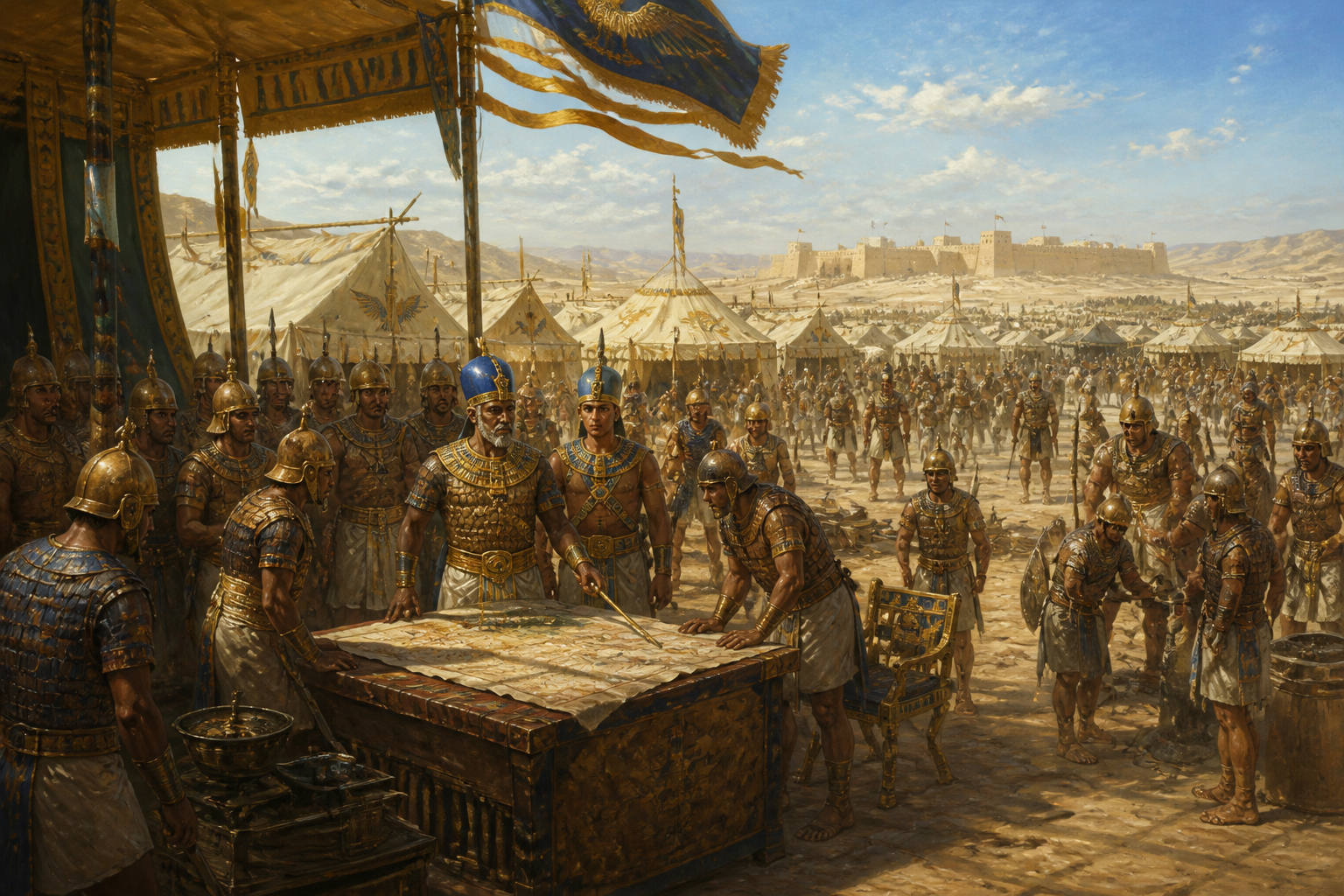
Seti I's military campaigns in the Levant were strategic and fierce, pivotal in restoring Egyptian dominance. The pharaoh's army was a disciplined force, expertly trained and commanded with unwavering resolve. As dawn broke over the Levantine sands, the camp was alive with the rhythm of preparation: soldiers donned their leather armor, polished shields glistening in the rising sun. Seti’s generals, seasoned warriors, orchestrated the complex maneuvers, while Seti himself, clad in the khepresh, stood resolute, embodying leadership. The Levant, once lost to the chaotic decline of Akhenaten’s rule, now felt the might of a unified Egypt under Seti I. His tactics were swift and decisive, reclaiming lost territories and securing vital trade routes. Ramesses II rode alongside, learning the art of war from his father. With each victory, Seti's reputation as a formidable warrior grew, and Egypt's borders expanded, securing not only land but also the prosperity of its civilization.
"Our strength is in our unity," Seti I proclaimed to his troops, his voice carrying over the camp. "Today, we reclaim what is ours. Let our enemies tremble at the sight of our banners."
Page 4 — The Temple of Osiris
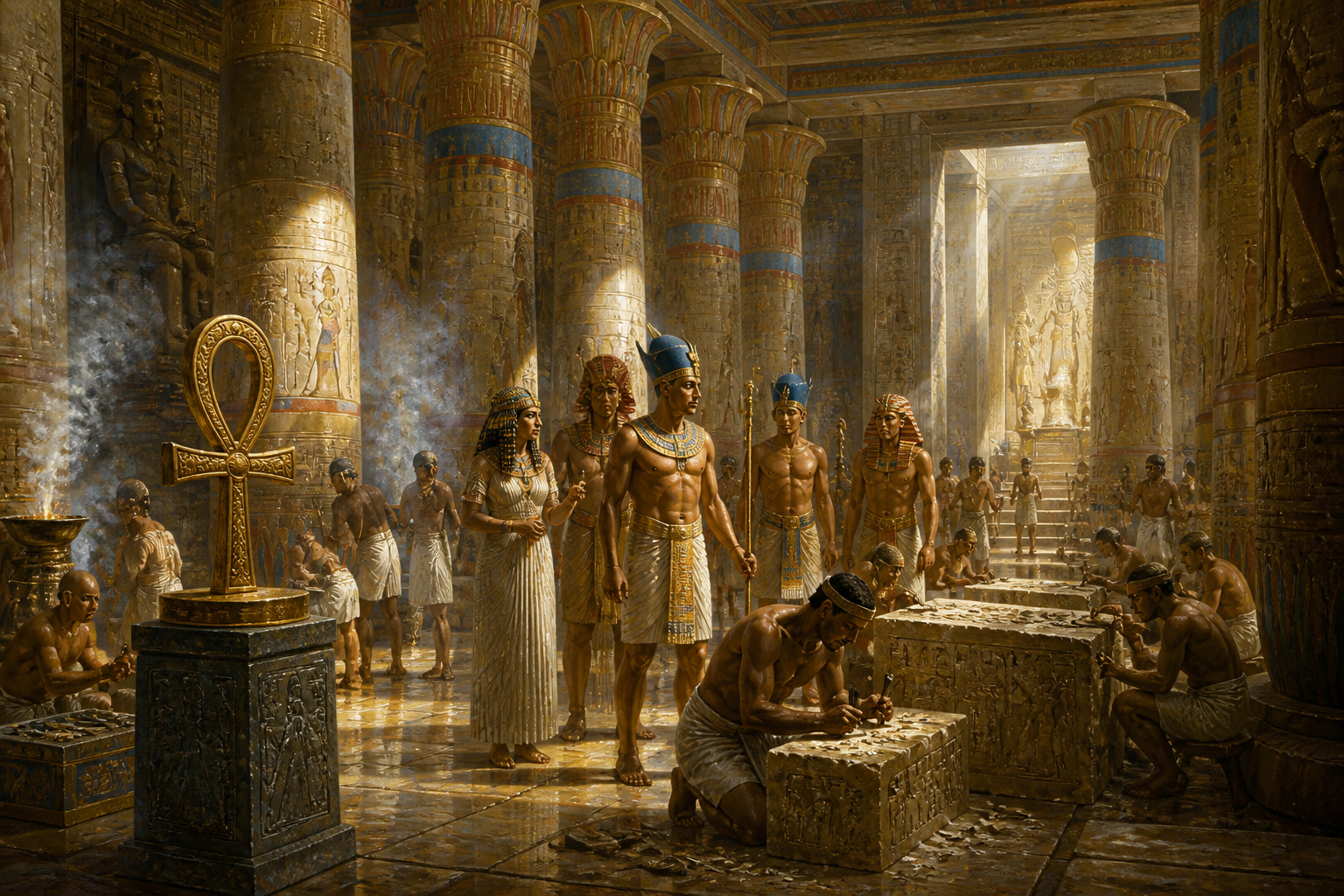
At Abydos, Seti I commissioned the Temple of Osiris, a sacred monument dedicated to the god of the afterlife. The temple was a masterpiece of sacred architecture, reflecting Seti's piety and commitment to the gods. Craftsmen worked tirelessly, their tools clinking against the limestone, creating intricate carvings that depicted scenes of divine mythology. The aroma of incense filled the air, as priests performed rituals to consecrate the ground. Seti, in a pristine white kilt and gold sash, stood amidst the activity, overseeing the progress. The temple's walls came alive with vibrant representations of gods and pharaohs, symbols of royal legitimacy and divine favor. His son, Ramesses, absorbed the significance of these sacred rites, understanding the role of faith in governance. By building this temple, Seti not only honored Osiris but also ensured his legacy in the spiritual realm. The temple would stand as a testament to his devotion, a place where mortals could connect with the divine for centuries to come.
"Abydos shall be the heart of our eternal bond with the gods," Seti I declared, his voice resonating within the temple walls. "Here, Osiris shall guide our spirits."
Page 5 — Training the Heir
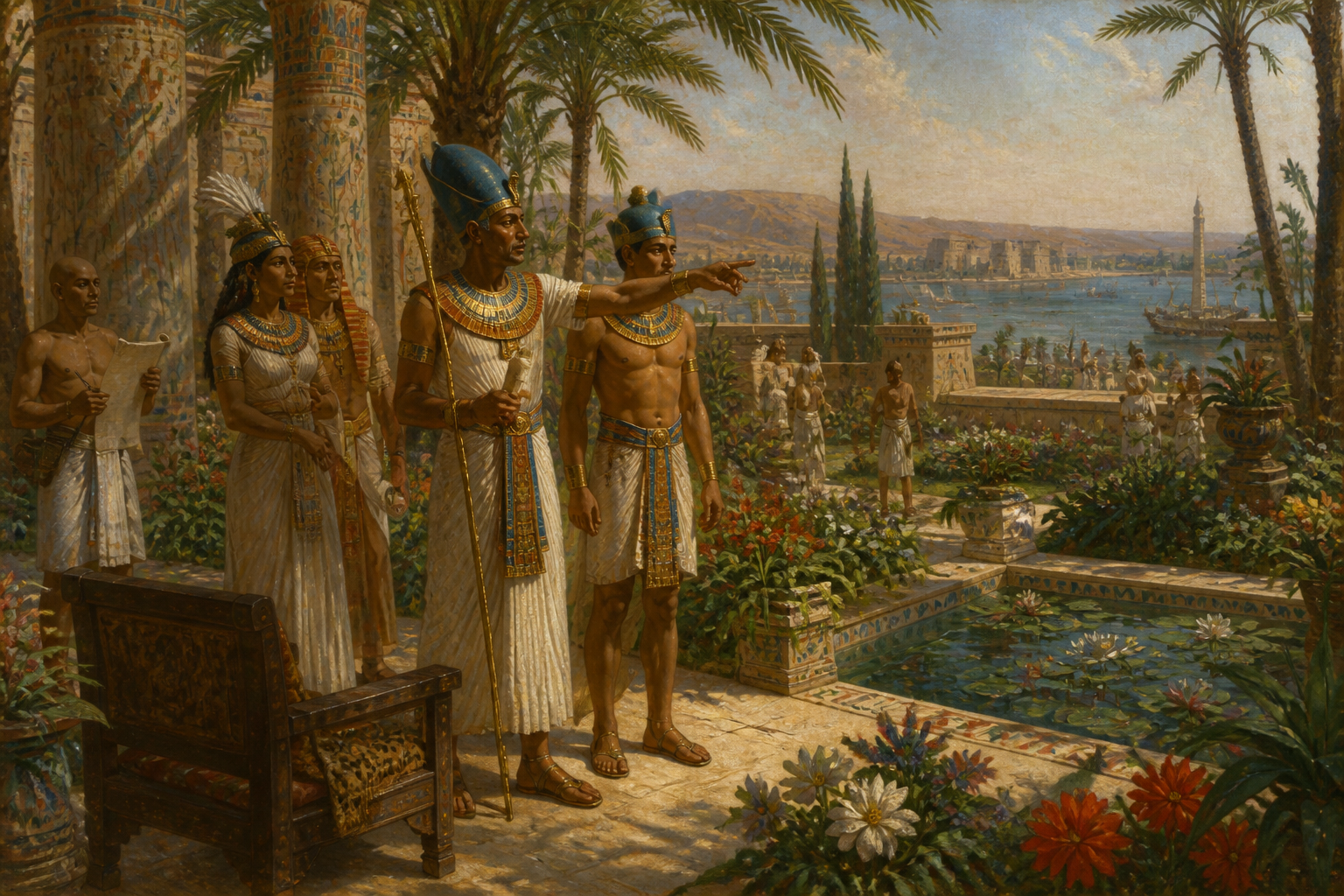
The training of Ramesses II under his father Seti I was a matter of royal legacy and future stability. Within the royal palace, Seti imparted wisdom and knowledge to his son, ensuring the continuation of his lineage and the prosperity of Egypt. The palace gardens, with their fragrant blossoms and tranquil water features, provided a serene backdrop. Seti, in a simple linen robe, shared counsel on the nuances of leadership, from the importance of diplomacy to the art of warfare. Ramesses listened intently, absorbing lessons that would later shape him into one of Egypt’s greatest pharaohs. The young prince practiced martial skills under the supervision of seasoned generals, while scribes chronicled his progress. Seti’s investment in Ramesses was clear; he was not merely training a successor, but nurturing a legacy. This relationship between father and son laid the groundwork for a reign that would be marked by expansion and grandeur, ensuring Egypt’s place in history for generations.
"Wisdom is our greatest weapon," Seti I advised, guiding Ramesses through a scroll of statecraft. "Learn well, my son, for Egypt’s future rests upon your shoulders."
Page 6 — Expanding Horizons
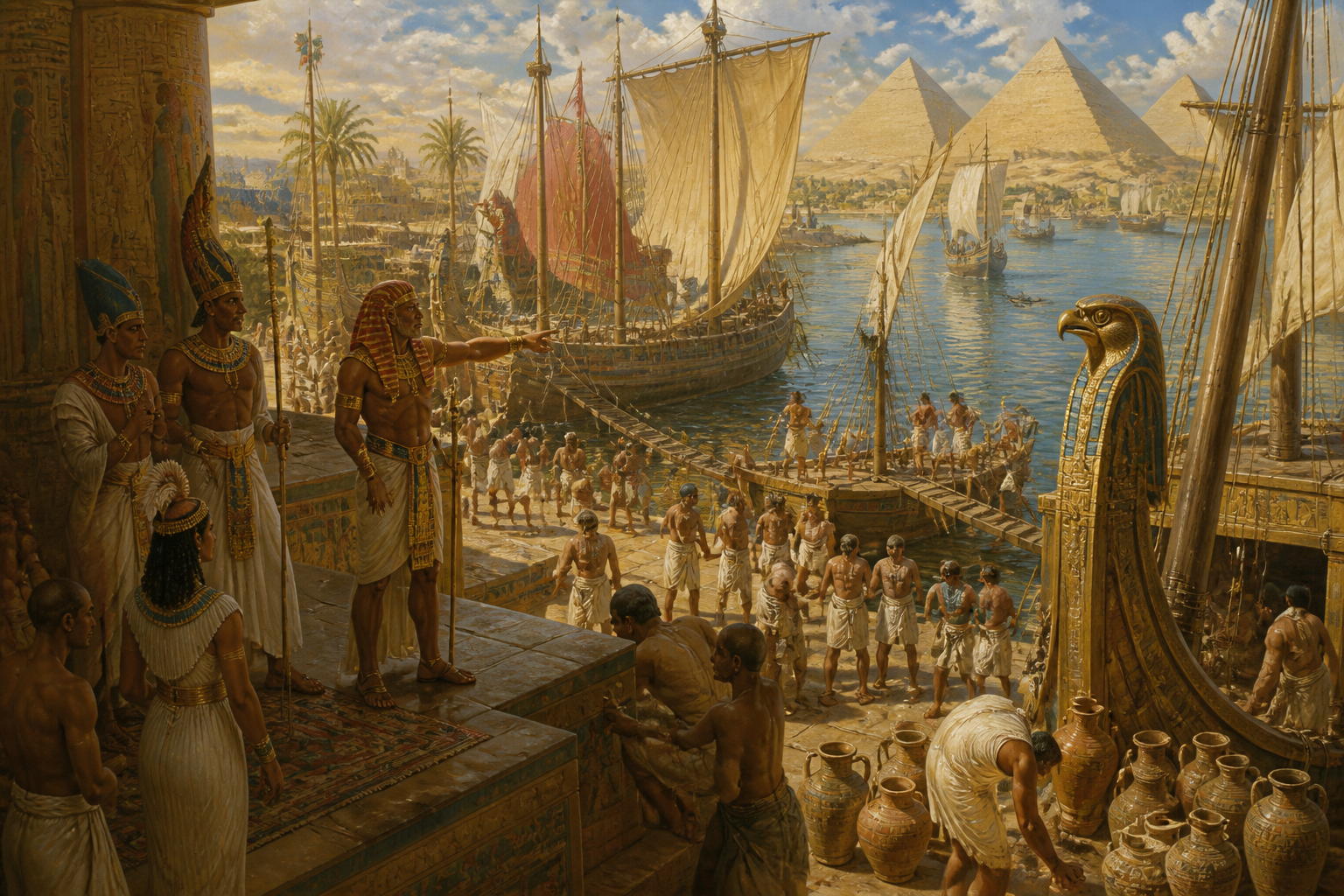
Seti I's vision for Egypt extended beyond immediate borders, leading to diplomatic ties and trade with distant lands. In the bustling shipyard of Memphis, ships laden with exotic goods awaited passage down the Nile. Seti, dressed in a striped headcloth and gold-embroidered kilt, surveyed the vibrant scene, where merchants haggled over quantities of ebony and incense. The air was rich with the aroma of spices and the sound of hammers on wood as carpenters repaired vessels. Seti’s emissaries negotiated with foreign dignitaries, establishing alliances and securing trade routes vital for Egypt’s prosperity. Ramesses, accompanying his father, observed these interactions, learning the nuances of diplomacy. Beyond the shipyard, the pyramids stood sentinel against the clear blue sky, timeless witnesses to trade’s power in cementing Egypt's position on the world stage. Seti’s efforts in expanding Egypt’s geopolitical influence ensured a steady flow of resources, enriching the state and solidifying its legacy.
"Trade is the lifeblood of our land," Seti I explained to his son. "Diplomacy must flow as swiftly as the Nile, bringing prosperity and peace."
Page 7 — A Legacy in Stone
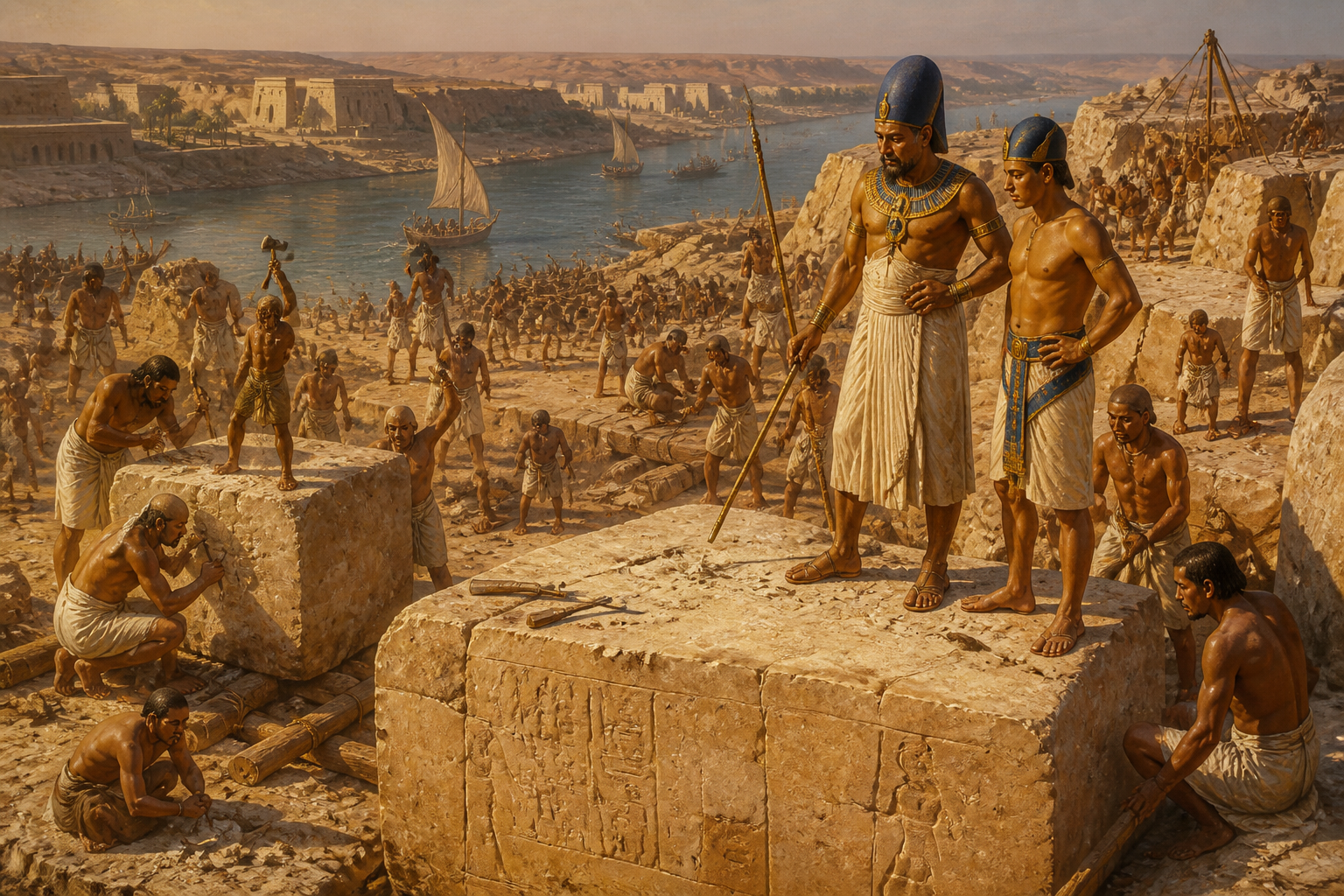
Seti I's reign left an indelible mark on Egypt through the creation of monumental structures and exquisite art. At the quarry in Aswan, colossal blocks of stone awaited transport to sites across the nation. The quarry rang with the sound of chisels and the shouts of workers, laboring under the gaze of overseers. Seti, in a plain linen garment and simple sandals, walked among them, inspecting the stones' quality for his ongoing projects. His commitment to architectural excellence extended beyond mere construction; it was a testament to his belief in the enduring nature of stone. Ramesses, already showing signs of his future greatness, stood by, learning the importance of foundation and legacy. At Seti's direction, these stones would become the walls and pillars of temples, the canvases for the most intricate carvings in Egyptian history. The legacy of Seti I was not only his military or diplomatic achievements but also the tangible testaments of his rule that would endure for millennia.
"These stones will speak of our time long after we are gone," Seti I mused, his eyes tracing the striations of a massive block. "Each tells a story of our reign."
Page 8 — The Festival of Opet
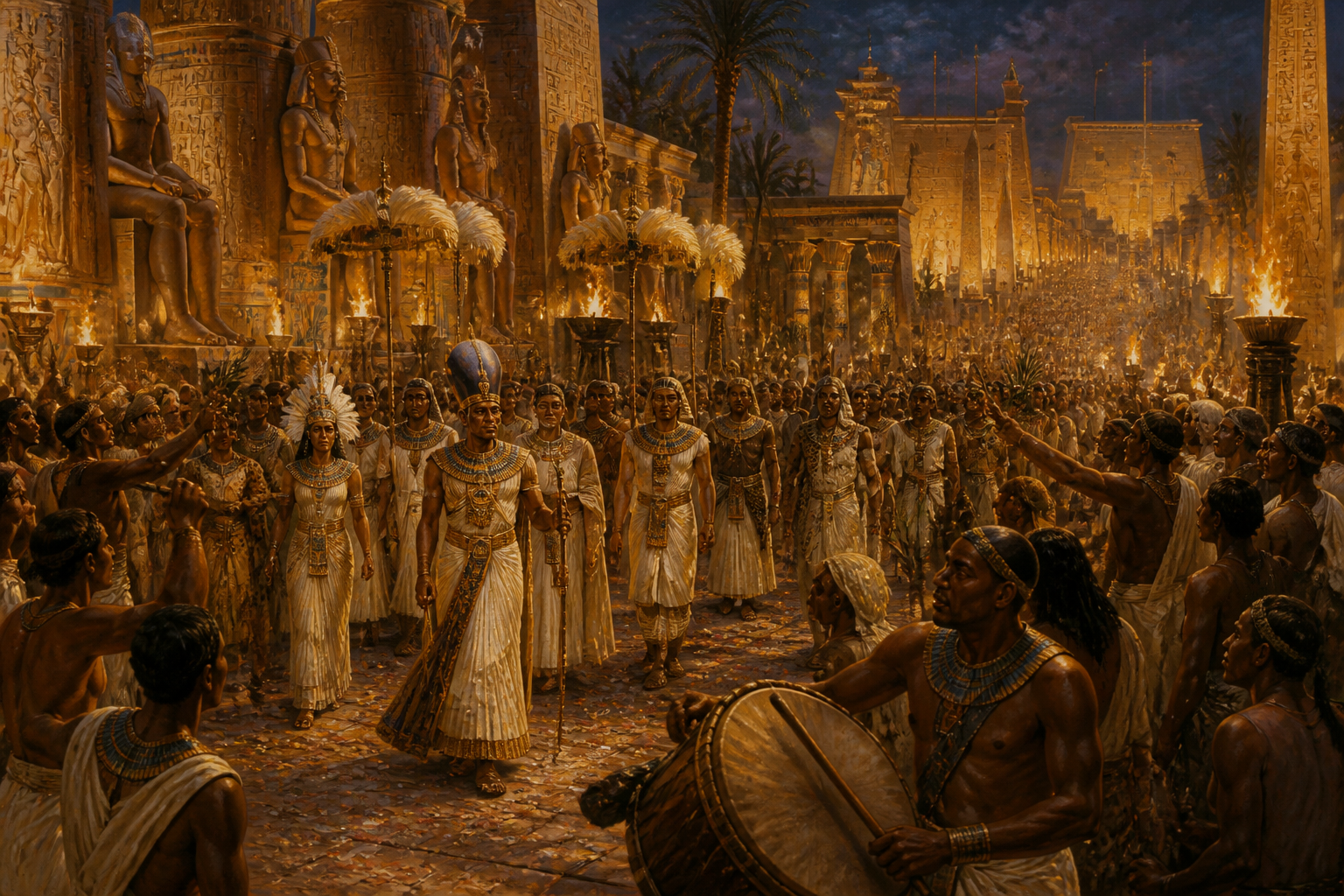
The Opet Festival in Thebes was a grand event celebrating the gods and renewing the divine mandate of the pharaoh. As twilight descended, the city thrummed with excitement and anticipation. Streets lined with celebrants and fragrant garlands, the air filled with music and chanting. Seti I, in ceremonial attire of an ornate white kilt and plumed headdress, led the procession through the avenues towards the temple of Luxor. Priests, swinging censers of incense, surrounded him, while lines of dancers and musicians followed, their movements synchronized in joyous homage. The fragrance of lotus blossoms mingled with the incense, enveloping the crowd. Ramesses, alongside his father, participated in rituals that underscored the pharaoh's divine connection. Seti’s participation in this festival was not only an act of devotion but also a reaffirmation of his rule, reinforcing his bond with the gods and the people of Egypt. The festival was a vibrant testament to the unity and spiritual life of the kingdom.
"In harmony with the divine, we find our strength," Seti I proclaimed, his voice resonant against the rhythm of drums. "Today, we honor the gods and celebrate our unity."
Page 9 — The Shadows of Amarna
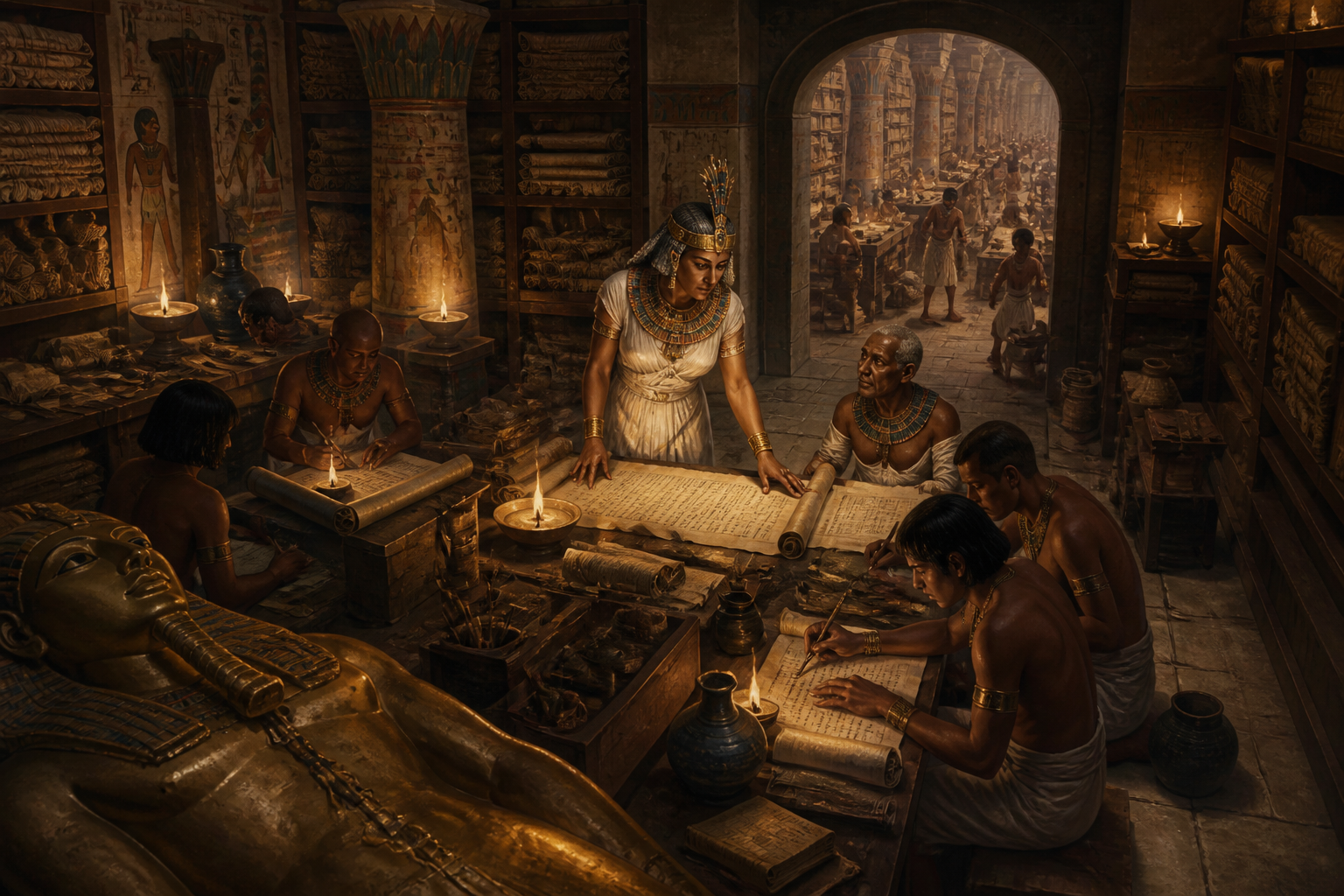
Seti I's reign was shadowed by the remnants of the Amarna Period, a time of upheaval and religious change under Akhenaten. Though the monuments and worship of Aten had been dismantled, their memory lingered in the minds of the people. In the archives of Thebes, Seti, surrounded by scribes, examined papyri and artifacts from this tumultuous era. He wore a simple sheath dress, symbolic of his humility before the gods. His mission was clear: to erase the disruptions caused by Akhenaten and restore the traditional pantheon. Ramesses, observing the weight of history upon his father, understood the importance of continuity and stability. The room was thick with incense and the murmur of scribes recording his words. Seti's efforts to reestablish the old ways were instrumental in returning Egypt to its former glory, securing the trust and faith of its people. The unyielding resolve of Seti I ensured that the mistakes of the past would not overshadow the future of his nation.
"The gods have returned to their rightful place," Seti I declared, his voice unwavering. "In their favor, we find our strength and path forward."
Page 10 — The Eternal Legacy
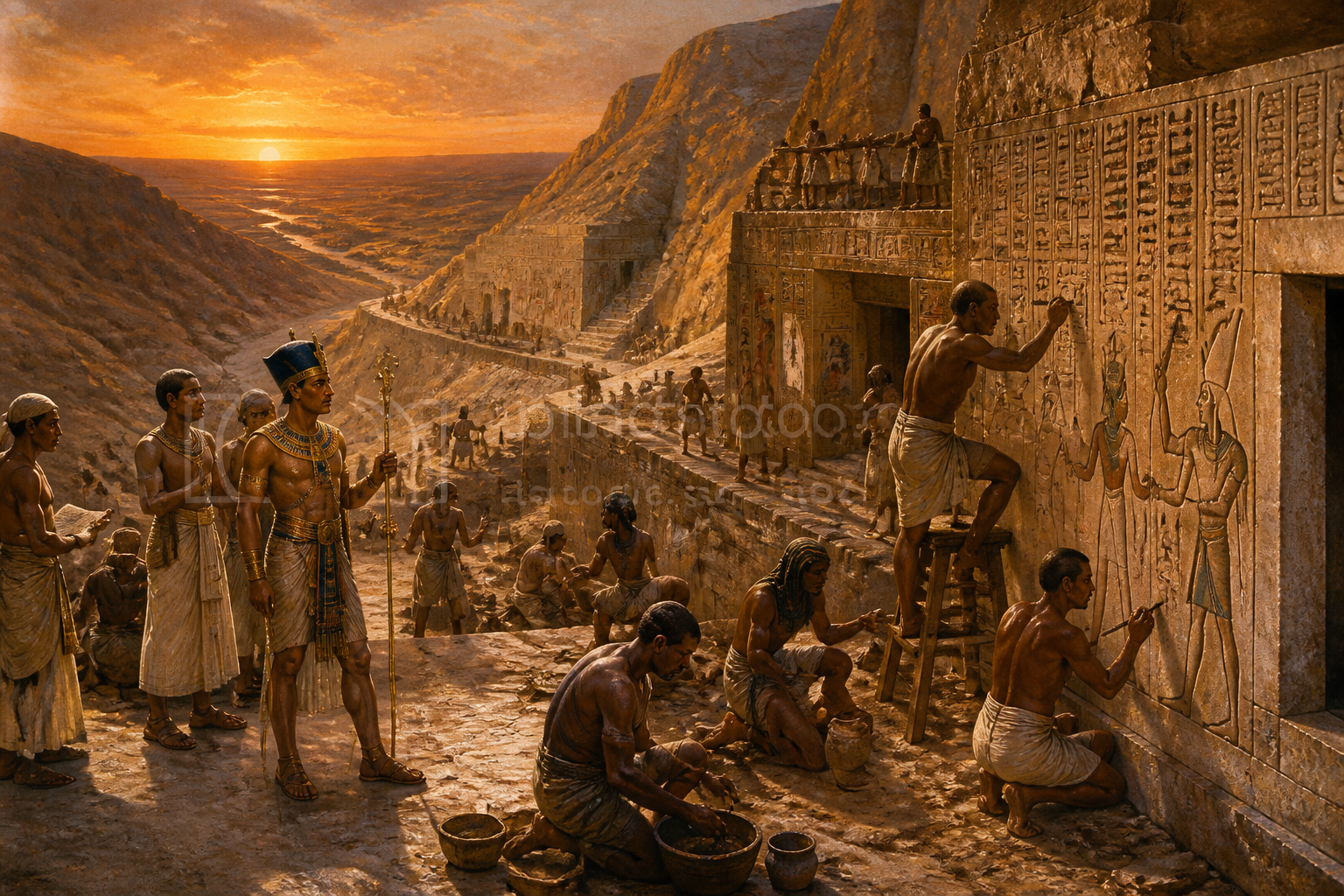
As Seti I entered the final years of his reign, his focus shifted towards securing his legacy and ensuring a seamless transition of power to Ramesses II. In the sacred valley of kings, Seti oversaw the construction of his grand tomb, a testament to his life and reign. The valley echoed with the sound of chisels and the murmur of artists depicting his journey to the afterlife. Seti, in a robe adorned with symbols of eternity, walked amongst the artisans, offering guidance and detailing his vision for the afterlife's journey. His presence was a reminder of the timeless bond between ruler and divine. Ramesses, by now a capable leader, absorbed his father’s wisdom, preparing to carry forward the torch of Egyptian rule. As the sun set beyond the cliffs, a golden light bathed the valley, reflecting the grandeur of Seti’s achievements. His reign, marked by restoration and innovation, ensured that Egypt's legacy would endure, carved in stone and remembered for eternity.
"Our deeds are written in stone, to speak for us for eternity," Seti I mused as he observed the craftsmen at work. "May Egypt remember us always."
About this story
- Audience: general readers
Read Wonder Egypt on your phone
Wonder Egypt is available on Android. Get Wonder Egypt on Google Play.