The Assyrian Sack of Thebes
The Assyrian Sack of Thebes — an illustrated history story. 10 illustrated pages, free to read on Wonder Egypt.
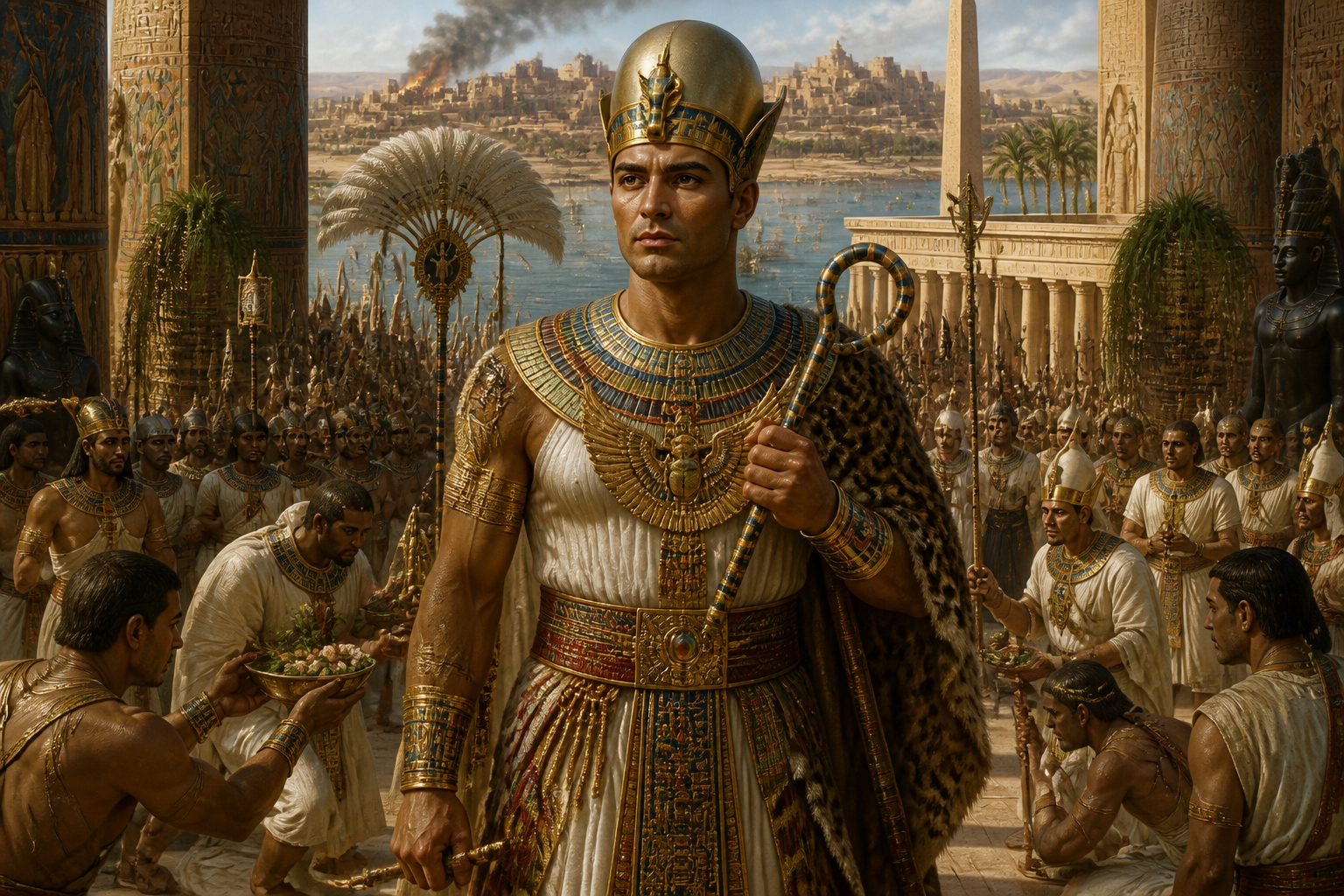
Page 1 — The Fall of Thebes
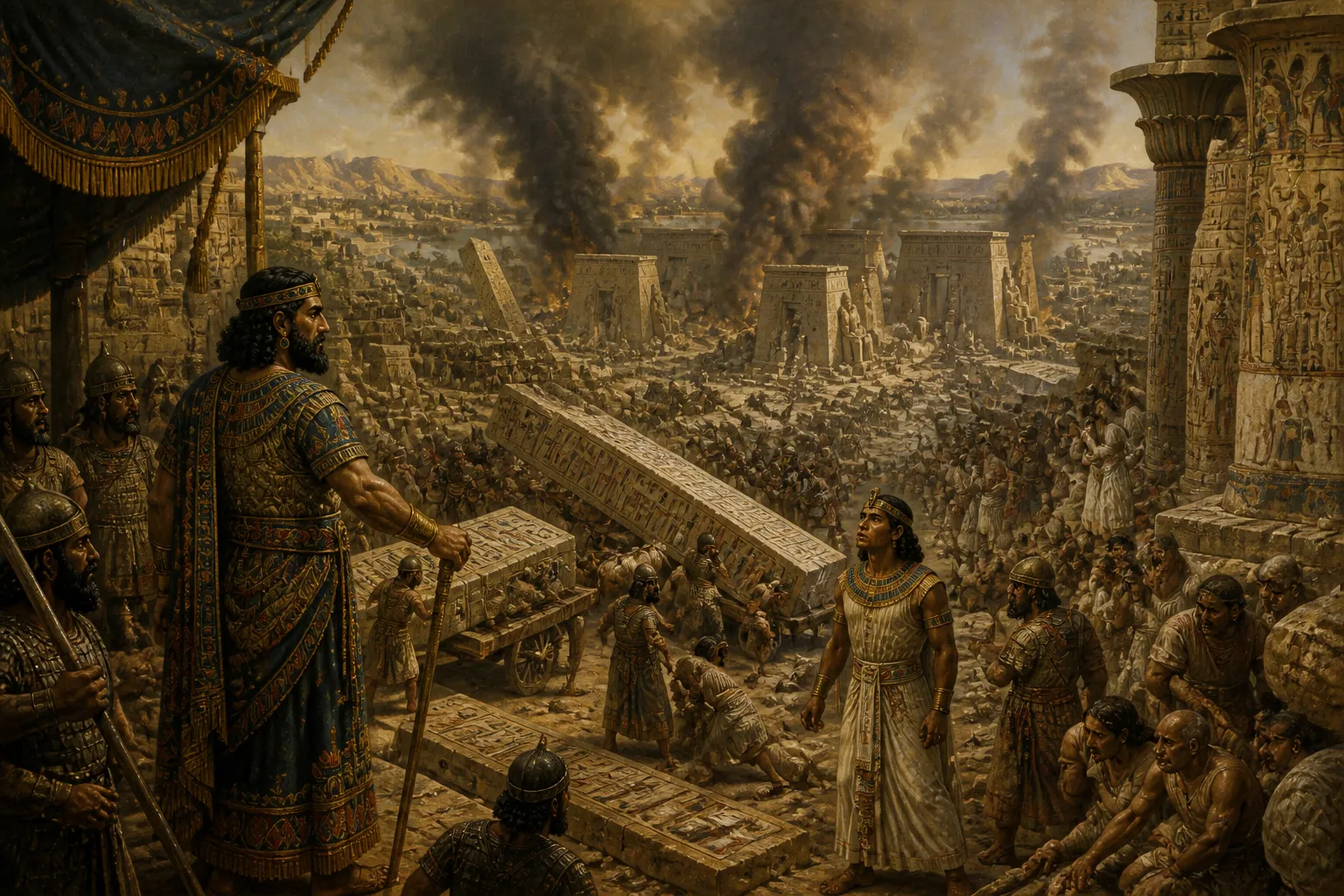
Thebes, once the luminary of Egyptian civilization, now faces its darkest hour. From the grand avenues lined with massive stone statues, a thick haze of smoke spirals skyward. The sun casts an eerie glow through the haze, creating ghostly silhouettes of the city's once-proud monuments. Amid the clamor of destruction, Ashurbanipal, the Assyrian king, oversees as his forces dismantle the ancient city's splendor. The mighty obelisks of Amun-Ra, symbols of eternal power, are pried from their bases with determined force. In a courtyard draped with the aroma of smoldering incense and the cries of the displaced, Tantamani, the Nubian Pharaoh, stands defiant yet helpless, witnessing the decimation of what once was the heart of Egypt. Thebes, the city that had stood for a millennium, crumbles in mere days, its legacy reduced to memories and ruins.
"Even the great falcon falls," remarks Ashurbanipal, his voice heavy with both triumph and sorrow.
Page 2 — The Nubian Pharaoh's Stand
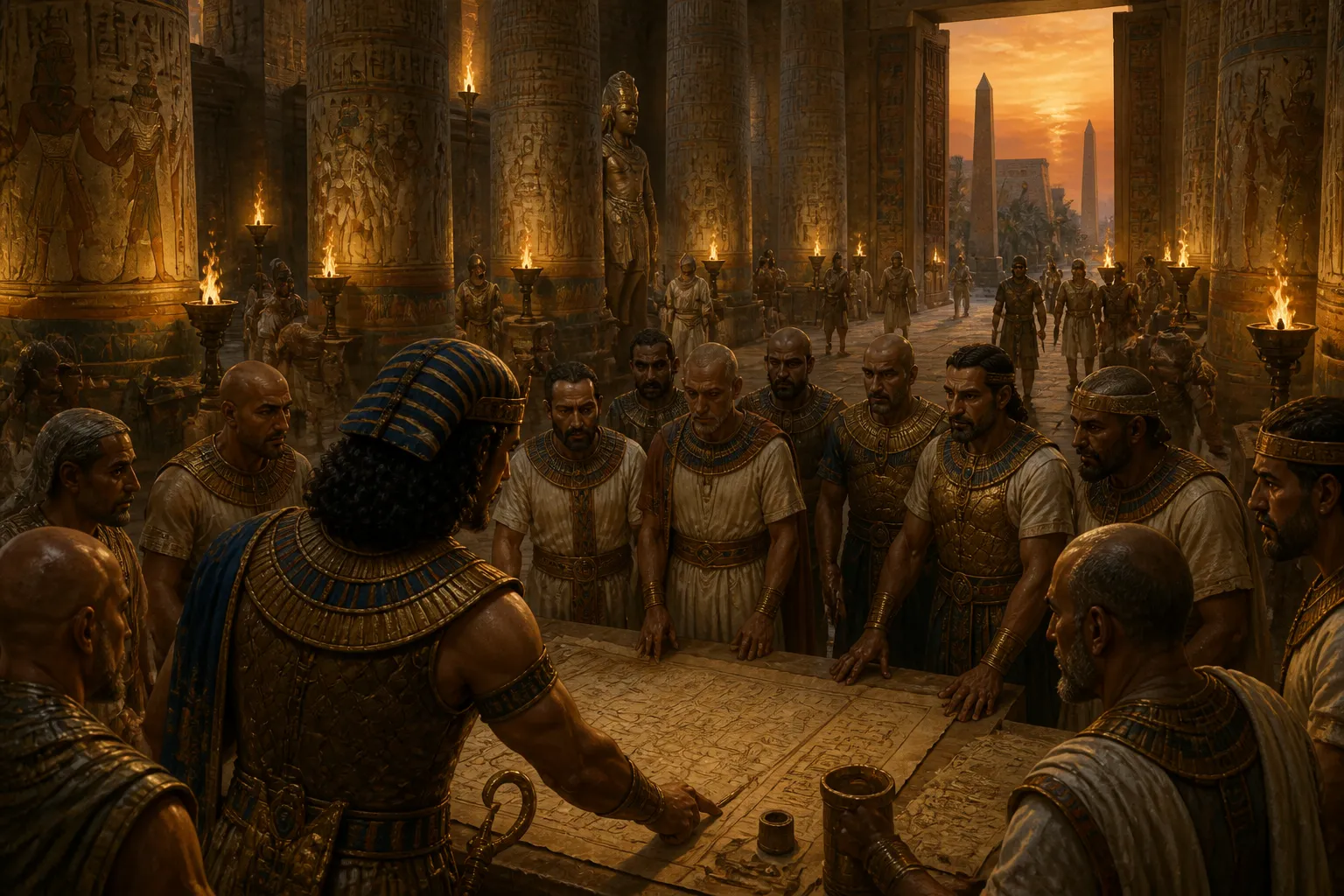
In the opulent halls of the Karnak Temple, Tantamani gathers his loyal generals. The air is thick with tension as he delineates strategies to stem the Assyrian advance. The Pharaoh, draped in gold-trimmed linen, eyes burning with determination, embodies the last hope for a region under siege. His generals, cloaked in bronze and linen, nod in respectful unison, their expressions reflecting a mix of fear and resolve. The temple's colossal columns, etched with hieroglyphs of past glories, bear silent witness to their resolve. The flickering torchlight dances upon their faces, casting shadows that mimic the flickering doubt in their hearts. Outside, the distant rumble of enemy chariots grows louder, a grim reminder of the impending confrontation. The once-invincible empire braces for a final stand against its formidable adversaries, their fate hanging precariously in the balance.
"We fight not just for Thebes but for all of Egypt," Tantamani declares, his voice echoing against the stone.
Page 3 — The Assyrian Advance
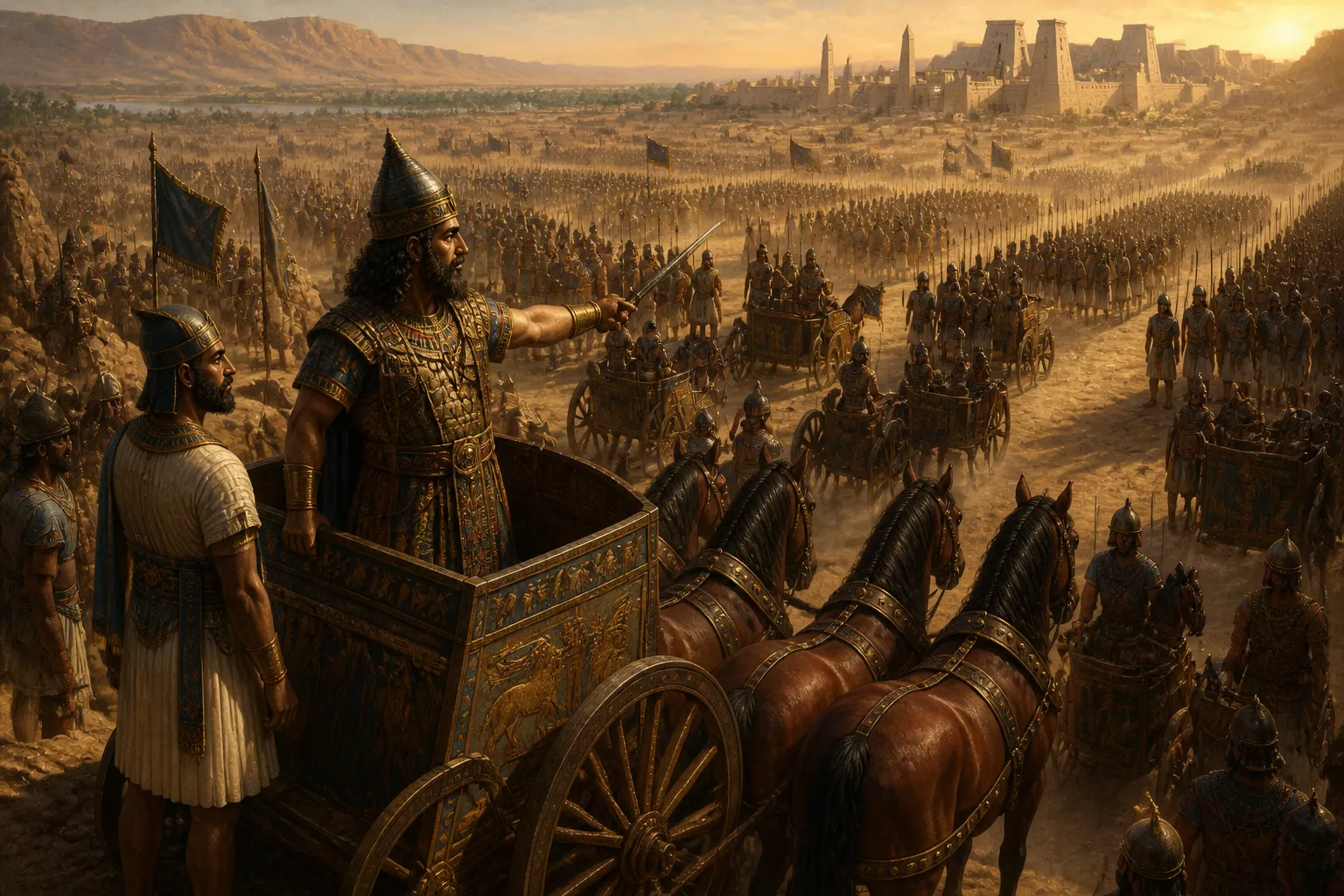
On the dusty terrain outside Thebes, Ashurbanipal's army forms an imposing line. The morning sun glints off their bronze shields, casting long shadows over the land they are set to conquer. The vast desert stretches endlessly, interrupted only by the determined figures of the advancing soldiers. Among them, Ashurbanipal rides in a chariot, clad in elaborately decorated armor, a display of Assyrian might and confidence. At his side, Necho I, now allied with the Assyrians, watches solemnly, his face a mask of contemplation and resignation. The air is dense with anticipation, filled with the clattering of spears and the neighing of horses, the noise a prelude to the chaos to come. As the orders are shouted, the line begins its relentless march towards the city, signaling the inevitable clash of empires, the fate of Thebes hanging in the balance.
"The gods favor us today," Ashurbanipal proclaims, his voice rising over the clamor.
Page 4 — Thebes’ Sacred Treasures
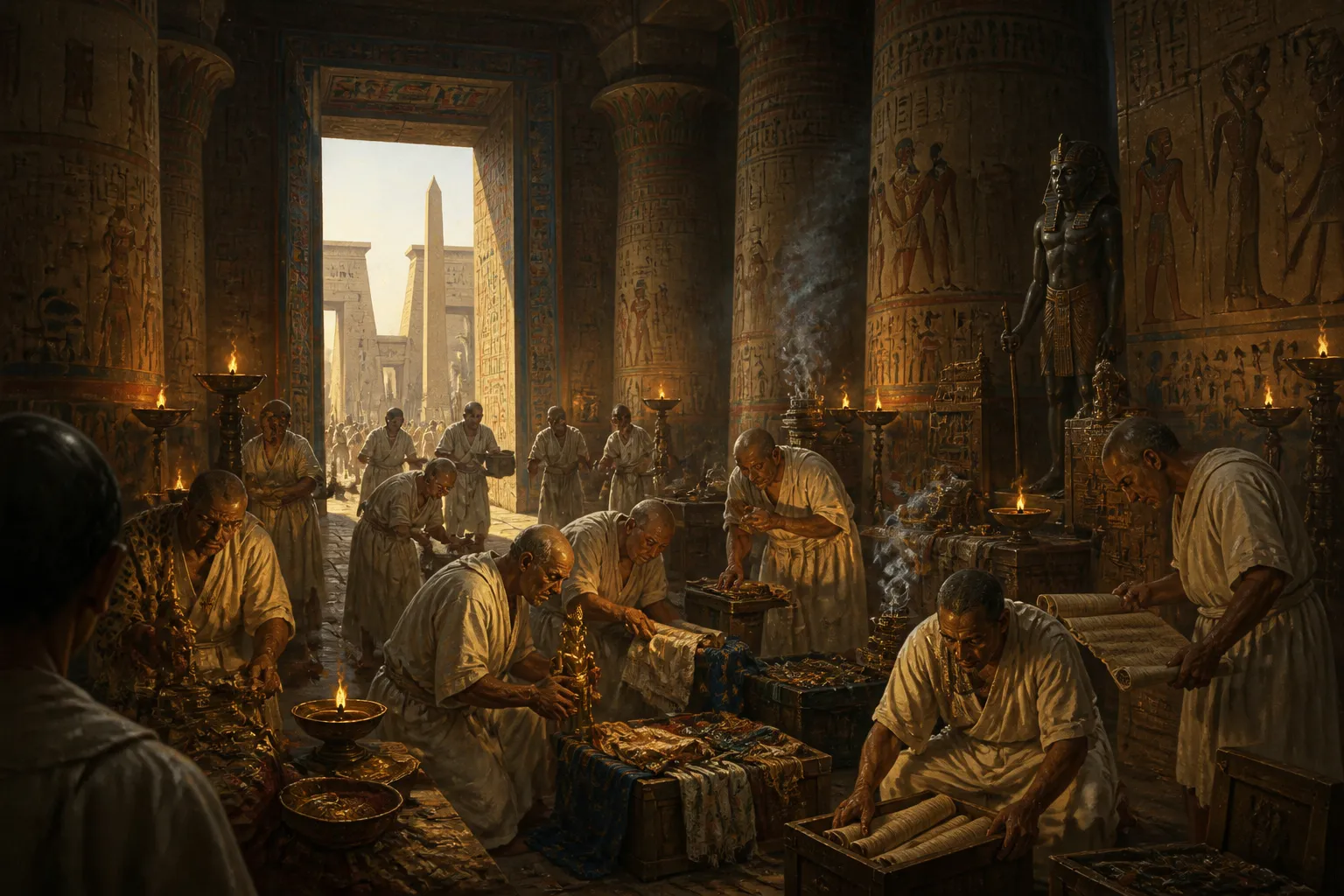
Deep within the storied corridors of the temple of Luxor, priests hurriedly discuss the fate of Thebes’ sacred relics. Their voices, hushed and urgent, echo against the stone walls adorned with ancient carvings of gods and pharaohs. Clad in simple white robes, they pack gold amulets and scrolls of papyrus into woven baskets with practiced care, their fingers moving deftly despite the tension in the air. The elders, faces lined with age and wisdom, murmur prayers to Amun, seeking protection for their treasures in a time of crisis. The rich smell of incense mingles with the mounting anxiety and the faint scent of fear. Outside, the temple’s stone façade glows under the morning light, a final testimony to its spiritual significance and the cultural legacy it holds. The sacred heart of Thebes braces for the storm that approaches, the priests' hearts heavy with the weight of their sacred duty.
"We must save what we can; the gods demand it," insists an elderly priest with unwavering conviction.
Page 5 — Ashurbanipal’s Triumph
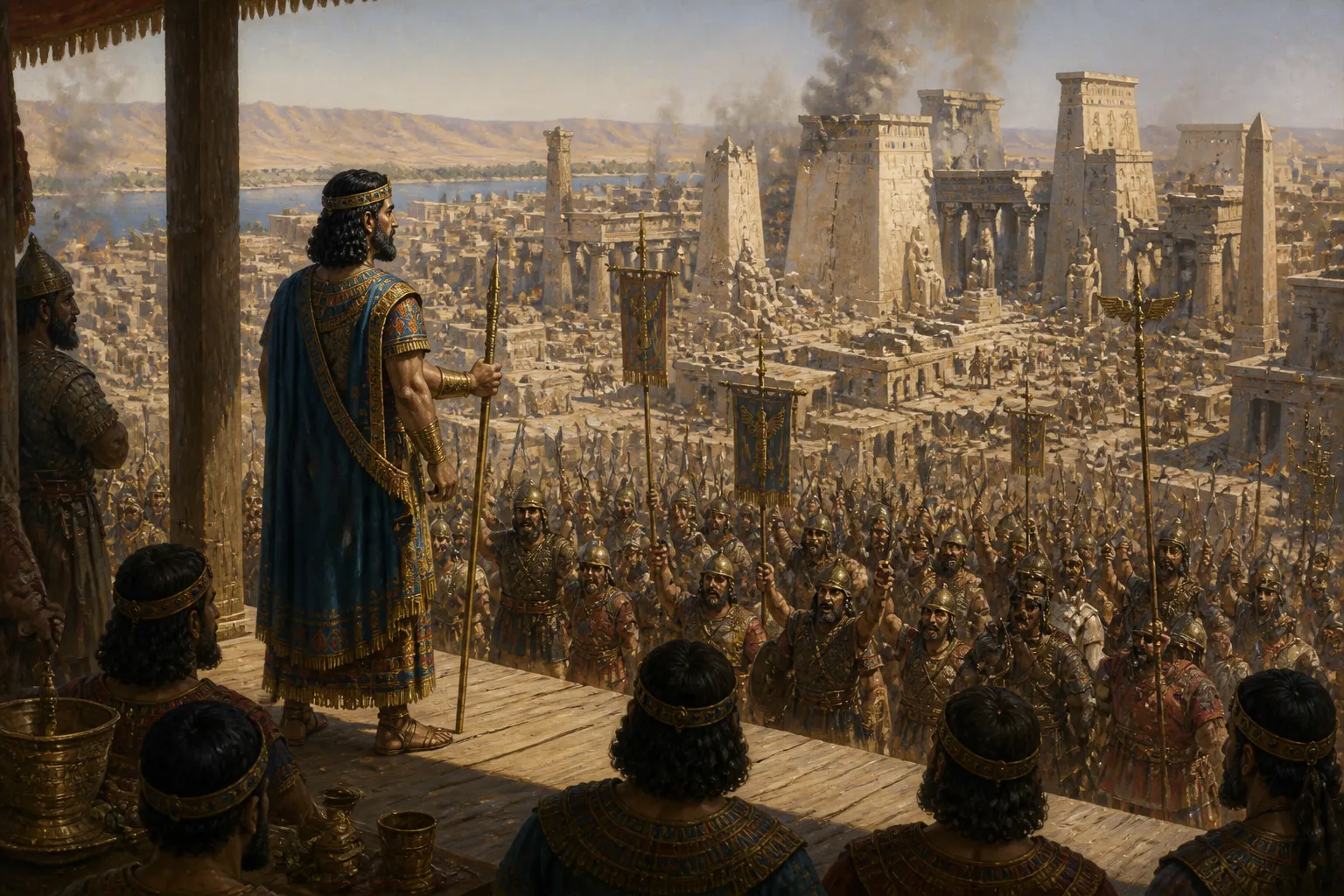
Standing atop a hastily erected platform amidst the conquered city of Thebes, the air is thick with the aftermath of victory and devastation. Ashurbanipal, adorned in the finest ceremonial Assyrian robes embellished with intricate gold patterns and a regal crown that catches the sunlight, surveys the vast spoils at his feet. Obelisks, destined for the distant city of Nineveh, gleam with an almost defiant brilliance in the harsh sun, standing as silent witnesses to the city's fall. Below him, a sea of soldiers, their armor a patchwork of bronze and leather, shout triumphantly, their weapons clattering in a cacophony that fills the air with the sound of conquest. But beneath this jubilant scene lies a note of melancholy, as the weight of Thebes' history echoes mournfully in the ruins below, a somber reminder of a civilization's fall from grace.
"The empire is vast, yet grows still," proclaims Ashurbanipal, his voice resolute.
Page 6 — A Hollow Victory
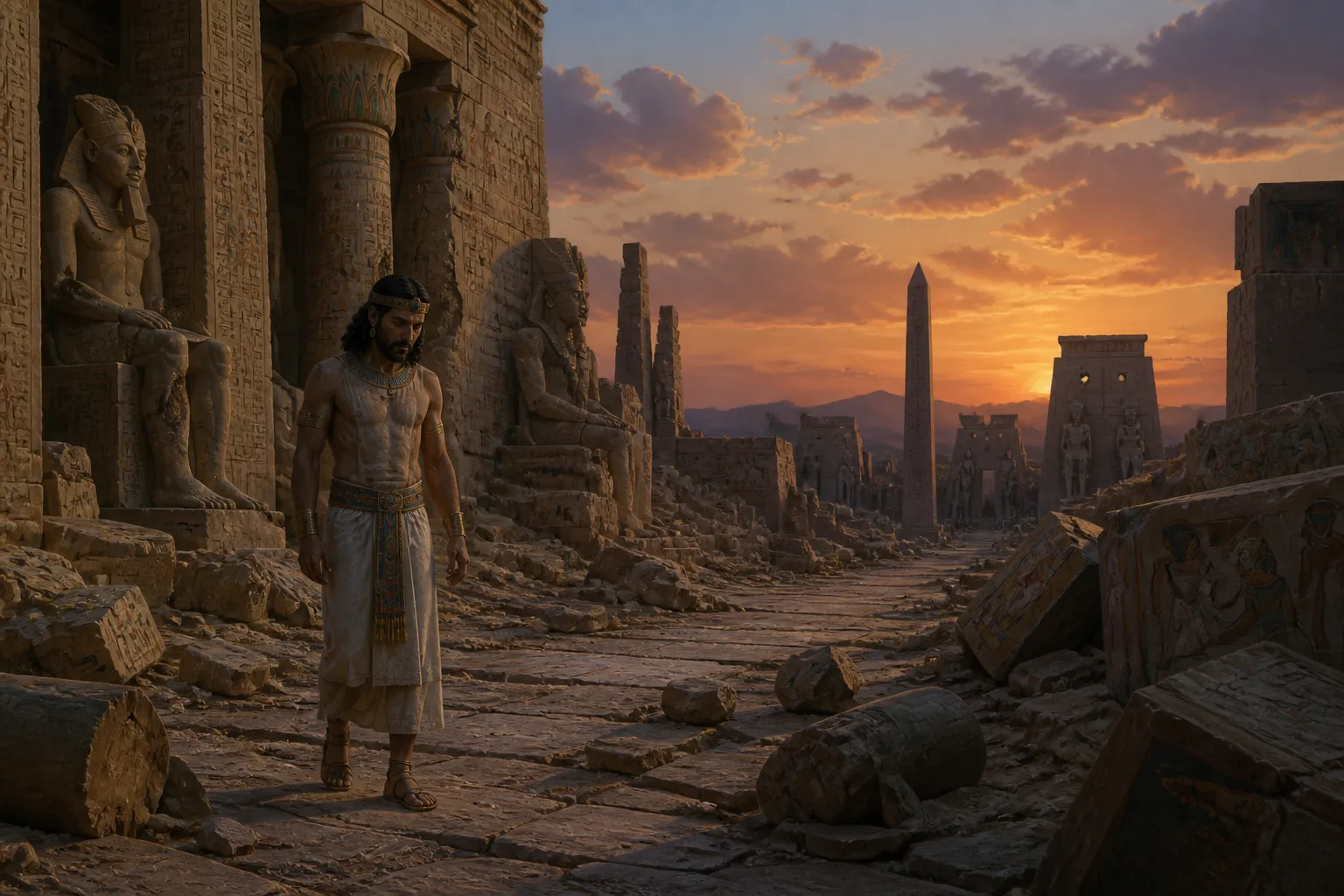
As the sun dips below the horizon, casting a soft twilight glow over the ravaged streets of Thebes, Necho I moves silently through the shadows. The remnants of a once-bustling city speak to the fragility of power and the shifting sands of alliances. Necho, in a simple linen kilt that speaks to his rank yet lacks opulence, walks among the debris of temples and market stalls, their stone structures reduced to rubble. The air is filled with the ghostly echo of those who once thrived here. The silence is punctuated only by the distant cries of those left behind, a testament to the cost of survival over integrity in the turbulent world of empires.
"What becomes of a kingdom without its soul?" Necho mutters, contemplating the desolation.
Page 7 — The Legacy of Ruin
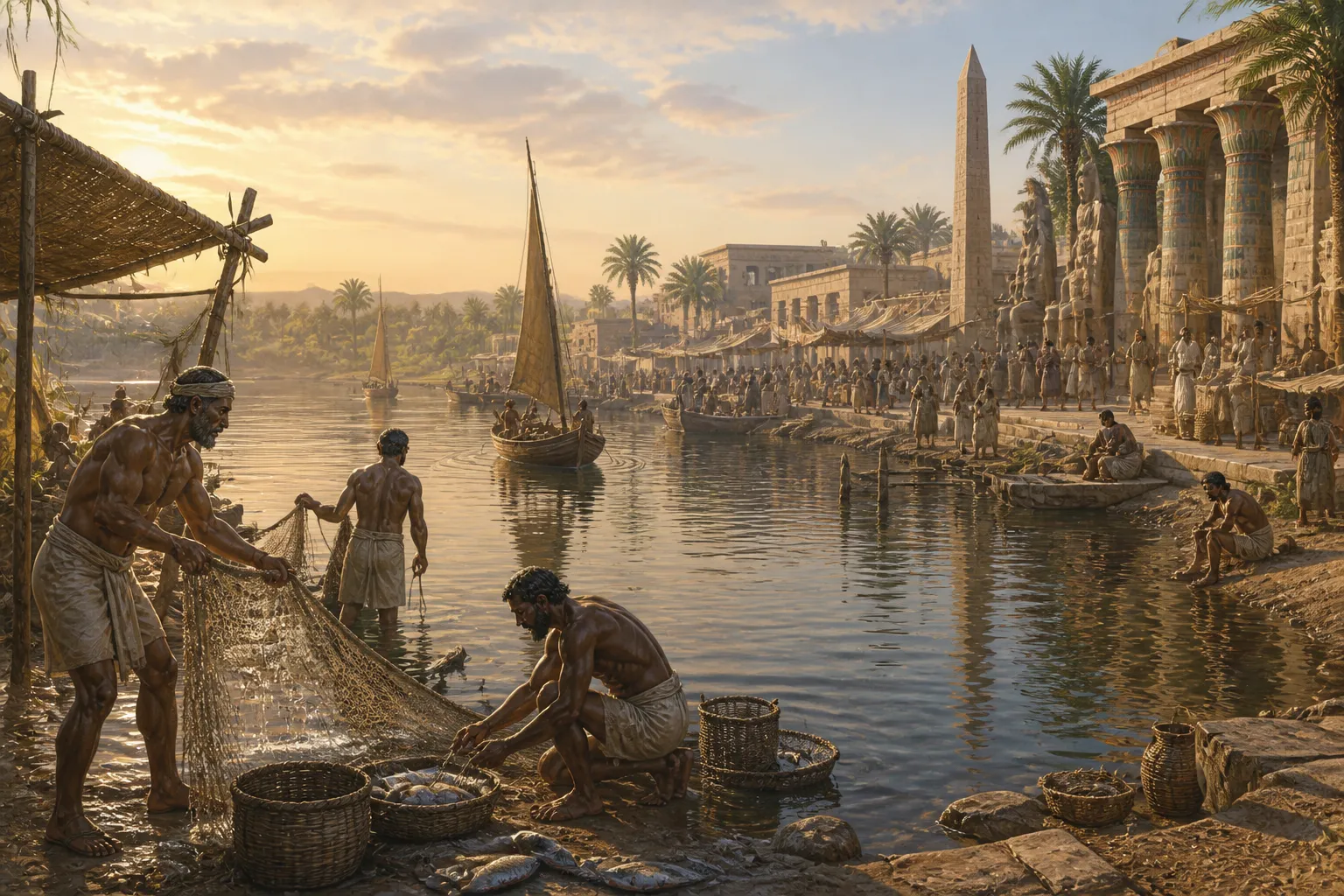
The legacy of Thebes' ruin resonate across the ages, serving as a cautionary tale forever etched in the tapestry of history. On the banks of the Nile, fishermen cast their nets in the early light of dawn, each sweep of the net a reminder of the city's bygone splendor. The nets, heavy with their haul, are imbued with metaphorical weight—the burden of lost heritage and tradition. A century later, in a vibrant Greek agora, chroniclers recount Thebes' downfall, weaving tales that warn of pride and the fleeting nature of power. The obelisks, now standing erect in Nineveh, stand as both trophies and relics, bridging the gap between conquest and legacy.
"The past whispers its truths to those who listen," states a Greek chronicler, pensively.
Page 8 — Thebes Remembered
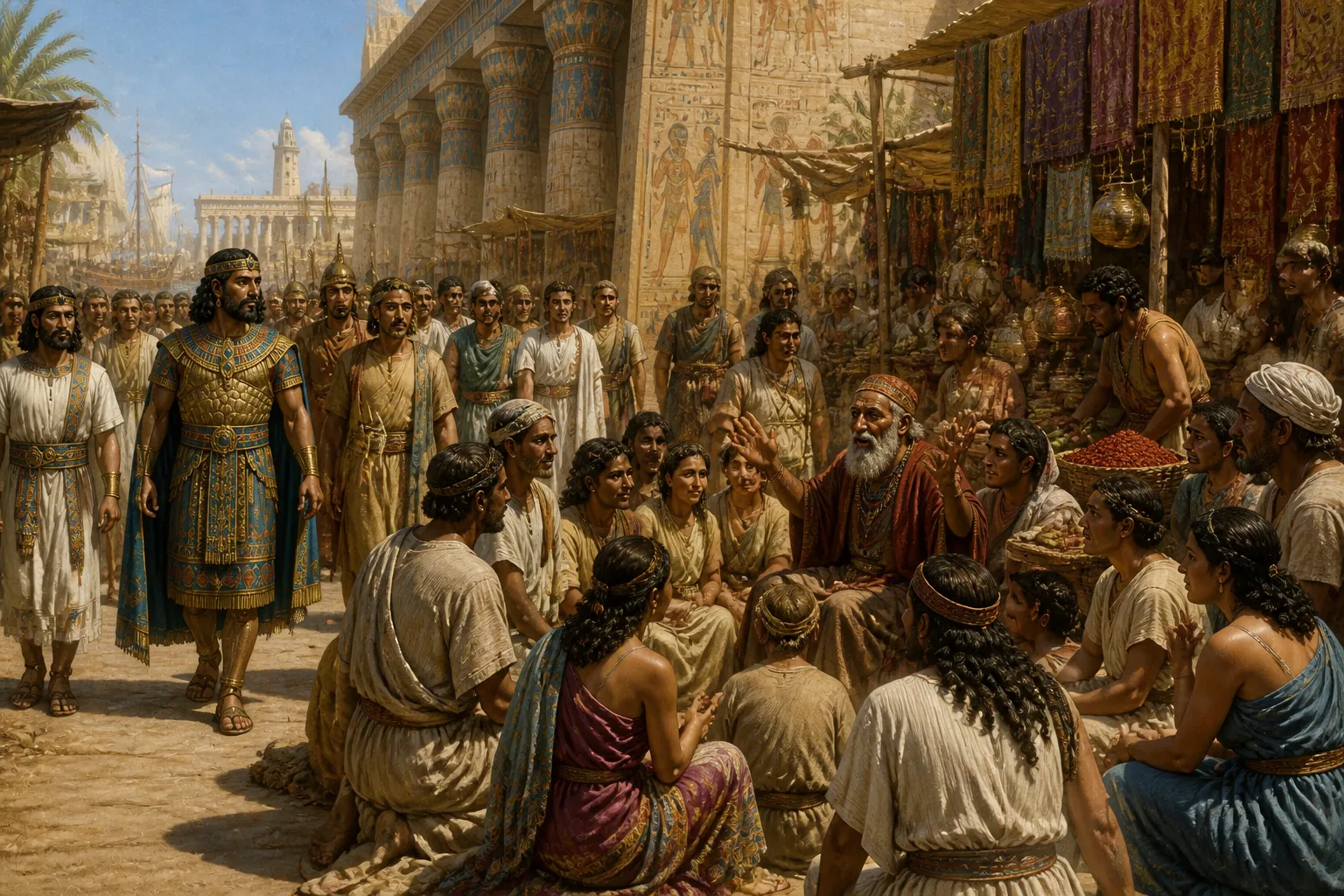
In a bustling marketplace in Alexandria, a living tapestry is woven as future generations gather to share and preserve the stories of ancient Thebes. This vibrant setting is alive with the intermingling of voices—traders, scholars, and everyday citizens—all contributing to a rich cultural mosaic. Their attire reflects a confluence of civilizations, with colorful tunics, flowing robes, and intricately woven linens that evoke both Egyptian and Greek aesthetics. An elderly storyteller, his cloak worn thin by the passage of time yet vibrant in spirit, captivates the crowd with riveting tales of pharaohs and deities. A fragrant symphony of spices fills the air, blending with the lively sounds of bartering. Though Thebes may be physically absent, its legacy endures, transcending the ages through the timeless art of storytelling.
"In stories, Thebes never falls," the storyteller insists, eyes gleaming with nostalgia.
Page 9 — The Echo of Obelisks
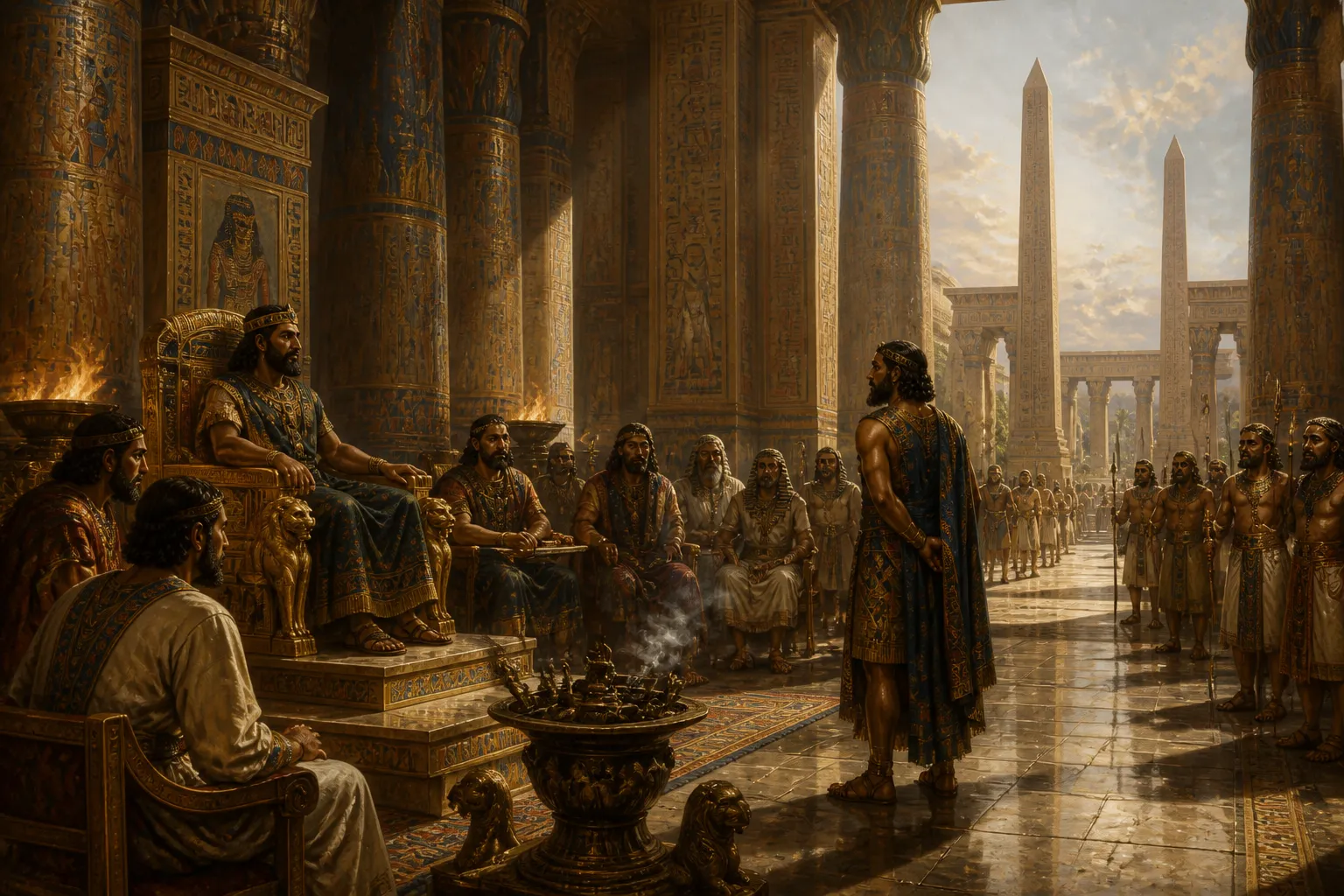
In the heart of Nineveh, within the expansive and ornately decorated halls of Ashurbanipal's palace, stand the towering obelisks from Thebes. These monumental stones, inscribed with the tales of gods and conquests, now loom over the Assyrian capital, casting elongated shadows that stretch across the polished stone surfaces. Once symbols of Theban pride, they have been transformed into emblems of Ashurbanipal's far-reaching empire. The Assyrian king, a figure of authority adorned in intricately woven garments embedded with jewels, sits upon a throne made of ivory and shimmering gold. His court, similarly dressed in opulent finery, engage in hushed discussions of future campaigns and regions awaiting Assyrian dominion. Fragrant tendrils of frankincense weave through the air, blending with the hushed tones of strategizing courtiers. These ancient stones, while demonstrating Assyrian might, silently speak of Thebes' enduring presence, testifying to a once-great civilization now held in the grip of conquest.
"They are trophies, yes, but also reminders," Ashurbanipal muses, eyes fixed on the obelisks.
Page 10 — The Eternal City
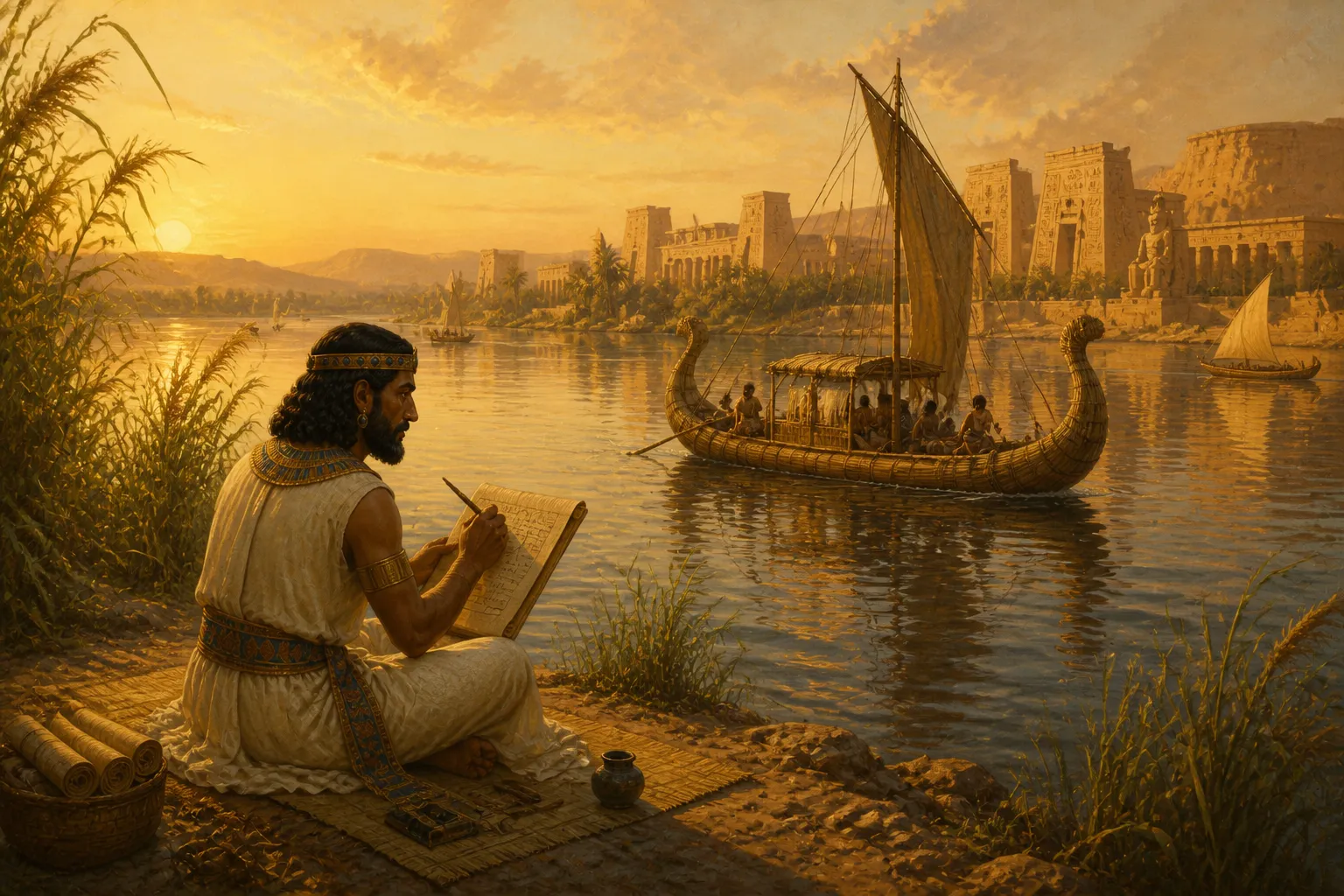
Centuries after the fall of Thebes, its memory endures as an emblem of unyielding resilience and majestic splendor. Along the tranquil banks of the Nile, where papyrus boats glide silently across the water, the spirit of Thebes whispers through the rustling reeds. In distant lands, scholars diligently inscribe its stories onto parchment, striving to preserve the legacy that stone structures can no longer protect. The city, once the heart of a formidable era, continues to ignite inspiration in those who seek wisdom amid its time-worn ruins. Beneath the shifting sands, Thebes lies in repose, a testament to a civilization that, despite conquest and decay, refuses to be erased from the annals of history.
"Thebes lives, if only in our hearts," a scribe declares, pen poised over fresh papyrus.
About this story
- Audience: general readers
Read Wonder Egypt on your phone
Wonder Egypt is available on Android. Get Wonder Egypt on Google Play.