The Battle of Megiddo
The Battle of Megiddo — an illustrated history story. 10 illustrated pages, free to read on Wonder Egypt.
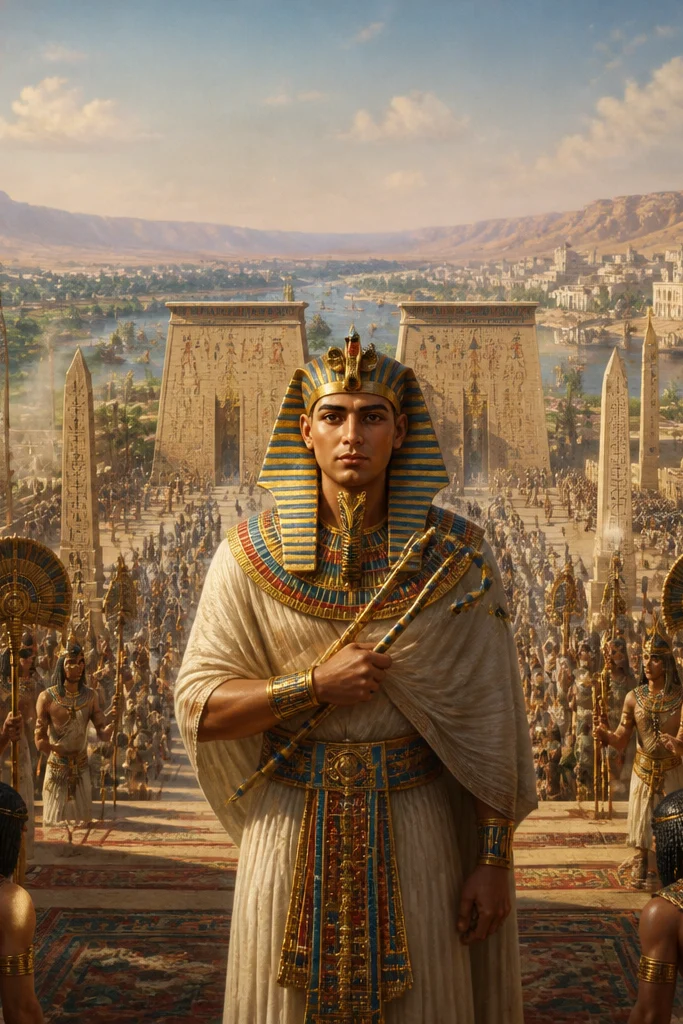
Page 1 — The Bold Decision at Aruna
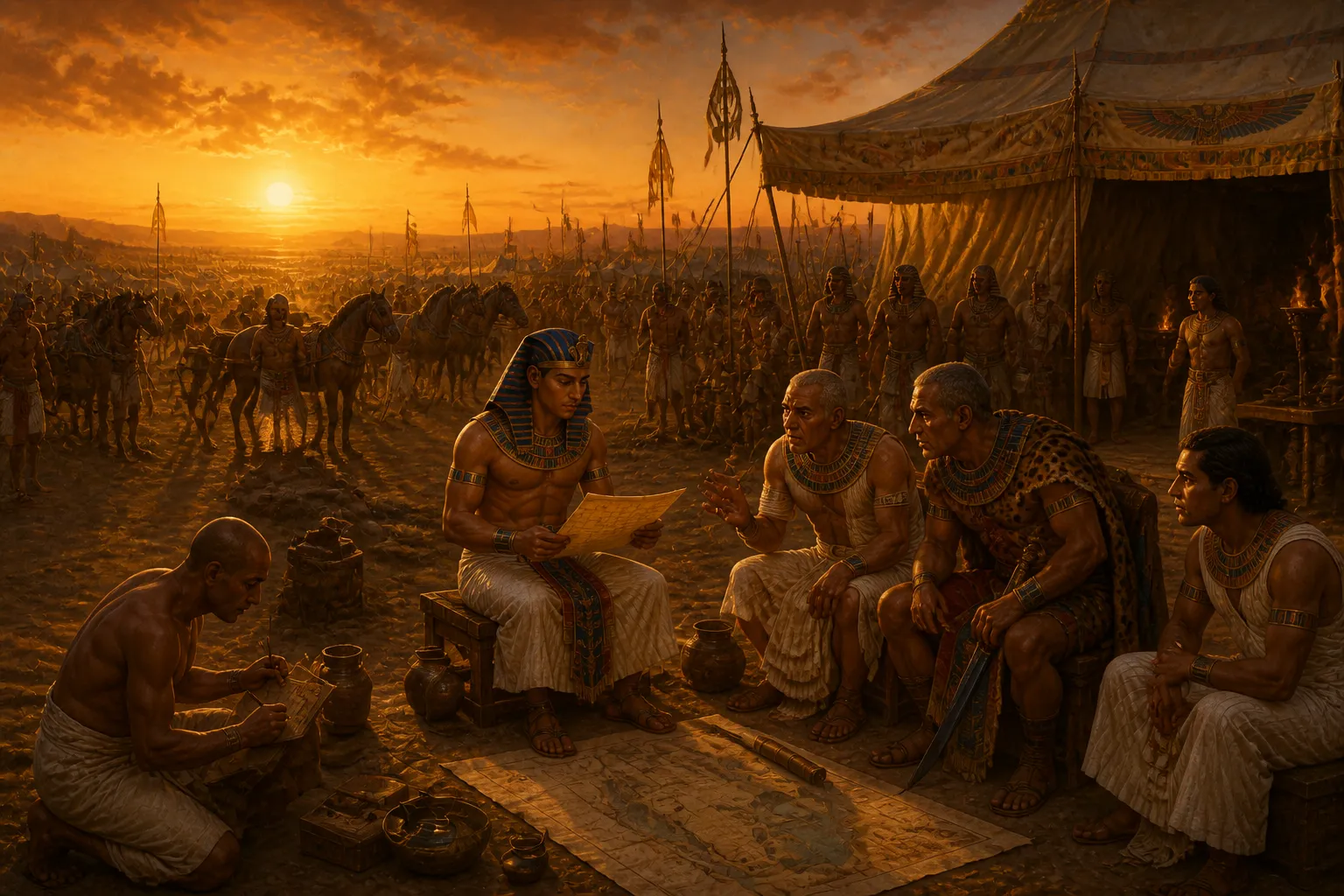
The air is tense as Thutmose III stands before his council in the war camp near Megiddo. The debate is fierce; his generals argue against taking the narrow Aruna pass, a treacherous route that could spell disaster. Yet, Thutmose's eyes are set on an unexpected victory, a daring tactic that relies on the element of surprise. 'The enemy expects us elsewhere,' he declares, his voice steady amidst the murmur of dissent. His slender figure is a silhouette against the golden glow of dusk. The generals, clad in immaculate linen kilts, exchange wary glances, their faces etched with the weight of the decision that looms. Amongst them, the scribe Tjaneni scribes furiously, capturing every word on a wooden tablet, aware that history is being crafted. The camp stirs with anticipation as the king raises his khepresh, his blue war crown gleaming under the setting sun, casting reflections onto the determined faces around him. This bold decision could lead to triumph or disaster. Each advisor's face, lined with years of military wisdom, shows the weight of the moment; some nod grudgingly, others remain silent, measuring the resolve of their young pharaoh.
'The enemy expects us elsewhere,' Thutmose III commands.
Page 2 — The Narrow Path
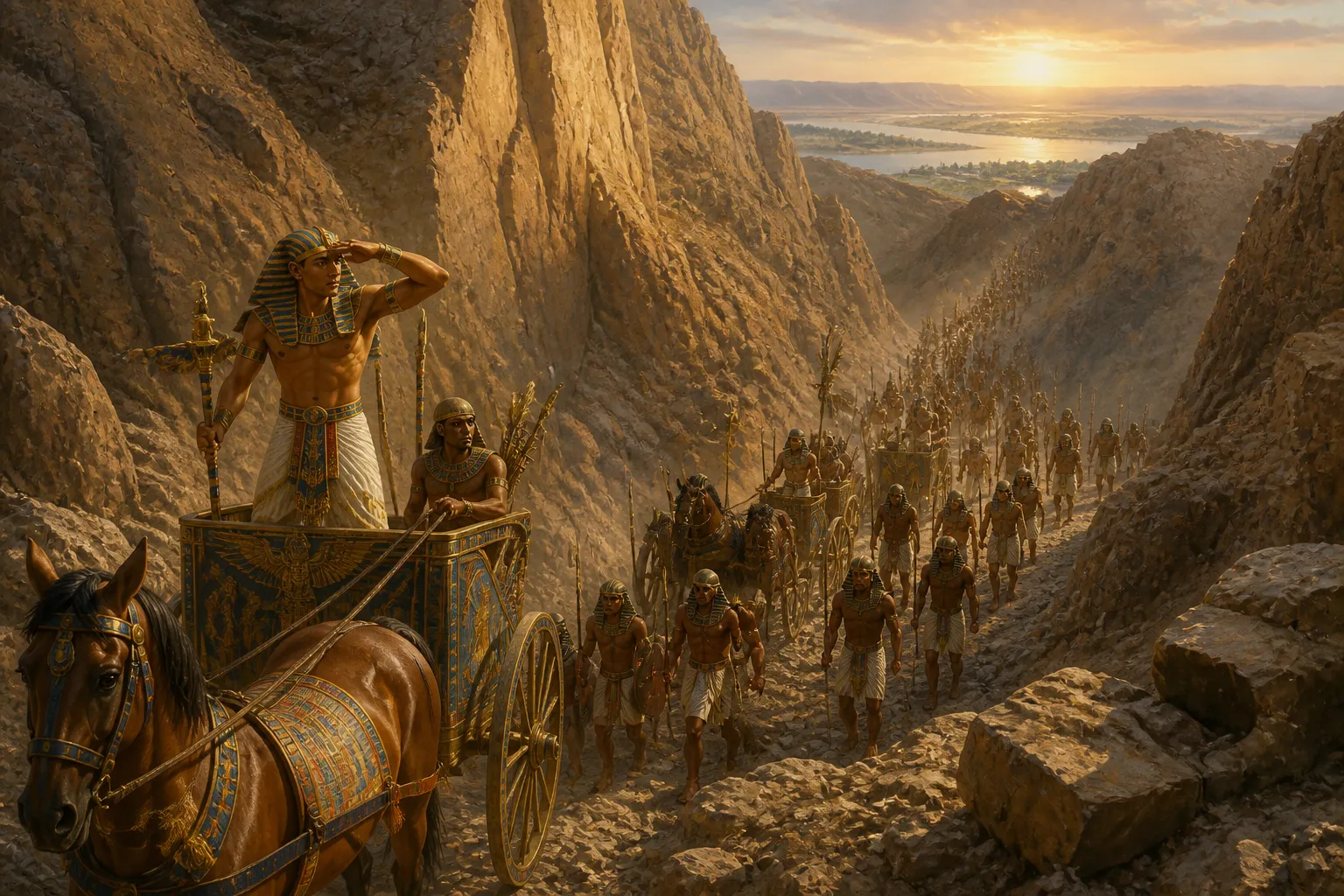
At dawn, the army assembles at the mouth of the Aruna pass, their breath visible in the cold morning air. The path ahead is treacherous, a narrow strip of rocky terrain barely wide enough for a single file of soldiers. It is hemmed in by steep, unforgiving cliffs that loom menacingly overhead. Thutmose III rides at the vanguard, his determined gaze fixed on the path ahead, a beacon of resolve among the troops. The smell of dust, churned by countless footsteps, mixes with the crisp morning air, while the clatter of weapons echoes ominously in the confines of the gorge. Horns sound, breaking the tense silence as the first battalion moves with disciplined precision. Tjaneni's scribal tablet reflects the morning light, a silent witness to this daring maneuver. Behind him, thousands of soldiers, disciplined and focused, march in rhythm, their linen kilts swaying in unison. Anticipation ripples through their ranks like a current, each step carrying them closer to possible glory or ruin.
‘Forward! Through the gorge to victory!’ commands Thutmose III.
Page 3 — Surprising the Enemy
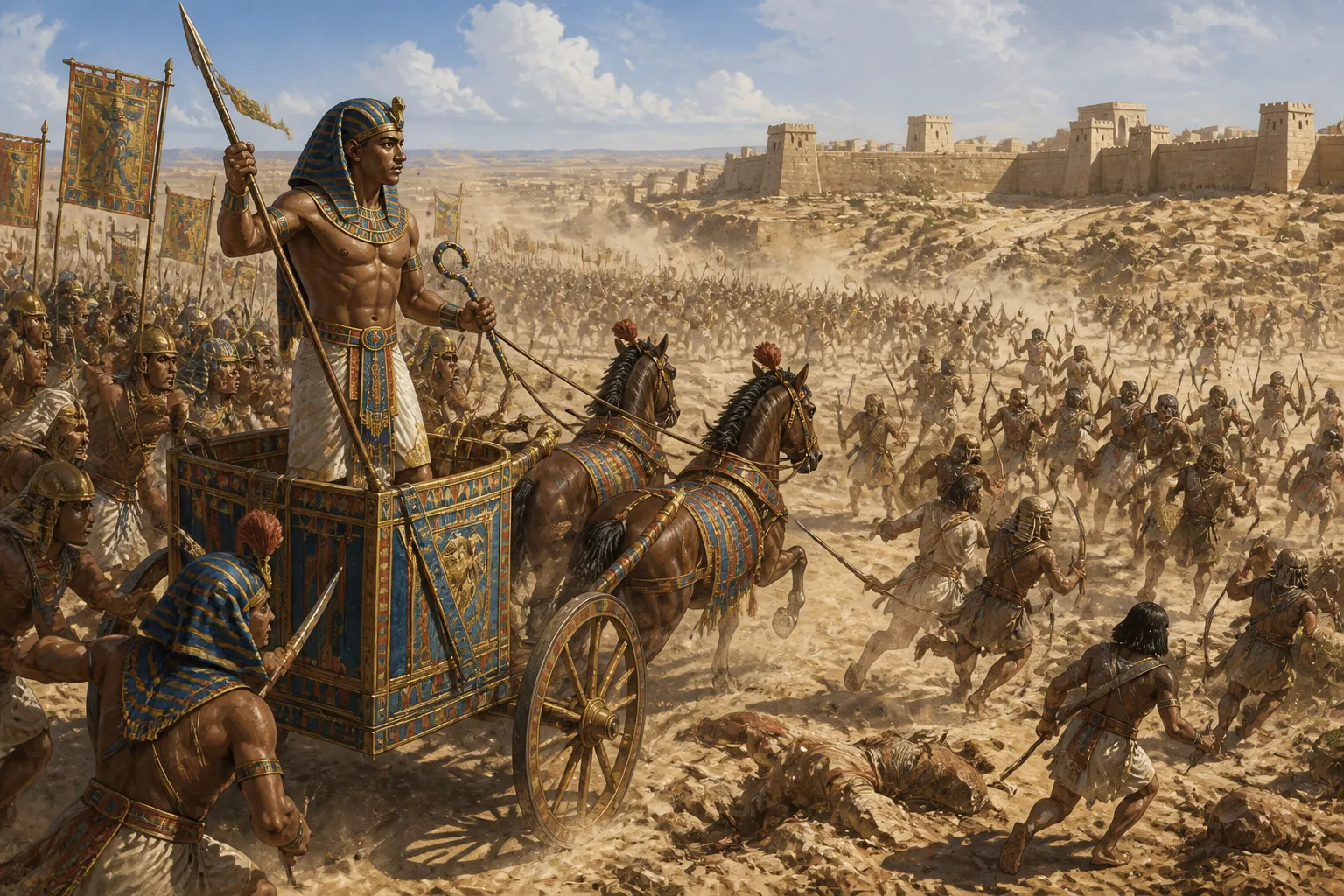
Emerging from the narrow pass, Thutmose III's army meets the forces of Kadesh and Megiddo with the element of surprise. The enemy, having anticipated an approach from the longer route, scrambles in disarray. The Prince of Megiddo, caught off guard, hurriedly orders his men into defensive positions, yet chaos prevails. Beneath the blazing midday sun, the battlefield erupts into a cacophony of shouts, clashing bronze weapons, and the thunderous roar of war chariots. Thutmose, amidst the swirling dust and heat, stands poised and unyielding, directing his troops with precision. His lithe frame becomes a focal point, a rallying beacon for his soldiers, who respond to his command with fierce determination. Their cheers rise above the din of battle, echoing with the fervor of an army sensing imminent victory. Tjaneni, ever diligent, captures the unfolding drama on his tablet, each stroke preserving the glory and chaos of the historic moment.
‘We have the upper hand now!’ shouts Thutmose III.
Page 4 — The Siege Begins
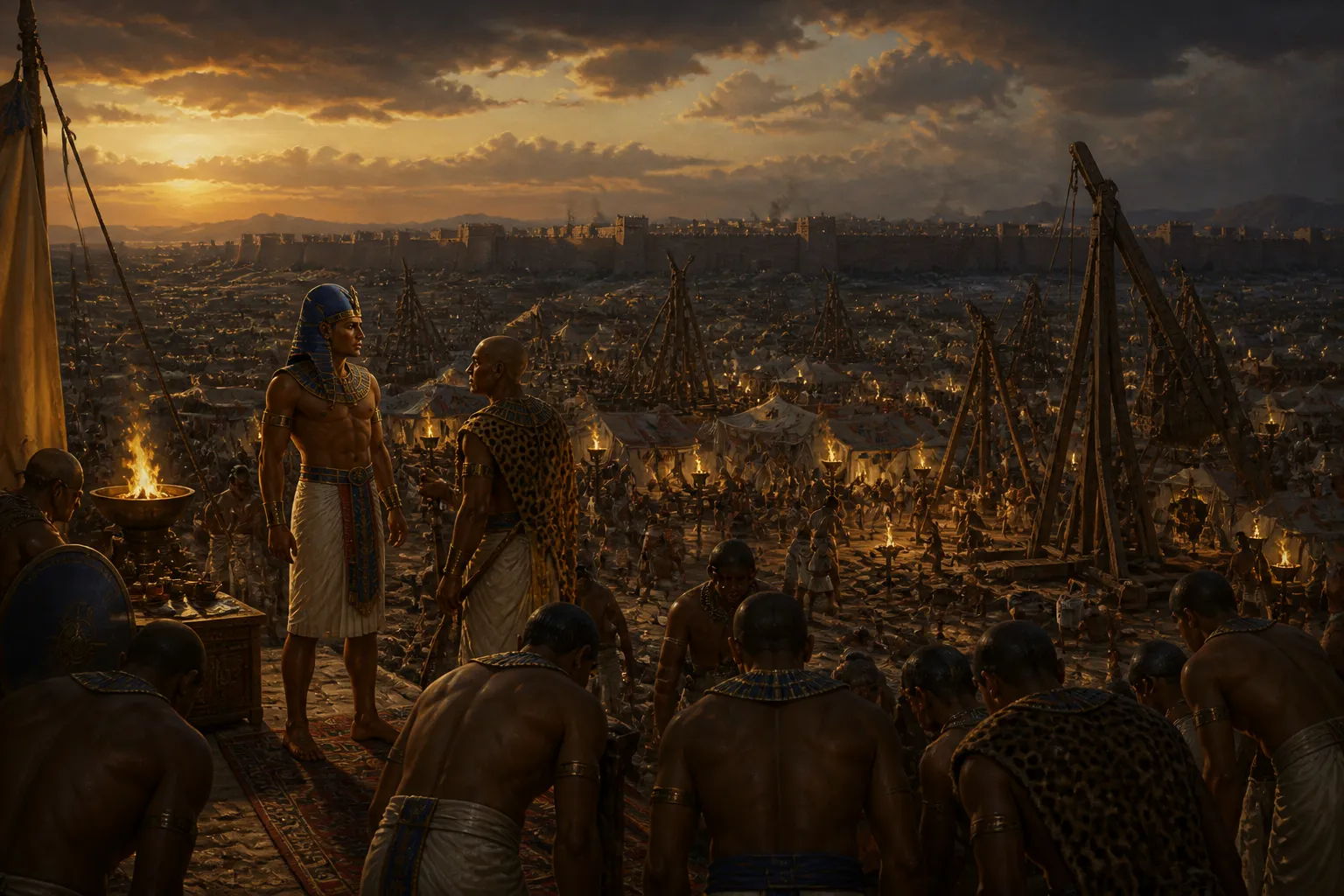
With Megiddo’s gates firmly shut, Thutmose III issues the order to lay siege. His army swiftly sets to work, creating a sprawling encampment that completely surrounds the city. The air is thick with the aroma of roasted grain and simmering stews, rising from countless fires as soldiers establish their temporary homes. Siege equipment, formidable and meticulously crafted, is hauled into position. Within the city, the King of Kadesh and the Prince of Megiddo fortify their defenses, anxiously watching from the safety of the high city walls. Outside, Thutmose stands resolute, his slender form framed against the backdrop of flickering torches. He confers with General Djehuty, a seasoned warrior whose experience is invaluable. Tjaneni works tirelessly, his stylus moving rapidly across the tablet, ensuring these tense preparations are documented. The siege, fraught with uncertainty, could stretch for months, a testament to the pharaoh's determination and strategic brilliance.
‘We will starve them into submission,’ says Thutmose III.
Page 5 — A City Under Siege
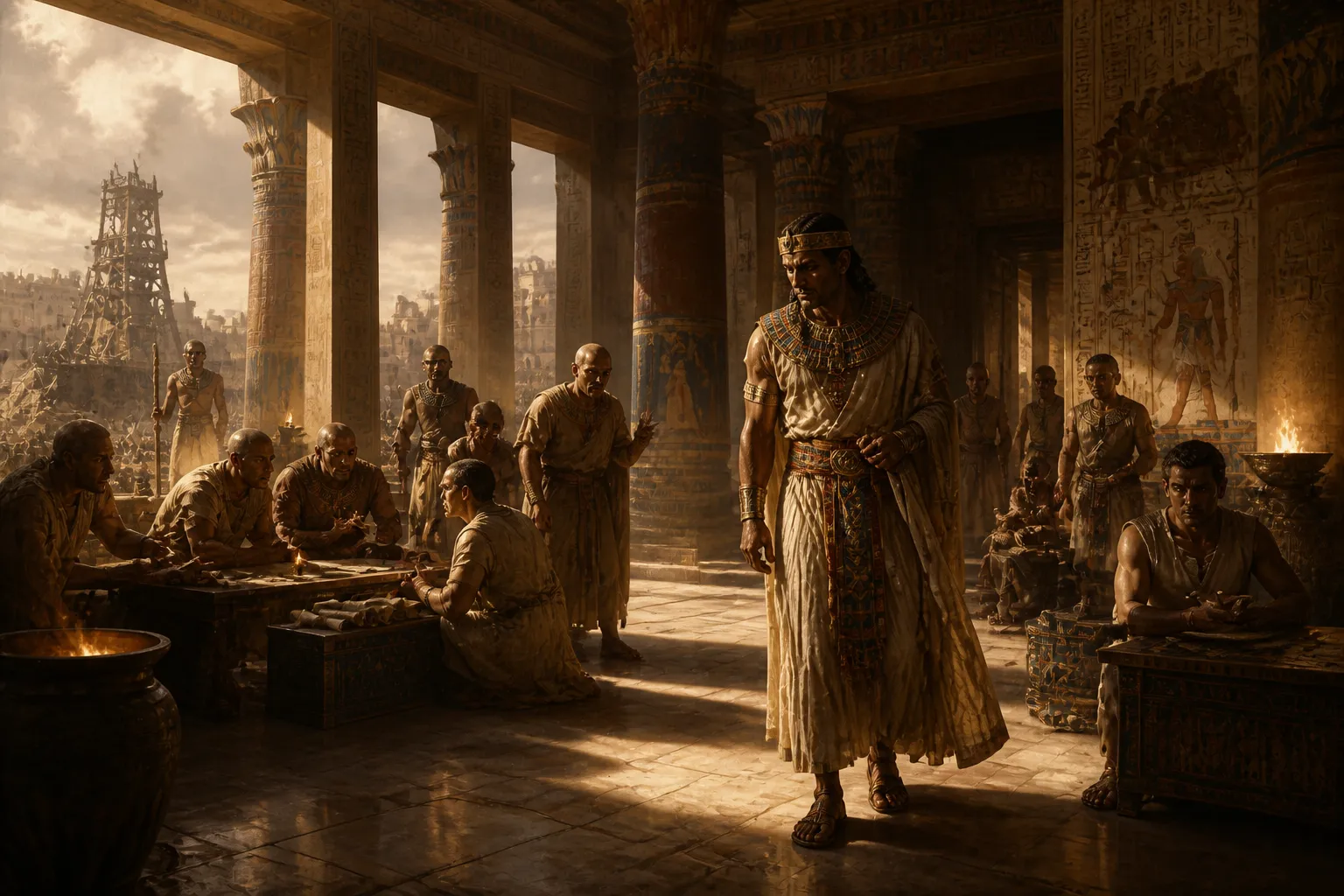
Inside the besieged city of Megiddo, the impact of the prolonged siege becomes painfully evident. Resources dwindle to dangerous levels, and the once-bustling streets fall silent, save for the cries of infants and the concerned murmurs of elders. Market stalls, once vibrant and overflowing with goods, now stand eerily empty. A palpable sense of scarcity hangs heavily in the air, a silent specter that portends what is to come. Within the palace halls, the Prince of Megiddo paces restlessly, his ornate robes trailing behind him like shadows of past opulence. His advisors, gathered in somber clusters, whisper with increasing desperation, their faces etched with the despair of an almost certain defeat. Outside, the relentless sounds of Egyptian drilling and construction echo through the quiet city, underlining the growing pressure of the siege. At the city's heart, tension builds, a growing awareness that surrender may soon become their only viable option.
‘We cannot hold out much longer,’ an advisor warns the Prince.
Page 6 — The Breaking Point
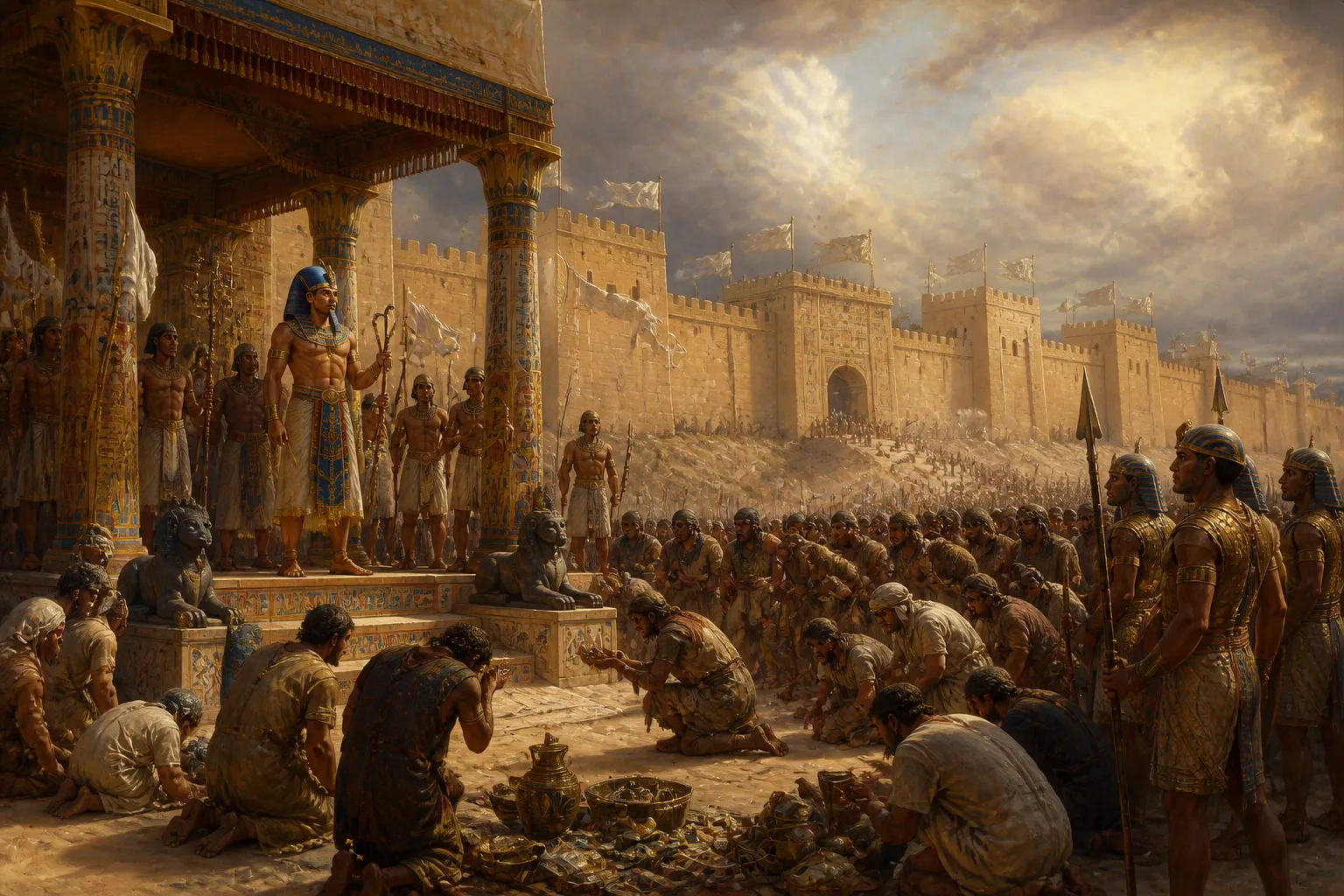
After months of relentless siege, the defenders of Megiddo reach their breaking point, their resistance worn thin by starvation and unending pressure. As dawn breaks, the city’s once-defiant walls now display a stark symbol of surrender—a white flag flutters above them. The massive gates, creaking with reluctance, open to reveal emissaries who emerge, their robes tattered and their expressions resigned. They approach Thutmose III, kneeling in submission before the victorious pharaoh, who stands beneath a grand ceremonial canopy. His demeanor is one of measured grace, acknowledging the significance of this triumph. His officers, including the steadfast Djehuty, stand at attention, their expressions a mix of solemnity and satisfaction. Tjaneni records this pivotal moment with meticulous care, ensuring that the surrender and its implications are etched into history. It is a moment of triumph that marks the pharaoh's strategic brilliance and the culmination of a relentless campaign.
‘Megiddo is ours,’ Thutmose III announces.
Page 7 — Rituals of Victory
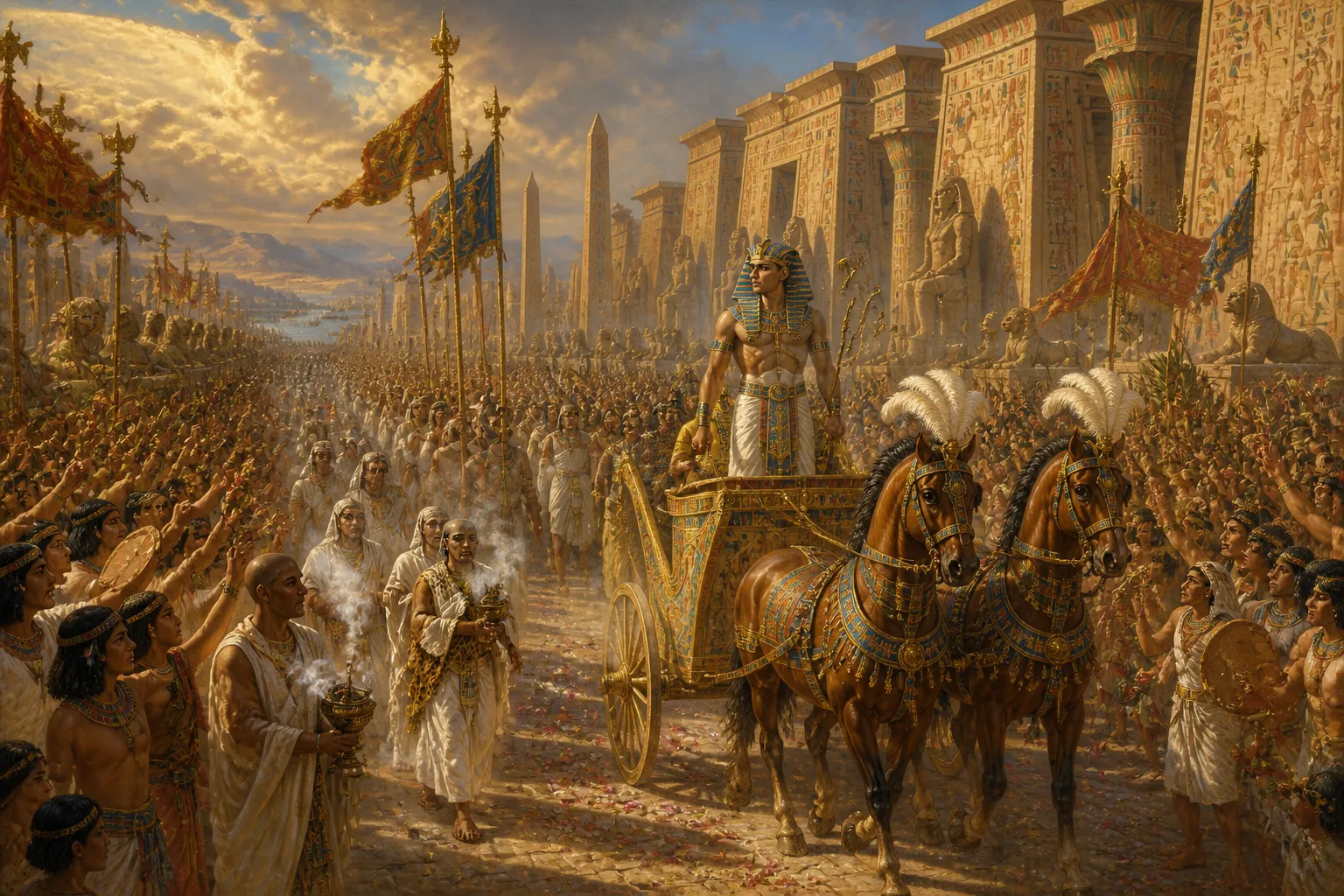
Back in the vibrant city of Thebes, the atmosphere is electric with jubilation as massive processions fill the streets to celebrate the decisive victory at Megiddo. Thutmose III, resplendent in a shimmering golden wesekh collar and his majestic khepresh, leads this triumphant parade. His presence commands respect and admiration, a living symbol of their hard-won success. Citizens, dressed in vibrant linen garments dyed in hues of blue, red, and gold, line the streets, cheering and waving palm fronds in exuberant celebration. Priests, their white robes billowing gracefully, tend to incense burners at the grand temple of Amun, the fragrant smoke curling upwards as chants of praise rise to the heavens. Amidst the throng, Tjaneni remains ever vigilant, inscribing the pharaoh’s accomplishments into history. The victory resonates through the massive sandstone halls of Thebes and echoes across the serene waters of the Nile, a testament to the enduring spirit and unity of Egypt.
‘The gods smile upon us,’ proclaims Thutmose III.
Page 8 — Legacy at Karnak
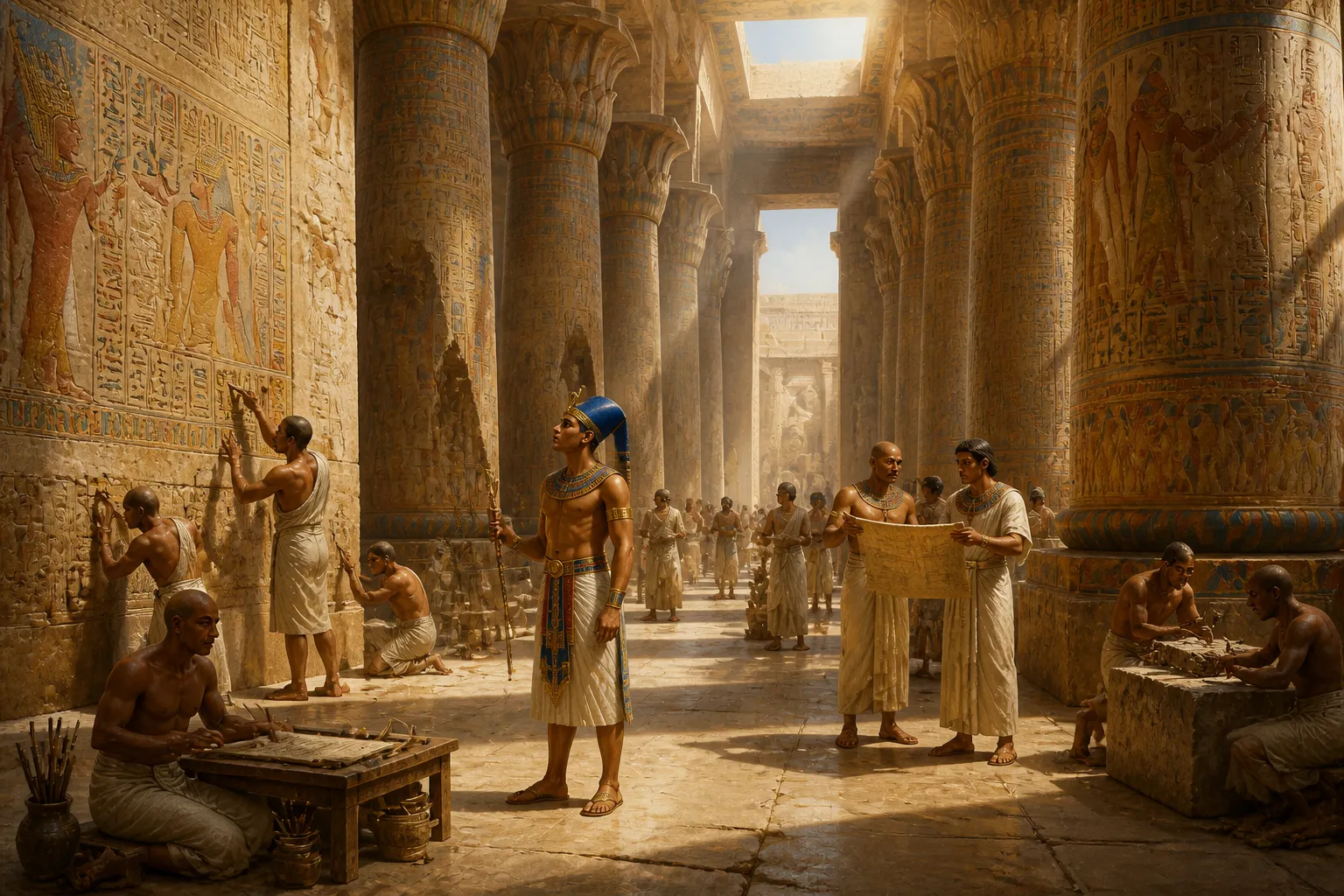
Within the sacred precincts of the grand temple of Karnak, artisans work tirelessly to immortalize the triumphant campaign of Megiddo in frescoes that adorn the temple walls. Thutmose III, a figure of authority and vision, inspects the intricate works, his presence framed by the towering columns inscribed with hieroglyphs. The air is thick with the smell of fresh paint and the gritty dust of carved stone, a testament to the labor and dedication involved. Nearby, Senemut, a renowned architect, engages in animated discussion with Hapuseneb, the High Priest of Amun. Together, they envision the temple's further expansion, each line and curve a tribute to the pharaoh's divine right and military genius. Tjaneni, ever faithful to his task, notes these scenes and their profound meanings, ensuring the memory of this great campaign endures through the ages. The temple itself becomes a monumental testament to Thutmose's piety and unconquerable prowess, echoing his victories throughout eternity.
‘This temple shall echo my victories,’ declares Thutmose III.
Page 9 — Passing the Torch
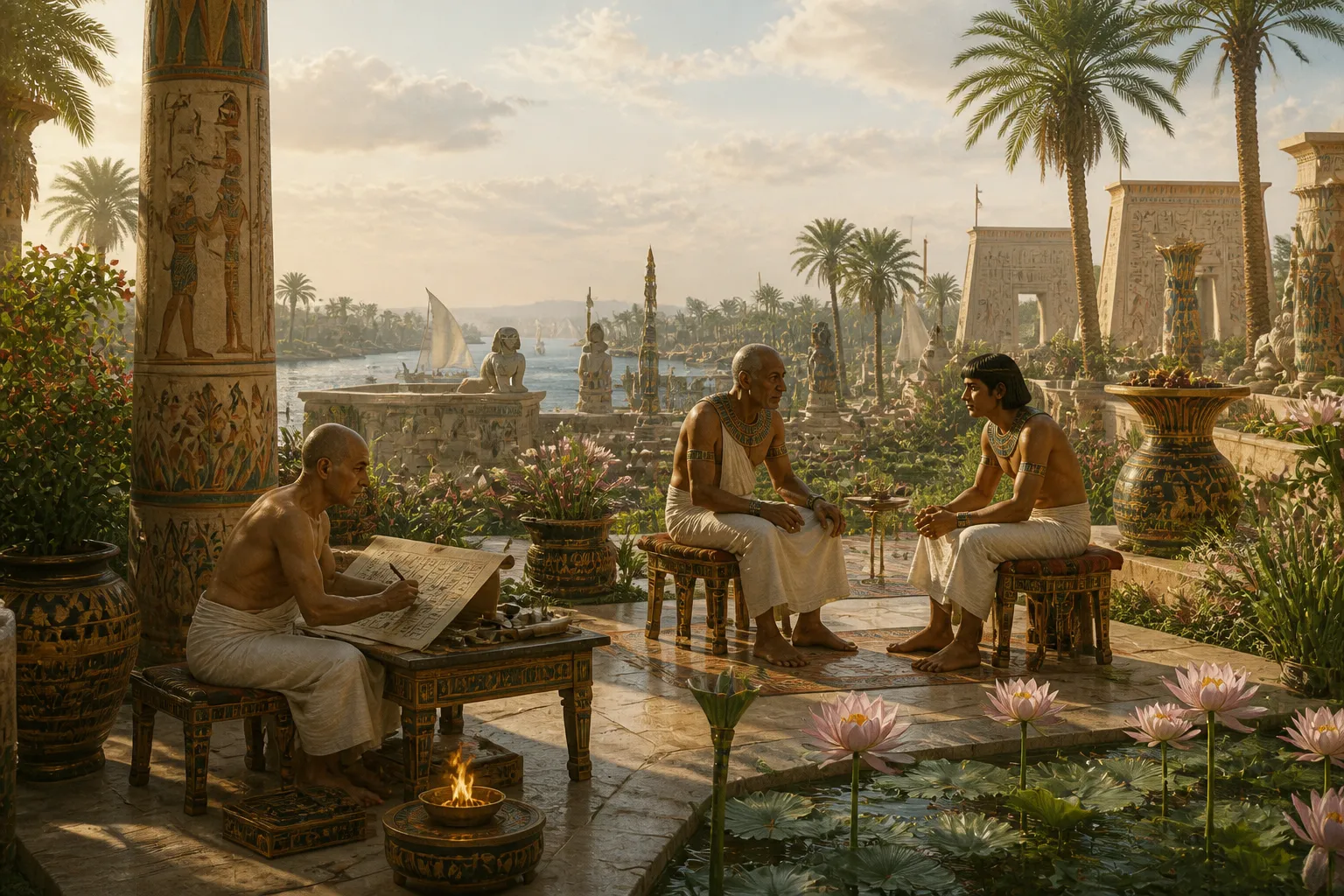
Years later, an aging Thutmose III stands with Amenhotep II, his son and heir, in the lush gardens of Thebes. The gardens, a verdant oasis of tranquility, stretch towards the glistening expanse of the Nile River, its waters reflecting the golden hues of the setting sun. The air is filled with the rich scent of blooming lotus flowers and lush foliage. Despite the passage of time, Thutmose's eyes retain their sharpness, a piercing clarity that commands attention. 'Guard what we have built,' he instructs, his voice carrying the weight of years and wisdom. The younger man, his bearing noble and determined, nods solemnly, his youthful features set with resolve. Nearby, Tjaneni, now gray-haired but unwavering in his dedication, sketches the scene with deliberate strokes, preserving the momentous transfer of wisdom and legacy from one generation to the next, ensuring the continuity of a dynasty.
‘Guard what we have built,’ Thutmose III advises.
Page 10 — The Eternal Pharaoh
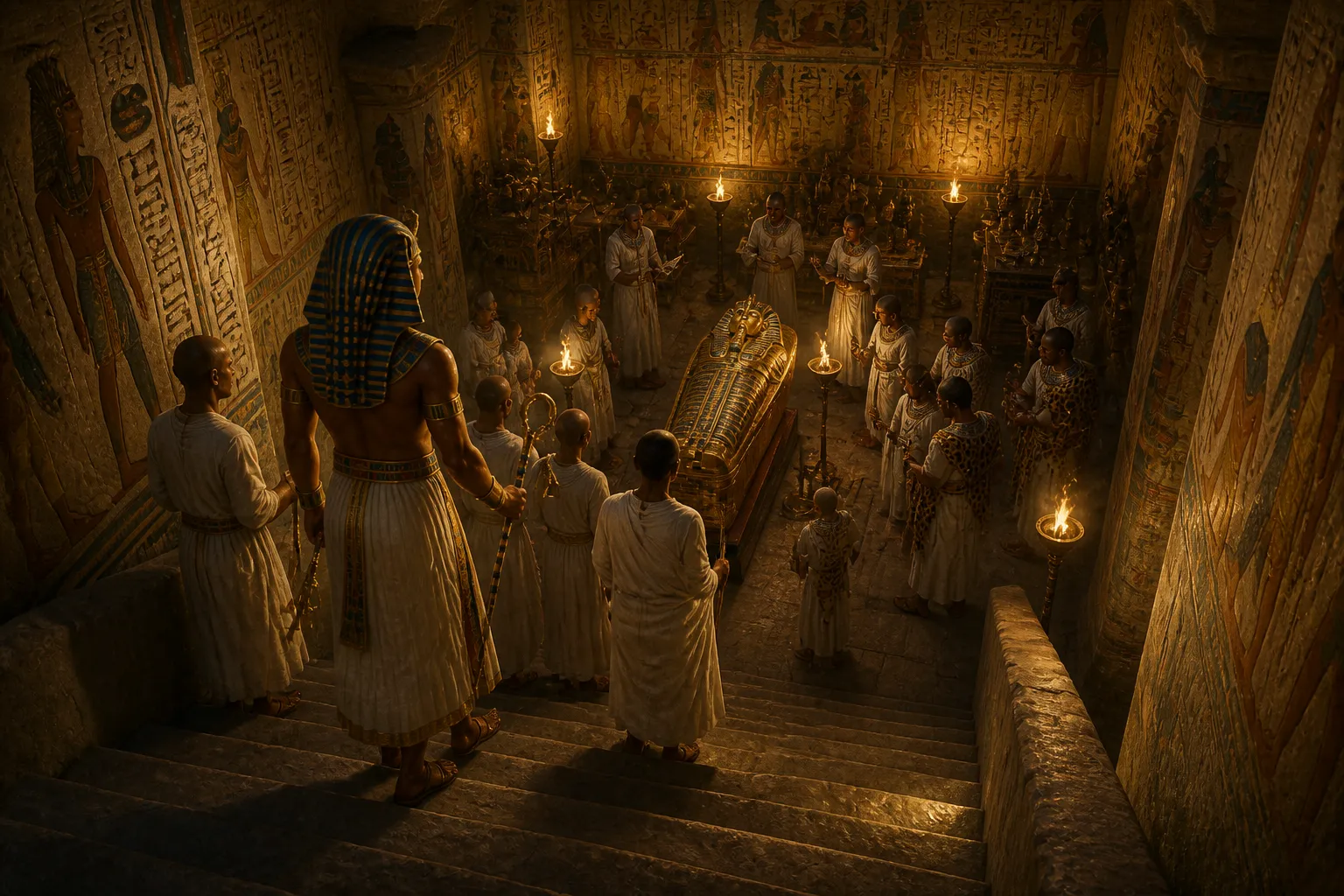
In the sacred Valley of the Kings, beneath the shadowy embrace of the towering cliffs, lies the tomb of Thutmose III. The burial chamber, a marvel of craftsmanship and devotion, awaits its eternal occupant. Priests, dressed in ceremonial white linen, proceed in solemn procession, their chants deep and resonant, intended to guide the pharaoh's soul into the afterlife. The atmosphere is rich with the heavy perfume of incense, mingling with the reverence of the moment. At the heart of the chamber lies the sarcophagus, a masterpiece of gold, its surface intricately adorned with hieroglyphs telling the story of Thutmose's illustrious reign. It glows dimly, illuminated by the flickering torchlight that casts long, dancing shadows across the richly decorated walls. Tjaneni's records, etched with precision, ensure that the pharaoh's legacy endures beyond the realm of the living, capturing a reign defined by audacious strategy and enduring triumph.
‘May his soul find eternal peace,’ a priest intones.
About this story
- Audience: general readers
Read Wonder Egypt on your phone
Wonder Egypt is available on Android. Get Wonder Egypt on Google Play.