Ptolemy II
Ptolemy II — an illustrated history story. 10 illustrated pages, free to read on Wonder Egypt.
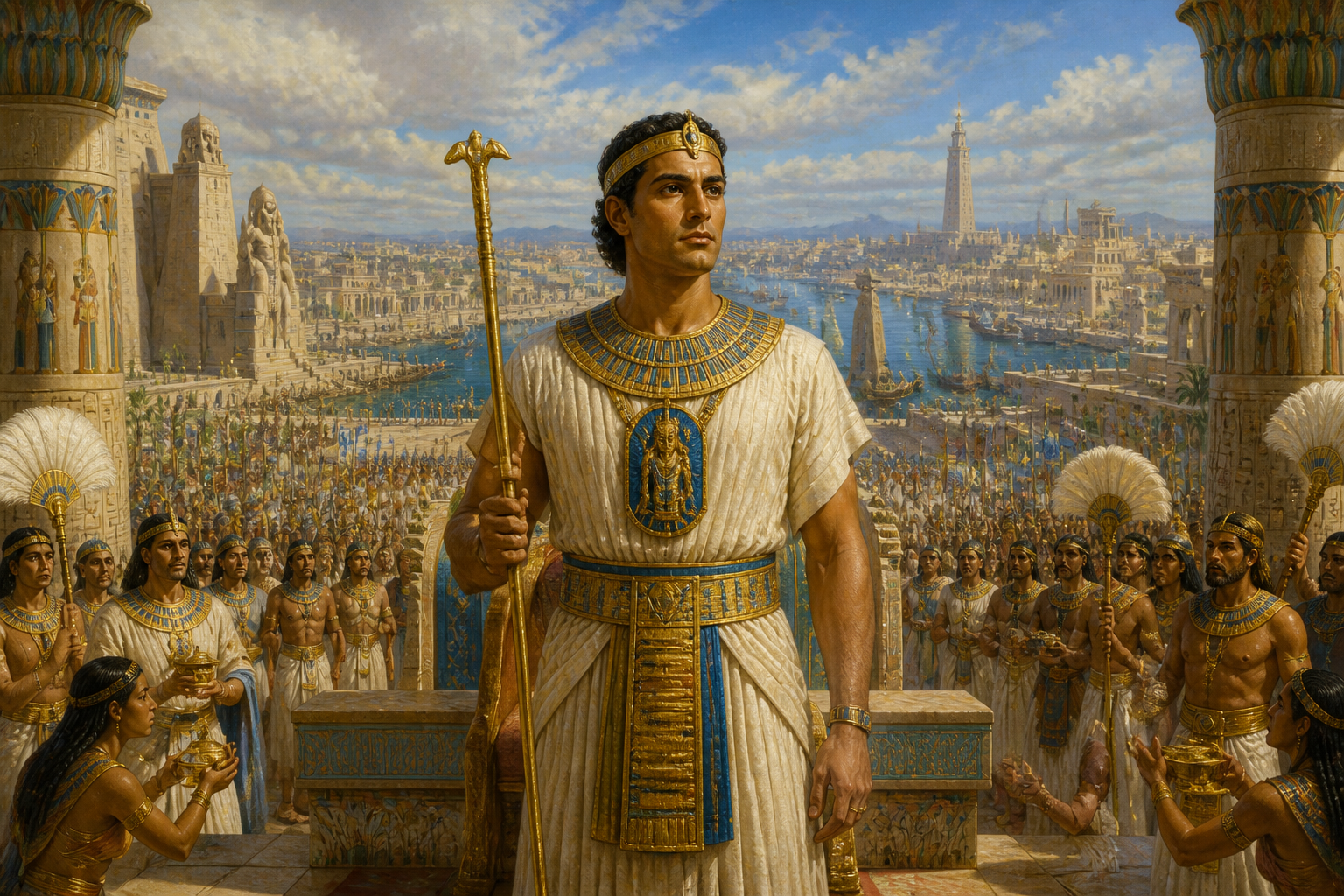
Page 1 — The Foundation of Alexandria's Splendor
In the vast expanse of Alexandria, a city designed to embody the pinnacle of Hellenistic culture, Ptolemy II emerges as a ruler of vision and intellect. He inherits a kingdom laid by his father, Ptolemy I, who was a trusted companion of Alexander the Great. At his side stands his sister and queen, Arsinoe II. Together, they establish Alexandria not merely as a city but as an epicenter of knowledge and trade. Ptolemy II commissions the completion of the Pharos Lighthouse, a towering beacon guiding sailors and marking the city as a beacon of civilization. Meanwhile, within the walls of the Library of Alexandria, scholars like Callimachus are invited to gather and preserve the world's knowledge. Sostratus of Cnidus, the famed architect, is tasked with crafting structures that would echo through the ages. This reign isn't merely about power; it is about legacy. By the end, Alexandria stands as a testament to human intellect and ambition, symbolizing the Ptolemaic dynasty's grandeur.
"Let Alexandria shine as the beacon of the world," Ptolemy II declares to his court. "Let scholars find their haven here, and let knowledge be our lasting legacy."
Page 2 — The Lighthouse of Pharos
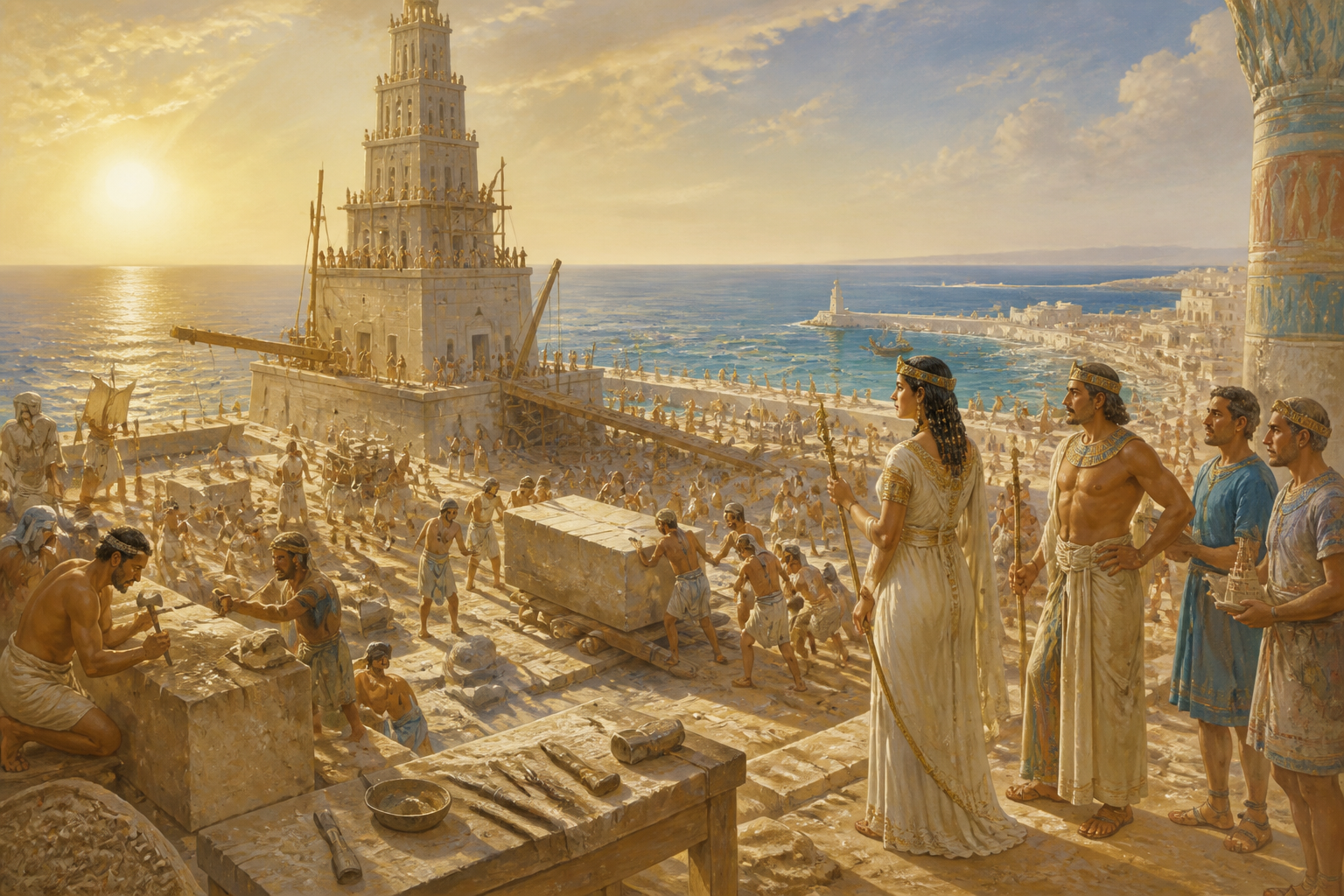
In the bustling harbor of Alexandria, the Pharos Lighthouse stands as a monumental feat of engineering. Commissioned by Ptolemy II and designed by Sostratus of Cnidus, this structure is more than a navigational aid; it is a symbol of human ingenuity and ambition. As workers chisel away, the vision of a tower that pierces the heavens begins to take form. Ptolemy II, clad in his ceremonial kilt, surveys the scene with his queen Arsinoe II at his side, her presence commanding reverence. The lighthouse, when completed, will be a guiding star for traders and explorers from distant lands. Its three tiers, each distinct in architecture, symbolize the union of Egyptian and Greek influences. It is a testament to the blending of cultures under one administration. The foundation is laid with precision, while artisans prepare the intricate statues that will adorn its summit. The Pharos will not only guide ships but also illuminate the enduring power of Ptolemaic rule.
"This tower," Ptolemy II proclaims, "will guide the world to our shores. Let its light tell of Alexandria's greatness."
Page 3 — The Queen's Influence
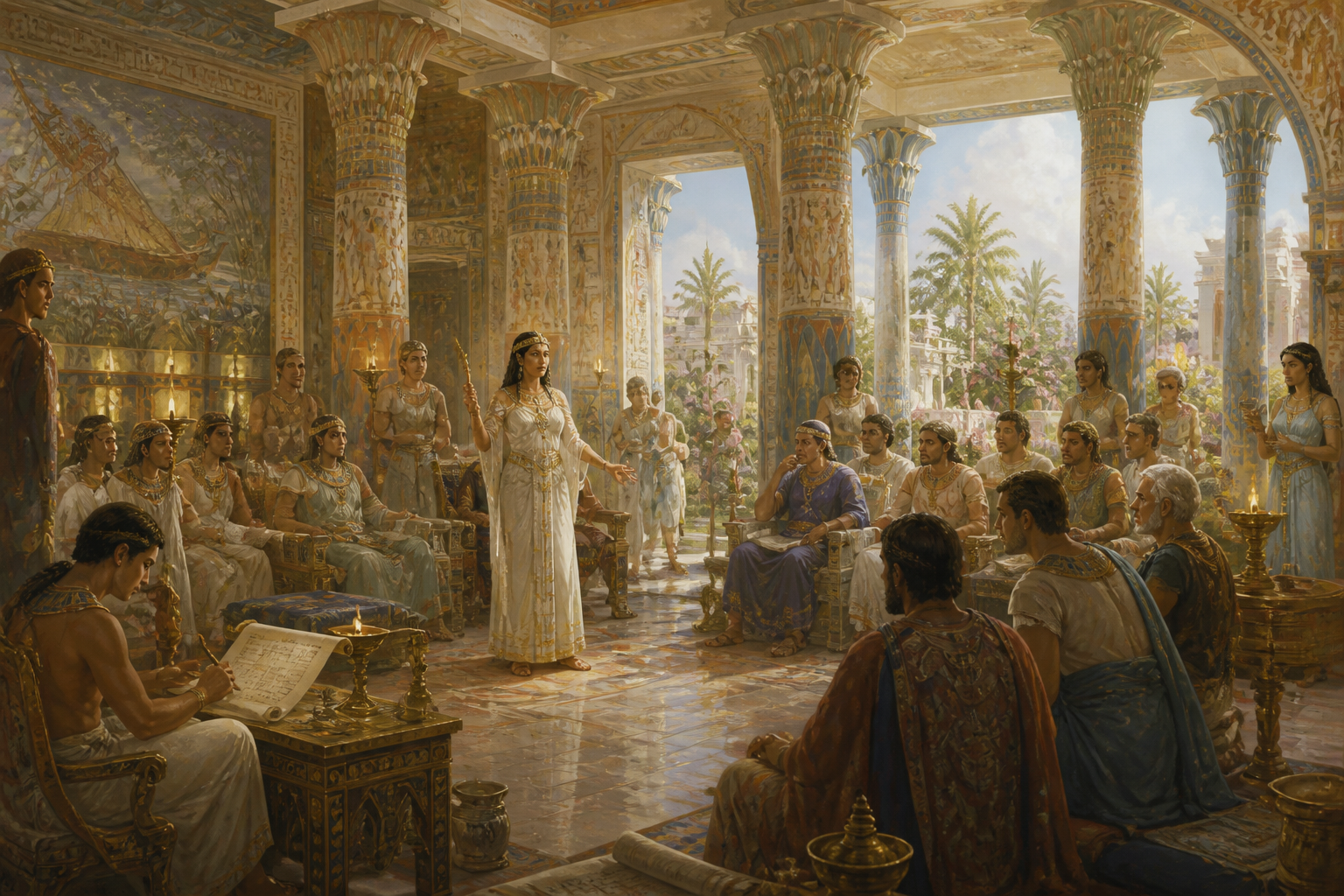
In the opulent palace of Alexandria, Arsinoe II holds court, her influence extending beyond being merely Ptolemy II's sister and consort. She is a queen worshipped as a goddess, her wisdom and political acumen crucial to their joint rule. With a keen eye for diplomacy, she negotiates alliances and ensures the stability of their reign. Her presence at court is commanding; she wears a diadem that signifies both her royal status and divine association. As advisors gather, including generals and emissaries from across the Mediterranean, Arsinoe's voice carries weight, her counsel sought in matters of statecraft. Her charisma and leadership skills are undeniable, as seen in the way she gathers followers and manages the complex political landscape. The palace thrums with activity, courtiers dressed in elaborate garments of fine linen embroidered with gold detailing. Under the flickering light of oil lamps, plans are made and decrees issued, with Arsinoe's influence at the heart of every decision.
"Our strength lies in unity," Arsinoe asserts, addressing her advisors. "Together, we shall guide Egypt to prosperity and honor."
Page 4 — The Gathering of Scholars
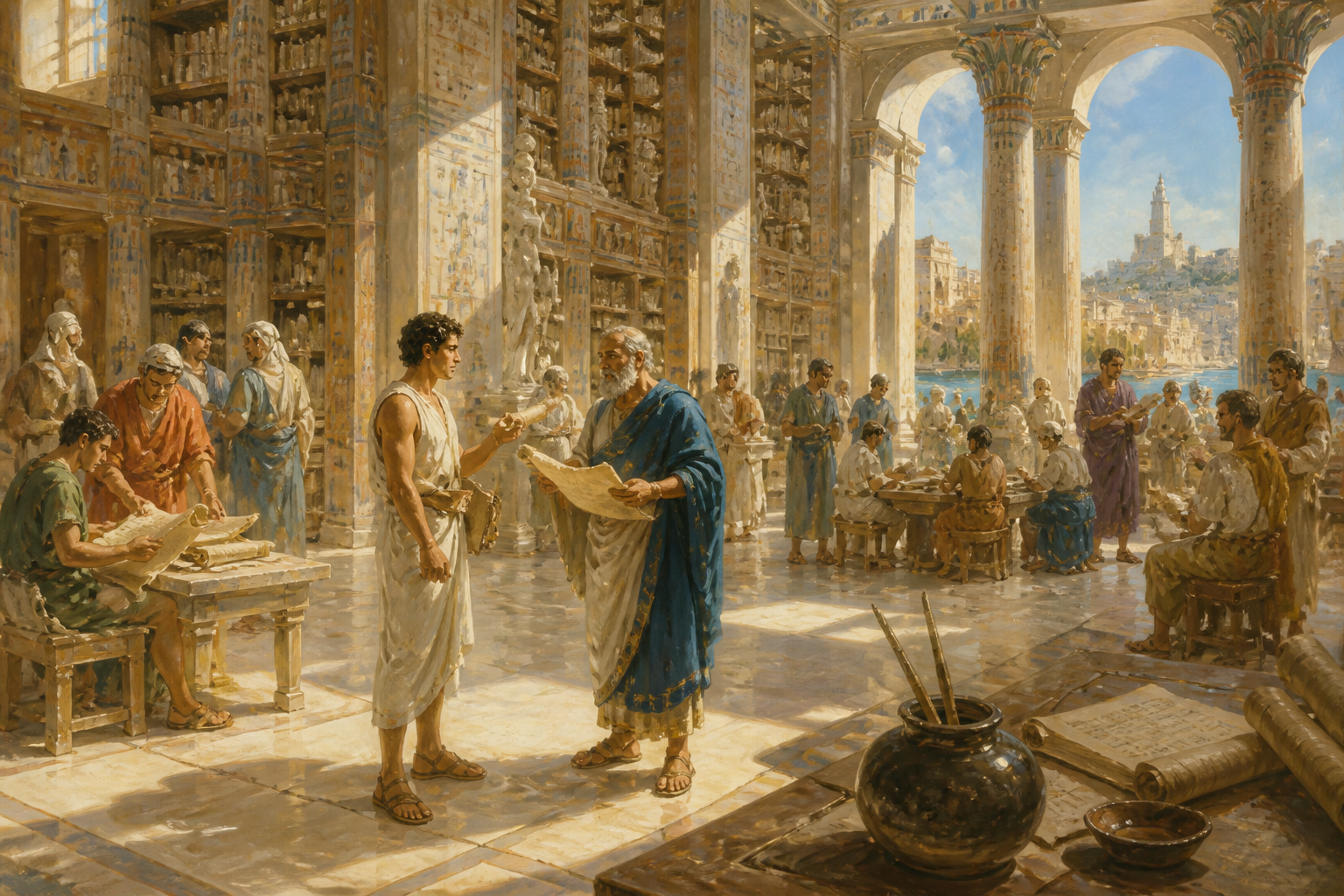
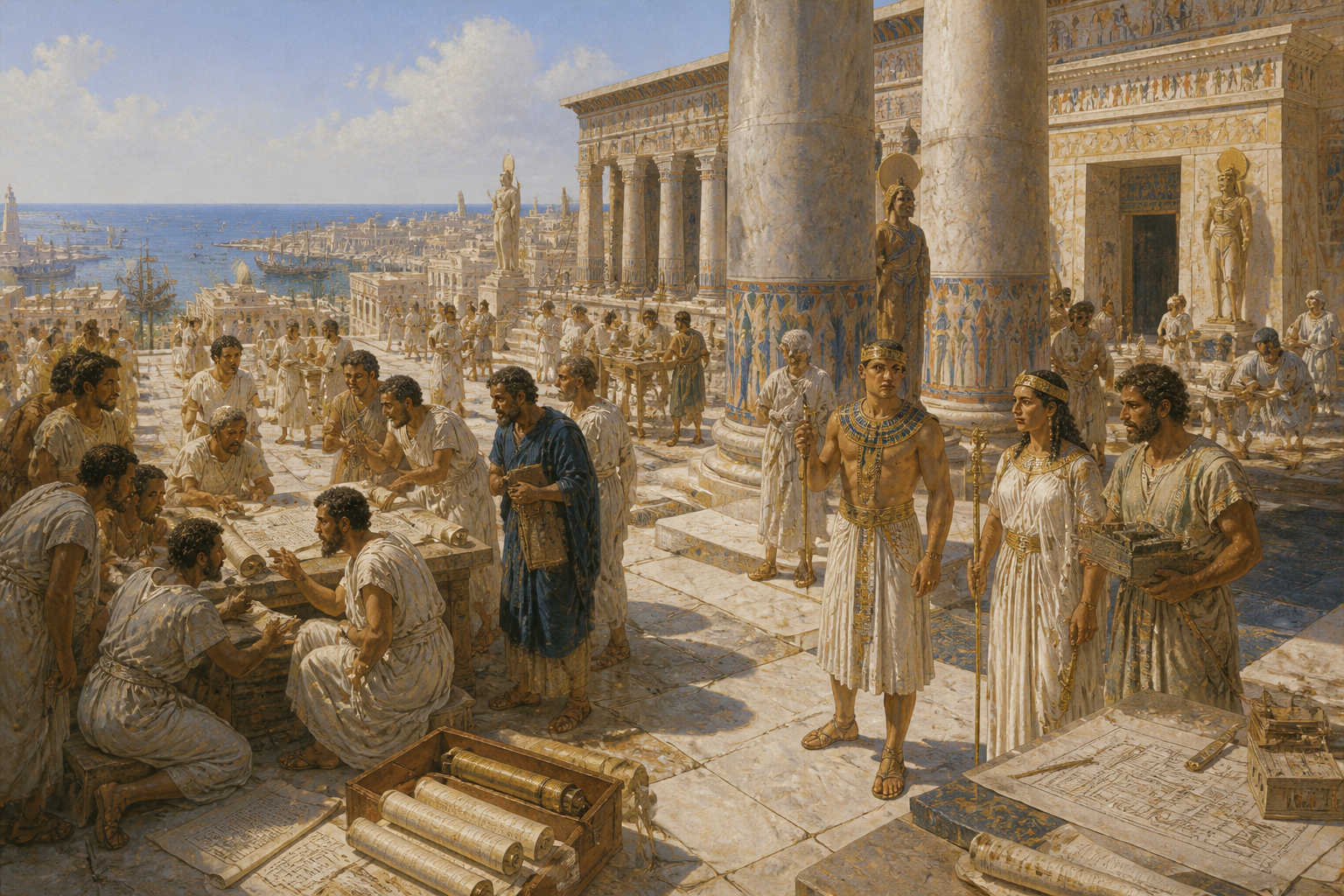
Within the serene halls of the Library of Alexandria, the air is alive with the low murmur of academic discourse. Under Ptolemy II's patronage, scholars from all over the Hellenistic world gather here, a testament to the intellectual ambition of his reign. Among them is Callimachus, the poet and bibliographer, tasked with organizing the vast collection of scrolls. The library itself is a masterpiece, its towering shelves filled with knowledge from Egypt, Greece, Persia, and beyond. Scholars are seen in animated discussions, sharing insights on everything from astronomy to philosophy. Ptolemy, in a simple white linen kilt to symbolize his respect for learning, visits this sacred space frequently, engaging with the minds that fuel his reign's intellectual prowess. The blend of papyrus rustle, ink smells, and scholarly debates create an atmosphere of timeless discovery. Here, knowledge is curated and cultivated, feeding into the vast empire Ptolemy II seeks to lead with reason and enlightenment.
"In these scrolls lie the wisdom of the ancients," Callimachus remarks. "Let us preserve and expand upon it."
Page 5 — The Ptolemaic Feast
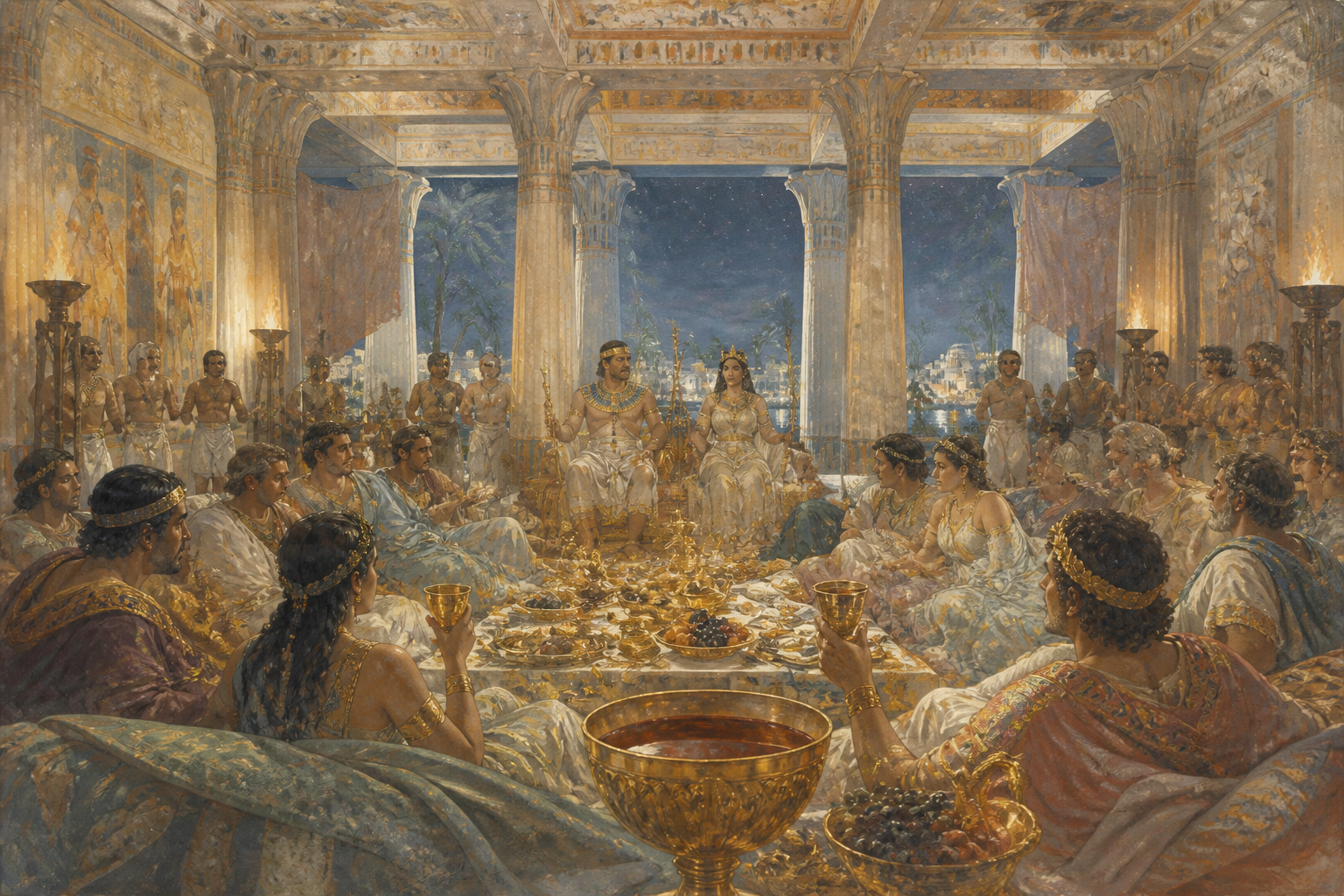
Within the grand banquet hall of the Alexandrian palace, preparations are underway for an evening of grandeur and opulence. Ptolemy II, in celebration of recent diplomatic successes, hosts a feast that draws dignitaries and courtiers from across his realm. The hall is adorned with lavish decorations, with tapestries depicting mythological events lining the walls. Tables overflow with exotic foods, from roasted duck and fresh figs to imported spices and wines. Ptolemy, wearing a ceremonial pleated kilt and a brilliant wesekh collar, presides over the event, his presence commanding and regal. Arsinoe II sits beside him, her diadem sparkling under the flicker of numerous torches. As musicians play lyres and flutes, the air fills with the aroma of incense, adding to the sensory tapestry of the evening. The feast is not merely a display of wealth but a demonstration of Ptolemy's ability to unite diverse cultures and peoples under his rule.
"Tonight, let us celebrate not only our victories but the unity of our people," Ptolemy announces with a raised chalice.
Page 6 — The Astronomer's Vision
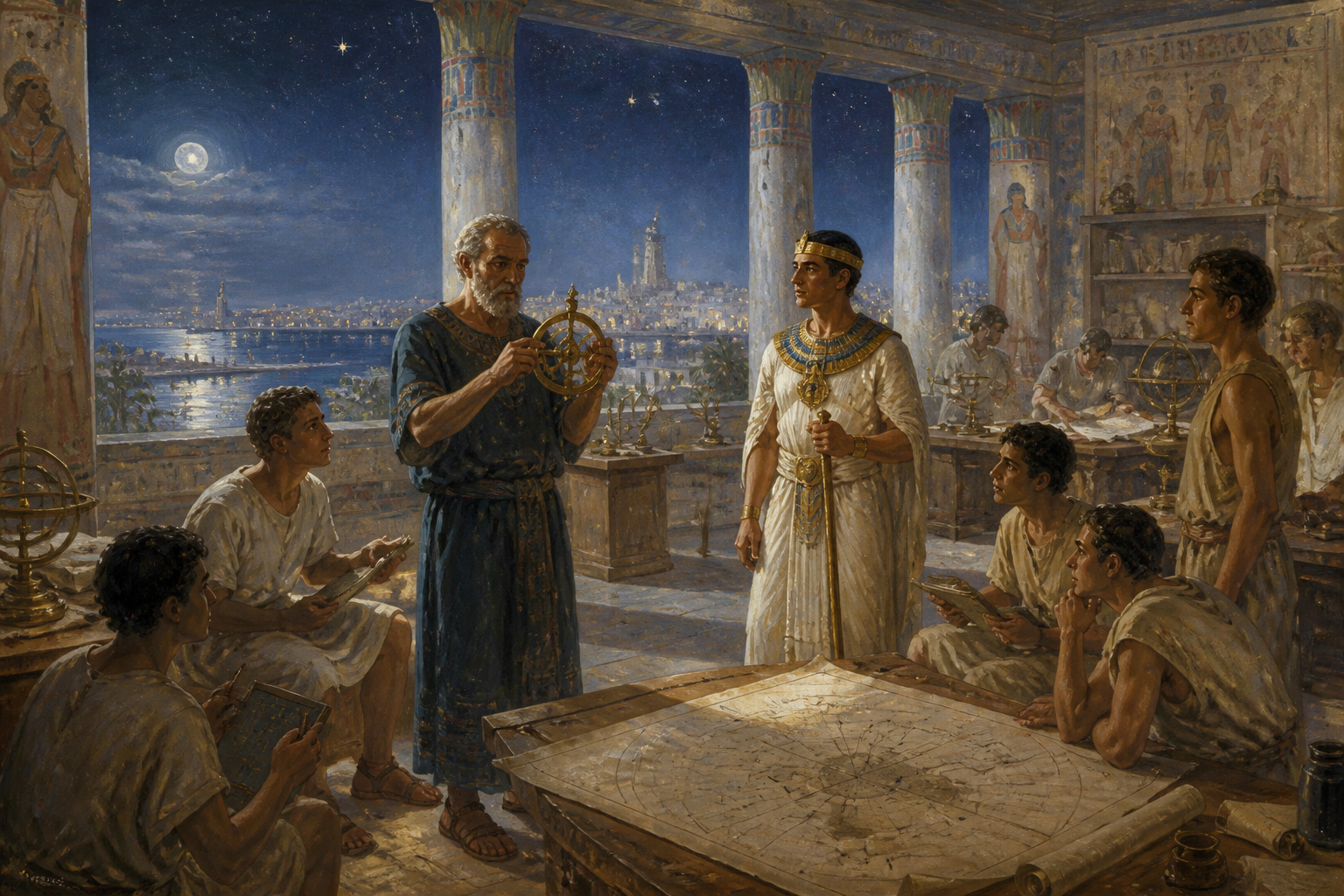
In the quiet observatory atop the palace, night falls over Alexandria. It is here that Ptolemy II gathers with his astronomers, their eyes fixed on the celestial sphere. Amid this group stands an elder astronomer, holding a bronze astrolabe, guiding young apprentices through the secrets of the night sky. This place, adorned with star charts and instruments like sundials and armillary spheres, is dedicated to understanding the cosmos. Ptolemy, in a simple white garment, listens intently, his curiosity as vast as the universe itself. The stars twinkle above, mirrored in the dark waters of the Mediterranean far below. This observatory is not just a place of learning but a symbol of the era's thirst for knowledge and the seamless blend of science and statecraft under Ptolemy's reign. In these discussions, future navigators and scholars find the tools and inspiration to map the world and chart humanity's place within it.
"The stars are our guide," the astronomer declares, pointing to a constellation. "They hold the secrets of navigation and prophecy."
Page 7 — The Queen's Decree
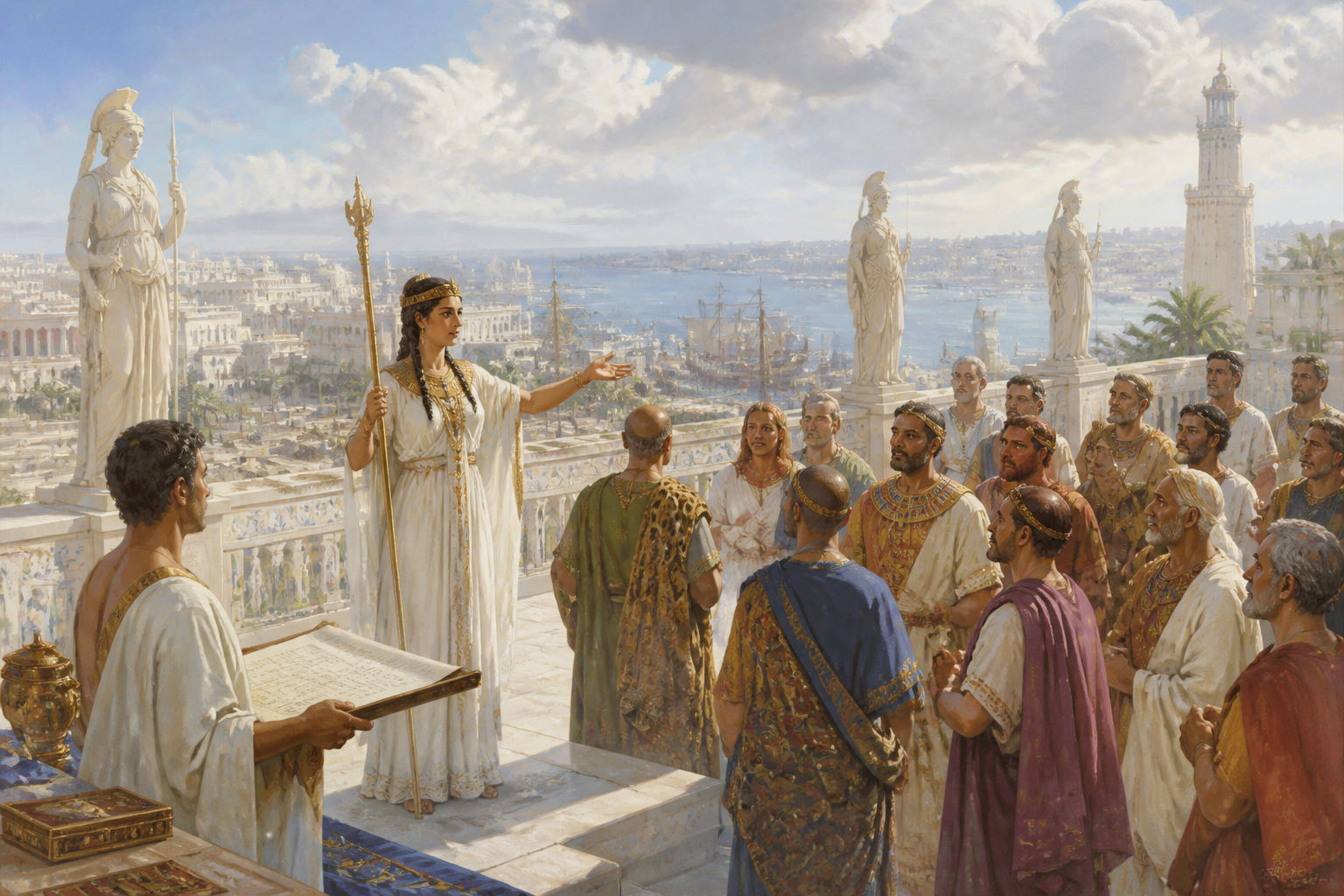
On the palace terrace, with the bustling city of Alexandria stretching out below, Queen Arsinoe II addresses the gathered officials. Her presence commands respect; she is not merely a figurehead but a ruler in her own right. The terrace, lined with marble statues of gods and heroes, is a fitting stage for declarations that shape policy and influence the realm. Today, Arsinoe announces new trade policies designed to enhance Alexandria's status as a commercial hub. Her voice is clear, its tone decisive. The officials, dressed in the garb of various regions, nod in agreement, their absorption of her words a testament to her leadership. The sun bathes the terrace in warmth, and the scent of nearby jasmine drifts through the air. As the queen's decree reverberates through the kingdom, the Ptolemaic dynasty's influence strengthens, underpinned by Arsinoe's sharp intellect and unwavering resolve.
"Let Alexandria flourish," Arsinoe commands, her eyes sweeping over the assembly. "Our prosperity depends on our unity and vision."
Page 8 — The Architect's Legacy
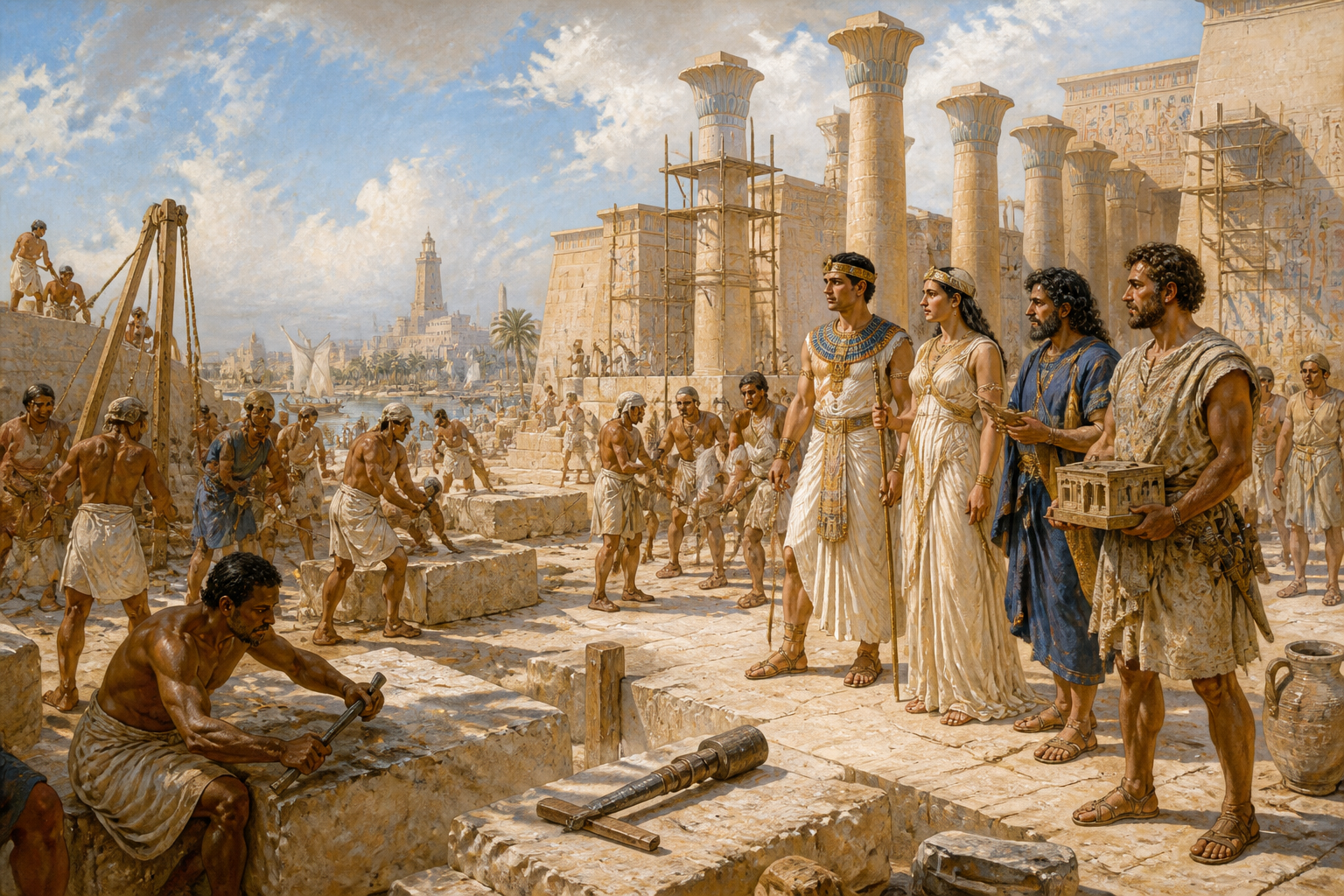
At the bustling construction site of the Serapeum, the grand temple dedicated to the syncretic god Serapis, the architect Sostratus of Cnidus supervises a team of craftsmen. This edifice symbolizes the fusion of Greek and Egyptian beliefs, a testament to Ptolemy II's vision of unity. Sostratus, a man of considerable height with a chiseled visage, guides his workers with precision, ensuring every column and statue aligns with the plan. The fine limestone and granite blocks are transported by a line of workers using wooden rollers. Ptolemy II arrives to inspect the progress, his presence instilling both urgency and inspiration. He wears an amulet depicting Serapis, reflecting his embrace of this new deity. The sound of hammers and the scent of dust fill the air. As the temple rises from the earth, it stands as a monument to the Ptolemaic era's architectural ambition, promising to endure through the ages.
"This temple will unite the divine and the human," Sostratus explains, gesturing toward the half-completed columns. "It is a bridge between worlds."
Page 9 — The Scholar's Debate
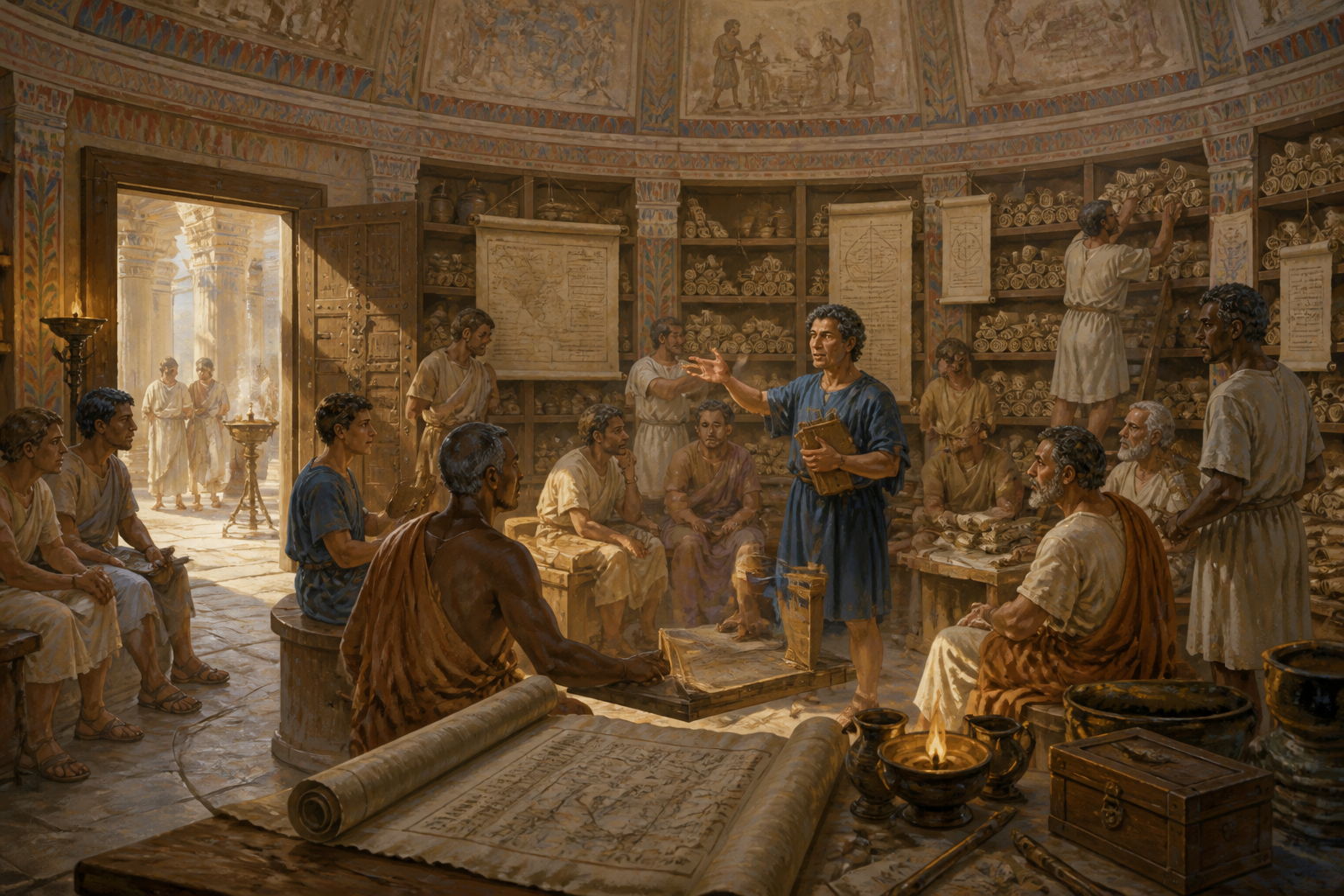
In the ornate debating chamber of the library, scholars gather to engage in spirited discussions that define the intellectual climate of the era. Callimachus stands at the center, directing the discourse on the hierarchy of knowledge. The chamber resonates with the voices of men and women from diverse lands, their clothes as varied as their perspectives. The walls are adorned with frescoes depicting historical and mythological scenes, inspiring the debates within. As Callimachus presents a new cataloging system for the library, the air grows tense with expectation. Ptolemy II enters, seeking to understand the scholarly pursuits that underpin his empire's cultural dominance. Dressed in a casual linen sheath, his presence is nonetheless commanding. The hum of discussion, coupled with the rustling of scrolls and the scent of ink, fills the room. Here, ideas are tested, refined, and recorded, ensuring that Alexandria remains the intellectual heart of the ancient world.
"Knowledge must be organized to be truly useful," Callimachus insists, gesturing to a chart detailing his system.
Page 10 — A Legacy Beyond Time
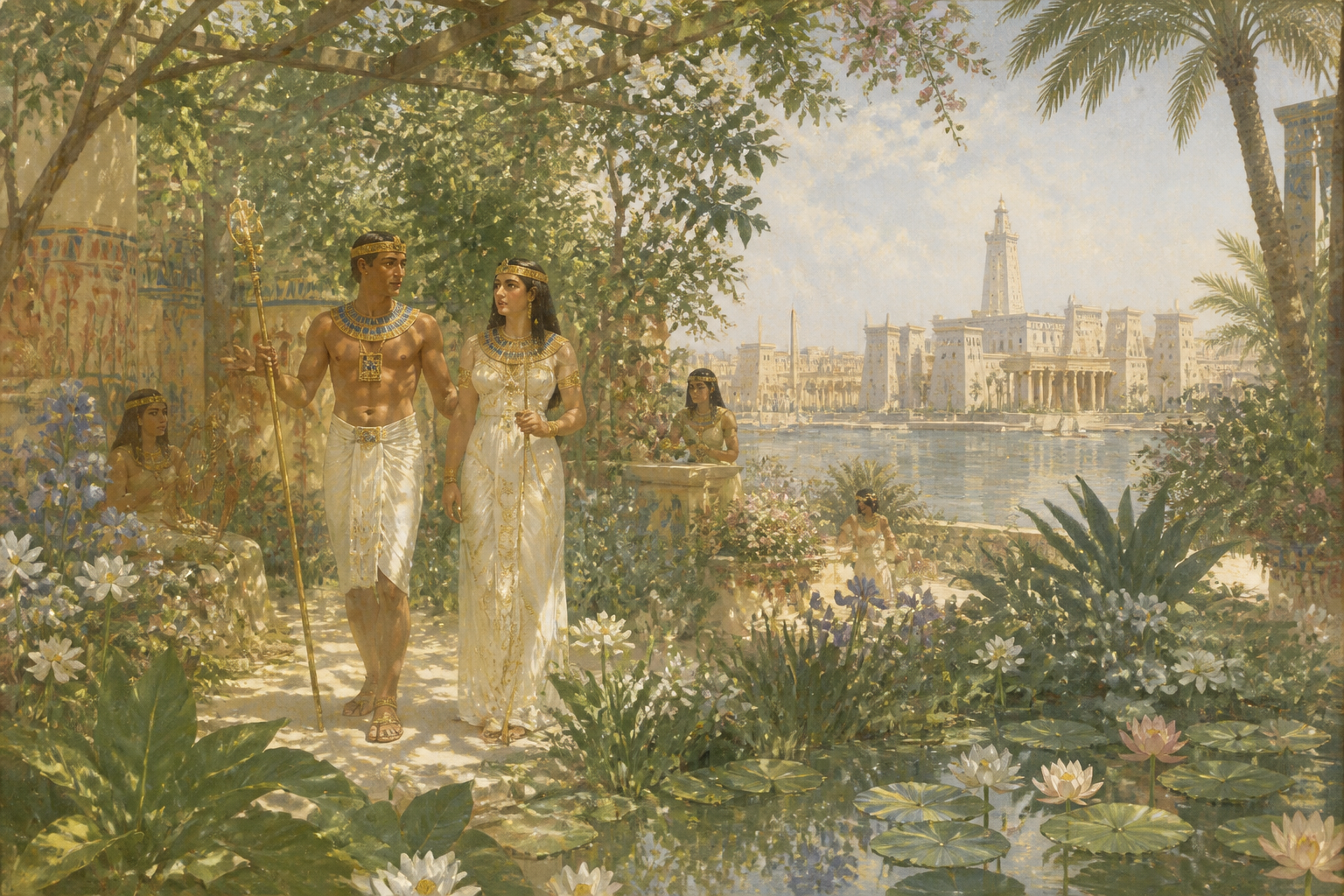
In the tranquil gardens of the royal palace, Ptolemy II walks with Arsinoe II, reflecting on their reign and its lasting impact. The gardens, lush and manicured, serve as a quiet retreat from the bustling city beyond. The couple considers the lighthouse's guiding light and the thriving library. Each represents their dedication to fostering a legacy of enlightenment and prosperity. The air is fragrant with the scent of blooming lotus and myrrh. Ptolemy, wearing a simple, unadorned white kilt, and Arsinoe, in a flowing gown with minimal jewels, enjoy this serene moment. Their rule, marked by monumental achievements, forged a path for future generations. As they survey their realm, the distant gleam of the Mediterranean suggests the limitless possibilities awaiting their successors. Under their reign, Alexandria flourished not just as a city of trade and power but as the intellectual and cultural beacon of the ancient world.
"We have planted seeds of knowledge and unity, my queen," Ptolemy reflects. "May they grow for generations to come."
About this story
- Audience: general readers
Read Wonder Egypt on your phone
Wonder Egypt is available on Android. Get Wonder Egypt on Google Play.