Ramesses II
Ramesses II — an illustrated history story. 10 illustrated pages, free to read on Wonder Egypt.
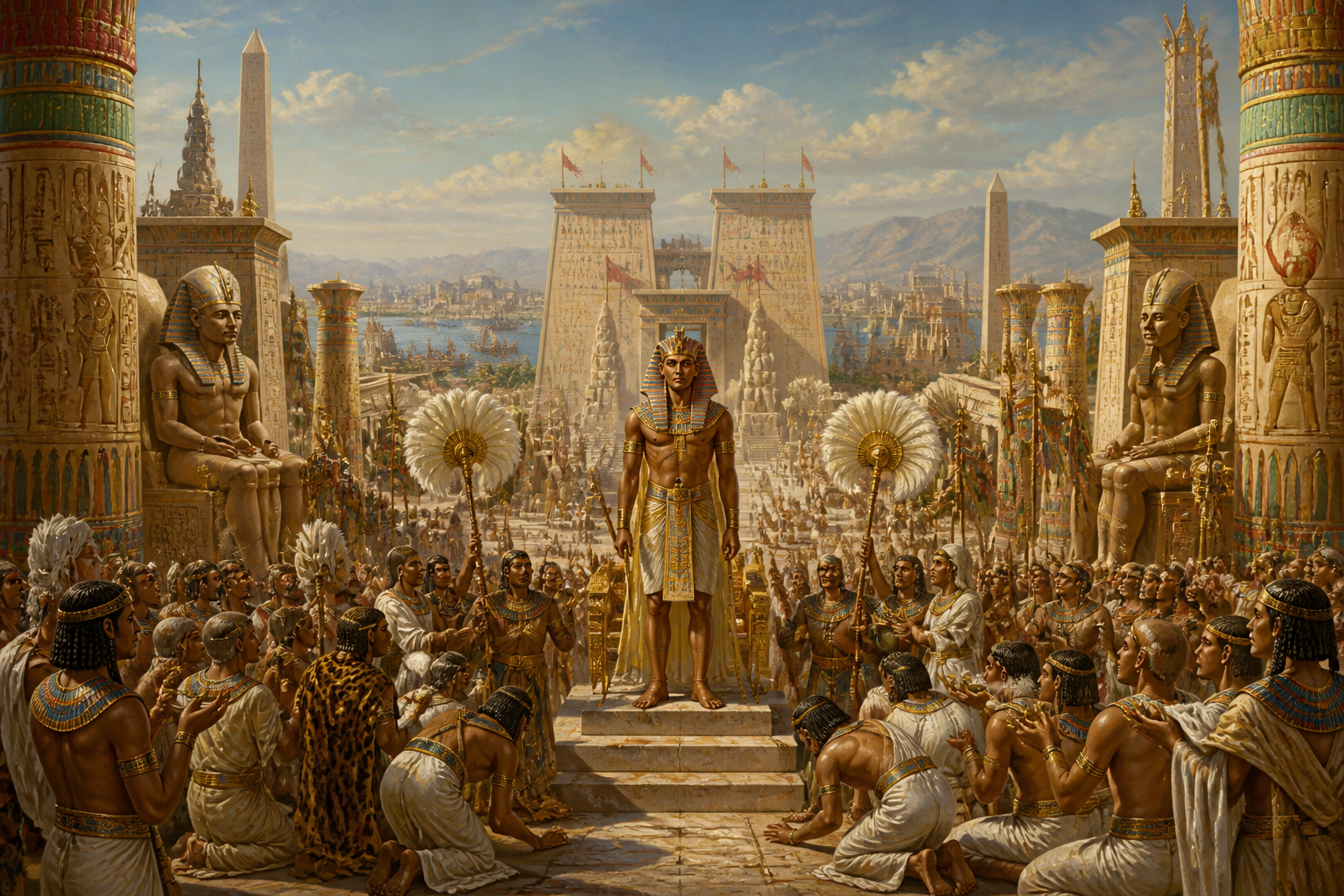
Page 1 — The Builder of Eternity
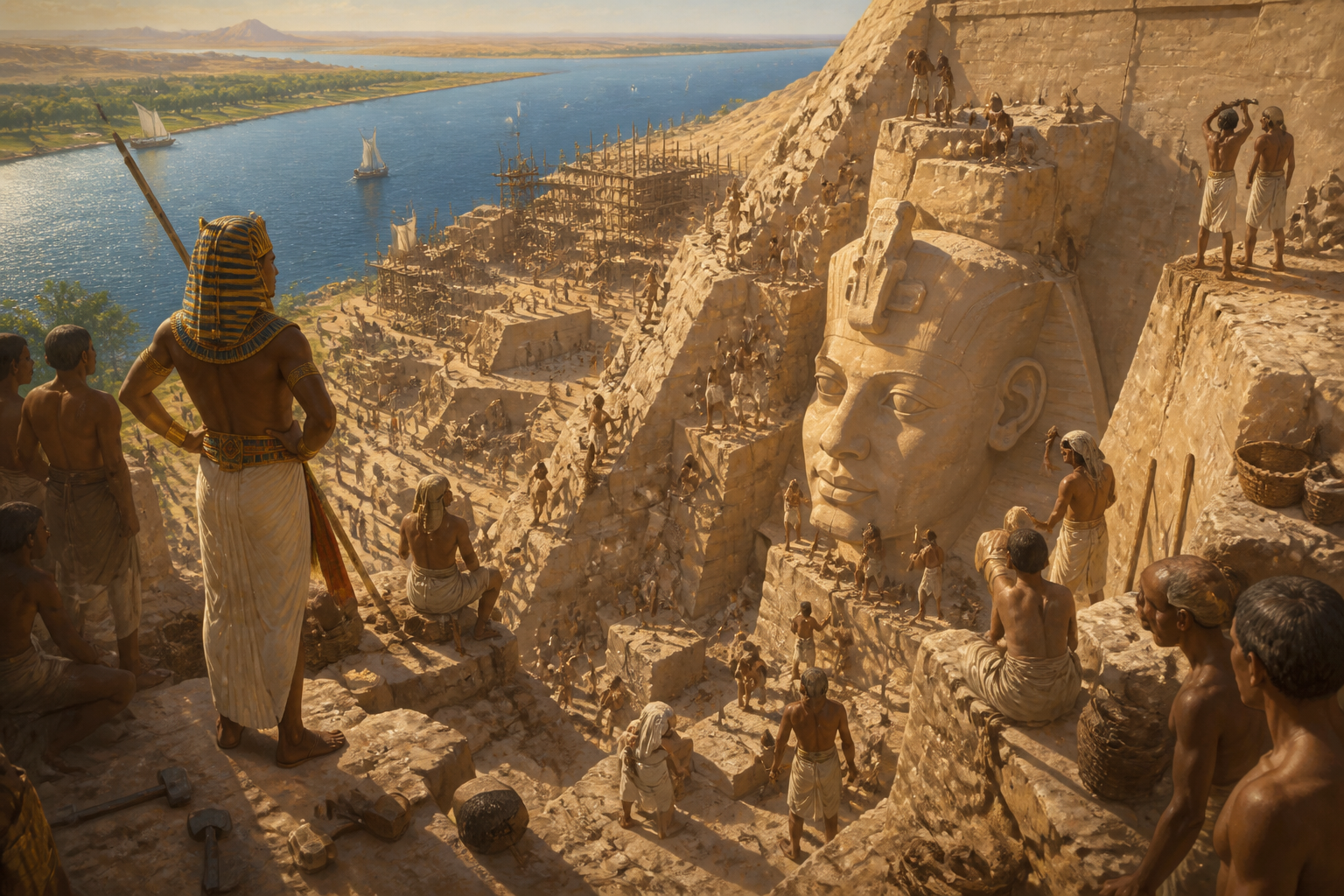
Ramesses II, known as the 'Great Ancestor,' was a pharaoh whose reign cast a shadow over history. His sixty-six-year rule left an indelible mark on Egypt through monuments like Abu Simbel and the city of Pi-Ramesses. Born to Seti I, he ascended to the throne around 1279 BC. His queens were Nefertari, a beloved companion immortalized in tomb paintings, and Isetnofret. His sons Khaemwaset and Merneptah were groomed for leadership. The reign was marked by epic battles, such as those against the Hittites, culminating in the signing of history’s first known peace treaty with Hattusili III. Ramesses II’s legacy is carved into the colossal statues and grand temples that dot the Nile, standing as a testament to a king who sought to elevate Egypt to unparalleled heights. Upon his death, the land had known no other ruler for generations, firmly establishing him as the quintessential pharaoh.
"Let us build so that our names endure," Ramesses declared to his architects, a command that resonated through millennia.
Page 2 — Council of War
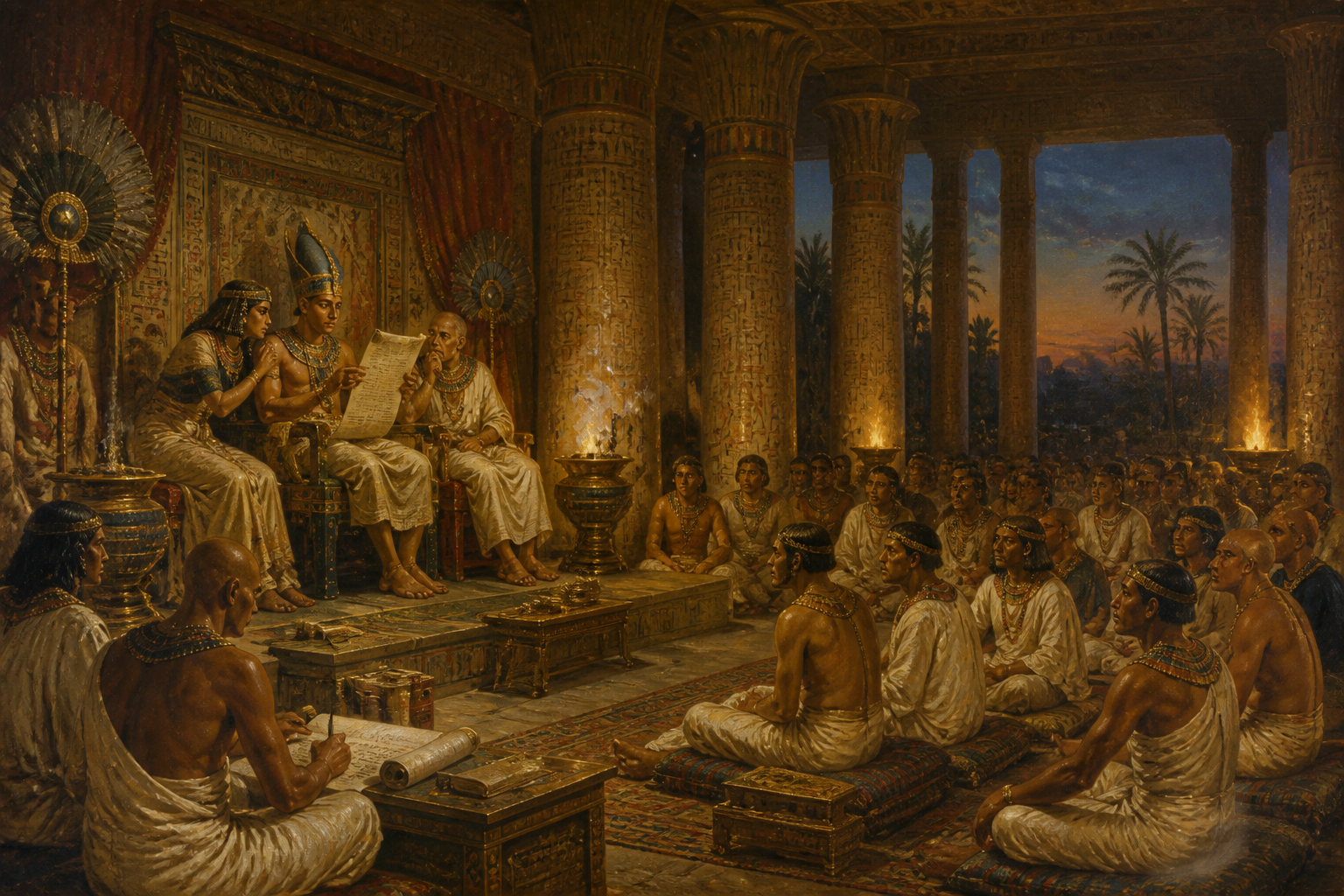
Within the vast audience chamber of Thebes, Ramesses II gathered his generals and advisors to discuss the pressing threat of the Hittite army. The air was thick with incense, and chattering scribes recorded every word. Here, Khaemwaset, his scholarly son, provided insight from the annals of history, while Queen Nefertari, ever perceptive, offered counsel in diplomatic dealings. The pharaoh, clad in a headdress with a striking cobra emblem, listened intently to General Seti’s reports of the Hittites’ advances. The tension was palpable, but Ramesses exuded confidence, his presence commanding the room. It was in this chamber that strategies were forged, alliances were considered, and the seeds of peace were first sown, all intertwined with the weighty matters of statecraft.
"The Hittites press hard, my father," Khaemwaset cautioned, "but our resolve shall see us through."
Page 3 — On the Battlefield
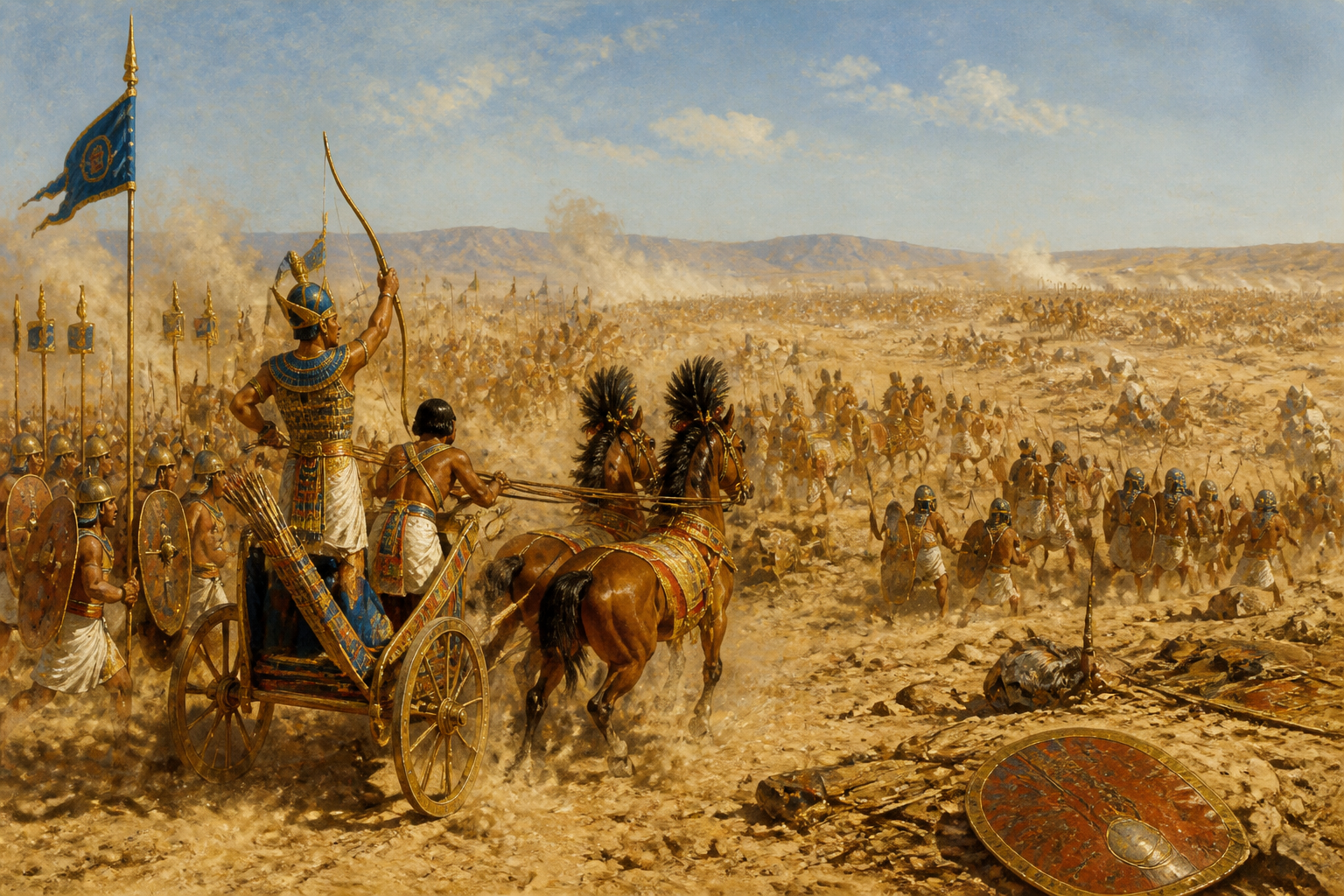
On the plains of Kadesh, the clash of armies reverberated across the dusty expanse. Ramesses II, astride his chariot, led the charge, his blue khepresh crown gleaming under the relentless sun. The Hittite forces, led by Muwatalli II, were formidable, yet the heart of Egypt’s army beat with fierce loyalty to their king. Amidst the chaos, Ramesses wielded his bow, his spirit undeterred by the turmoil. General Seti II rallied soldiers with an unwavering gaze. Dust clouds swirled, mingling with the cries of battle. Despite an initial setback, the valor and tactics displayed here would eventually lead to one of the most celebrated stalemates and the seeds of diplomacy would soon flourish into a peace treaty that would echo through history.
"Stand with me, soldiers of Egypt!" Ramesses bellowed, his voice a clarion call above the din.
Page 4 — A Treaty for the Ages
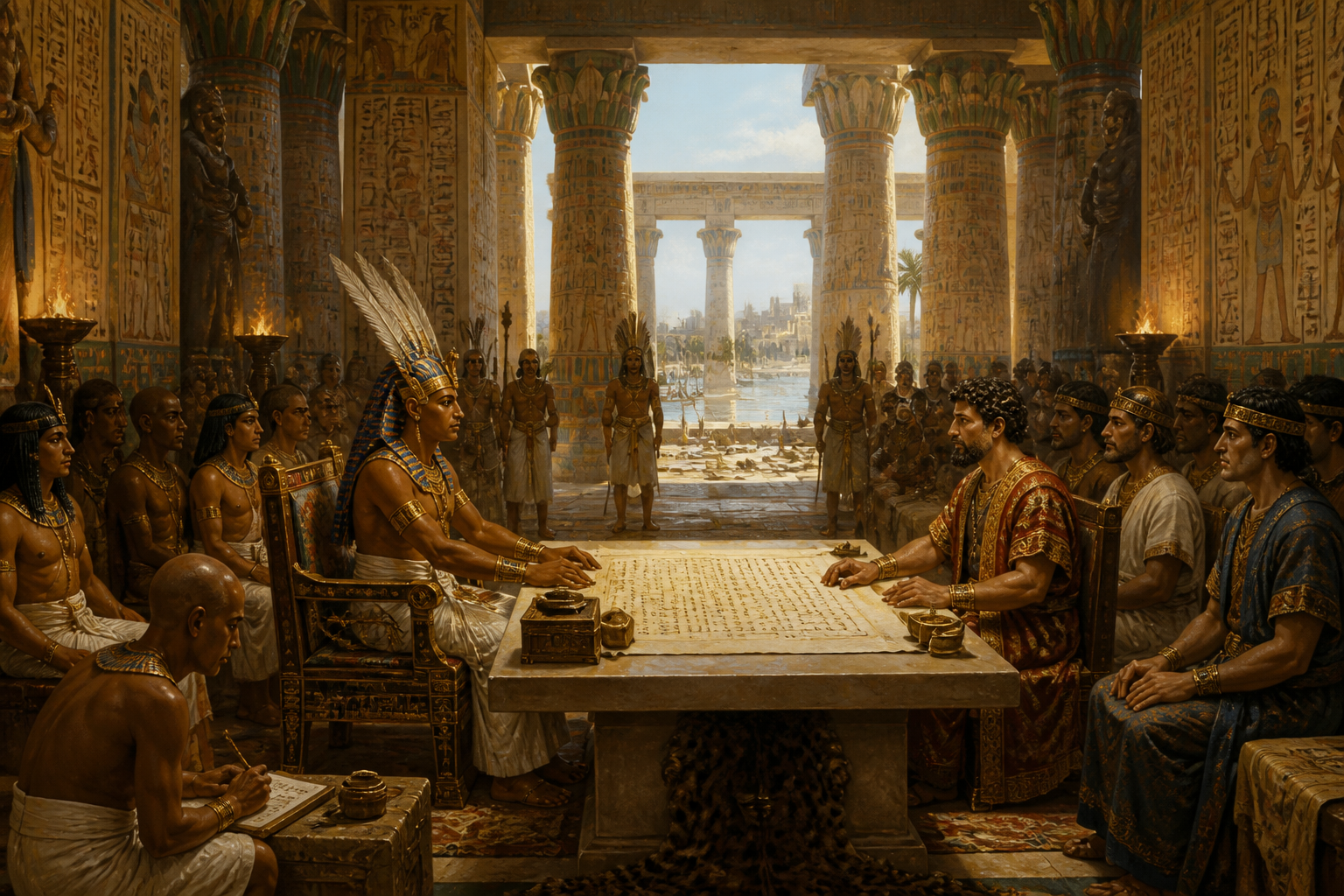
In the grand hall of Pi-Ramesses, envoys gathered to witness the signing of the historic peace treaty between Egypt and the Hittites. The ornately carved stone walls echoed with low murmurs as scribes prepared to document this unprecedented truce. Ramesses II, in a resplendent kilt and feathered headdress, sat at the head of a long alabaster table covered in papyrus. Opposite him, the Hittite delegation, led by an aged diplomat in embroidered garments, awaited the momentous occasion. As the seals were pressed into clay and the papyrus exchanged hands, a new era of peace was ushered in, one where trade and alliance would replace the clashing of swords. This accord, hallowed and solemn, would echo through time as the first known peace treaty, setting a precedent for future diplomacy.
"Let our nations prosper in harmony," Ramesses declared, sealing the document with an indelible mark.
Page 5 — The Queen's Legacy
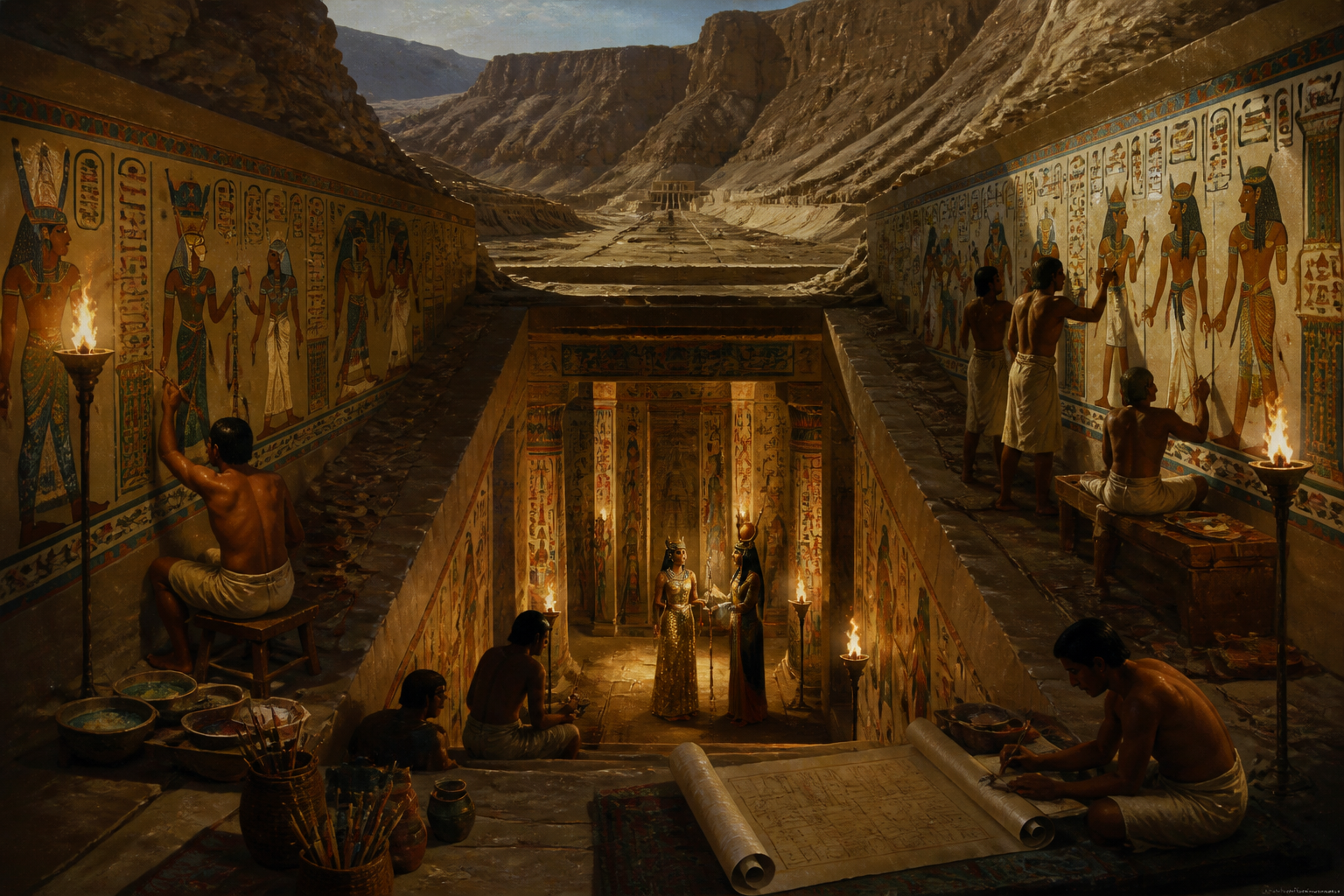
Within the sacred bounds of the Valley of the Queens, the tomb of Nefertari stands as a testament to her enduring influence and Ramesses II's devotion. The walls are alive with vibrant depictions of Nefertari's journey into the afterlife, her role in guiding and advising her husband woven into the very fabric of their reign. Clad in a linen sheath adorned with gold, Nefertari is rendered majestically beside the gods of the netherworld. Here, Ramesses’s love is immortalized, his inscriptions exalting her wisdom and beauty. As the workmen applied finishing touches, the scent of wet plaster mingled with the incense that suffused the air. The tomb became not merely a resting place but a symbol of a queen’s pivotal role in maintaining the balance of power and harmony in their cosmic saga.
"My beloved, you shall forever guide the stars," Ramesses is believed to have inscribed, his words etched in stone.
Page 6 — A Pharaoh's Farewell
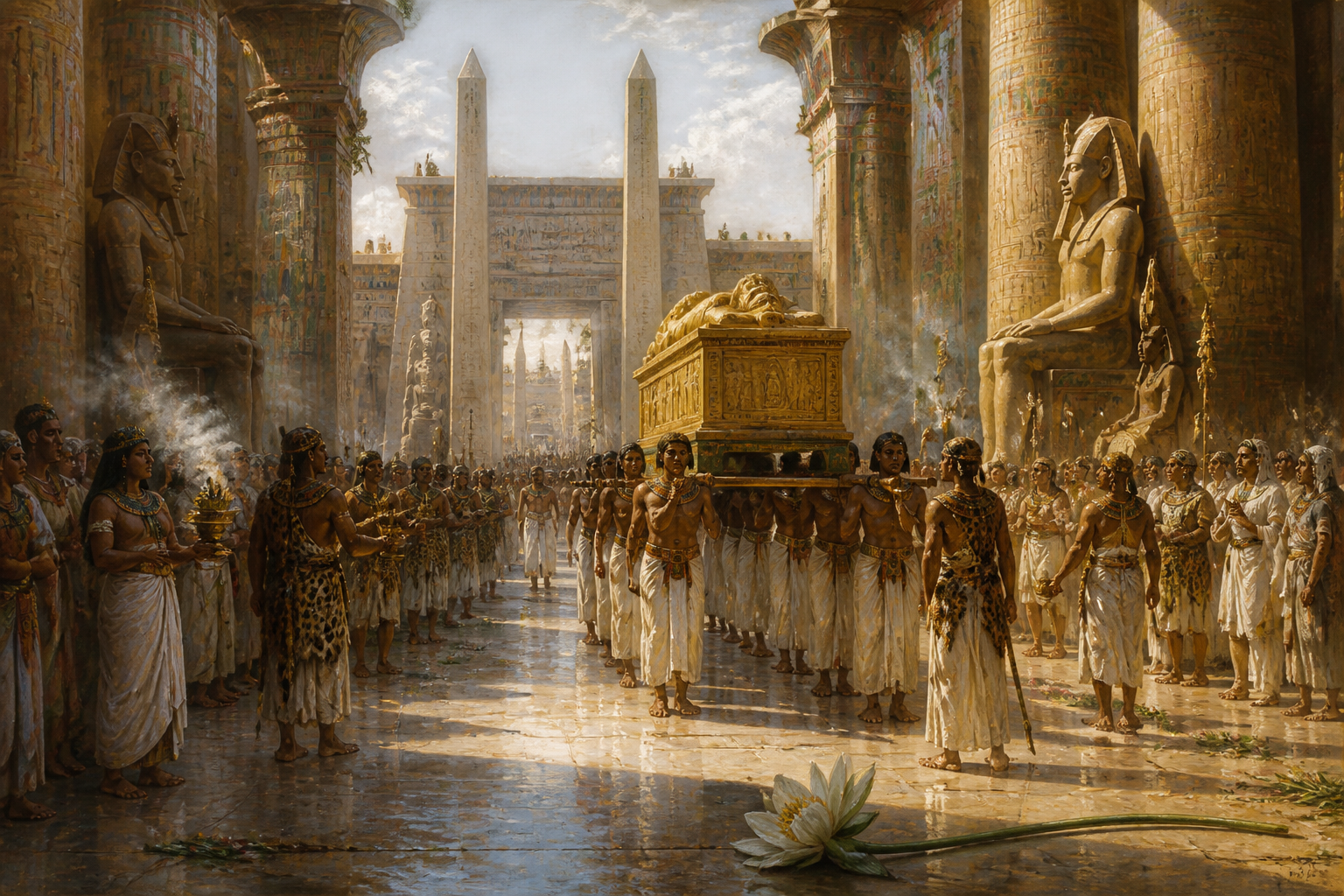
The funeral of Ramesses II unfolded in the great mortuary temple at Thebes, a city already ancient in his time. The temple, resplendent with monumental columns and colossal statues, echoed with chants as priests, bearing the symbols of Osiris, guided the pharaoh’s spirit to the afterlife. Mourners, from high officials to common citizens, gathered in throngs to pay their respects, adorned in white linen robes. His body, wrapped in fine linen and enclosed in gilded sarcophagus, was borne by his sons, including Merneptah, who would succeed him. Incense smoke curled towards the heavens, carrying with it prayers for eternal life. Ramesses’ passing marked the end of an era, but his works continued to speak, their voices whispering the story of a king whose reign was as enduring as the monuments he left behind.
"May the gods receive you with open arms," Merneptah whispered, eyes closed in solemn reverence.
Page 7 — Khaemwaset's Wisdom
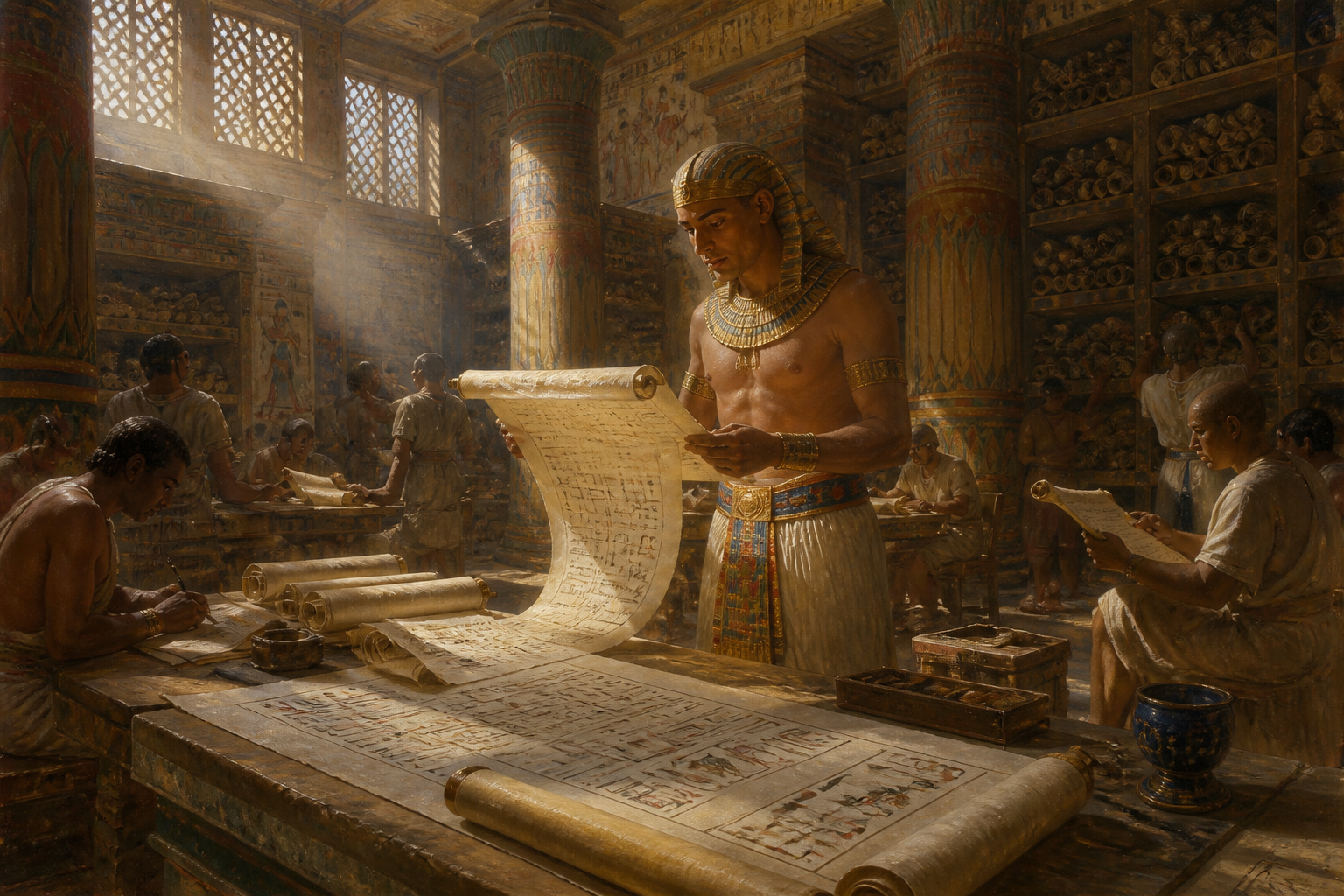
In the archives of the temple at Memphis, Khaemwaset, son of Ramesses II, perused papyrus scrolls, seeking knowledge of Egypt’s past. As both high priest and prince, he was tasked with preserving the heritage of his ancestors. Clad in a finely woven kilt, he oversaw the restoration of ancient monuments, ensuring his father's legacy would endure. His commitment extended to the discovery of tombs long forgotten, breathing new life into the stories of pharaohs past. Scholars and scribes, draped in simple linen, assisted him, their work illuminated by the filtered sunlight streaming through lattice windows. In this sanctuary of learning, Khaemwaset’s vision of continuity and reverence for history became his enduring gift to Egypt.
"Our past is the key to our future," Khaemwaset remarked to a fellow scholar, his voice tinged with determination.
Page 8 — A Dynasty's Future
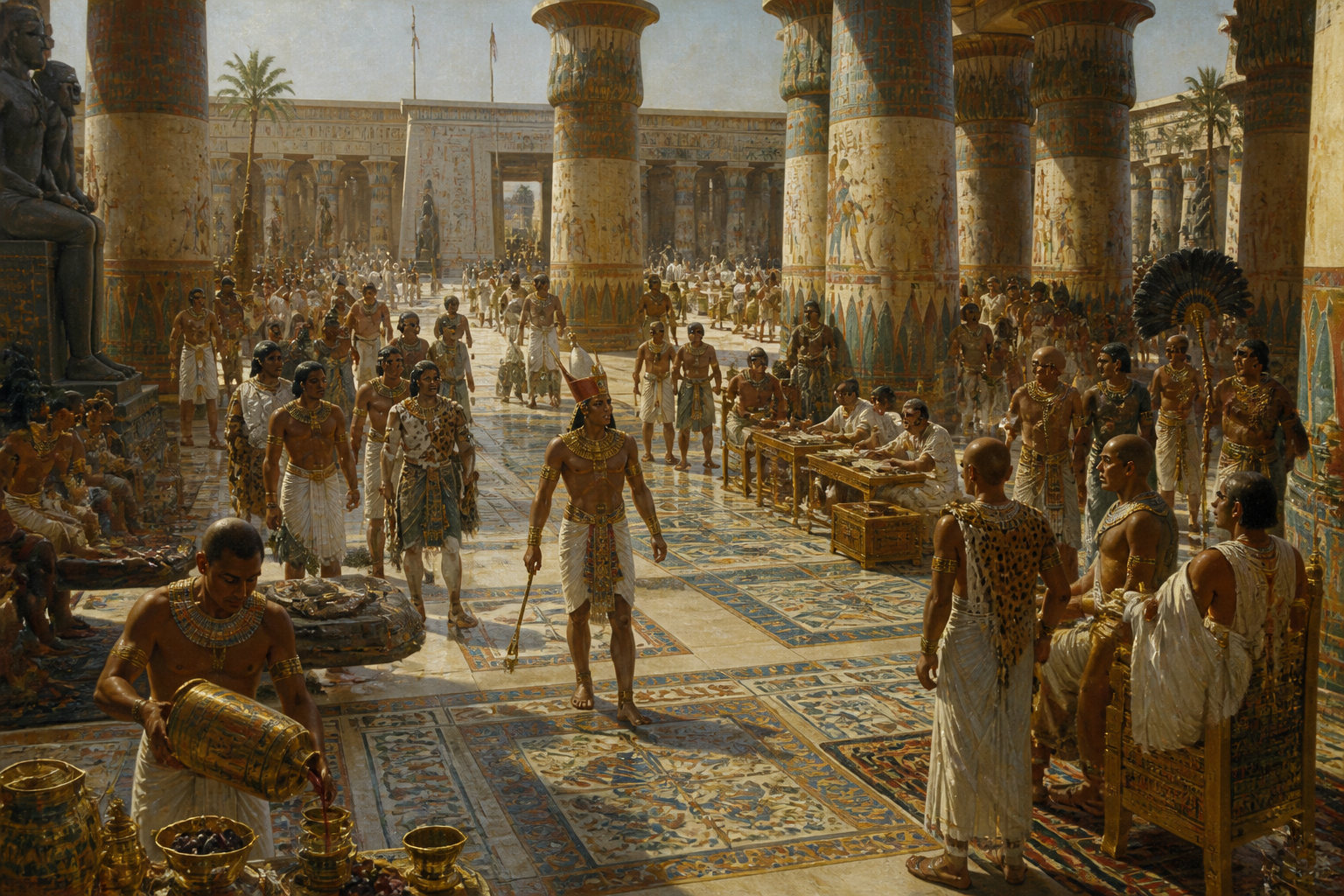
In the regal court of Pi-Ramesses, Merneptah, the thirteenth son of Ramesses II, prepared to ascend the throne. The court was a hub of activity, where ministers in pleated kilts discussed matters of state over cups of wine. Merneptah, wearing a shimmering headdress and a sophisticated pleated kilt, navigated his father's expansive legacy. As he walked through the colonnades, he was acutely aware of the monumental task ahead: to uphold the peace treaty with the Hittites, maintain Egypt’s architectural prowess, and safeguard its borders. In the shadow of his father’s achievements, Merneptah’s reign posed the question of how a nation moves forward while honoring the past, a challenge faced by every successor to greatness.
"Our father's light guides my path, yet our challenges are our own," Merneptah confided to his closest advisor.
Page 9 — Legacy of Stone
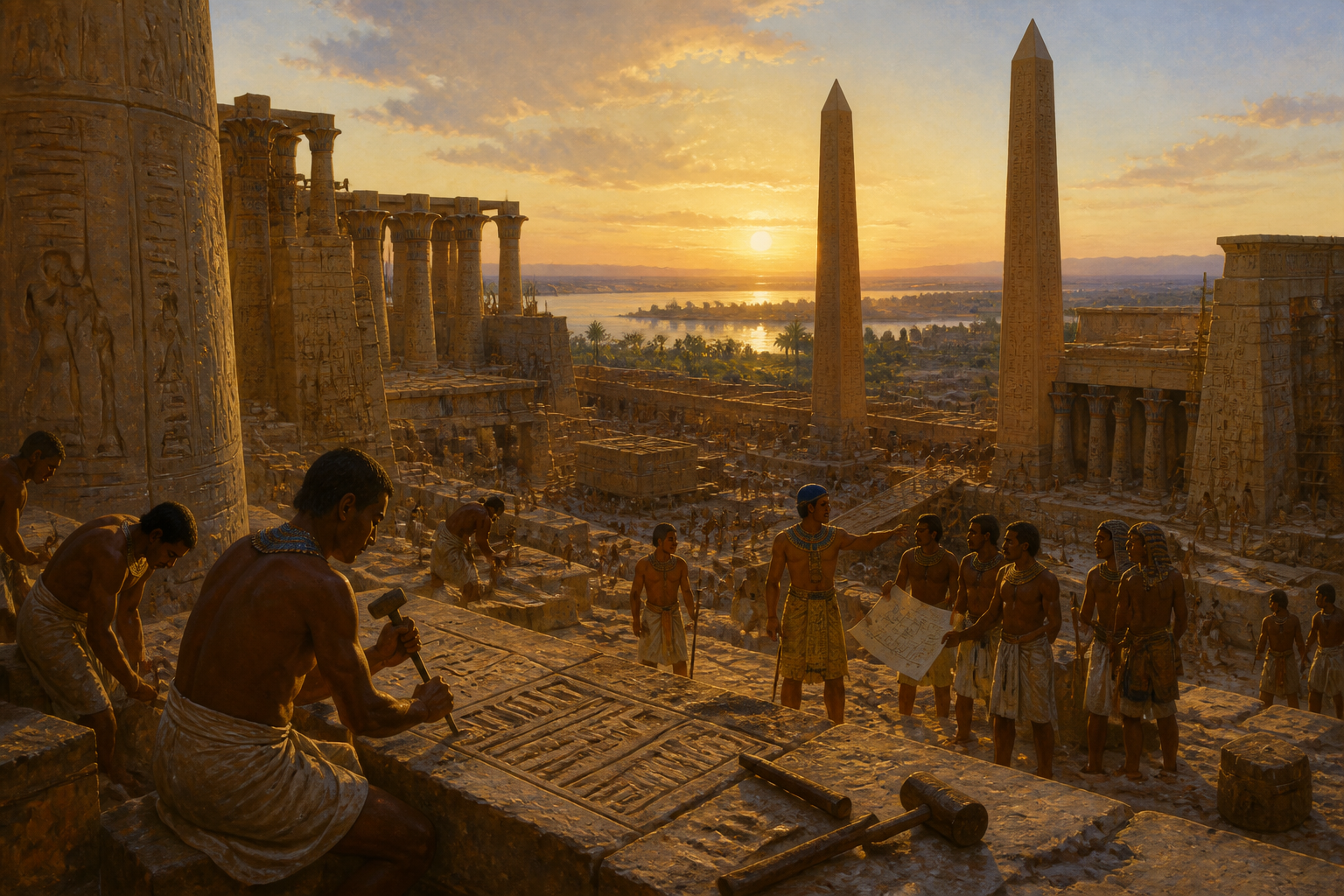
In the shadow of the great temple at Karnak, Ramesses II’s craftsmen continued to labor, carving his monumental legacy into the very bedrock of Egypt. The temple, a sprawling maze of colossal columns and towering obelisks, resonated with the clang of chisels against stone. Apprentices in simple kilts ferried tools and materials, while master sculptors etched intricate hieroglyphs onto towering walls. Ramesses II’s name was immortalized here, a testament to his vision and tenacity. His statues, with serene gazes, stood sentinel, a reminder of a reign that reshaped Egypt’s landscape. As the sun dipped below the horizon, casting the temple in a crimson glow, the everlasting influence of Ramesses II on Egypt’s identity was etched in every grain of sand.
"These stones shall sing of our works for eternity," a master sculptor proclaimed to his apprentices, eyes alight with purpose.
Page 10 — The Memory of Kings
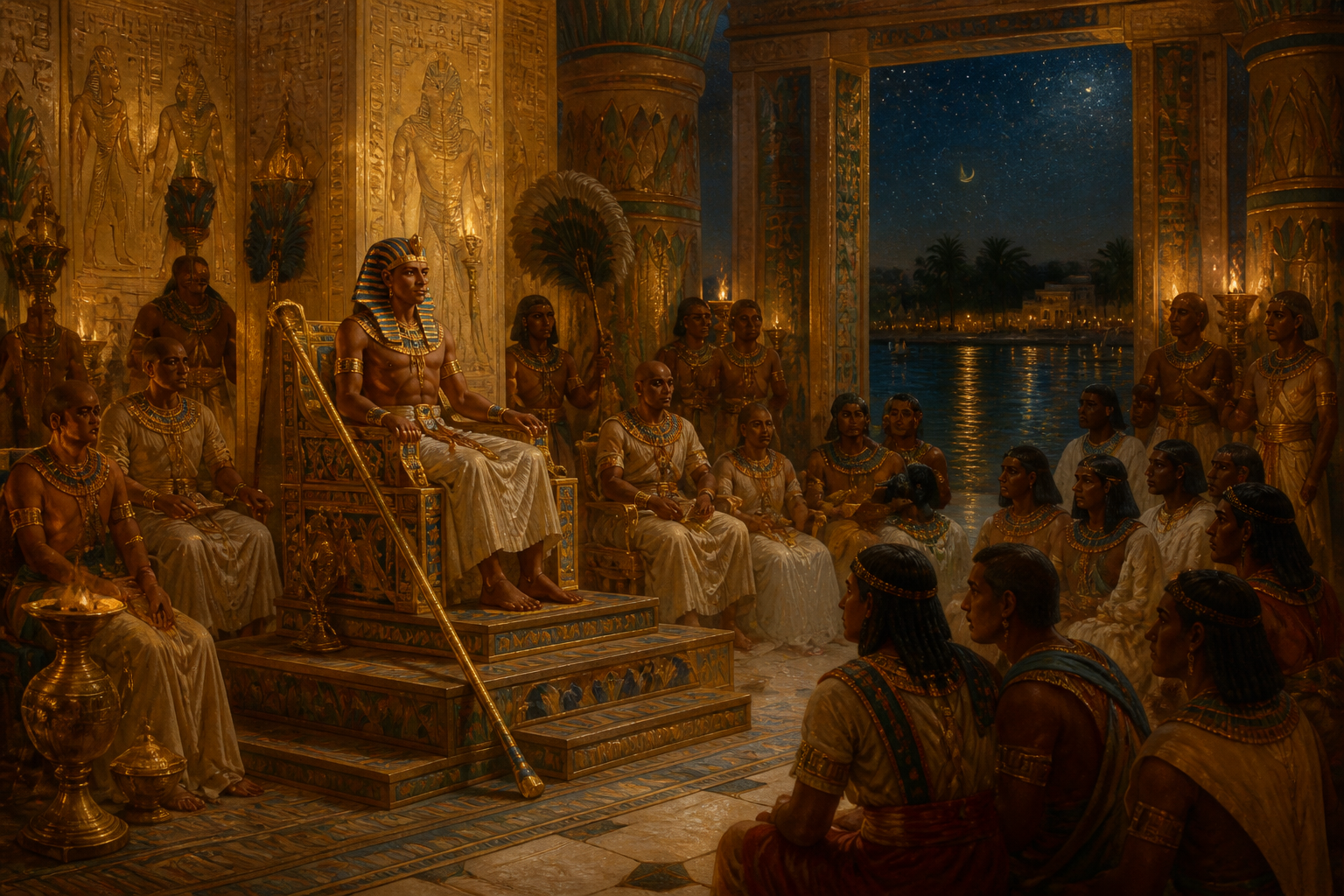
In the twilight of his reign, Ramesses II reflected on his achievements within the grandeur of his palace at Pi-Ramesses. The halls, adorned with tributes to his victories and divine favor, echoed with the distant sounds of the Nile. Ramesses, now aged, still wore the mantle of kingship with pride, his regal attire a testament to his enduring authority. Surrounded by his remaining family and trusted advisors, he spoke of the future, urging unity and resilience. As the night deepened, the legacy of Ramesses II became apparent in the fabric of Egyptian society: a tapestry woven from conquests, diplomacy, monumental building, and cultural flourishing. His reign carved a path for future pharaohs, anchored in the timeless pursuit of maat—balance and order.
"Remember, it is the harmony of our deeds that shall echo through eternity," Ramesses addressed his kin, his voice both a command and a blessing.
About this story
- Audience: general readers
Read Wonder Egypt on your phone
Wonder Egypt is available on Android. Get Wonder Egypt on Google Play.