Narmer
Narmer — an illustrated history story. 10 illustrated pages, free to read on Wonder Egypt.
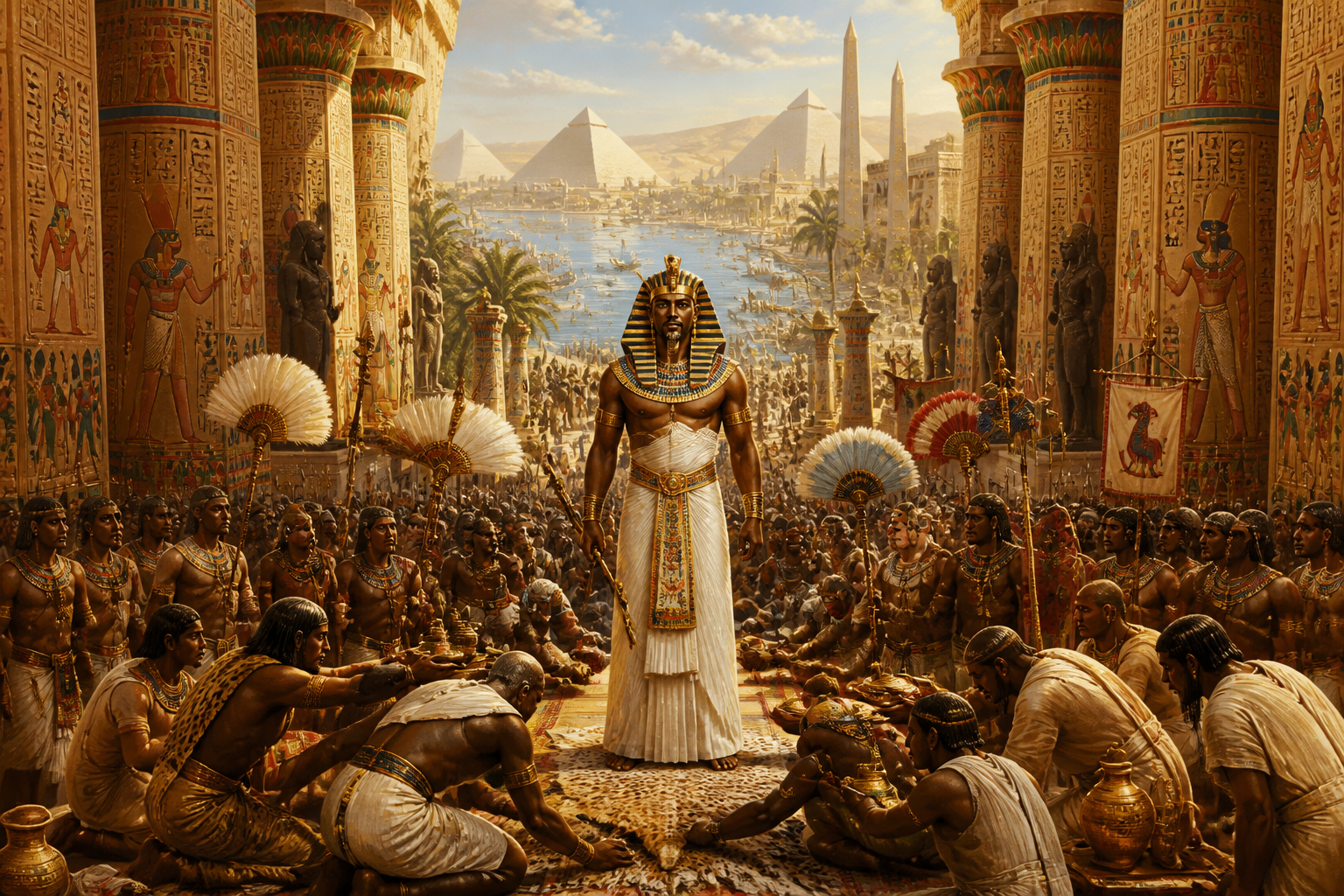
Page 1 — Unification of a Kingdom
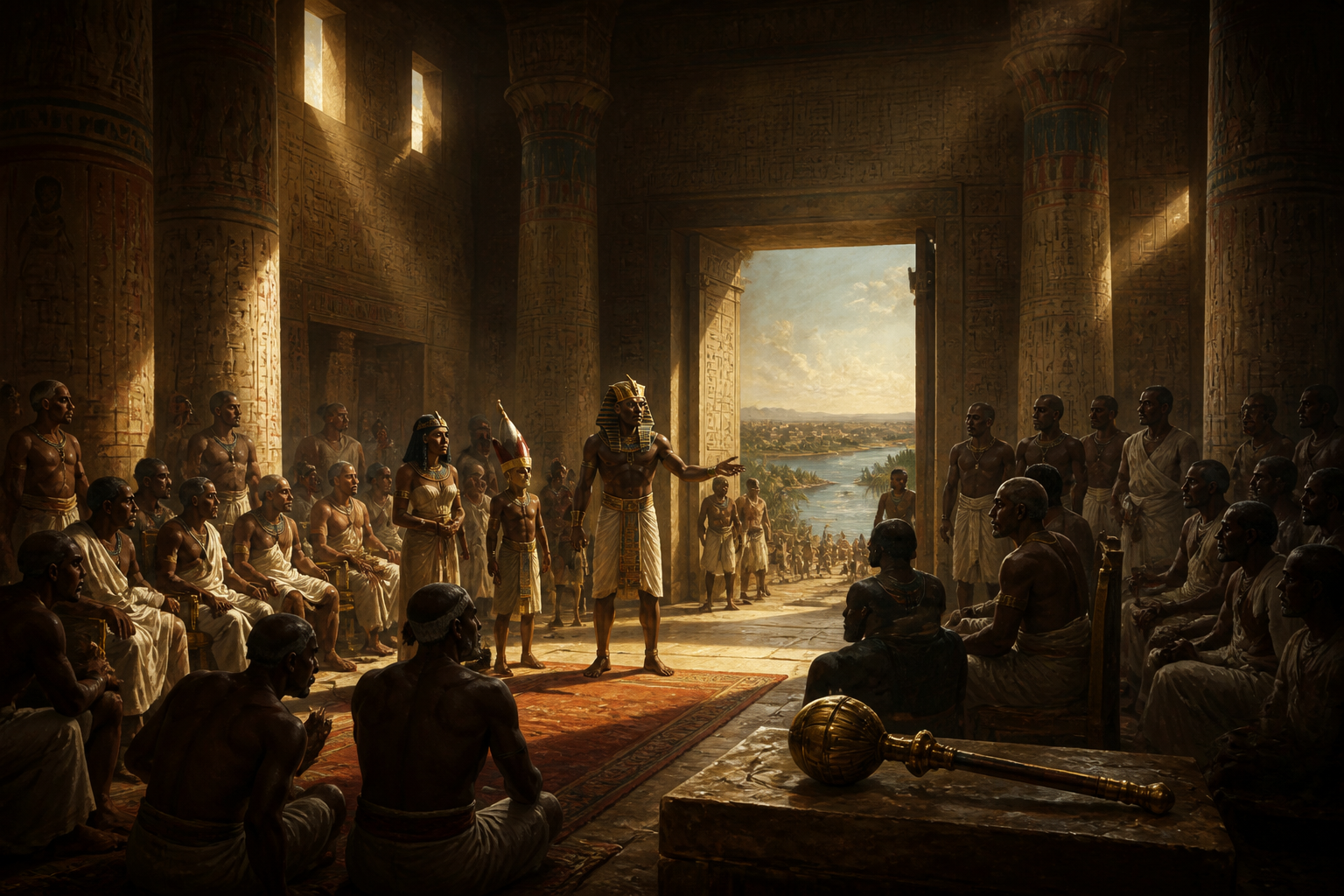
Narmer, the formidable ruler of ancient Egypt, rose to power amidst a landscape fragmented by rival chiefdoms. From the fertile valleys to the arid deserts, his vision was clear: to unify Upper and Lower Egypt into a singular, monumental kingdom. As the clouds of history gathered over Hierakonpolis, Narmer wielded both strategy and might. By marrying Neithhotep, he secured alliances, laying the foundation for a lasting dynasty. His son, Hor-Aha, stood ready to inherit the legacy. The court was filled with figures like Ka, whose counsel was sought and whose loyalty was tested. Narmer's reign saw the birth of a capital at Memphis, a city destined to be the heart of Egypt. Under his rule, the dawn of Egyptian script emerged, chiseling history into stone. The political landscape altered forever, he bequeathed a kingdom defined by its singularity—a testament to his foresight and determination.
"To unite is to survive," Narmer proclaimed, his voice echoing through the grand hall.
Page 2 — Alliance through Marriage
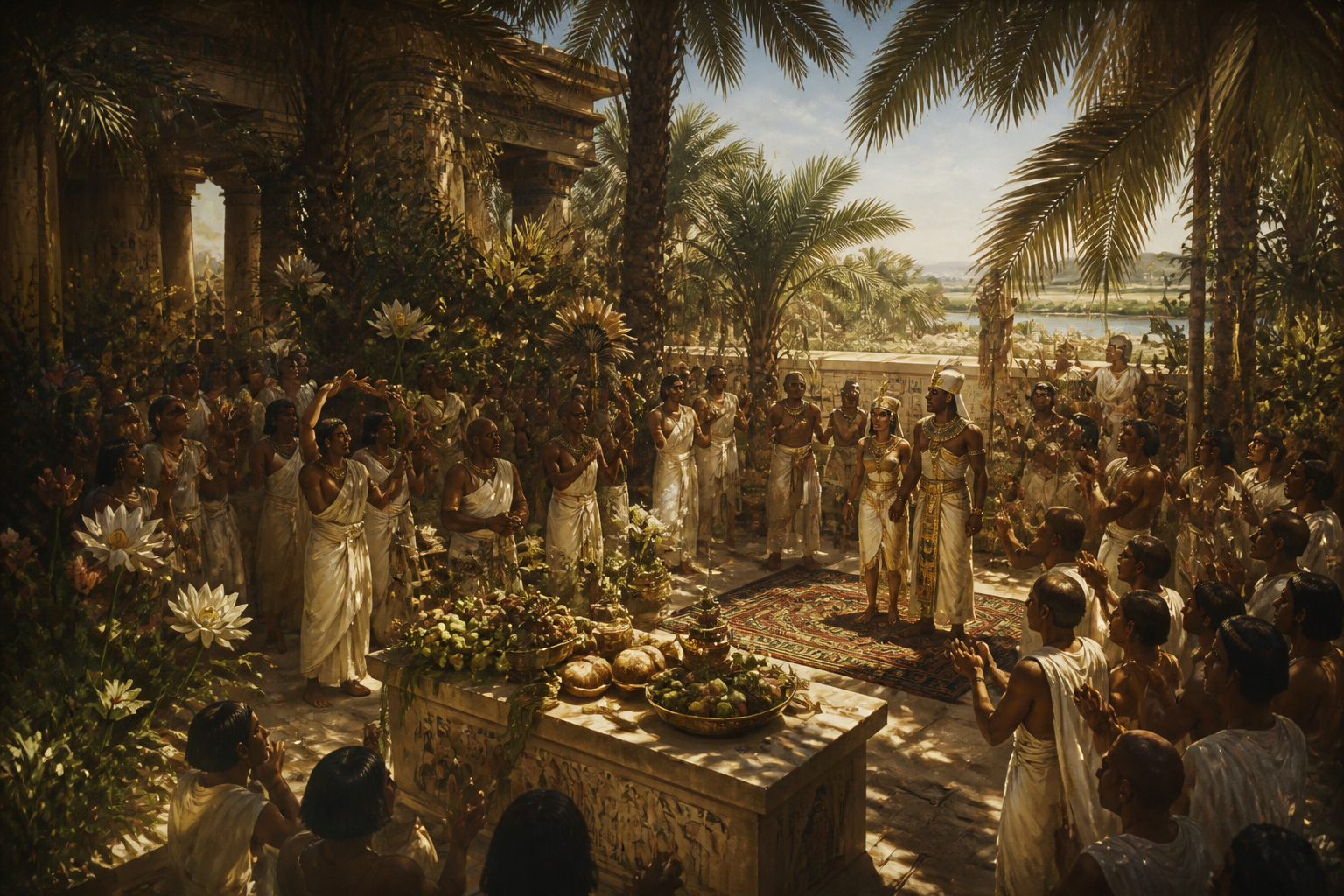
In the fragrant gardens of Hierakonpolis, beneath the swaying date palms and amidst the vibrant blooms, a union of significance is formed. Narmer's marriage to Neithhotep transcends mere personal alliance; it is a strategic maneuver to solidify his claim over both Upper and Lower Egypt. Neithhotep, with her regal bearing, stands at his side, a symbol of unity and power. Her presence is not just a matrimonial alliance but a political statement. Courtiers and nobles gather in celebration, their linen robes billowing in the gentle breeze. Songs of praise fill the air, carried by the notes of the lyre. This marriage marks the consolidation of two lands, with Neithhotep poised to influence the court with wisdom and grace. While the festive air surrounds them, Narmer whispers vows of unity and strength, binding their fates and their people's fortunes together for eternity.
"Together, we shall weave the fate of two lands into one," Neithhotep vows softly.
Page 3 — Birth of a Capital
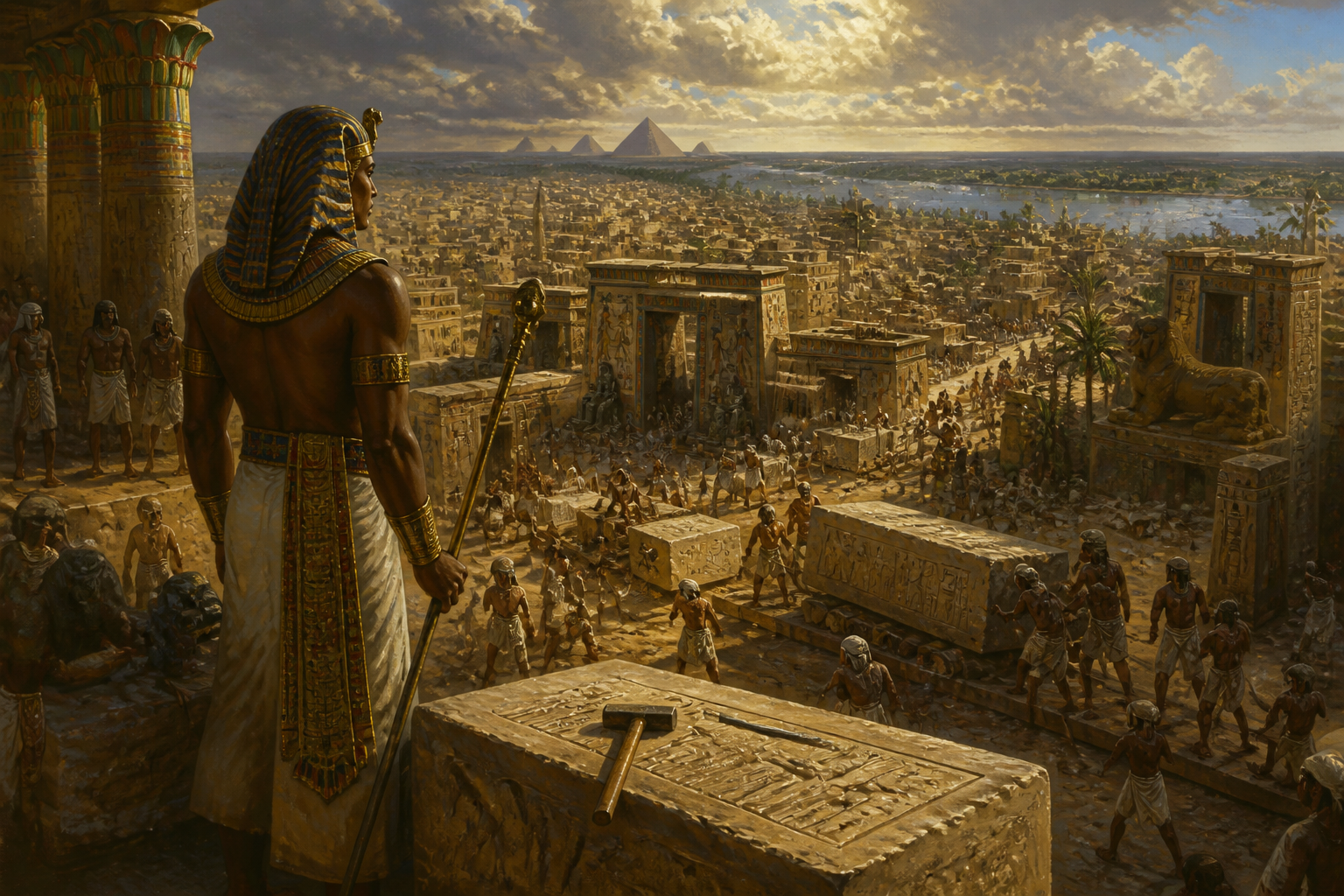
As the Nile flows steadily past, the city of Memphis arises from its banks, a testament to Narmer's vision. This burgeoning metropolis becomes the first capital of unified Egypt, strategically positioned at the apex of Upper and Lower Egypt. Here, beyond the whispers of the court, skilled laborers toil under a sun that blazes down upon stone and sandstone alike. The sound of chisels against rock rings out, echoing across the bustling avenues. Merchants haggle in the marketplace, their voices a symphony of dialects. This city is a beacon of Narmer's reign, where politics and trade converge, and the first vestiges of written language begin to shape its governance. The foundation stones of Memphis set a precedent for millennia of Egyptian cities, marked by grandeur and order.
"Let Memphis stand as the heart of Egypt," Narmer declares, his decree echoing across the construction site.
Page 4 — Council of Ka
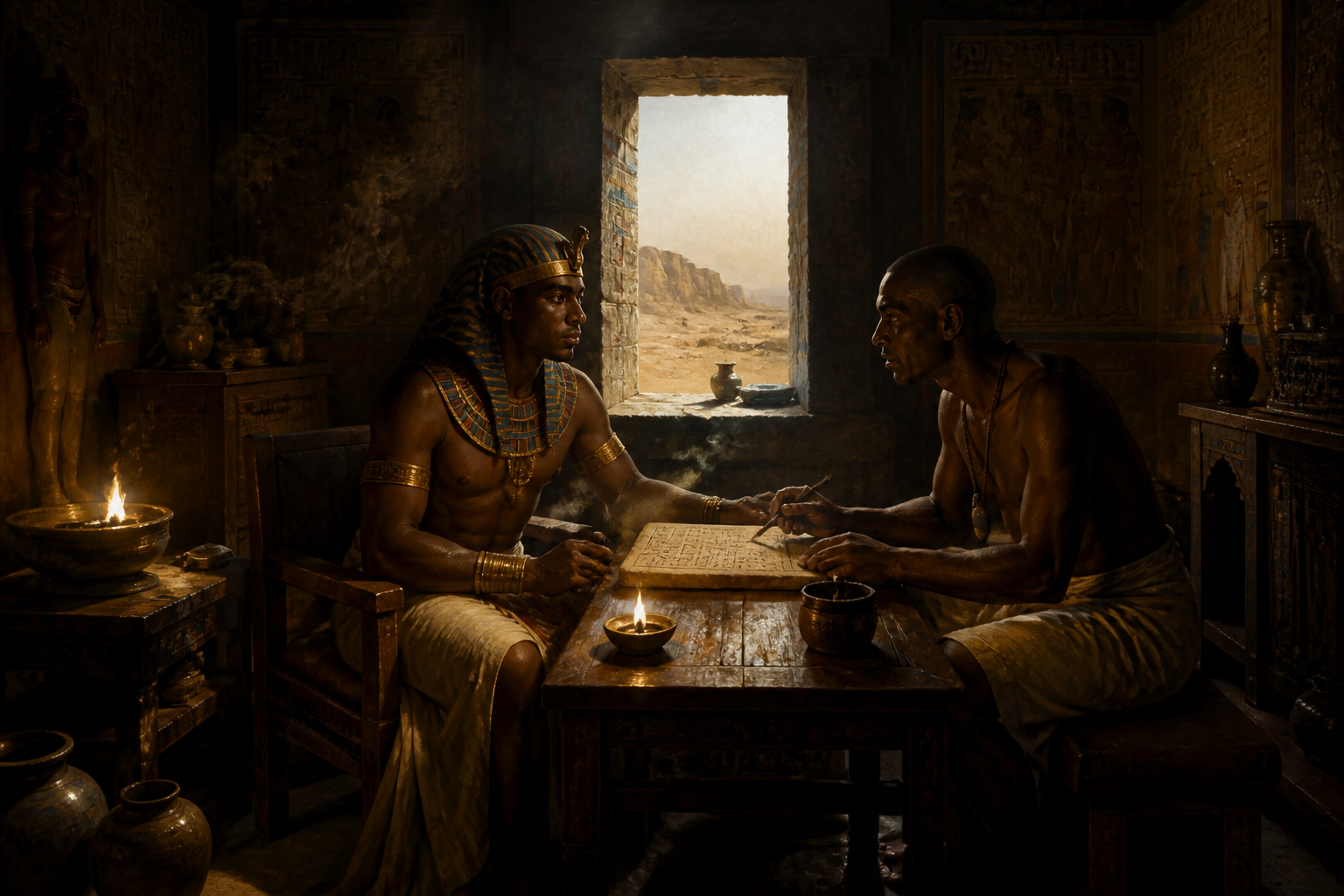
Within the stone walls of a private chamber at Hierakonpolis, the trusted counselor Ka meets with Narmer. The air is cool and shadowed, providing a respite from the unyielding sun. Ka, a wise and experienced figure, is the king's confidant and strategist. Together, they discuss the myriad challenges of ruling a sprawling kingdom. Narmer listens intently, his expression as stone-like as the walls surrounding them. Ka's words of wisdom carry the weight of experience, for he understands the complexities of leadership in a land as vast and varied as Egypt. A clay tablet rests on a wooden table between them, etched with the symbols of early script—plans for the future, agreements to be sealed. The room, filled with the aroma of incense, is a sanctuary of thought and decision-making, where the fate of a kingdom is quietly, sternly debated.
"Heed the whispers of the Nile, for they carry the wisdom of ages," Ka advises.
Page 5 — The Sign of Scribes
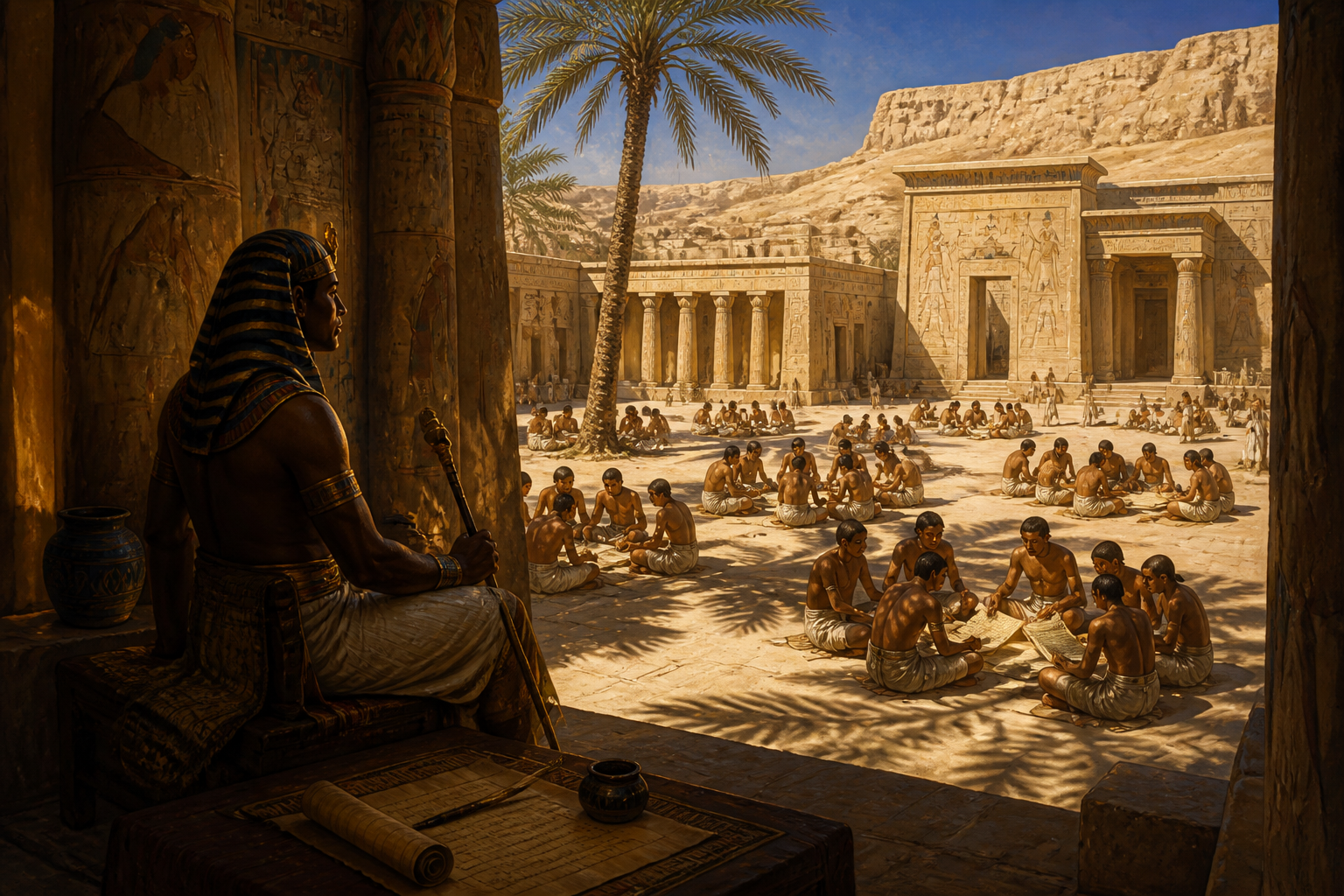
Under the canopy of a clear blue sky at Abydos, the first scribes of Egypt gather. Here, nestled among the sacred tombs and ancient sands, an epoch of literacy begins. Young scribes, draped in simple linen kilts, sit diligently on woven reed mats. With reed pens dipped in ink, they etch hieroglyphs onto papyrus scrolls, capturing the essence of kingship and divine order. Narmer, standing at a distance, observes the scene with proprietary pride, knowing that the codification of language is as vital as the unification of land. The air vibrates with the scratching of pens, accompanied by the distant murmur of the Nile. The significance of this moment is monumental—words will now record the history, culture, and legacy of Egypt. This genesis of writing heralds a new era where the spoken word becomes immortalized in scrolls.
"Let our words endure beyond our lives," a young scribe proclaims to his peers.
Page 6 — The Crown of Two Lands
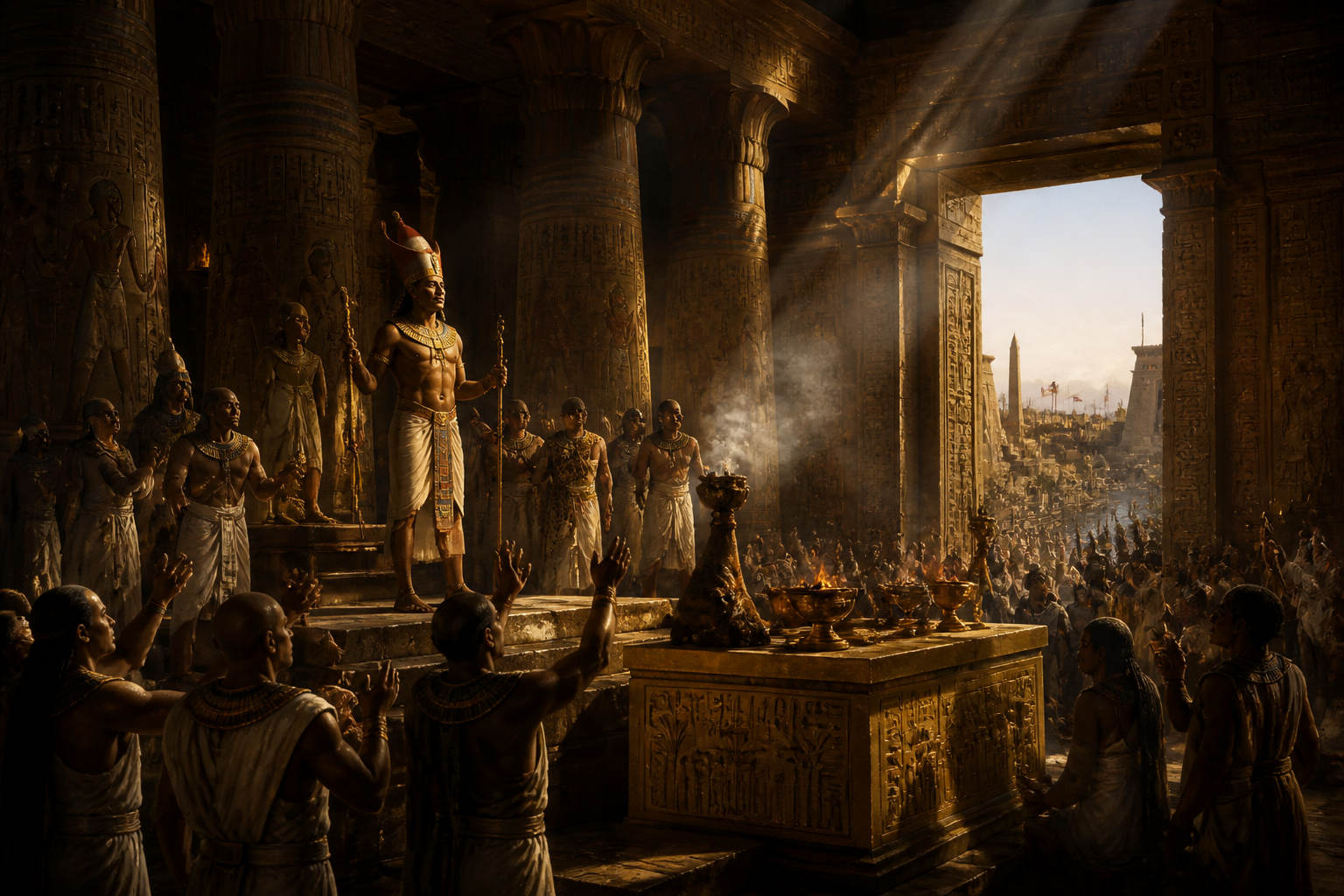
In the sacred precinct of the temple at Memphis, Narmer ascends the dais, an emblem of unity atop his brow. The khepresh, a tall rounded blue leather crown adorned with a gold cobra, marks his sovereignty. The gathered priests, clad in white linen robes, chant hymns to the gods, their voices resonating through the cavernous hall. Incense swirls in the golden shafts of sunlight cutting through high windows. Narmer stands, statuesque and commanding, as he addresses the assembly, declaring his vision of a united Egypt. The temple, with its limestone columns and painted reliefs, vibrates with sacred energy. This moment cements Narmer's legacy, as the first to rule as pharaoh over both Upper and Lower Egypt, a feat underscored by his symbolic regalia. The realm is now one, and his rule is eternal.
"In this crown, I bind the lands of Upper and Lower into one," Narmer proclaims.
Page 7 — The Legacy of Unity
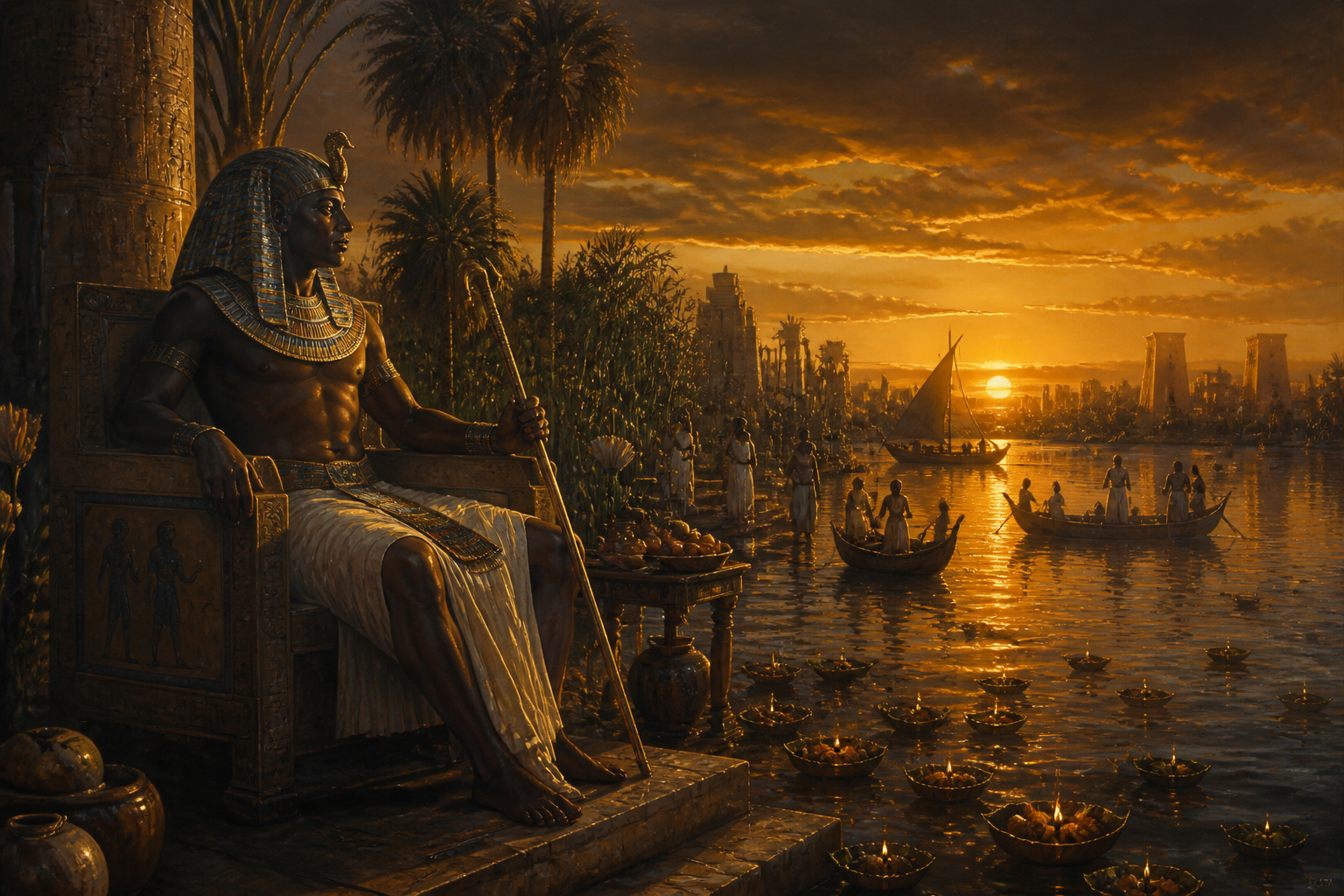
As the sun sets over the tranquil waters of the Nile, Narmer reflects on the legacy he has forged. His reign has been one of unity, strength, and innovation. Seated on a throne of carved stone at the riverbank, he watches the gentle current carry offerings—reeds, flowers, and small votive statues—set adrift by his people in gratitude. This serene moment is a stark contrast to the challenges he has faced and overcome. The kingdom flourishes under his unified rule, the twin lands of Upper and Lower Egypt now indistinguishable in their shared prosperity. As the horizon fades into twilight, the first stars appear, eternal witnesses to the kingdom he has bound together. Narmer's eyes, wise and weary, look to the future, confident that his dynasty will endure, its foundations as solid as the stone upon which he sits.
"May this land stand united beyond my days," Narmer whispers to the encroaching night.
Page 8 — Preparation for Eternity
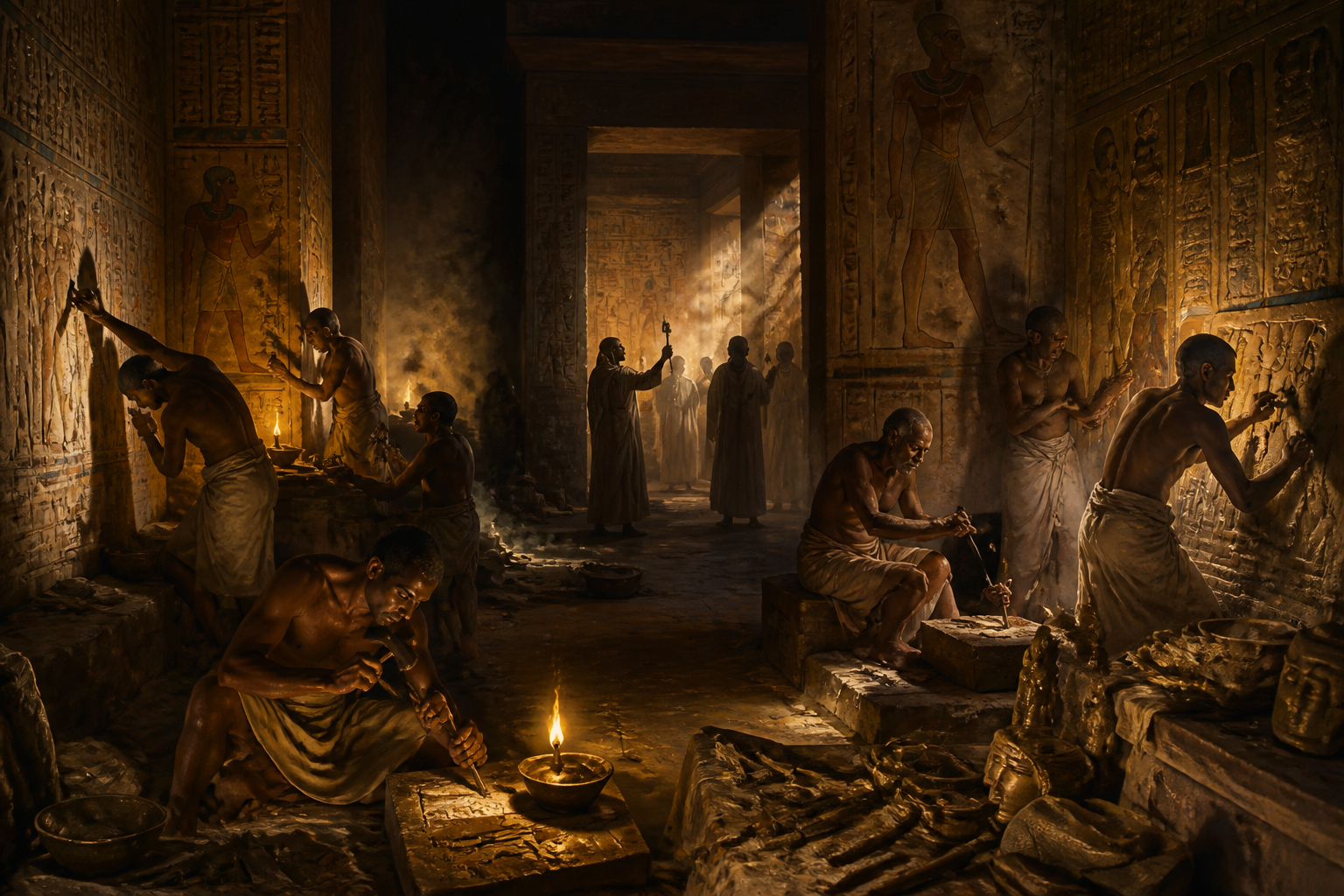
In the cool shadows of the tomb at Abydos, artisans chisel Narmer's name into stone, preparing his eternal resting place. The air is filled with the scent of dust and stone as the artisans, clad in simple aprons, labor under the flickering light of oil lamps. Narmer's legacy is to be immortalized in stone, a testament to his reign and the unity he achieved. The crypt, adorned with intricate carvings and hieroglyphics, tells the story of his life and accomplishments. This sacred task is done with reverence, for it ensures Narmer's journey to the afterlife. The tomb is filled with objects for the king's use in the hereafter: alabaster jars, cedar chests, and golden amulets. As the artisans work, the echoes of their chisels harmonize with the chanting of priests outside, invoking deities for Narmer's safe passage.
"Let his name endure in stone as his legacy on earth," an artisan murmurs to his fellow.
Page 9 — The First Dynasty
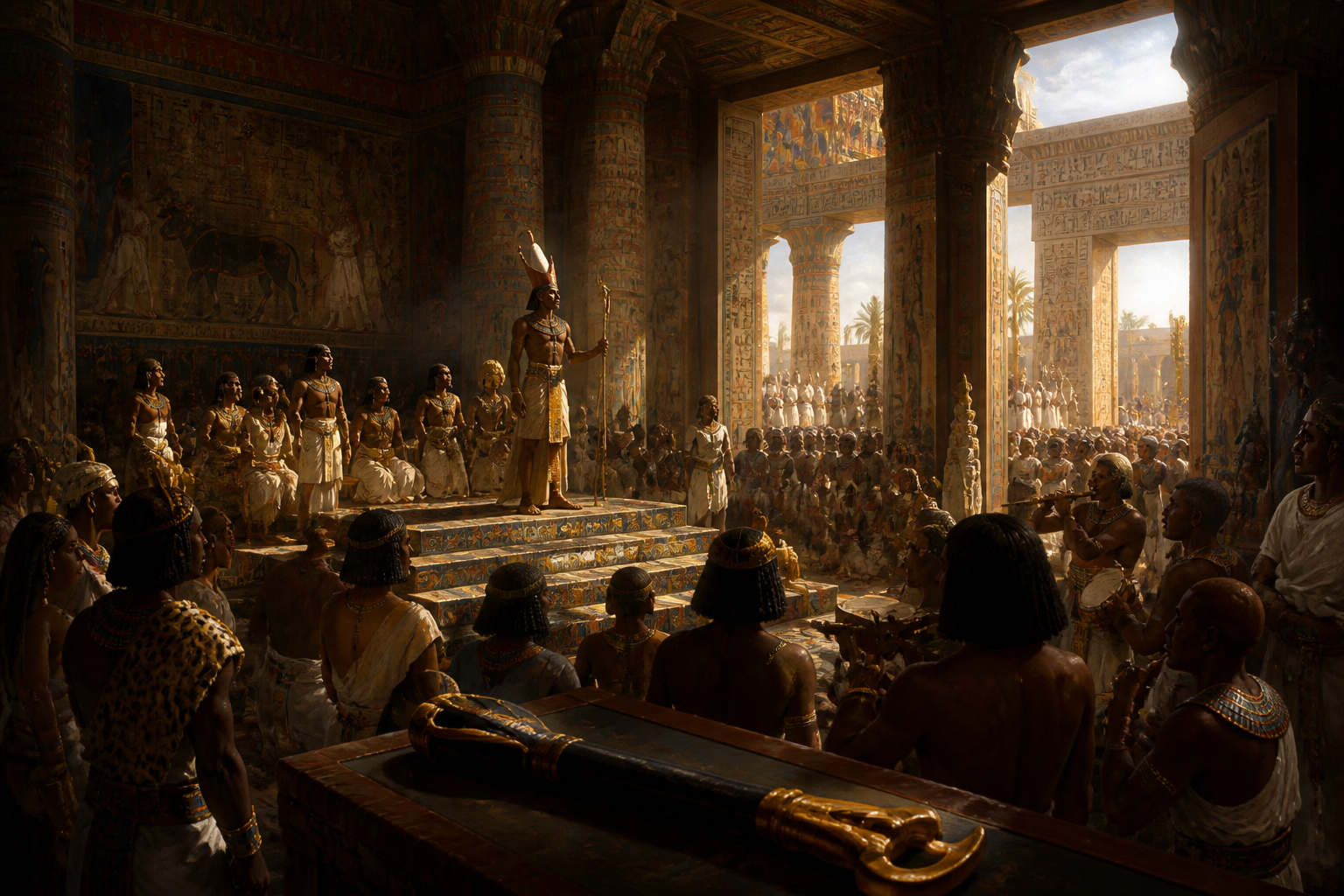
With the death of Narmer, a new era dawns—the First Dynasty—anchored by the foundations he laid. In the grand hall of Memphis, his son Hor-Aha ascends to the throne, the weight of inheritance heavy yet uplifting. The ceremony is a spectacle of tradition and reverence, as nobles and dignitaries gather to witness the continuation of a dynasty. Hor-Aha, adorned with the symbols of kingship—kilt, collar, and the pschent, the double crown—stands before the assembly. The hall resounds with acclamation, the air alive with the sound of drums and flutes. This moment signifies not only the passing of power but the enduring stability of the kingdom. The court, loyalists, and descendants of Narmer are poised to continue his vision, ensuring the prosperity and unity of Egypt for generations to come.
"By my father's deeds, I shall lead," Hor-Aha vows, his voice firm and resolute.
Page 10 — An Enduring Symbol
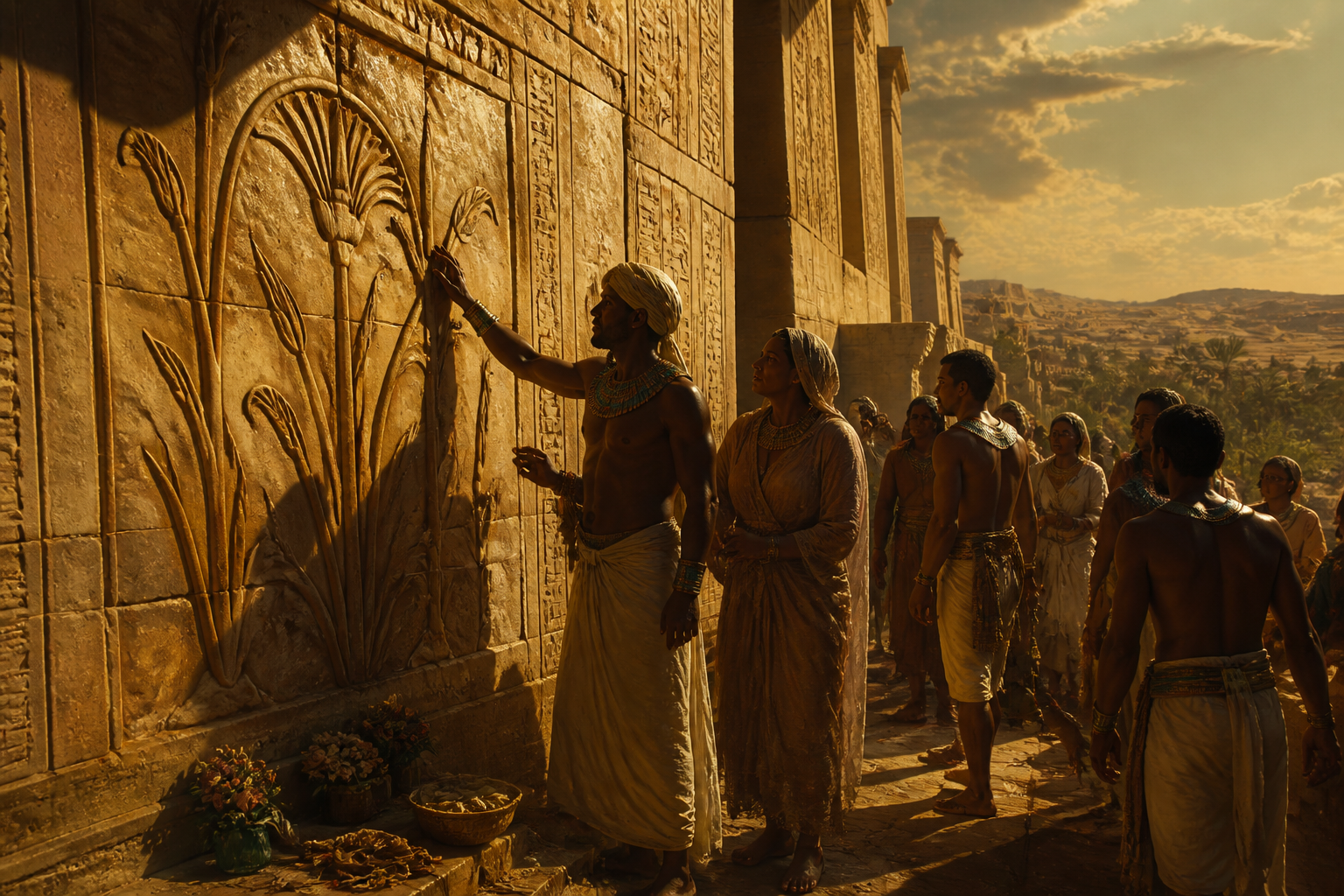
In the twilight of Narmer's reign, his legacy extends beyond the borders of Egypt. The symbolism of his unification—the intertwining of the papyrus and lotus, representing Lower and Upper Egypt—becomes an enduring emblem of national identity. This symbol, now etched on temples, tombs, and jewelry, signifies the permanence of Narmer's vision. It is not just a motif but a reminder of the cohesion and strength achieved under his rule. Across Egypt, from the bustling markets of Memphis to the hallowed temples of Thebes, this emblem inspires unity among the people. Narmer may no longer walk the earth, but his spirit endures through the land he united. His legacy, like the mighty Nile, flows through the veins of Egypt, binding its people to a shared history and a common destiny.
"Let the papyrus and lotus entwine forever," Narmer's words echo through time.
About this story
- Audience: general readers
Read Wonder Egypt on your phone
Wonder Egypt is available on Android. Get Wonder Egypt on Google Play.