Osiris and the Court of the Dead
Osiris and the Court of the Dead — an illustrated history story. 10 illustrated pages, free to read on Wonder Egypt.
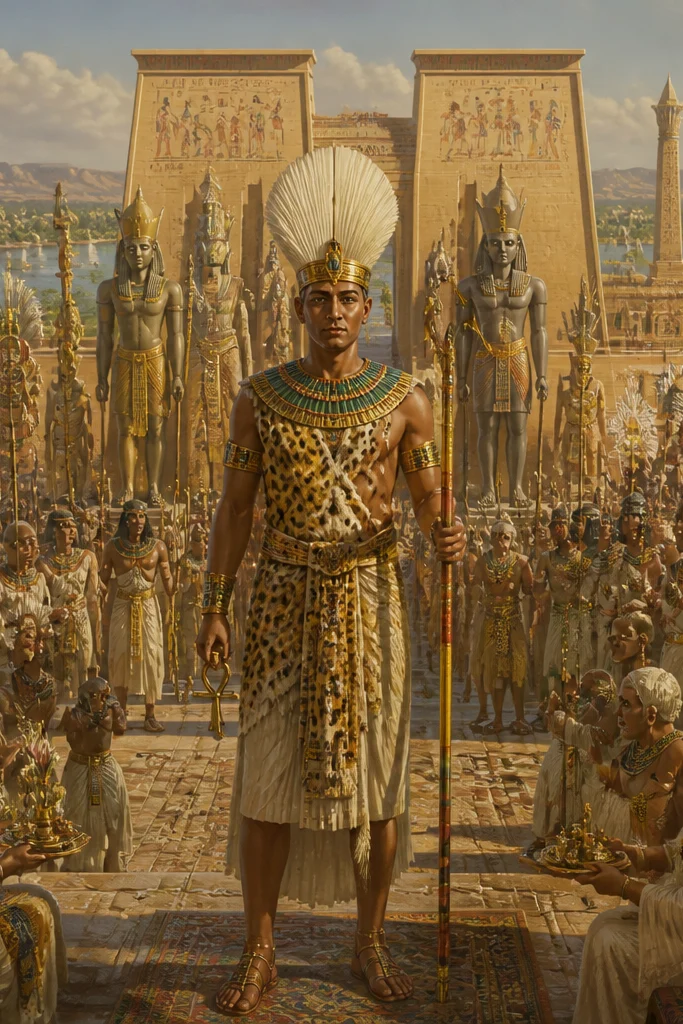
Page 1 — The Eternal Court
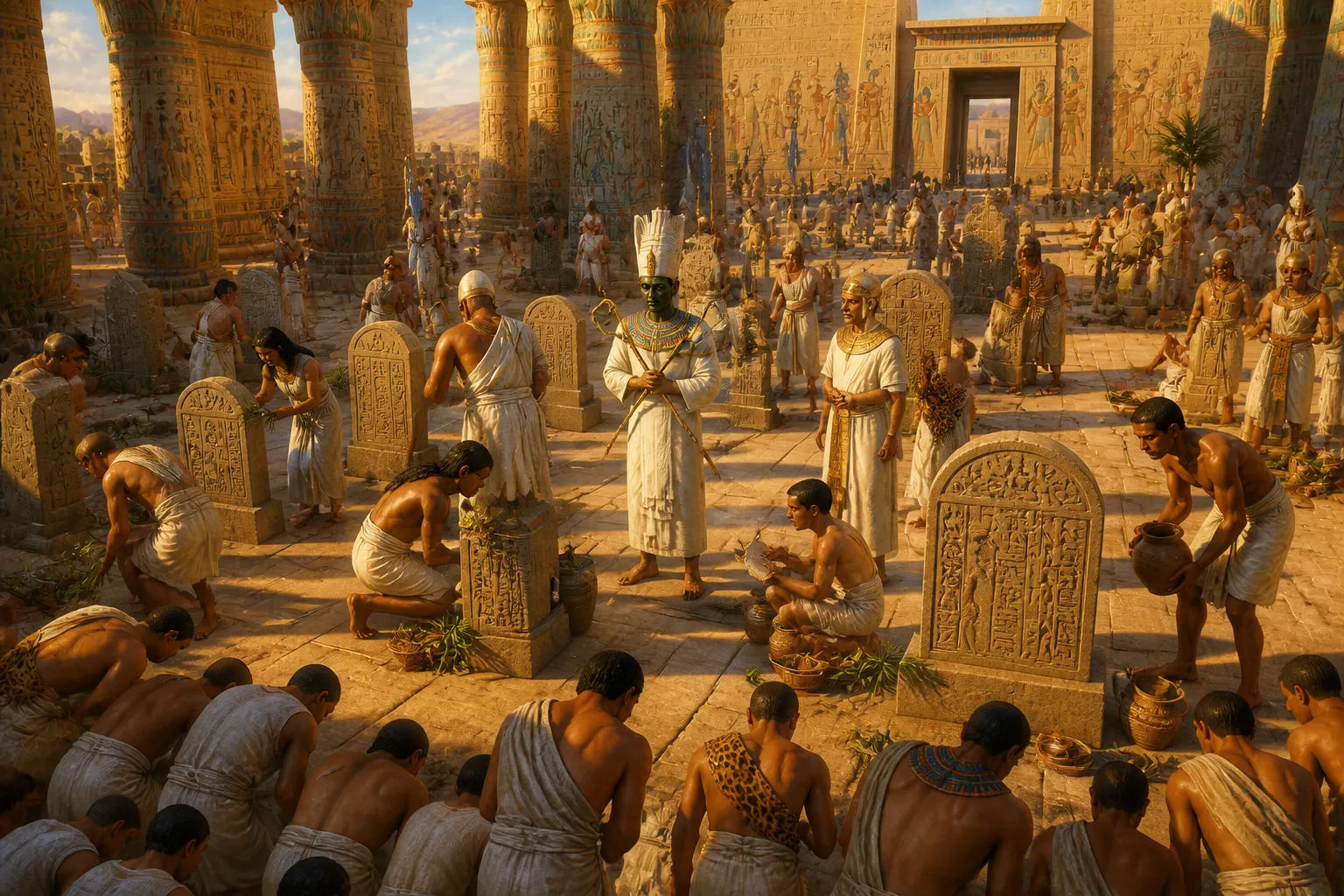
In the sacred city of Abydos, from around 2400 to 300 BC, the air was thick with the whispers of the dead and the prayers of the living. This was the age when the Osiris mysteries reigned supreme, and the Egyptian world was bound by the certainty of judgment in the afterlife. Here, pilgrims flocked, leaving behind stelae—stone testimonials of their devotion and hope—in a town built on memory and anticipation. Osiris, the green-faced god of the underworld, stood as the embodiment of resurrection and justice. Pilgrims believed their hearts would be weighed against the feather of Ma'at, truth incarnate, under the watchful eyes of forty-two assessors. Abydos was both a somber reminder of mortality and a beacon of eternal life.
"I leave my stone here, in the shadow of Osiris, that my soul may find peace," a pilgrim murmured, laying his offering among countless others.
Page 2 — Osiris Mysteries Unveiled
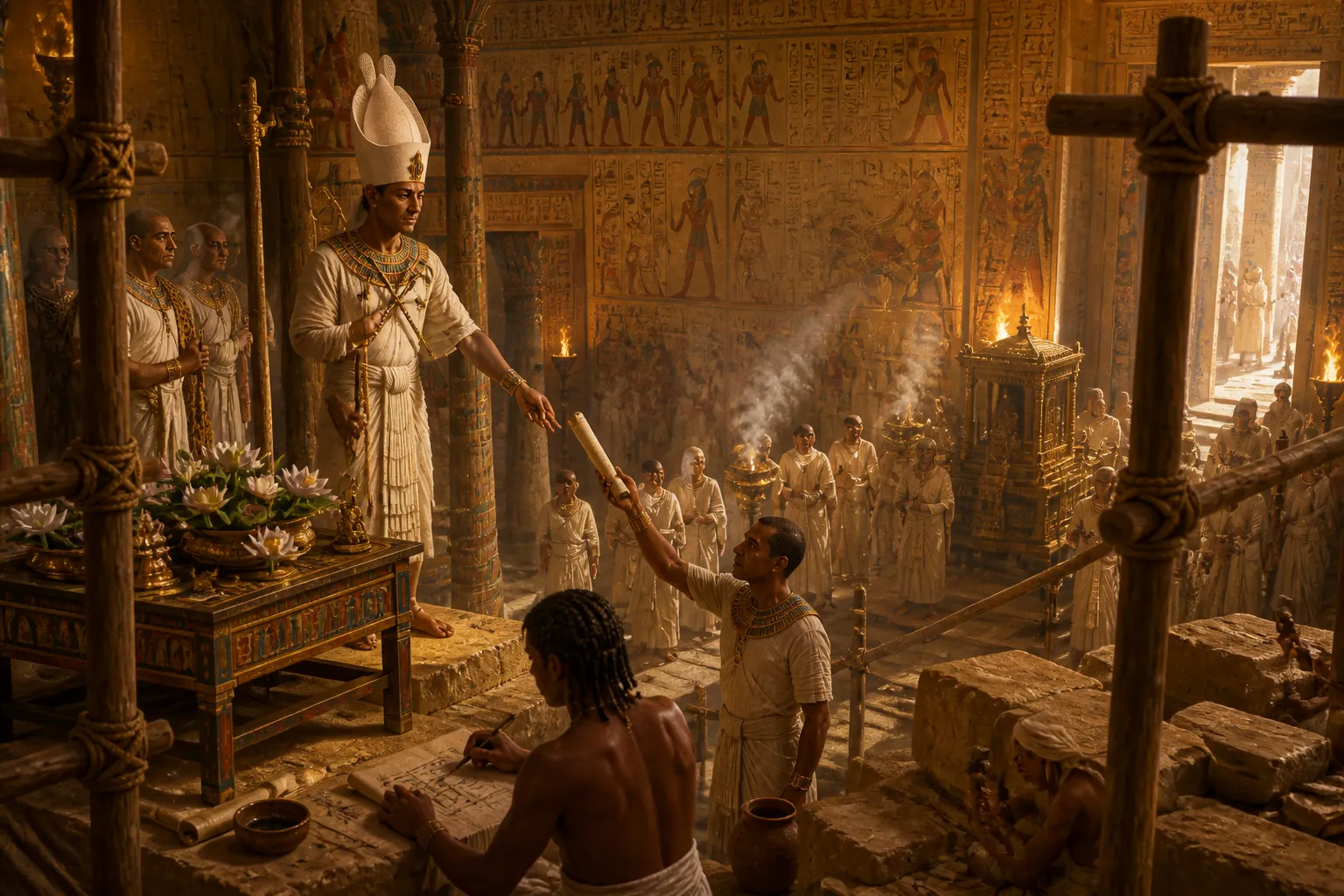
Within the temple's innermost chambers, the annual festival of the Osiris Mysteries unfolded—a ritual drama reenacting the god's death and resurrection. Priests, clad in white and gold, orchestrated a sequence of symbolic acts, moving with solemn purpose. The festival captivated the populous, drawing participants into the divine narrative of Osiris, dismembered yet reassembled by Isis, his sister and wife. Through this sacred play, Egyptians engaged with the cycle of life, death, and rebirth. The air was thick with incense and the murmurs of hymns, as the faithful watched, hearts stirred by the promise of renewal.
"As Osiris rises, so shall we," the high priest declared, voice resonating through the temple halls.
Page 3 — Judgment of the Dead
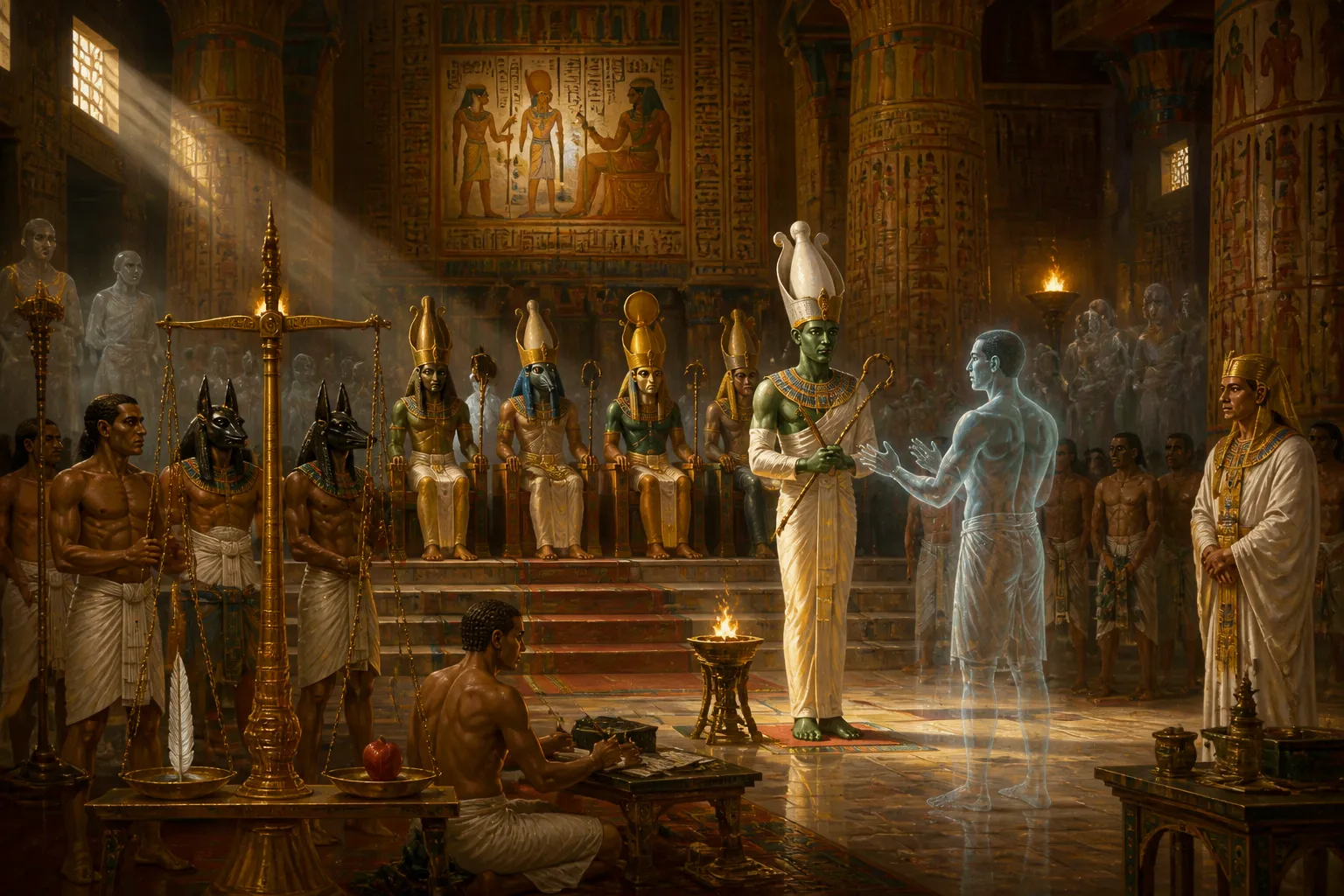
In the celestial hall of judgment, the deceased faced a divine tribunal. This awe-inspiring scene, depicted in countless tombs, involved the heart’s weighing against Ma'at's feather. Forty-two judges, each embodying a specific moral code, witnessed the profound 'Negative Confession' of innocence. The deceased's eternal fate hinged on the balance's decisive tilt. Scribes diligently recorded every moment, their pens scratching against papyrus, capturing the weight of eternity in ink. The stakes were monumental, the air thick with anticipation. Figures clad in pleated kilts and beaded collars filled the room, a vivid tapestry of anxious souls awaiting Osiris's impartial verdict.
"My heart, be light as Ma'at's feather," the deceased intoned, voice a trembling prayer.
Page 4 — Osireion: The Heart of Abydos
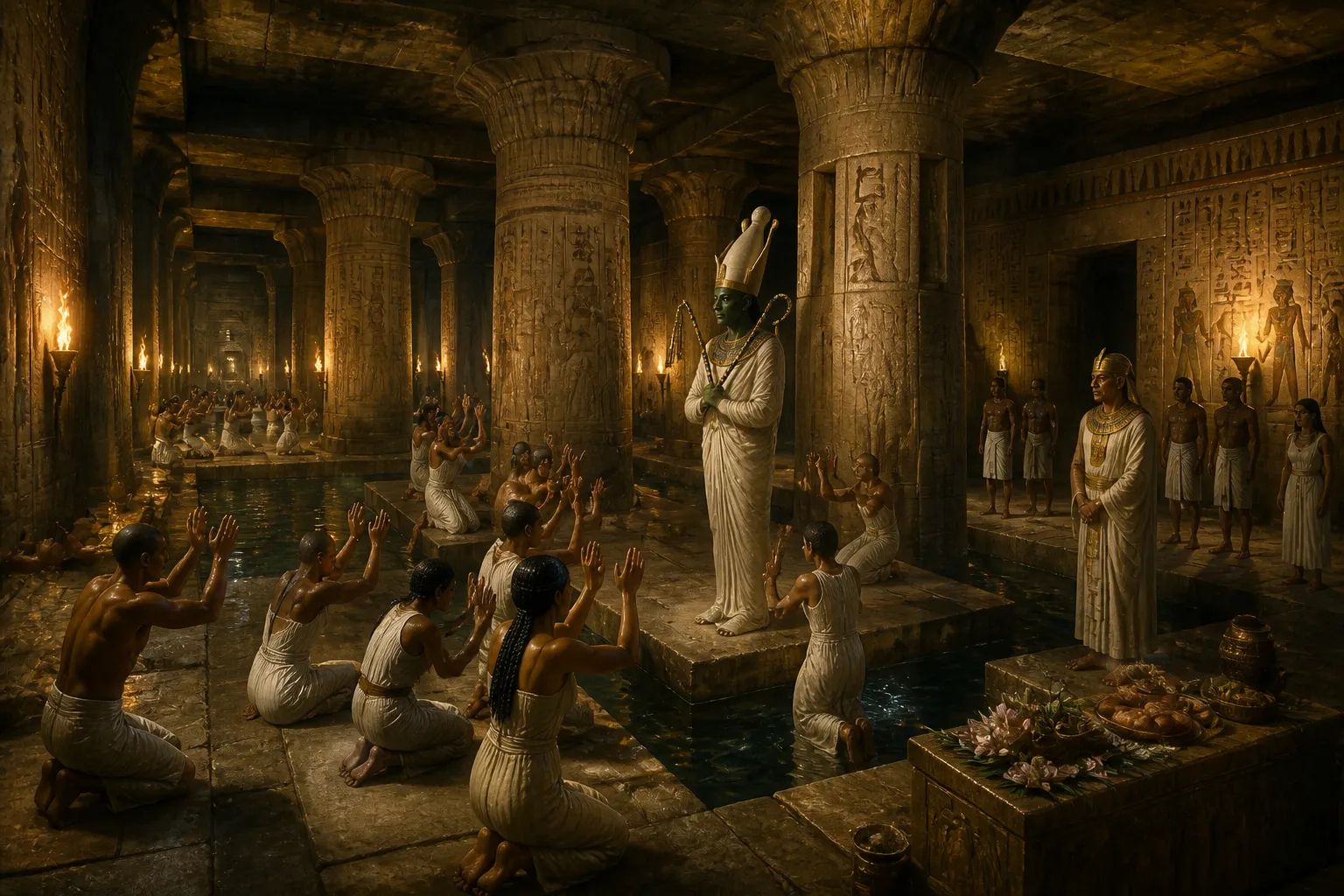
At Abydos, the Osireion emerged as an architectural marvel, symbolizing Osiris's mythical tomb. This subterranean temple, with its immense granite pillars rising from an islet of red stone, mirrored the god's legendary resting place. Constructed during the New Kingdom, its origins remain an enigma, a focal point of scholarly debate. The cool, damp air inside contrasted sharply with the scorching desert above. Pilgrims brought prayers and offerings, seeking divine connection within this sacred precinct. The Osireion was not merely a structure; it served as a bridge between the terrestrial and the celestial, binding the earthly world to the divine.
"Here lies the heart of Osiris," a priest murmured, tracing hieroglyphs with reverent fingers.
Page 5 — The Djed Pillar's Legacy
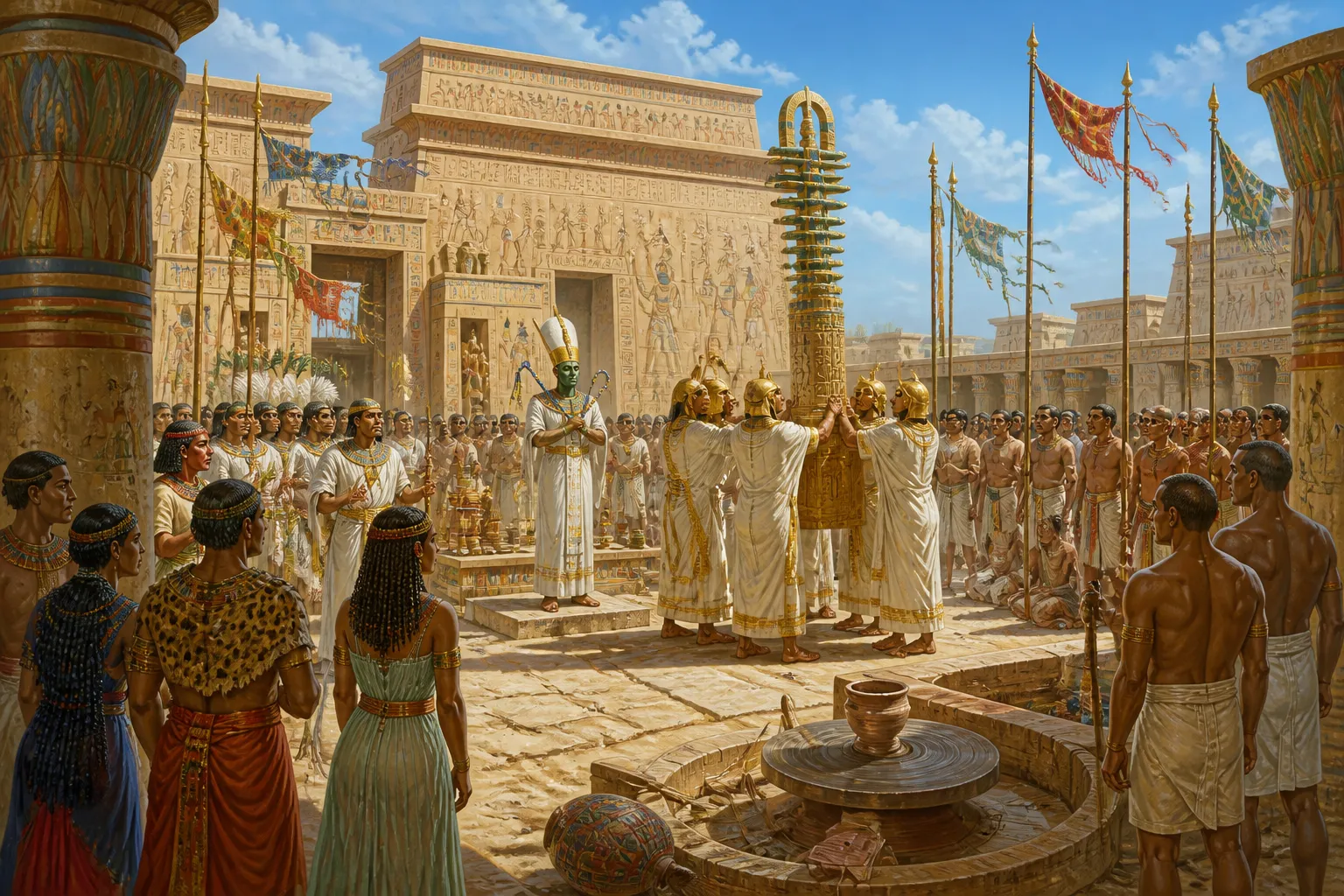
The Djed pillar, a symbol of stability and resurrection, featured prominently in the rites of Osiris. Its construction, carefully chosen from the finest woods or carved from enduring stone, mirrored the strength and resilience of the divine. The atmosphere was charged with anticipation as priests, adorned in their gold-trimmed robes, meticulously coordinated the raising of the Djed. Their rhythmic chants filled the air, creating a wave of unity and reverence among the onlookers, who watched with bated breath. This ritual echoed through time, not merely as a spectacle, but as a profound affirmation of the cosmic order and a testament to Osiris's triumph over adversity. The imagery of the Djed pillar was omnipresent, etched into tombs and worn as amulets, symbolizing an unbreakable bond with the divine order of the universe.
"Raise the Djed, and let stability reign," intoned the chief priest, as the pillar ascended.
Page 6 — Pilgrims' Path
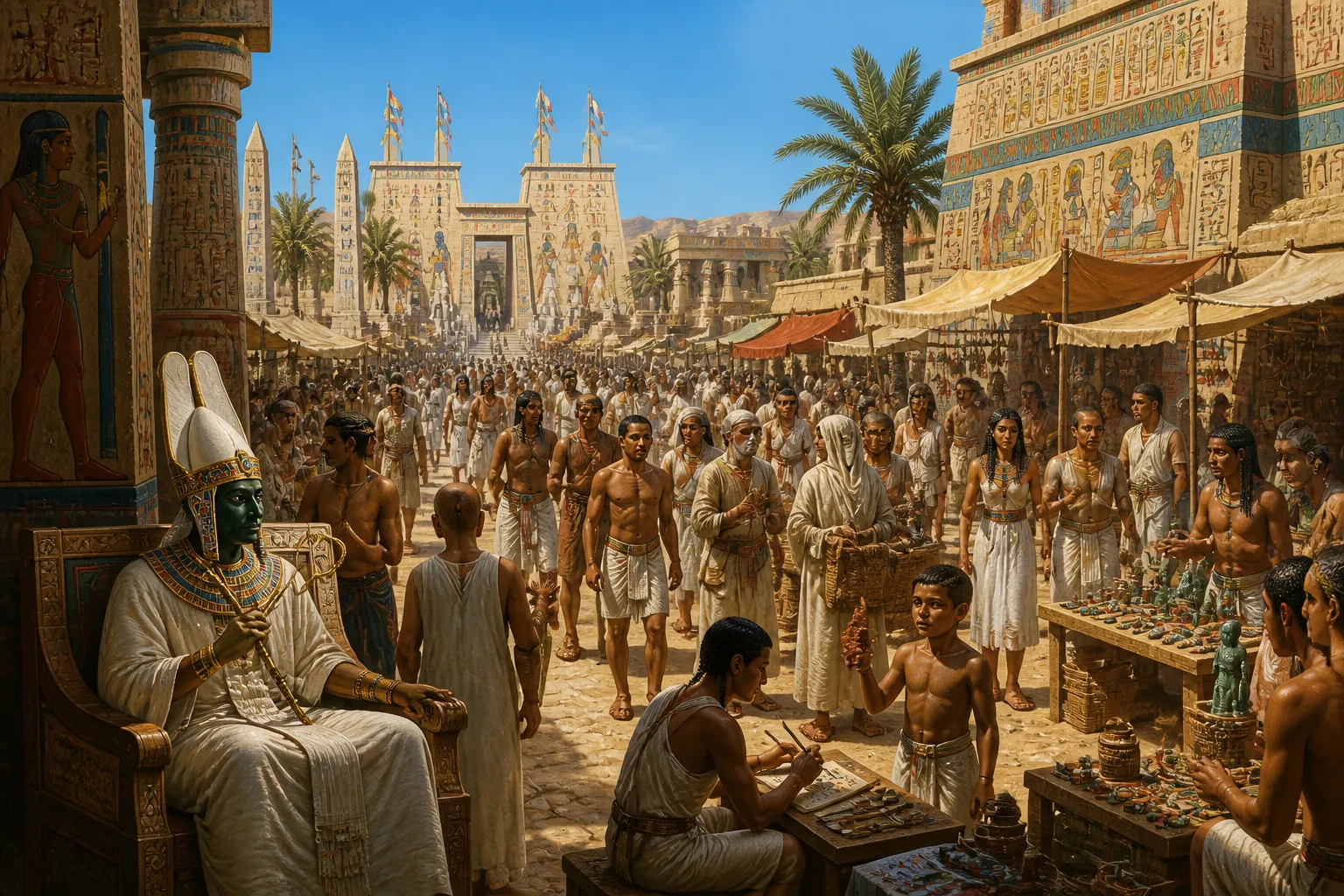
Abydos thrived as a pilgrimage center, drawing devotees from across Egypt. The paths leading to the city were flanked by stelae, ancient markers that whispered stories of enduring faith in Osiris with every carved word. Pilgrims, clad in robes that told tales of long journeys, arrived bearing offerings of bread, beer, and incense, tokens of devotion and pleas for favor. Merchants bustled, their stalls brimming with amulets, figurines, and votive bowls, capitalizing on the sacred commerce. The streets hummed with the symphony of trading voices and the murmur of prayers, embodying Abydos's dual role as a spiritual haven and economic hub, vibrant with tales of seekers from all walks of life.
"A blessing from Osiris for safe passage," a traveler requested, handing a priest an offering.
Page 7 — Temple Servants of Osiris
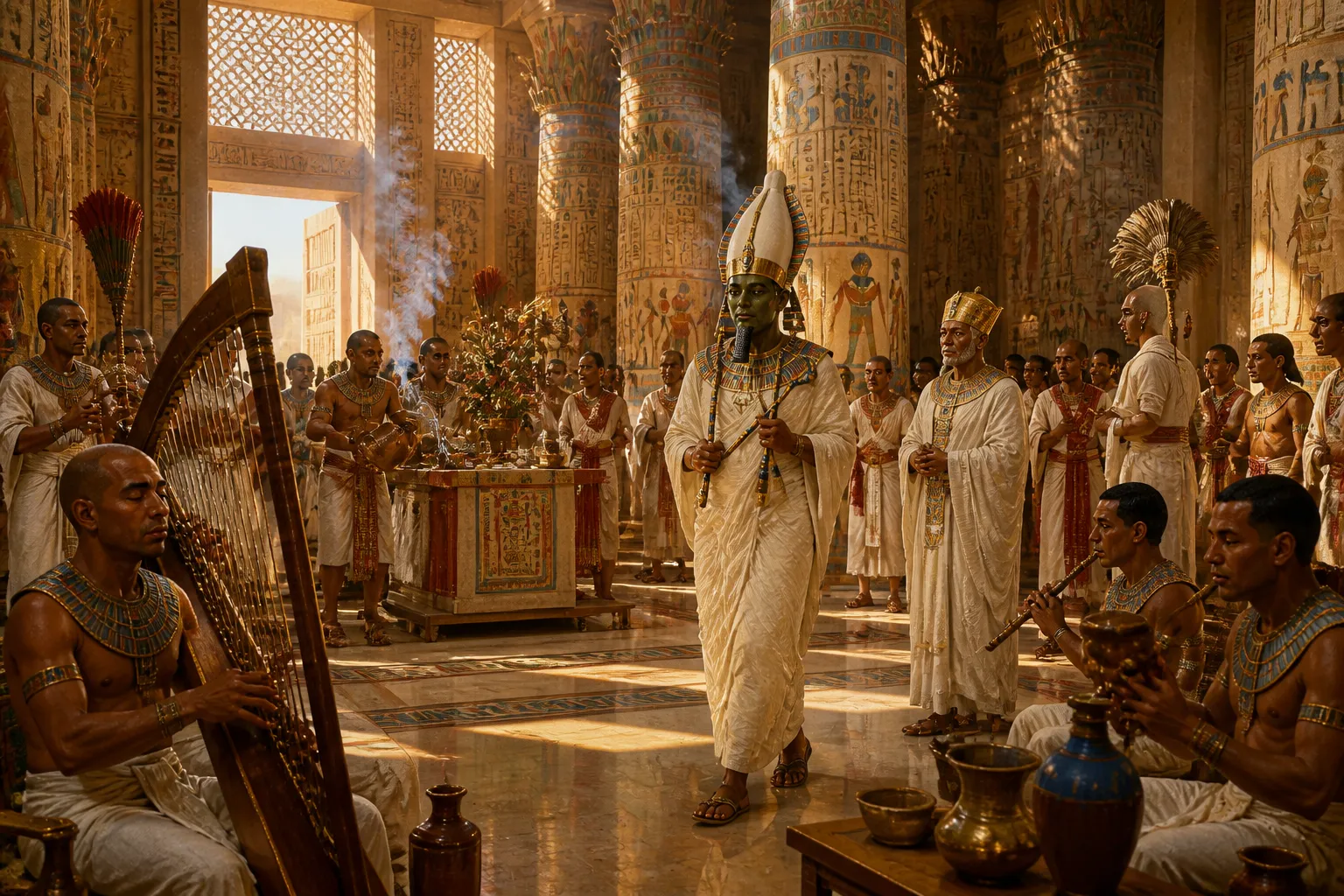
In the sacred precincts of Abydos, priests dedicated their lives to Osiris. The temple was a hive of activity, where each individual contributed to the sacred order. Water carriers filled ceremonial basins with precision, bakers prepared ritual bread offerings with devotion, and musicians filled the air with hymns, each note a prayer. Within this sacred choreography, each task was performed with meticulous care, as maintaining the continuity of Ma'at, the divine harmony, was paramount. The priests, as keepers of ancient wisdom, guided the faithful through rites, shepherding the living towards a deeper connection with the divine. Within these stone walls, the boundary between the mortal and the godly blurred, with every action a step on the path to spiritual enlightenment.
"In Osiris's name, we serve the eternal order," a priest proclaimed, as incense smoke curled upward.
Page 8 — The Priestly Hierarchy
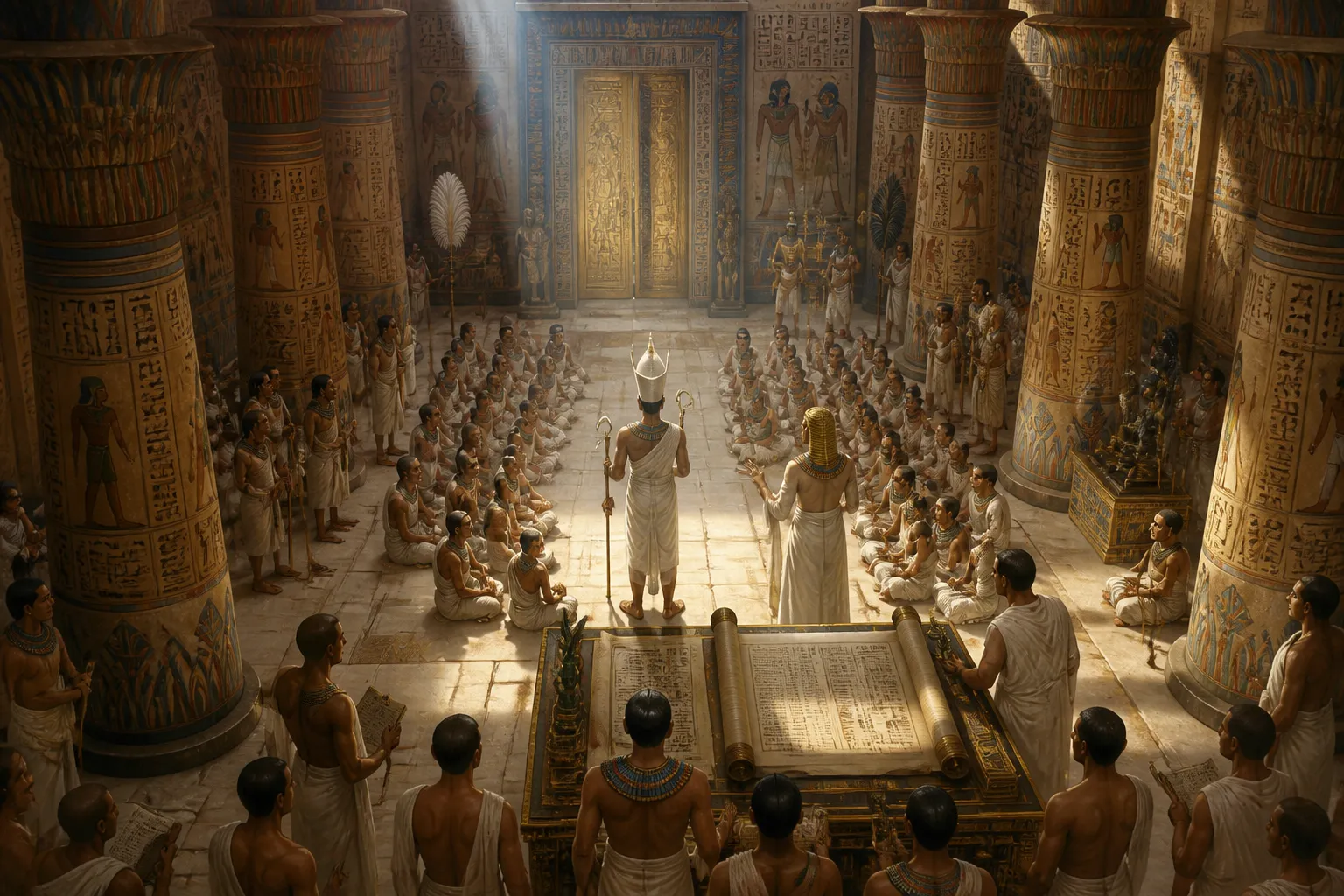
The priesthood of Osiris at Abydos was a structured hierarchy, each rank meticulously appointed to specific rites and responsibilities. High priests, distinguished by elaborate headdresses and ornate collars, led ceremonies with authority and managed the temple's affairs. Beneath them, a network of subordinate priests, scribes, and acolytes executed their duties with unwavering dedication. Rigorous training equipped them with profound knowledge of sacred texts and intricate rituals, fostering a center of learning within the temple's complex. This hierarchical order ensured the seamless operation of the cult, weaving a tapestry of duty and devotion that sustained the worship of Osiris, the god who promised eternal life, for countless generations.
"To serve Osiris is to serve eternity," the high priest instructed, addressing a group of novices.
Page 9 — The Scribes' Records
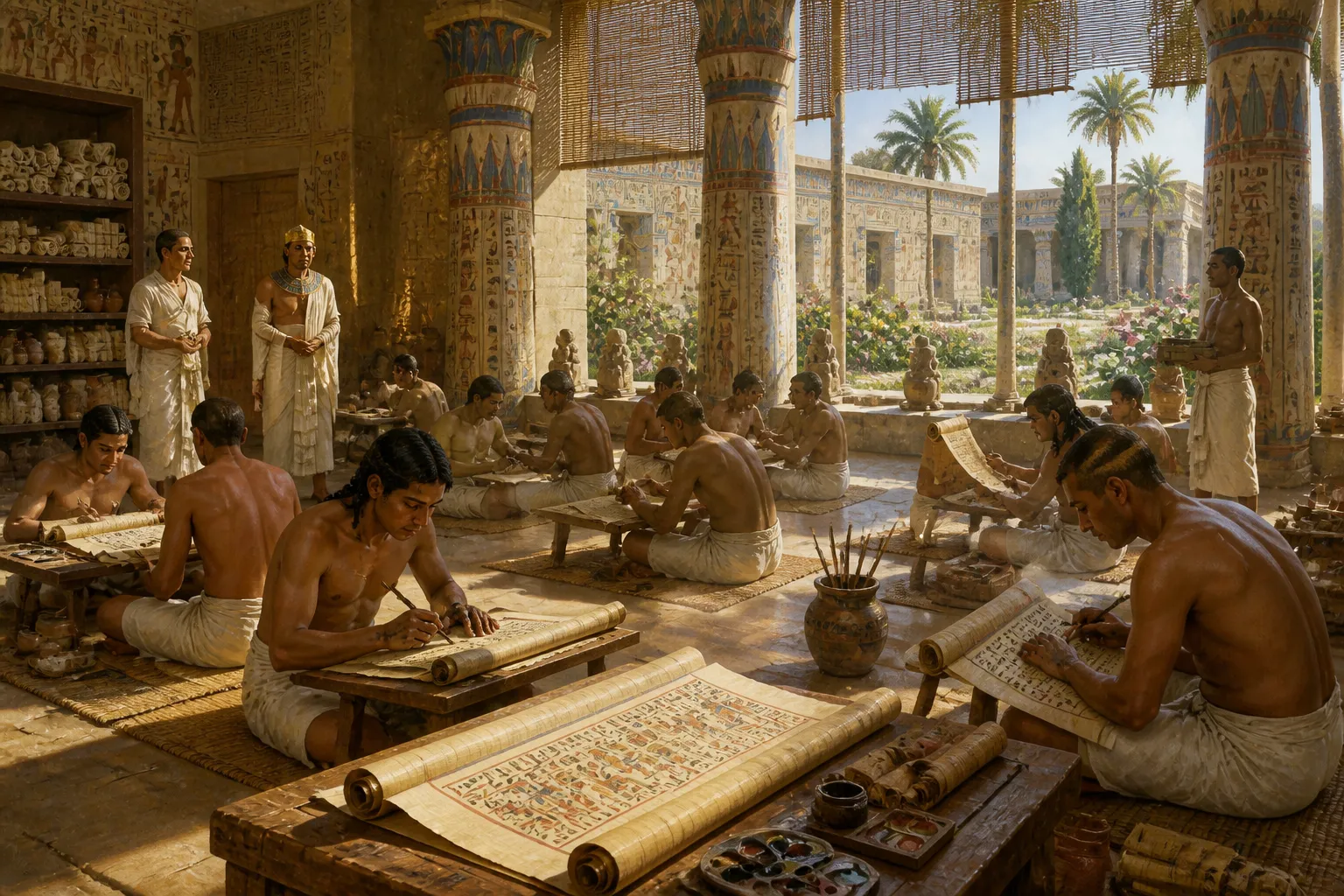
At Abydos, within the sun-drenched halls of a scriptorium, scribes were the diligent keepers of knowledge, their role crucial in preserving the temple's legacy. Seated cross-legged on woven mats, amidst the faint aroma of incense and the sounds of distant chanting, they meticulously documented rituals, temple economics, and pilgrim donations in both hieroglyphs and the swift strokes of hieratic script. Their work bridged the ancient past with the living present, ensuring the continuity of sacred traditions. These respected figures, educated extensively in temple schools, etched history onto papyrus with precision. Their records illuminate the profound significance of Osiris, providing a rich tapestry of spiritual and everyday life in ancient Egypt.
"In the notes of our hands, Osiris's truth endures," a scribe remarked, setting pen to scroll.
Page 10 — Legacy of Worship
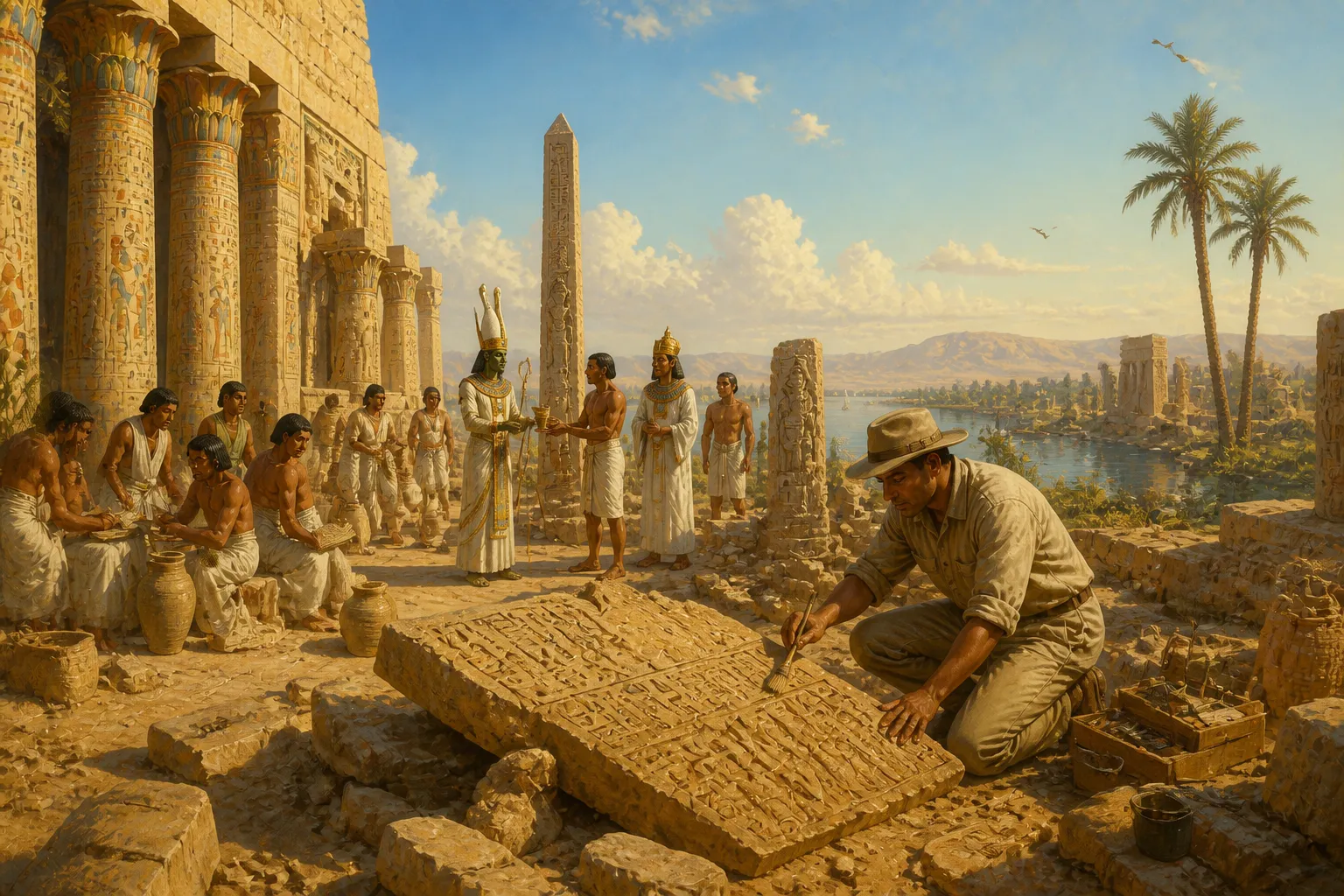
The worship of Osiris at Abydos has left an indelible mark upon the sands of Egypt. The ancient site's scattered stelae stand as silent sentinels, bearing witness to the devotions of countless pilgrims. Though the temple's stones have weathered the ravages of time, they continue to echo the timeless myth of a god who triumphed over death and promised the gift of rebirth. The rituals performed here, the intricate hieroglyphs adorning the walls, and the very architecture of Abydos speak to the eternity of Osiris’s influence. Today, these remnants of enduring faith draw archaeologists and travelers alike, captivated by a civilization's quest to bridge the realms of life and the afterlife, leaving behind a testament to hope and eternal life.
"Even in ruins, the spirit of Osiris endures," an archaeologist noted, brushing dust from a stone tablet.
About this story
- Audience: general readers
Read Wonder Egypt on your phone
Wonder Egypt is available on Android. Get Wonder Egypt on Google Play.