Nefertari
Nefertari — an illustrated history story. 10 illustrated pages, free to read on Wonder Egypt.
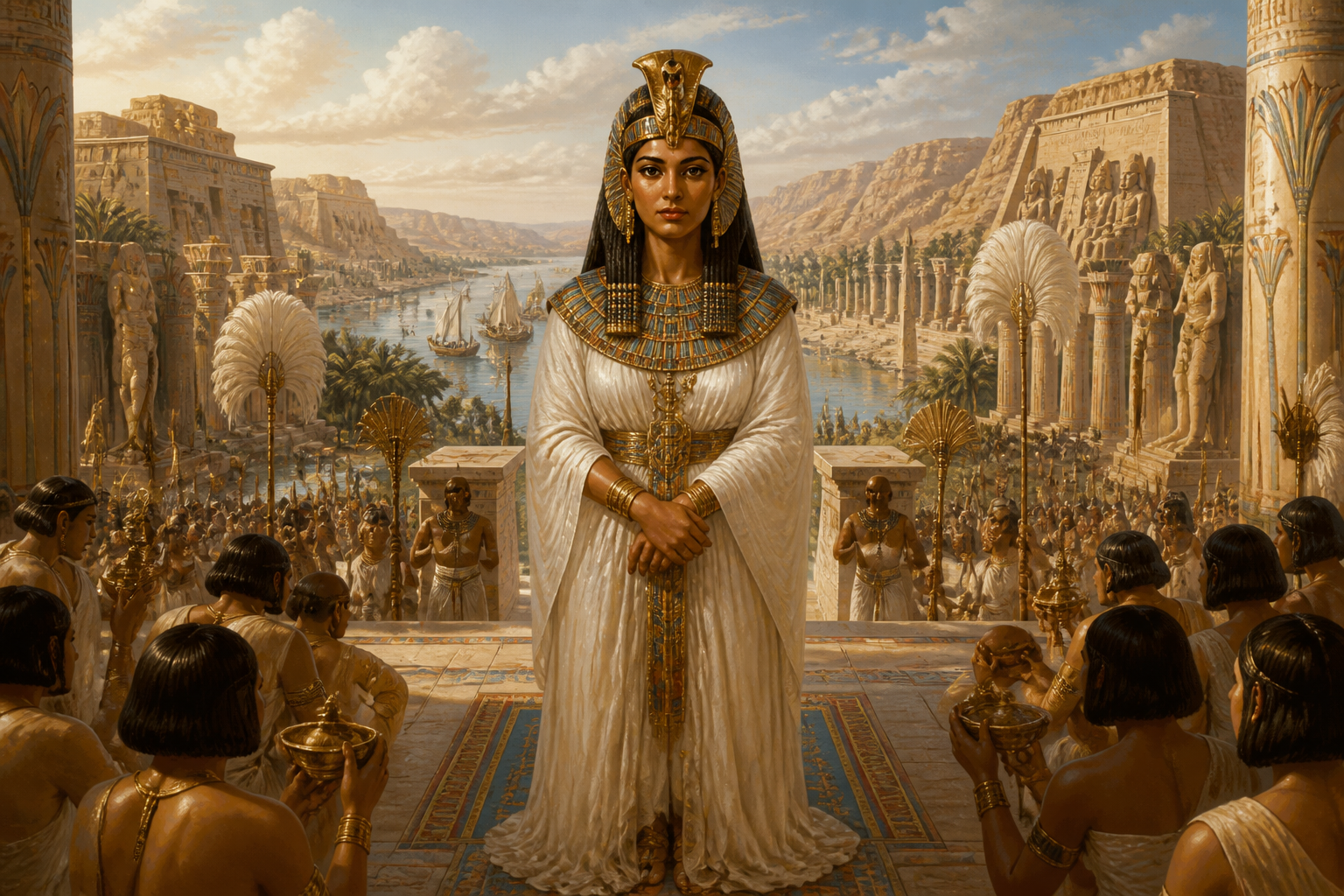
Page 1 — The Queen of Equals
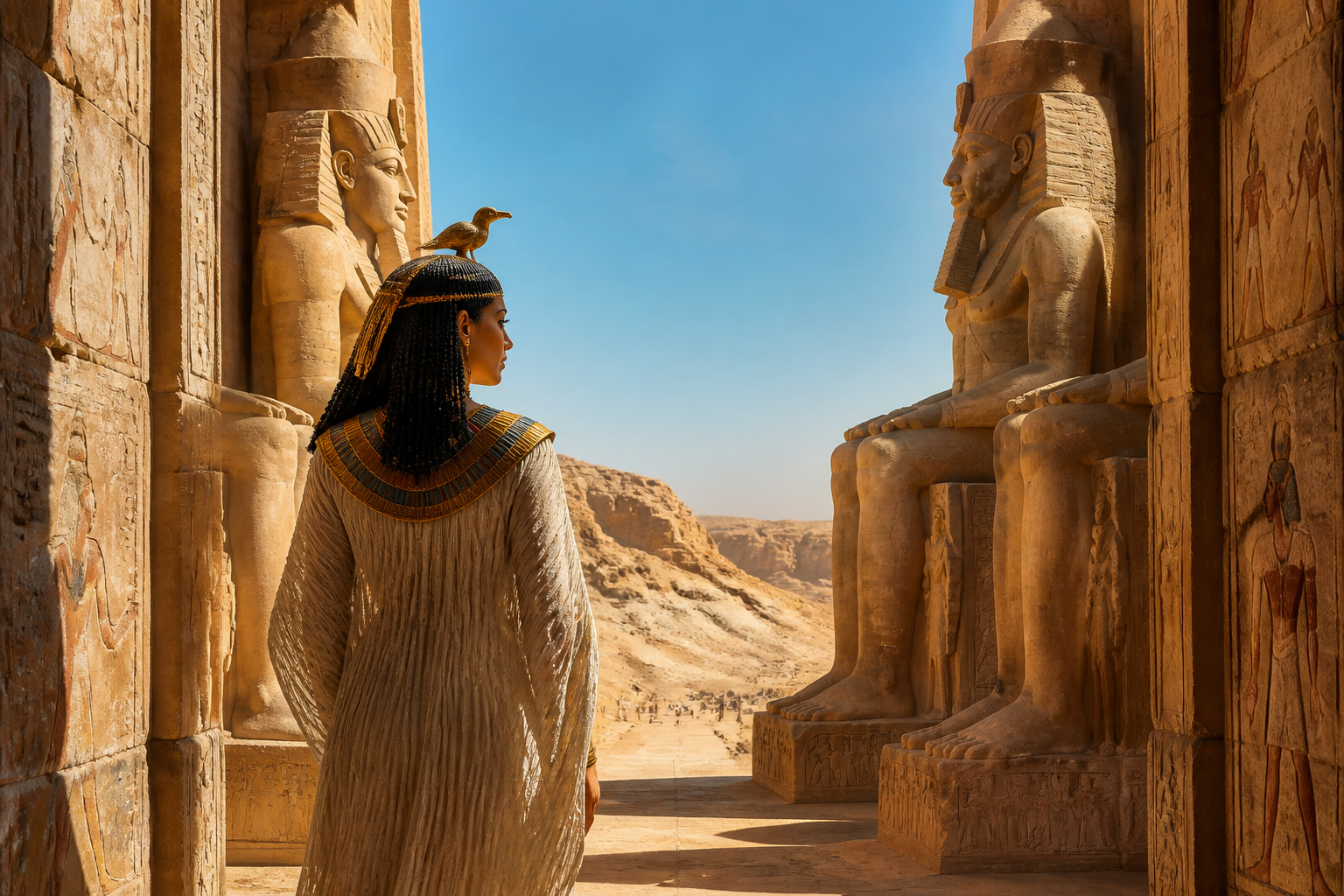
Nefertari stands apart in the annals of history as a queen granted unparalleled honor: a temple at Abu Simbel equal in grandeur to that of her husband, Ramesses II. Her likeness carved into stone, the same height as the king’s, she epitomizes the power of diplomacy and influence. The wife of a pharaoh who reigned during Egypt’s zenith, Nefertari’s beauty and intelligence were celebrated across the lands. She corresponded with Puduhepa, the Hittite queen, engaging in correspondence that aligned two great civilizations in peace. Her influence extended beyond decorative honor; she was a political force, maneuvering with grace and intellect amidst the intrigues of the court. Her tomb in the Valley of the Queens remains one of the finest examples of ancient Egyptian artistry, covered in vibrant frescoes that tell tales of her life, her faith, and the gods she worshiped. Her legacy is palpable in every brushstroke and chisel mark, signifying a reign of beauty that endured for centuries.
"Queen of Egypt and mistress of the land, your wisdom surpasses all," a scribe declares, presenting a letter from the Hittite queen.
Page 2 — Court of Diplomacy
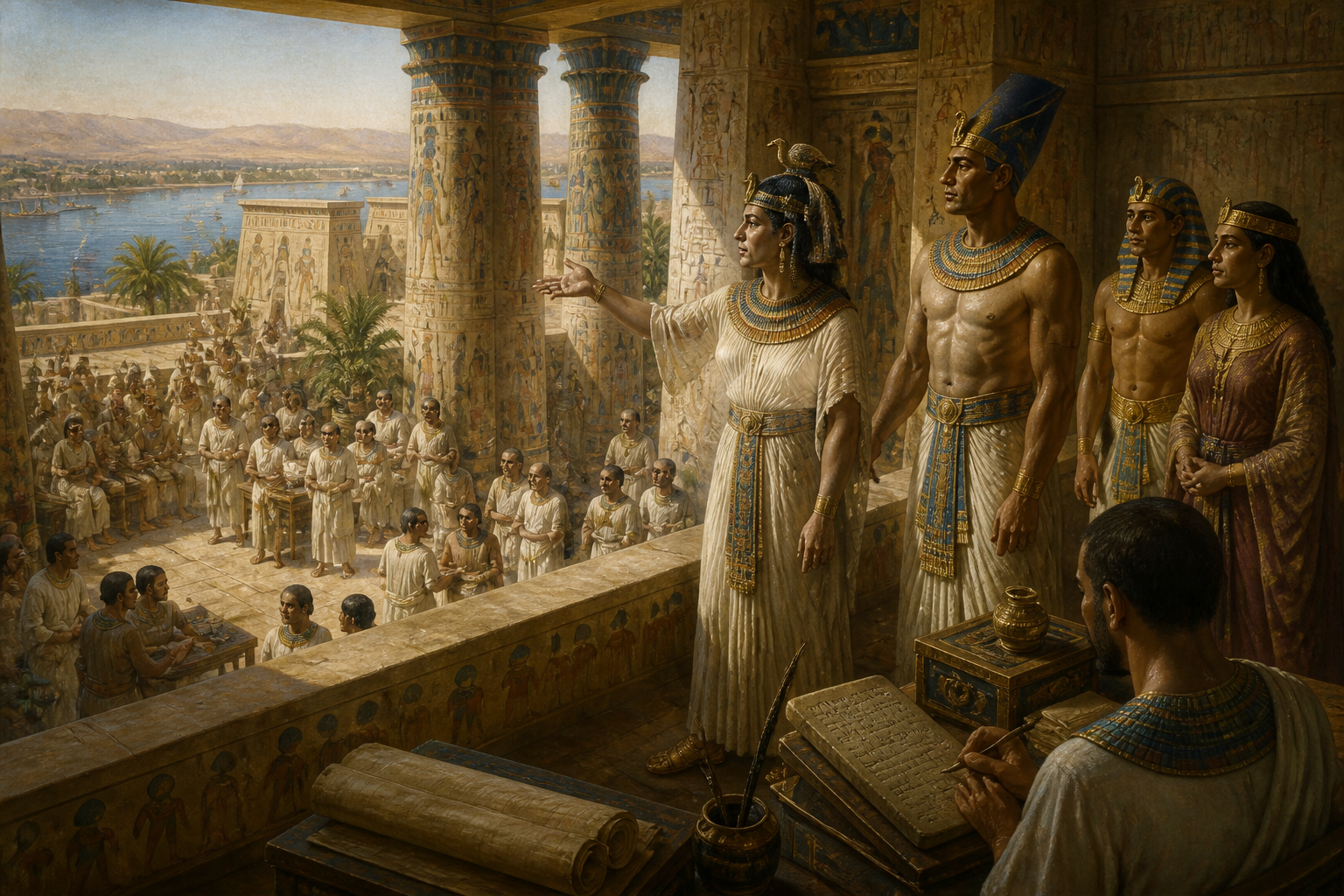
Within the heart of the Theban palace, Nefertari orchestrates diplomacy. The room is alive with the scent of incense, the murmurs of courtiers, and the rustle of papyrus. Here, she receives emissaries, clad in finely woven linen, bearing gifts and messages that signify alliances. Her intelligence is renowned, her counsel sought by Ramesses himself. At her side, Amun-her-khepeshef, her stepson, a young prince eager to learn the art of diplomacy. Across the room, Isetnofret, her rival yet ally, whose lineage intertwines with her own, stands, observing with intent. Nefertari, in a pleated white gown with golden accents, commands respect with every gesture, every word. The court is a world of power plays, where alliances are forged not just with weapons but with words. Beyond the marble columns, the Nile flows, a reminder of the lifeblood that sustains Egypt’s grandeur.
"We must ensure the peace holds," Nefertari advises, her voice steady as she addresses the courtiers.
Page 3 — The Painted Tomb
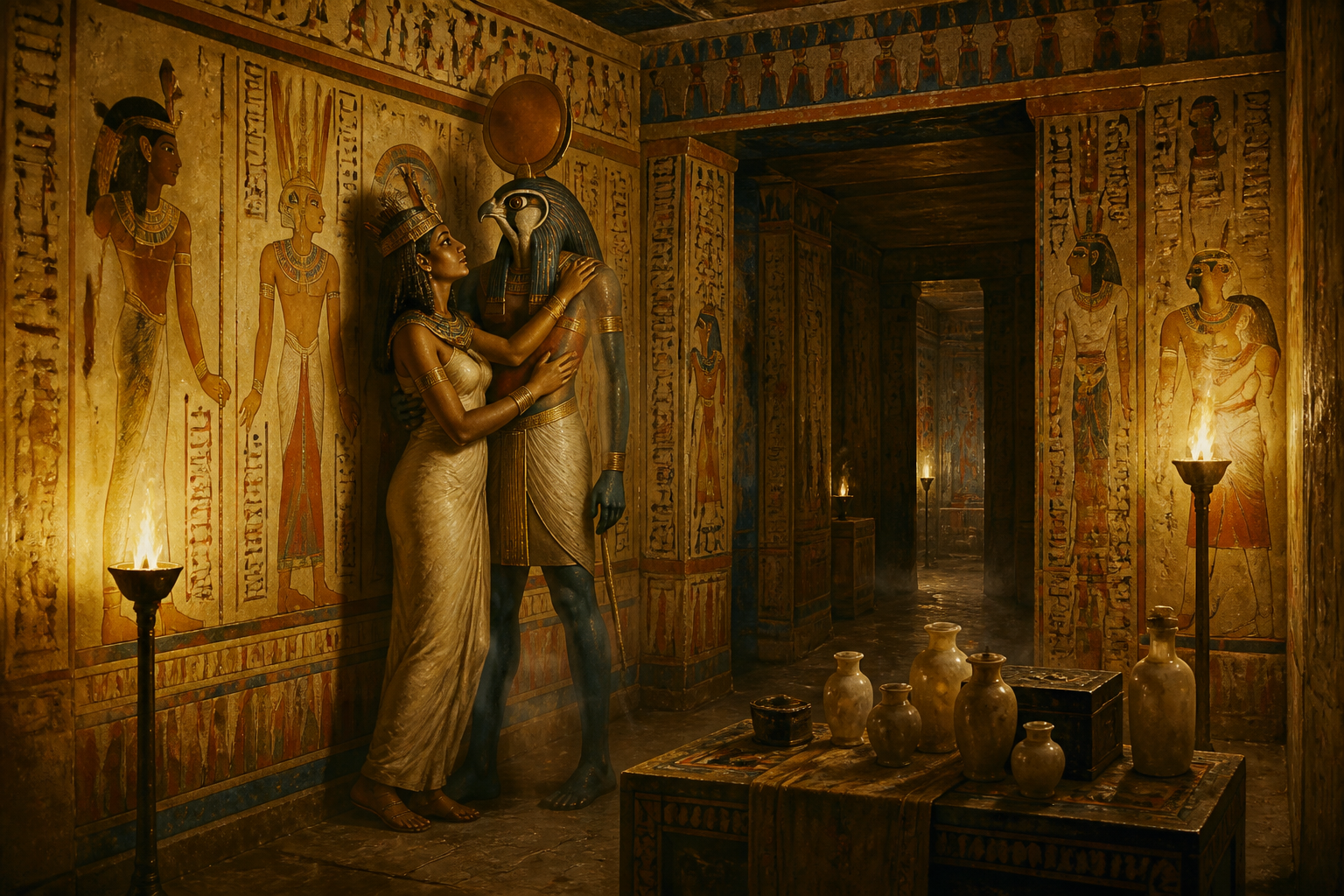
Descending into the Valley of the Queens, one finds the tomb of Nefertari, a masterpiece of Egyptian art. Flickering torchlight reveals walls covered in vibrant colors: deep blues, rich reds, gleaming golds. Scenes of Nefertari in the afterlife, in dialogue with the gods, each figure rendered with care and reverence. Her beauty immortalized in these frescoes, her story told in every hieroglyph. The artisans, skilled and devoted, captured her essence in paint and stone. These chambers, cool and echoing, are a sanctuary for posterity. The air is thick with the scent of earth and ancient stone, the silence punctuated by the distant sound of the desert wind. Here, beneath the sands of time, Nefertari’s legacy endures, a testament to her life and her faith.
"Her beauty shall never fade, nor her story be forgotten," an artisan whispers as he puts the final touches on a fresco.
Page 4 — Festival of Opet
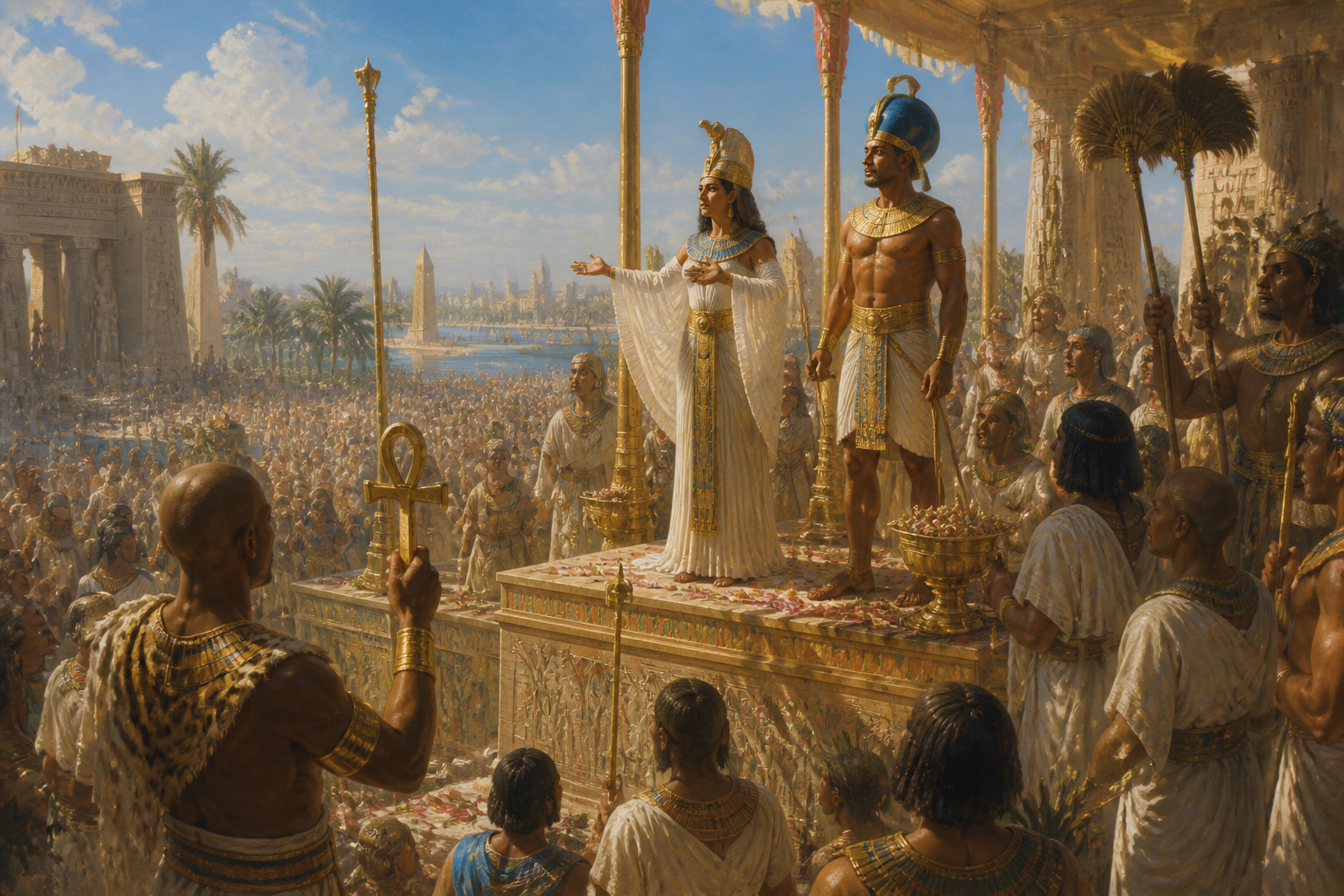
The city of Thebes buzzes with anticipation as the Festival of Opet commences. The grand procession winds its way from Karnak to Luxor, a river of humanity celebrating the divine. Nefertari stands on a platform, adorned in ceremonial regalia. She wears the vulture headdress, symbol of divine protection, and the intricately pleated kalasiris robe, her presence commanding amidst the crowd. Ramesses, the living god, stands beside her, his khepresh gleaming in the sun. Priests chant, their voices a wave of sound that reverberates through the crowd. Beyond, the river sparkles, carrying the sacred barque of Amun towards its destination. People throng the banks, offerings in hand. The festival is a display of unity and the divine favor of the gods, with Nefertari and Ramesses at its heart, embodying the harmony and power of Egypt’s golden age.
"The gods smile upon us this day," Ramesses declares, his voice booming over the crowd.
Page 5 — The Treaty of Peace
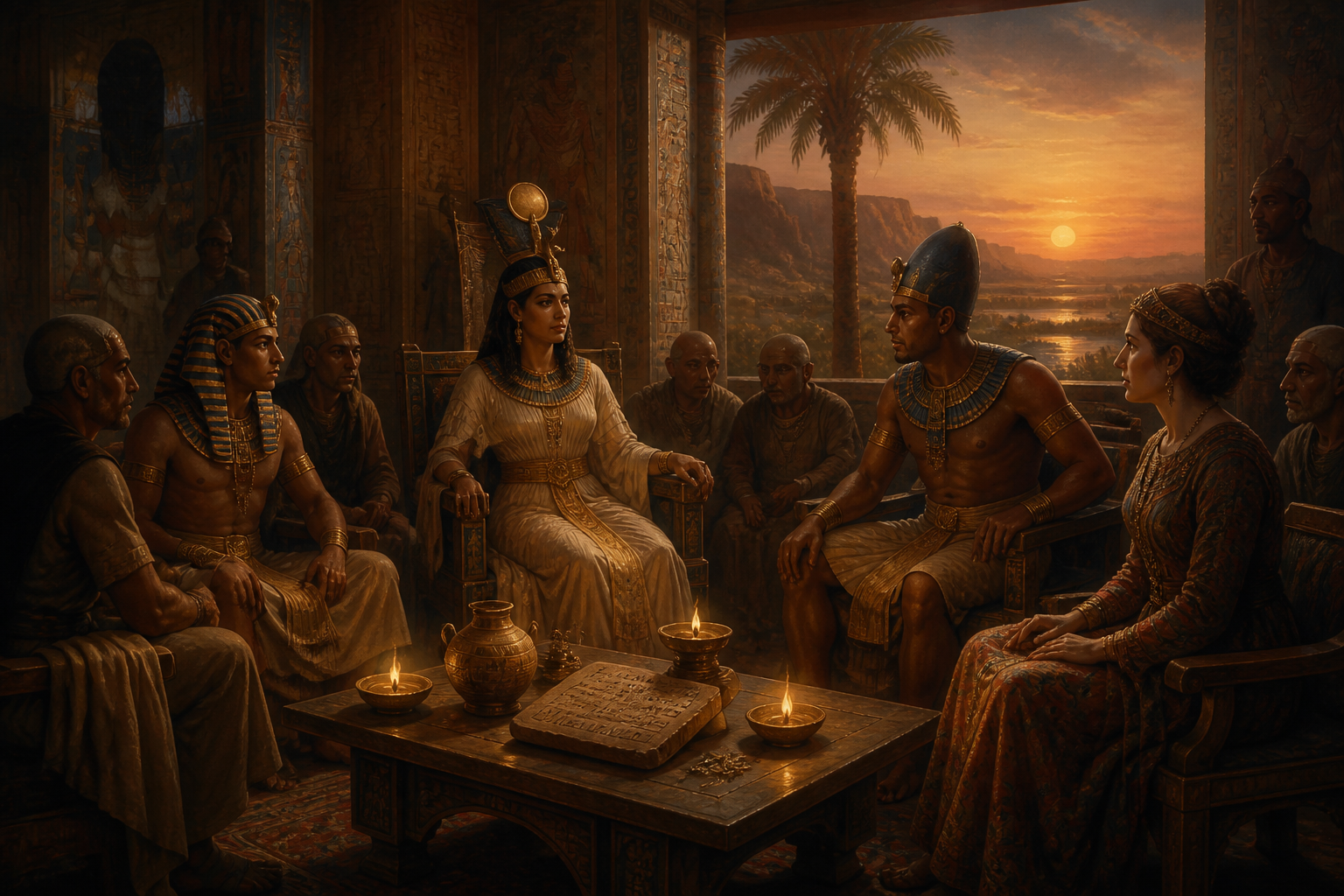
In the aftermath of war, the leaders of Egypt and the Hittite Empire gather to make peace. The chamber is filled with the tension of history, each side wary yet hopeful. Nefertari, instrumental in facilitating the dialogue, sits beside Ramesses. The air is heavy with incense, and the low hum of translators fills the room. Puduhepa, the Hittite queen, stands as a testament to the power of words over weapons. Through their delicate negotiations, the first known peace treaty in history is crafted. Nefertari’s calm demeanor and insightful counsel are crucial in this moment, as she helps guide the proceedings to a harmonious conclusion. The document, inscribed on clay tablets, is a symbol of enduring diplomacy. As the treaty is signed, the room exhales, a collective sigh of relief for peace hard-won.
"Let our peoples know no more war," Nefertari states, her voice carrying the weight of hope.
Page 6 — The Valley's Silence
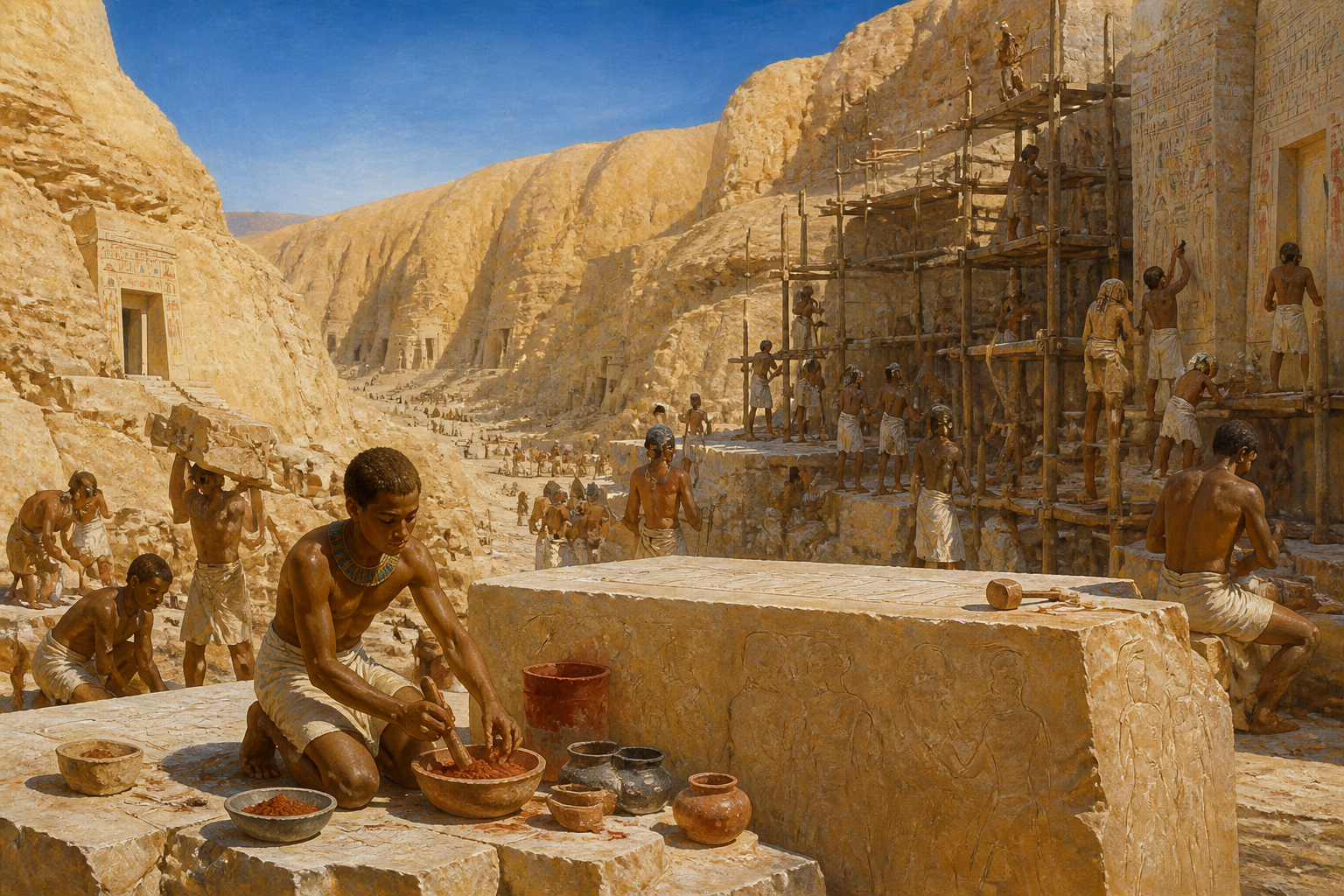
In the hush of the Valley of the Queens, workers labor under the hot sun, carving stone and decorating walls. The tomb of Nefertari is a hive of activity, yet reverently quiet. Artisans, faces streaked with sweat, carry pigments, brushes, and chisels. Each is dedicated to crafting a masterpiece that will withstand the ravages of time. The tomb's entrance looms, a simple stone portal leading to a world of art and honor. Inside, the air is cooler, filled with the scent of fresh plaster and the hush of concentration. Nefertari’s image begins to grace the walls, a tribute to a life of influence and power. Here, in these sacred spaces, life meets eternity, and Nefertari's essence is sealed into the heart of the earth, a whisper of beauty from the past.
"This must last forever," an artisan reminds his apprentice, as they mix vibrant pigments.
Page 7 — The River's Song
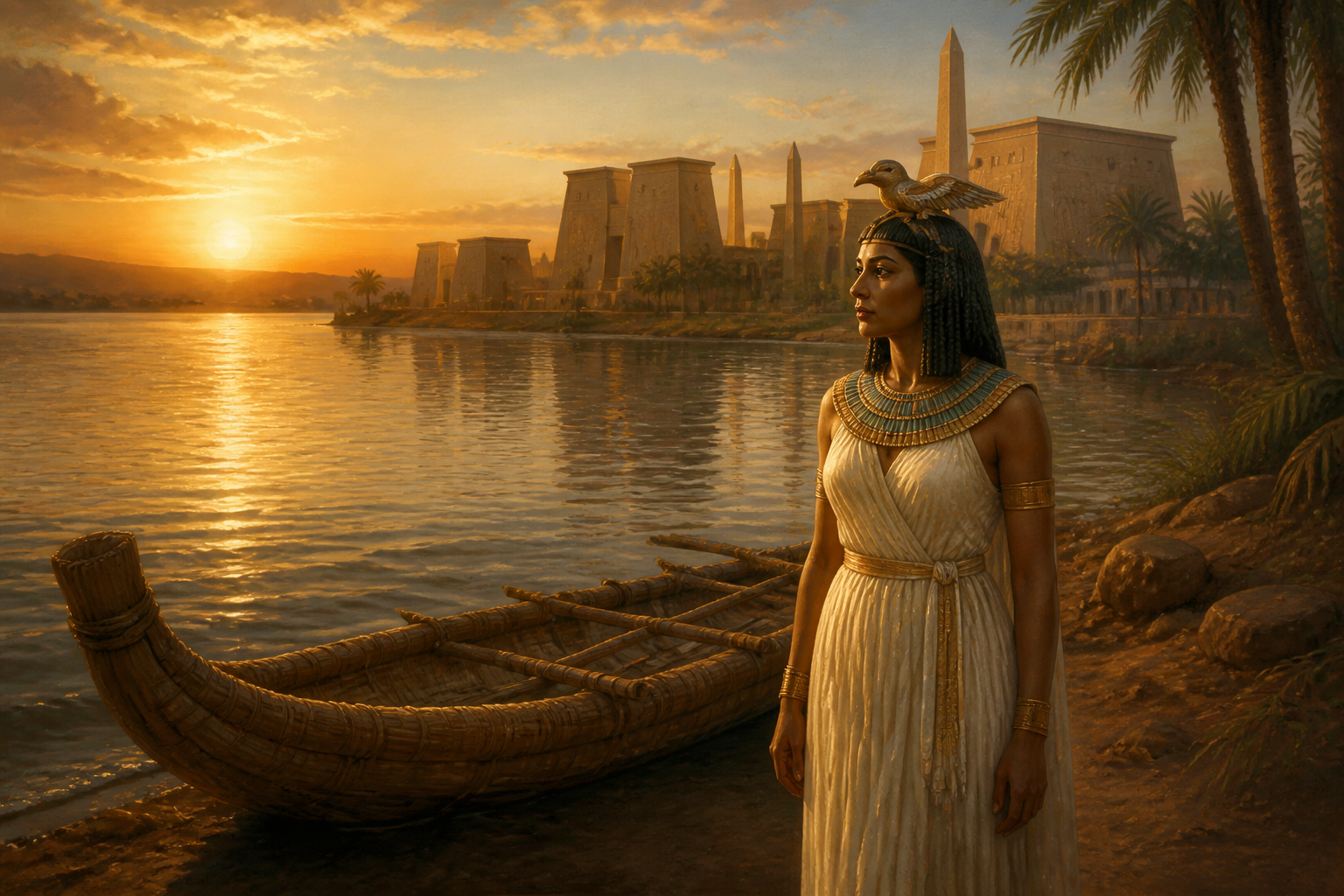
The Nile, the lifeline of empires, flows serenely as the sun sets on another day. On its banks, Nefertari walks with dignity and grace, surrounded by a retinue of attendants. The river's gentle murmur complements the rustling of palm fronds and the distant song of boatmen. Dressed in a simple white kilt, she embodies the elegance and power of her position. Her mind is filled with the burdens of state and the joys of grand achievements. Here, by the eternal waters, she finds solace and inspiration. The river's flow mirrors the continuity of life and the legacy she helped shape. As the last light fades, the silhouettes of stone monuments become guardians of memory, a testament to a reign that danced between the realms of the divine and the living.
"The river carries the dreams of our people," Nefertari muses, watching the water's endless journey.
Page 8 — The Pillars of Thebes
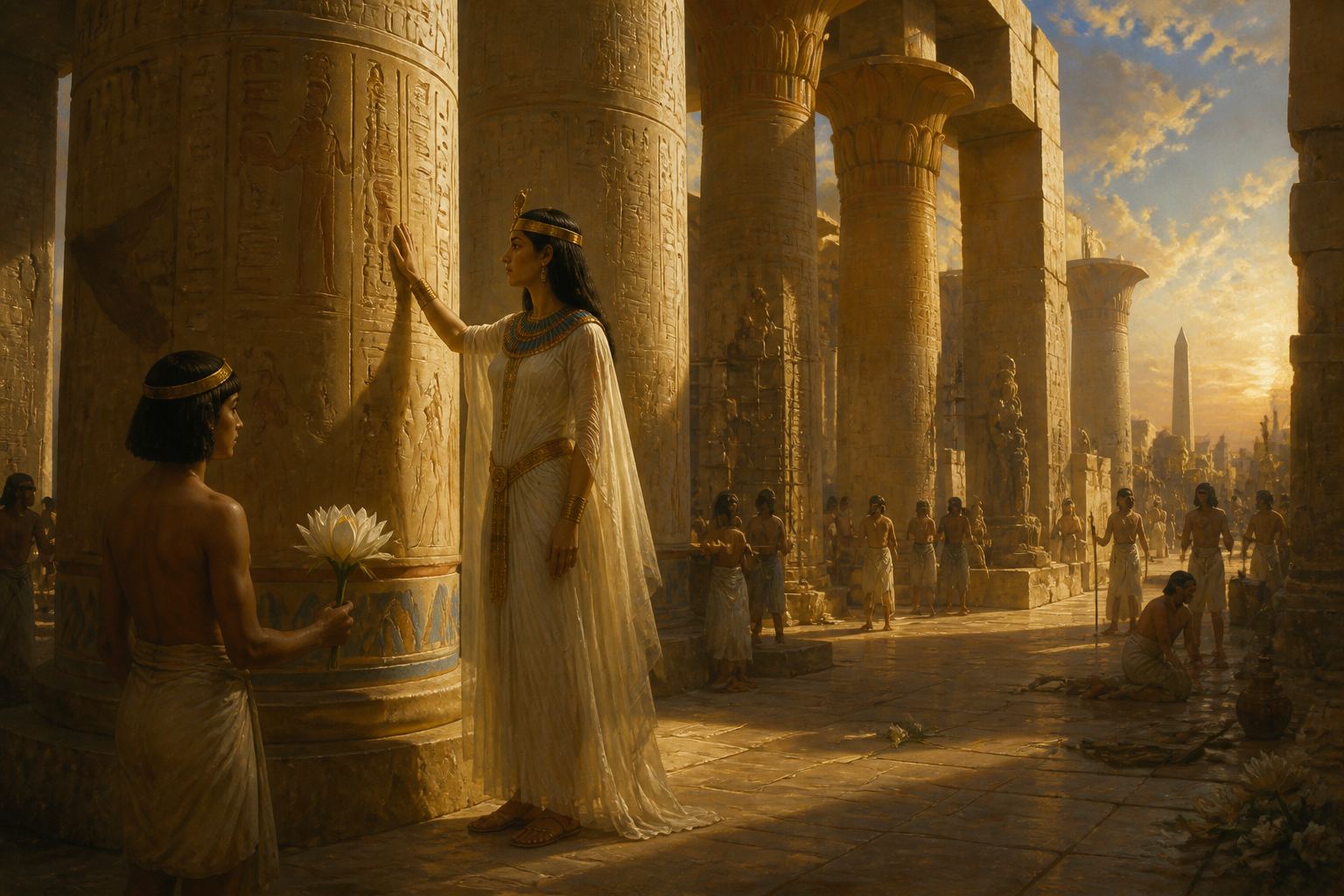
Within the grand precincts of Karnak, Nefertari walks amidst towering columns. The site is a testament to the architectural prowess and religious devotion of ancient Egypt. The air is filled with the scent of lotus blossoms and the sound of chisels as artisans continue to embellish the great stone surfaces. Nefertari, adorned with a simple diadem, inspects the work, her fingers brushing over the carved hieroglyphs. Beside her, Ramesses outlines grand plans for further construction. This is a place of worship, power, and history, where gods and kings converge. The priests chant, their hymns reverberating off the stone, a haunting echo of eternity. Nefertari, surrounded by the monumental achievements of human hands, reflects on her role in this divine legacy, her presence a touchstone to the divine.
"These are the pillars of our people, reaching for the heavens," Nefertari remarks as she surveys the columns.
Page 9 — The Queen and the Scribe
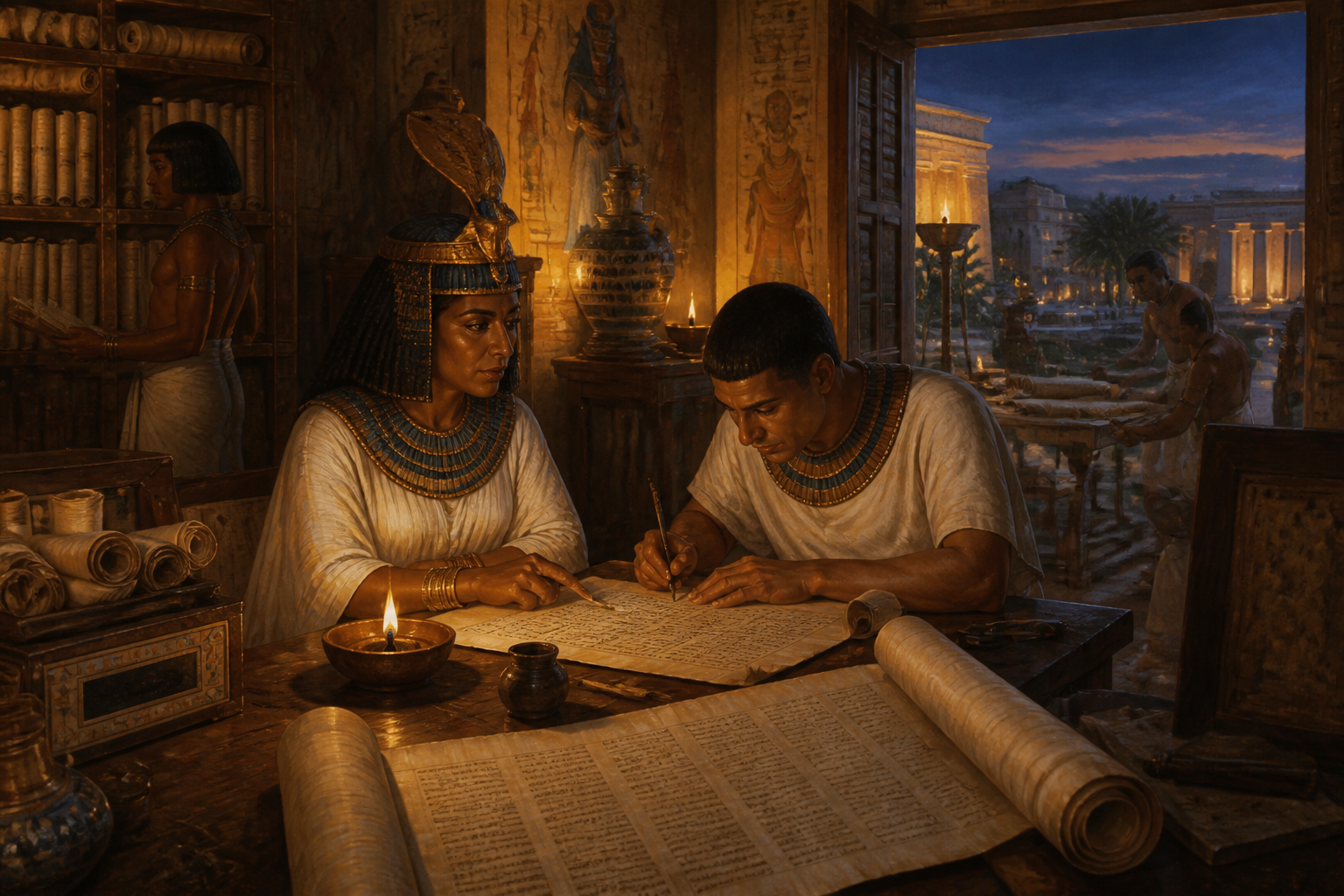
In a quiet alcove of the royal library, Nefertari confers with a scribe. Papyrus scrolls, meticulously inscribed, cover the tables, detailing treaties, trade agreements, and religious texts. The air is filled with the musty scent of parchment and ink. Nefertari, seated gracefully, discusses the affairs of the state, her keen intellect an asset to Egypt’s administration. The scribe, an elderly man with ink-stained fingers, listens intently, jotting down her words with precision. The library’s flickering lamplight casts a warm glow, creating an atmosphere of scholarship and reverence. Beyond the open window, the sounds of the city drift in, a reminder of the bustling life outside. Here, amidst the wisdom of centuries, Nefertari’s legacy as a patroness of knowledge and governance is affirmed, her influence echoing through the annals of time.
"Ensure these words reach the farthest edges of our realm," Nefertari instructs, her voice a command.
Page 10 — Eternal Reflection
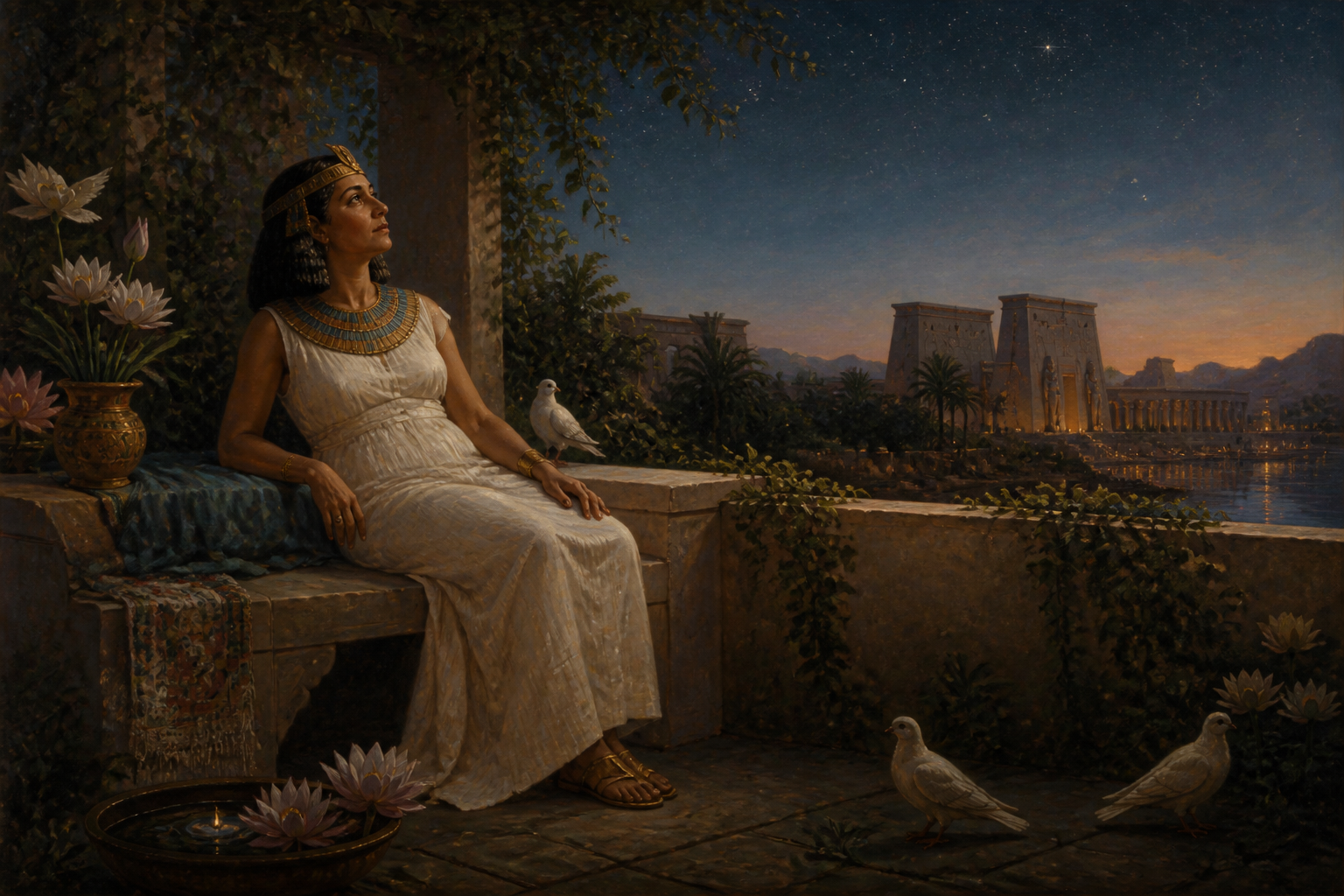
As twilight envelops the land, Nefertari sits quietly in the temple garden, surrounded by blooming lotus flowers and the gentle coo of doves. The air is sweet with the perfume of flowers, cooling as the sun sinks below the horizon. This is her moment of reflection, where past achievements and future dreams converge. Draped in a simple linen sheath dress, crowned with a delicate circlet of gold, she embodies the grace and dignity of her reign. The silence is profound, broken only by the soft rustle of leaves in the evening breeze. Here, under the vast, star-studded sky, she contemplates her legacy, the enduring imprint of her life and reign, etched in the hearts of her people and in the stone of her temple. Her thoughts are as timeless as the heavens, her presence a beacon of Egypt’s eternal splendor.
"The stars bear witness to the lives we live," Nefertari whispers to herself, a quiet testament to eternity.
About this story
- Audience: general readers
Read Wonder Egypt on your phone
Wonder Egypt is available on Android. Get Wonder Egypt on Google Play.