Khufu
Khufu — an illustrated history story. 10 illustrated pages, free to read on Wonder Egypt.
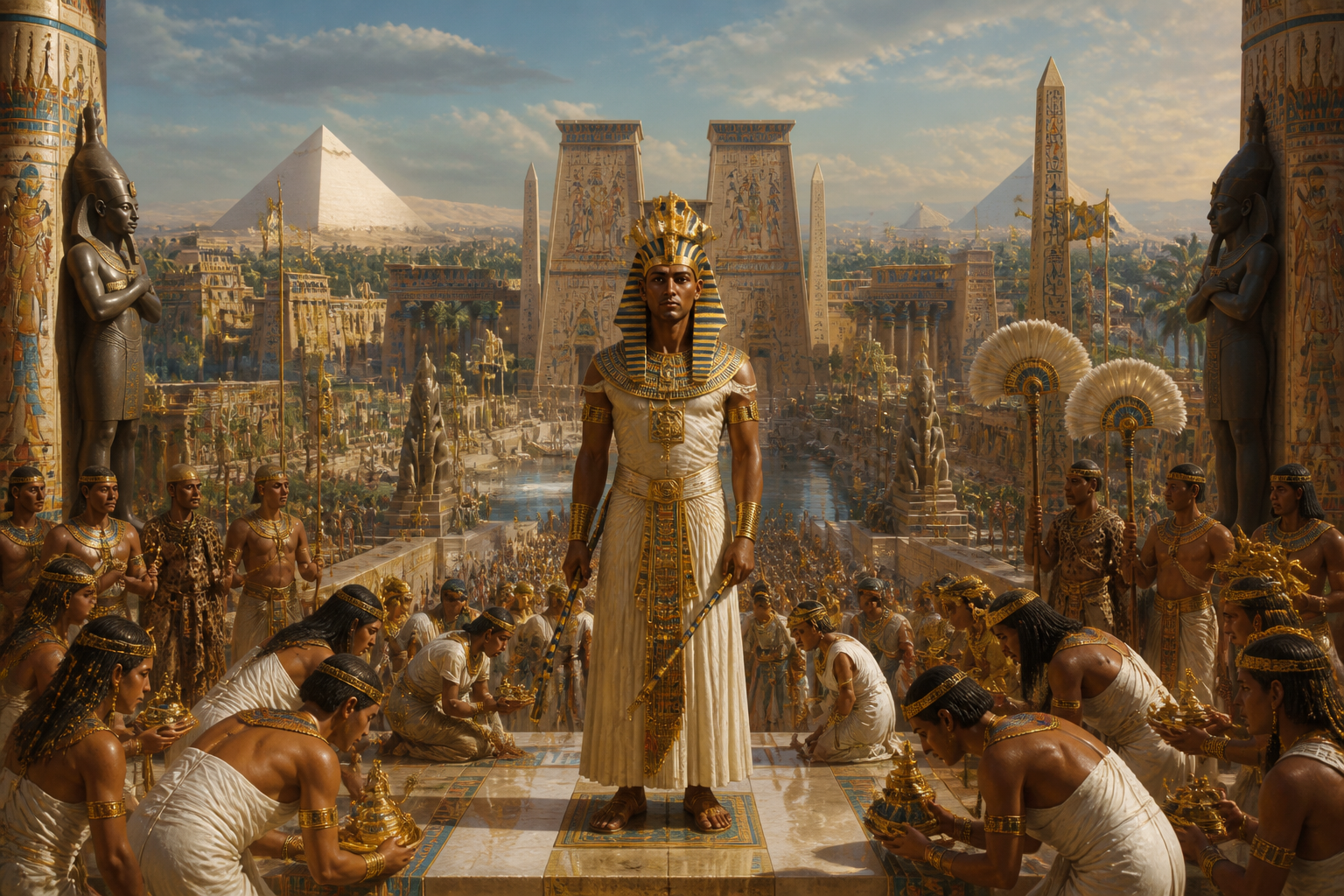
Page 1 — The Architect of the Age
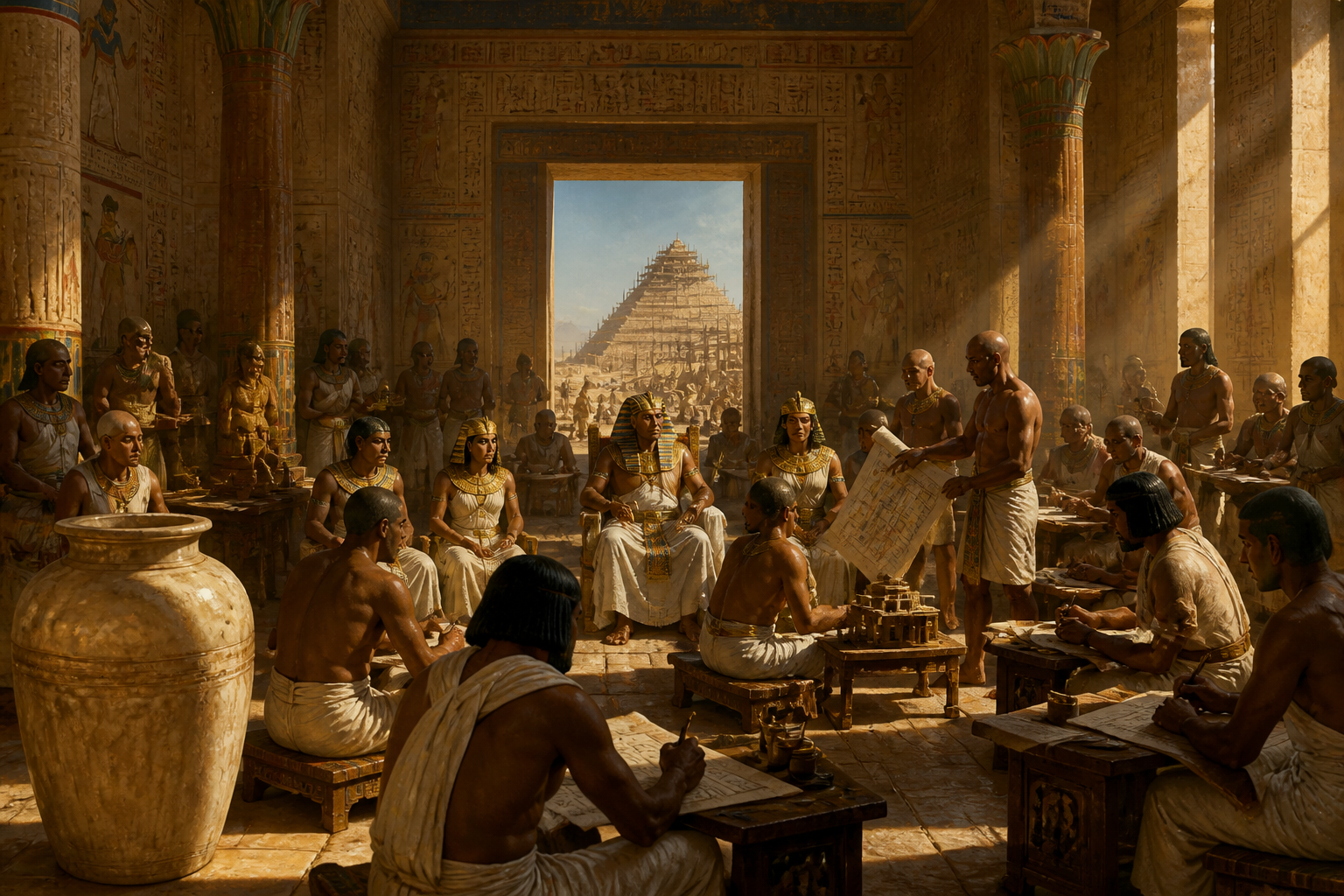
Khufu, the great pharaoh of the Fourth Dynasty of Egypt, is renowned for his ambitious dream that resulted in the Great Pyramid of Giza, a monument that would stand as the tallest structure on Earth for nearly four millennia. Ascending to the throne around 2589 BC, Khufu inherited not only the throne but also the legacy of his father, Sneferu. Determined to surpass his father’s achievements, Khufu mobilized a nation to erect a structure of unprecedented scale and complexity. He was surrounded by prominent figures, including his chief architect Hemiunu, who was integral to the pyramid’s design and construction. His sons, Djedefre and Khafre, learned from their father’s grand vision, readying themselves for their future reigns. Meritites I, his queen, offered support and counsel, while his mother, Hetepheres I, remained a revered figure at court. Khufu's reign was marked by profound organizational skill, uniting quarrymen, boatmen, architects, and laborers in a single purpose. However, the passage of time clouded his legacy, leaving few images or written records of the man himself. Yet the Great Pyramid, his colossal testament, spoke of his ambitious spirit and marked his reign as a pinnacle of ancient Egyptian civilization.
"Hemiunu, the stones must rise to touch the sun," Khufu commanded, gazing upon the vast Giza plateau.
Page 2 — The Vision Takes Shape
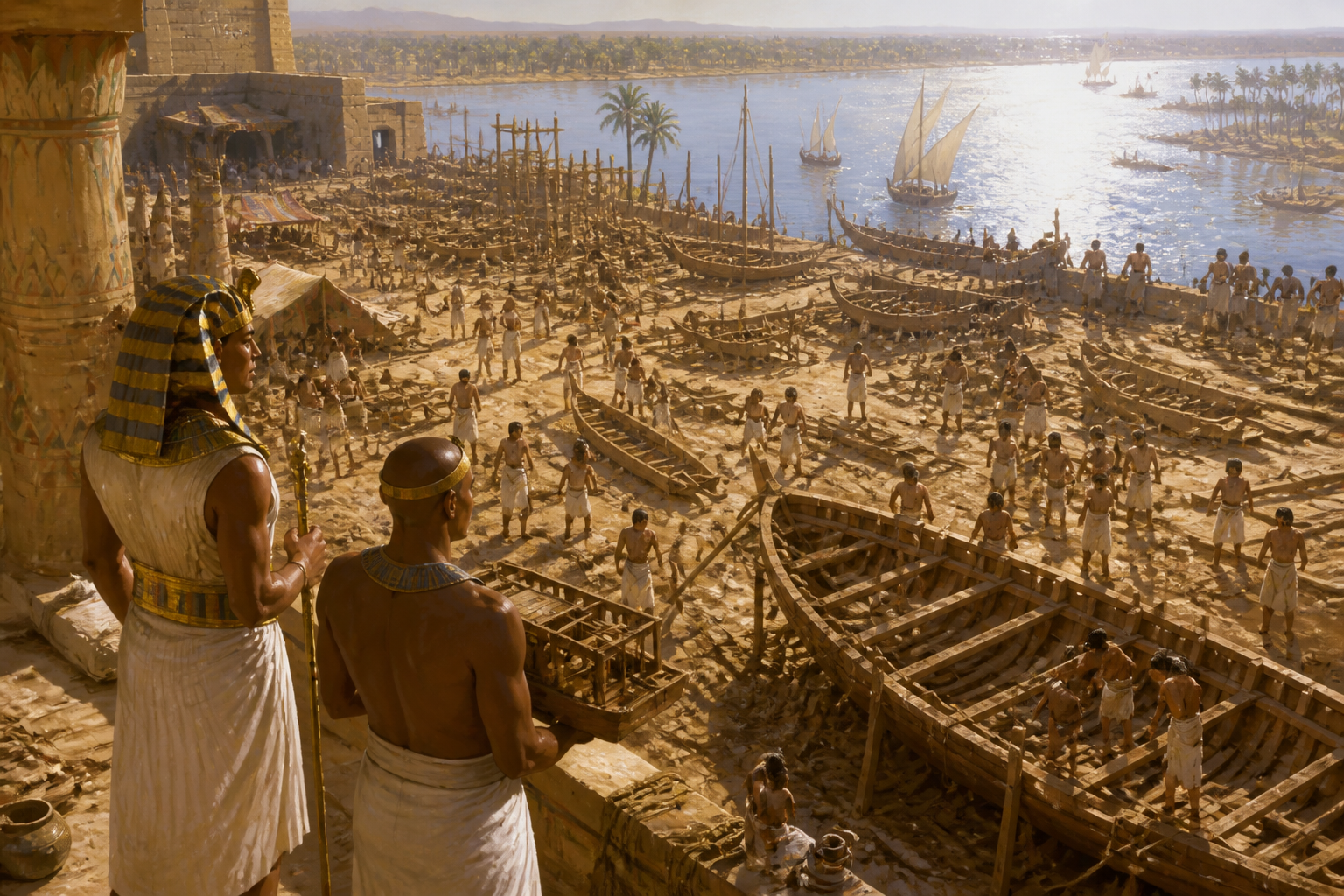
In the bustling shipyard of Memphis, Khufu's vision leaped off the scrolls and into tangible form. The pharaoh and Hemiunu stood amidst the cacophony of workers, their voices melding with the sounds of saws and hammers on timber. Khufu’s command was clear: every resource of the Nile was at their disposal. Boats, the lifelines of the project, were constructed to ferry limestone blocks from Tura across the vast river. This logistical feat required more than mere manpower; it demanded the coordination of supply lines, the precision of craftsmen, and the foresight of leaders. Khufu’s second son, Khafre, observed intently, his young eyes absorbing the nuances of command and strategy. The air was thick with the smell of tar and wood resin, a testament to the industrious spirit of the kingdom. The workers, clad in simple linen kilts, labored under the watchful gaze of overseers. The pharaoh's heart surged with pride as he witnessed the kingdom's finest artisans sculpt the boats that would bear the dreams of a civilization.
"Let the Nile be our road, stretching from quarry to the heavens," proclaimed Khufu, his voice rising above the clamour.
Page 3 — The People's Pyramid
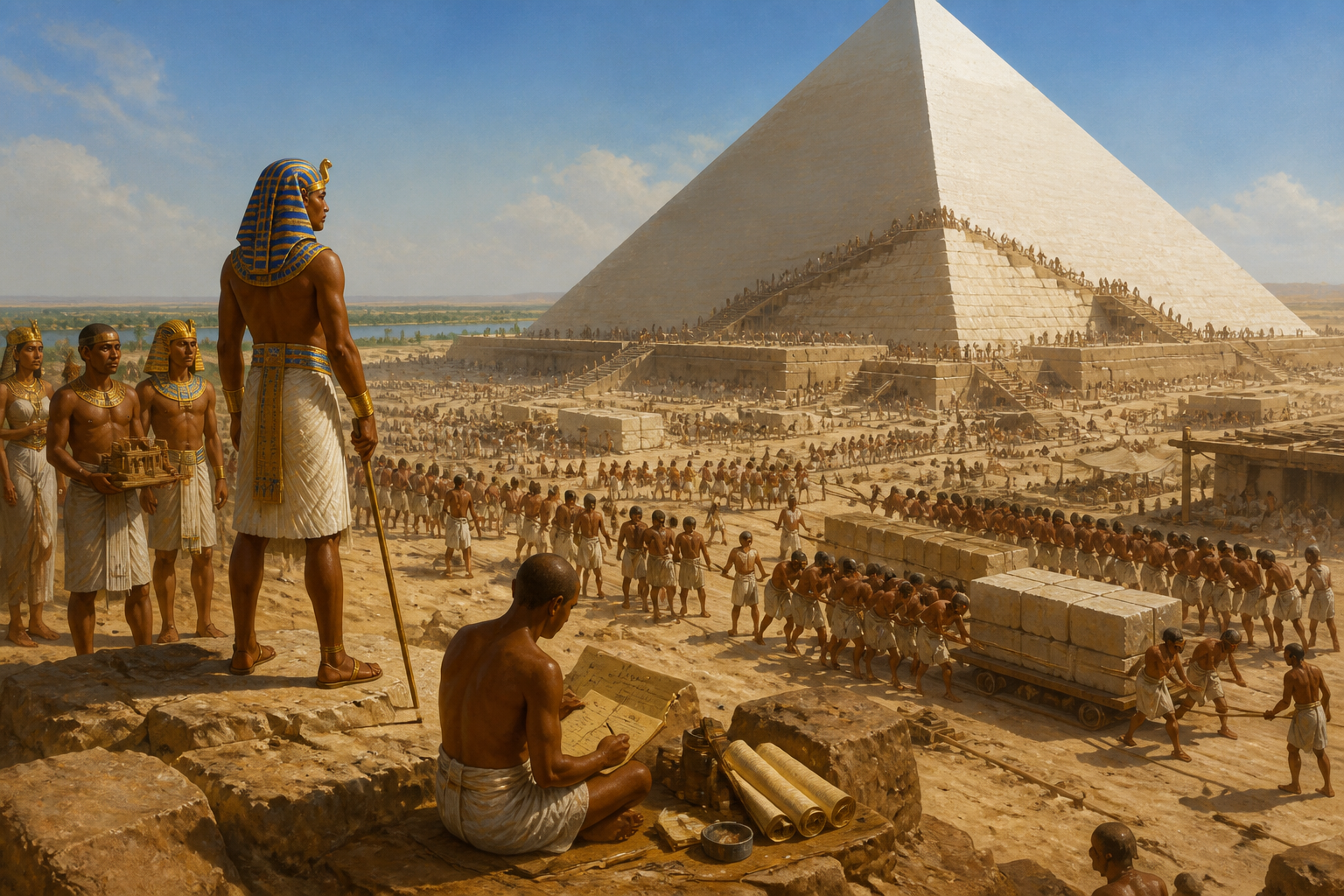
At the construction site on the Giza plateau, an orchestrated symphony of labor unfolded beneath the blazing sun. Thousands of workers, organized into crews, toiled in unison. Khufu, clad in the royal nemes, stood high on a ridge, overseeing the titanic effort. Around him, officials shouted orders, their voices rising over the rhythmic clatter of mallets shaping stones. Scribes bustled about, documenting the day’s progress on papyrus scrolls. The air was filled with the scent of sweat and dust, the ambient noise punctuated by the grunting of laborers straining at ropes, as they hauled massive limestone blocks into place. Hemiunu, ever present, directed the precise placement of each stone, his keen eye ensuring the pyramid’s perfect alignment with the cardinal points. Djedefre, Khufu’s eldest son, moved among the workers, learning the art of leadership and labor from his father’s example. Around them, the atmosphere thrummed with energy and purpose, the very earth trembling under the weight of dreams given form.
"Each stone is a step towards eternity," Khufu declared, his arm sweeping towards the rising pyramid.
Page 4 — Whispers of the Afterlife
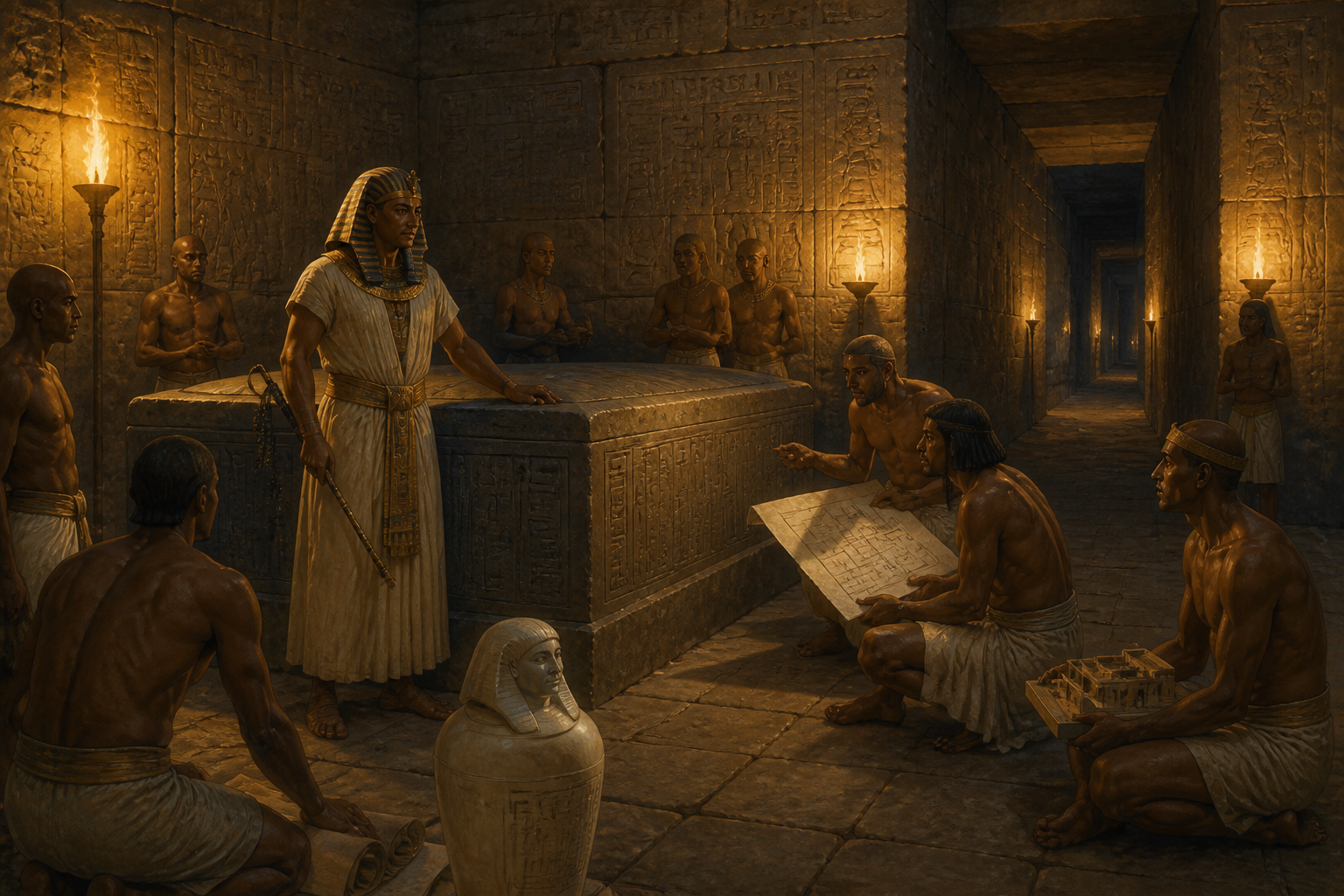
Within the heart of the pyramid, deep in the labyrinthine chambers, Khufu stood among the stone walls that would one day cradle his eternal rest. His architects, including the ever-loyal Hemiunu, surrounded him, their torches flickering in the half-light, casting dancing shadows upon the hieroglyphs. The air was cool and filled with the scent of earth and incense. Here, beneath the tons of carefully placed stone, the pharaoh envisioned his voyage to the afterlife. Priests murmured sacred texts, their voices blending with the echo of chisels carving into the living rock. Khufu’s eyes traced the intricately carved symbols of protection and power, while his thoughts dwelled on the promise of immortality. His queen, Meritites I, accompanied him, her presence a comforting reminder of the life they shared. As the procession moved onward, the thud of feet on stone filled the corridors, a reminder that even in death, the journey was one of movement and passage.
"This stone shall guard my spirit, as Ra guards the sun," Khufu intoned, gesturing to the sarcophagus.
Page 5 — The River's Bounty
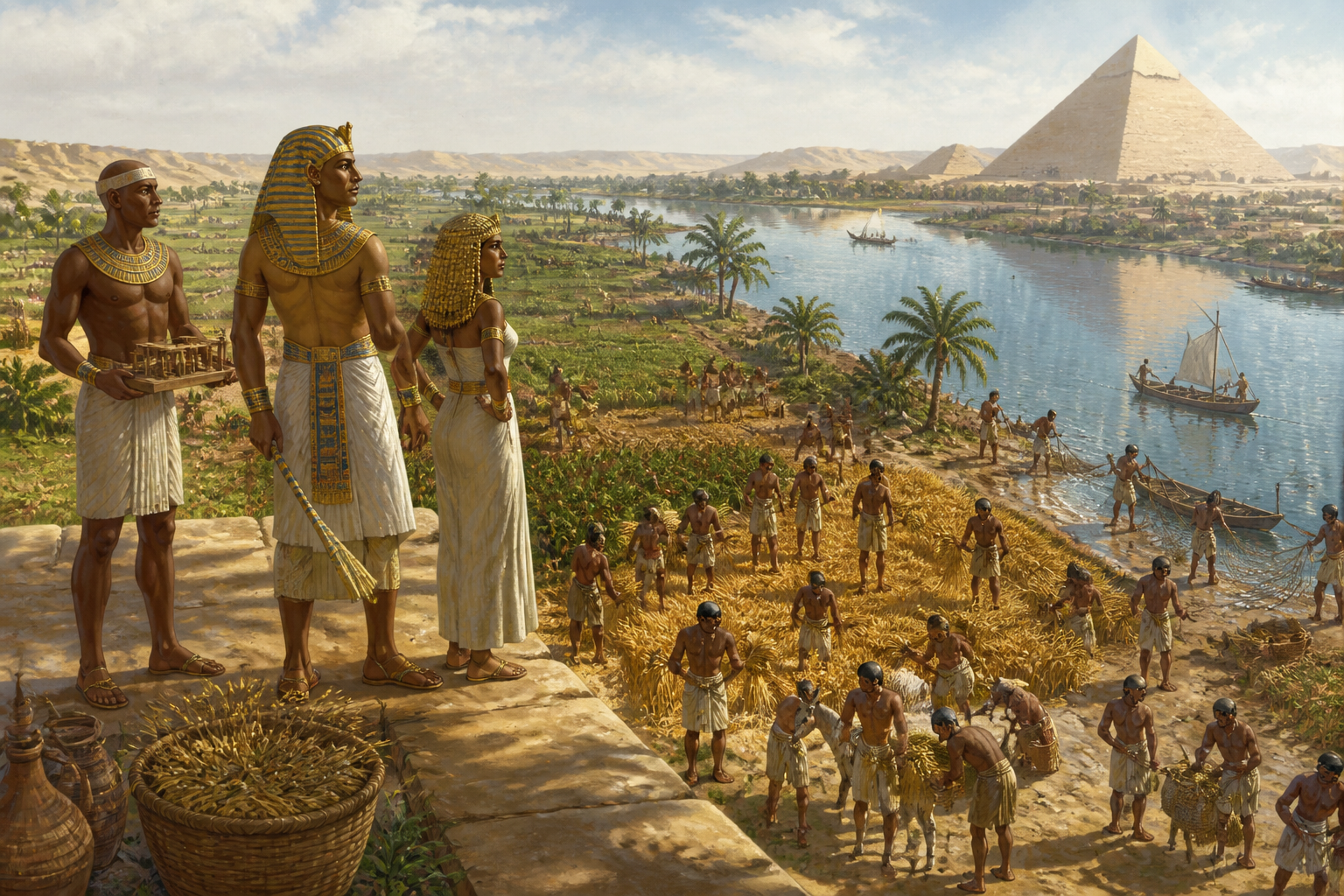
Along the banks of the Nile at Giza, the pharaoh’s grand plan was nourished by the river's bounty. The fertile floodplains teemed with life, providing sustenance to the thousands engaged in the pyramid's construction. Khufu, flanked by Hemiunu and his son Djedefre, inspected the bustling activity. Farmers, their skin darkened by the sun, tended to fields of barley and emmer wheat, their hands deftly cutting and bundling the crops. Nearby, fishermen cast nets into the Nile, their rhythmic pulls yielding flapping catches of tilapia and catfish. The scent of damp earth and fresh green mingled with the tang of fish in the air. The bounty of the Nile was not just food, but the clay for bricks, the reeds for boats, the papyrus for records. Every facet of Egyptian life, from sustenance to administration, was intertwined with the river. Khufu’s gaze swept over the scene, seeing not just a river, but the lifeblood of his kingdom.
"The Nile is our giver of life," Khufu told Djedefre, his voice carrying over the fields. "Without it, we are as dust."
Page 6 — The Queen's Counsel
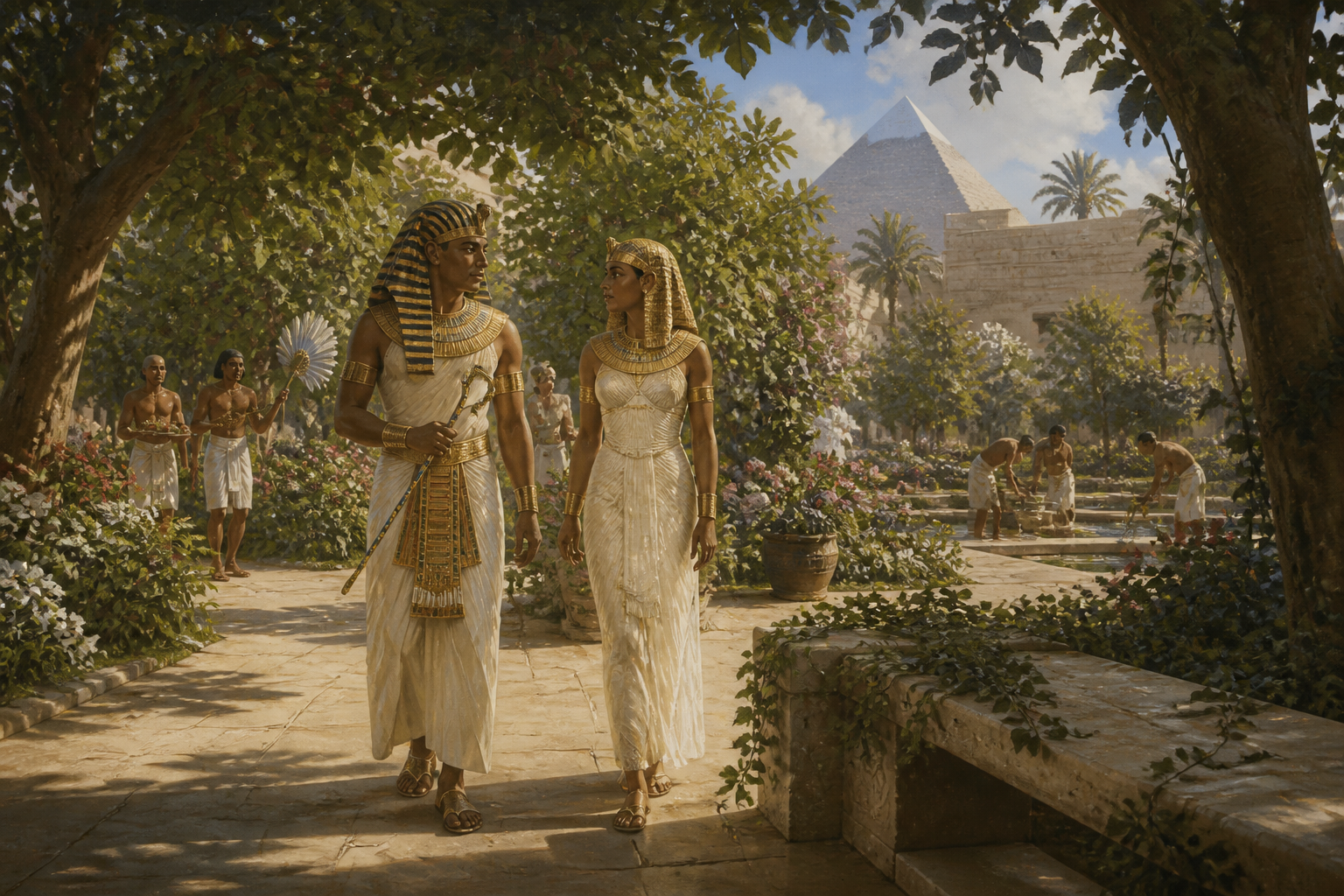
Within the serenity of the royal garden at Giza, Khufu found solace and counsel. The garden, a lush sanctuary of fig and pomegranate trees, was a place where the pharaoh could retreat from the demands of state. Here, he walked with Queen Meritites I, their conversation woven into the rustle of leaves and the song of birds. The air was fragrant with flowering jasmine, a gentle reminder of the life and beauty that thrived beyond the granite walls of the pyramid. Meritites, dressed in a sheath of fine linen, her neck adorned with a simple gold collar, spoke with wisdom and insight that matched her husband's ambition. The bond between them was one of shared purpose and mutual respect, a foundation that anchored the pharaoh's immense undertaking. As they strolled along the gravel paths, the distant hum of labor and the sight of the pyramid's peak cresting the horizon reminded Khufu of the legacy they were building together.
"In the quiet, the truth of our hearts can be heard," Meritites mused, her hand lightly resting on Khufu’s arm.
Page 7 — The Legacy of Stone
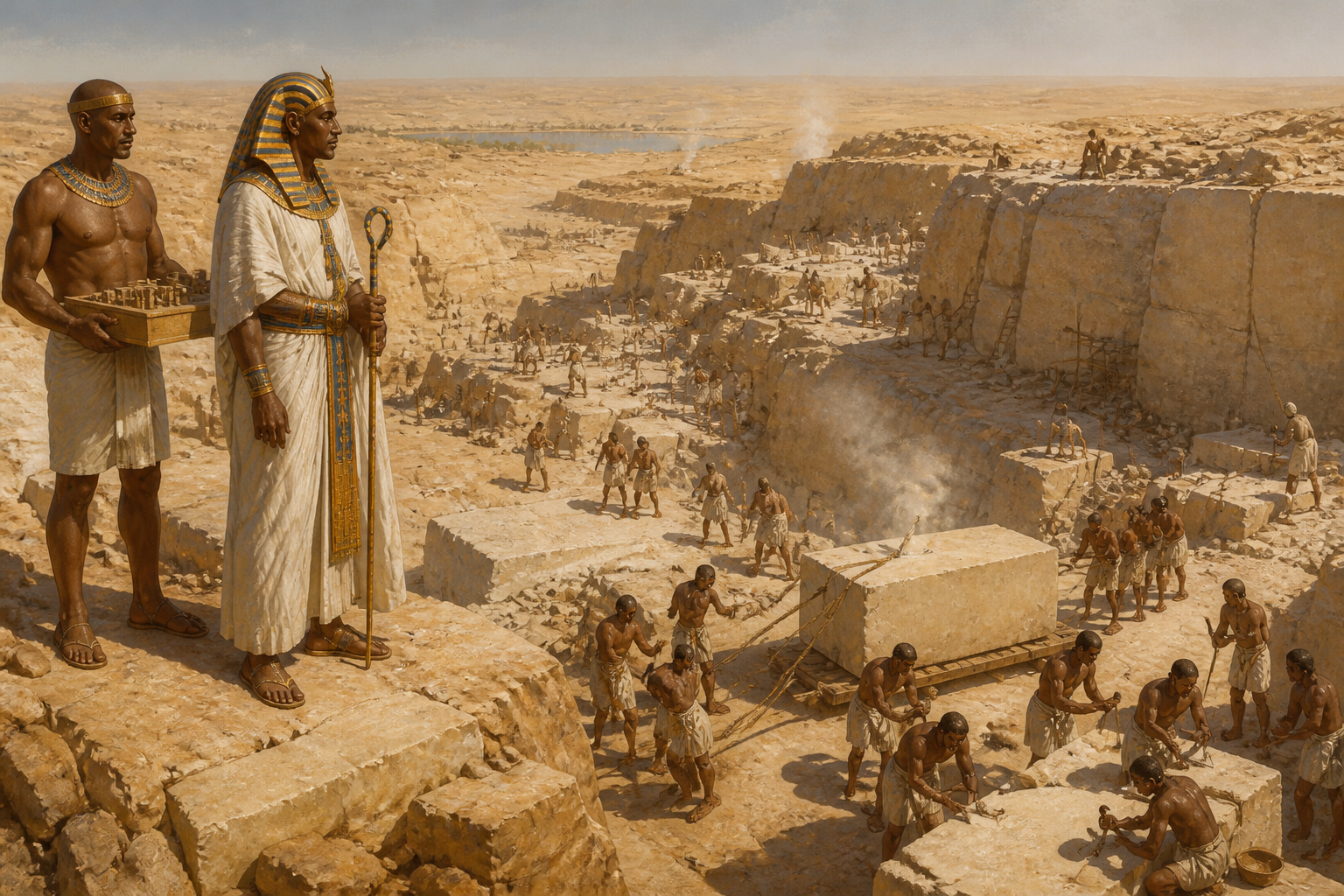
Under the scorching sun at the limestone quarries of Tura, the laborers' relentless toil shaped the very foundation of Khufu's legacy. Here, the stone blocks were hewn with precision, each piece a vital component in the construction of the Great Pyramid. The quarry was a cacophony of activity, with masons chiseling blocks and overseers calling out instructions. The air was thick with the scent of dust and sweat. Khufu, accompanied by Hemiunu, inspected the quarry, ensuring the quality of stone met the lofty standards required. The pharaoh's presence instilled both awe and determination among the workers, their efforts redoubled under his gaze. Here, the vision of eternity took its first form, the limestone blocks destined to withstand time and nature. The quarries were the beginning, the source of what would become a wonder of the ancient world, a testament to the pharaoh's ambition and the might of the Egyptian civilization.
"Each block must bear the weight of history," Khufu instructed, his voice commanding over the din.
Page 8 — The Dynasty's Future
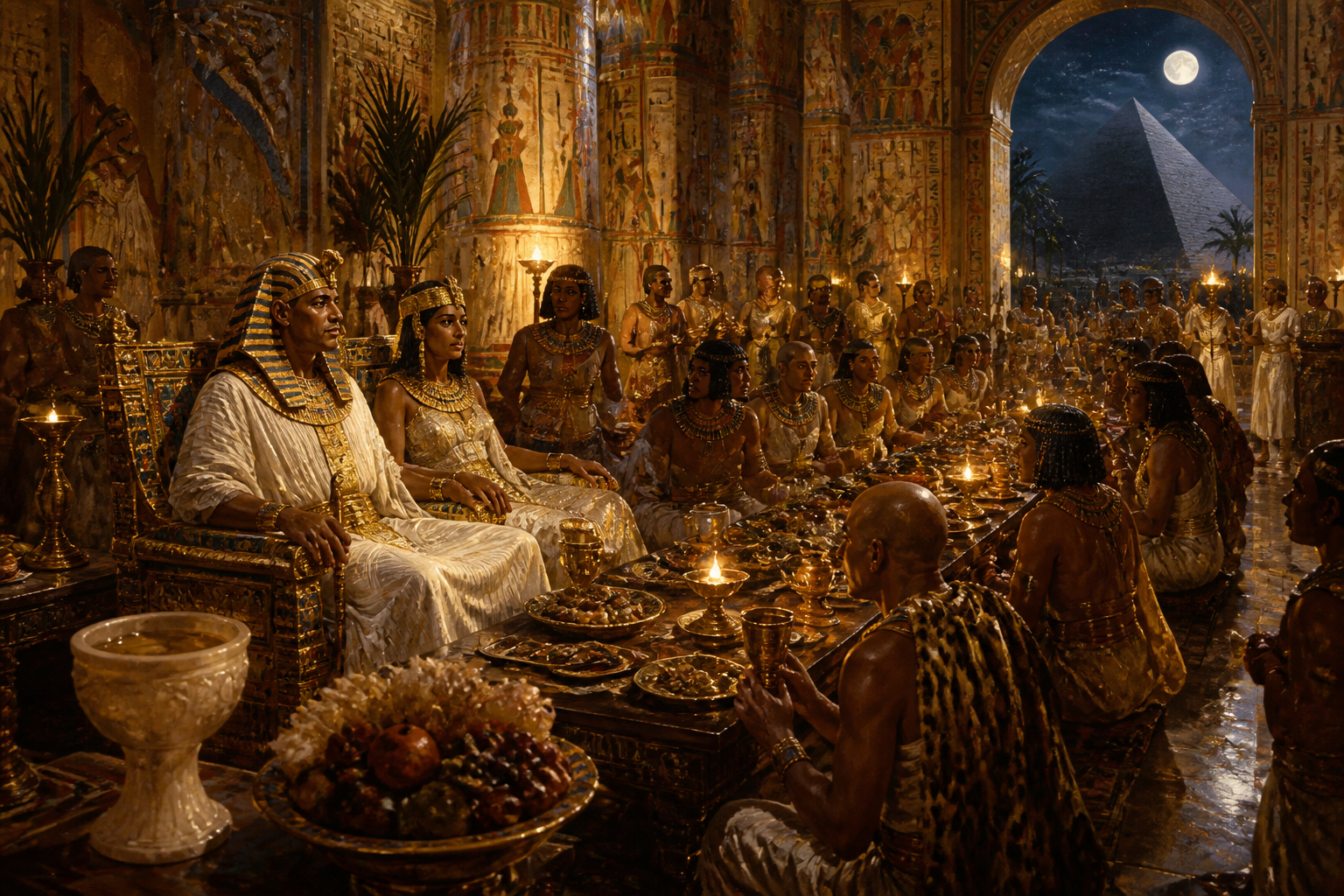
In the grand banquet hall of Giza, the court gathered to celebrate the fruits of Khufu’s labor and the promise of dynastic continuity. The hall, adorned with colorful tapestries and lit by flickering oil lamps, echoed with laughter and music. Khufu presided over the feast, a symbol of unity and strength in his finely woven linen robe and ceremonial regalia. Meritites sat beside him, her presence as radiant as the gold around her neck. Djedefre and Khafre, the pharaoh’s sons, mingled with nobles and dignitaries, their future roles evident in their composure and attentiveness. The aroma of roasted meats and honeyed pastries mingled with the scent of incense, creating an atmosphere of wealth and prosperity. As the evening unfolded, toasts were raised to the pharaoh, his achievements, and the enduring legacy he was building. In the hall, the sense of history in the making was as palpable as the stone of the pyramid itself.
"To the gods who favor us, to the pyramid, and to Egypt," Khufu declared, raising his cup high.
Page 9 — The Judgment of Ages
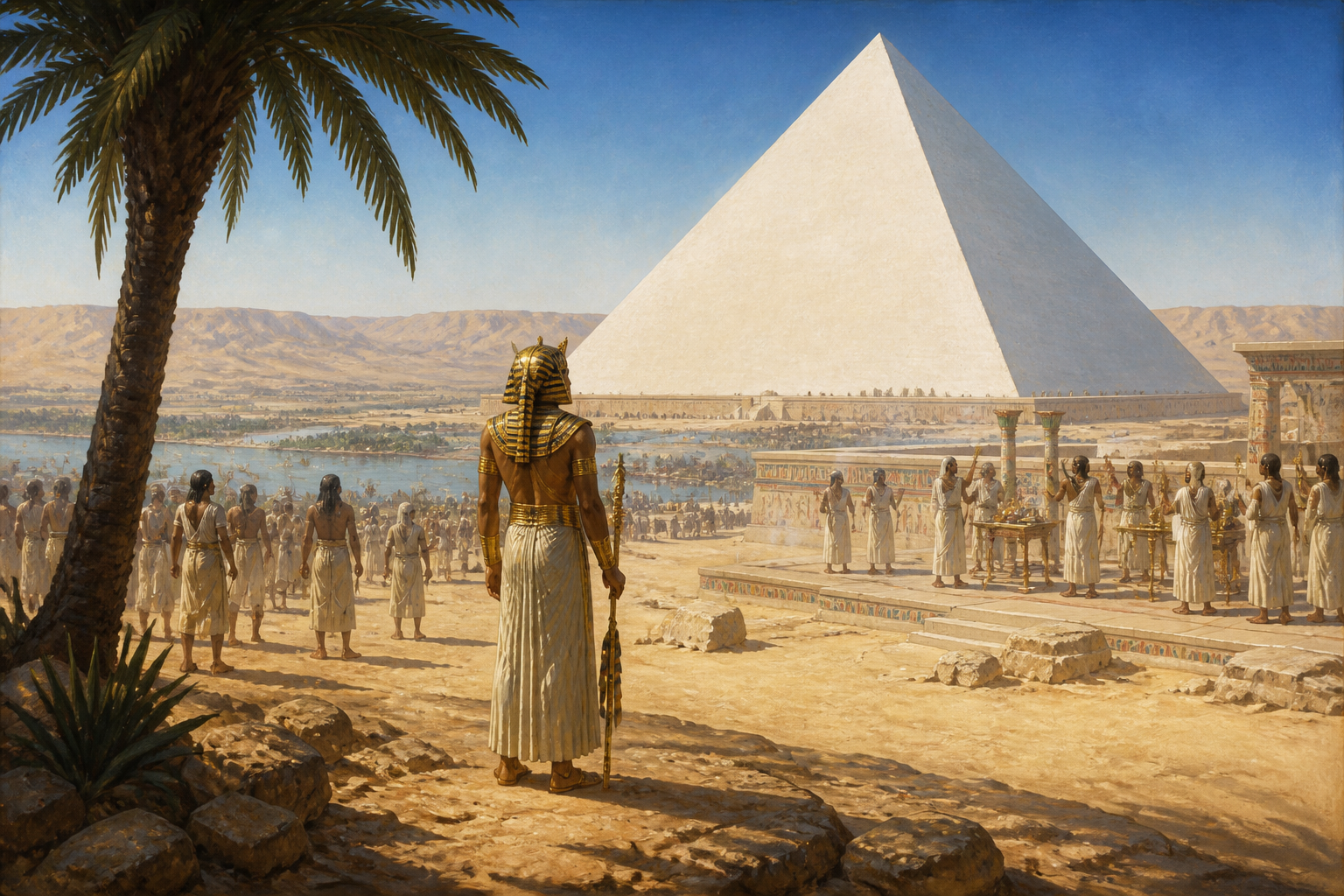
Years after Khufu’s reign, the desert sands shifted, whispering tales of the past. On the Giza plateau, in the shadow of the great pyramid, a new generation of rulers pondered the legacy left by their forebears. Khufu’s son, Djedefre, now pharaoh, stood contemplating the monument that stood as a testament to his father’s vision and to the enduring power of the Egyptian state. The surrounding landscape was still a hive of activity, as priests conducted rituals and tourists from across the Nile approached in awe. Djedefre, adorned in the kilt and regalia of his office, felt the weight of history upon his shoulders. The pyramid, silent but eloquent, reminded all who beheld it of the divine mandate to rule wisely and to leave a mark upon the world. Though Khufu’s likeness faded from memory, his stone legacy spoke across the ages, a whisper and a roar, calling each ruler to measure themselves against its silent grandeur.
"Father, your monument stands as a guide for us all," Djedefre murmured, gazing at the pyramid's peak.
Page 10 — Eternal Monument
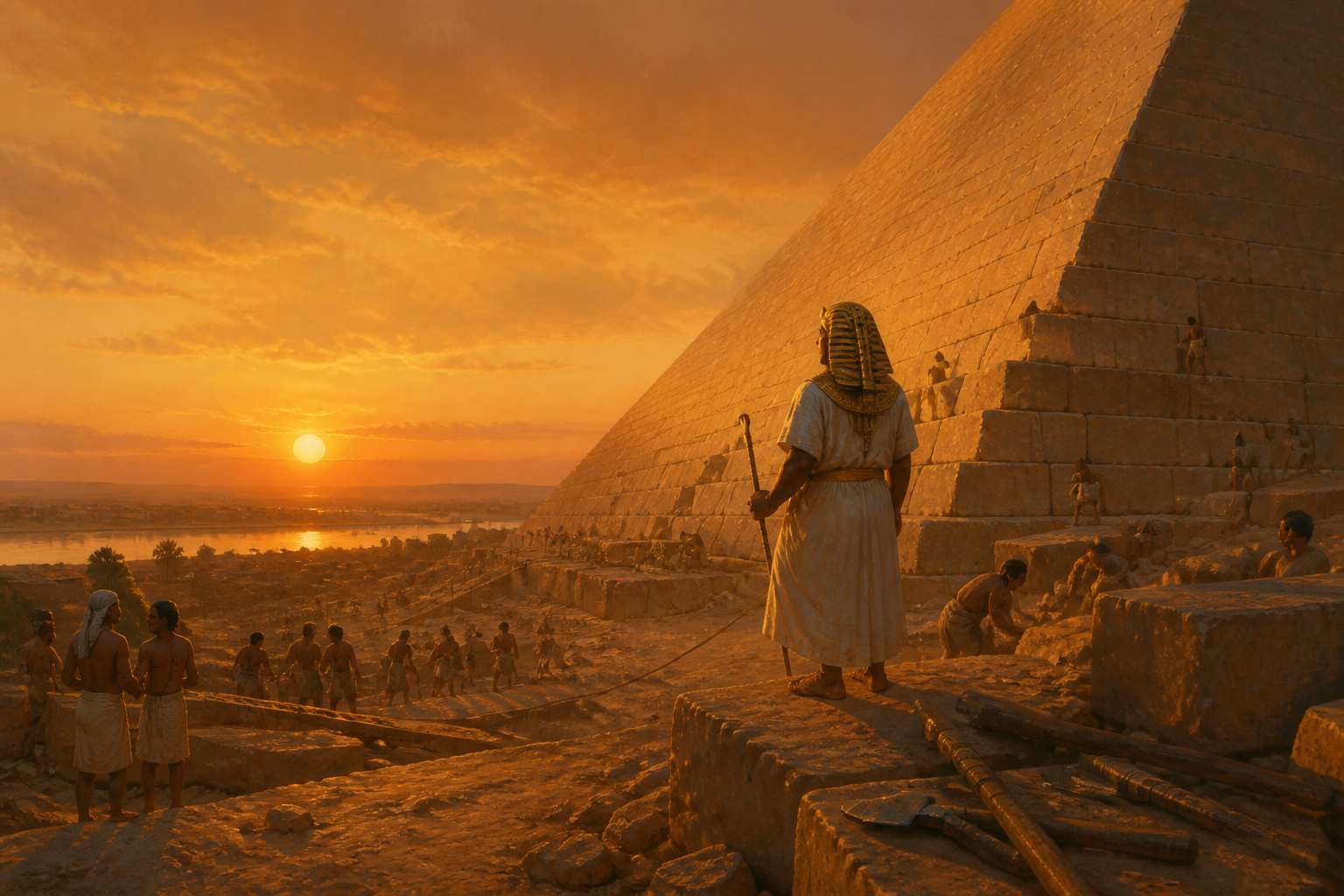
In the quiet aftermath of Khufu’s reign, the Great Pyramid stood as an eternal monument to his ambition and the ingenuity of ancient Egypt. Time moved forward, kingdoms rose and fell, yet the pyramid remained, a beacon of human achievement and mystery. Within its stones, countless stories lay dormant, its silent corridors guarding secrets of the past. Khufu’s legacy, though obscured by the sands of time, emerged through the steadfast silhouette of his pyramid. It beckoned scholars, adventurers, and rulers alike to marvel at its scale and ponder its purpose. As the sun set upon the desert, casting long shadows over Giza, the pyramid stood unyielding, a monument not just to a king, but to a civilization that dreamed beyond the horizon. The ghosts of Khufu, Hemiunu, Meritites, and those who labored under the sun whispered through the stones, a reminder that while time may pass, the achievements of the heart endure.
"A monument built not for a reign, but for eternity," an elder mused, eyes fixed on the fading light.
About this story
- Audience: general readers
Read Wonder Egypt on your phone
Wonder Egypt is available on Android. Get Wonder Egypt on Google Play.