Letters to the Dead
Letters to the Dead — an illustrated history story. 10 illustrated pages, free to read on Wonder Egypt.
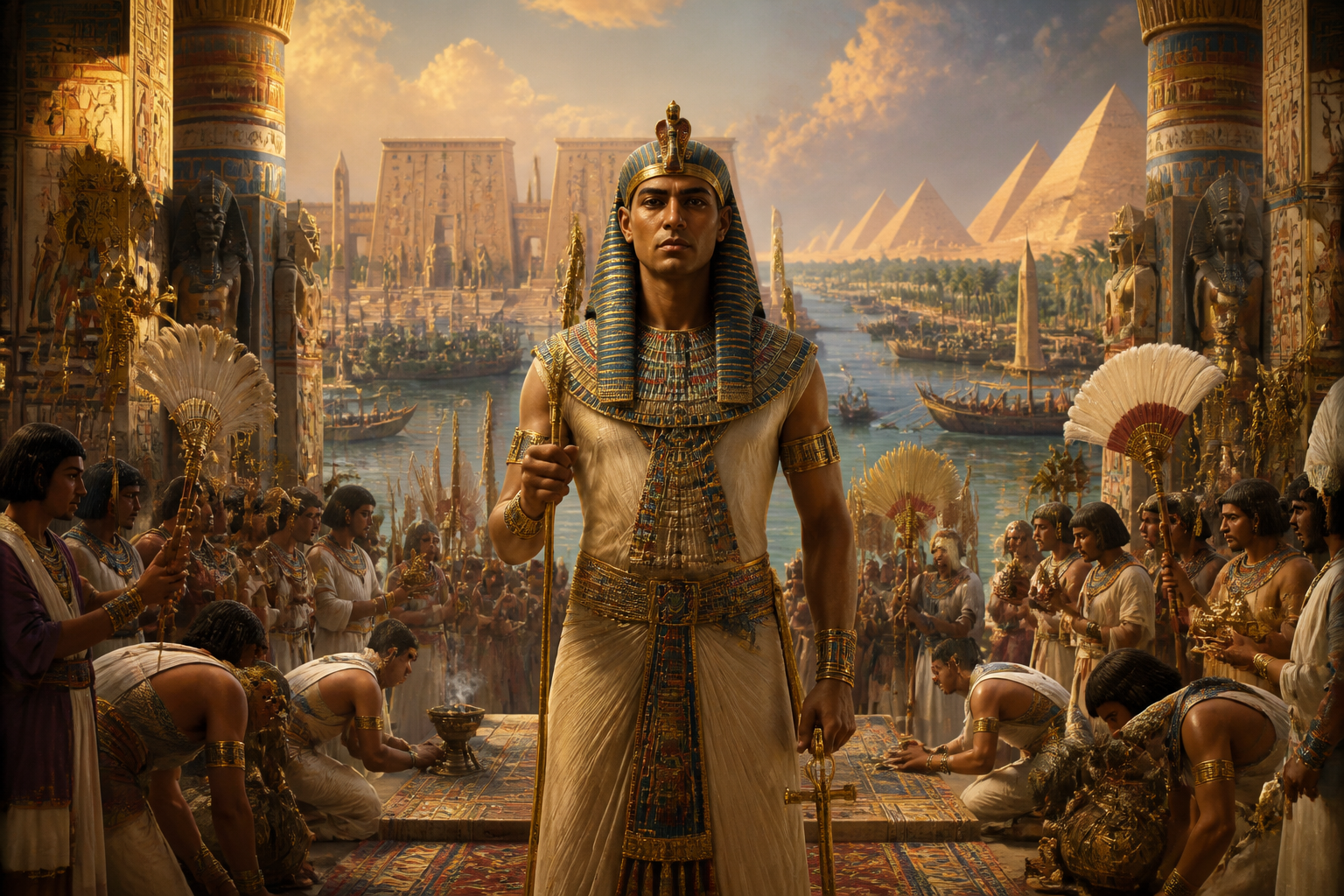
Page 1 — Voices from the Tomb
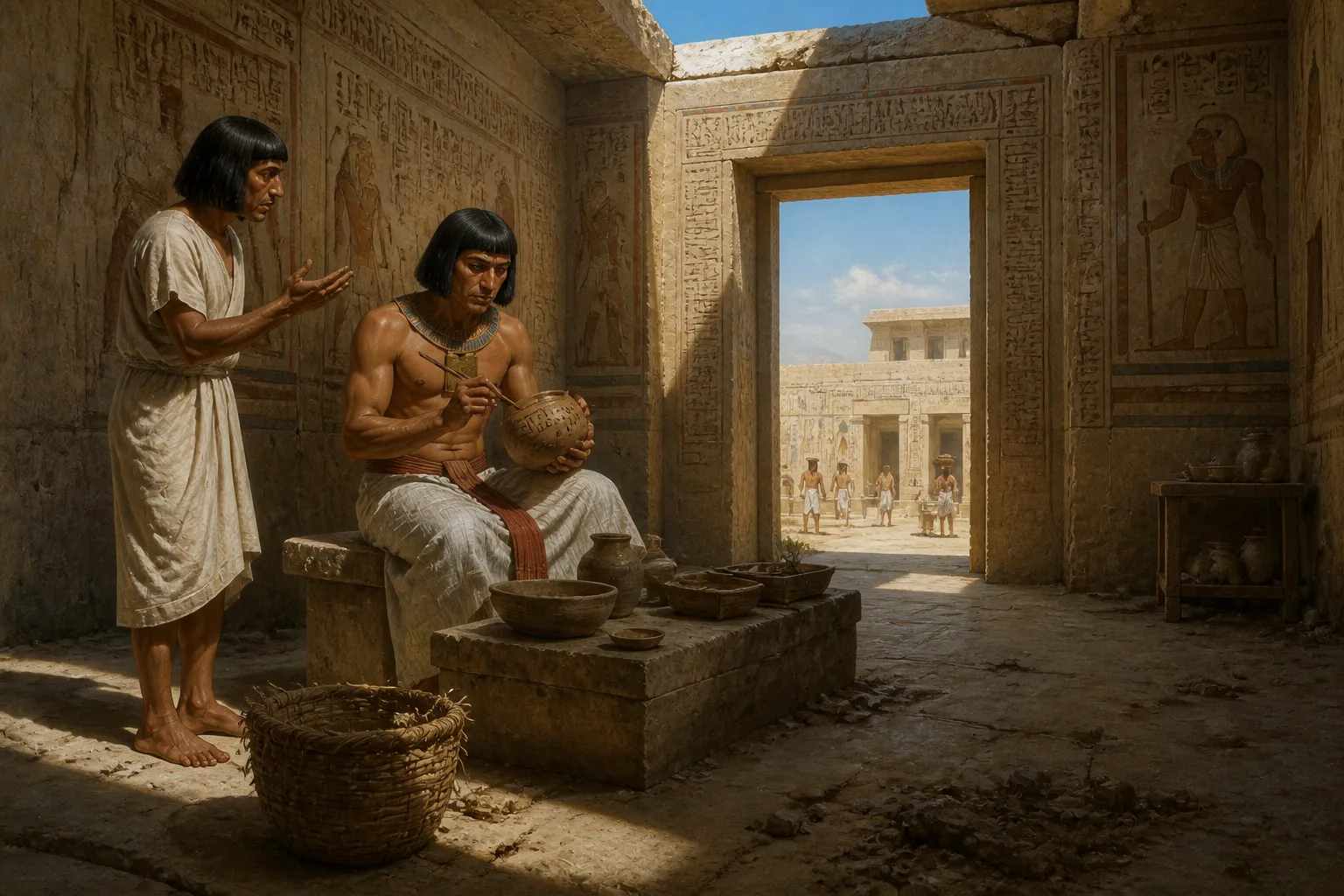
In the vast deserts stretching beside the Nile, between c. 2200–1200 BC, the ancient Egyptians engaged in a profound dialogue with their dead. This era, situated predominantly in the offering chapels of Saqqara and Abusir, witnessed the rise of ‘Letters to the Dead’. These missives, inscribed on pottery bowls left at tombs, were appeals for assistance with worldly affairs, grievances, or the appeasement of spirits. Even as rulers like Pepi II saw the Old Kingdom's waning glory, common Egyptians believed their deceased family held sway over the living realm, a belief that permeated every stratum of life during an age that both clung to and sought guidance from its ancestors.
"Oh my wife, whom I cherished, why do you haunt me so? Have I not provided in life and in death?"
Page 2 — The Scribe's Craft
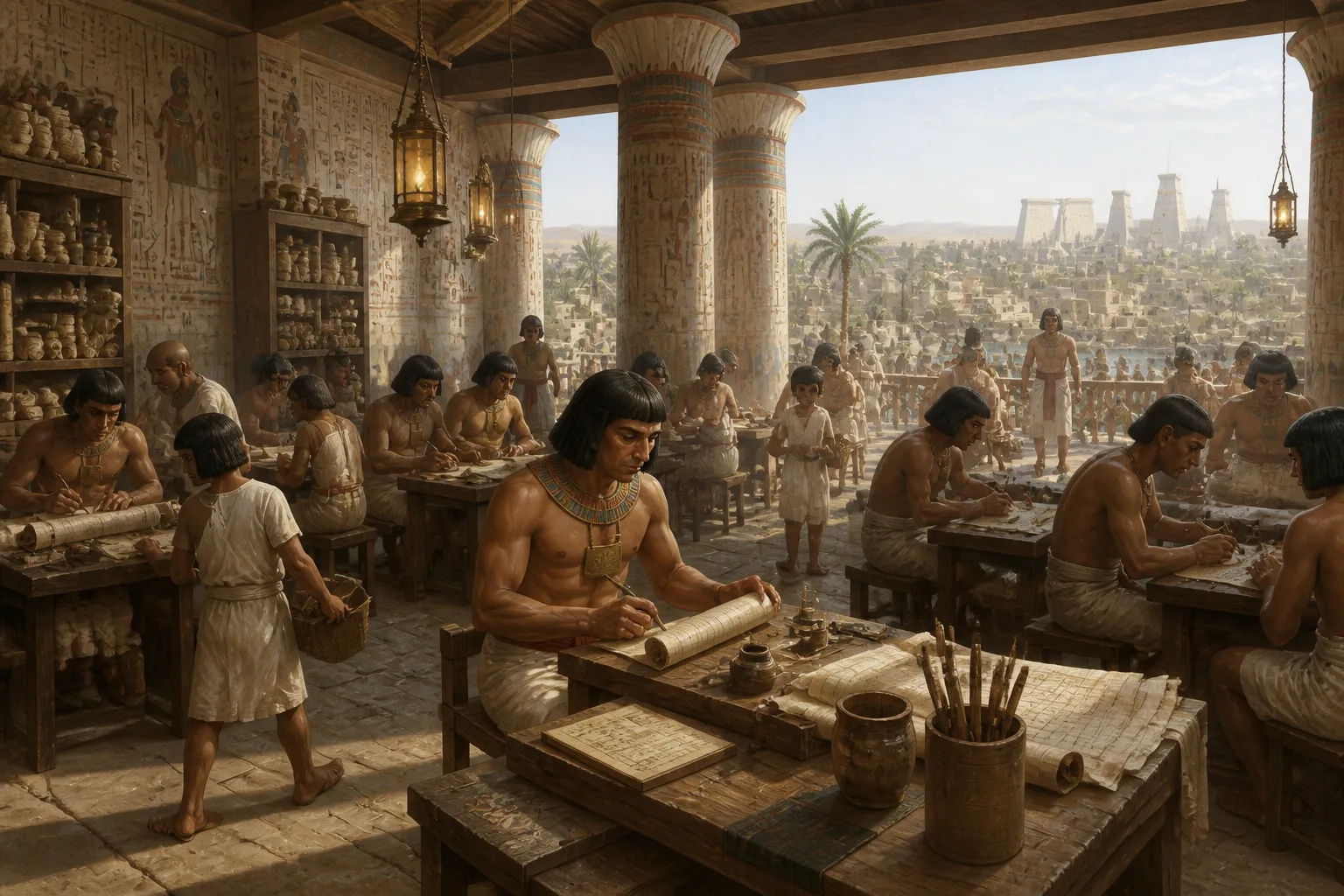
In the bustling city of Memphis, the scriptorium was a place of ceaseless activity. Here, scribes like the renowned Hesy-Ra wielded considerable influence in ancient Egyptian society, acting as essential conduits between the world of the living and the divine realms. These scribes, deeply respected for their expertise in hieratic script, wore meticulously crafted linen garments, which signified their esteemed status. With deft hands, they wielded reed brushes dipped in rich black carbon ink to inscribe the profound hopes and prayers of the living onto delicate papyrus and earthenware. Each stroke was precise and purposeful, forming a bridge between the mortal and immortal. Grieving relatives anxiously observed the scribes' work, seeking solace and assurance in the transformative power of words crafted during ceremonial rites.
"Hesy-Ra, your skill is unmatched. Ensure my plea reaches her heart beyond."
Page 3 — Appealing to Osiris
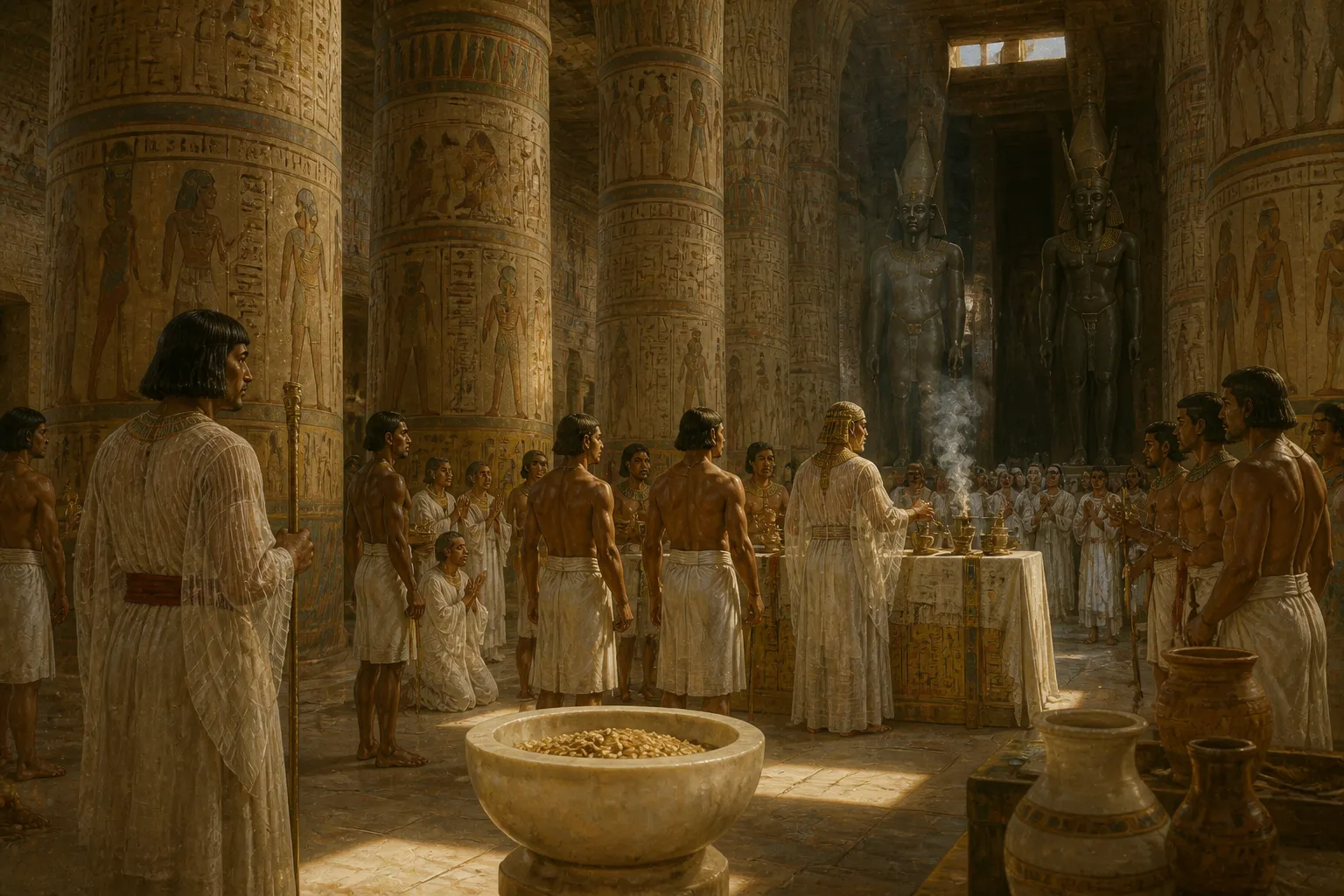
In the sanctified halls of Karnak, the air was thick with the sacred aroma of incense as the high priest of Amun, an elder statesman adorned in elaborate priestly regalia, directed complex rituals to intercede with Osiris, the revered lord of the afterlife. His garb, a blend of white linen and gold, encapsulated the majesty of the divine order and resurrection embodied by Osiris. Supplicants, their voices united in chanted petitions, filled the vast temple with echoes that danced off the towering stone columns. Here, in this hallowed space, the lines separating the mortal and divine realms blurred, making the written word a sacred conduit for desperate appeals to the gods.
"Osiris, hear our words etched in eternal stone. May they be our beacon in the shadows."
Page 4 — The Lawsuit of the Dead
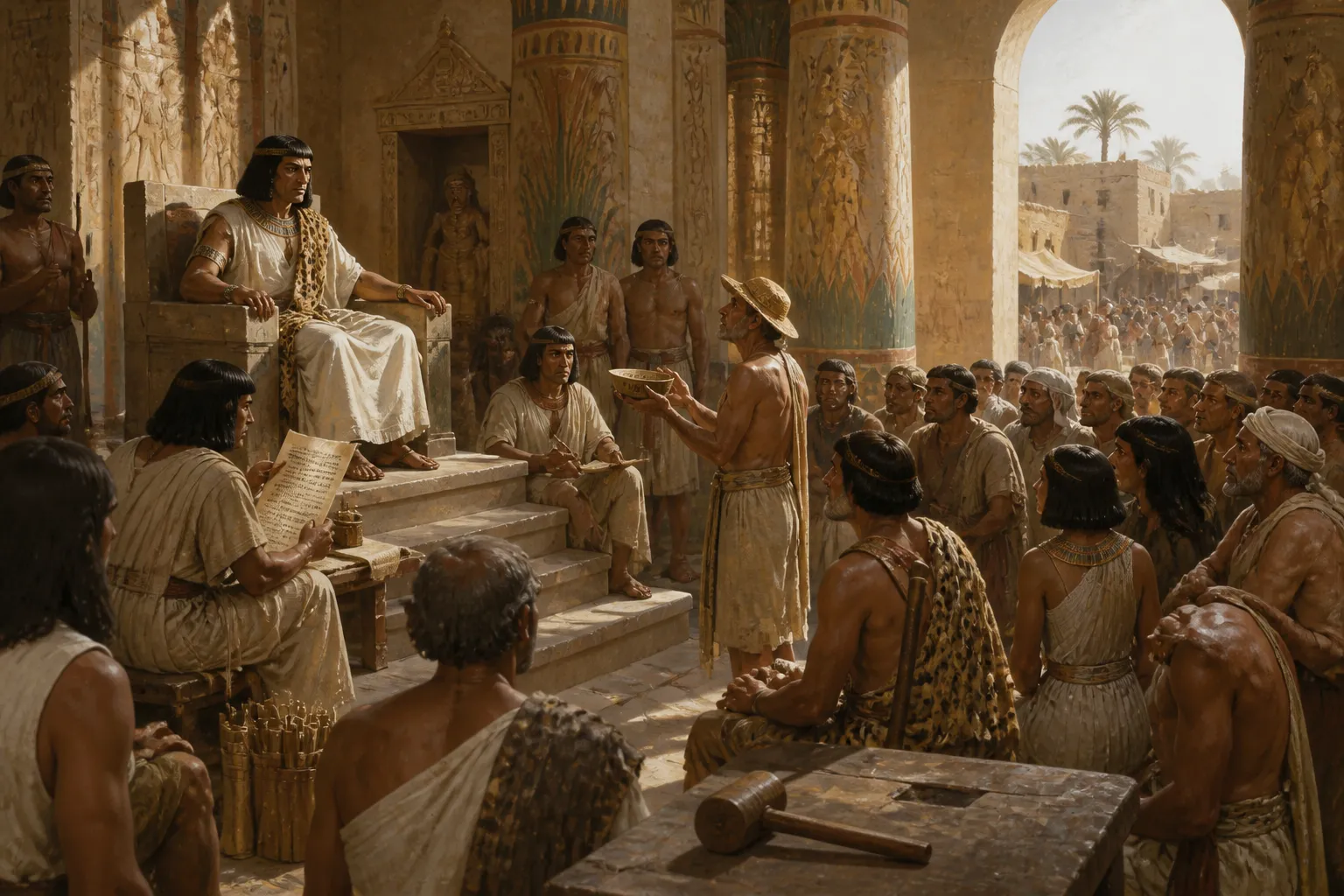
At the bustling court of Thebes, the air crackled with tension as a legal dispute unfolded, weaving together the destinies of both the living and the dead in a quest for justice. Amidst the legal proceedings stood a middle-aged farmer, clad in a simple, coarse linen tunic, gripping tightly to a clay bowl inscribed with heartfelt supplications to his deceased father. His earnest hope was that his father's spirit would influence the verdict, guiding the judge's decision. This scene reflected an era where justice transcended the earthly plane, invoking ancestral spirits as witnesses to the grievances of the living. Inside the court, anticipation simmered, underscoring a cultural belief in the dead's power to sway the scales of justice.
"Father, guide the judge's heart as you did mine in life."
Page 5 — The Haunting Wife
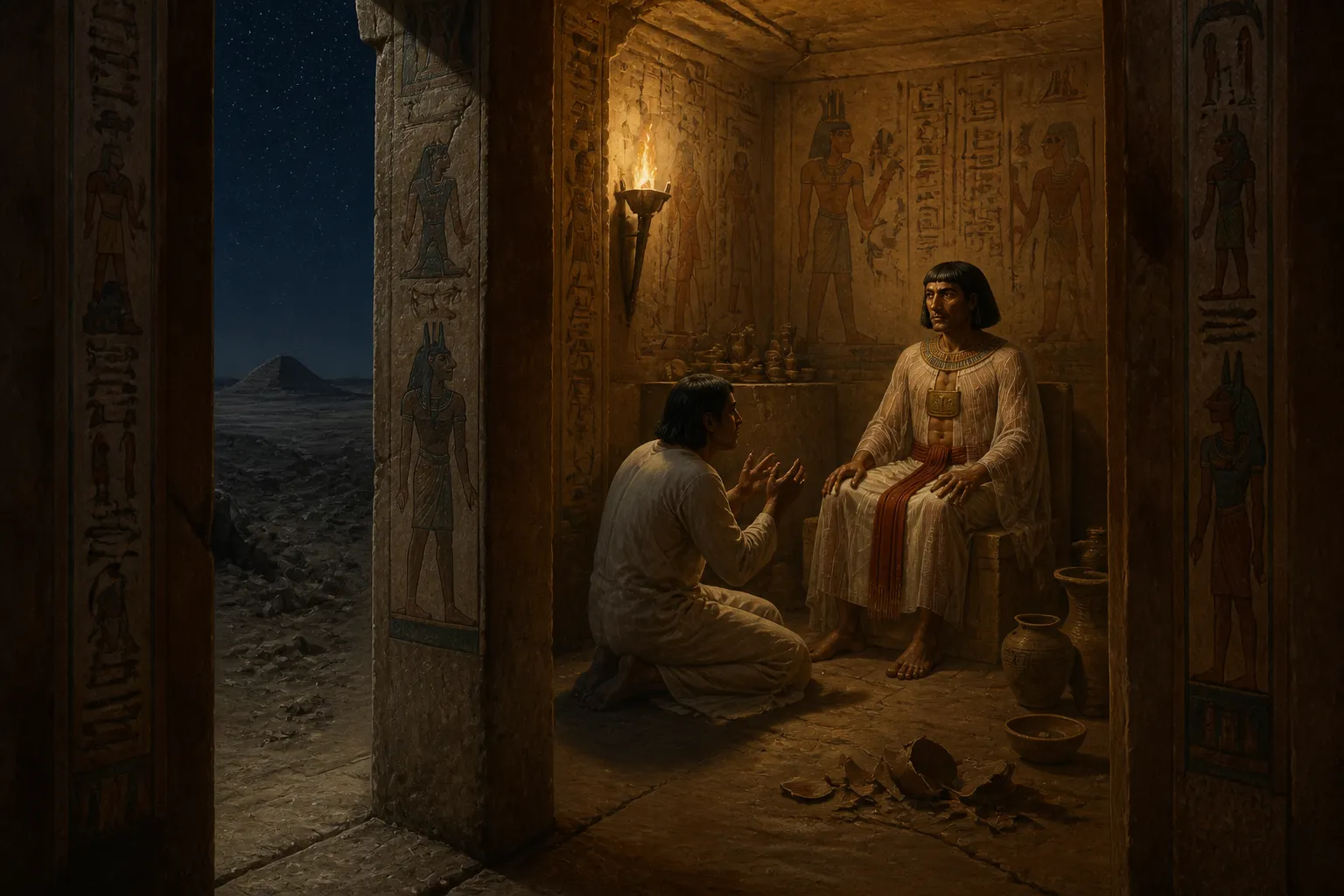
In a dimly lit tomb chamber at Abusir, a sense of ancient mystery pervaded the air as a husband knelt before his wife's ornately decorated sarcophagus, a simple clay bowl held close to his chest. The chamber, adorned with vibrant murals depicting the afterlife, seemed to close in on him as he implored her spirit to cease its haunting. His voice, full of emotion, echoed against the ancient stone walls as he recounted his deeds, seeking either forgiveness or understanding from beyond the grave. The air was thick with the scent of incense, while shadows cast by flickering torches danced along the walls, creating an atmosphere heavy with the weight of unresolved love and haunting resentment.
"Oh beloved, let our bond not be one of torment but of eternal peace."
Page 6 — A Mother's Plea
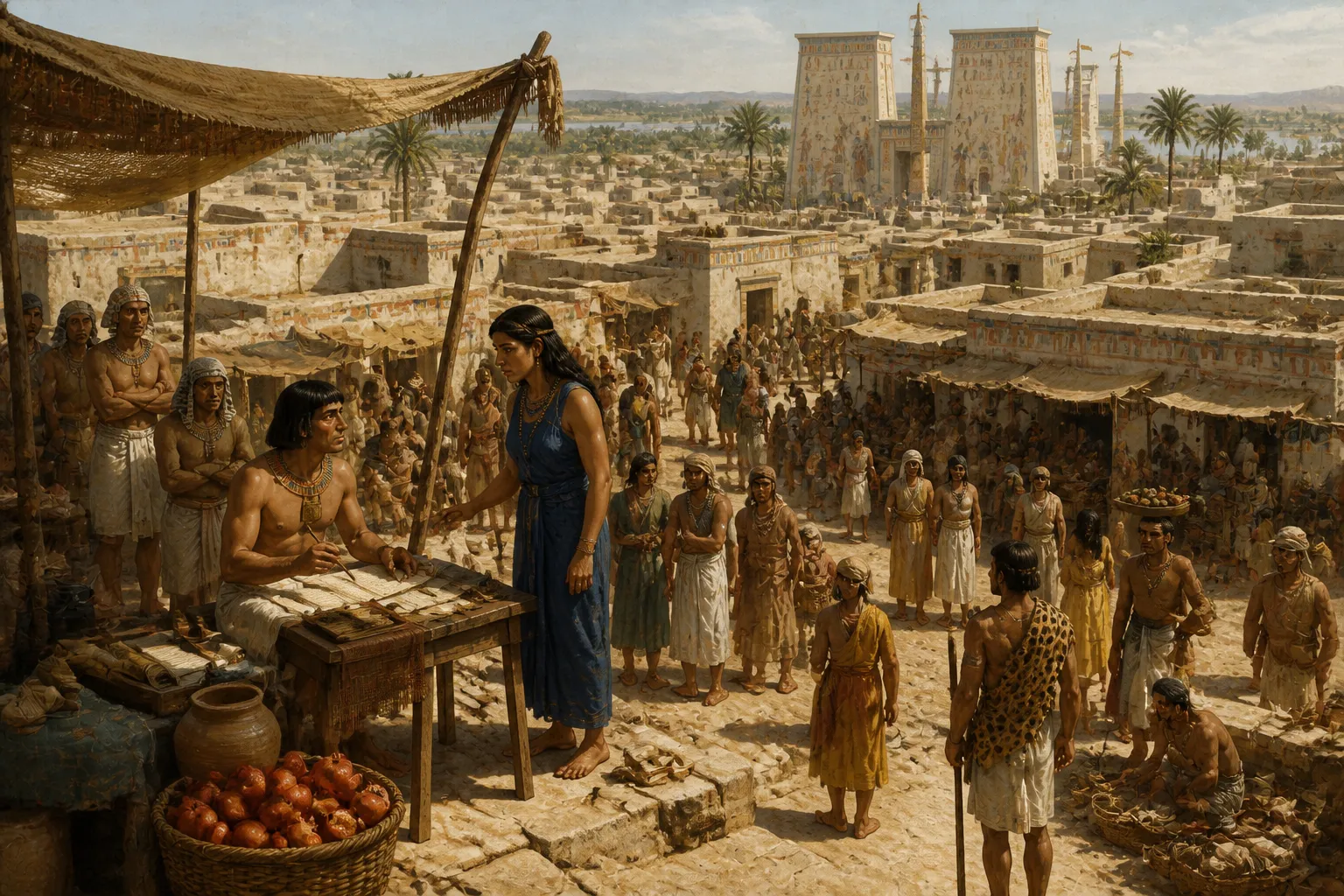
In the bustling market streets of Thebes, the air is thick with the scent of spices and the sound of merchants calling out their wares. A distraught mother, draped in a vibrant blue linen sheath, approaches the scribe's stall, clutching her child's amulet tightly as if it were a lifeline. Her eyes, weary yet determined, seek the scribe's help to pen a heartfelt letter to her deceased husband. As the scribe dips his reed into ink and begins to inscribe the hieratic script onto a fresh papyrus scroll, the surrounding hum of the market fades into a solemn silence. Nearby, merchants and buyers pause, their colorful linen garments swaying in the gentle breeze, aware of the significance of her plea. In this society, the dead are not merely memories but active participants in the living world, their influence believed to extend beyond the veil, guiding and protecting those left behind.
"Dear husband, let your spirit protect our son where my hands cannot reach."
Page 7 — Negotiation with Ancestors
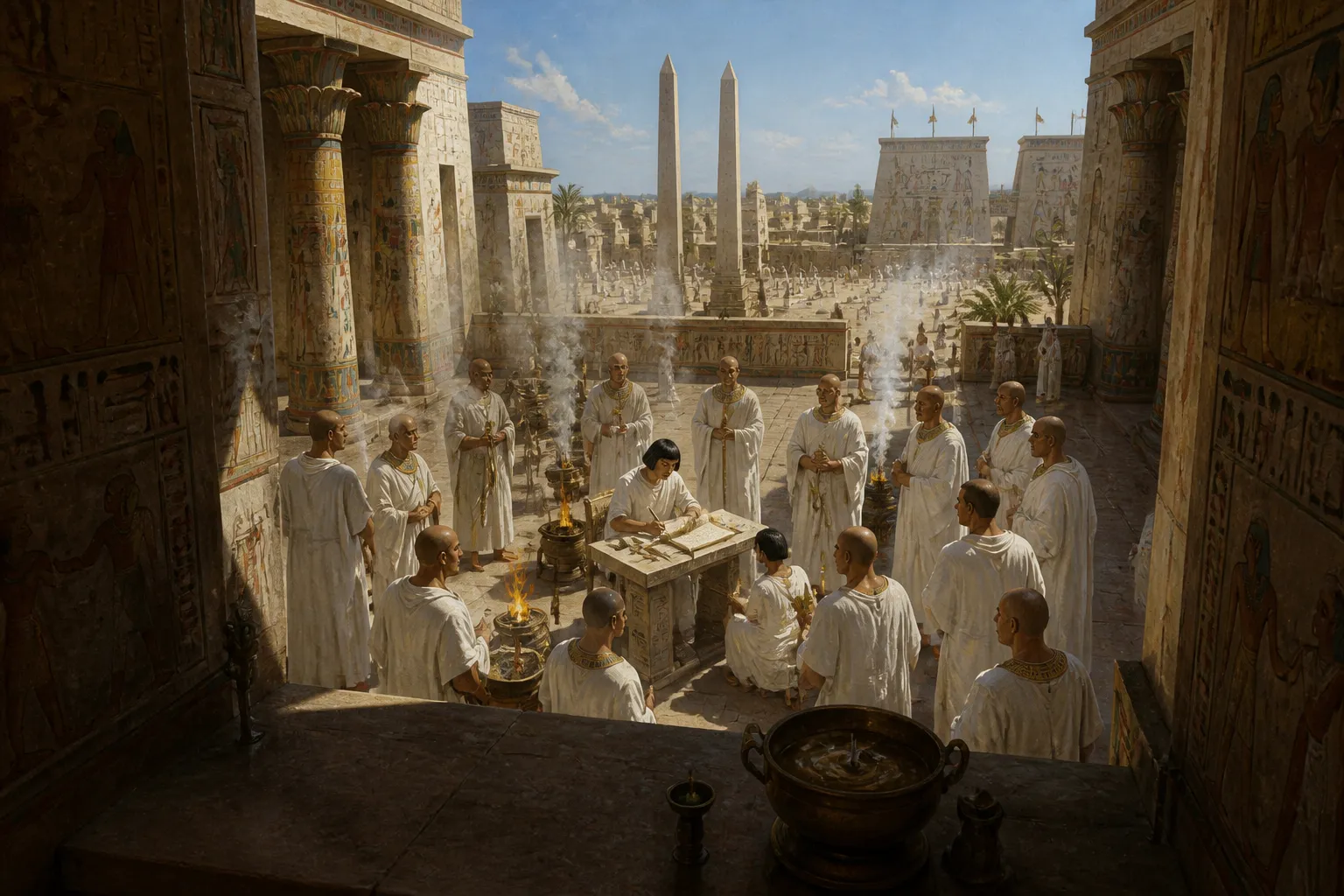
Within the towering sandstone walls of Heliopolis, the sacred precinct echoes with the rhythmic chanting of priests. Clad in the pristine white vestments of his order, a young priest sits at a stone table, deeply engrossed in crafting a plea on behalf of a family haunted by a curse. The air is thick with the scent of burning offerings, and smoke curls skyward, blurring the lines between the earthly and the divine. This hallowed space, filled with the murmurs of prayer and the flicker of torchlight, serves as a conduit for dialogues with ancestors. The practice reflects a society steeped in a profound belief in the deceased's ongoing role in the affairs of the living, underscoring the essential nature of harmony between the seen and unseen worlds.
"Ancestors, bear witness to our offerings as we ask for your blessing and guidance."
Page 8 — The Judge and the Unseen
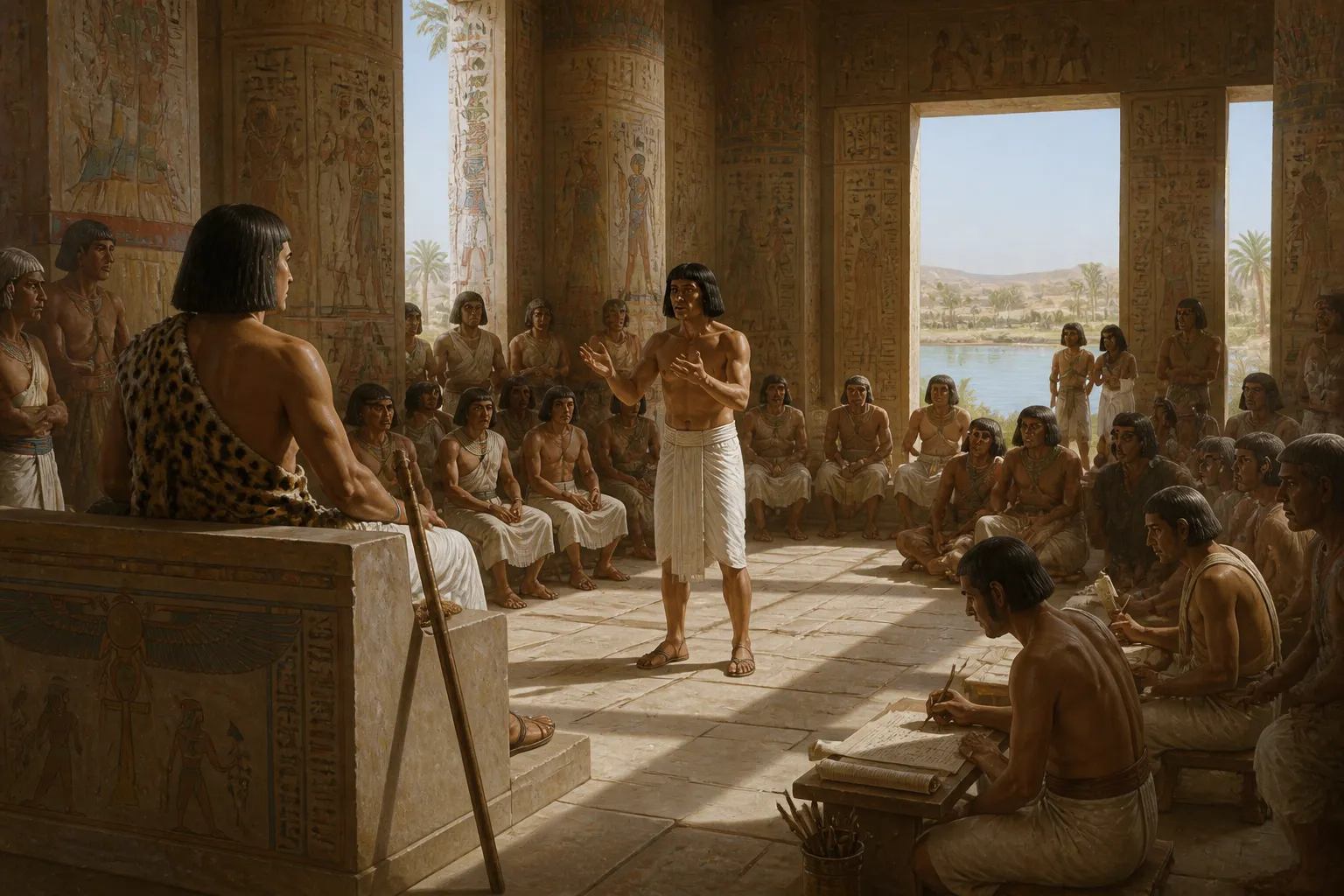
In the solemnity of the court hall at Buhen, an atmosphere of reverence pervades the air as a judge, an authoritative figure clad in a linen kilt and leopard-skin sash, presides over a weighty case. The hall, built of stone and echoing with history, is filled with the quiet murmur of spectators who sit on wooden benches, their whispers a testament to the gravity of the proceedings. A lawyer stands before the assembly, gesturing emphatically as he presents his case, invoking the testimonies of the deceased as crucial witnesses. Here, in this austere setting, the voices from beyond the grave wield influence, shaping decisions that govern the living world. This intersection of law and belief underscores the deep respect for the unseen forces believed to guide justice.
"Let the judgment be guided by those who watch from the beyond, unseen yet present."
Page 9 — Ancestors’ Influence
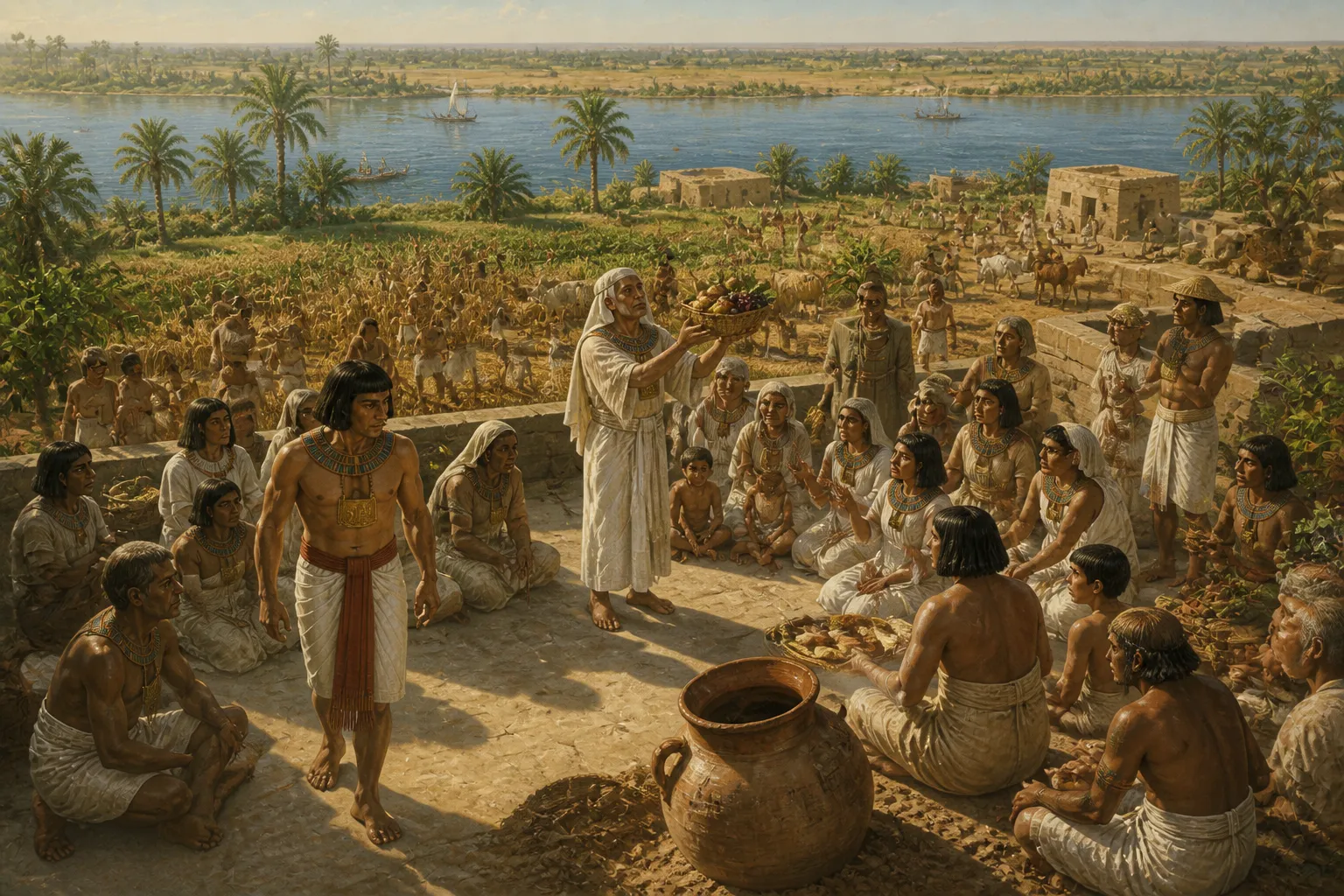
In the verdant fields of the Nile Delta, the air is alive with the sounds of celebration as a family gathers to honor the harvest. Each member, adorned in vibrant linen garments, participates in a ritual that acknowledges the ancestors' vital role in their prosperity. At the center stands a revered elder, her presence commanding respect, attired in a white sheath with elaborate gold jewelry that catches the sunlight. She leads the ceremony, raising a basket filled with the first fruits as an offering to the spirits of those who have cultivated this land before. This lush landscape, teeming with life, bears witness to the enduring belief that the ancestors, though unseen, continue to influence the fortunes of the living, their favor sought to ensure the land's bounty.
"To those who nurtured this land before us, may your spirits find favor in our offerings."
Page 10 — A Legacy of Words
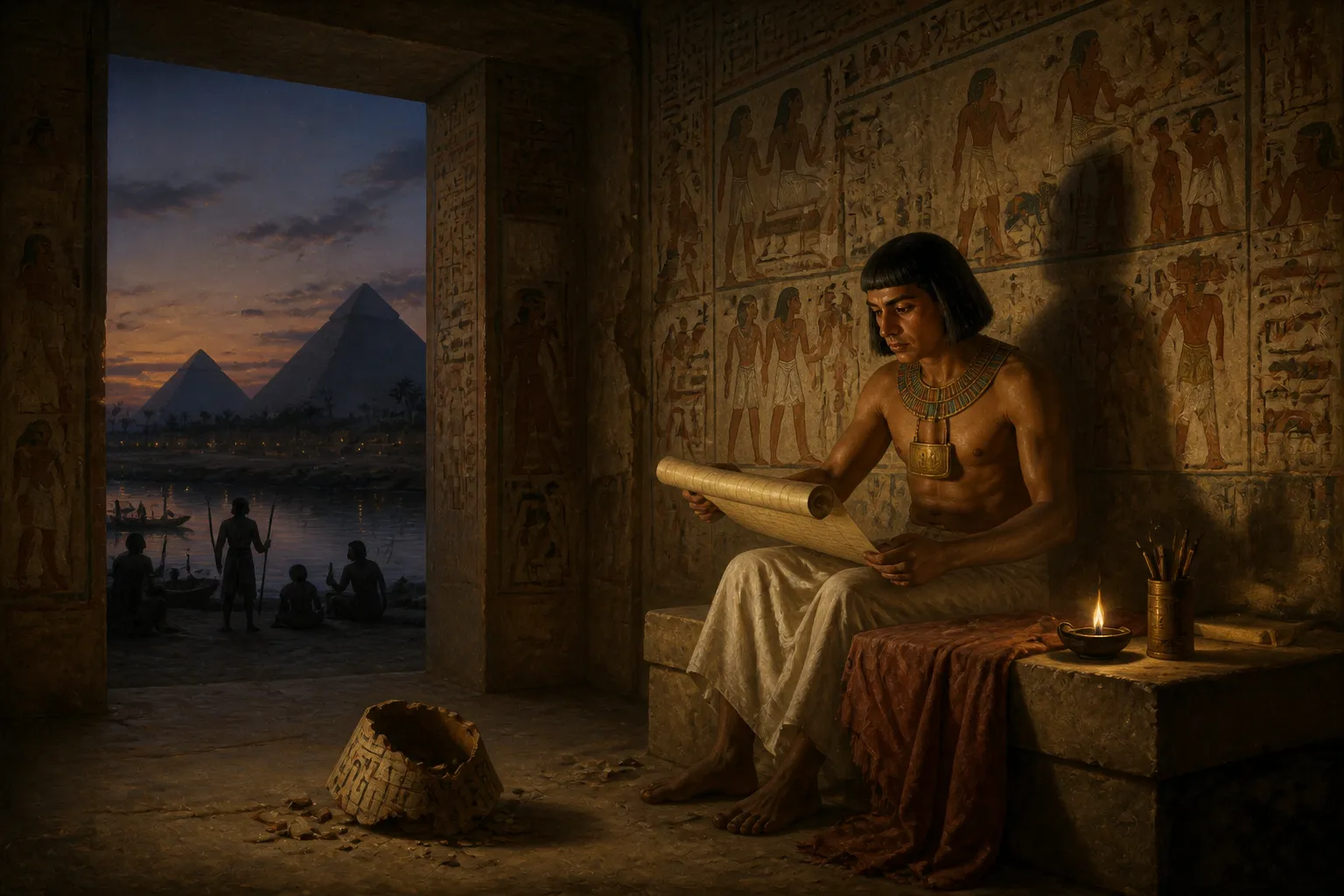
Throughout Egypt, the practice of writing letters to the dead persisted as a poignant testament to enduring human connections. Within the somber confines of a family tomb at Saqqara, a young scribe carefully collects a fragment of ancient correspondence, a relic from a distant past. The air, heavy with the scent of history and incense, surrounds walls etched with hieroglyphic stories of those long gone. As the scribe scrutinizes the faded ink and brittle papyrus, the significance becomes profoundly clear: these letters serve as an indelible bridge to ancestors, preserving not only personal histories but also the unending dialogue between the living and the dead. Once used as offerings, they now offer insight into enduring familial bonds and cultural traditions, reflecting a society deeply rooted in reverence for those who have passed.
"Each word, a thread to those who walked before us, binding us across the ages."
About this story
- Audience: general readers
Read Wonder Egypt on your phone
Wonder Egypt is available on Android. Get Wonder Egypt on Google Play.