How a Hieroglyph Actually Works
How a Hieroglyph Actually Works — an illustrated history story. 10 illustrated pages, free to read on Wonder Egypt.
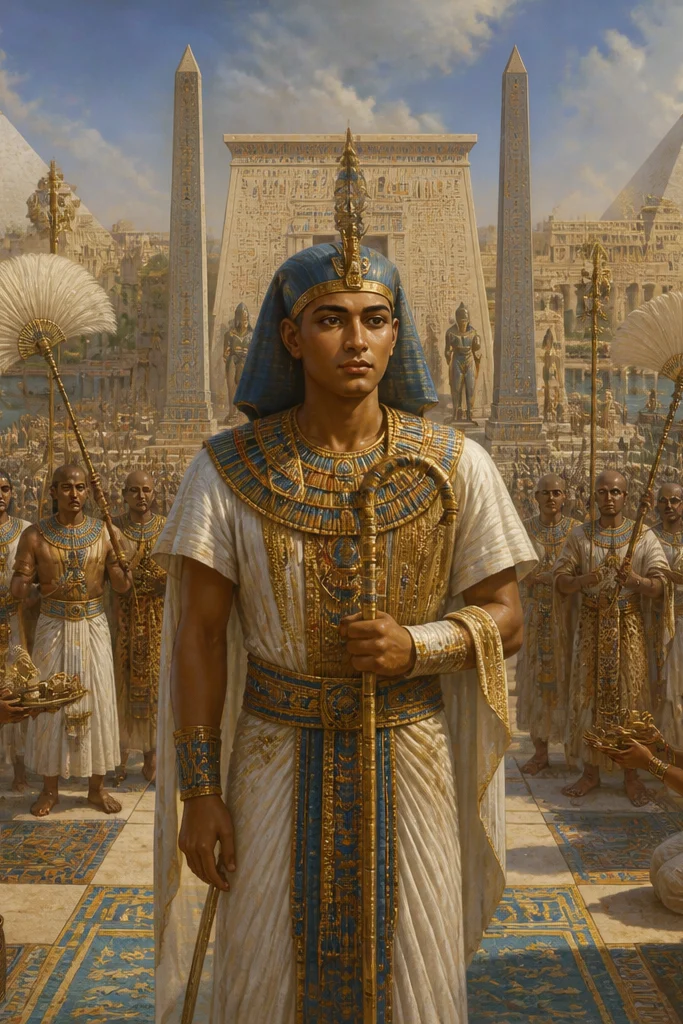
Page 1 — The Age of Understanding
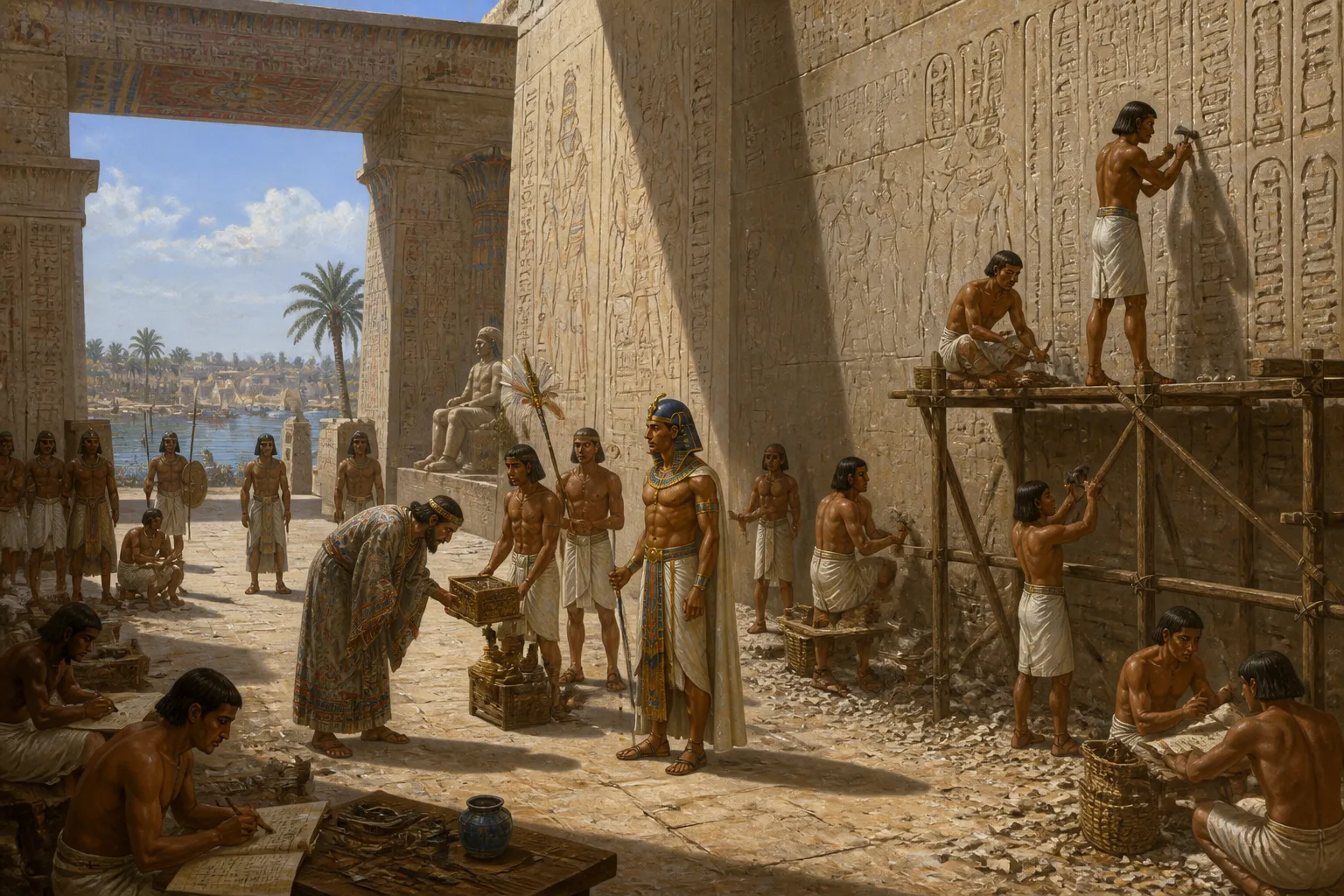
From around 3200 BC to AD 394, the walls of Egyptian temples and the scrolls of scribal schools conveyed a unique written language known as hieroglyphics. This period saw the inception and flourishing of a system misunderstood by outsiders for centuries. Rulers such as Pharaoh Narmer, who unified Egypt, set in motion the use of symbols that represented sounds, words, and silent determinatives. Instead of ideograms, these symbols created a complex script. The absence of vowels added to its mystique, emphasizing the importance of context in interpretation. The task of decoding fell to scribes and later European decipherers who emboldened the research. Hieroglyphs were a powerful tool, employed for monumental inscriptions and literary works. Their significance lay not only in their beauty but in their ability to capture the divine and the mundane in the same breath.
"These signs are not mere symbols," proclaimed the sign-cutter. "They are our voice etched in stone."
Page 2 — The Scribe's Domain
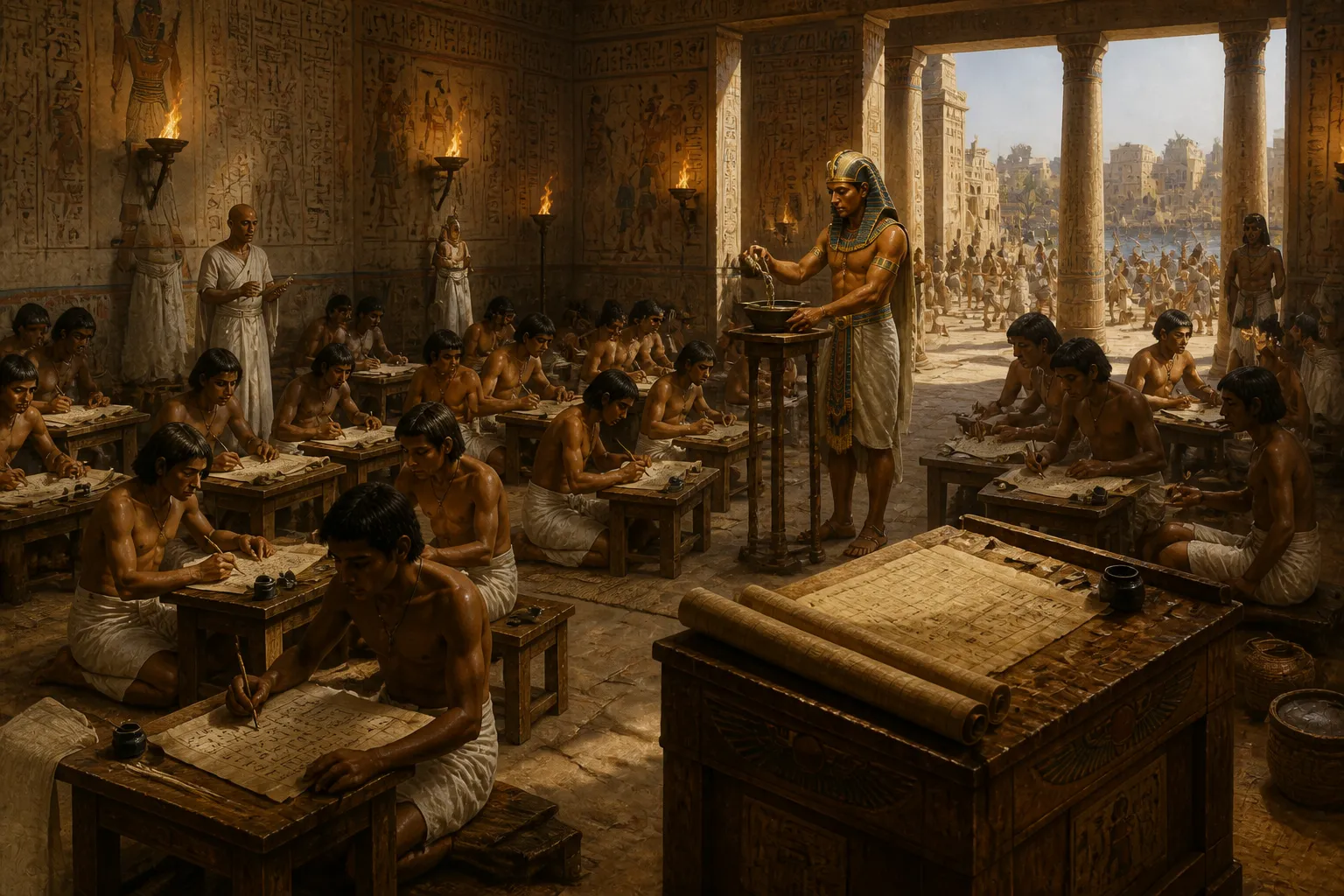
Within the cloistered walls of a scribal school, young apprentices learn the craft of hieratic writing—a cursive form of hieroglyphics. These schools produced the literate elite, responsible for managing the administration of Egypt’s vast empire. A scribe’s tools were simple: a palette, reed pens, and ink made from soot and ochre. Papyrus scrolls lined the wooden shelves, each containing wisdom passed down through generations. The scribes’ work was to record the pharaoh's edicts, tax records, and religious texts, ensuring order and continuity. Their ability to read and write in hieratic secured their status as indispensable members of society. In mastering hieratic, they wove the strands of order that held the nation together, their education a testament to discipline and diligence.
"Every stroke must be precise," the master scribe instructed, "for our words are the threads of Ma'at."
Page 3 — Symbols of Power
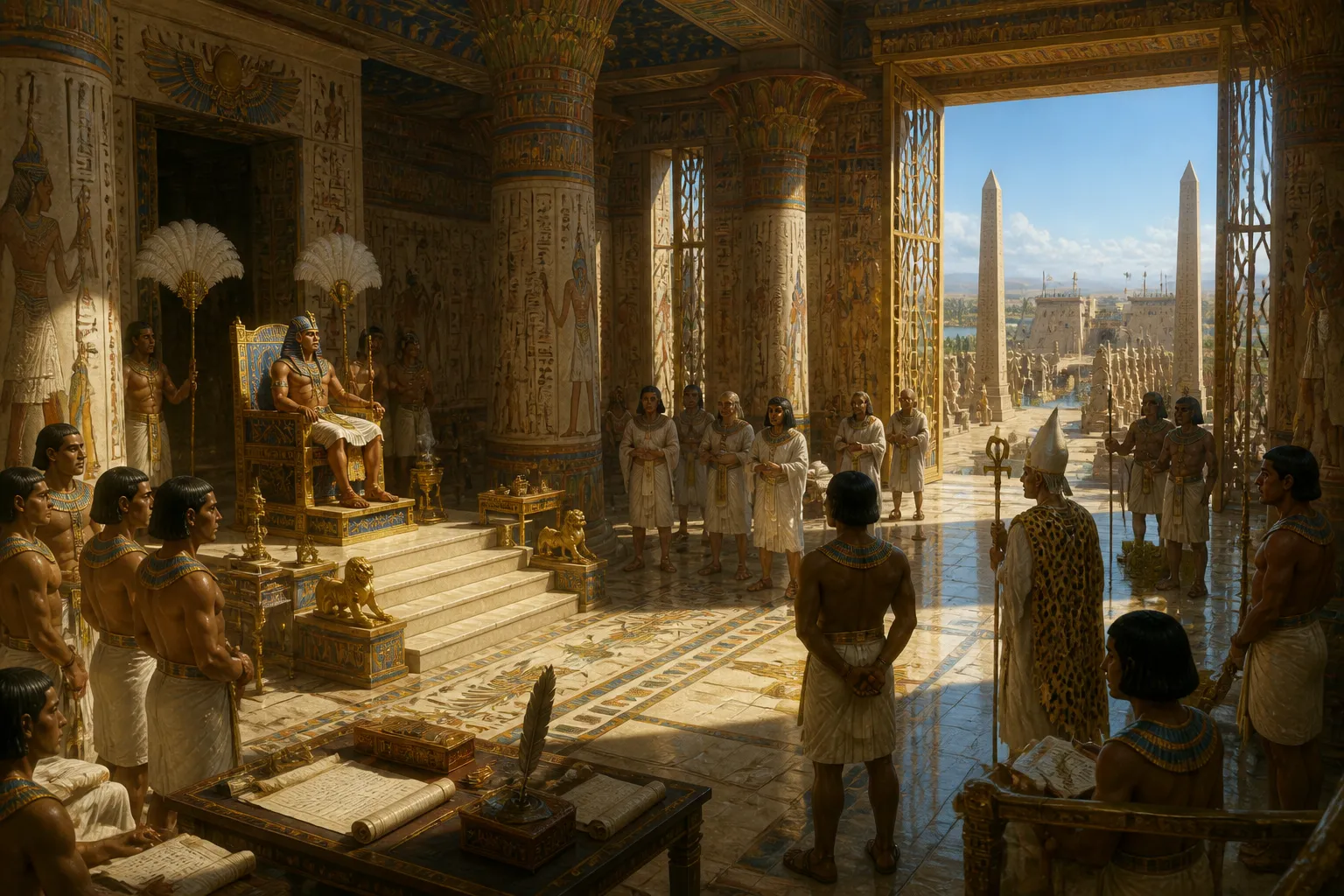
The grandeur of the King’s Throne Room at Karnak speaks of power and divinity. Here, beneath immense columns carved with hieroglyphs, Pharaoh Ramses II often held court. His cartouches, symbols of his reign, are etched in stone, proclaiming his divine birthright. High priests, advisors, and dignitaries gather to witness decrees that will shape the nation. The throne, elevated on a dais, is adorned with gold and lapis lazuli, a testament to the wealth and might of Egypt. This room is not only a seat of power but a canvas for the stories written in stone—stories that echo the pharaoh’s legacy. The atmosphere is thick with the reverence and authority of a ruler whose influence reaches beyond the confines of his empire.
"Let the words of my reign echo through eternity," declared Ramses II, surveying the carved stone.
Page 4 — In the Shadow of the Glyphs
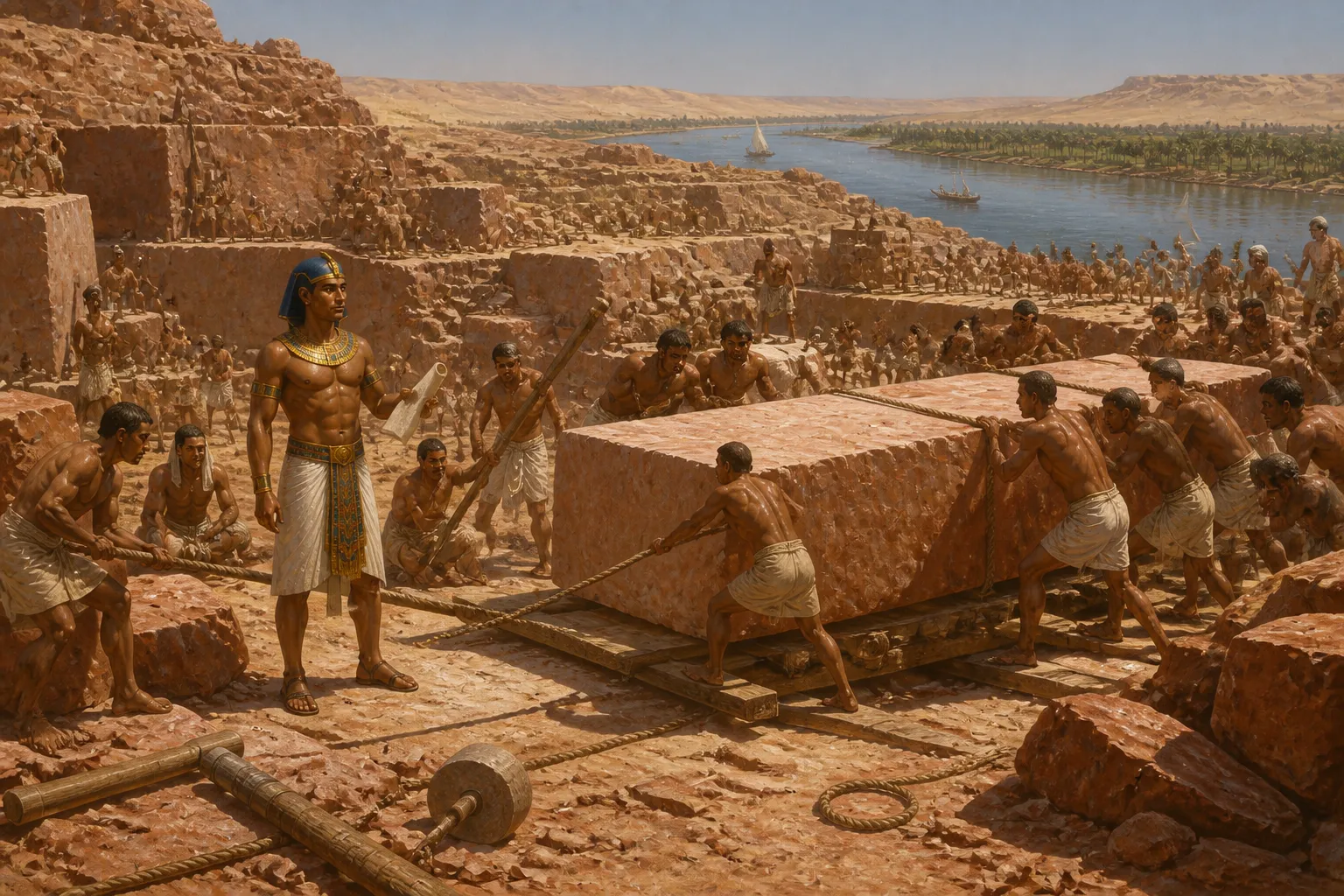
Deep within the quarries of Aswan, the laborers toil under the relentless sun, extracting stone blocks destined for the temples and pyramids of Egypt. Overseen by the master architect, these stones will carry the messages of pharaohs for millennia. The quarry echoes with the sounds of chisels and hammers, as each block is meticulously shaped and prepared for transport down the Nile. The sweat of the workers glistens under the harsh light, their hands skilled in the ancient craft. In this place, the foundation of Egyptian magnificence is laid, stone by stone, to be inscribed with the sacred glyphs. Each stroke of the chisel embodies a promise to the future, a physical manifestation of the eternal.
"Every block holds the weight of eternity," mused the master architect, surveying the stone face.
Page 5 — The Day of Reckoning
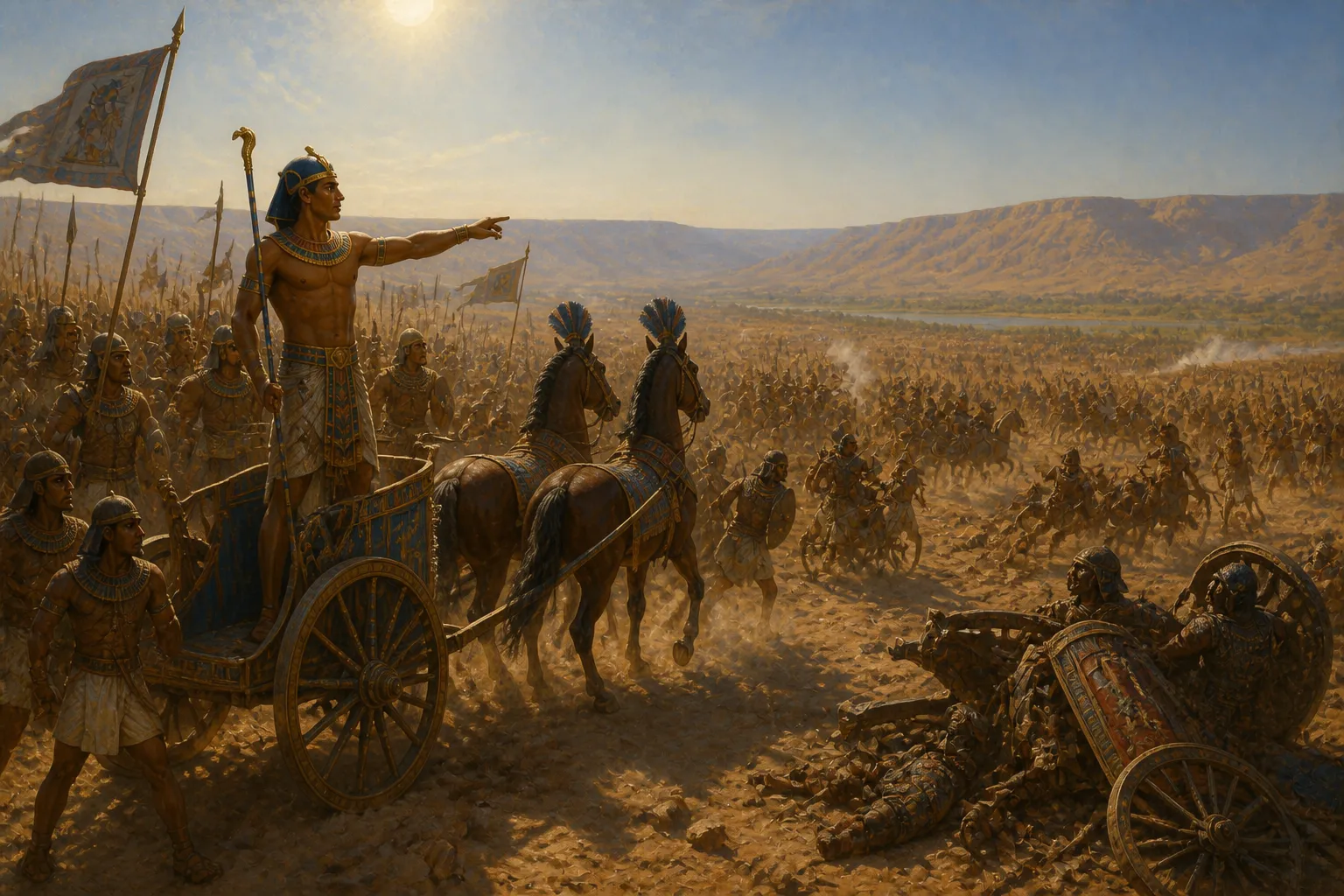
On the sun-baked plains of Kadesh, Pharaoh Ramesses II stands at the head of his chariot, leading the charge against the Hittite forces. His chariot, ornate and gilded, is a symbol of authority amidst the turmoil. The clash of spears and clamor of battle surround him, a testament to his ambition and the weight of empire. The dust-choked air mingles with the cries of men and horses, as hieroglyphs record this day on temple walls far from this chaotic field. His generals, clad in leather armor with ornate helmets, rally the troops with shouts and gestures. This battle, immortalized as one of Egypt's greatest military feats, is a defining moment in Ramesses' reign as it carves his legacy into stone.
"Today, we fight not for Egypt alone, but for our place in history," declared Ramesses II, urging his chariot forward.
Page 6 — The Temple of Stories
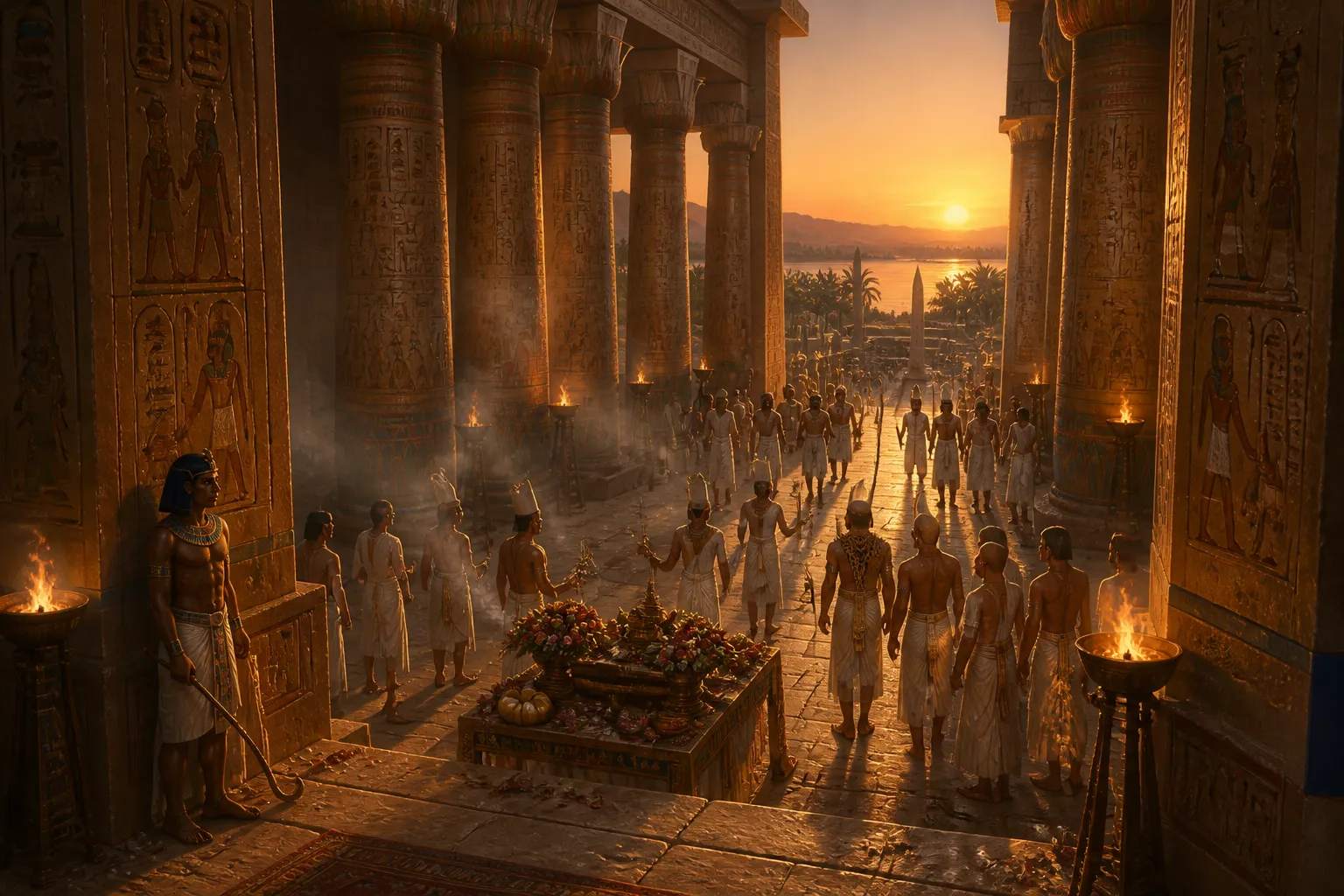
Amidst the sacred precinct of Luxor, the Temple of Amun rises majestically, a testament to the divine and the might of past rulers. Priests, garbed in pure white linen, move solemnly through the colossal stone colonnades, chanting hymns that resonate against the stone surfaces, echoing the hieroglyphic inscriptions of creation myths and royal decrees. The air is thick with the rich scent of incense, mingling with the hum of prayers that grow and fade like the whispers of ancient spirits. This temple serves as a grand canvas for the written word, preserving the narratives of gods and men across time. It is here, within these sacred spaces, where the past is immortalized in stone, where the narratives carved into the walls convey the mysteries of the ancients to all who pass within its profound shadows.
"In our hands, these stones speak," whispers the high priest, raising his hands towards the towering obelisks.
Page 7 — Scrolls of Knowledge
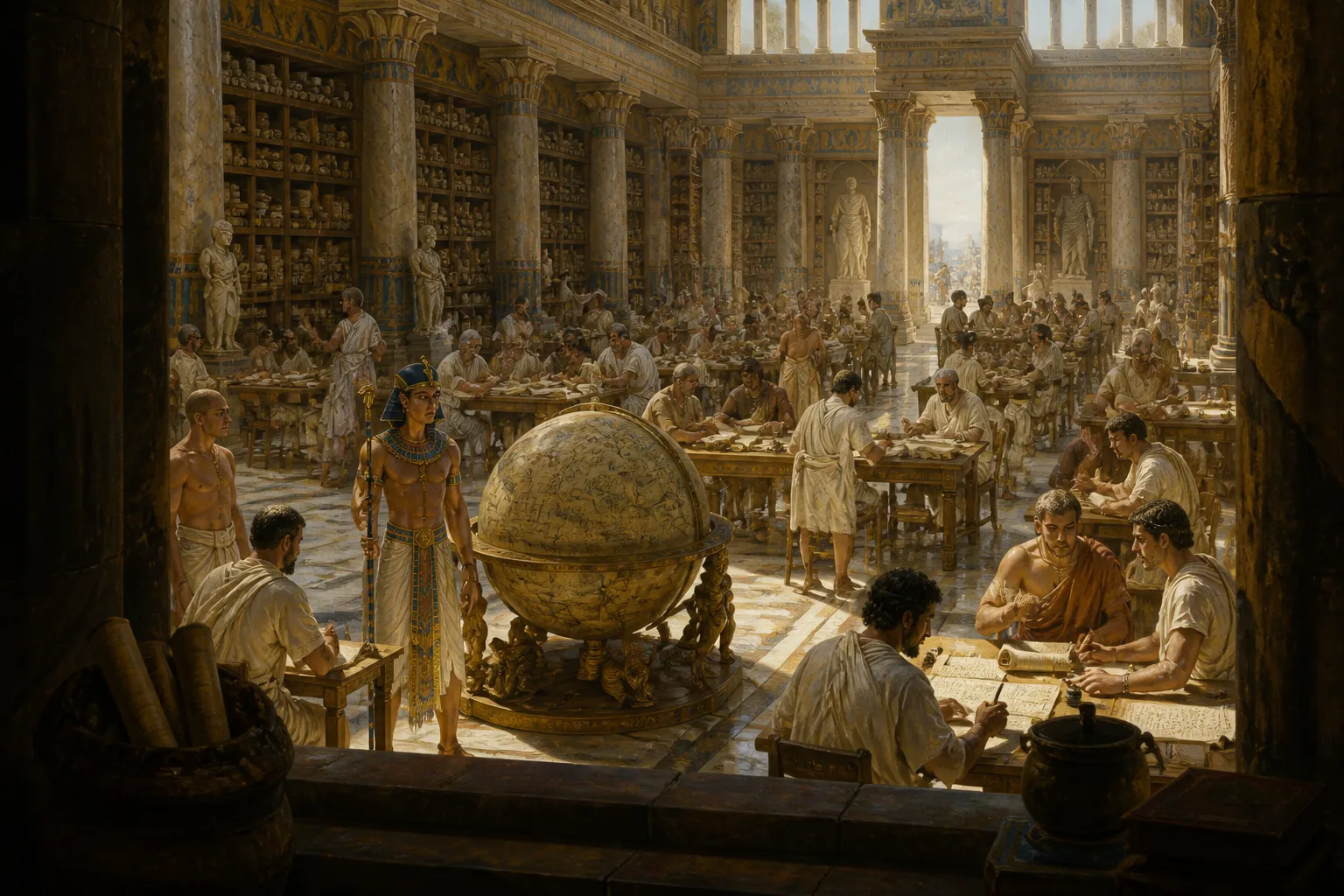
In the bustling Library of Alexandria, scrolls from across the known world are meticulously gathered. Scholars, dressed in a blend of Greek himations and Egyptian kilts, engage in lively debates, their voices a symphony of shared intellect and discovery. They diligently translate and transcribe texts into the scripts of their time: Greek, demotic, and hieratic, ensuring the survival of these texts for future generations. This library, a beacon of knowledge, strives to collect and preserve the writings of every civilization. Amid shelves laden with papyrus, the scent of ink and aged paper permeates the air, a testament to the enduring pursuit of wisdom. Here, the great minds of antiquity, like mathematicians and astronomers, study the stars and the earth, ensuring that the accumulated knowledge of the ancients transcends time and borders.
"In these scrolls is the wisdom of the world," a Greek scholar remarks, gesturing to the library's vast collection.
Page 8 — Mastery of the Glyphs
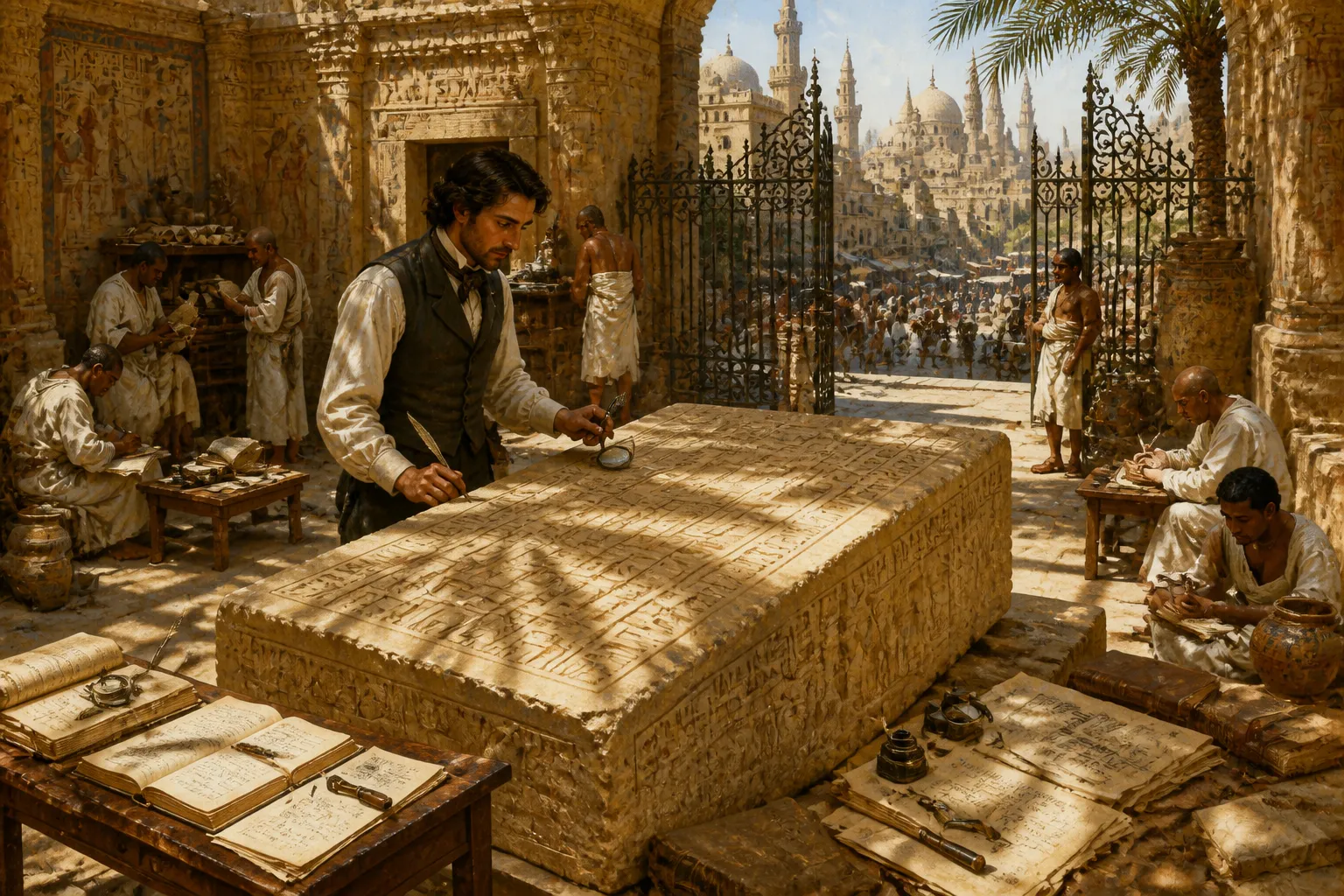
In the sunlit courtyard of a storied Cairo building, a young French linguist leans over the Rosetta Stone, his mind intensely concentrated on unraveling the intricate enigma of hieroglyphs. His fingers trace the carved symbols with reverence, as his eyes dart between the stone and his notebooks, where fervent scribbles mark a groundbreaking moment in history. By harmonizing Greek, demotic, and hieroglyphic scripts, he discerns their phonetic purpose, unveiling the true nature of these ancient signs. The courtyard hums with the lively sounds of Cairo, contrasting with the quiet brilliance of his work. This discovery opens a gateway to the past, transforming hieroglyphs from enigmatic art into readable text, bridging millennia between antiquity and the present.
"I have found the key," whispers the young linguist, eyes alight with realization, tracing the stone's inscriptions.
Page 9 — Echoes from the Past
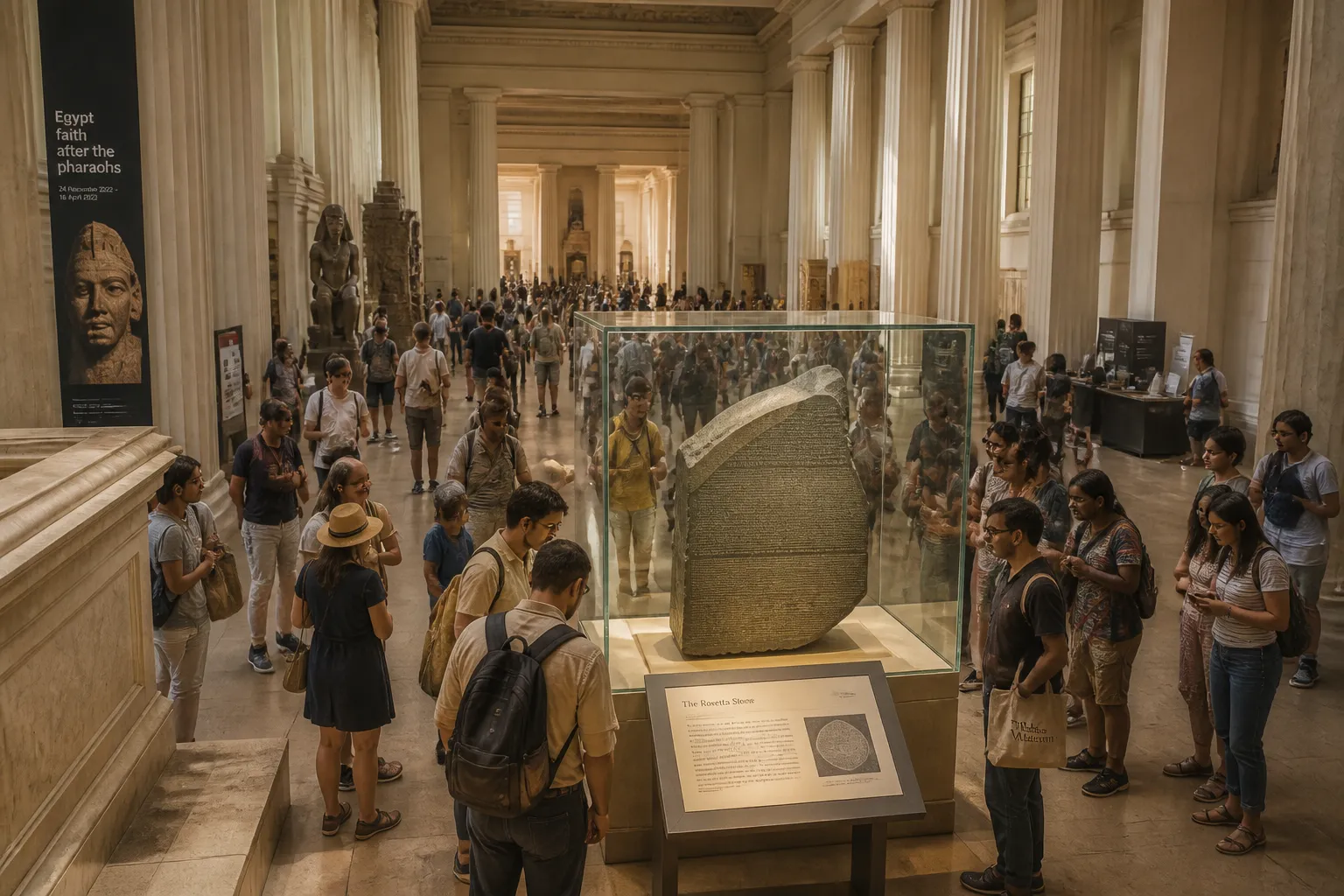
In the echoing halls of the British Museum, the Rosetta Stone stands as a testament to the enduring legacy of the ancient Egyptians. Its polished dark surface is etched with inscriptions that speak to a distant past. Visitors, dressed in casual wear, pause in awe, their whispers mingling with the echoes of footsteps on stone floors. The trilingual texts—hieroglyphic, demotic, and Greek—serve as a universal symbol of linguistic connection and cultural exchange. Each character etched into its surface is a fragment of history, a bridge spanning millennia. The stone’s discovery in 1799 and subsequent translation by scholars became pivotal in understanding Egyptian civilization, linking the ancient world with the modern through the power of written language.
"This stone unlocked the secrets of Egypt," a curator explains, gesturing to the artifact with reverence.
Page 10 — Lasting Impressions
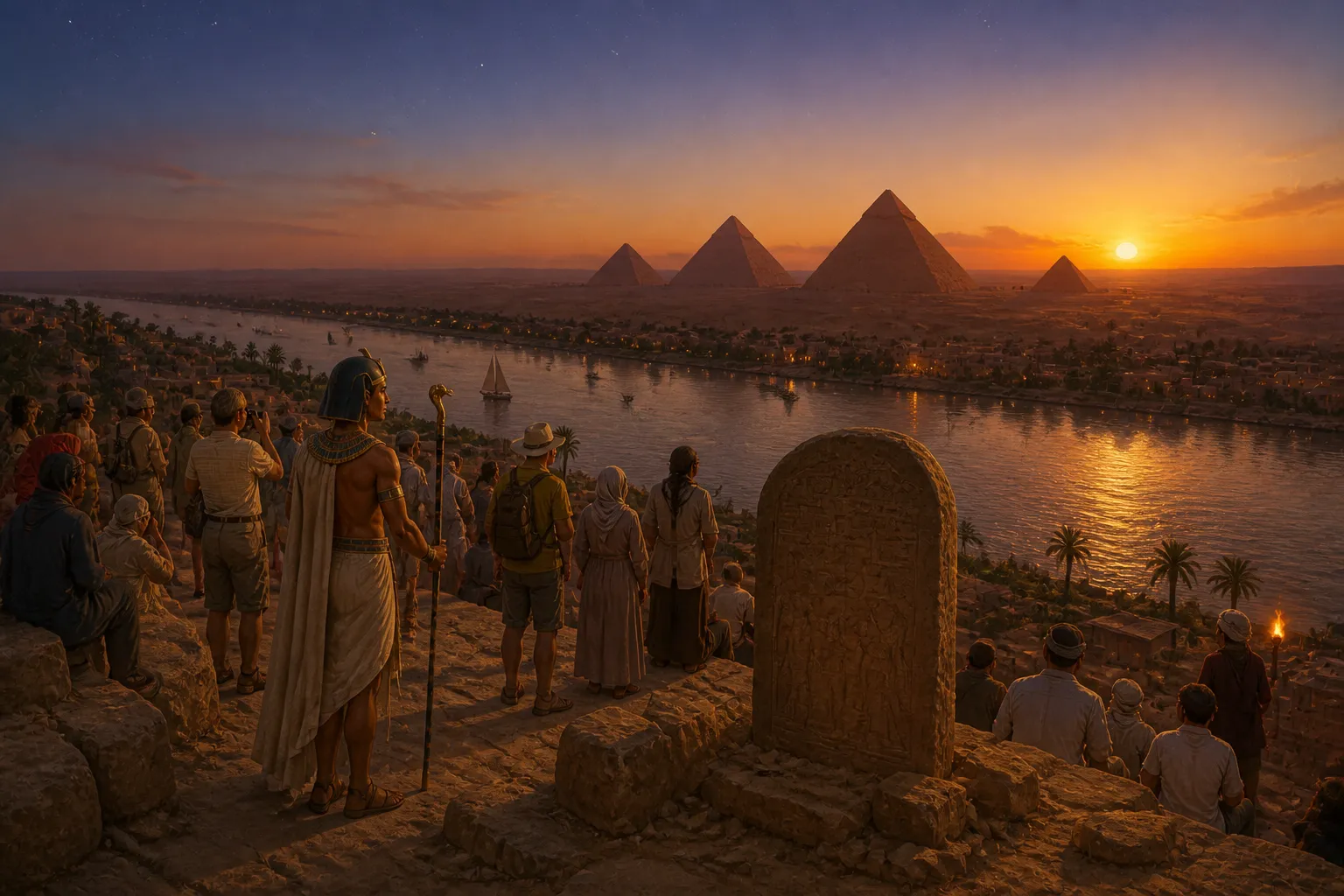
As the day fades into twilight on the banks of the Nile, the legacy of hieroglyphs remains etched in the minds of those who study them. The sun dips below the horizon, casting long, golden shadows over the gently flowing waters, a tangible reminder of the civilization that once thrived here. Historians, wearing khakis and wide-brimmed hats, and tourists in colorful attire gather to witness this enduring symbol of human achievement. Once mere pictures in the eyes of early explorers, hieroglyphs have unveiled complex stories of both kings and commoners, offering a nuanced view of ancient life. Today, they bridge the vast span of time, connecting the modern with the ancient in a continuum of human expression and knowledge.
"Their stories echo through time," a historian states, pointing to the stone monuments silhouetted by the setting sun.
About this story
- Audience: general readers
Read Wonder Egypt on your phone
Wonder Egypt is available on Android. Get Wonder Egypt on Google Play.