How the Blocks Were Moved
How the Blocks Were Moved — an illustrated history story. 10 illustrated pages, free to read on Wonder Egypt.
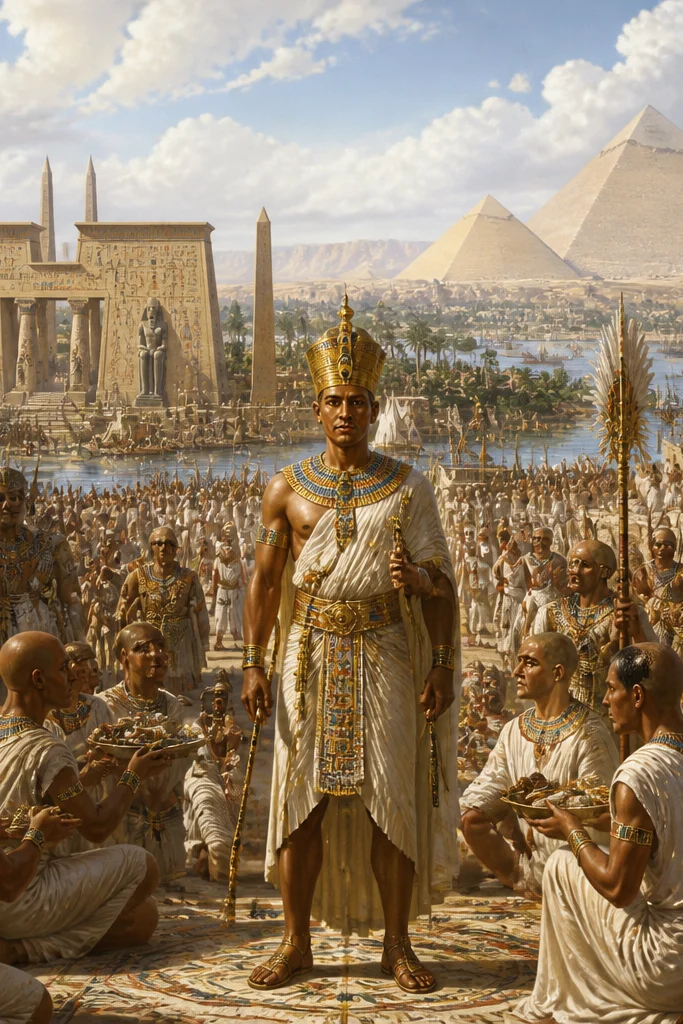
Page 1 — The Ascent of the Colossus
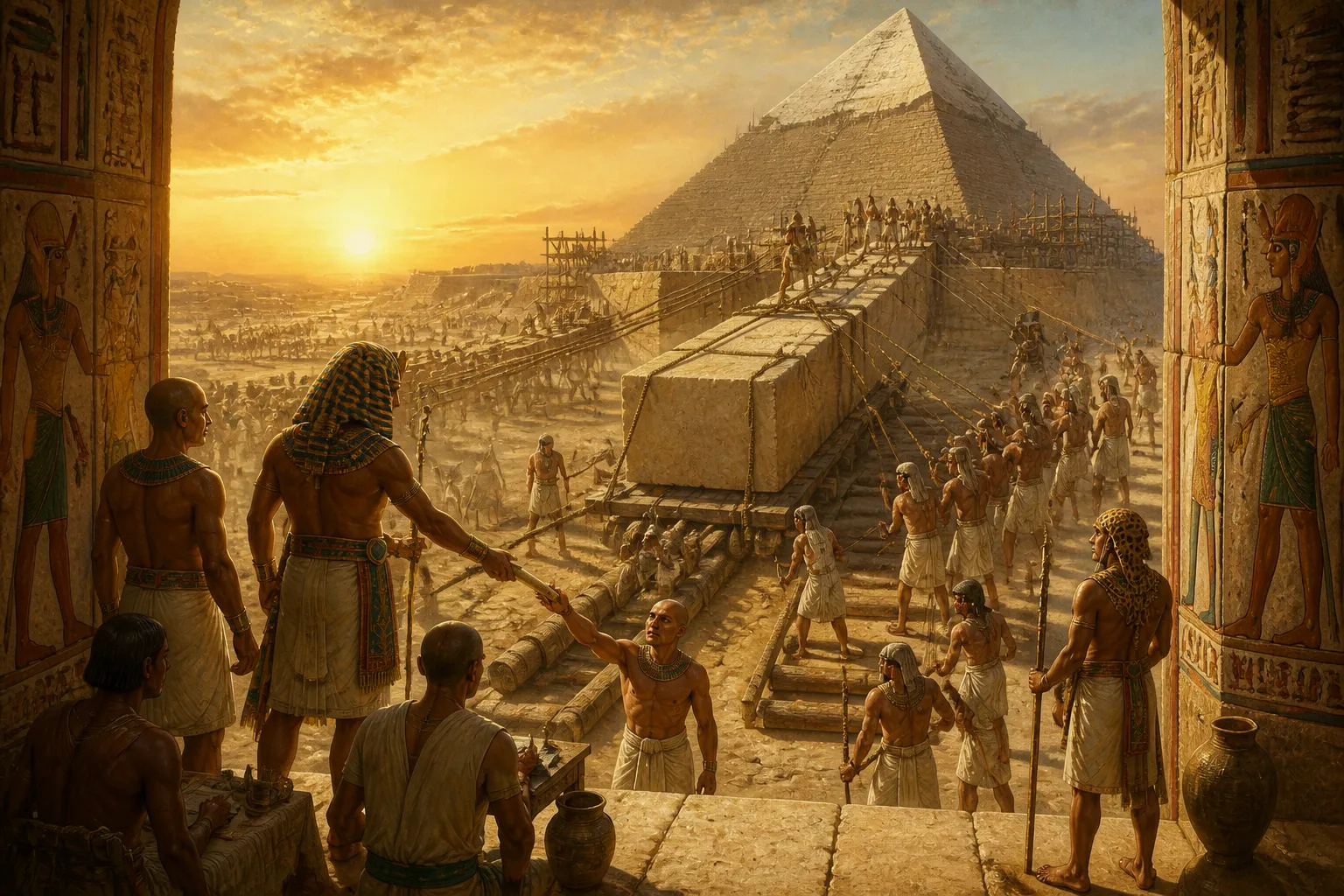
The sun rises majestically over the Giza Plateau, casting a golden hue on the immense silhouette of the Great Pyramid. The scene brims with anticipation as thousands gather, a sea of linen-clad figures, each representing a different facet of ancient Egyptian society from laborers to scribes, and even noblemen adorned with jewelry. The massive limestone block, a testament to human perseverance, ascends the ramp incrementally. Hemiunu, the revered architect, stands a vigilant observer, his gaze unwavering, his white linen robe contrasting with the dust-laden air. The workers' rhythmic chants fill the air, their synchronized pulling of ropes a symphony of labor. Dust swirls amidst the rising sun, mingling with the sound of wooden rollers creaking beneath the weight. This moment encapsulates the zenith of human ingenuity, a marvel witnessed by a crowd that spans laborers to high-ranking officials, united in the pursuit of legacy.
"Steady, men! This block represents the legacy of our king," commands Hemiunu, his voice cutting through the laborious chants.
Page 2 — Hemiunu's Vision
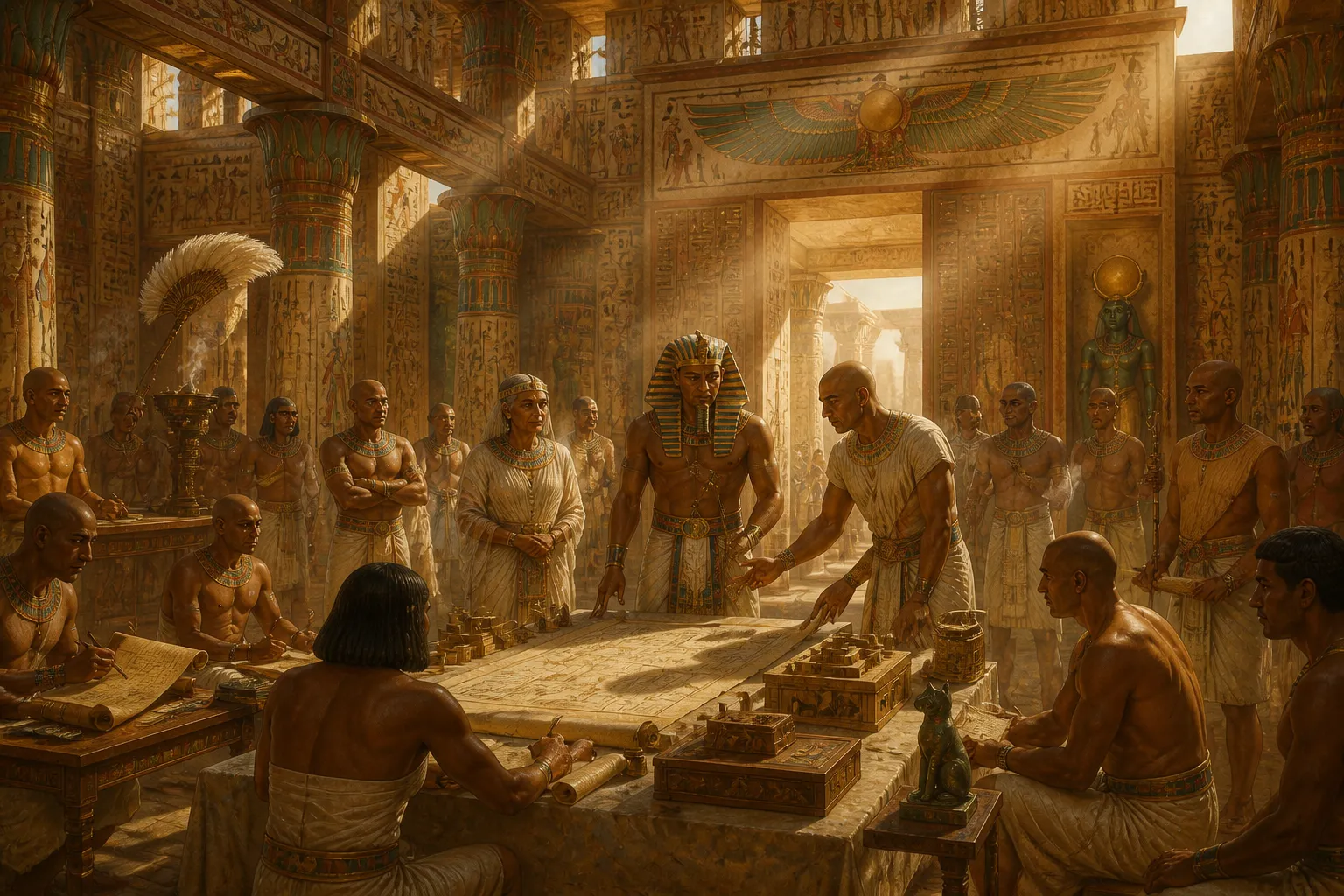
Inside the hallowed halls of Memphis, Hemiunu presents his ambitious architectural plans to the king. Scrolls are unfurled on a stone table, each detailing the vision of a monument crafted for eternity. The Pharaoh, cloaked in a pleated linen kilt and the regal nemes, commands the room with his presence, the embodiment of divine kingship, his eyes sharp and contemplative. Hetepheres I, the matriarchal figure, offers silent counsel from the shadows, her wisdom acknowledged without words, her presence lending an understated gravity to the proceedings. The air is thick with the scent of incense, its tendrils weaving through the chamber. Light filters through narrow windows, casting intricate patterns on walls adorned with hieroglyphs, as courtiers murmur softly, acutely aware of the immense historical weight of their endeavor.
"This pyramid will ensure our place among the stars," Hemiunu declares, confidence resonating in his voice.
Page 3 — Quarry at Aswan
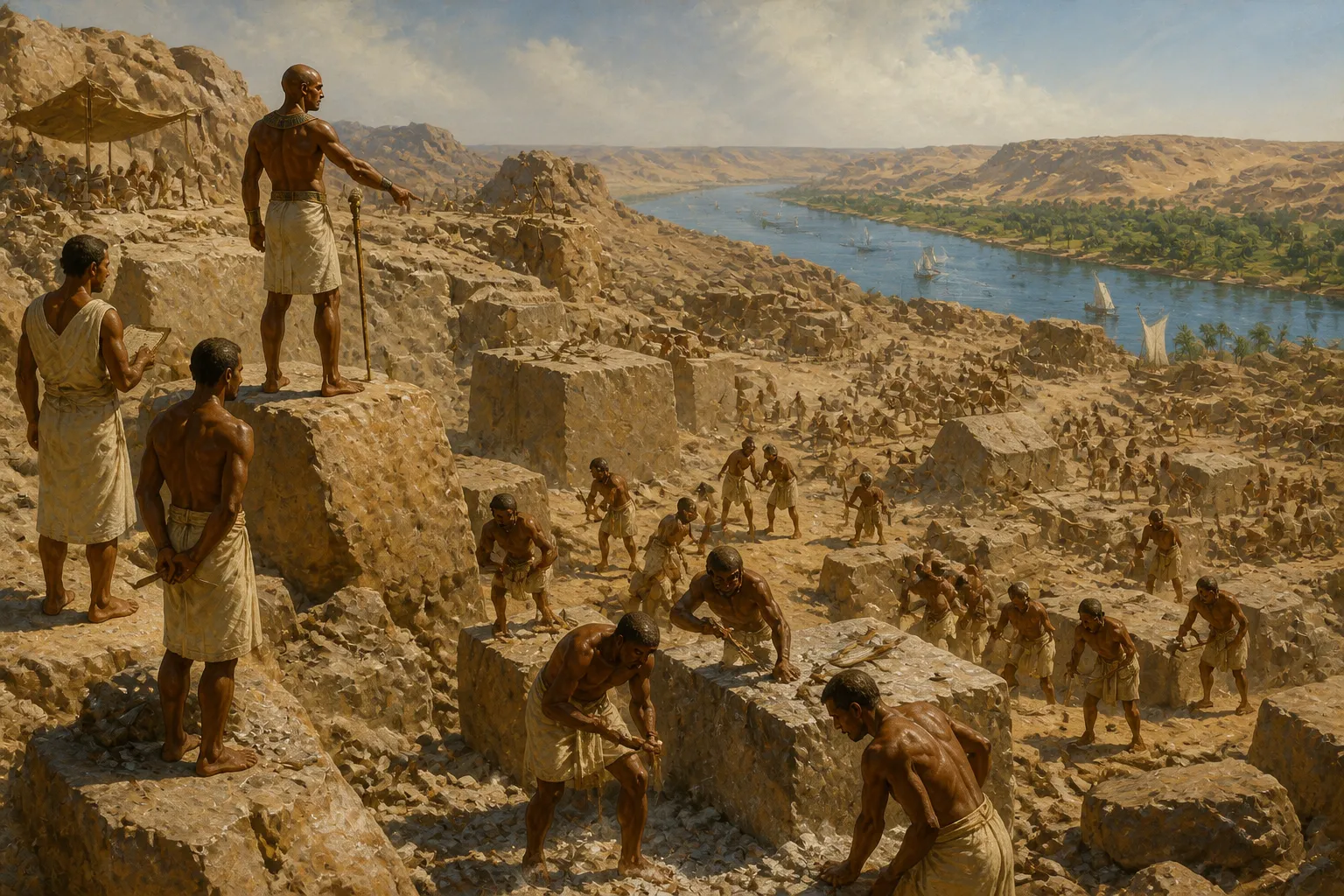
Amid the relentless roar of chisels and hammers, Aswan Quarry pulses with vigorous activity. Here, the toilsome efforts of laborers bear fruit as colossal granite blocks, destined for the pyramid's inner sanctums, are meticulously extracted from the earth. The air is saturated with the mingled scents of sweat and stone, a sensory backdrop to this monumental task. The foreman, his presence commanding respect, orchestrates the precise process, ensuring each block's integrity with an experienced eye. Laborers, their skin dusted with the quarry's residues, work with unwavering dedication, their chants synchronized with the strikes of their tools. The Nile, in the distance, reflects the azure sky, a constant reminder of its invaluable role in transporting these massive stones, bridging the gap between quarry and monument.
"Each block is a piece of history," the foreman shouts over the noise, instilling pride.
Page 4 — The Journey of Stone
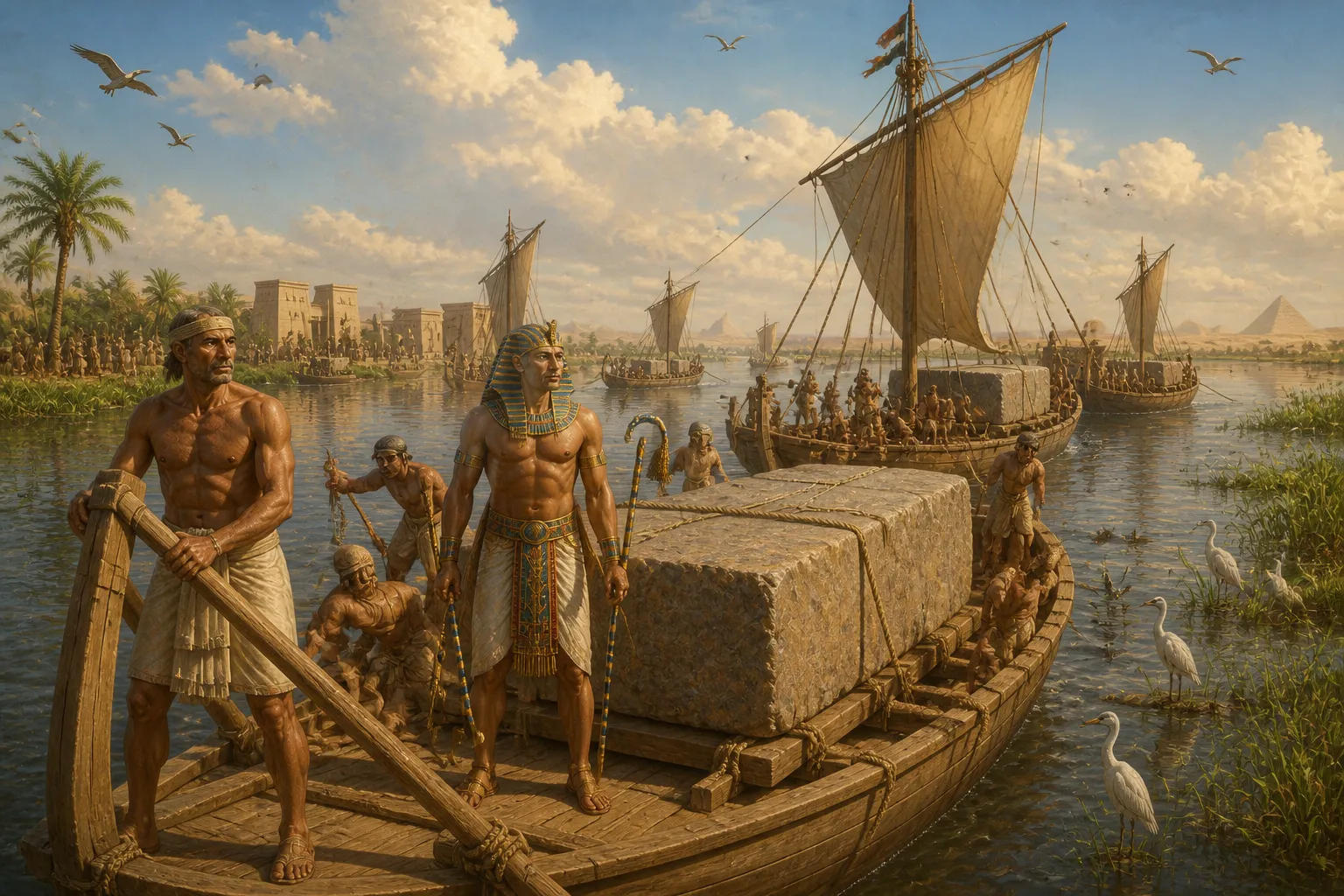
A remarkable flotilla of boats navigates the timeless Nile, each vessel heavily laden with monumental granite blocks. The river, with its gentle current and role as a lifeline, facilitates the storied journey from quarry to construction site. Merer, an astute boat captain known for his expertise and unwavering focus, assumes the helm, his steady hands ensuring the safe passage of the precious cargo. Sailors, their skin bronzed by the relentless sun, labor diligently, adjusting the sails and harmonizing work songs that resonate with the river's own melody, their voices blending with the rhythm of the oars. The lush riverbanks, teeming with papyrus and vibrant wildlife, juxtapose starkly against the imposing granite blocks. This riverine procession stands as a testament to the harmonious unity of natural resources and human endeavor.
"Steady as she goes! Our task is sacred," Merer calls, his voice steady against the river's song.
Page 5 — Rituals of Foundation
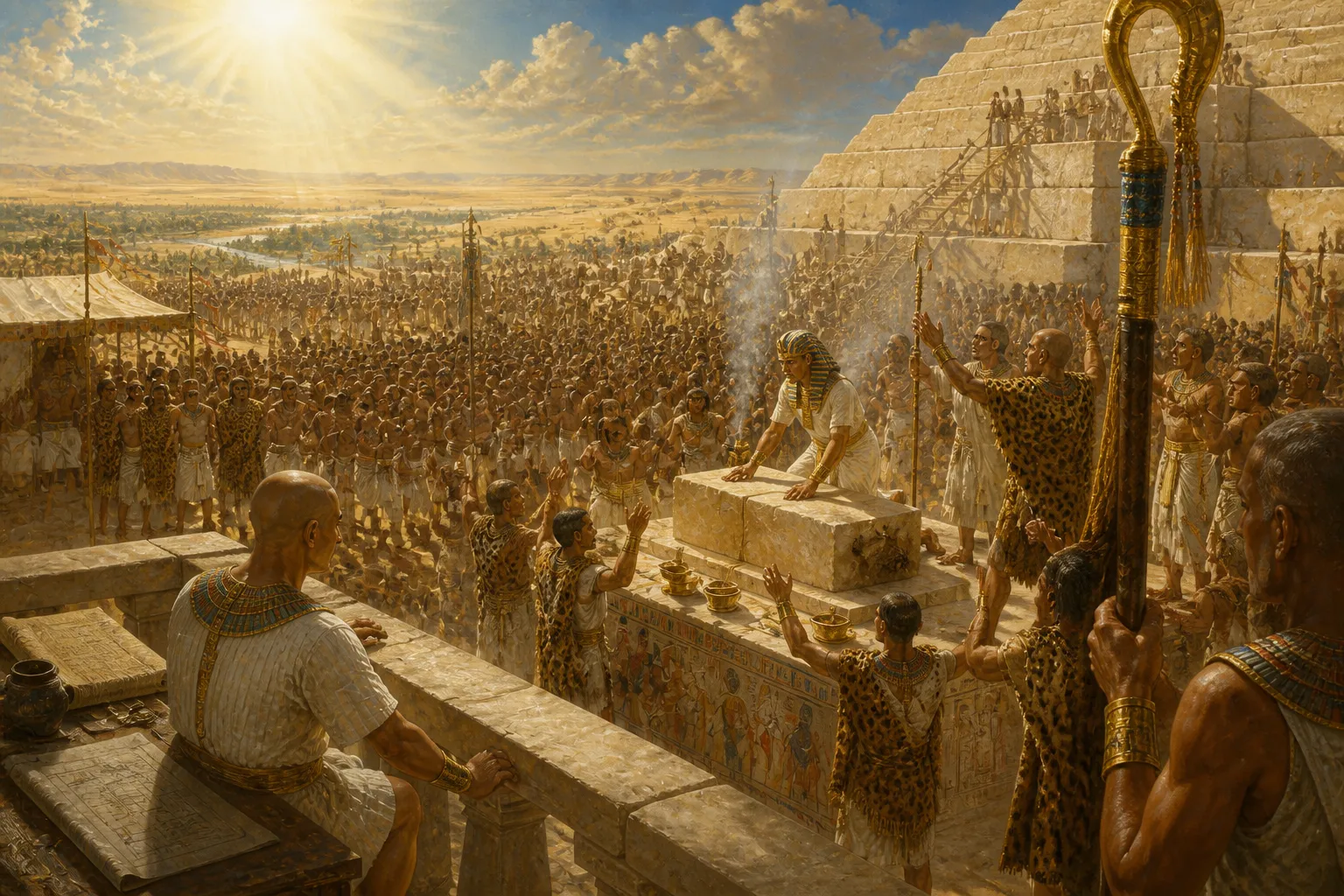
In a sacred ceremony at the base of the Great Pyramid, Khufu lays the pyramid's foundational stone with precise reverence. Priests draped in leopard skins, their attire representing spiritual authority, chant hymns that rise and fall like the Nile's ebb and flow, invoking the blessings of the sun god Ra. The air is heavily perfumed with the smoke of sacred incense, curling towards the sky, mingling with the murmurs of a crowd that stretches far, mirroring the vast desert around them. Each spectator, from the high nobility to the common workers, stands in solemn silence, aware of witnessing history in the making. Hemiunu, the master architect, stands beside the king, his eyes tracing every movement, every chant, knowing the enormity of the task ahead. The sun, a dazzling orb in the cloudless sky, blazes down as an eternal witness to this symbolic union between the divine and the mortal realms.
"By the grace of Ra, may this monument eternalize our name," Khufu proclaims with solemnity.
Page 6 — Labor of the Gangs
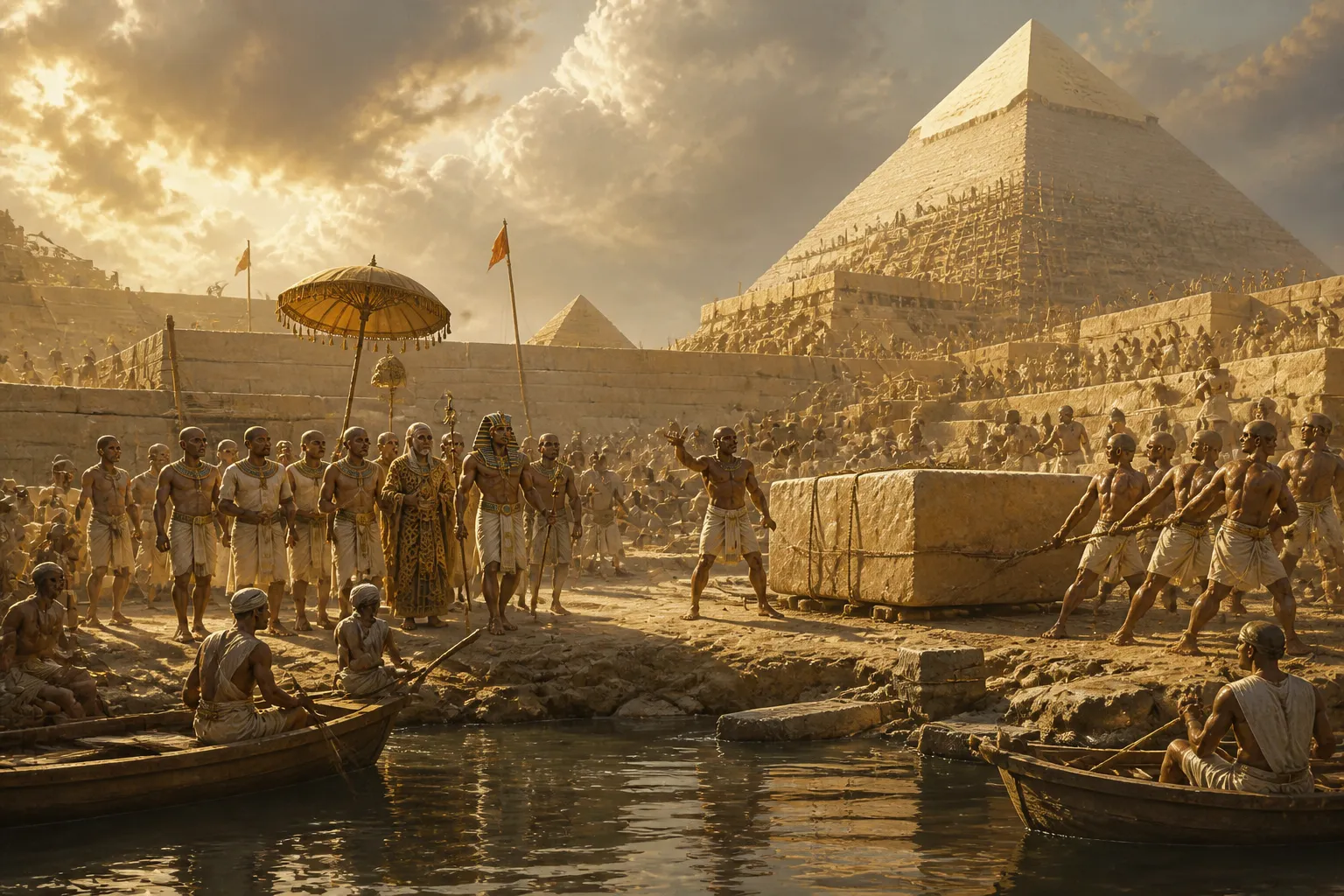
On the bustling construction site at Giza, gangs of laborers push their physical limits in the relentless sun, a testament to human endurance and cooperation. Each gang bears unique names, painted proudly within the walls of the rising pyramid, serving as a testament to their unity and strength. The rhythmic pull of ropes, synchronized as if in a dance, combines with the thud of wooden sledges on stone, creating a symphony of labor. Commands barked by foremen echo across the site, mingling with the sounds of craft and toil. These workers, some with calloused hands and others bearing the marks of artisans, represent the heart and soul of this monumental project. Day by day, stone by stone, they labor to carve their legacy into eternity, a legacy as enduring as the stone itself.
"Together, we build eternity!" shouts a gang leader, rallying his team.
Page 7 — Mystery of the Ramps
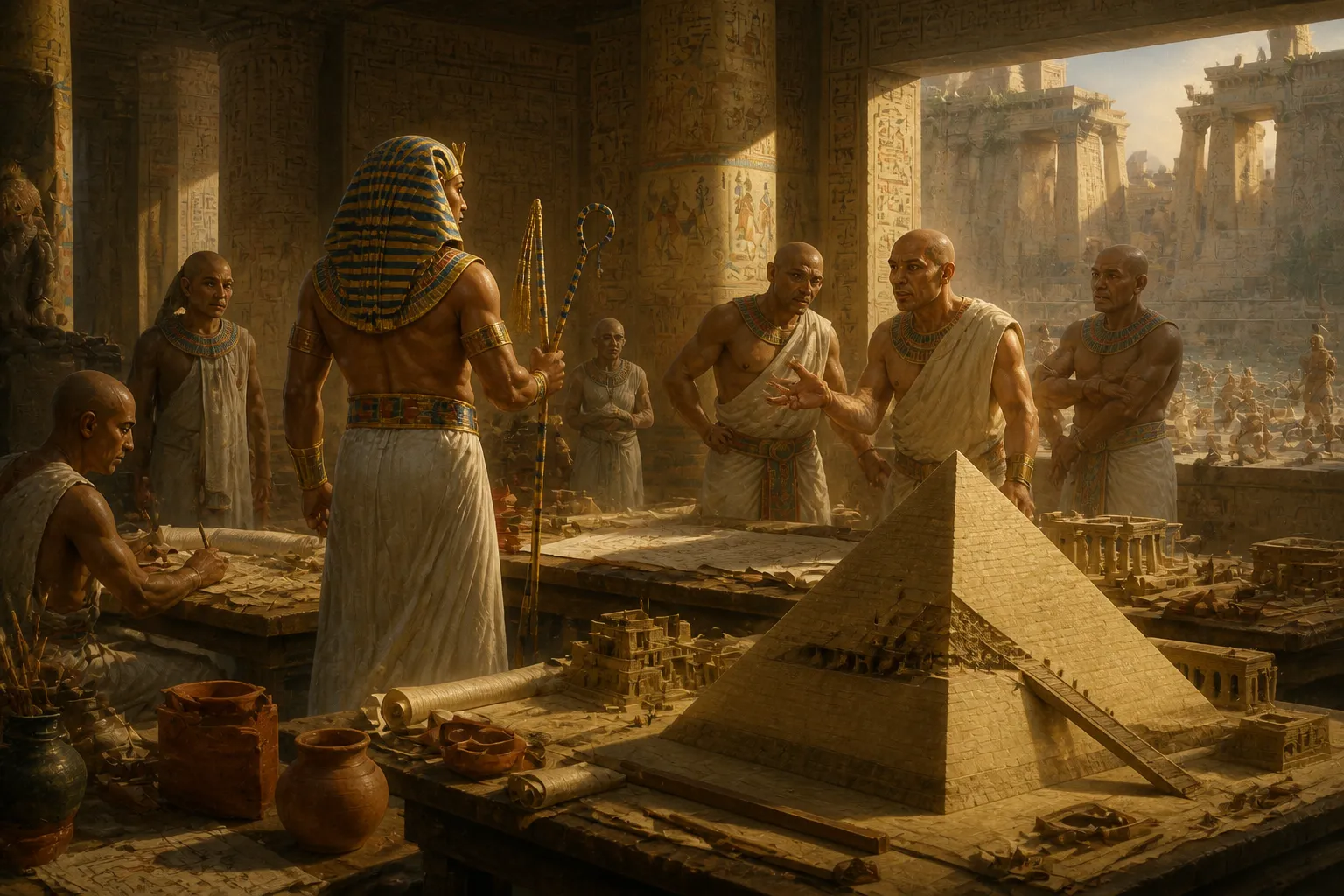
Within the architectural chambers of Memphis, the air is thick with intellectual debate and the smell of ancient parchment. Hemiunu, a man of intense focus and precision, stands amidst fellow architects, each one draped in linens, their minds honed by years of study and practice. The focal point of their heated discussion is the design of the ramps—whether straight, spiral, or cunningly hidden within the pyramid's structure. Stone tables are cluttered with detailed plans and scale models, each representing potential solutions to their engineering dilemma. The room hums with the tension of ambition and rivalry, yet there is a shared understanding that their work transcends individual pride: it is about immortalizing the king's reign through architectural splendor. Sunlight streams through narrow windows, casting geometric patterns that seem to mimic the very forms they're discussing, adding a natural beauty to the intellectual fervor.
"The ramp's design is crucial," insists Hemiunu, emphasizing precision.
Page 8 — The Man with the Water
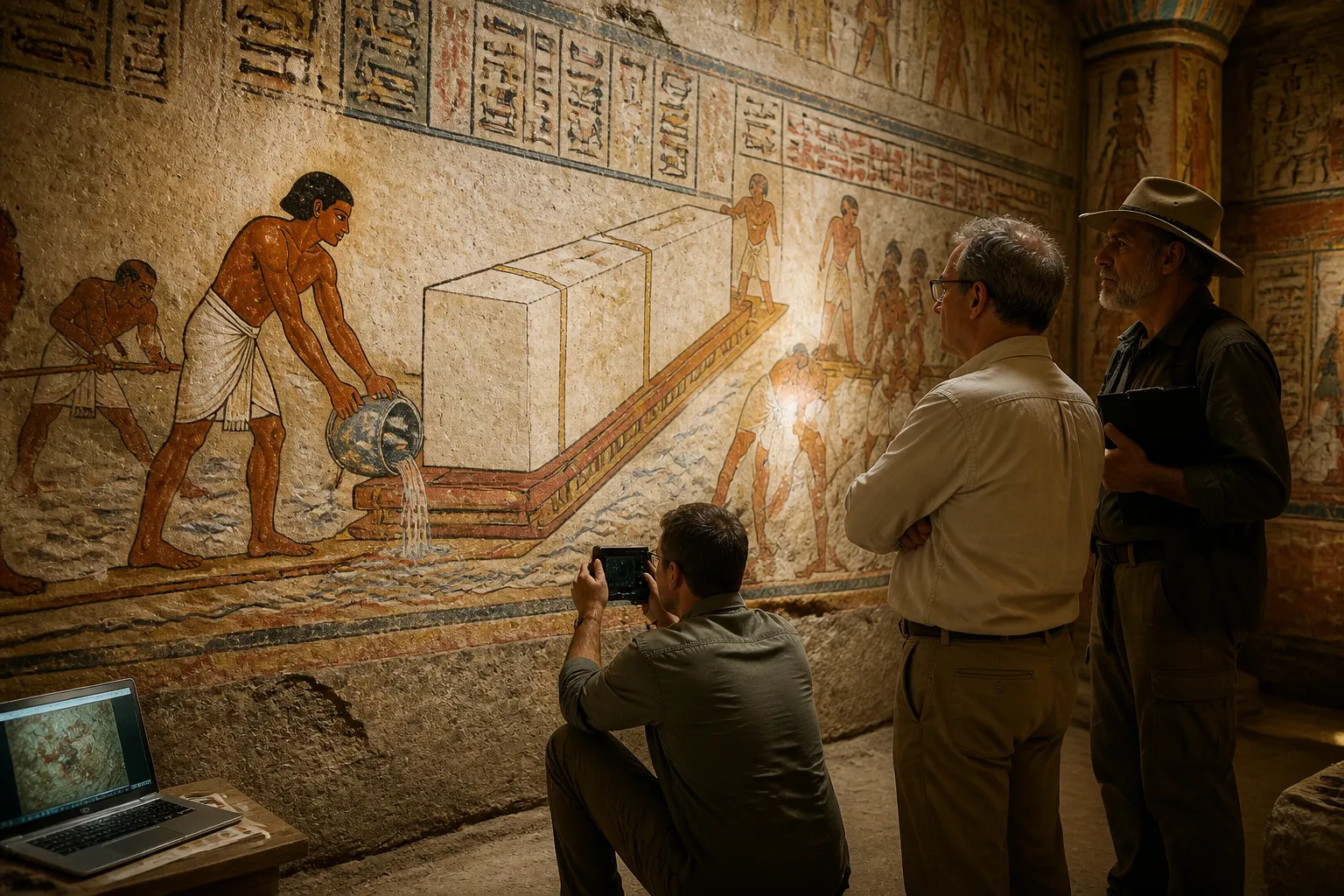
In an ancient tomb chamber, a painting captures the intricate scene of a man pouring water before a heavily laden sledge. This seemingly simple depiction has captivated modern scholars and engineers alike, providing a potential solution to the age-old mystery of how massive stones were transported. The scene portrays the man, distinct in his Egyptian garb, as he pours water meticulously, reducing friction and aiding the transport of colossal stones—a technique millennia ahead of its time. The faded yet vibrant pigments of the painting testify to the artisans' skill and the ingenuity of ancient Egyptian engineering. This revelation acts as a bridge, connecting contemporary understanding with age-old techniques, serving as an enduring testament to human creativity and persistence.
Modern analyst: "This painting reveals forgotten knowledge, a testament to ancient innovation."
Page 9 — The Logbook of Merer
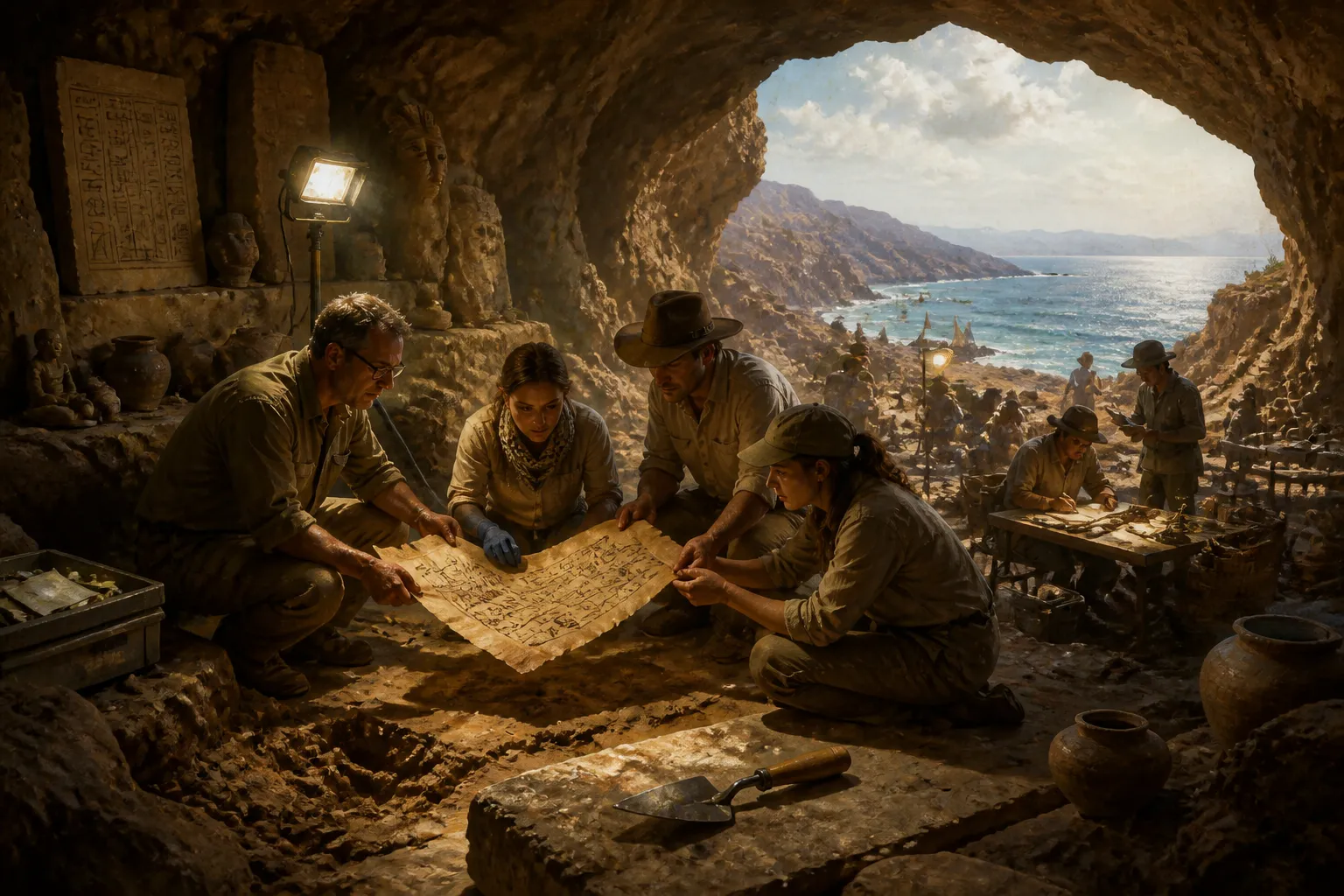
In 2013, a team of archaeologists made a groundbreaking discovery in a cave near the Red Sea. Hidden for millennia, a fragile papyrus logbook authored by Merer, a leader in the ancient Egyptian stone transport industry, came to light. This extraordinary document, rich in detail, chronicled the daily operations of transporting limestone blocks to Giza, which were integral to the construction of the Great Pyramid. The entries, meticulously recorded by Merer, provided an unprecedented insight into the elaborate logistics and the vibrant lives of the workers who toiled under the relentless sun. It was not just a record; it was a bridge between two worlds, linking the modern era with the distant past and revealing the incredible organizational prowess of Ancient Egypt.
"This papyrus is a window into their daily lives," an archaeologist comments, marveling at its detail.
Page 10 — Legacy of the Builders
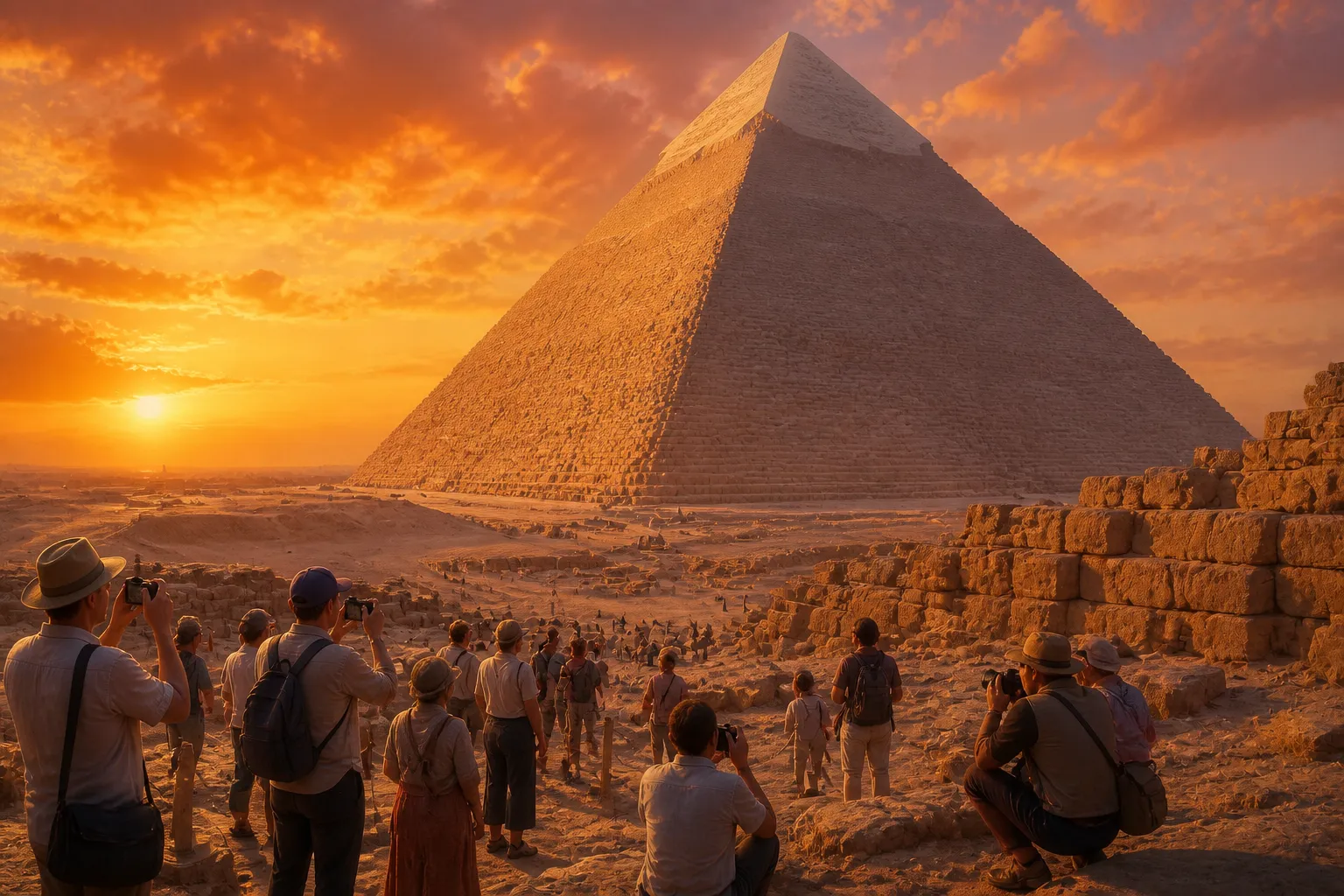
Centuries have passed, yet the Great Pyramid of Giza remains an awe-inspiring symbol of ancient human ingenuity and ambition. Standing tall on the Giza Plateau, the pyramid embodies the dedication, collaboration, and innovative spirit of its anonymous builders. Although their individual names have faded with time, their monumental achievement speaks volumes. Modern engineers, historians, and scholars continue to study the pyramid, marveling at the sophisticated techniques and methods employed in its construction. As the sun sets, casting a golden hue over the pyramid's limestone blocks, it becomes clear that this timeless structure is more than just a relic of the past—it is a bridge that connects us to an ancient world and inspires future generations.
"Their legacy is etched in stone, a testament to what humanity can achieve," a historian reflects thoughtfully.
About this story
- Audience: general readers
Read Wonder Egypt on your phone
Wonder Egypt is available on Android. Get Wonder Egypt on Google Play.