Abu Simbel, Cut Up and Moved
Abu Simbel, Cut Up and Moved — an illustrated history story. 10 illustrated pages, free to read on Wonder Egypt.
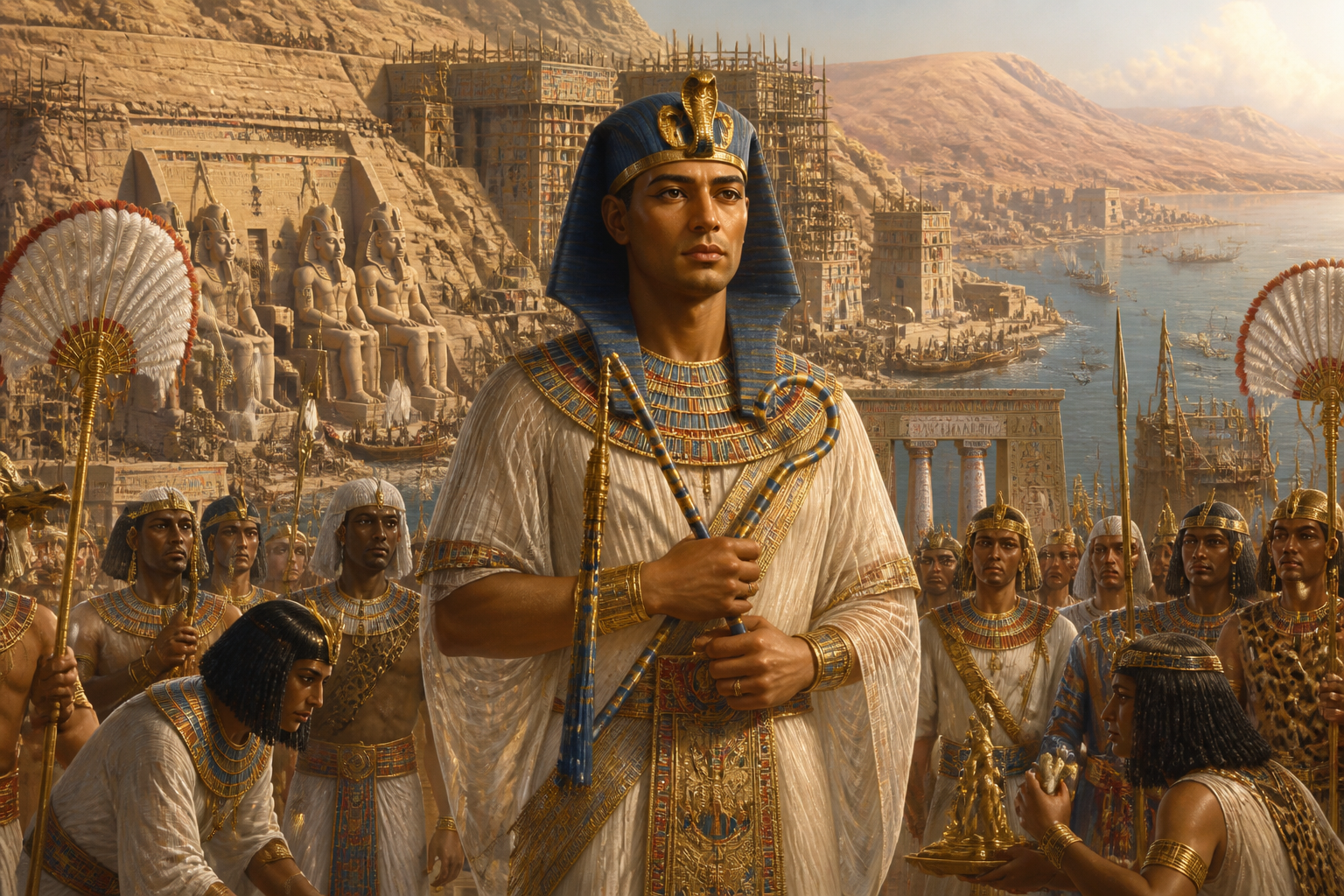
Page 1 — Stone Giants of the Desert
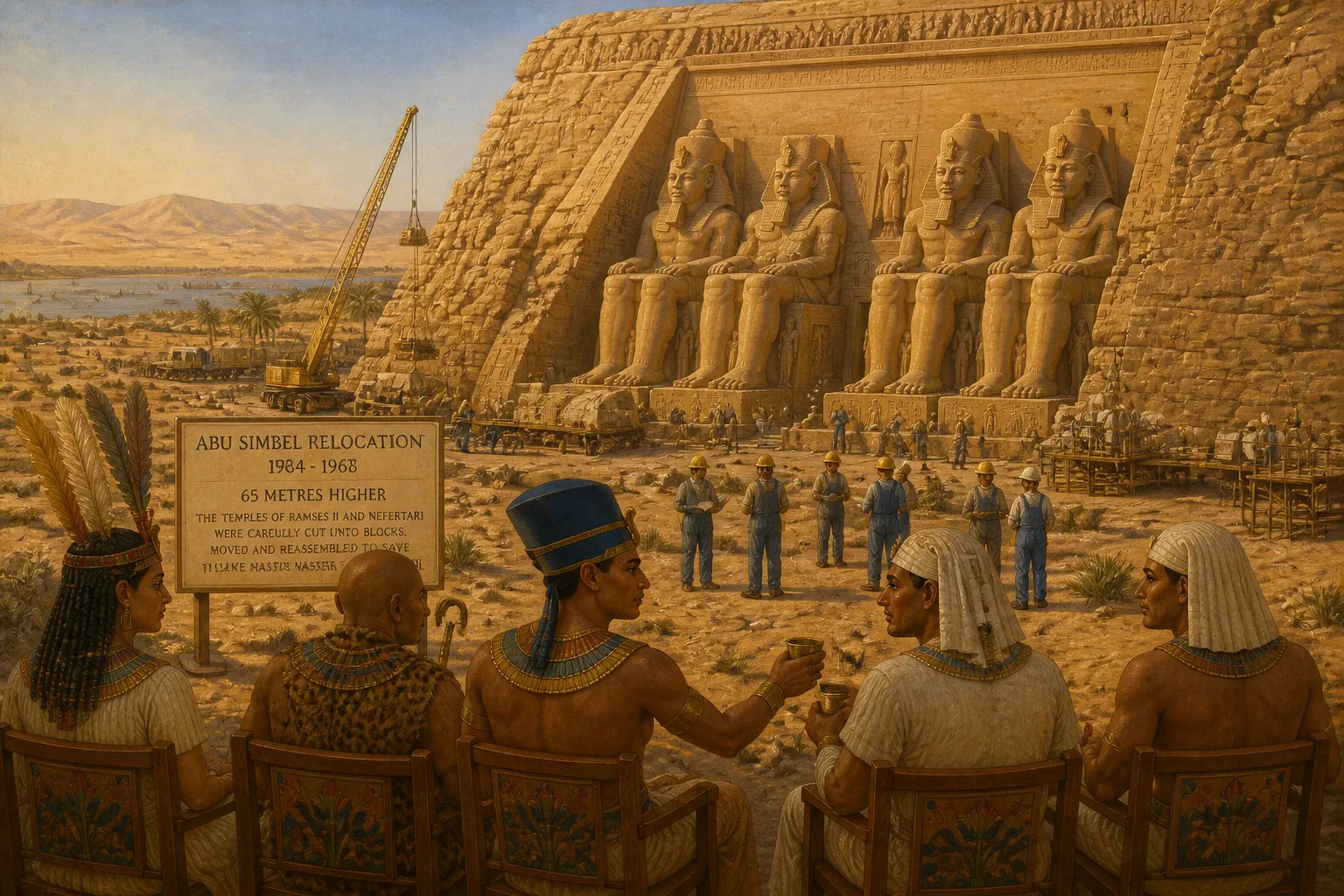
Standing today in Nubia, 65 meters higher than originally placed, the colossal figures of Ramses II tower over visitors. These four monumental statues, each meticulously carved into the rock face, once gazed serenely out over the Nile. Today, they sit regally in a specially constructed artificial hill, a magnificent feat accomplished in the 1960s to protect them from the rising waters of Lake Nasser. The temple's inner sanctuary, a marvel of ancient engineering, aligns with the sun twice a year, casting a brilliant light over its innermost statues. This light illuminates the gods and the pharaoh, a testament to both ancient mysteries and modern engineering prowess. Visitors stand in awe, witnessing the convergence of history, artistry, and technological achievement in this unparalleled testament to both ancient and modern feats.
"The sun still finds its way, as if the gods themselves watch over these stones," mused an engineer, reflecting on the alignment's persistence after the move.
Page 2 — Carving the Sacred Cliff
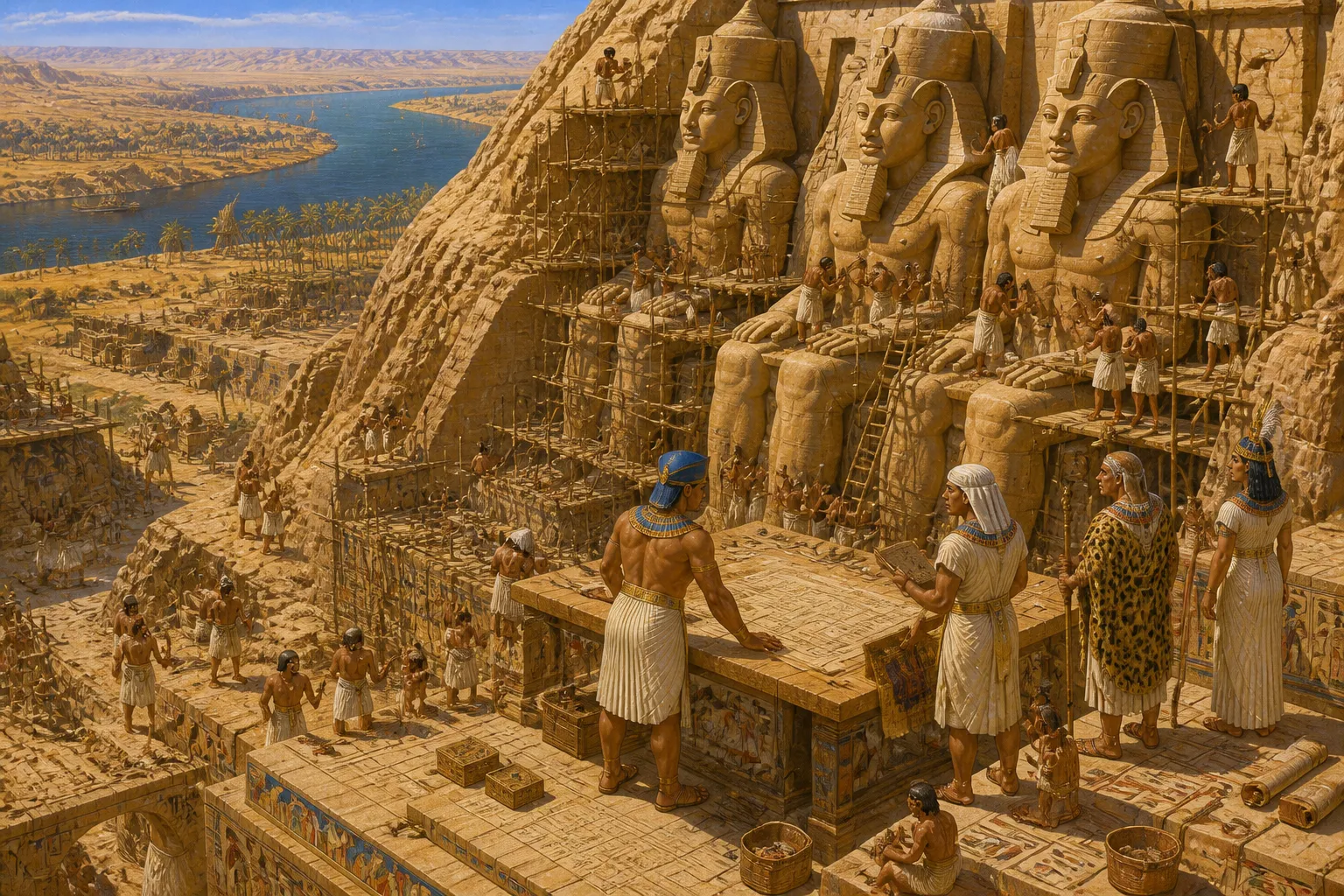
The year is 1264 BC, and the cliff faces of Nubia echo with the rhythmic strikes of hammers and chisels, creating a symphony of labor that reverberates through the canyon. Here, the sculptors toil under the ever-watchful eye of the master architect Penre, a figure of authority directing the monumental task. The colossal statues of Ramses II take majestic form, expressions of divine power intricately etched into the sheer rock face. These artisans, guided by the high priest Ramessesnakht, work tirelessly to ensure the king's visage will stand for eternity, a testament to his rule and divine favor. The magnitude of the project reflects the ambition to immortalize the pharaoh, both in life and the afterlife. The scene is alive with the sounds of creation, dust rising from chiseled stone, as the promise of a lasting legacy takes shape under the relentless Nubian sun.
"Every strike of the chisel must honor the divine nature of our king," proclaimed Ramessesnakht to the gathered artisans.
Page 3 — The Divine Dawn
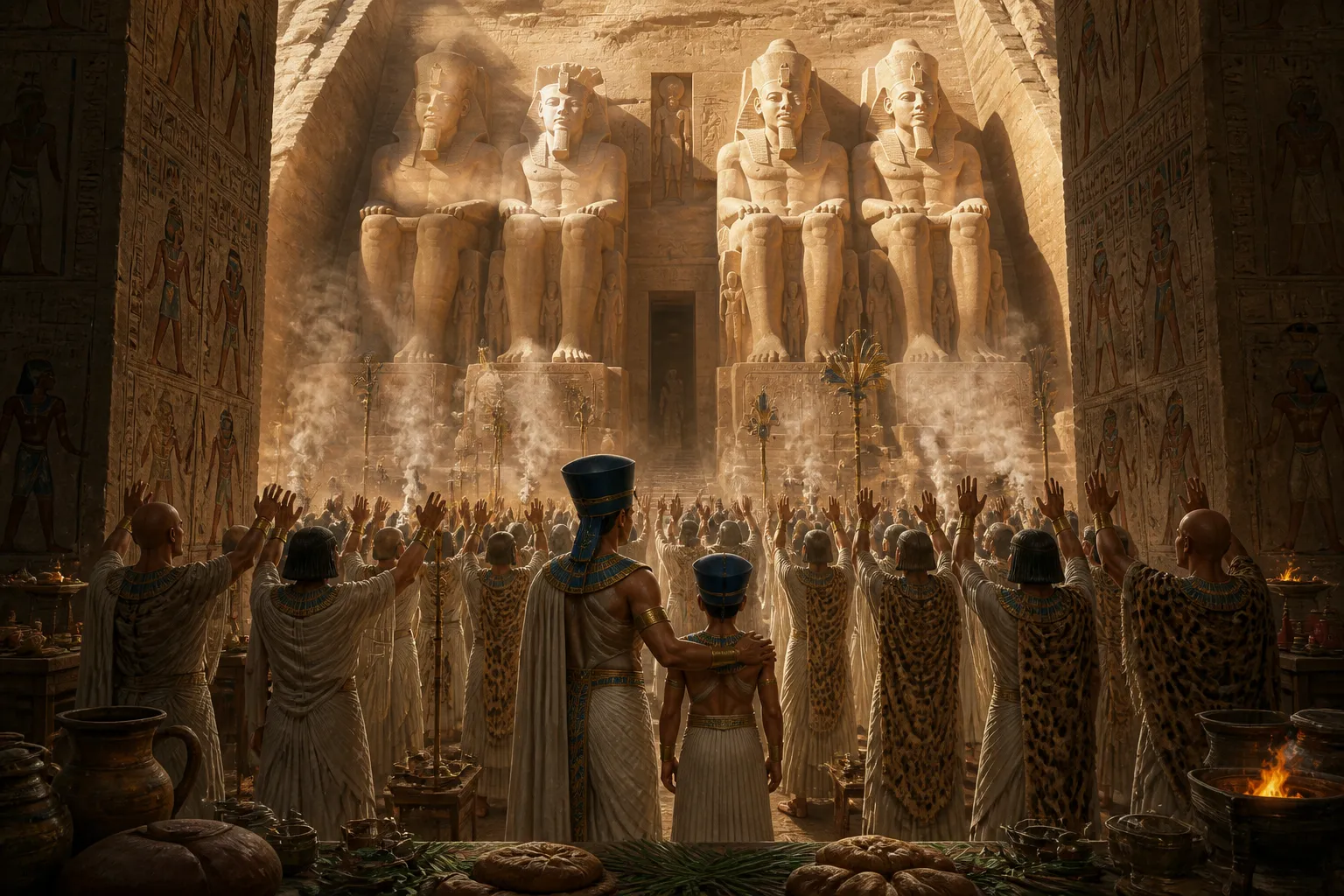
In the heart of the sacred temple, the inner sanctuary stands as a monument to divine presence, housing the grand statues of the gods alongside Ramses II himself. Bathed in golden light twice a year during the solar alignment, this sacred chamber transforms into a scene of divine illumination. As priests assemble in the sanctum, a palpable sense of anticipation fills the air, charged with the solemnity of the moment. The alignment is flawless; the sun's rays reach the divine statues, casting their shadows that dance across the intricately carved sacred stone. Ramses, seated amongst the gods Amun, Ra, and Ptah, appears ethereal, bathed in celestial light, reaffirming his divine status and favor. The priests, draped in white linen robes symbolizing purity, offer hymns and incense, the sweet fragrances of frankincense and myrrh rising as a testament to celestial knowledge and reverence.
"See the light of Ra upon our king," a priest intones, his voice reverent in the quiet sanctity of the temple.
Page 4 — The Threat of the Waters
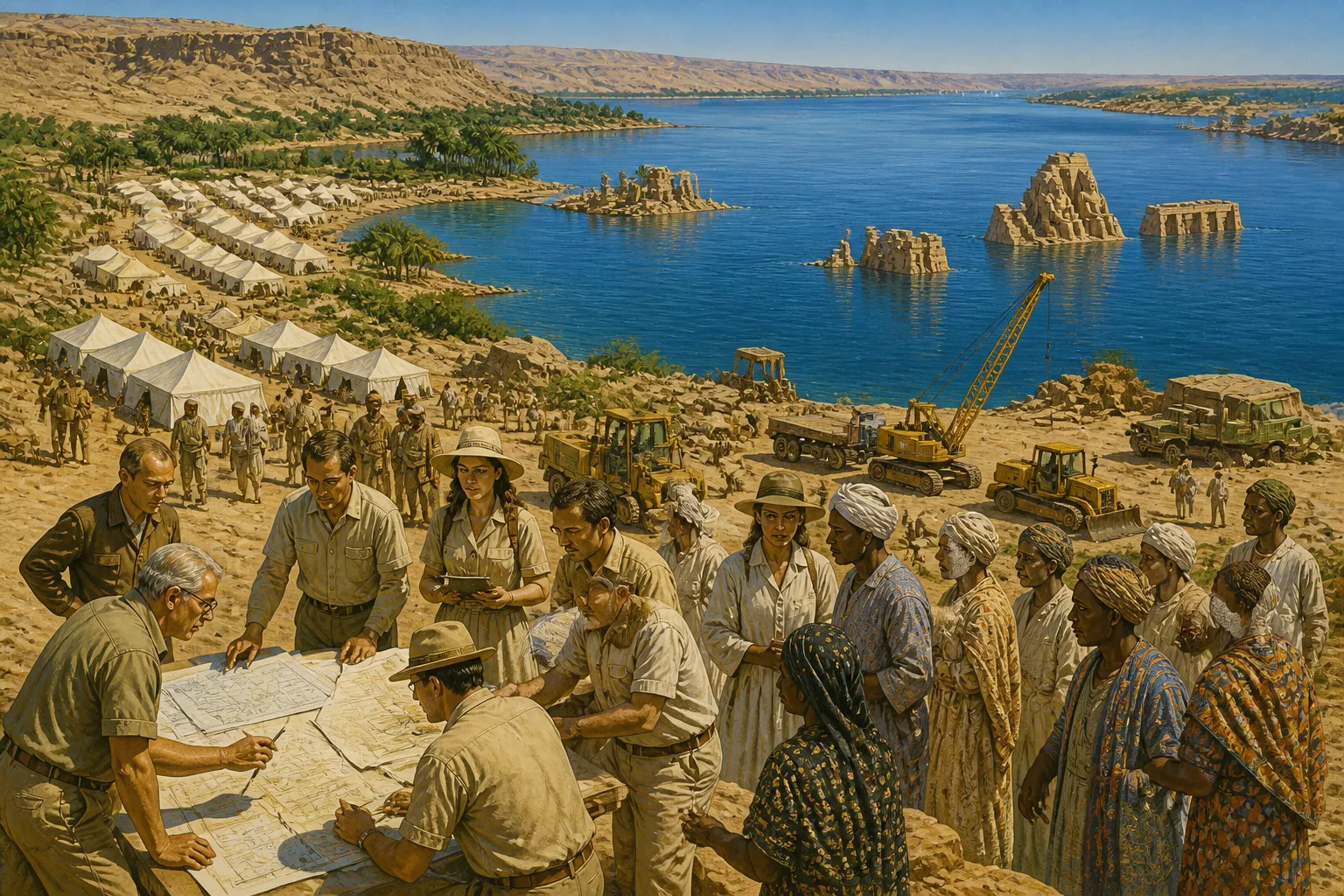
Fast forward to the 1960s. The construction of the Aswan High Dam poses a grave threat, threatening to submerge these ancient monuments beneath the rising waters of what will become Lake Nasser. In response, the Egyptian government, with support from UNESCO and international partners, initiates one of the most ambitious preservation projects in history. Villages, artifacts, and vast landscapes face imminent submergence. Engineers and archaeologists gather under temporary shelters beside the Nile, meticulously planning the dismantling and relocation of Abu Simbel. The weight of history and heritage presses heavily upon them as local Nubian communities must also face relocation. The challenge is daunting, but the stakes—preserving Ramses II's enduring legacy—are even higher.
"We must not only save stone, but preserve history," declares an Egyptian official to the assembled team.
Page 5 — Disassembly Begins
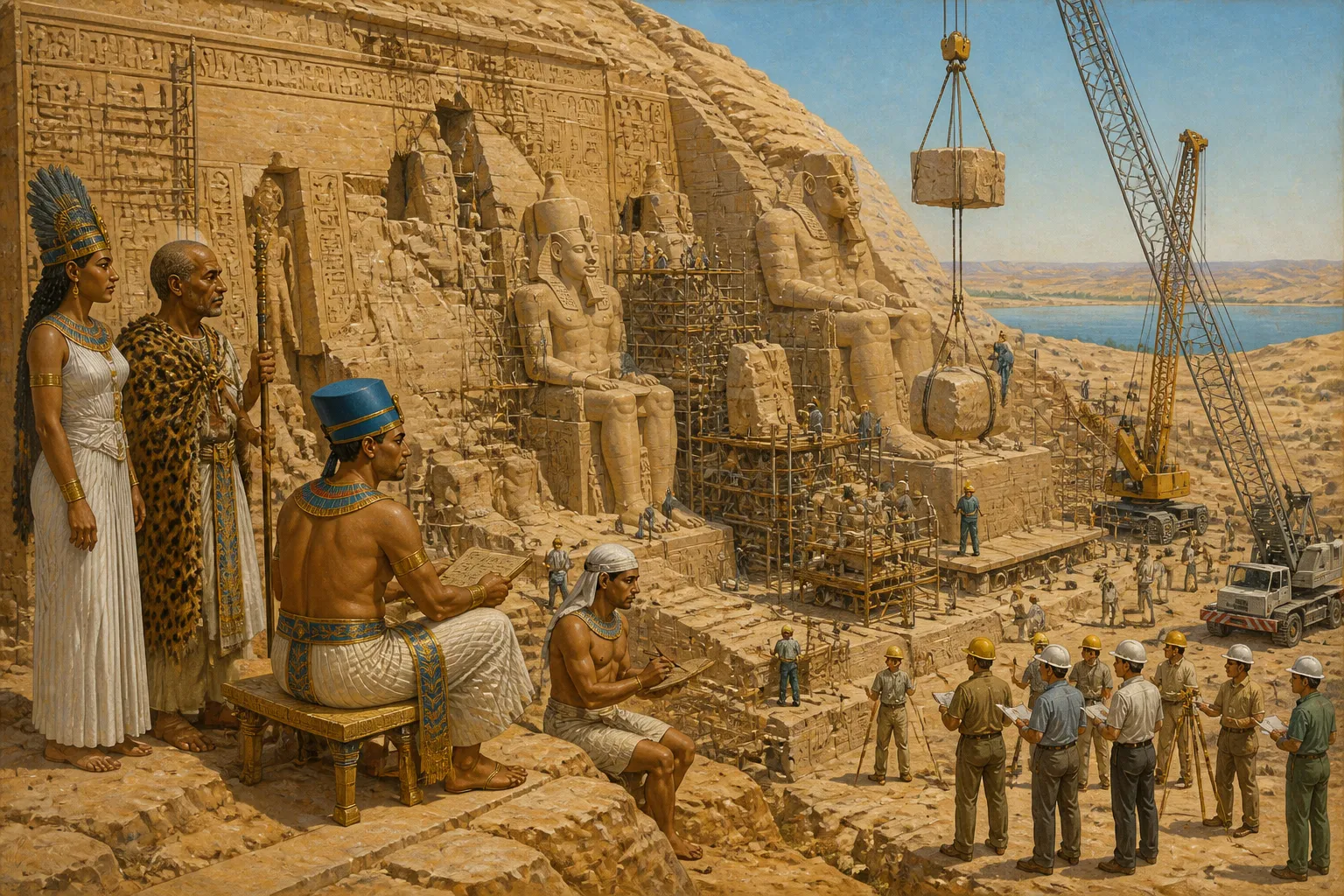
The relocation process at Abu Simbel is underway with fervent intensity. Engineers, guided by precise calculations and detailed blueprints, initiate the monumental task of cutting the colossal figures into transportable blocks. Each stone piece is meticulously numbered, cataloged, and cautiously handled to avoid any damage. The air hums with activity; mechanical cranes whirring as they lift and maneuver the massive stone segments. Workers, donned in protective gear and high-visibility vests, diligently navigate the labyrinthine scaffolded facade of the temple. The relentless sun sears down upon them, a persistent reminder of the pressing time constraints they face. This Herculean task is propelled by the team’s unwavering dedication and the profound understanding that their efforts ensure the temple's permanence, preserving Ramses II's enduring legacy for future generations.
"Every block we move is a piece of history," an engineer reminds his team, voice firm with dedication.
Page 6 — A New Home Above
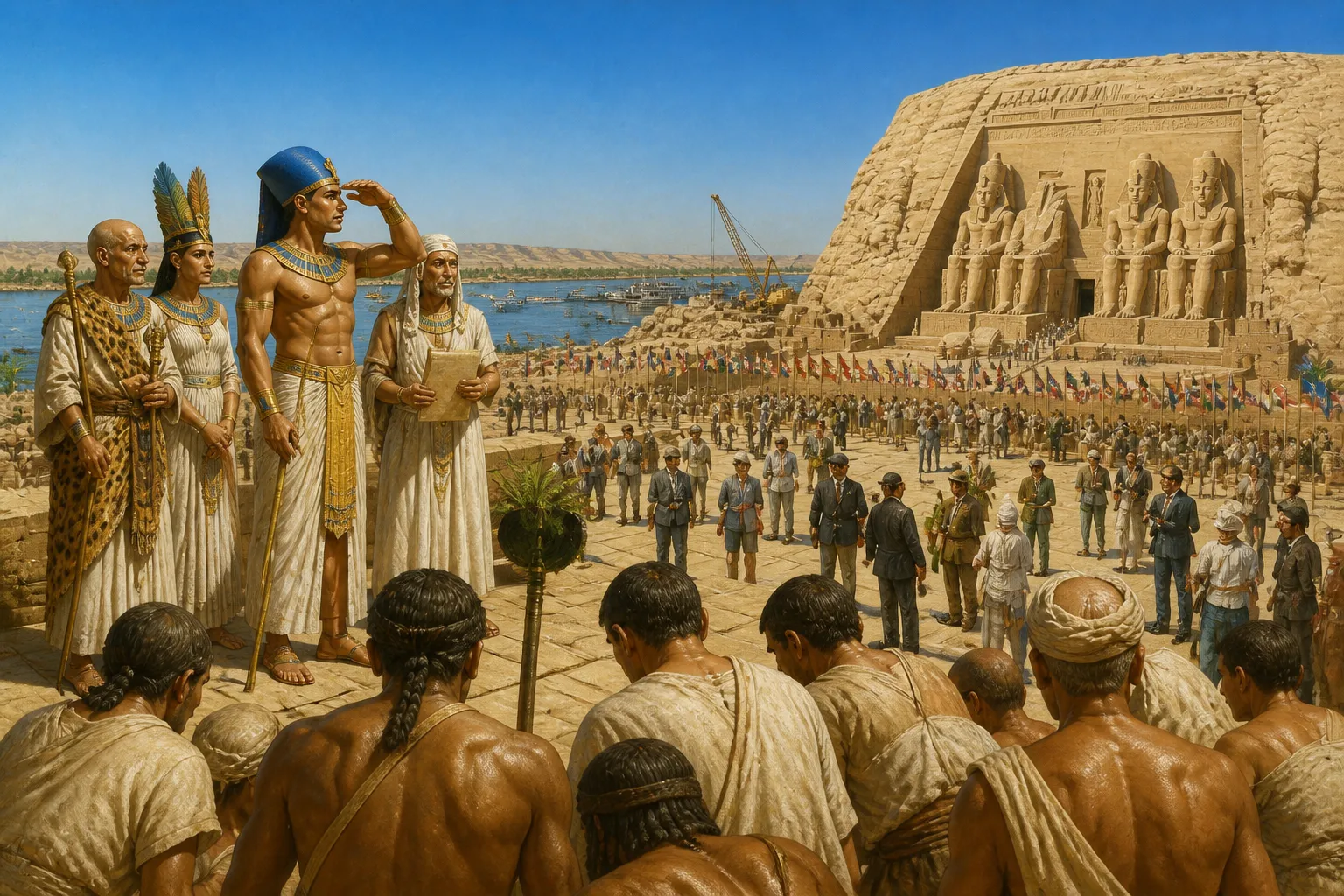
The reconstructed site stands majestically, now 65 meters higher than its original location, mirroring its initial grandeur with astonishing precision. Each stone, restored to its rightful place, reflects the meticulous care and detailed planning that defined this relocation effort. The engineering team, a collaborative assembly of international experts and local artisans, witness the triumphant conclusion of their years of relentless hard work and unwavering dedication. The Temple of Ramses II stands whole again, its monumental figures once more reigning over the desert expanse. Visitors from every corner of the globe arrive, drawn by the captivating tale of preservation and the awe-inspiring grandeur of ancient achievements. The new site, albeit different in elevation, retains the spirit and essence of the original, marking not only a historical triumph but a testament to human resolve and ingenuity.
"We have not just moved stone; we have moved history," a project leader declares during the opening ceremony.
Page 7 — The Queen's Sanctuary
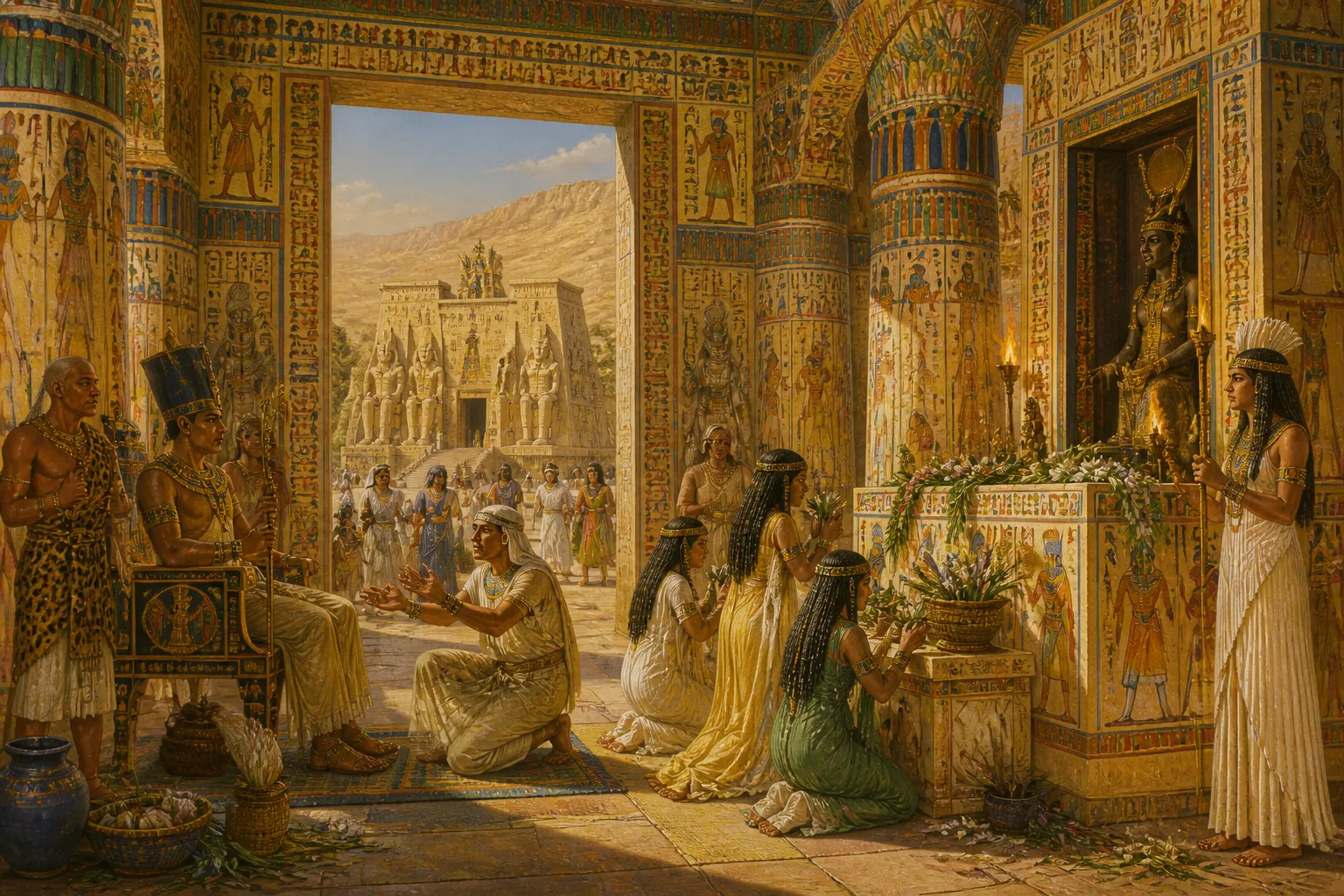
Nestled beyond the towering colossi of Ramses II lies the enchanting temple dedicated to Queen Nefertari, a marvel of artistry and devotion. The walls of this sanctuary are adorned with scenes depicting the queen as Hathor, the esteemed goddess of love and beauty, underscoring her revered status in ancient Egyptian society. Craftsmen of a bygone era immortalized her grace with exquisite precision, capturing the essence of divine beauty. Pilgrims, clad in vibrant, colorful robes, journey to this sacred space, offering fragrant flowers and incense. The intoxicating aromas mingle with the cool breezes drifting from the nearby Nile. Although smaller in scale, Nefertari's temple exudes elegance and serenity, perfectly complementing the monumental grandeur of Ramses' temple. Together, they form a testament to power and affection, immortalized side by side in the timeless sands of Nubia.
"The queen stands beside the king, as divine as Hathor herself," a priest says, gesturing to the intricate carvings.
Page 8 — A Testament to Eternity
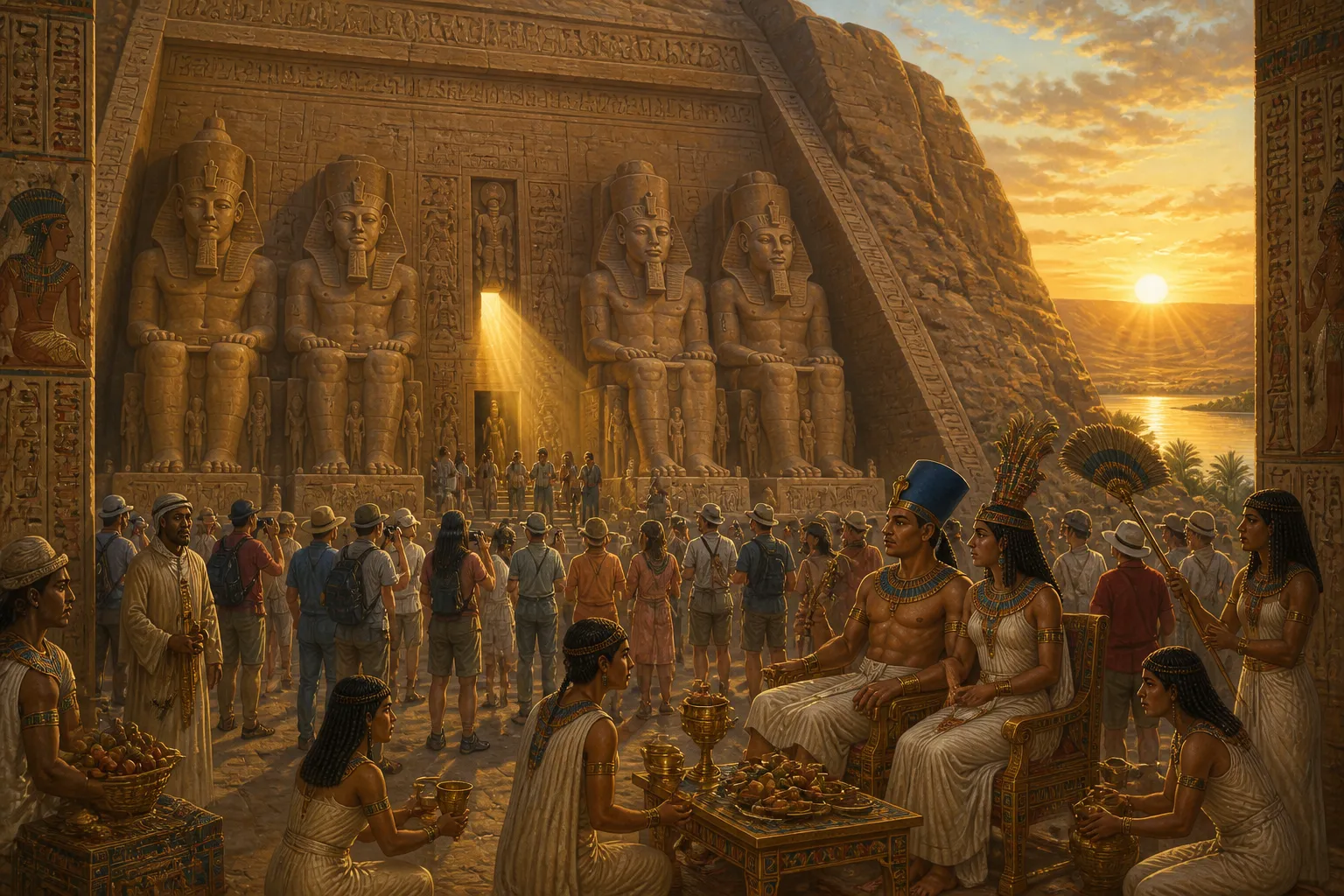
At the entrance of the main temple of Abu Simbel, the astronomical alignment continues to marvel, adjusted only slightly due to the relocation. Twice a year, the rays of the rising sun pierce the temple’s depths, illuminating the inner statues of Ramses II with unwavering precision. Gathered visitors witness this harmonious play of shadow and light across ancient stone, a calculated spectacle of ancient and modern engineering mastery. This feat, alongside the original ingenuity of ancient architects, serves as a perpetual reminder of human ambition and capability. The temple's enduring narrative inspires, bridging the eras from the age of pharaohs to the present day. As the sun ascends, casting its divine light into the sacred sanctuary, the legacy of Ramses II remains an everlasting beacon of power, faith, and human resilience against the sands of time.
"In this light, we see not just the past, but our shared future," a historian tells a captivated audience.
Page 9 — What Was Left Behind
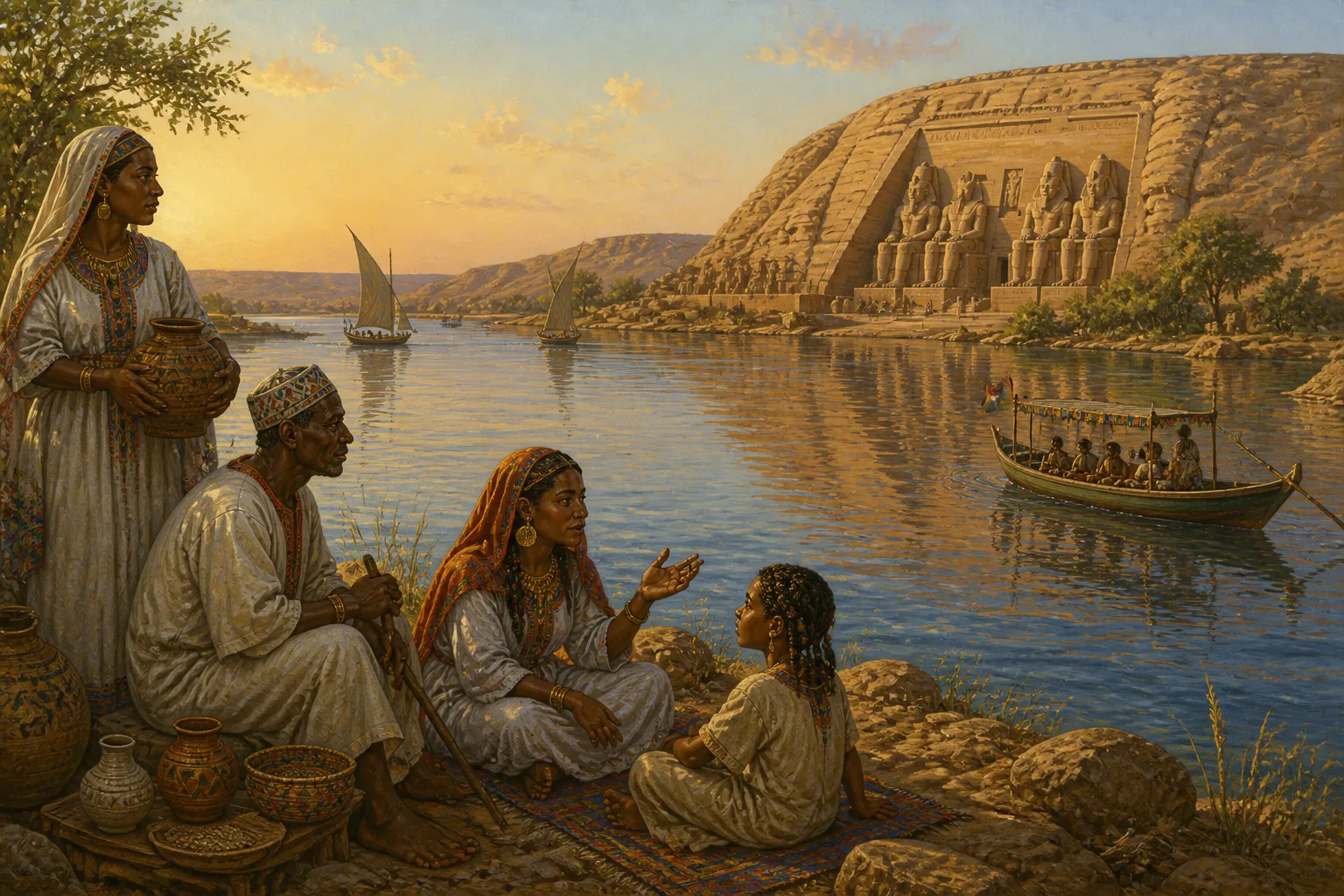
As the waters of Lake Nasser rose, a profound change swept across the Nubian landscape. Numerous villages and lesser-known temples succumbed to the rising tides, submerged beneath the surface, victims of the relentless march of progress. The inhabitants, forced to abandon their ancestral lands, carried with them the intangible threads of their rich cultural heritage. The silent expanse of the lake now holds a mosaic of untold stories, each ripple a silent testament to the lives once woven into its shores. While the relocated Abu Simbel stands tall, it remains a poignant reminder of the sacrifices made for prosperity, with memories of submerged homes lingering in the hearts of many.
"Our stories remain, even if the land does not," a Nubian elder tells his grandchildren, gathered at the lakeside.
Page 10 — Behold the Past
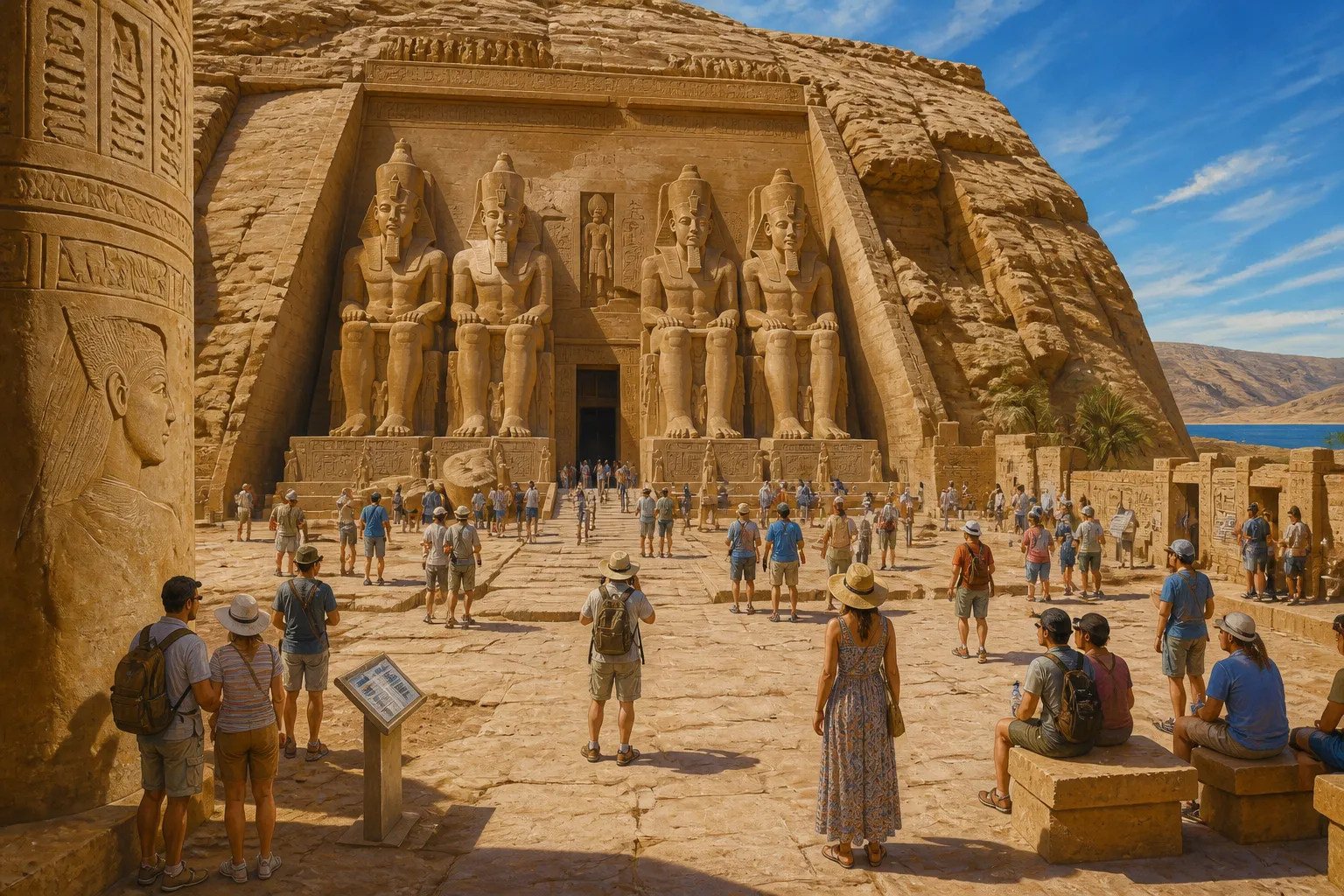
In the present day, visitors find themselves dwarfed by the imposing figures of Ramses II at Abu Simbel. The temple's history, from its ancient inception to its modern-day rescue, envelops them in a story of human tenacity. Fingers trace the intricate carvings, each line a whisper from the past etched into the living rock. Here, history is not just observed but felt, as the weight of time and triumph over adversity lingers in the air. As they wander among the titanic statues, each step taken connects them to the enduring legacy of a civilization that once thrived. As they depart, they carry the temple's story, becoming custodians of its timeless narrative.
"This place is a journey through time," a visitor whispers, awe evident in their voice as they touch the ancient stone.
About this story
- Audience: general readers
Read Wonder Egypt on your phone
Wonder Egypt is available on Android. Get Wonder Egypt on Google Play.