Akhenaten
Akhenaten — an illustrated history story. 10 illustrated pages, free to read on Wonder Egypt.
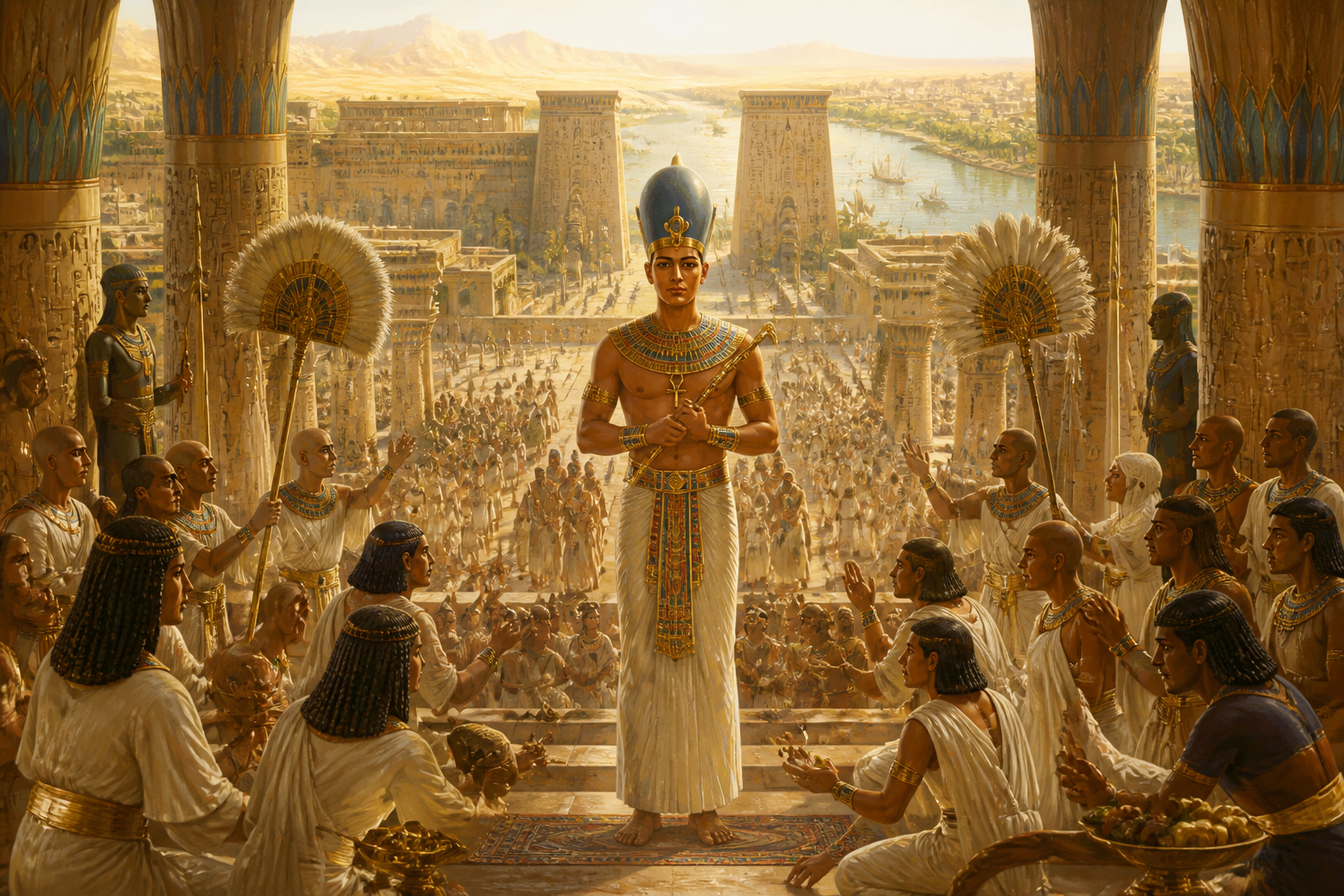
Page 1 — The Heretic King Rises
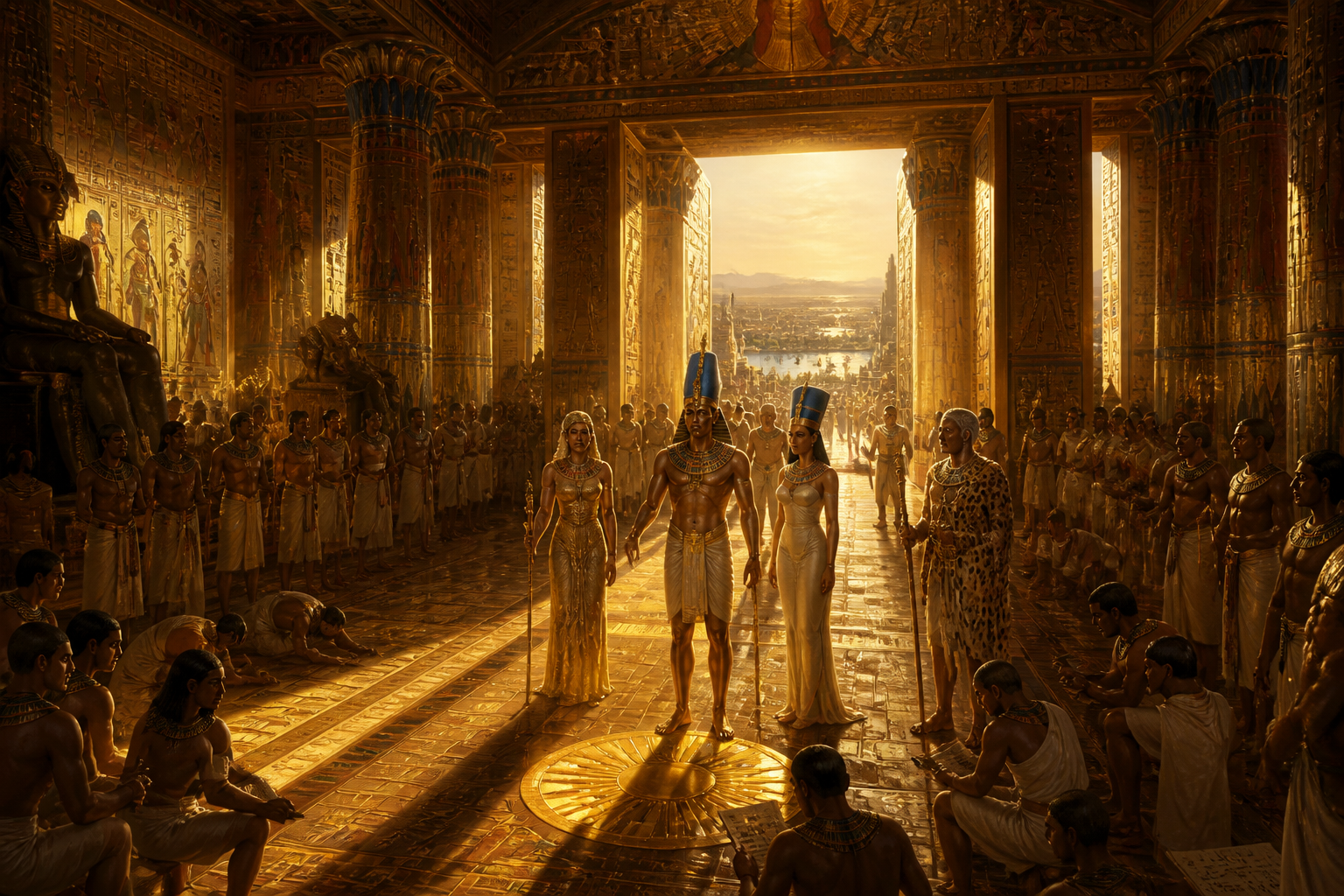
In the grandeur of the palace at Thebes, a monumental shift is underway. Akhenaten, once known as Amenhotep IV, ascends the throne, surrounded by a court poised on the brink of radical transformation. His mother, the formidable Queen Tiye, stands beside him, a woman of wisdom and strength who has navigated the intrigues of power for decades. His queen, the enchanting Nefertiti, is a partner in vision and determination. Nearby, the young Tutankhamun, a child of promise, represents the future lineage of the dynastic bloodline. Ay, the shrewd advisor, observes with calculating eyes, while the gifted sculptor Bek innovates art to align with the king's ideals. At the core of Akhenaten’s reign lies a revolutionary concept: the worship of Aten, the sun disc, as the singular deity. This audacious move effectively dismantles the ancient pantheon of Egyptian gods, a bold stroke that will define his legacy and ripple through history. But with change comes resistance, and Akhenaten’s ambitions will forge alliances, create adversaries, and ultimately lead to his erasure from history.
"Behold, the Aten rises above, sole and eternal," Akhenaten proclaims, his eyes fixed on the sun.
Page 2 — The Foundation of Amarna
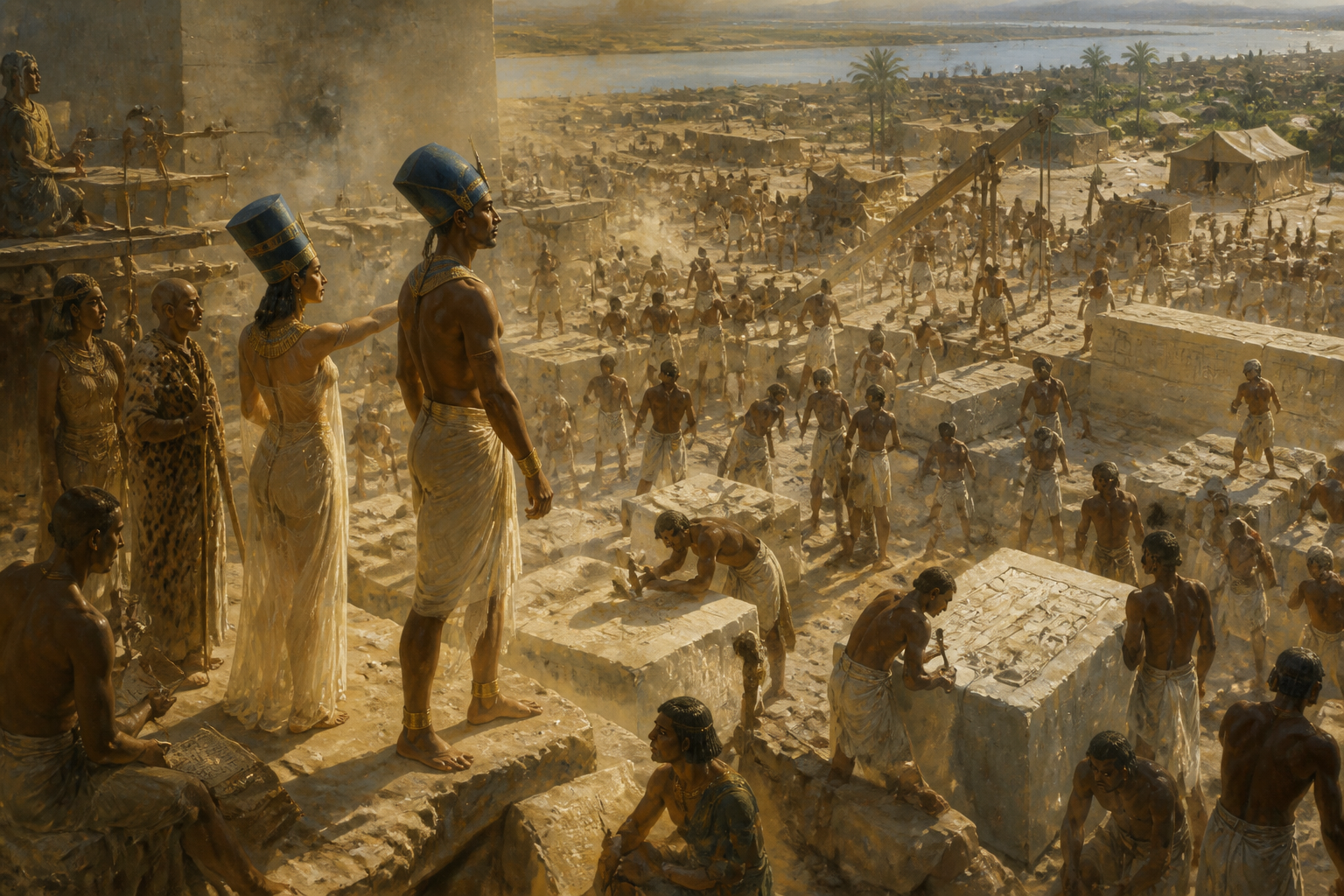
On the edge of the Nile, amidst the arid expanse, the city of Akhetaten rises, born from Akhenaten’s singular vision. This new capital, now known as Amarna, stands as a testament to a pharaoh who dared to reshape the world in his image. Under the scorching Egyptian sun, workers toil tirelessly, raising limestone blocks and carving new temples to honor the radiant Aten. Akhenaten, clad in a simple shendyt kilt, surveys the feverish activity, his mind alight with possibilities. Beside him, Bek, the master sculptor, sketches plans for colossal statues that will embody the king’s break from tradition. Nefertiti, ever the partner in his endeavors, oversees the erection of her own sun temple, a beacon of her influence and devotion. As the city takes shape, its streets are laid out in precise grids, a reflection of divine order on earth. Yet the grandeur of Akhetaten belies the tensions simmering beneath its surface. Despite the king’s zeal, the priests of Amun in faraway Thebes plot in shadows, threatening to undermine his revolutionary new order.
"This city shall rise as the horizon of Aten," declares Akhenaten, casting his vision across the burgeoning landscape.
Page 3 — A New Order of Worship
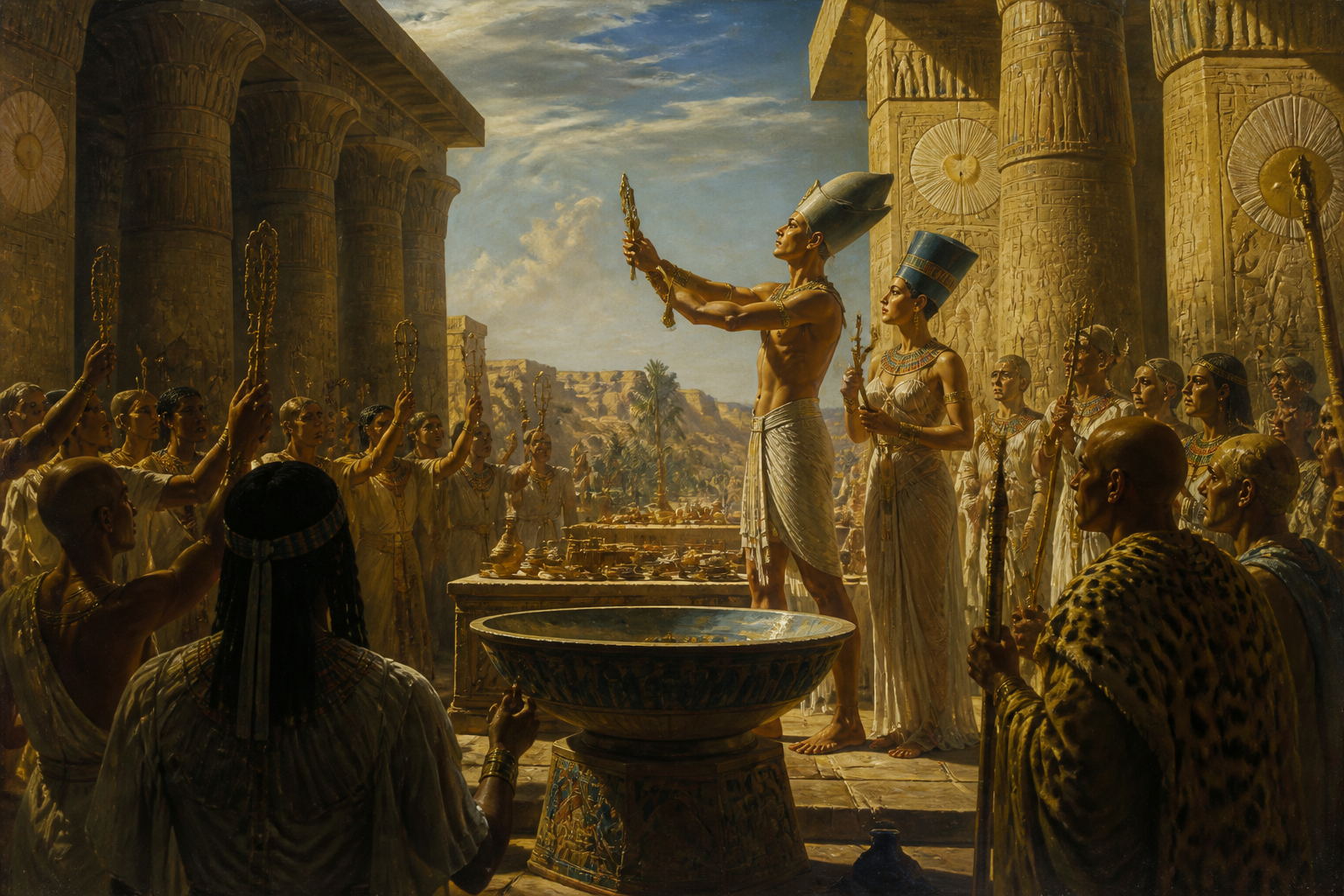
Within the sun-bathed walls of the Great Temple of Aten, Akhenaten initiates a ritual that defies centuries of tradition. Gone are the shadowed sanctuaries of Amun; in their place, vast open courtyards celebrate the sun god in direct communion with the heavens. Priests, clad in pristine white linen, chant hymns in reverence, their voices harmonizing with the rhythm of sistrums. Akhenaten stands at the altar, his outstretched arms adorned with gold cuffs, offering a libation to Aten. Nefertiti, on a platform beside him, raises her arms in equal devotion, her silhouette framed by the temple’s towering columns. The royal daughters, including the eldest, Meritaten, follow in the rites, each wearing a diaphanous sheath. This new worship, devoid of idols, celebrates life under the sun’s gaze. Yet, as the king gazes towards the horizon, aware of the priests' murmurs in the old temples, he knows the path to unified worship is fraught with peril and resistance from those who long for the past's stability.
"In this light, we find our truth," Akhenaten intones, as the sun casts its golden blessings.
Page 4 — Art Transformed
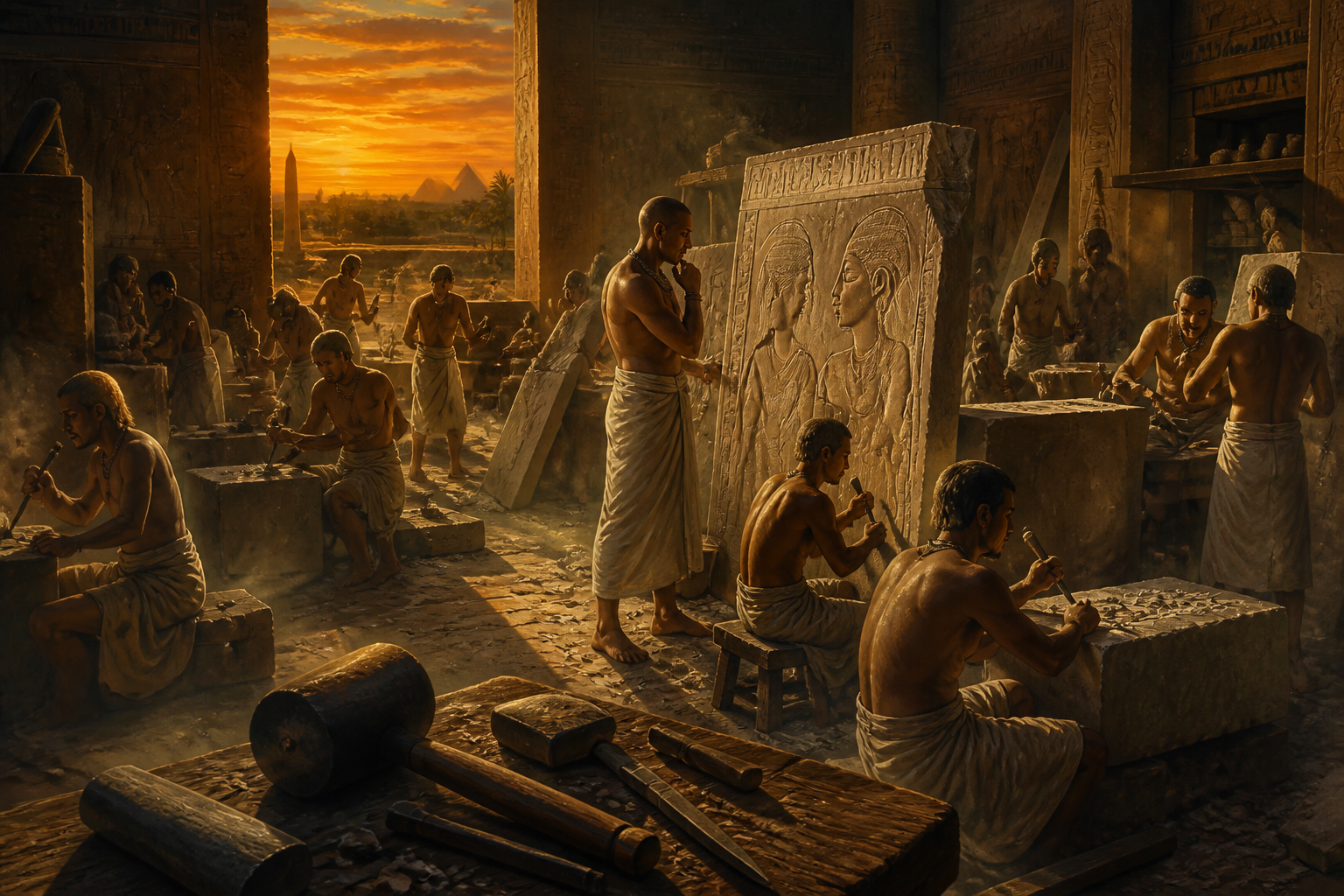
In the royal workshops of Amarna, Akhenaten's vision extends beyond the realm of religious reform, reshaping art itself. Gone are the rigid conventions of the past; in their place, a new style emerges, celebrating the fluidity and life-like expressions of the human form. Bek, the king’s master sculptor, guides his artisans, chiseling limestone into forms that mirror the pharaoh’s ideal. The elongated limbs and exaggerated facial features portray a more humanized divine form. Akhenaten, present amidst the whirring chisels, inspects a relief depicting his family. The scene shows him in intimate moments with Nefertiti and their daughters, a radical departure from the static depictions of past dynasties. The royal family is shown as approachable and terrestrial. As the sun sets, casting long shadows through the workshop, the king reflects on how these images will endure, capturing the essence of his reign. But this artistic revolution, like his religious reforms, will face challenges from those who yearn for the uniformity of the past.
"In art, we shall immortalize the truth of our being," Akhenaten muses, fingering the smooth surface of a newly finished relief.
Page 5 — A Queen's Influence
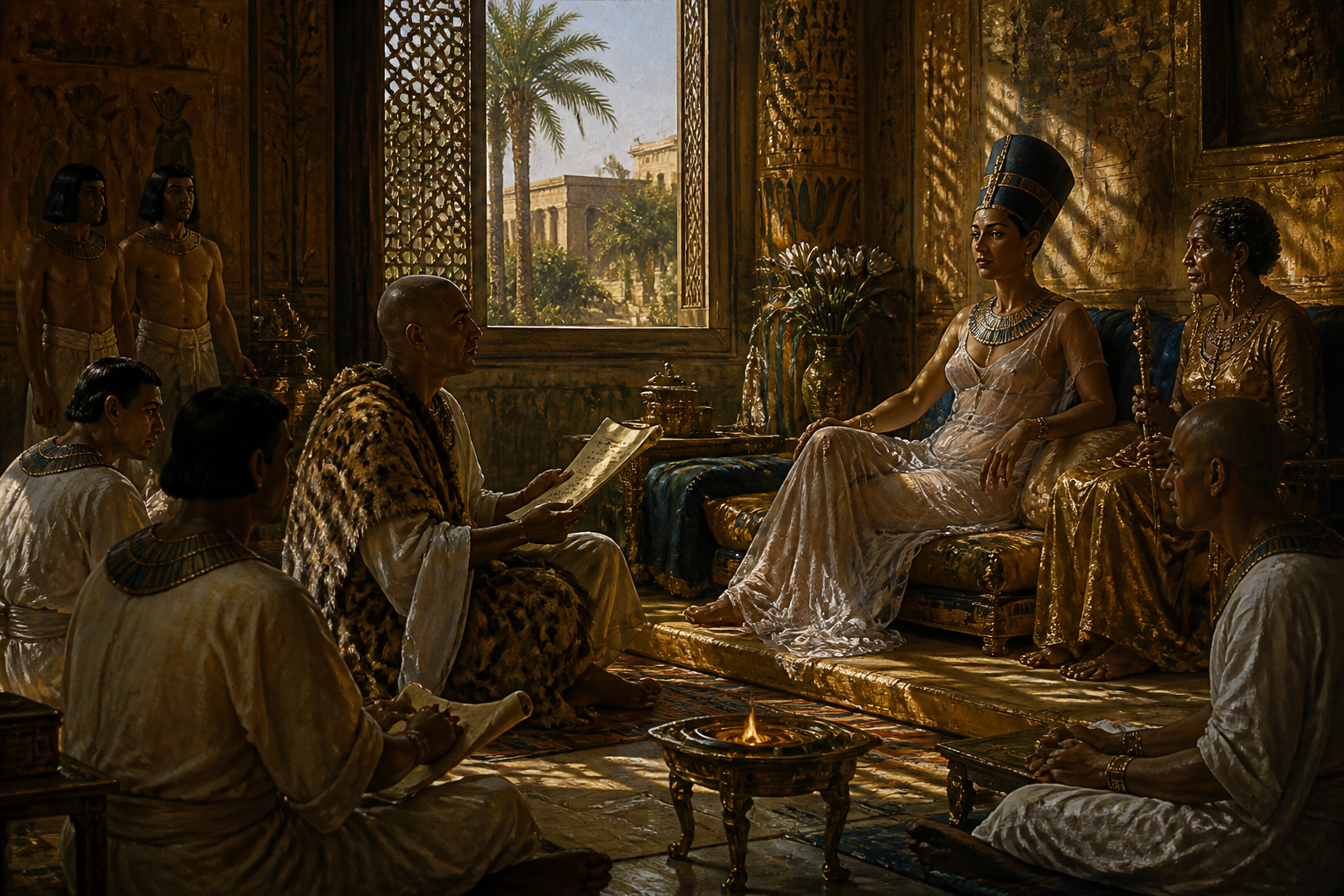
In the private chambers of the palace, Nefertiti, adorned in a deep blue crown and beaded wesekh collar, sits with her advisors, her role as co-ruler clearly felt. She listens intently, her presence commanding respect and attention from those around her. Together, they discuss matters of state, including the ongoing tensions with the priests of Amun in Thebes. Nefertiti, known for her intelligence and diplomatic acumen, crafts strategies to maintain support for Akhenaten’s religious revolution. Her influence stretches beyond the domestic sphere, as her temple at Amarna stands testament to her status. As the meeting progresses, a servant enters with news from Thebes – unrest is brewing, fueled by dissatisfaction with the abandonment of traditional gods. Nefertiti, calm and resolute, instructs her messengers to bolster support in key regions. Her poise under pressure and strategic thinking highlight her vital role in the kingdom, one that bolsters Akhenaten's radical vision and secures her place as an indelible figure in Egyptian history.
"We must remain vigilant and steadfast," Nefertiti advises, her voice steady amidst the whispers of dissent.
Page 6 — Tensions with Thebes
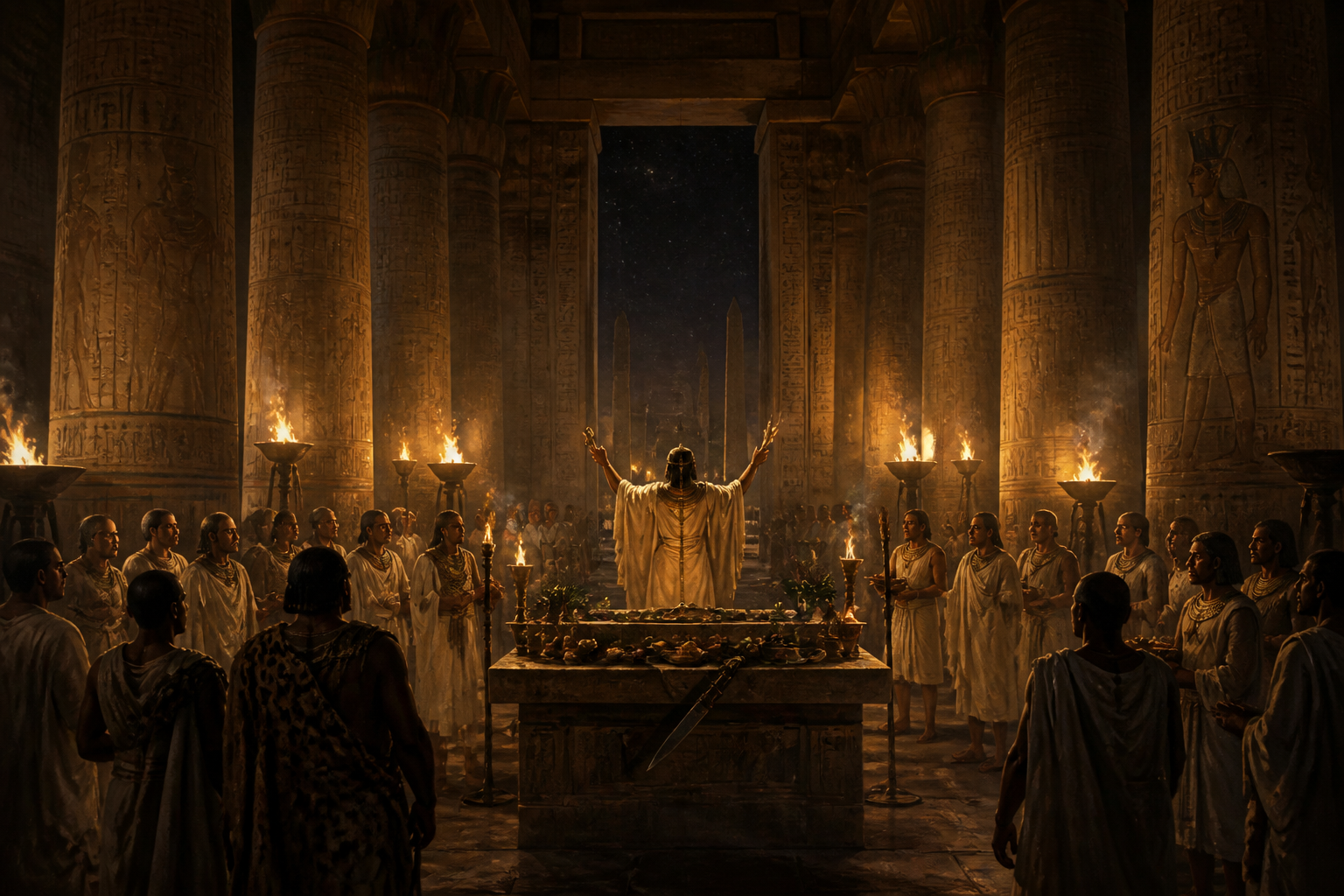
Amidst the torches flickering in the Temple of Amun at Thebes, the priests plot their return to power. These sacred halls, long revered, now echo with whispers of rebellion against Akhenaten’s reforms. The high priest, cloaked in traditional garments of multi-layered linen robes, gathers his followers around the ancient altar. They speak of the decline of the old gods and the grandeur that once was, their voices rising in fervor. The priests view Akhenaten’s monotheism as an affront to Ma'at, the balance and order of the universe, and fear the loss of their influence and wealth. With clandestine meetings, they galvanize local leaders, amassing support to restore the pantheon of gods. As night deepens, a messenger arrives with news of dissent in Amarna. The priests, emboldened, vow to resist the heretical king. In the flickering light, plans are laid to sway the hearts of the Egyptian people back to their ancestral beliefs, setting the stage for a clash that will decide the spiritual fate of the kingdom.
"The gods will not be silenced," declares the high priest, his voice resolute and echoing within the temple walls.
Page 7 — A Heir's Burden
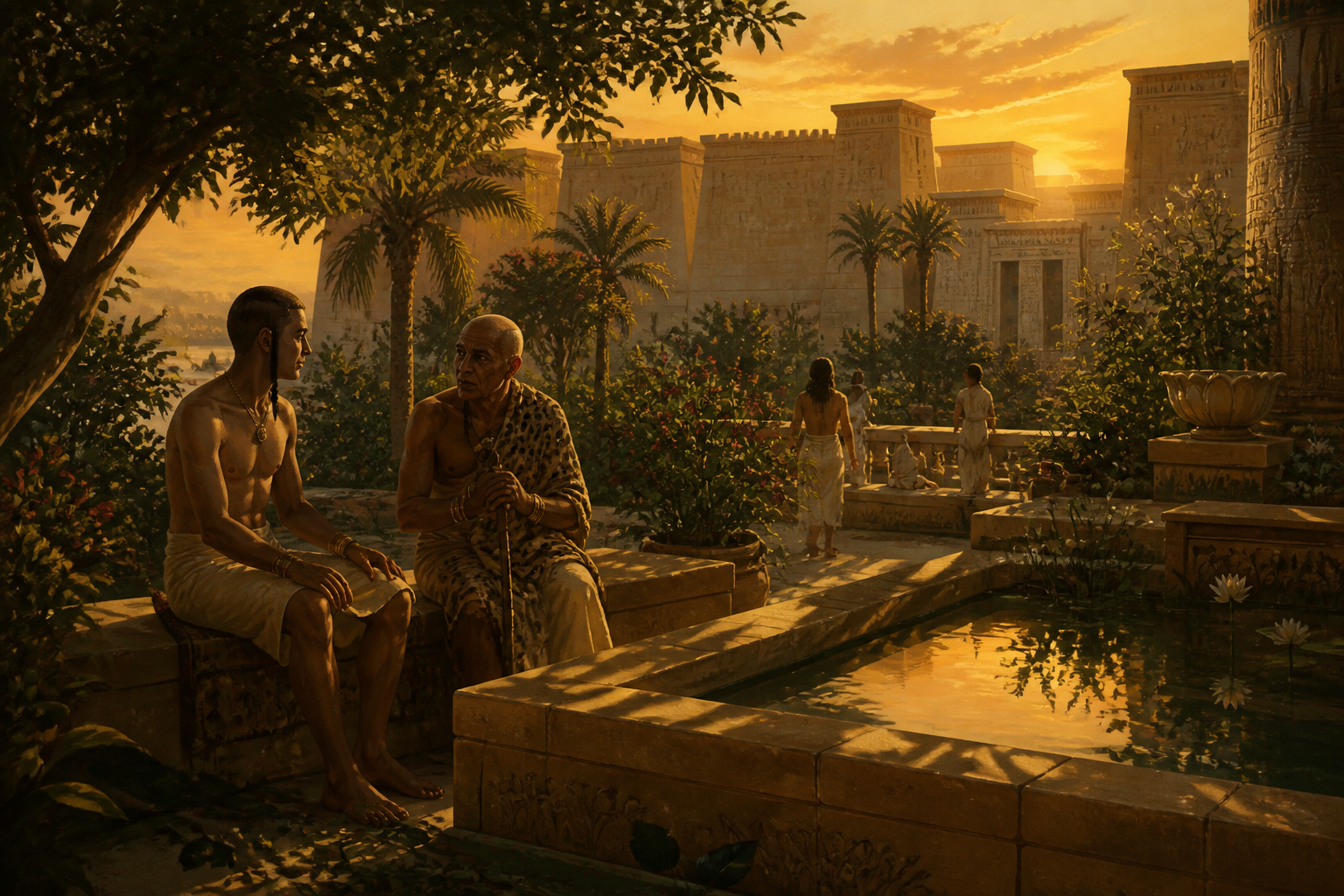
In the quiet of the Amarna palace gardens, young Tutankhamun contemplates the weight of his future. As the son of Akhenaten, his path is bound by the monumental changes his father initiated. Under the watchful gaze of Ay, the experienced advisor and close confidant of the family, Tutankhamun’s education encompasses the teachings of Atenism, politics, and statecraft. Ay, clothed in rich linen with a ceremonial leopard skin across his shoulder, speaks of the need for adaptation and diplomacy. The boy listens, absorbing the lessons with seriousness beyond his years. Nearby, gardeners tend to papyrus and lotus plants, their movements meditative amidst the tranquil greenery. Tutankhamun’s youth belies the burden of expectations placed on him, a future ruler shaped by the new order yet connected to the old ways through marriage alliances and tradition. As the sun descends, casting long shadows across the garden, Tutankhamun is reminded of the transitory nature of power and the enduring legacy of names, both revered and reviled.
"Remember, young prince, the balance of power rests in the wisdom of choices," Ay advises, his voice gentle yet firm.
Page 8 — The Collapse of a Vision
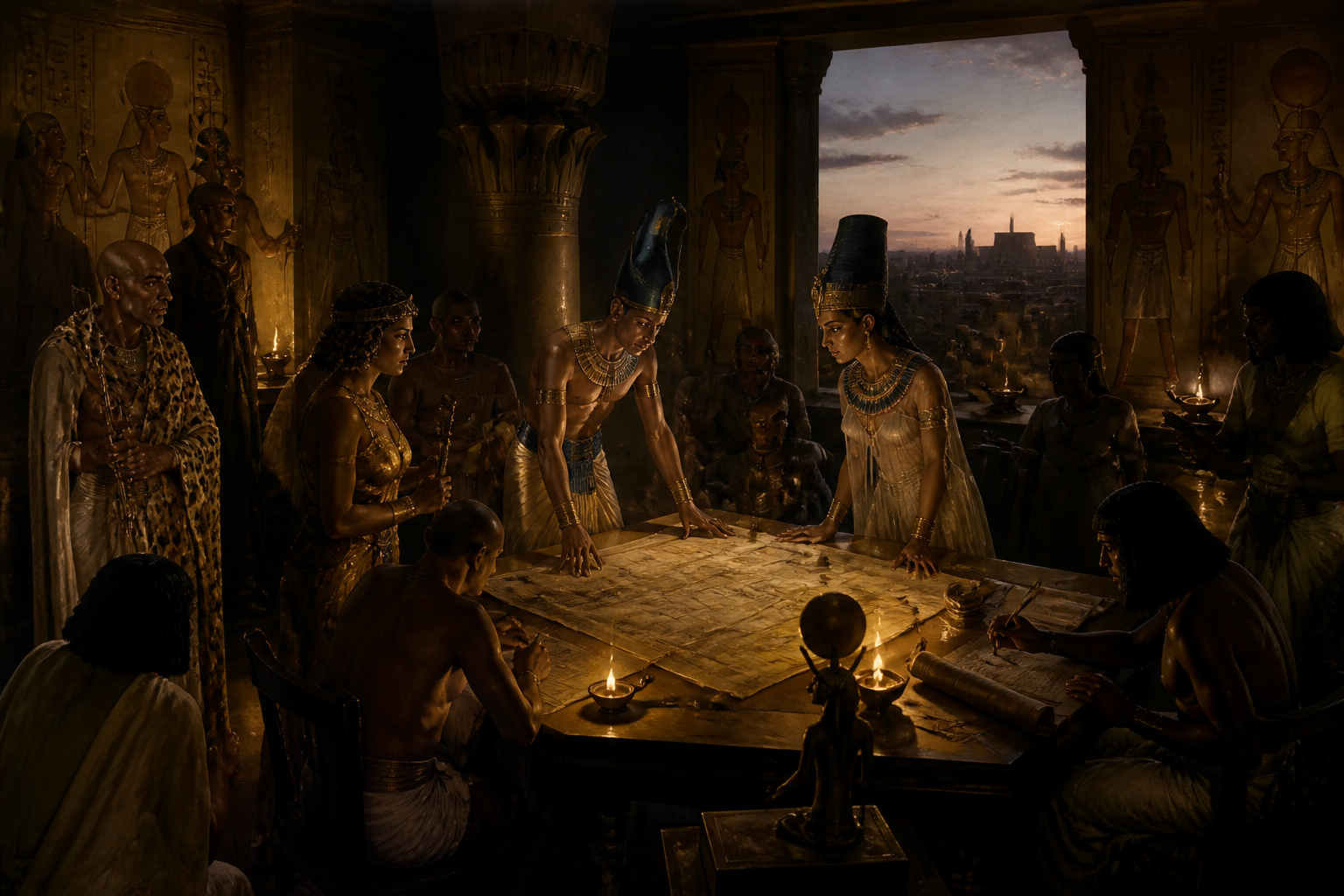
In the heart of the palace at Amarna, the weight of Akhenaten's radical vision begins to strain against the realities of governance. The city, a testament to singular devotion, grows restless as resources dwindle and the old power structures resist change. Nefertiti, ever the stabilizing force, meets with advisors and military leaders in the war room, her presence a beacon of calm amid rising tensions. Maps of Egypt, marked with strategic points and temples, lay sprawled across a central table. Generals, clothed in pleated kilts, express concern over the kingdom's vulnerabilities. Akhenaten enters, his face showing the toll of his ambitious reforms. He commands loyalty, yet his insistence on Atenism has alienated key factions. Rumors of rebellion and famine stretch the limits of the once-prosperous kingdom. As the council debates, there is a palpable sense of urgency. The tide of favor shifts as whispers from Thebes and beyond grow louder, foreshadowing the eventual erasure of a city built in the sun's honor.
"The heart of Egypt beats for more than the Aten," a general cautions, his tone earnest yet respectful.
Page 9 — The Fall of Amarna
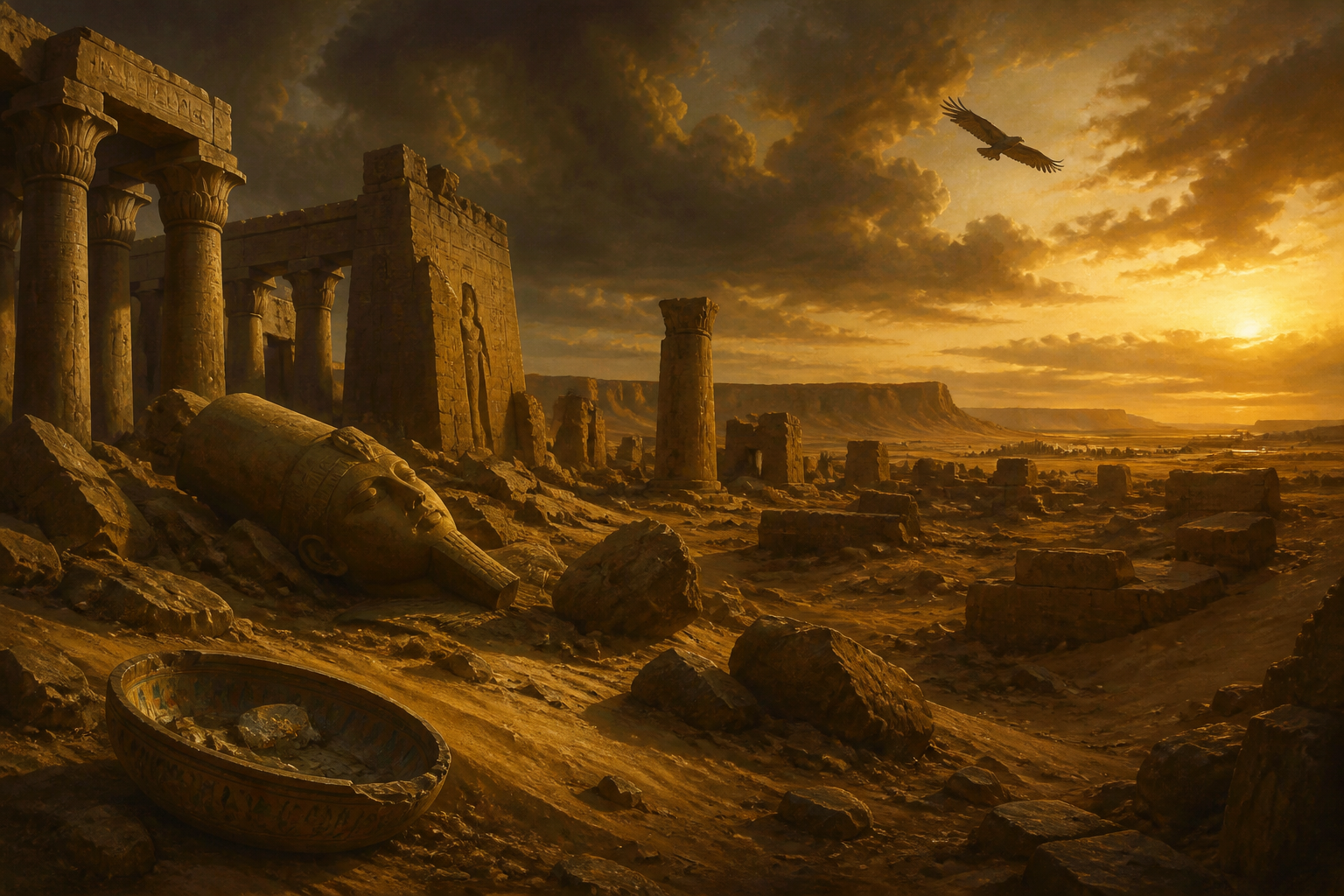
Over time, the once-bustling city of Amarna falls into disarray. The streets, once filled with artisans and traders, now echo with whispers of the past. In the ruins of the Great Temple of Aten, remnants of an era marked by audacious change lie scattered. Akhenaten’s vision, a dream of unified worship under a single god, has crumbled under the weight of tradition and resistance. The winds of the desert reclaim the city, burying it beneath layers of sand. Thebes, resurgent and persistent, draws the kingdom back to its ancient ways. The priesthood of Amun regains its foothold, restoring the pantheon and erasing the memory of the heretic king. Statues are defaced, names chiseled away, leaving only fragments of a story in stone. As time passes, the city fades from memory, a brief chapter in Egypt’s vast history. Yet in this silence, Akhenaten’s legacy endures, a testament to the power and peril of change.
"All that rises must one day set, even a city built for the sun," a scribe notes solemnly as he records the decline.
Page 10 — Legacy and Erasure
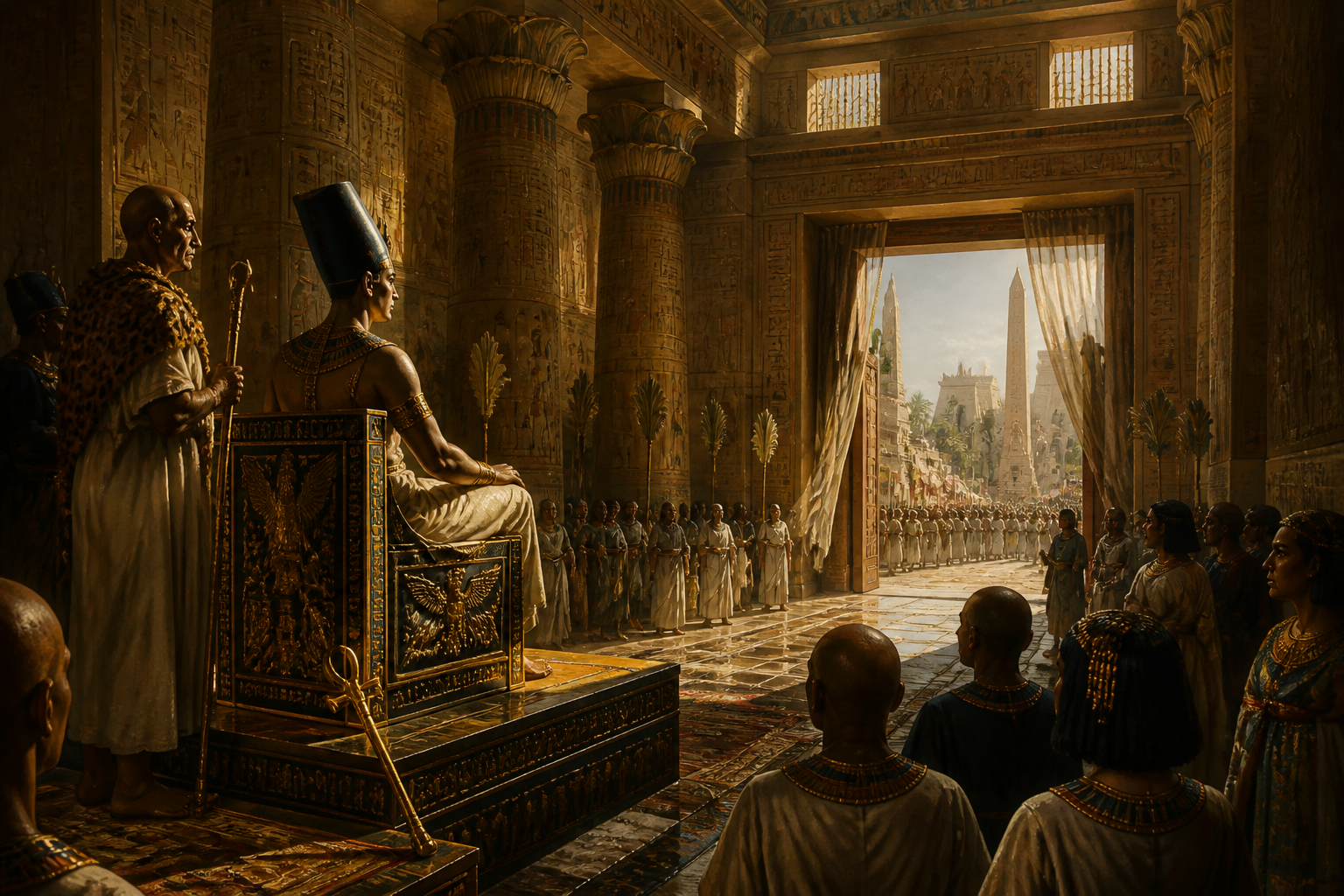
In the generations following Akhenaten's reign, the city of Amarna becomes little more than a whisper in Egypt’s vast history. The records of this 'heretic king' are deliberately obscured, his reforms reversed, and traditional polytheism restored under the rule of his successors, including young Tutankhamun. Now in the throne room of Thebes, statues of Amun once more preside over the state’s affairs. Tutors instruct the young king in the customs of old, emphasizing stability over innovation. Ay, now a seasoned figure of influence, guides the boy ruler through this restoration. In the shadow of past upheaval, there is a return to opulence and orthodoxy. As Tutankhamun matures, he will oversee the re-establishment of the old gods, cementing the shift back to the known and the revered. Yet, despite this erasure, the impact of Akhenaten’s ideas continue to intrigue and inspire, a reminder of the enduring complexities of faith and power.
"We shall restore what was lost, and remember only the lessons learned," Ay assures, as their eyes settle on the statues.
About this story
- Audience: general readers
Read Wonder Egypt on your phone
Wonder Egypt is available on Android. Get Wonder Egypt on Google Play.