Leonardo da Vinci’s Era — Italy (1494, Italy)
Leonardo da Vinci’s Era — Italy (1494, Italy) — an illustrated history story, featuring Leonardo da Vinci, Lorenzo de' Medici, Ludovico Sforza, set in Italy. 10 illustrated pages, free to read on Wonder History.

Page 1
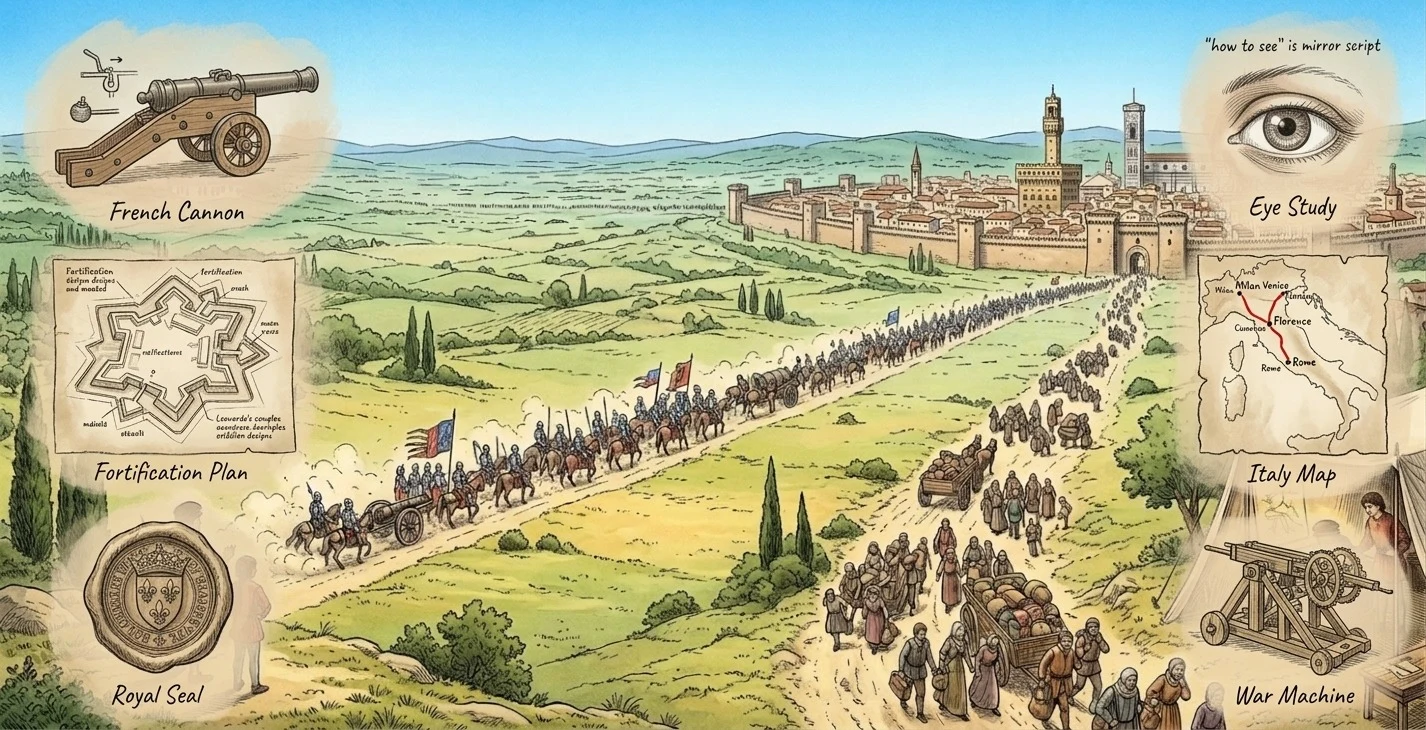
The year is 1494. Ludovico Sforza, the Duke of Milan, Lorenzo de' Medici, a powerful Florentine statesman, and Leonardo da Vinci, a brilliant artist and inventor serving the Milanese court—their paths converged amidst growing conflict. French cannons roared across the plains of Italy as Charles VIII's army advanced, their polished armor reflecting the distant harbor town's starlight. The Italian Wars, spanning decades, reshaped the peninsula. But where did this devastating conflict originate?
Page 2

Lorenzo de' Medici paced the opulent halls of the Palazzo Medici. "The balance of power in Italy is fracturing!" he exclaimed to his advisors. "Milan's ambition, Venice's greed, Rome's corruption—it all spells disaster!" He adjusted his elaborate purple velvet robes, worried about his city's future.
Page 3
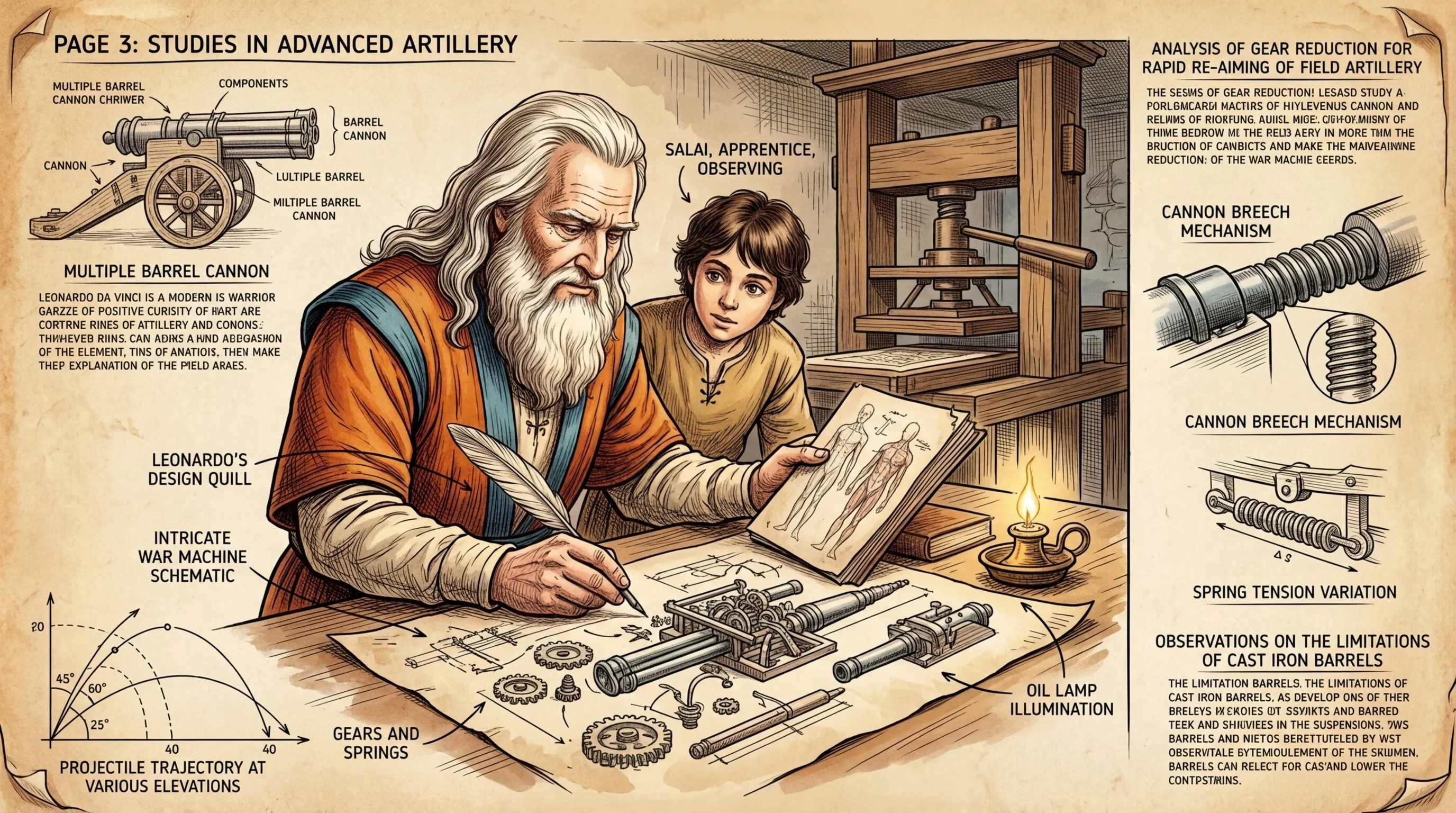
Leonardo da Vinci, engrossed in his work, meticulously sketches the mechanics of a new war machine. "'Study the science of art. Study the art of science. Develop your senses—especially learn how to see. Realize that everything connects to everything else,'" he muttered, quoting himself. His apprentice, Salai, watched with wide eyes.
Page 4
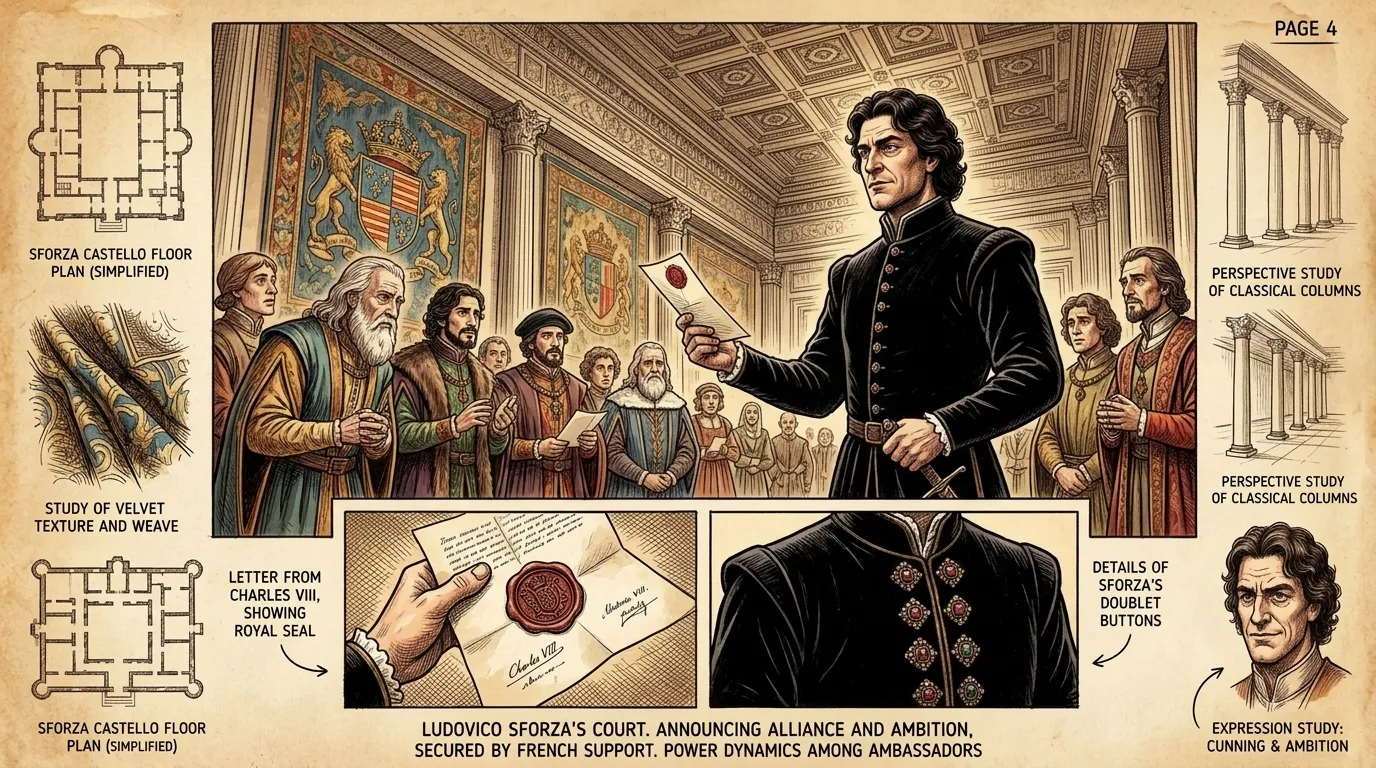
Ludovico Sforza, adorned in a black velvet doublet with jeweled buttons, received ambassadors in his Milanese court. "France is a tool," he declared, his eyes glinting, "a means to secure my power and solidify Milan's position as the strongest state in Italy!" He clutched a letter bearing Charles VIII's seal.
Page 5
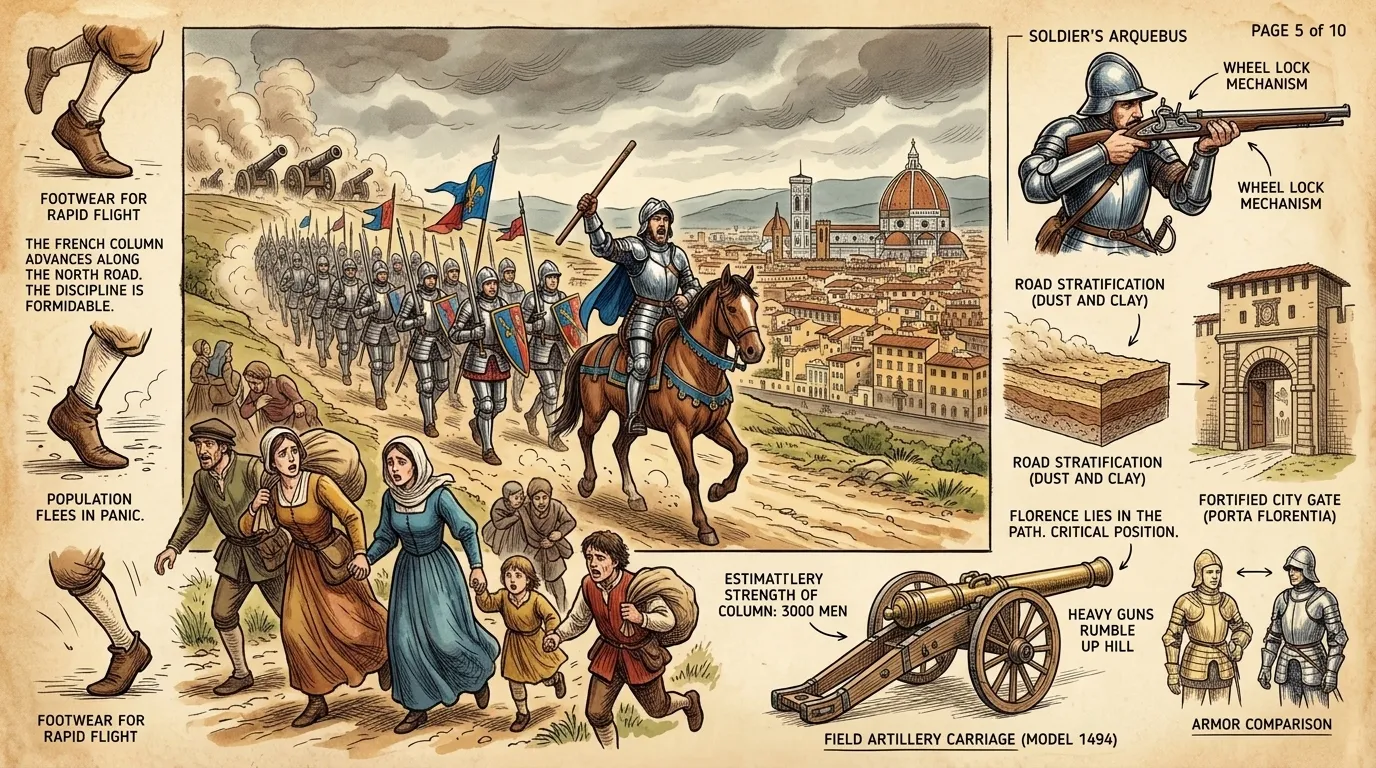
French soldiers, their armor gleaming, marched toward Florence, their cannons rumbling. "Onward to Florence!" a captain shouted, brandishing his sword. Civilians fled in terror, packing their belongings and abandoning their homes. The distant Duomo loomed.
Page 6

The Florentine militia, hastily assembled, prepared to defend their city, but their morale was low as cannonballs crashed through the city walls. Piero de' Medici, Lorenzo's son, nervously adjusted his armor. "We must stand firm!" he urged, but his voice lacked conviction. He remembers the knowledge he heard about fortifying a location, with different walls for different attacks.
Page 7
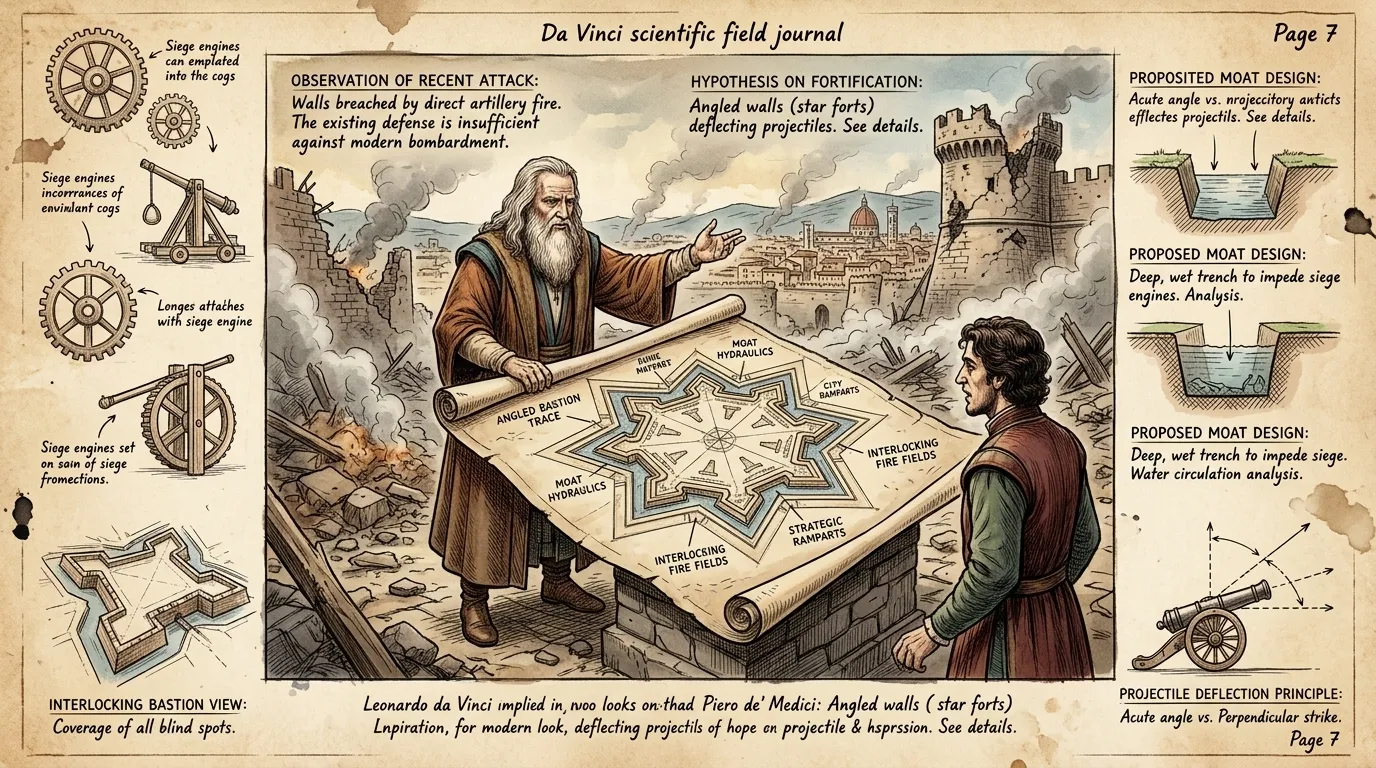
Leonardo da Vinci, amidst the chaos, offered Piero de' Medici a plan. "I have designed fortifications," he explained, unrolling a parchment. "Angled walls to deflect cannon fire, moats to slow the enemy. Florence can be saved." He had the tool for the moment.
Page 8

Charles VIII, faced with Leonardo's innovative defenses and dwindling supplies, made a decision. "We must retreat!" he ordered, his face etched with frustration. His army, weary and demoralized, began their long march back to France. The French army failed to consider every possibility in the battle.
Page 9

Piero de' Medici surveyed the damaged city, relief mixed with regret. "We have survived, but at what cost?" he wondered. He knew Lorenzo de' Medici's warnings about the need to maintain peace and alliances were correct. The cost of not following them was steep and immediate.
Page 10
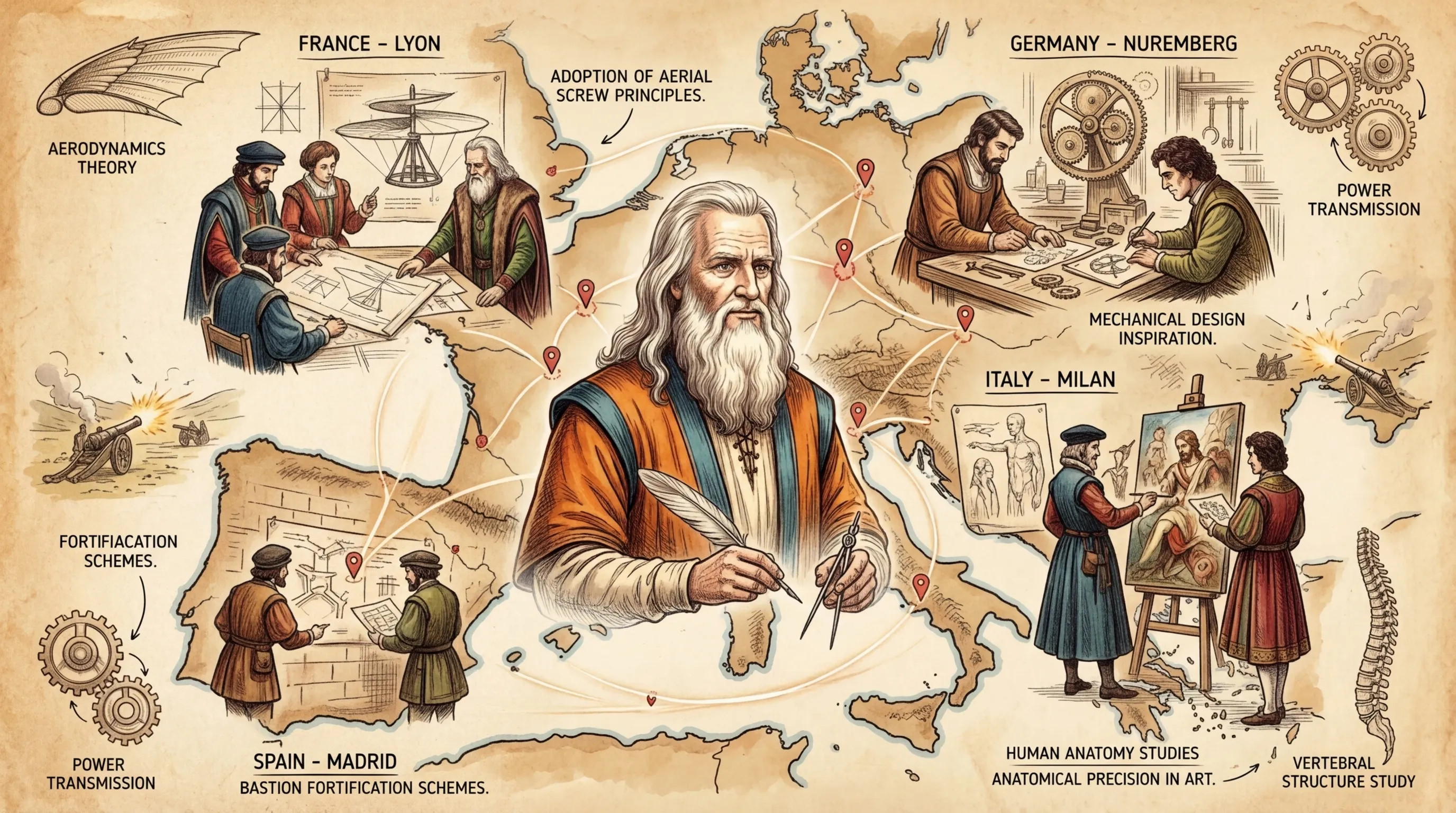
Decades later, Leonardo da Vinci's inventions and ideas spread throughout Europe, impacting art, science, and warfare. Though the Italian Wars continued, Leonardo's work would influence future generations. They would find new forms of thinking and creation.
About this story
- Historical figures: Leonardo da Vinci, Lorenzo de' Medici, Ludovico Sforza
- Location: Italy
- Period: Middle Ages
- Audience: kids (ages 6–12)
Questions and answers
Questions and answers about Leonardo da Vinci’s Era — Italy (1494, Italy)
Read Wonder History on your phone
Wonder History is available on Android. Get Wonder History on Google Play.
More Wonder History stories
- The Abolition of Slavery in the British Empire — United Kingdom & Colonies (1833, United Kingdom & Colonies)
- The Age of Exploration — Global (Europe, Americas, Africa, Asia) (1492, Global)
- The American Civil War — United States (1863, United States)
- The American Declaration of Independence — USA (1776, USA)
- The American Revolution (1775–1783, North America)
- The Assassination of Archduke Franz Ferdinand (1914, Hungary)