Antiseptic Surgery
Antiseptic Surgery — an illustrated inventions story, set in Global. 10 illustrated pages, free to read on Wonder Inventions.
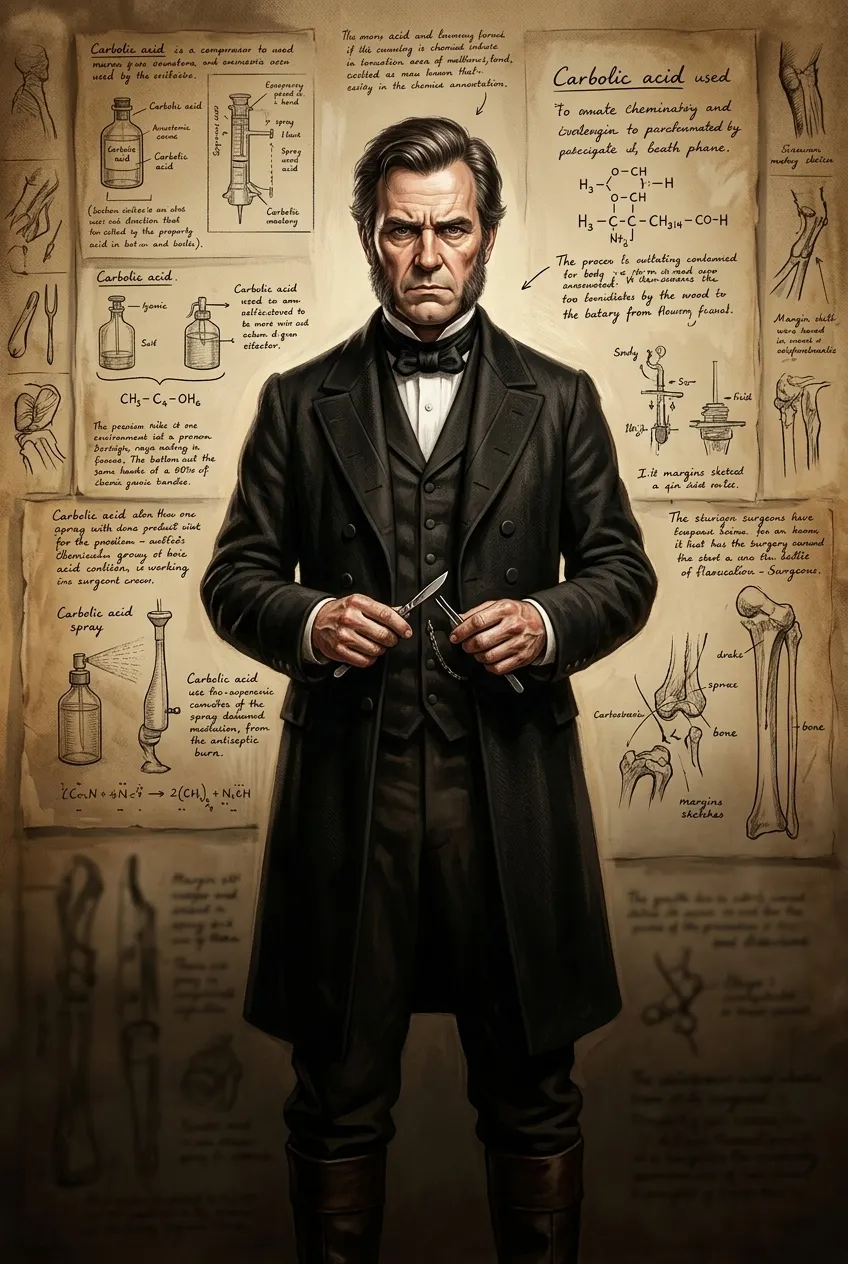
Page 1
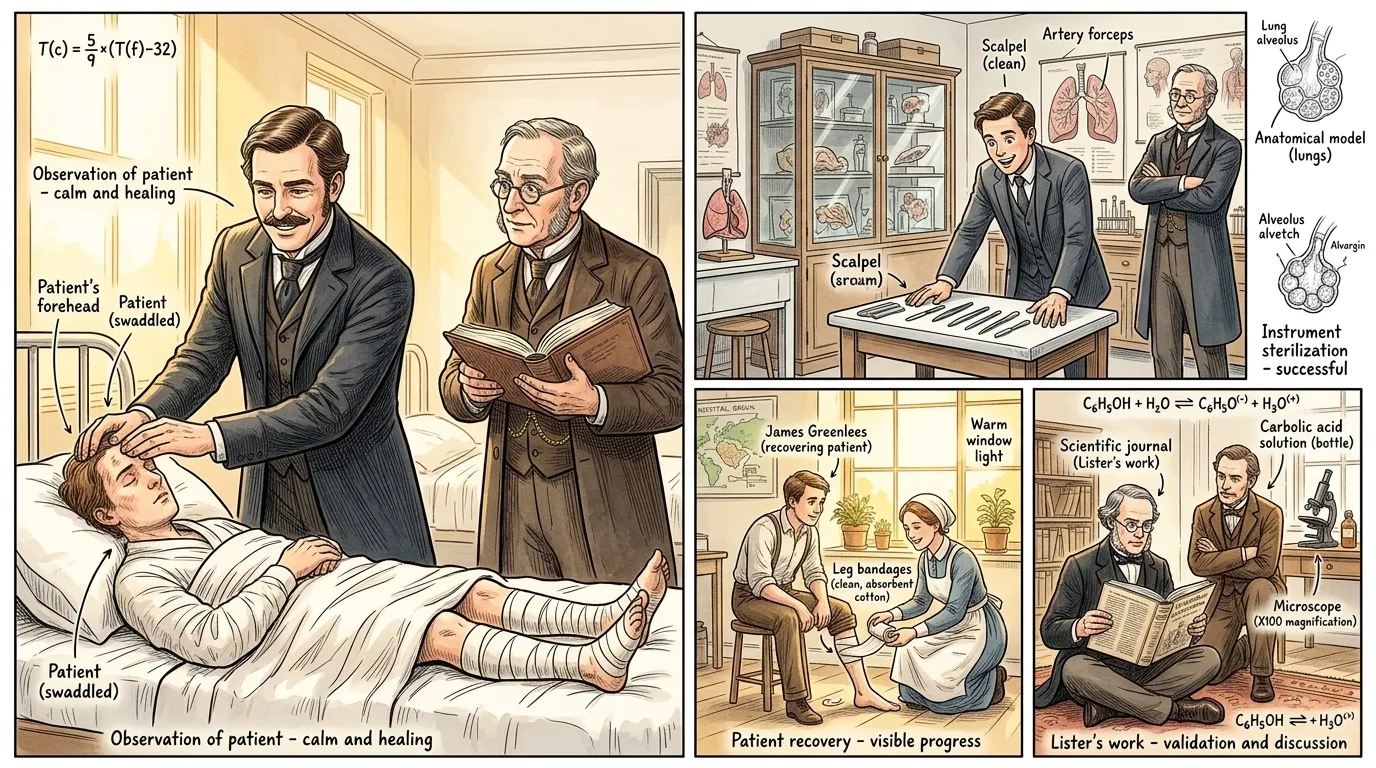
In the mid-19th century, surgery was a brutal affair where the triumph of the scalpel was often overshadowed by a far more insidious enemy: infection.
"A grim-faced surgeon remarked to his colleague, 'Another successful amputation, Doctor, yet the fever has already begun. I fear this brave man will succumb by morning.'"
Page 2
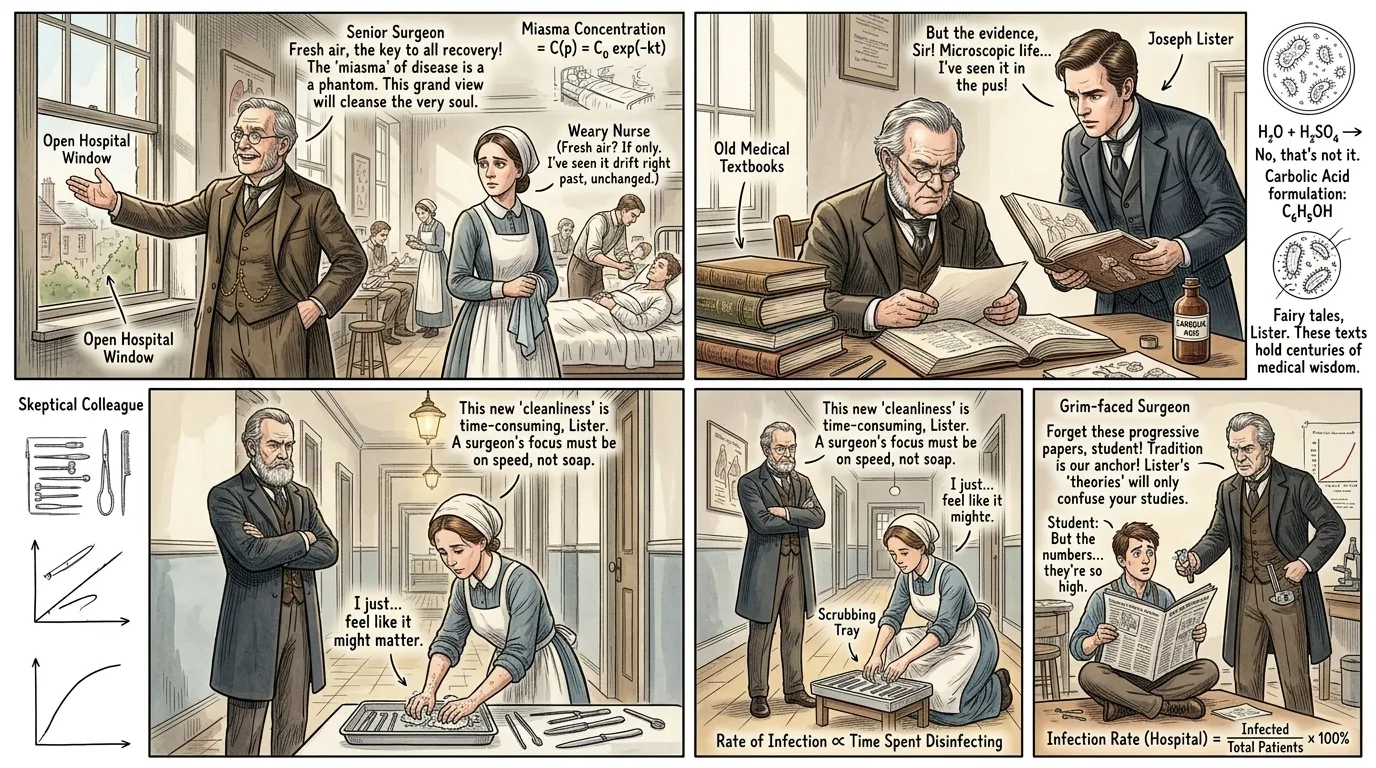
Without knowledge of microorganisms, prevailing medical theories attributed post-operative sickness to 'miasmas'—bad air—or spontaneous generation, believing pus was a natural sign of healing.
"An senior surgeon, adjusting his spectacles, declared, 'It is the hospital air, a noxious miasma, that brings the fever, not our diligent work.' A weary nurse murmured under her breath, 'If only 'clean' air could save them.'"
Page 3
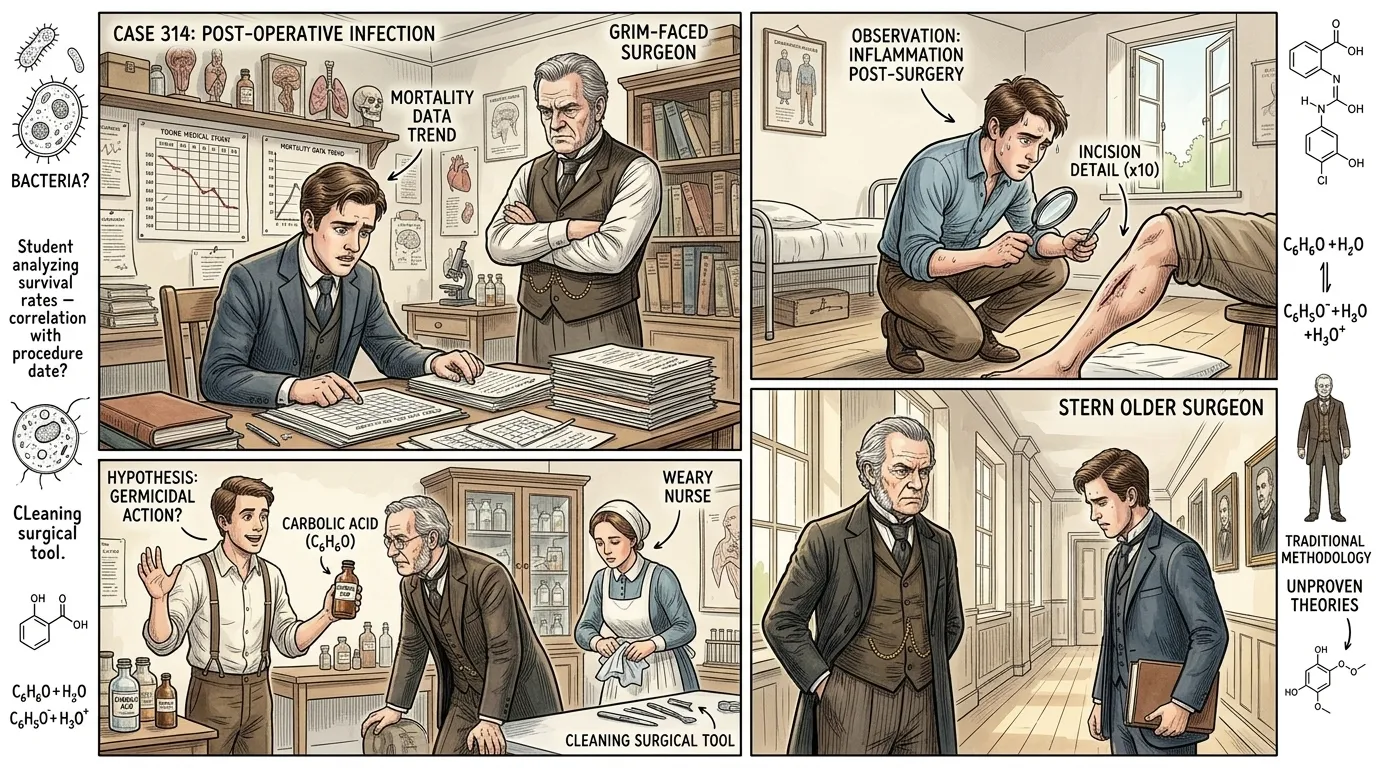
The stark reality was that many patients survived the trauma of surgery only to die from subsequent infection, a silent epidemic sweeping through hospitals.
"A young medical student, looking distraught, questioned an older, experienced doctor, 'Sir, the records show nearly half of our amputation patients perish from infection, not the injury itself. There must be a cause beyond mere 'bad air'!'"
Page 4
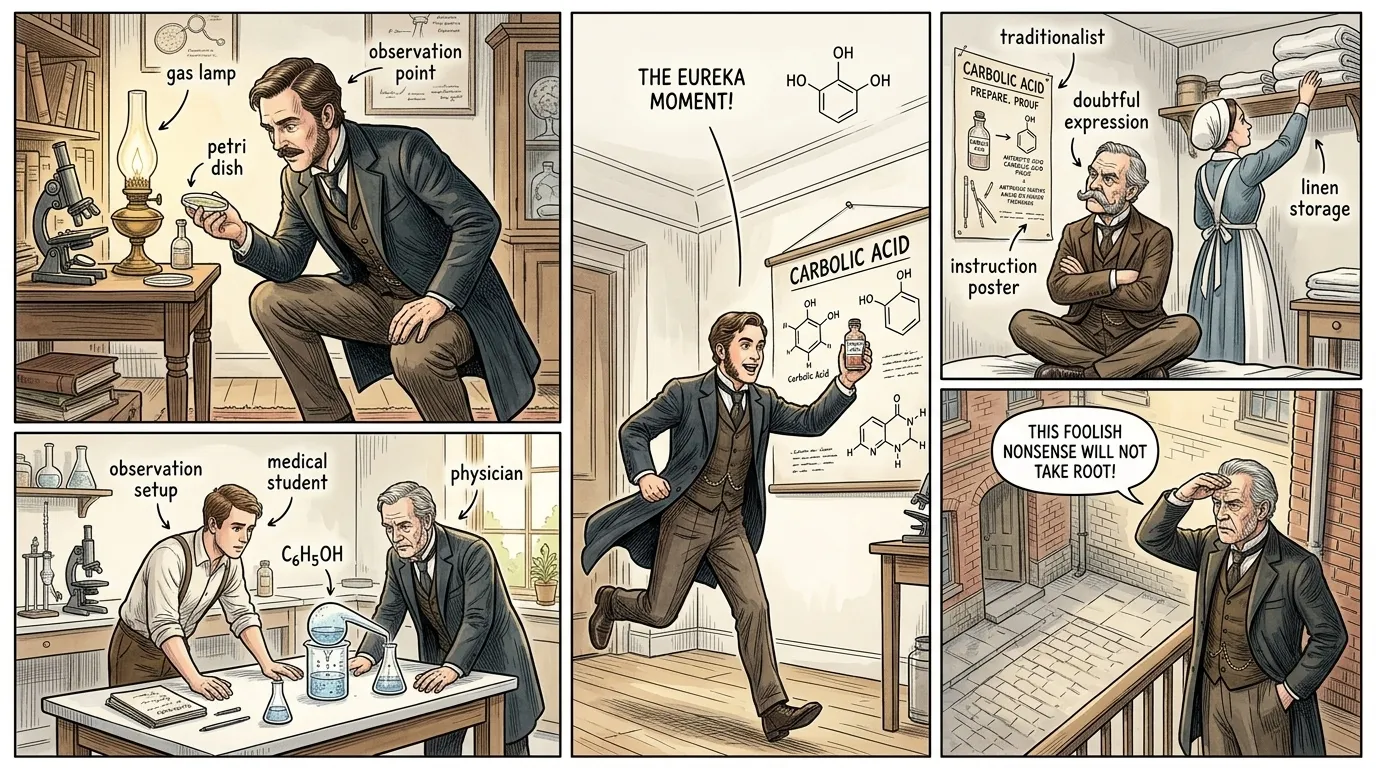
Joseph Lister, a brilliant surgeon and professor at the University of Glasgow, observed these devastating patterns with increasing alarm, his scientific mind unwilling to accept the current, fatalistic explanations.
"Lister, deep in solitary contemplation, mused aloud, 'The precise connection between putrefaction in wounds and the onset of disease... it remains a profound mystery, yet the recurring patterns are far too consistent to be mere chance.'"
Page 5
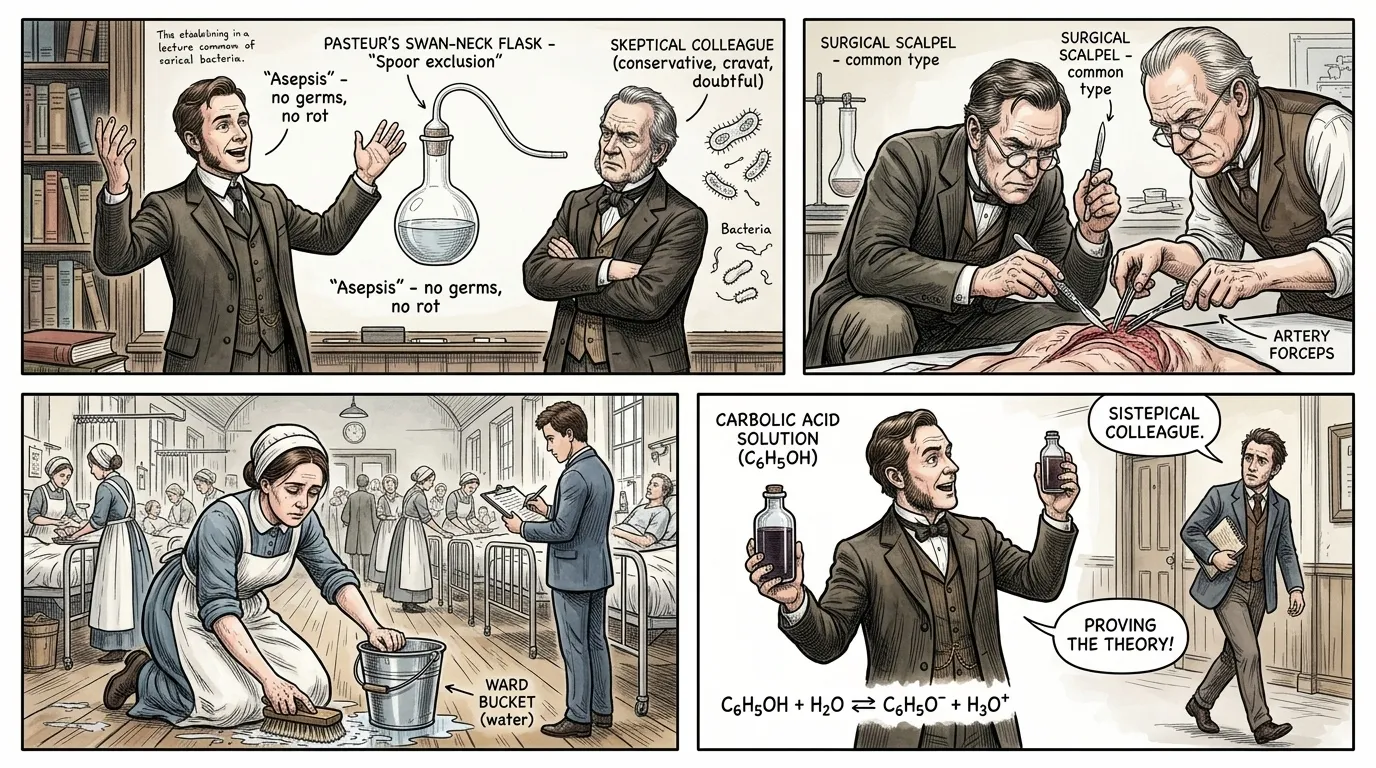
Lister's breakthrough came when he encountered the revolutionary work of French chemist Louis Pasteur, who demonstrated that fermentation and putrefaction were caused by airborne microbes, not spontaneous generation.
"Lister, eyes wide with a sudden realization, animatedly conveyed to a skeptical colleague, 'Pasteur has definitively proven that putrefaction is the result of minute, living organisms! Could these invisible agents be the true cause of our surgical infections?'"
Page 6
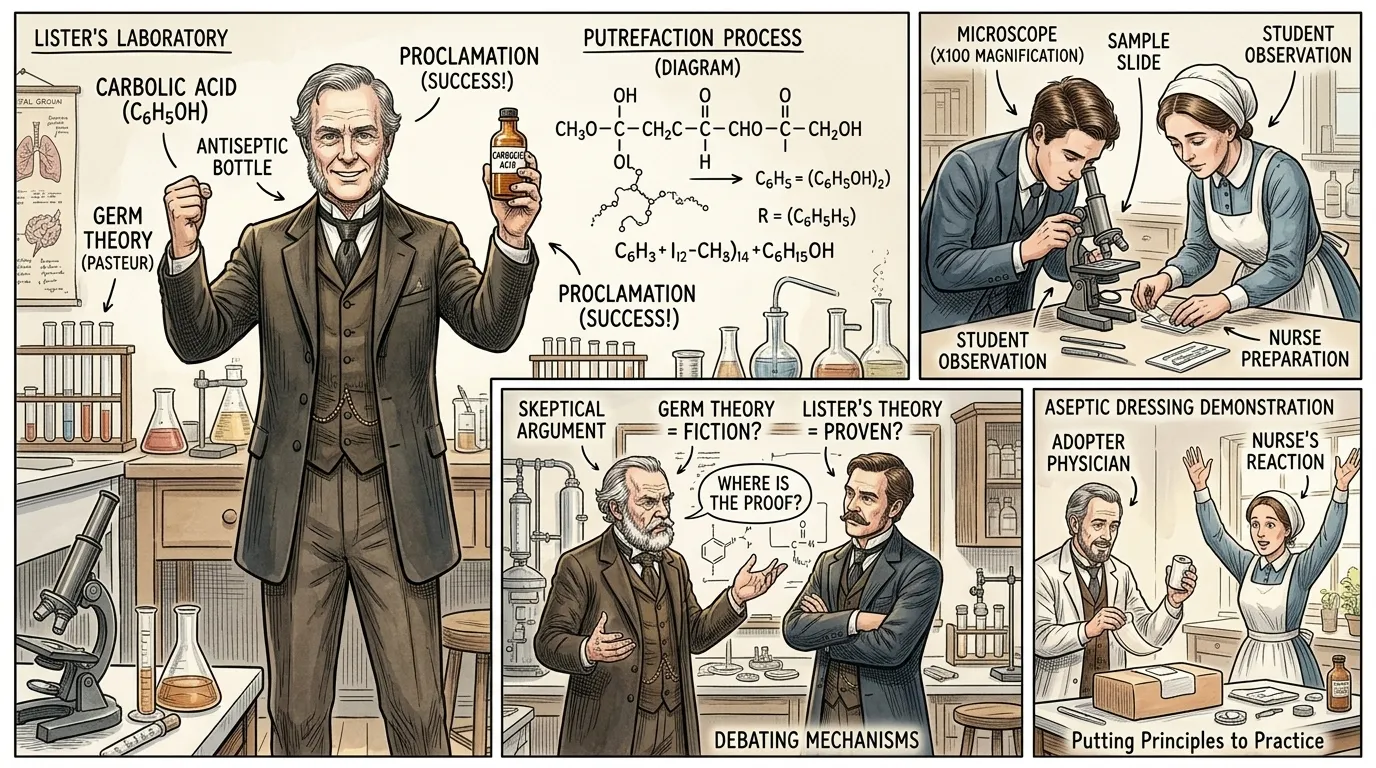
Inspired by Pasteur, Lister hypothesized that if these 'germs' could be destroyed or prevented from entering wounds, infection could be dramatically reduced. He sought a chemical agent capable of this task.
"Holding up a bottle of carbolic acid, Lister confidently proclaimed, 'This chemical, already proven effective in preventing putrefaction in sewage, offers a promising solution. We must rigorously test its application directly to surgical wounds.'"
Page 7
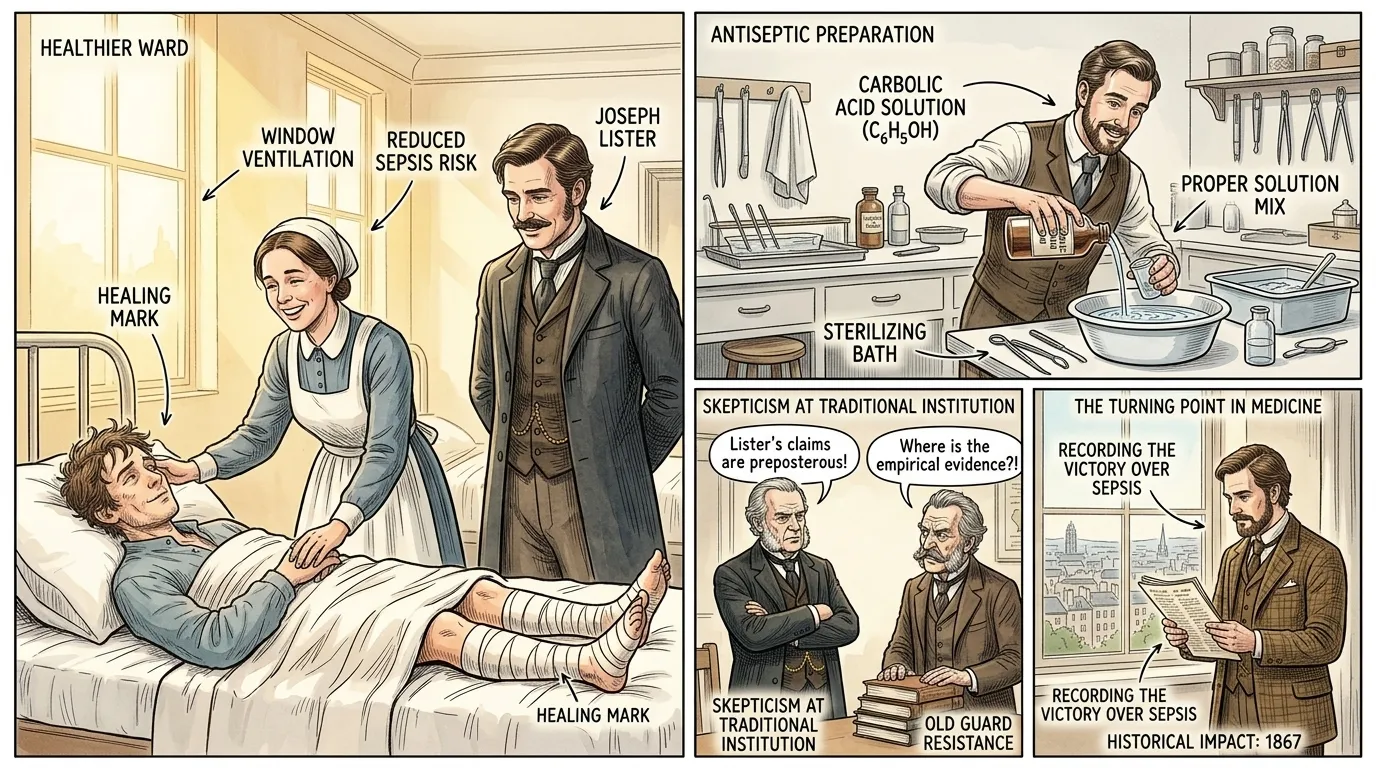
In 1865, Lister meticulously applied carbolic acid dressings to the compound fracture of a young patient named James Greenlees, marking the first recorded successful antiseptic surgery.
"Following the successful treatment, a relieved nurse exclaimed to Lister, 'Doctor, the wound is clean, without any sign of the 'laudable pus' we once accepted!' Lister responded, his voice filled with quiet conviction, 'Indeed. This small victory may signify a profound turning point in surgical history.'"
Page 8
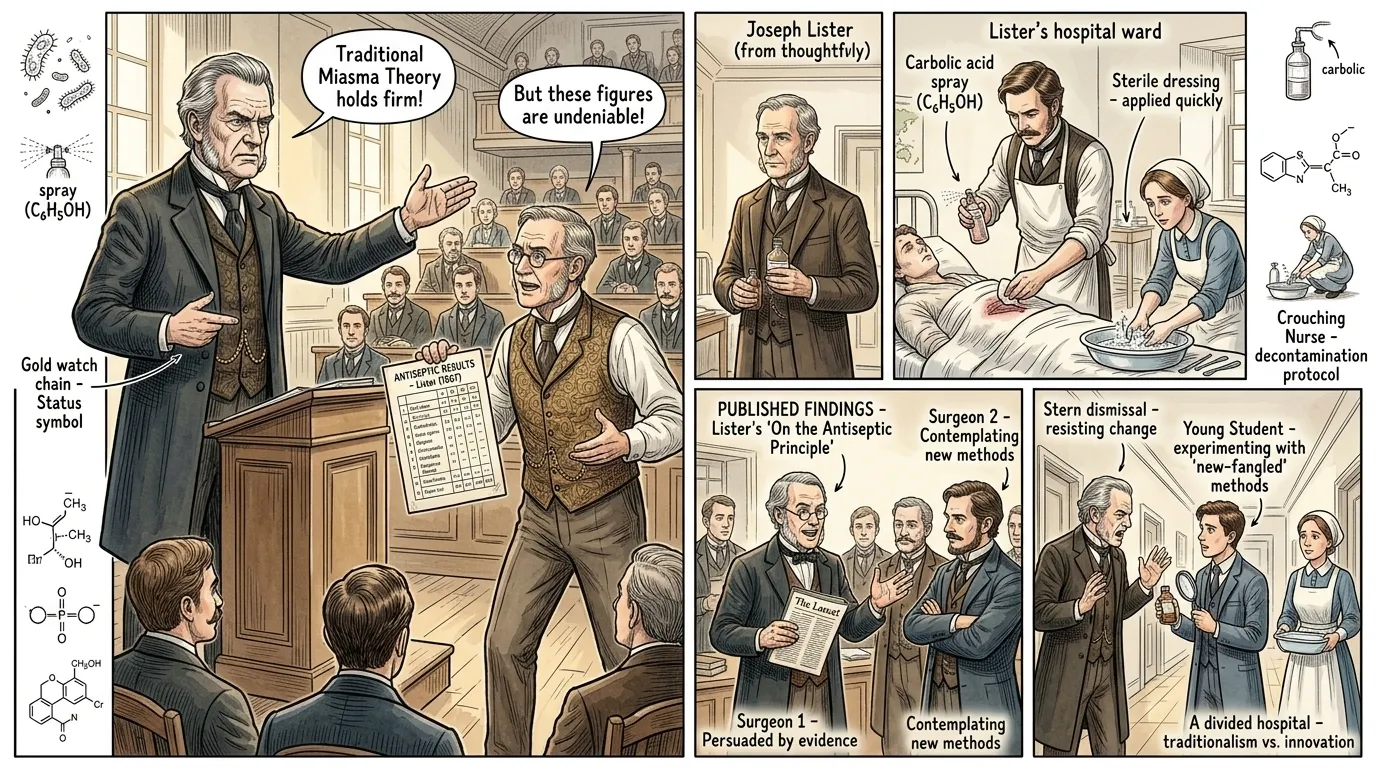
Lister's methods, despite their initial success, met with considerable resistance from the medical establishment, who found the complex procedures and pervasive smell of carbolic acid inconvenient.
"A stern, older surgeon dismissively stated, 'Nonsense, Lister! This carbolic spray is an irritant, and our established methods suffice!' Another surgeon, however, countered, 'Yet, Lister's demonstrable results are compelling. As Stephen Hawking later articulated, 'The greatest enemy of knowledge is not ignorance, it is the illusion of knowledge.' We must heed what the data reveals.'"
Page 9
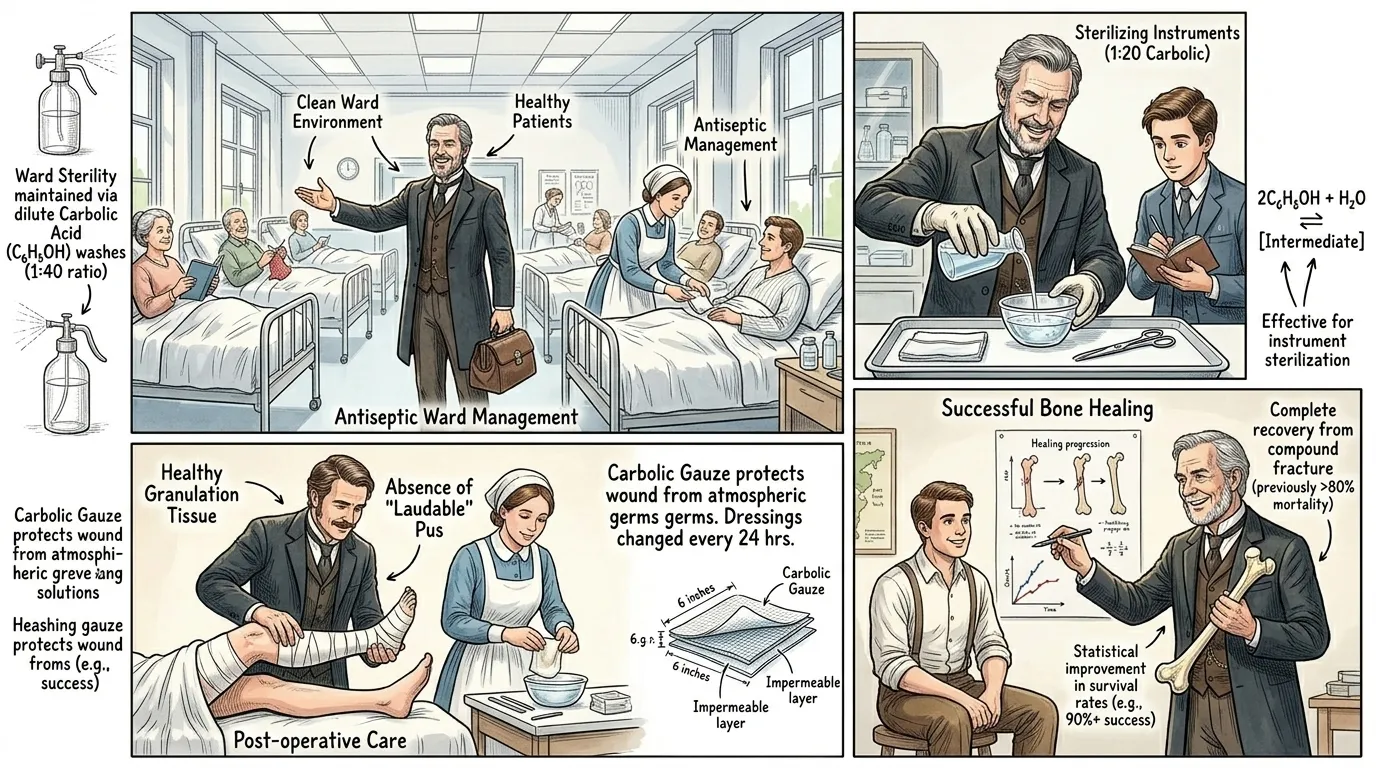
Despite early resistance, the undeniable reduction in post-operative mortality rates achieved through Lister's antiseptic techniques gradually led to their global adoption, fundamentally reshaping surgical practice.
"A physician, having fully integrated Lister's methods into his own practice, exulted, 'The mortality rates in my ward have plummeted beyond all expectation! This is not merely a new treatment; it represents a complete paradigm shift in patient safety!'"
Page 10
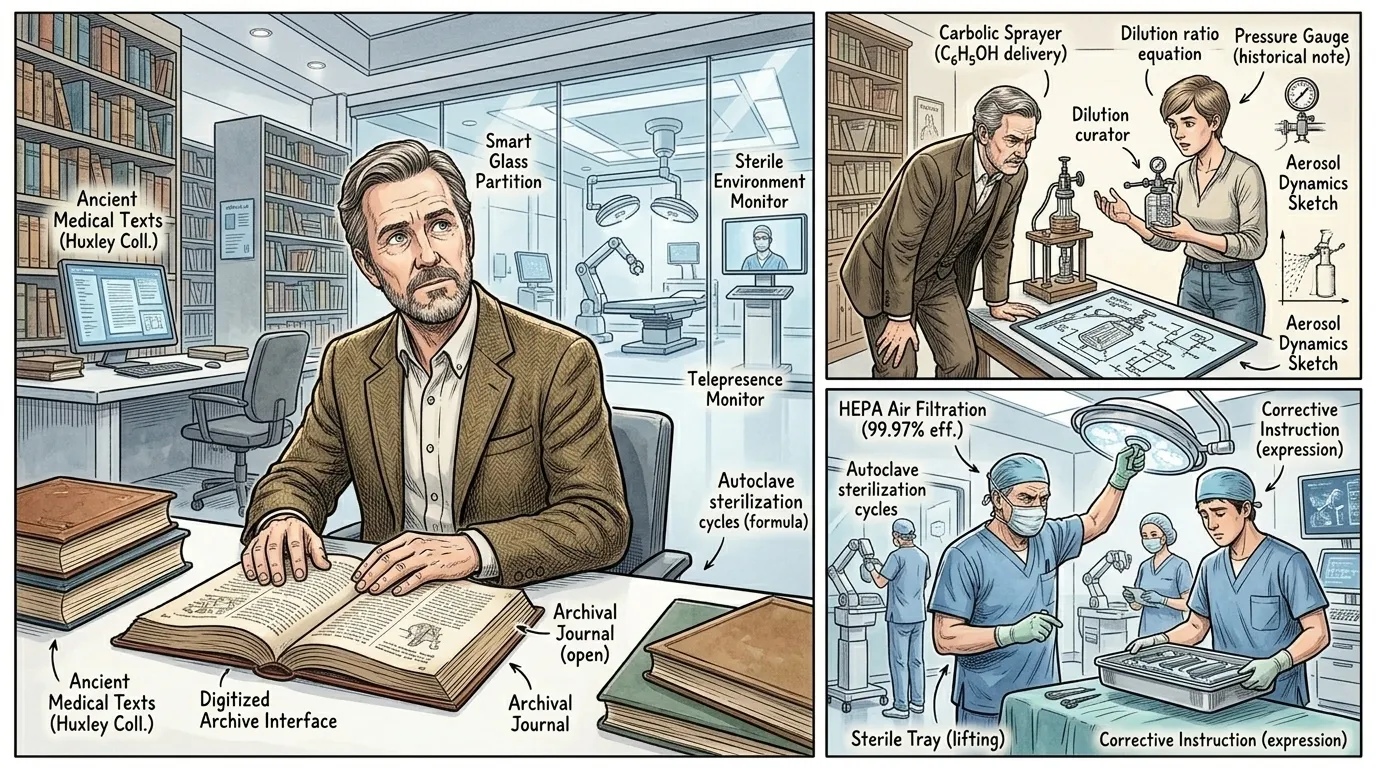
Lister's groundbreaking work with antiseptics laid the indispensable foundation for the development of modern aseptic surgery, a comprehensive approach to creating a sterile environment where germs are prevented from entering the operating field entirely.
"A respected modern medical historian reflected, 'Lister's unwavering courage to challenge centuries of medical dogma ultimately reshaped healthcare forever. The fundamental principles he championed remain the cornerstones of modern surgical practice, a profound testament to his intellectual rigor and lasting legacy.'"
About this story
- Location: Global
- Audience: general readers
Read Wonder Inventions on your phone
Wonder Inventions is available on Android. Get Wonder Inventions on Google Play.