Bullet Train
Bullet Train — an illustrated inventions story, set in Global. 10 illustrated pages, free to read on Wonder Inventions.
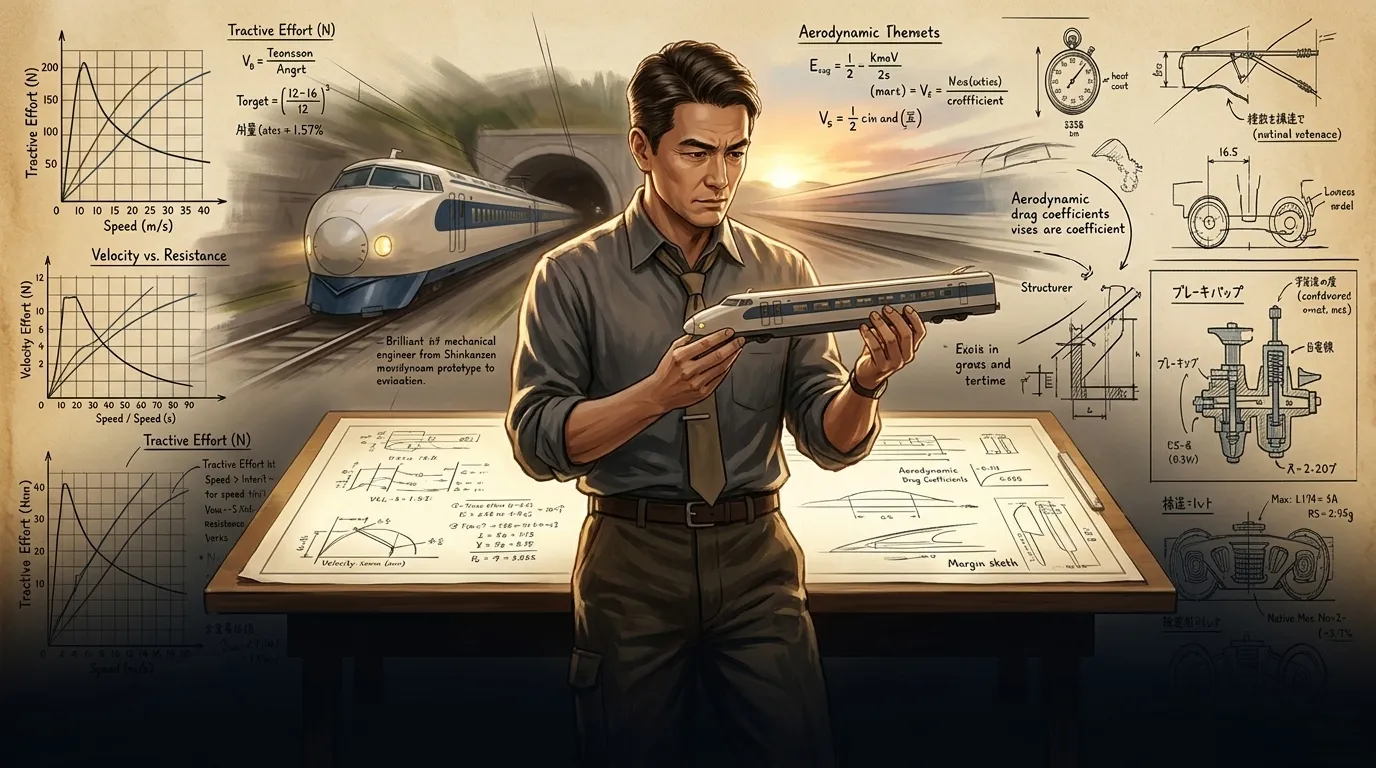
Page 1
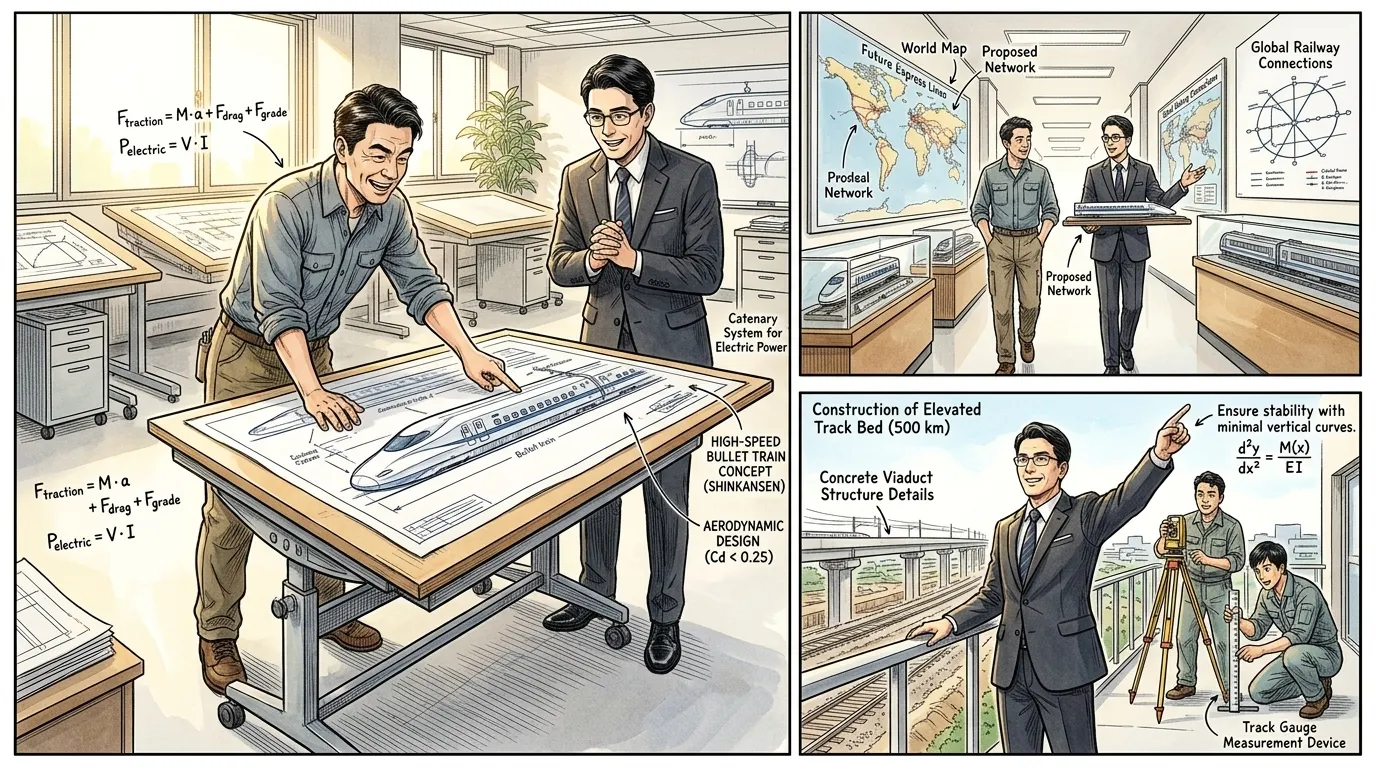
Post-war Japan faced immense challenges. Its burgeoning economy demanded efficient transport, yet the existing narrow-gauge railway network was strained to its breaking point, causing chronic delays and limiting growth. The future of Japan, engineer Hideo Shima and Japanese National Railways president Shinji Sogo understood, hinged on transforming mobility, on bridging vast distances with unprecedented speed.
""The significant problems we face cannot be solved at the same level of thinking that created them," Hideo Shima often reminded his team, echoing what Albert Einstein once famously articulated. This conviction fueled their relentless pursuit of a radical new railway system: the Shinkansen, or 'Bullet Train,' aiming to debut by 1964."
Page 2
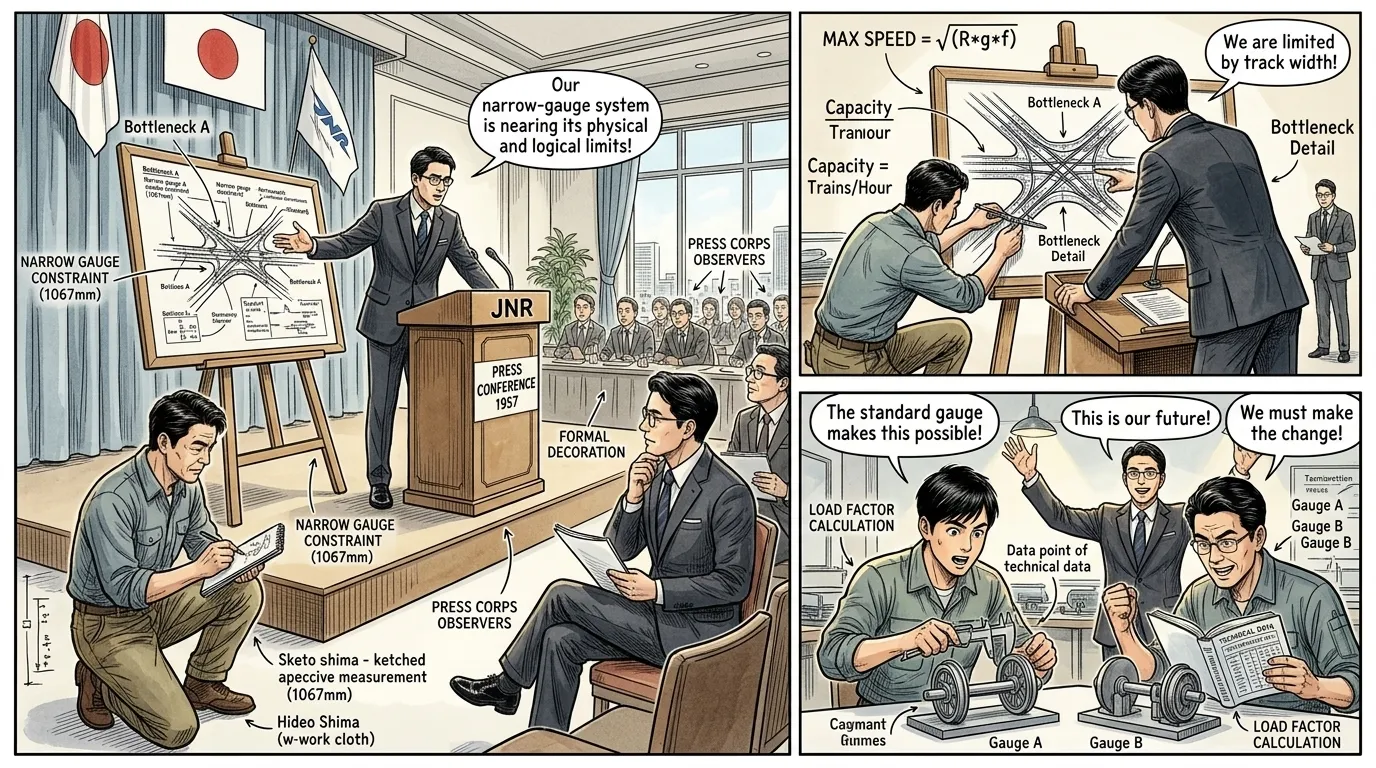
By the 1950s, Japan's rail system, built on a 1.067-meter narrow gauge, was a marvel of its era, winding through mountainous terrain and connecting disparate regions. However, for a rapidly industrializing nation, its speed limitations and capacity constraints were becoming critical. Trains often shared tracks, requiring complex signaling and causing frequent stops, severely impacting transit times between major urban centers like Tokyo and Osaka.
""Our existing network, while extensive, fundamentally restricts any substantial increase in speed," a senior JNR official explained during a 1957 press conference, gesturing to a complex diagram of intersecting lines. "Every curve, every grade, every shared section of track is a compromise, a limitation on true velocity." The challenge of achieving higher speeds safely and efficiently on such a system was a monumental barrier."
Page 3
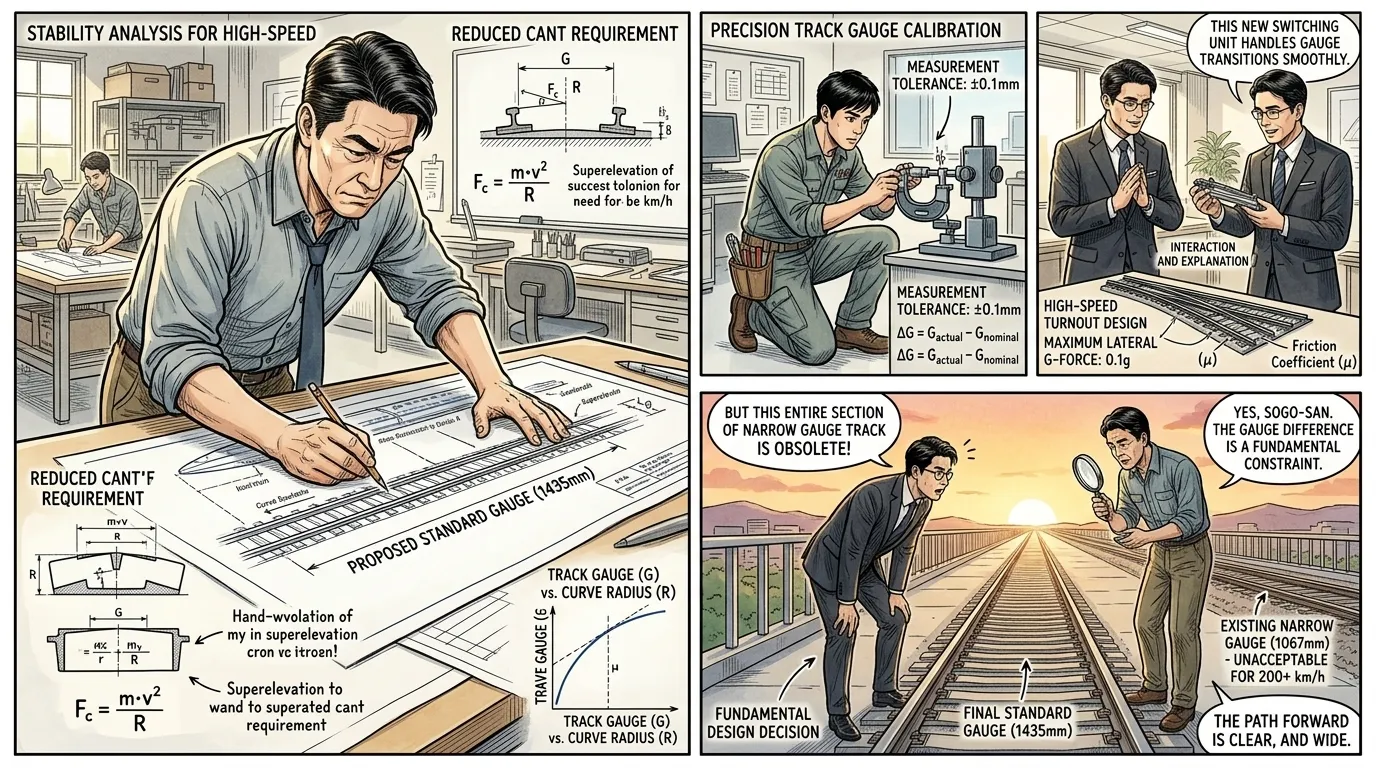
The primary obstacle to increasing train speeds dramatically was the dynamic instability inherent in narrow-gauge tracks at high velocities. Such tracks could not safely handle the centrifugal forces and vibrations generated by trains moving at speeds exceeding 160 kilometers per hour. Engineers understood that pushing existing infrastructure further would only lead to derailments and operational hazards, demanding a fundamental re-evaluation of railway design.
""We quickly realized that simply upgrading existing rolling stock or slightly straightening curves would not suffice," Hideo Shima stated in a 1961 interview, leaning over a drafting table littered with calculations. "To achieve our target of 200 kilometers per hour, we needed a completely dedicated, brand-new infrastructure. No shared tracks, no level crossings, and crucially, a wider track gauge for stability." This dedicated track, designed for high-speed operation alone, became the critical 'knowledge' for their success."
Page 4
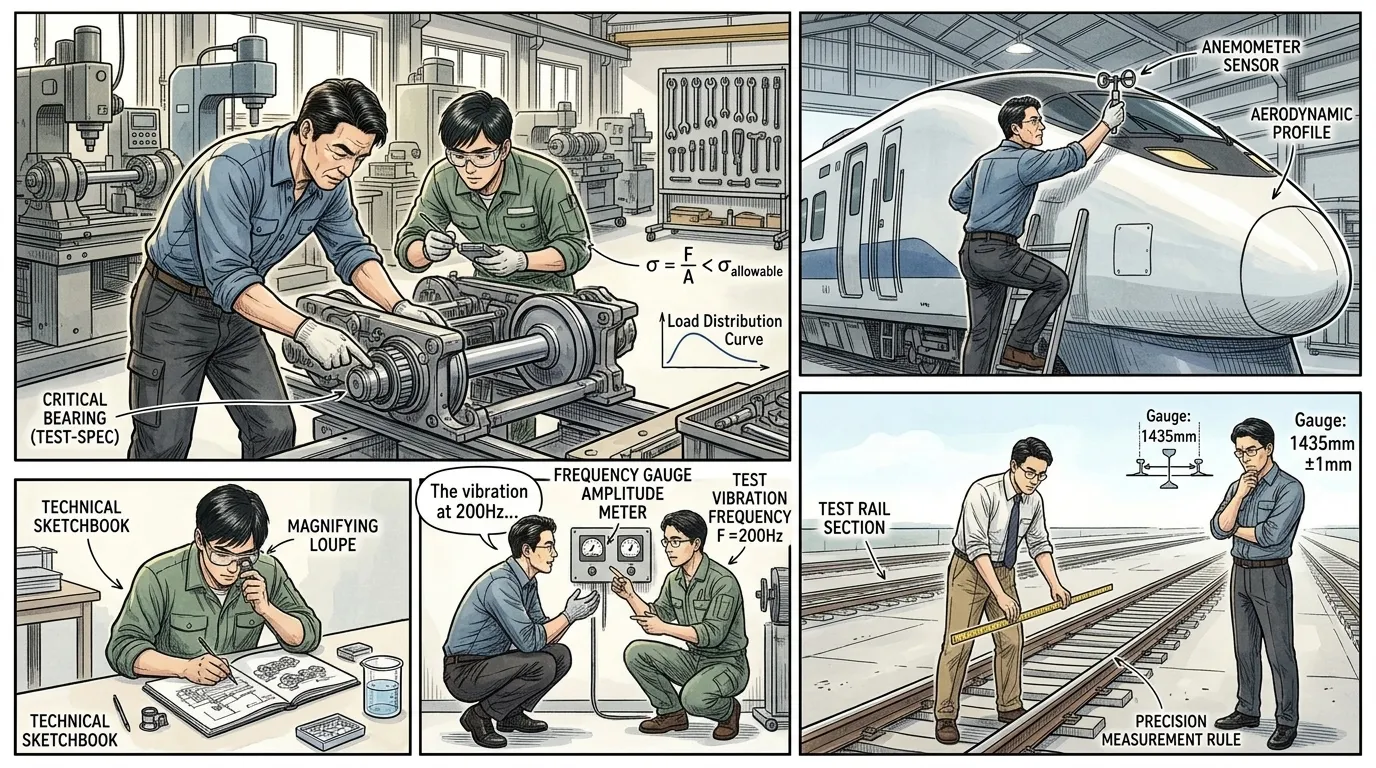
Hideo Shima, a descendant of railway pioneers and a brilliant mechanical engineer, was appointed Chief Engineer of the Shinkansen project in 1955. His vision was not merely a faster train, but an entire system optimized for speed, safety, and reliability. This required innovations across every facet: from propulsion and braking to track design and signaling.
"Shima, known for his meticulous attention to detail, was often found in workshops, scrutinizing every component. "The success of this project hinges on hundreds of tiny improvements, not one grand stroke of genius," he explained to a young technician examining a prototype bogie. "Every bearing, every weld, every curve of the chassis must be perfect to endure the stresses of speeds previously thought impossible for rail travel.""
Page 5
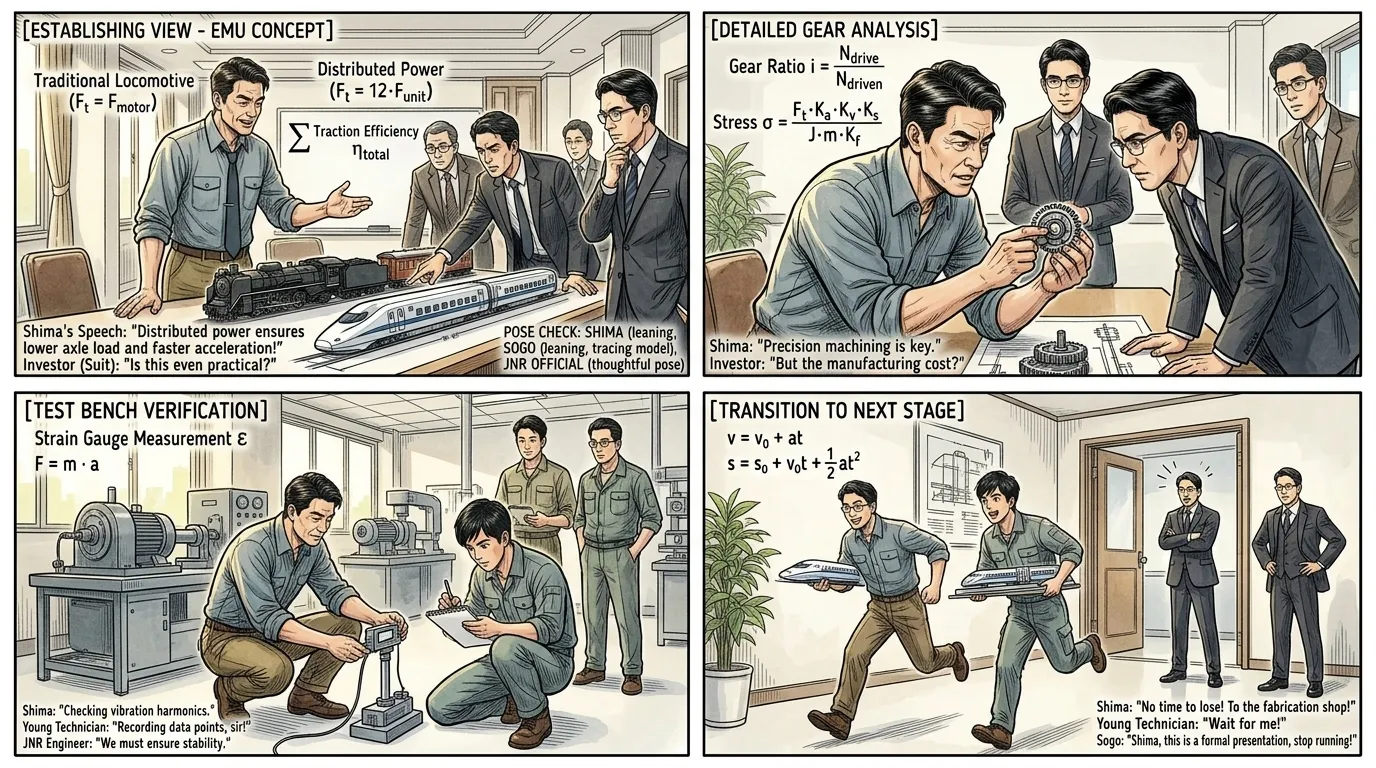
Traditional trains relied on a heavy locomotive pulling passive carriages, a design that limited acceleration and put immense strain on tracks at high speeds. Shima's team championed the Electric Multiple Unit (EMU) system. In an EMU, each carriage or pair of carriages has its own motors, distributing power and weight along the entire train. This revolutionary approach significantly improved acceleration, braking, and reduced axle load, crucial for maintaining track integrity and passenger comfort at high velocities.
""By distributing the power, we eliminate the need for a single, heavy engine," Shima clarified to a group of skeptical investors reviewing models. "This means less wear on the tracks, superior energy efficiency, and a far smoother ride for passengers, even when accelerating rapidly. It's not just a faster train; it's an entirely different way of moving." This concept was a critical departure from global railway conventions."
Page 6
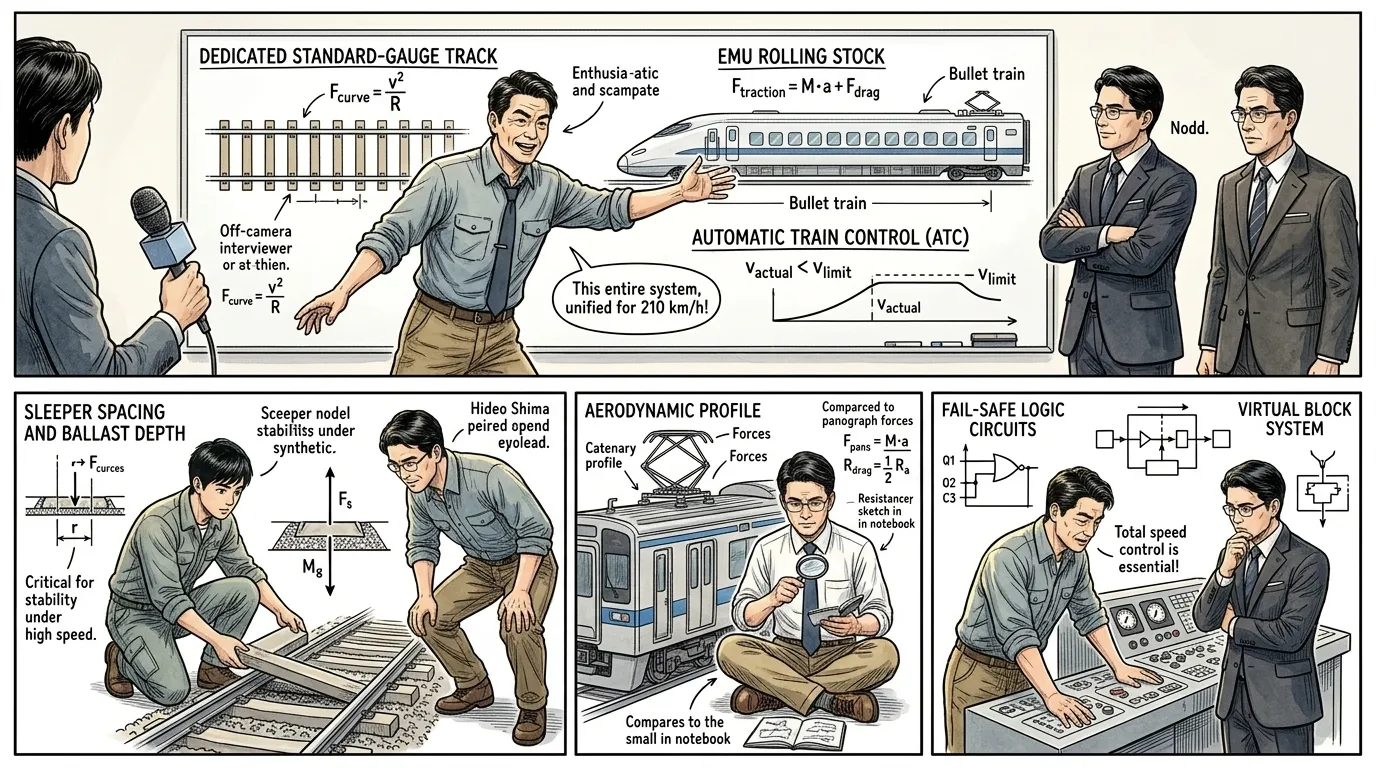
The Shinkansen wasn't just a train; it was an integrated high-speed transport system. The breakthrough involved three core pillars: a dedicated, standard-gauge track with minimal curves and gradients; the Electric Multiple Unit (EMU) rolling stock; and an advanced Automatic Train Control (ATC) system. This holistic approach ensured safety and efficiency at speeds previously unimaginable for passenger rail.
""Every element works in concert," Shima explained in a documentary film from the period, showcasing detailed schematics. "The wider track provides stability. The distributed power of the EMU allows for rapid acceleration and deceleration. And the ATC, which constantly monitors speed and distance, automates braking to prevent collisions, making human error almost impossible at high speeds. It is an entirely new paradigm for rail travel.""
Page 7
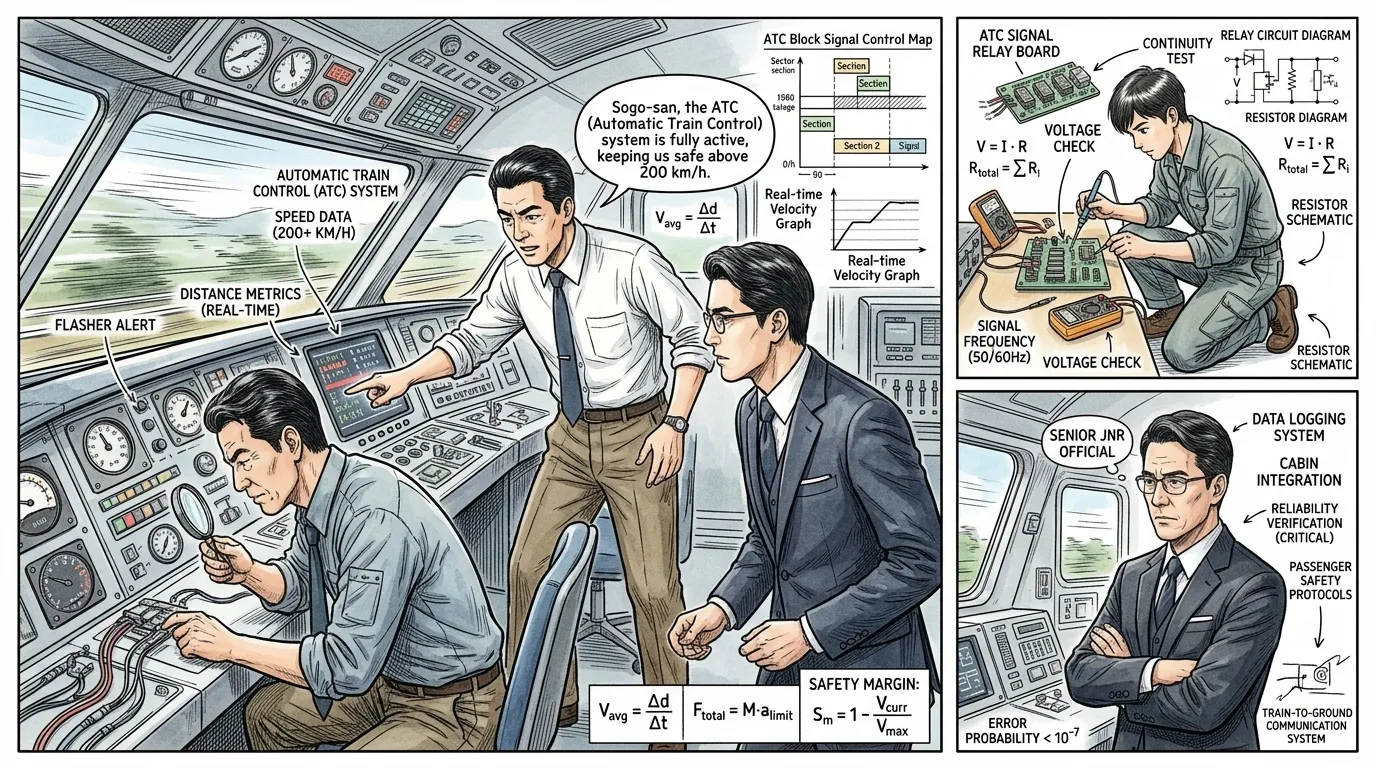
Achieving speeds of 210 kilometers per hour required extraordinary precision in track alignment and signaling. The dedicated Shinkansen tracks were built with tolerances far tighter than conventional railways, minimizing bumps and sway. Furthermore, the Automatic Train Control (ATC) system eliminated traditional trackside signals. Instead, signals were transmitted directly to the train's cabin, continuously displaying maximum safe speeds and automatically applying brakes if limits were exceeded.
""The ATC system is our invisible guardian," explained a JNR engineer during a system demonstration, pointing to a flashing console inside a test train. "It constantly communicates with the track, ensuring that trains maintain safe distances and speeds. Should a driver fail to react to a speed reduction, the system takes over. This level of automation is paramount for safety at such high velocities, a crucial factor when we were trying to solve the problem of stability and control.""
Page 8
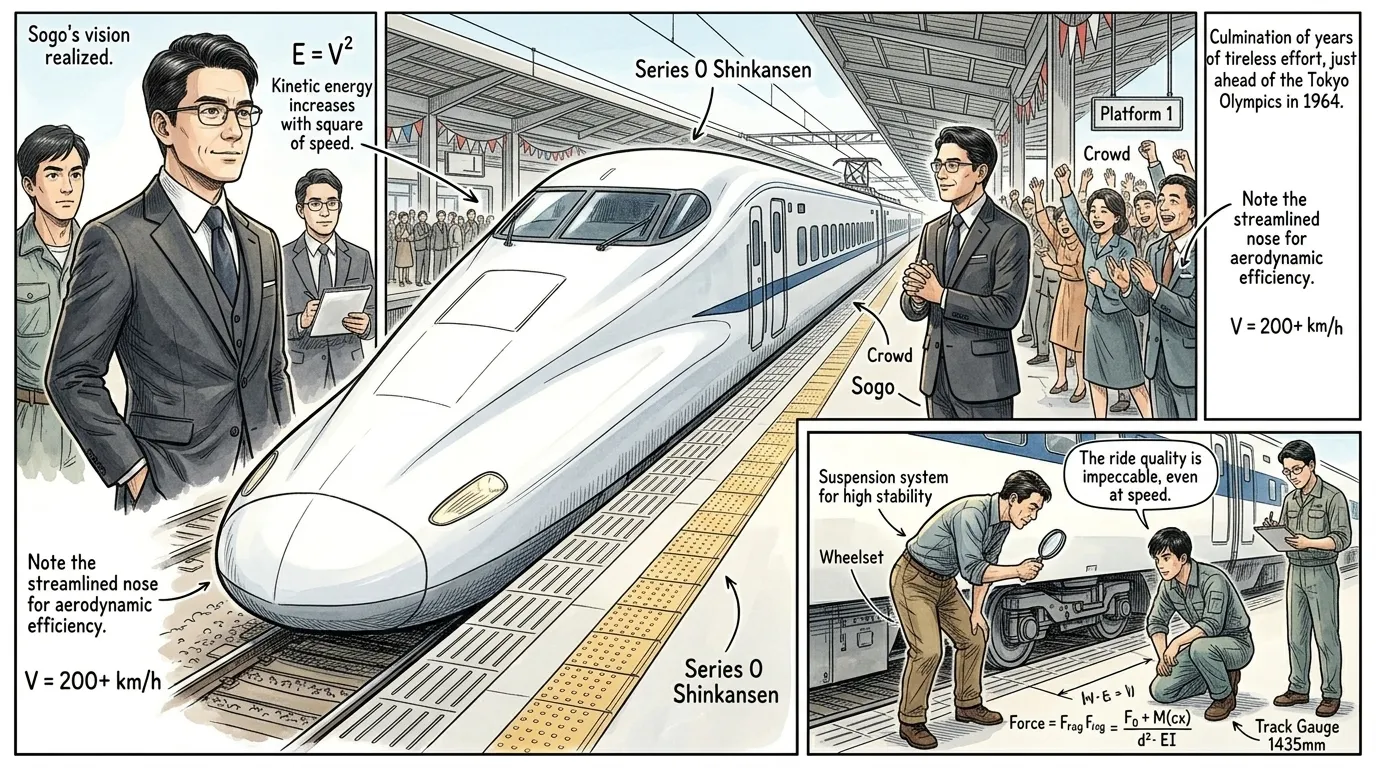
On October 1, 1964, just ahead of the Tokyo Olympics, the Tokaido Shinkansen officially opened, connecting Tokyo and Osaka in a revolutionary four hours – half the previous travel time. This monumental achievement, a direct result of the dedicated standard-gauge track and advanced ATC system, immediately transformed Japan's economic and social landscape. It demonstrated that high-speed rail was not merely a concept, but a safe, reliable, and commercially viable reality.
"At the inaugural ceremony, Shinji Sogo, though no longer president due to political maneuvering, watched with profound satisfaction. "Today," he reflected, his voice filled with emotion, "we witness not just a train, but a testament to what a nation can achieve when it dares to dream beyond its present limitations. This Bullet Train is a symbol of our resurgence, our capacity for innovation, and our unbreakable spirit.""
Page 9
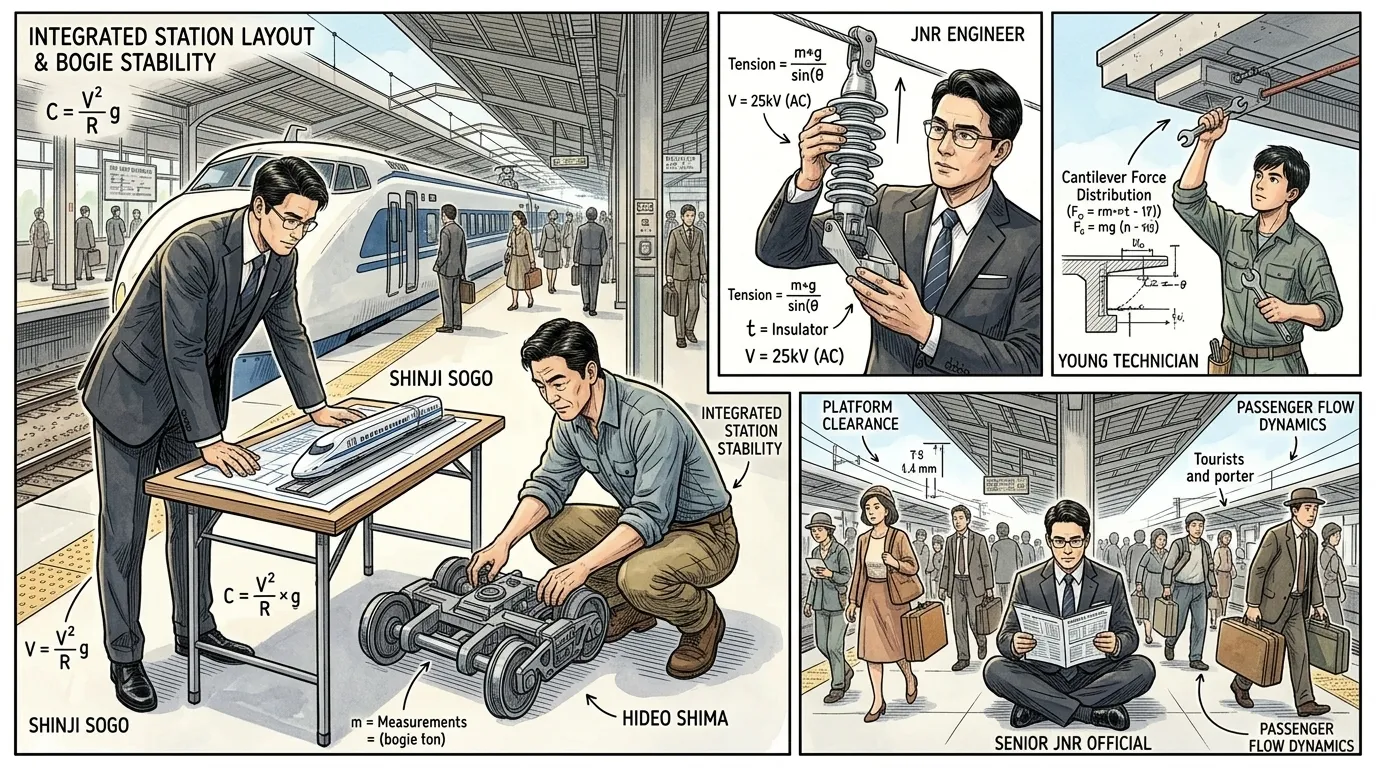
The Bullet Train quickly became a cornerstone of Japan's economic miracle, fostering business and tourism between its two largest metropolitan areas. Its punctuality and safety record were unparalleled; for decades, the Shinkansen operated without a single passenger fatality due to derailment or collision. This remarkable achievement, largely thanks to its dedicated infrastructure and advanced control systems, solidified its reputation as the world's premier high-speed rail network.
"Years later, reflecting on the project's impact, a railway historian noted, "The Shinkansen didn't just move people; it moved ideas, goods, and capital with unprecedented efficiency. It redefined our understanding of distance and accessibility. Its economic multiplier effect was immense, stimulating growth across numerous industries and connecting communities in profound new ways.""
Page 10
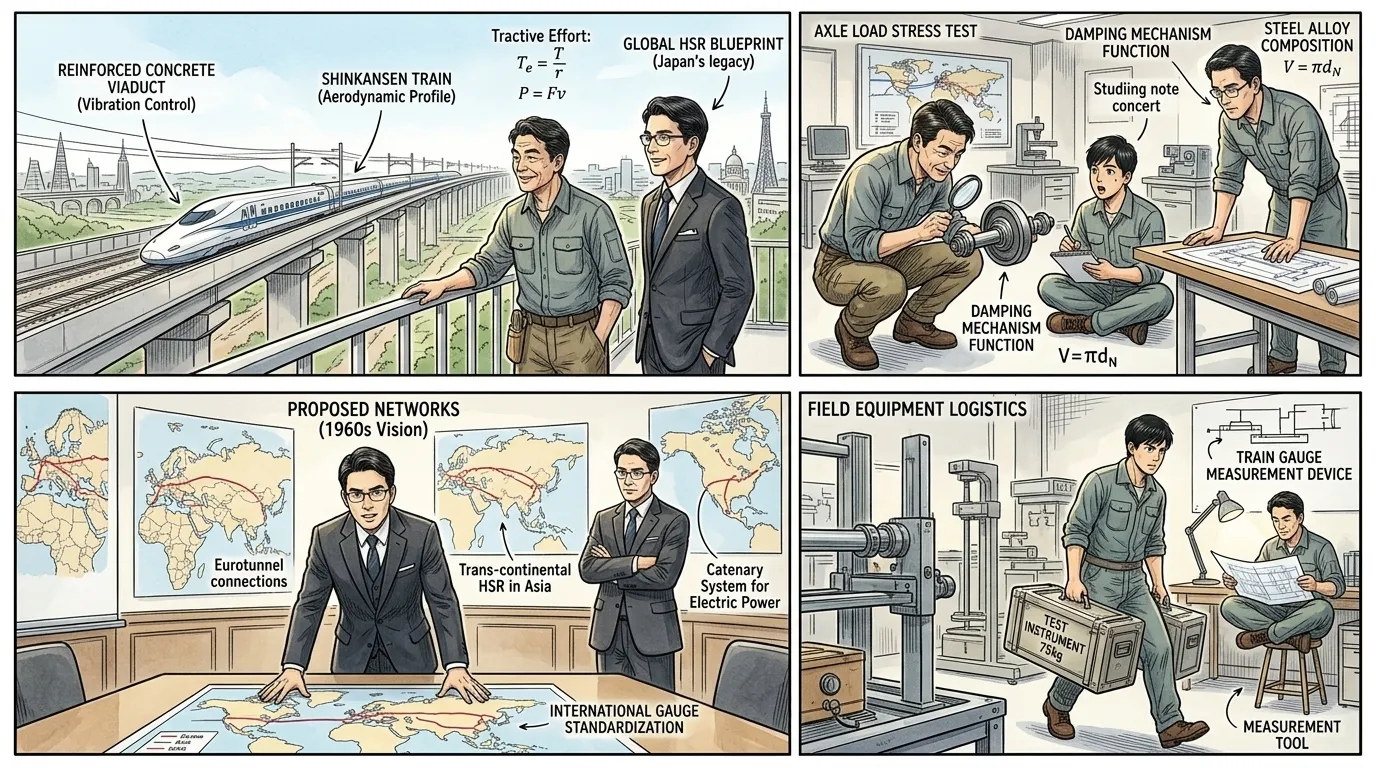
The success of the Tokaido Shinkansen inspired nations worldwide to invest in high-speed rail. From France's TGV to Germany's ICE and China's vast HSR network, the principles pioneered by Shima and Sogo became the blueprint for global transportation evolution. The Bullet Train proved that transformative engineering could overcome geographical and economic barriers, forever altering perceptions of what railway travel could achieve.
"Today, as new generations of Shinkansen continue to evolve with even greater speeds and efficiencies, the core lessons remain. The relentless pursuit of safety, precision engineering, and a holistic systems approach, first championed by Hideo Shima and Shinji Sogo, continues to shape the future of sustainable, high-speed mobility across continents."
About this story
- Location: Global
- Audience: general readers
Questions and answers
Read Wonder Inventions on your phone
Wonder Inventions is available on Android. Get Wonder Inventions on Google Play.